
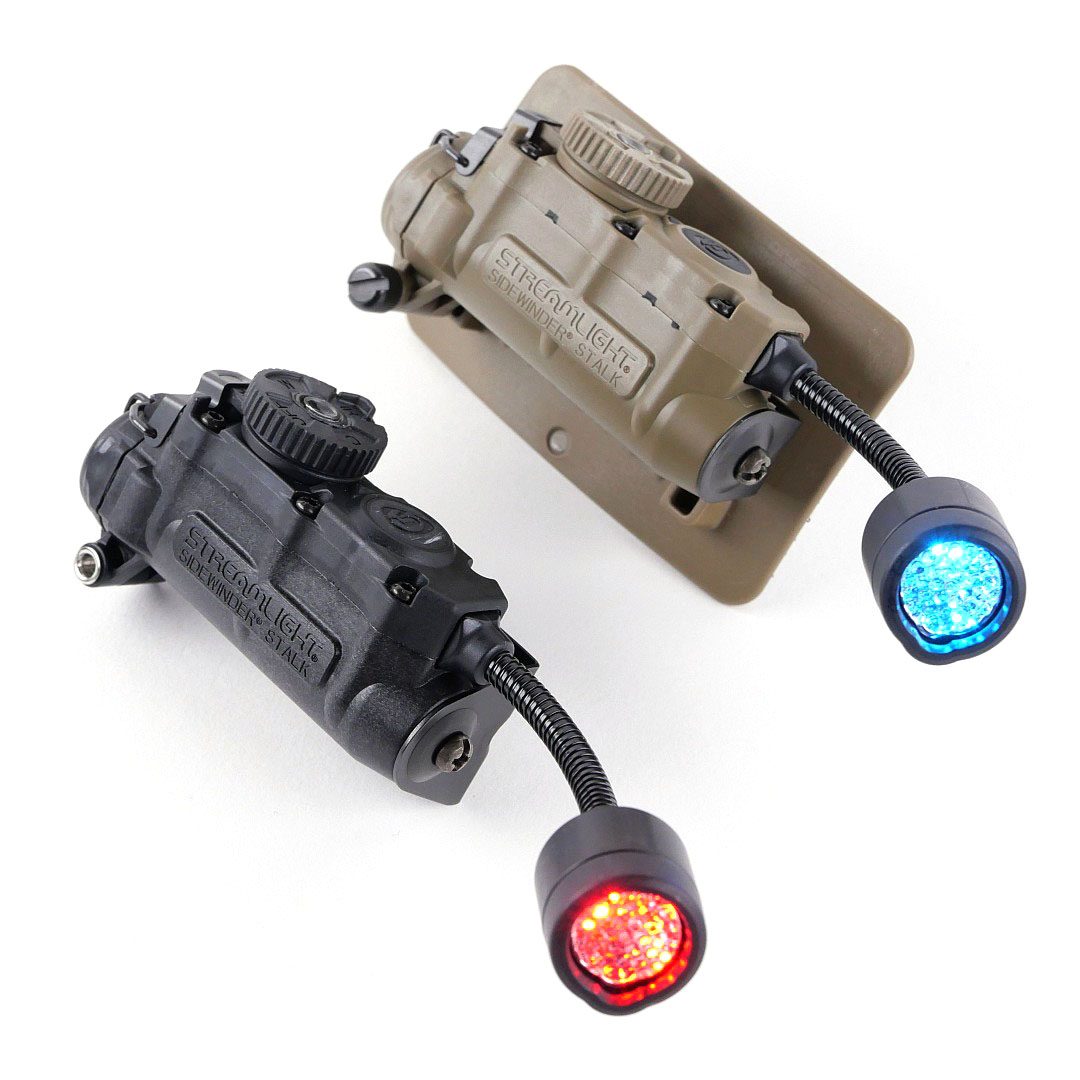
In this detailed review of the Streamlight Sidewinder Stalk, find out why this multi-fuel light might be your EDC / Prepping saviour, and favourite illumination companion. Join me in this Streamlight Sidewinder Stalk Review for all the details.
Designed to minimise the number of lights an operator must carry, the low-profile Sidewinder Stalk not only has a flexible gooseneck stalk to aim the beam, but features Multi-Fuel capability allowing it to accept more than one battery type.
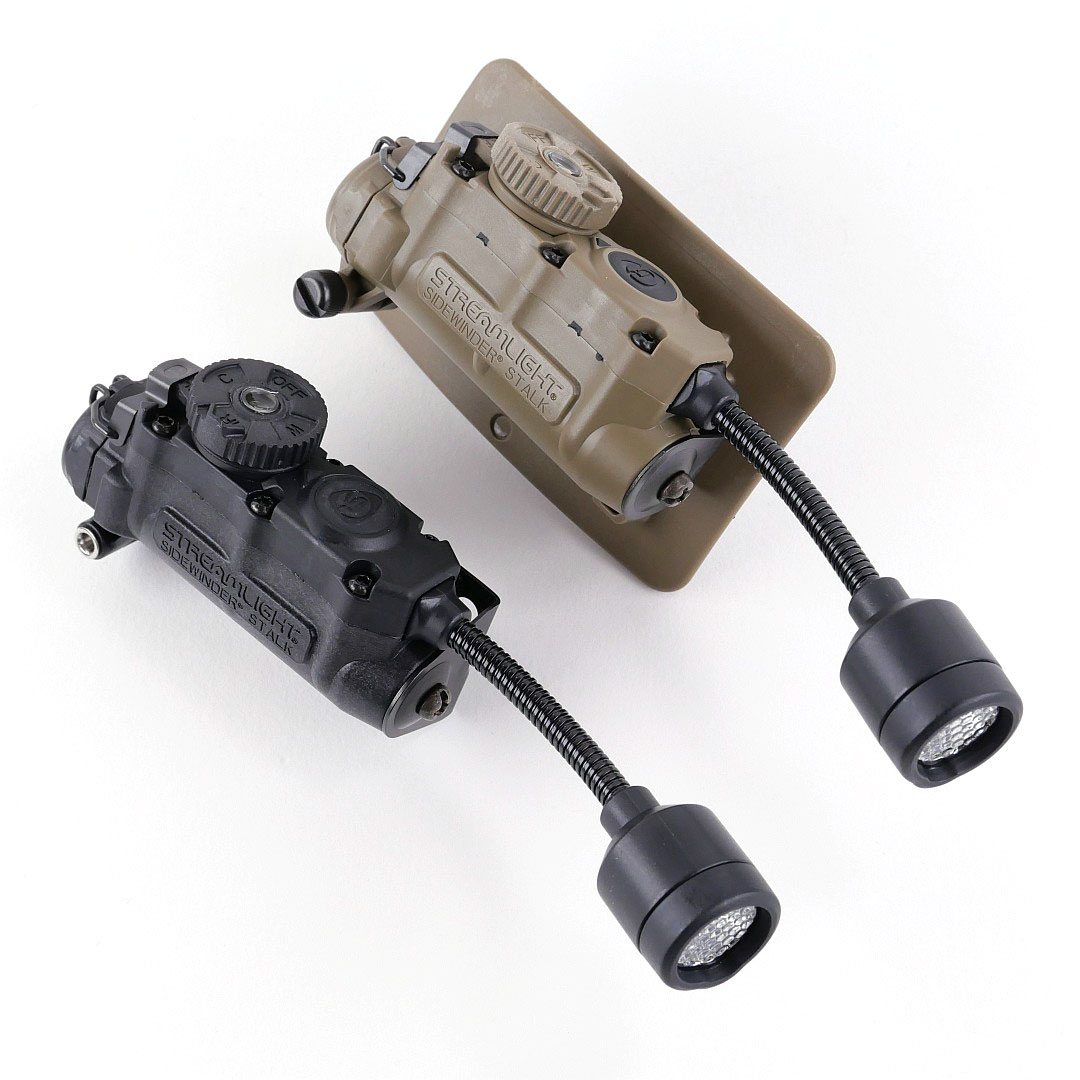
The Stalk does it all, incorporating white, IR, red, blue, and green LEDs – all located in its head that is mounted on a flexible stalk, providing complete beam manoeuvrability – each with low, medium, high, and strobe modes along with an additional IR/IFF beacon. A separate Identification Friend or Foe (IFF) switch lets you use both the main light and IFF when needed. Operation is simple with rotating tactical switch allowing quick mode changes even with gloves. The robust military standard polymer housing is IPX7 certified, water resistant and shockproof. All of this and multiple mounting options too.
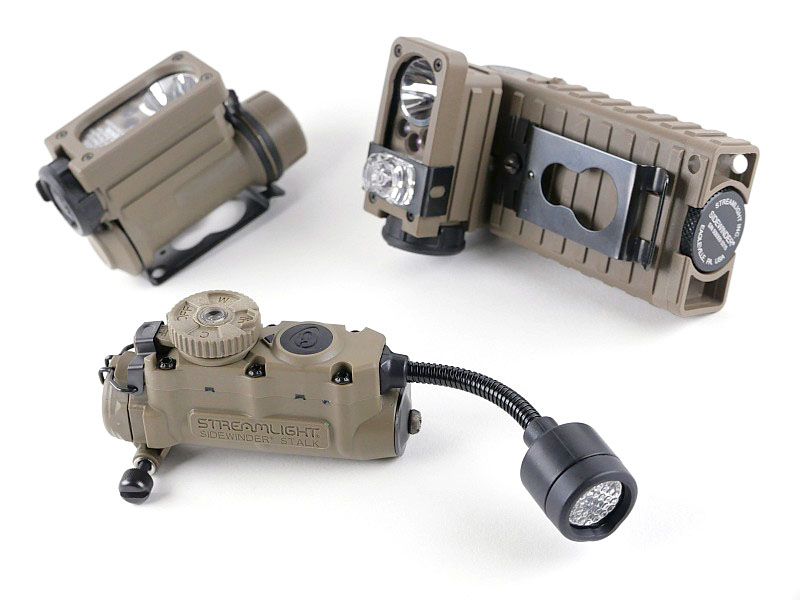
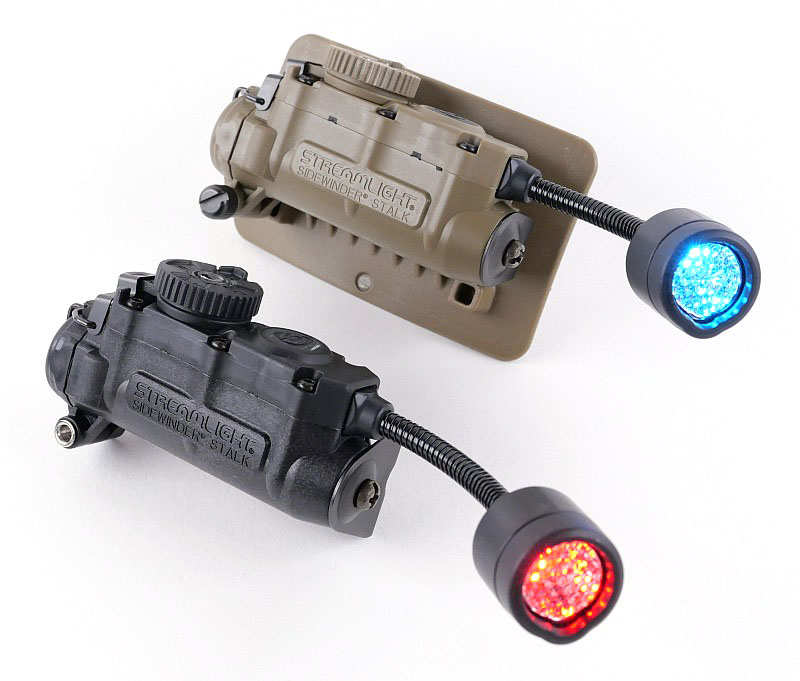
The Stalk joins the other Sidewinder models.
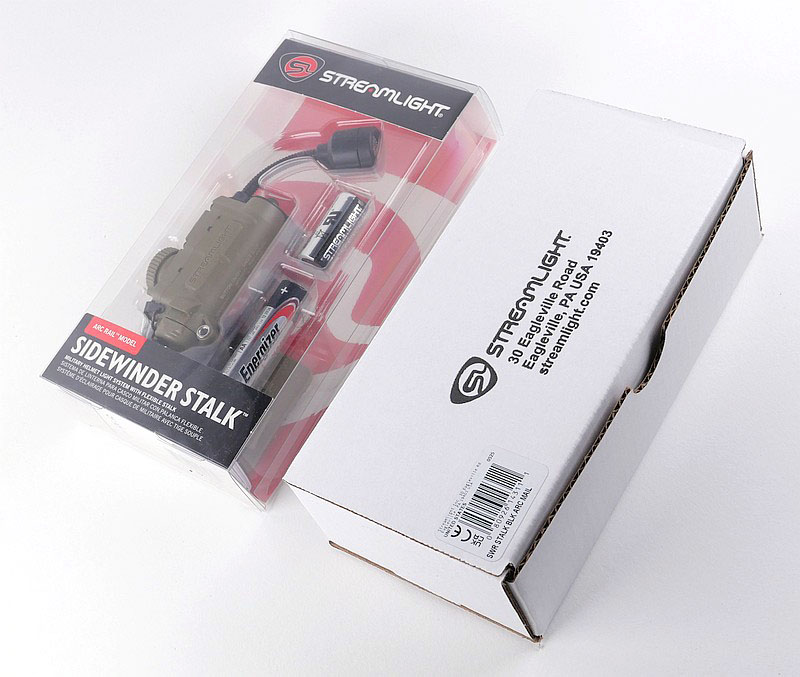
What is in the box?:
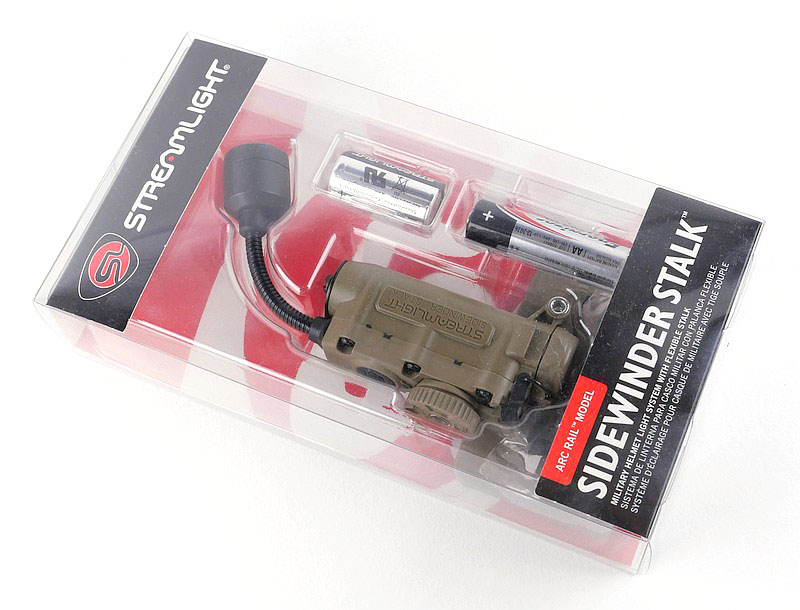
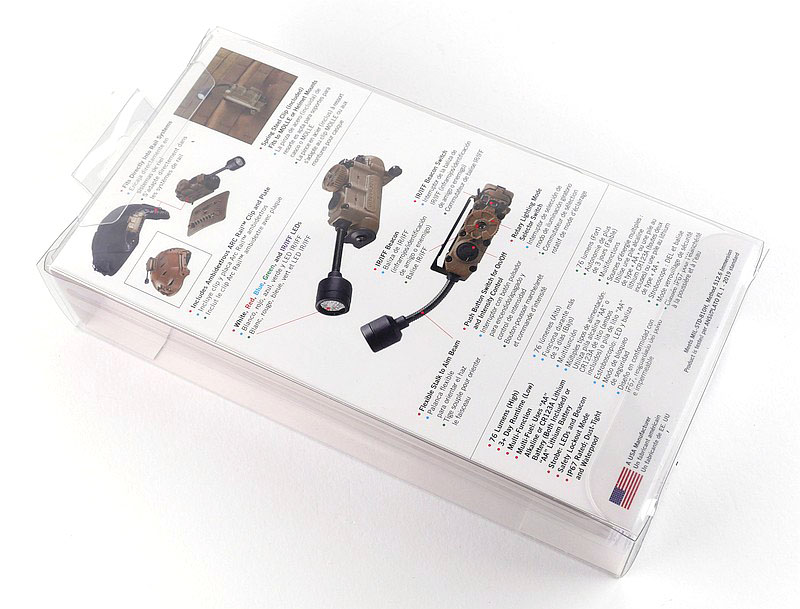
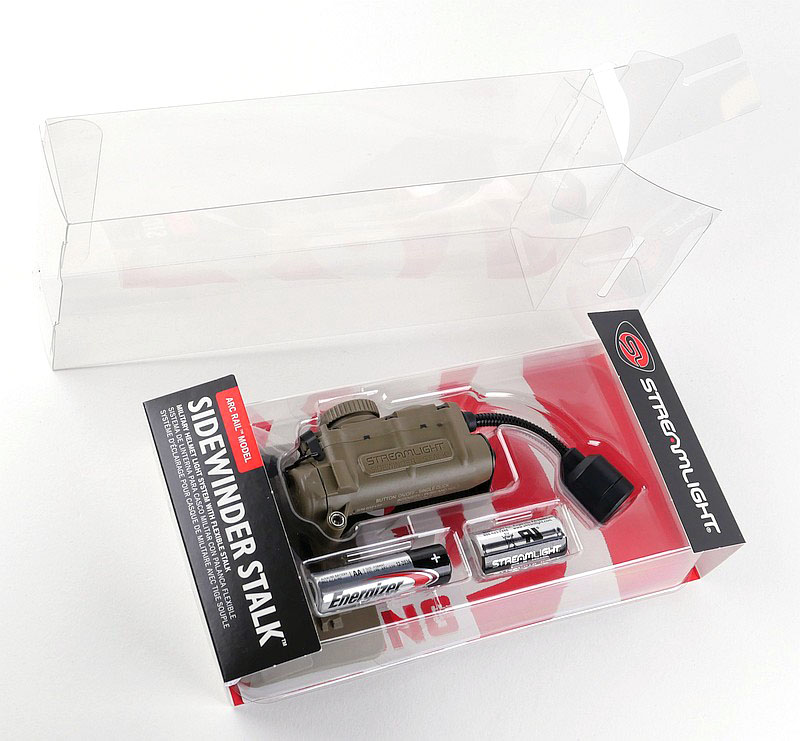
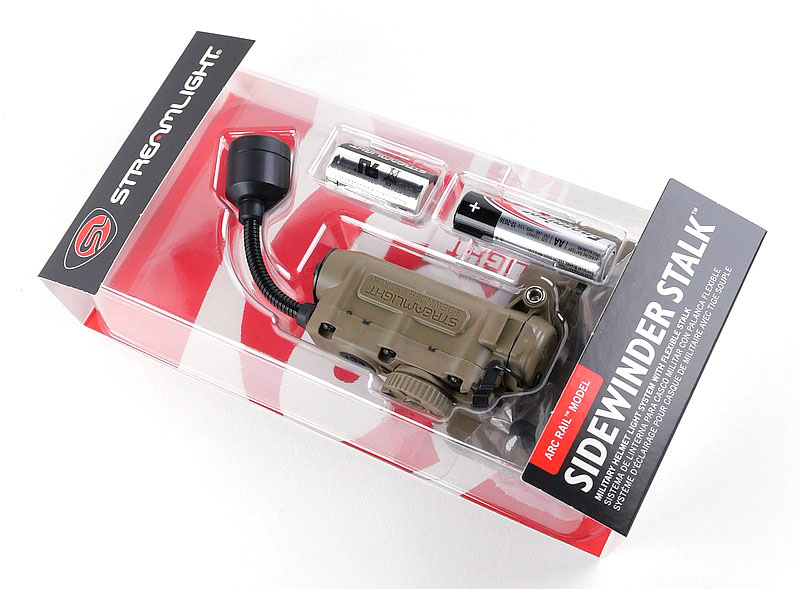
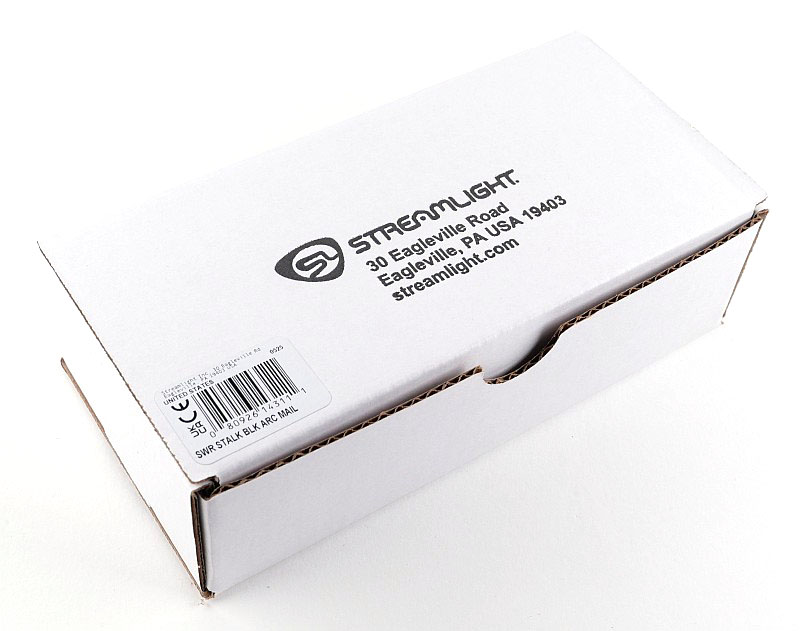
Streamlight offer the Stalk, and many other lights / flashlights in two types of packaging, a full retail package, that uses a lot of plastic for a better presentation, and a plain cardboard box version. Both are show here so you can see the difference.
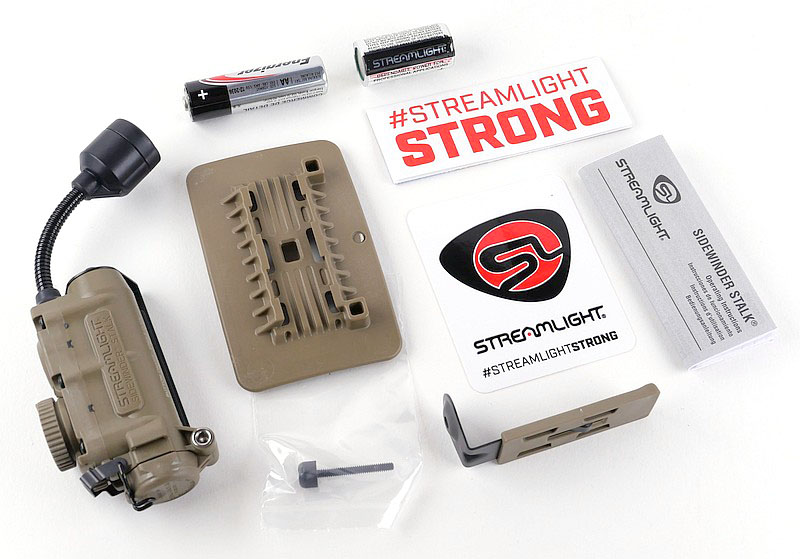
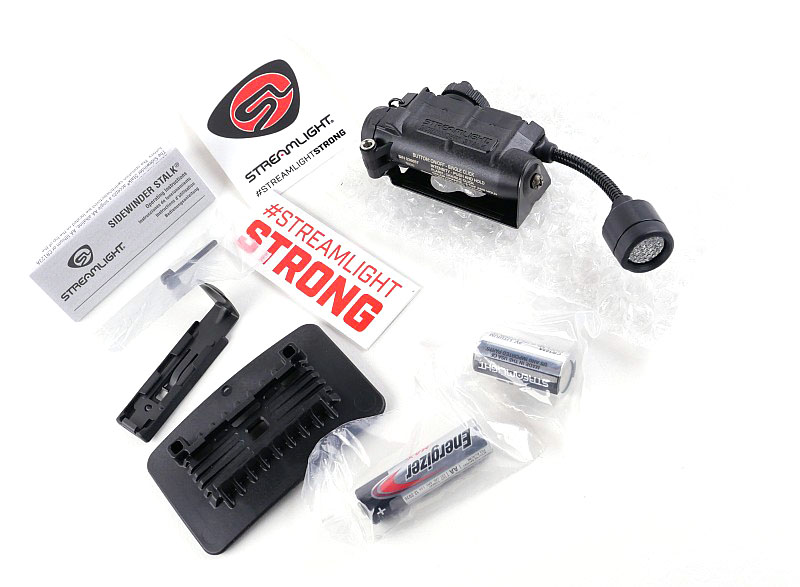
Both the coyote and black versions are the Arc Rail mount kits. These include the Stalk, an AA alkaline, a CR123 battery, the Arc rail adapter plus velcro helmet mount adapter, the instructions and a couple of stickers.

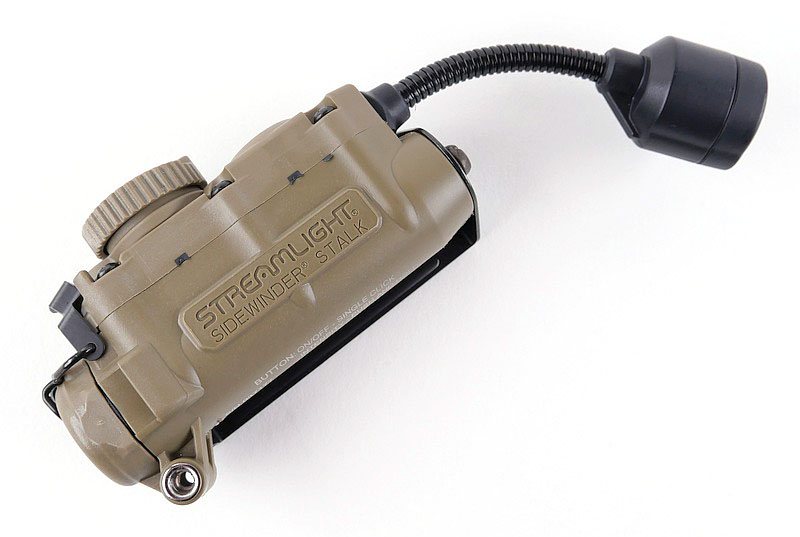
A good look round the Sidewinder Stalk – Things to look out for here are:
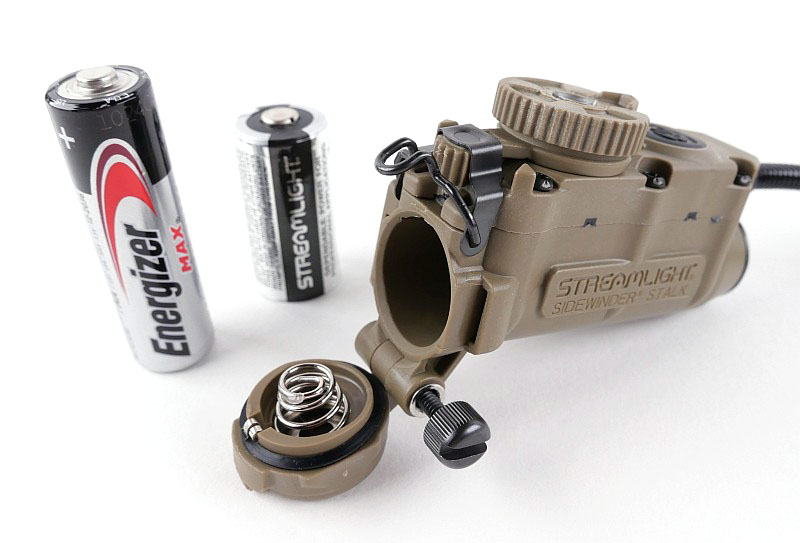
As the Stalk is packed full of design details, I’ve had to split this into two galleries. In this first one it’s more of a general look around before we really dive into the finer details. Note the multi-fuel capability with the include AA and CR123 cells.
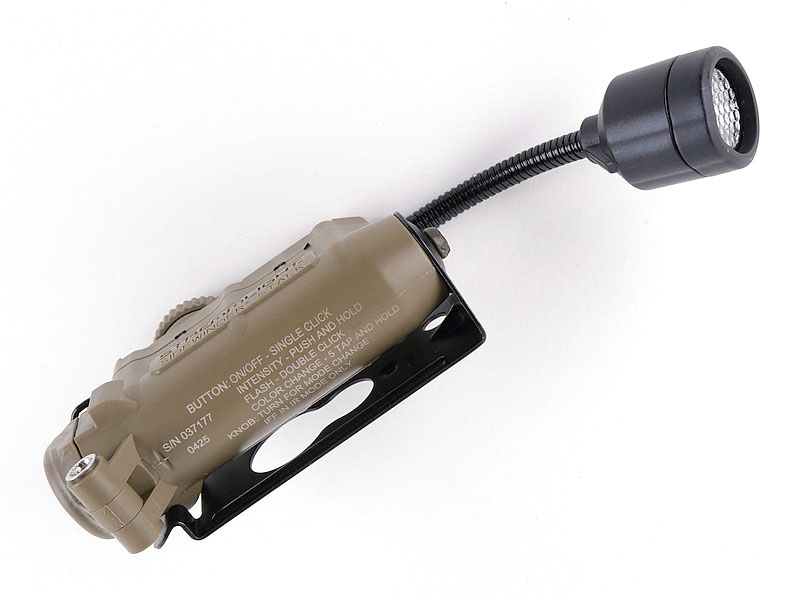
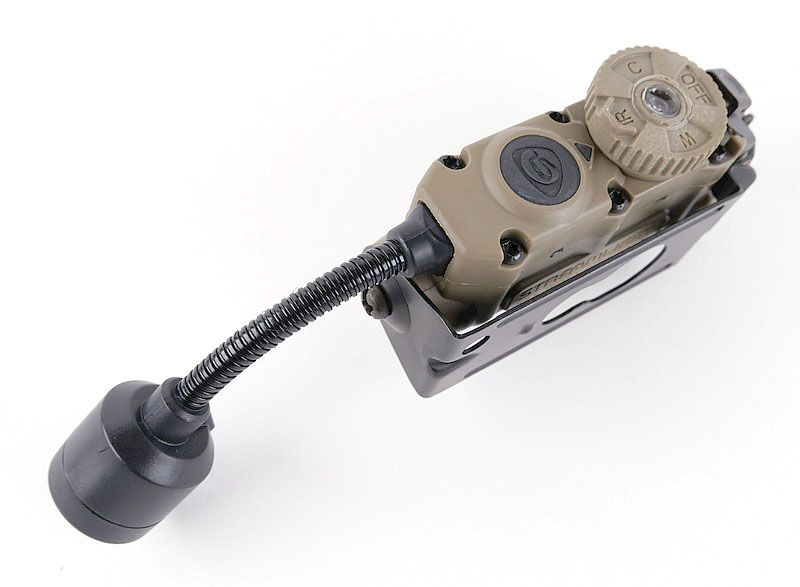

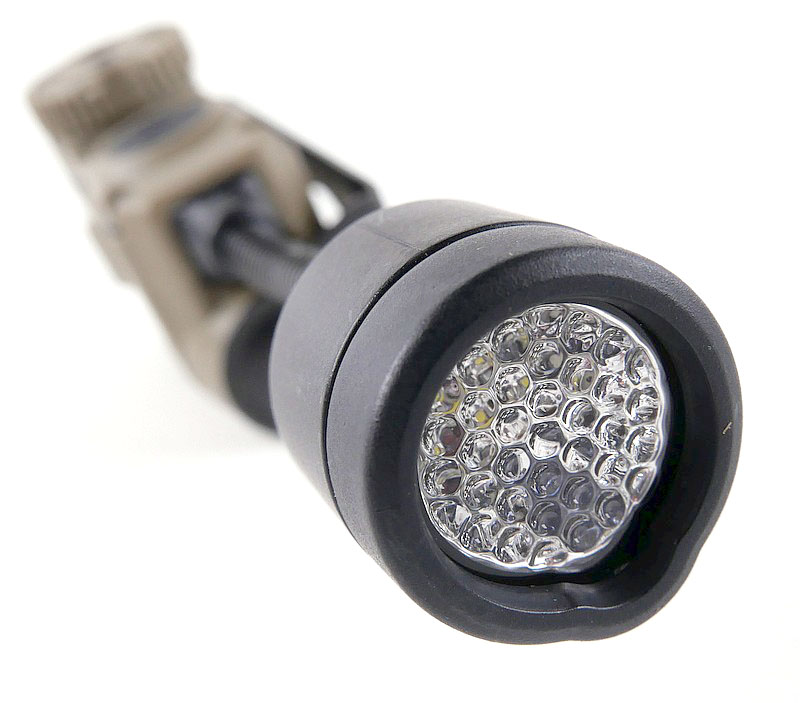
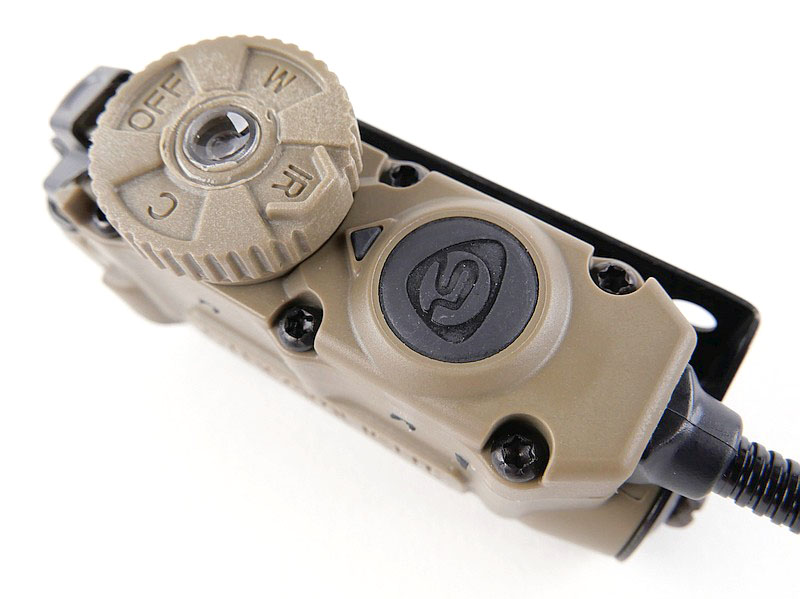
Taking a more detailed look at the controls and operation:
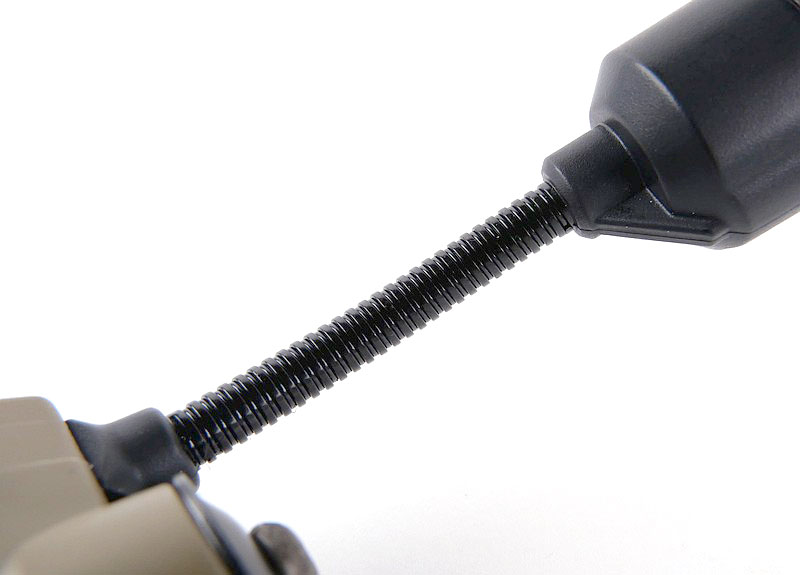
Here we are zooming right in on the functional aspects of the Stalk. Starting with the ‘stalk’ part, the flexible gooseneck, allowing the easy adjustment and alignment of the light head.
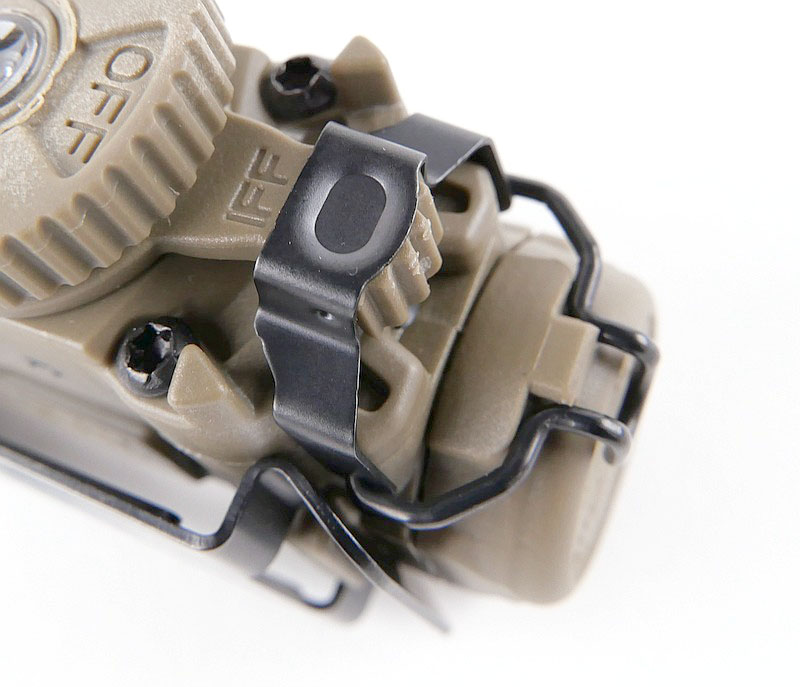
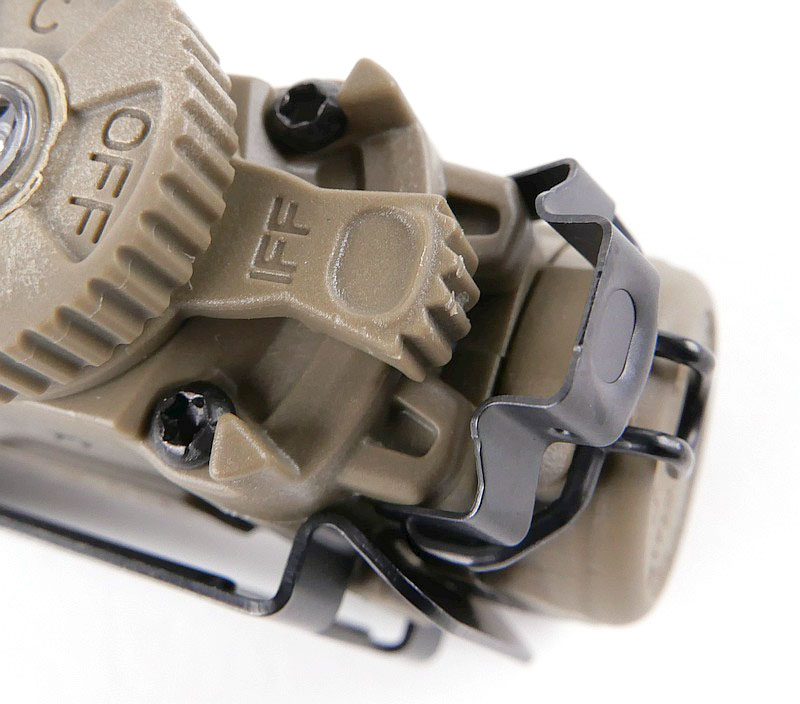
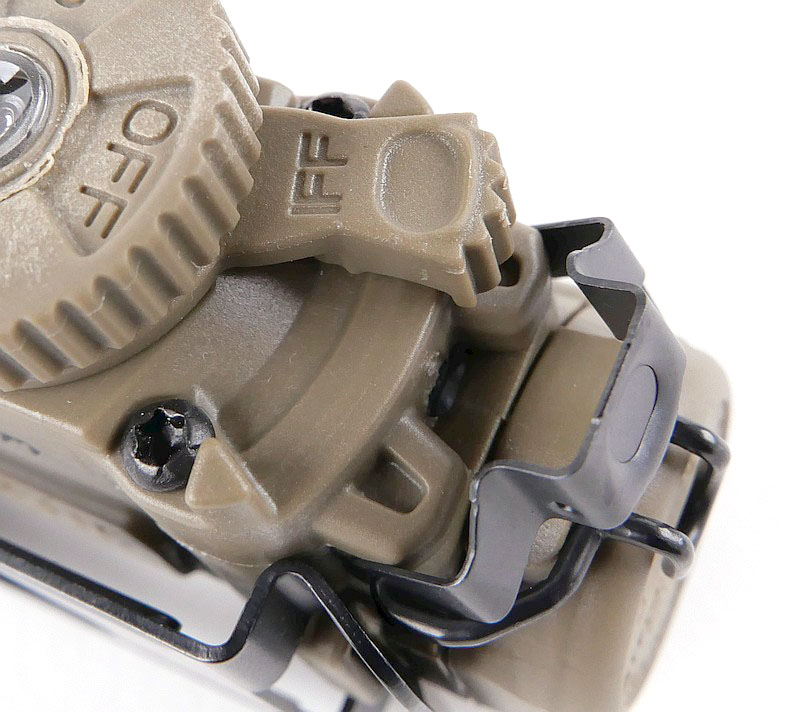
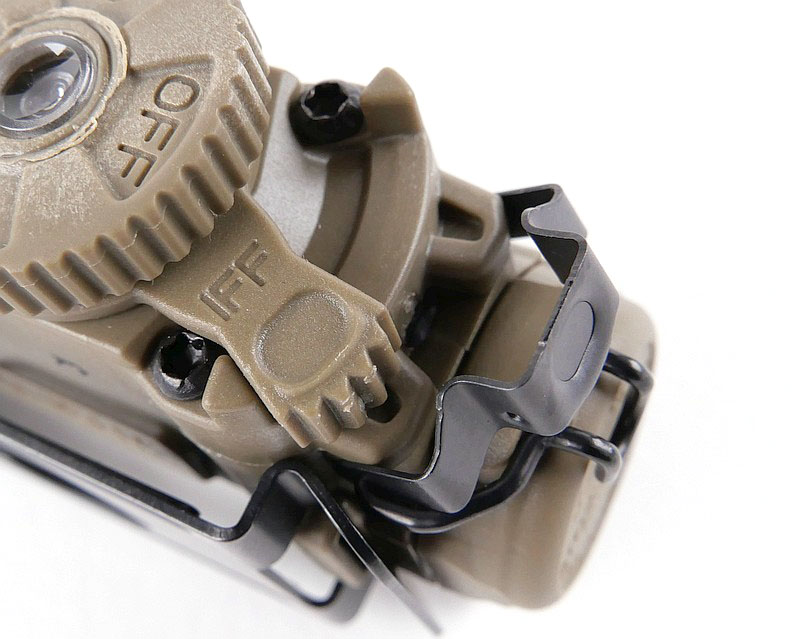
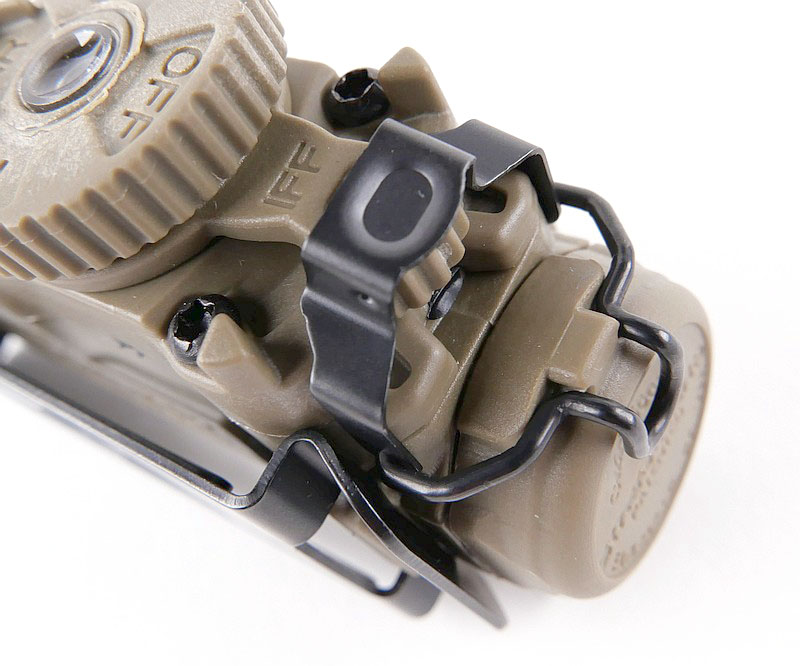
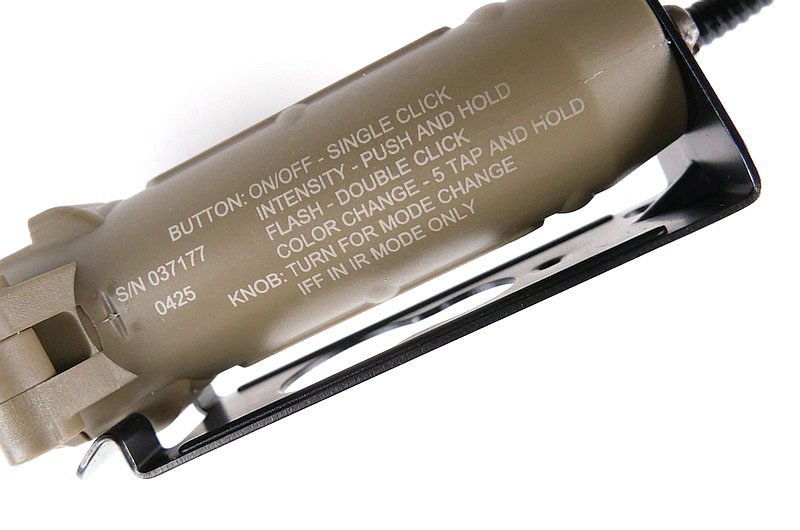
A four-position rotating control dial / switch sits just behind the power button. Between the battery door and the rotary control dial is the protected IFF switch. This has a metal cover clipped over it to ensure there isn’t an accidental activation. Pulling this metal cover down allows the IFF switch to be moved in either direction to activate the infra-red strobe.
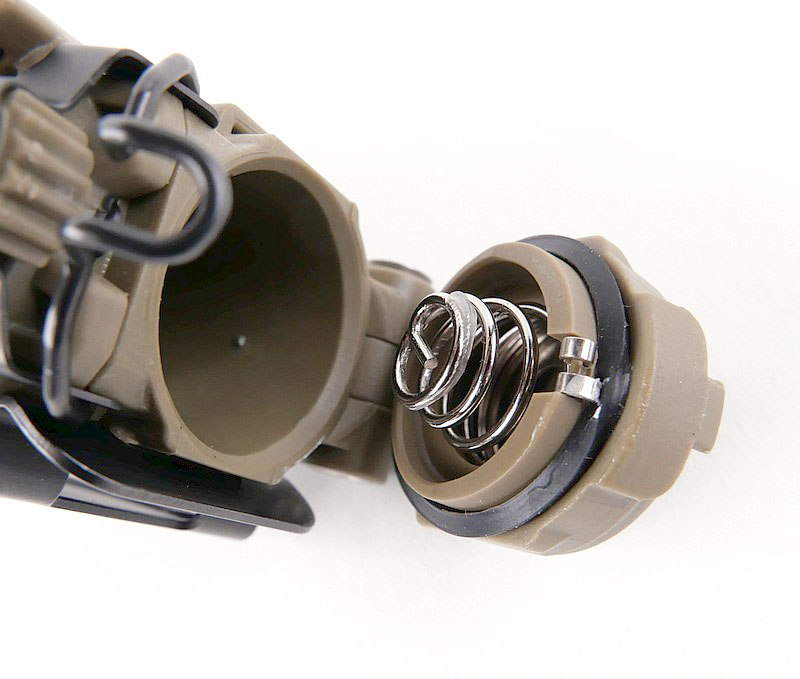
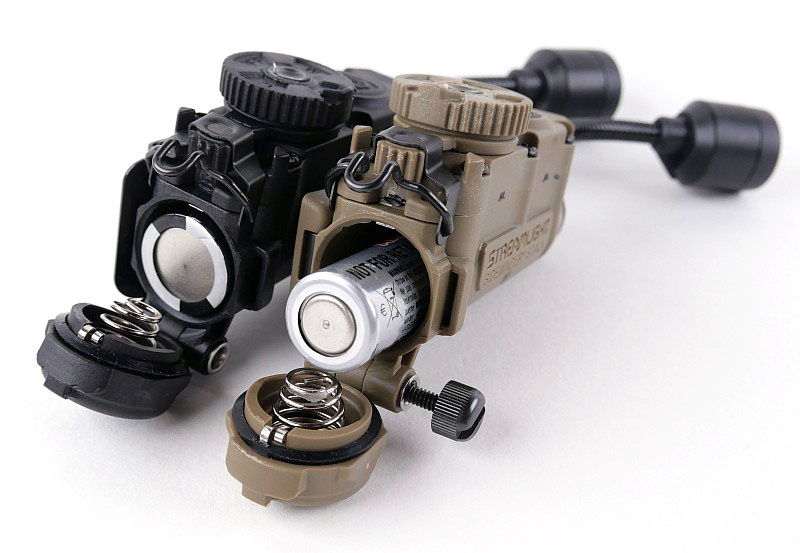
Securing the battery door is a wire clip. Flipping this clip away from the battery door allows it to swing open, revealing the negative contact spring and metal pads that complete the connection to the main body. Looking inside the tube shows the sliding-plunger positive contact, which accommodates the different cell lengths.

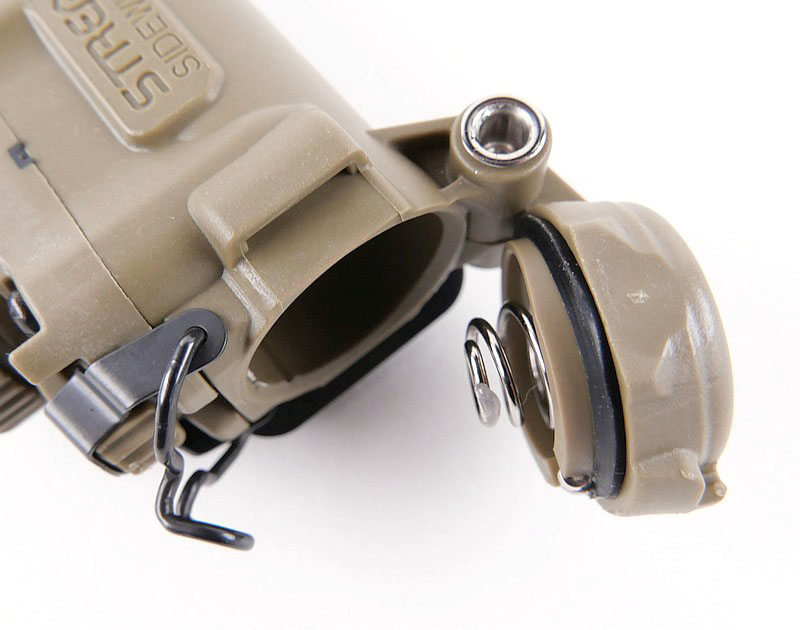
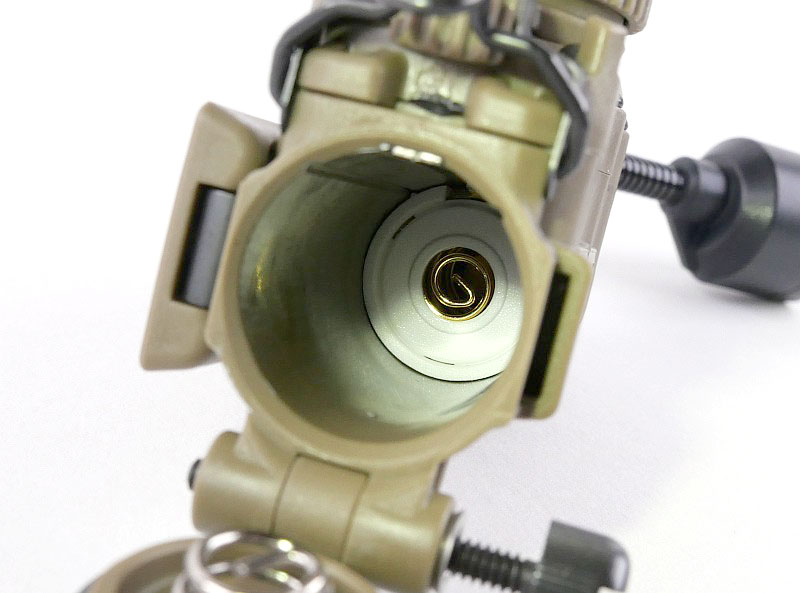
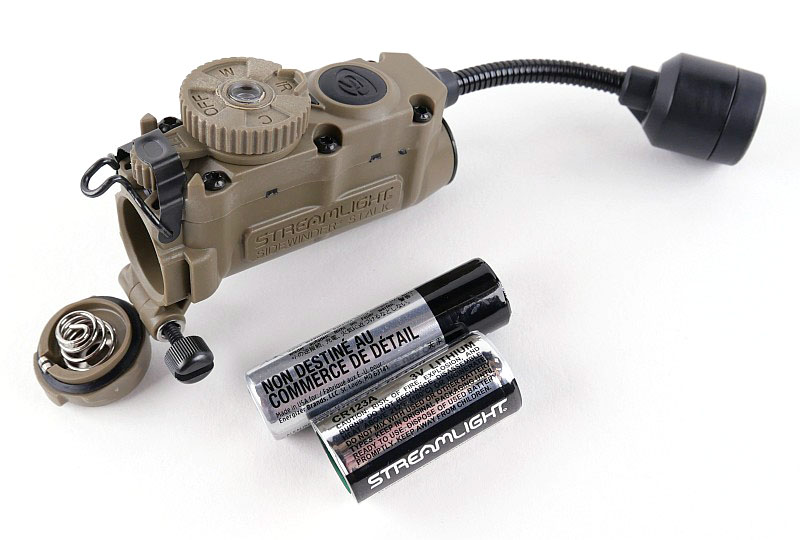
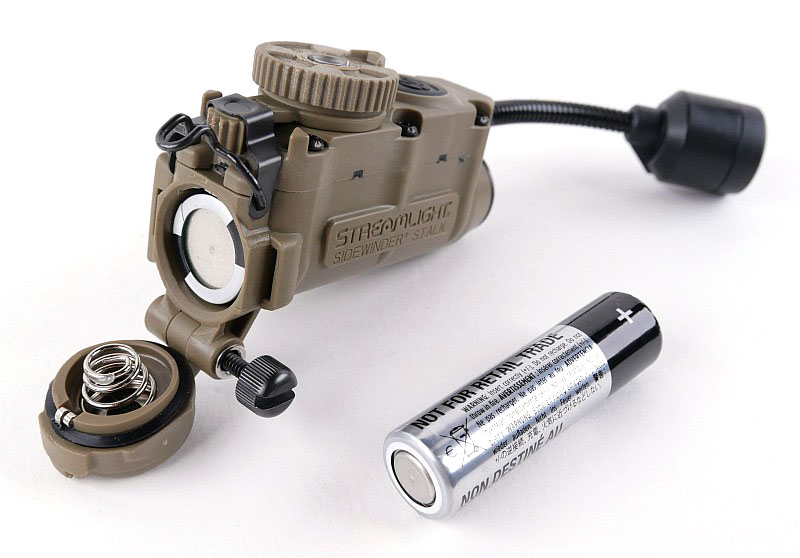
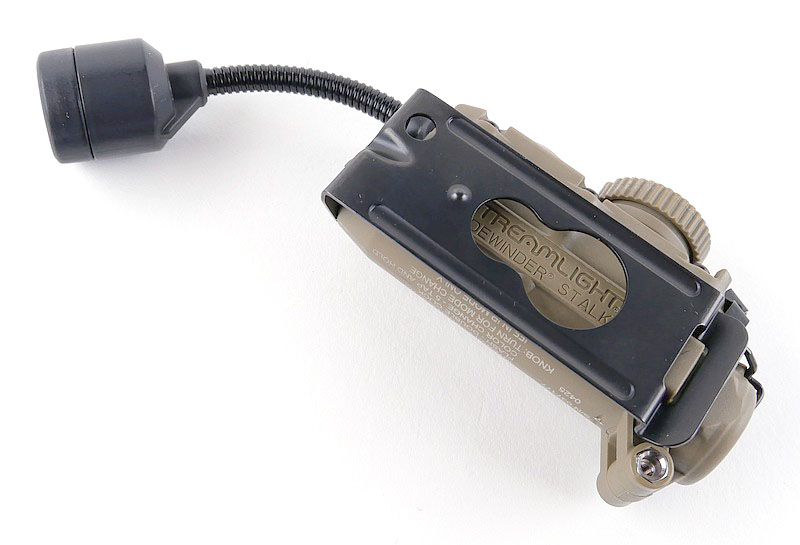
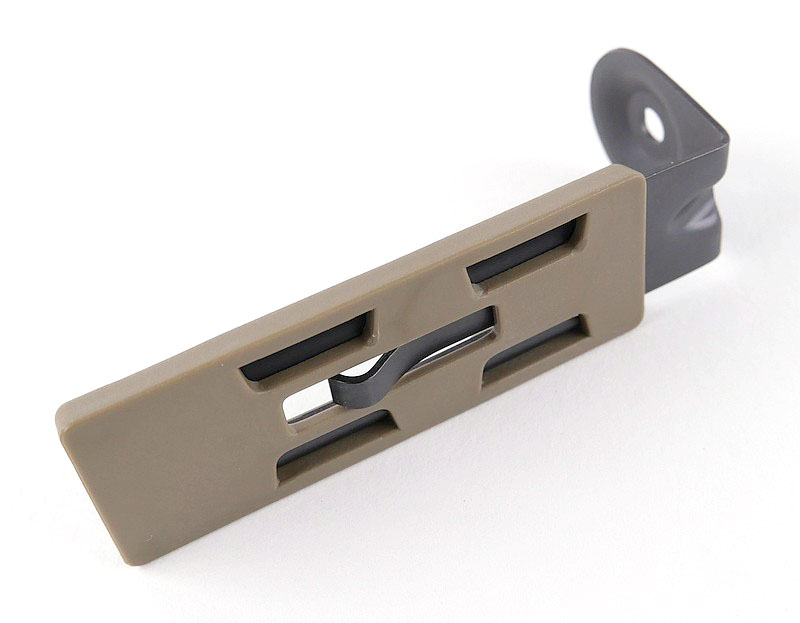
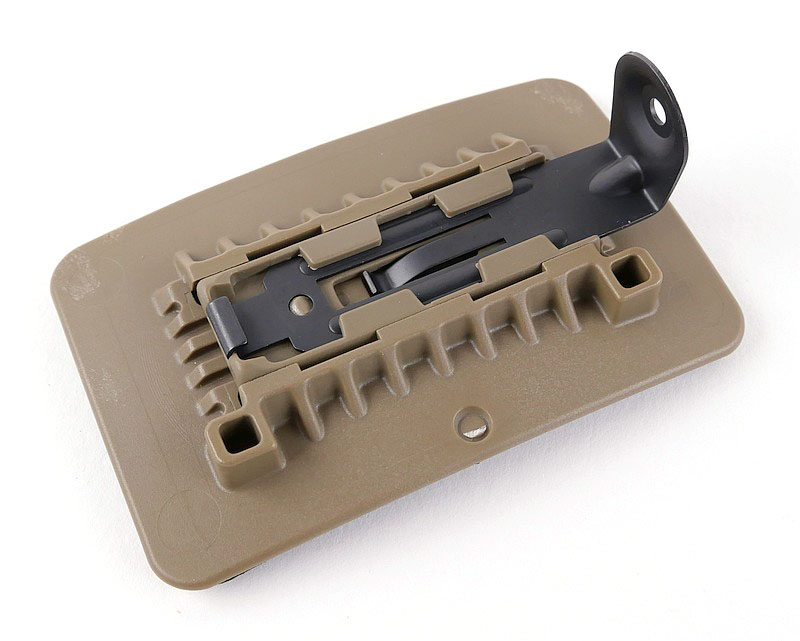
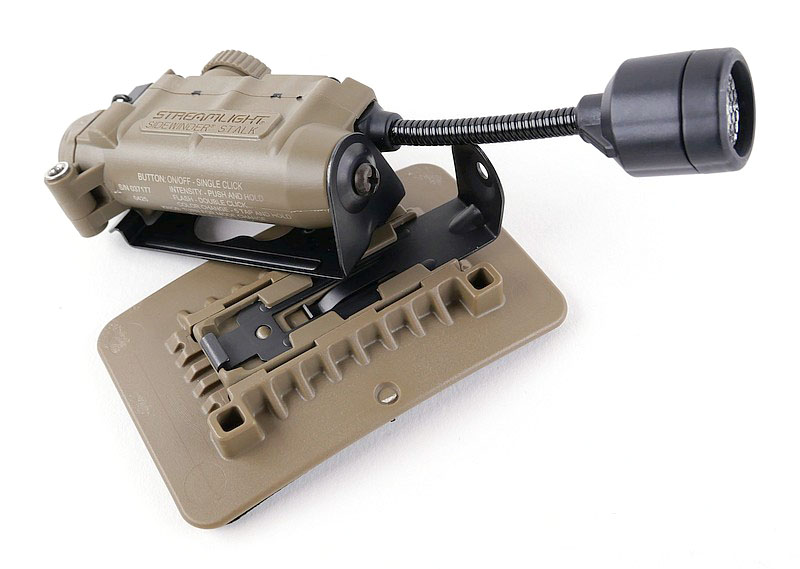
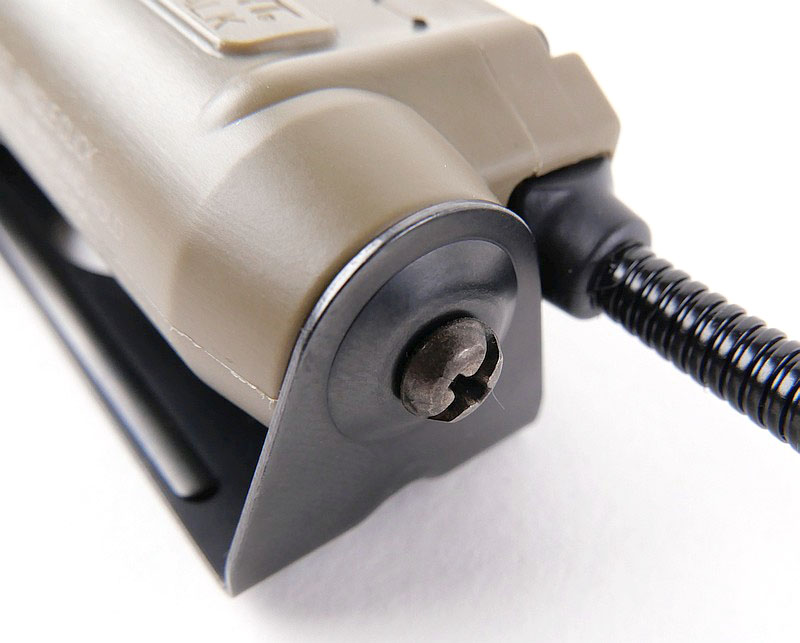
Taking a more detailed look at the mount:
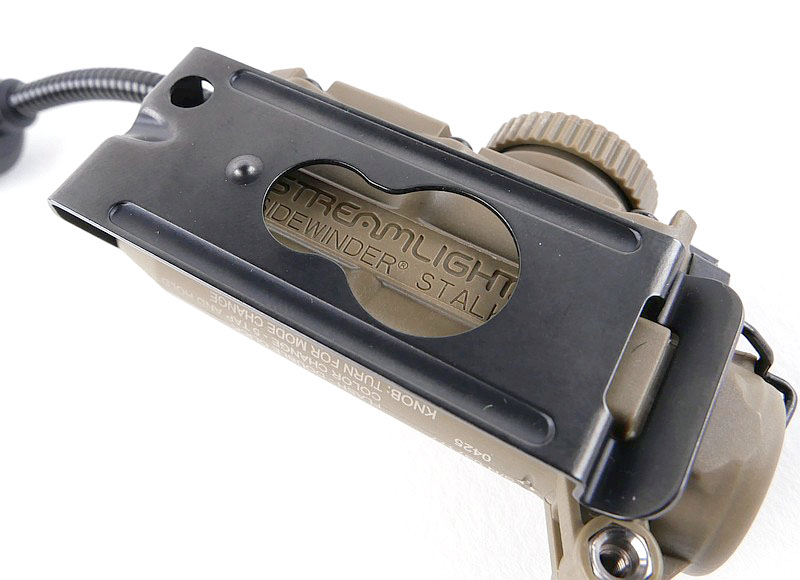
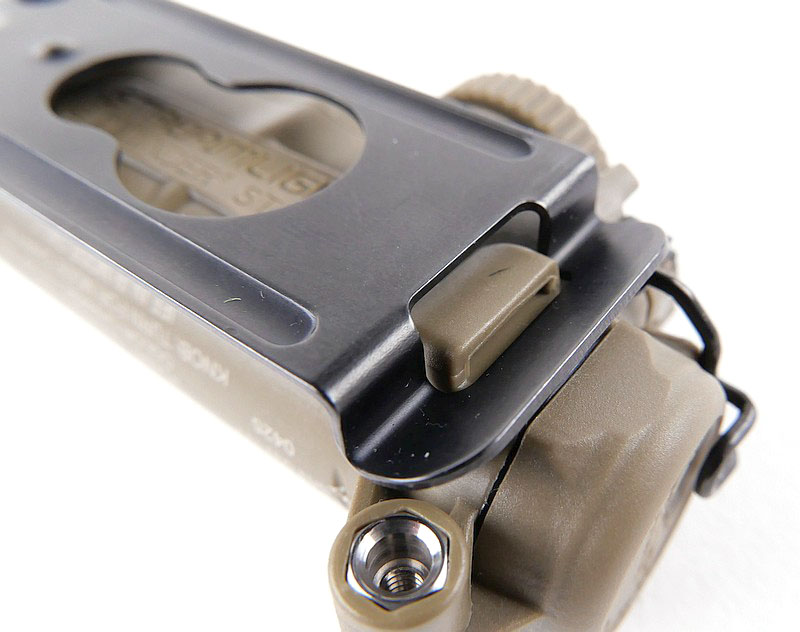
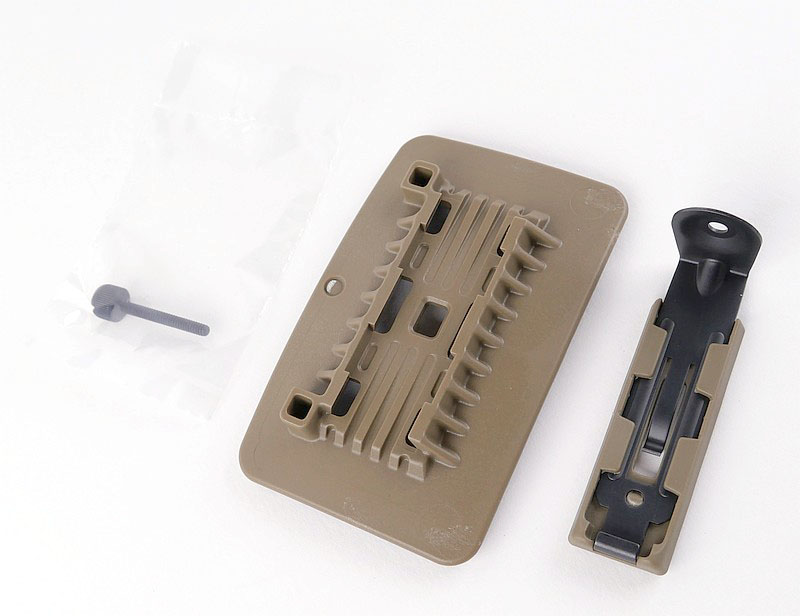
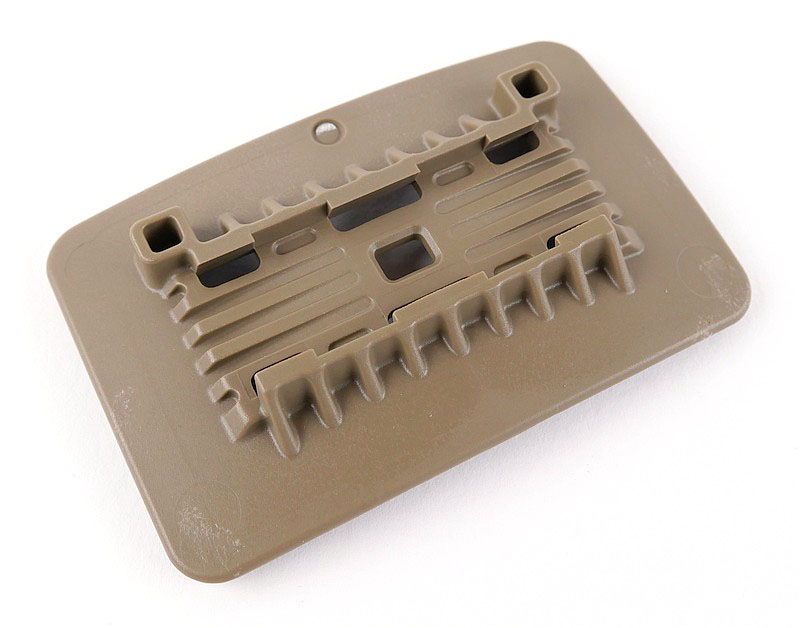
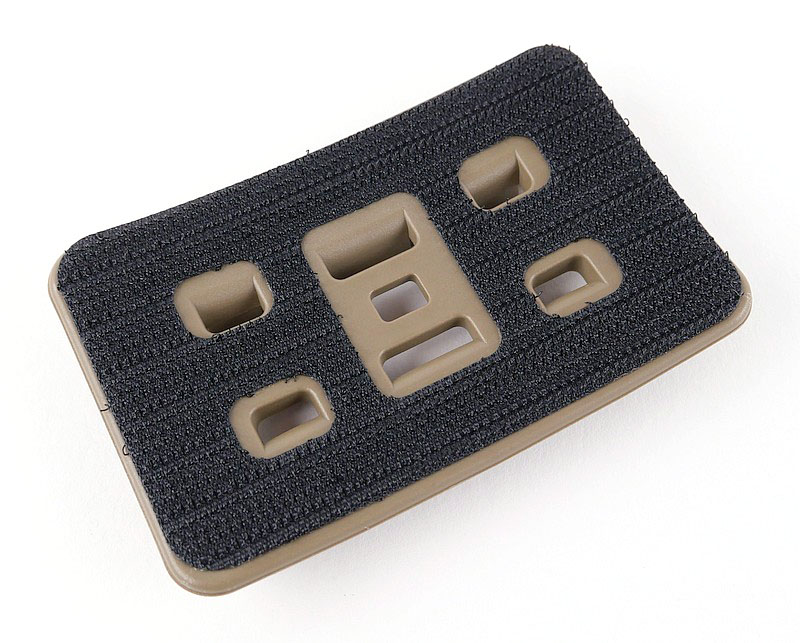
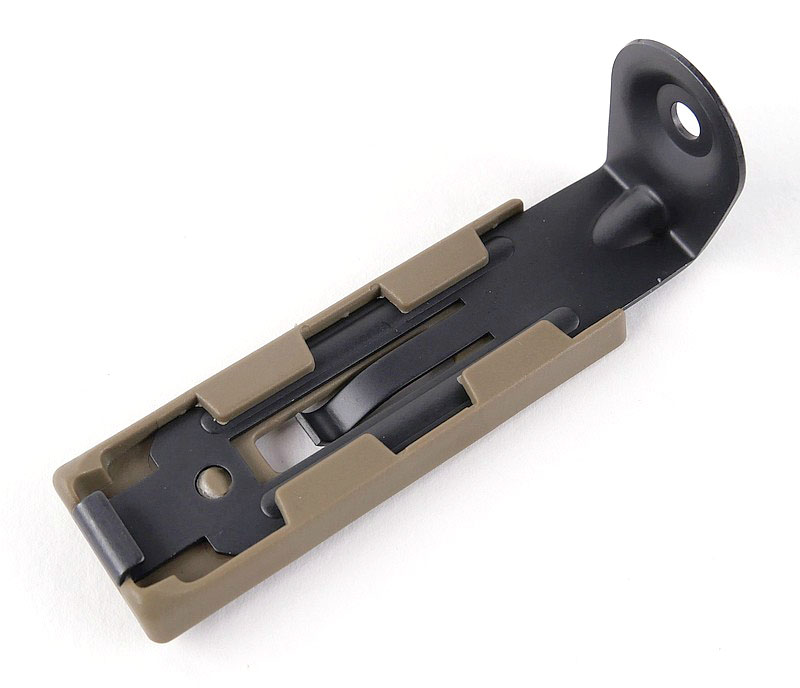
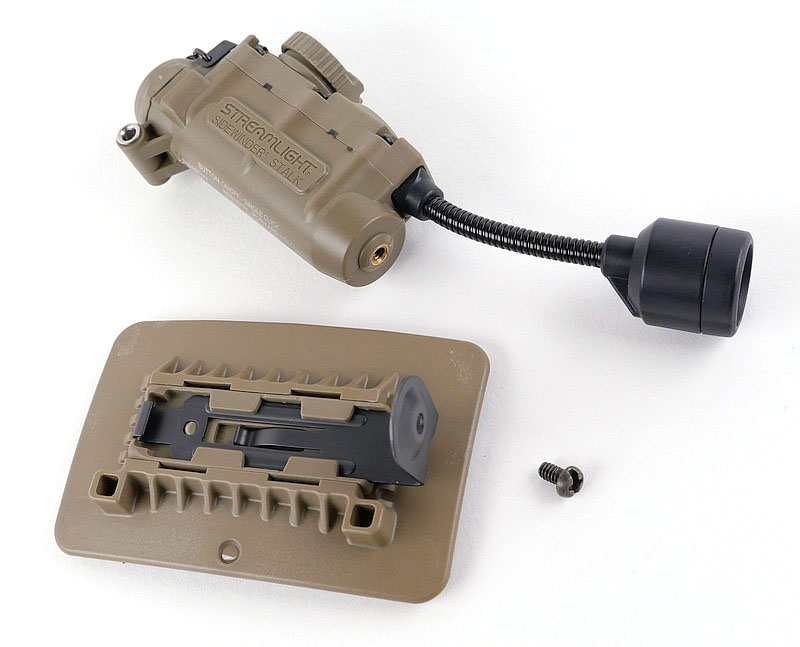
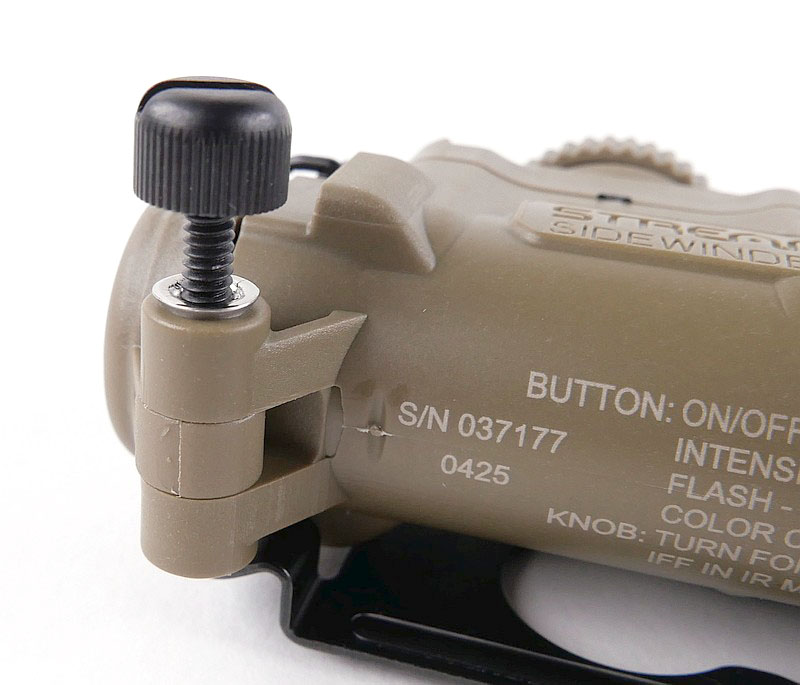
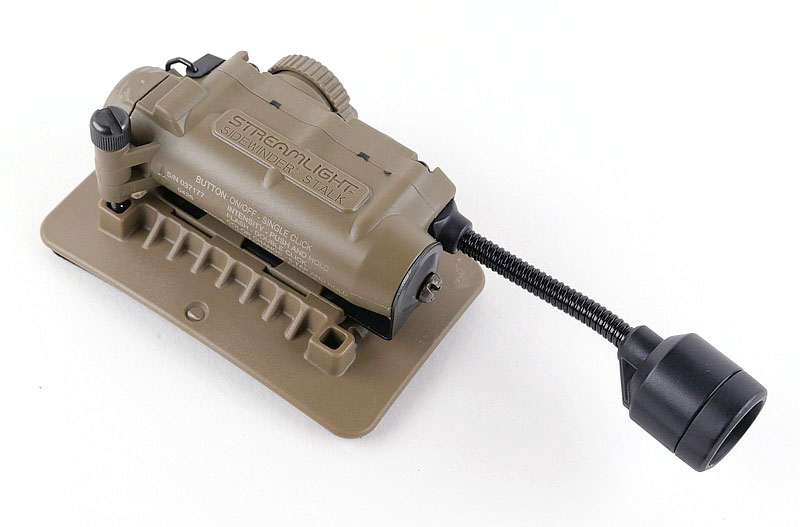
The review versions of the Stalk are those that include the Arc rail mount. The Stalk, as standard, comes fitted with the Sidewinder steel clip mount. This standard clip allows belt, MOLLE, or helmet mounting via the Sidewinder helmet mount (14055).
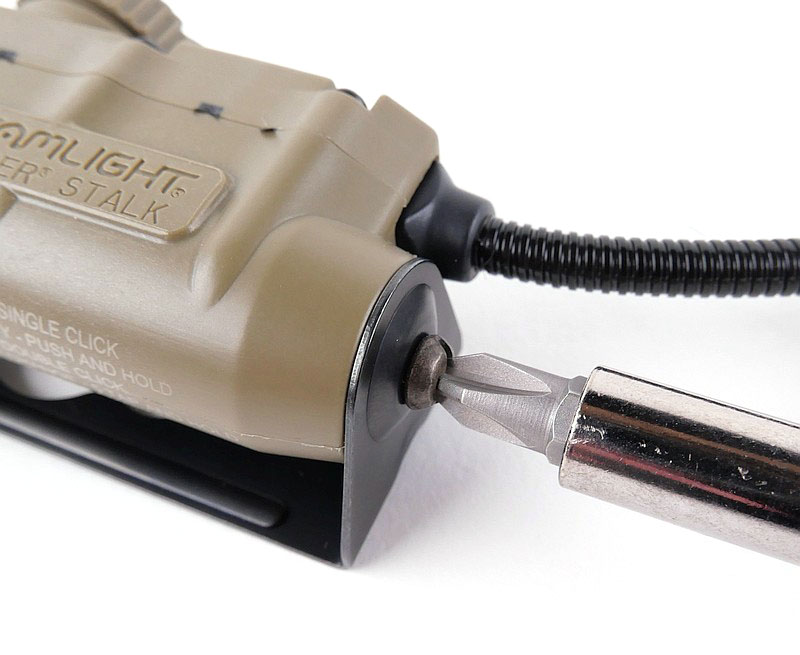
Swapping the standard clip to the ARC rail is a simple job, only requiring a single screw to be taken out and refitted. Also included is a velcro backed ARC rail adapter that can be used on any headwear with velcro pads.

Streamlight Sidewinder Stalk Review – The beam
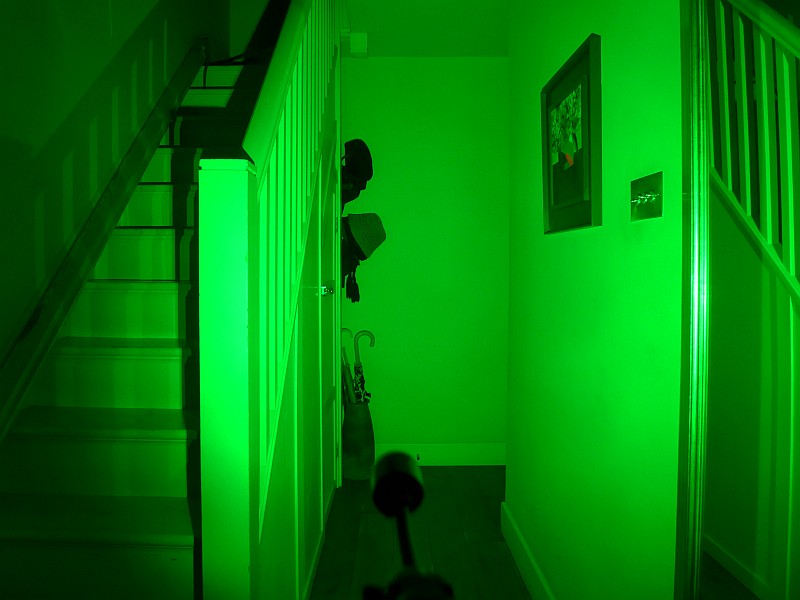
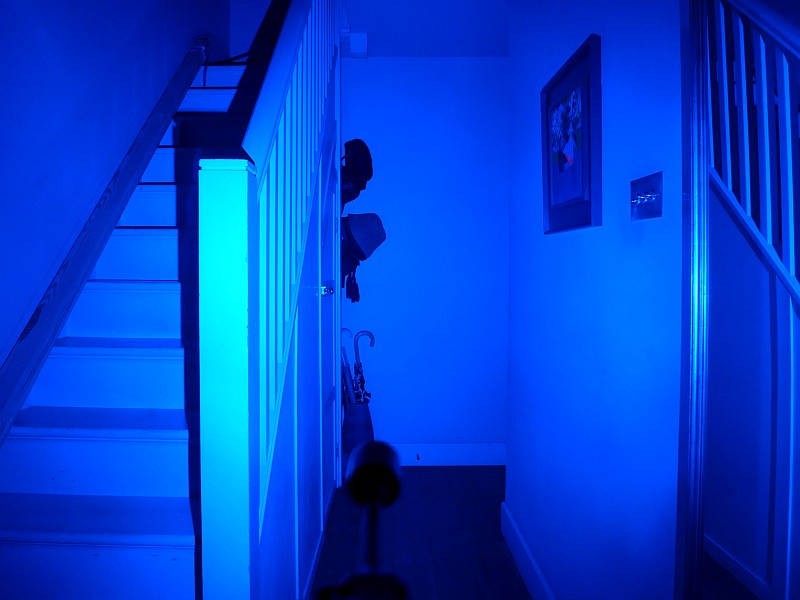
One head, five beams colours, white, blue, green, red and infra-red the last of which I can’t photograph so you’ll see the four others in the gallery. The bobbly looking beam diffuser does create noticeable artifacts at the edge of the beam, especially visible on the white beam on its lowest output (as shown here).
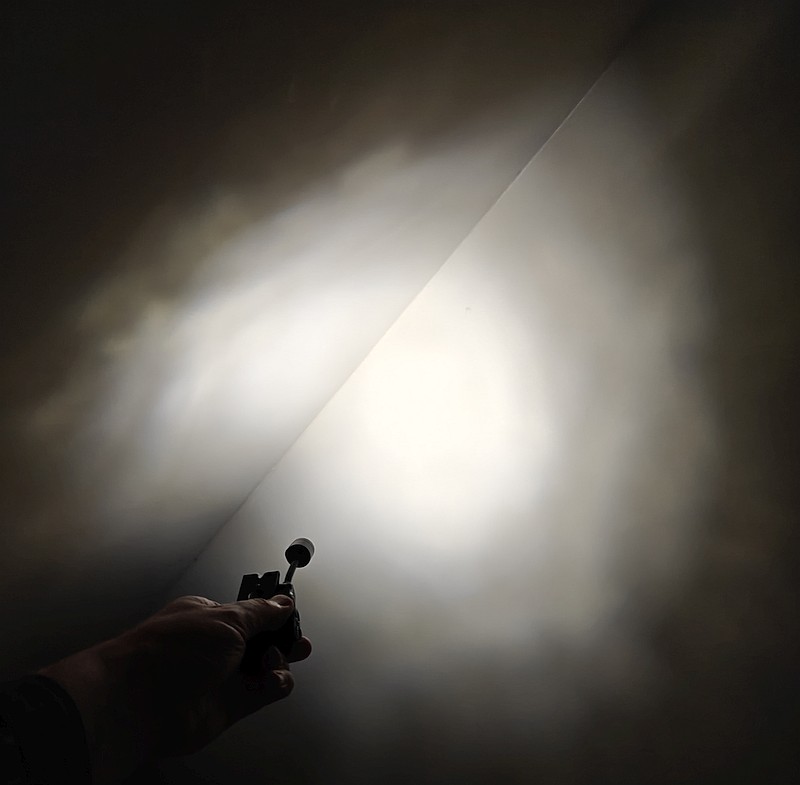
Please be careful not to judge tint based on images you see on a computer screen. Unless properly calibrated, the screen itself will change the perceived tint.
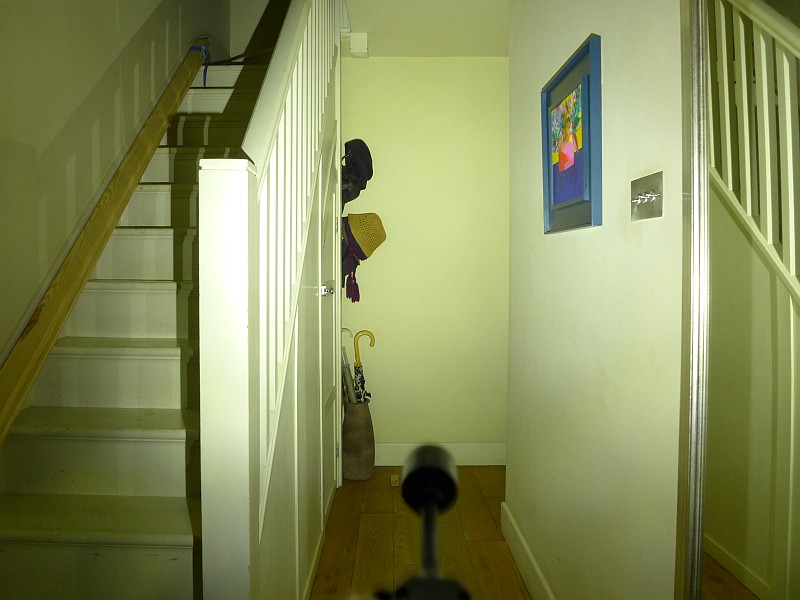
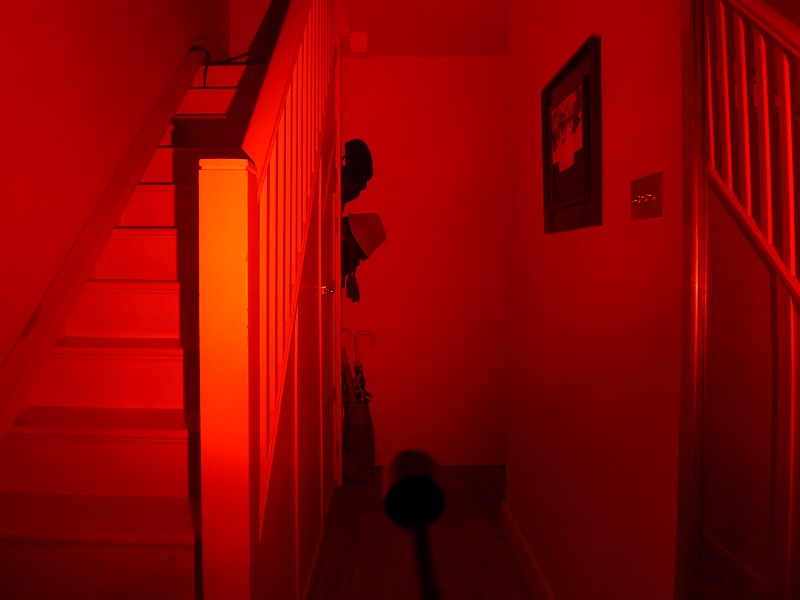
The indoor beamshot is intended to give an idea of the beam shape/quality rather than tint. All beamshots are taken using daylight white balance. The woodwork (stairs and skirting) are painted Farrow & Ball “Off-White”, and the walls are a light sandy colour called ‘String’ again by Farrow & Ball. I don’t actually have a ‘white wall’ in the house to use for this, and my wife won’t have one!
Batteries and output:
The multi-fuel Sidewinder Stalk runs on CR123 or AA Alkaline, or AA Lithium. And unofficially I’ve also run it on AA NiMh, AAA Alkaline, AAA Lithium and AAA NiMh!!!
Please note, all quoted lumen figures are from a DIY integrating sphere, and according to ANSI standards. Although every effort is made to give as accurate a result as possible, they should be taken as an estimate only. The results can be used to compare outputs in this review and others I have published.
For full details of the tests and measurements carried out and an explanation of the results, see the page – Light Testing Information.
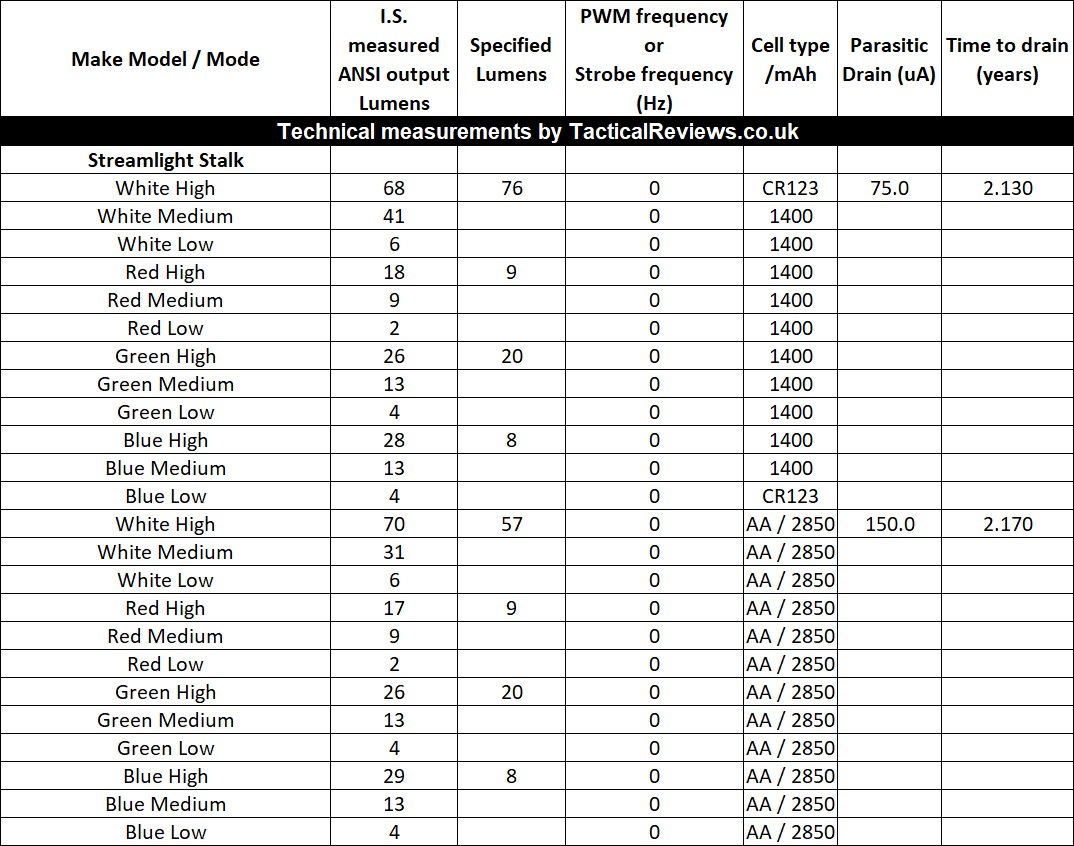
* Beacon and Strobe output measurements are only estimates as the brief flashes make it difficult to capture the actual output value.
There is parasitic drain, which is significant (though nowhere near the worst I’ve come across). As shown in the table, either cell type would be fully depleted after two years. But, critically, the parasitic drain current increases as cell voltage decreases, so this drain accelerates and won’t take two years to drain the cells, more likely around half that.
So what is a usable amount the remaining charge? Even 50% is not ideal, and that is where you would be after six months on standby.
The bottom line here is as long as you are regularly using the Stalk, its fine to leave the battery in it. If you are not going to use it for a week or more, take the cell out.
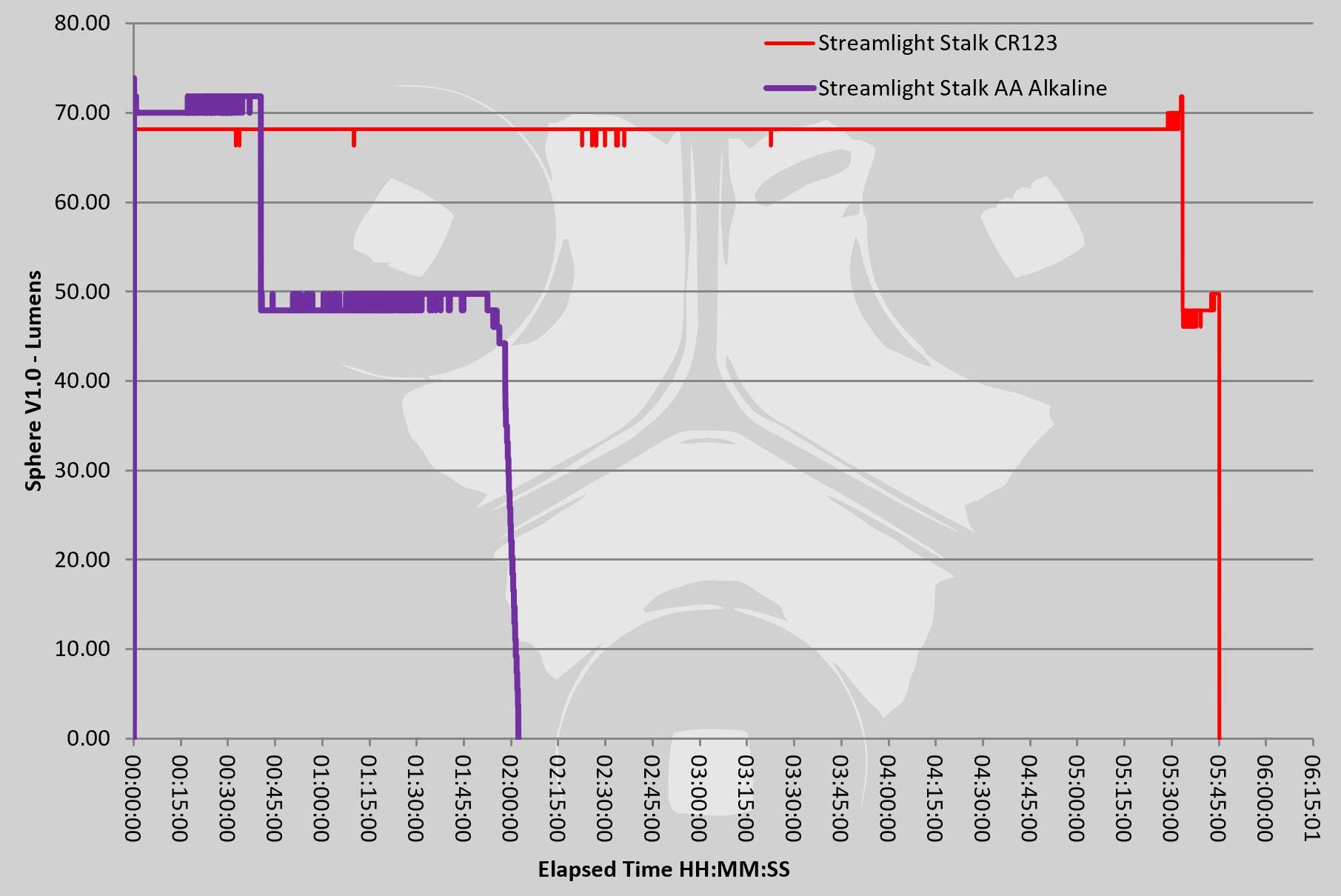
When comparing the runtime from AA and CR123, there is a clear winner. CR123 will give you significantly more output and runtime. Being able to run from CR123 or AA or even unofficially AAA makes this a super flexible light.
The Streamlight Sidewinder Stalk in use
I first experienced Streamlight’s multi-fuel capabilities in the Sidewinder Compact II, and while understanding the disadvantages of a control circuit that has to deal with all the different input voltages (which leads to the higher than ideal parasitic drain), the huge advantage it gives you is ‘cell harvesting’ from whatever you have to hand. This is a true headline feature, as you might go out stocked with CR123s, but if pushed, you will be able to find AA or AAA cells to use. As a single cell light, it doesn’t matter about finding matched cells, as you only use one at a time.
This gives you great confidence in the Stalk being able to keep running when others won’t have a suitable battery to use.
Most of my testing has been with the Stalk hand-held, mainly so I could get more time using it. It is very lightweight and with CR123 can be easily used even clipped onto a baseball cap. I’ve had the colour output almost exclusively on red for night time use when the lowest white output level is too bright, and in terms of output I’ve also almost mainly used it on the default low level. In general use, the low white and low red levels cover 99% of my daily needs. Consider that runtime graph with the output set to maximum, so if only using a lower level, your runtime increases enormously.
It isn’t always an option to use a head torch, depending on headwear. Yes, the stalk is designed to work with helmets, at which point it is a headlamp, but it’s also a practical task light. Anyone working with their hands to do something physical will know a fixed torch is not that useful; do you want to be biting on the tailcap to hold it in your mouth? Or placing it on a surface hoping to won’t roll away or move at the wrong time? A light that has an articulating or moveable head transforms its usefulness. Place or fix the light and aim the beam just where you need it.
All bendable gooseneck extensions have a bit of backlash, that is they ‘recover’ slightly from where you position them. This is just a characteristic so you learn how much to over adjust so it springs back to where you want it.
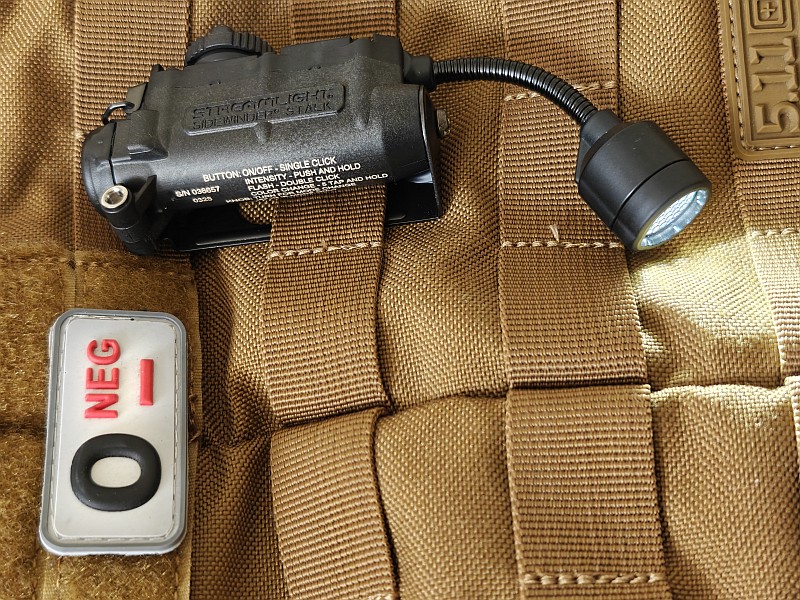
In the original Sidewinder, Streamlight managed one of the lowest parasitic drain figures I’ve ever measured, 0.2uA, which is negligible as the cell’s own internal losses are more than this. The Stalk’s superbly useful multi-fuel capability is a real challenge for the driver circuit having such different input voltages, so as a trade-off for the ability to use CR123, AA and even AAA may be worth this extra drain. Cracking open the battery door when putting it away stops this, as long as you remember.
Streamlight’s Sidewinder collection is rounded off nicely with the addition of the Stalk, and it may be worth adding to your own lighting line up, even if only for the multi-fuel capability.
Streamlight Sidewinder Stalk Review Summary
The views expressed in this summary table are from the point of view of the reviewer’s personal use. I am not a member of the armed forces and cannot comment on its use beyond that covered in the review.
Something that might be a ‘pro’ for one user can be a ‘con’ for another, so the comments are categorised based on my requirements. You should consider all points and if they could be beneficial to you.
_______________________________________________
What doesn’t work so well for me
_______________________________________________
Beam diffuser produces a lot of artifacts.
Parasitic drain quite high.
_______________________________________________
Things I like
_______________________________________________
Multi-fuel capable – CR123, AA and even AAA.
Five light colours in one – White, Red, Green Blue and IR.
Flexible gooseneck head adjustment.
Tactile Rotary selector switch.
Swappable mount types.
Ambidextrous mounting.
Black or Coyote options.
IFF strobe protected safety switch.
No detectable PWM.
Lightweight.
Streamlight Sidewinder Stalk Review Videos
Starting with a short format sixty second review:
Onto a full video review covering many more details:
Discussing the Review:
Something new – will it work? A Tactical Reviews Subreddit.
TacticalReviewsChat on Reddit
Please visit there and start/join the conversation.