Knife Review: MICROTECH SOCOM Elite

A time-tested classic, the Microtech SOCOM Elite Manual has set a standard for tactical and utility knives. In this detailed review of the Microtech SOCOM Elite Manual folding knife we look at the current 2025 incarnation of this classic.
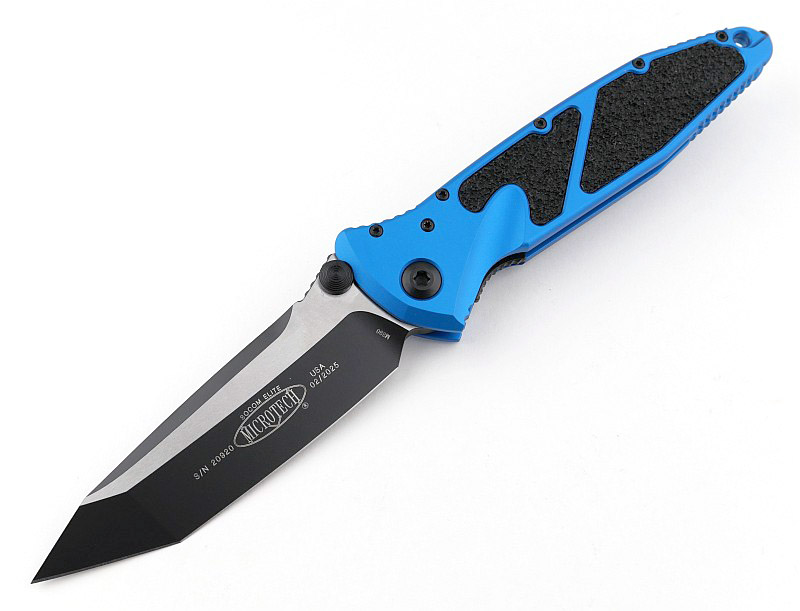
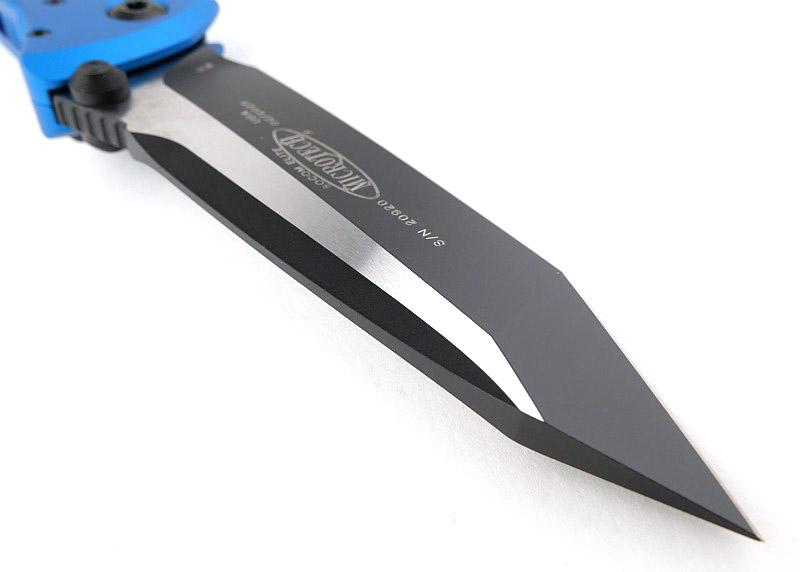
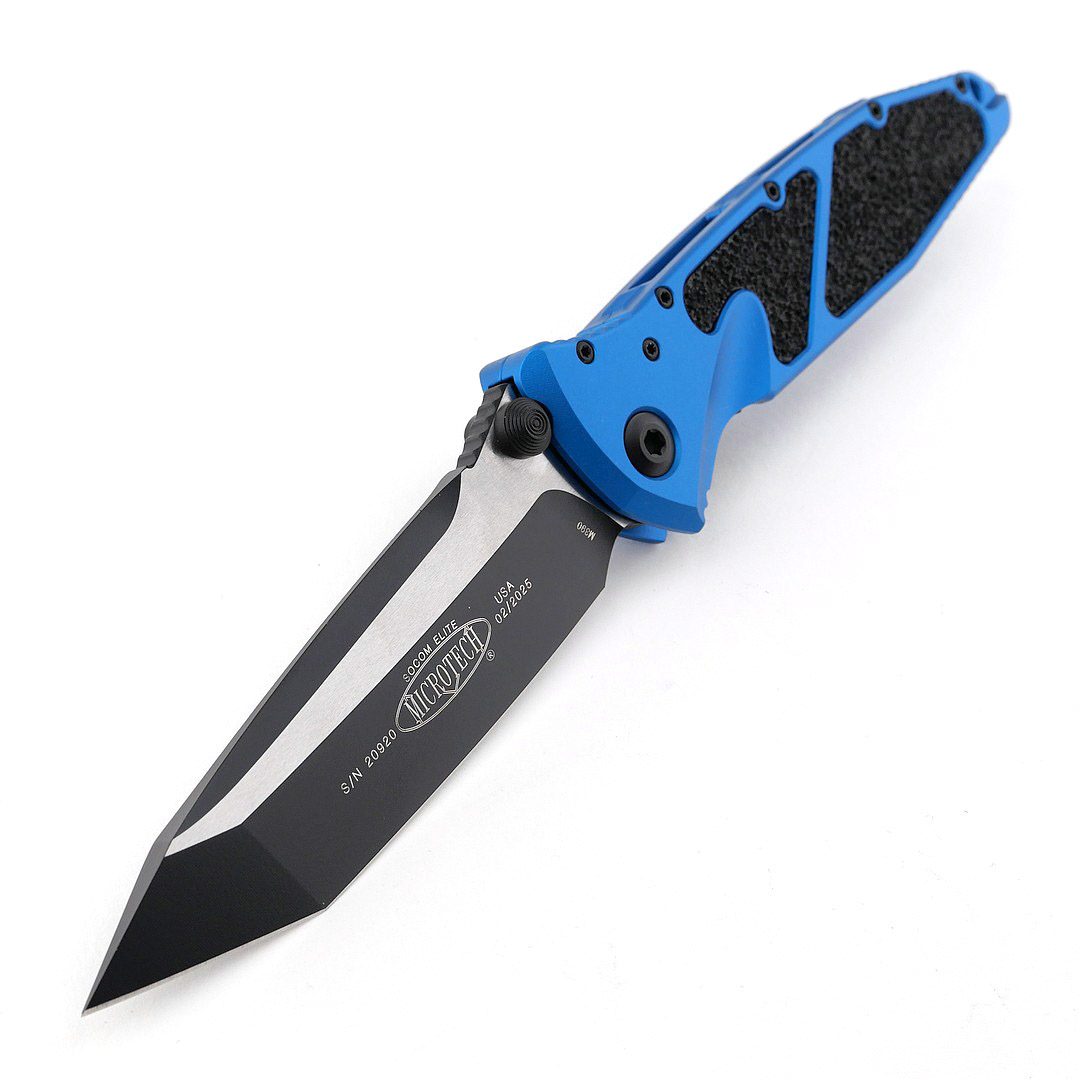
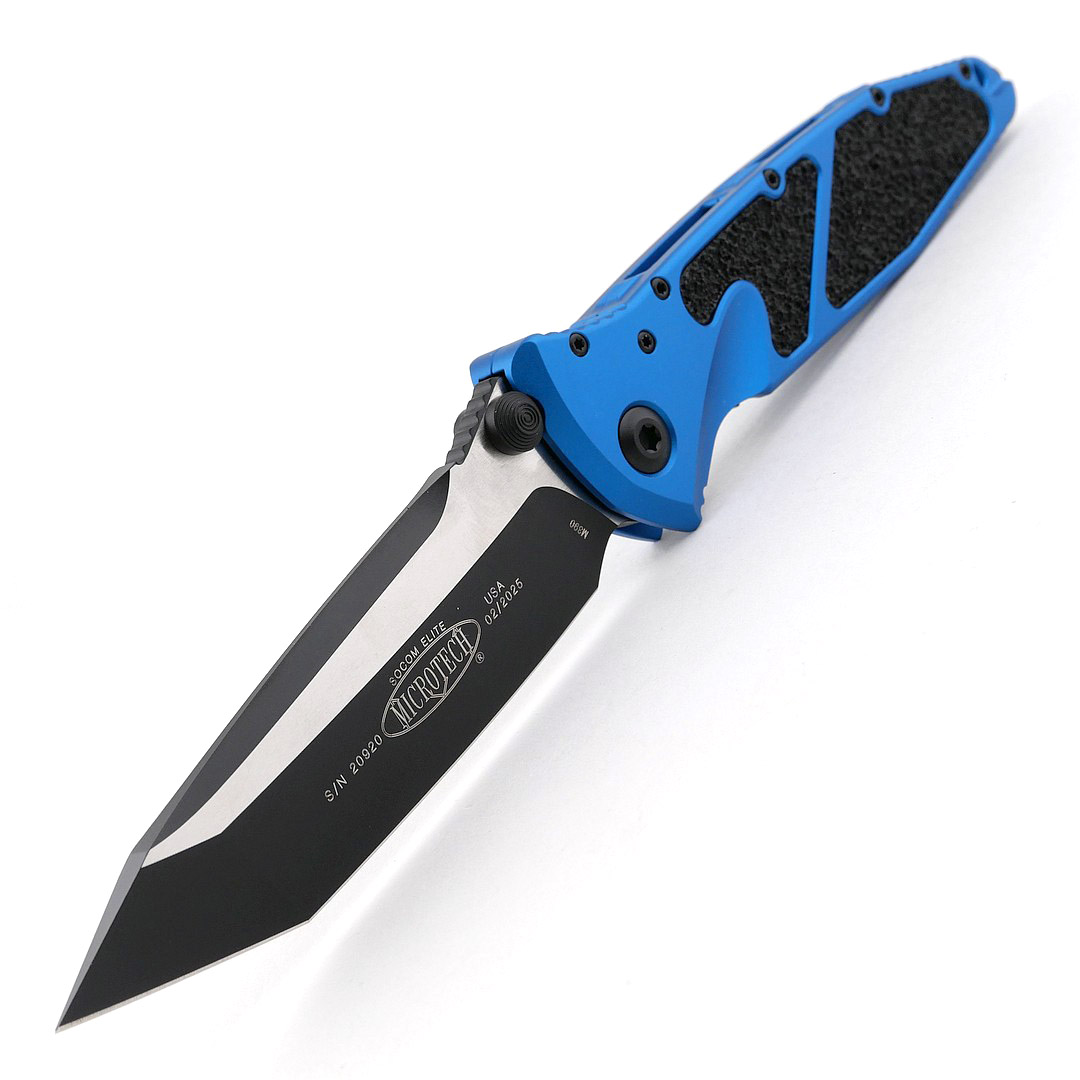
The original SOCOM has remained a highly popular folding knife since its inception in 1996. Over the years improvements have been made, making the SOCOM more adaptable to different environments. The SOCOM Elite has a unique handle shape that molds to your hand and is offered with different blade shapes and finishes. This review model is the ‘Socom Elite T/E Blue Standard 161-1 BL’ – featuring the Tanto black cerakote blade.
What’s in the box?:

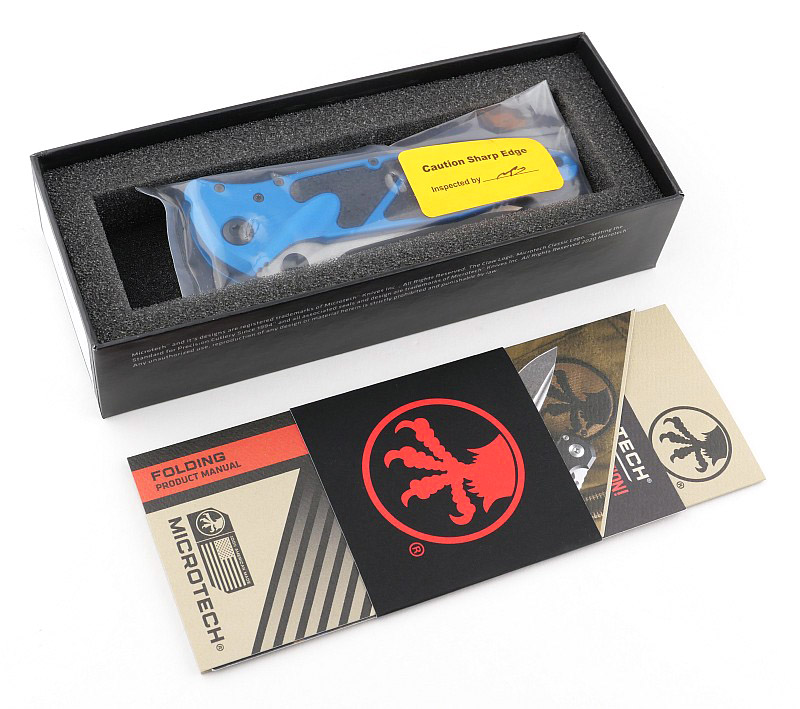
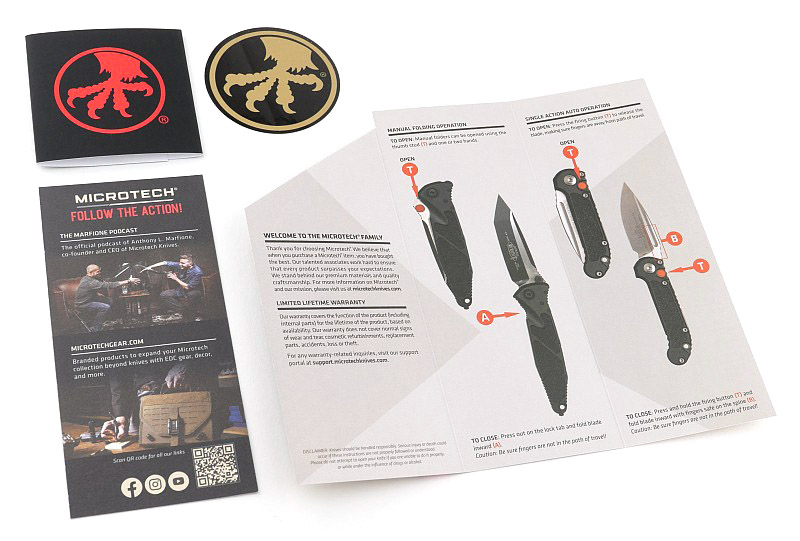
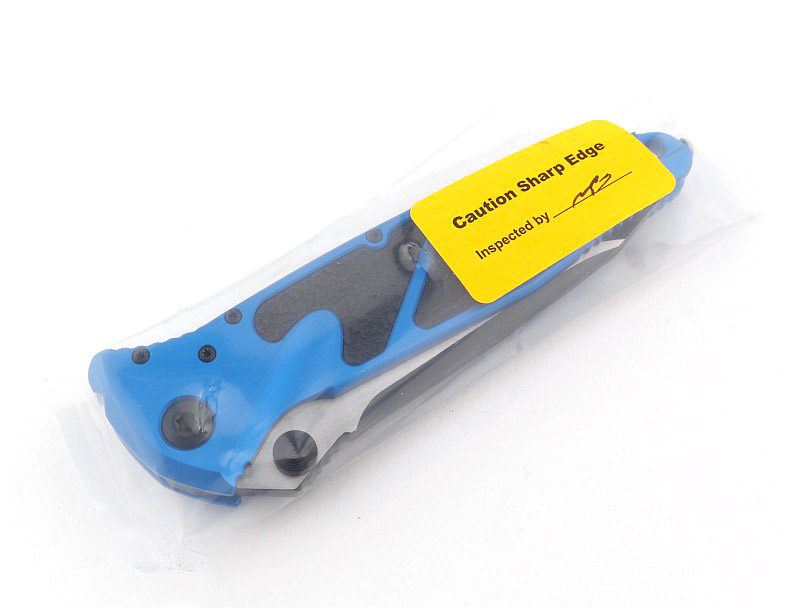
A very smart appearance in a black box with red metallic logo; inside the box is an information pack with sticker, and the knife in a plastic bag with warning label.


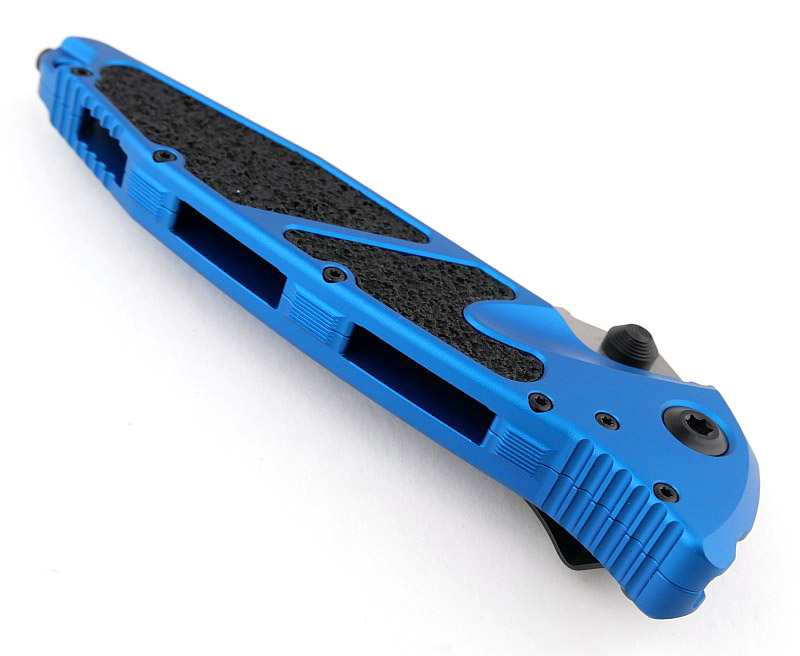
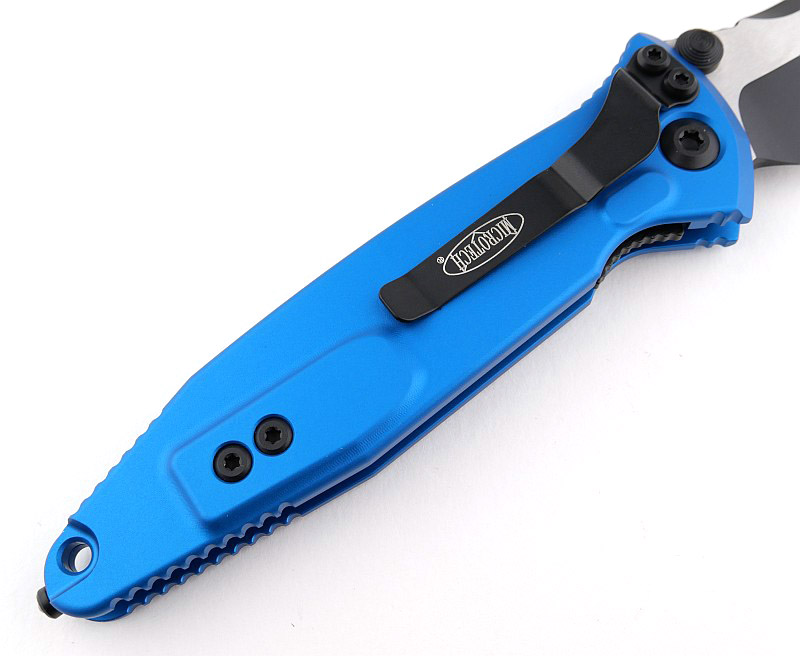
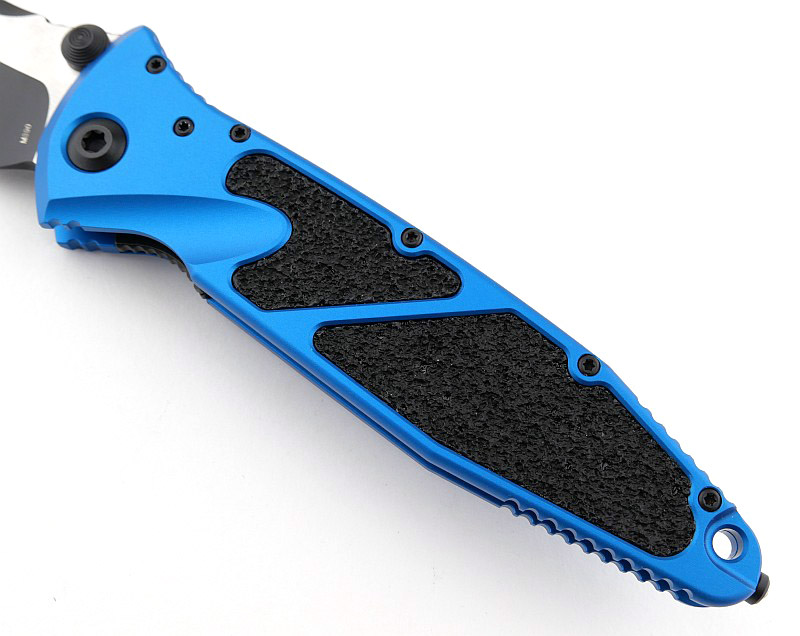
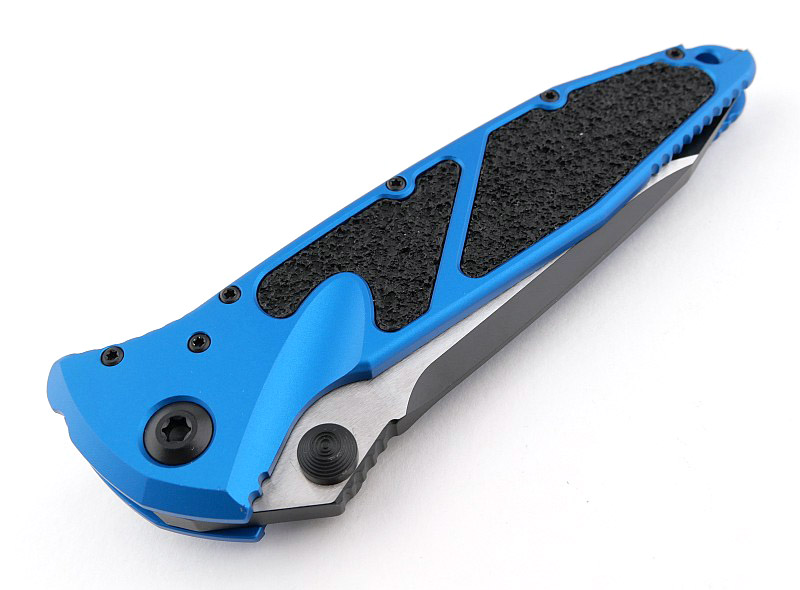
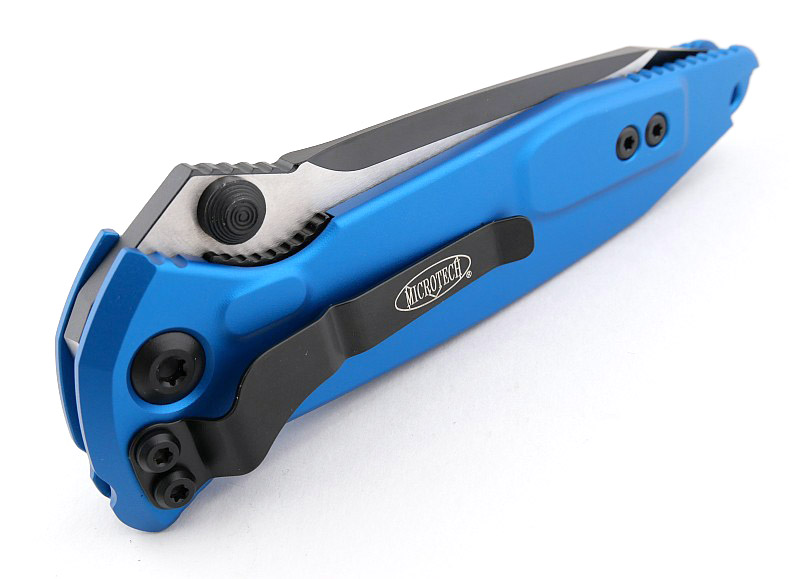
A good look round the (folded) SOCOM Elite – Things to look out for here are:
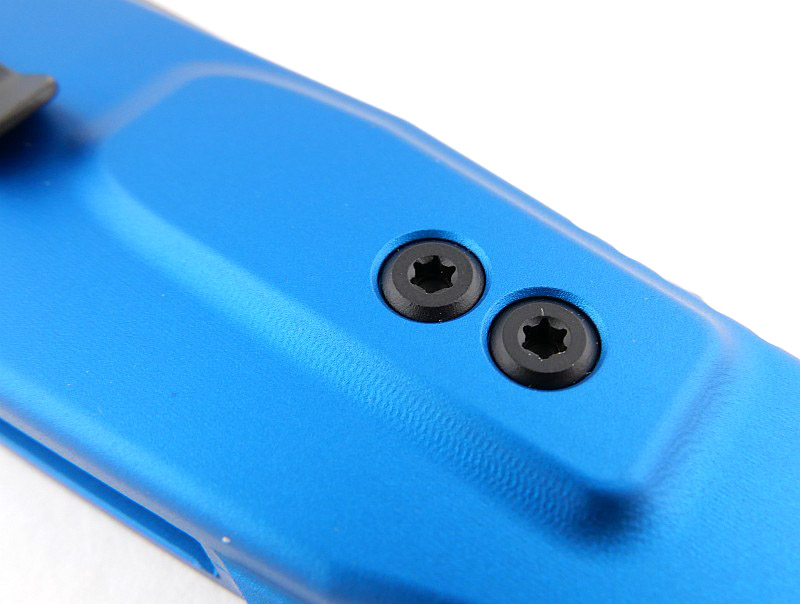
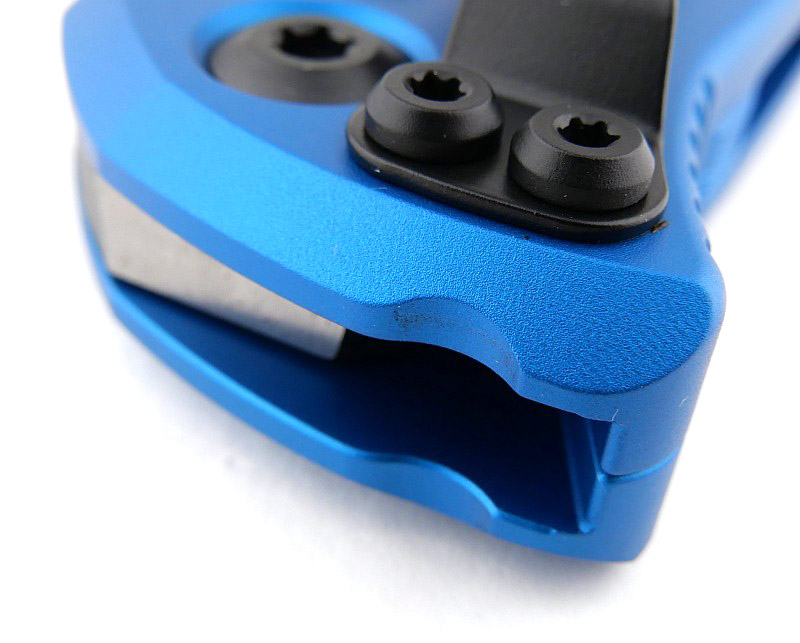
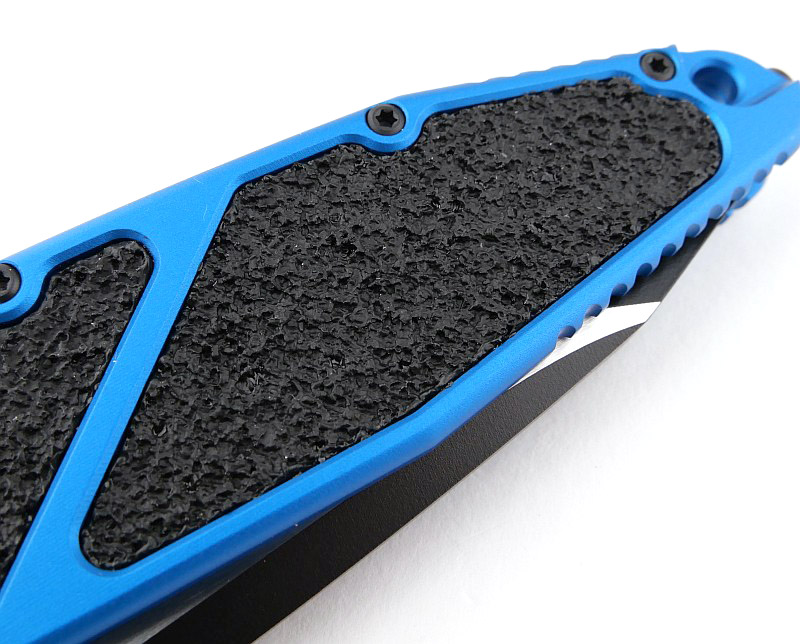
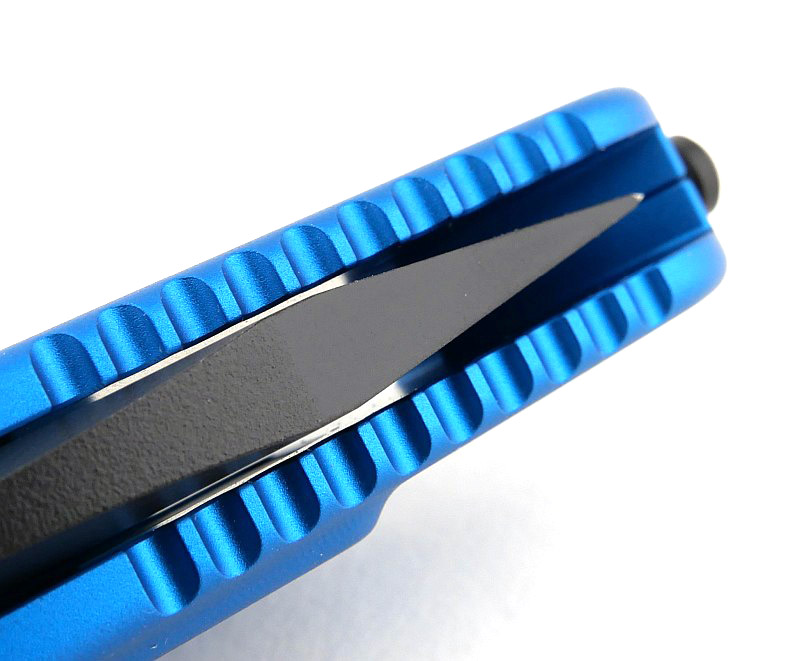
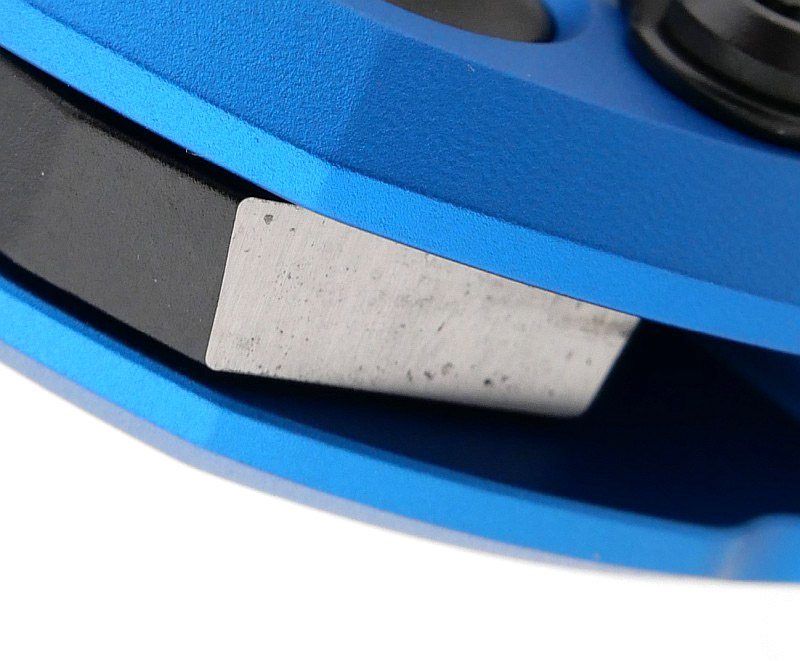
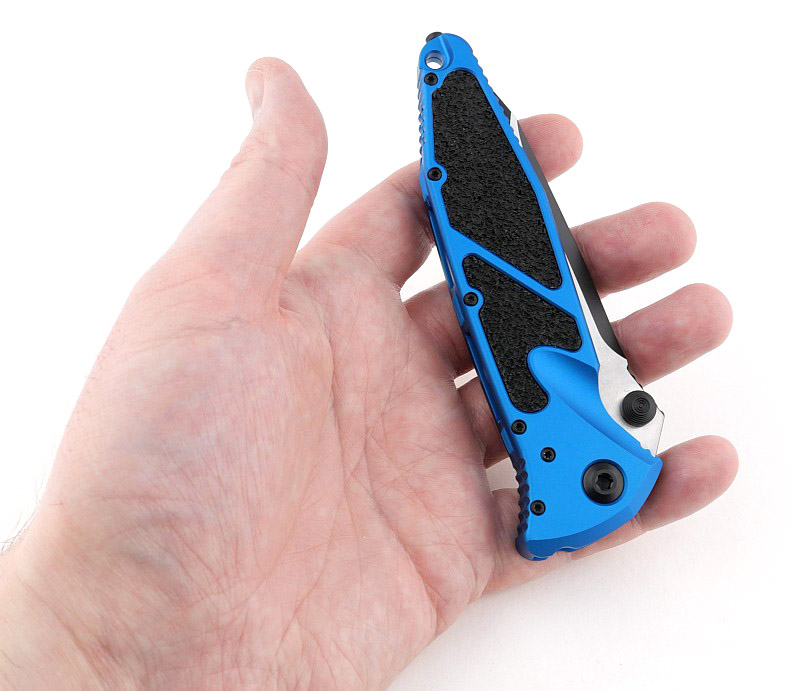
With many details to focus on, this gallery shows the features that can be seen with the knife folded. The SOCOM Elite’s handles are intricately machined to incorporate a multitude of features, recessed grip panels, back spacers, thumb stud easing, thumb ramp and reverse grip jimping, lanyard hole amongst many others. The single position pocket clip dog-legs around the pivot bolt. At the front of the handle are the recesses which the thumb studs rest against as the blade stop. This current version of the SOCOM Elite also has a glass breaker in the butt of the handle.
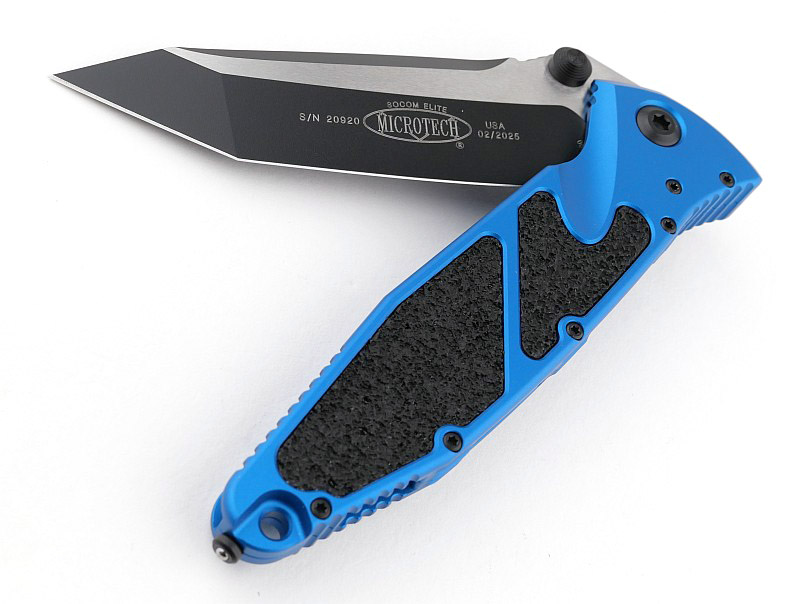
A good look round the open SOCOM Elite – Things to look out for here are:
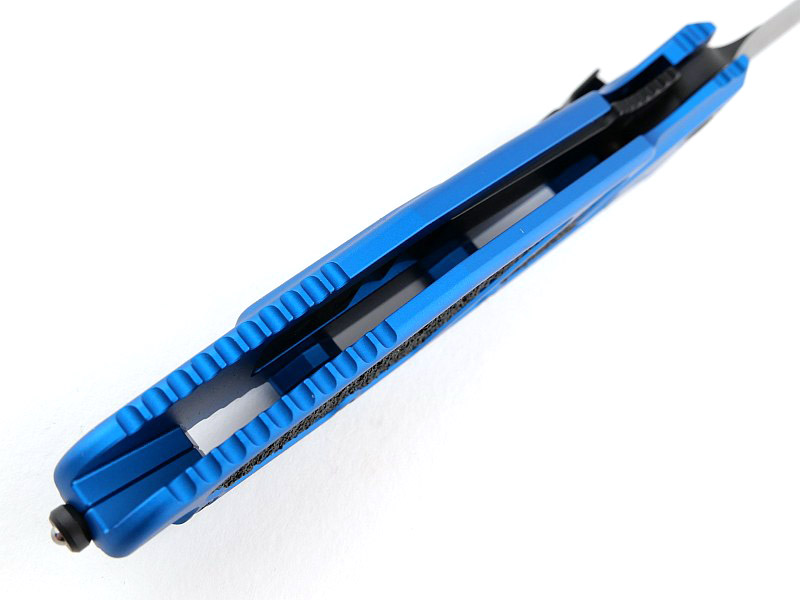
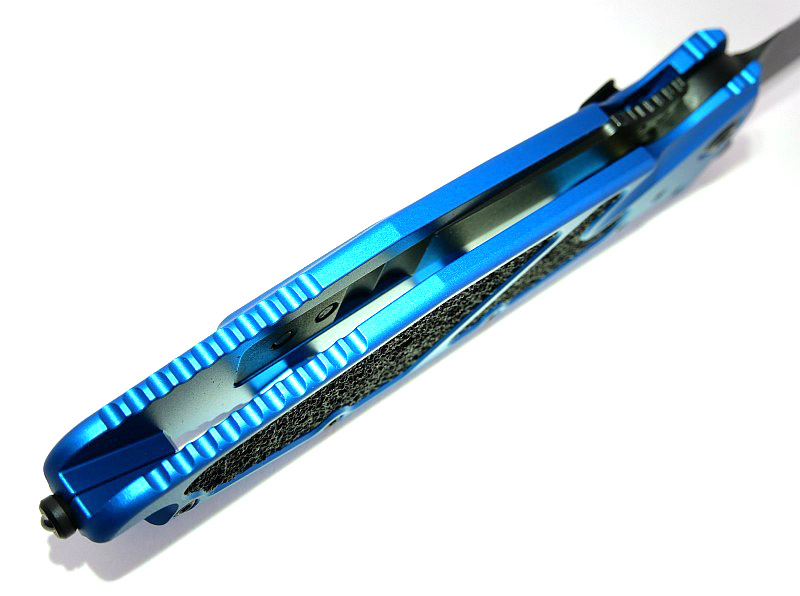
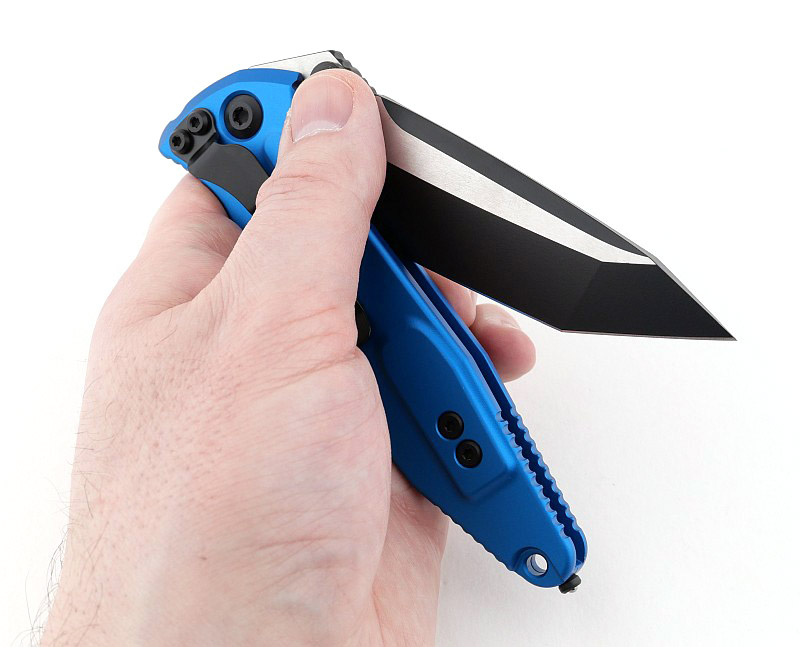
As that wonderful two-tone blade swings out, we can start to pick out some other details like the internally recessed liner lock bar emerging into its engaged position. Lighting up the inside of the handle shows the lock bar with its two spring cuts, and how this fits into the internal recess fixed in place by two screws from the outside of the handle.
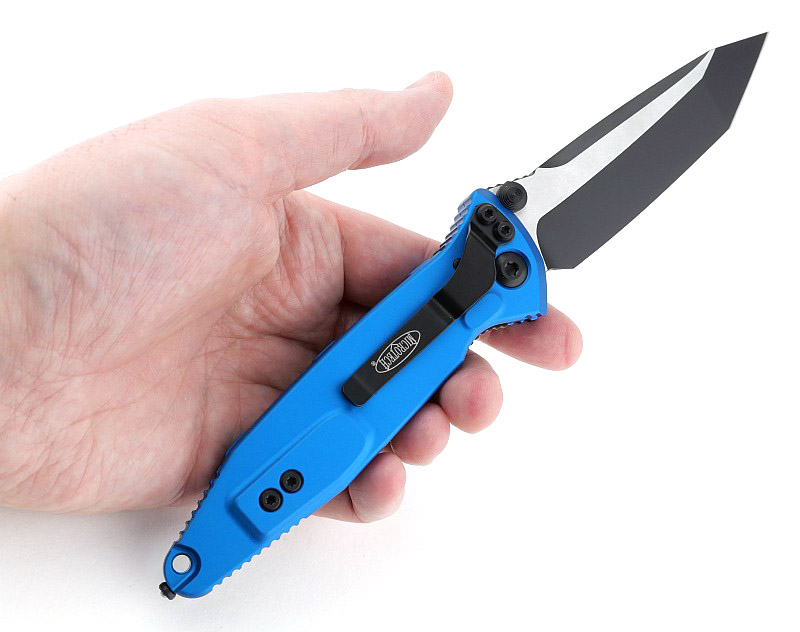
With the blade fully deployed, the shape and excellent ergonomics of the handle are clear. For the SOCOM model, the dual thumb studs are the blade stop. A relatively large stud diameter has been used, and this fits into matching grooves in the front of the handle to provide a very secure blade stop. This design also keeps the thumb studs more out of the way than designs that don’t use this blade stop method.
Current models use Cerakote for the blade coating, which gives a very matt finish and deep colour on the black/two-tone blade. With a gently curved plunge line, and choil shape ensuring the cutting edge is fully sharpened all the way to the heel, there is no compromise in strength or performance. The SOCOM even includes a section of jimping on the blade above the thumb studs for maximum grip security when moving your grip forwards. Marked on the blade as M390, the blade steel is actually the Microtech M390MK which is a subset of the M390 specification using tighter compositional tolerances – officially it is still M390 and is marked as such.


Explained by the Maker:
In this section I’m including words directly from the maker themselves.

The SOCOM Elite Manual sets the standard for tactical and utility cutlery. The original SOCOM has remained a highly popular folding knife since its inception in 1996. Over the years improvements have been made, making the SOCOM more adaptable to different environments. The manual SOCOM has a unique handle shape that molds to your hand.

Microtech Socom line takes its name from the United States Special Operations Command, SOCOM for short. SOCOM is the operational command of the United States Department of Defense responsible for special operations. Under its supervision are units such as the Navy SEALs, Air Force PJs, Army Rangers and others.

This knife was designed to meet the expectations of US Army special forces operators. Its design is the result of long-term research and testing aimed at creating a tool that is optimal in terms of functionality and durability. The blade is made of Microtech’s own version of Böhler M390 steel, designated M390MK, which has tighter specifications within the M390 standards, so ensures a greater consistency for the production processes and ultimately consistency of performance for Microtech knives. The knife’s handle is made of aluminium, which makes it lightweight and durable. Special 3M inlays ensure a secure grip even under the toughest conditions.

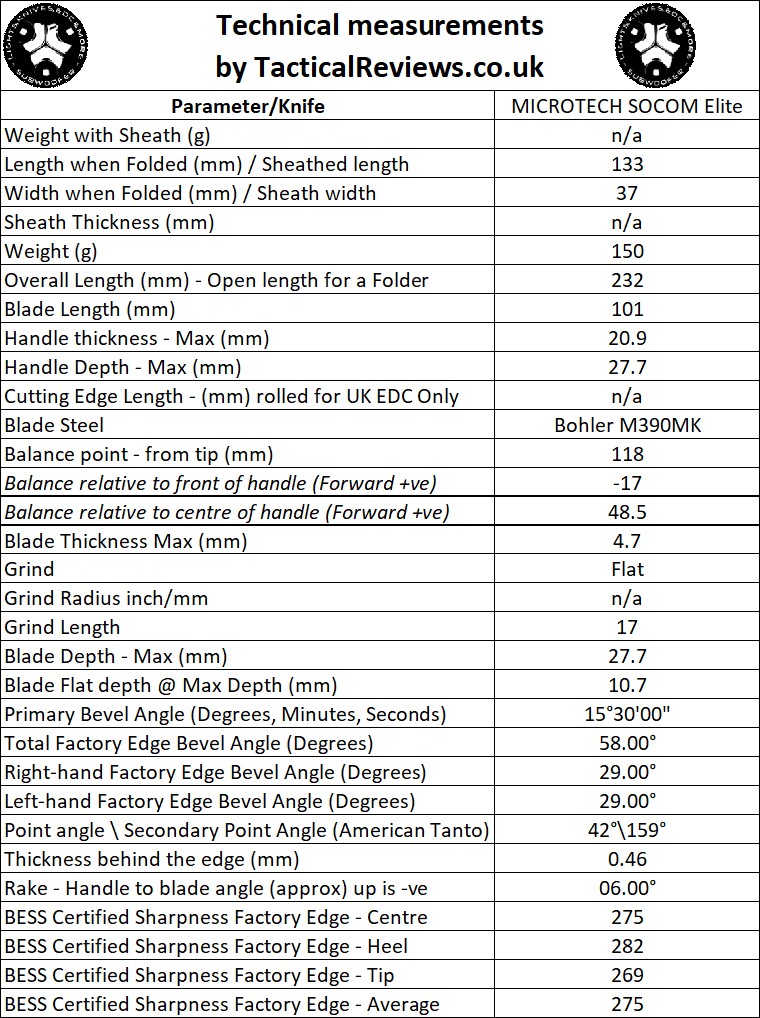
The Blade and Handle – Detailed Measurements:
For full details of the tests and measurements carried out and an explanation of the results, see the page – Knife Technical Testing – How It’s Done.

The blade is made from M390MK steel – this is a subset of the M390 specification using tighter compositional tolerances – officially it is still M390.


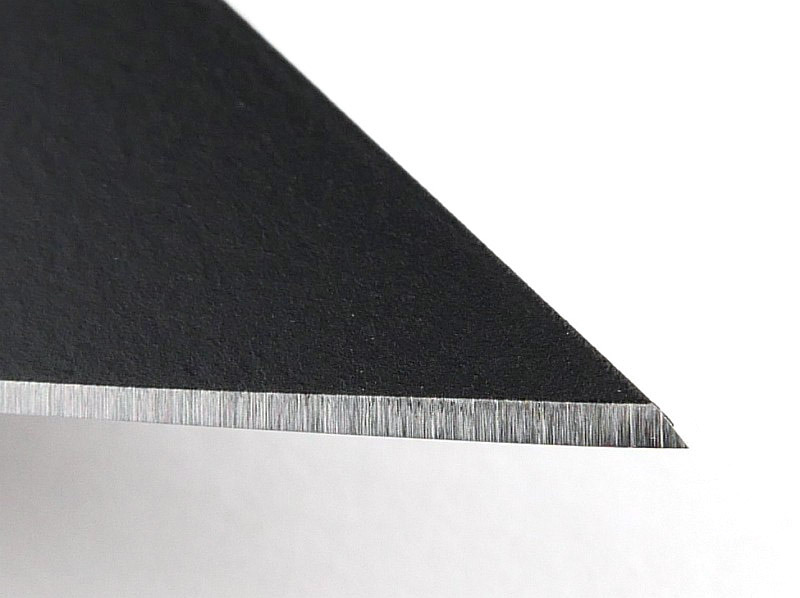
The Factory edge up close:

Followers of Tactical Reviews will know my views on factory edges, but to recap:

Anyone using a knife will need to sharpen it. That first factory edge is just like the first tank of fuel that a new car comes with (or first charge of the battery).
A good factory edge is a ‘nice to have’ but not a ‘make or break’ for a good knife, as you will be putting your own edge onto it soon enough.
The factory edge does however indicate the care a knife maker has put into the final finish.
It is for this reason Tactical Reviews measures factory edge sharpness and specifications, and includes this information in the detailed technical testing.

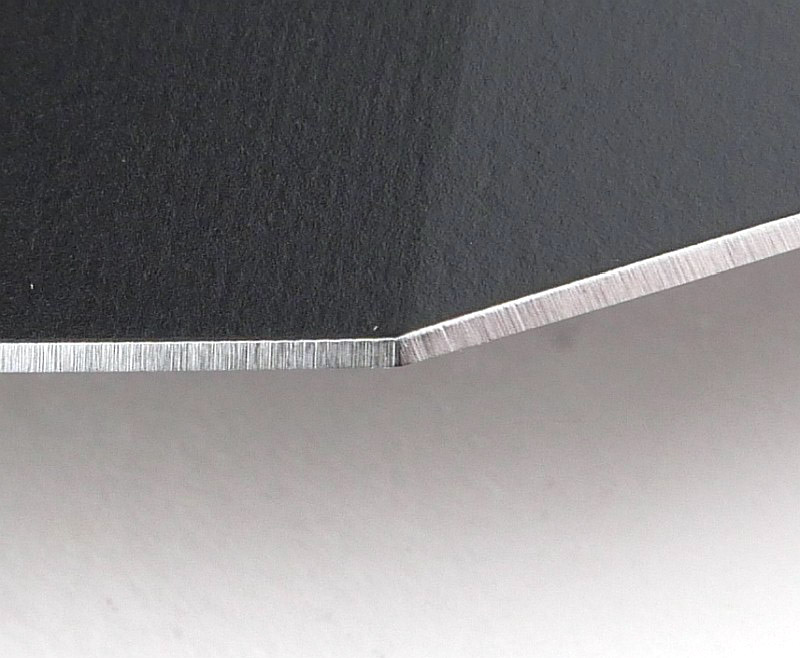
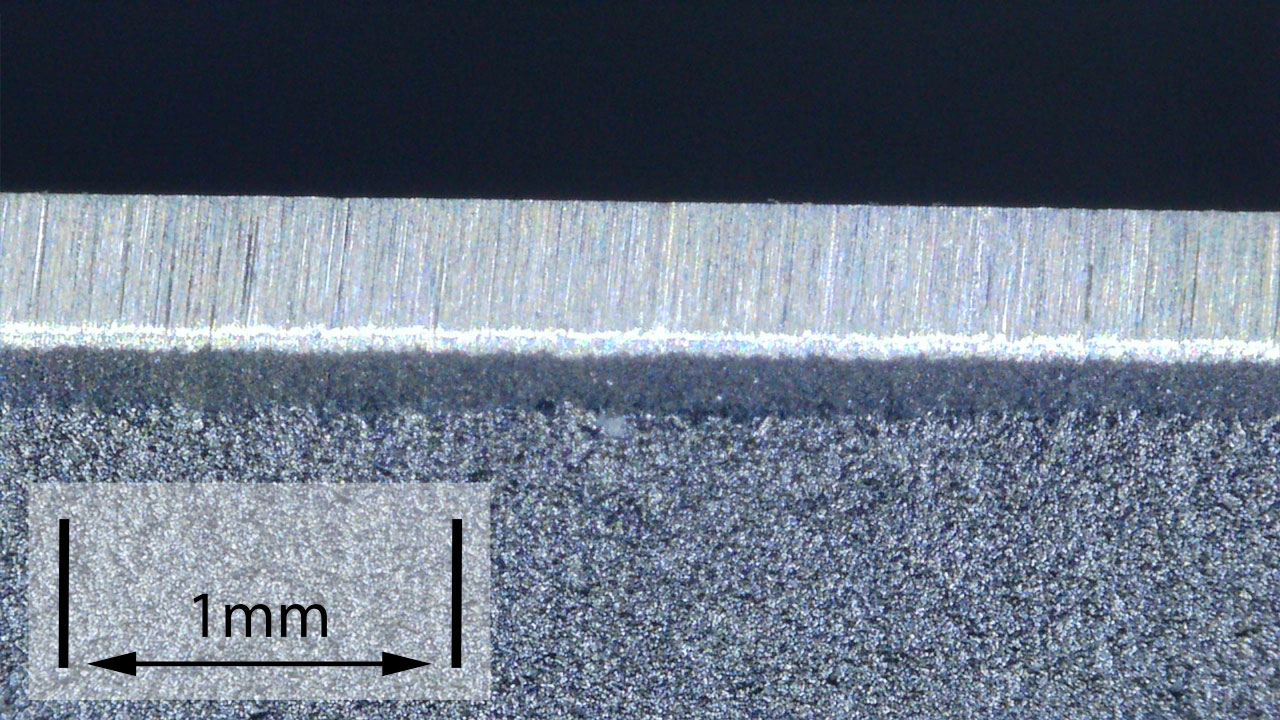
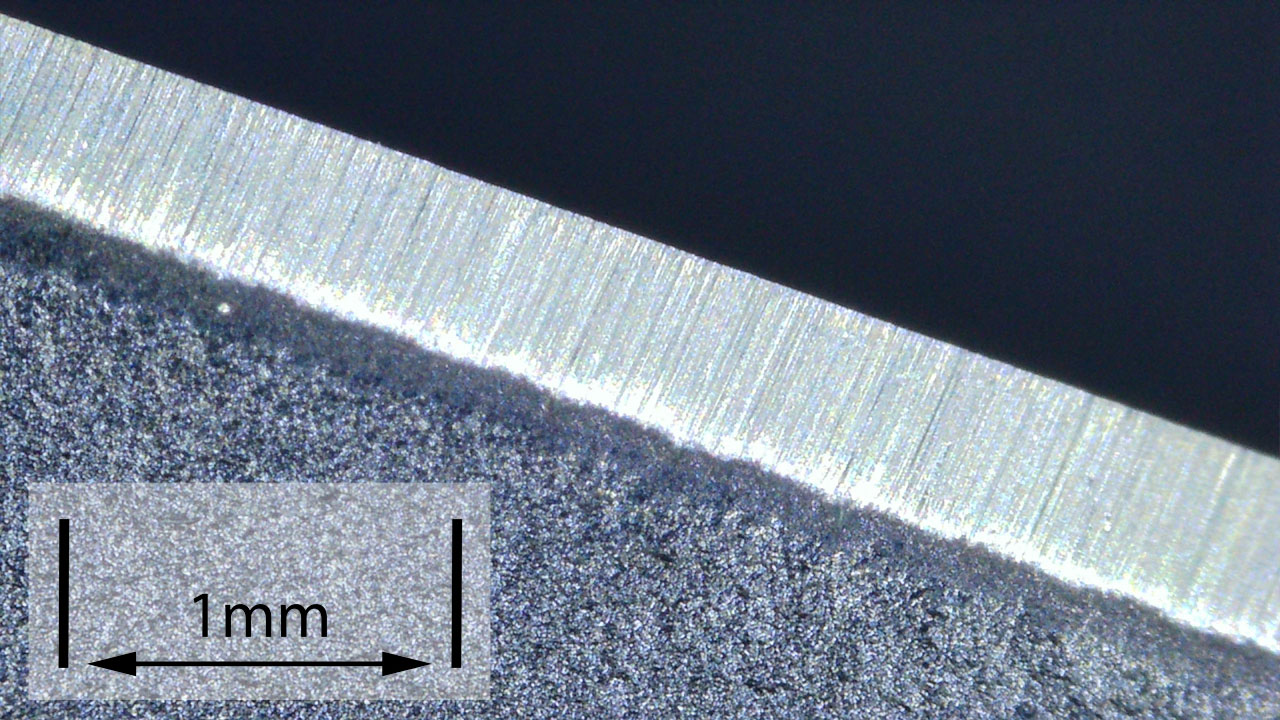
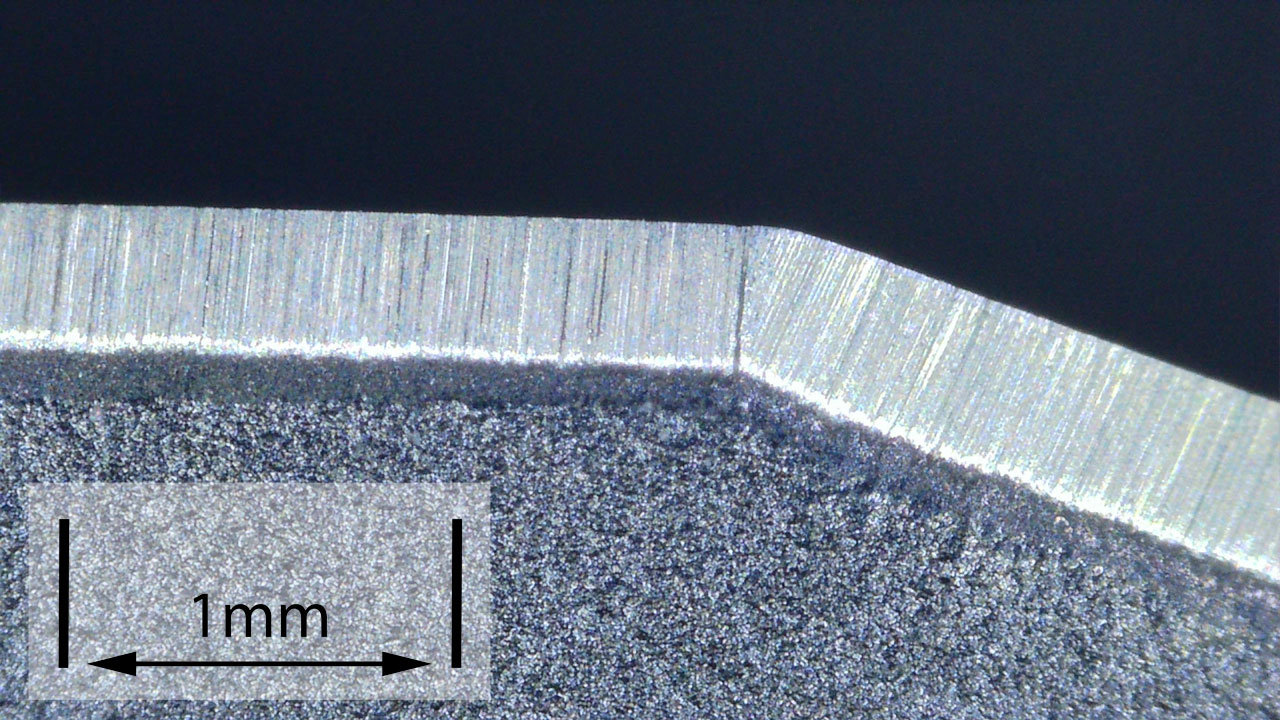
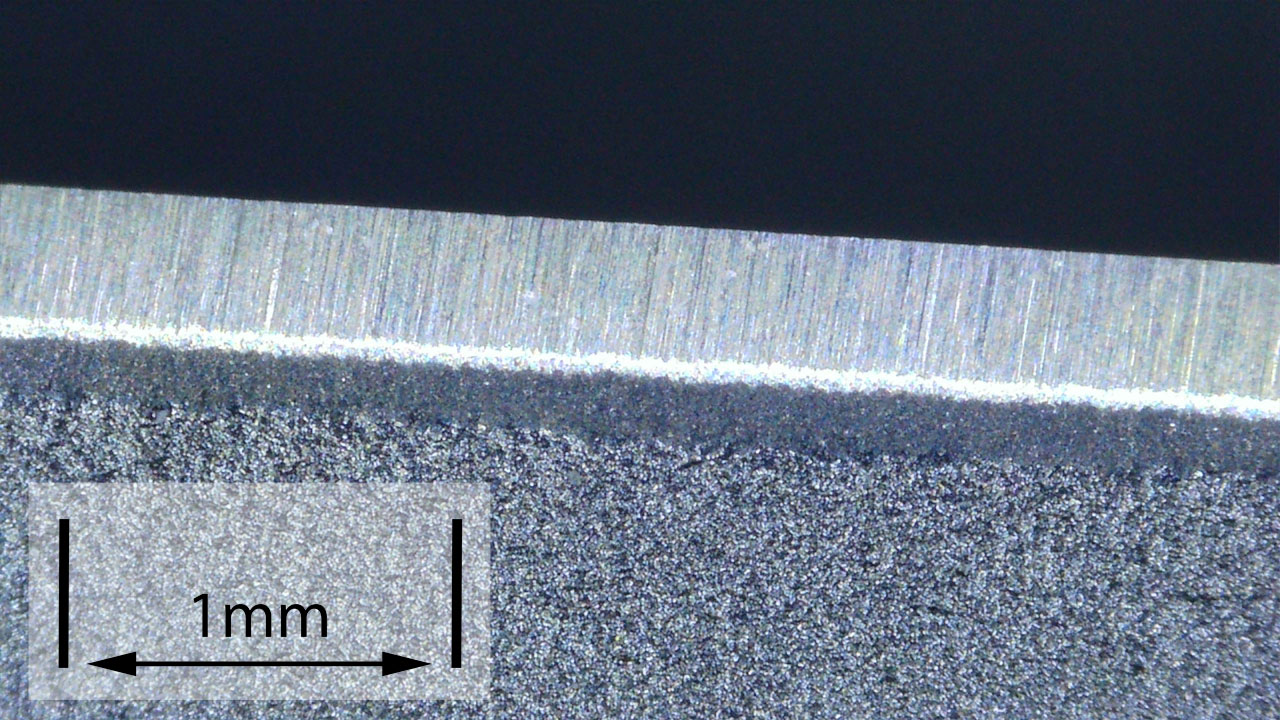
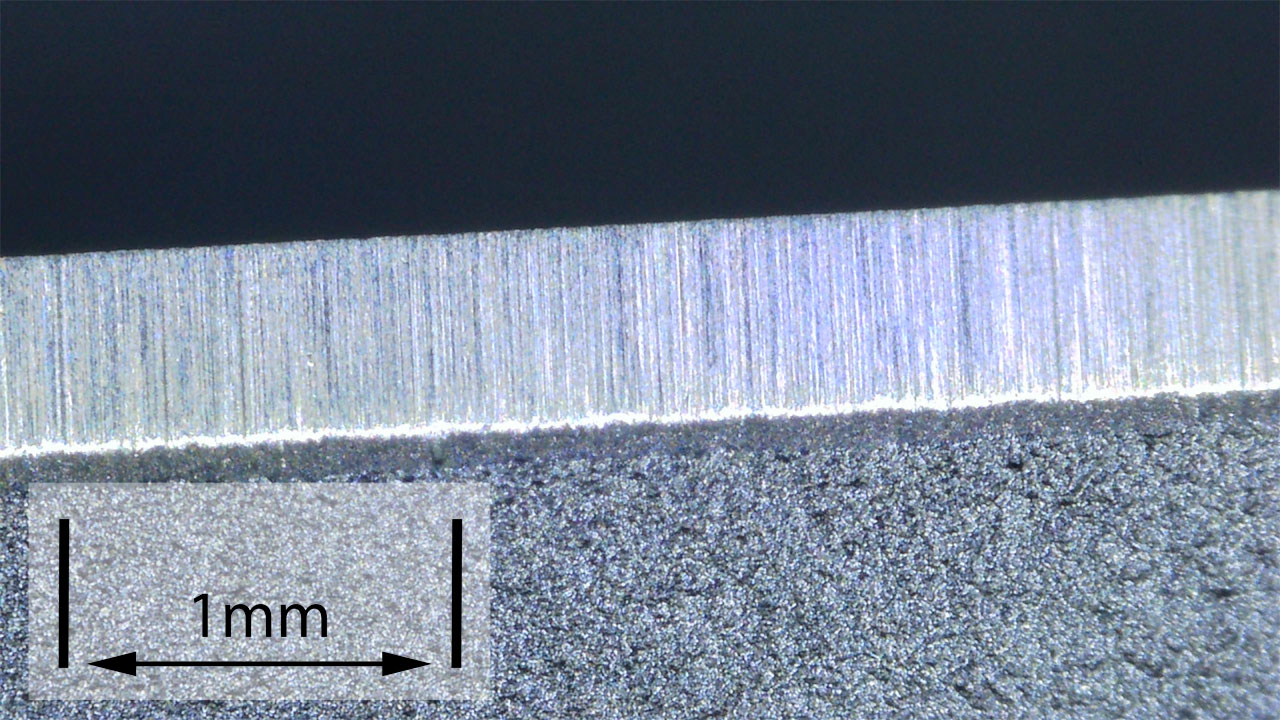
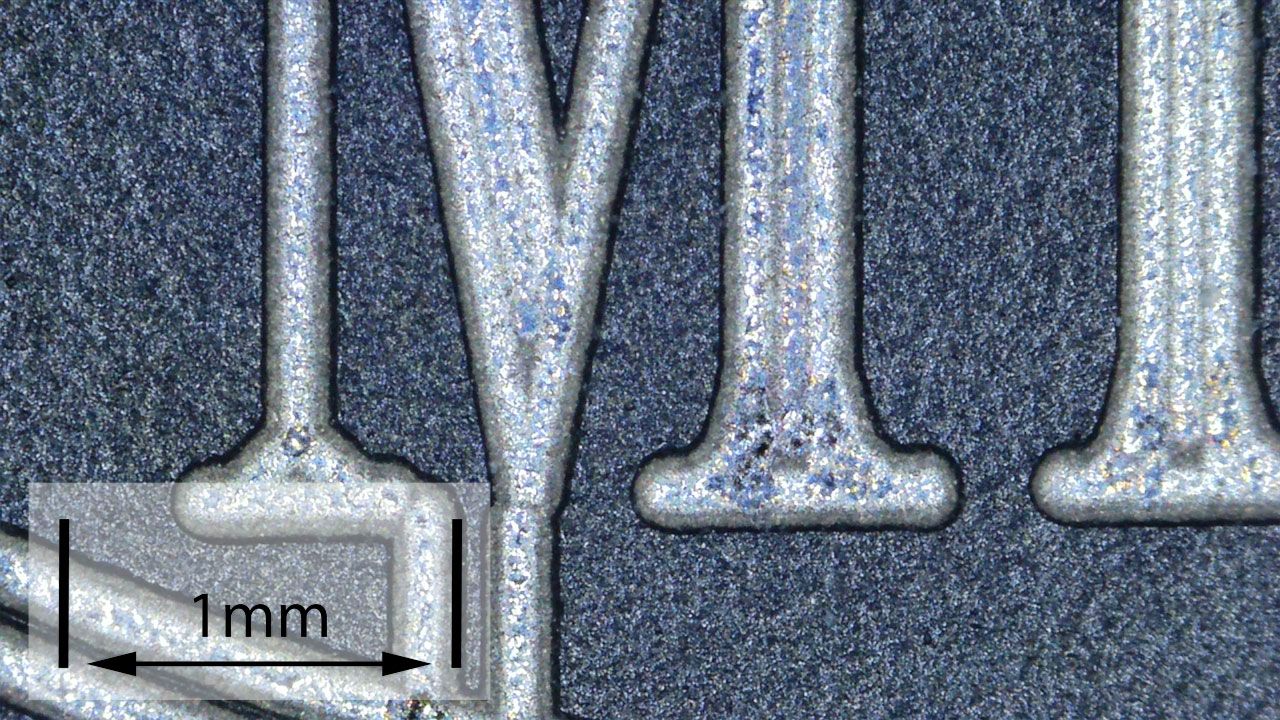
As a further look at the factory edge, this section has been added to include some high magnification photos of the factory edges. Also included is an image at the same magnification of the laser engraving.


What is it like to use?

When you pick up a SOCOM Elite, you can immediately understand why it is still made nearly 30 years after being launched. Yes, it has a few tweaks to further refine it, but fundamentally it’s the original classic. As you can see in this gallery, in XL-glove sized hands, the SOCOM Elite is a large folder that allows multiple stable forward and reverse grip positions (with or without gloves). That handle length ensures the glass breaker isn’t an afterthought, but really effective striking point. Personally I have never had to use a glass breaker for breaking glass, but this could also be used defensively as a crushing point, or to more safely split open a hard container/shell.
Handling is excellent, ramps, jimping, curves, grip panels and contouring all combining to a knife that feels right in your hand, and ready to be put to use, so let’s do that now…


As a hard-use design, being intended to withstand military deployment, it’s first test was one I’d usually only put fixed blades through. Especially as I’ve just made a new, heavier, baton for the pallet cutting test, meaning it was going to be taking even more of a beating.

With a thick blade (for a folder) it needed quite the firm batoning to get this first cut. The top view of the cut show just how much the wood is being pushed apart for a full blade depth cut. Batoning a folder is not for the faint of heart, nor is it much good for even the toughest of folders, but if it can take some of this abuse it shows how strong the knife is. I’m not one for the ‘unlocked blade’ type of batoning, as you lose so much control, even if protecting the lock and pivot, so this was done with the blade locked. The pallet cut was completed in stages, taking out sections by cutting each end and popping out a chunk. The last strikes of the baton snapped the final part of the board instead of making a clean cut.

Immediately after this pallet cut test, the blade and lock were showing a bit of play, and the front of the handle where the blade stops contact it showed a slight indentation of the thumb studs/blade stops. Oddly while working the blade and lock to check what I might have damaged and if I could adjust it back, the lockup self-healed and without anything other than about 20-30 open and close cycles, it was back to a rock solid lockup. I suspect (but cannot prove) that this was the ball bearing pivot having been knocked out of position slightly, settling back after several opening/closing cycles, and might never have happened if solid washers had been used. Lesson 1, we already know, batoning with a folder is not good for it, but the other lesson is how much abuse the SOCOM Elite took in its stride and then sorted itself out.

Not the finest of ‘feather’ cutting, but with more practice and a re-profiled and re-sharpened edge I’m sure this will improve. The factory edge cuts well, especially considering it is a 58 degrees inclusive edge.

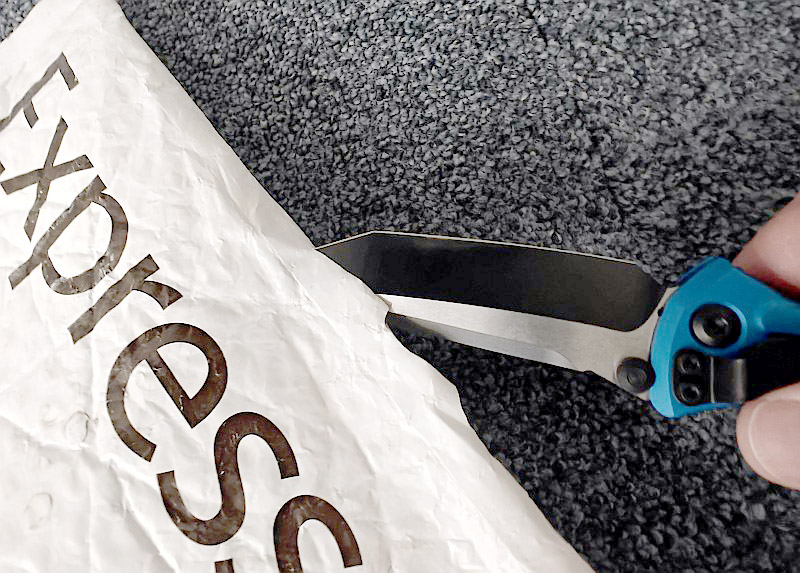
From heavy cutting to much lighter tasks (opening the next review knife package) the SOCOM Elite is a pleasure to use and efficient cutter. Of the available blade types, the Tanto blade does have a thicker wedge profile, so is one of the stronger blades for super heavy use, but you may want one of the other higher grind blade shapes for a more slicey action.


The final images in the gallery above show the Cerakote wear, almost all of which was from the pallet cut test. Typically a DLC coating will clean up without marks after this test, so the Cerakote is much less robust. Cerakote generally does have a more matt finish than DLC and this is a good fit for the two-tone blade finish, but will show wear.

Microtech’s SOCOM Elite definitely does deliver what it promises, an ergonomic and powerful folder, and you will want to use it.

Review Summary

The views expressed in this summary table are from the point of view of the reviewer’s personal use. I am not a member of the armed forces and cannot comment on its use beyond a cutting tool or field/hunting knife.

Something that might be a ‘pro’ for one user can be a ‘con’ for another, so the comments are categorised based on my requirements. You should consider all points and if they could be beneficial to you.

_______________________________________________
What doesn’t work so well for me
_______________________________________________

Cerakote already showing wear.
Ball bearings instead of washers.
Single position pocket clip.

_______________________________________________
Things I like
_______________________________________________

Fantastic ergonomics.
M390MK Steel.
Super strong lockup.
Large comfortable thumb studs.
Excellent grip panel texture without being abrasive.
Plenty of Jimping and grip ramps.
Distinctive styling.
Glass breaker/striker pommel.
Built to take heavy use.

Review Videos

Starting with a short format sixty second review:


Onto a full video review covering many more details:


Discussing the Review:
Something new – will it work? A Tactical Reviews Subreddit.
TacticalReviewsChat on Reddit
Please visit there and start/join the conversation.

Knife Review: UG Tools TiNy SecuriTi

TiNy by name, but definitely not in strength and performance; this is a detailed review of the UG Tools TiNy superlight knife. Not just the TiNy, but the special ‘SecuriTi’ edition, specifically designed to prevent unauthorised snatching of the knife from the owner by means of an added security lock. More on that later in this UG Tools TiNy SecuriTi review.

Before saying more about the knife, just a quick explanation of the maker’s name. UG Tools in full is Utsch & Gierse Tools, and for the review video titles I’ve written this as U.G. Tools with full stops to separate the U & G. I did this to specifically demonstrate how their name should be said. They are not pronounced like a well know brand of footwear, nooooooo, Utsch & Gierse are U.G. Tools, but write this simply as UG tools. Don’t sound like a caveman, say the name as it should be 🙂

UG Tools TiNy has already made its mark, giving you a superlight fixed blade without sacrificing strength through ingenuous use of 3D printed Titanium handles (referred to as 3DTi) that allow a short tang blade to have the stability and strength of a full tang knife at a much lower weight.

What’s in the box?:
In fact there is no box as this was an exhibition knife from EnforceTac 2025 (held immediately prior to IWA 2025), and shows a little wear on the Ulti-clip mount and this edition’s special security latch.

This review knife has the Floe pattern handle texturing, 3D printed sheath made of PA11 (polyamide) which incorporates the SecuriTi’s added security lock, and has been designed to perfectly integrate with Ulti-Clip UltiLink mounting system.


A good look round the SecuriTi’s Sheath – Things to look out for here are:
First in the gallery are photos showing the integration of the Ulti-Clip UltiLink mounting system into the TiNy’s sheath. UG Tools have made the sheath to use this mounting system so the integration could not be better.
The titanium lever that sits above the UltiLink is the SecuriTi’s security latch. Other sheath details are a retention tension adjusting screw, drainage hole and integrated thumb ramp for removing the knife from the sheath.


A good look round the TiNy’s handle and blade – Things to look out for here are:
After an overall look at the proportions, it’s time for a closer look at the 3DTi printed handle with Type II anodised finish. All TiNy models have the integral guard, and the SecuriTi has the additional security latch integral keeper hole for the latch hook to grip.
This review knife features the Floe pattern handle texturing (or giraffe pattern as renamed by a friend).
Another SecuriTi specific feature is the Ceramic ball glass breaker in the butt of the handle. Next to this is a blind loop lanyard hole.
And now onto the blade, the only conventionally manufactured part (not 3D printed), a 100 mm drop point blade made of 2.8 mm thick MagnaCut with stonewashed and DLC coated finish. A sharpening choil ensures you can re-sharpen the entire cutting edge.


Explained by the Maker:
In this section I’m including words directly from the maker themselves.

“Our 3DTi-knives combine extremely low weight with the stability of a full-tang.

Our 3DTi Handles

Our 3D-printed titanium handles were developed by us with clear goals: To achieve the best balance of weight and stability with the highest functionality and perfect ergonomics. In many iterations, the moulds were repeatedly adjusted over a year and subjected to strict stress tests of the knives (and our nerves) until we were satisfied with the result. With a average wall thickness of 1 mm, the high-strength titanium of the handle is still incredibly stable and allows for a blade with an unusually short tang that has no disadvantages: the titanium supports the tang and force is dissipated into the handle evenly. In addition to the extreme weight saving, another advantage is a large hollow space inside (expect with TiNy-models) which, in combination with our titanium screw cap, provides a storage space for various applications. In addition to our ruby sharpening rod, each individually important item can be stored absolutely dry in the handle.

Our Blades

We source our blades from a renowned Solingen contract grinder, with whom we also work together on the optimal ergonomics of our blades and select suitable steels. We have our blades hardened at the special German hardening shop Werz. Here we have full control over the final result. We fit the blades into the handle without play and glue them into the titanium handle over the entire surface with high-strength adhesive. For even more safety, with most models the blade is additionally screwed from the inside. So it remains fully functional in the unlikely event of the adhesive coming off. The adhesive reliably seals the gap to the handle and prevents dirt and moisture from penetrating. It is possible to have worn or damaged blades replaced by us at a reasonable price.

Our Sheaths

Knife sheaths have always been one of our biggest bottlenecks. Knife sheaths typically are made of leather or Kydex and are produced by hand. Due to our large number of blade-handle combinations, we were unable to have sufficient quantities produced economically. The problem: injection moulded sheaths were far from meeting our requirements. That’s why we developed 3D printable sheaths especially for our knives. They are made of PA11 (polyamide) and have, varying by model, for example a removable belt loop, drain holes, an adjusting screw for the perfect fit of the knife and other features. They are available for right- & left-handers. In the future we will offer 3D-printed sheaths and leather sheaths.

Our TiNy series in Floe design was developed with the goal of offering our no-compromise 3DTi design in even more compact and lightweight form. The TiNy with droppoint blade in MagnaCut is, despite the extremely low weight of only 80 grams, as stable as a full-tang of the same length. This makes the TiNy the perfect unobtrusive companion for everyday use(EDC) or a no-compromise backup knife with impressive stability.”


The Blade and Handle – Detailed Measurements:
For full details of the tests and measurements carried out and an explanation of the results, see the page – Knife Technical Testing – How It’s Done.

The blade is made from Magnacut steel.


The Factory edge up close:

Followers of Tactical Reviews will know my views on factory edges, but to recap:

Anyone using a knife will need to sharpen it. That first factory edge is just like the first tank of fuel that a new car comes with (or first charge of the battery).
A good factory edge is a ‘nice to have’ but not a ‘make or break’ for a good knife, as you will be putting your own edge onto it soon enough.
The factory edge does however indicate the care a knife maker has put into the final finish.
It is for this reason Tactical Reviews measures factory edge sharpness and specifications, and includes this information in the detailed technical testing.

As a further look at the factory edge, this section has been added to include some high magnification photos of the factory edges.


What is it like to use?

For this special edition TiNy, as the SecuriTi, I envision it typically being on a load carrier platform or pack shoulder strap to provide maximum accessibility.

Exactly the reason the security latch was added, as being so accessible, there is a chance of unauthorised snatching, which the latch counters brilliantly. For the owner of the knife, releasing the security latch is completely natural, you need only place your thumb, as you would normally, to pop the knife from the sheath, but then apply a little sideways force to the latch lever to release the security latch.
Any attempt to just grab the knife handle will not gain access to the knife as it just won’t come free from the sheath.


Once in your hand this is now no longer about the SecuriTi edition, but instead the UG Tools model, the TiNy. Shown here in my XL-glove size hands, it is a compact knife, not a tiny one. Tiny in terms of weight, yes, 85 grams for an all metal construction fixed blade without compromise on comfort or strength. You can see that the ergonomics of the handle and blade make this excellent as a general purpose utility knife.
Considering the ergonomics of the sheath as well, the integral jimped thumb ramp for releasing the knife (which has the security latch lever next to it) makes one handed opening a breeze when the sheath is not mounted to a belt or load carrier; you just pop and flick the sheath off.


Before getting on to some cutting tests, the TiNy has a full metal handle, which meant I needed to test UG Tools’ claim about cold weather use:
“In winter, the low mass with the poor thermal conductivity of titanium ensures that the handle is at body temperature in just a few seconds, even in wet and cold conditions, making it suitable for use in all climates.”

While it is true that Titanium has a conductivity around 22 W/m·K, compared to steel at around 45 W/m·K, another factor is also the low mass of the UG Tools handle construction with a wall thickness of around 1mm, meaning there is also less metal to need to warm up than other metal handle knives.

So for this test I left the TiNy in the freezer overnight to soak it down to a crispy -20°C then, thermal camera ready, straight out of the freezer and in my hand.

The gallery shows how the purely Titanium part of the handle is warming rapidly. Where the steel knife tang is inserted into the handle it stays cold longer. Considering the knife was at -20°C, it wasn’t ‘warm’ but it also didn’t freeze to my skin or otherwise feel particularly uncomfortable.


One other factor in this cold weather test that does make a difference is the surface finish. UG Tools use a Type II anodising carried out after an initial coarse sand blasting. The Type II anodising used creates plasma sparks that “melt” the surface on a microscopic level which leads to a smooth almost organic feeling. This surface finish further insulates your skin from hot/cold when holding the knife.

This is what the surface looks like under the same magnification as the factory edge images.

First I made the TiNy prepare its own baton, ready for a good pounding through pallet wood. Being so lightweight you can’t chop with the TiNy, so it needs a baton to strike it and drive it through what you are cutting. The compact size also means it is more of a nibbling away, having to reposition and widen the cut so the baton can still hit the blade. In this specific cutting test, the knife tip is not available to strike, instead it is either the spine or very close to (or on occasion on) the handle. In the end, the last part of this cut split under the batoning force with only a few millimetres left to cut.
Combining the slim blade stock with a flat grind, makes the TiNy an eager cutter, and easy to control. Slicing the wood like a woodworker’s plane, feather stick work turning into something like a wafer stick.


IT is actually amazingly tactile, and another observation when handling the TiNy is that its unique construction, with the thin walled printed Titanium handle, is that is almost ‘rings’ as you hold it, reminiscent of handling fine ceramics. Different to any other knife I have used, and I like it. Comfortable to use, lightweight, super strong and easy to carry.

As we have seen, UG Tool’s TiNy is the exception to at least two of rules of knife design; that anything other than a full tang compromises overall strength, and an all metal handle is heavy and cold. They say ‘it is the exception that proves the rule’, but is the UG Tools TiNy the exception, or simply the rule breaker?

Review Summary

The views expressed in this summary table are from the point of view of the reviewer’s personal use. I am not a member of the armed forces and cannot comment on its use beyond a cutting tool or field/hunting knife.

Something that might be a ‘pro’ for one user can be a ‘con’ for another, so the comments are categorised based on my requirements. You should consider all points and if they could be beneficial to you.

_______________________________________________
What doesn’t work so well for me
_______________________________________________

The UltiLink Mount seems a bit out of proportion on the TiNy.
It makes me want more UG Tools knives!!!

_______________________________________________
Things I like
_______________________________________________

Fantastic ergonomics and comfort.
Magnacut blade.
Low temperature DLC coating.
Security latch system on the SecuriTi edition.
Organic feeling handle texture/Type II anodising.
Uniquely tactile 3D printed Titanium handle.
Uncompromised fixed blade strength weighing only 85g.
Slim 2.8mm blade stock.
Flat grind slicing ability.

Review Videos

Starting with a short format sixty second review:


Onto a full video review covering many more details:


Discussing the Review:
Something new – will it work? A Tactical Reviews Subreddit.
TacticalReviewsChat on Reddit
Please visit there and start/join the conversation.