In this detailed Spyderco PITS 2 review, find out if this state-of-the-art non-locking folding knife could be your ideal EDC companion.
Mike Read, aka “Pie in the Sky” (and hence the model name ‘PITS’), is a British knife-maker and engineer who approaches knife design in a unique way, completely re-thinking and re-designing mechanisms, and not being constrained by convention.
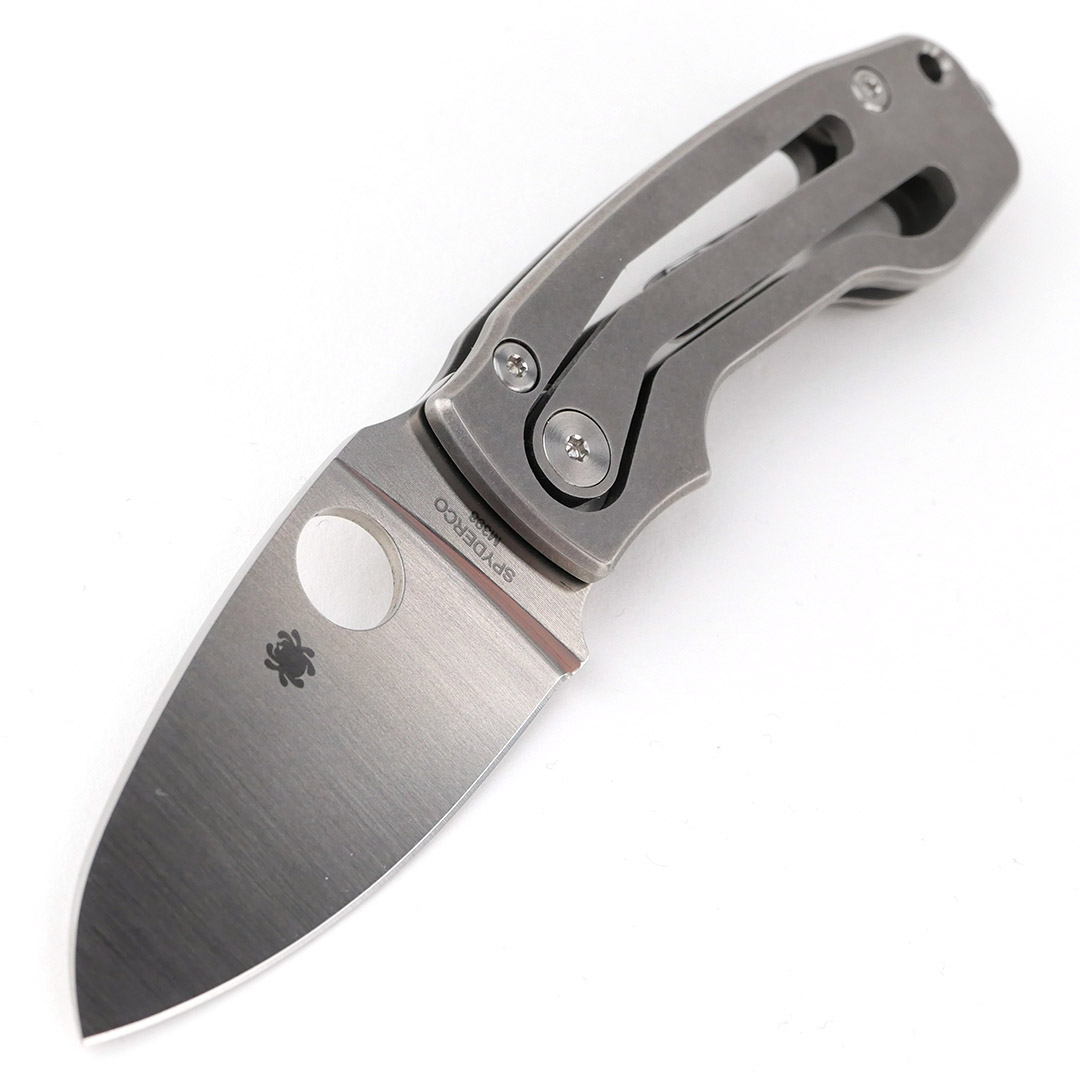
The Spyderco PITS 2 is Mike’s second collaboration with Spyderco and takes his custom knife, the ‘Alien’, and makes it available to a wider market. Though an evolution of the PITS, as a UK EDC legal slip-joint folder, the PITS 2 is a completely different concept. In the PITS 2 the idea of a back-spring has been transformed into two integral spring arms machined within the handle scales. The free end of these arms support the blade pivot, and flex as the blade is opened to provide pressure between the notch in the blade tang and the stop pin, creating the slip-joint action.
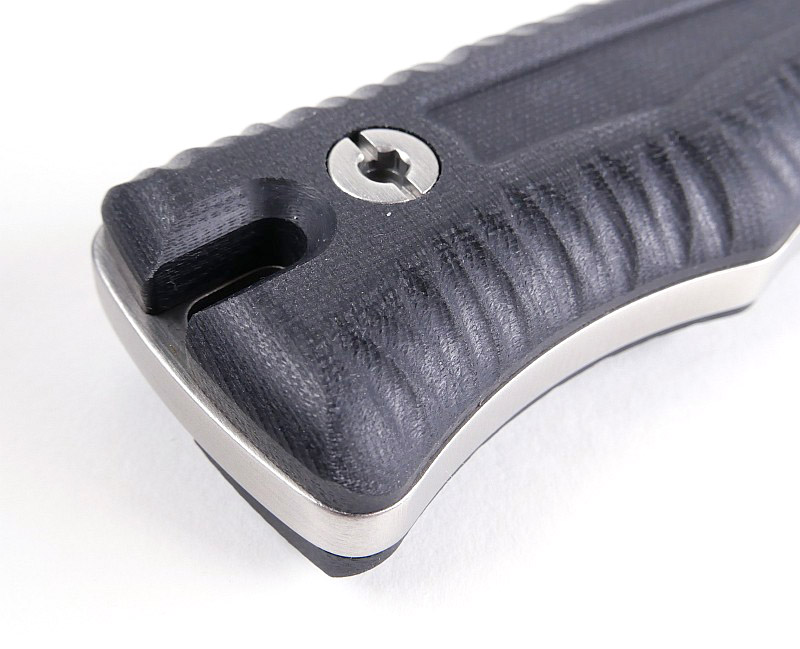
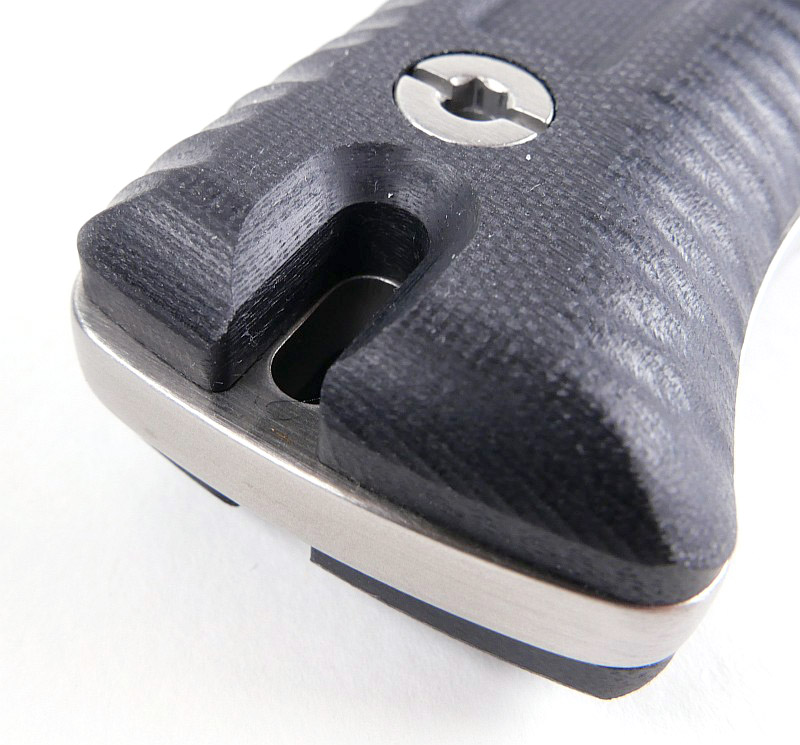
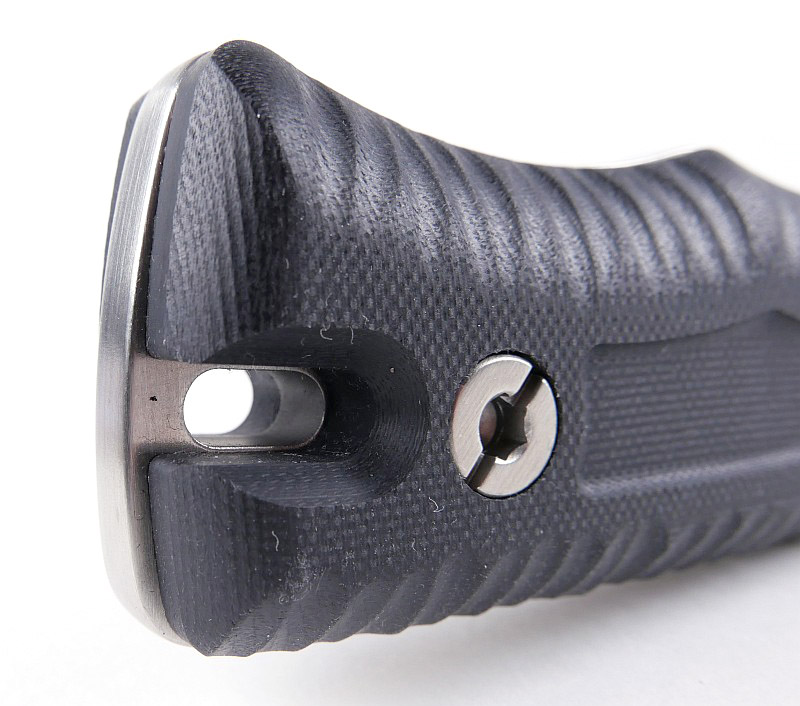
The handle scales are meticulously crafted from solid 6AL-4V titanium with a matt finish. The PITS 2 has a satin full flat grind blade, and is made from Böhler-Uddeholm’s M398 particle metallurgy stainless steel. The PITS 2 has a symmetrical design that includes a fully accessible Sypderco opening hole in the blade and a reversible tip-up pocket clip, ensuring that every aspect of carry and operation is entirely ambidextrous.
Join me in this Spyderco PITS 2 Review for all the details.
What’s in the box?:
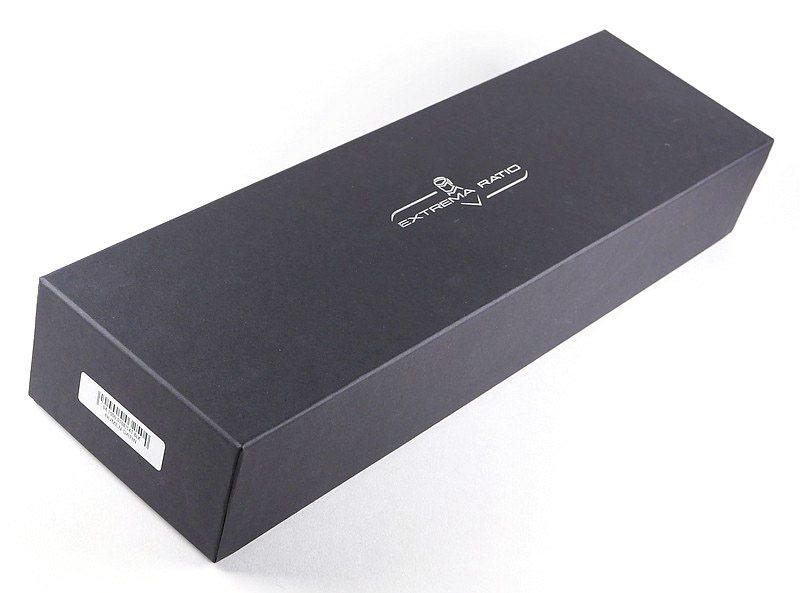
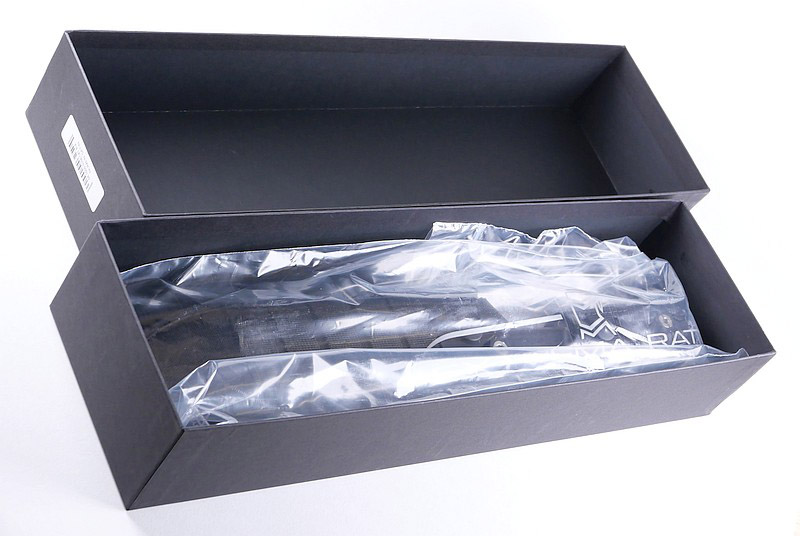
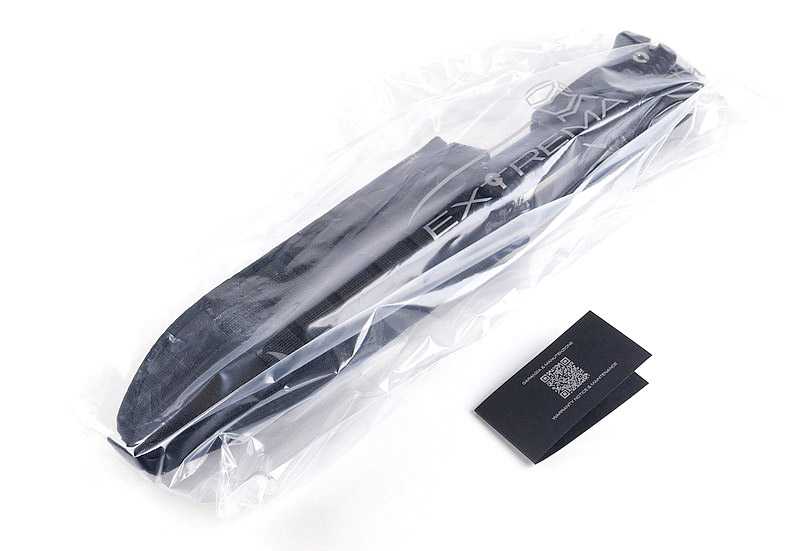
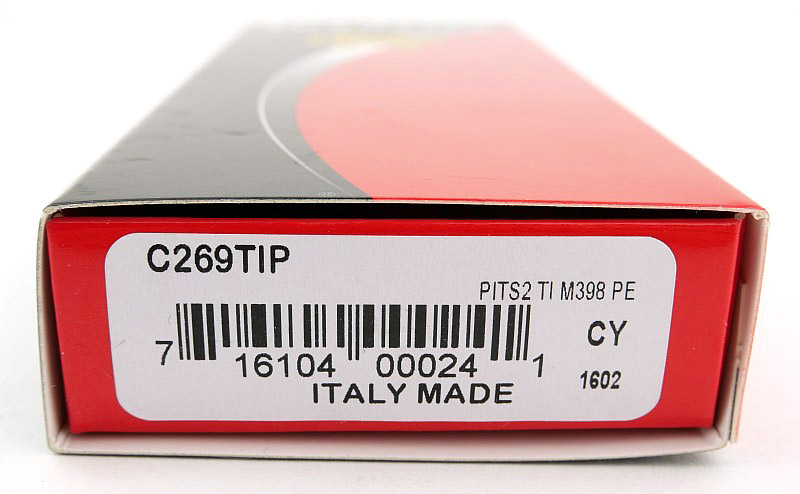
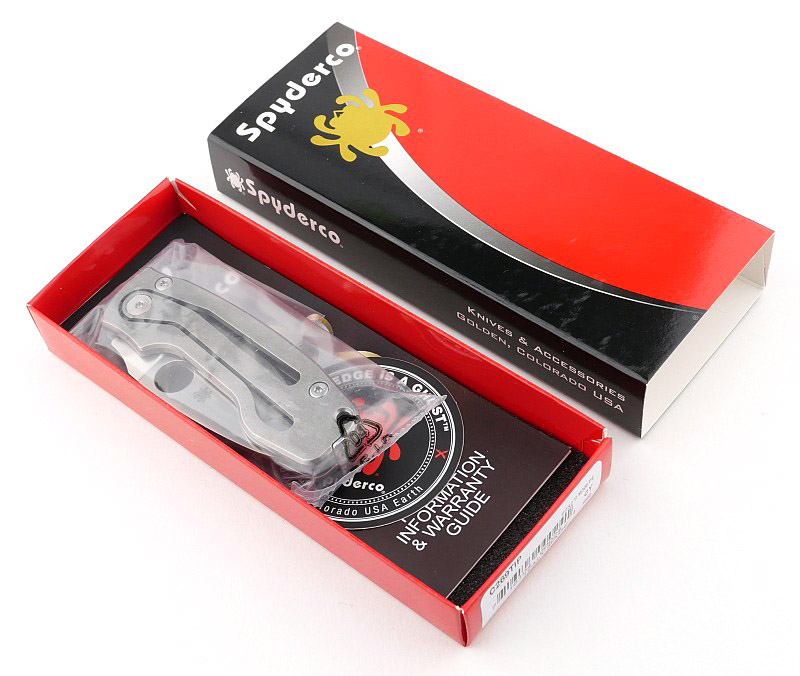
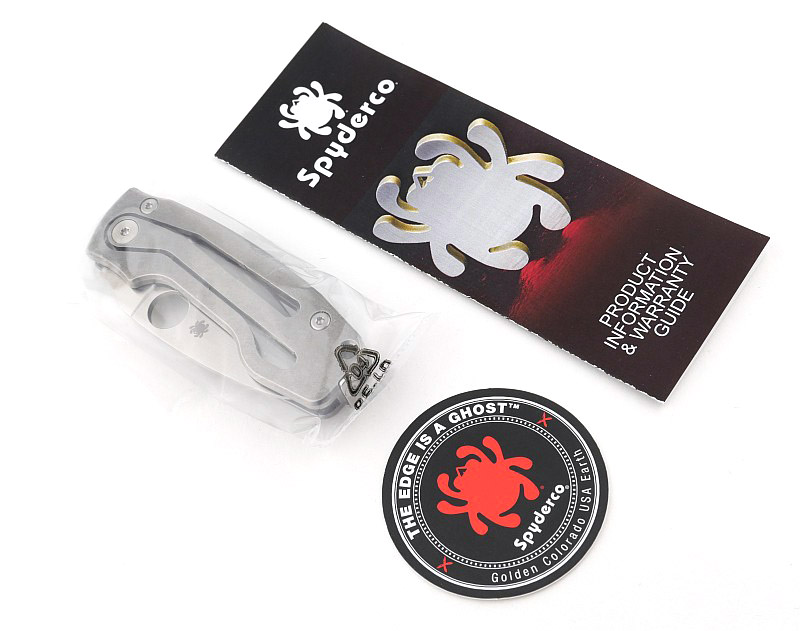
All exactly as you would expect for a Spyderco folder. The slip-cover box housing the knife in a plastic bag, along with information leaflet and sticker.
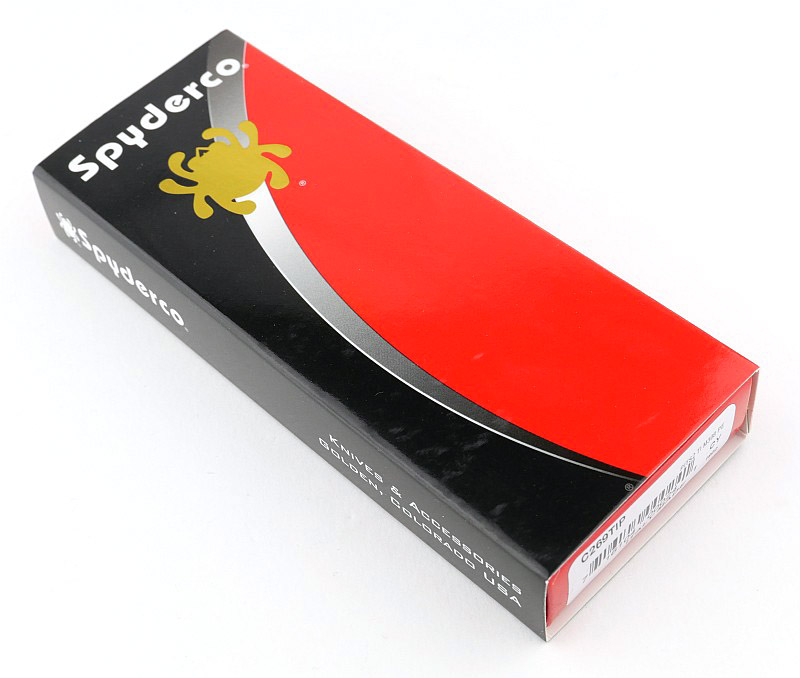
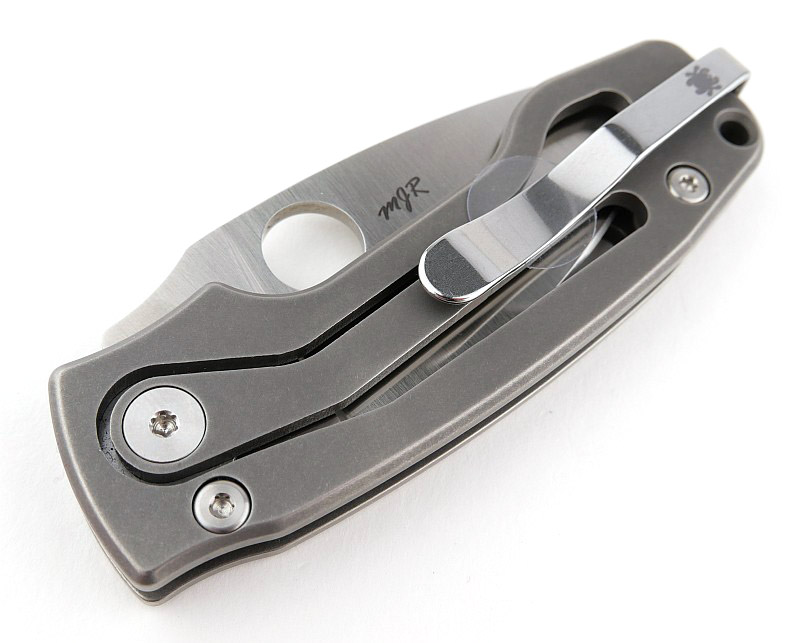
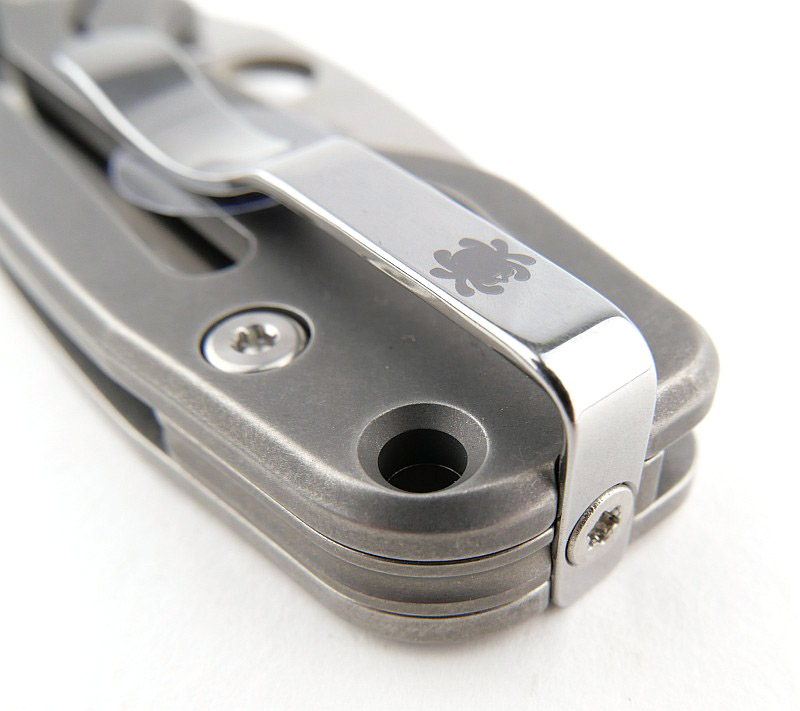
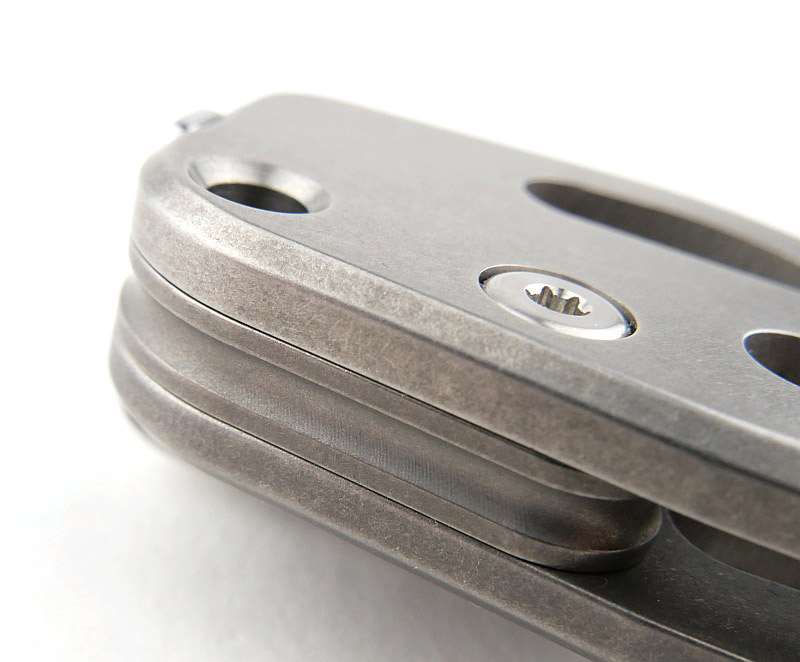
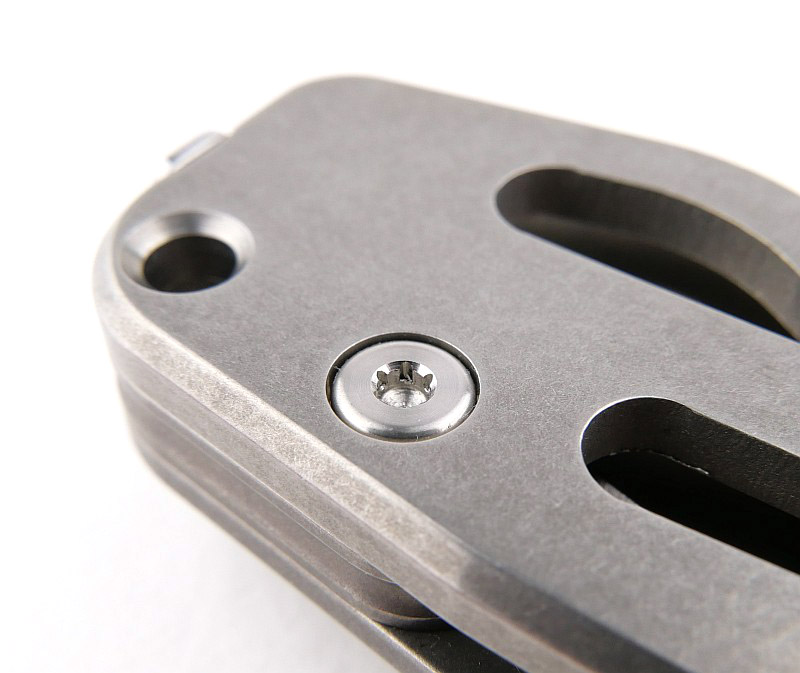
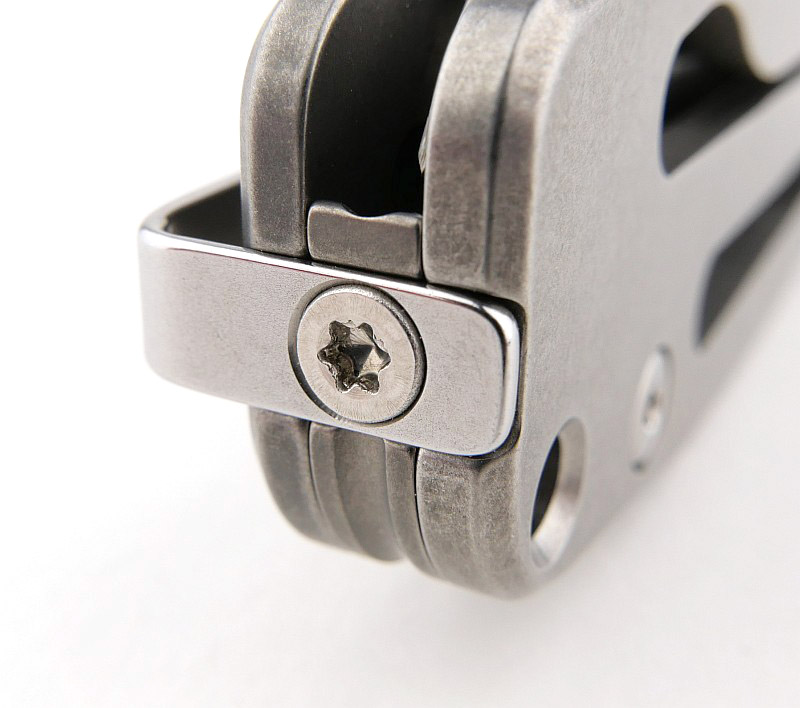
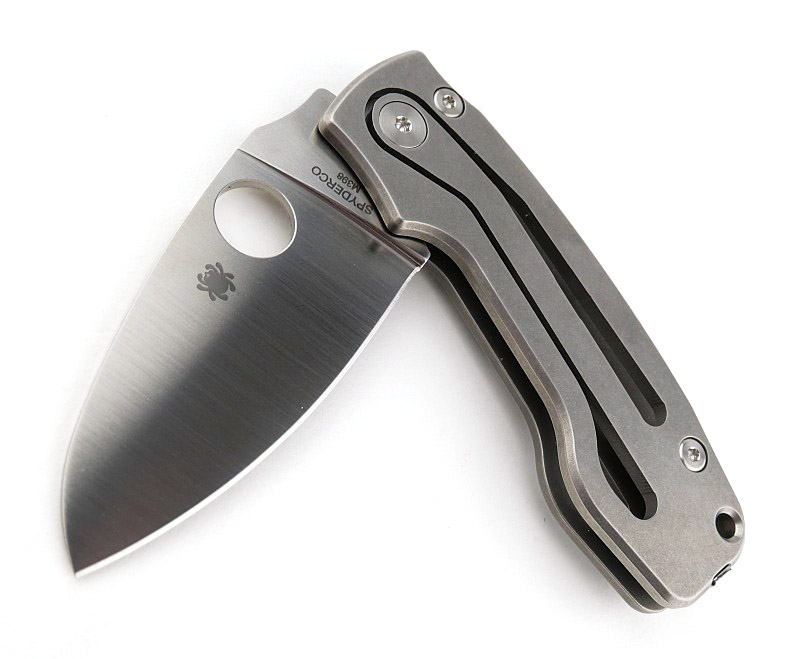
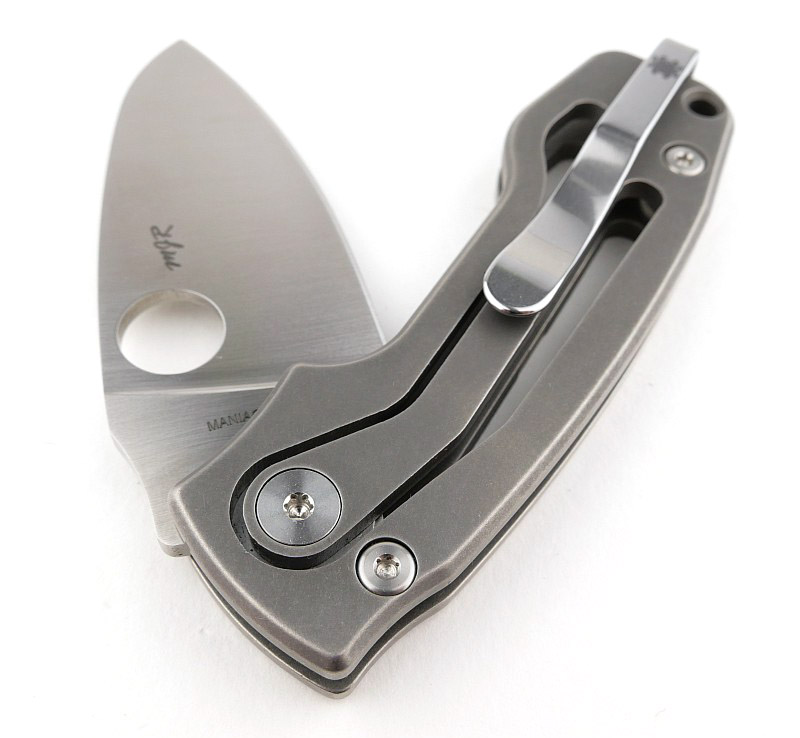
A good look round the folded PITS 2 – Things to look out for here are:
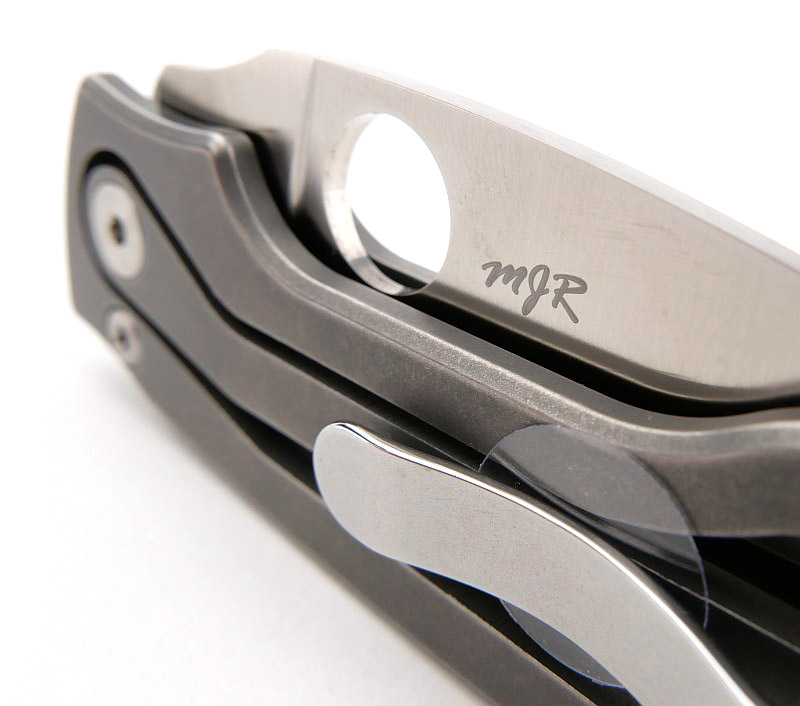
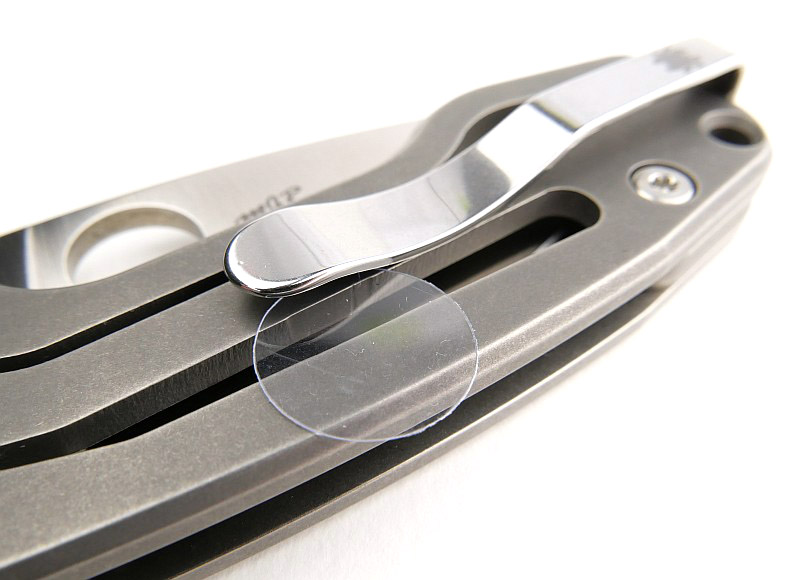
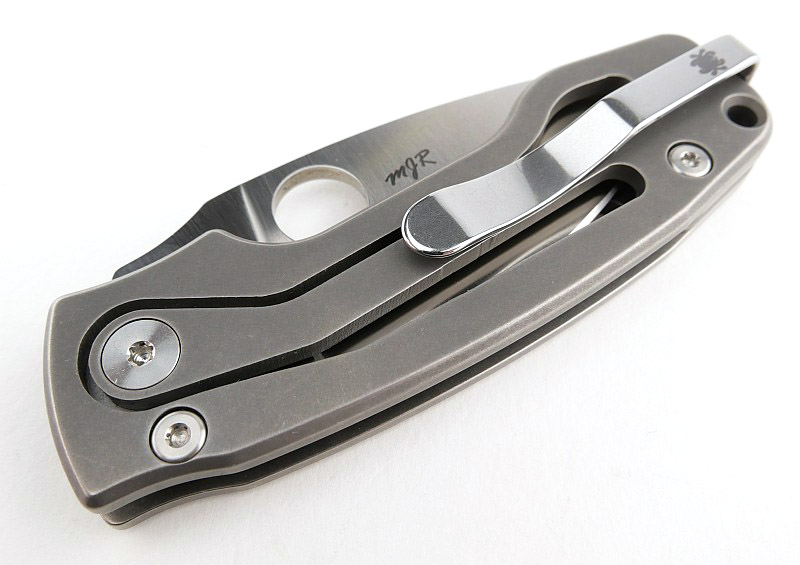
Absolutely fresh out of the box and there is a plastic protector disk under the pocket clip to ensure there are no marks should you wish to remove the clip altogether, or swap it to the left handed configuration.
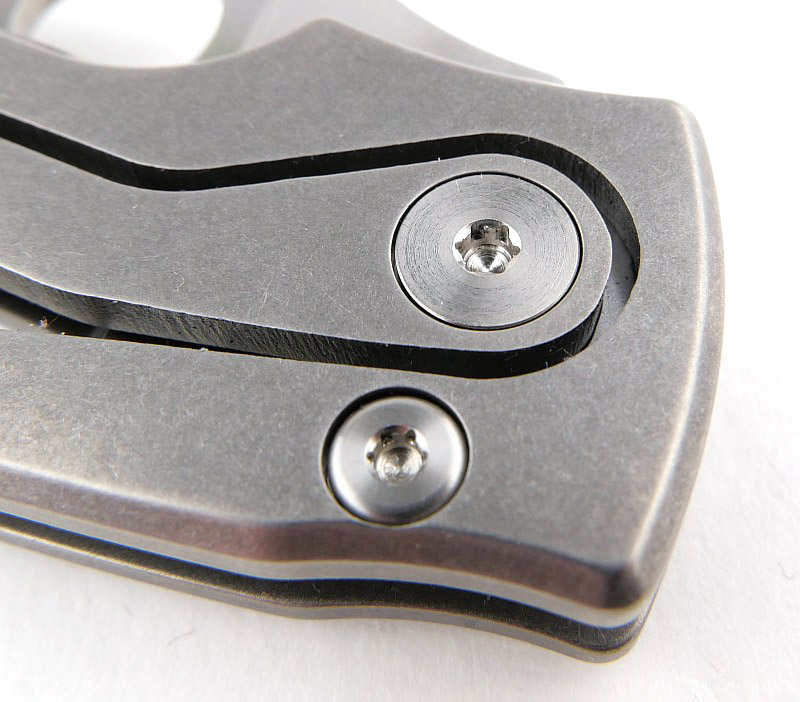
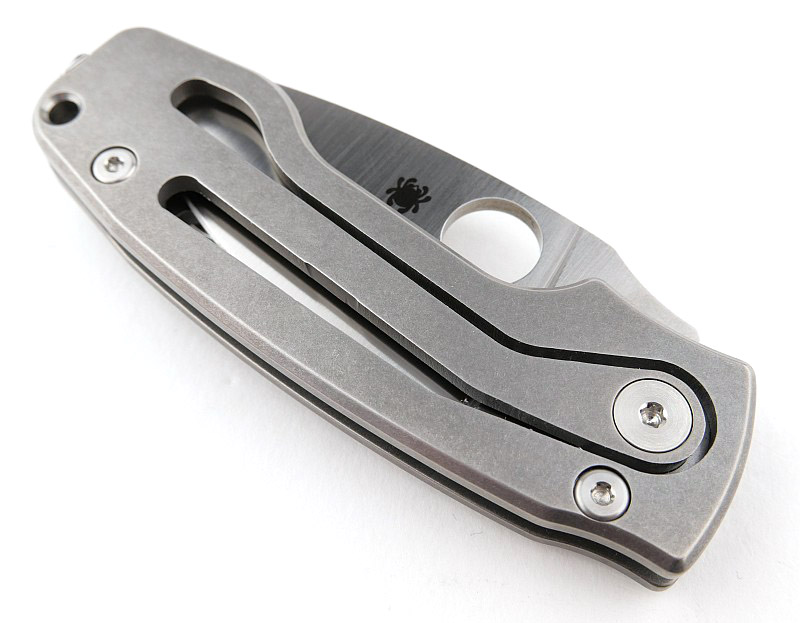
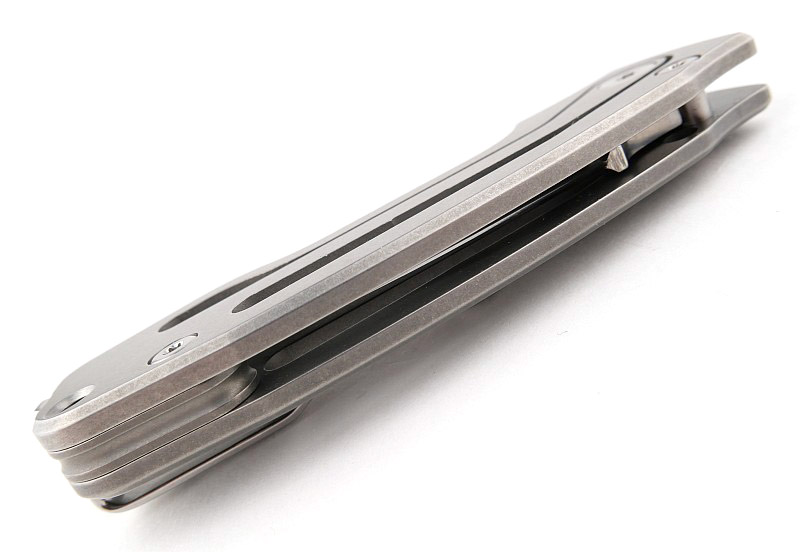
Immediately you see this is a unique and special design having sprung pivot arms within the handle scales themselves. The pocket clip is deep carry, and removable / reversible with a single screw into the titanium spacer.
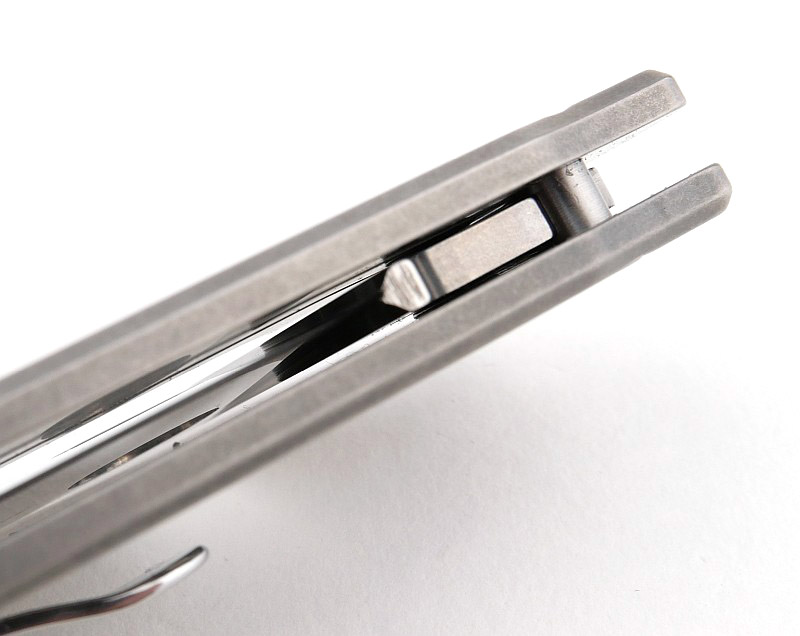
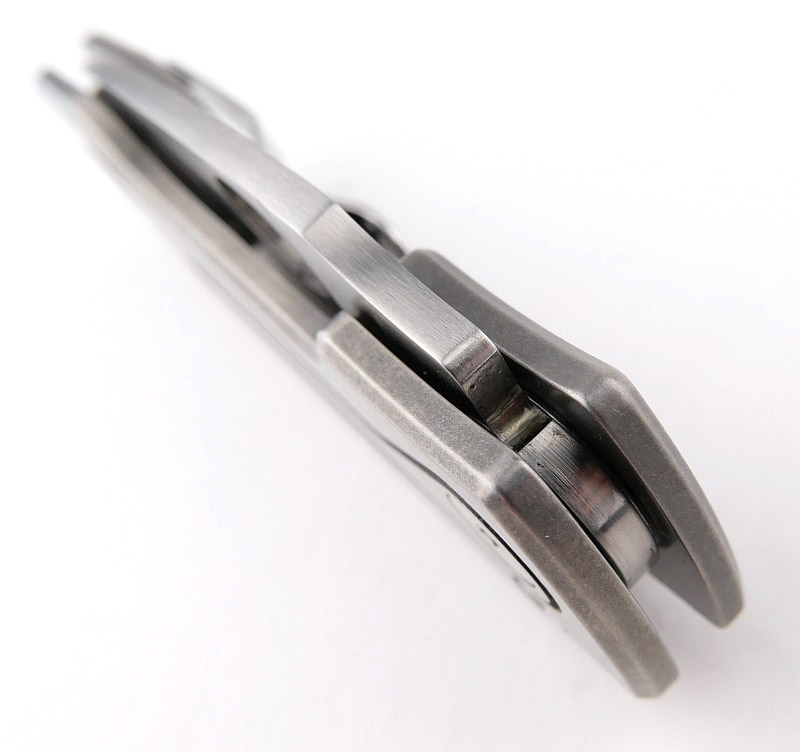
Looking at the pivot you can see how it is fully floating on the integral sprung arms that are one piece with each of the handle scales. The stop pin holds the front of the handles together as they are actually separated from the pivot. This unique design removes the back-spring and allows a slip joint with fully open handle. The Spyder-hole opening hole is completely exposed for easy opening.
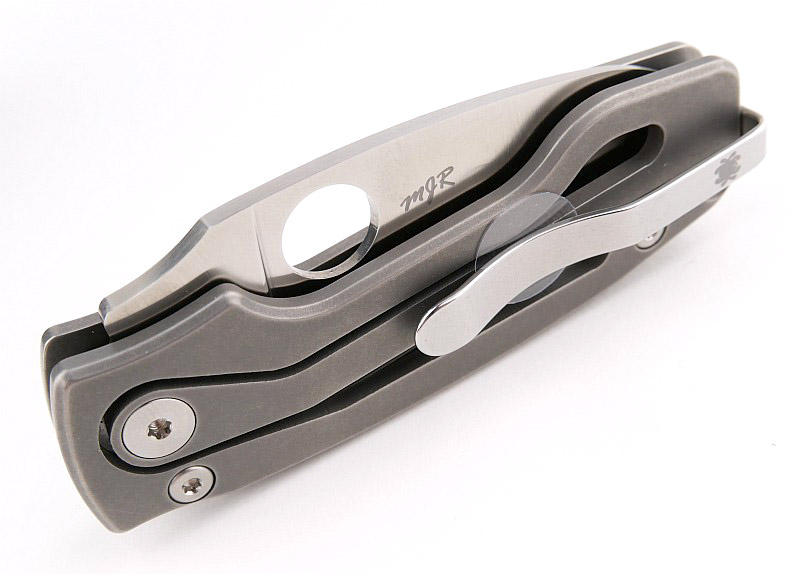
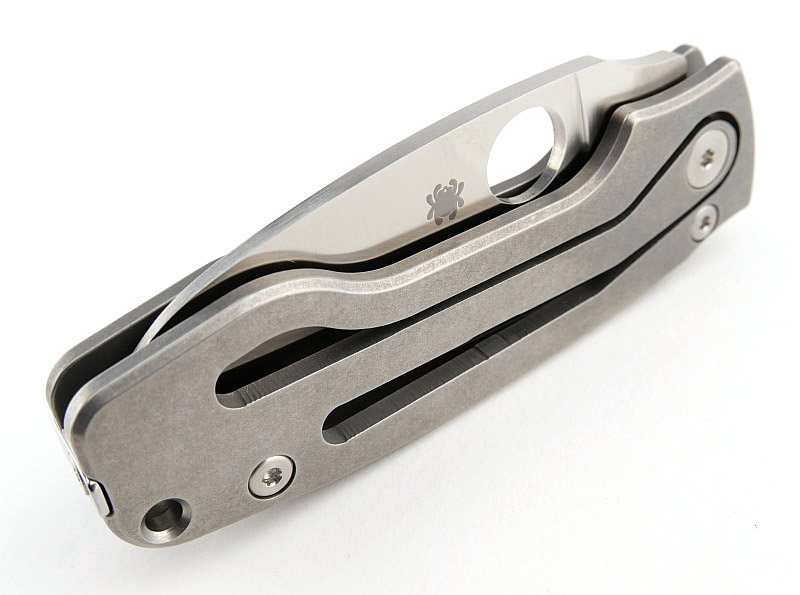
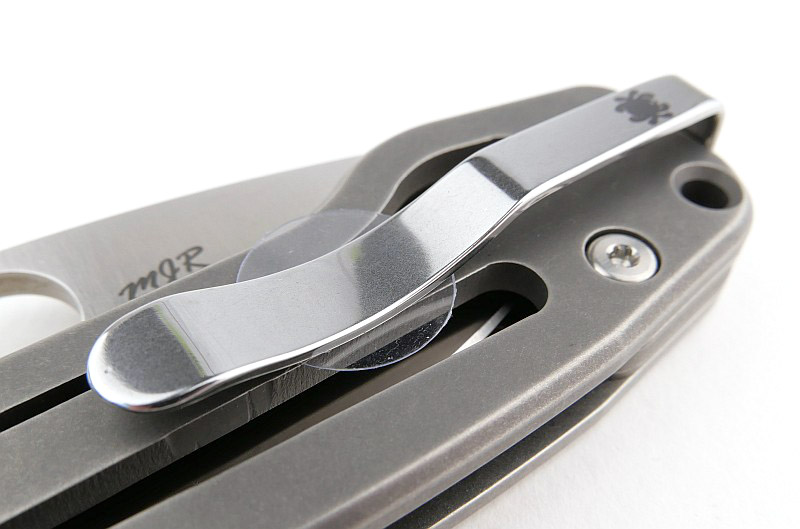
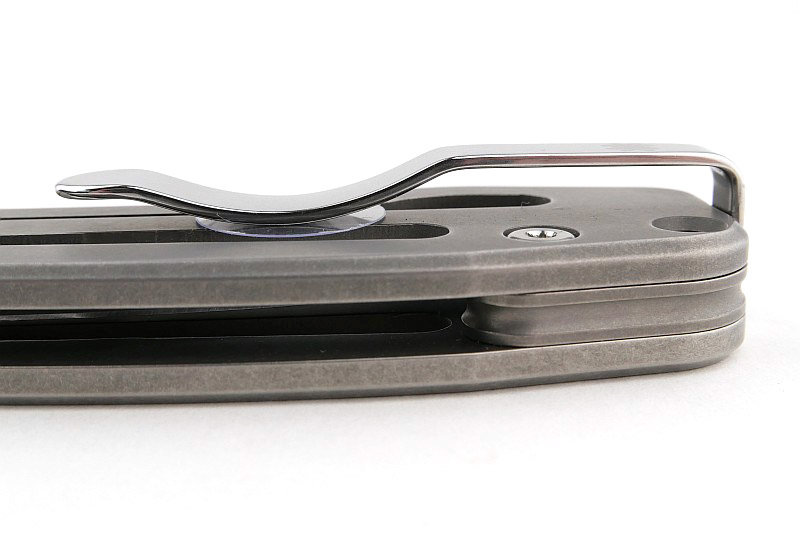
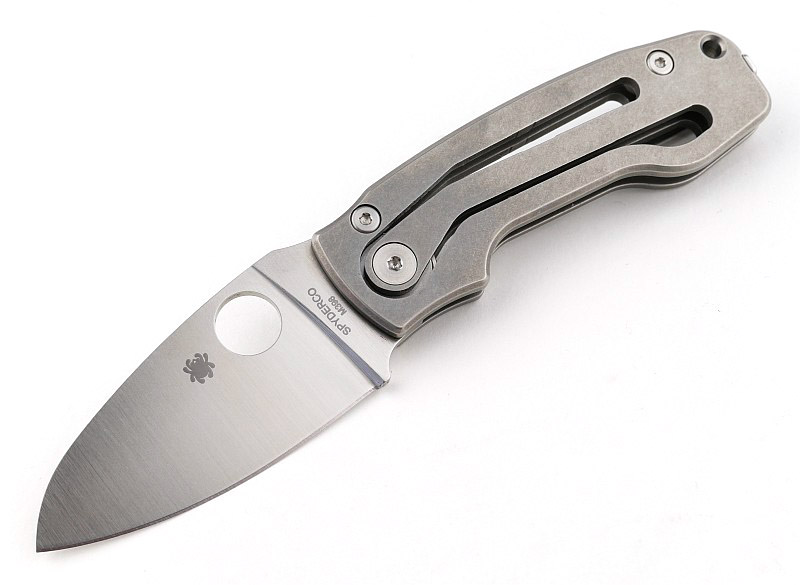
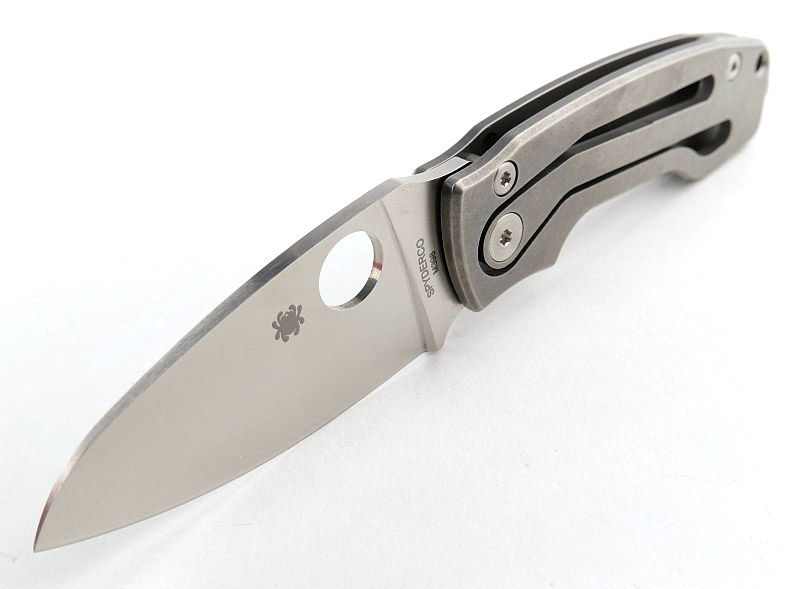
A good look round the open PITS 2 – Things to look out for here are:
Swinging out the full-flat grind rounded drop-point blade, and you get your first look at the integral spring arms flexing. With the open-back handle and cut through handle scales the PITS 2 is definitely different. Featuring a very slicey and useful blade geometry with the Spyderco opening hole in M398 steel.
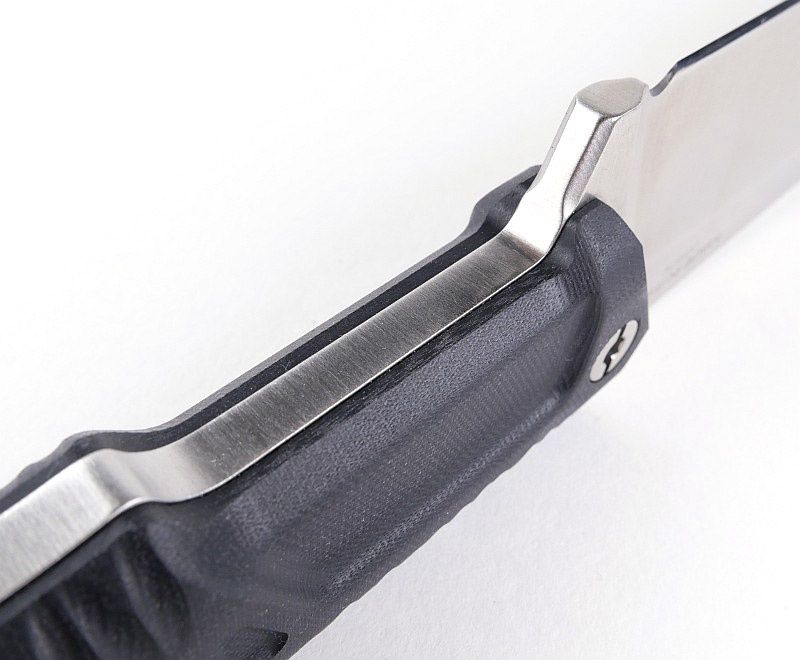
Unlike the PITS, there is no flipper-like finger guard, however there is a low profile feature which is sufficient to prevent the blade being able to close on your fingers while you have a firm grip.
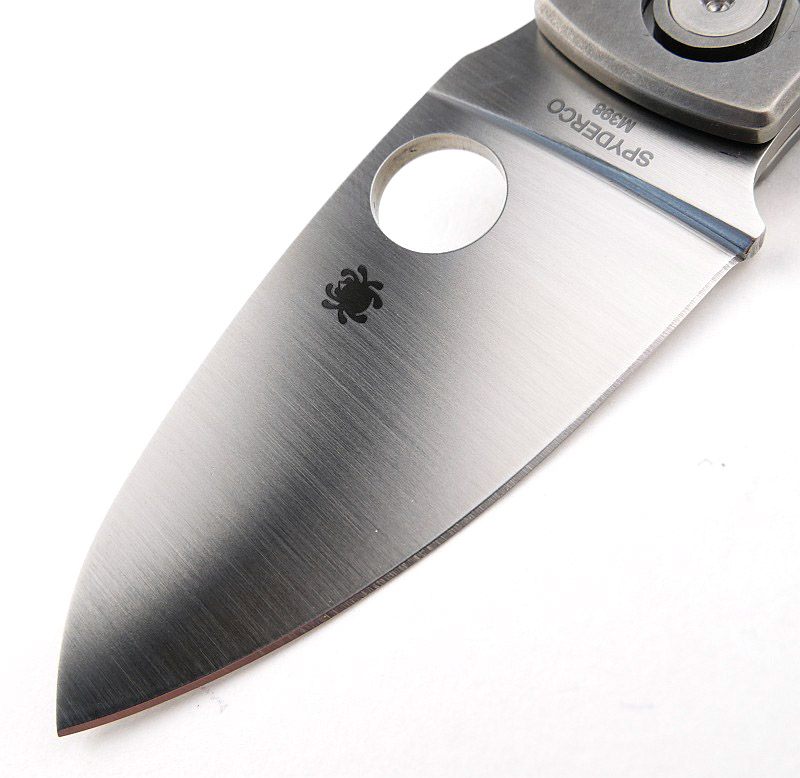
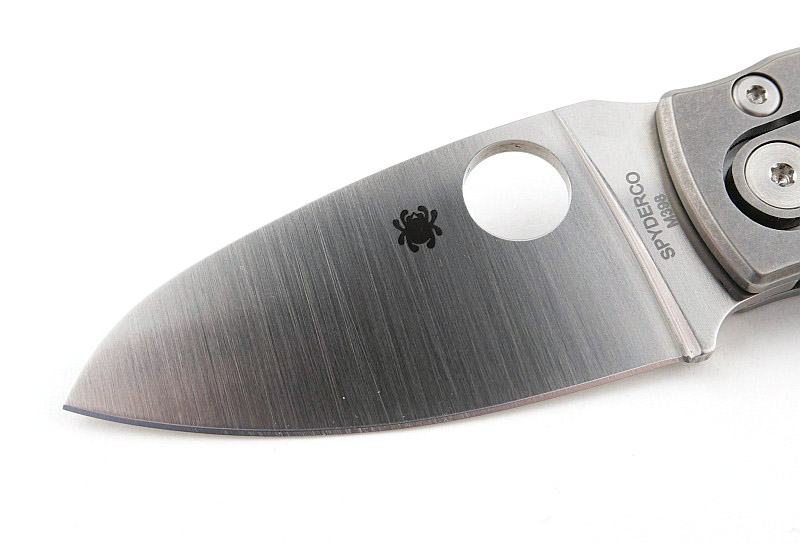
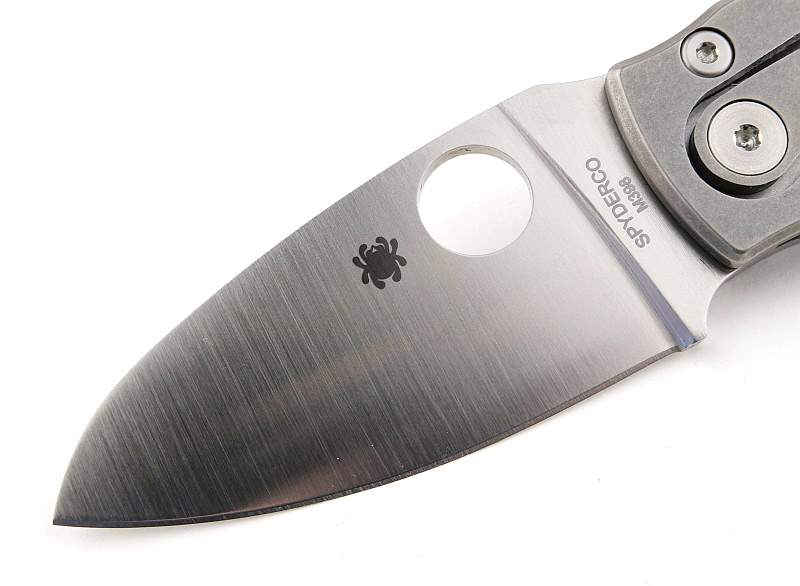
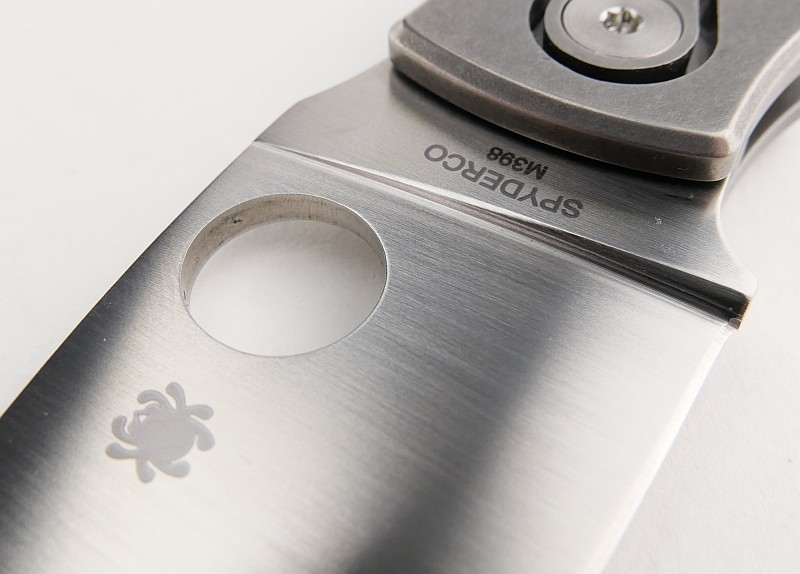
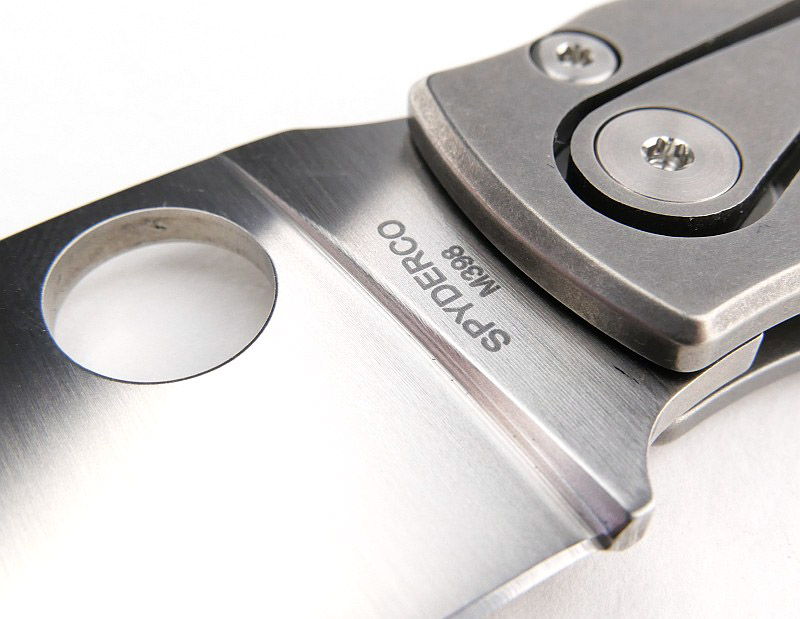
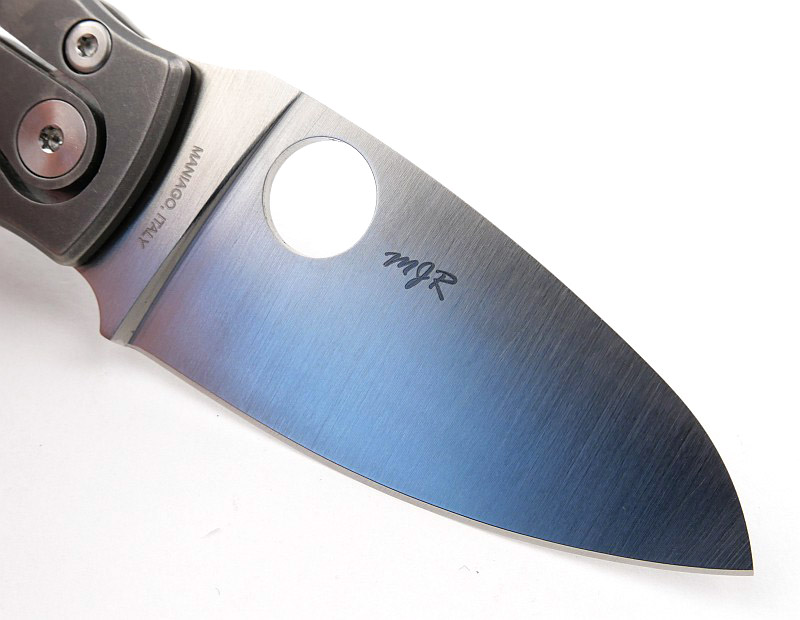
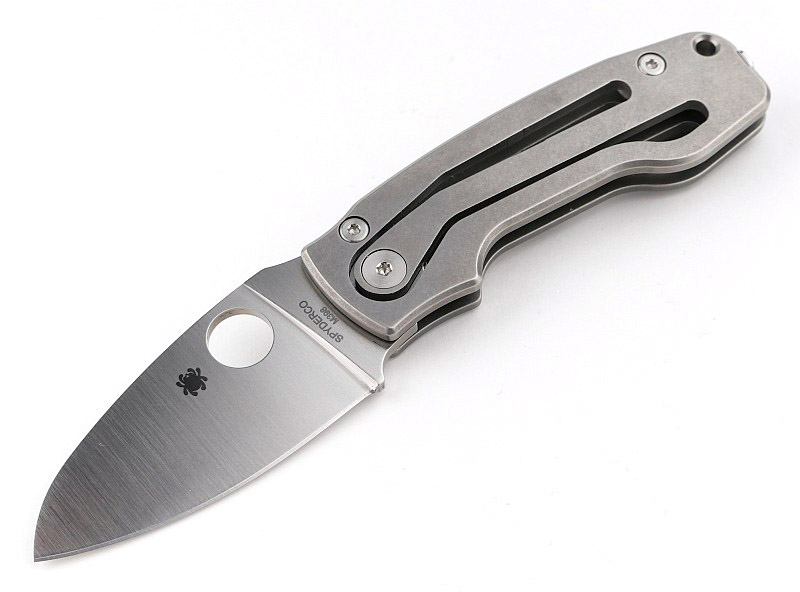
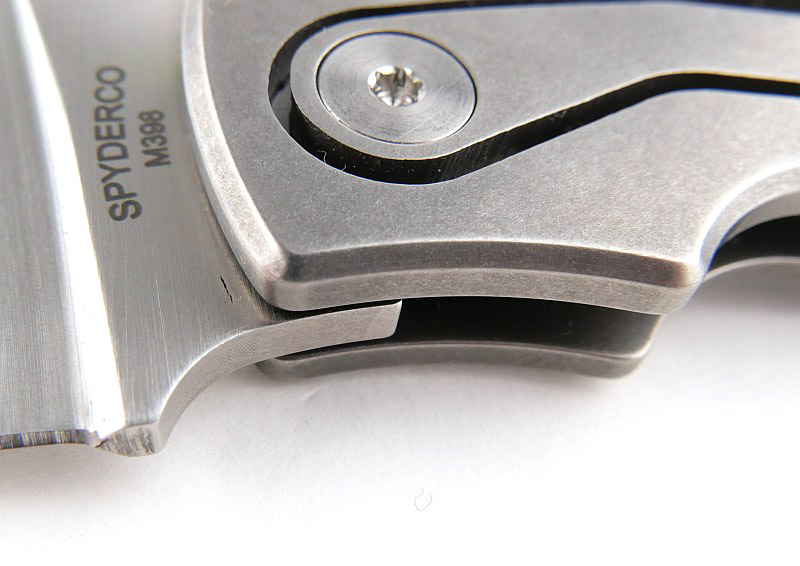
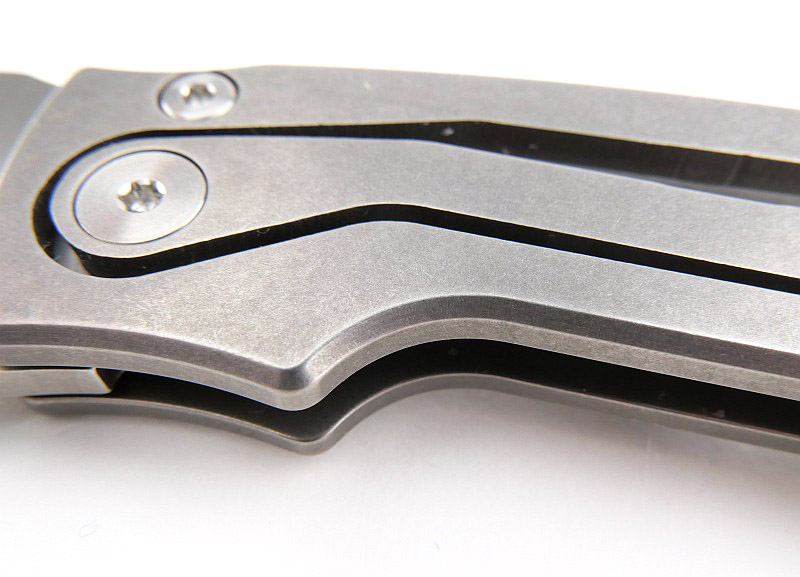
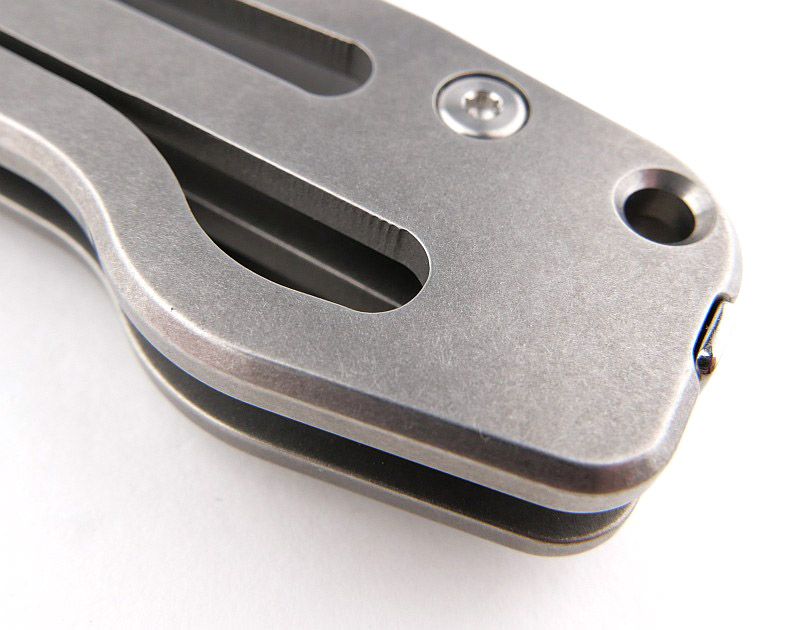
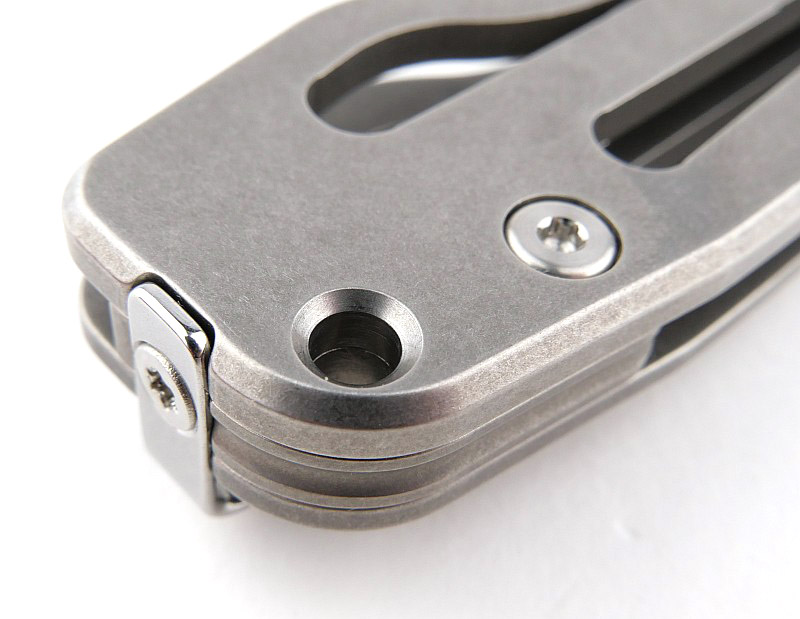
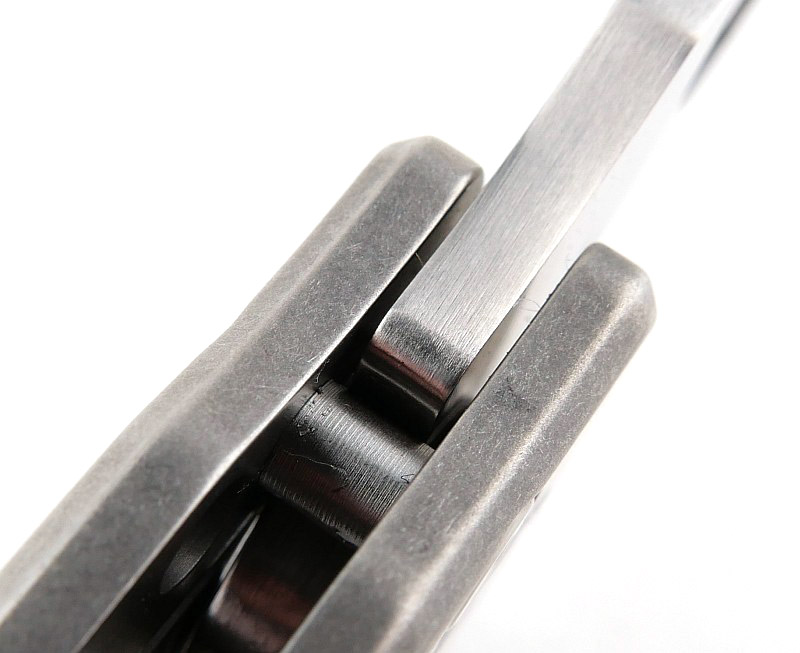
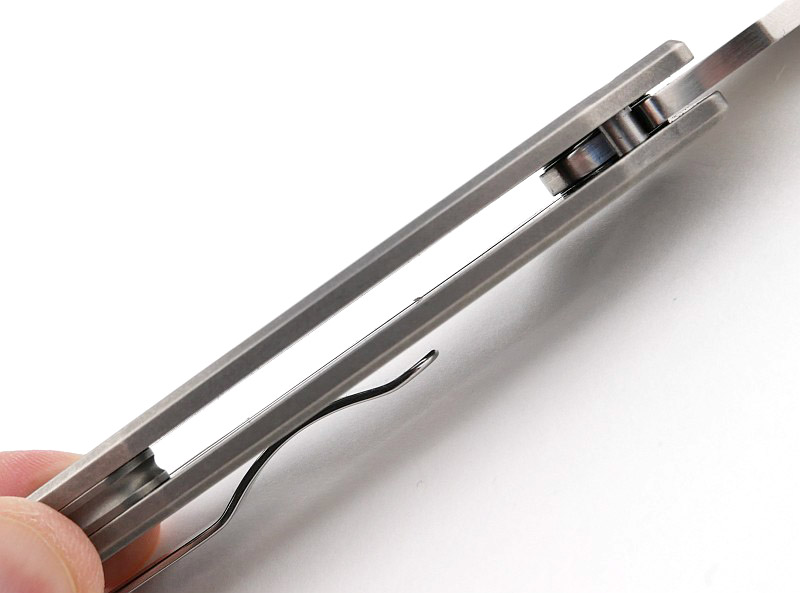
A Special look at the other PITS folders – Things to look out for here are:
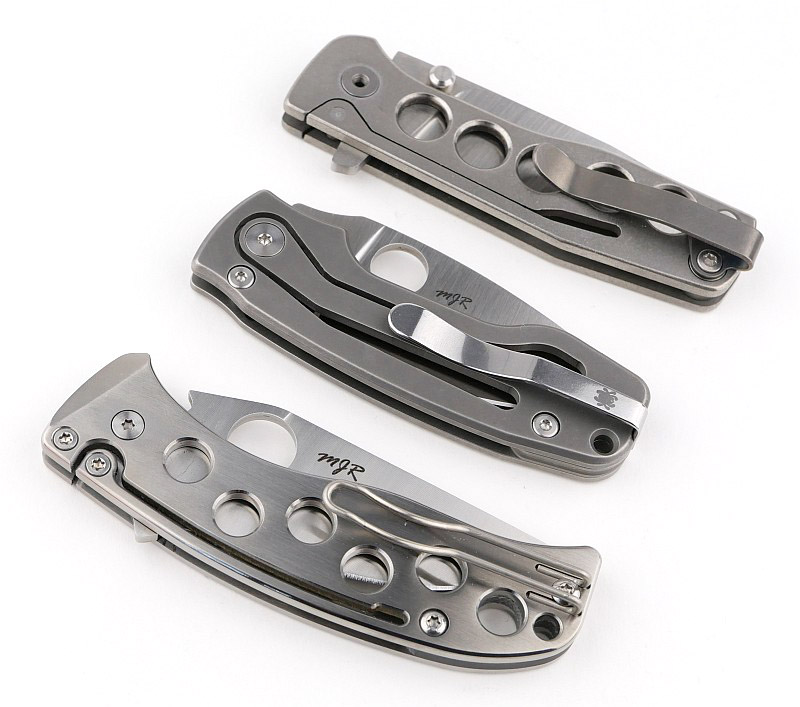
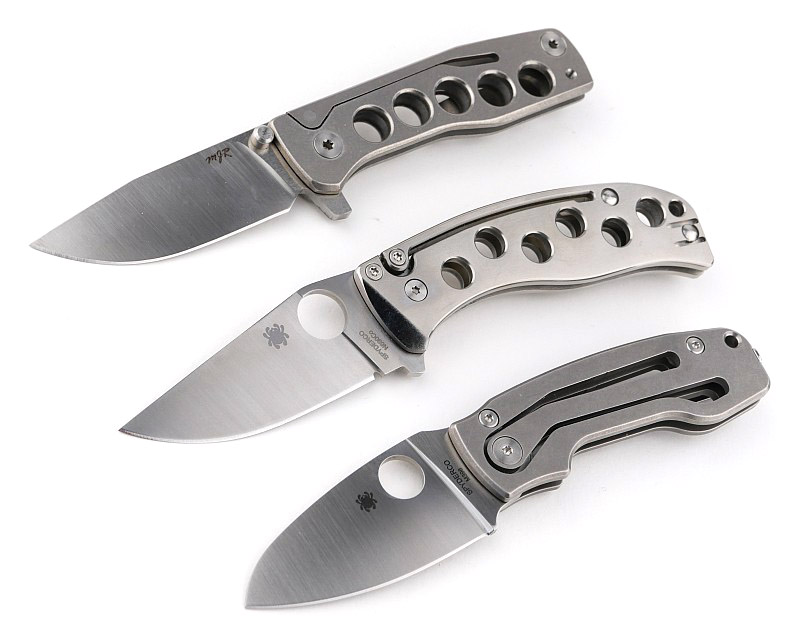
To see where the PITS 2 hails from, this gallery is to give a direct side-by-side comparison of the PITS 2 with the original PITS. I’m also lucky enough to own a custom Mike Read PITS MK5 which gives you an insight into how Mike’s original design was “Spydercoed” and the evolution into the PITS 2.
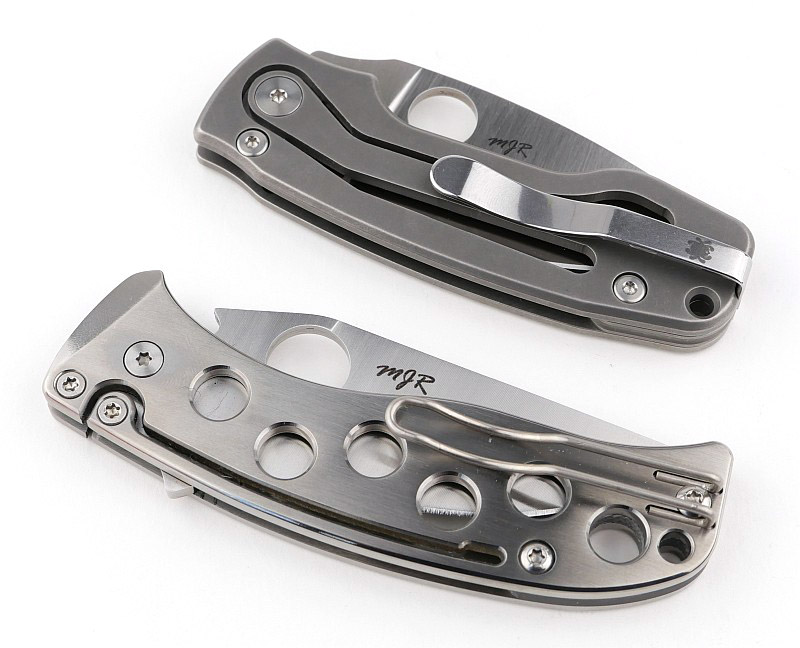
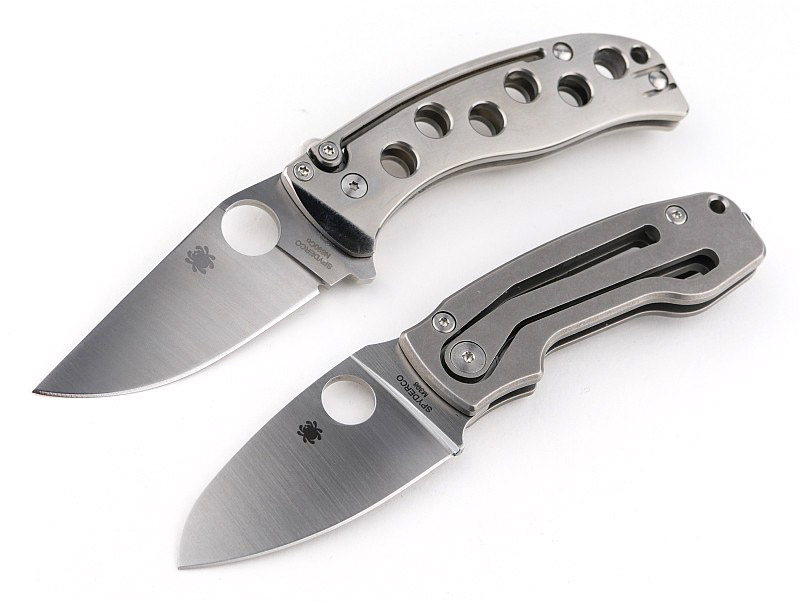
Explained by the Maker:
The reasons for certain design choices may not be clear when simply looking at an object, so this section is intended to give an insight into the thinking behind a design by speaking to the designer themselves.
Mike kindly agreed to speak to me about the PITS 2 design, and here is a summary of that conversation:
The PITS 2 actually came from a test piece Mike was working on for a double-detent slip-joint folder where the detent balls were mounted in the frame and used a cut out though each handle to form a sprung arm so the whole frame bent out and in as the detents engaged and released. The idea being that if you gripped the sides of the handle it would hold the detents in place. But once the test pieces were made up Mike didn’t like it so dropped the idea as it was. However, the cut-outs were something he did like, so he wanted to use the idea somehow. Fortunately for us, Spyderco approached Mike for another knife design following the success of the PITS.
Compared to Mike’s custom knife there is a slight difference in the blade tang’s cam shape and the lock pin, both of which affect the action and resistance to closing, but of course a custom maker can fine tune these details in a way a production knife maker cannot.
Safety was designed into the PITS 2 by using a finger choil, but a much smaller choil than used on the UKPK to maximise cutting edge length, and to allow you to keep four fingers on the knife handle rather than one fully in a choil. By carefully positioning the choil and mini-guard of the blade sufficiently forward of the pivot, it gives your finger more leverage on the blade, so more protection from it closing, and even if it starts to close it will safely press on your finger and not cut you.
Going back to the original PITS, to be able to include the finger guard an open back design was crucial. Though not required for the PITS 2 design, this open back was a carry-over of a feature Mike likes, so wanted to keep.
For all of Mike’s designs he always puts the largest blade he can fit in the handle. In fact his custom version has a blade that is a couple of millimetres longer, and he offered buyers two different blade shapes. For the Spyderco PITS 2 the less ‘pointy’ version of the blade was chosen as a more friendly overall look.
For the handle design, Mike was basing this on his own use of smaller EDC knives where you take it out of a pocket to make a cut, then fold and put back, and so on. This is not intended for large heavy jobs, but just all the small general cutting tasks, so the PITS 2 was designed around this type of use, and not heavier cutting. The curves and shaping of the handle is intended to give you immediate indexing and a variety of grip options and dexterity without having to look at it.
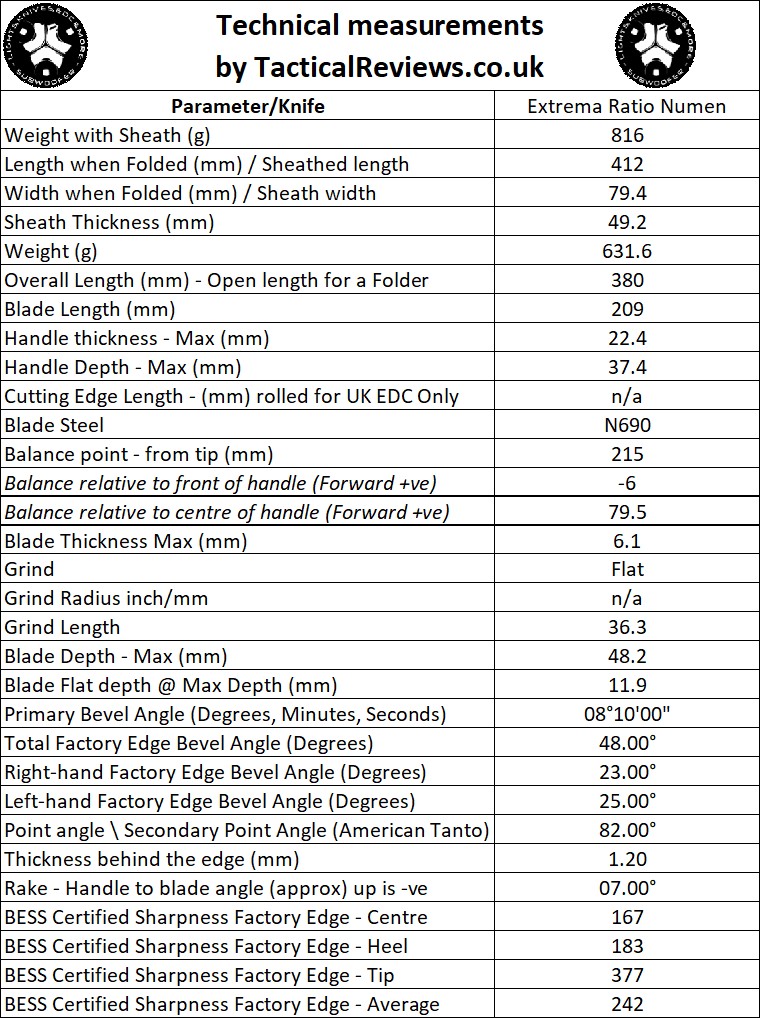
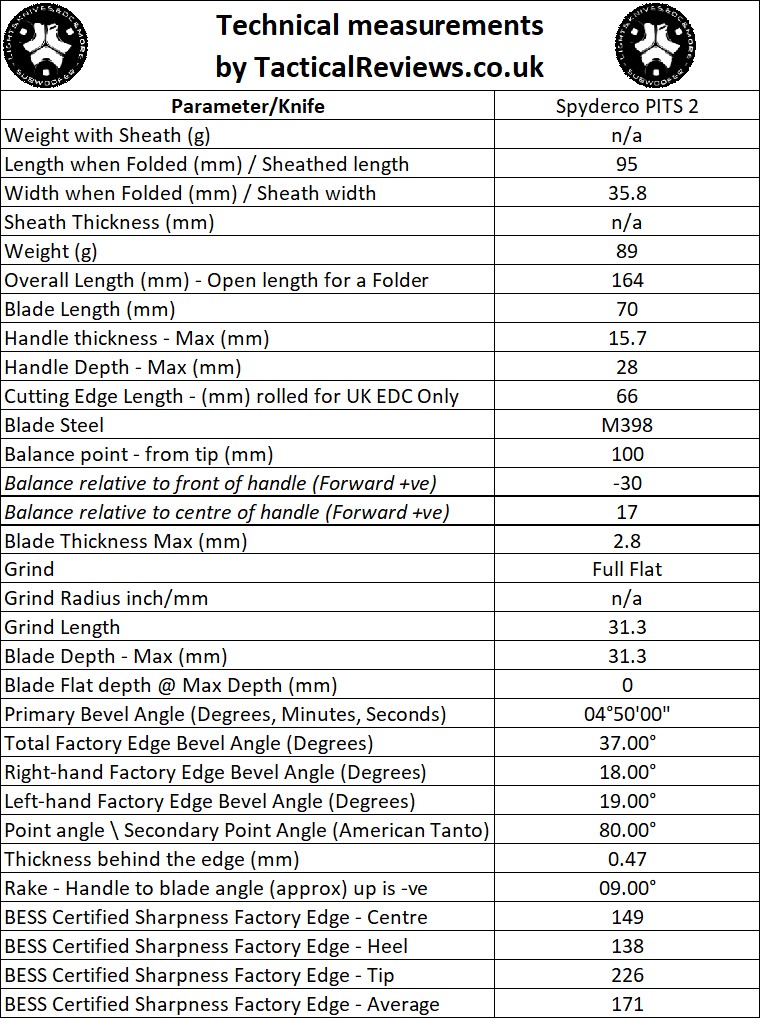
The Blade and Handle – Detailed Measurements:
For full details of the tests and measurements carried out and an explanation of the results, see the page – Knife Technical Testing – How It’s Done.
The blade is made from M398 steel.
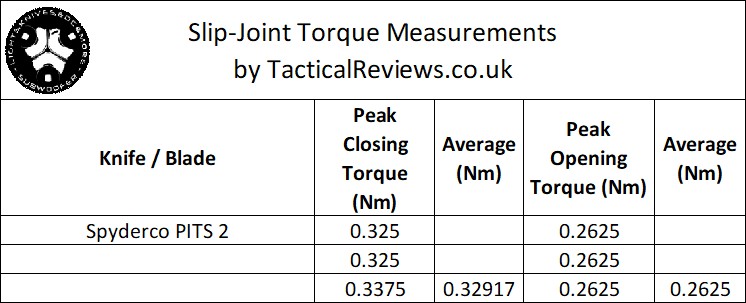
With the PITS 2 being a slip-joint folder, the resistance to closing (and related stiffness of opening) is an important factor, so for this I carry out Torque measurements for opening and closing.
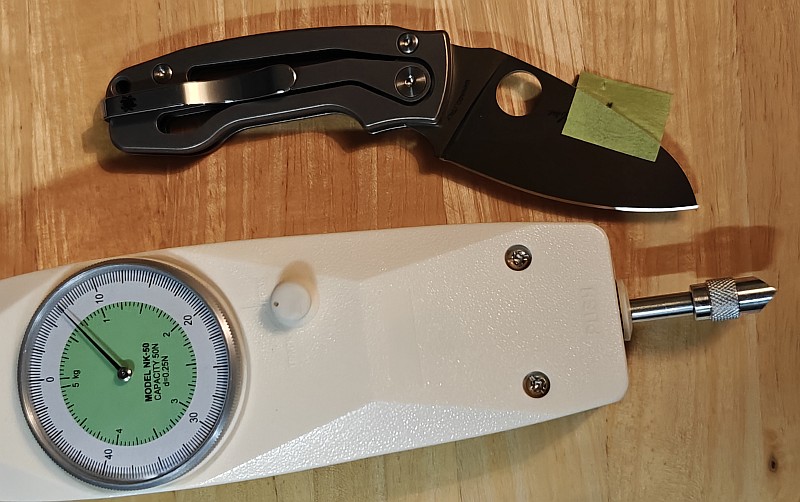
And the torque measurements for the PITS 2 (for further reference values check the Technical Testing link):
Of note are that these are the lowest opening and closing torque figures I have ever measured. Strangely it doesn’t feel that way in use, but these are the actual measured values.
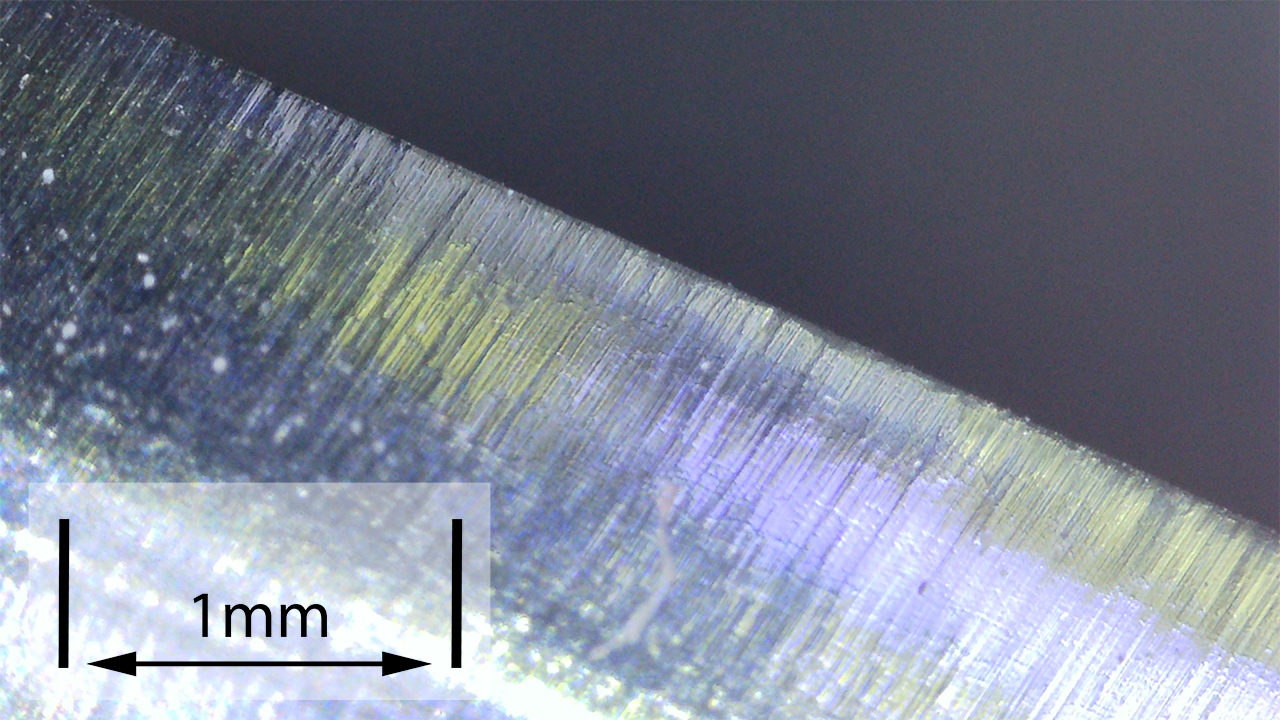
The Factory edge up close:
Followers of Tactical Reviews will know my views on factory edges, but to recap:
Anyone using a knife will need to sharpen it. That first factory edge is just like the first tank of fuel that a new car comes with (or first charge of the battery).
A good factory edge is a ‘nice to have’ but not a ‘make or break’ for a good knife, as you will be putting your own edge onto it soon enough.
The factory edge does however indicate the care a knife maker has put into the final finish.
It is for this reason Tactical Reviews measures factory edge sharpness and specifications, and includes this information in the detailed technical testing.
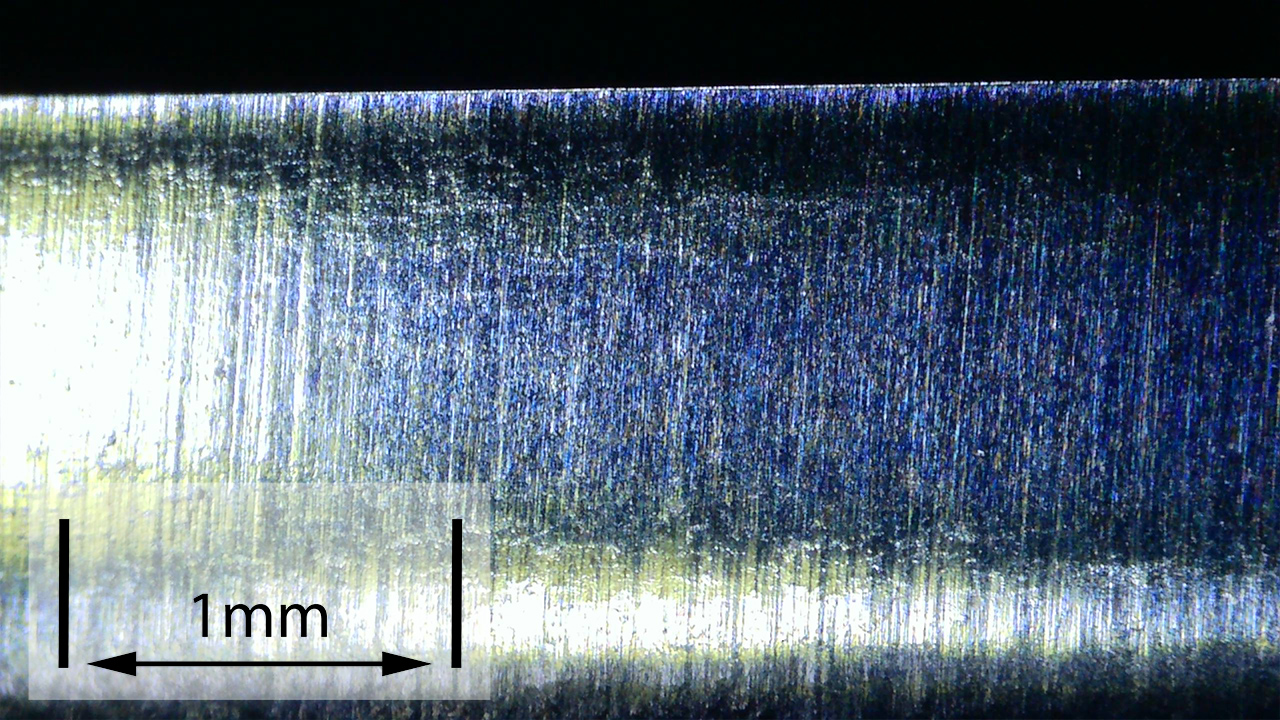
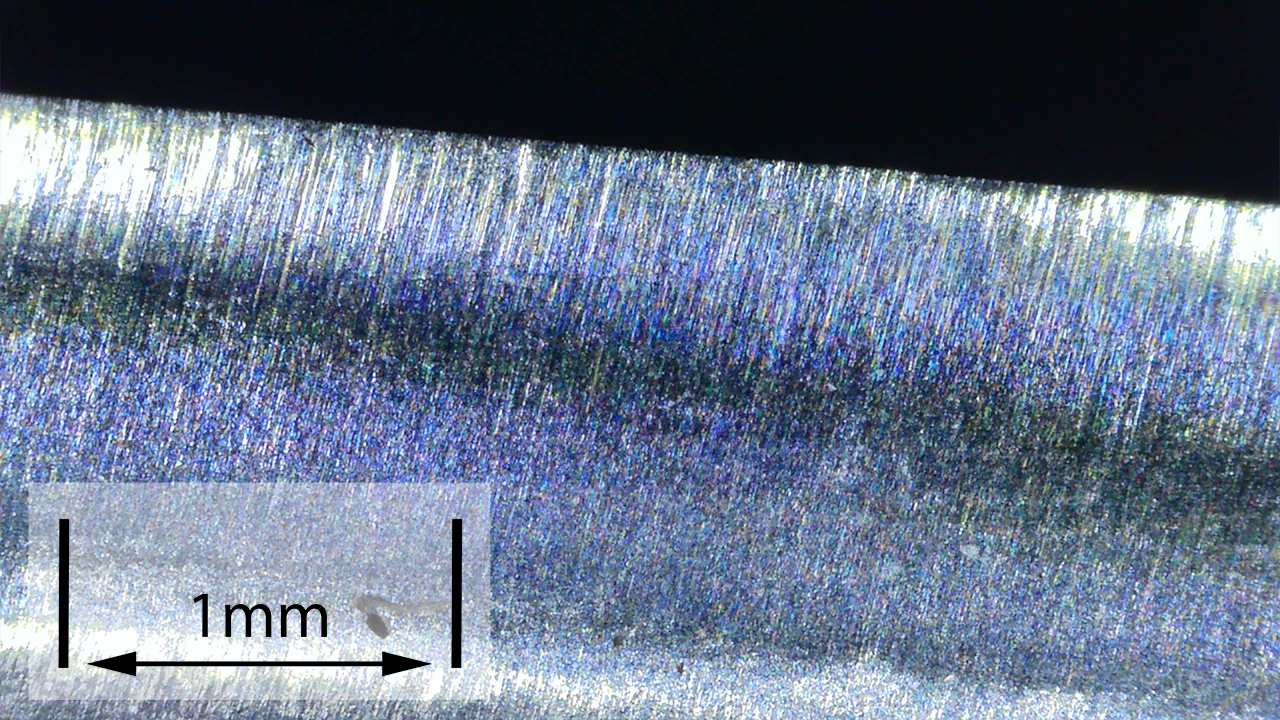
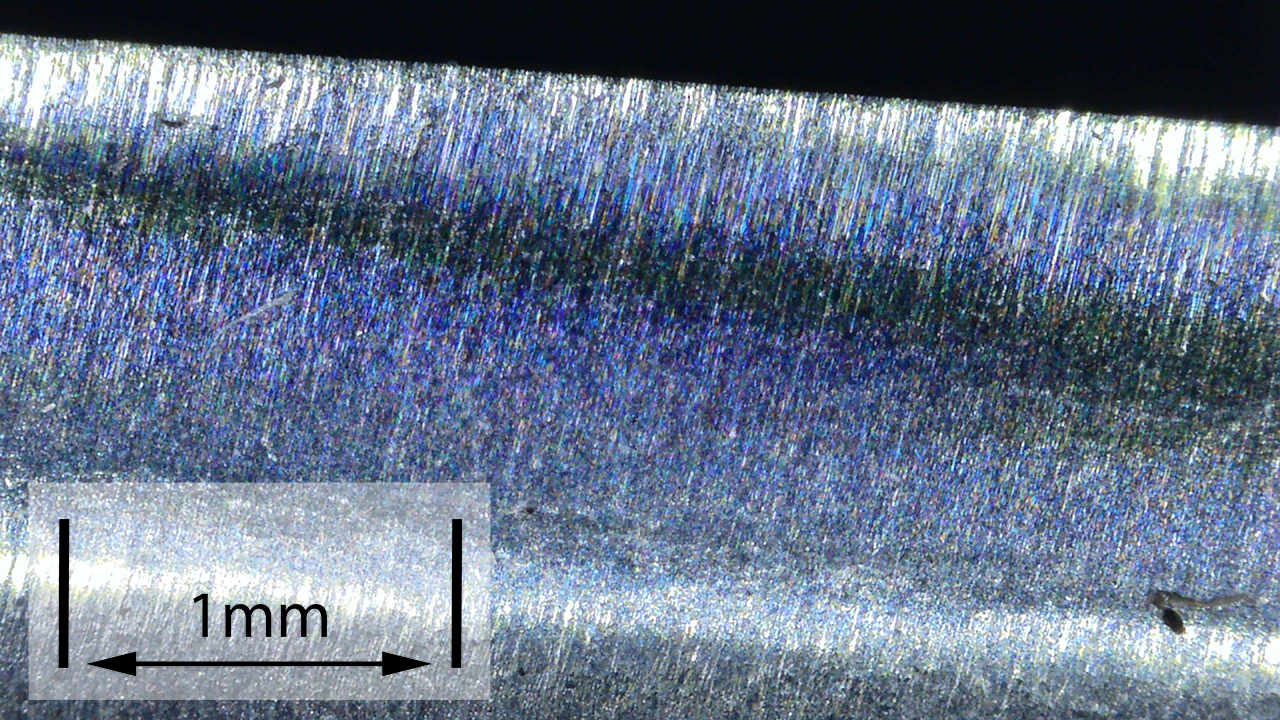
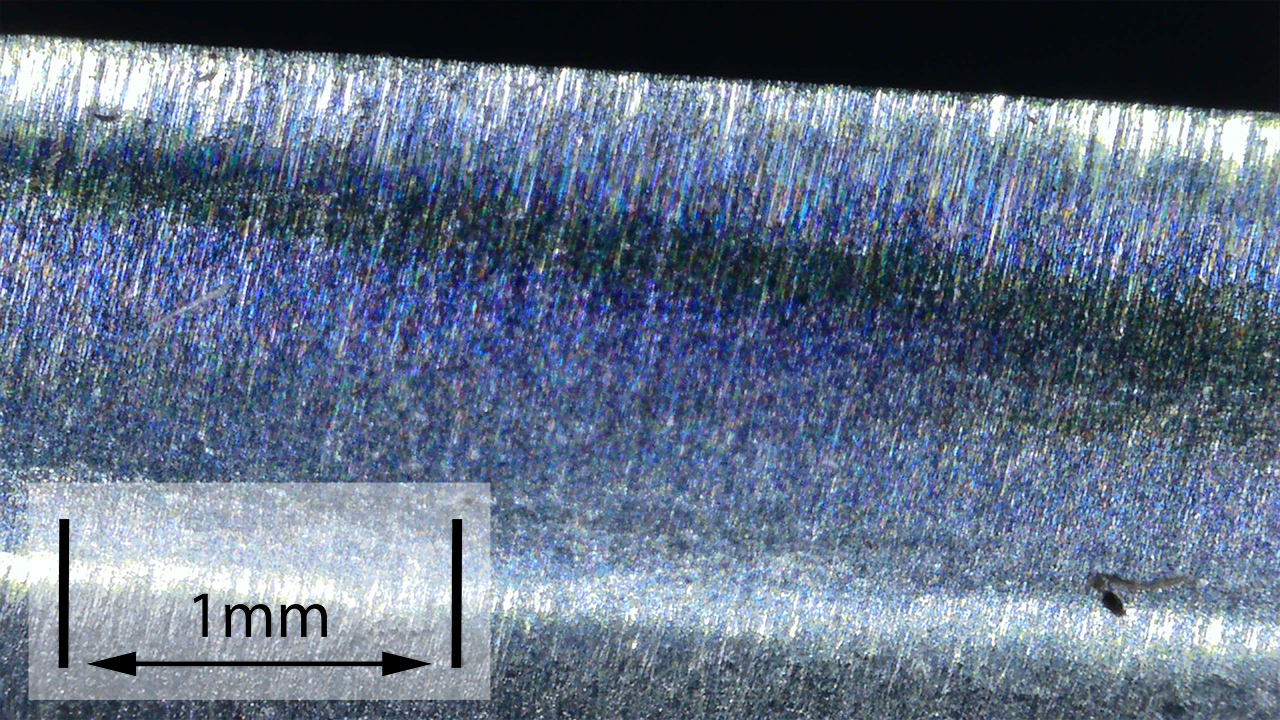
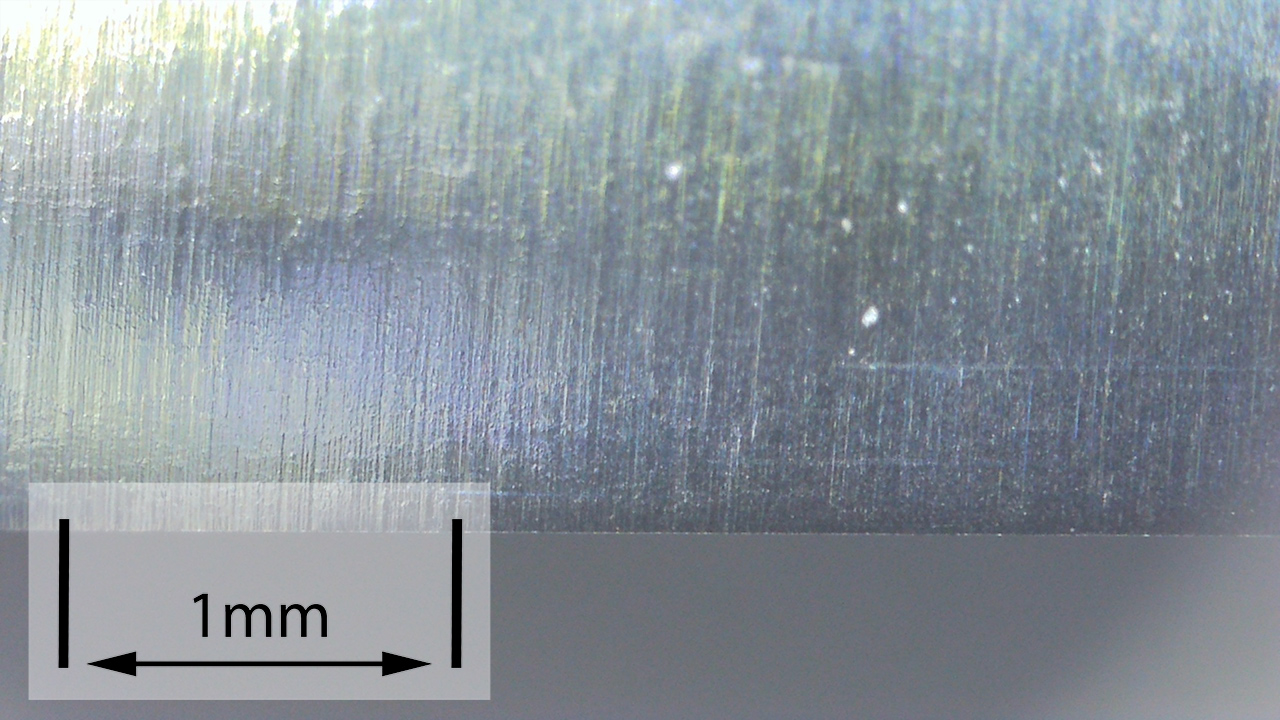
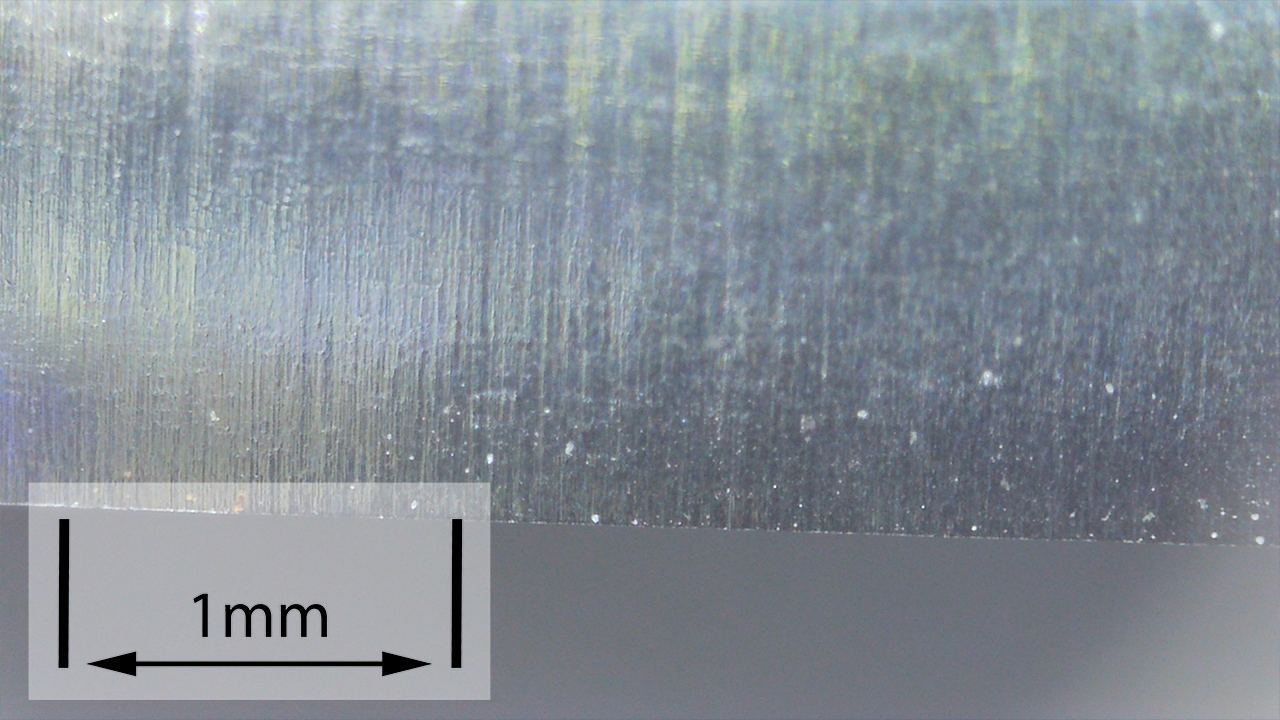
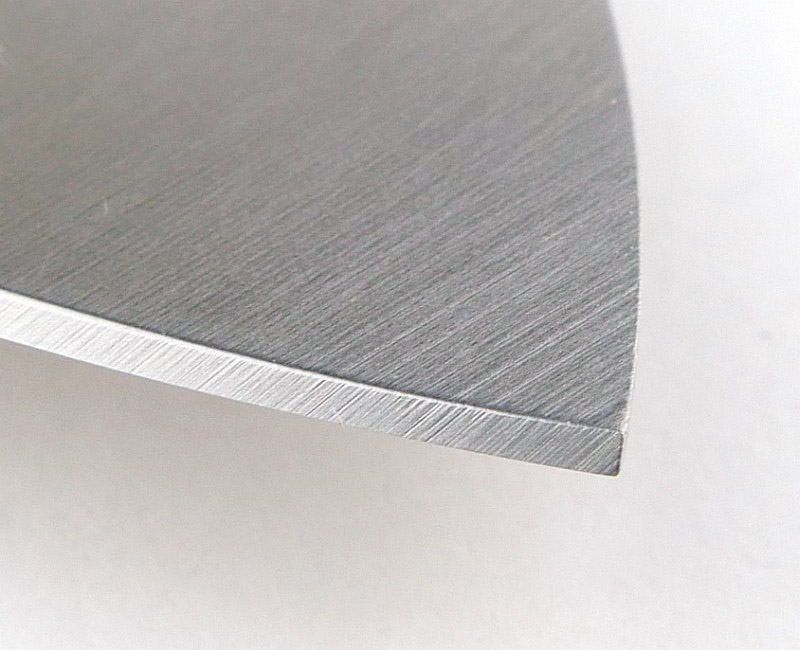
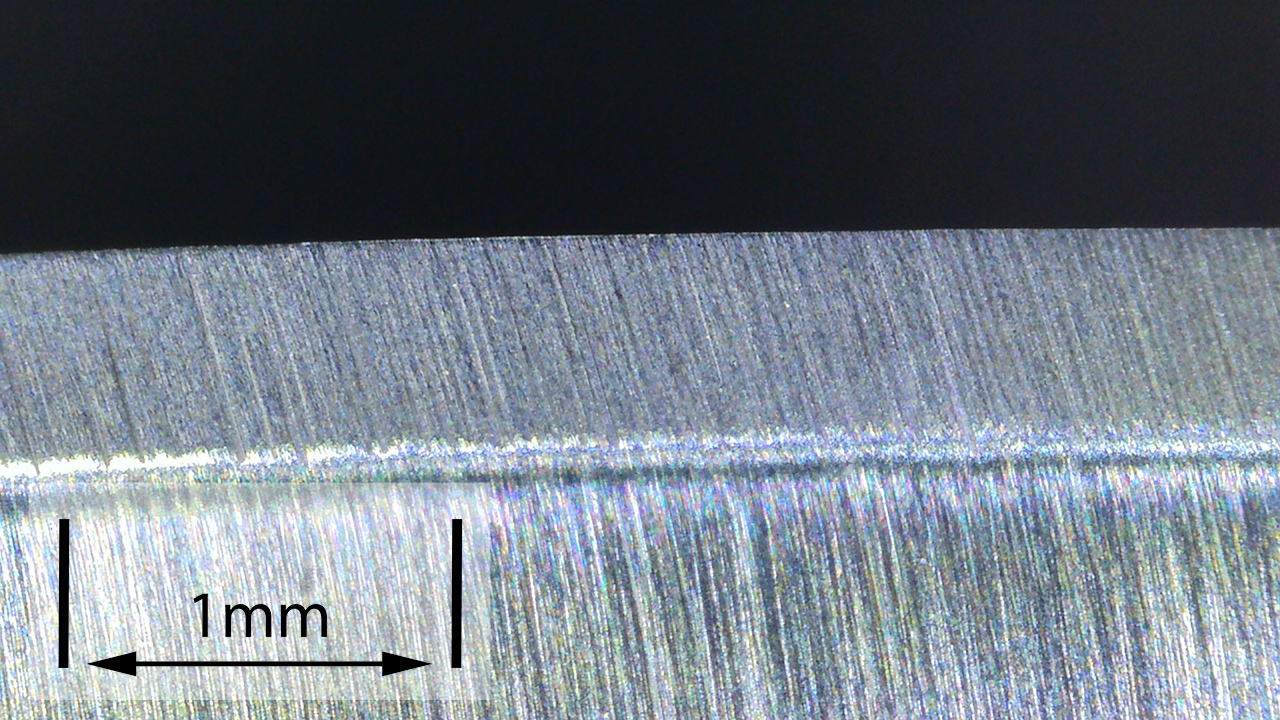
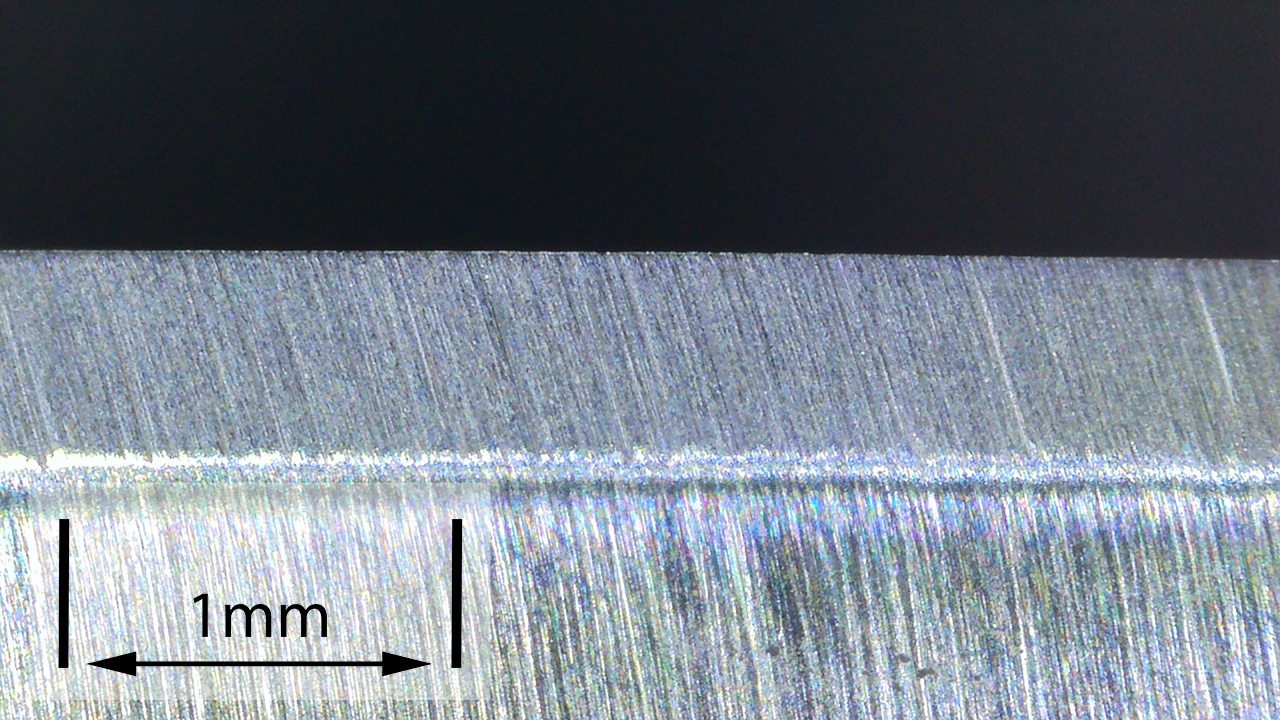
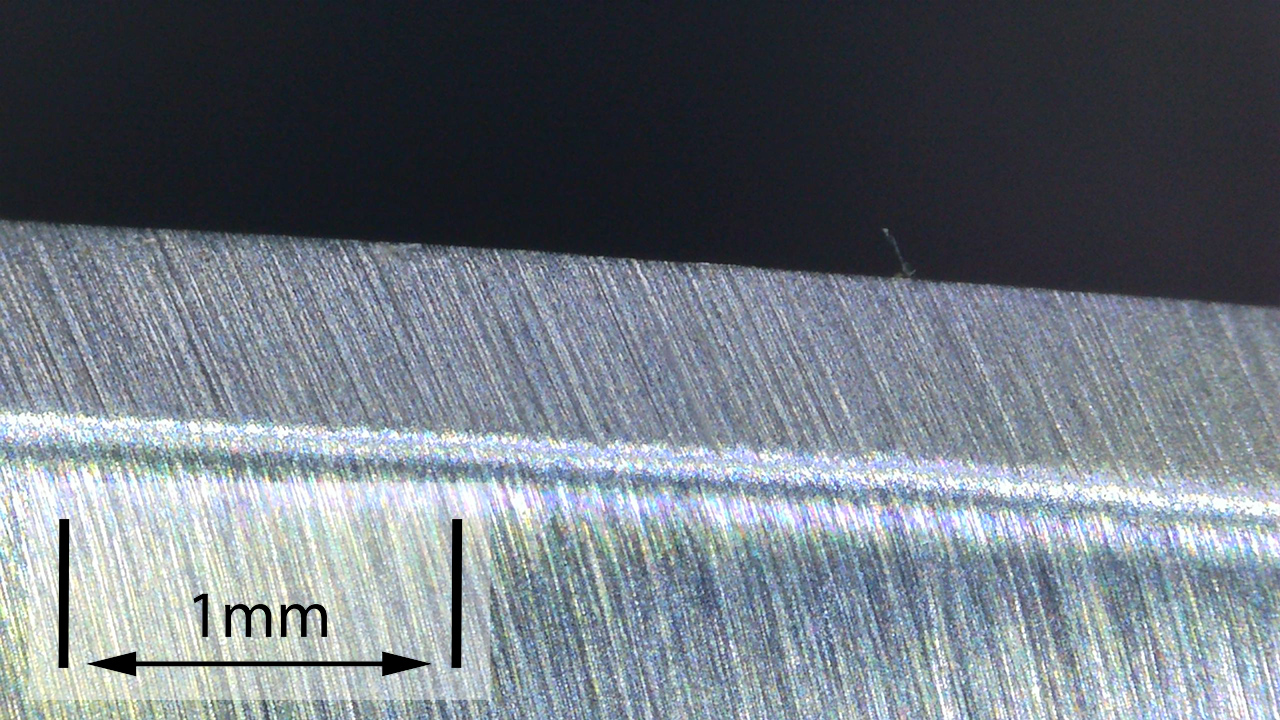
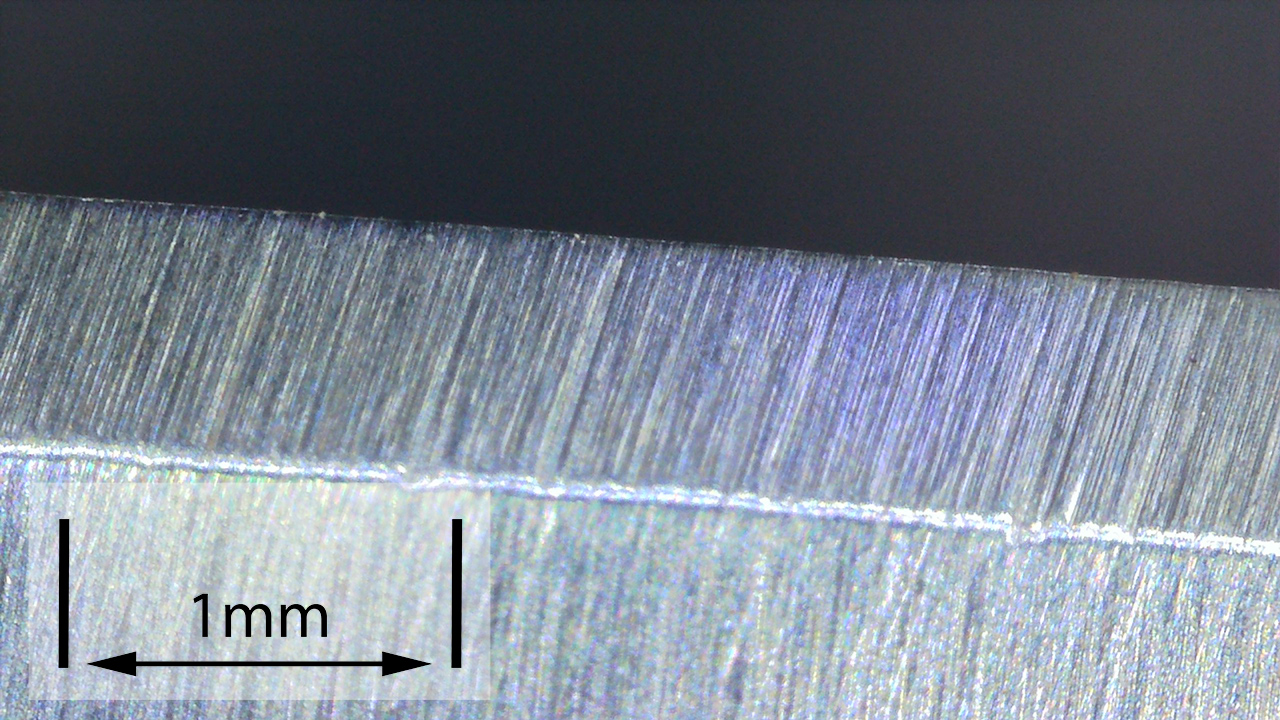
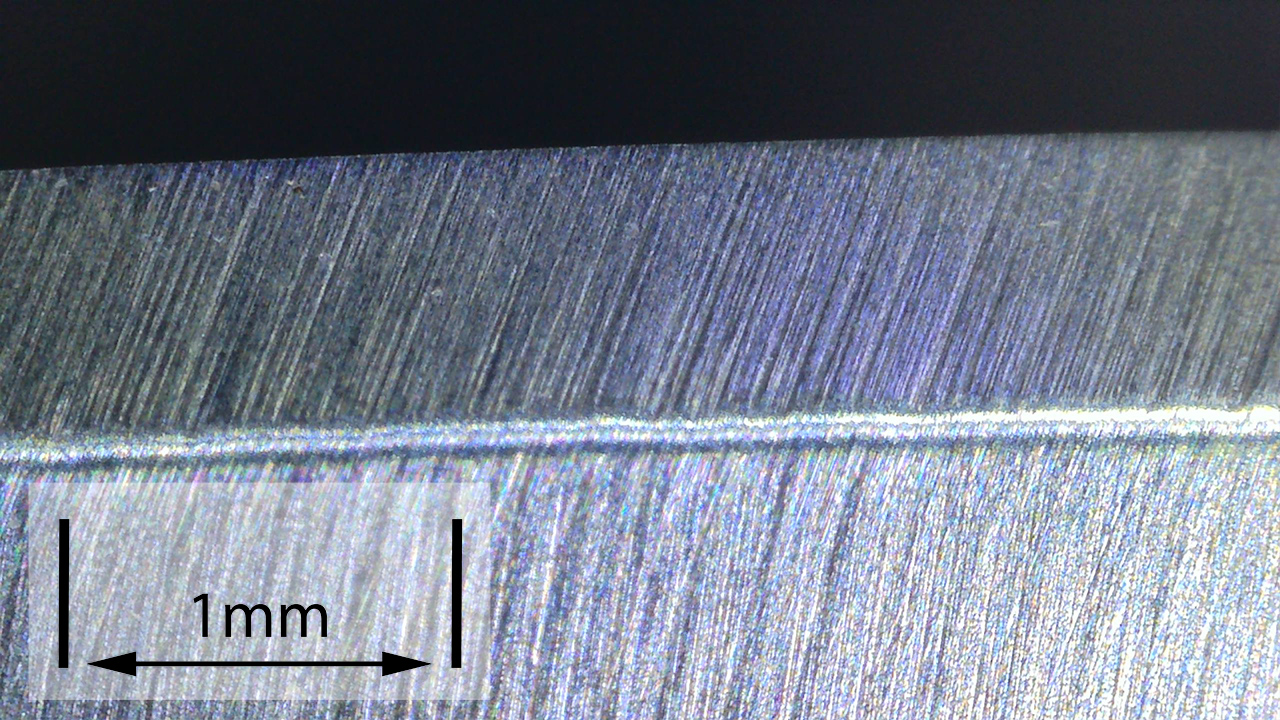
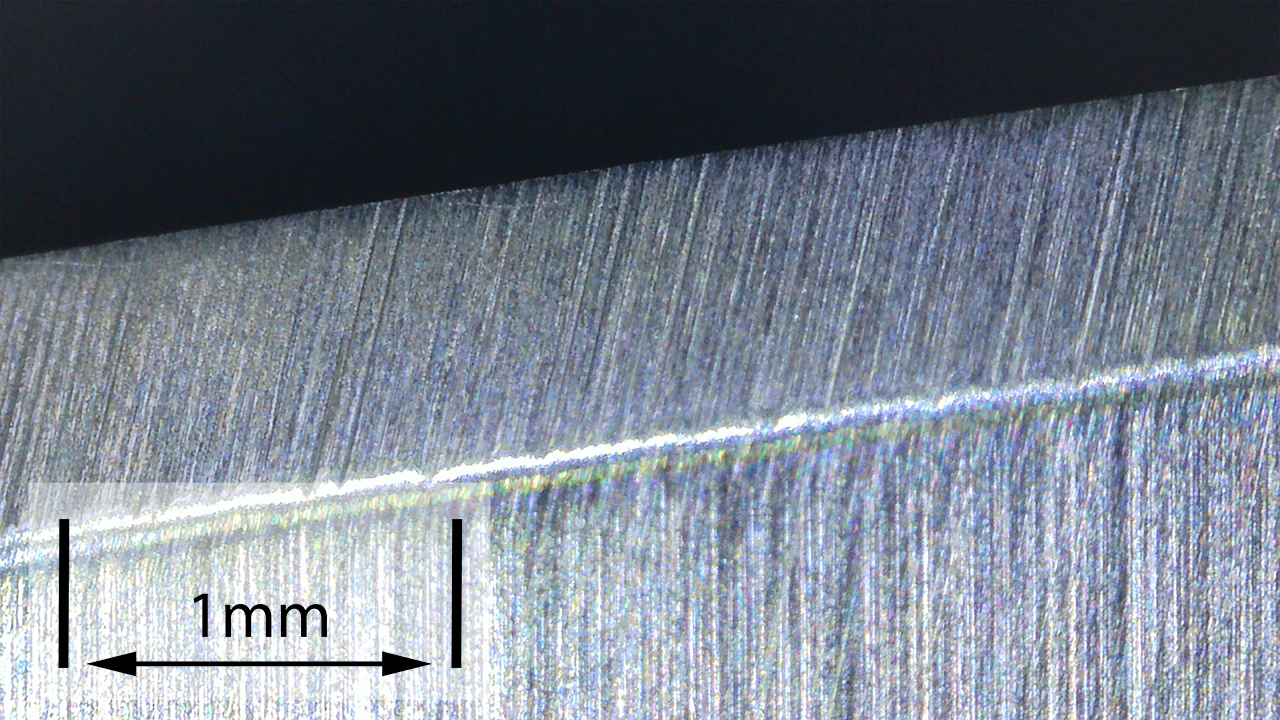
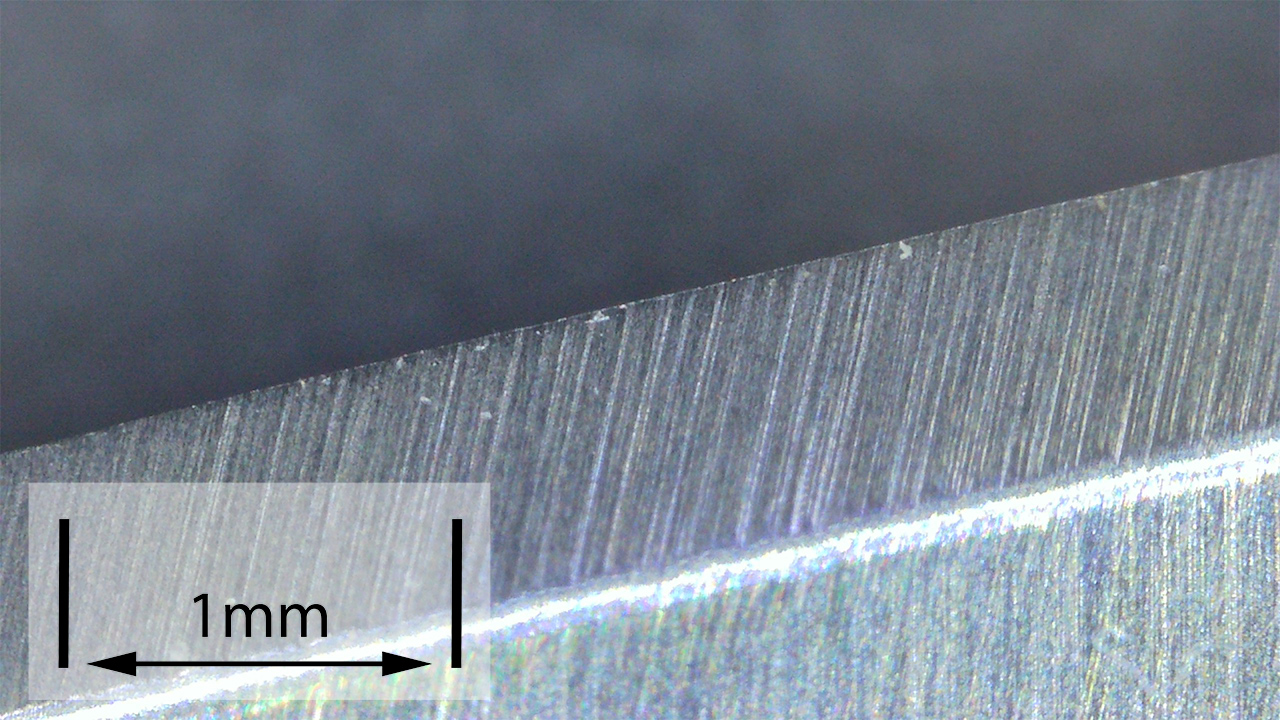
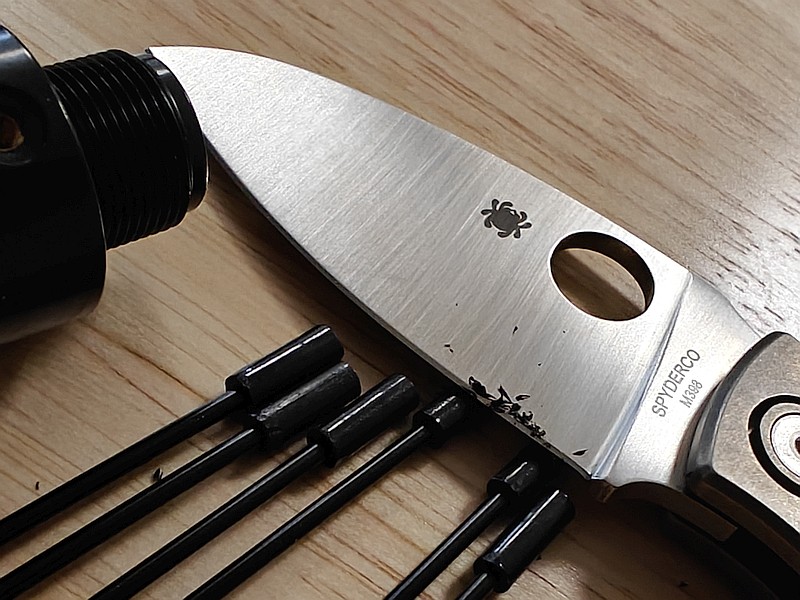
As a further look at the factory edge, this section has been added to include some high magnification photos of the factory edges.
Spyderco’s typically immaculate factory edges.
What is it like to use?
As a true one-handed-opener slip-joint, the PITS 2 is already somewhat unusual. Add in the unique integral sprung pivot, that not only looks intriguing, but allows for the open back design; then on top of this the finely crafted all Titanium handles, and you have a really special knife. This is all before you even open the blade.
As is befitting of an EDC slip-joint, the PITS 2 is a supremely easy to carry size. When I drop it into a bag without using the clip I sometimes find myself hunting for it and worrying I’ve lost it. Using the clip has been secure without being overly abrasive as some can be,
I find that most naturally I use a pinch grip to hold the knife with thumb and finger opposite sides of where the pivot is.
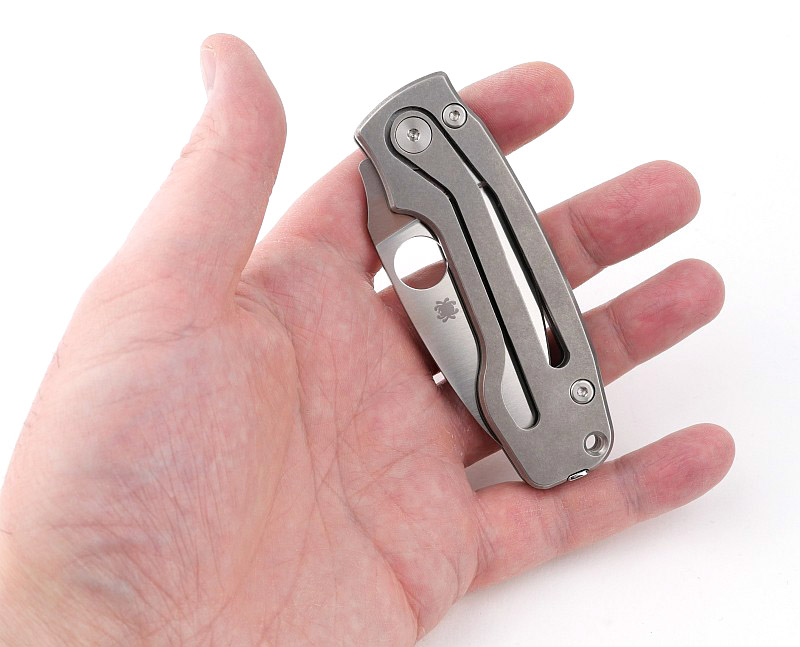
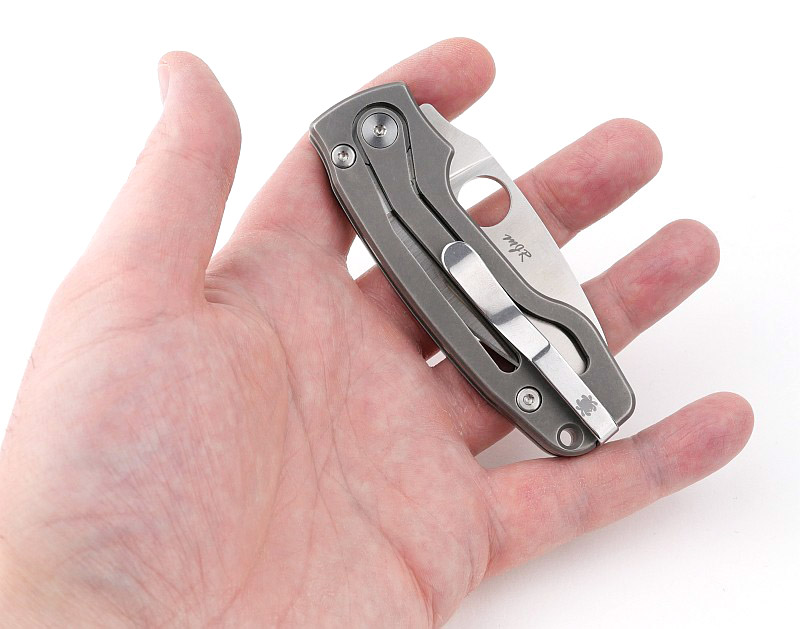
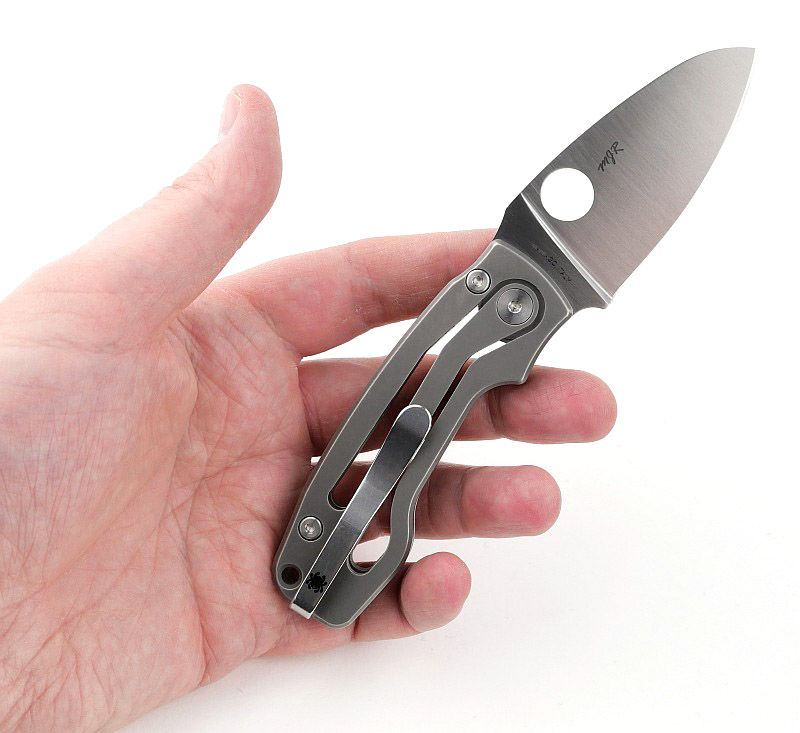
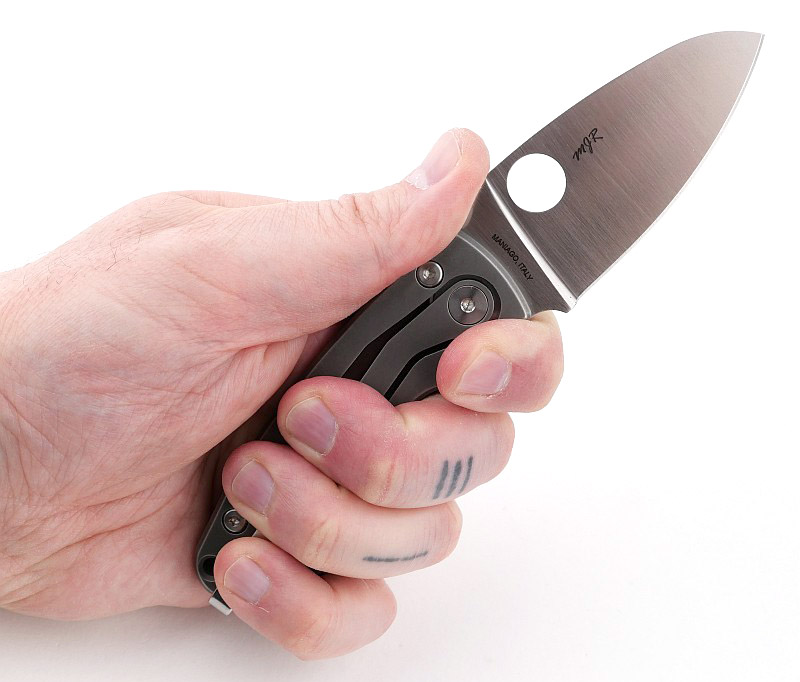
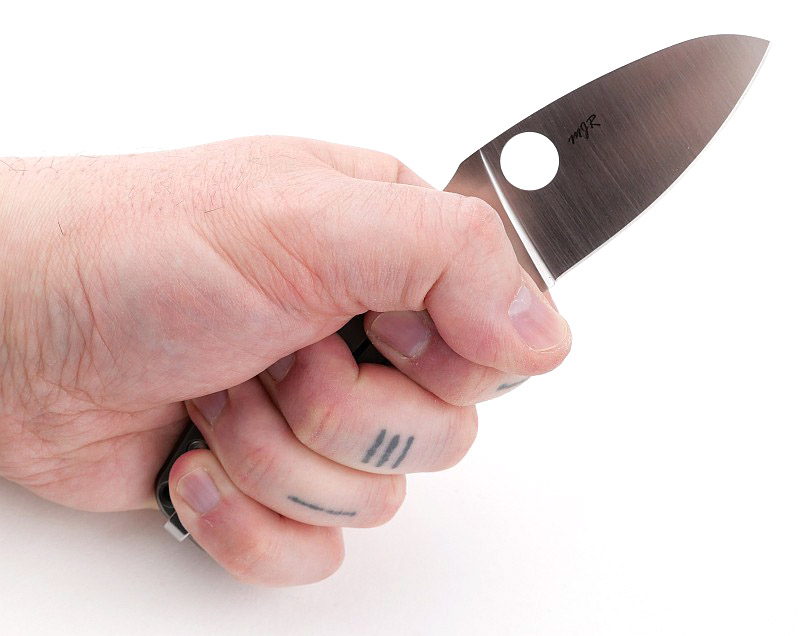
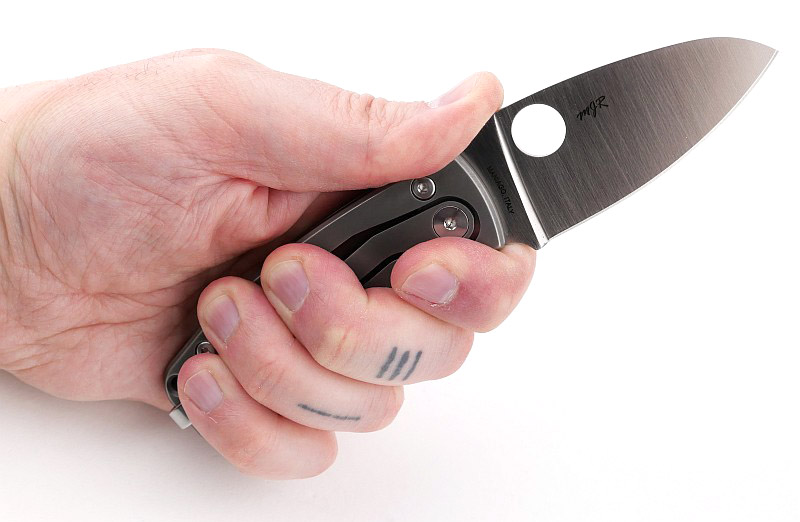

Earlier in the opening/closing torque section, you might have noticed me mention that the PITS 2 has the lowest torque readings I have so far measured. However, oddly, it does not feel too light, and does snap into position. Using slip-joints safely does rely on correct technique, and used correctly, this is no issue at all. In fact the crisp edges of the Spyder-hole (which was designed to be used with various types of lock, not really a slip-joint) could become too sharp if the spring resistance was higher, so the balance is just right.
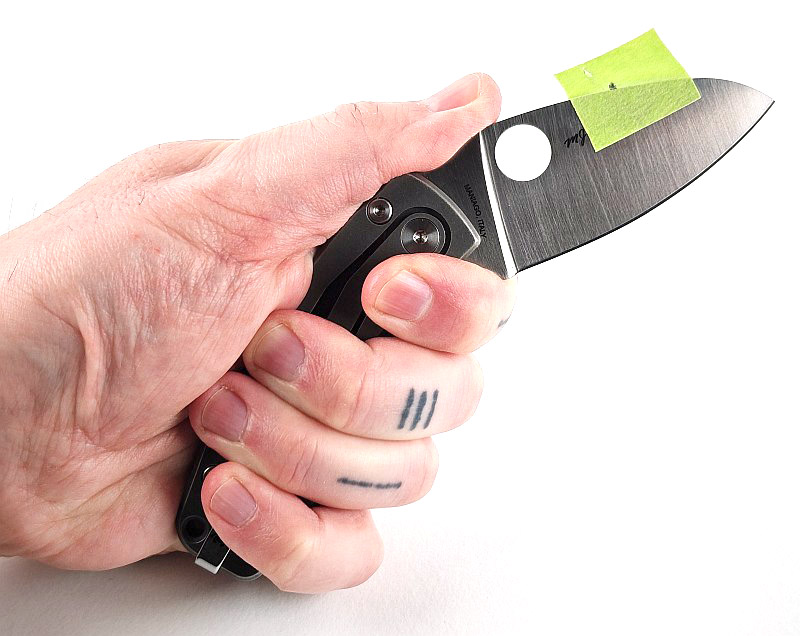
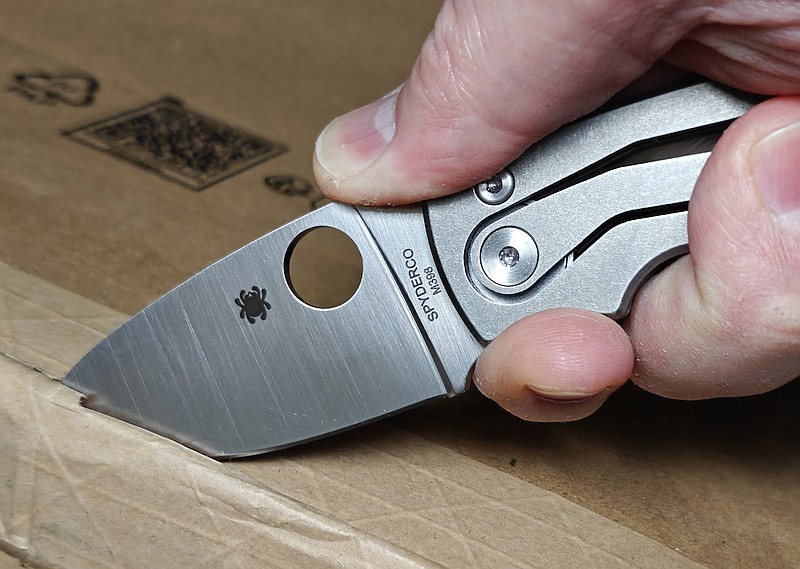
To reassure you further though, here is a photo showing how, when you grip the knife firmly, if the blade does start to rotate closed, it pinches onto your finger and this prevents the blade closing any further. This demonstration photo was to intentionally illustrate what would happen if you got the cut direction and pressure wrong, and so far I’ve never actually had this happen.
Of course, I’m not going out into the woods and batoning the PITS 2 or processing firewood. It’s a small EDC knife for all those every day tasks. Being (currently) UK EDC legal, I’ve had it with me all day every day and enjoyed removing plastic injection molding flashing, opening boxes and food packaging, and trimming whatever needs a trim.
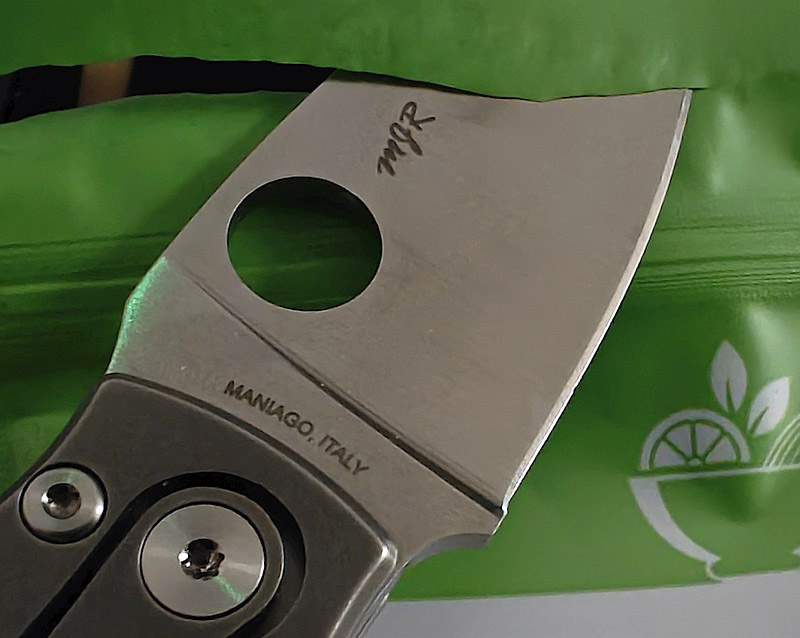
The edges of the opening hole are almost too crisp. This does give the opening hole grip, but combined with winter dry hands, and one job after another, was starting to cut into my thumb. I might ‘ease’ this at some point, as the hole is very accessible when the blade is closed so a slight reduction in grip should not be a problem. Something for future-me to decide. Using an opening hole instead of a thumb stud keeps the whole design much thinner and sleeker, so is a great choice.
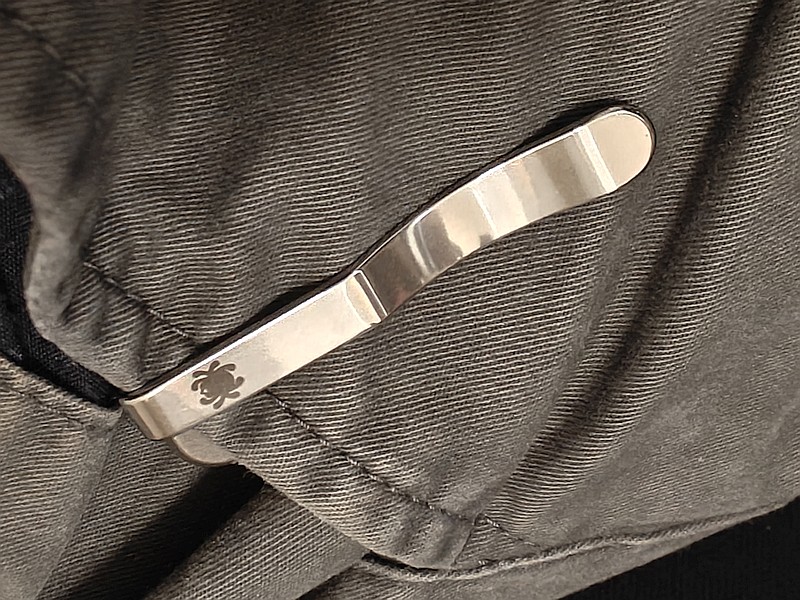
Pocket carry with the clip is comfortable and has been secure. With the overall length being short enough not to get pushed off your pocket edge when sitting and moving about. Personally however, losing a knife that has popped off a pocket edge at some point during the day is just too frustrating, so I’ll only use the pocket clip during a job where I’m using the knife on and off for a while. Then once finished I’ll move it off my pocket edge and into a safer location.
Another observation, if it matters for your use, is that general reactions to the PITS 2 are much more positive than the original PITS. I love the PITS and it is a fantastic tool (which is also UK EDC legal) punching well above its weight, but despite being UK EDC Legal many comments about ‘are you allowed to carry that’ are simply not there with the PITS 2. The rounded blade tip profile and slightly smaller dimensions seem to have brought this into more poeple’s comfort zone and makes them curious about a design unlike anything they have seen before.
Spyderco PITS 2 Review Summary
The views expressed in this summary table are from the point of view of the reviewer’s personal use. I am not a member of the armed forces and cannot comment on its use beyond a cutting tool or field/hunting knife.
Something that might be a ‘pro’ for one user can be a ‘con’ for another, so the comments are categorised based on my requirements. You should consider all points and if they could be beneficial to you.
_______________________________________________
What doesn’t work so well for me
_______________________________________________
Opening and Closing Torque is low.
Spyder-hole edges are bit too sharp.
Polished pocket clip seems slightly out of place (Stonewashed might have been better).
_______________________________________________
Things I like
_______________________________________________
Totally unique integral sprung pivot arms.
Open back handle.
Secure but non-abrasive pocket clip.
Mini finger guard prevents blade closing onto your fingers.
Slim and light.
UK EDC Legal.
Slicey full-flat grind blade.
M398 steel.
Movable/removable pocket clip.
Fully ambidextrous.
Spyderco PITS 2 Review Videos
Starting with a short format sixty second review:
Onto a full video review covering many more details:
Discussing the Review:
Something new – will it work? A Tactical Reviews Subreddit.
TacticalReviewsChat on Reddit
Please visit there and start/join the conversation.