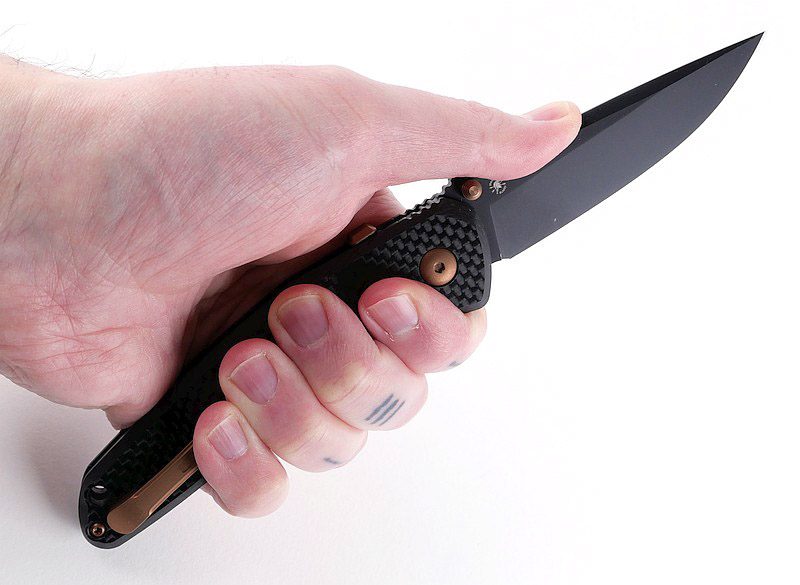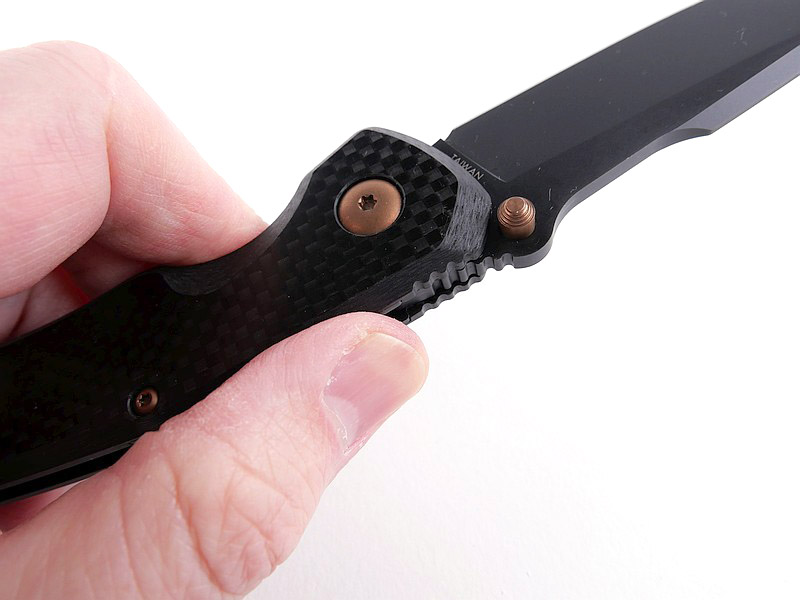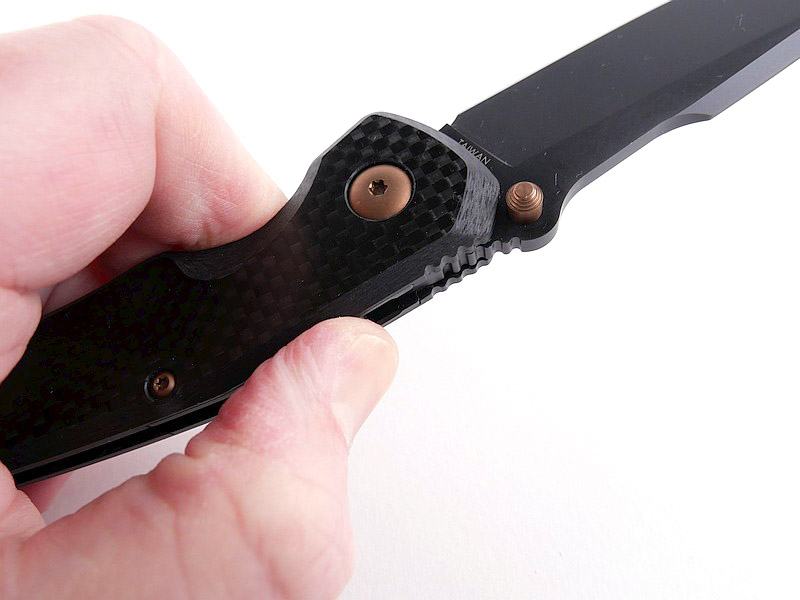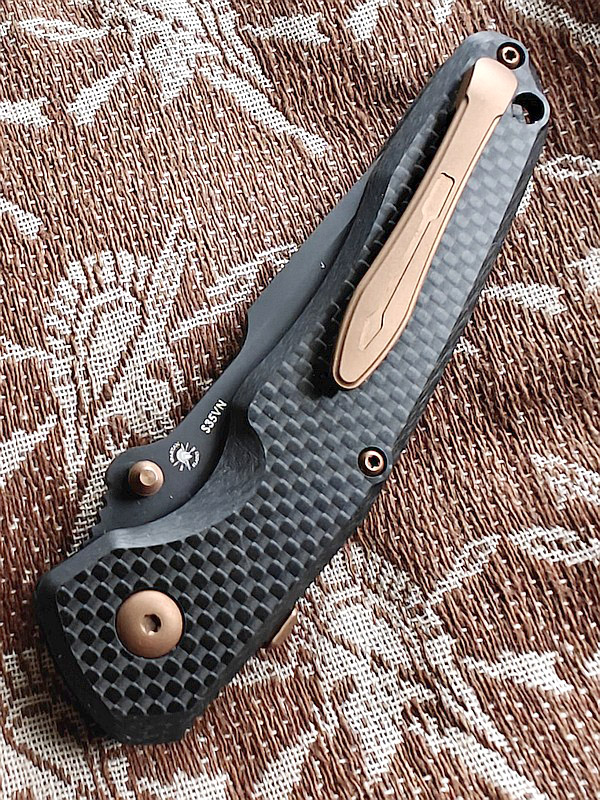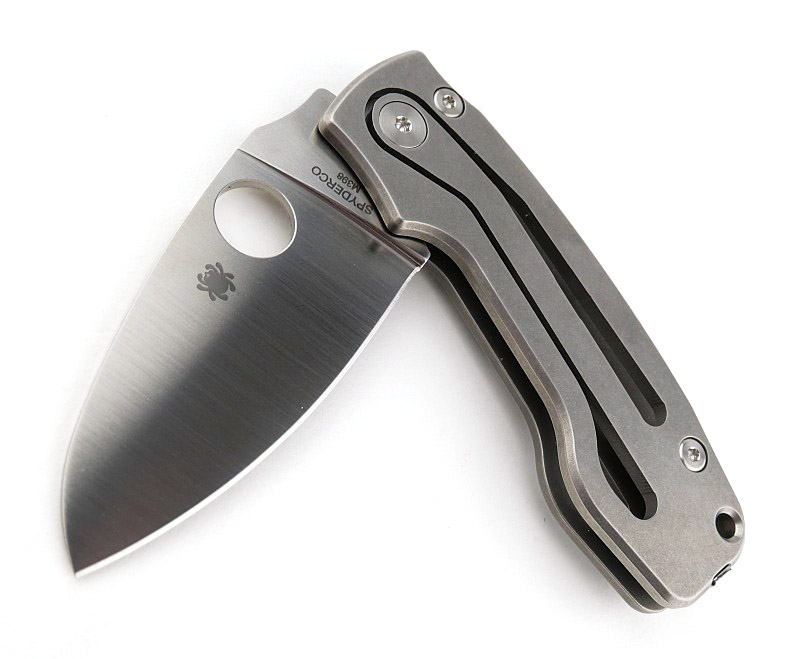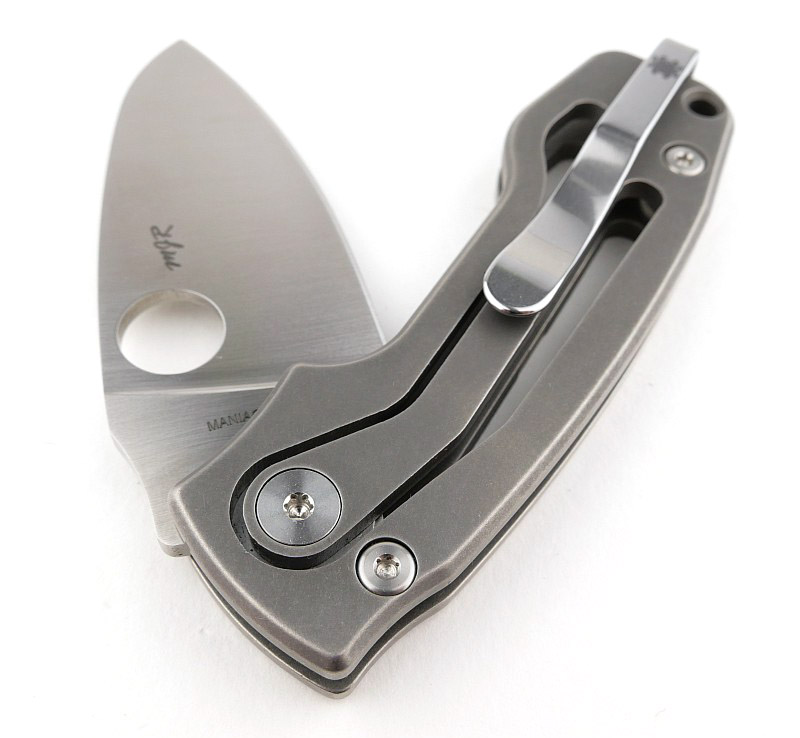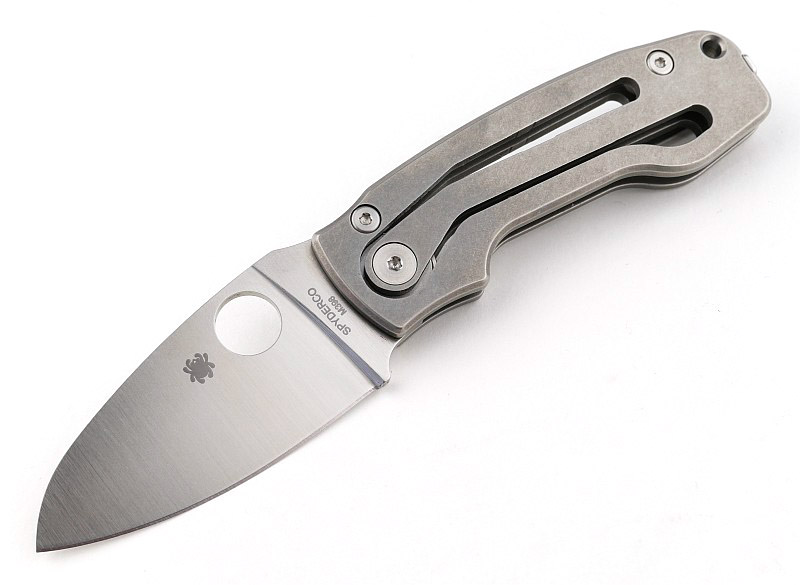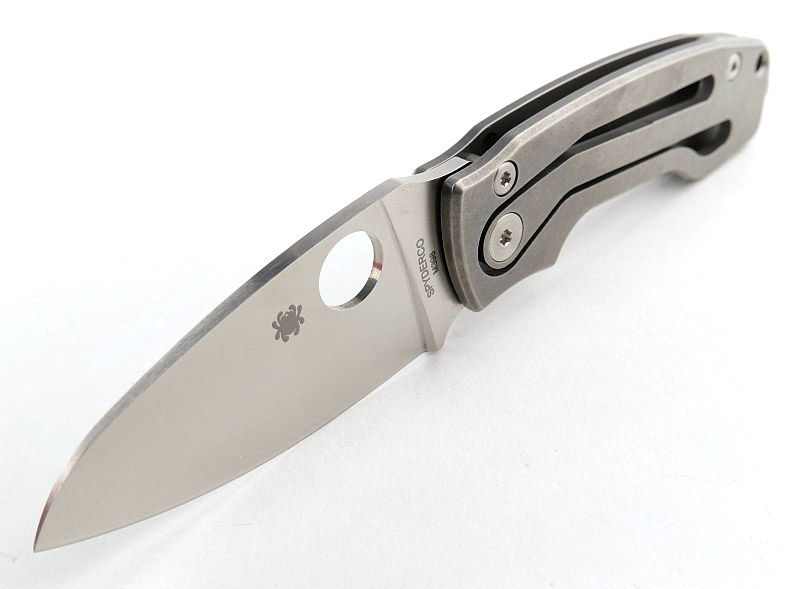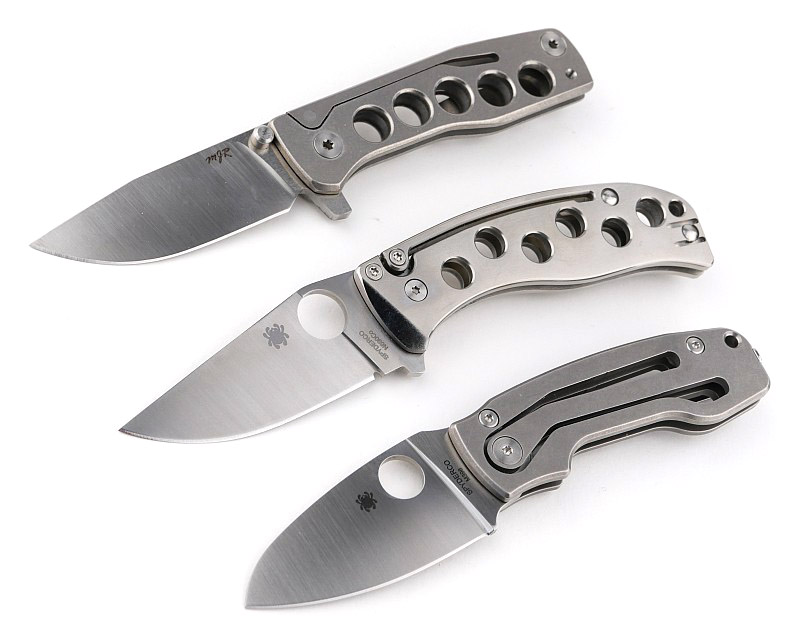
Knife Review: Mercury Luc

In this detailed review of the Mercury Luc, Tactical Reviews presents a close look at Mercury’s modern take on the slip joint folding knife. Join me in this Mercury Luc Review for all the details.

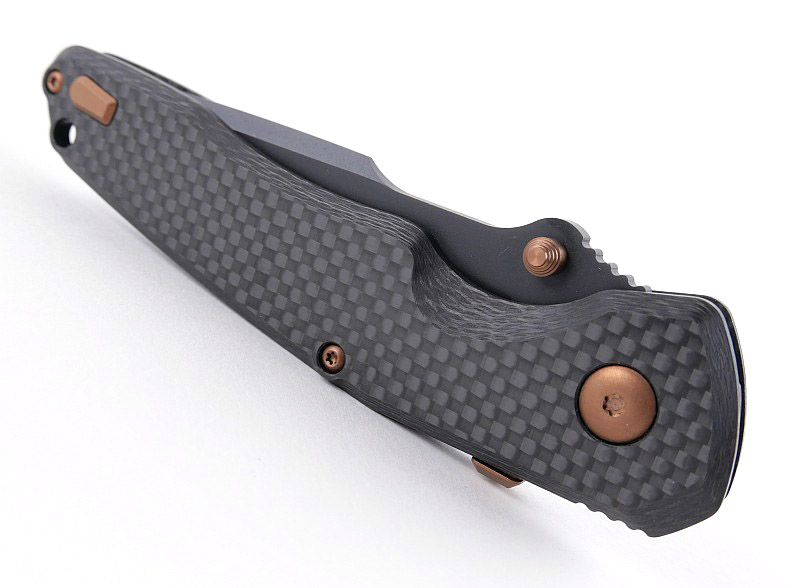
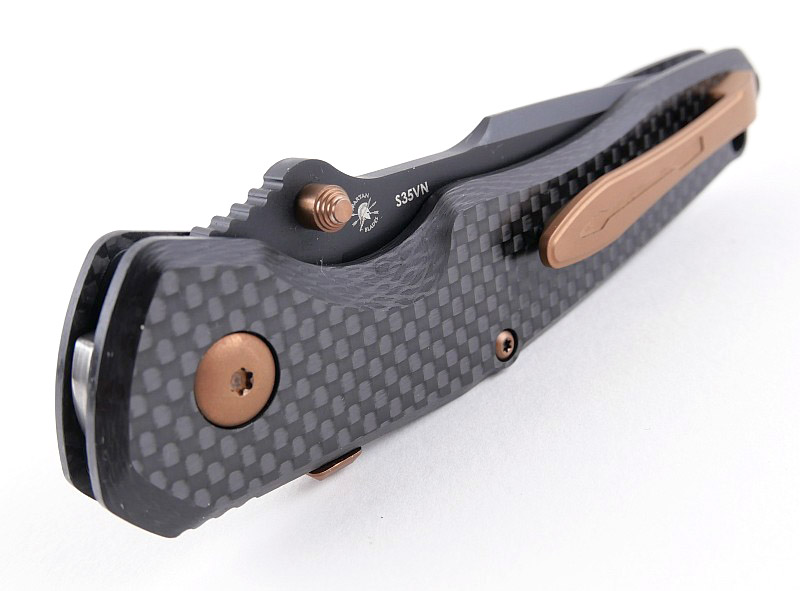
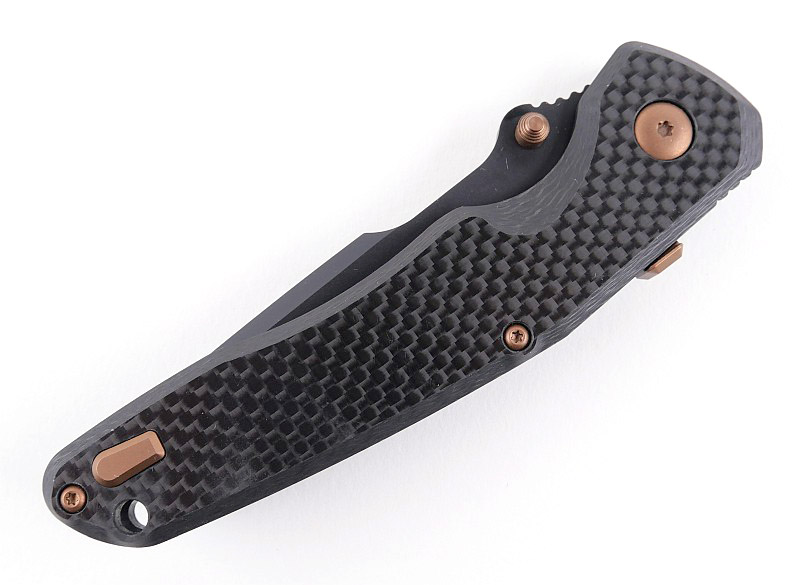
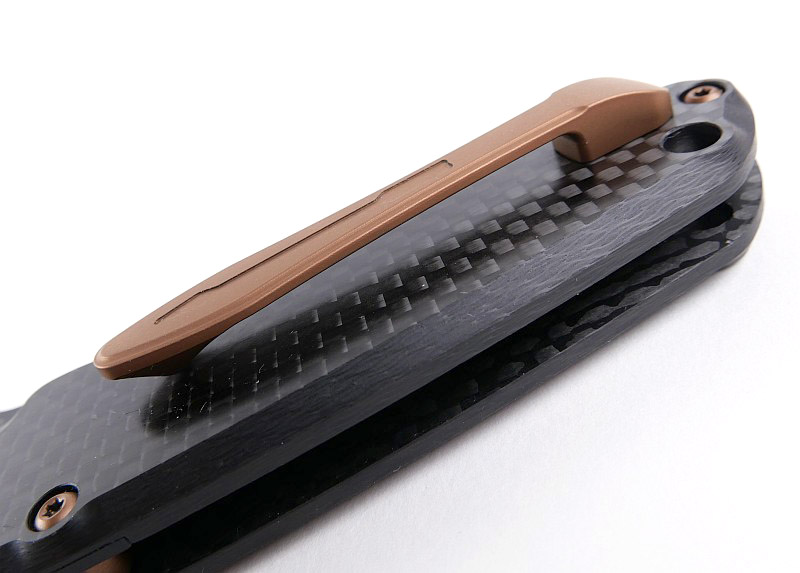
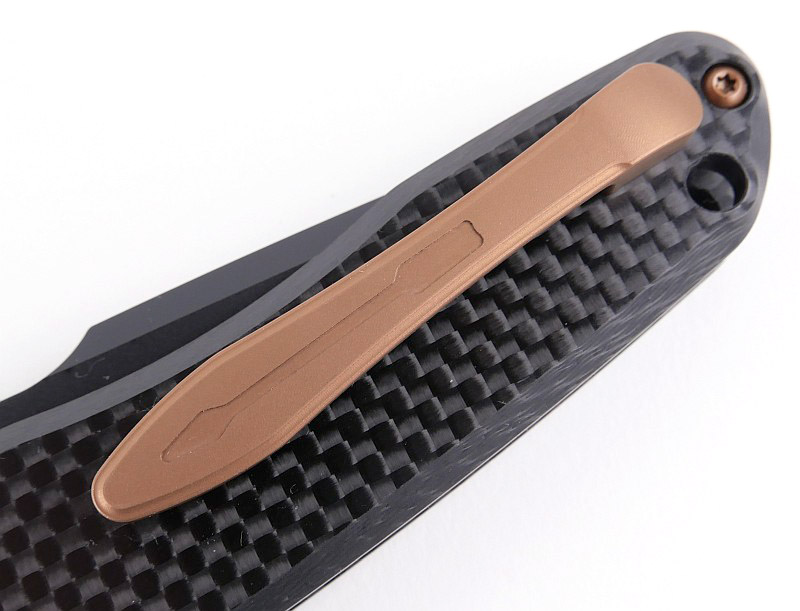
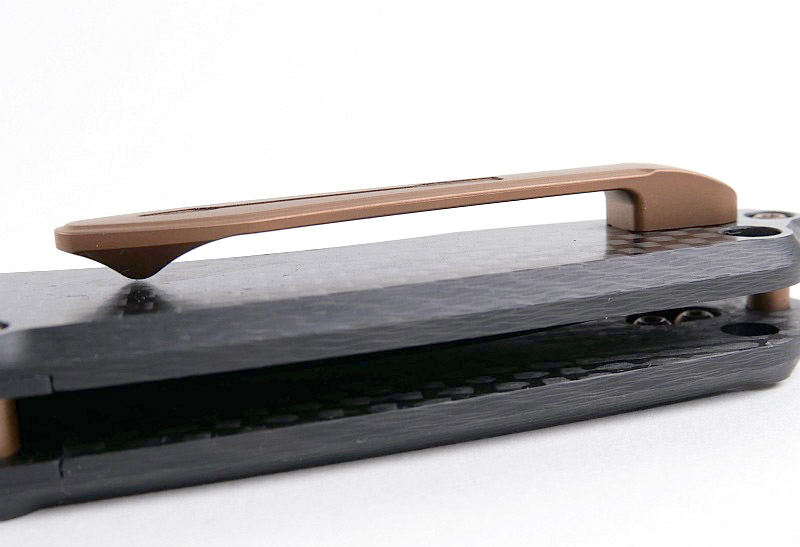
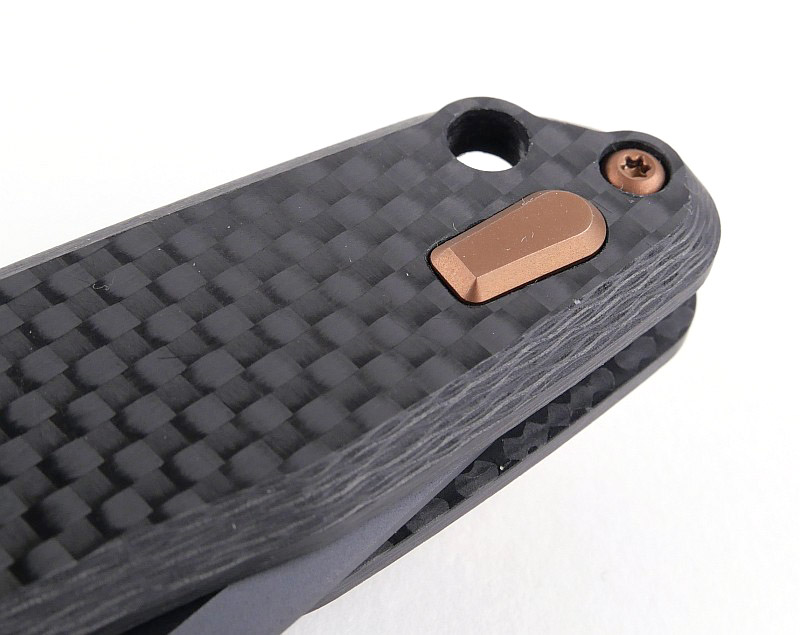
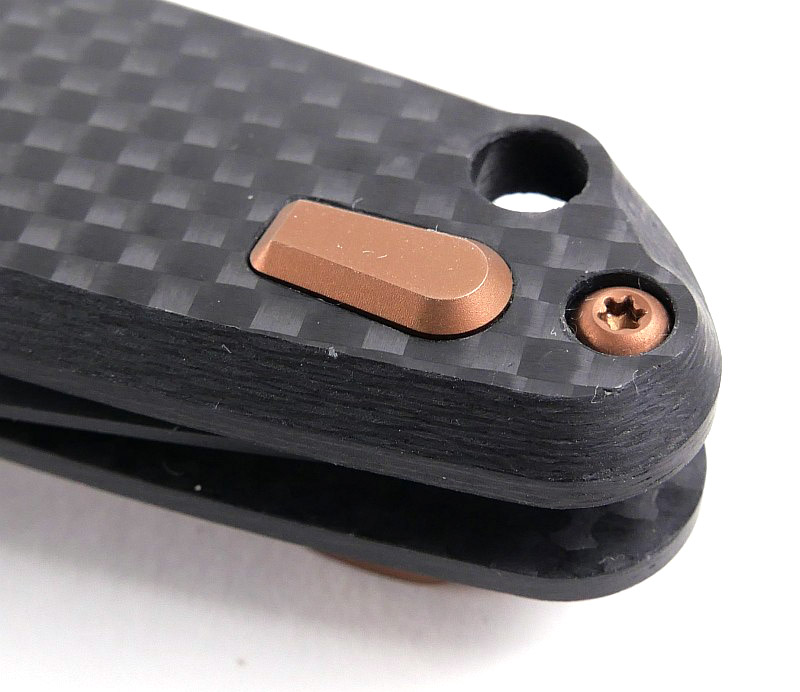
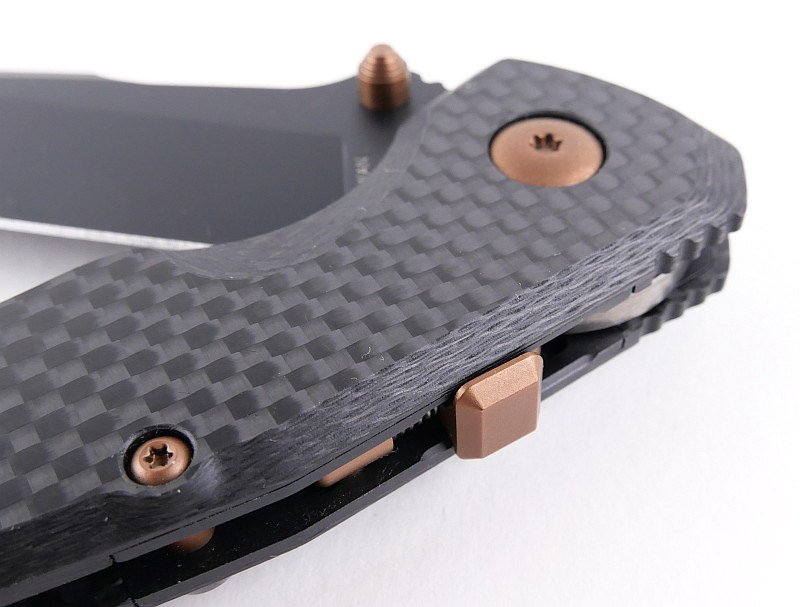
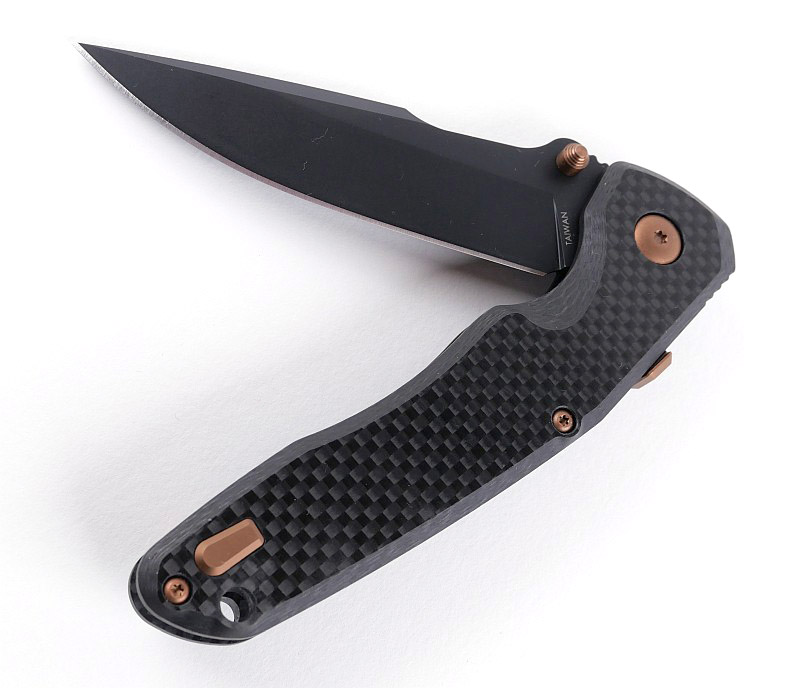
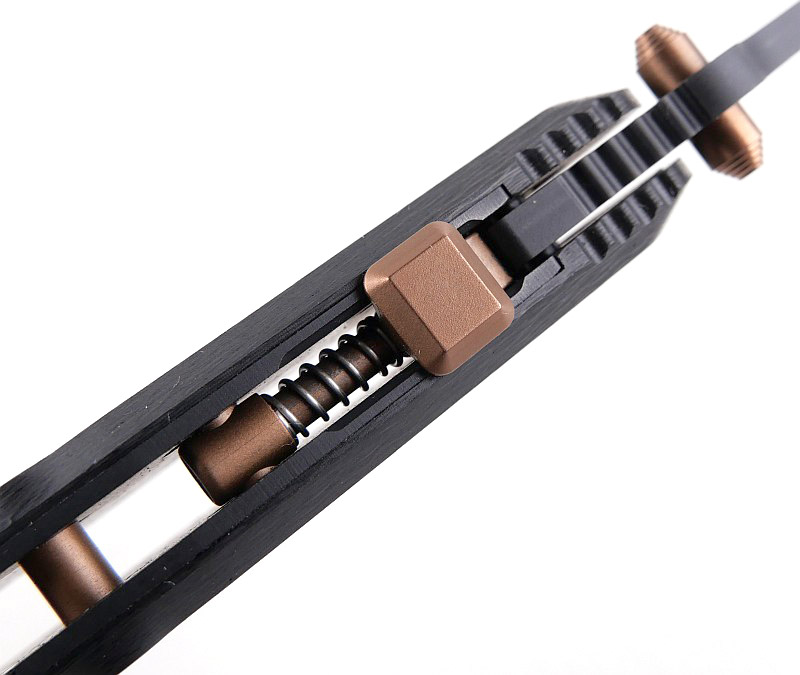
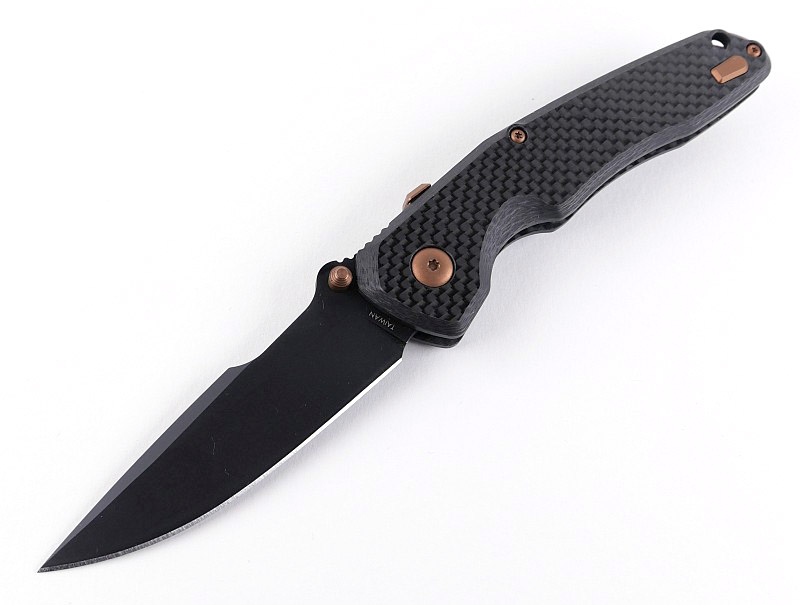
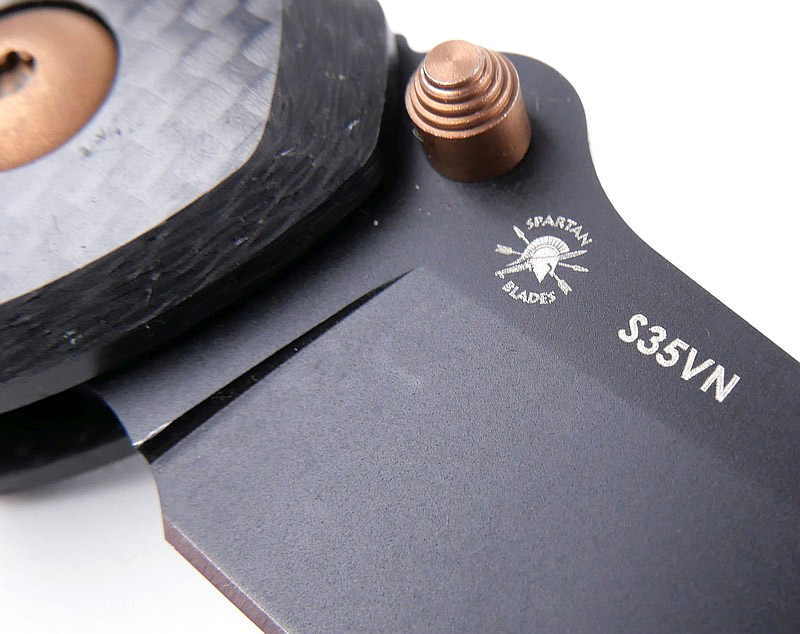
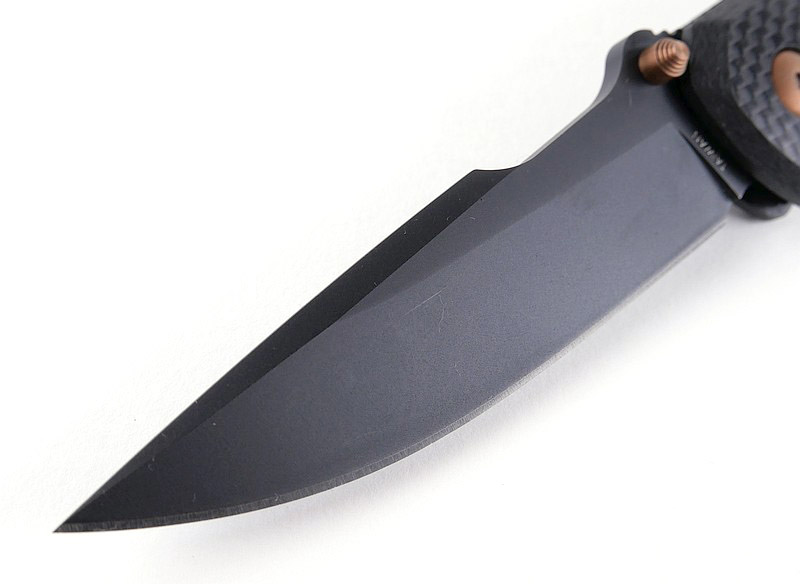
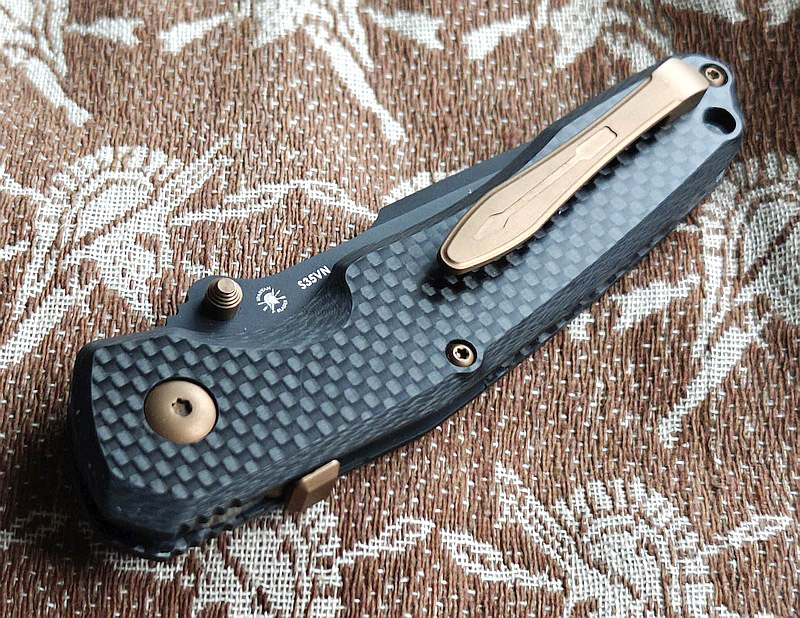
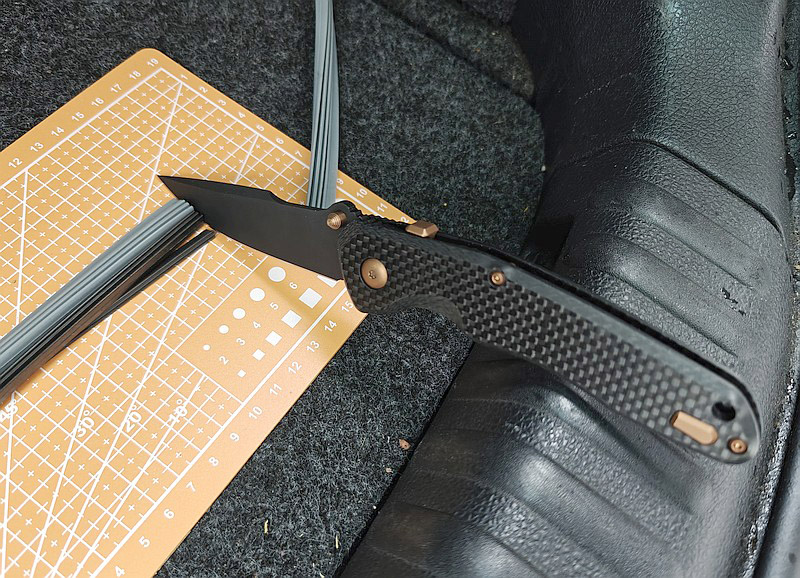
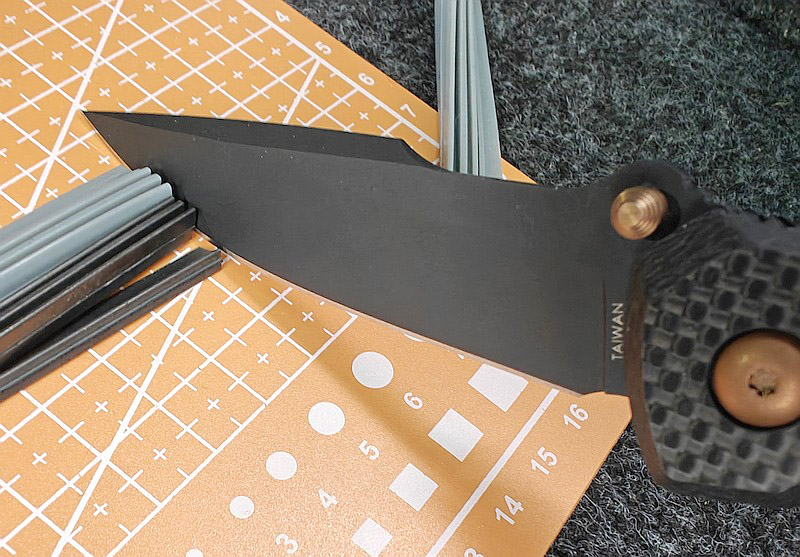
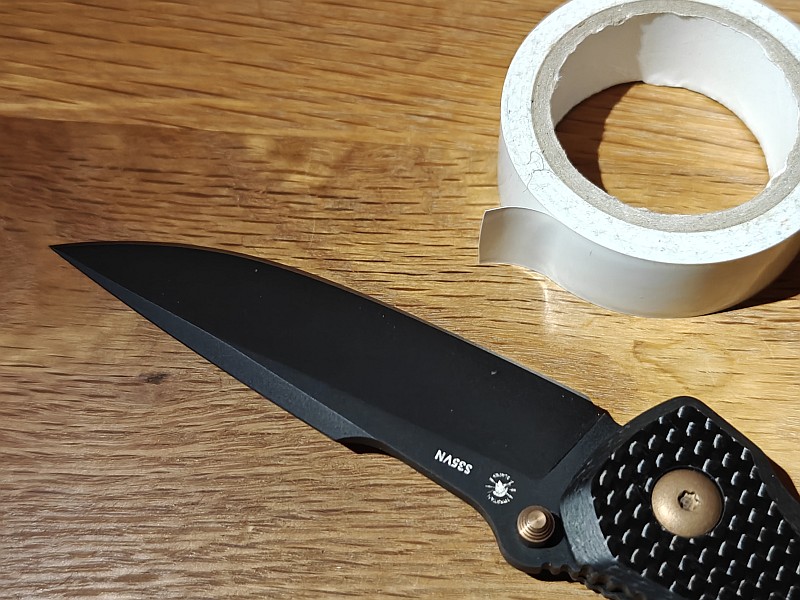
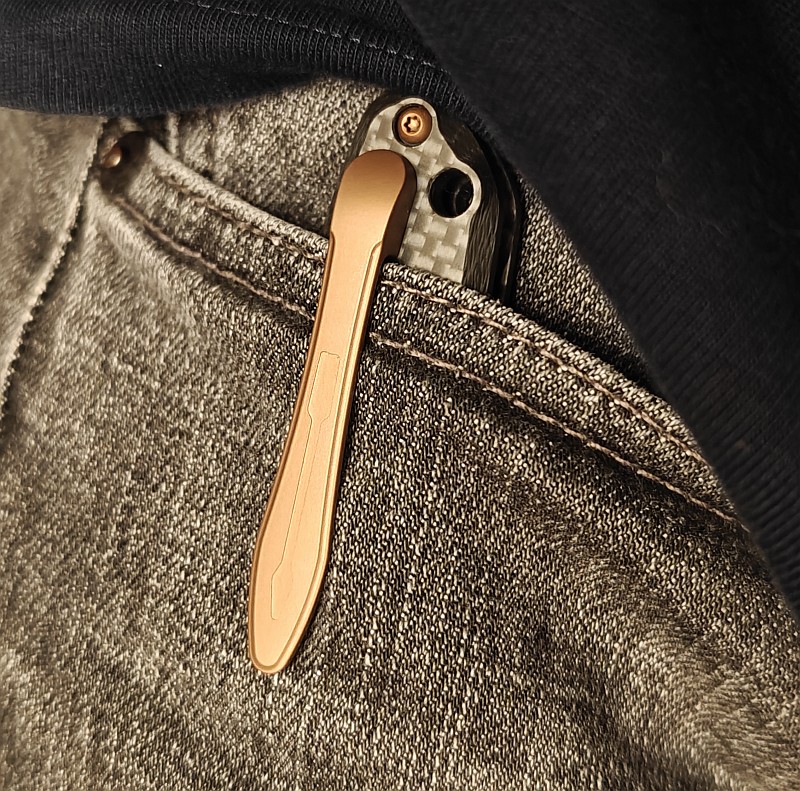
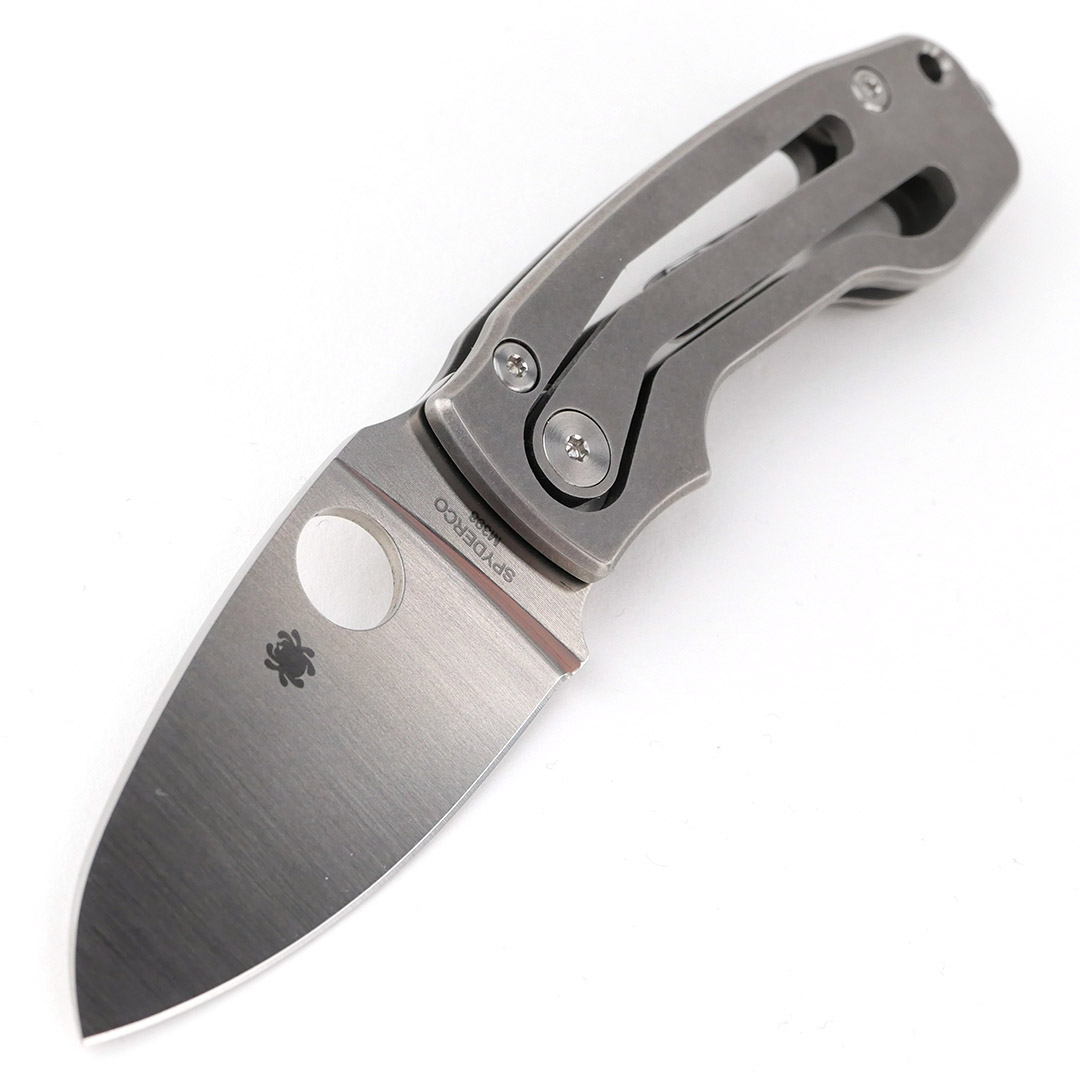
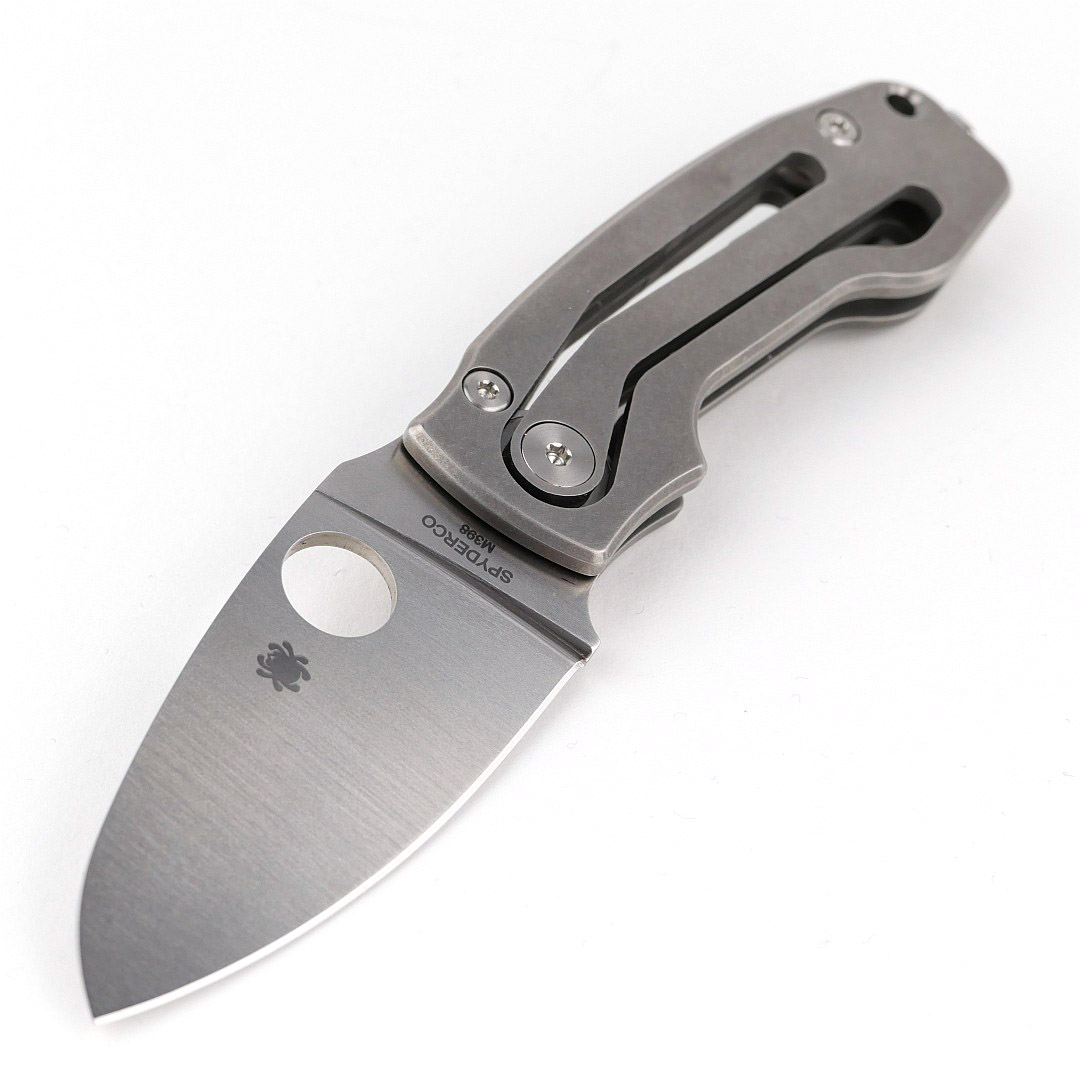
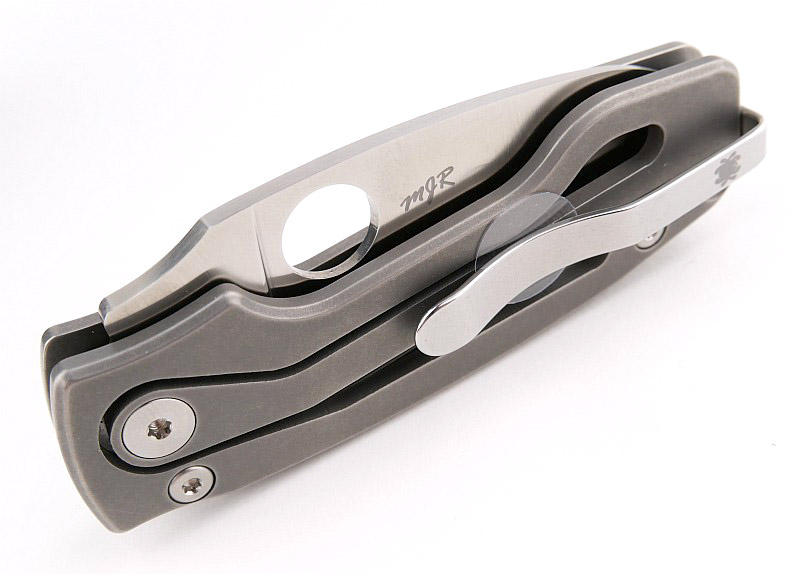
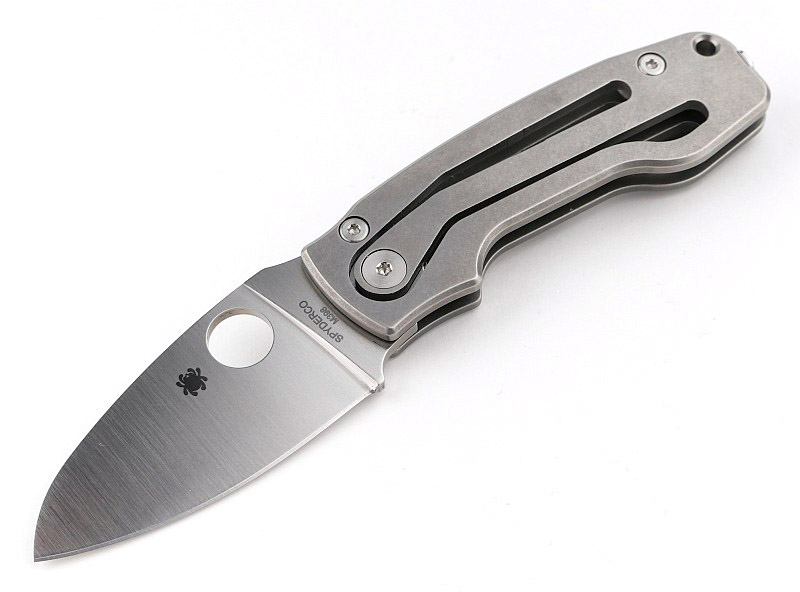
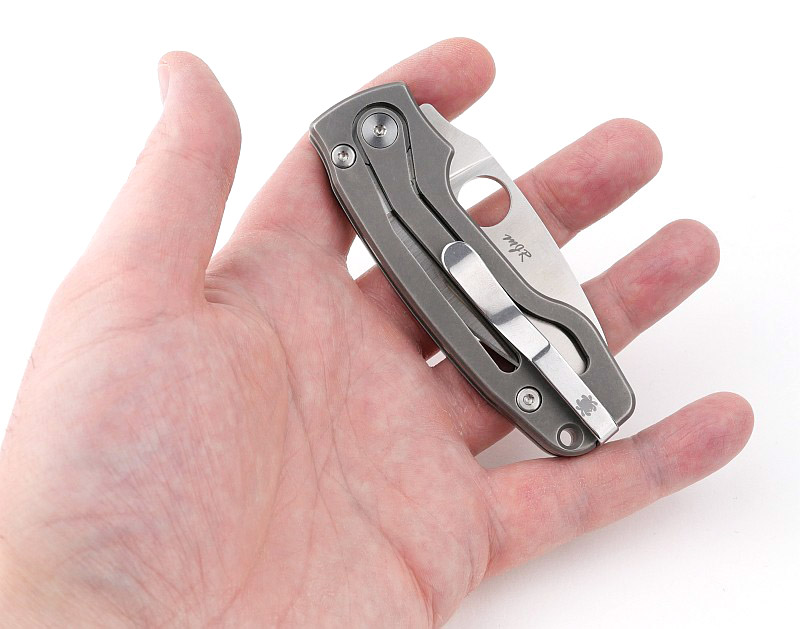
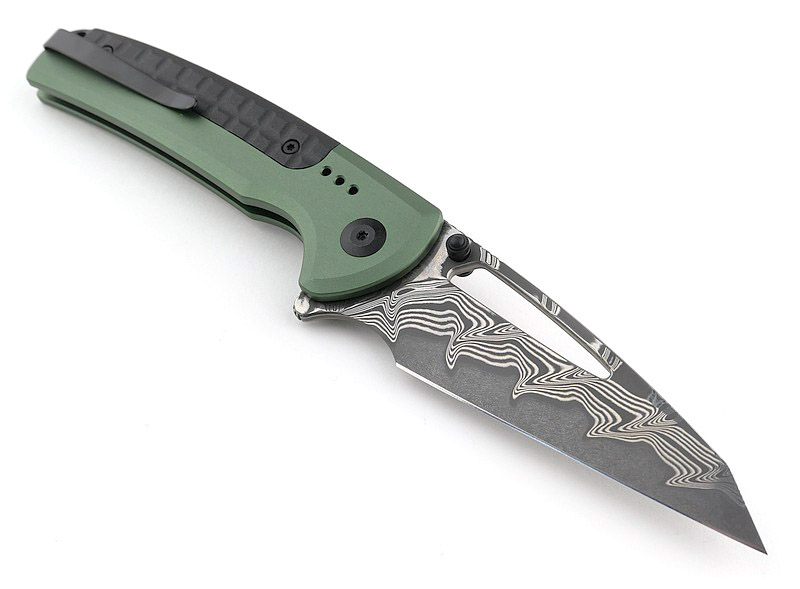
The Mercury Luc is inspired by the classic hunting pocket knives from the 1960s; a traditional design, but now fitted with an Elmax stainless steel clip point blade. The handle is made from 6061 aluminium with choices of black or green anodising, and optional micarta/G10 inlays.

Of course the slip joint knife dates back far earlier than the 1960s, generally considered to have emerged in the 17th Century with the introduction of a back spring that revolutionised the folding pocket knife to create a simple, reliable and practical tool; popularised as the ‘penknife’ for shaping quills. For good reason this traditional design of knife mechanism remains popular and useful today.

What’s in the box?:
For this section there is no box or packaging to include, as the specific knives featured were ‘show knives’ at IWA Outdoor Classics 2025 (and possibly other exhibitions). It also means that in the following galleries, any imperfections will be due to each knife being handled by a lot of people during the trade fair.


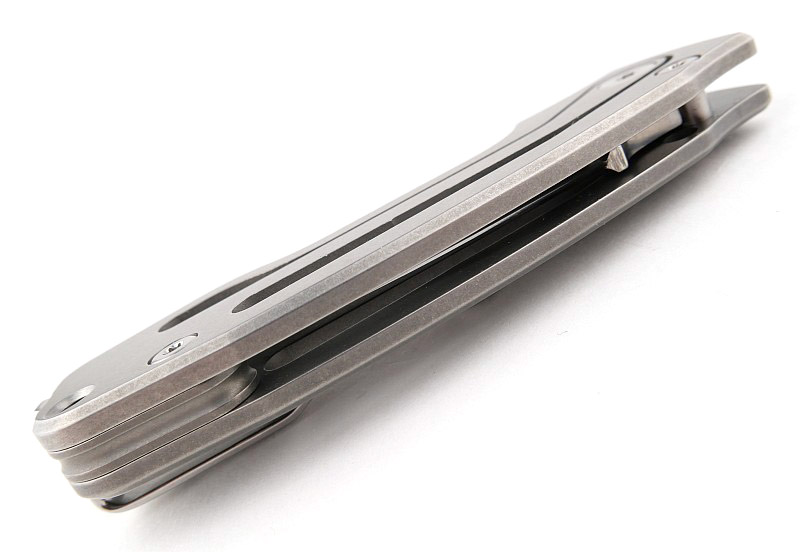
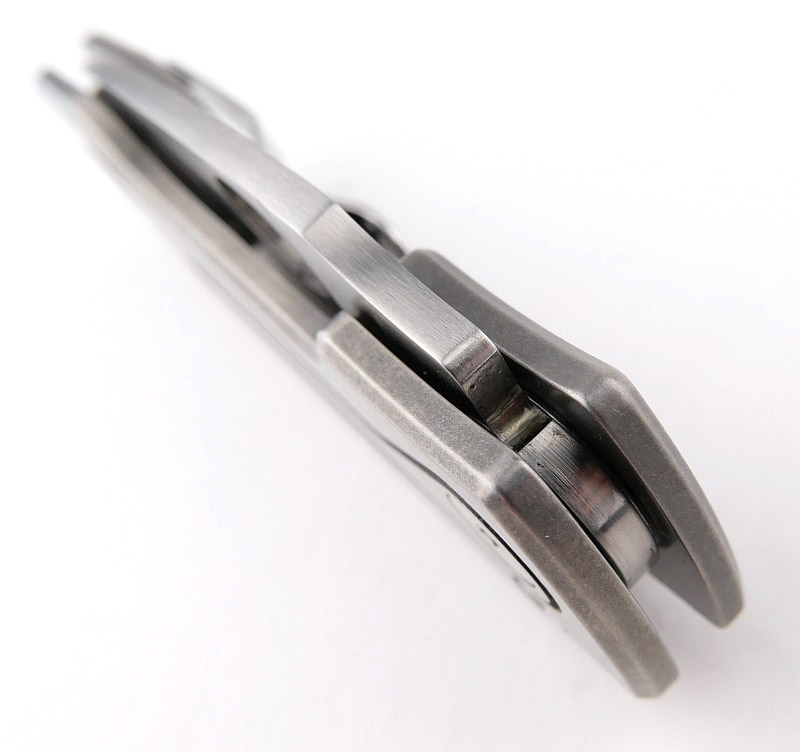
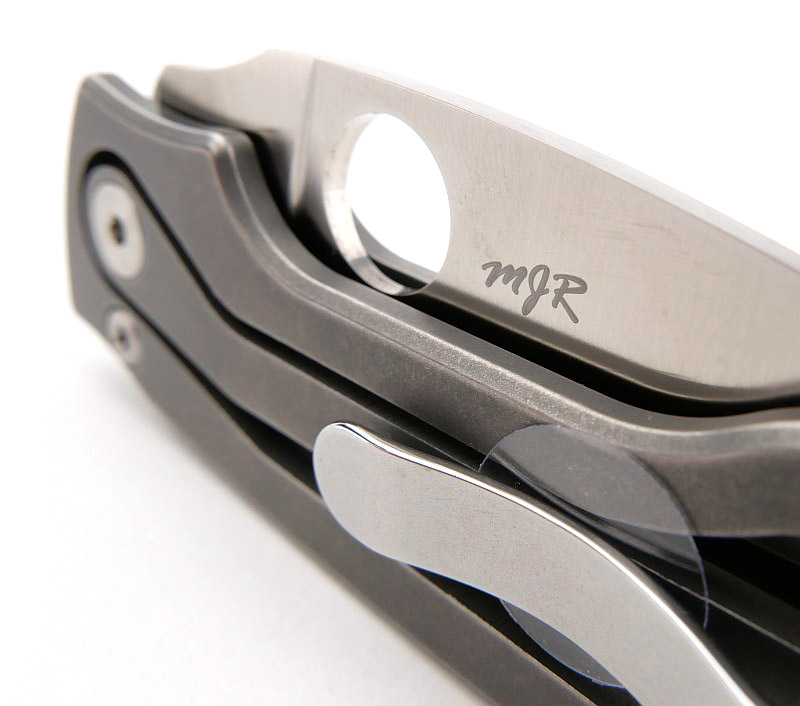
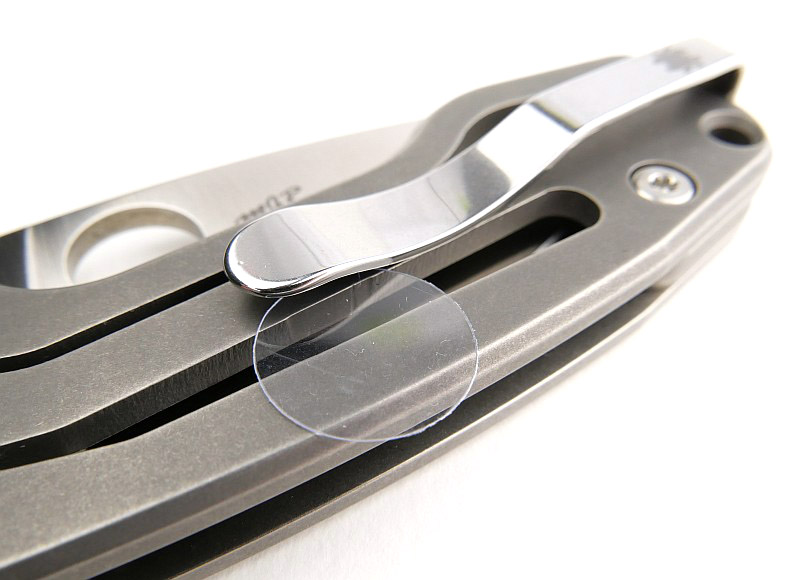
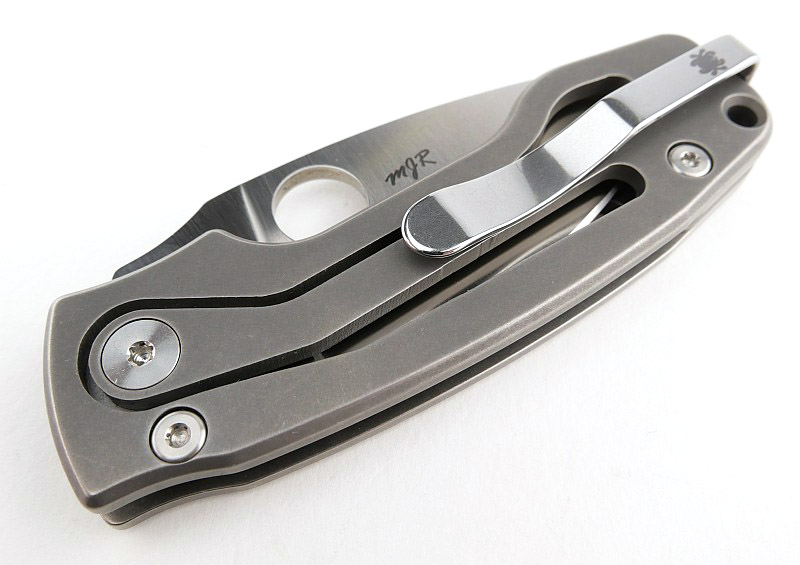
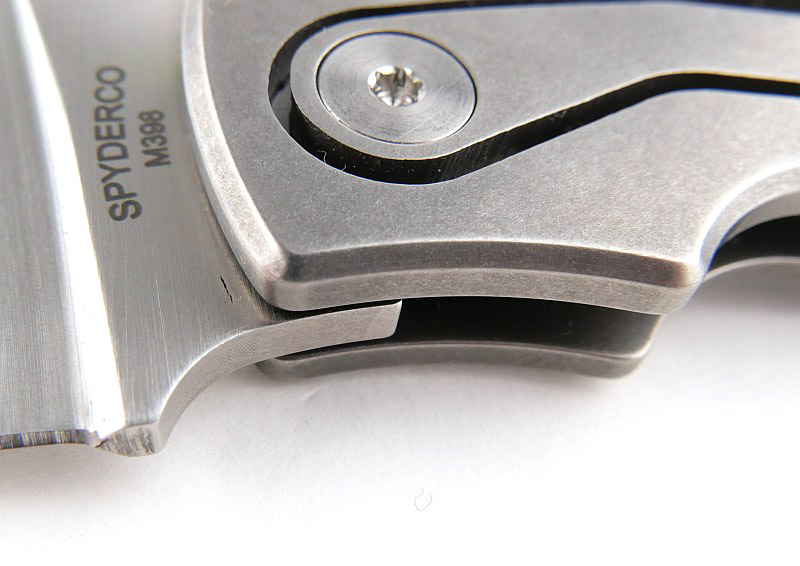
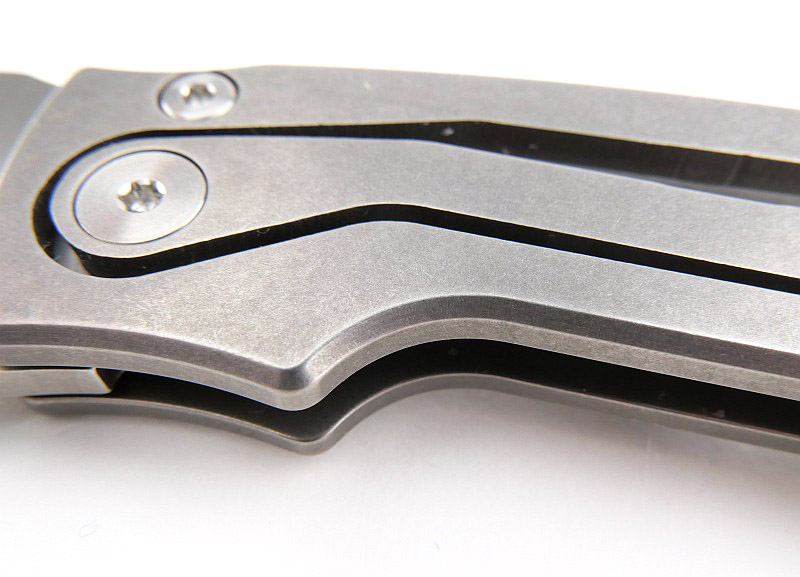
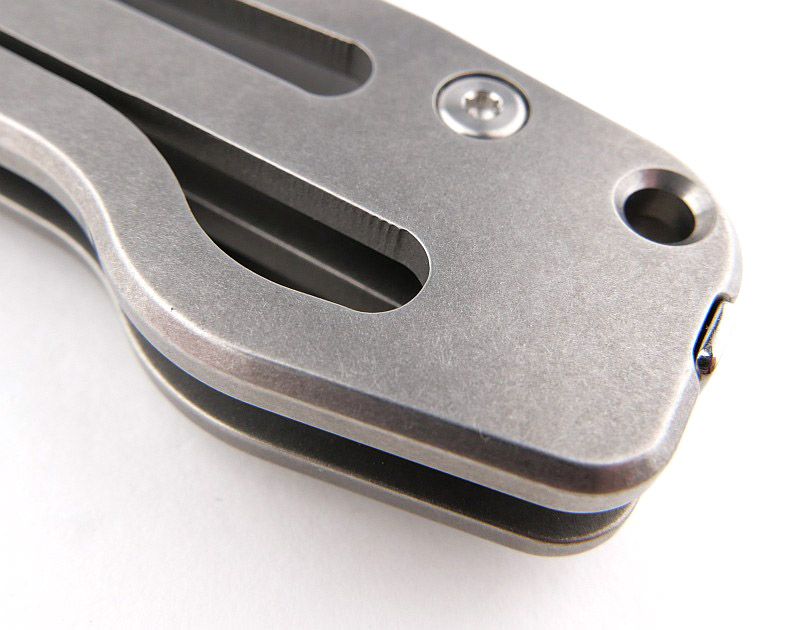
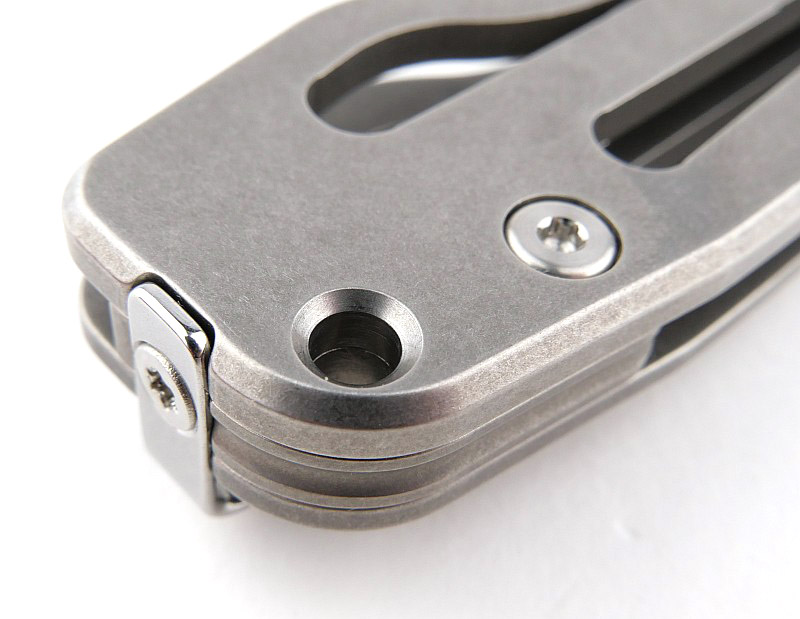
A good look round the folded Mercury Luc – Things to look out for here are:
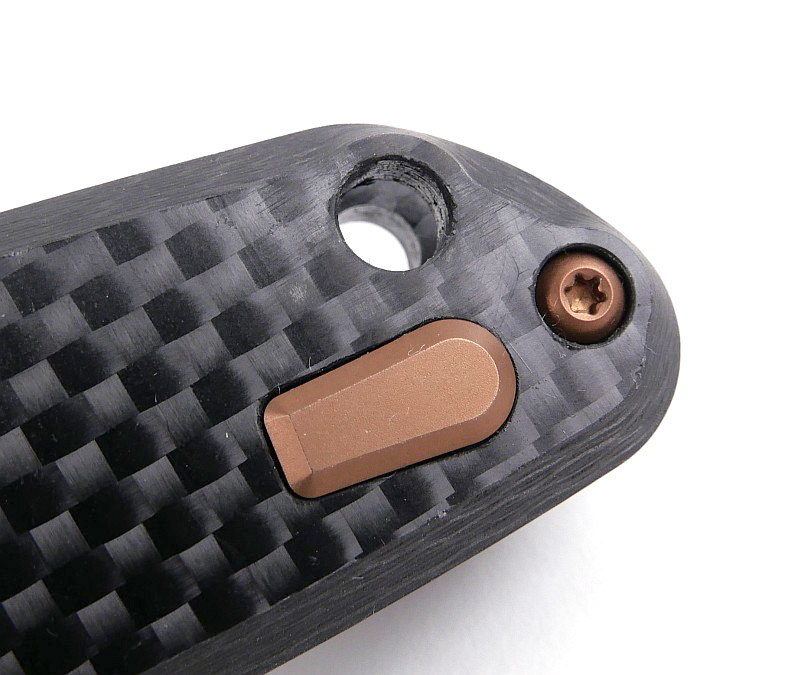
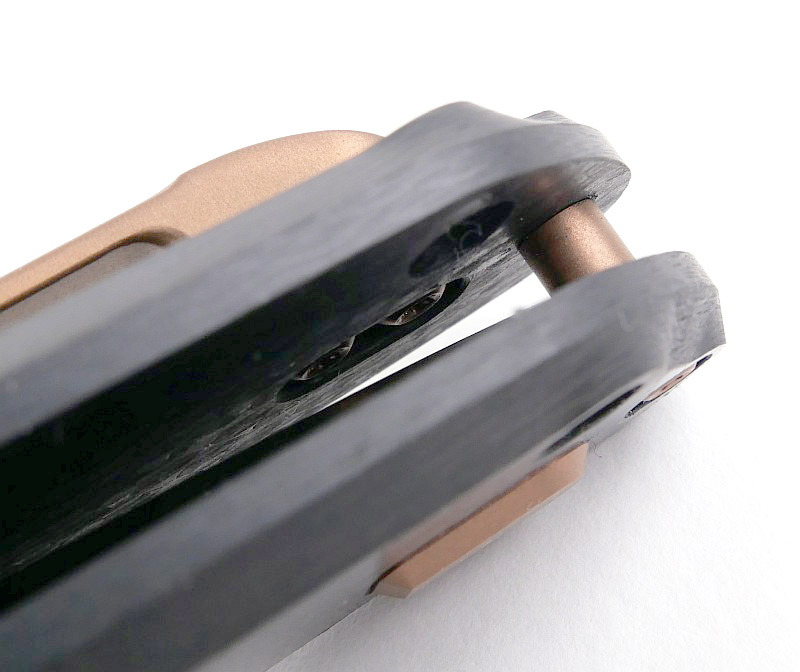
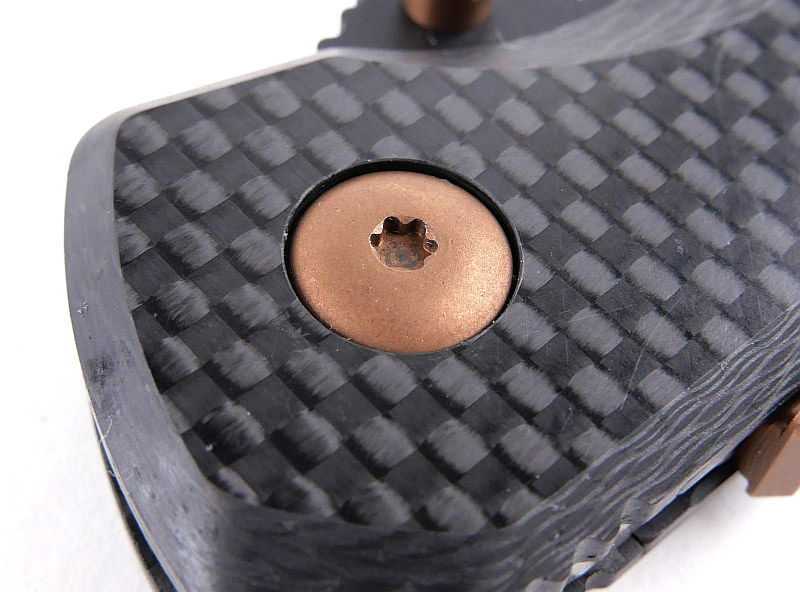
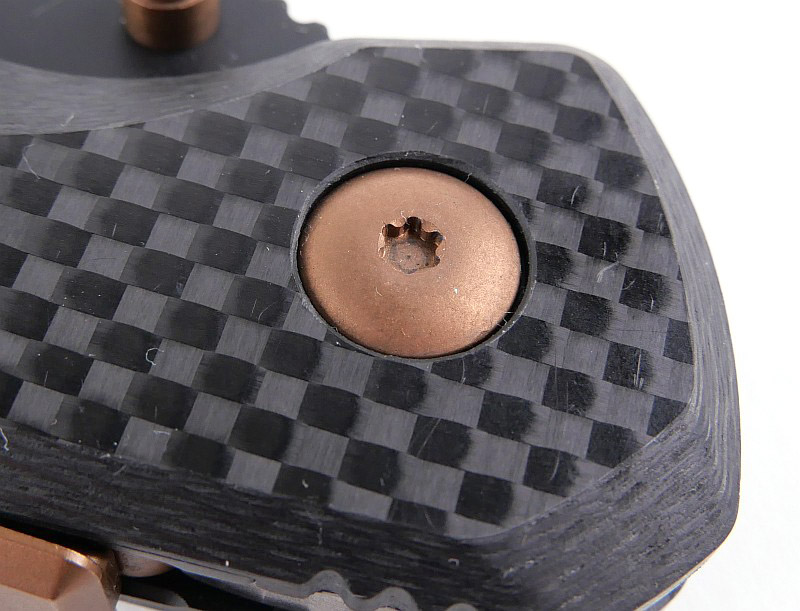
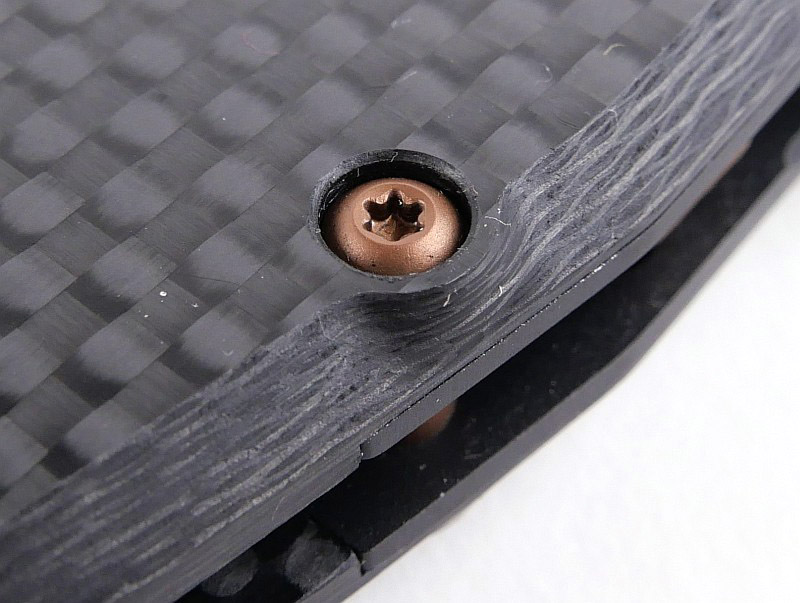
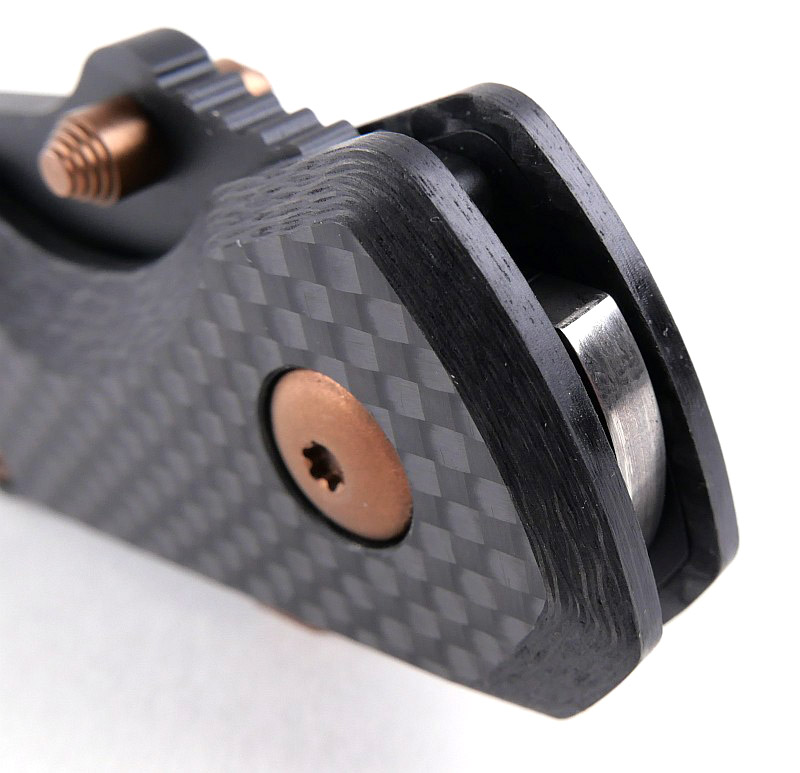
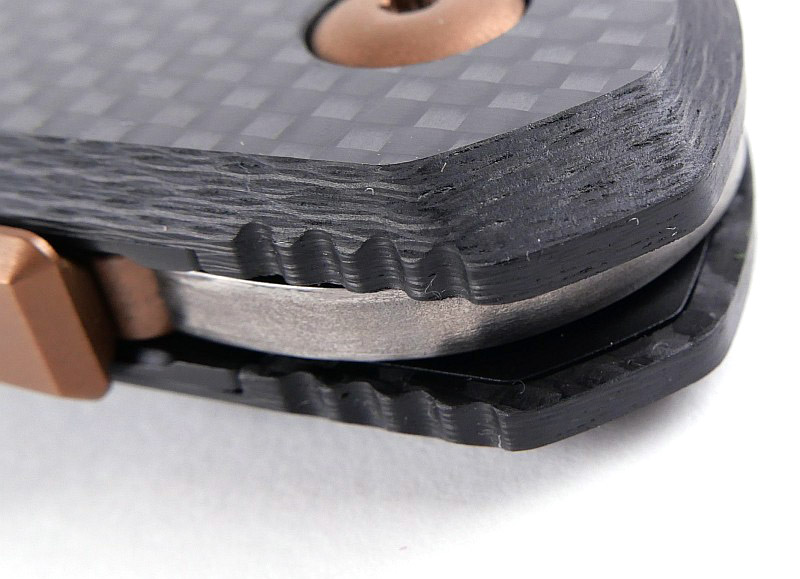
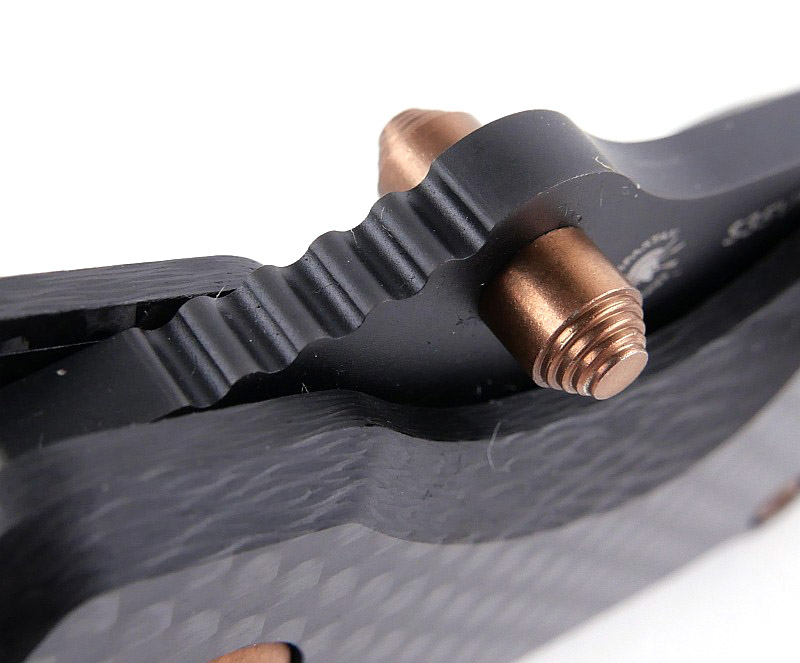
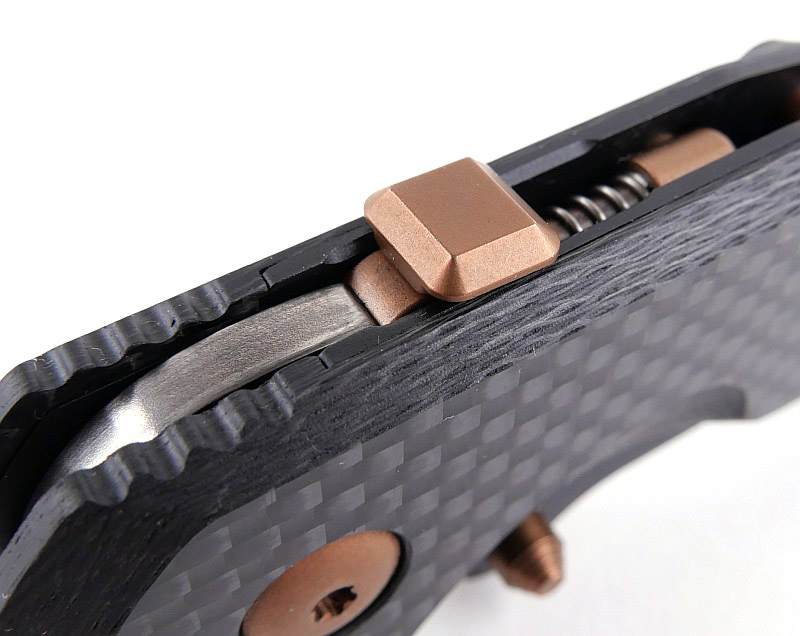
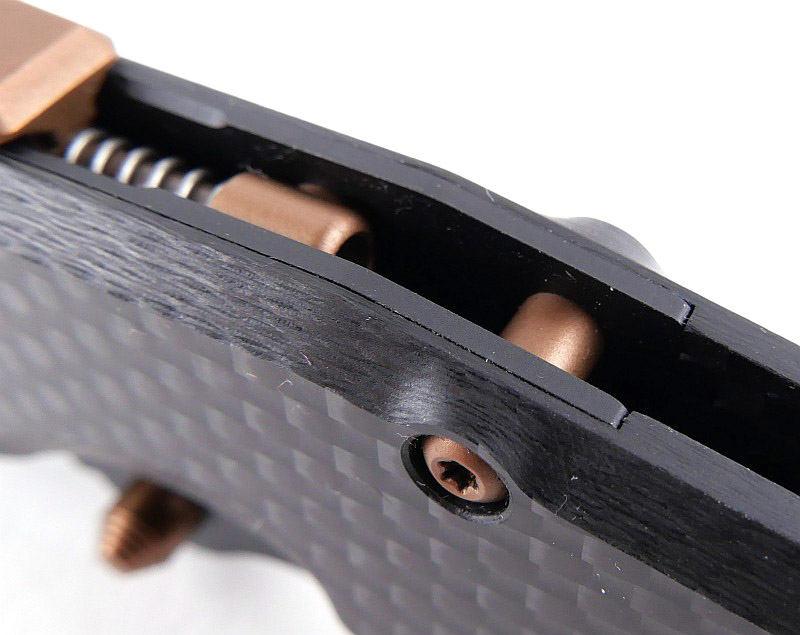
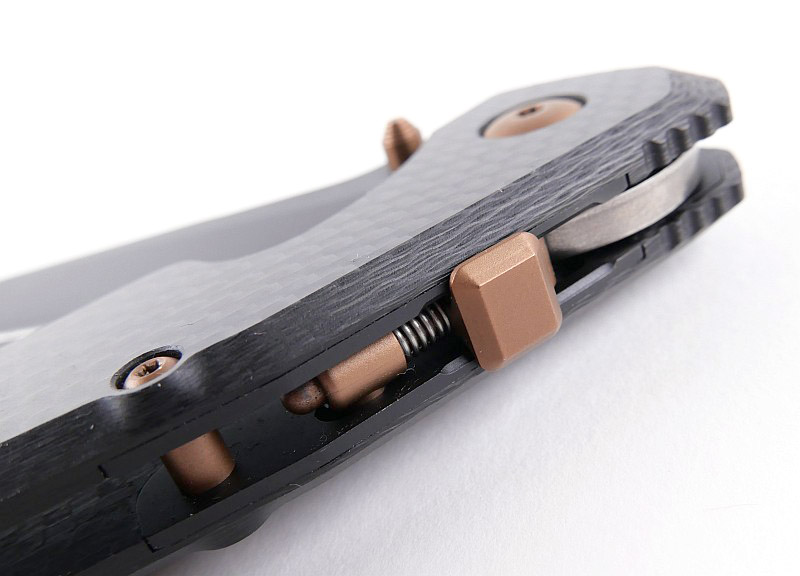
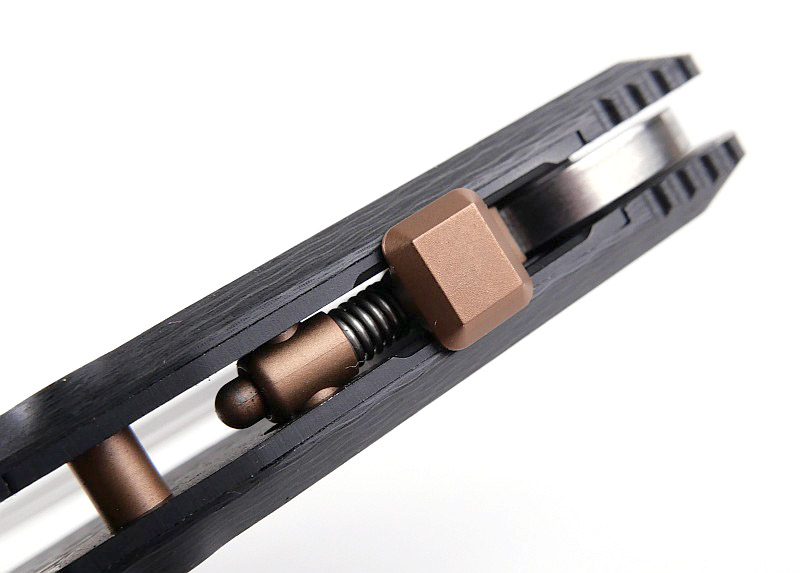
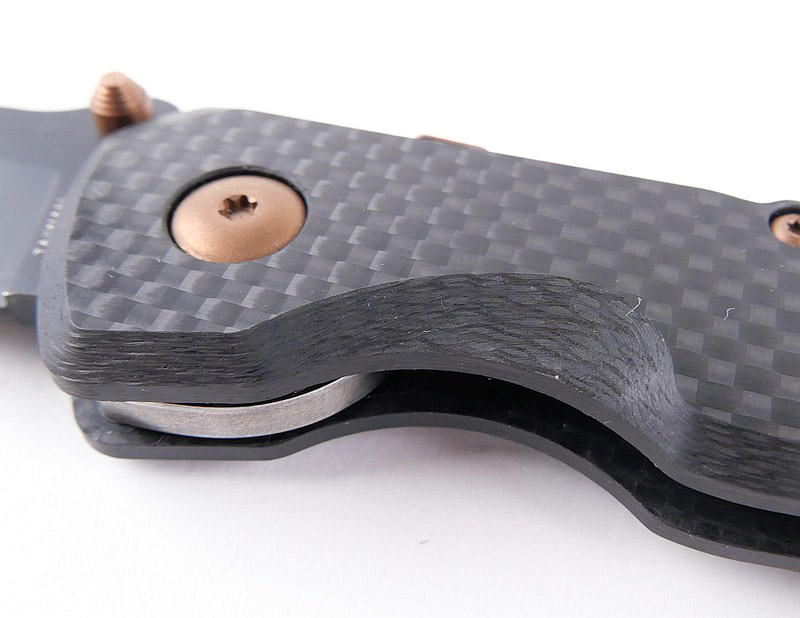
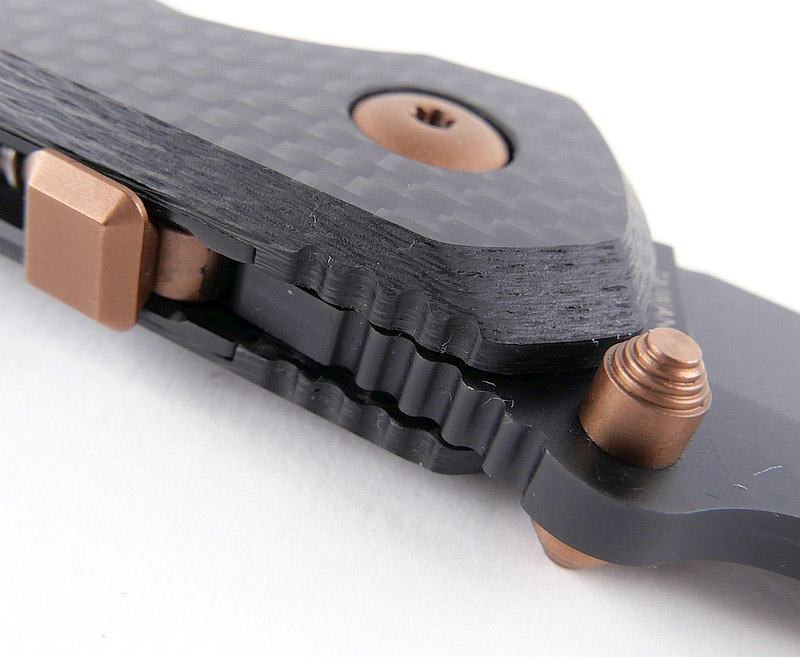
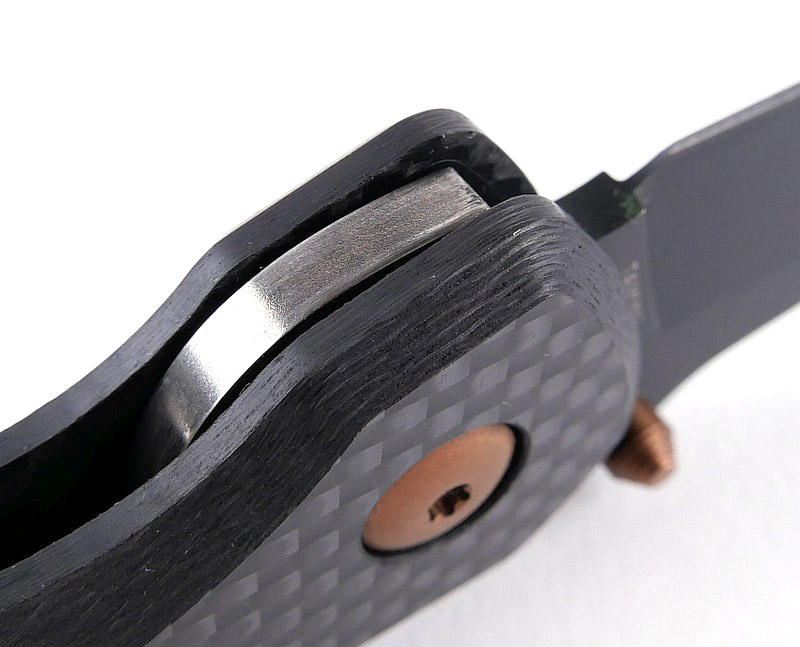
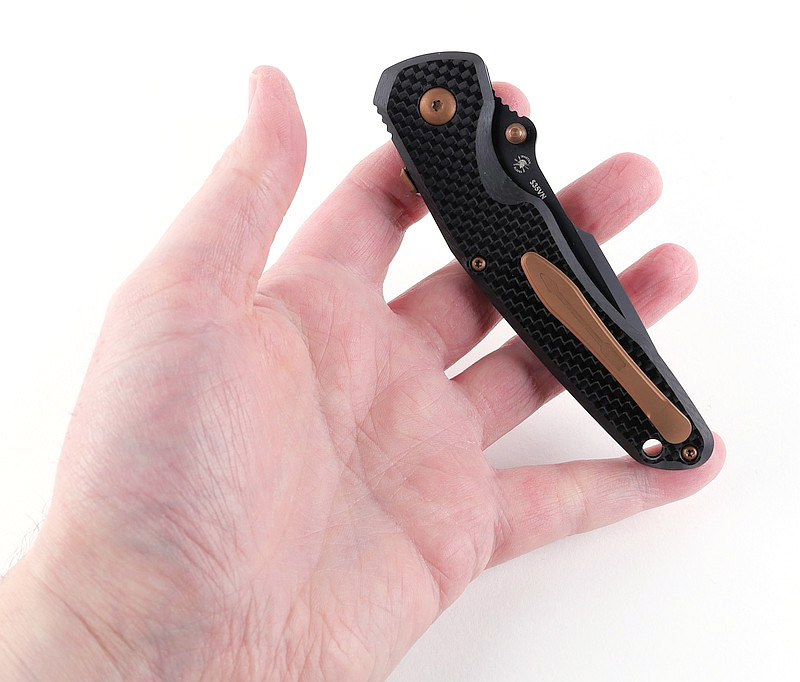
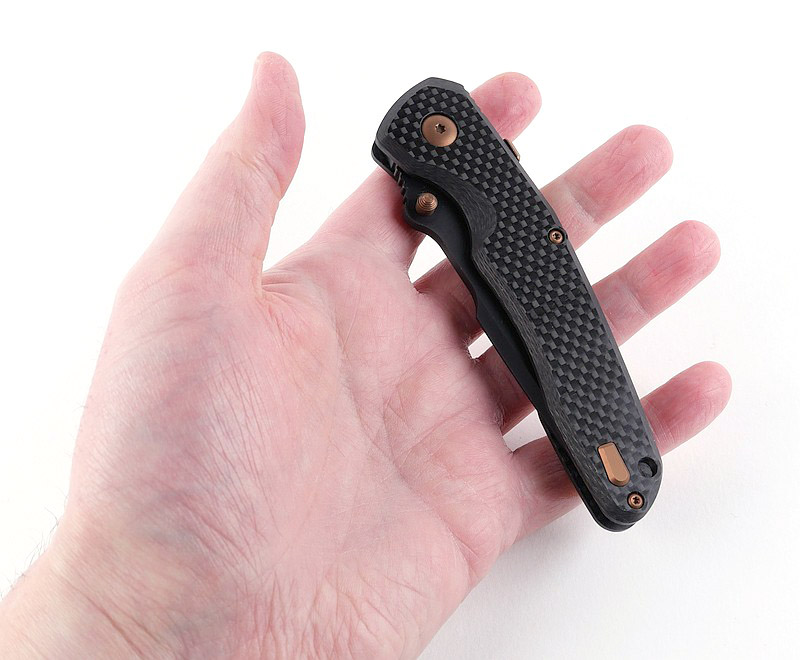
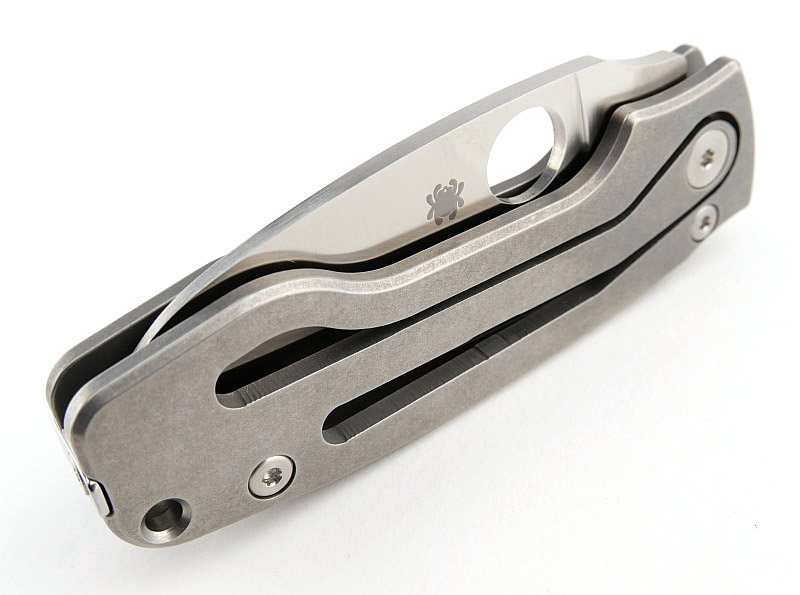
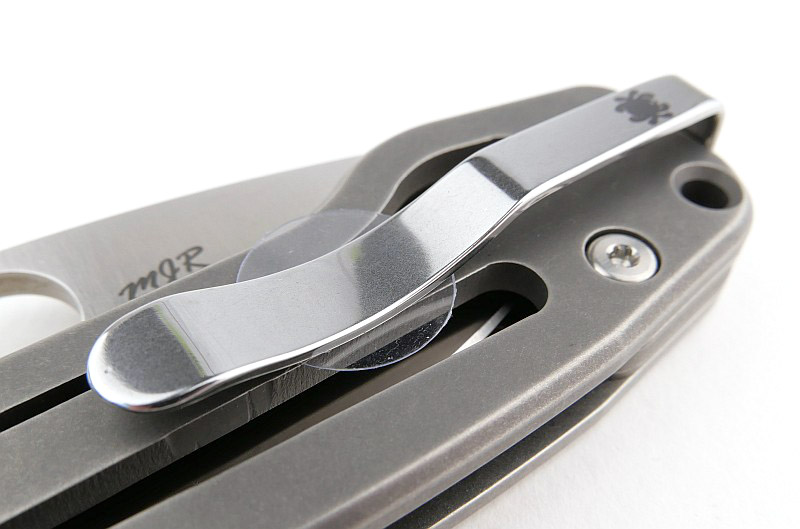
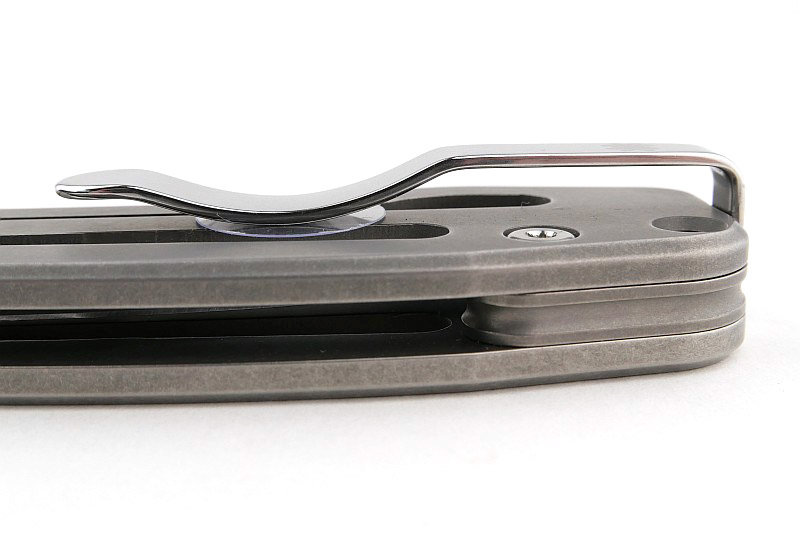
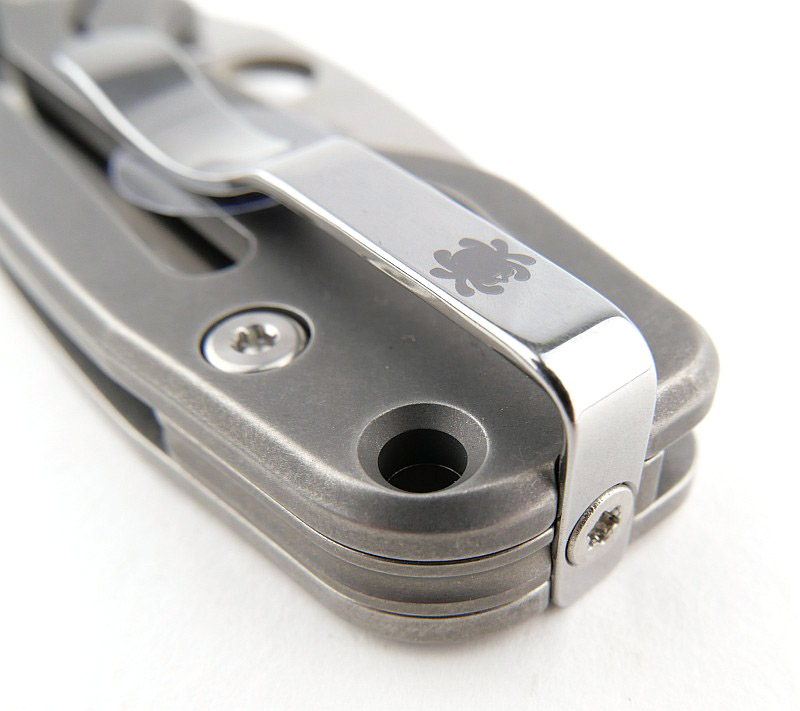
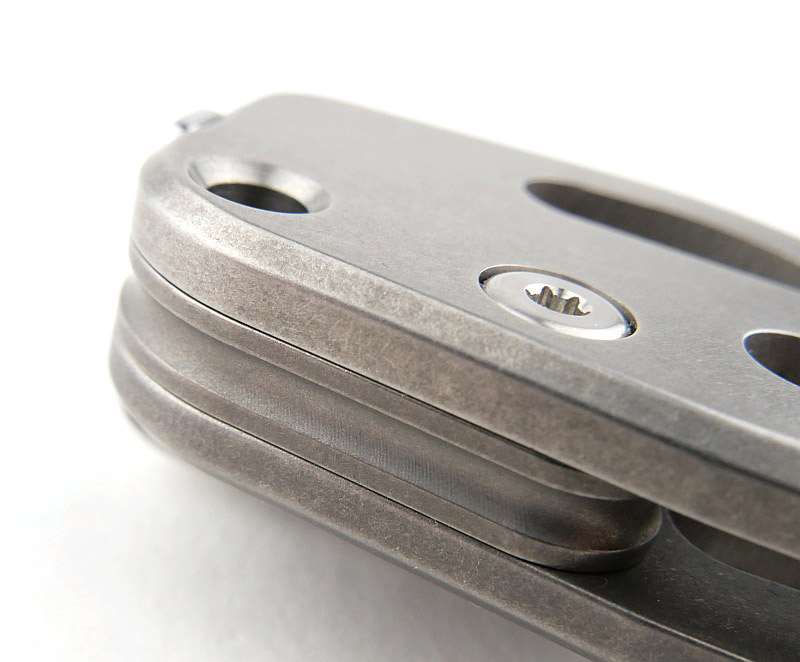
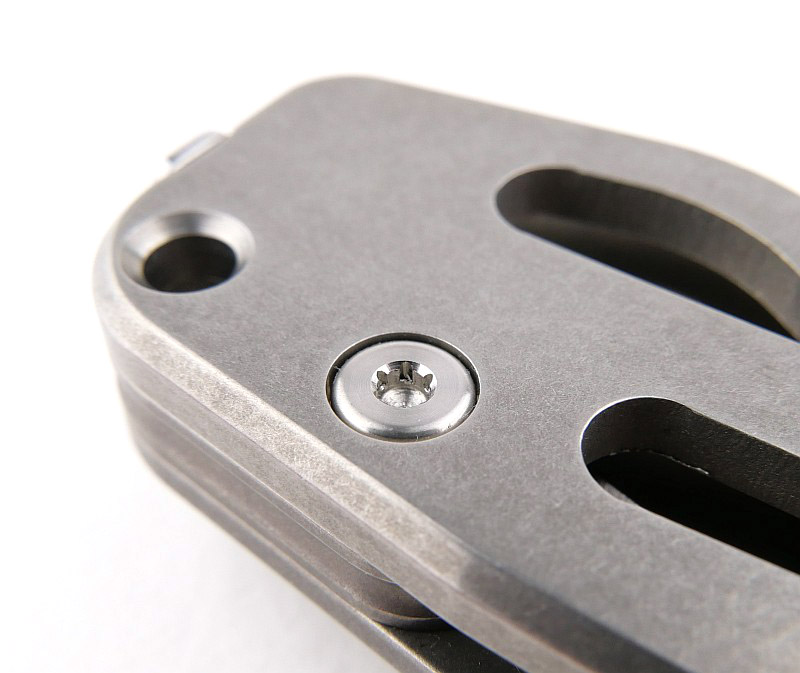
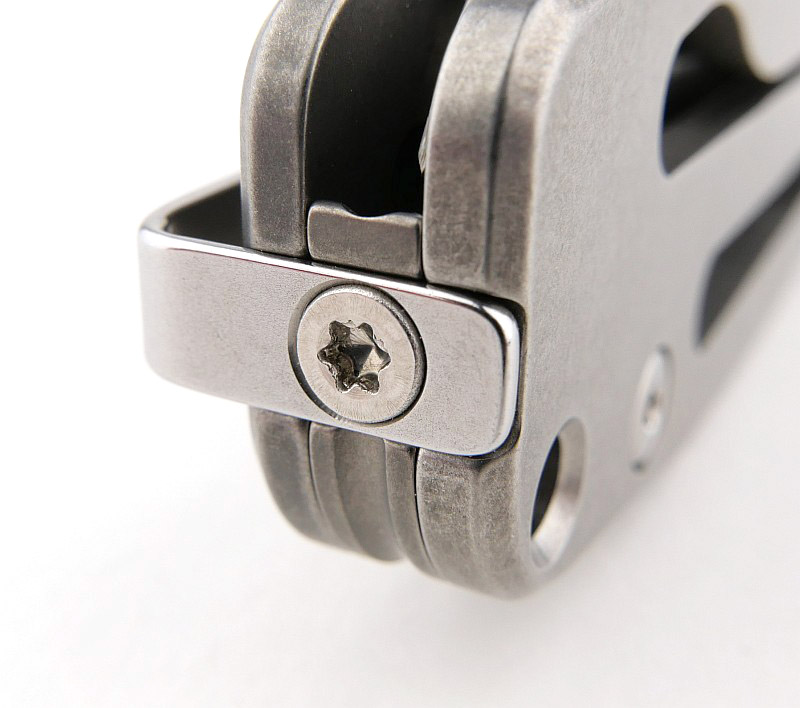
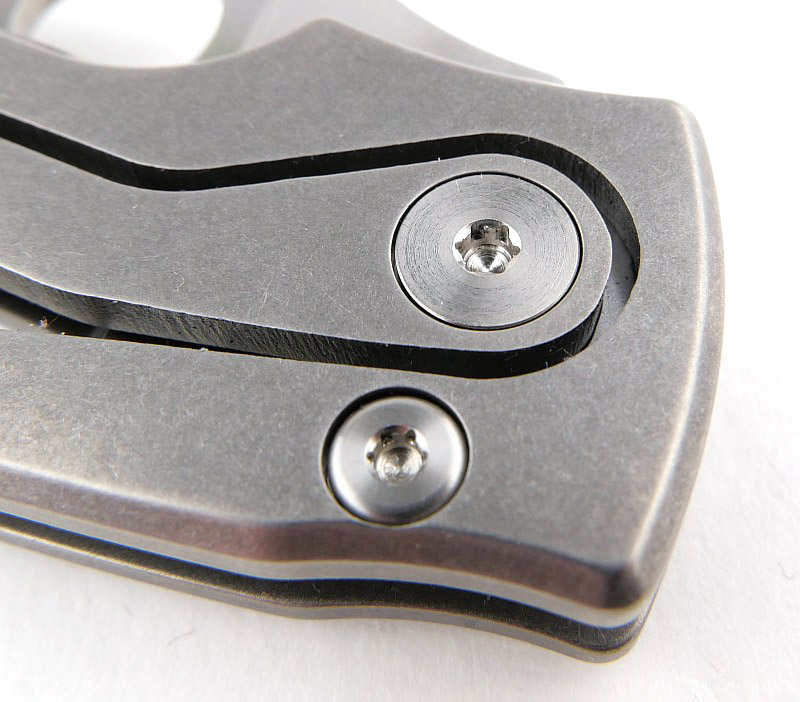
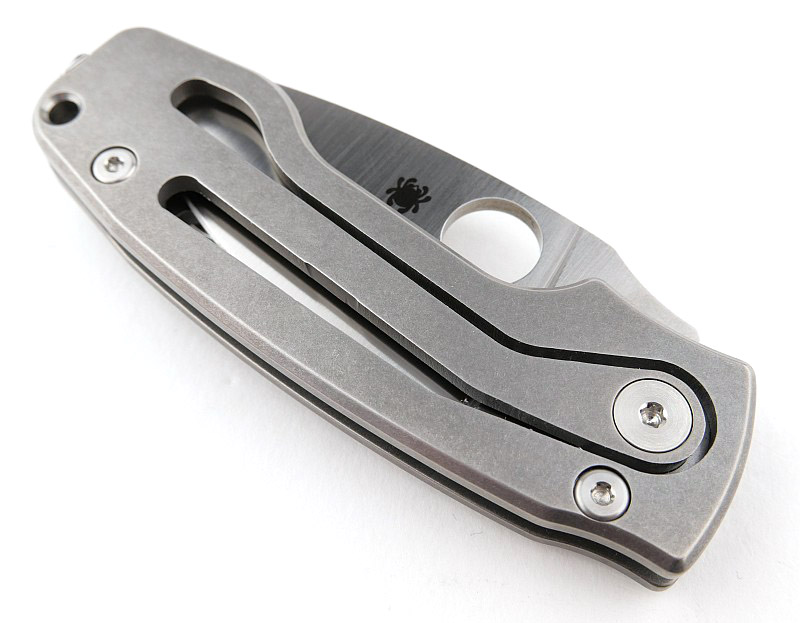
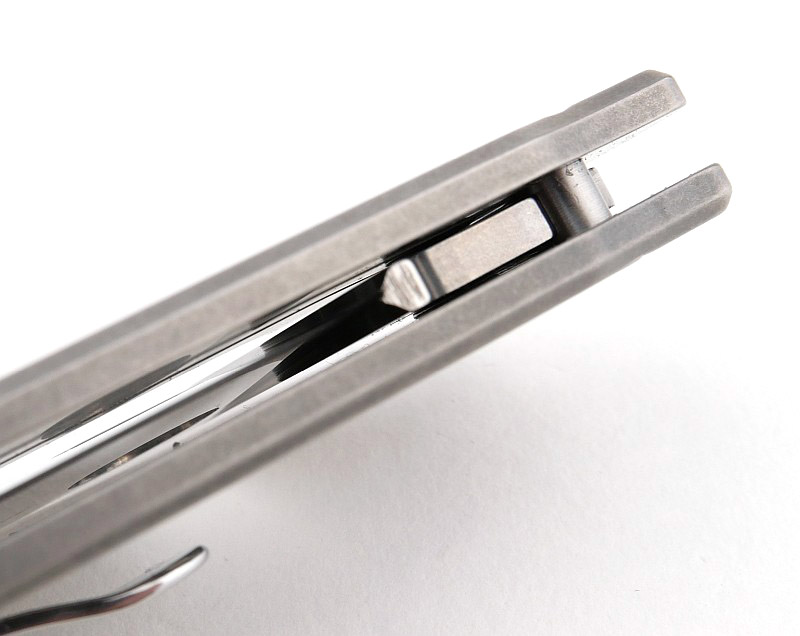
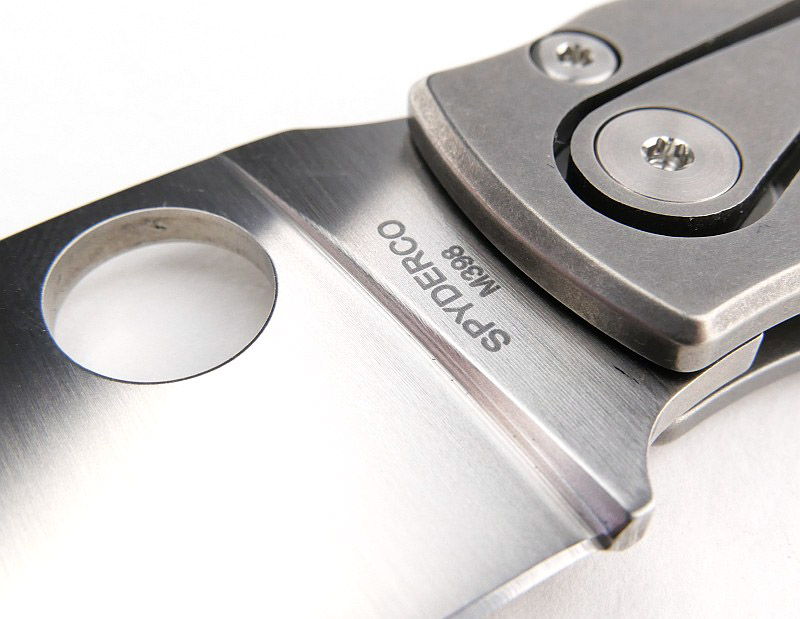
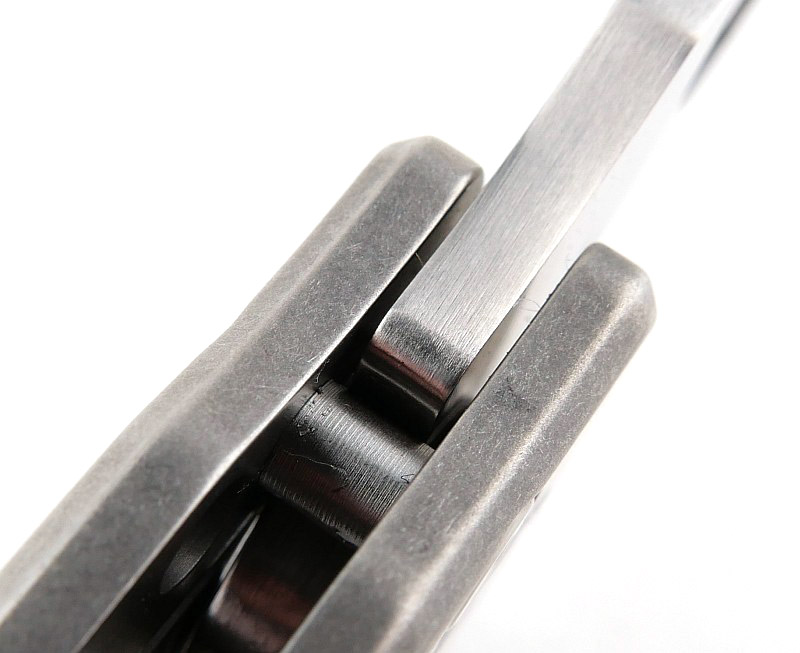
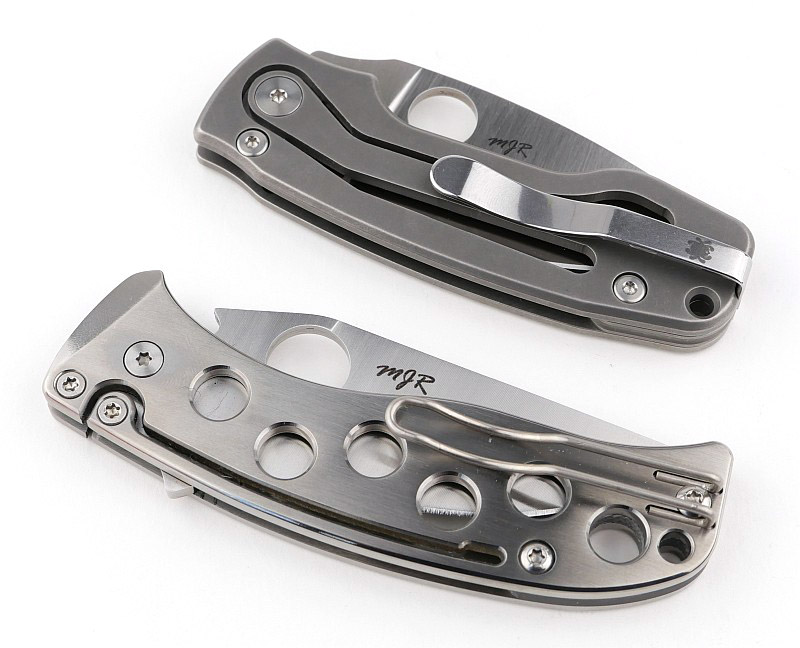
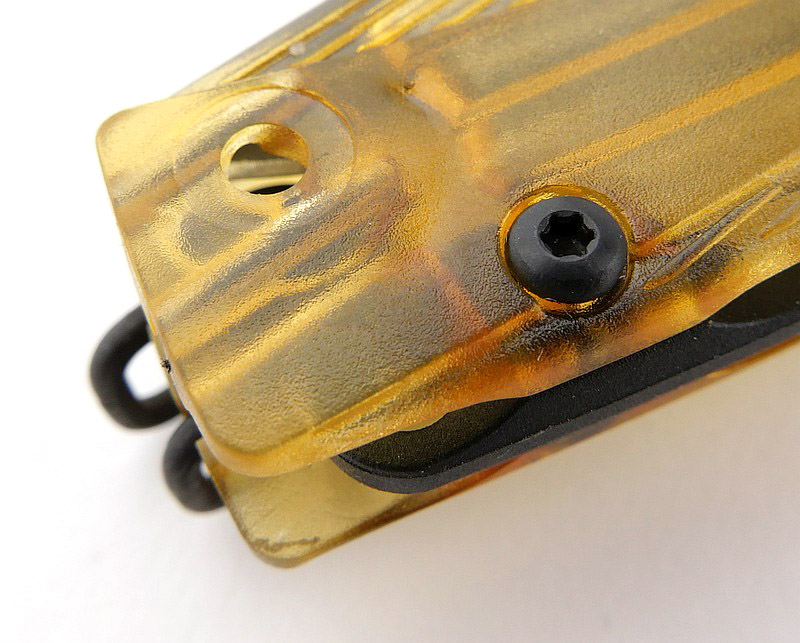
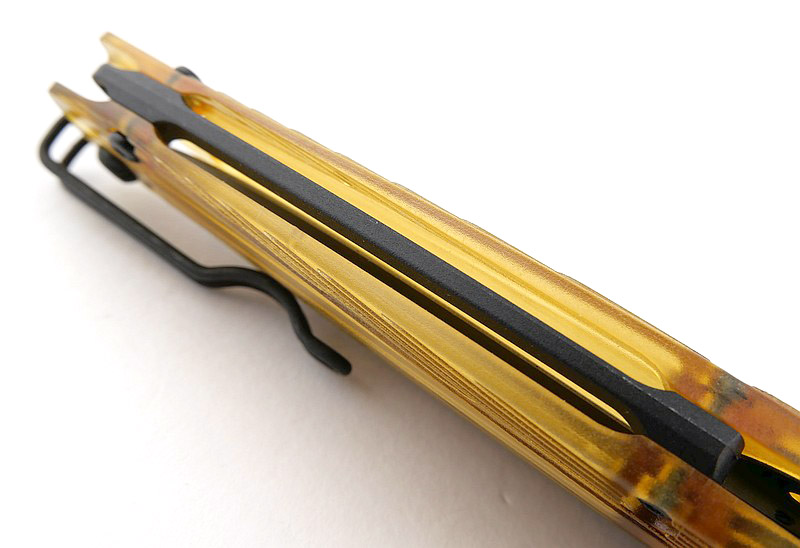
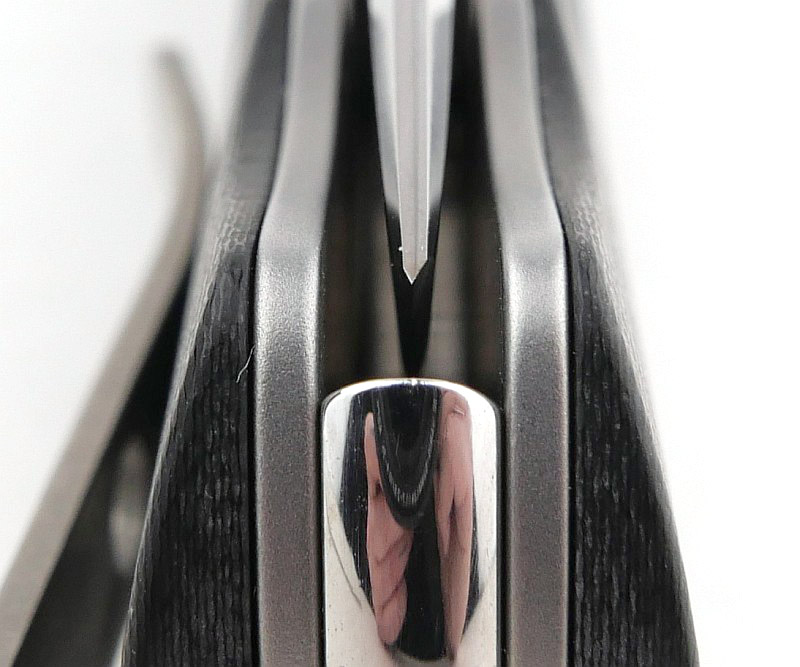
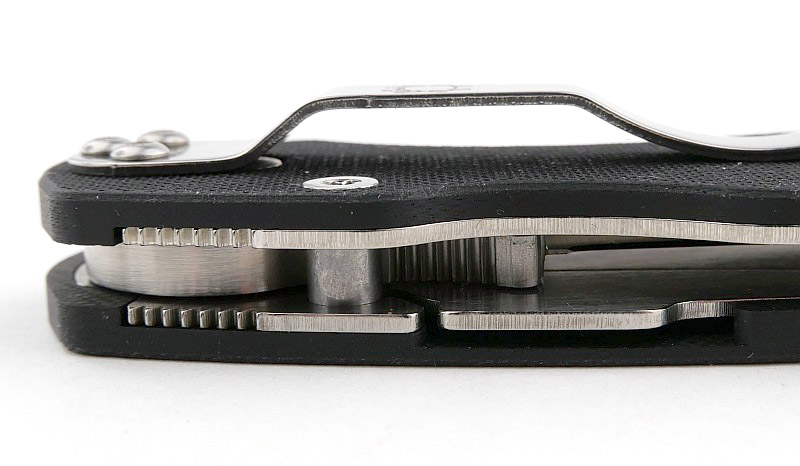
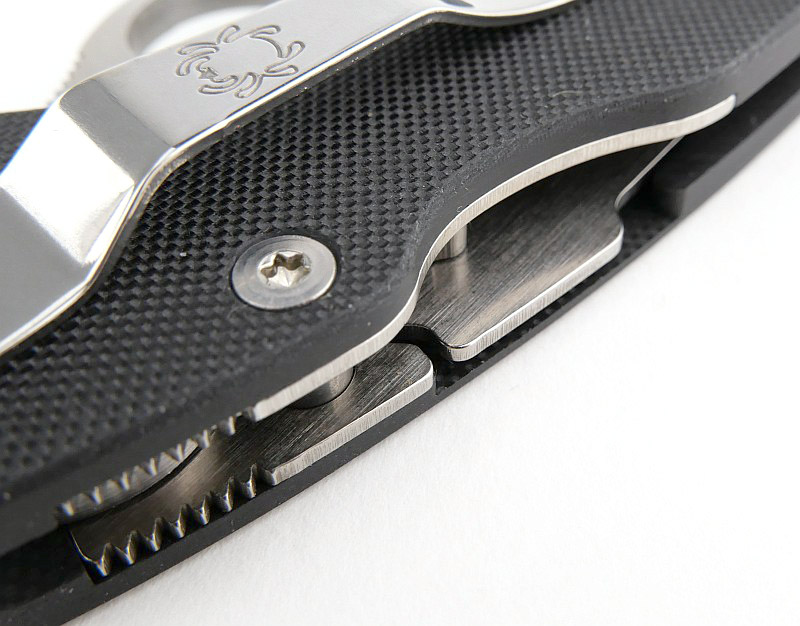
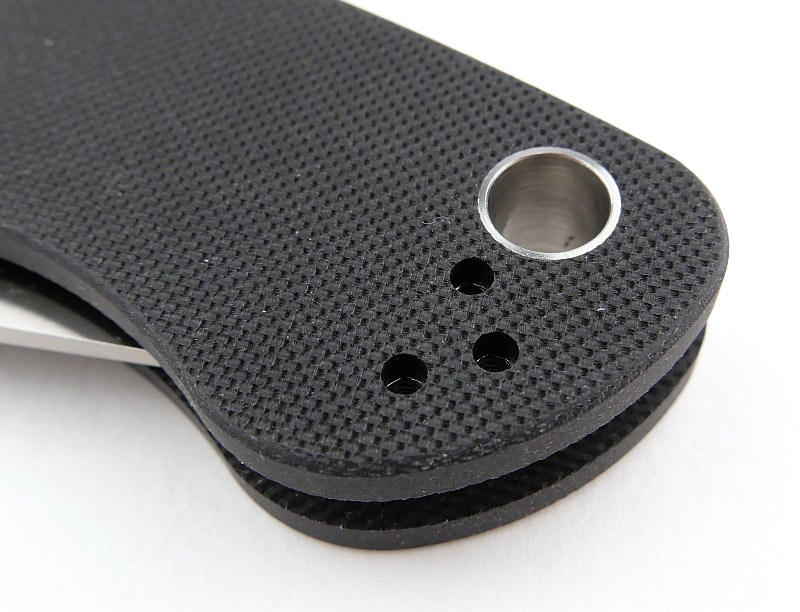
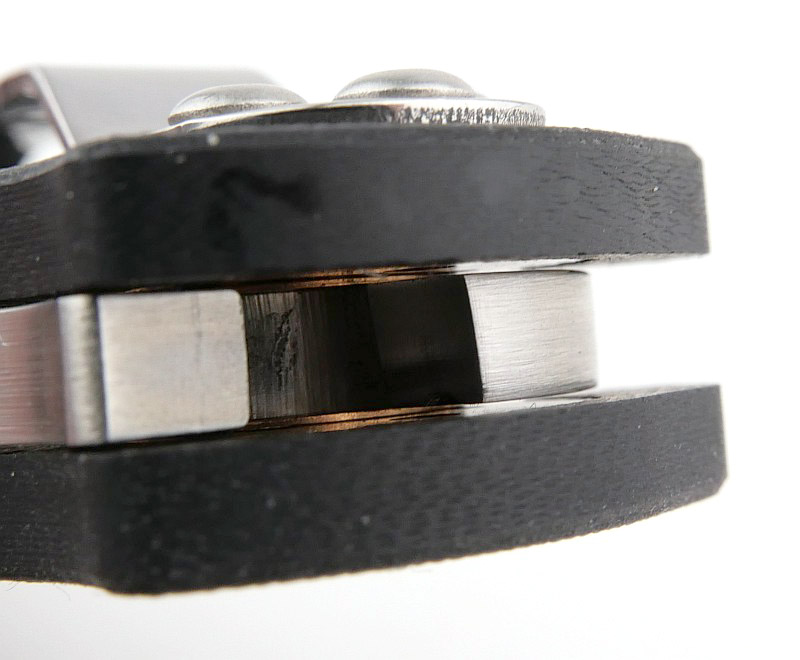
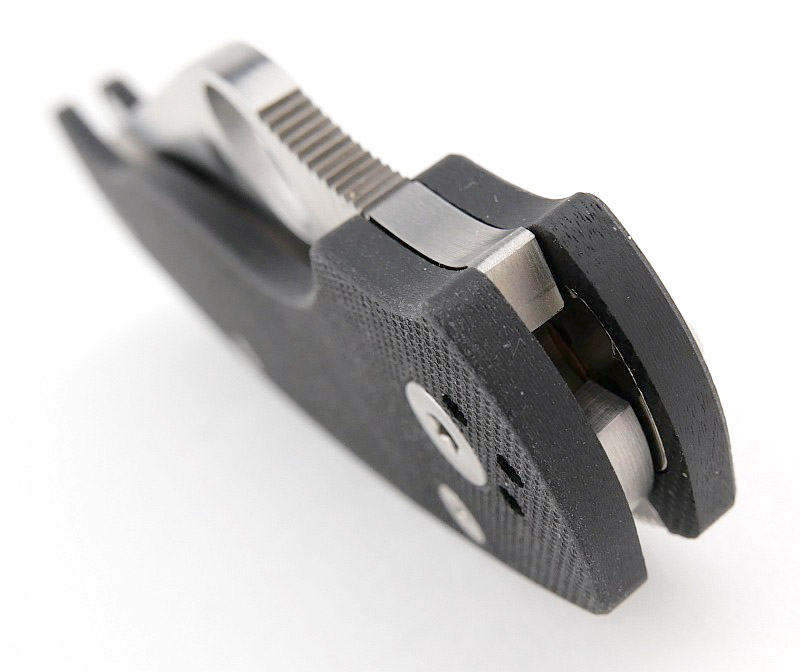
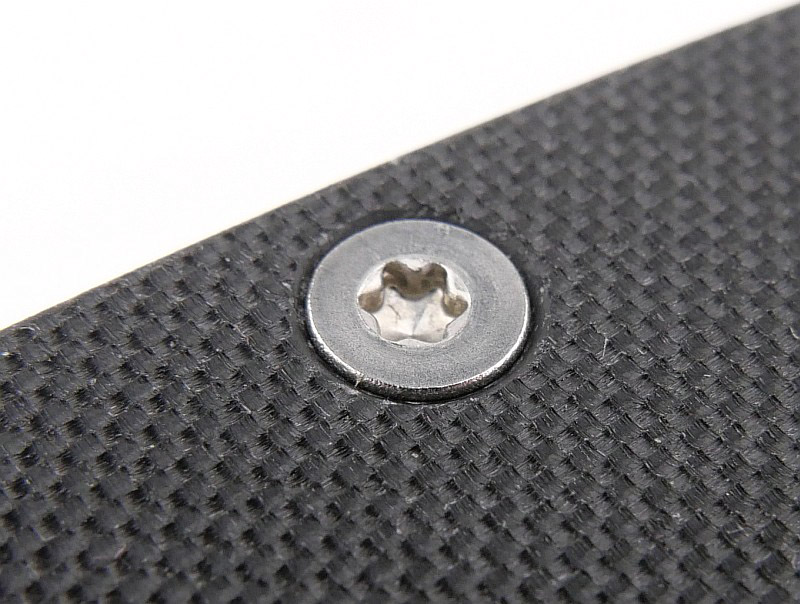
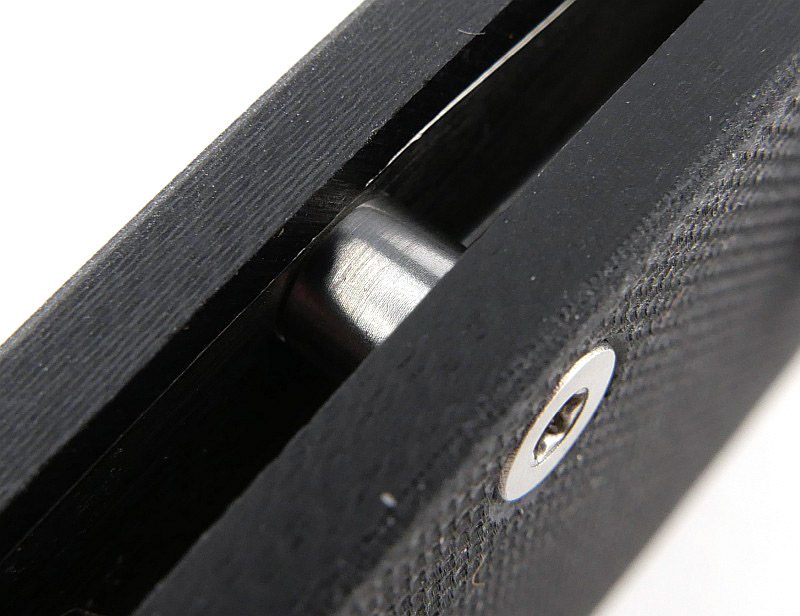
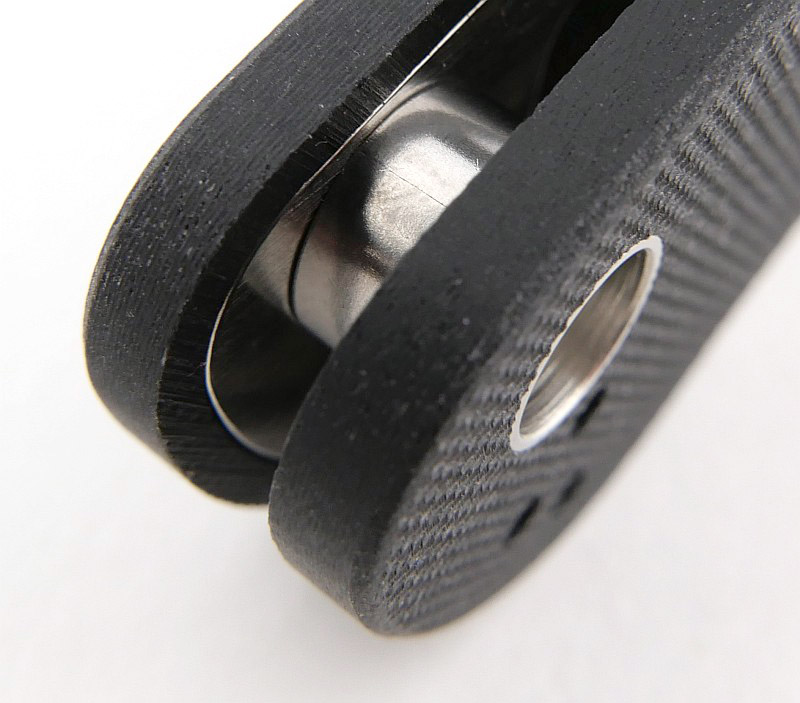
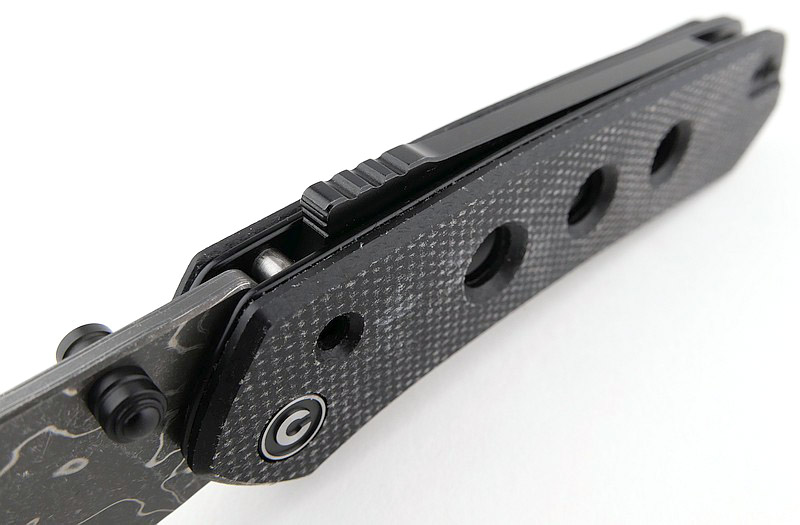
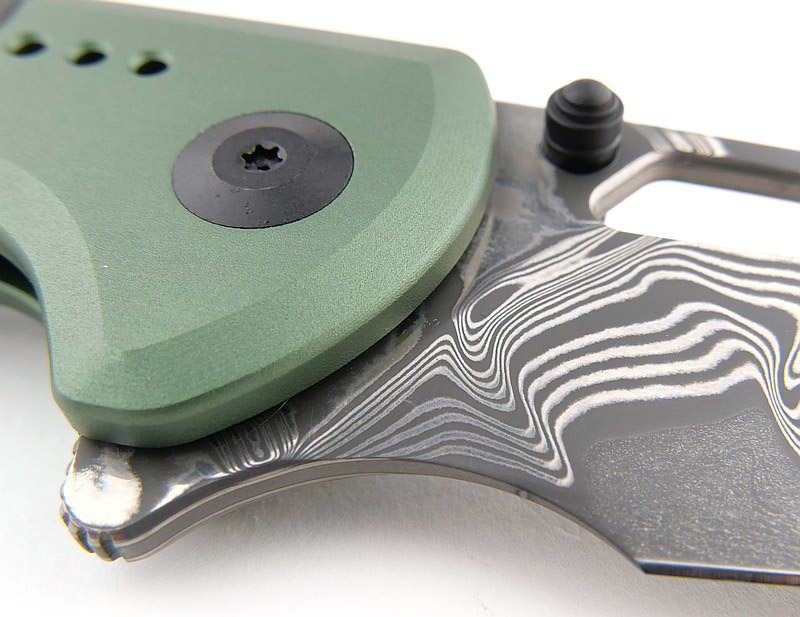
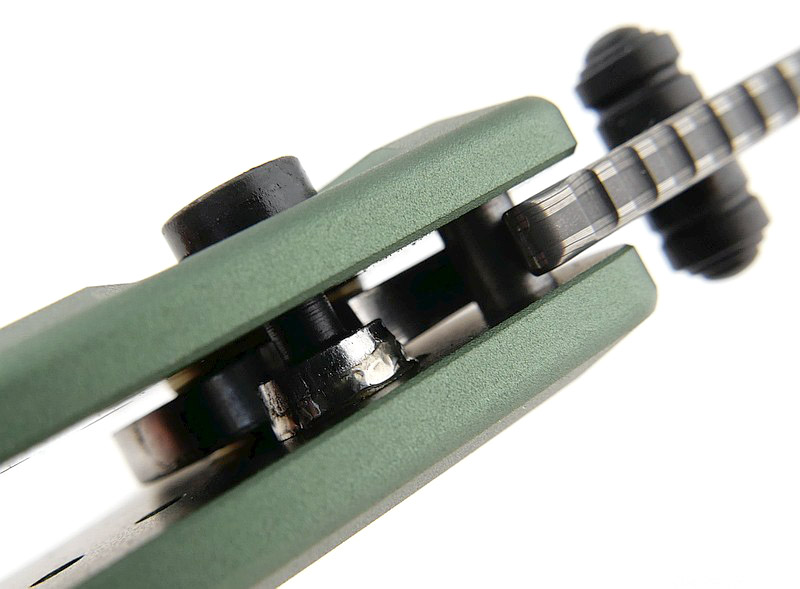
Starting off with a lot of different views round the folded knife to see it from all directions. The lanyard hole is ingeniously incorporated into an exposed section of the backspring, making it very accessible and easy to tie into. One side of the pivot bolt has the Mercury logo engraved into it, the other side is a domed torx screw head with decorative fluting. Peeled G10 is used for the orange handle insert, held in place the two screws. In keeping with the simple reliable design we have phosphor-bronze pivot washers.
As another option, the insert can also be micarta, a much softer feeling material, but one which will take on a patina through use.


A good look round the open Mercury Luc – Things to look out for here are:
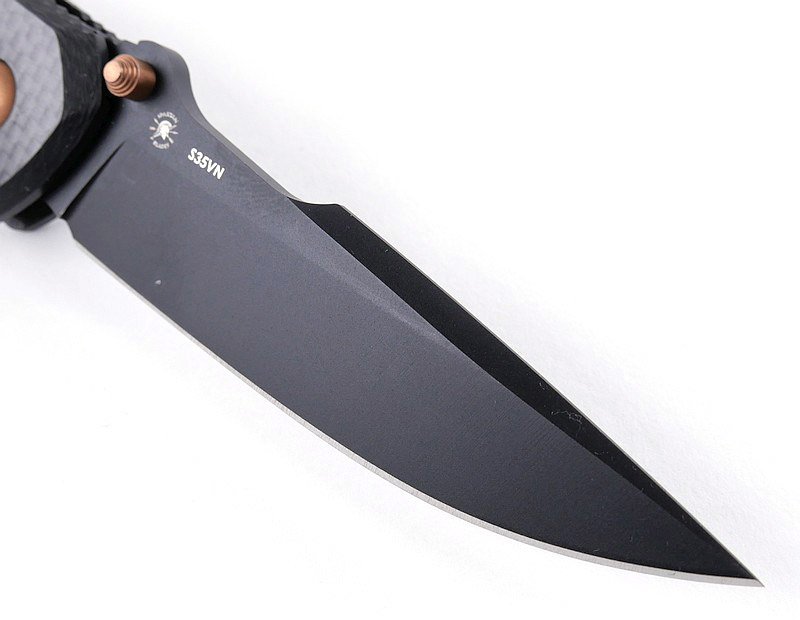
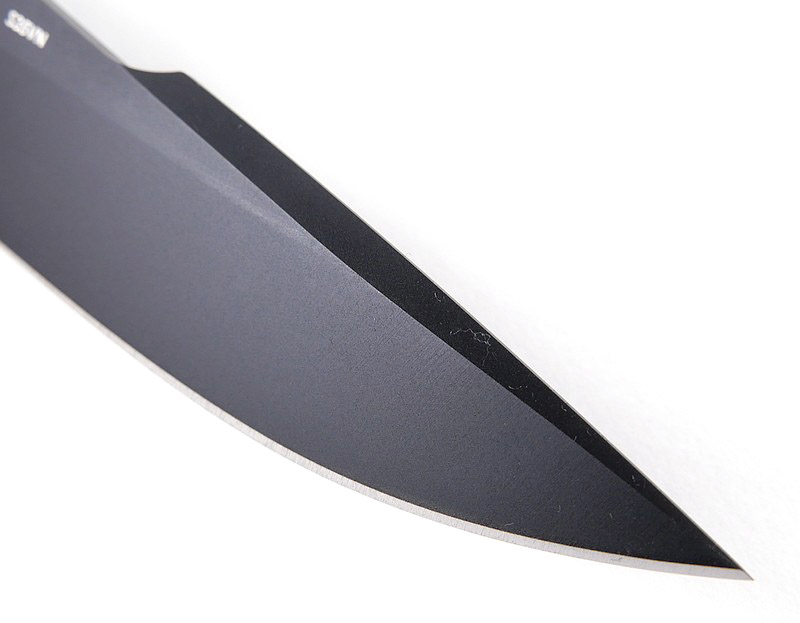
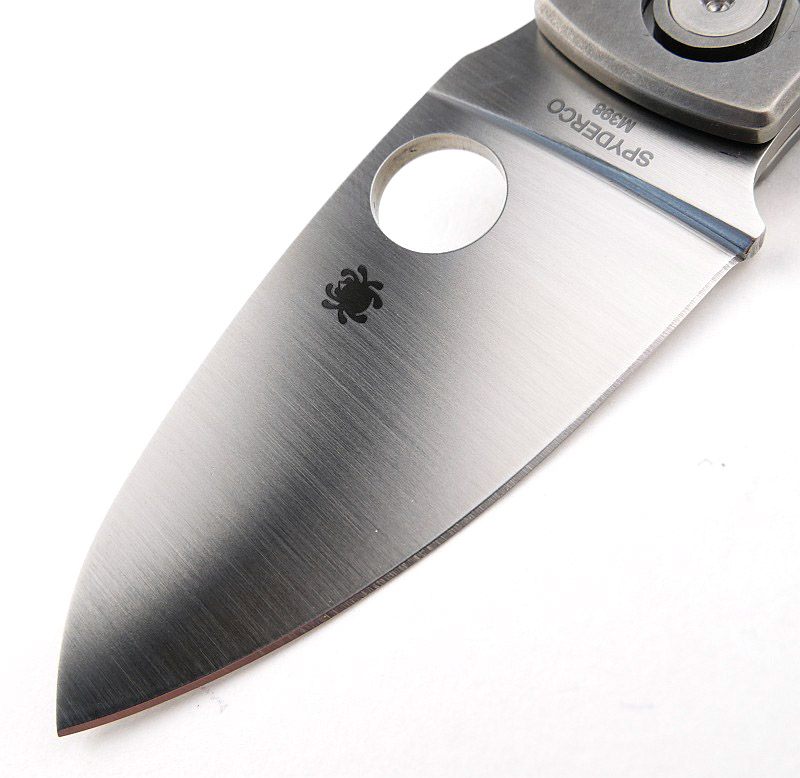
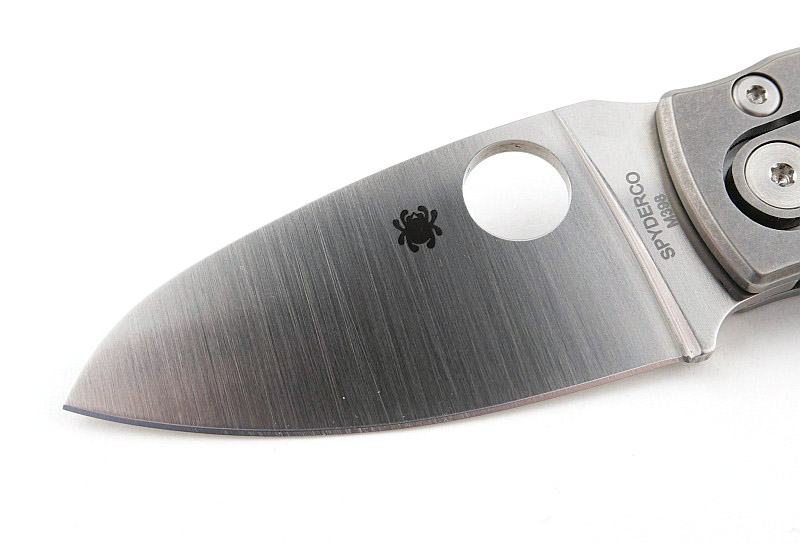
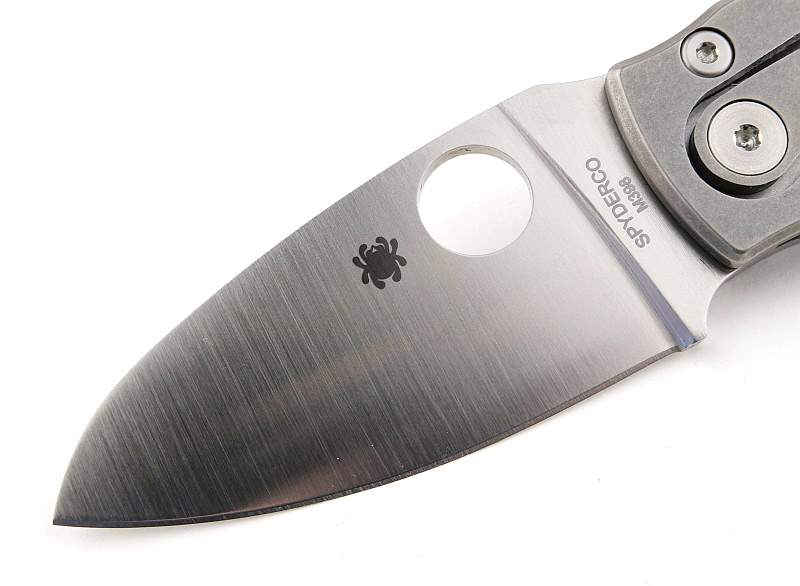
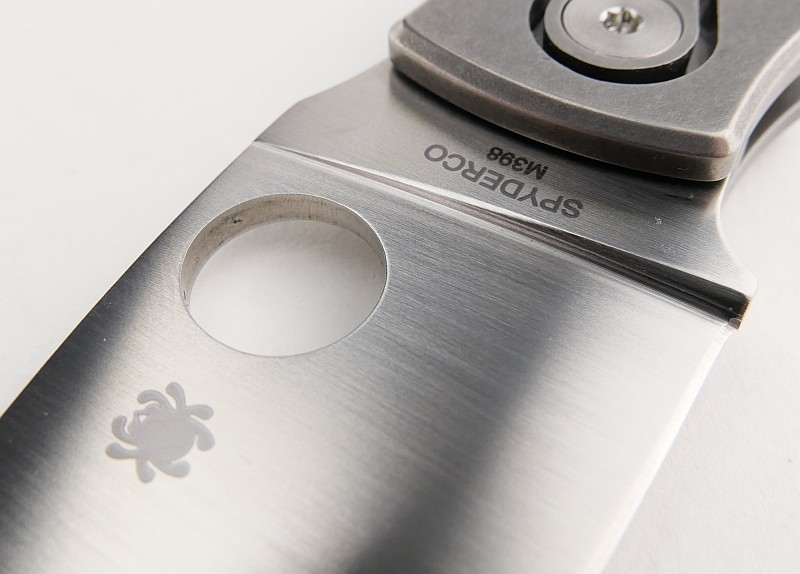
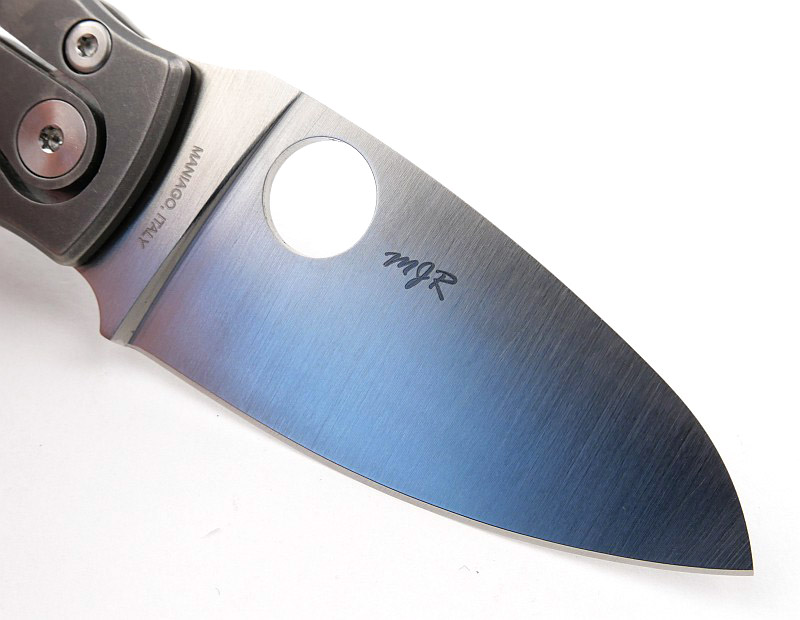
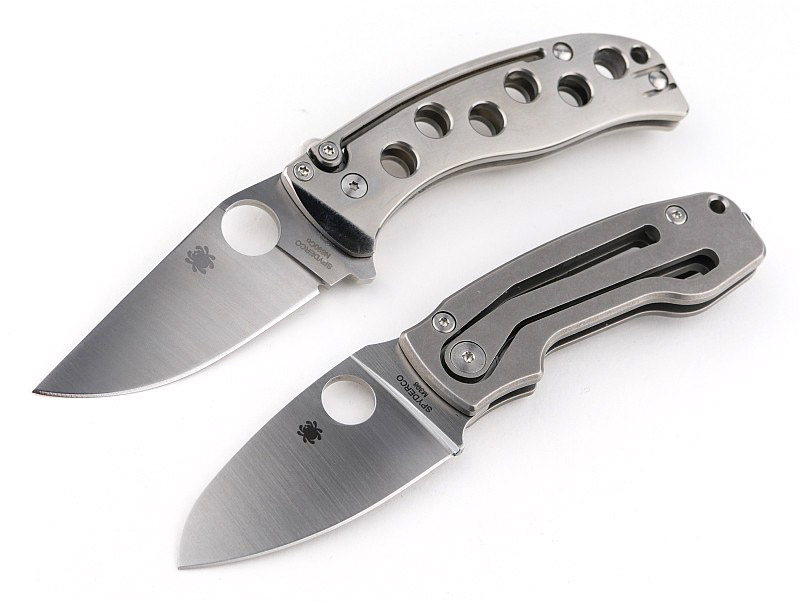
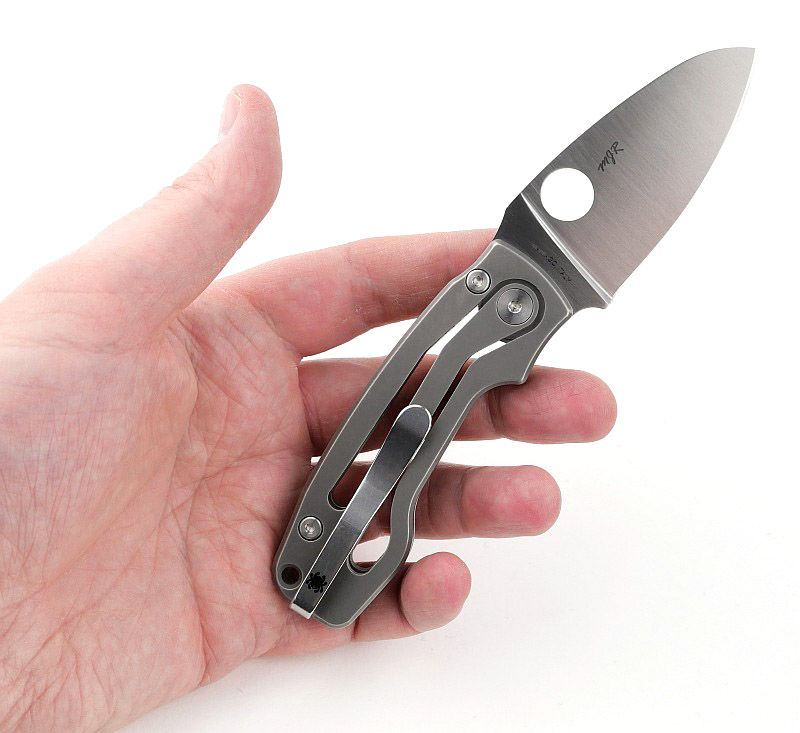
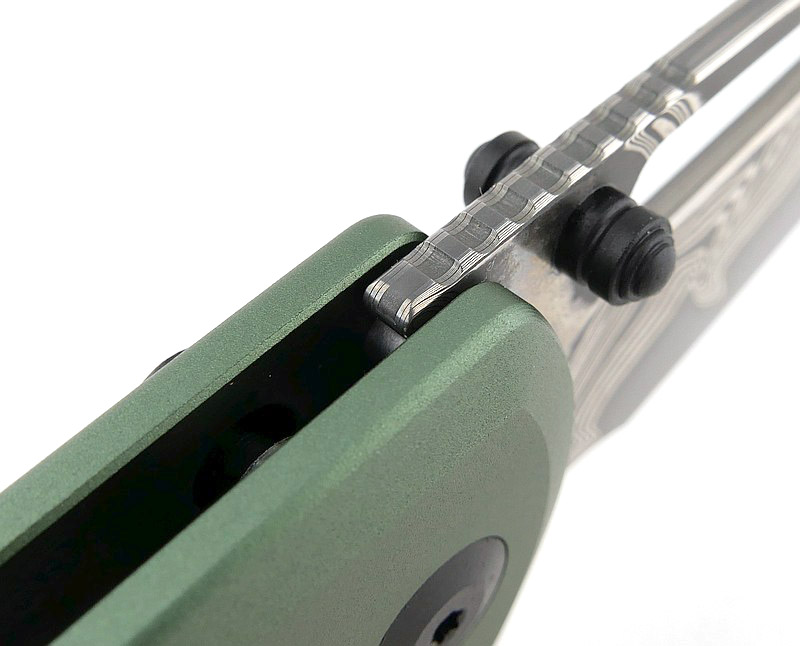
Swinging out the Luc’s clip-point blade shows the modern touches on this classic. Elmax as the blade steel, an angled milled slot as the nail nick, and high tolerance finishes with the H clearly displaying this precision. A flat grind, clip-point blade, with bevelled swedge and stonewashed finish showcase its modern construction.


The Blade and Handle – Detailed Measurements:
For full details of the tests and measurements carried out and an explanation of the results, see the page – Knife Technical Testing – How It’s Done.

The blade is made from Elmax steel.

With the Mercury Luc being a slip-joint folder, the resistance to closing (and related stiffness of opening) is an important factor, so for this I carry out Torque measurements for opening and closing.

And the torque measurements for the Mercury Luc (for further reference values check the Technical Testing link):


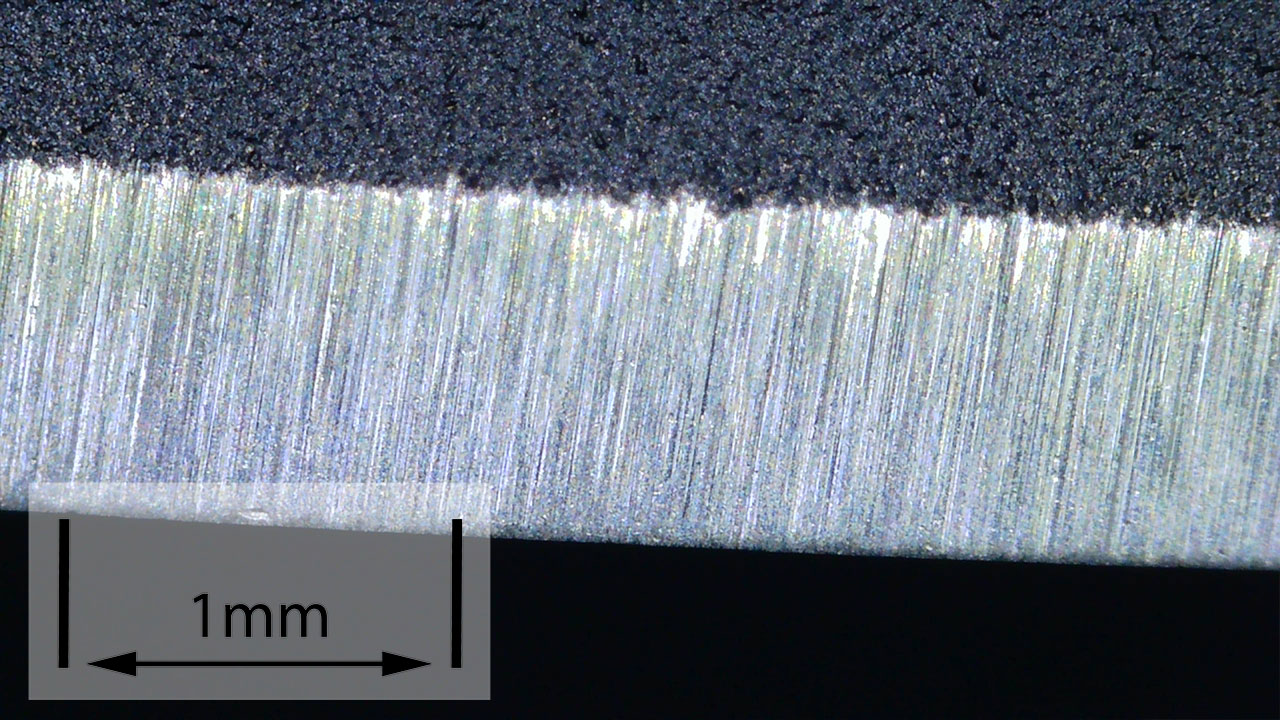
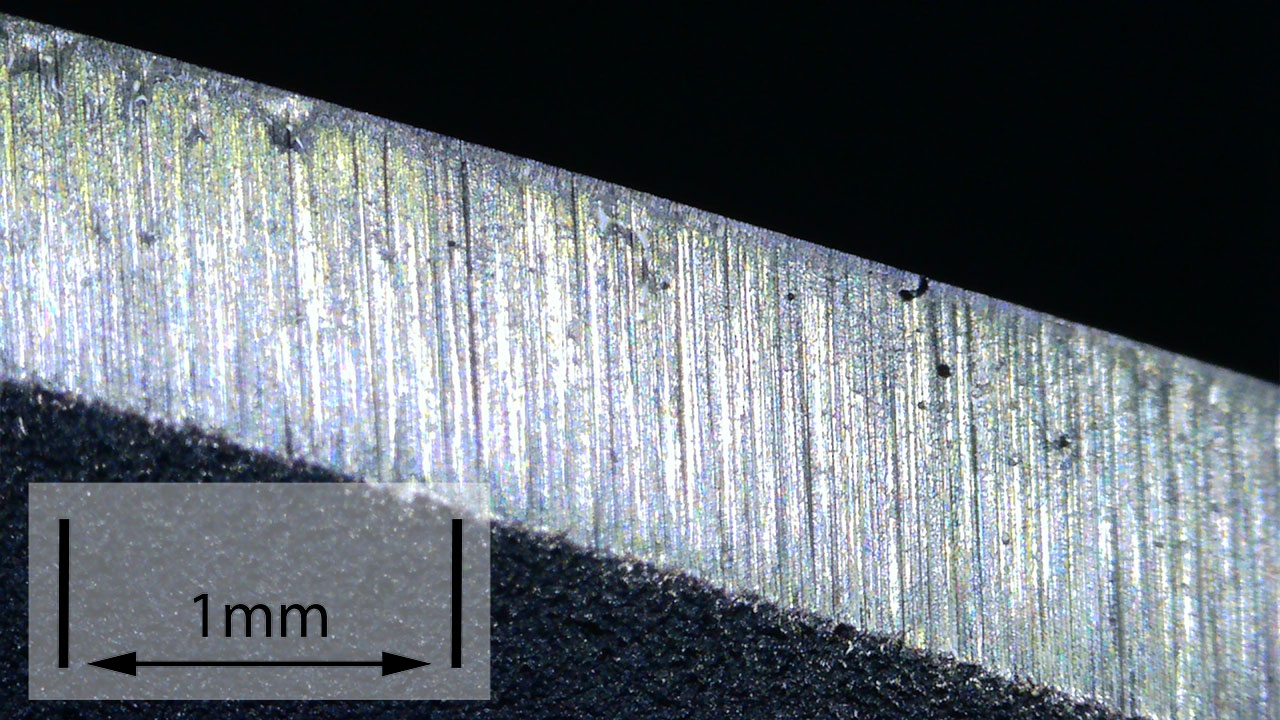
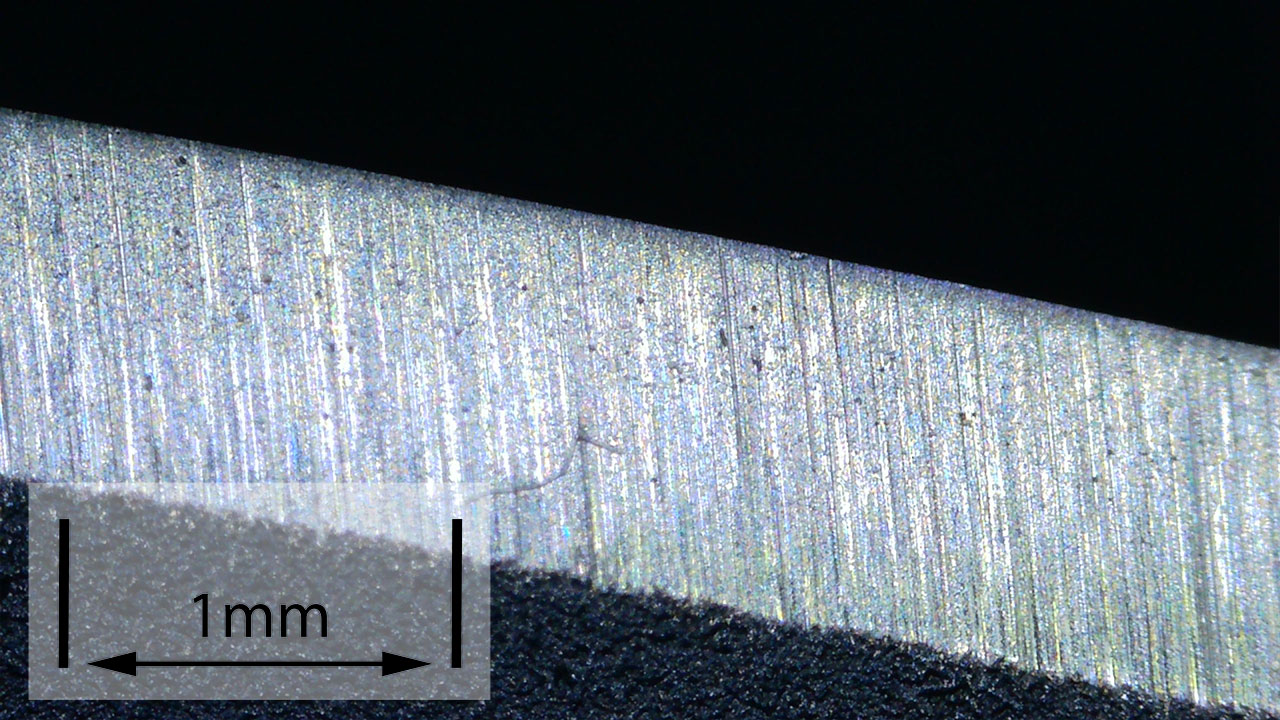
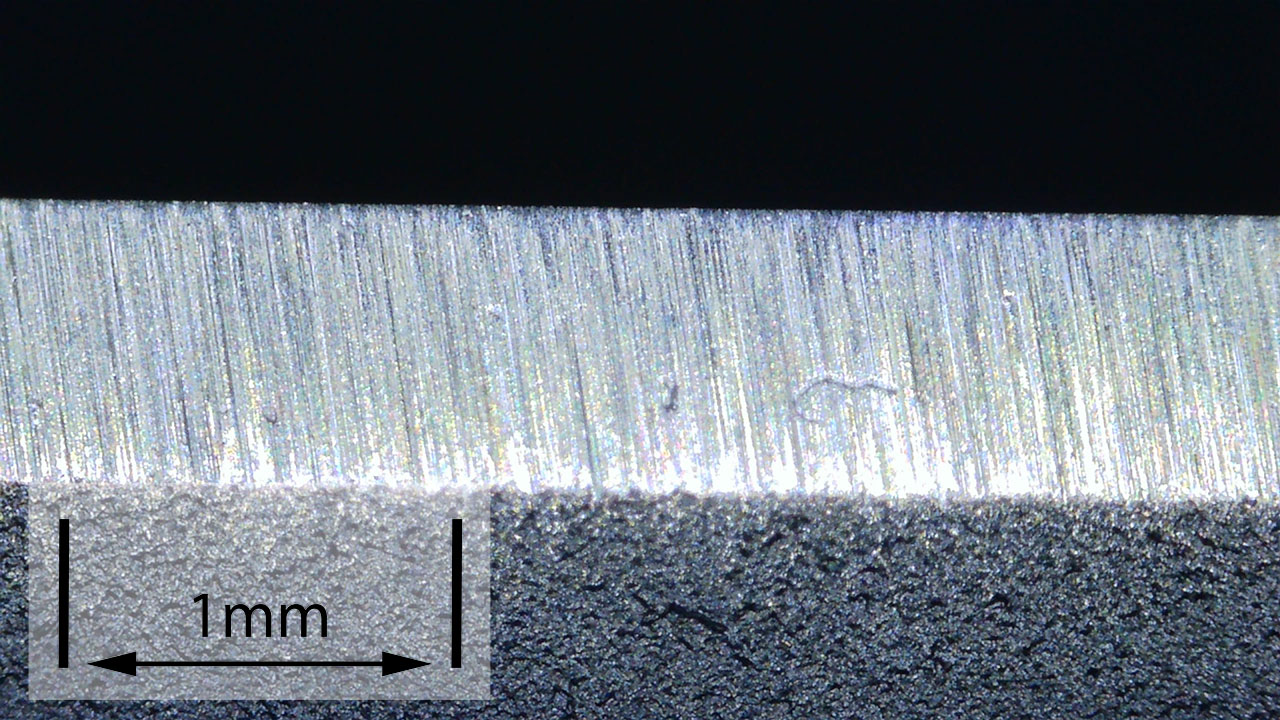
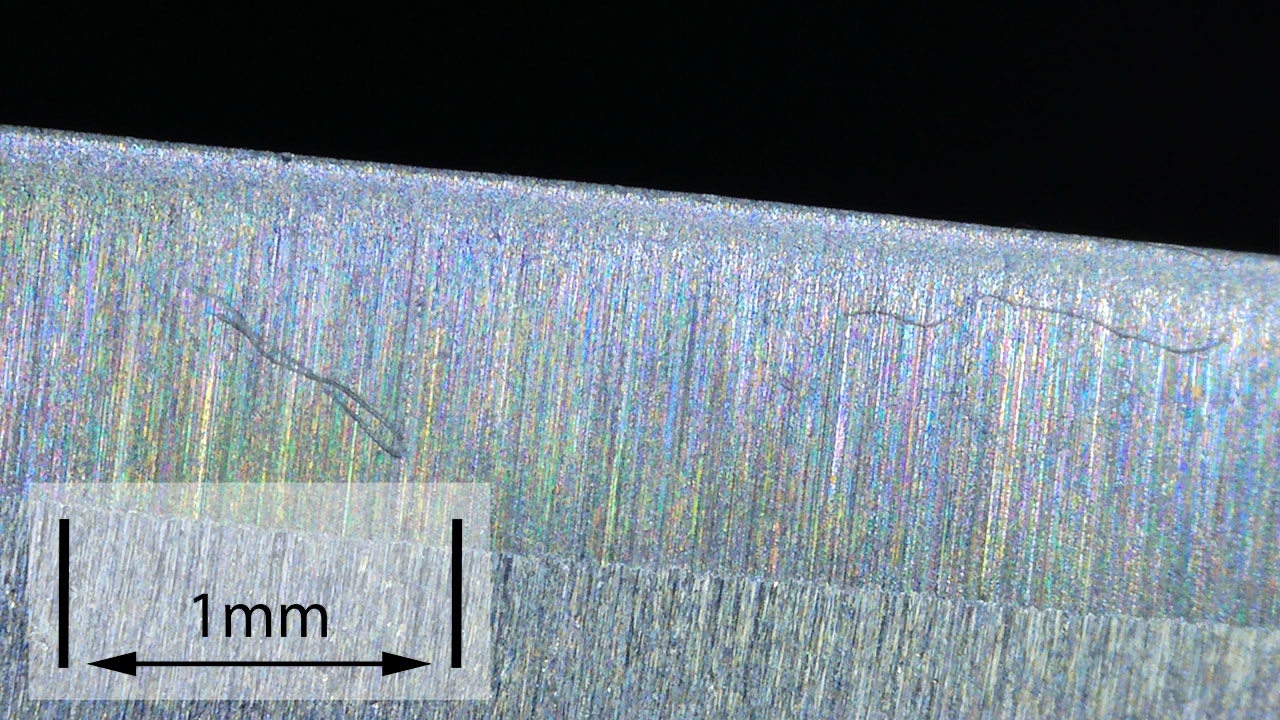
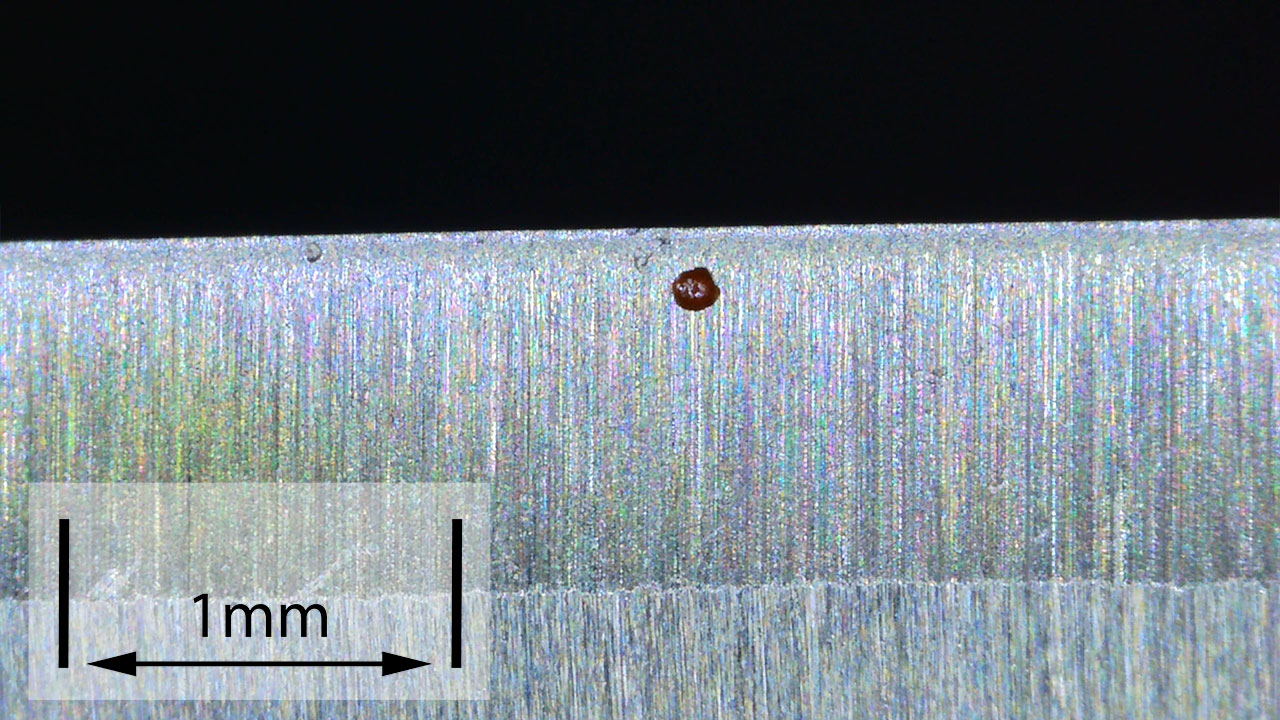
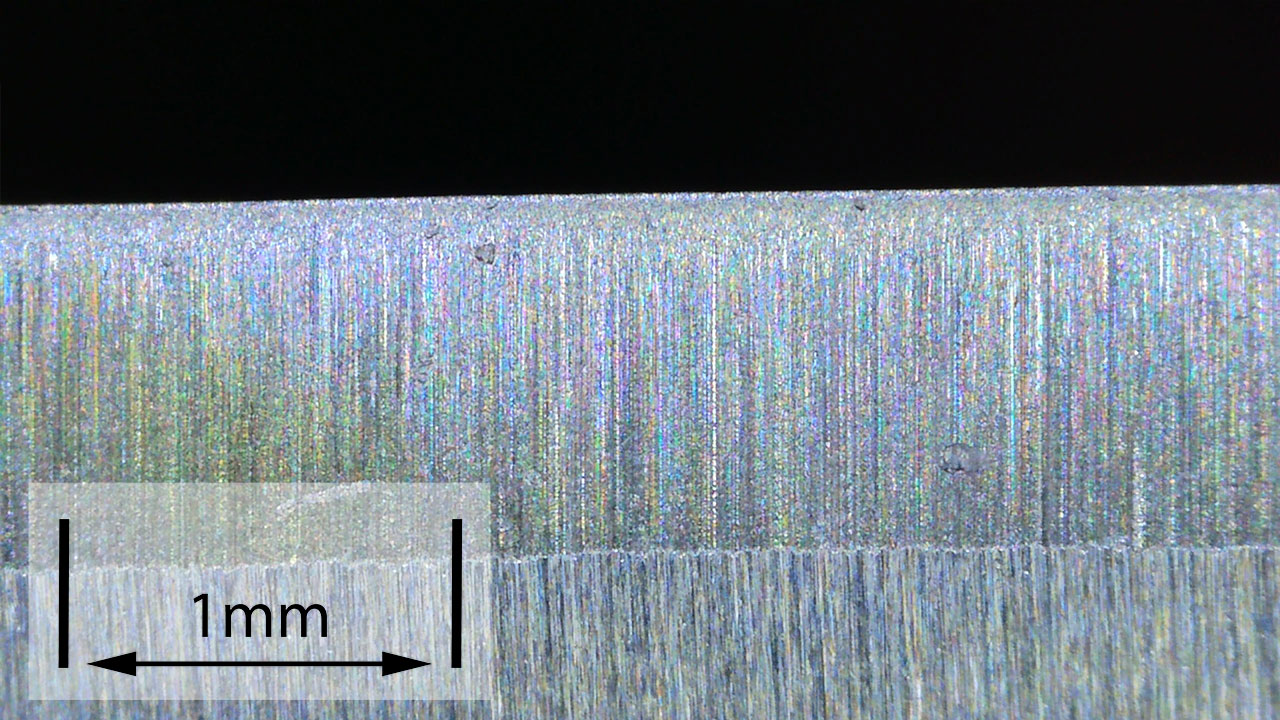
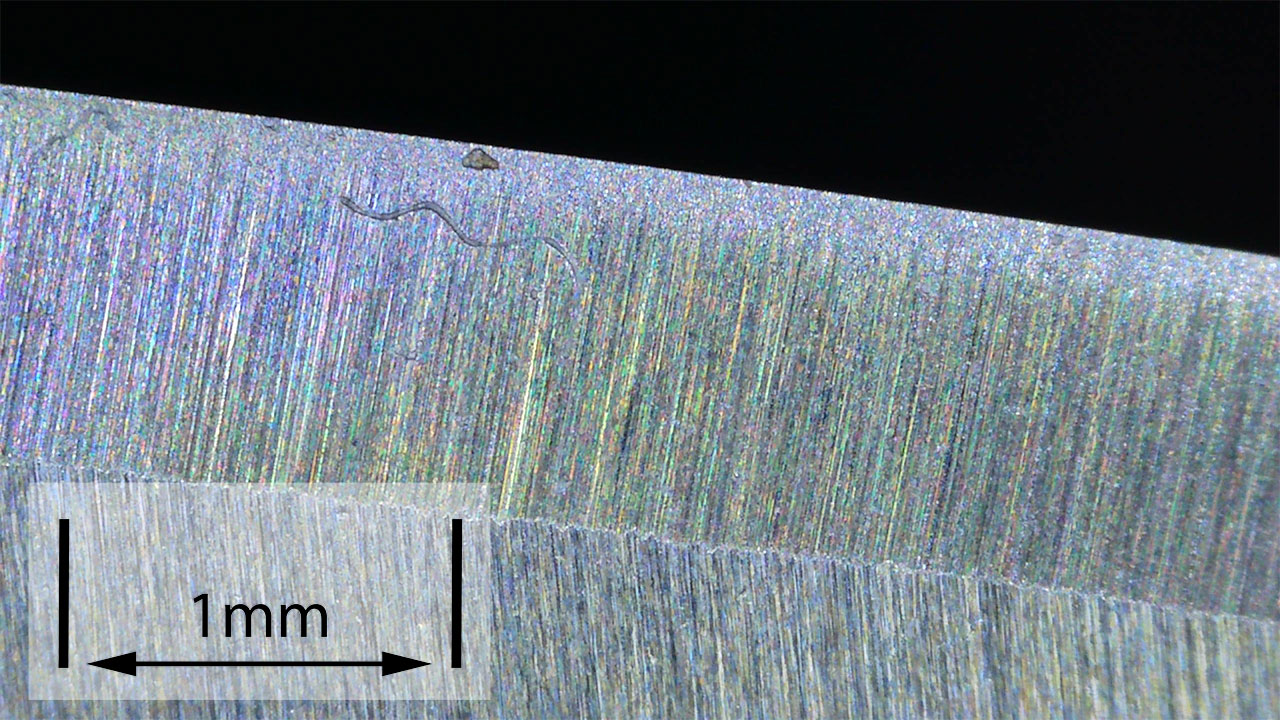
The Factory edge up close:

Followers of Tactical Reviews will know my views on factory edges, but to recap:

Anyone using a knife will need to sharpen it. That first factory edge is just like the first tank of fuel that a new car comes with (or first charge of the battery).
A good factory edge is a ‘nice to have’ but not a ‘make or break’ for a good knife, as you will be putting your own edge onto it soon enough.
The factory edge does however indicate the care a knife maker has put into the final finish.
It is for this reason Tactical Reviews measures factory edge sharpness and specifications, and includes this information in the detailed technical testing.

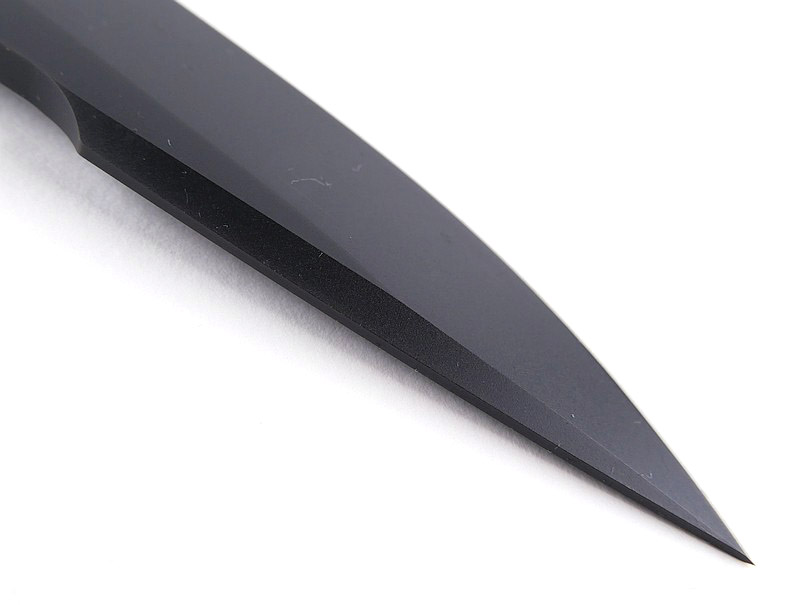
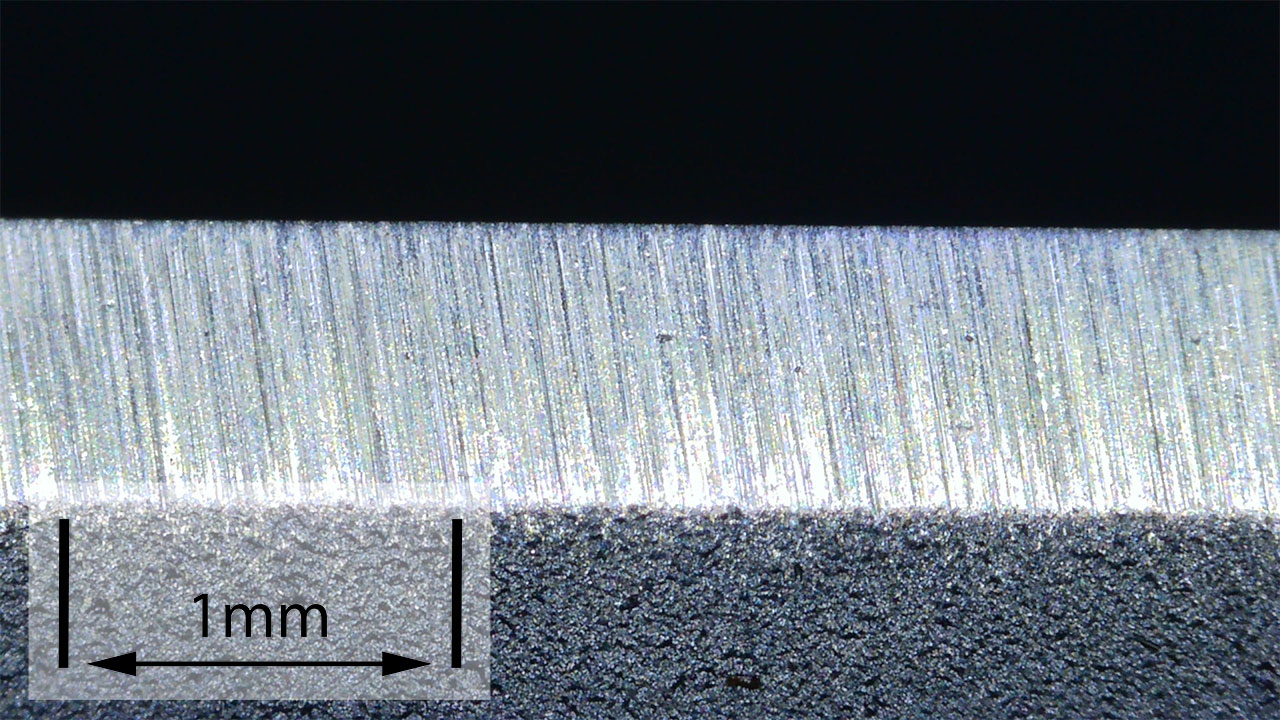
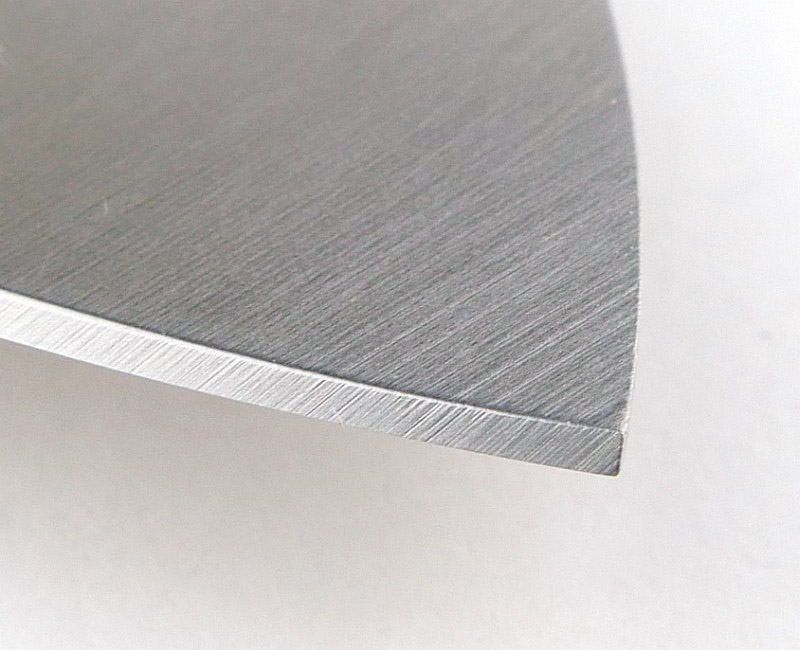
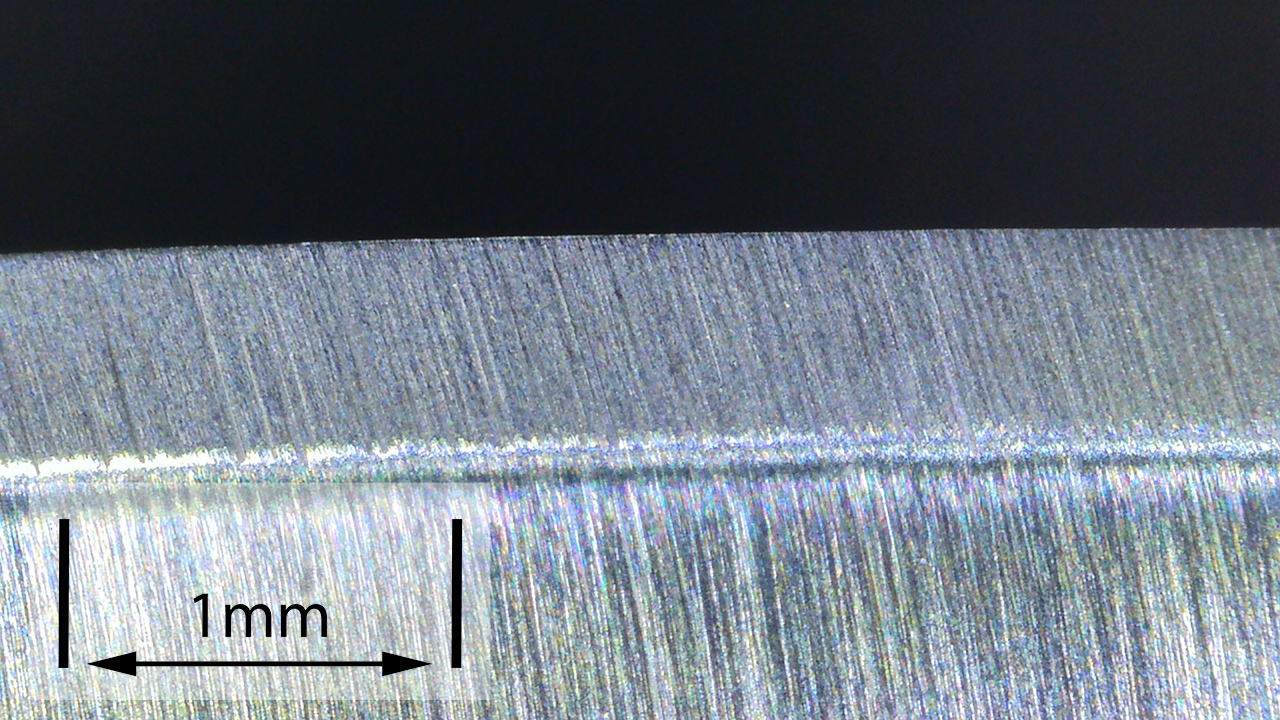
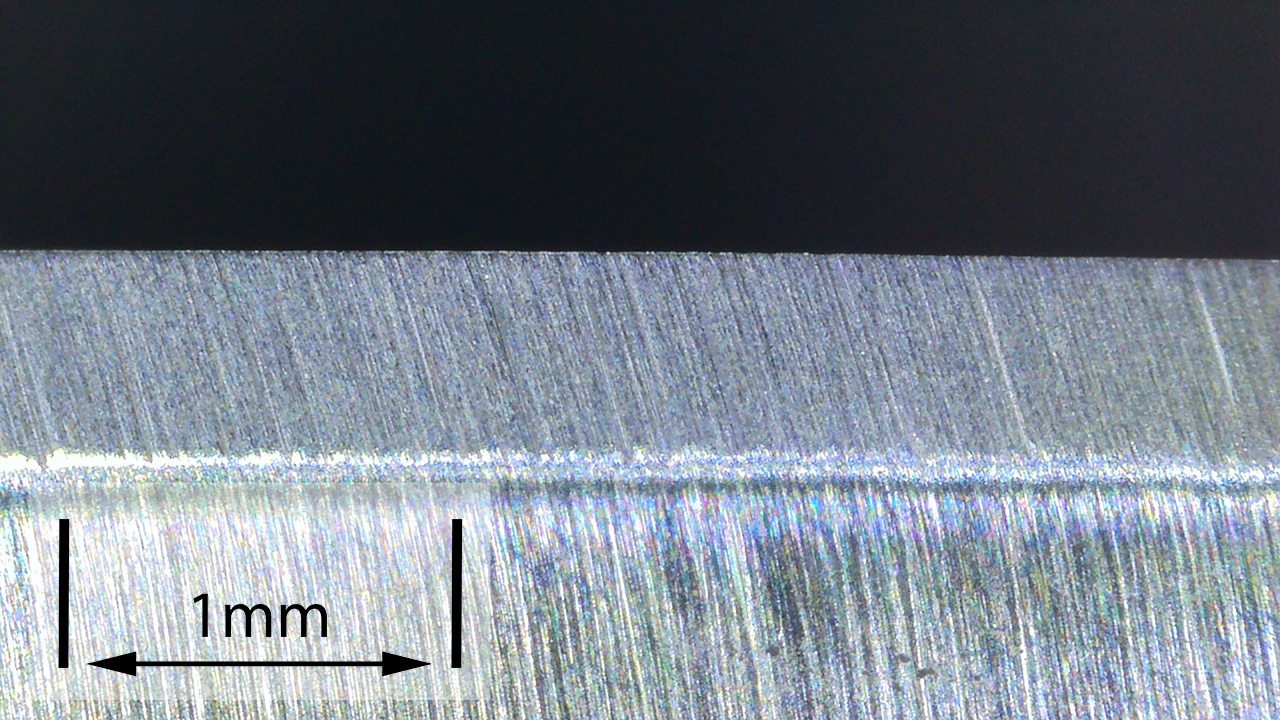
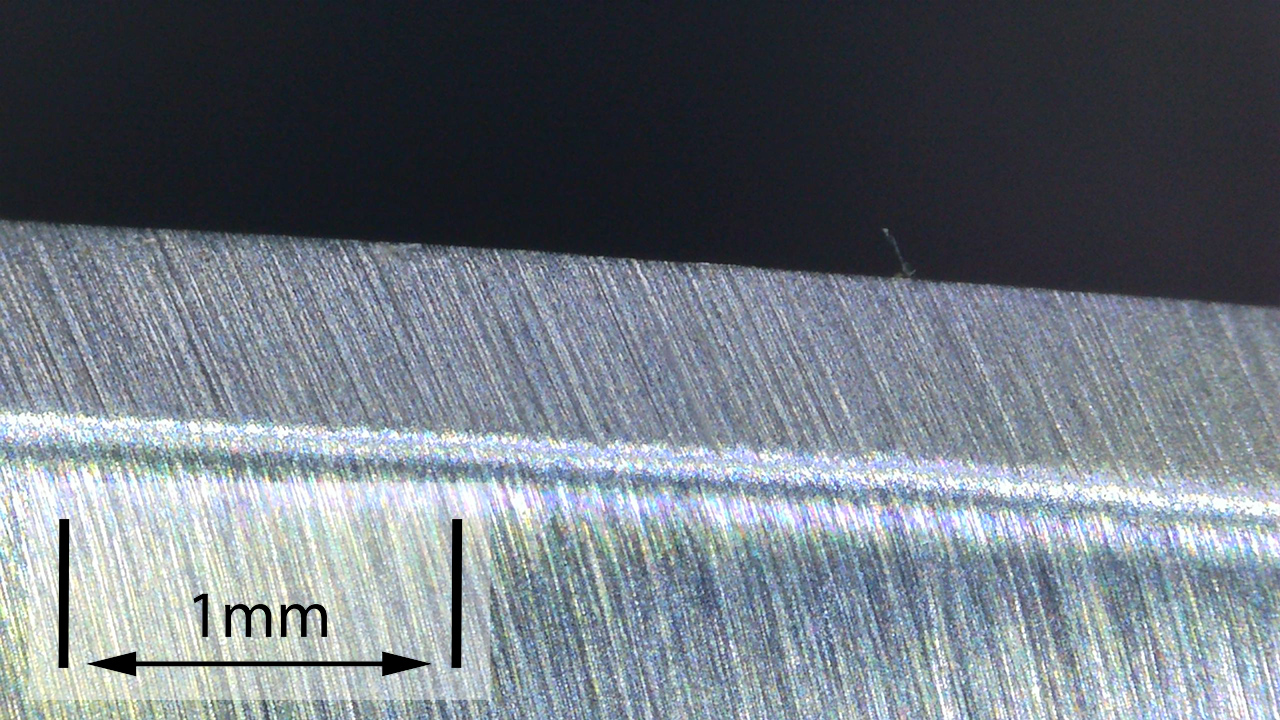
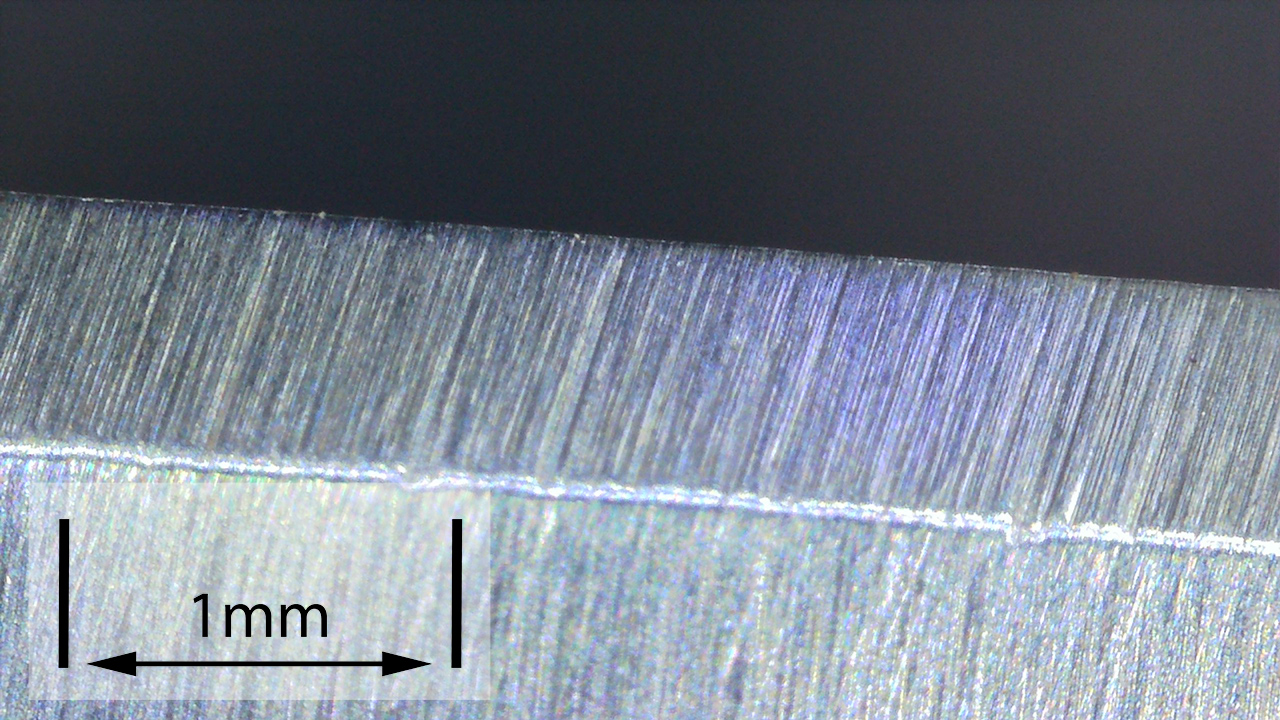
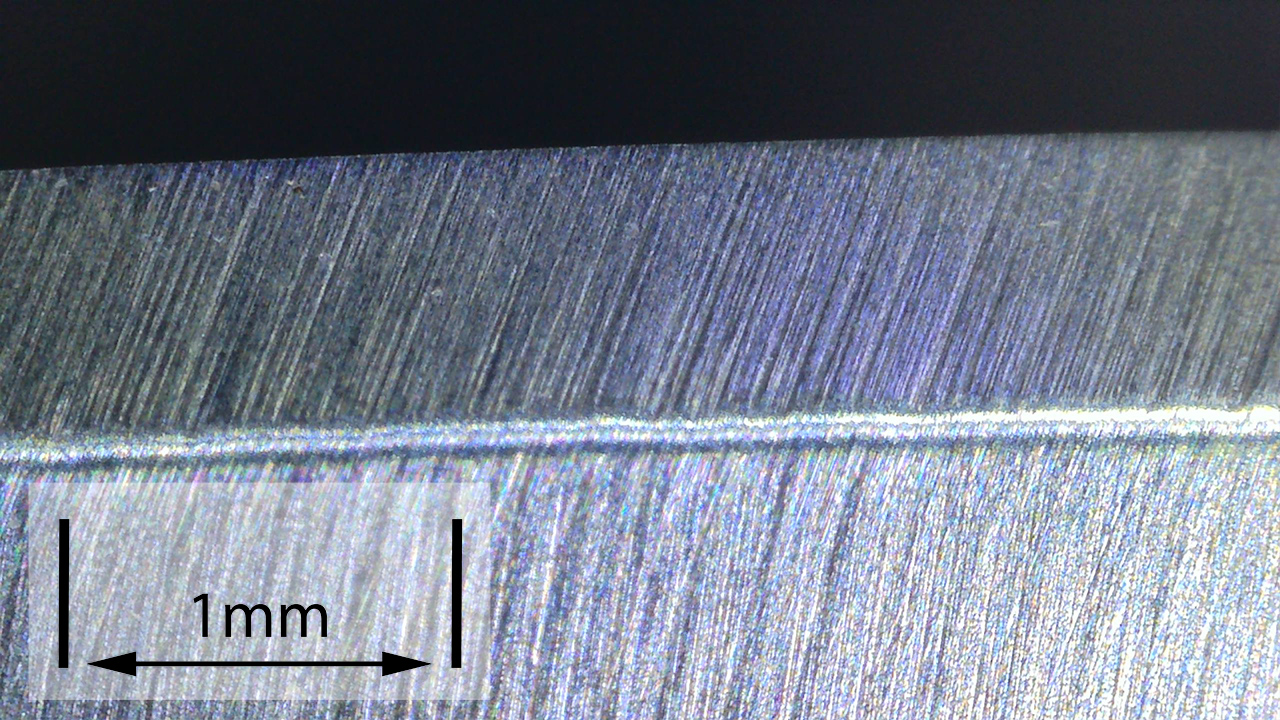
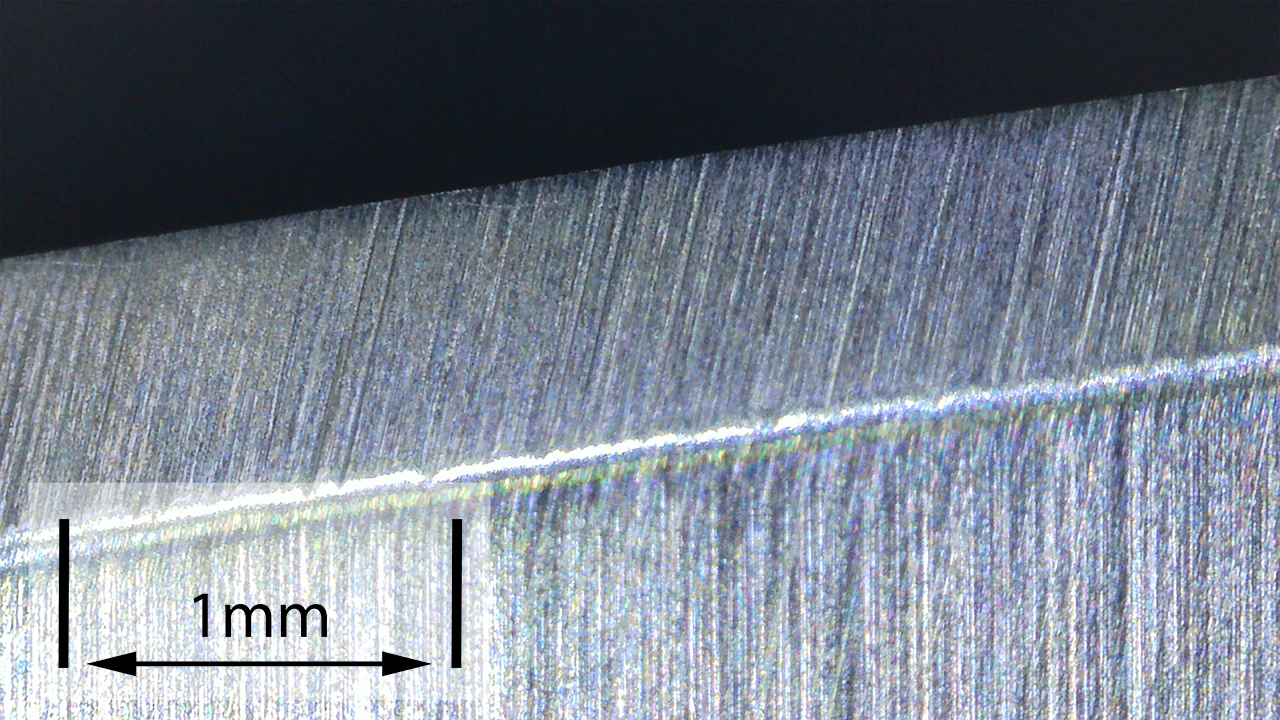
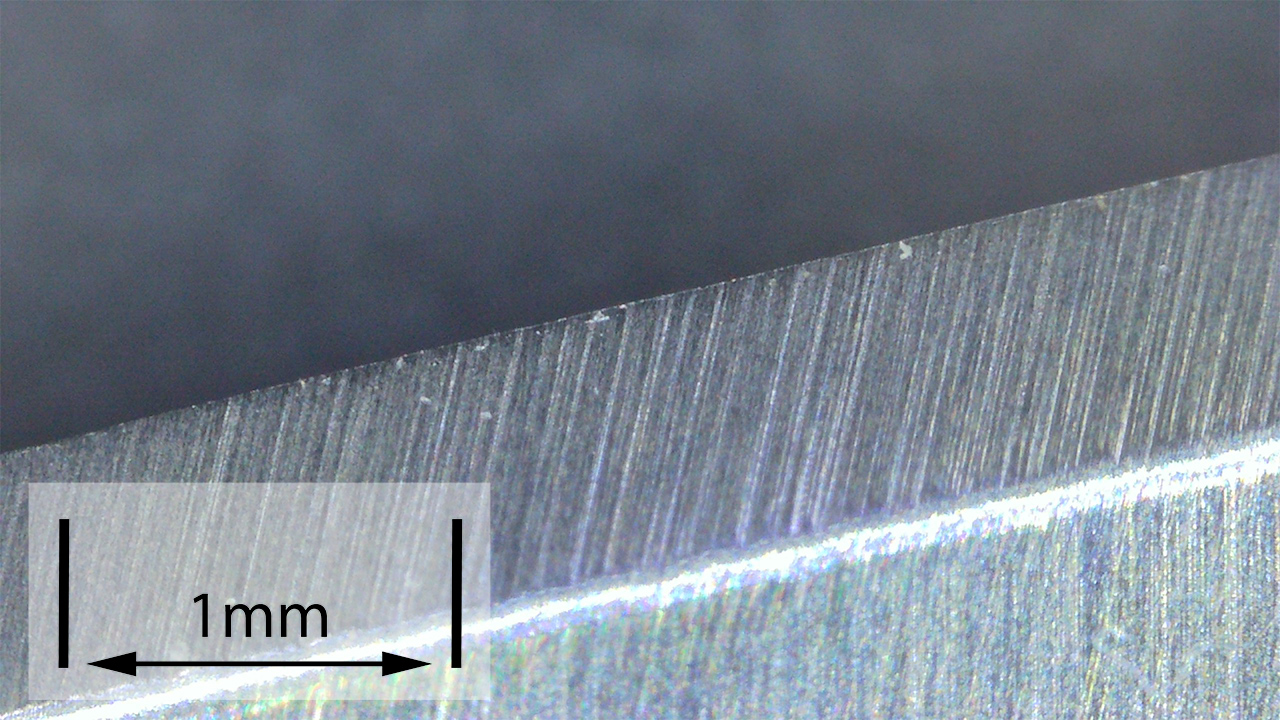
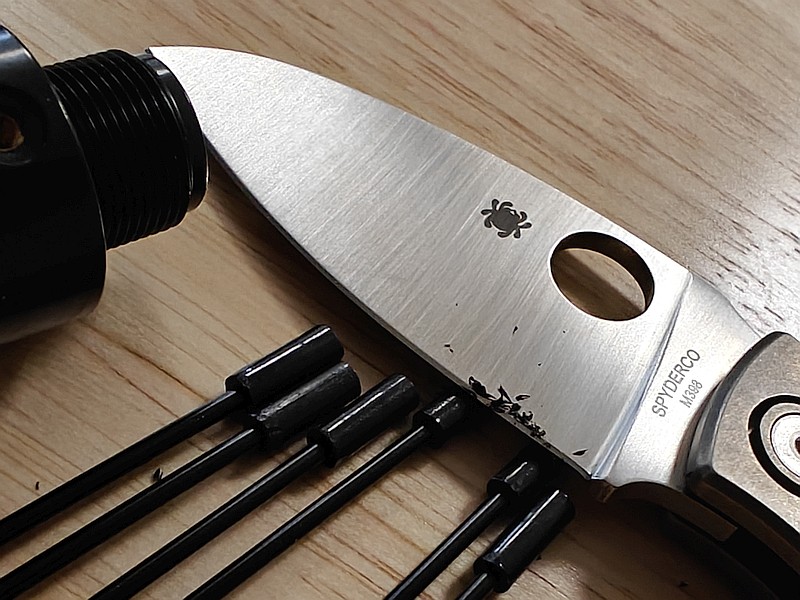
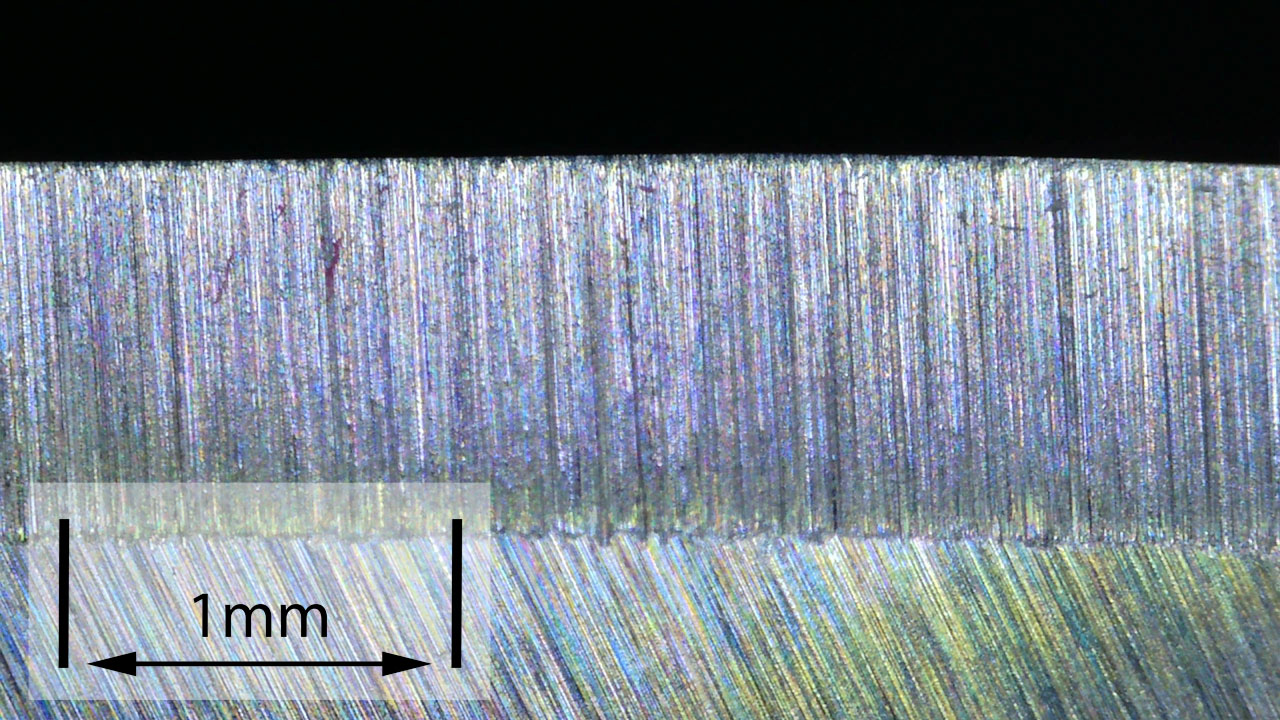
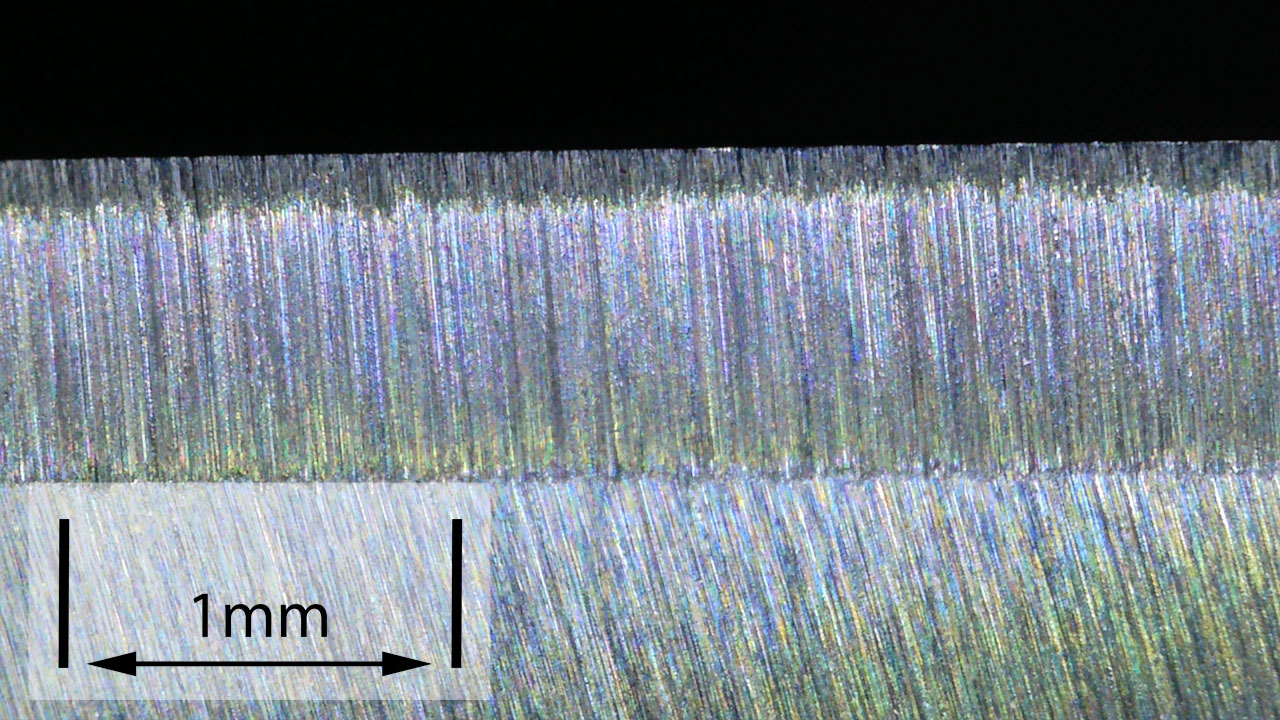
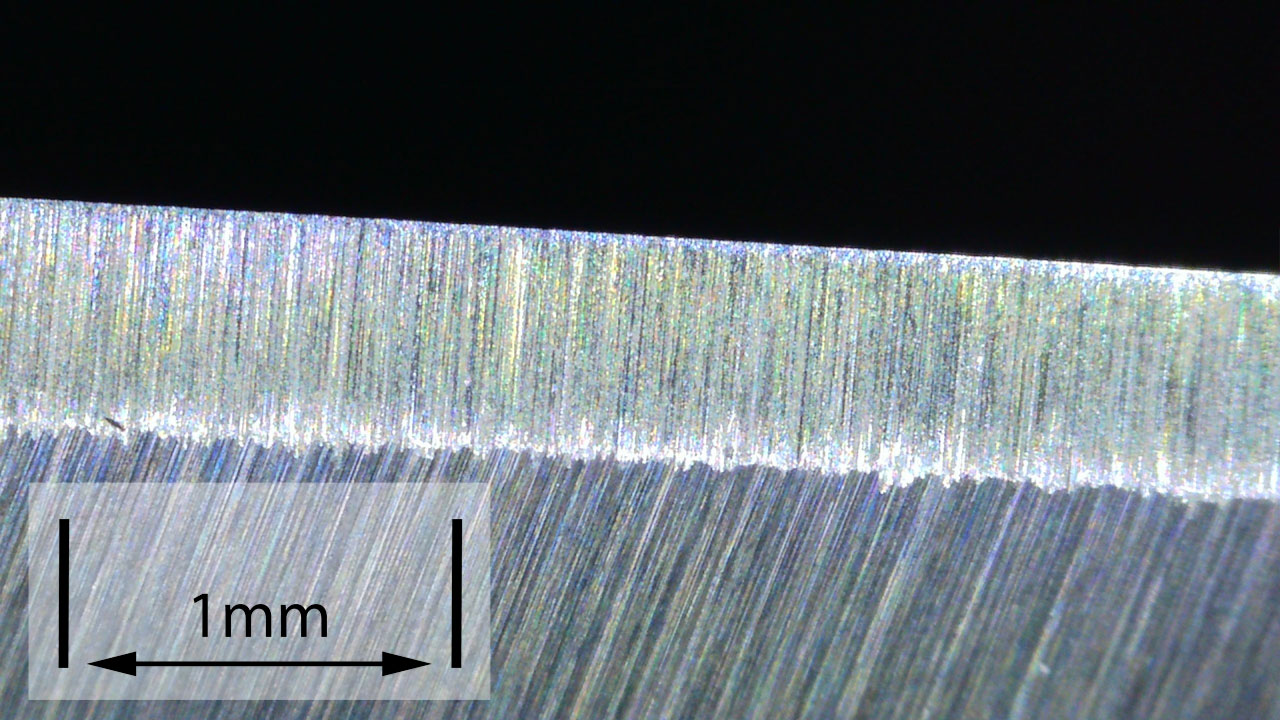
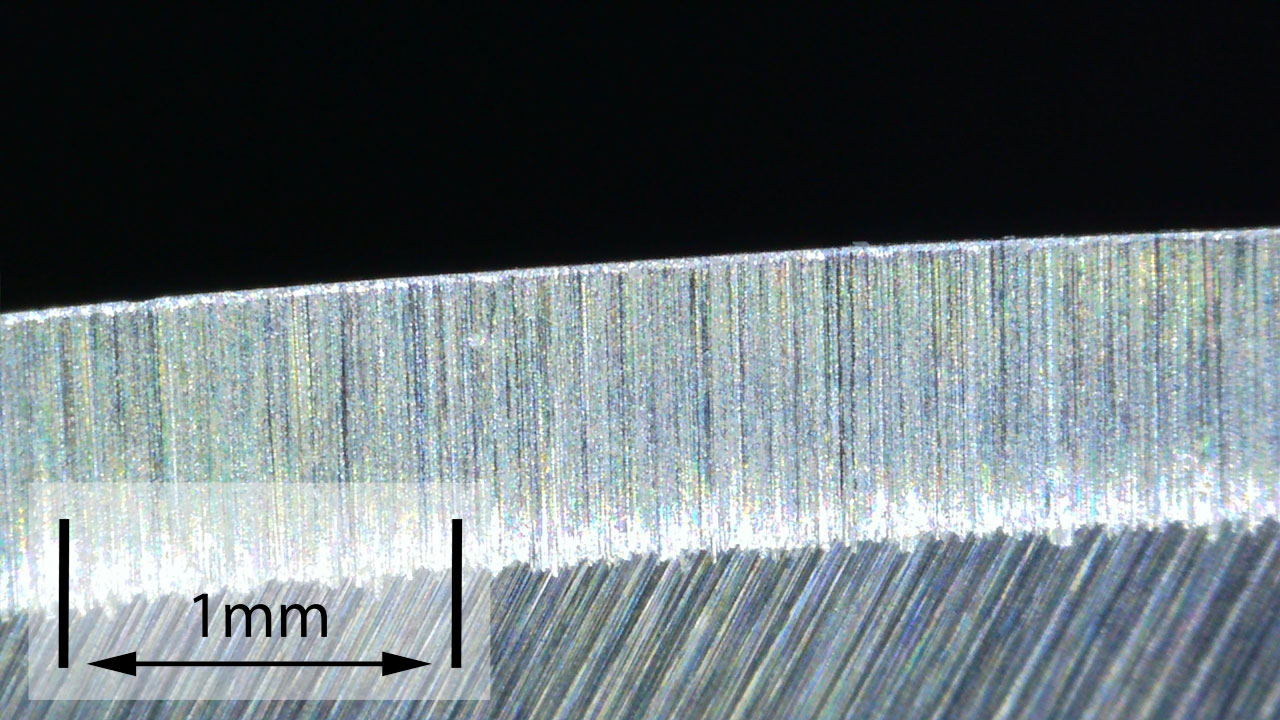
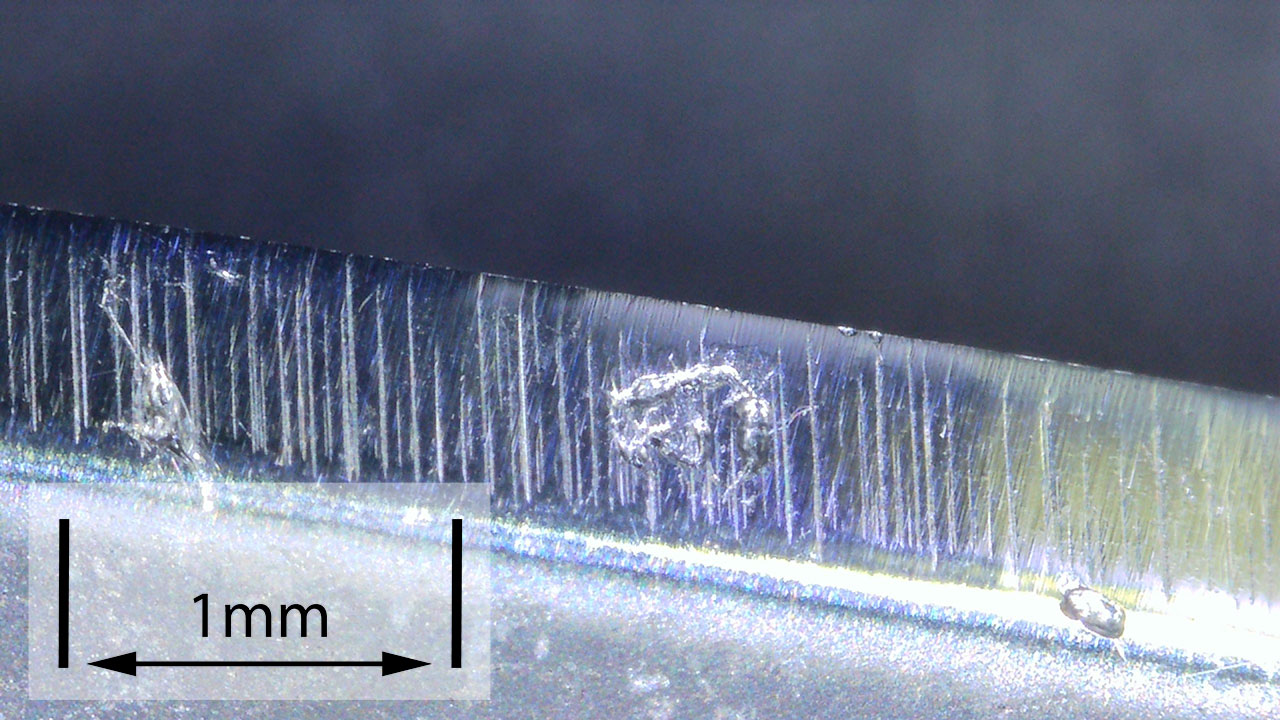
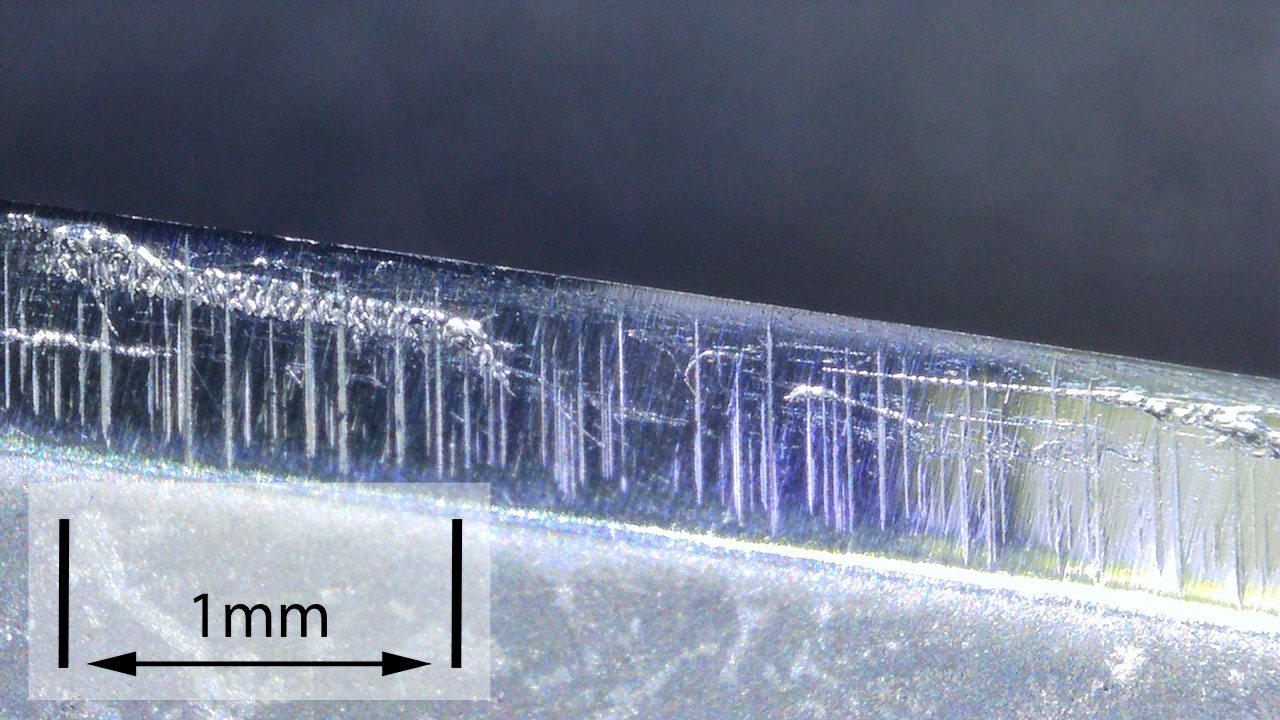
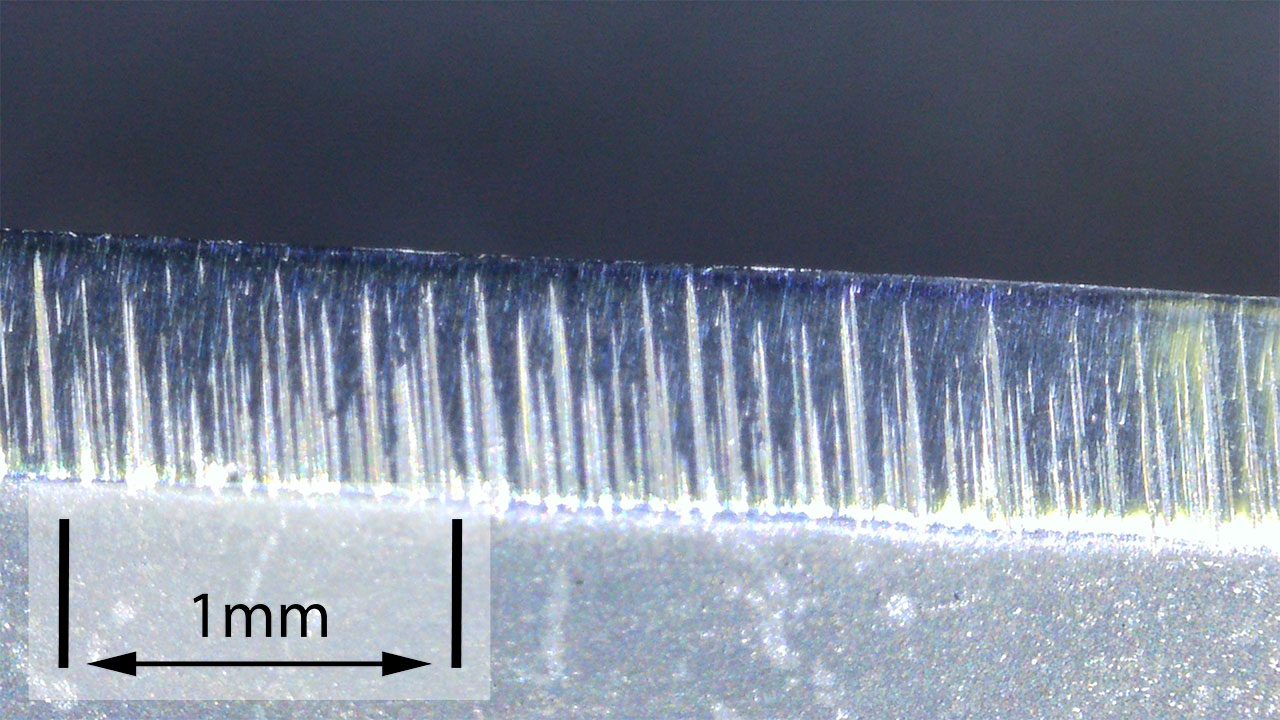
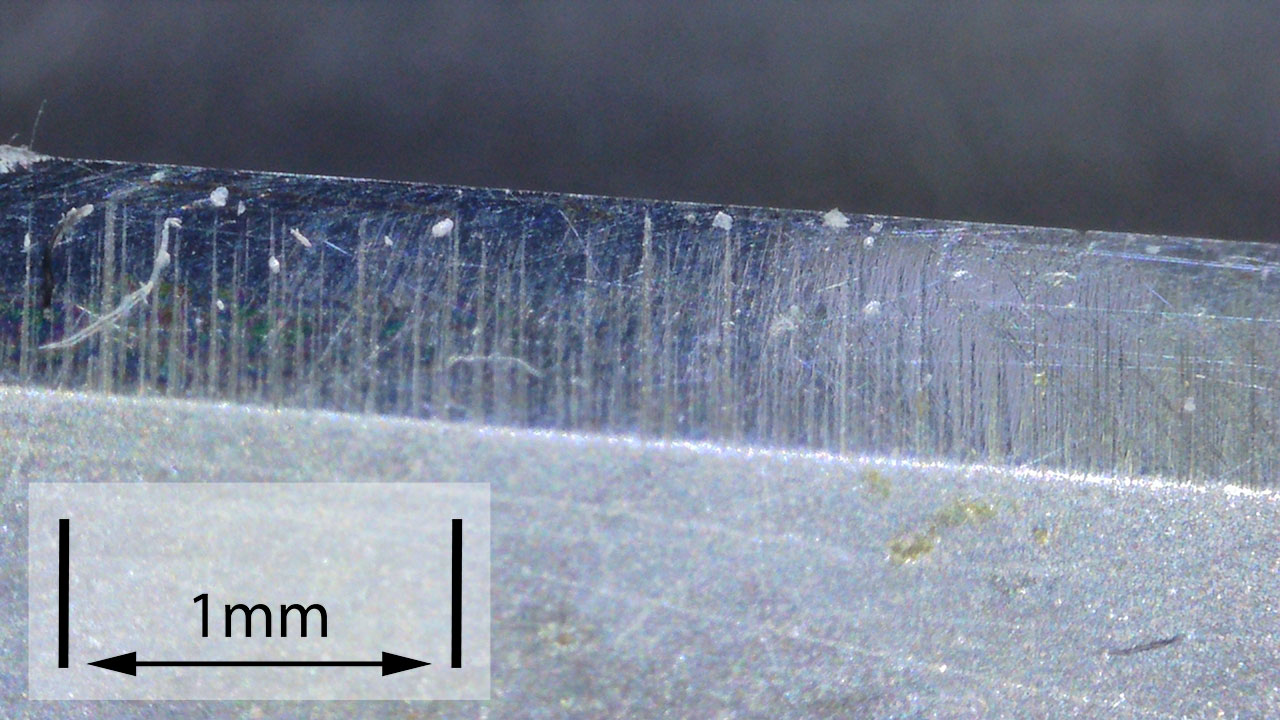
As a further look at the factory edge, this section has been added to include some high magnification photos of the factory edges.


What is it like to use?
Mercury’s Luc reinforces why the slip joint folder pocket knife has been so popular and successful since its inception around 400 years ago. It is a daily tool for all the smaller every day cutting tasks that don’t need a larger, stronger and heavier cutting tool. A type of knife that allows quick, intuitive opening and closing without a lock, but with a spring to provide enough resistance to make it safe to carry and use. Just quickly unfold and fold as needed without having to unlock.
There are those who take the view that non-locking slip joint knives no longer have a place due to being ‘unsafe’ to use, and liable to close unexpectedly on your fingers. However this ‘problem’ with slip joint folding knives is due only to incorrect cutting technique, or inappropriate use of the tool for a cutting job it is not suitable for, and nothing to do with the design at all. Used correctly and appropriately, the slip joint is absolutely relevant and the ideal tool for most smaller cutting tasks. As long as you ensure the cutting force is applied in the direction that pushes the blade open, it cannot close on you, and is perfectly safe to use.

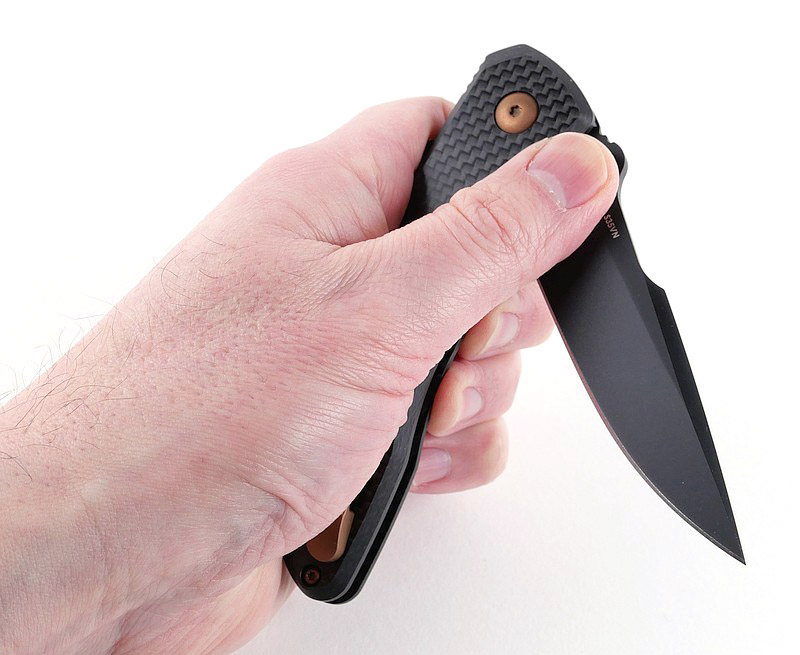
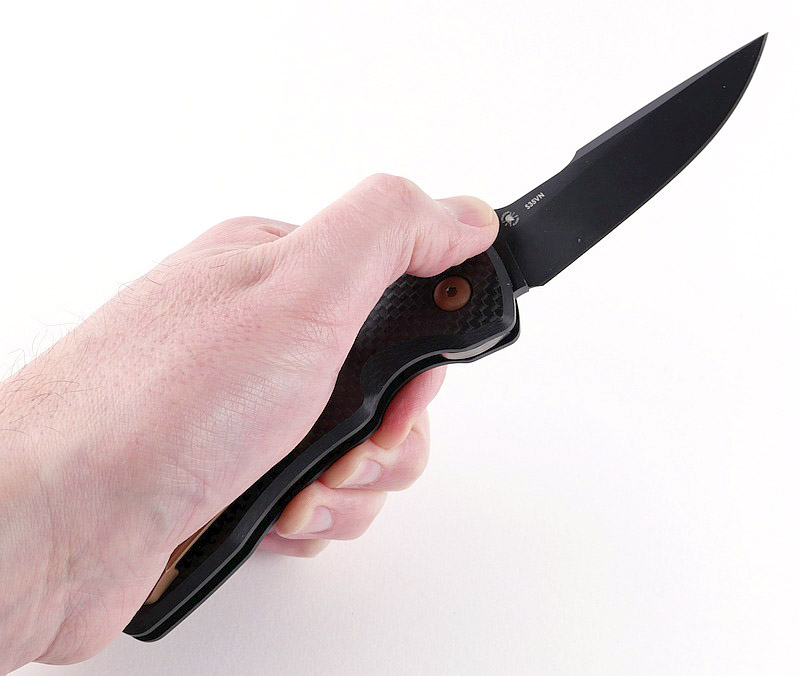
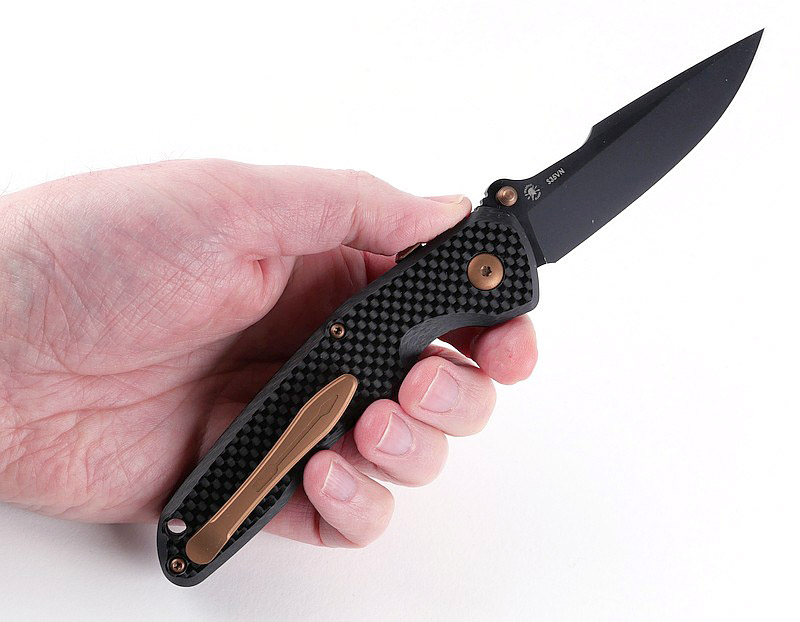
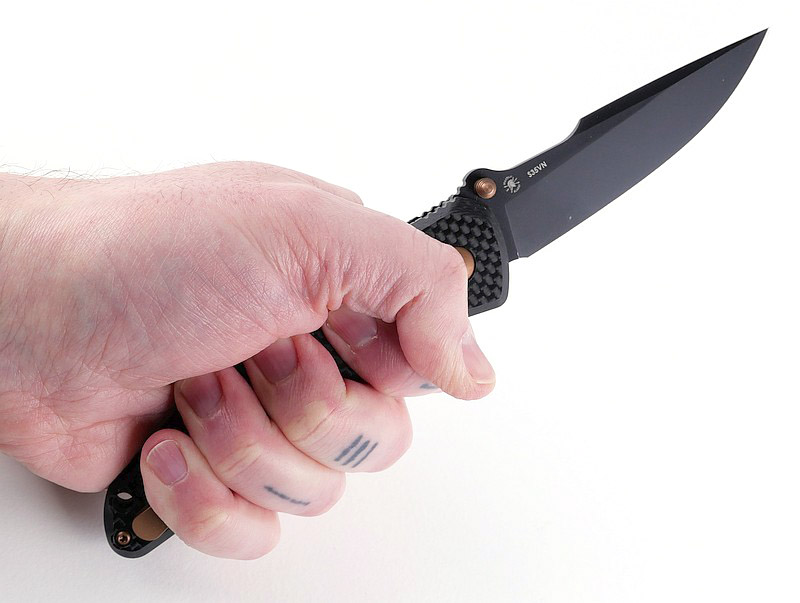
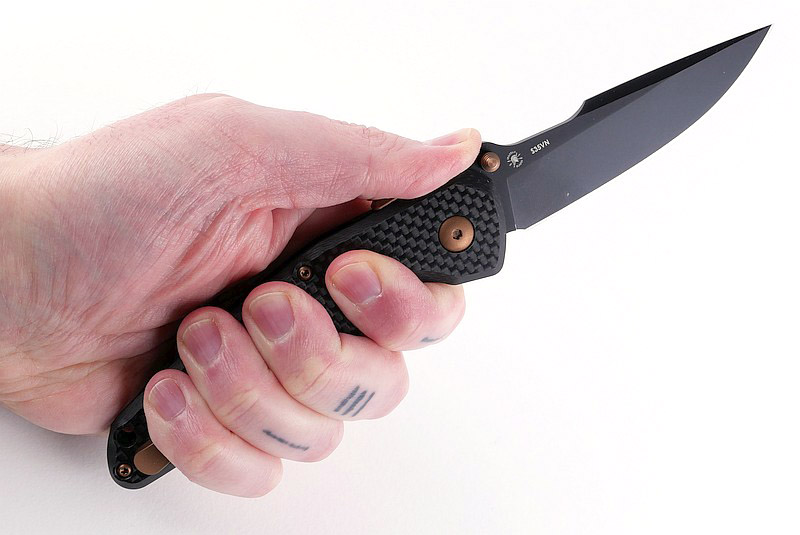
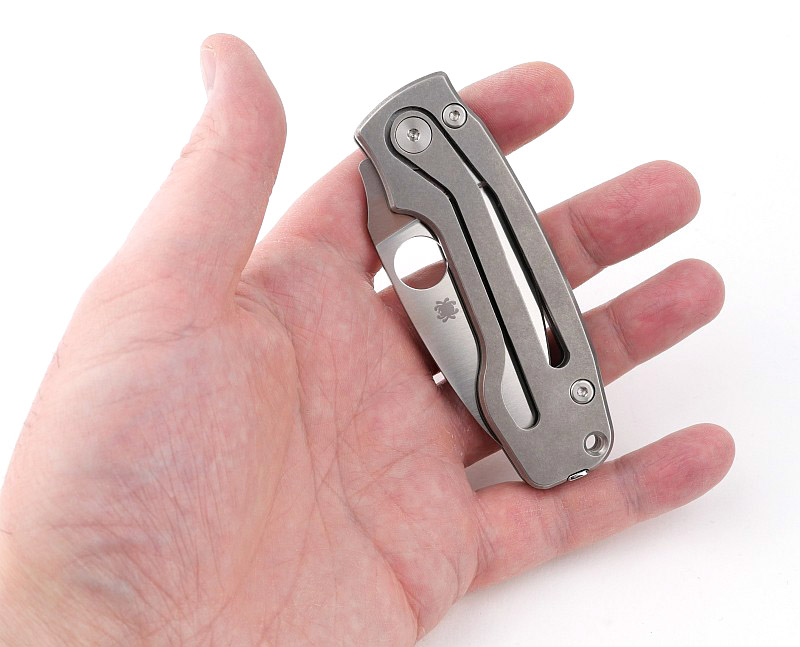
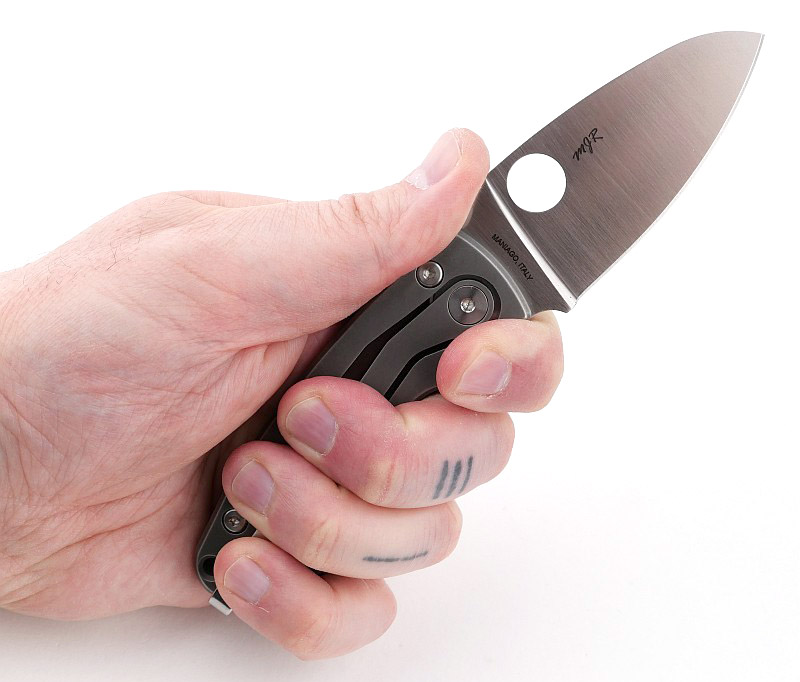
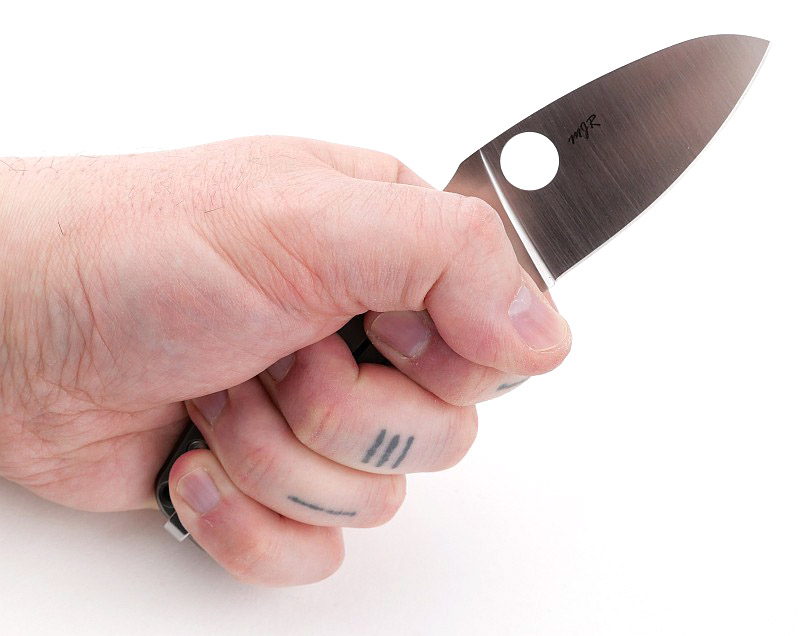
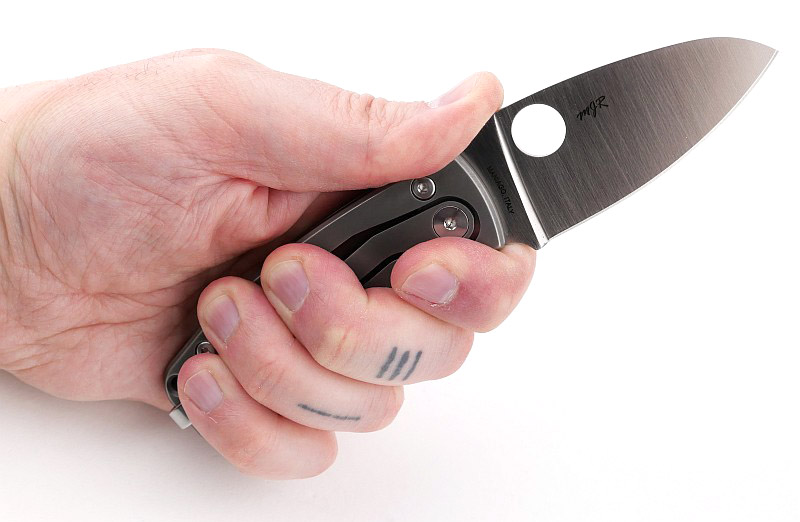
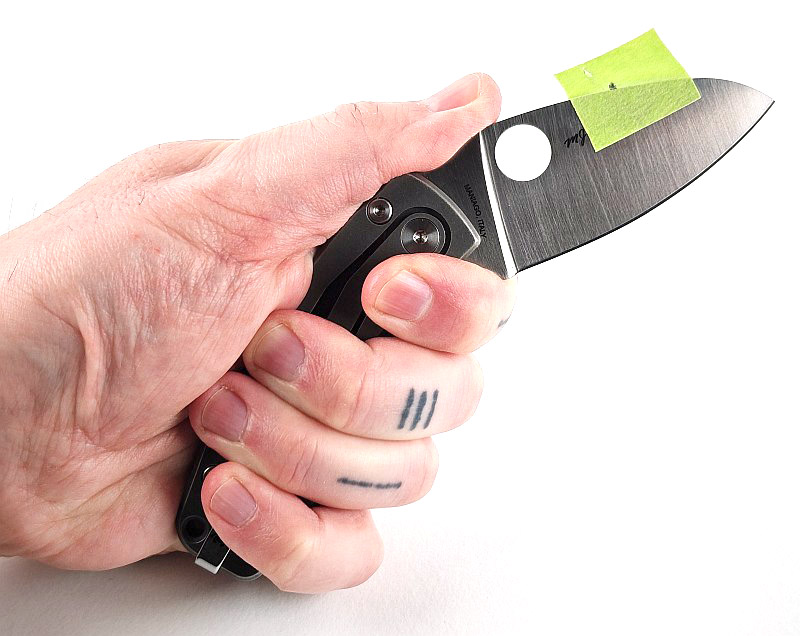
Shown here in my XL glove sized hands, the Mercury Luc is not an insignificant knife, but also not overly large. Easy to handle and comfortable to use for appropriate jobs (those not requiring heavy cuts), the Luc is extremely practical. When taking on slightly heavier cuts the spine is comfortable to press on with your thumb for that extra control and pressure.


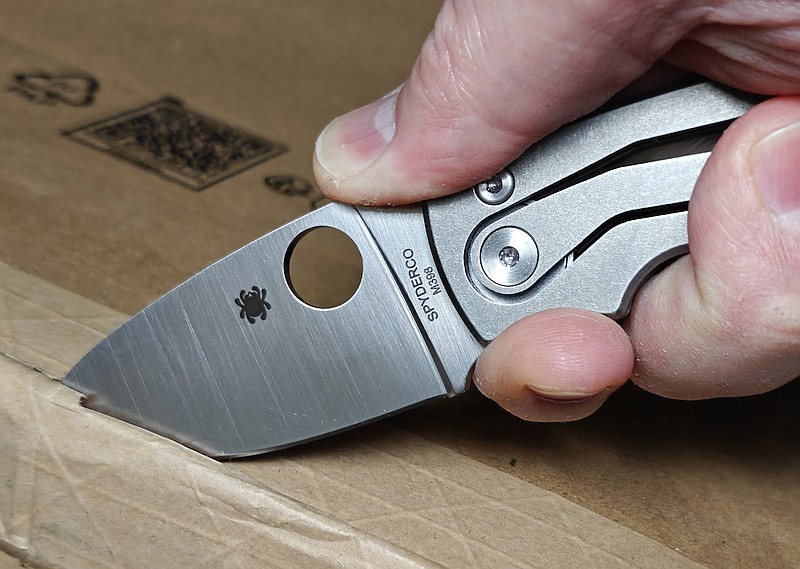
Modern urban life, and those directing how we live, seem intent on diminishing the importance of every day tools, but even the tear-open packaging is much better when cleanly cut open. Let’s make the pocket knife an even more common every day tool, and use it how it should be used, to give us back control and provide choice for how we shape our experience in life.

The Mercury Luc gives us a simple, reliable, tool that just does what you need of it; no more, no less.

Carrying both the G10 and micarta versions on me constantly, despite this only being a difference in handle insert, the experience is quite distinct. The G10 has a crisper, brighter look, not just as it is orange, but the G10 has a sharpness. Peeled G10 is very grippy, but also abrasive and this can be fatiguing. With the canvas micarta, this material feels softer (despite also being resin based), warmer and much less harsh to hold. Though not really natural, the micarta has a more natural feel, and like a natural material is more likely to change in appearance through use. Personal preference will dictate your choice.


Mercury Luc Review Summary

The views expressed in this summary table are from the point of view of the reviewer’s personal use. I am not a member of the armed forces and cannot comment on its use beyond a cutting tool or field/hunting knife.

Something that might be a ‘pro’ for one user can be a ‘con’ for another, so the comments are categorised based on my requirements. You should consider all points and if they could be beneficial to you.

_______________________________________________
What doesn’t work so well for me
_______________________________________________

The sharpening choil is too small to fully access the heel.
Peeled G10 can be a bit harsh and abrasive.

_______________________________________________
Things I like
_______________________________________________

Elmax steel provides excellent edge retention.
Firm backspring and open/close action.
Nail ‘nick’ slot gives really good grip.
Handle width is both comfortable and slim.
Reliable and strong phosphor-bronze washers.
Choice of G10, micarta, or plain handles.
Super accessible lanyard hole.
Clean, modern, clip-point blade design.

Mercury Luc Review Videos

Starting with a short format sixty second review:


Onto a full video review covering many more details:


Discussing the Review:
Something new – will it work? A Tactical Reviews Subreddit.
TacticalReviewsChat on Reddit
Please visit there and start/join the conversation.
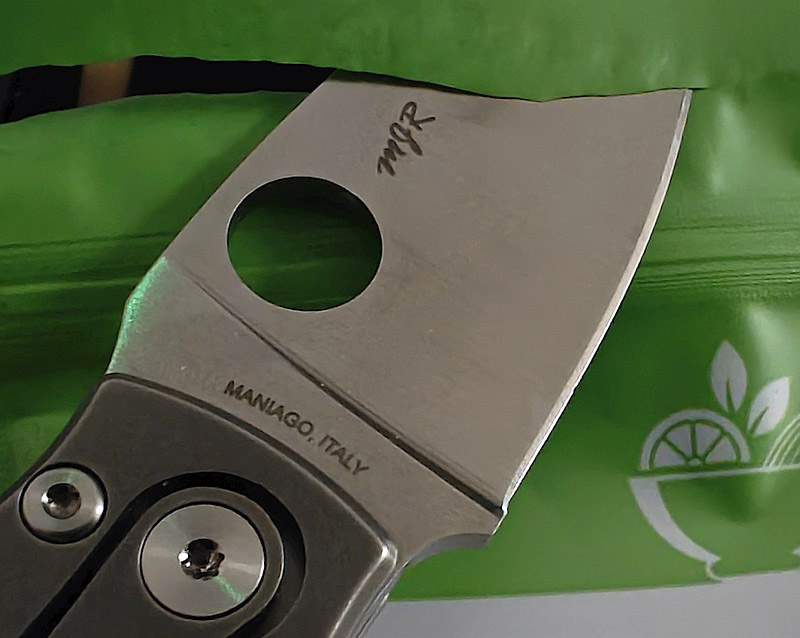
Knife Review: MKM Jaques Slipjoint

In this detailed review of the MKM (Maniago Knife Makers) Jaques – a modern slip joint Folding Knife – find out if it could be your ideal EDC companion.

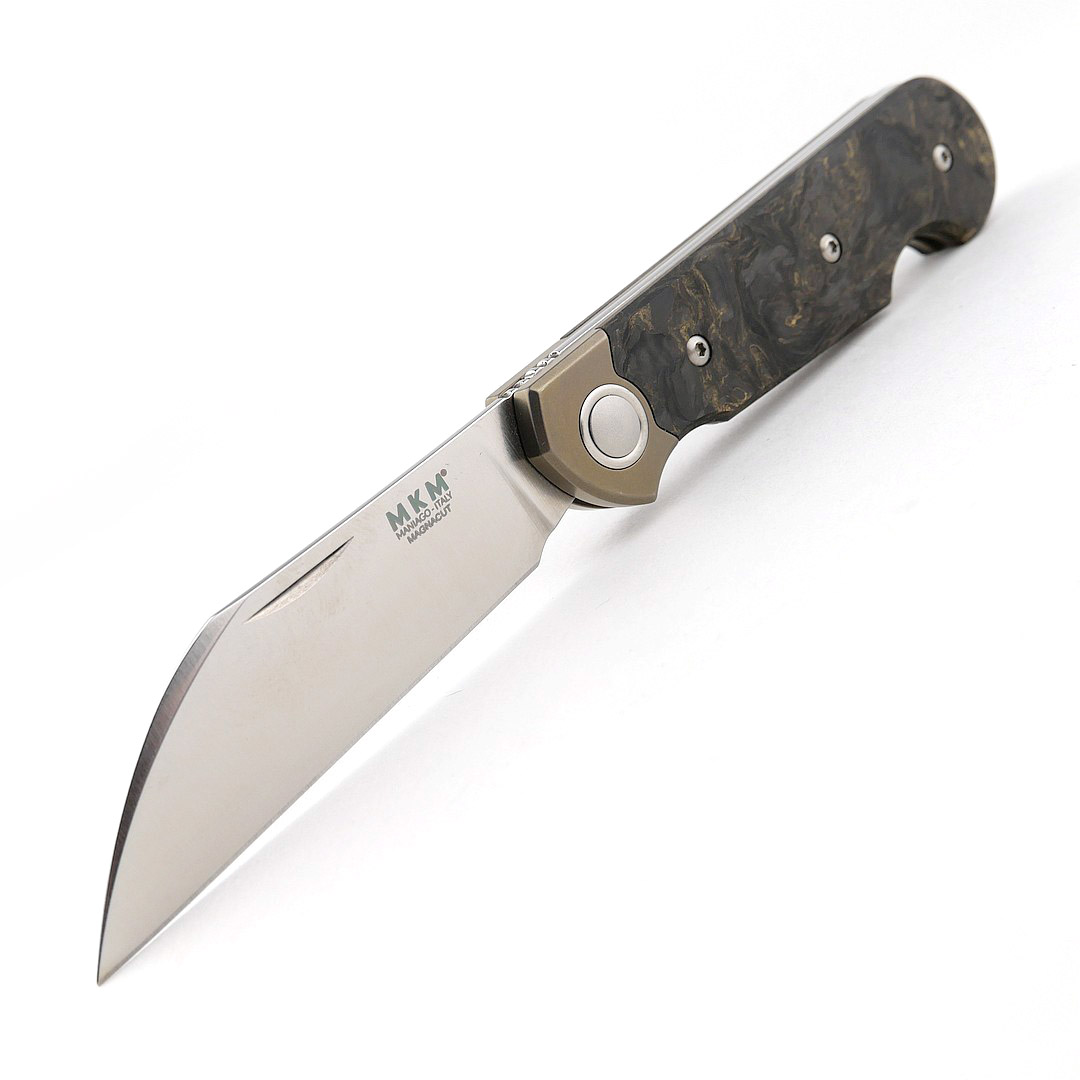
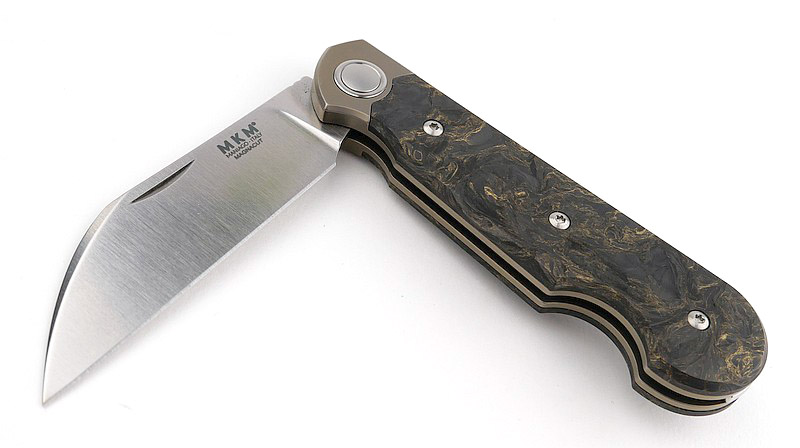
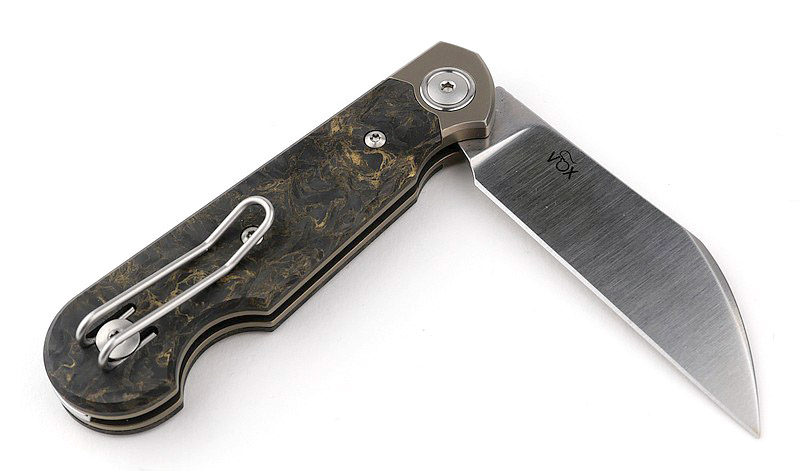
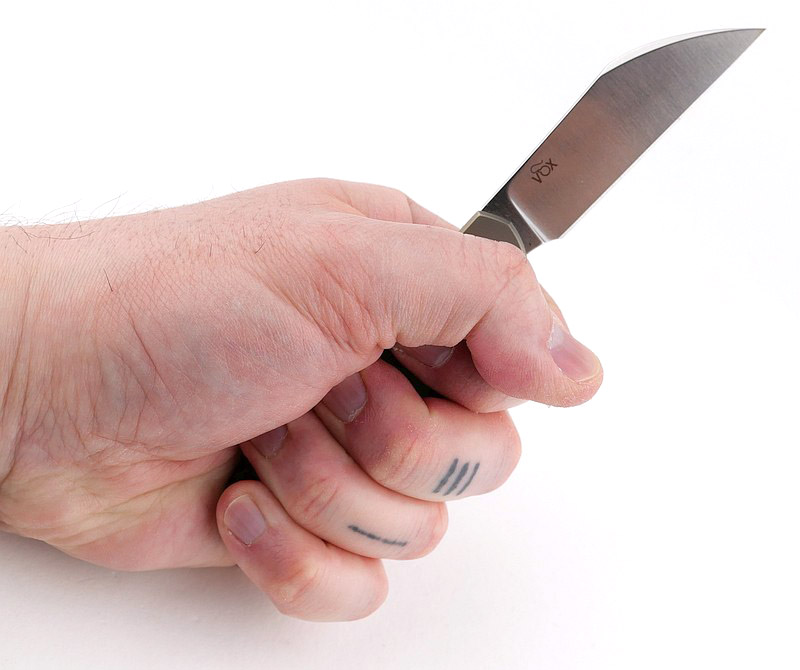
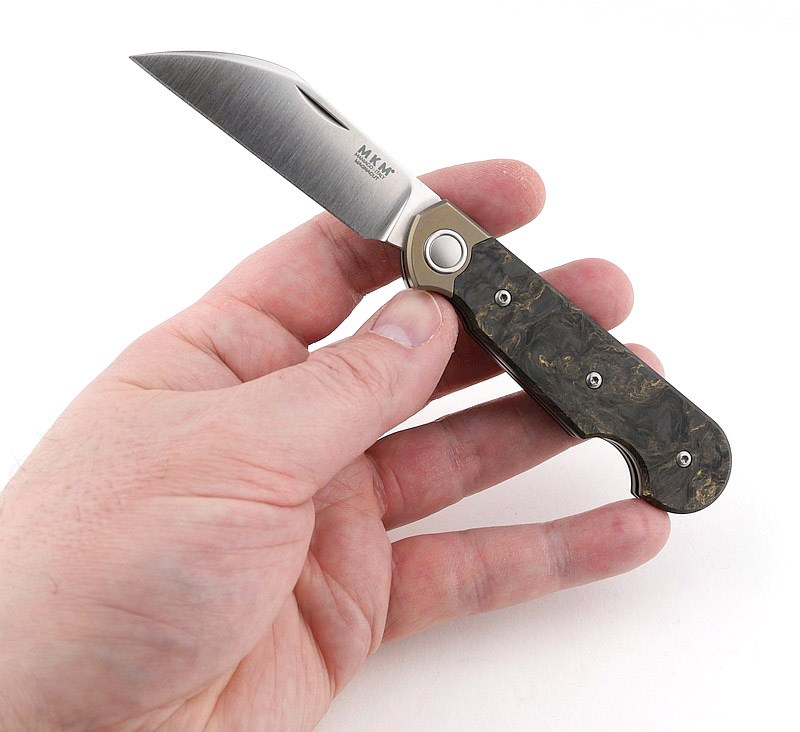
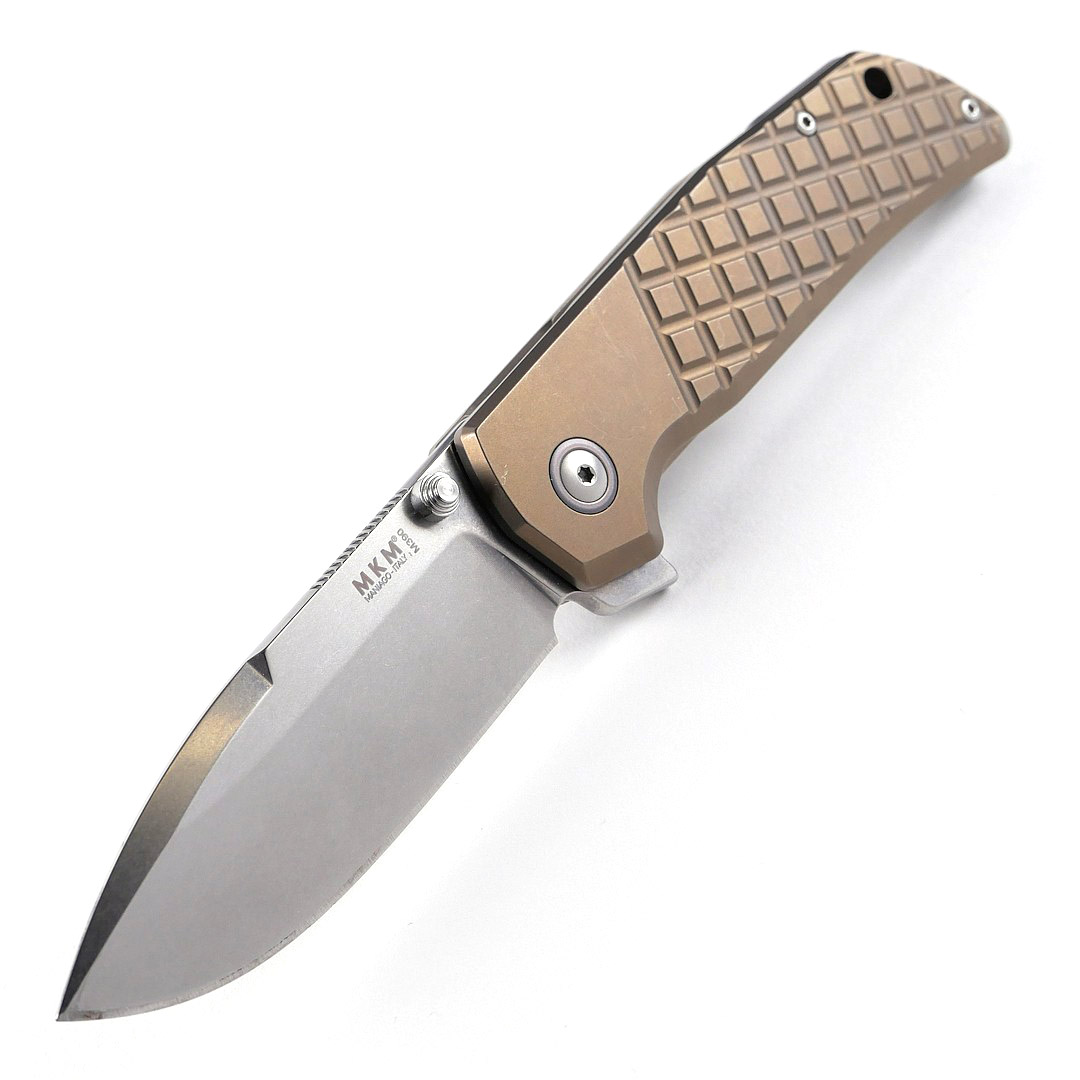
The MKM Jaques is a slip joint folding knife designed by Jesper Voxnaes. The Jaques has a satin finish CPM MagnaCut Wharncliffe blade, and the version in this review features Fat Carbon DARK MATTER BLACK handles.

“The Jaques design is my modern take on the folders I have seen used by European winegrowers in both Italy and France but mixed with details from some of my favourite American slip joint patterns. A nice sized utility folder, in high-end materials, with great feel in hand. A perfect for EDC for urban and outdoor settings.” Jesper

Read on in this MKM Jaques Review for all the details.

What’s in the box?:
For this section there is no box or packaging to include, as this specific knife was a ‘show knife’ at IWA Outdoor Classics 2025 (and possibly other exhibitions). It also means that in the following galleries, any imperfections will be due to the knife being handled by a lot of people during the trade fair.


A good look round the folded MKM Jaques – Things to look out for here are:
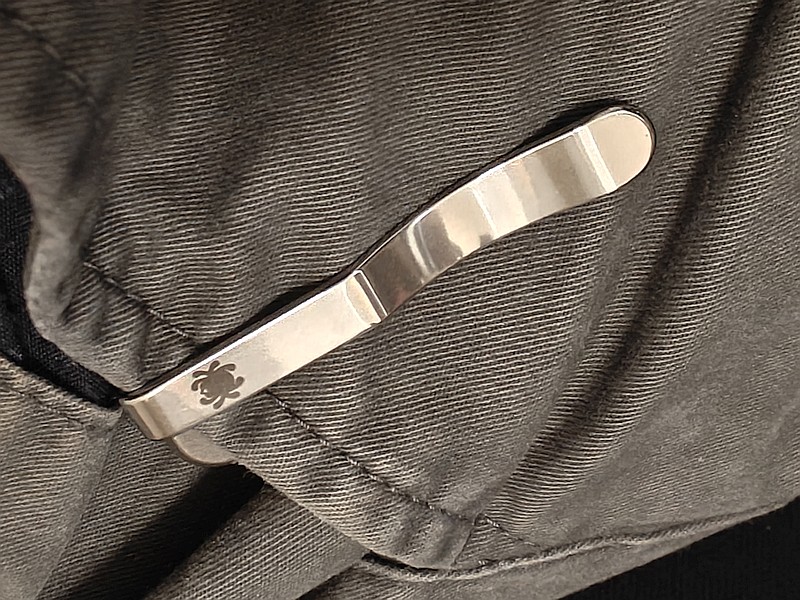
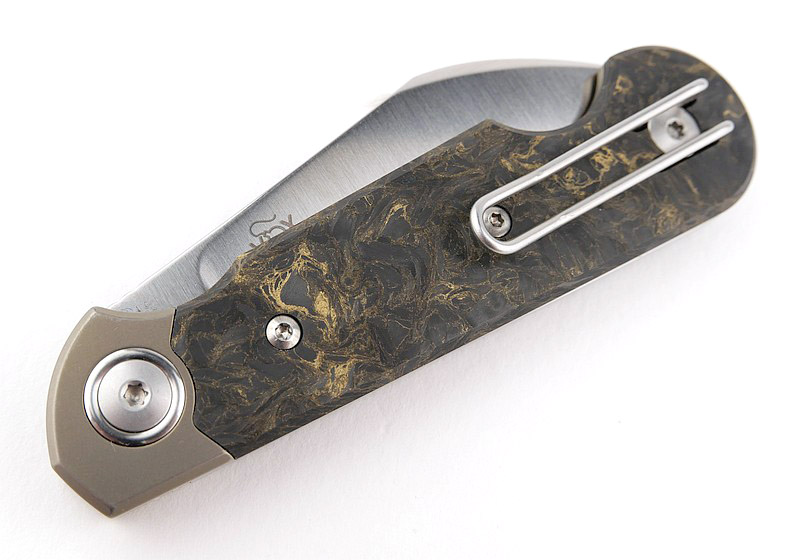
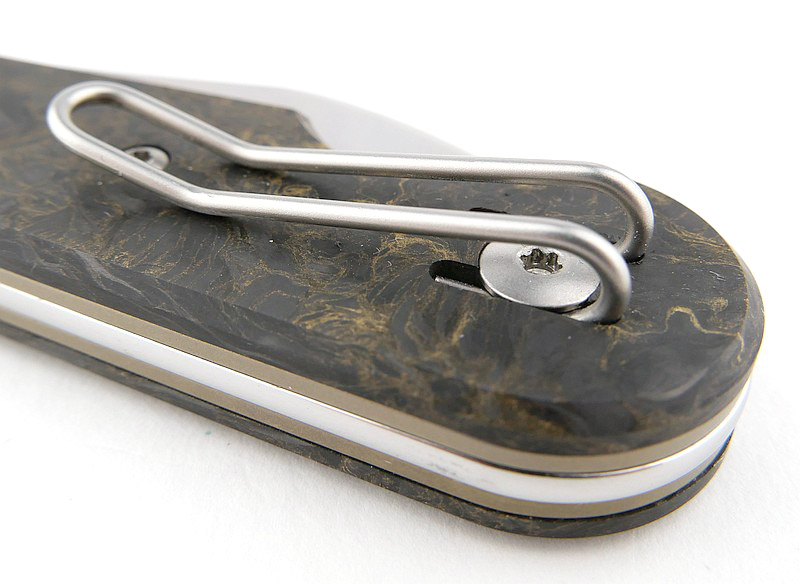
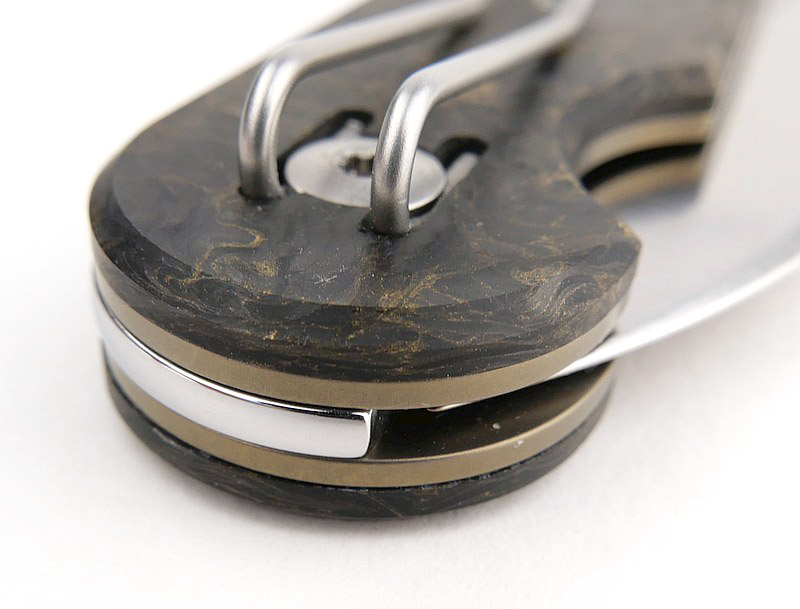
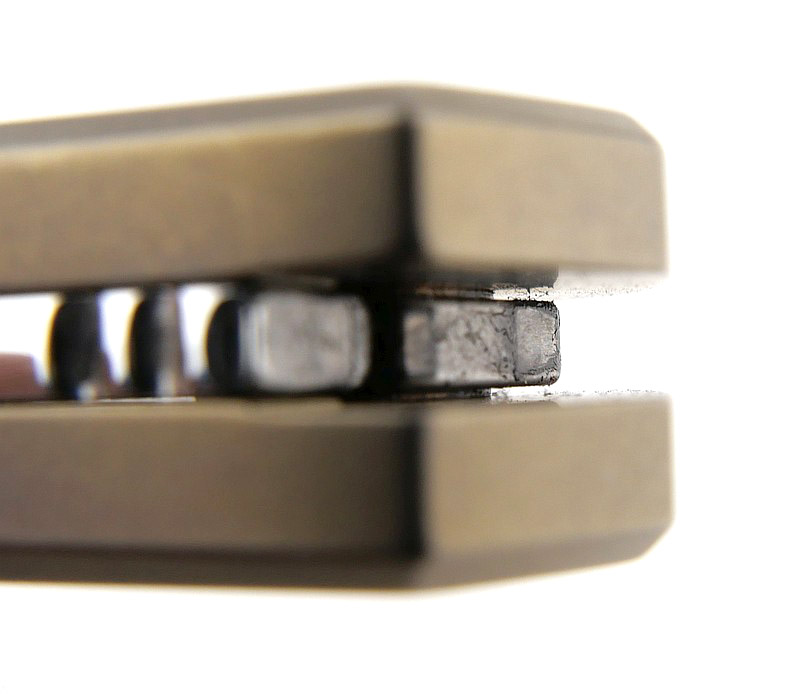
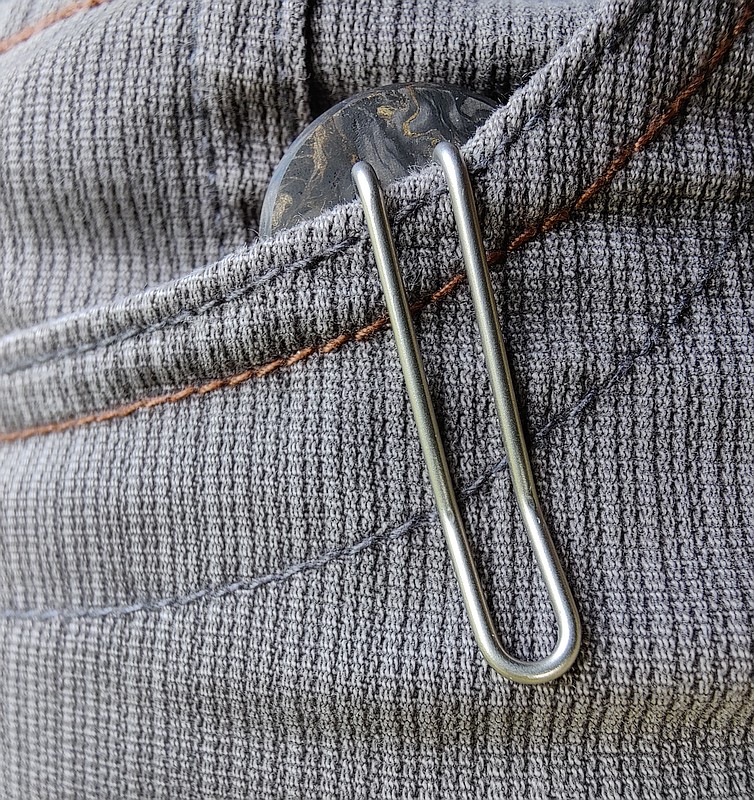
With this version, the DARK MATTER BLACK handles compliment the bronze titanium bolsters/liners perfectly. Each and every knife with this handle material is unique, and the handle scales are secured to the combined bolster and liner with three screws. A single position stainless steel wire pocket clip, can be removed if you prefer not to use it. Only one side of the pivot bolt has a torx screw head, with the other being blank. The back-spring spacer is beautifully polished giving the Jaques a very refined look. The pivot specification states ball bearings. No bearings can be seen when looking into the knife, so these covered bearings should be more dust resistant than when you can see the ball bearings themselves.


A good look round the open MKM Jaques – Things to look out for here are:
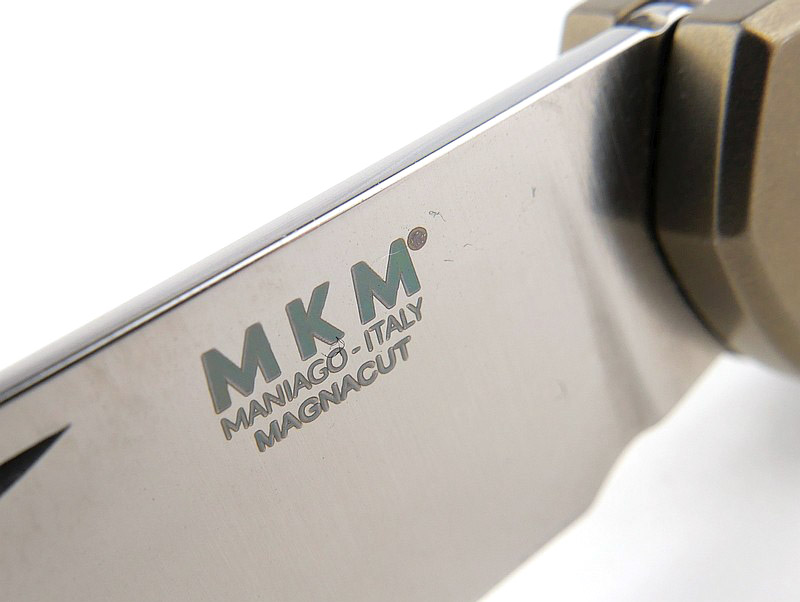
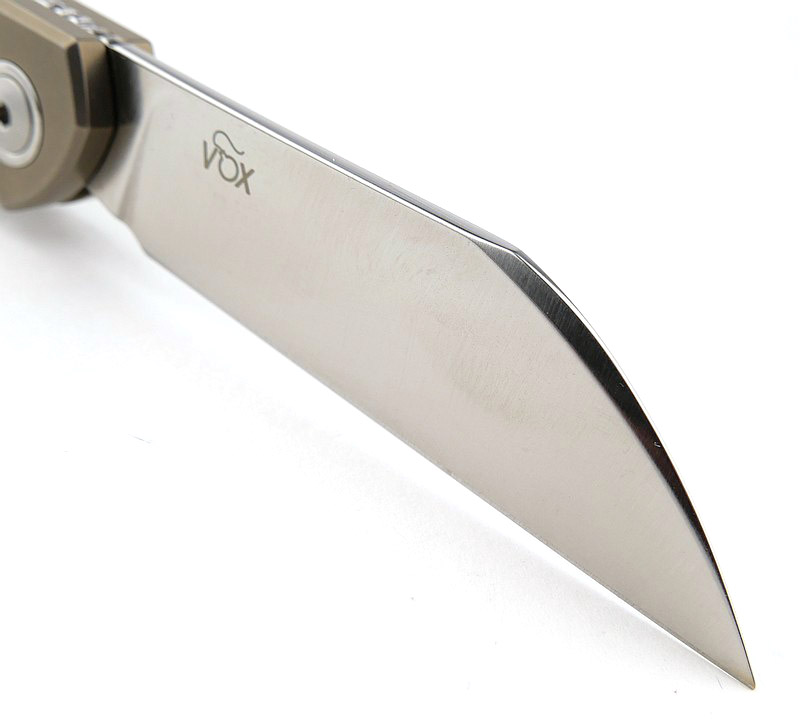
Snapping the Jaque’s blade initially out to the half-stop position, we get a good view of the wide Wharncliffe blade. With the blade open we can more clearly see the handle shaping with two finger grooves; first finger and third finger. It’s a powerful full-flat grind Wharncliffe blade with elegant swedge sweeping down to the point, which also has an inconspicuously incorporated nail nick. MKM’s logo sits above the engraving of the steel type; Magnacut. Though not strictly a sharpening choil, the heel of the cutting edge does stand proud of the tang, and just forward of the plunge line; this allows the entire cutting edge to be sharpened. On the opposite side of the blade, the designer’s (Jesper Voxnaes) logo is engraved and onto more views of the blade.
Thumb grip jimping has been included across the ‘H’, and you can also see the small clearance step cut around the pivot to ensure the blade rotates without contacting the liner. Looking inside the handle you can see the stop pin for the blade tang to rest on when folded.


The Blade and Handle – Detailed Measurements:
For full details of the tests and measurements carried out and an explanation of the results, see the page – Knife Technical Testing – How It’s Done.

The blade is made from Magnacut steel.

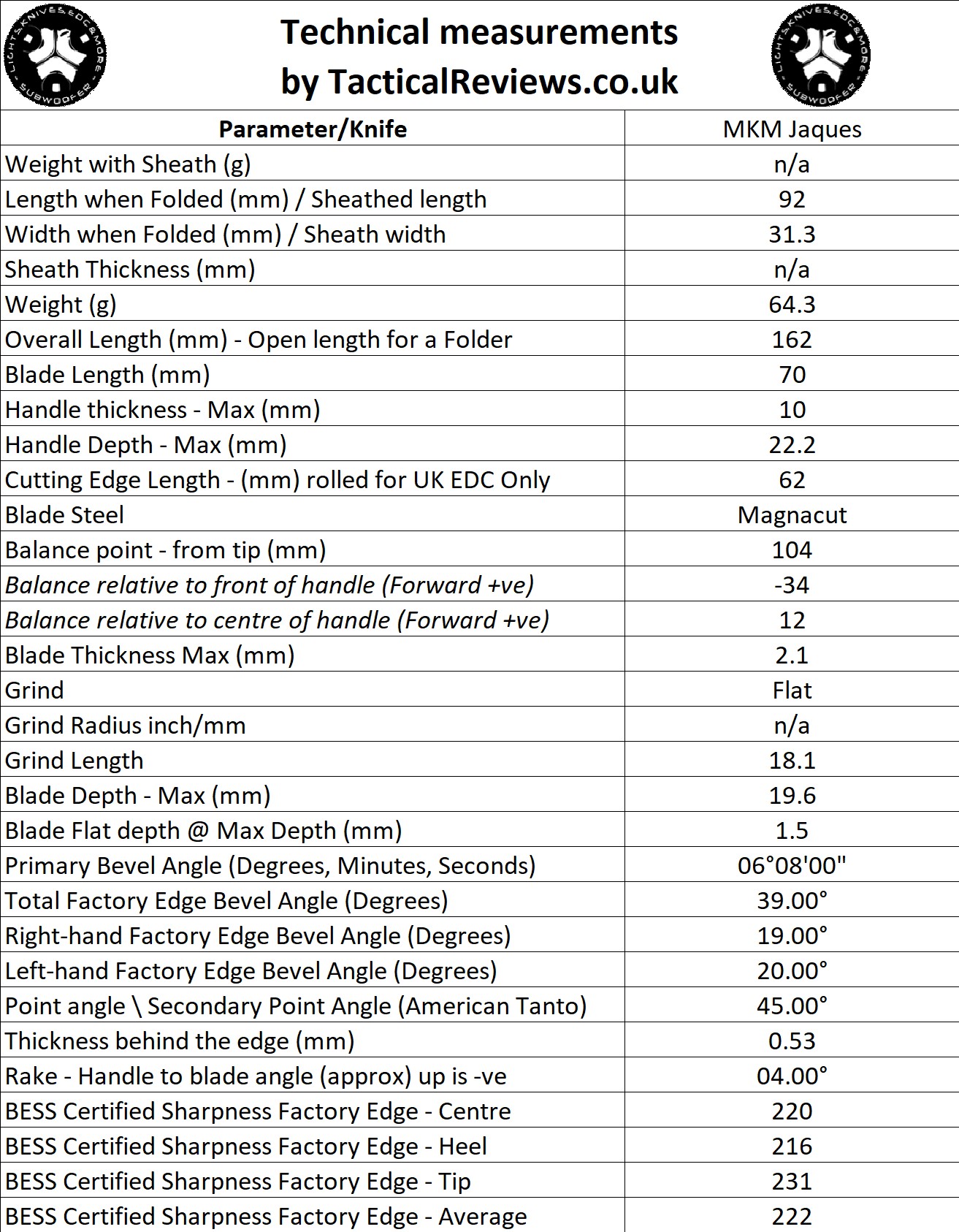
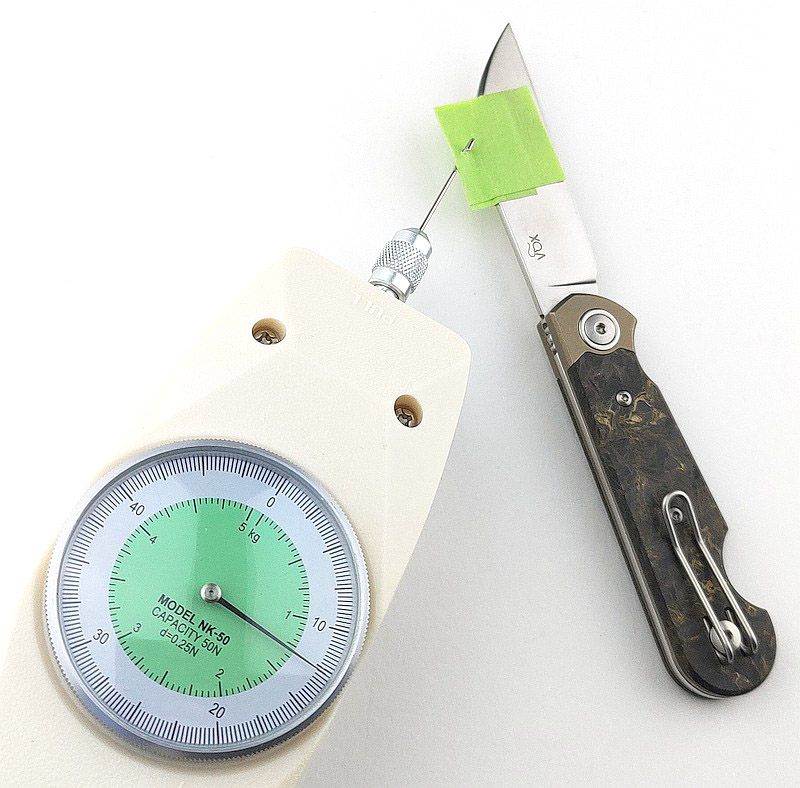
With the Jaques being a slip-joint folder, the resistance to closing (and related stiffness of opening) is an important factor, so for this I carry out Torque measurements for opening and closing. The detailed video for this knife includes a section explaining this in more detail.

And the torque measurements for the Jaques (for further reference values check the Technical Testing link):


The Factory edge up close:

Followers of Tactical Reviews will know my views on factory edges, but to recap:

Anyone using a knife will need to sharpen it. That first factory edge is just like the first tank of fuel that a new car comes with (or first charge of the battery).
A good factory edge is a ‘nice to have’ but not a ‘make or break’ for a good knife, as you will be putting your own edge onto it soon enough.
The factory edge does however indicate the care a knife maker has put into the final finish.
It is for this reason Tactical Reviews measures factory edge sharpness and specifications, and includes this information in the detailed technical testing.

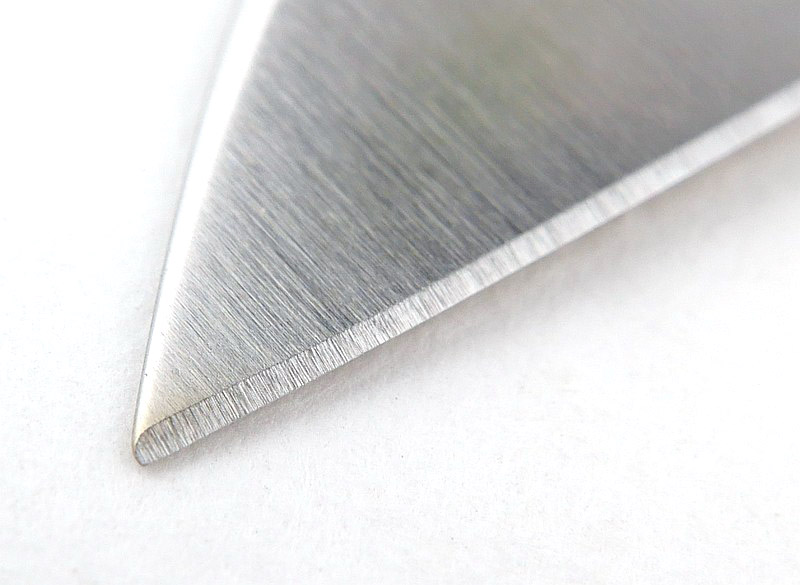
As a further look at the factory edge, this section has been added to include some high magnification photos of the factory edges.


What is it like to use?

The MKM Jaques immediately strikes you as both traditional and cutting edge design (pun intended), with a fusion of classic lines and styles with the very latest materials in a really easy to carry tool. Remember that ease of carry is what makes a tool the best one you have, as the fact you have it on you means it is the best tool for the job.
However, it is not only easy of carry, but that you choose to carry it, that is the final determining factor for being the best tool. For me, a Wharncliffe blade has always been one of the most practical choices, with the blade tip presented for immediate use, and the straight cutting edge easy to control, plus it is also easy to maintain the straight edge.
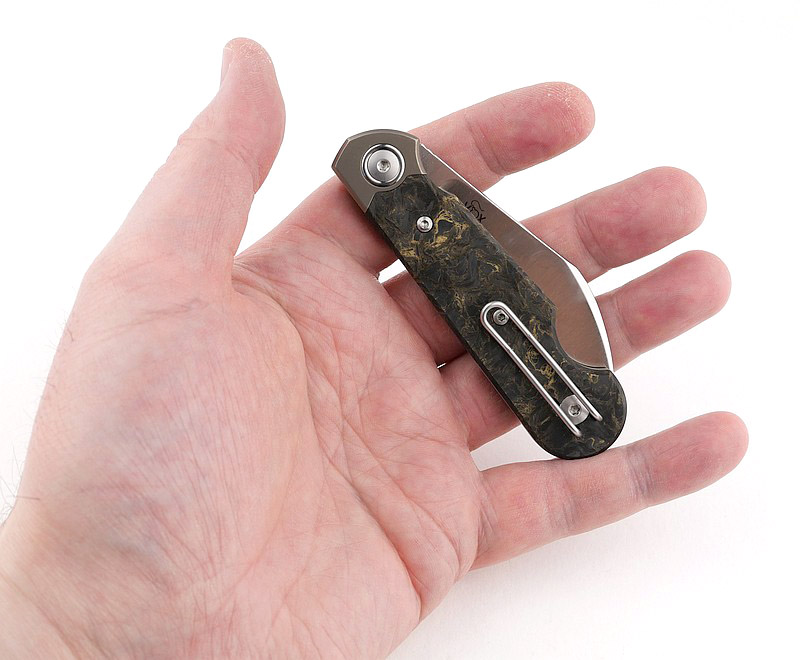
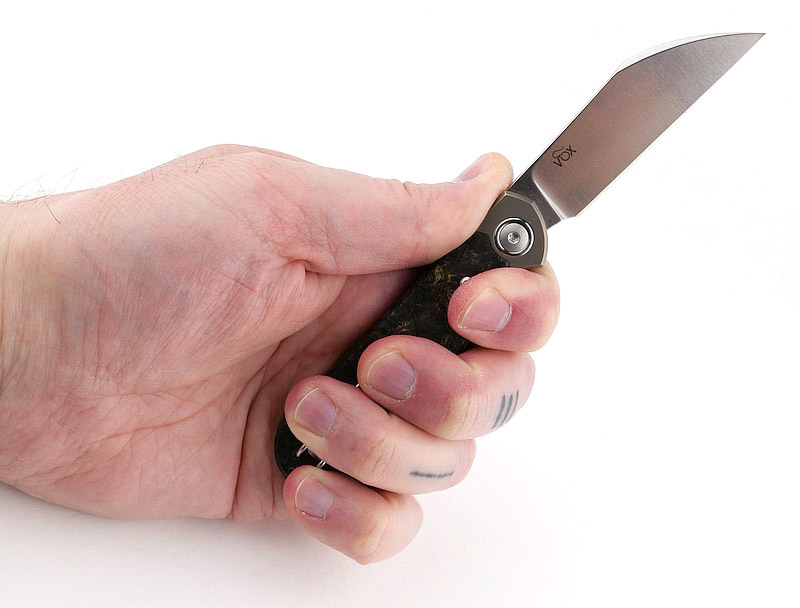
I take an XL size glove, and some pocket knives can feel too small in the hand; the Jaques does not. Compact, yes, but a very useful size. With the first and third finger grip grooves, it is very stable in your hand. Bearing in mind this is a slip-joint, so you are not going to be working it very hard, there is plenty of grip and plenty of blade.


I would prefer a slightly deeper carry clip so that only the clip is visible in your pocket and none of the handle, but the clip, as it is, is very neat. That would just be a slight change I would make if I could.

The action is nicely crisp, with a good resistance to closing (as proven by the torque measurements). In a slip-joint, I remain unconvinced about the benefits of using ball bearings; this is a personal view relating to the fact there is significant slip-joint back-spring pressure, and considering that over the full lifetime of the knife solid washers would removing the possibility of dirt/grit affecting ball bearings. However, it is very smooth in action, even with the spring resistance making that action very firm, so whatever my personal preferences may be, the blade action is very slick and pleasing.

Looking back at this gallery, I realise that all the jobs I have been using the Jaques for have been those smaller, make a cut – fold and stow, type of jobs and I wasn’t getting a camera out to capture it. Round the garden, at the post office, DIY, at work, all those jobs you use the knife you have on you to do. All done with ease and comfort, while appreciating the fit, finish, action and really effective blade. I’ve only once substituted the Jaques for one job where I preferred to use a disposable utility knife for – no point in knowingly damaging a quality knife for the sake of it.

As I write I also realise the edge has not needed any touch up, even considering this was the original edge that has been to big exhibitions and been used, dropped, handled so many times, yet it is still going strong.

Sadly these days, a knife’s looks are also important for the wrong reasons. What I mean by this is that some knives look ‘dangerous’ (in the words of others), but the Jaques has a gentle, traditional, look and feel which has been well received universally. In fact, it has been often complimented by people that might otherwise be critical of a knife. This allows you to feel more relaxed using the knife when others might see. A rare thing to really be able to enjoy using a knife wherever you are (at least in the UK).


MKM Jaques Review Summary

The views expressed in this summary table are from the point of view of the reviewer’s personal use. I am not a member of the armed forces and cannot comment on its use beyond a cutting tool or field/hunting knife.

Something that might be a ‘pro’ for one user can be a ‘con’ for another, so the comments are categorised based on my requirements. You should consider all points and if they could be beneficial to you.

_______________________________________________
What doesn’t work so well for me
_______________________________________________

Pocket clip could be ‘deeper carry’.
Are ball bearings necessary for the pivot?

_______________________________________________
Things I like
_______________________________________________

Magnacut, Titanium and Carbon Fibre construction.
Traditional design styling.
Wide full-flat Wharncliffe blade.
Firm slip-joint action.
Integral bolster and liner.
Polished back spring detail.
Compact and easy to carry.
Excellent grip with first and third finger grooves.
Easy pinch-grip opening.

MKM Jaques Review Videos

Starting with a short format sixty second review:


Onto a full video review covering many more details:


Discussing the MKM Jaques Review:
Something new – will it work? A Tactical Reviews Subreddit.
TacticalReviewsChat on Reddit
Please visit there and start/join the conversation.

Knife Review: ANV A100 Ultem

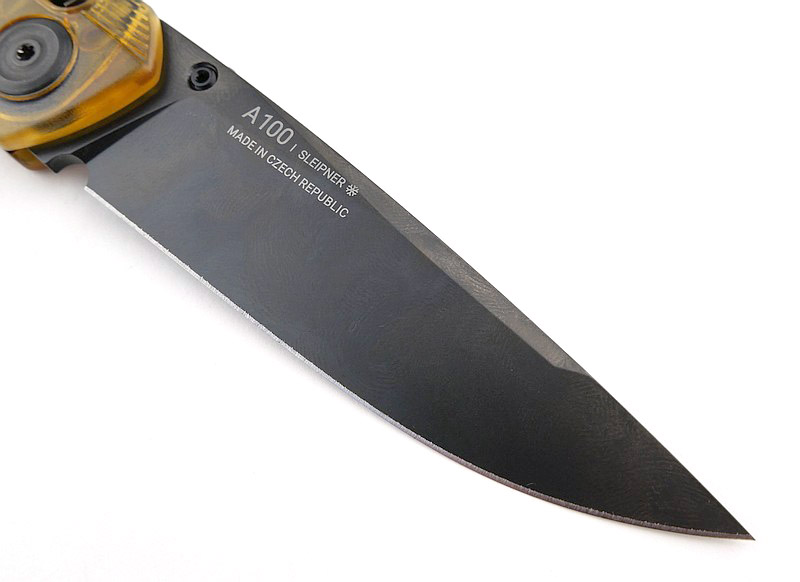
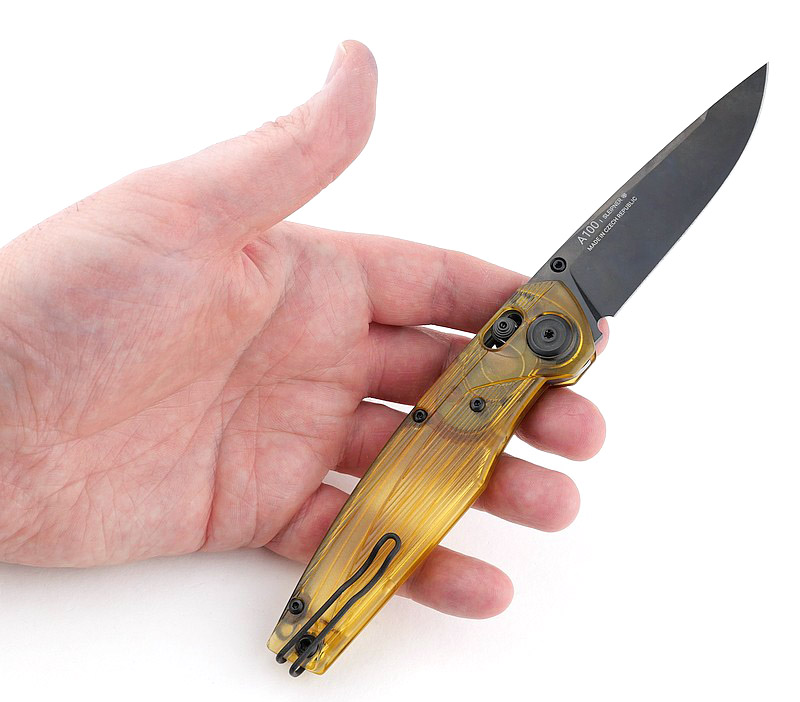
In this detailed review of the ANV – ACTA NON VERBA Knives A100 Folding Knife, find out if this could be the perfect size for everyday tasks? Read on in this ANV A100 Ultem Review to see. The version of the A100 featured in this detailed review has Natural Ultem for the handles and a DLC coated Sleipner blade.

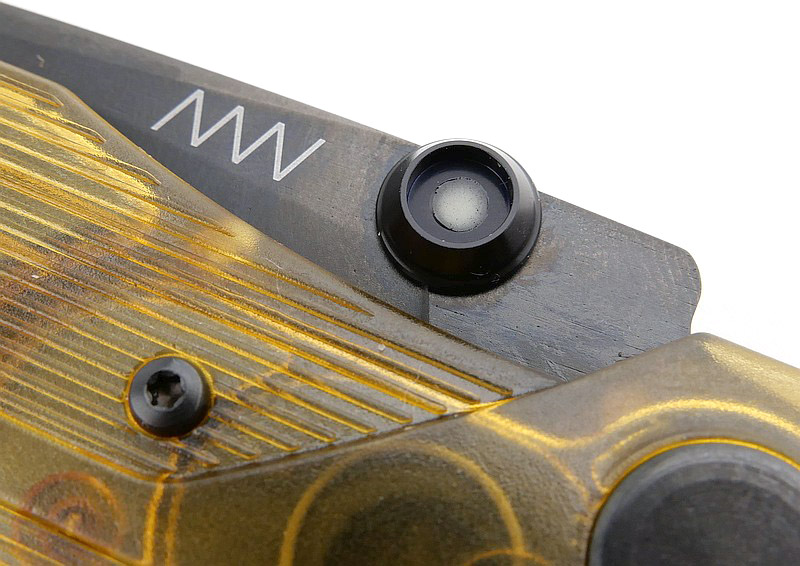
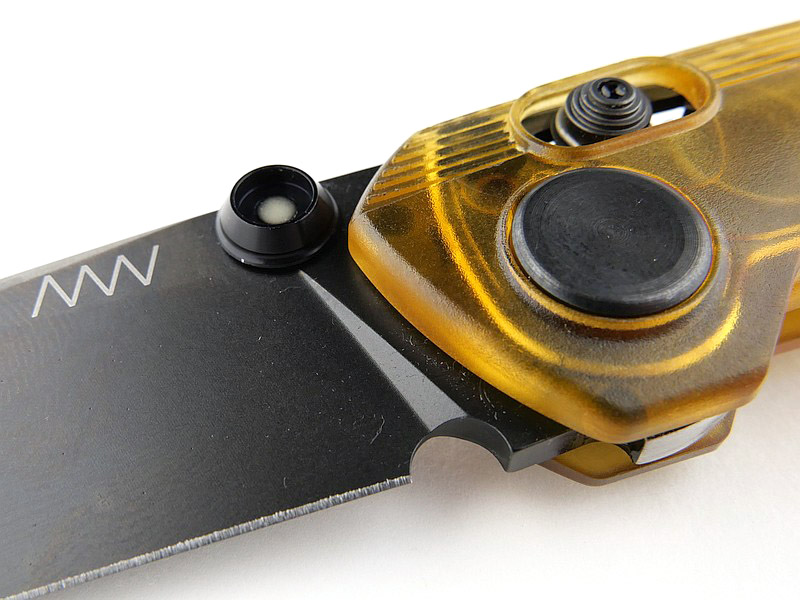
The ANV A100 has a sleek modern design and is made from the latest materials. The single sided (you choose the side to suit your handedness) thumb stud features a glowing Superluminova dot, as used in luxury watch faces.

The handle used for this A100 is made from Natural Ultem (polyetherimide) which is a semi-transparent high strength plastic material that can operate in high service temperature environments with excellent chemical resistance. It also has outstanding electrical properties, with one of the highest dielectric strengths of any thermoplastic material. Best known for its use in the aircraft industry, it has also been a popular material choice in the knife world.

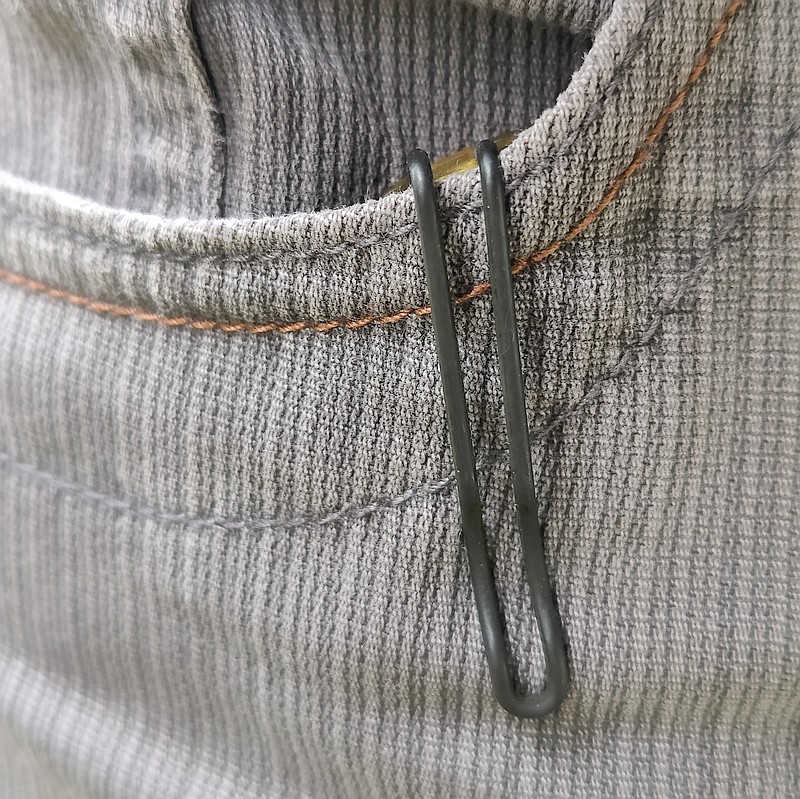
ANV specify the A100 as using A-lock, more commonly known as an Axis Lock, and the A100 has an ambidextrous deep-carry wire pocket clip.

What’s in the box?:
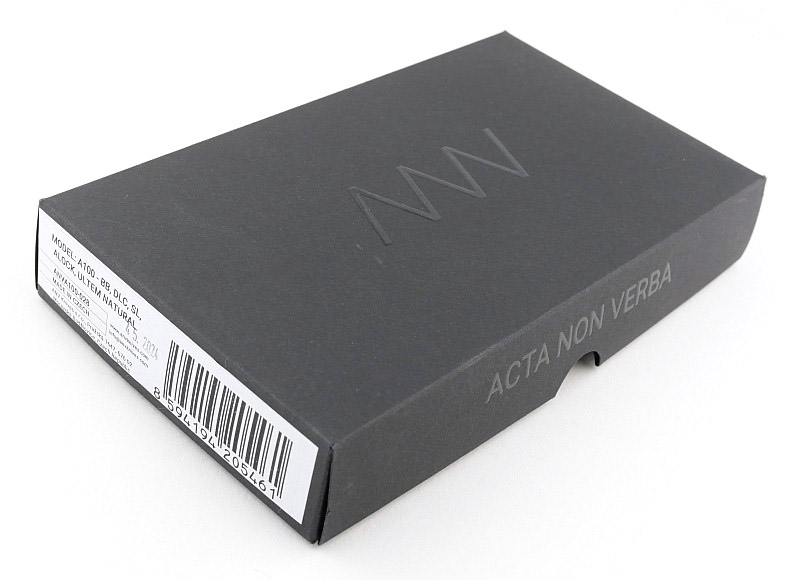
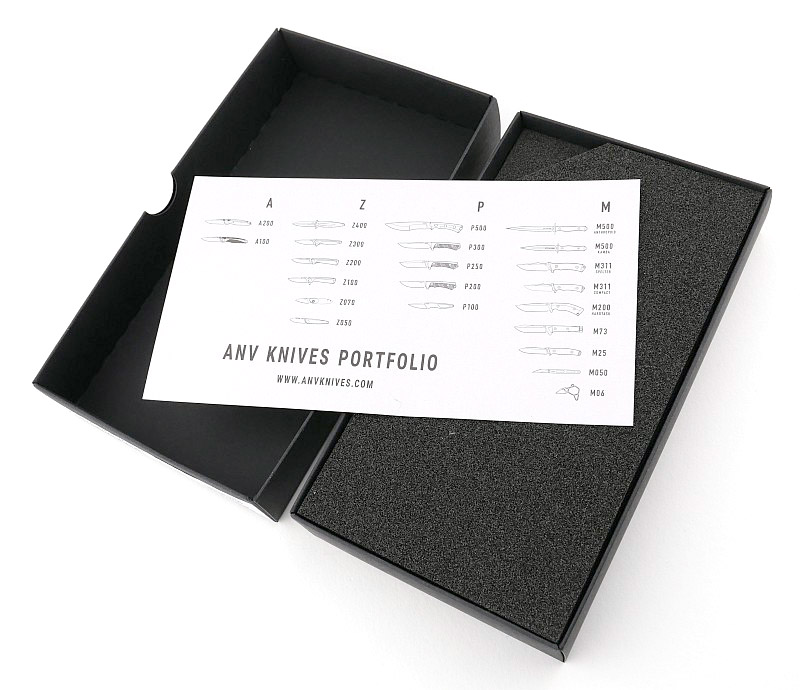
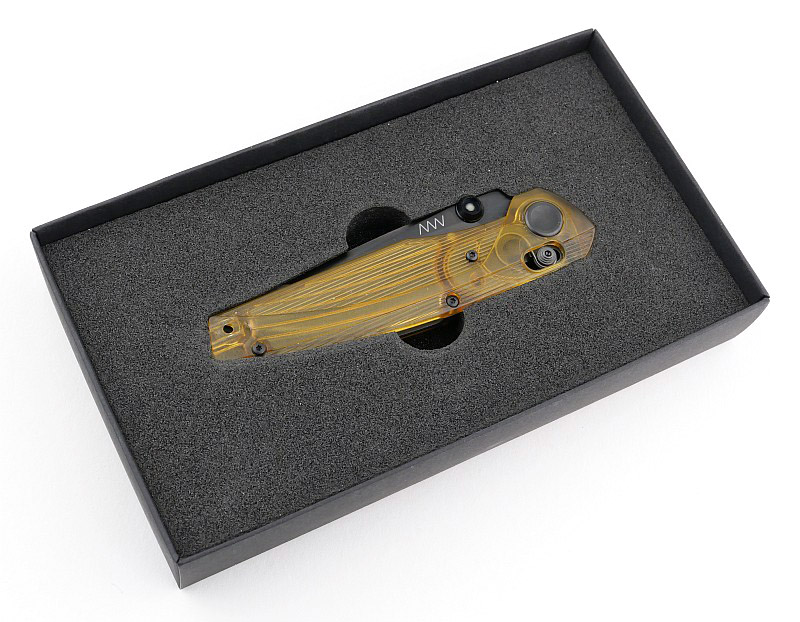
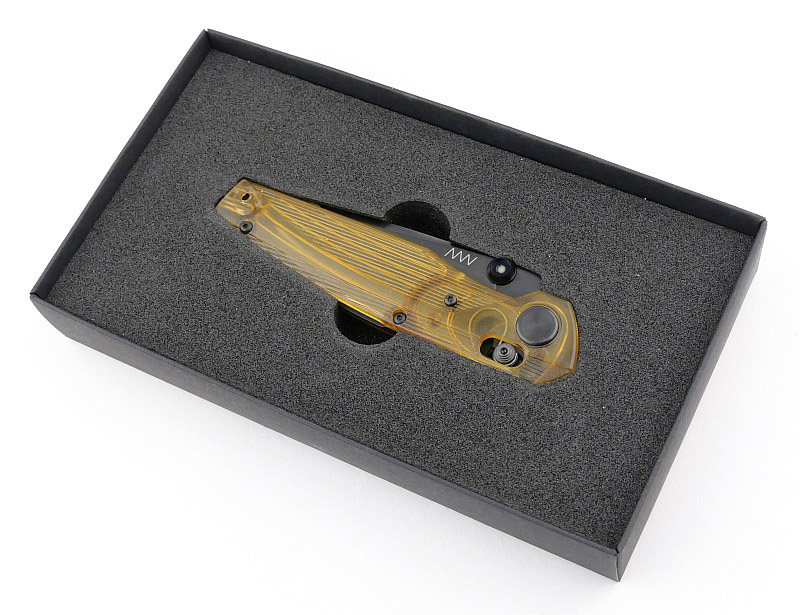
The typical ANV presentation for a folder is a black cardboard box with precision cut foam liner perfectly securing the knife in place. Also included is an information card.


A good look round the folded A100 – Things to look out for here are:
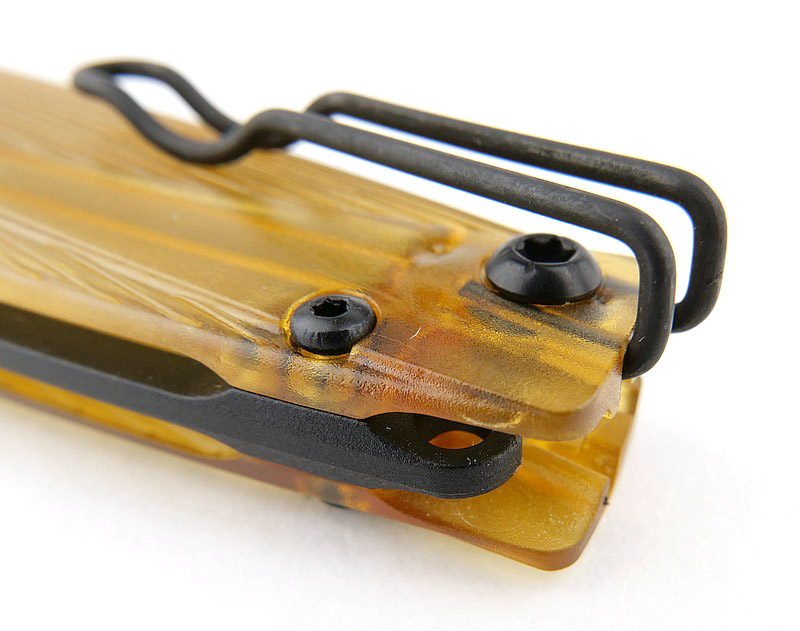
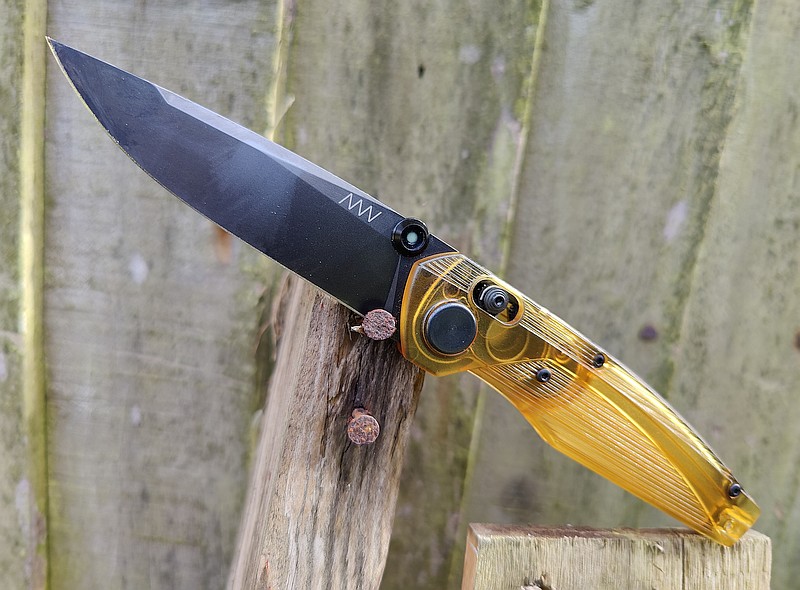
And now onto a large gallery looking round the knife in the folded state. At first glance the apparent colour choice may seem unusual with its yellowy-orange colour, but remember this is a feature of Ultem in its Natural, or uncoloured, state. The A100 has other handle choices including dyed Ultem and a range of colours in GRN (depending on availability). The fact it is Ultem is to be celebrated.
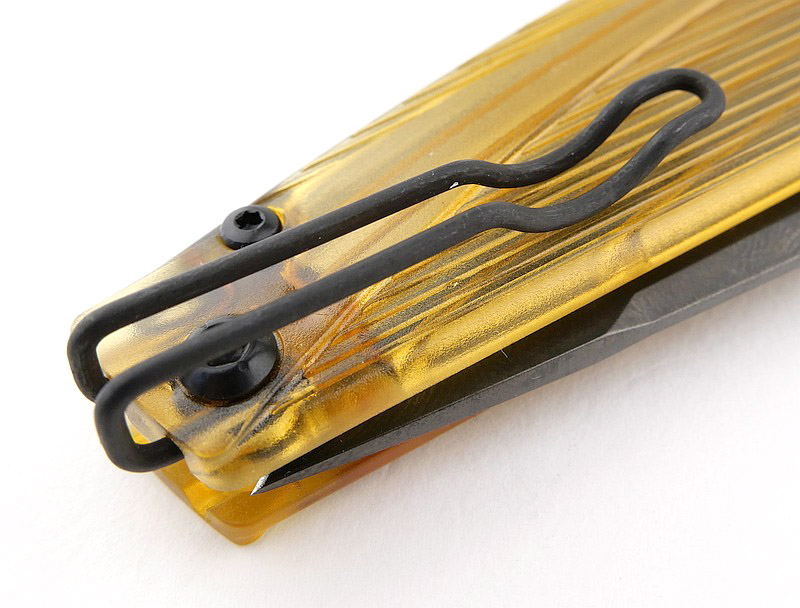
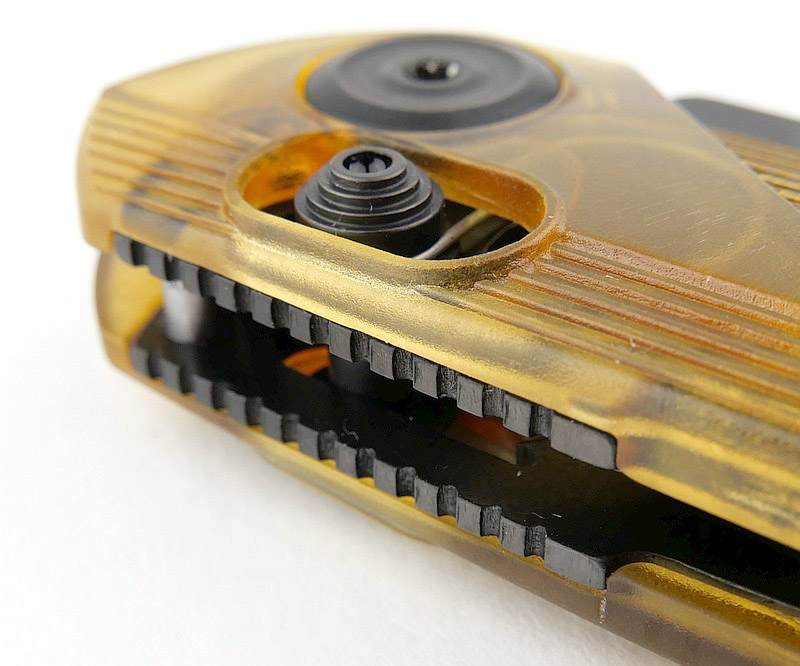
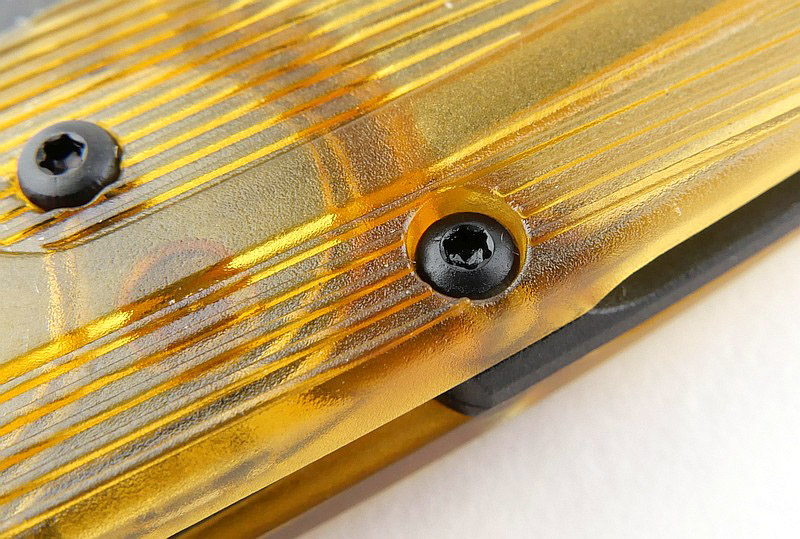
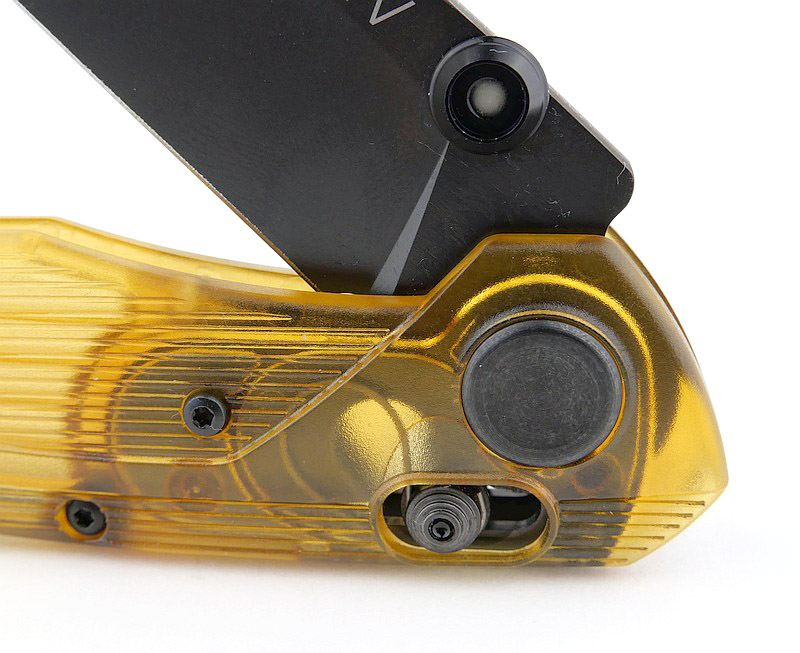
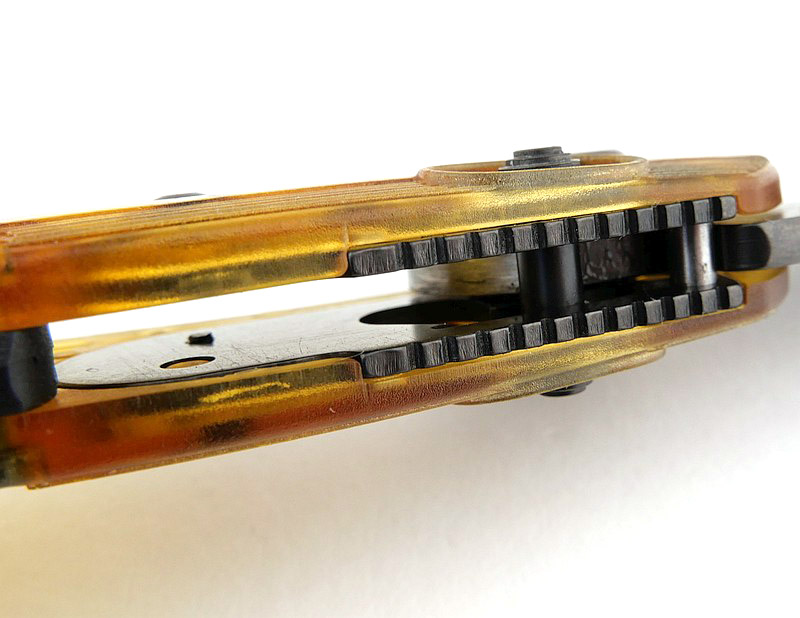
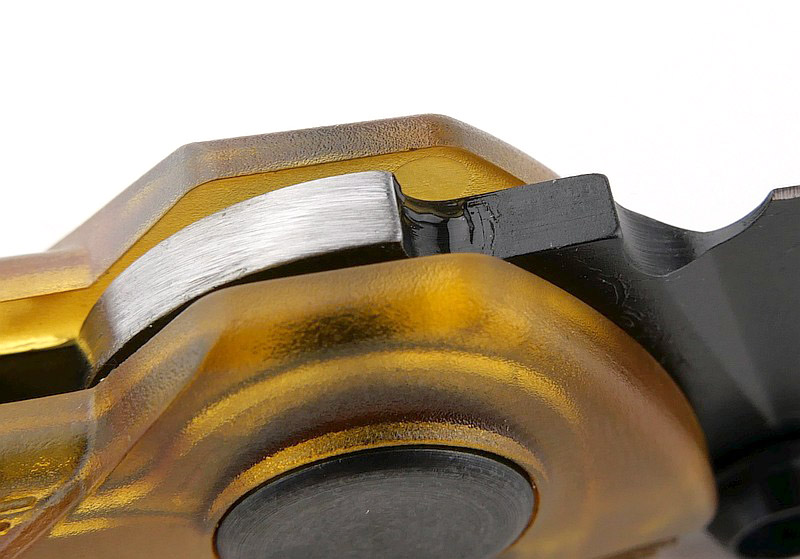
The transparent natural Ultem also makes it easy to see what is going on inside. A deep carry wire pocket clip can be fitted to either side of the handle. As strong as Ultem is, the A100 uses small steel inserts for the a-lock and bearings, and the exposed edge of the liner has thumb-grip jimping. The pivot bolt is one sided, and is in fact secured with blue loctite. The handles are attached to a GRN back spacer with small screws.
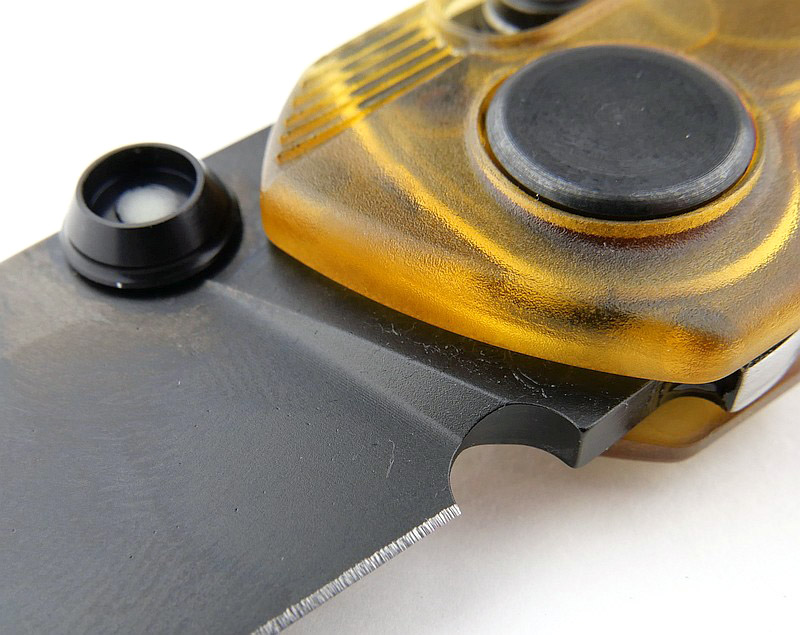
For the A100, a single-sided thumb stud is used. This is an interesting design where the stud and treaded post are one piece, and it is not a screw going through the blade and into the stud. When removing it to swap sides, remember you actually screw it in with a T6 bit to remove it and then tighten it by unscrewing what appears to be the ‘screw head’.

Back to the gallery after the little thumb-stud aside…the floating GRN back spacer covers the entire length of the handle where the cutting edge might be seen.
Looking between the jimped steel liners the lock bar and stop pin can also be seen.


A good look round the open A100 – Things to look out for here are:
Swinging out the distinctive ANV blade allows us to further appreciate the clear natural Ultem handles by watching the lock mechanism’s function, and with the dark blade out of the handle the Ultem really lights up.
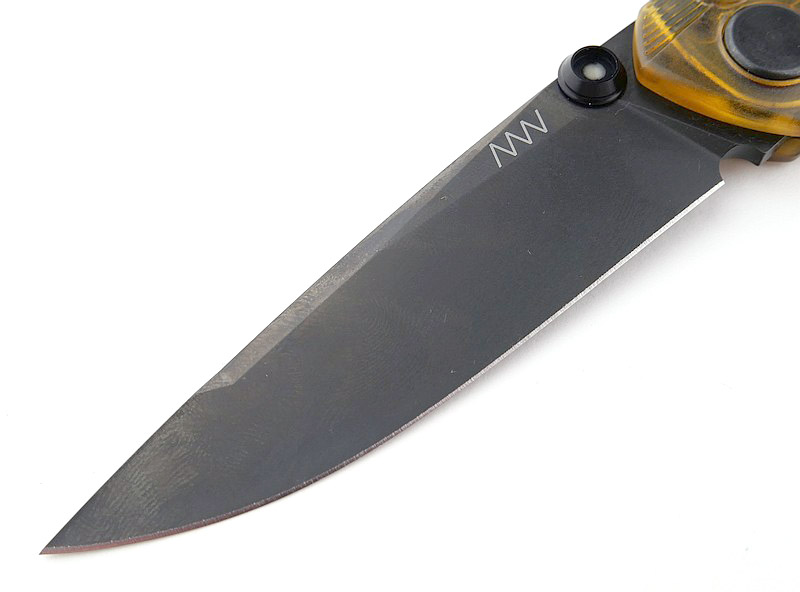
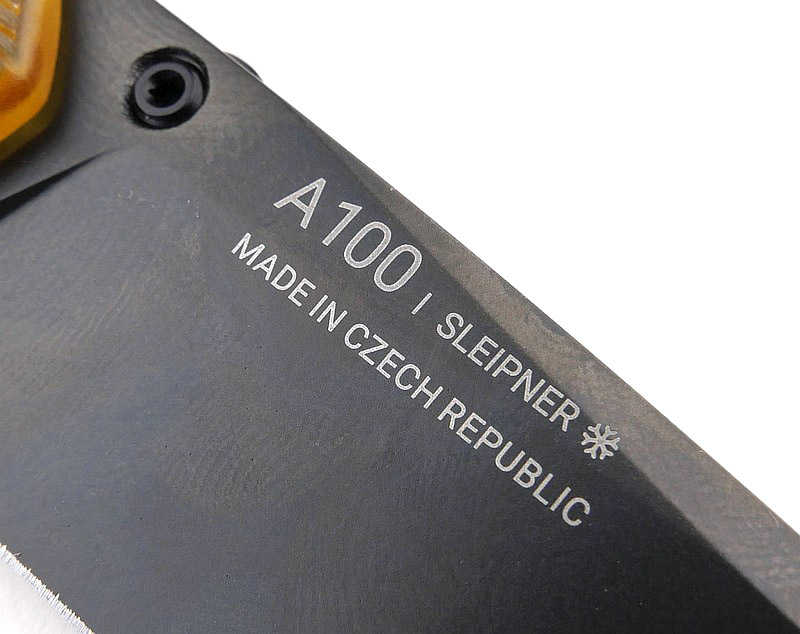
There is no mistaking the ANV blade shape, and the Sleipner steel used in this version has a DLC coating to protect the steel.
Going in close to show the plunge line and sharpening choil details, and with the blade open the size of the steel liners is easier to see.


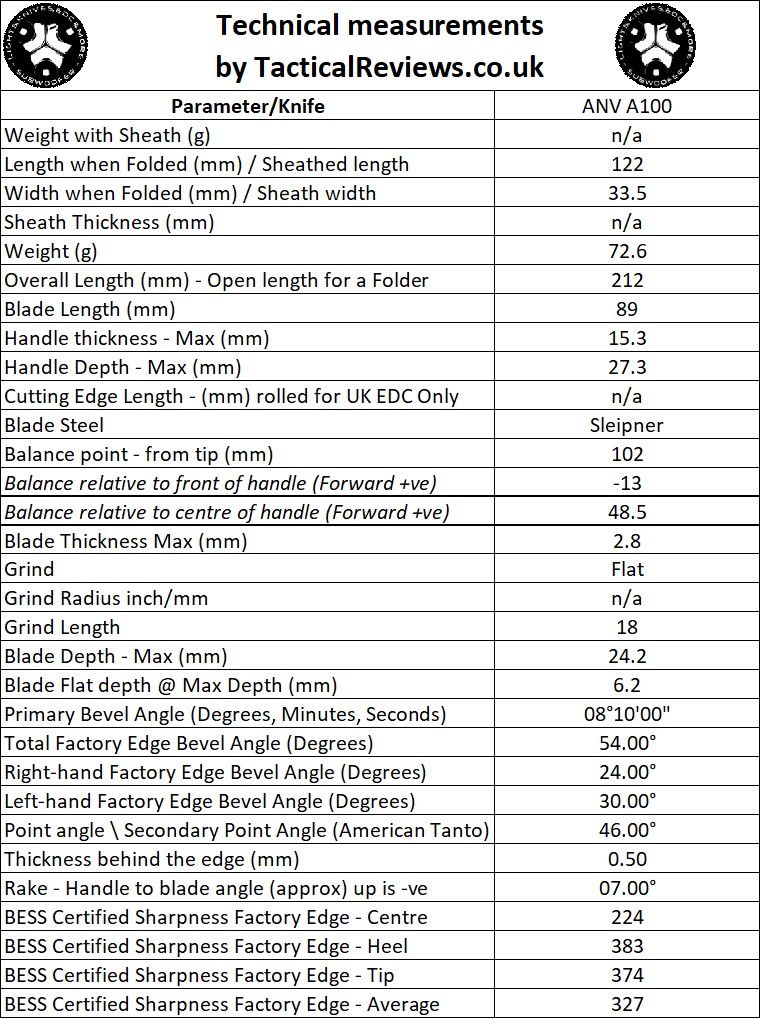
The Blade and Handle – Detailed Measurements:
For full details of the tests and measurements carried out and an explanation of the results, see the page – Knife Technical Testing – How It’s Done.

The blade is made from Sleipner steel.


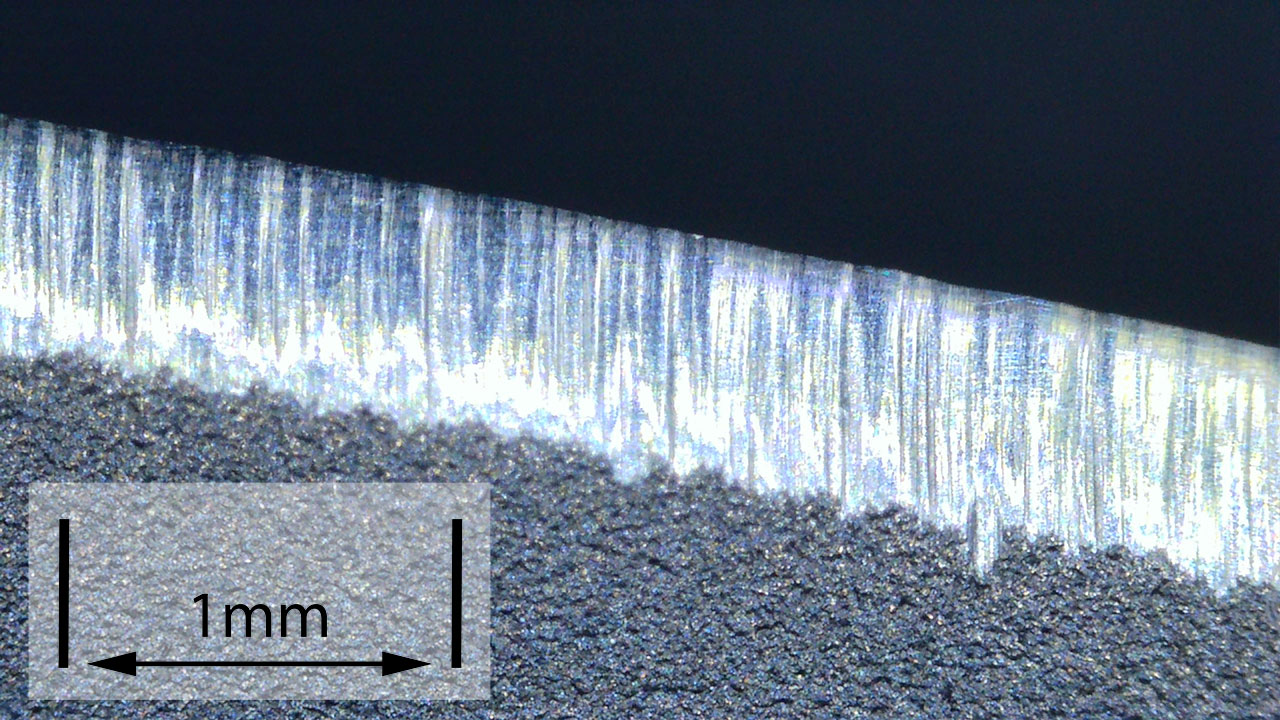
The Factory edge up close:

Followers of Tactical Reviews will know my views on factory edges, but to recap:

Anyone using a knife will need to sharpen it. That first factory edge is just like the first tank of fuel that a new car comes with (or first charge of the battery).
A good factory edge is a ‘nice to have’ but not a ‘make or break’ for a good knife, as you will be putting your own edge onto it soon enough.
The factory edge does however indicate the care a knife maker has put into the final finish.
It is for this reason Tactical Reviews measures factory edge sharpness and specifications, and includes this information in the detailed technical testing.

As a further look at the factory edge, this section has been added to include some high magnification photos of the factory edges.


What is it like to use?

Immediately the A100 feels slim, light and easy to carry, but not insubstantial. In fact its weight belies that the A100 is a good sized knife. The gallery below shows the A100 in my XL-glove sized hand.


Yes, it is slim in the hand, but this slim profile makes it so easy to carry. Combined with the deep carry pocket clip it virtually disappears and you are not aware it is there (which can give you the occasional ‘oh, no, have I lost my knife?!’ stress). Tip-up is my preferred clip position, and although this is considered more hazardous, remember the A100 uses an A-Lock (which I would identify as an Axis-Lock) so the lock spring also positively keeps the blade closed. With this positive spring pressure it massively reduces the likelihood of an unwanted pocket-open. It isn’t something I would be concerned about with this knife, so the layout works perfectly for me.

Putting it to use, and with the toughness of the Ultem to play with, I decided to give it a literal beating. A bit of batoning, but without the lock engaged. The smaller steel liners might not have been able to spread the shock I normally generate while striking, so I used the unlocked blade method. You will see the blade locked to then work the blade out of the cut, which you can’t do if it isn’t locked. That was enough of that, as I really don’t like unlocked-folder batoning.
Moving onto carving and shaving cuts, the A100’s blade really bites in and cuts aggressively but smoothly. The slim handle does feel harder work in heavy cuts; of course it would. The A100 doesn’t shy away from the hard work though, and has done its stint as my beater knife with whatever thrown at it. The DLC has taken everything in its stride and knowing Sleipner is only a semi-stainless, it has surprised me that the edge bevel is not showing any corrosion despite being left well covered in ‘garden goop’, various plant/tree sap, and whatever else was on what I was cutting.
I am always a bit surprised at the popularity of ball bearings in knife pivots, as exactly as I would expect on a user exposed to dust, the A100 has become gritty. The blade no longer moves under its own weight with the lock held open. It is not stiff in action, but is not smooth as it was out of the box.
ANV effectively sell the A100 as a sealed unit, and do not advise disassembling the pivot as the bearings can be very difficult to get right again (and it has blue loctite on the pivot bolt). This then leaves non-disassembly methods of cleaning. Air blasting, WD-40, and maybe even ultrasonic cleaning.


ANV aimed the A100 at EDC (when your local laws allow carrying a locker) which prioritises factors like size and weight, to make you want to EDC it. Not only have they hit the target on weight, slimness, and ease of carry, but at the same time included a good sized blade with an eager cutting blade profile, AND their signature ANV svedge grind (a faux harpoon, to my eye), making it a very efficient and useful tool to carry.

Review Summary

The views expressed in this summary table are from the point of view of the reviewer’s personal use. I am not a member of the armed forces and cannot comment on its use beyond a cutting tool or field/hunting knife.

Something that might be a ‘pro’ for one user can be a ‘con’ for another, so the comments are categorised based on my requirements. You should consider all points and if they could be beneficial to you.

_______________________________________________
What doesn’t work so well for me
_______________________________________________

Bearings becoming gritty in dusty environments.
Slim handle can dig in for heavy cutting (as you would expect).

_______________________________________________
Things I like
_______________________________________________

Light and easy to EDC.
Deep carry clip makes the A100 almost disappear in/on your pocket.
A good size, despite being lightweight, so large enough for most tasks.
Smooth bearings (when kept clean).
Ambidextrous with movable thumb stud and clip.
Choice of blade steels.
ANV Svedge blade shape.
Resilient DLC blade coating.
Super tough Ultem handle.

Review Videos

Starting with a short format sixty second review:


Onto a full video review covering many more details:


Thanks for joining me in this ANV A100 Ultem Review.

 
Discussing the Review:
Something new – will it work? A Tactical Reviews Subreddit.
TacticalReviewsChat on Reddit
Please visit there and start/join the conversation.

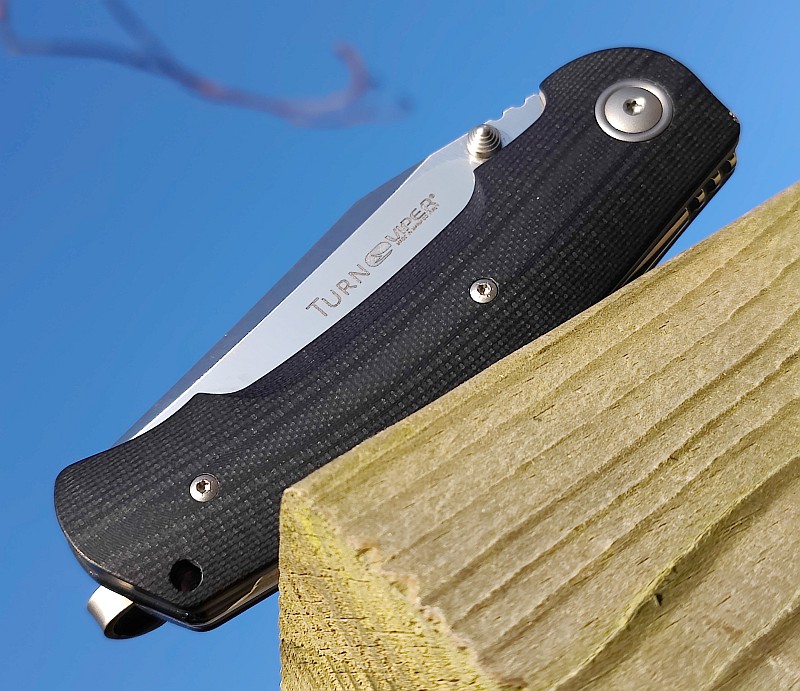
Knife Review: Viper TURN

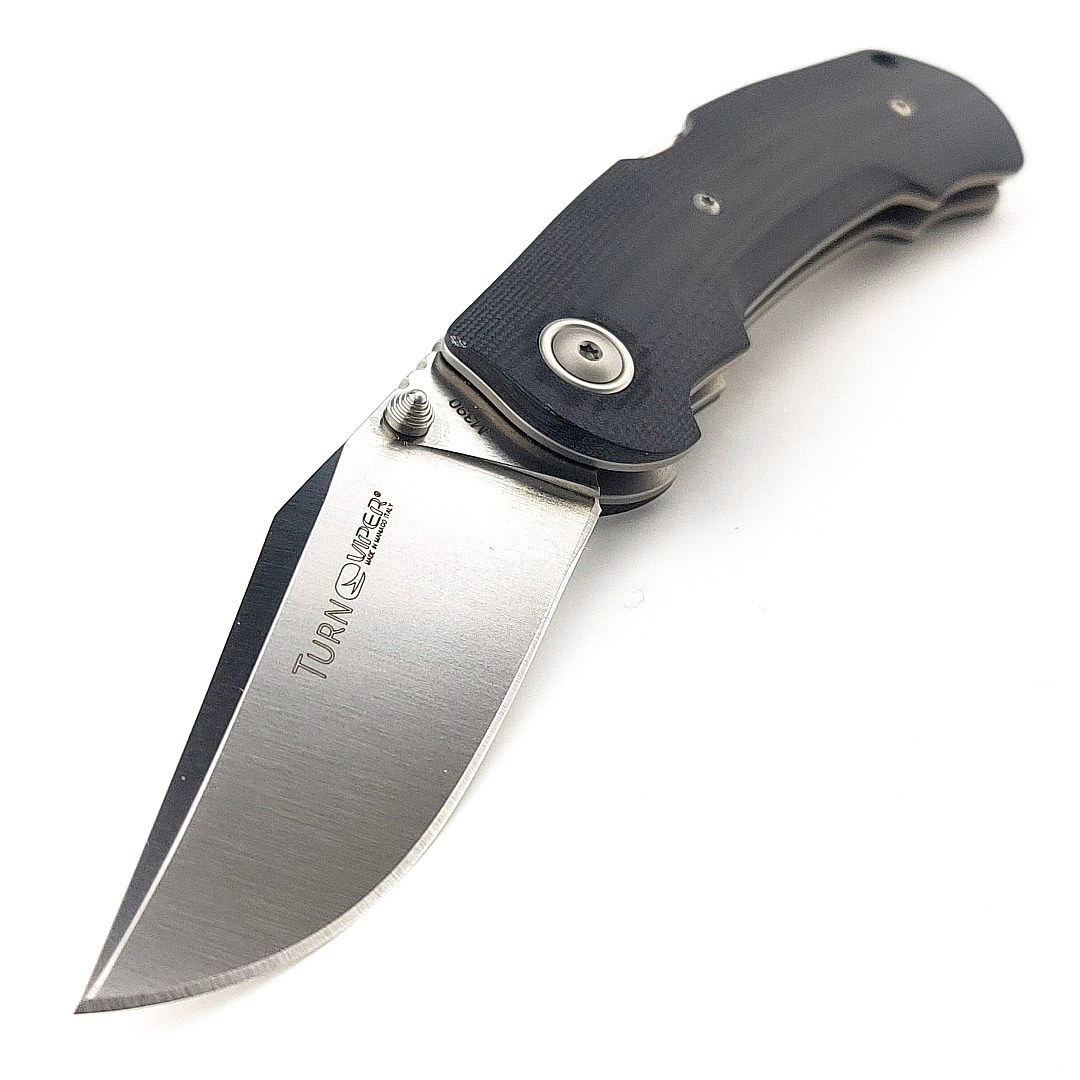
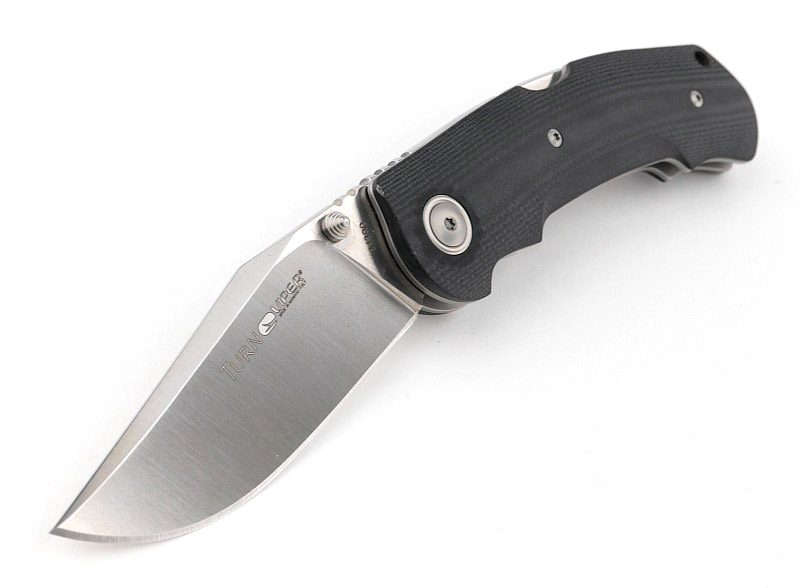
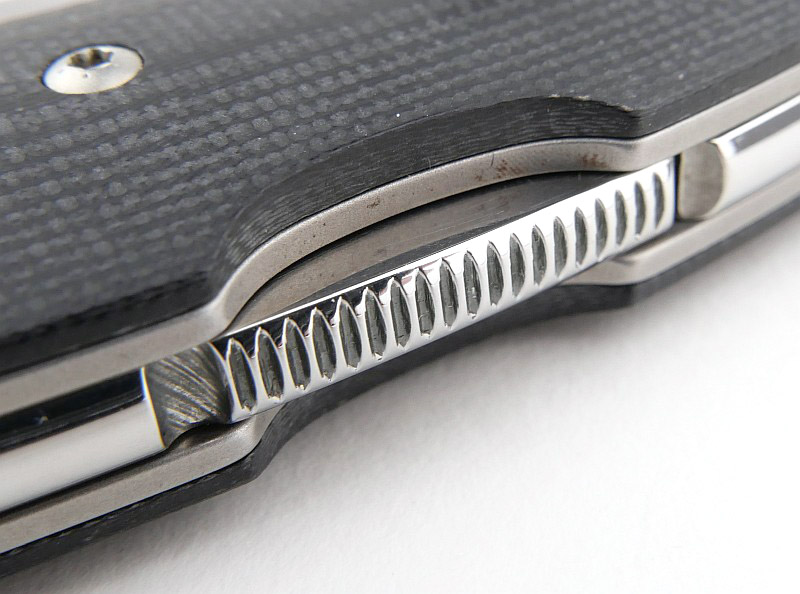
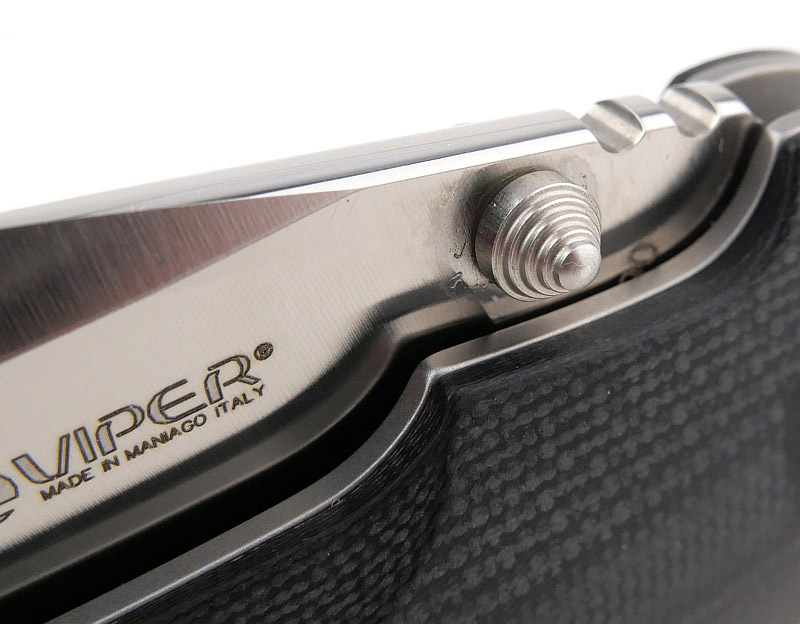
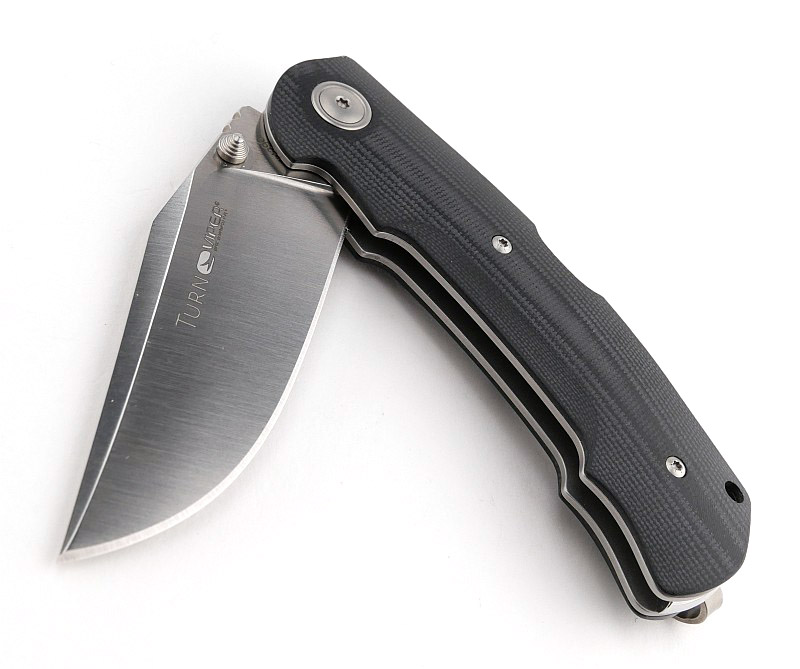
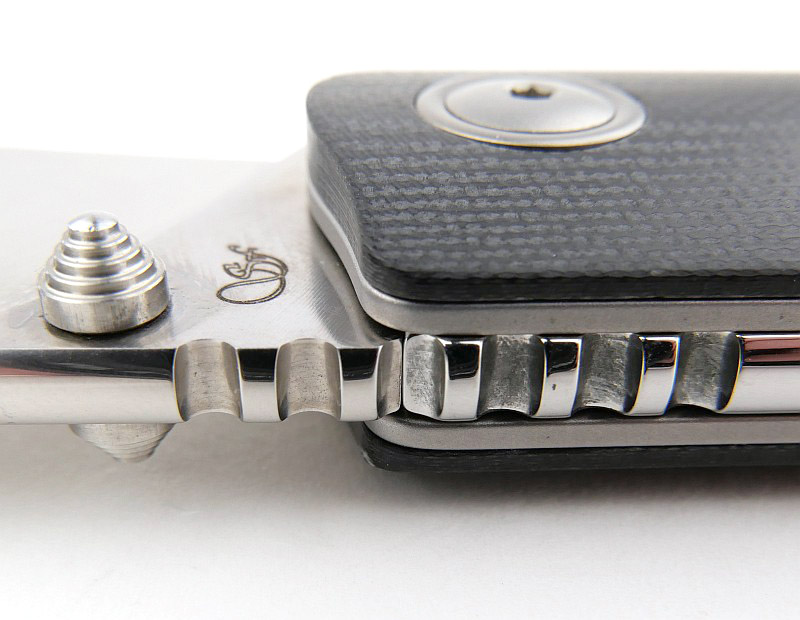
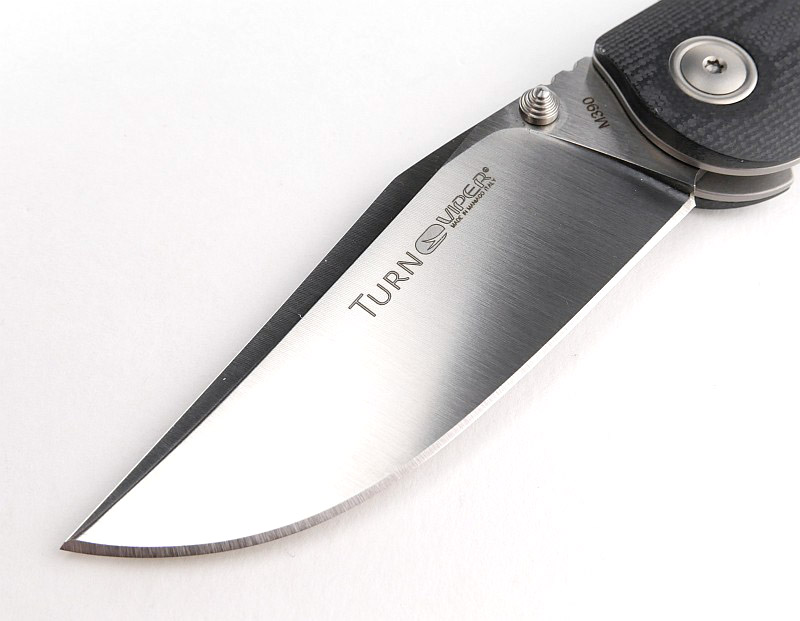
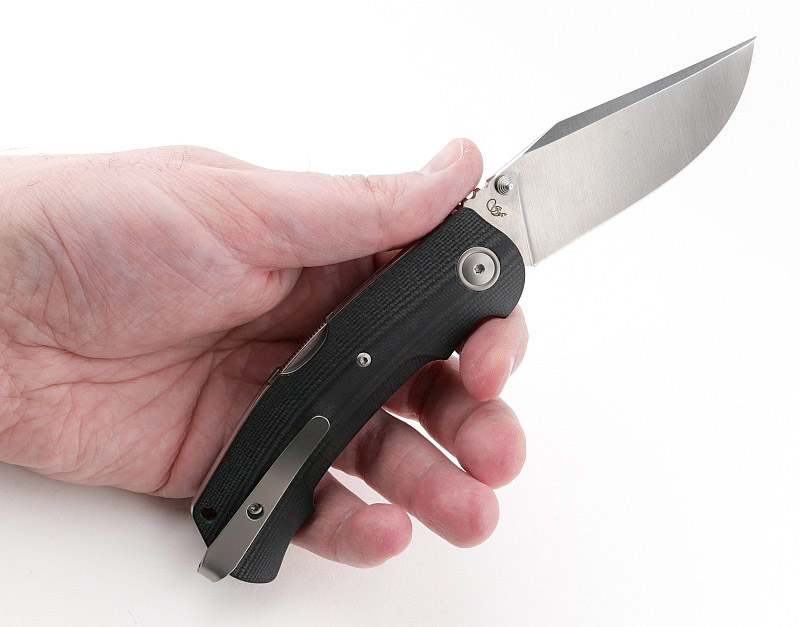
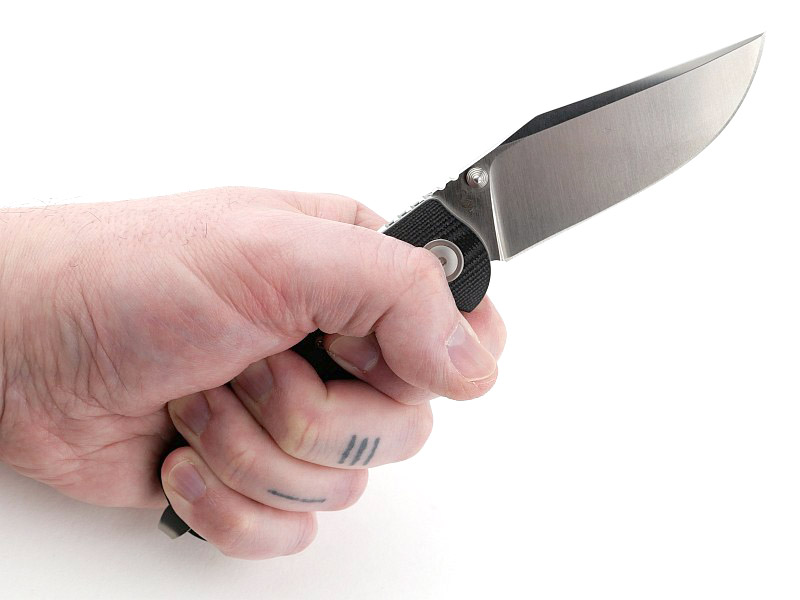
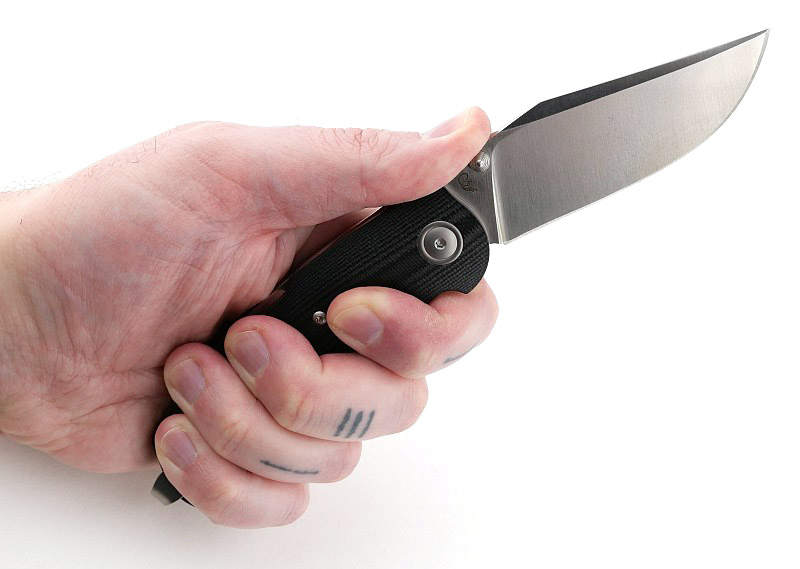
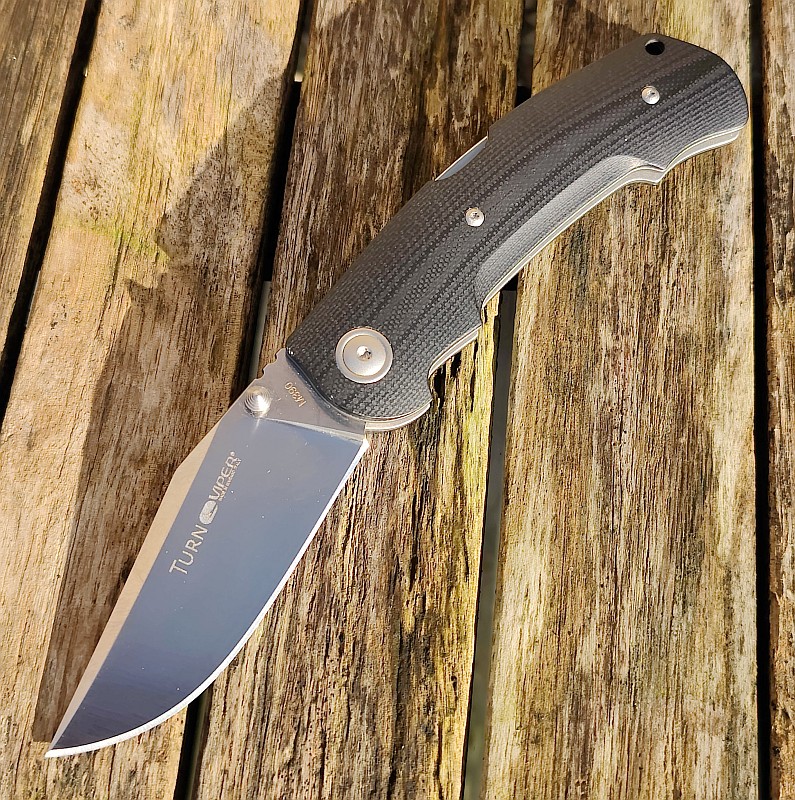
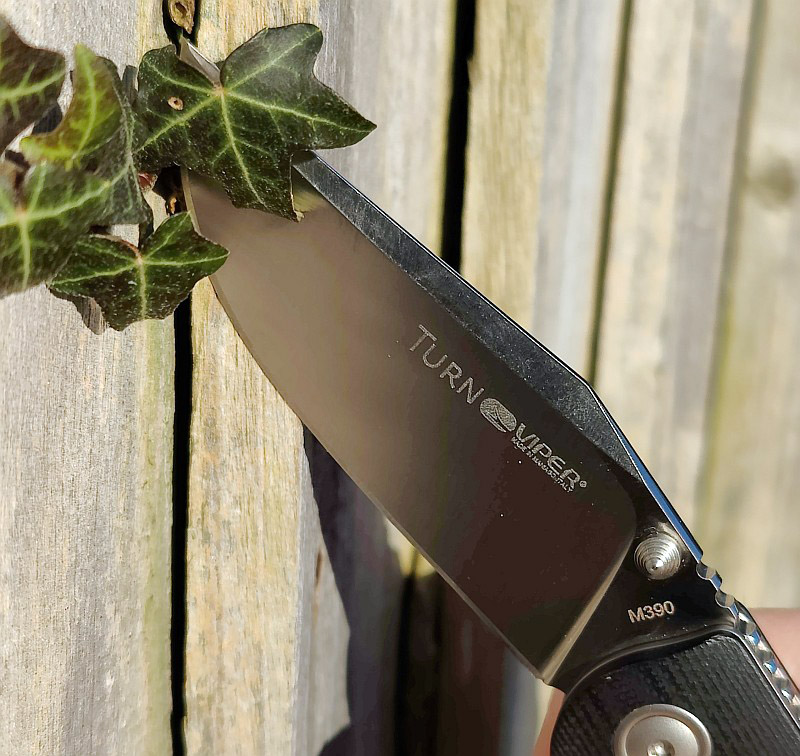
Viper TURN a Detailed Review – The TURN is a folding knife designed by Fabrizio Silvestrelli, blending tradition, practicality and modern construction techniques. We’ll also be seeing how, in this Viper TURN Review how distinctively ‘Viper’ this knife is. The TURN’s blade is Böhler M390 steel and described by Viper as having ‘a bold counter-bevel’ on the satin finish blade. A double stepped-cone thumb-stud allows easy opening with either hand. Unusually for a back-lock, TURN uses ball bearings for the pivot to ensure a smooth and fluid rotation of the blade. This Viper TURN review features the Essential G10 version that includes a deep-carry titanium pocket clip.

What’s in the box?:
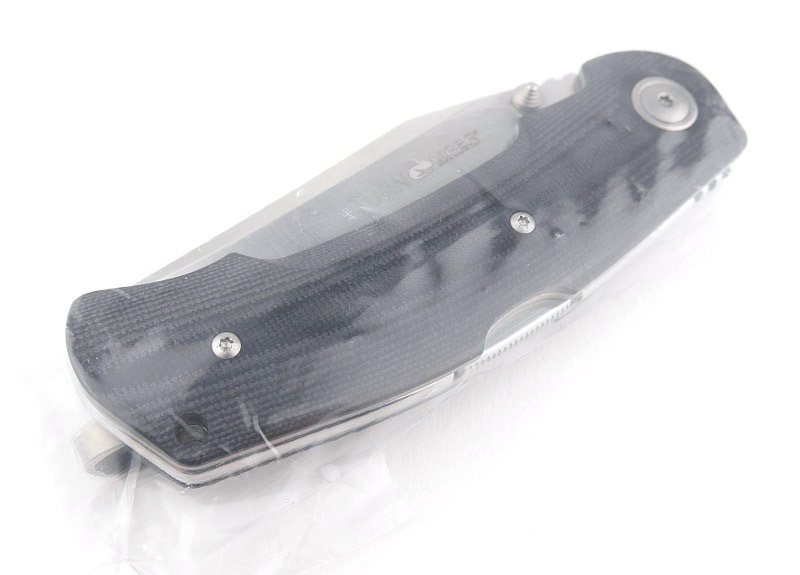
Or should that be ‘Where is the box?’. As mentioned in the video, this was a display knife at IWA 2024 so is being reviewed without any of the normal packaging. So here it is in a bag, and not in a bag!


A good look round the closed TURN – Things to look out for here are:

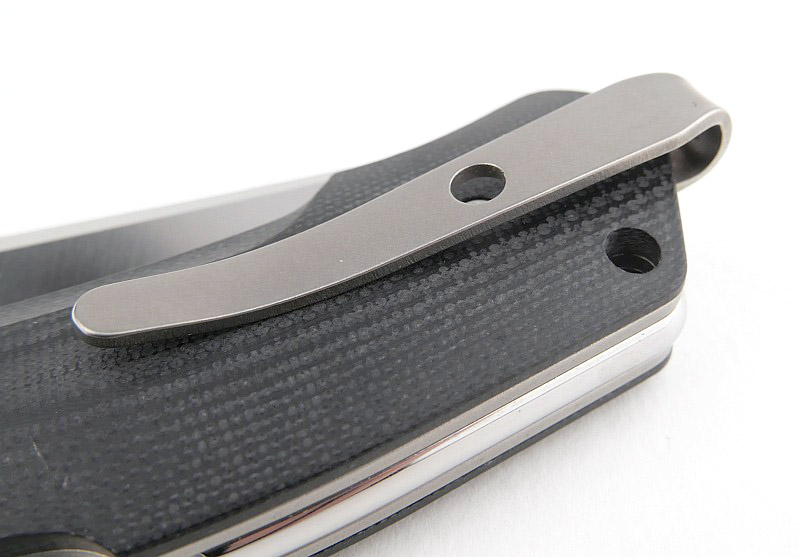
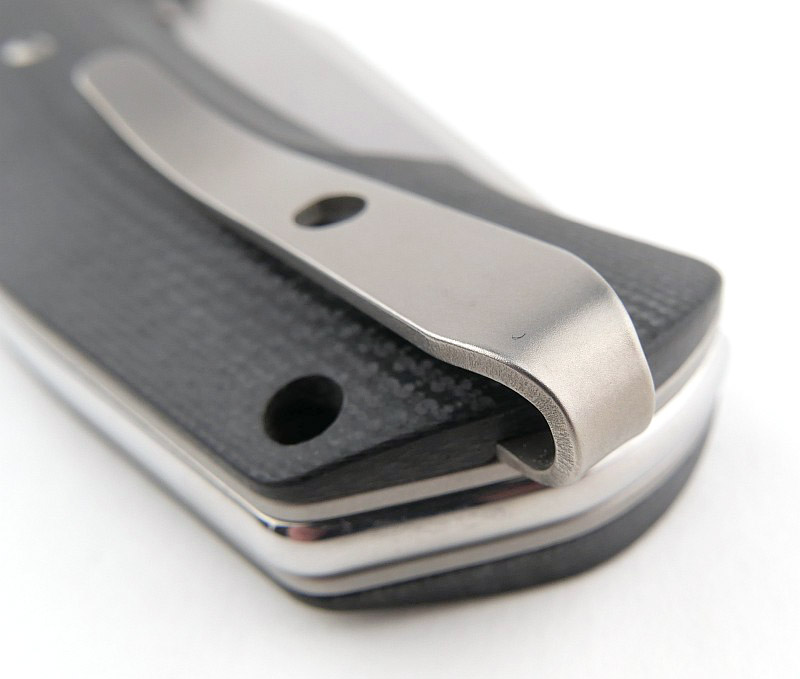
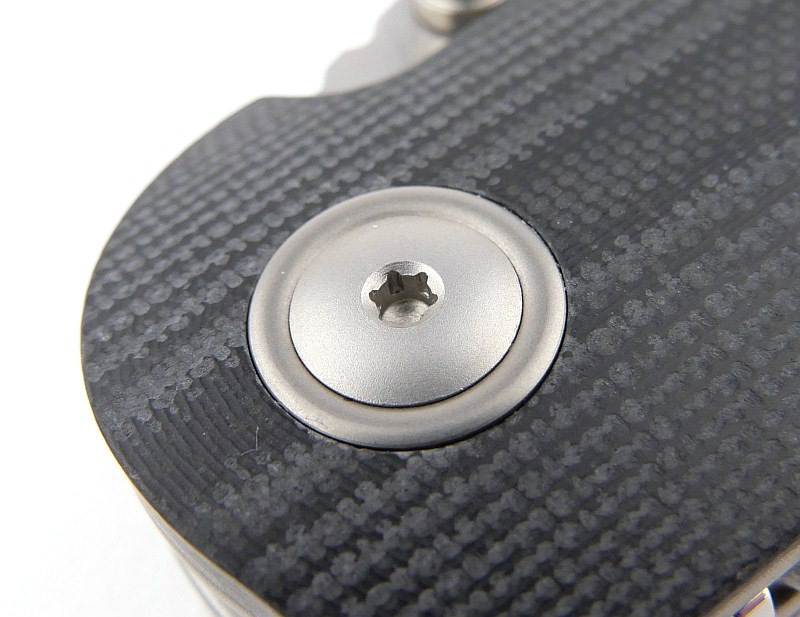
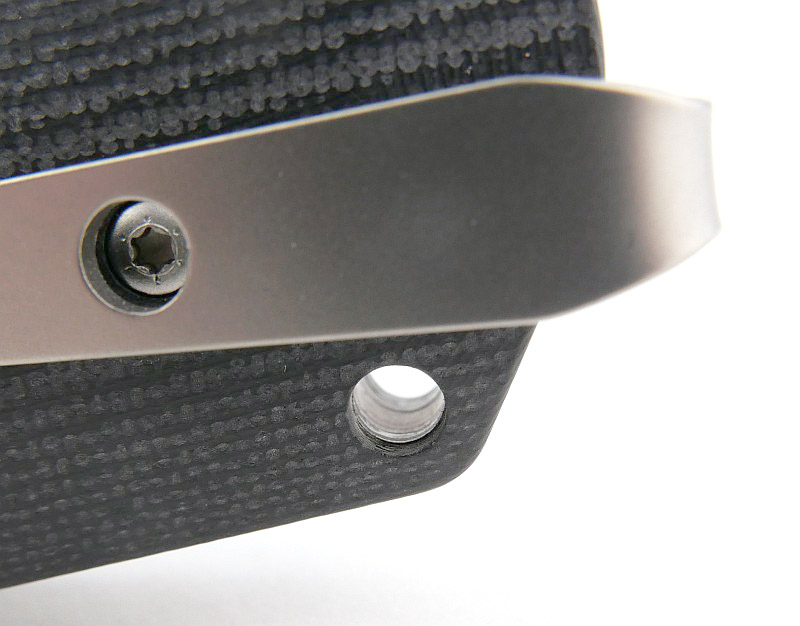
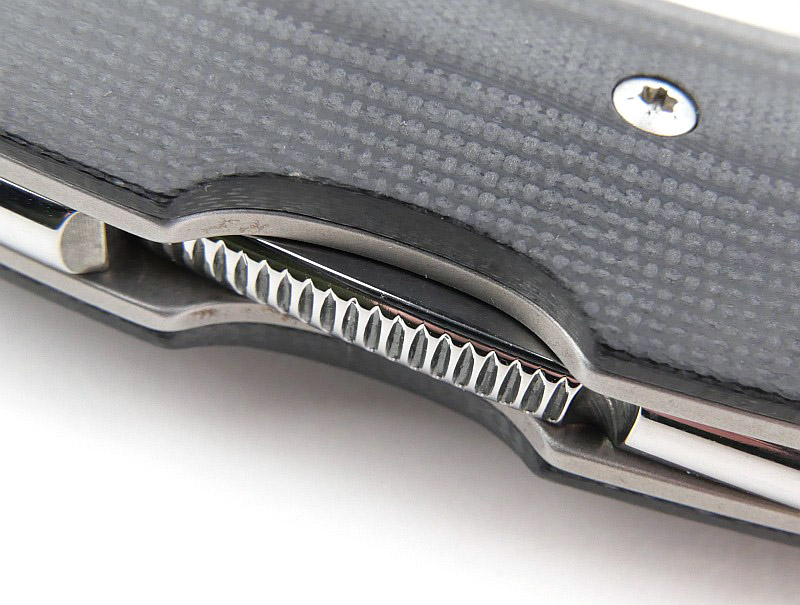
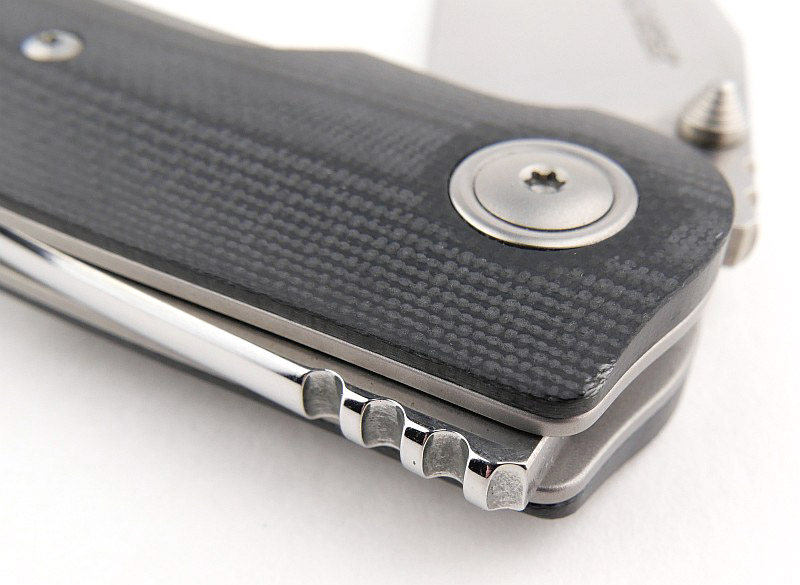
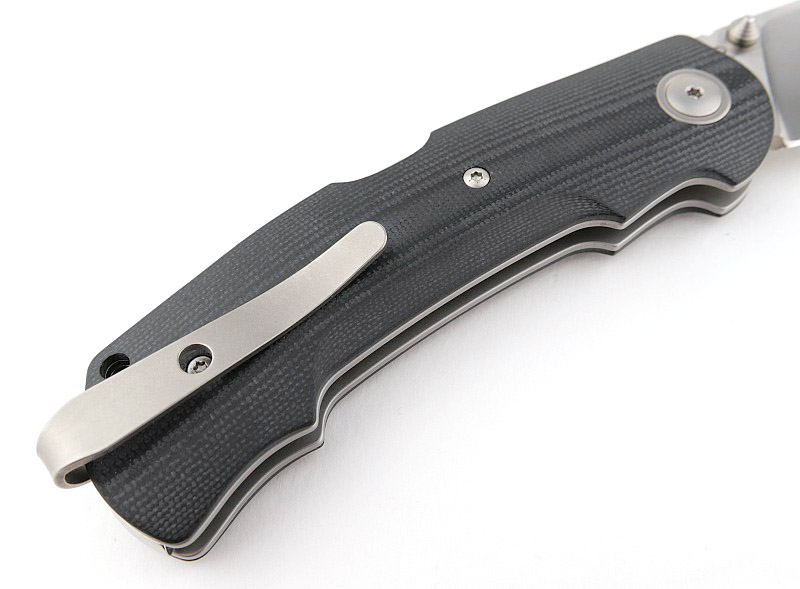
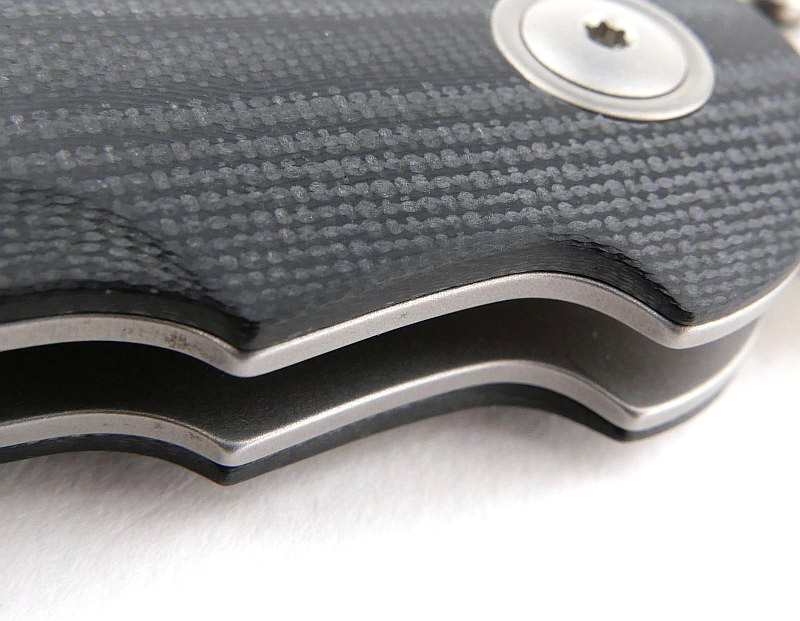
Being the ‘Essential’ model, there are no bolsters, instead the handle material covers the entire side of the knife. Around the pivot bolt is an extra washer detail. A singe position deep-carry titanium pocket clip is fitted in a tip-up right-handed location. The polished lock bar has grip grooves on the release ‘button’ and thumb grip jimping at the other end. Full length stainless steel liners provide the main structure. A pair of stepped-cone thumb-studs make the blade opening ambidextrous.


A good look round the open TURN – Things to look out for here are:

Swinging open that gloriously wide blade, and as we open it you see the lock bar action in operation. Thumb grip jimping spans the lock / blade contact point forming the clean ‘H’. Very stylish contouring of the G10 handles creates a grip shaping your fingers will settle into. That ‘bold counter-bevel’ is something I would describe as an elongated harpoon style swedge, and bold it certainly is.


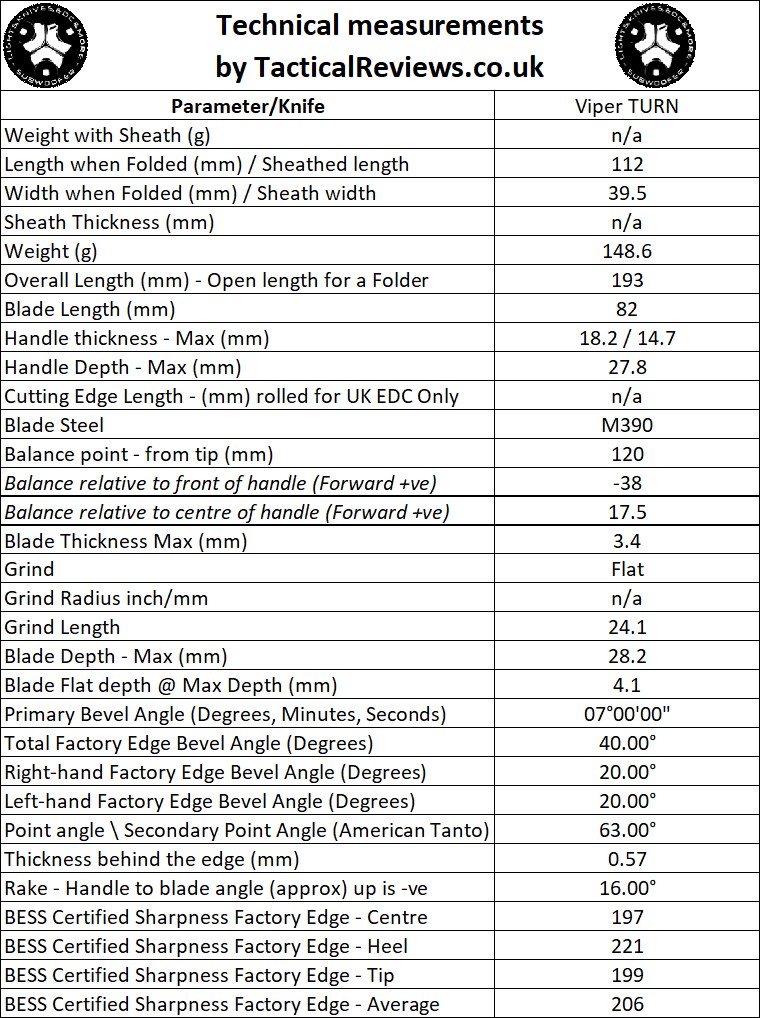
The Blade and Handle – Detailed Measurements:
For full details of the tests and measurements carried out and an explanation of the results, see the page – Knife Technical Testing – How It’s Done.

The blade is made from M390 steel.


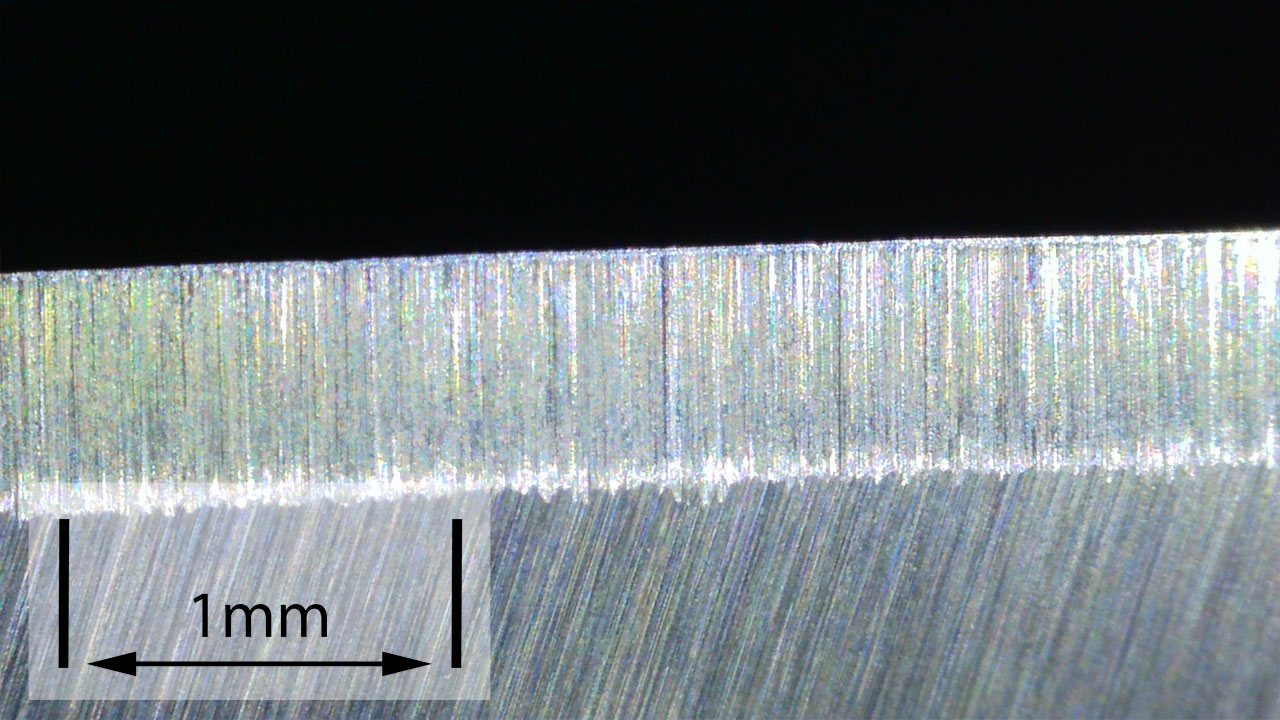
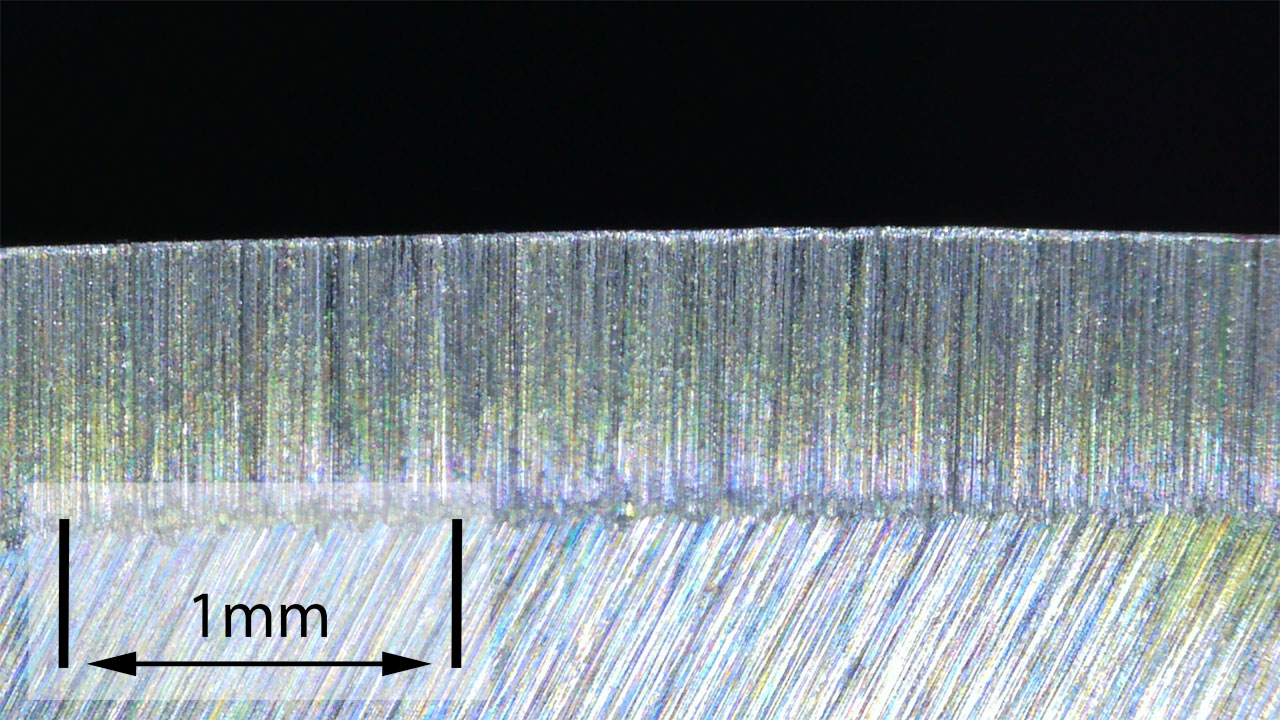
The Factory edge up close:

Followers of Tactical Reviews will know my views on factory edges, but to recap:

Anyone using a knife will need to sharpen it. That first factory edge is just like the first tank of fuel that a new car comes with (or first charge of the battery).
A good factory edge is a ‘nice to have’ but not a ‘make or break’ for a good knife, as you will be putting your own edge onto it soon enough.
The factory edge does however indicate the care a knife maker has put into the final finish.
It is for this reason Tactical Reviews measures factory edge sharpness and specifications, and includes this information in the detailed technical testing.

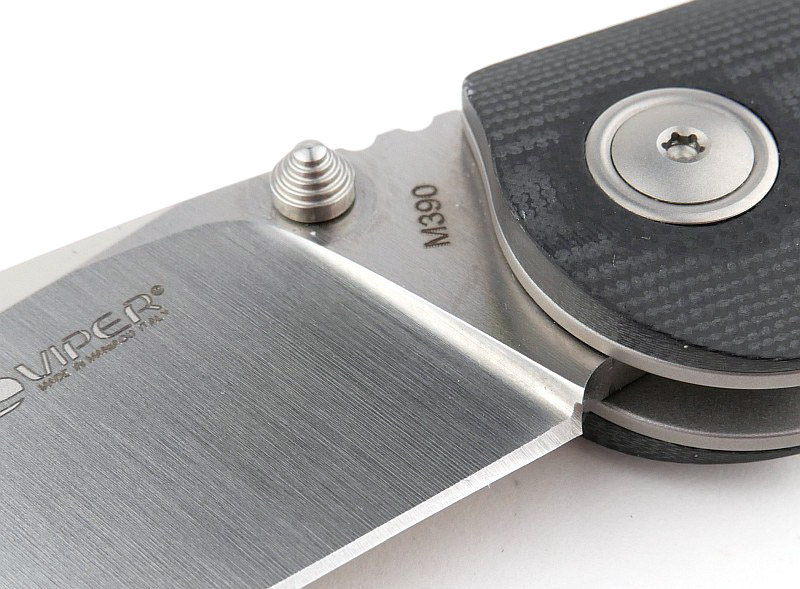
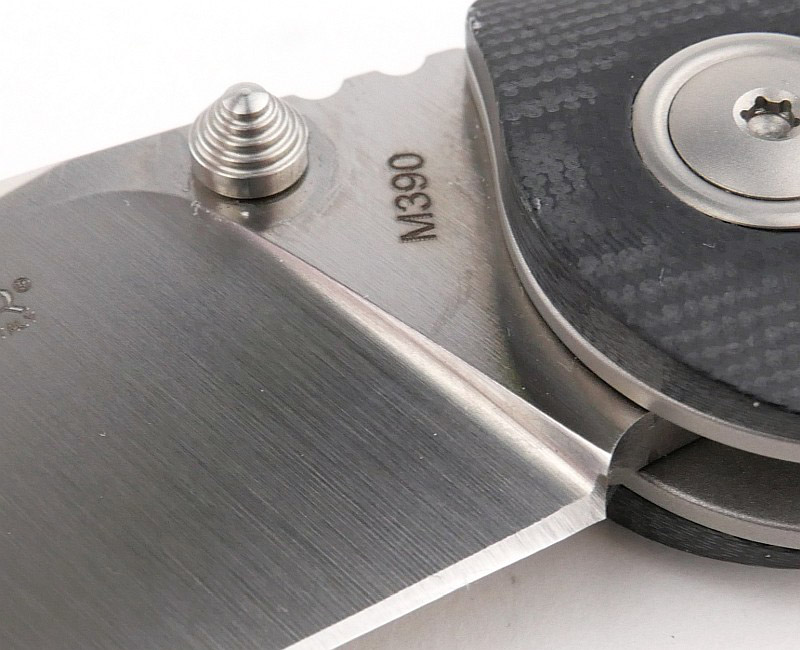
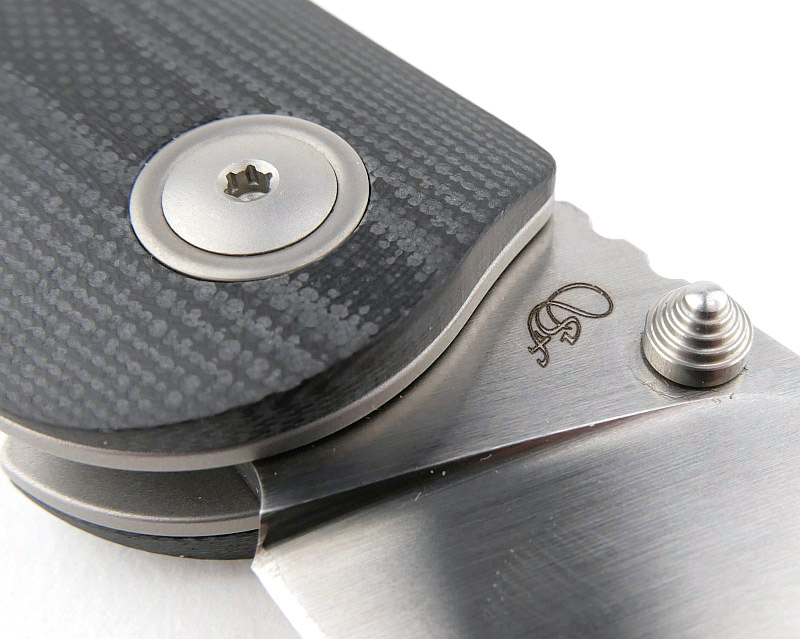
As a further look at the factory edge, this section has been added to include some high magnification photos of the factory edges.


What is it like to use?

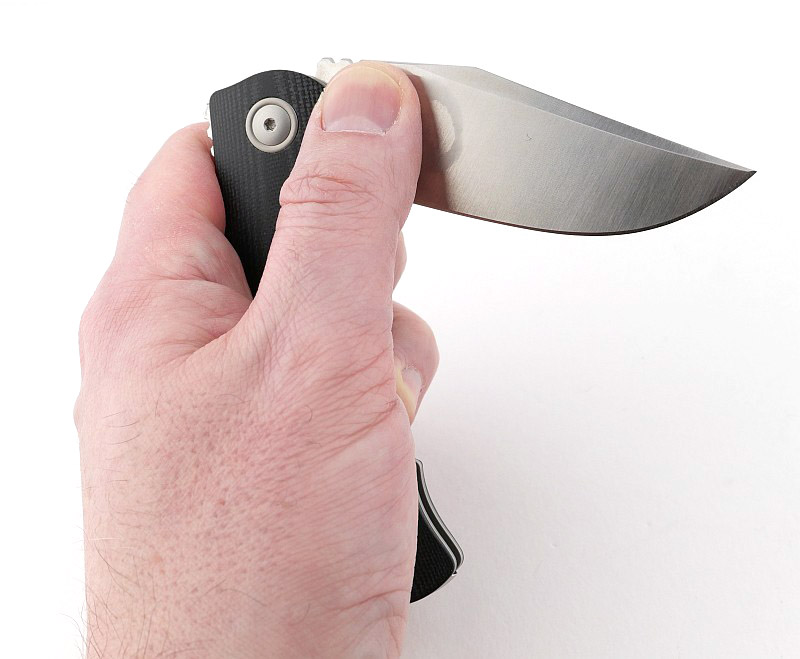
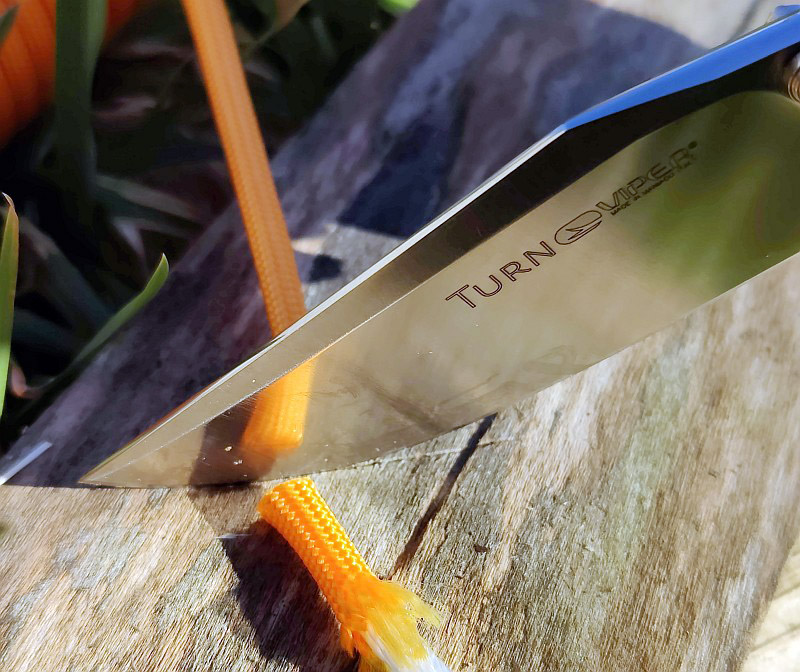
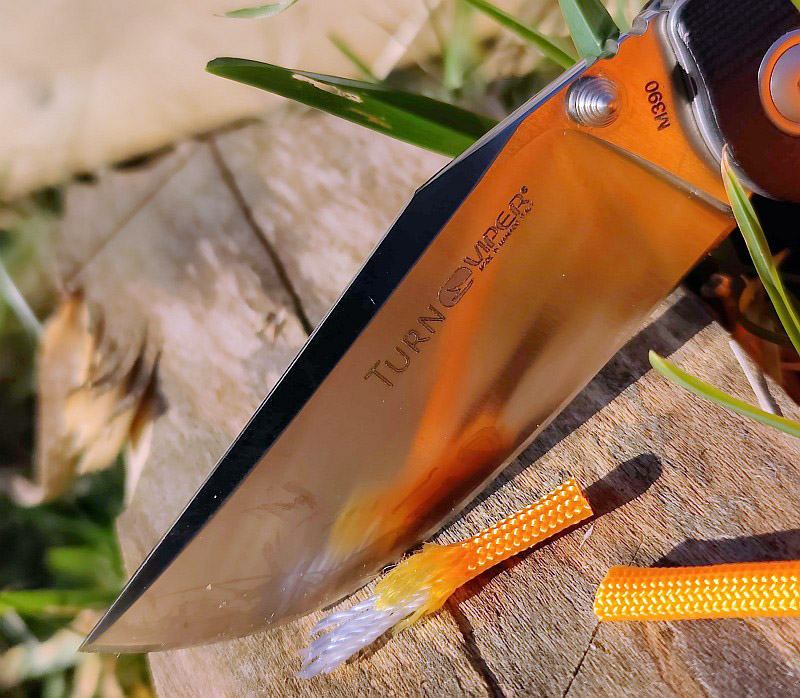
Viper describe the blade as having ‘high bevels’, and indeed it does, in fact verging on the full-flat grind apart from that bold swedge. It is an excellent blade geometry for eager slicing and the TURN is indeed a very efficient cutter.
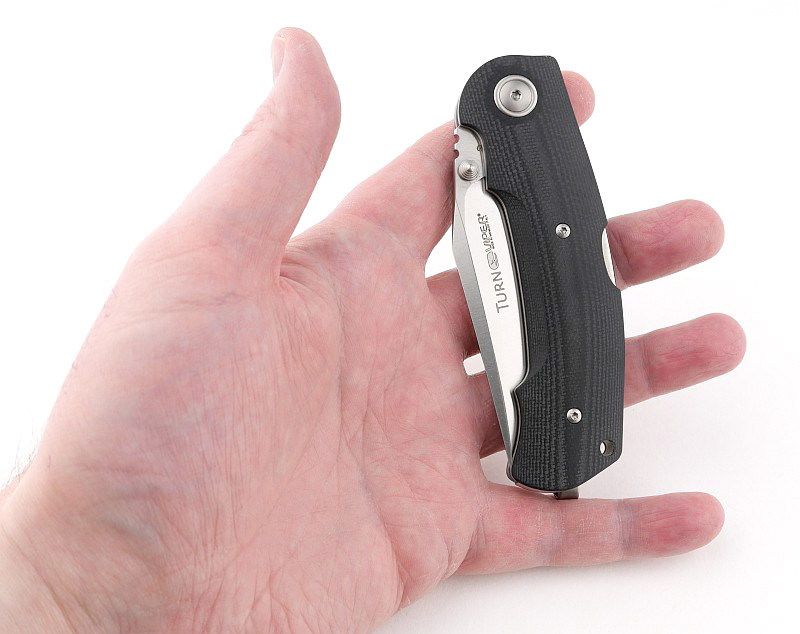
I’d classify it as a mid-sized folder, large enough for most ever day jobs, and small enough to be easy to carry.
Viper’s stepped-cone thumb-stud has drawn blood on previous occasions on other knives, and could easily do so again. They are a bit on the sharp side and it is when I’ve had hardened skin on my thumb (from too much knife opening) that the cone shape has punctured/cracked this skin and I’ve ended up bleeding over the knife. Grippy these thumb-studs are, but also high pressure.


This might be the ‘Essential’ version of the TURN, but it is still lovely to look at. The blend of a traditional back-lock folder layout with a modern, efficient, cutting blade profile, using high performance materials and features that increase its usability is spot-on.
Viper’s signature polished spacer and lock bar contrast with the bead blast liners and black G10, giving the TURN a distinctive and stand-out look.
If I had to pick one position for the pocket clip, it is exactly where Viper have positioned it. Tip-up, right-handed; it is going to be best for the majority, and for the left-handed it only needs one small adjustment before opening.
The near-full-flat grind makes the TURN a fantastic slicer, and with great control too. The relatively wide blade adds to stability during cutting, so it is a real pleasure to use.


Review Summary – Viper TURN Review

The views expressed in this summary table are from the point of view of the reviewer’s personal use. I am not a member of the armed forces and cannot comment on its use beyond a cutting tool or field/hunting knife.

Something that might be a ‘pro’ for one user can be a ‘con’ for another, so the comments are categorised based on my requirements. You should consider all points and if they could be beneficial to you.

_______________________________________________
What doesn’t work so well for me
_______________________________________________

Thumb-stud a bit ‘sharp’.
Single position clip.
Potential hot-spots on the grip.

_______________________________________________
Things I like
_______________________________________________

Excellent fit and finish.
M390 blade steel.
Classic Back-Lock.
Super-smooth blade action.
Ambidextrous opening.
Powerful slicing geometry.
Deep-carry pocket clip.
Premium satin blade finish.
Refined style.

Review Videos

Starting with a short format sixty second review:


Onto a full video review covering many more details:


Discussing the Review:
Something new – will it work? A Tactical Reviews Subreddit.
TacticalReviewsChat on Reddit
Please visit there and start/join the conversation.

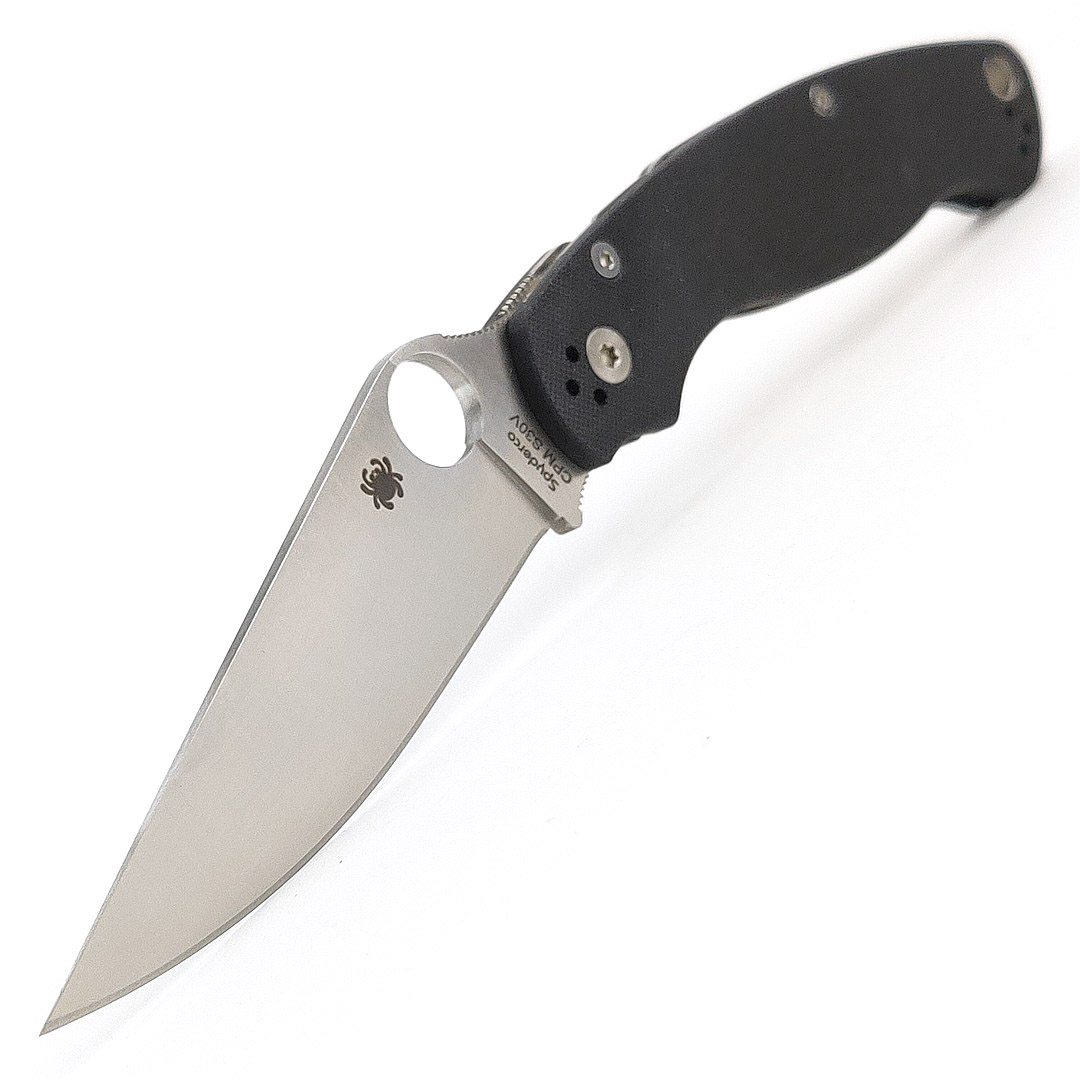
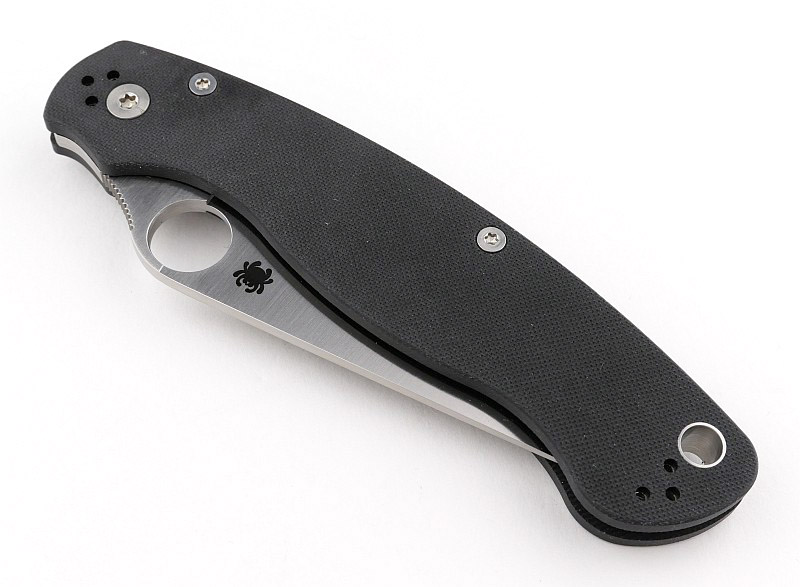
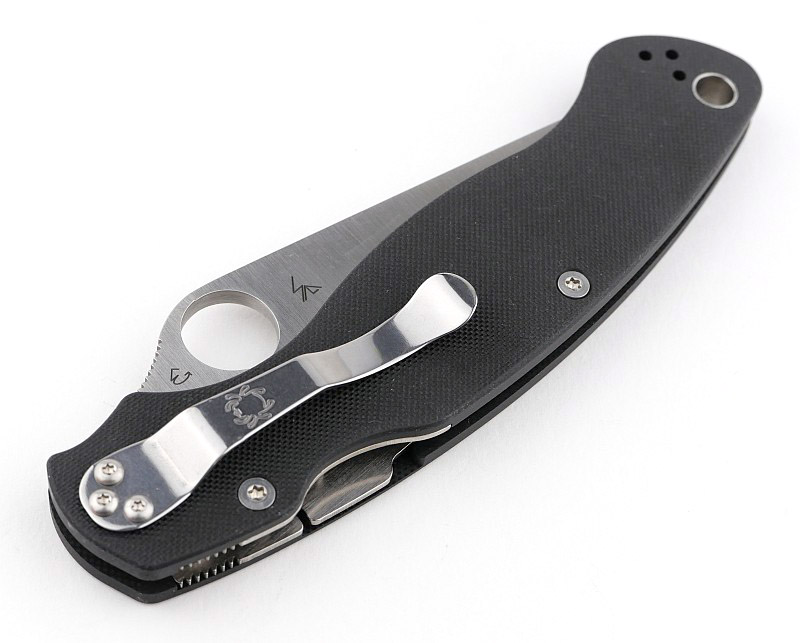
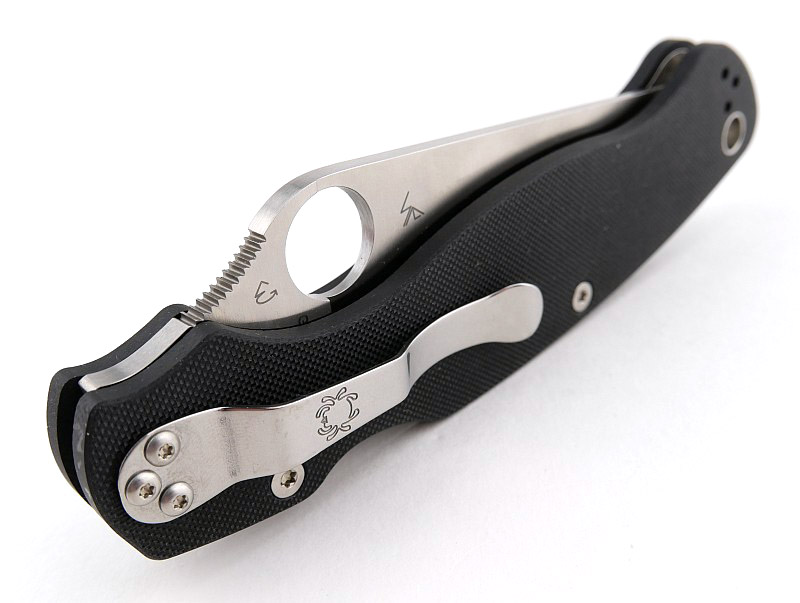
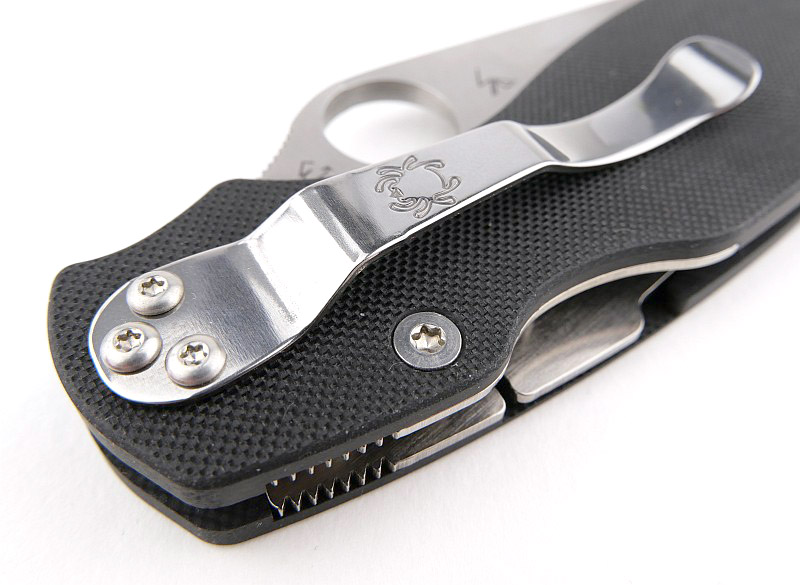
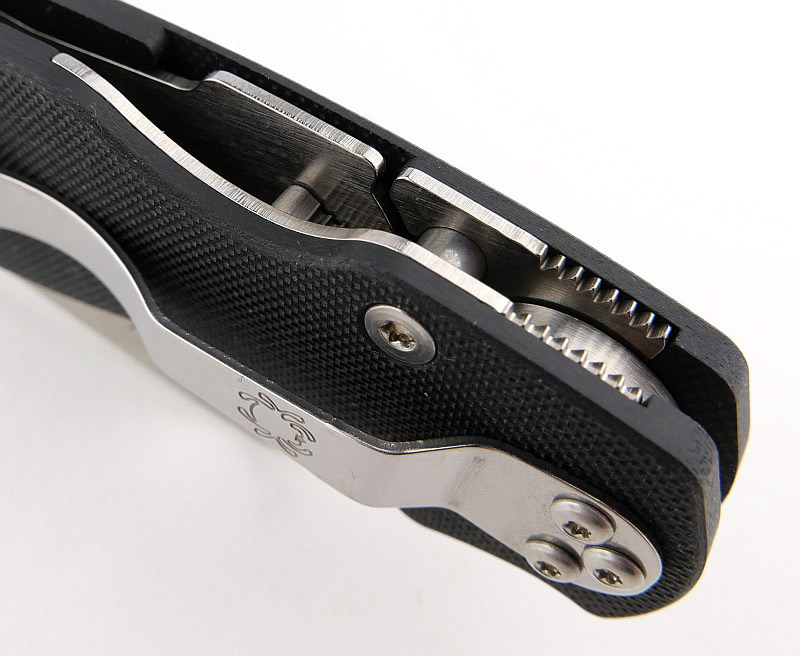
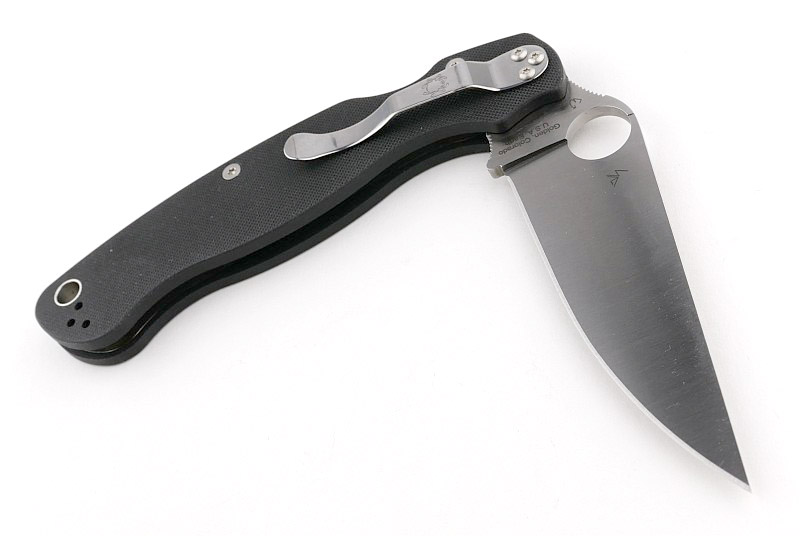
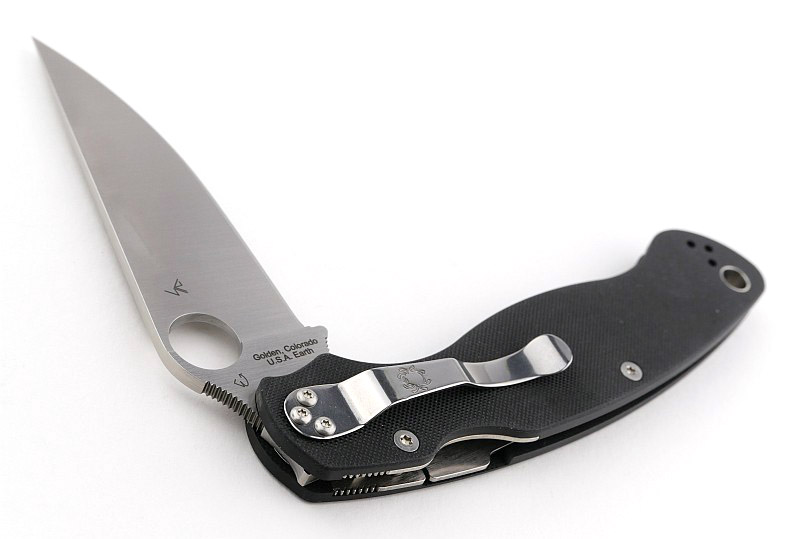
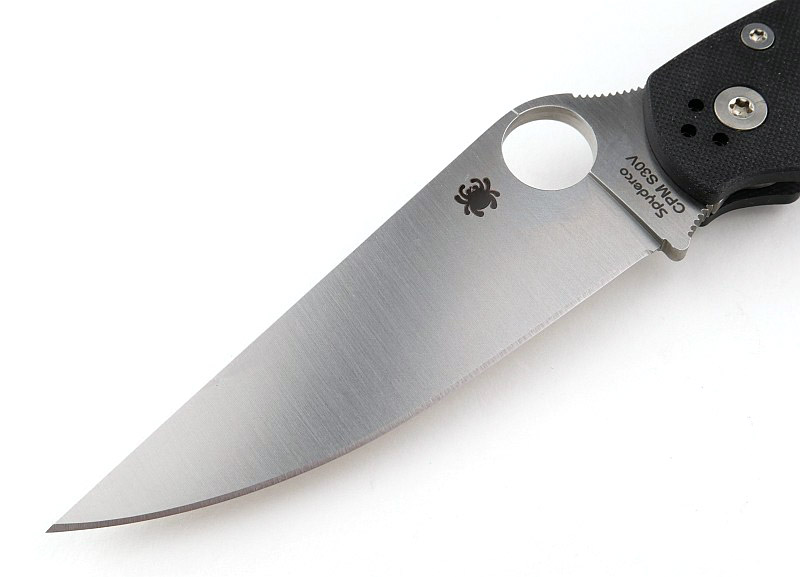
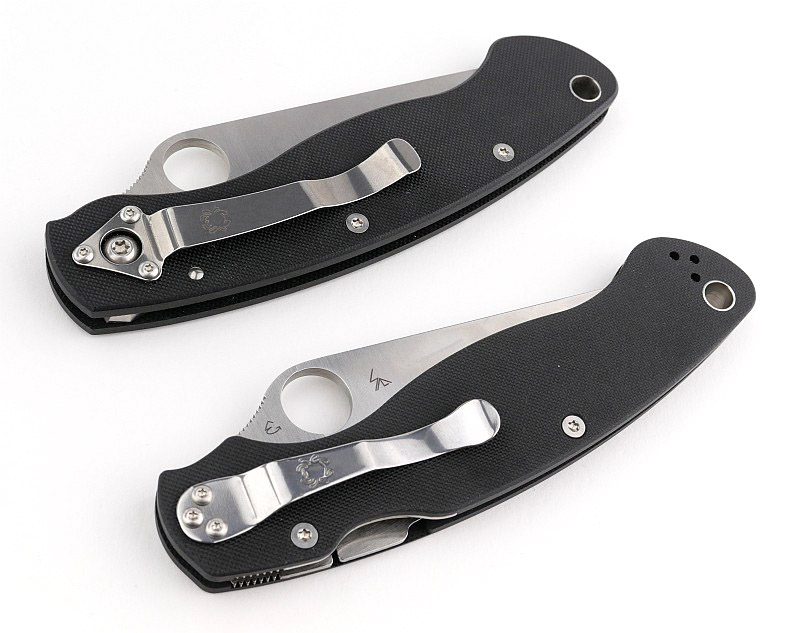
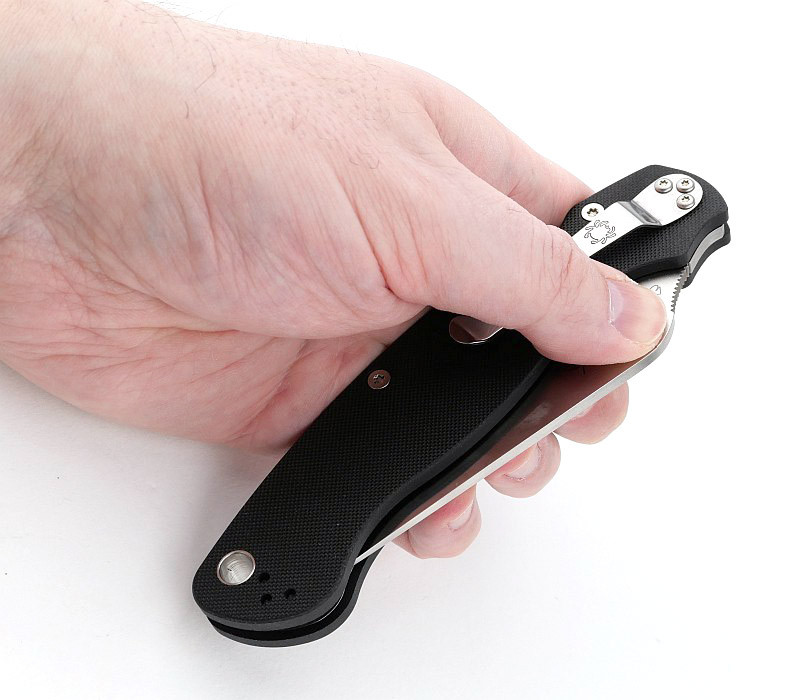
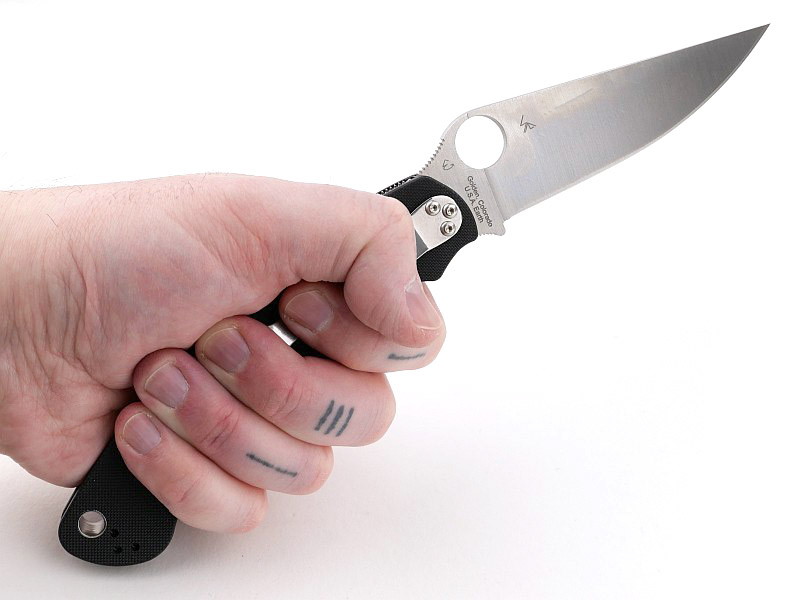
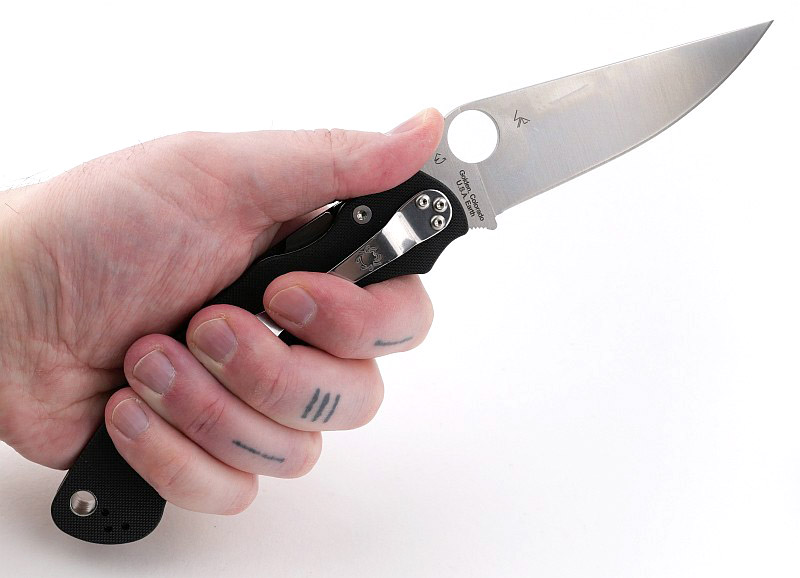
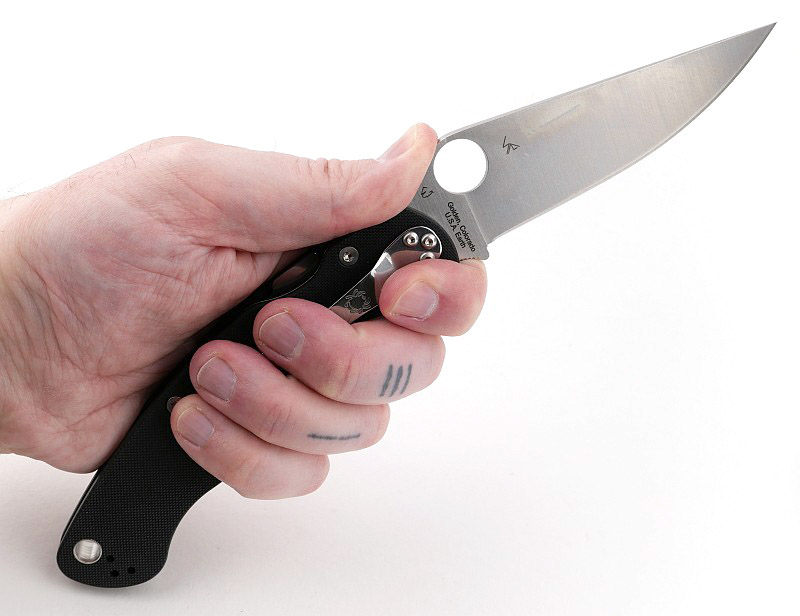
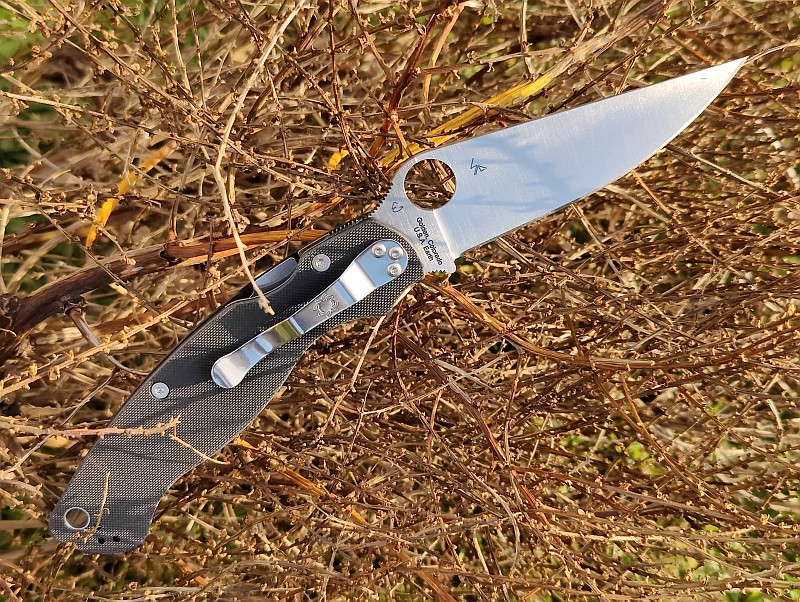
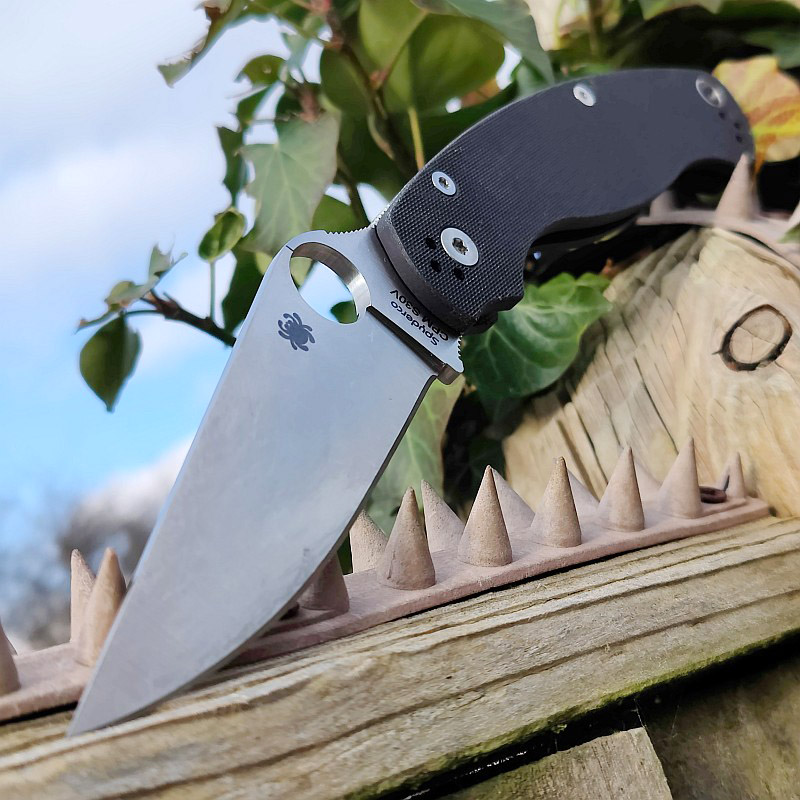
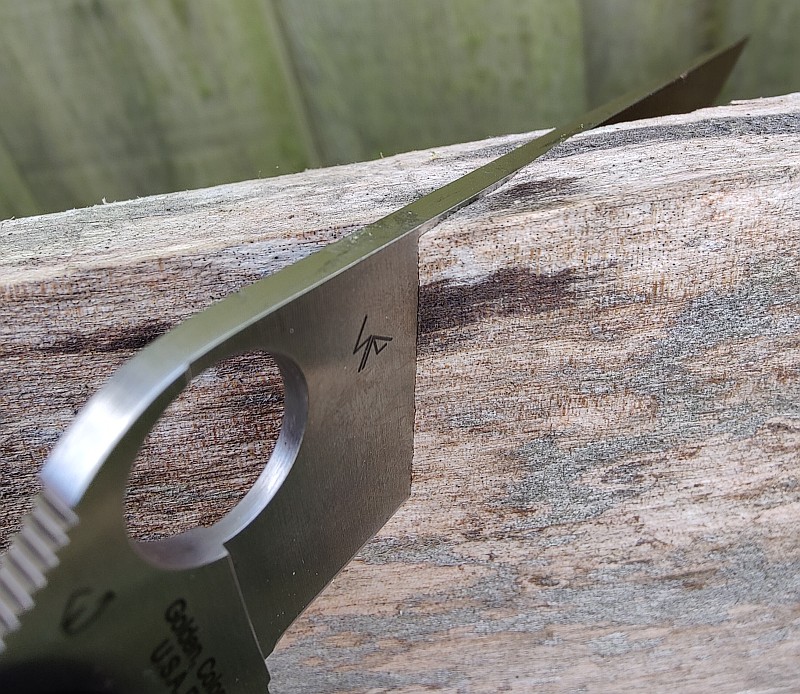
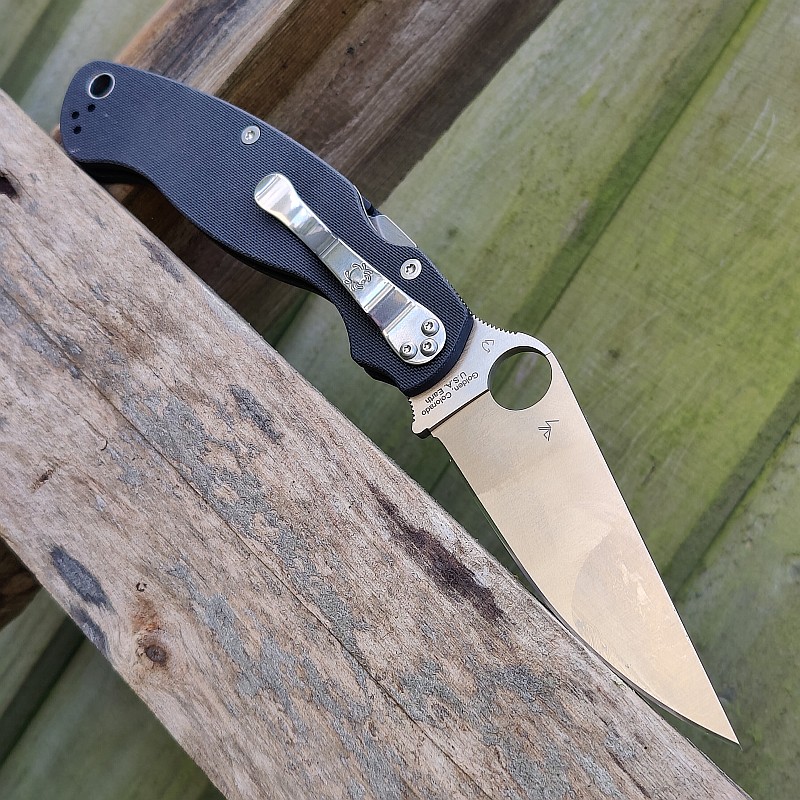
Knife Review: Spyderco Military 2

Spyderco’s Military 2 – The 2024 Update of a Classic. The original Spyderco Military Model was designed in 1996, and is a tried and tested knife, proven to be a robust and reliable tool. Building on the strengths of the original design, the Military 2 is refined and updated, bringing in improvements where they make a real difference. Larger stainless steel liners give the knife increased structural strength and also allow the addition of four pocket clip fixing positions. A major switch has been made away from a liner lock and to the signature Spyderco Compression Lock improving safety and handling. Join me in this detailed review of the Spyderco Military 2.

Is the ‘New and Improved’ Spyderco Military 2 actually an improvement? Read on to find out.

What’s in the box?:
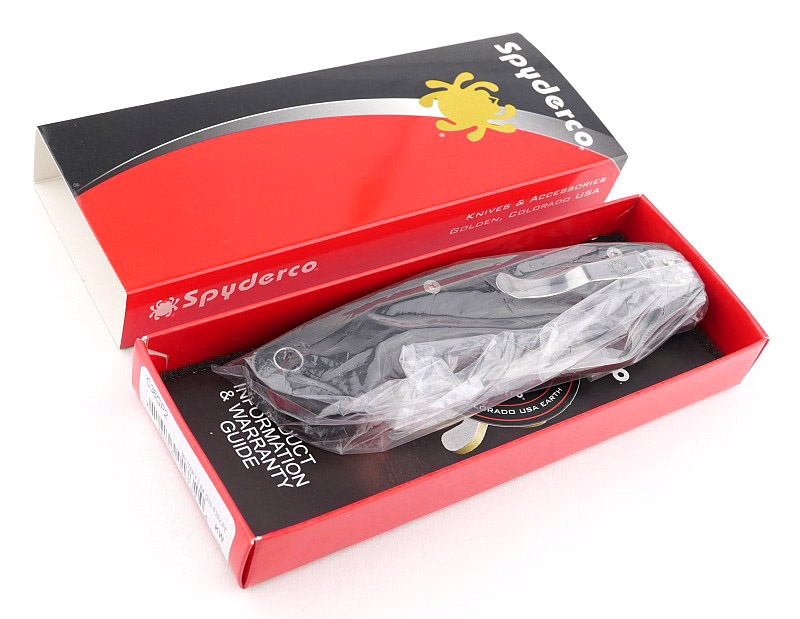
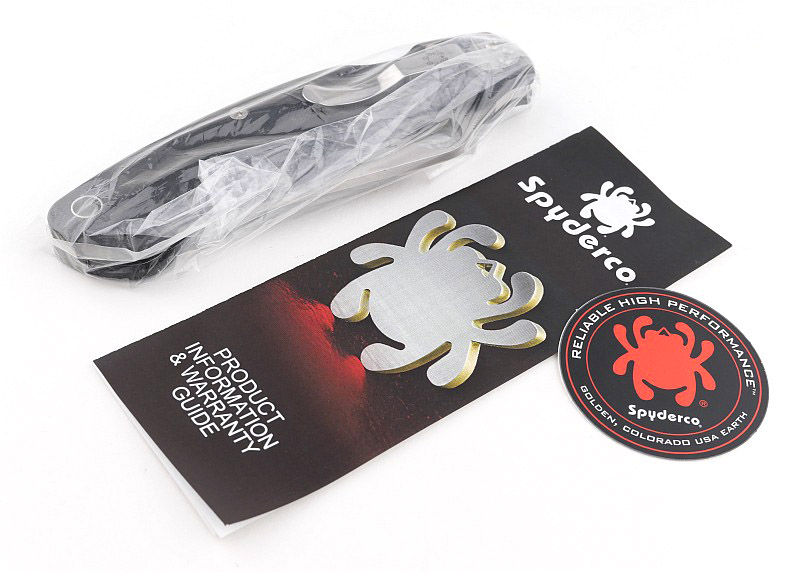
This Military 2 comes in the familiar Spyderco box. Included with the knife is a sticker and a leaflet about the exact model of knife.


A good look round the closed Military 2 – Things to look out for here are:

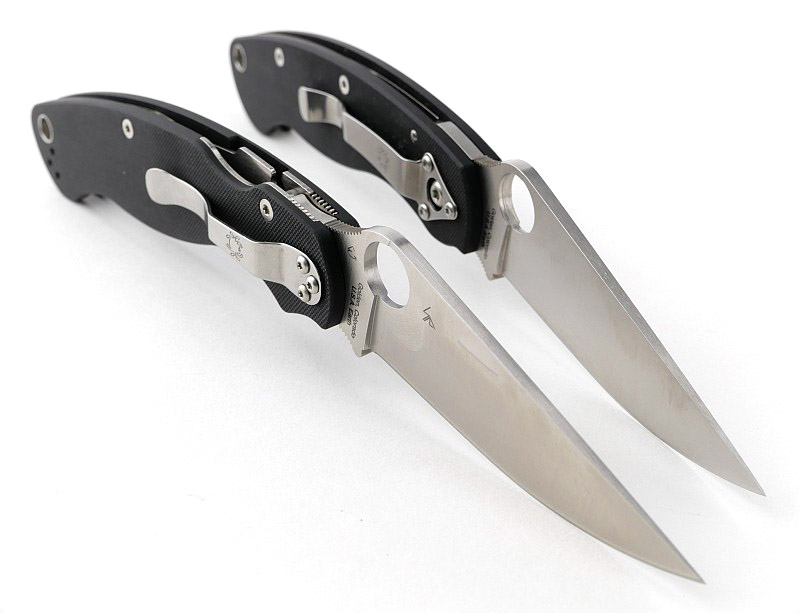
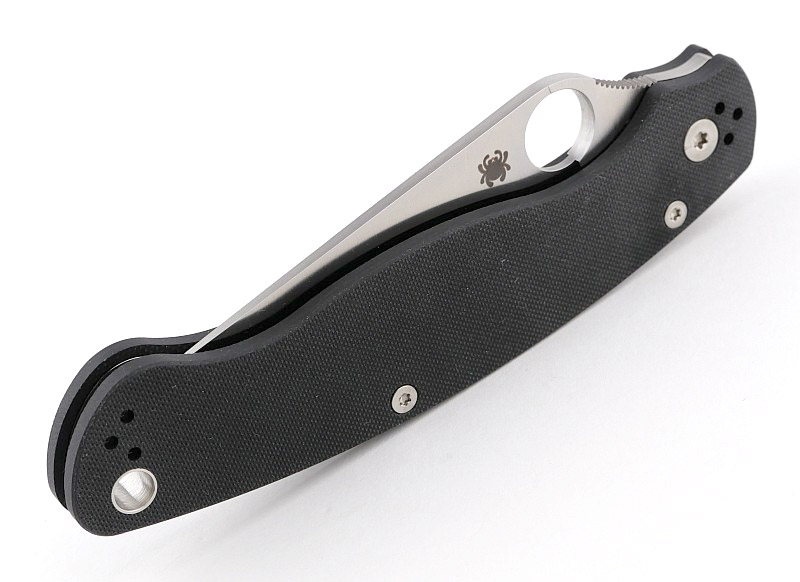
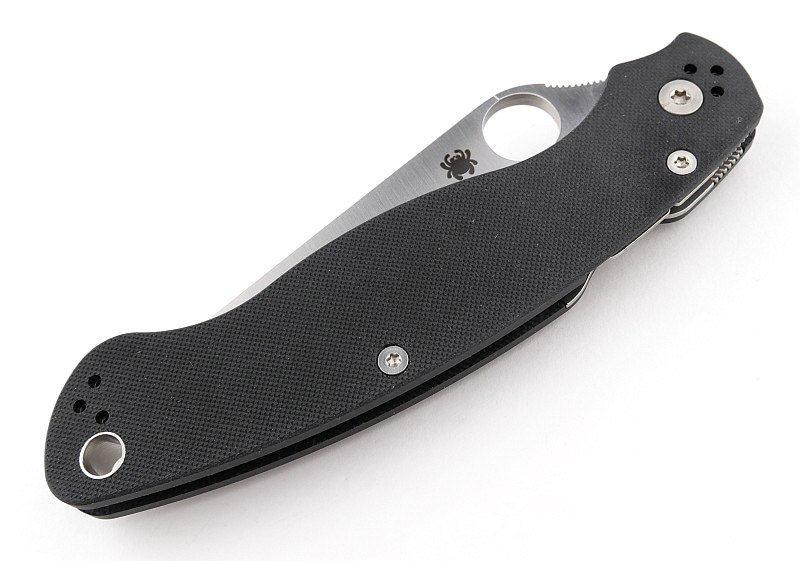
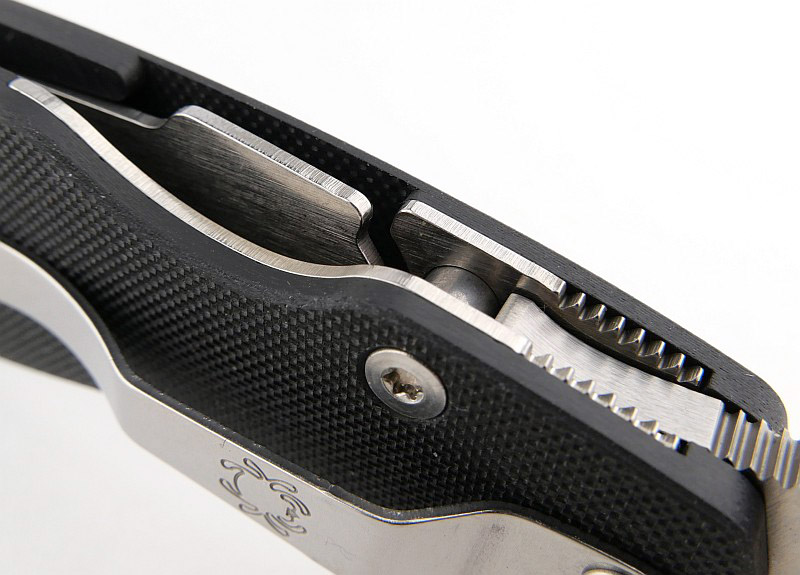
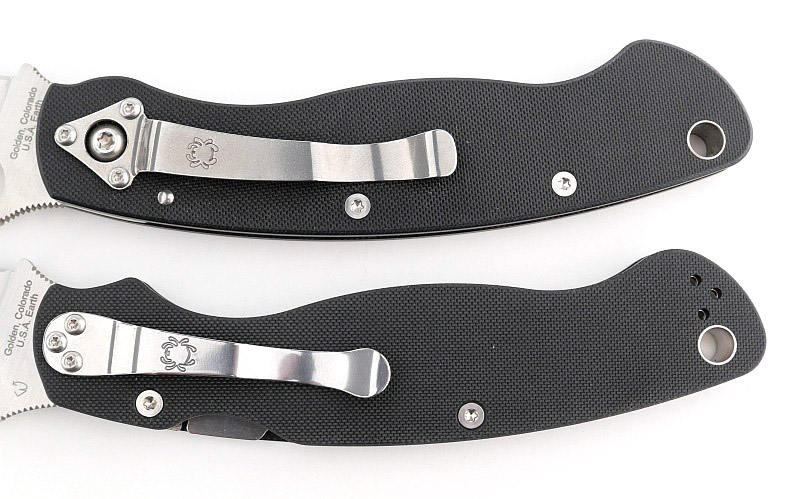
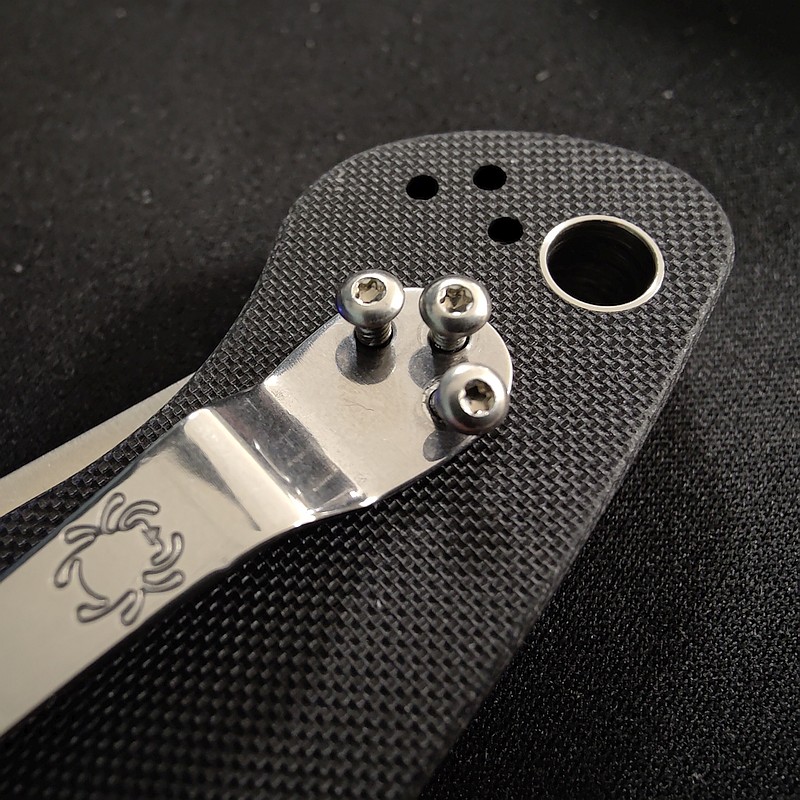
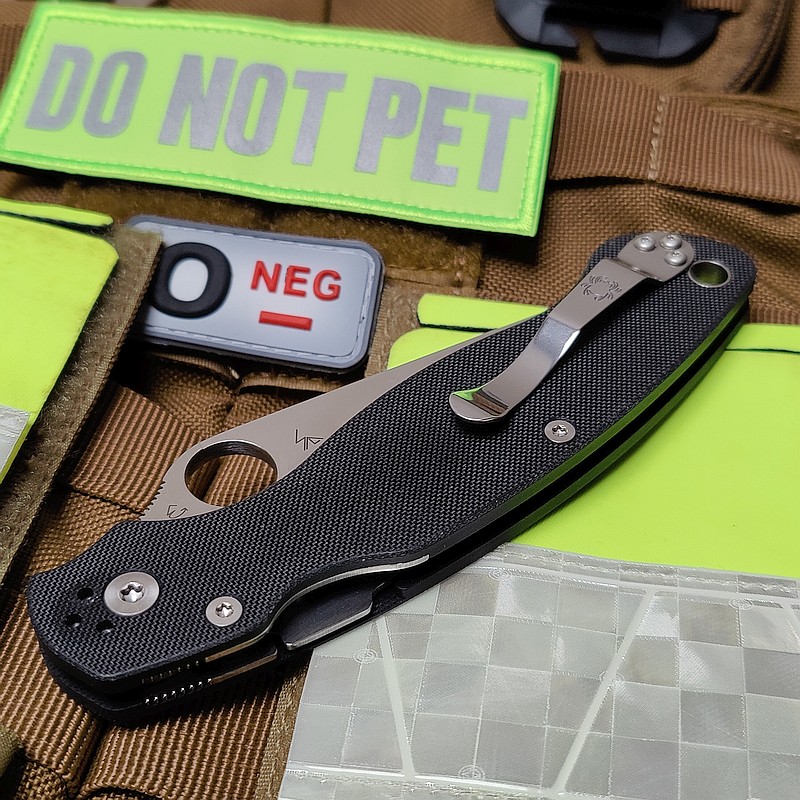
Some of the more obvious updates are easy to spot straight away. The extra pocket clip fitting positions, and compression lock on the back of the handle. Notably missing is the liner lock handle cut-out that normally affects the grip, as the Military 2 now uses a different lock. There is no longer a hole in the clip mount to access the pivot bolt; should you continue to use the clip in a tip-down position, you may need to take it off to adjust the pivot. Next to the compression lock lever, the liners include some thumb grip jimping. Having a choice of all four pocket clip positions is a massive improvement, as clip position is quite a personal choice, and depending if you pocket carry or put onto webbing, you might want to swap this around from time to time. Phosphor-bronze washers; my favourite for stability and reliability.


A good look round the open Military 2 – Things to look out for here are:

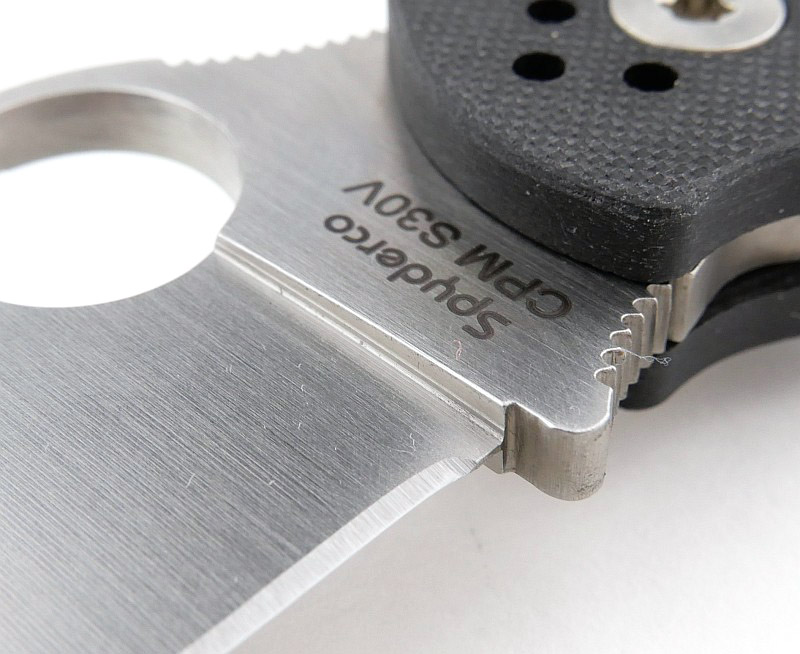
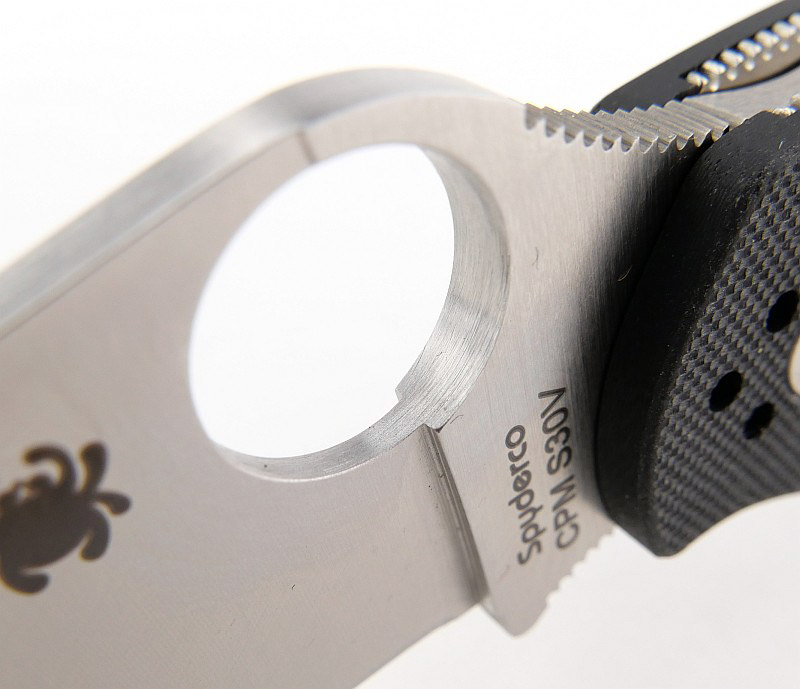
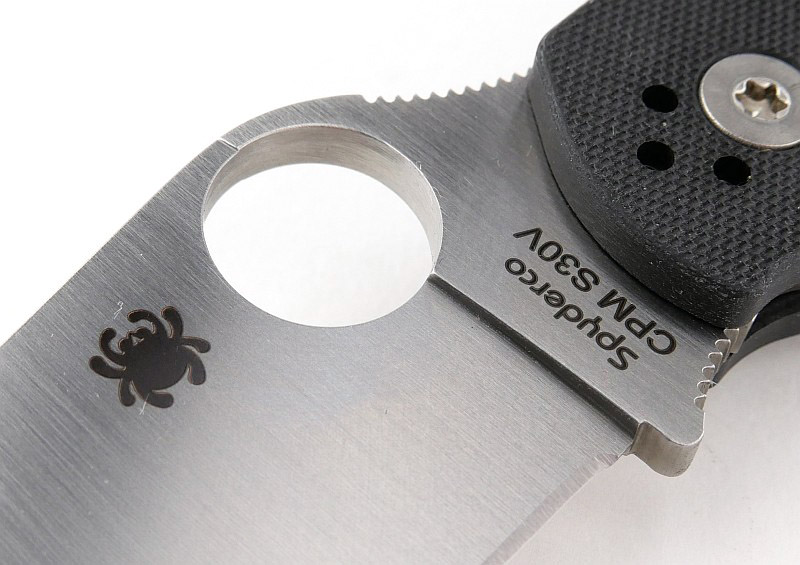
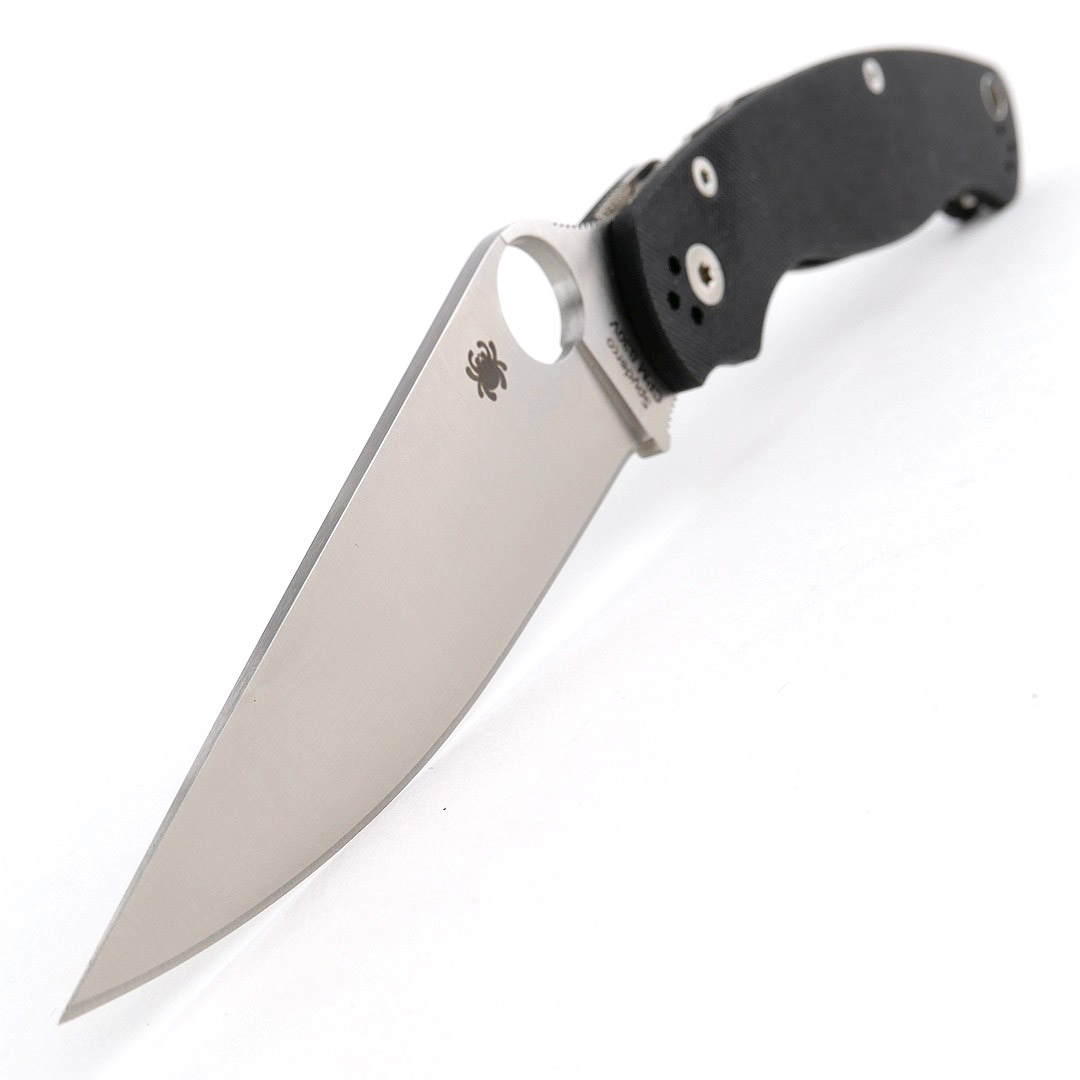
Opening up the blade to reveal that long, eager edge. This is a Large folder, no mistaking that. Now we have the blade open you can see the compression lock engaged in the locked position. Thanks to the change of lock, the handle shape can be optimised for grip instead of incorporating the liner lock cut out, so we have improved first-finger grip shaping. Large blade – Large opening hole.


Explained by the Maker:
Spyderco describe the Military 2 as follows.

Designed by Spyderco co-founder Sal Glesser as the perfect knife for forward-deployed military personnel, the original Military Model is one of the cutlery industry’s most iconic designs. More than 25 years after its original release, the eagerly anticipated Military 2 builds on that hard-earned reputation while incorporating several significant design improvements. Instead of a LinerLock, the Military 2’s full-flat ground CPM® S30V® blade is supported by Spyderco’s signature Compression Lock® mechanism, which offers greater strength and even safer one-handed operation. The stainless steel liners that form the foundation of the lock are larger, giving the knife increased structural strength and anchoring its four-position pocket clip, which is configurable for left or right-side, tip-up or tip-down carry. The skeletonized liners are nested within peel-ply-textured G-10 scales to maintain a slim profile and complement its open-backed construction to reduce the knife’s overall weight. A proud successor to a legendary design, the Military 2 is ready to serve.

The Blade and Handle – Detailed Measurements:
For full details of the tests and measurements carried out and an explanation of the results, see the page – Knife Technical Testing – How It’s Done.

The blade is made from S30V steel.


The Factory edge up close:

Followers of Tactical Reviews will know my views on factory edges, but to recap:

Anyone using a knife will need to sharpen it. That first factory edge is just like the first tank of fuel that a new car comes with (or first charge of the battery).
A good factory edge is a ‘nice to have’ but not a ‘make or break’ for a good knife, as you will be putting your own edge onto it soon enough.
The factory edge does however indicate the care a knife maker has put into the final finish.
It is for this reason Tactical Reviews measures factory edge sharpness and specifications, and includes this information in the detailed technical testing.

As a further look at the factory edge, this section has been added to include some high magnification photos of the factory edges.

Spyderco’s factory edges are reliably excellent.


What is it like to use?

We all know what ‘New and Improved’ typically means for our favourite products…it normally means ‘cheaper to manufacture and worse’. Typically.

What about the Military 2, what have Spyderco done to our beloved Military? Well, they have, in fact, made it better. This is not to say the original Military, if Spyderco continue to make the classic, no longer has a place; it is still the classic liner lock it always was. If you pick up the Military and swap to the Military 2 and back, fundamentally they are the same with a long pointy blade, long handle, and powerful cutting ability. Instead it is in the more subtle refinements that the Military 2 shows it improvements, those small differences in regular actions and handling that start to shine through.

General handling makes a couple of those updates all the more apparent. The forward choked-up position now has the proper first finger shaping and grip; it just fits and sits better. Open and close, open and close, and the ease the Compression lock brings also shines through. One-handed closing becoming a breeze with the lock released, and the blade falling closed under its own weight, made safer as you do not need to put your hand in the blade’s path to unlock it.


I absolutely love a big folder, and the Military 2 just wanted to get to work, so who am I to stand in the way! The blade reach is excellent, making all the jobs I deployed it for quick and easy. Over and over those two biggest changes, the lock and improved grip shape making the knife itself almost disappear and the jobs complete themselves. For me the Tip-Up clip position and right-handed side means that as I draw the knife out of my pocket, the handle is already in the right orientation and my thumb finds the opening hole immediately, so I have swapped the clip over to this location from the factory position.
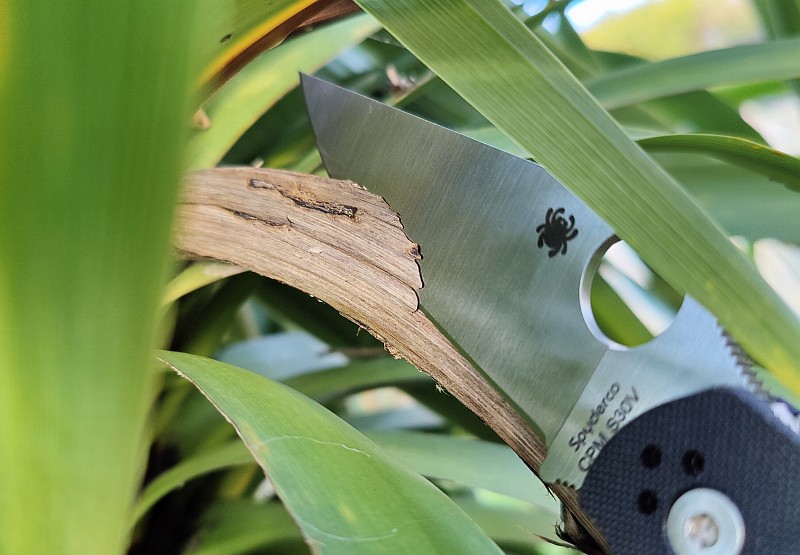
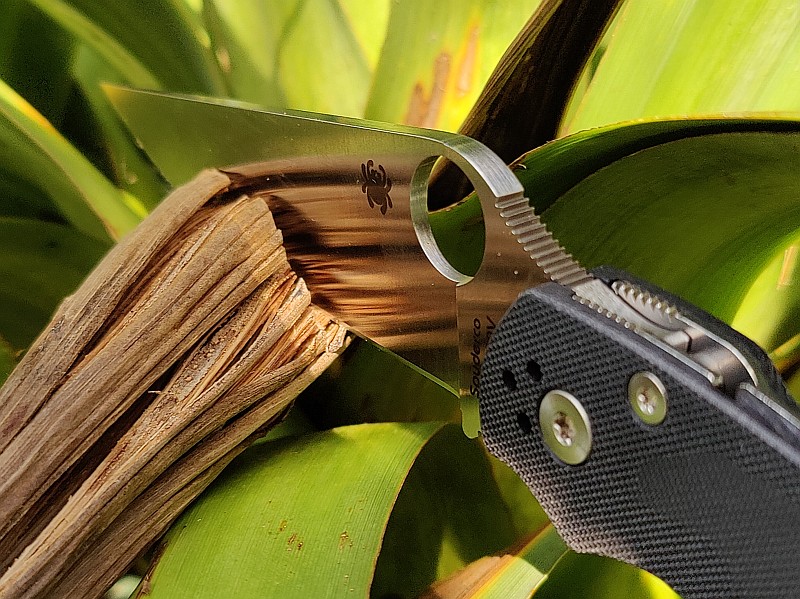
Though it is a heavy duty knife, the fineness of the blade has always made me wonder a little. Personally I’ve never had a Spyderco full-flat blade (or any other) fail on me in use, but it is just with the Military 2, the blade is very long. For part of the testing I decided to baton it through pallet wood cross-grain, cutting not splitting. That slicey blade shape just falls through the boards, and comes back out as easily. No gentle tap here, I was full swing pounding on it, and no concerns at all. Obviously it is easy to actually abuse a blade, and I was not trying to do this, but instead just work it hard. It took all this in its stride.


Is the Military 2 true to the original Military model? – Yes.
Is the Military 2 an improvement over the original Military model? – I certainly say Yes.

Review Summary

The views expressed in this summary table are from the point of view of the reviewer’s personal use. I am not a member of the armed forces and cannot comment on its use beyond a cutting tool or field/hunting knife.

Something that might be a ‘pro’ for one user can be a ‘con’ for another, so the comments are categorised based on my requirements. You should consider all points and if they could be beneficial to you.

_______________________________________________
What doesn’t work so well for me
_______________________________________________

No sharpening choil.
The peeled G10 is very abrasive to your pocket.
It makes me want all the different versions of the Military 2.

_______________________________________________
Things I like
_______________________________________________

Compression lock.
It is a Large folder.
Very slicey and pointy blade.
Improved grip shaping over its predecessor.
Phosphor-bronze pivot washers.
Four-position pocket clip.
Full length steel liners.
Excellent factory edge.
‘New and Improved’ – Yes it is.

Review Videos

Starting with a short format sixty second review:


Onto a full video review covering many more details:


Discussing the Review:
Something new – will it work? A Tactical Reviews Subreddit.
TacticalReviewsChat on Reddit
Please visit there and start/join the conversation.

Knife Review: Casström No.14 SFK and Lars Fält Slip Joint

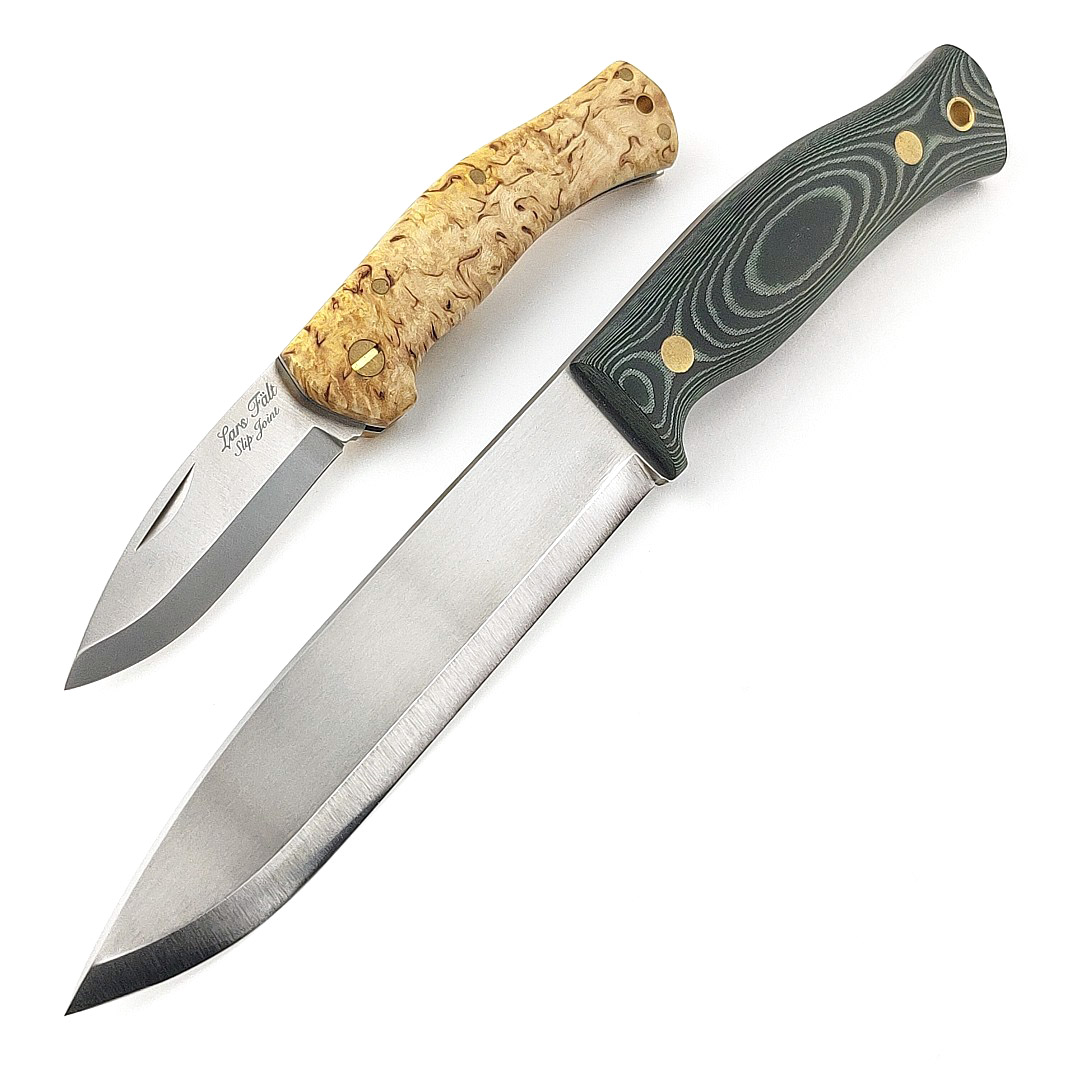
I decided to pair up a fixed blade and folder for this detailed review; the Casström No. 14 SFK and Casstrom Lars Fält Slip Joint. The No.14 is a new knife designed by Casström to tackle the toughest challenges nature throws your way. Built for rugged outdoor use, bushcrafting, survival skills training, or hunting. With its full-tang construction, the No.14 SFK’s large blade is great for those bigger more demanding jobs, like splitting wood but also just as happy carving too. This example features green Linen Micarta handles and A8Mod steel, and is supplied with a vegetable-tanned leather sheath.
The Casström Lars Falt Slip Joint was created in collaboration with world-renowned Swedish survivalist Lars Fält, and was designed to meet UK EDC legal requirements by virtue of having a non-locking folding blade under 3 inches with a sturdy opening and closing mechanism. The handle is crafted from beautiful Scandinavian curly birch, offering a secure and comfortable grip, and the blade steel is cryo-quenched Alleima (formerly Sandvik) 14C28N, a recycled Swedish stainless steel.

What’s in the box?:
Both knives are presented in cardboard boxes with the minimum of fuss.


The No. 14:

A good look round the No. 14’s sheath – Things to look out for here are:
A beautifully made, traditional friction/gravity leather sheath (vegetable tanned leather). Construction is from one folded piece of leather, plus the double welt insert to protect the stitching and stabilise the blade. Each end of the stitching is riveted for extra strength and the lower rivet is hollow so you can add a leg tie if you want. It also includes a good size drainage hole in the design.


A good look round the No. 14 – Things to look out for here are:

Though the handle shape and size, and the knife’s overall form are typical for this style of scandi-grind bushcraft knife, the extra ruggedness is clear from the longer blade and extra-thick blade stock.
The review sample is fitted with green linen micarta handles, nicely showing off the ergonomic shaping as contour lines in the layered micarta. Both handle rivets and the lanyard tube are brass. Somehow the blade steel looks thicker than the 4mm stock used, and really shows its robustness.
As delivered, the No. 14 has a full zero grind scandi edge.


The Lars Fält Slip Joint:

A good look round the Lars Fält Slip Joint belt pouch – Things to look out for here are:

Really this pouch is too good an option not to get. The beautifully crafted leather belt pouch (also using vegetable tanned leather), is a perfect companion to the Lars Fält Slip Joint. In this case it is a two piece construction, with the belt loop and flap being one piece which is riveted onto the stitched main pouch body. There is a welt allowing for a small drainage hole to complete it.


A good look round the Lars Fält Slip Joint – Things to look out for here are:

Casstrom’s folders (locking and non-locking) are only made with Curly Birch handles (no micarta option) which adds to their character and unique look for each knife. Liners, blade and back-spring are all stainless steel, and the remaining fittings, rivets, and lanyard tube, are brass. The sturdy blade has a large nail nick and a scandi grind; this time with a micro-bevel rather than full zero edge.


The Blade and Handle – Detailed Measurements:
For full details of the tests and measurements carried out and an explanation of the results, see the page – Knife Technical Testing – How It’s Done.

The blades are made from A8 Mod and 14C28N steel.


The Factory edge up close:

Followers of Tactical Reviews will know my views on factory edges, but to recap:

Anyone using a knife will need to sharpen it. That first factory edge is just like the first tank of fuel that a new car comes with (or first charge of the battery).
A good factory edge is a ‘nice to have’ but not a ‘make or break’ for a good knife, as you will be putting your own edge onto it soon enough.
The factory edge does however indicate the care a knife maker has put into the final finish.
It is for this reason Tactical Reviews measures factory edge sharpness and specifications, and includes this information in the detailed technical testing.

As a further look at the factory edge, this section has been added to include some high magnification photos of the factory edges.

The No. 14’s Edge:

Once you move onto the next gallery with the Lars Fält Slip Joint’s Edge, you will see the clear difference between this knife’s zero grind edge, and when there is the extra bevel.
Casstrom advise you to add a micro-bevel if you intend to subject the No 14 to heavy chopping to help stabilise the edge and prevent chipping. Having given this zero grind edge a beating to intentionally see if it would chip, so far it has remained intact.


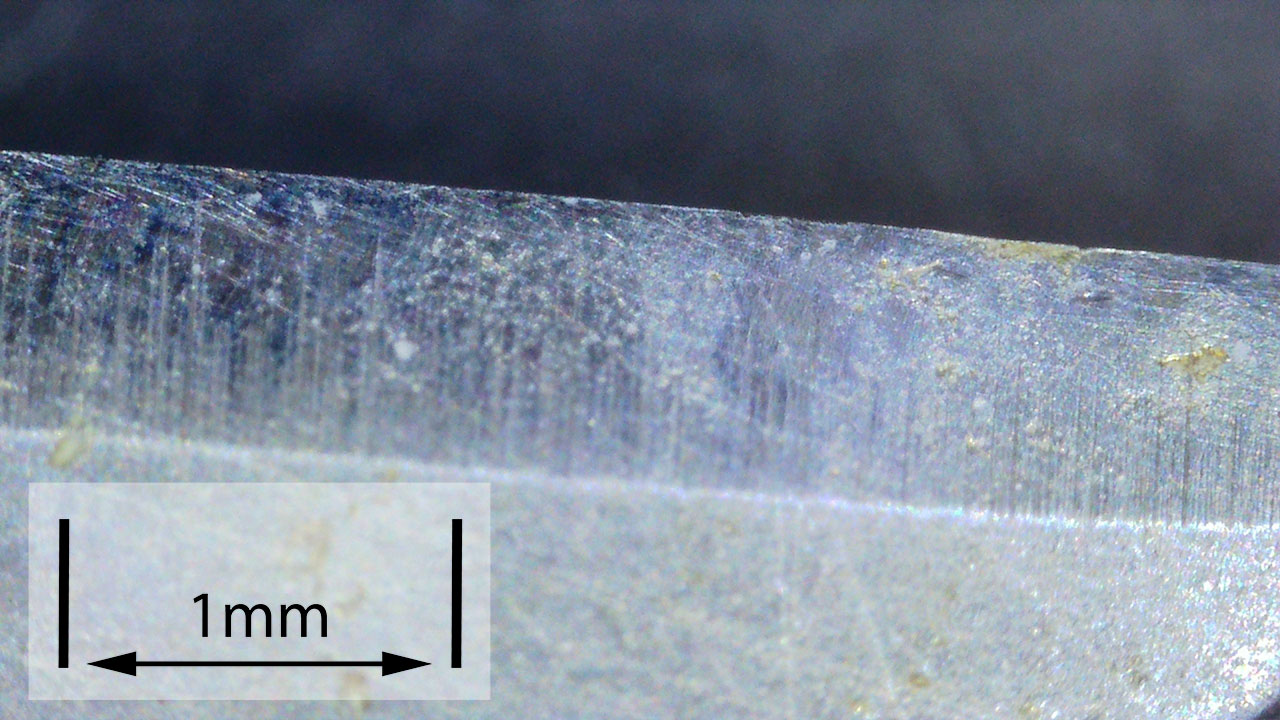
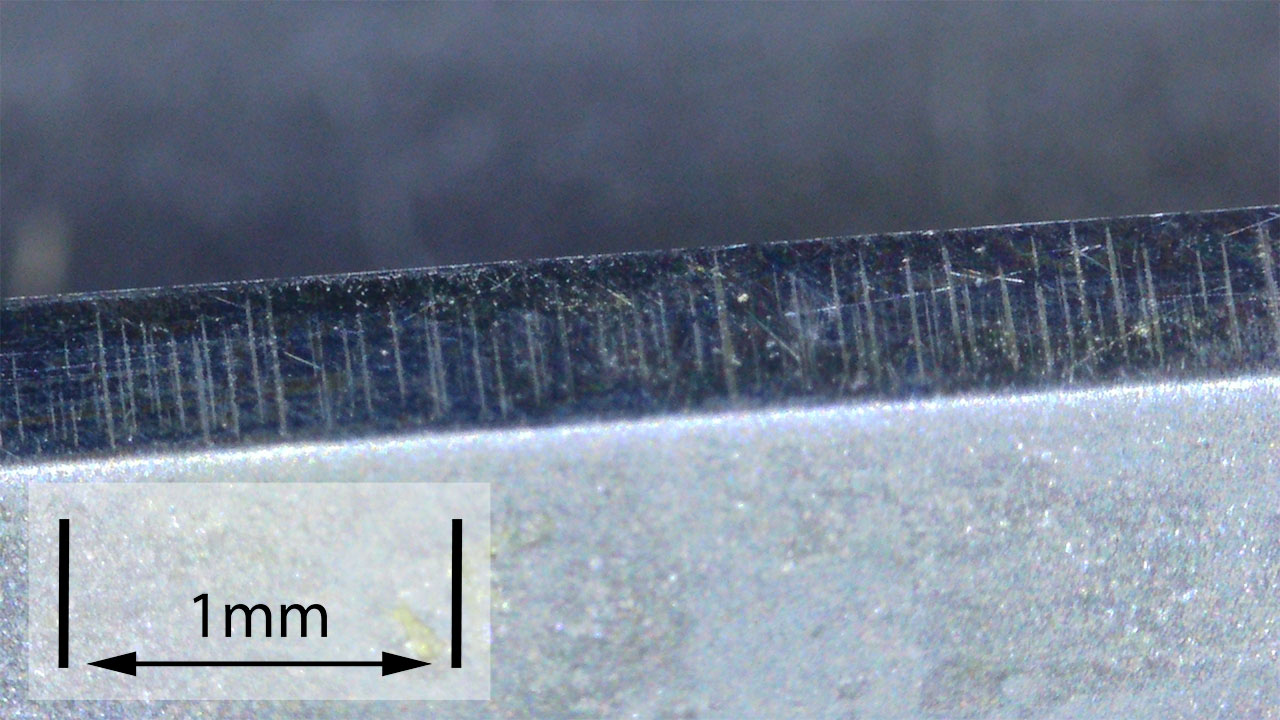
The Lars Fält Slip Joint’s Edge:

Yes, these are magnified, and are showing a 1mm scale, but even so I feel this is more than a micro-bevel, and more into the realms of a small edge bezel. The mini-bevel shown clearly here, when checked with the laser edge bevel protractor, is found to be convexed to a final edge angle of 60 degrees (30 DPS).


What is it like to use?

For this review the fixed blade and folder have been specifically partnered as an elegant traditional pairing. The only time you will catch me out and about with only one knife is if I’ve lost all but the one I still have, so I am always partnering up knives. This is to have different knives to better suit the various cutting tasks, which is more comfortable and helps you do more work with less effort. So, although specifically partnered as a Casstrom pairing for this review, it is a partnership I would happily make for function and looks, any day.
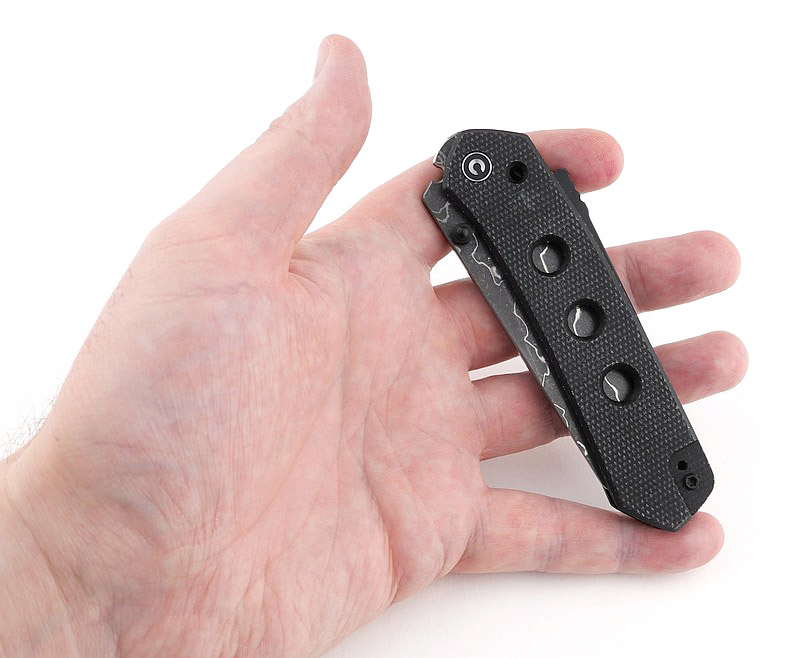
To best show their relative sizes, this gallery includes each knife in my XL glove sized hands. You can clearly see the extended blade of the No. 14 and versatility of the smaller folder.


In my overall edged tool use, I’ve been finding where the No. 14 best fits. With the blade grind and thickness, I’ve found it struggles with outright cross-grain chopping. That thicker blade and wide wedge grind retards the penetration of each strike, ending up almost bouncing back when using a chopping action, combined with a relatively slim handle and the No. 14 wasn’t working for me as an outright chopper. Where this limitation suddenly becomes a benefit is with splitting tasks. Batoning the knife into end grain to split, and it becomes a doddle. The extra blade length giving you more room to strike it, and the wedge-shaped grind being excellent at splitting along the grain.
If the diameter of the wood being struck with a chopping action is thin enough, the wedge effect of the thicker blade is no longer a problem, so cleaning up bigger branches by whipping off the side shoots works well with the No. 14’s longer and heavier blade; this type of chopping action does work well. It is more a matter of knowing the characteristics and working with them than trying to make the knife do something it is not good at.

Despite the suggestion of adding a micro-bevel to protect the edge, I wanted to test the toughness of Casstrom’s A8 Mod and heat treat, and despite going full whack on the blade, so far I’ve seen no edge chipping; a great outcome. I prefer the zero grind edge so as far as I am concerned I’ll take that risk and stick with it.

On the subject of zero grinds, I fully intend to take the Lars Fält edge to a zero grind, but as this will take a bit of work due to the mini-bevel on the factory edge, haven’t got it done in time for this article. This will be a super fine edge, especially compared to the factory bevel at 30 DPS, so I might end up putting the micro-bevel back on.

For a slip-joint the firmness of action makes a big difference to the experience. If the action is too stiff, it can be difficult to use and worrying to close. This Lars Fält is reassuringly firm in action, almost verging on too stiff. In fact having asked people less familiar with edged tools to try it, they struggled to open and close this knife safely (I had to intervene). Due to the stiffness, the nail nick doesn’t work for me and I have to use a pinch grip on the blade, carefully taking it to the half stop and readjusting my grip to fully open the blade. In use it has certainly instilled confidence that the blade will stay where it should (with correct technique of course). Being able to chose a UK EDC Legal slip-joint with a scandi grind is a really nice addition to my carry options, and one I can carry without having to worry if I should or shouldn’t have it on me.


Casstrom give you beautiful traditional designs made with sustainable materials, that look as good as the perform.

Review Summary

The views expressed in this summary table are from the point of view of the reviewer’s personal use. I am not a member of the armed forces and cannot comment on its use beyond a cutting tool or field/hunting knife.

Something that might be a ‘pro’ for one user can be a ‘con’ for another, so the comments are categorised based on my requirements. You should consider all points and if they could be beneficial to you.

_______________________________________________
What doesn’t work so well for me
_______________________________________________

No. 14 – Geometry not suited to cross-grain chopping.
No. 14 – Semi-stainless steel (needs some maintenance).
No. 14 – Handle too slim for chopping.
Lars Fält – More of a mini-bevel than micro-bevel
Lars Fält – Opening action too stiff for many people.

_______________________________________________
Things I like
_______________________________________________

No. 14 – Excellent for splitting wood.
No. 14 – Super tough steel.
No. 14 – Extra blade length makes batoning easier.
No. 14 – Zero-grind edge.
No. 14 – Quality leather sheath.
No. 14 – Sleek and easy to carry (despite longer blade).
Lars Fält – Very firm slip-joint action.
Lars Fält – Scandi grind in a folder.
Lars Fält – High quality leather belt pouch available.
Lars Fält – All brass fixings.
Lars Fält – Sturdy blade.
Lars Fält – EDC legal (where local laws allow).

Review Videos

Starting with a short format sixty second review of the No. 14:


Starting with a short format sixty second review of the Lars Fält Slip Joint:


Onto a full video review covering many more details:


Discussing the Review:
Something new – will it work? A Tactical Reviews Subreddit.
TacticalReviewsChat on Reddit
Please visit there and start/join the conversation.

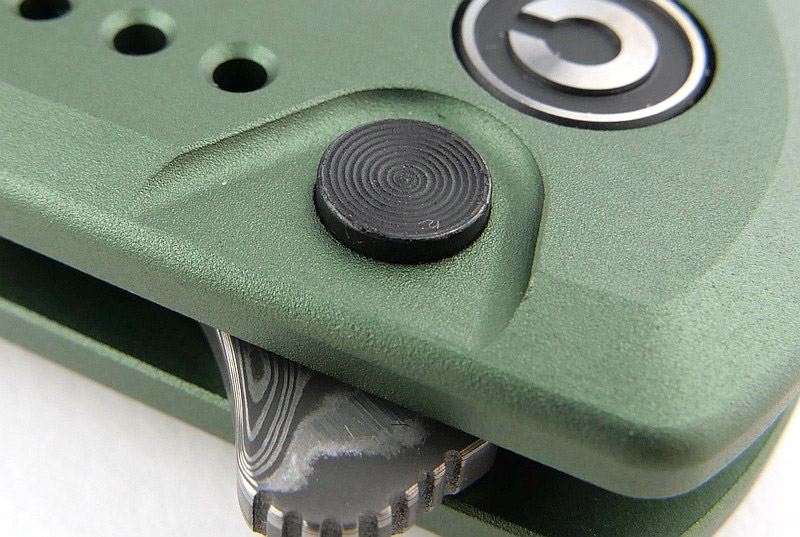
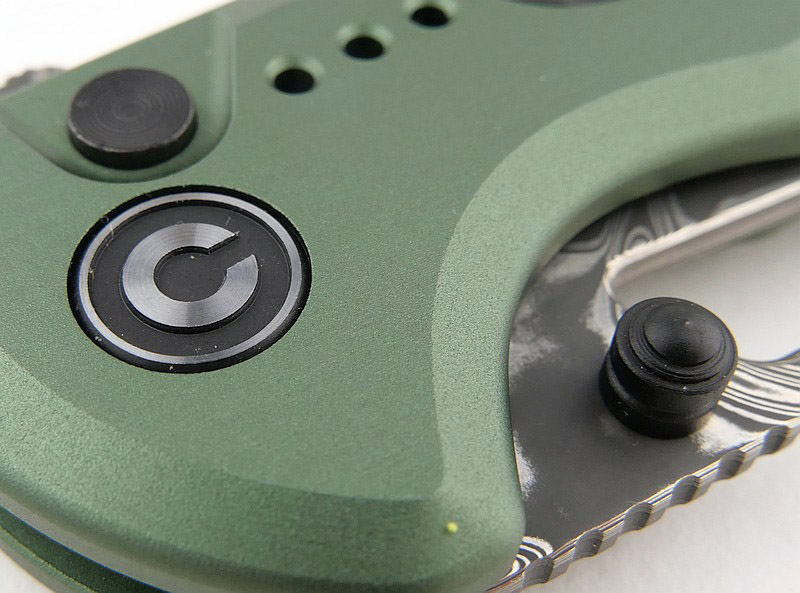
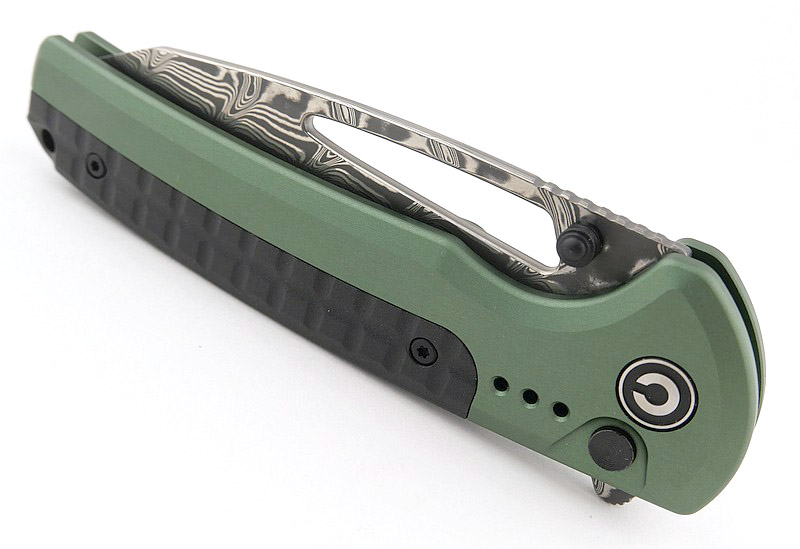
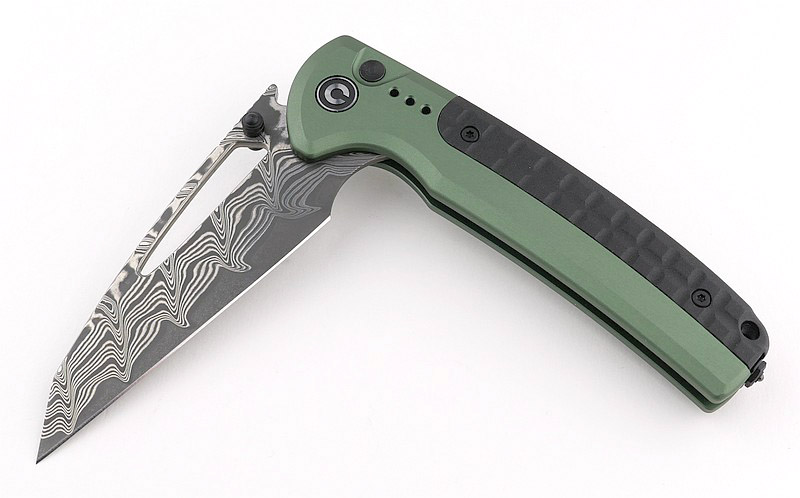
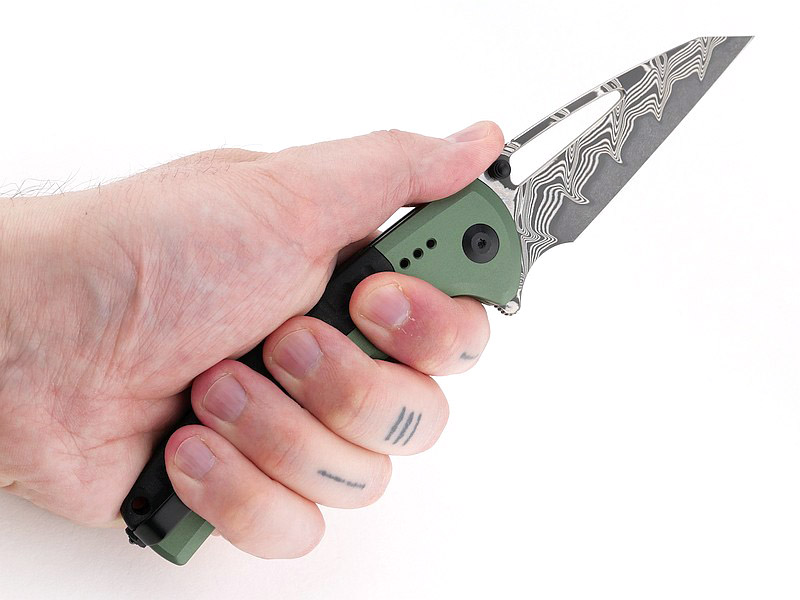
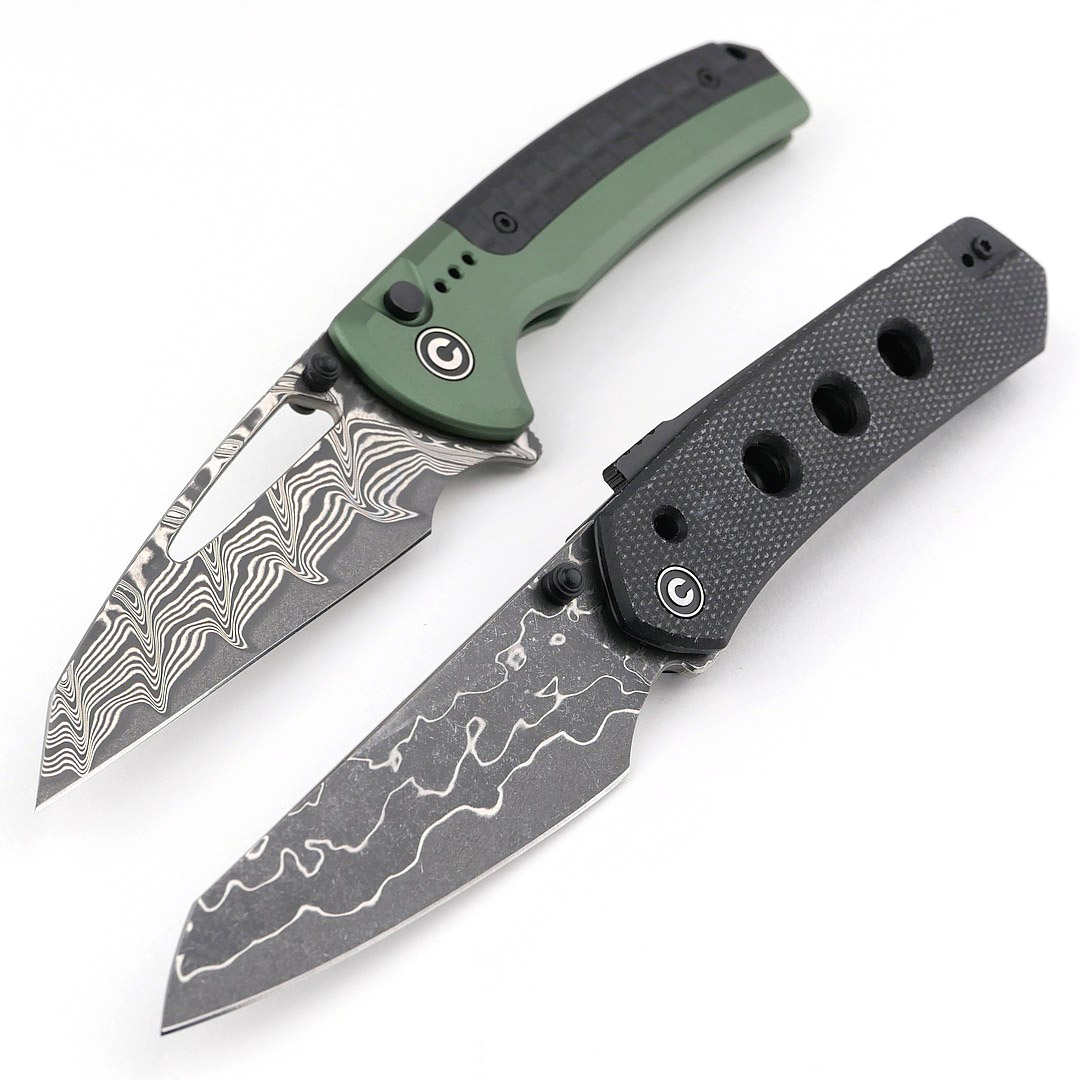
Knife Review: Civivi Sentinel Strike and Vision FG

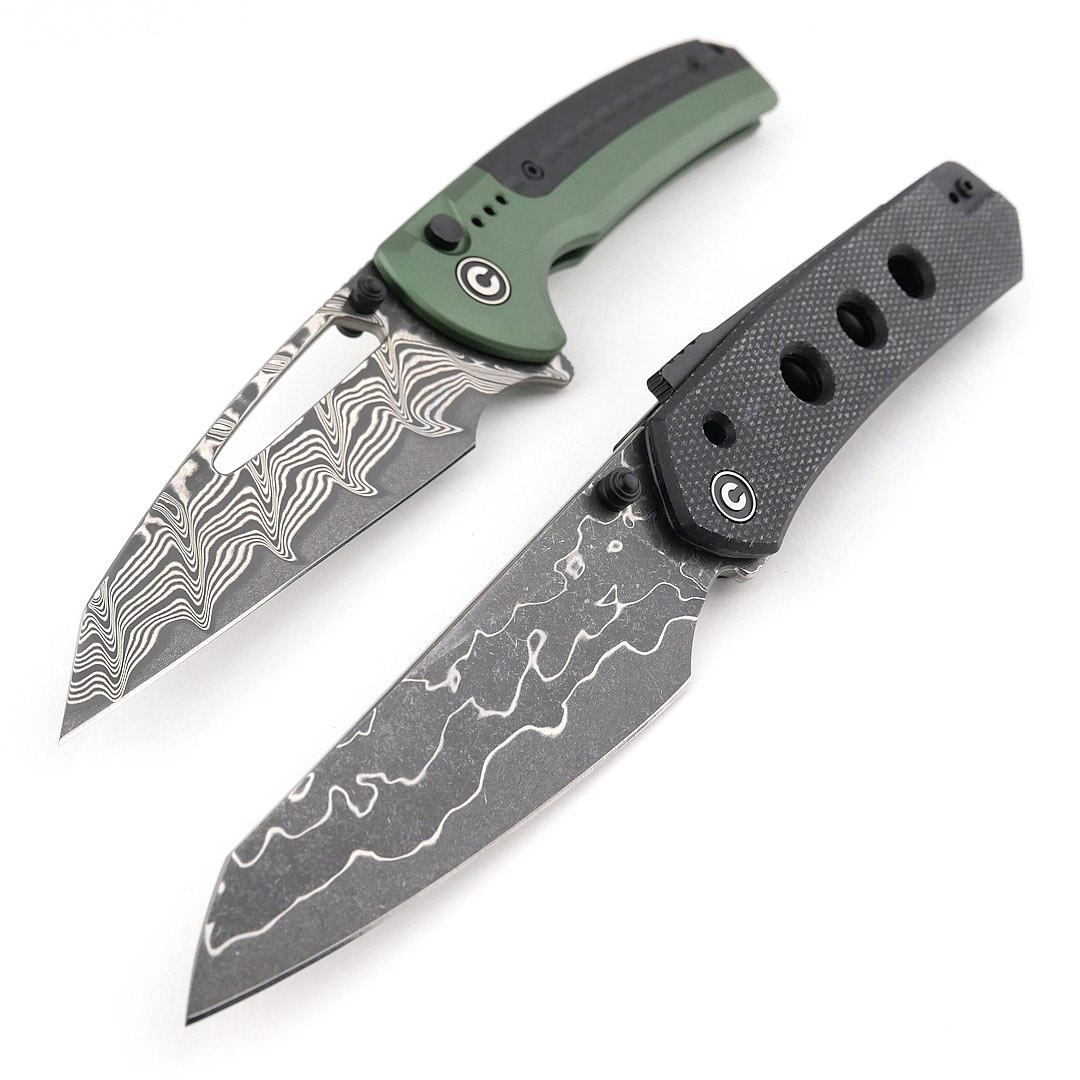
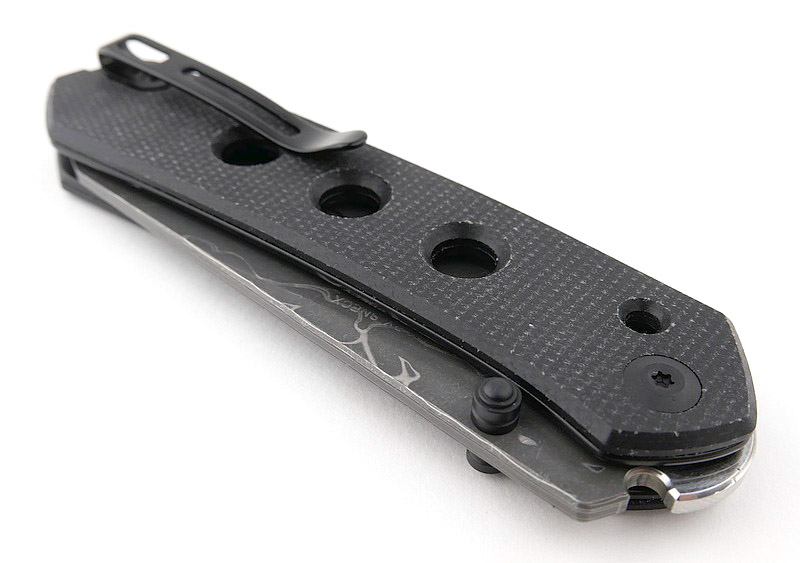
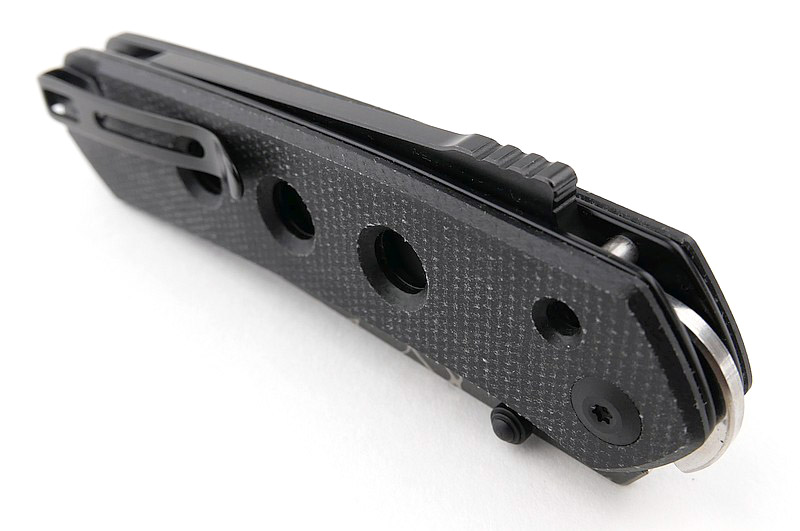
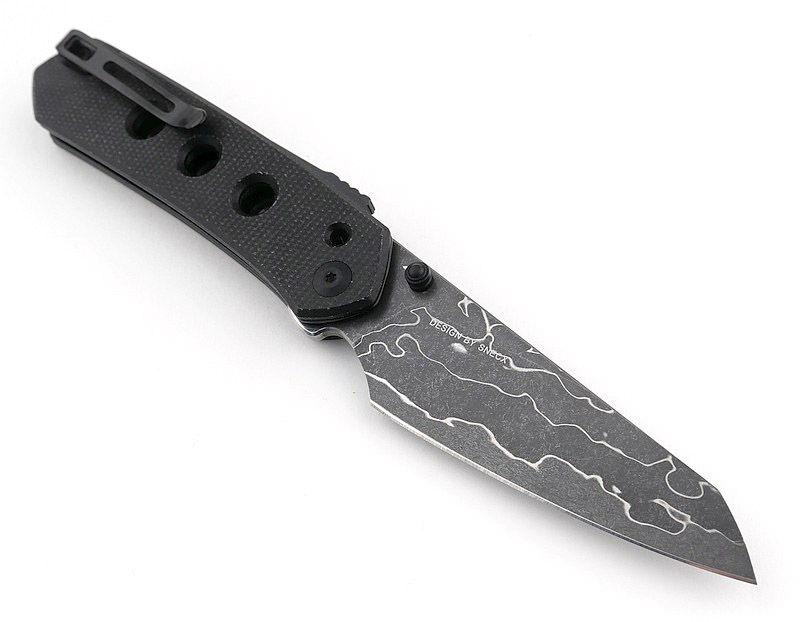
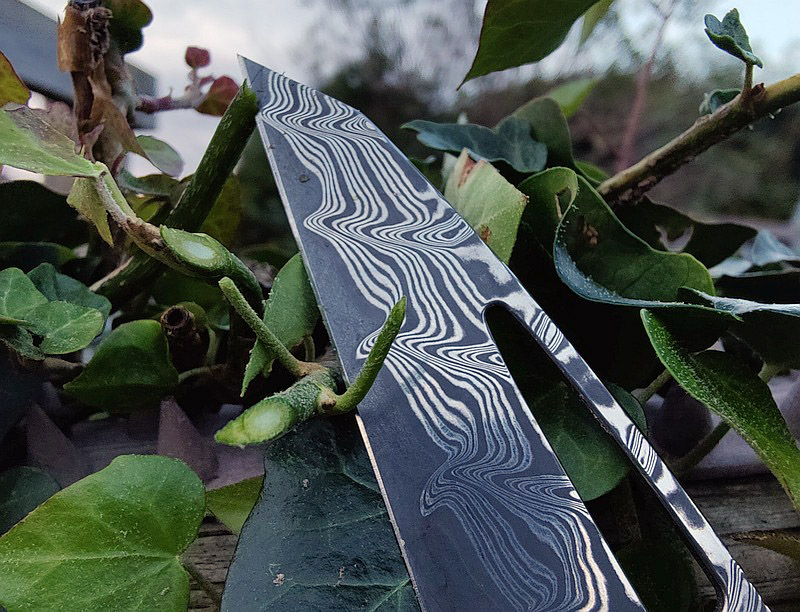
The Vision FG and Sentinel Strike are two of Civivi‘s best sellers. In this detailed review of the Vision FG and Sentinel Strike we are taking a close look at two versions of these knives featuring Civivi’s genuine Damascus steel blades. The Vision FG, designed by Snecx Tan, is equipped with the ‘Superlock Mechanism’. The ‘Superlock Mechanism’ is a lock design Snecx and WE Knife worked on together develop. For this lock, the back of the handle has a titanium bar which hinges just below the pocket clip. The bar is spring loaded and pushed into a cut-out between the blade and the stop pin – the lock gets stronger the more pressure you apply. Push the bar backwards and the blade unlocks easily.
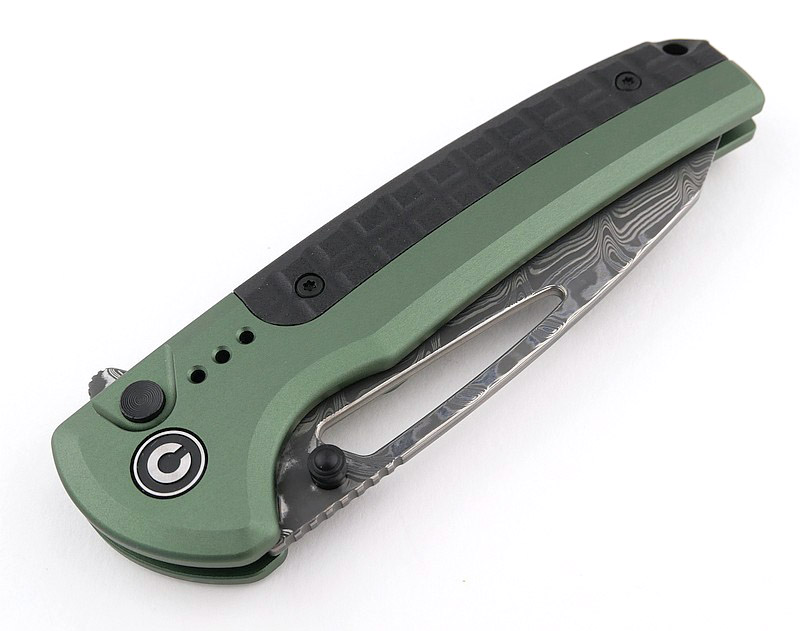
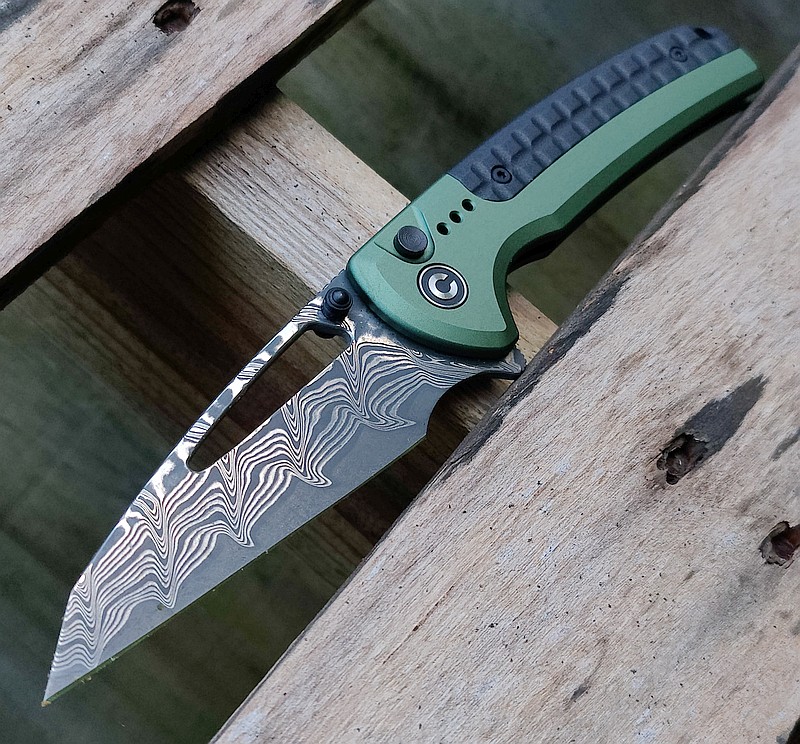
The Sentinel Strike has a reverse-tanto blade shape. Its straight edge makes it an ideal knife for so many cutting tasks. The knife is easy to open with the thumb studs, flipper or large hole in the blade, and it has a very smooth opening action. The blade is locked in place with a button lock.

Join me in this review of the Vision FG and Sentinel Strike to see why these Civivi knives are so popular.

What’s in the box?:

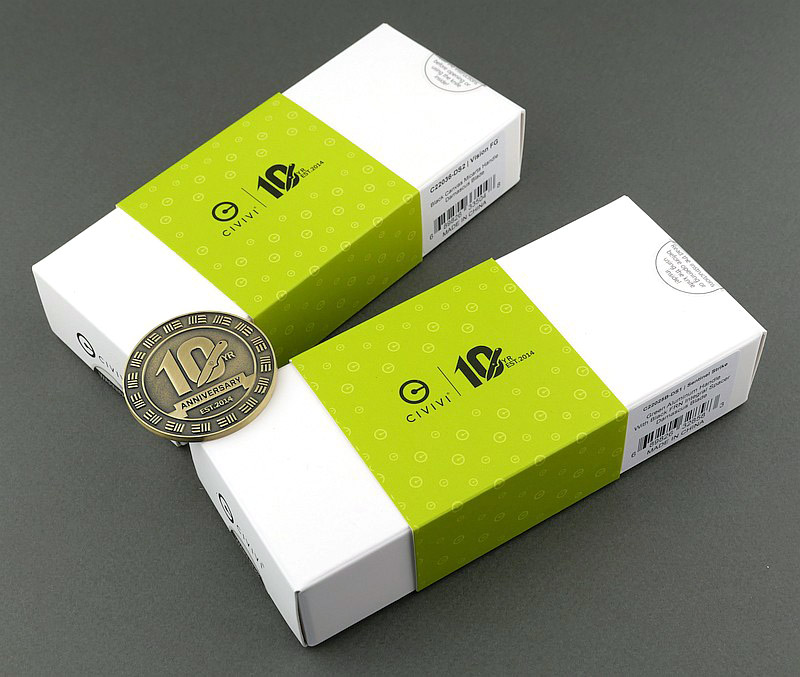
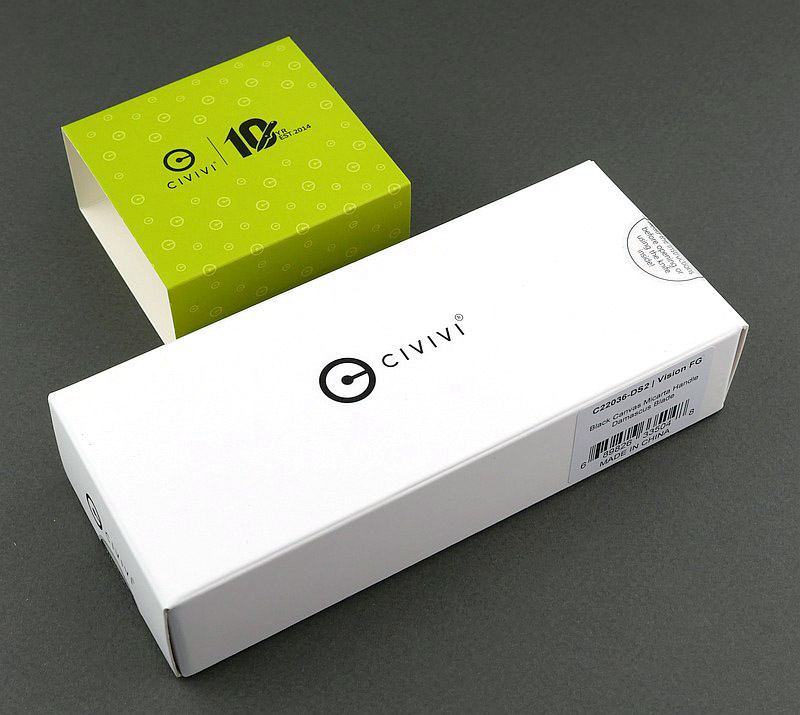
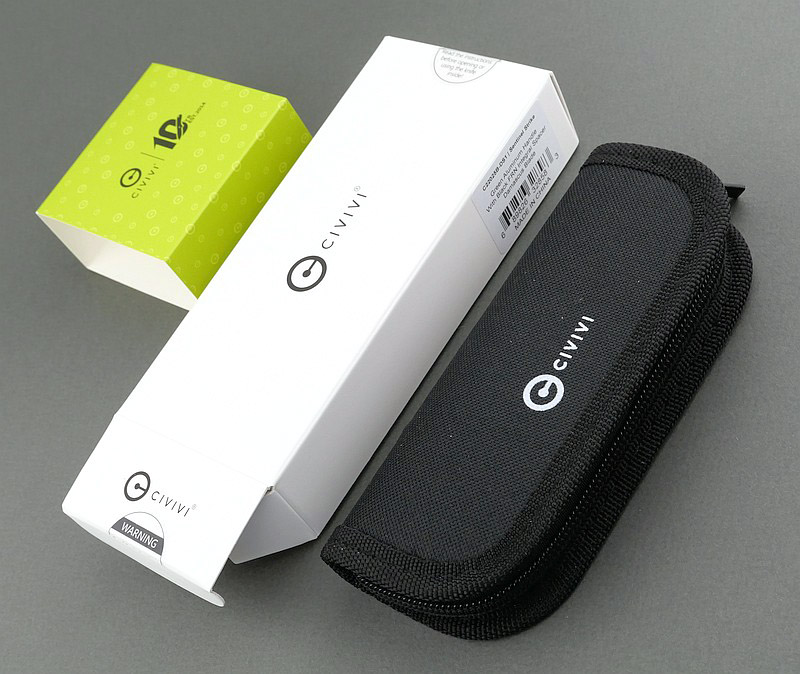
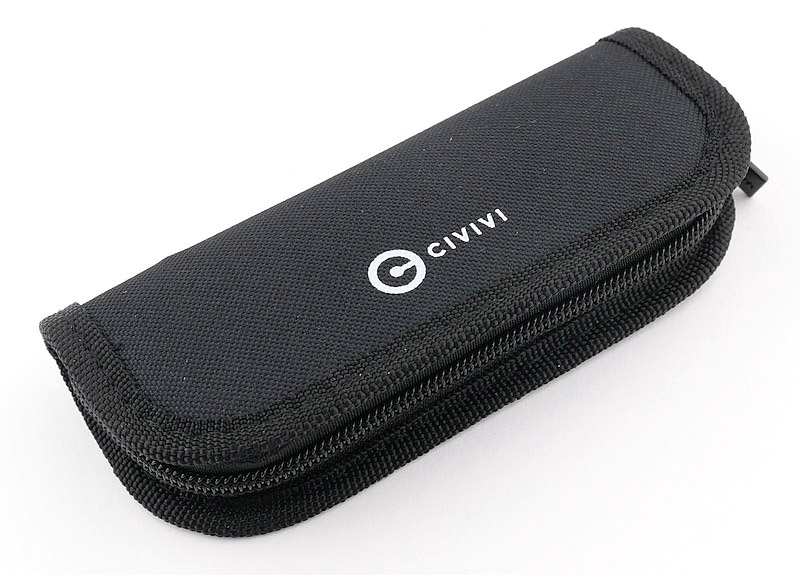
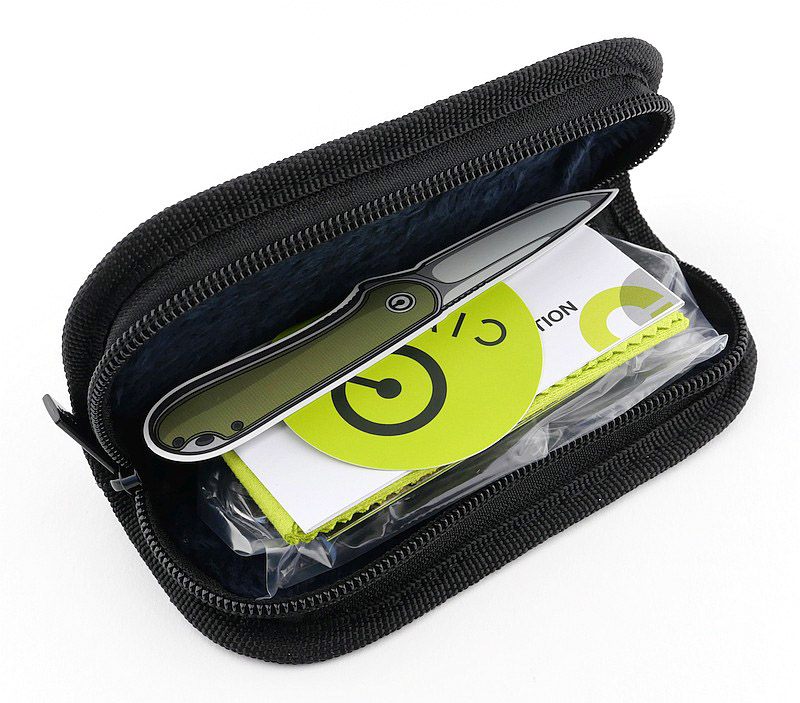
These are in the 2024 10th Anniversary boxes, with WE Knives / Civivi becoming 10 years old in 2024. Both knives use the same packaging and have the same contents apart from the knives themselves. Considering the price point, the fact they include a nice zip up storage case is a bonus. Also included are a few stickers and a cleaning cloth.


A good look round the Vision FG – Things to look out for here are:

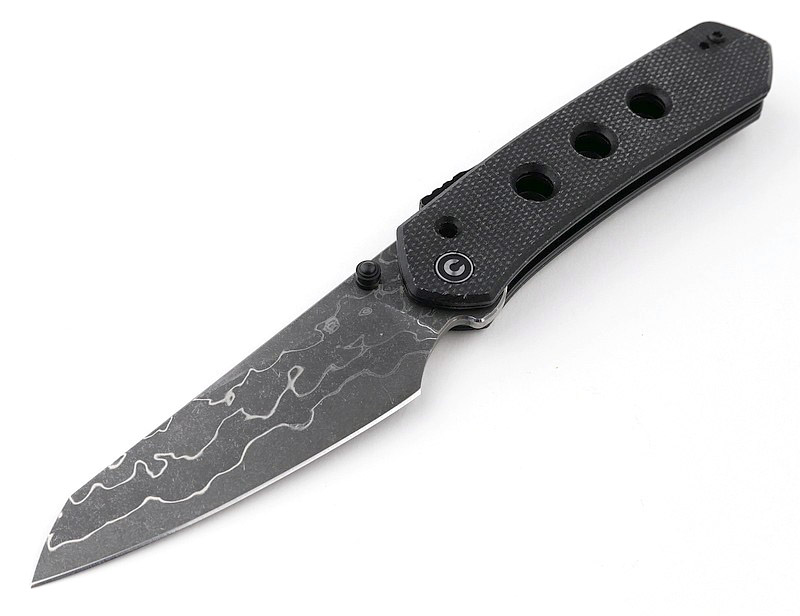
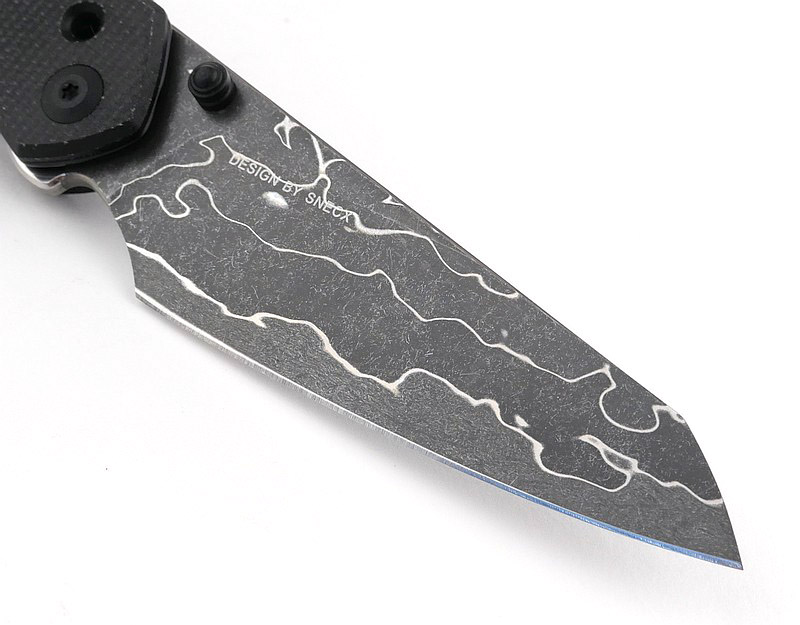
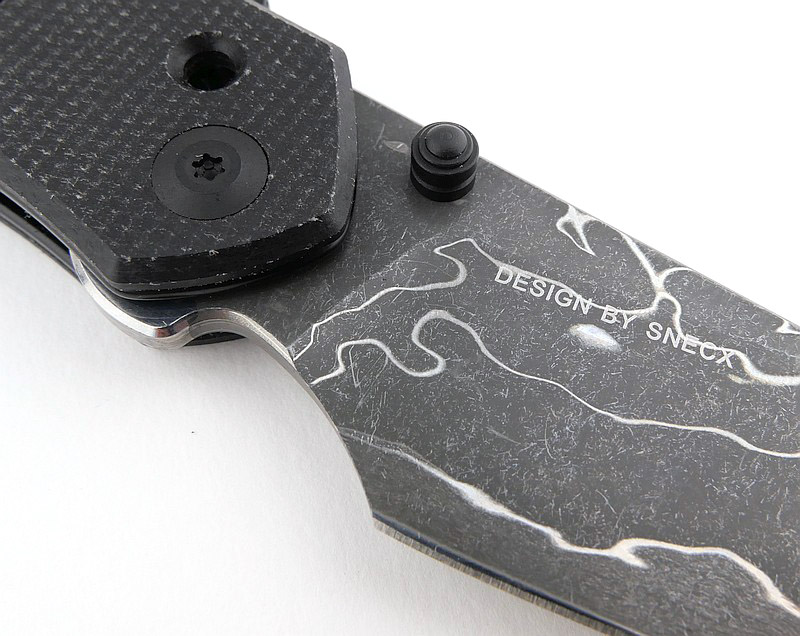
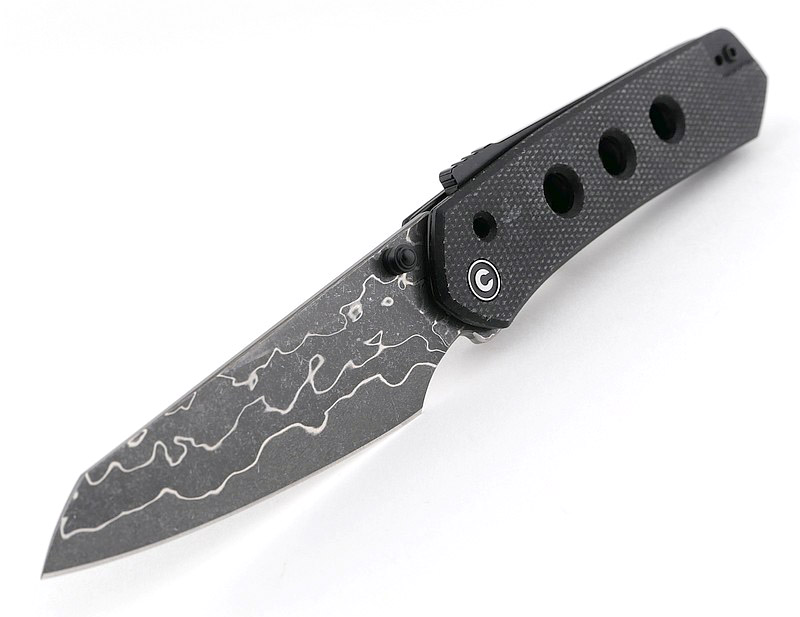
Mainly as it was the first of the two I picked up, we are starting with the Vision FG. Featuring a genuine Damascus steel blade, the composition of which is included later in the review, also happens to be different to the Damascus used in the other knife in this review and makes for a very distinctive look.

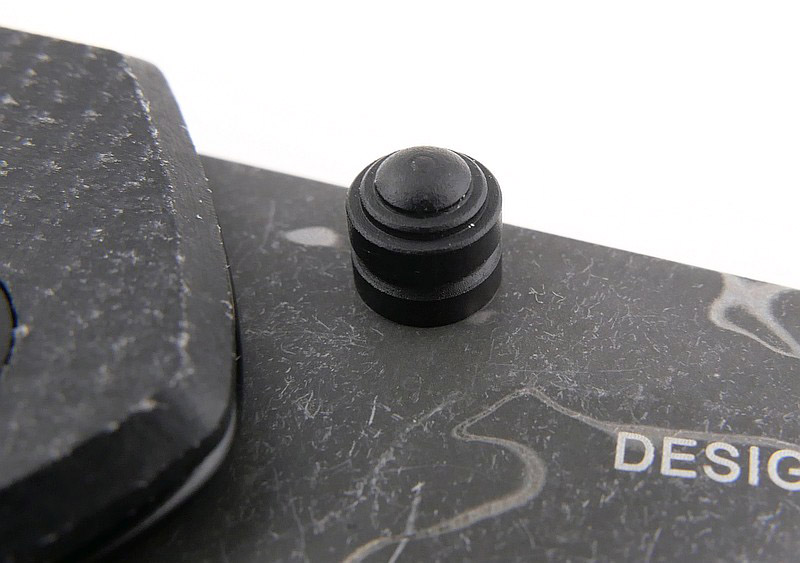
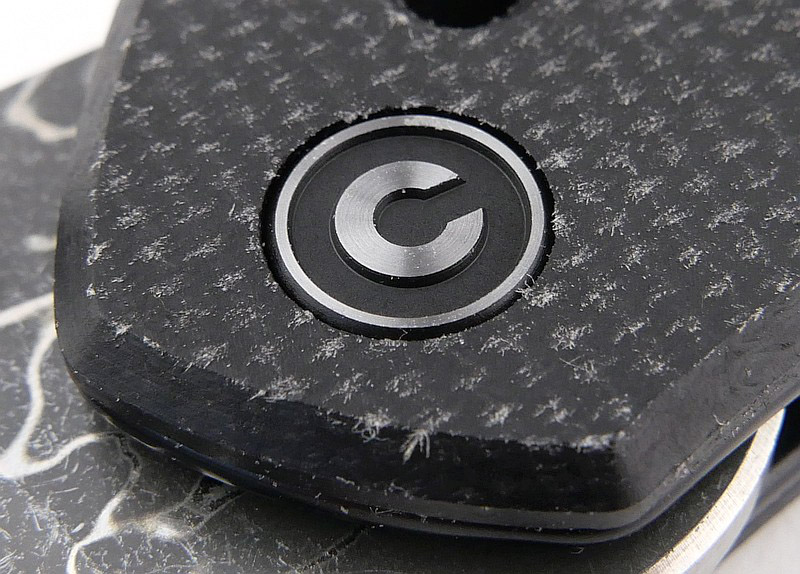
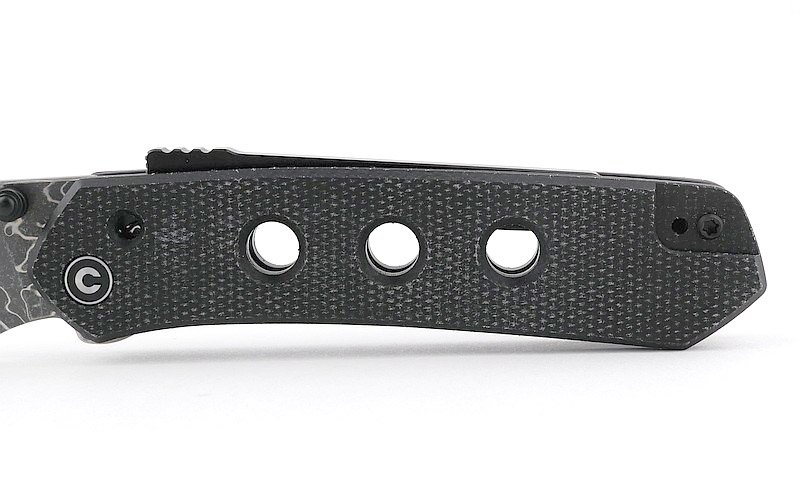
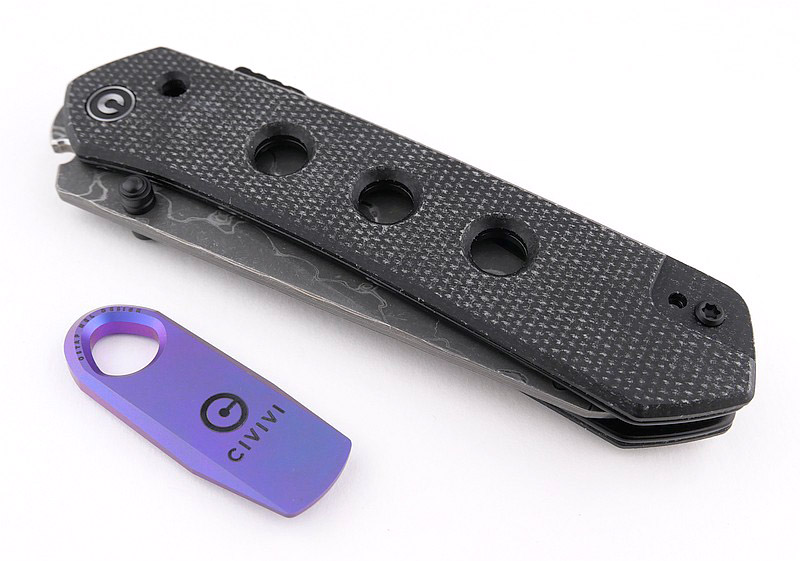
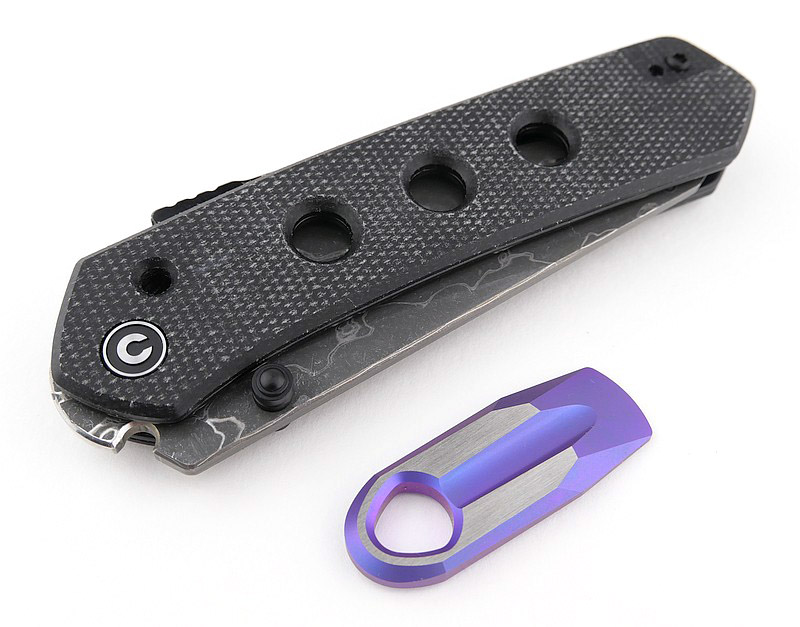
This version of the Vision FG has the black Micarta handles on top of the steel liners; there is a black G10 as well, so you can choose the feel of the scales you prefer. This gallery focuses closely on details like the handle texture, thumb-stud, and pivot fixings including Civivi’s branded bolt head.
The pocket clip is a tip-up position and can be fitted to either side of the handle.
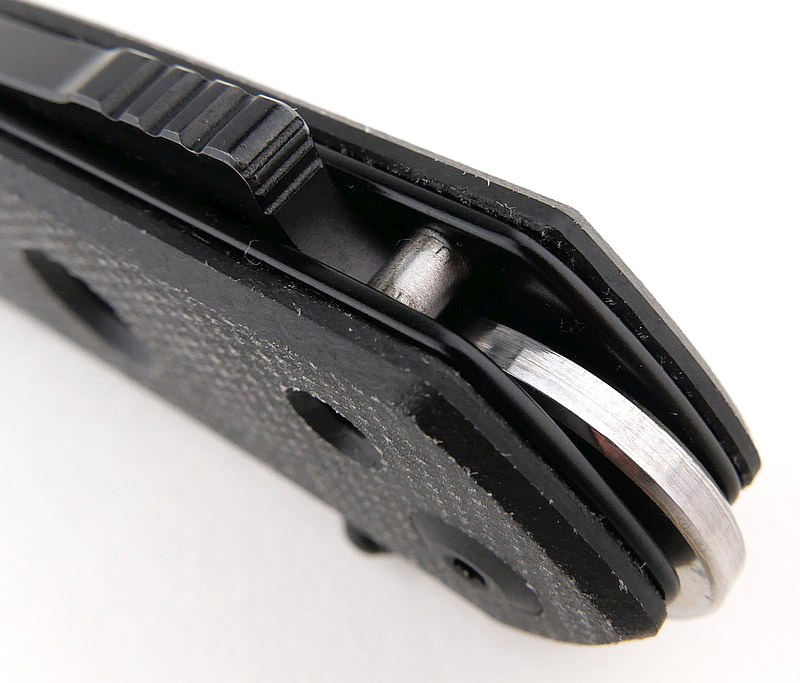
For the Vision FG, it uses the ‘Superlock Mechanism’, designed by Snecx. Without the literature, I would have continued referring to this as a recoil lock, as in operation it is very similar to this. On closer inspection, the locking process involves inserting a bar between the blade locking surface and the stop bar (much like a compression lock). As your hand pushes this into place while gripping the knife, it becomes even more secure as you use it, yet easy to disengage.


A good look round the Sentinel Strike – Things to look out for here are:

Next we have a recent addition in the Sentinel Strike range where the combination of handle colour and Damascus was added to the original Strike line up (there is also a Strike II with drop point blade).

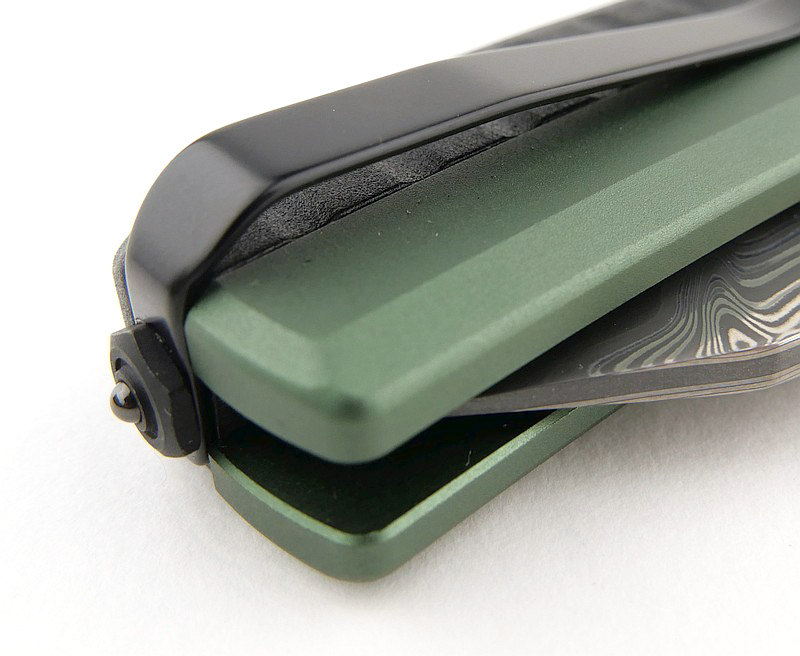
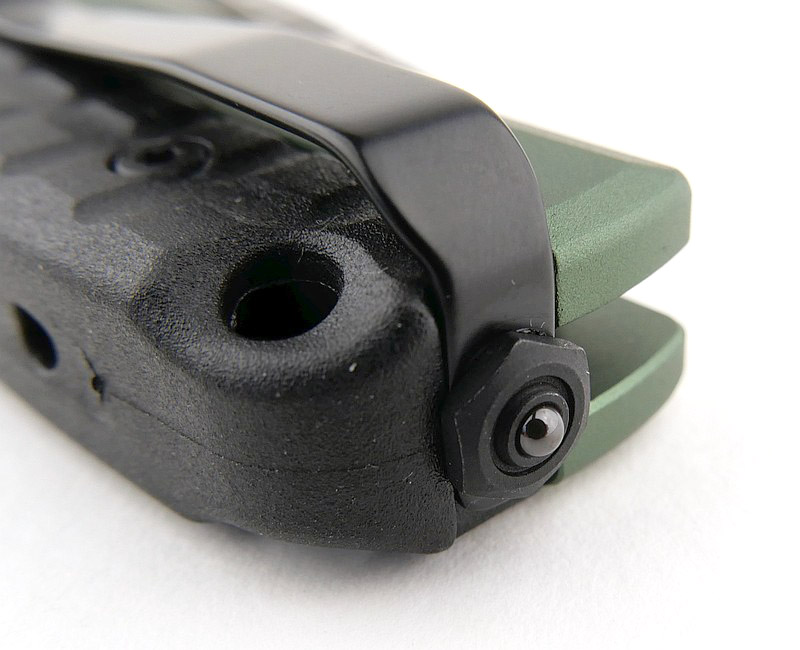
This time the handle is a combination of aluminium (with a choice of colours) and the integral spacer, made from FRN which helps keep the weight down. It is also fitted with a stainless-steel pocket clip incorporating a glass breaker into the head of its fixing bolt.
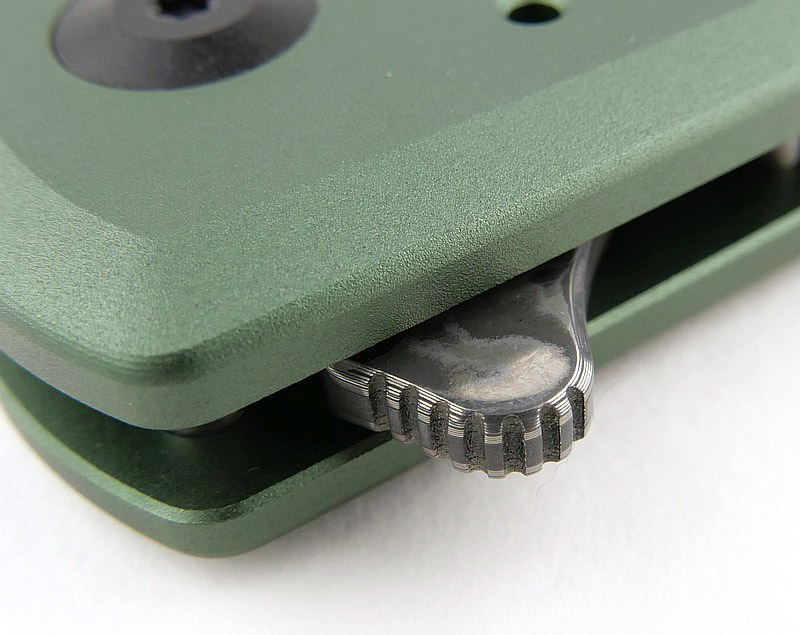
The Sentinel Strike has a flipper tab, thumb stud and opening hole in the blade, plus it is a button-lock mechanism, giving you a multitude of ways to open it.
As with all Civivi folders, the pivot bolt head is branded to confirm its identity.


The Blade and Handle – Detailed Measurements:
For full details of the tests and measurements carried out and an explanation of the results, see the page – Knife Technical Testing – How It’s Done.

The blade is made from Civivi’s Damascus steel.
For the Strike, according to the information from Damascus supplier, the base materials of the Damascus is compound by 10Cr15CoMoV and 9Cr18MoV.
For the Vision FG, the Damascus steels used in this knife are 10Cr15CoMov steel in its core with 316 and 5Cr15Mov steel in layers.

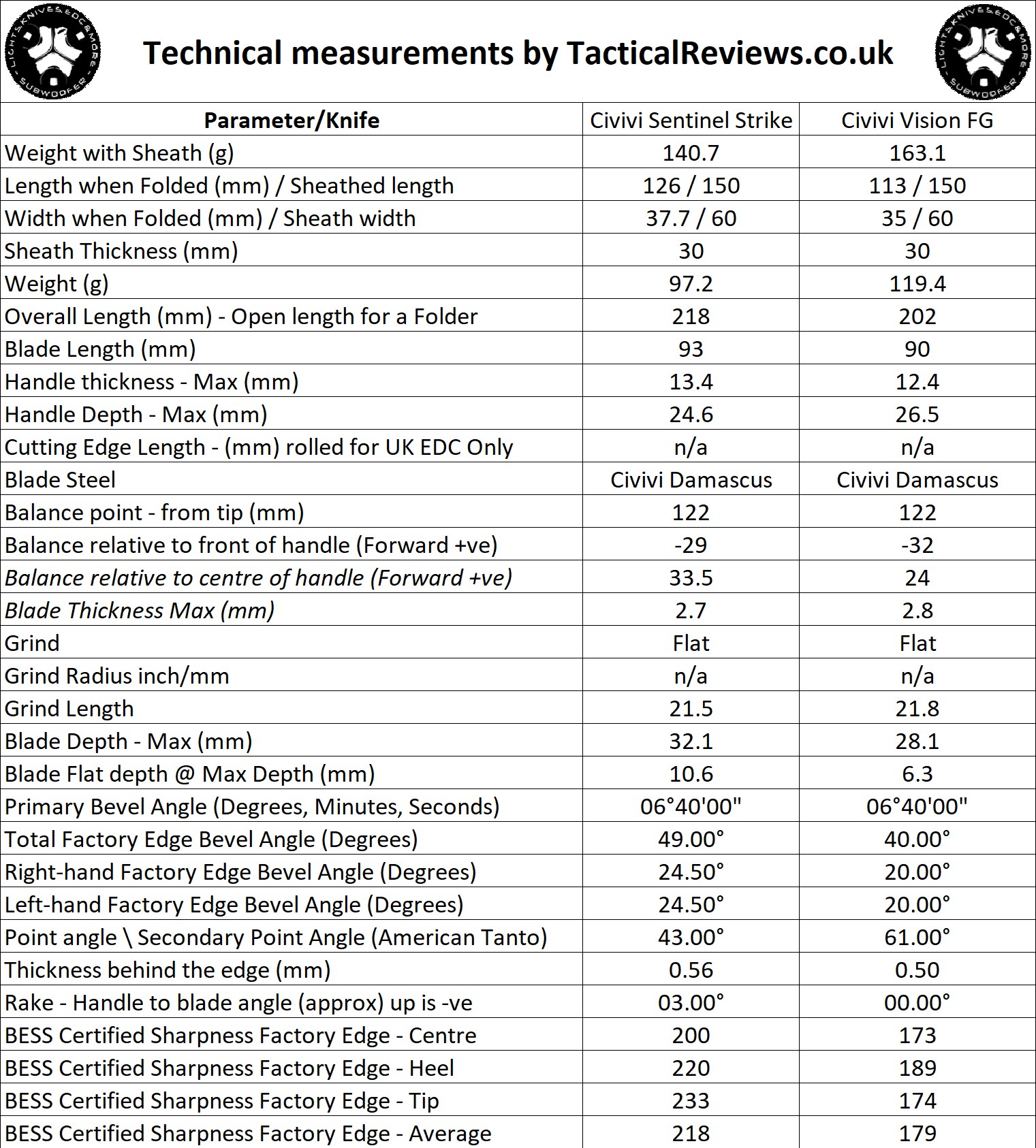
For comparison the measure parameters are shown side by side here.


The Factory edge up close:

Followers of Tactical Reviews will know my views on factory edges, but to recap:

Anyone using a knife will need to sharpen it. That first factory edge is just like the first tank of fuel that a new car comes with (or first charge of the battery).
A good factory edge is a ‘nice to have’ but not a ‘make or break’ for a good knife, as you will be putting your own edge onto it soon enough.
The factory edge does however indicate the care a knife maker has put into the final finish.
It is for this reason Tactical Reviews measures factory edge sharpness and specifications, and includes this information in the detailed technical testing.

As a further look at the factory edge, this section has been added to include some high magnification photos of the factory edges.

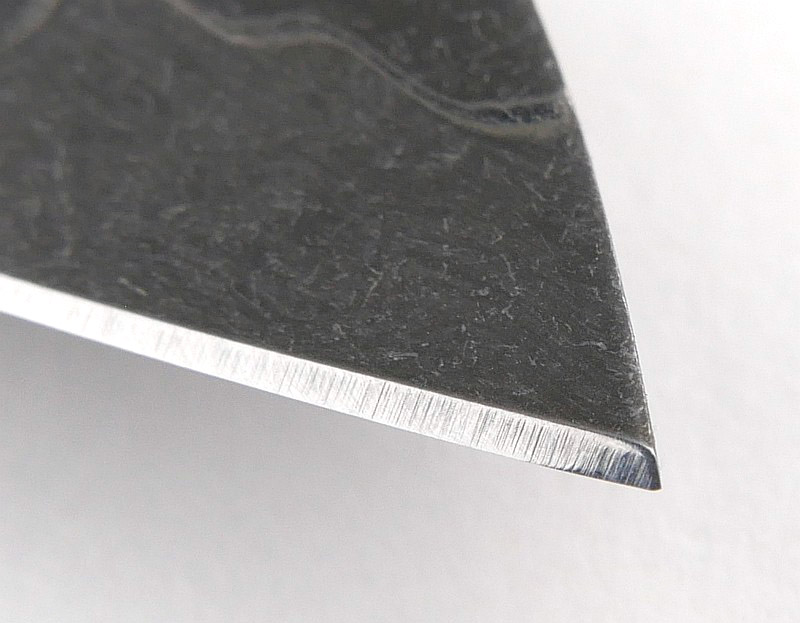
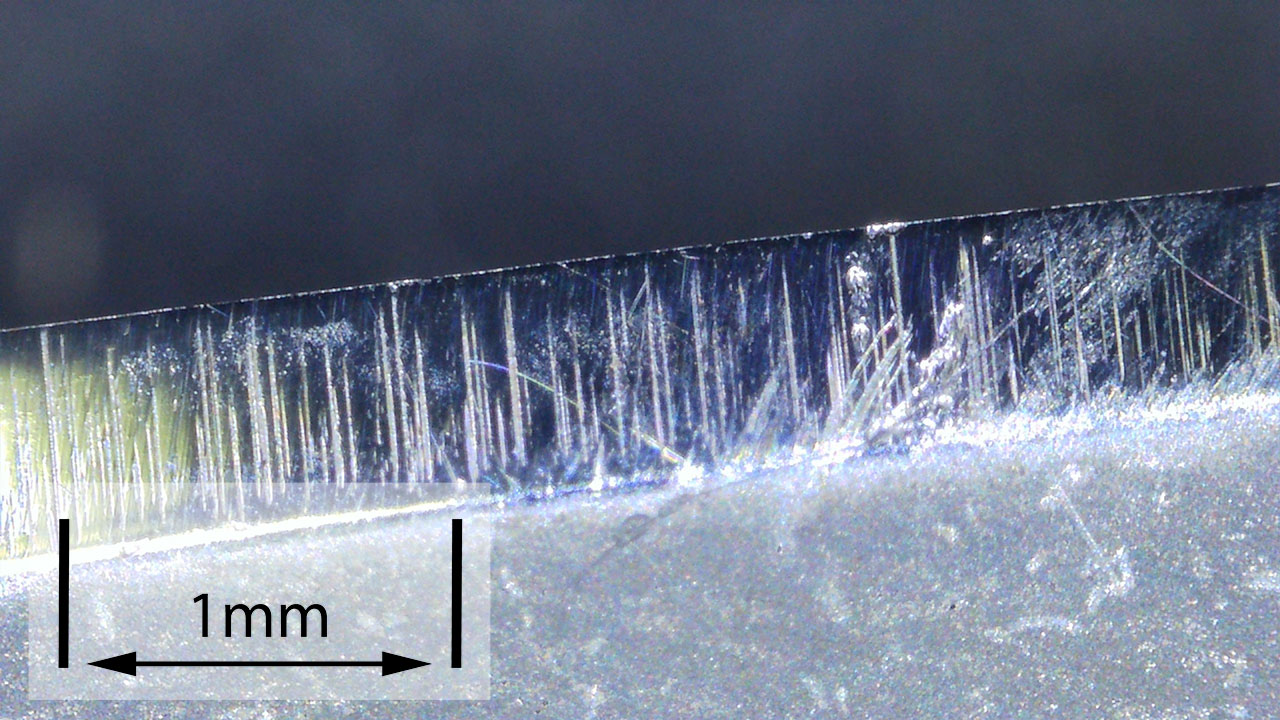
Vision FG’s factory Edge – Starting with a close up of the engraved text, just for the sake of interest.
NOTE: these are of a used edge, not factory fresh.


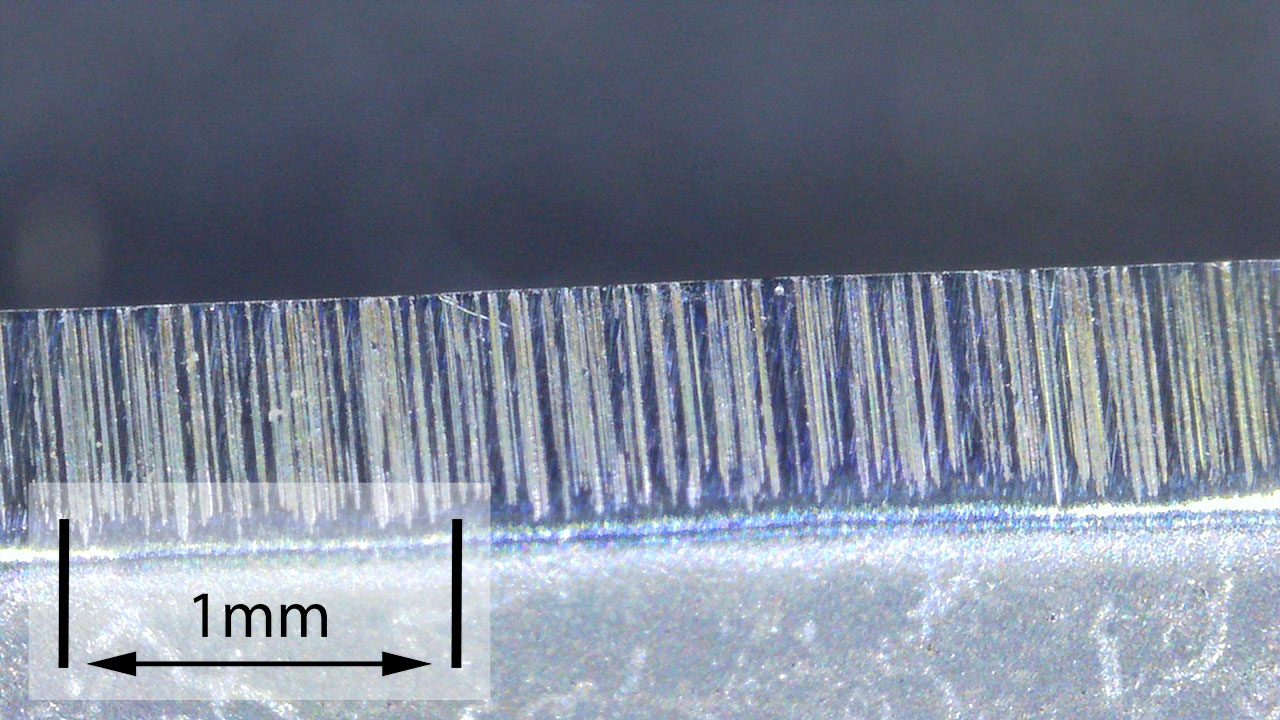
Sentinel Strike’s factory Edge – following use, there is some micro-chipping showing in some areas instead of rolling.
NOTE: these are of a used edge, not factory fresh.


What is it like to use?

Both of these Civivi bestsellers are a good size, but I was surprised by just how much of a hefty EDC knife the Sentinel Strike is (in length if not weight); with its blade length of 91 mm, it is up to more demanding cutting tasks.
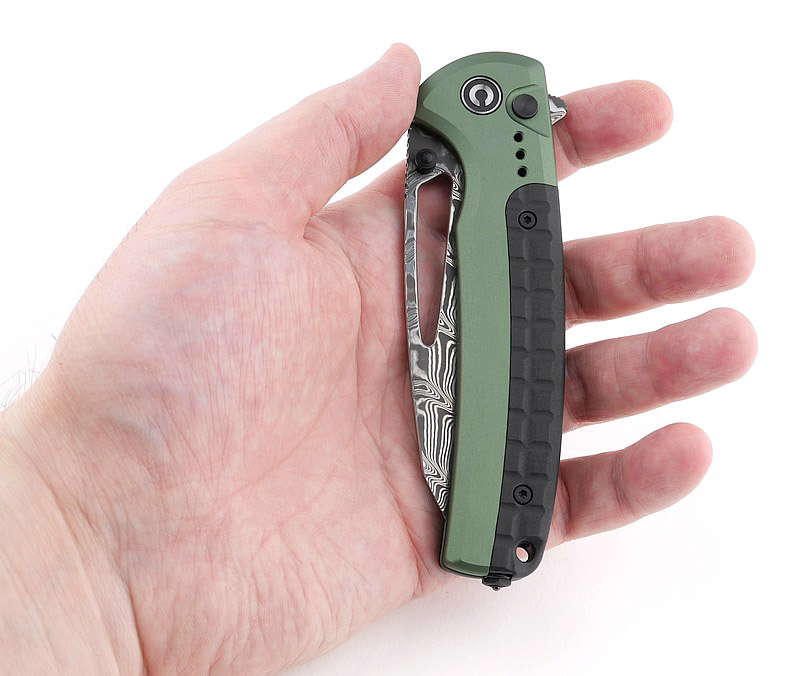
It is not that the Vision FG is small, but you can see the Sentinel Strike is substantial in my XL Glove sized hands with the handle clearly visible either side of my hand.


Shown with the knives are a couple of my favourite Civivi EDC extras, the tiny pry-bar, and precise folding tweezers (in case you wondered what these were).
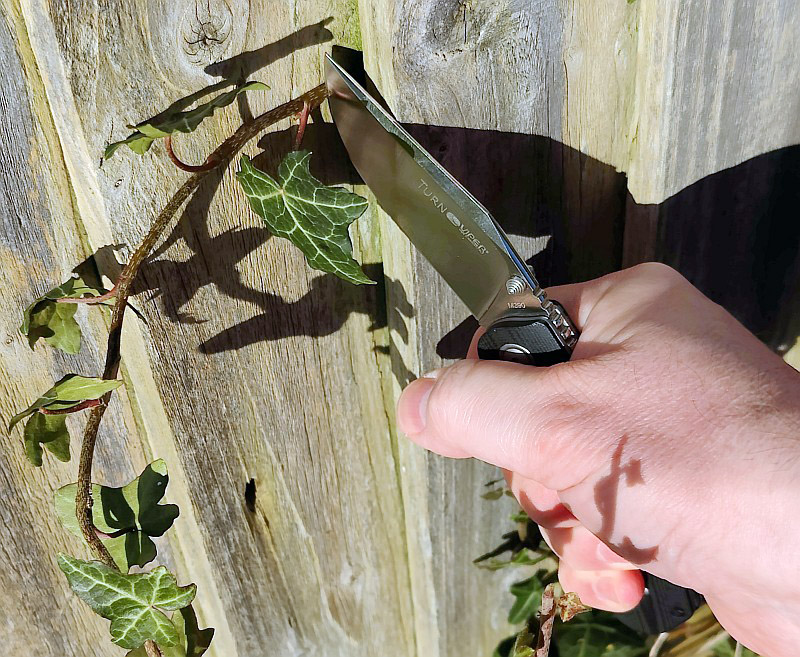
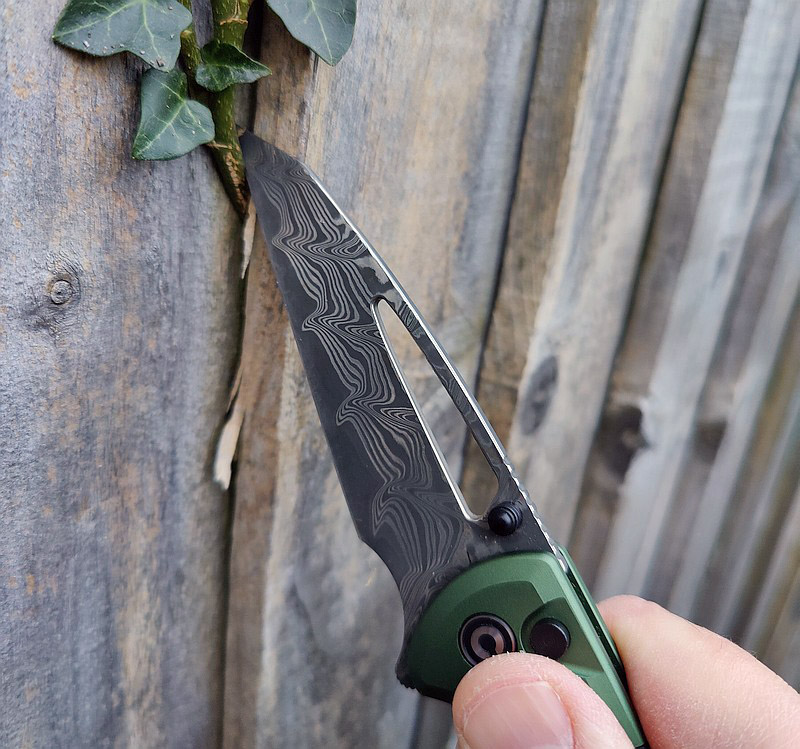
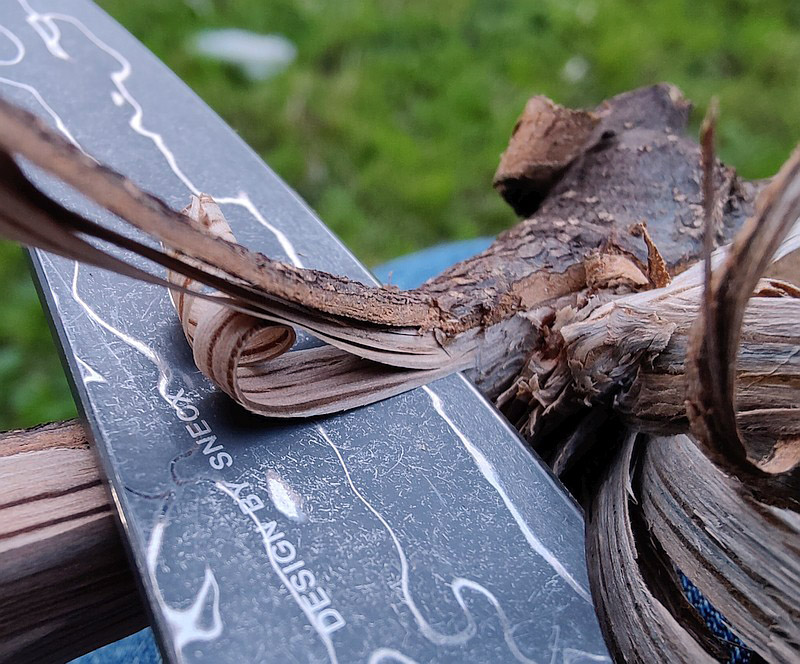
Both of the knives were just put to use on a variety of jobs around the home and garden. Entering the constant battle against encroaching ivy and hacking this back wherever it pops up. No mercy (but also no abuse), for the blade tip, which is quite fine and pointy on the Sentinel Strike, and no problems.
Though the Vision FG is also a reverse-tanto / Wharncliffe style blade, it is less pointy, and for many jobs makes it a bit easier to handle and control. The micarta handle is ‘softer’ to grip (without being soft, but this is a way in which micarta feels gentler and easier to hold compared to G10), and though the handles are slab like in shape, it is comfortable enough to hold.


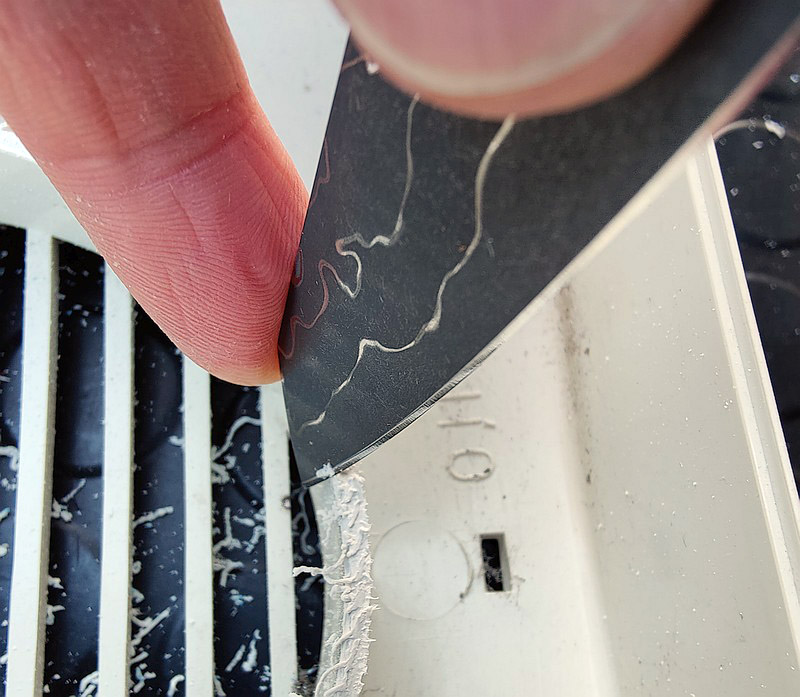
The close-up edge images included in this review are, unusually, ‘used’ rather than factory fresh. Of the two, the Sentinel Strike has starting to show some micro-chipping, but without noticeably blunting. Of the two, this blade was probably given the harder tasks, so this isn’t unexpected, and the characteristic of this edge damage means a strop won’t help (as the edge isn’t rolled) but also the micro-chipping creates a micro-serration which can actually be very effective.
Altogether, the edge performance has been good with these factory edges.

Both knives have a large sharpening choil; so large it might be confused for a finger choil on the Sentinel Strike. I would not use either of these knives’ choils as a finger choil. There may be a design reason for this, perhaps to prevent the heel of the edge hitting part of the locking mechanism, or stop pin, so there may be no other option. The problem for me is that it takes the closest part of the cutting edge further from the handle, and so loses mechanical advantage for heavy cuts. If even a mm or two could be added to the cutting edge, it would improve them for me, but it might not be possible.

What is apparent on real hands-on use of these knives is that for the price point the quality is surprising. Both the knives are using mechanisms that are much more complex than a liner lock, and that give a great user experience (I do especially like a button lock). We all have different preferences and budgets for our ‘users’ and Civivi have hit a great sweet spot in pricing, performance and user experience.

Review Summary

The views expressed in this summary table are from the point of view of the reviewer’s personal use. I am not a member of the armed forces and cannot comment on its use beyond a cutting tool or field/hunting knife.

Something that might be a ‘pro’ for one user can be a ‘con’ for another, so the comments are categorised based on my requirements. You should consider all points and if they could be beneficial to you.

_______________________________________________
What doesn’t work so well for me
_______________________________________________

Sentinel Strike – Long hole in blade accumulates dirt.
Sentinel Strike – Overly large sharpening choil wastes edge space.
Sentinel Strike – Thin pocket clip is a bit sharp.
Vision FG – Overly large sharpening choil wastes edge space.
Vision FG – Thumb stud a little too recessed.

_______________________________________________
Things I like
_______________________________________________

Sentinel Strike – Well executed button lock.
Sentinel Strike – Very easy to open, by flipper, blade hole or thumb stud.
Sentinel Strike – Very easy one-handed close.
Sentinel Strike – Comfortable thumb jimping.
Sentinel Strike – Low weight for a large knife.
Sentinel Strike – Super smooth bearings.
Sentinel Strike – Damascus blade.
Sentinel Strike – Ambidextrous tip-up pocket clip.
Sentinel Strike – Long slim blade has great reach.
Vision FG – Intuitive and easy to use ‘Superlock Mechanism’.
Vision FG – Very easy one-handed close.
Vision FG – Super smooth bearings.
Vision FG – Damascus blade.
Vision FG – Locking force increases as you grip the knife.
Vision FG – Ambidextrous tip-up pocket clip.

Review Videos

Starting with a short format sixty second review of the Vision FG:
NOTE: The Vision FG uses the ‘Superlock Mechanism’, designed by Snecx, and throughout the video I refer to this as a ‘recoil lock’ which isn’t strictly correct. I wasn’t going to re-record the video to correct this, so please take this as the correction.


Starting with a short format sixty second review Sentinel Strike:


Onto a full video review covering many more details:


Discussing the Review:
Something new – will it work? A Tactical Reviews Subreddit.
TacticalReviewsChat on Reddit
Please visit there and start/join the conversation.

Knife Review: Spyderco Manix 2 Salt

I’m a huge fan of Spyderco’s (ultra-low maintenance) Salt series; join me in a detailed review of the new Spyderco Manix 2 Lightweight Salt. The Manix 2 Salt combines classic signature Spyderco design with MagnaCut blade steel and super-corrosion-resistant handle components and fixings. Using a fibreglass-reinforced co-polymer (FRCP) handle ensures high strength and low weight. This model features a high visibility yellow handle that includes Spyderco’s signature Bi-Directional Texture grip pattern for a very secure grip in all conditions.

What’s in the box?:
This Manix 2 Salt comes in the familiar Spyderco box. Included with the knife is a sticker and a leaflet about the exact model of knife.


A good look round the Manix 2 Salt – Part 1 – Things to look out for here are:
Starting with this gallery showing details of the Manix 2 when folded. The bright yellow handle making this Salt series knife really stand out. So often this high visibility can actually be one of the best safety and survival features, as you are much less likely to lose the knife, and can always spot it quickly when you put it down.
Spyderco have covered the handle with textured grip features, from the signature bi-directional texturing on the main flats of the handle to molded in jimping in several areas.
Also featuring another Spyderco signature design element, the tip-up wire spring pocket clip that can be fitted on either side of the handle. The Manix 2 Salt uses Spyderco’s Ball Bearing lock, and this has a black slider that contrasts against the yellow handle. Ending this gallery as the blade is opened.


A good look round the Manix 2 Salt – Part 2 – Things to look out for here are:
Opening the blade to reveal yet another Spyderco signature design – the full-flat-grind leaf-shaped blade with large opening hole. The lock slider shown at its maximum position, before it springs forward to engage the ball bearing; the coil locking spring is clearly visible.
Jimping has been added on the blade next to the handle for both the first finger and thumb to ensure a rock solid grip. This Salt series knife comes in CPM MagnaCut, and when you look at the engraving it is quite different in appearance to most Spyderco’s, even leading some who have seen this knife to question its authenticity. This is not in question as it was handed to me by Spyderco at IWA 2024, so is without question the real deal.


The Blade and Handle – Detailed Measurements:
For full details of the tests and measurements carried out and an explanation of the results, see the page – Knife Technical Testing – How It’s Done.

The blade is made from CPM MagnaCut steel.


The Factory edge up close:

Followers of Tactical Reviews will know my views on factory edges, but to recap:

Anyone using a knife will need to sharpen it. That first factory edge is just like the first tank of fuel that a new car comes with (or first charge of the battery).
A good factory edge is a ‘nice to have’ but not a ‘make or break’ for a good knife, as you will be putting your own edge onto it soon enough.
The factory edge does however indicate the care a knife maker has put into the final finish.
It is for this reason Tactical Reviews measures factory edge sharpness and specifications, and includes this information in the detailed technical testing.

As a further look at the factory edge, this section has been added to include some high magnification photos of the factory edges.

Spyderco reliably produces exceptional factory edges, and this Manix 2 Salt is true to form.


What is it like to use?

Manix 2 is a generous sized knife, but the FRN handle and lack of steel liners keeps the weight right down, and despite the size is an unobtrusive carry, almost too easy to forget you are carrying it.

You can see how substantial it looks in the hand (I take XL sized gloves), substantial, but light and comfortable to hold. With the choked up grip position, the knife almost seems to shrink when you adjust your grip for more precise work.

The large leaf-shaped full-flat-grind blade is very very ‘slicey’ and eager to part materials. Just the geometry wants to cut, and partnered with a great factory edge it cuts with ease right out of the box.


Putting it to good use for a couple of plumbing/bathroom jobs, but not even starting to test the corrosion resistance. Speaking of which I have previously carried out a sea water soak and exposure test on a Salt model, giving amazing results, as the knife was completely untouched by this. I wasn’t set up for this sea water test, so haven’t completed a similar corrosion test, but am confident from previous experience, and the fact this knife uses MagnaCut, that is will also be a waste of time.

Not only does this ‘Salt series’ make a great choice for highly corrosive environments, but it also allows you to have a virtually maintenance-free knife.

An ideal outdoor companion, with that high visibility handle making it a challenge to lose in the woods. Highly usable, and a real work-horse of a knife that is eager to get on with the next job.


Review Summary

The views expressed in this summary table are from the point of view of the reviewer’s personal use. I am not a member of the armed forces and cannot comment on its use beyond a cutting tool or field/hunting knife.

Something that might be a ‘pro’ for one user can be a ‘con’ for another, so the comments are categorised based on my requirements. You should consider all points and if they could be beneficial to you.

_______________________________________________
What doesn’t work so well for me
_______________________________________________

No sharpening choil. (might be a ‘pro’ for some)
Sides of the blade jimping are a bit sharp.

_______________________________________________
Things I like
_______________________________________________

Completely corrosion free.
Lightweight without sacrificing strength.
Large full-flat blade cuts with ease.
Great size for all-round use.
Secure Ball Bearing lock.
High visibility.
MagnaCut steel.
Ambidextrous pocket clip.
Very accessible large opening hole.
Excellent grip all over and around.
Top-notch factory edge.

Review Videos

Starting with a short format sixty second review:


Onto a full video review covering many more details:


Discussing the Review:
Something new – will it work? A Tactical Reviews Subreddit.
TacticalReviewsChat on Reddit
Please visit there and start/join the conversation.

Knife Review: lionSTEEL Skinny

Join me in this lionSTEEL Skinny review (new for 2024), to take in all the details of this EDC folding knife. Made using lionSTEEL’s SOLID technology: the frame is made by milling a single solid piece of titanium or aluminium, producing a handle that is incredibly strong.
Skinny is very light and strong with the benefit that it fits into the pocket easily. Featuring a CPM MagnaCut steel blade in either stonewash or OldBlack finish.
The specific knife featured in this review was a display model used throughout IWA 2024, so might show a few imperfections.

What’s in the box?:

lionSTEEL use packaging like this for many of their folders. Made out of cardboard, but constructed so that it has structure and substance, and becoming more like a case than simple box.
Inside this box are the Skinny and a small bag containing the U-Tool and a blanking screw. The U-Tool includes a spanner to fit the pocket clip bolt and a torx bit for the removable flipper tab (and fitting that blanking screw).


A good look round the Skinny Part 1 – the handle – Things to look out for here are:
For the detailed galleries I’ve split this into three parts to cover a main overview of the folded knife, then with the blade open and details of the blade, and finally the REF (Removable flipper) system.
Skinny is a Molletta design, and has a deep carry steel pocket clip which can be fitted on either side of the frame using the “U-Tool” included in the box.
The handle is a lionSTEEL SOLID (milled from one single piece of titanium). In this version it has a Fat Carbon inlay on one side (and the integral lock bar on the other side).


A good look round the Skinny Part 2 – the blade – Things to look out for here are:
Pivoting out the long and slim MagnaCut blade really explains the reason for the knife’s name. Despite being slim, the Skinny is still a good sized knife overall and doesn’t feel ‘slight’.
The lock bar is reinforced with a hardened steel insert with an over travel stop, and the blade pivots on an IKBS ball bearing.


A good look round the Skinny Part 3 – the REF (Removable flipper) system – Things to look out for here are:
The Skinny is equipped with the lionSTEEL REF (Removable flipper) system, so if you don’t want the flipper you can unscrew the tab using the T6 torx tool and fit the second screw you find in the box to cap off the hole.
This slims the Skinny down even further, and the ‘nail nick’, which is actually a milled slot, then gives you the purchase to grip the blade and open it manually.


The Blade and Handle – Detailed Measurements:
For full details of the tests and measurements carried out and an explanation of the results, see the page – Knife Technical Testing – How It’s Done.

The blade is made from MagnaCut steel.


The Factory edge up close:

Followers of Tactical Reviews will know my views on factory edges, but to recap:

Anyone using a knife will need to sharpen it. That first factory edge is just like the first tank of fuel that a new car comes with (or first charge of the battery).
A good factory edge is a ‘nice to have’ but not a ‘make or break’ for a good knife, as you will be putting your own edge onto it soon enough.
The factory edge does however indicate the care a knife maker has put into the final finish.
It is for this reason Tactical Reviews measures factory edge sharpness and specifications, and includes this information in the detailed technical testing.

As a further look at the factory edge, this section has been added to include some high magnification photos of the factory edges.

Remember this was a demo knife at IWA 2024, so in a couple of these photos you can see some handling related edge damage, which you would otherwise not expect to see on the factory edge. It is shown out of interest that the edge damage is in the form of rolls and not chipping.


What is it like to use?

lionSTEEL are well known for their overbuilt folders including the TM-1 shown in the gallery for comparison. The Skinny is just as long as these larger folders, but significantly slimmer. This makes it so much easier to EDC, as it becomes very low profile in your pocket.
Shown here (in a hand taking an XL size glove), the Skinny is still a good sized knife and handles well. The fine blade is quite ‘pointy’ and is well suited to deep piercing cuts. One of the advantages of flipper tabs is that they act as a finger guard during use. This is true with the Skinny, but the shaped handle also incorporates a finger guard, so that even with the REF removed, grip and safety are not affected.


There are a couple of minor criticisms/observations that I’ll mention. The pocket clip, when mounted on the lock bar side, unfortunately lines up with the edge of the lock bar spring cut out. When you try to push the Skinny over the edge of your pocket, the cloth is pushed into lock bar spring cut out and jams, not allowing the clip to slip onto the pocket edge. This only affects fitting it to your pocket, not taking it out, and only when the clip is on the lock bar side. I have fitted the clip to the inlay side.
Shorter than most clips, the Skinny’s deep carry pocket clip is however, just right for grabbing the top edge of your pocket securely; no need for more, it is just right.
Something I have never experienced with any other integral lock folder, and that I believe has been noticeable with the Skinny only due to the slim handle and slim lock bar (perhaps the lock bar tension), was a squeak and vibration that could be felt when opening and closing the blade slowly.
A tiny drop of oil where the lock bar detent rides on the side of the blade immediately stopped this and it become slick again, but over time this does need a further drop of oil. Using a precision watch maker’s needle oiler allowed a very targeted application.

The final image here marks the end of an uninterrupted 38 years of me being a pescatarian. Friends and followers might know I have a chronic health condition, and with recent fresh inspiration to take a holistic new look of all aspects of my health and possible therapeutic changes I can make, I am taking a significant step by re-introducing meat into my diet.

This is no small change to make after 38 years, so required a ceremony of using a knife with a Magnacut blade, made by my friends at lionSTEEL, to prepare this first meal of meat. Meaningful to me at least, and the reason for including this here.


With the Skinny lionSTEEL have added nicely to their line up with a much slimmer locking folder that is very practical and usable for EDC tasks.

Review Summary

The views expressed in this summary table are from the point of view of the reviewer’s personal use. I am not a member of the armed forces and cannot comment on its use beyond a cutting tool or field/hunting knife.

Something that might be a ‘pro’ for one user can be a ‘con’ for another, so the comments are categorised based on my requirements. You should consider all points and if they could be beneficial to you.

_______________________________________________
What doesn’t work so well for me
_______________________________________________

Pocket edge catches in lock bar spring cut out.
Lock bar tension seems very high.

_______________________________________________
Things I like
_______________________________________________

SOLID construction (one piece handle).
REF (removable flipper system).
Deep carry pocket clip.
MagnaCut blade.
Hardened steel lock bar insert with over travel stop.
Versatile drop-point blade shape.
IKBS bearings
Titanium with Carbon Fibre inlay.
Slim and easy to carry.

Review Videos

Starting with a short format sixty second review:


Onto a full video review covering many more details:


Discussing the Review:
Something new – will it work? A Tactical Reviews Subreddit.
TacticalReviewsChat on Reddit
Please visit there and start/join the conversation.

Gear Review: MetMo Pocket Driver

In this MetMo Pocket Driver review find out all about a super functional tool, and engineering masterpiece, revived and miniaturised by MetMo to create an EDC screwdriver unlike anything else. Based on one of the earliest forms of the ratchet screwdriver, originally patented by Conrad Baumann under the brand name Baumann-Weltrecord, in the 1920’s. Brought back to life, and to your pocket, by MetMo; using hardened materials and state of the art machining techniques to ensure the quality and reliability for which the original was known.

What’s in the box?:
Shown here are the Pocket Driver and the Pocket Pack accessory. Each of these are covered in detail in the following sections.


A good look round the Pocket Pack – Things to look out for here are:

One of the optional accessories for the Pocket Driver, the Pocket Pack holds the Pocket Driver, plus a number of adapters and bits, so you can put together the most useful tool set for your needs.
Included with the Pocket Pack are five bit holders/adapters from the 4mm precision bit adapter, going up to a 3/8″ square drive socket.
Made from leather with plenty of bit holder pockets, the bi-fold design uses brass post fittings to keep the pack neatly folded.
It also has a belt loop and D-loop hanger on the back so you can choose the best way to carry it.


A good look round the Pocket Driver – Things to look out for here are:

This is the full stainless steel version of the Pocket Driver. There are three variants from the lightest with aluminium body and handle, through to this version being the heaviest due to the stainless steel body and handle.

Immediately you are struck by the quality of finish with the folding handle, glorious in its pristineness. Though simple in concept, a folding handle ratchet screwdriver, as you look over the Pocket Driver the designed-in finesse is captivating.
A small lanyard hole next to the handle detent hole. The rounded pivot bolts. A pass-through hole in the handle so when folded bits can be fitted, and the Pocket driver used as a compact straight screwdriver. Then the almost steampunk visible ratchet pin, direction lever and those ratchet teeth themselves. The bit storage compartment cover, incorporated in a such a way that with the handle folded it can’t come loose, completes the tool.


Just how powerful is it?:
Included in MetMo’s specifications for the Pocket Driver is its maximum torque (turning force) of 17Nm. Though only a rough estimate, it is considered that a person can apply up to 10Nm torque when using a standard screwdriver (which also varies depending on the handle shape). The Pocket Driver has a fold out handle, and this is where that extra turning force comes from.

Not having an actual torque meter, I still wanted to attempt to measure how much force I could apply. As it happens, the torque wrench I have goes as low as 10ftlbs and adjusts in 1ftlb increments. So instead of taking a measurement, I could attempt to make the wrench ‘click’ on its preset torque and therefore show I had achieved that turning force. Though there isn’t a female-female 1/2″ square drive adapter, I have a ‘universal socket’ that would actually engage with the 1/2″ square drive of the torque wrench, meaning I was good to go with this test.
Working up from 10ftlbs, I found that after the success at 13ftlbs, I had maxed out and couldn’t ‘click’ 14 (all testing was with me holding both Pocket Driver and torque wrench, so I am sure I could have gone even higher if I was only holding the Pocket Driver).
This converts to a healthy 17.63Nm. Good job MetMo!

Also included in this gallery are some across-the-flats measurements taken with a vernier calliper to check the size of the hex bit holder socket and various bits/adapters.


What it is like to use?

What the Pocket Driver excels at are actually the heavier jobs rather than the smaller ones, despite its compact size. I say this for a few reasons in reference to the following gallery.
1/4″ standard bits (and in the first photo a PZ2 bit), which is a typical bit size likely to need a reasonable force to get tight, or undo. Using it with the handle folded, or deployed for much more force, makes good use of the ratchet.
Jumping up to the 3/8″ square drive that is included with the pocket pack, and realistically you will be using the fold-out handle to good effect.
Then we have the 4mm precision bit adapter, the type of bits used in this go down to 000 Phillips and T2 Torx, amongst others, where the side handle would guarantee stripped threads or heads. In fact even in-line, these sizes of screw won’t have enough resistance to turning to actually activate the ratchet action. If you do use the precision bit 4mm adapter you’ll be spinning the entire Pocket Driver like a fixed screwdriver; it’s no fault of the Pocket Driver, only a limitation of using it for fasteners that small.


For scale I wear XL size gloves, and although this is the smaller version of the Driver tool from MetMo, you can see it comfortably sits in the hand with the folding handle being a good size to provide plenty of leverage.


A pleasure to use, and working with any and all the bits you already have, here are just some of the jobs I’ve used the Pocket Driver for with 1/4″ bits, sockets, and even a hook driver bit. All that was asked of it was completed with ease.


One final point, being a tool that will appeal to engineering enthusiasts, MetMo offer an optional extra to allow your appreciation to reach new heights – a PDF of the engineering drawings. Showing all details hidden away inside the Pocket Driver, this is an excellent way to satisfy your curiosity of what makes it tick.

Review Videos

Starting with a short format sixty second review:


Onto a full video review covering many more details:


Review Summary

The views expressed in this summary table are from the point of view of the reviewer’s personal use. I am not a member of the armed forces and cannot comment on its use beyond that covered in the review.

Something that might be a ‘pro’ for one user can be a ‘con’ for another, so the comments are categorised based on my requirements. You should consider all points and if they could be beneficial to you.

I’m starting with what doesn’t work so well, so I can finish on a more positive note.

_______________________________________________
What doesn’t work so well for me
_______________________________________________

Storage for only two bits.
The ratchet direction lever can be fiddly to access with the handle folded.
Ratchet lever is easily knocked out of place when set to the fixed position.

_______________________________________________
Things I like
_______________________________________________

Beautifully engineered.
High torque driving (17.63Nm).
Compatible with all 1/4″ hex bits.
Pleasing ‘action’ you won’t want to put down.
Choice of optional accessories.
Pocket Pack allows you to build a tool set around the Pocket Driver.
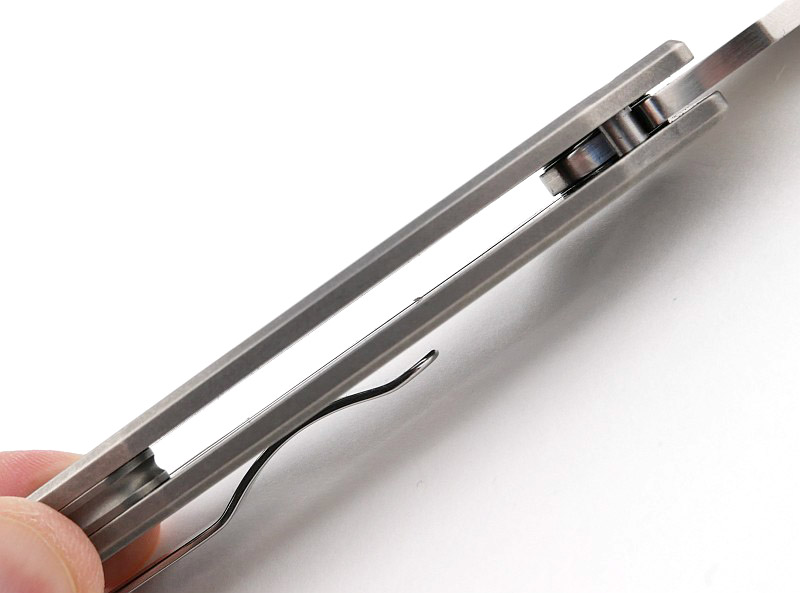
Seriously hard working tool – not just pocket jewellery.
Stainless steel construction for long life.

 
Discussing the Review:
Something new – will it work? A Tactical Reviews Subreddit.
TacticalReviewsChat on Reddit
Please visit there and start/join the conversation.