Knife Review: Hoo Knives V4

In this detailed review of the HOO KNIVES V4 Tanto, a UK EDC-Legal slip-joint, double-detent flipper folder; join me as we look at every aspect of this lovely EDC knife.

Hoo Knives are born from the founder’s true passion for quality knives, and Hoo Knives focus on non-locking, sub 3 inch, practical and safe use folding knives (UK EDC Legal requirements). A very approachable brand who are completely engaged in supporting and listening to their customers, along with the wider EDC community, and, case-in-point, they created the V4 Tanto due to high demand for a Tanto Style Blade in their line up.

What’s in the box?:
The V4 arrives in a proper, hinged, re-usable, plastic box, that you can either keep for storing the knife as part of a collection, or make use of it for other purposes. Contained in this box are the knife, a draw-string cloth case for the knife, a cleaning cloth, specification card, stickers, and warranty information.


A good look round the (folded) Hoo Knives V4 – Things to look out for here are:

This gallery shows the features you can see with the knife folded. Straight out of the box, the deep carry pocket clip has a protective wrap to prevent marks on the handle scale (both so it reaches you in perfect condition, and in case you decide to re-fit it to the other handle). The blade is almost fully contained within the handle, with only a thin part of the spine visible. Ambidextrous thumb studs and a flipper tab can be used to open the blade.
The titanium handles have a stonewashed finish, and while very flat, the edges are well eased for comfort.


A good look round the (opened) Hoo Knives V4’s blade – Things to look out for here are:

Once deployed, we can see details of the blade and the function of the knife’s mechanism. In the open position, the thumb studs come close to the front of the handle but do not touch the handle as they are not used as stop pins, instead this is done with an internal stop pin. A curved plunge line makes the transition from the hollow primary grind to the blade tang. The individual serial number is neatly engraved just in front of the handle. The blade swedge extends for the entire length of the spine, and combines with the outlines of the flat-ground tanto tip, and the blade’s main hollow grind, to give a pleasing mix of flowing curves and straight lines.
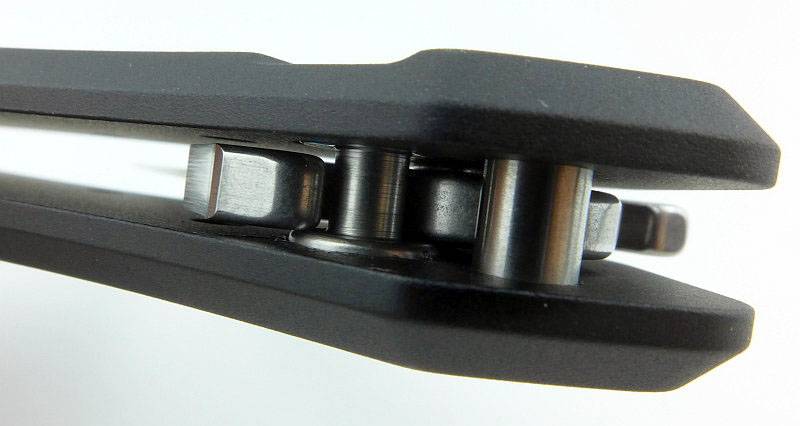
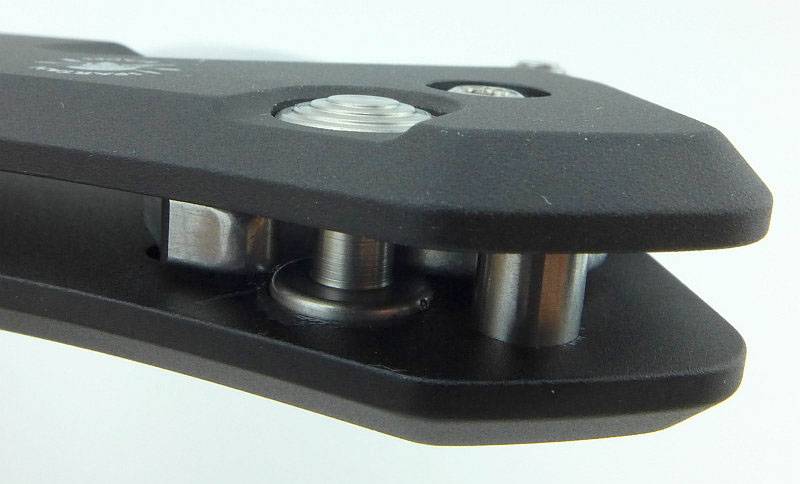
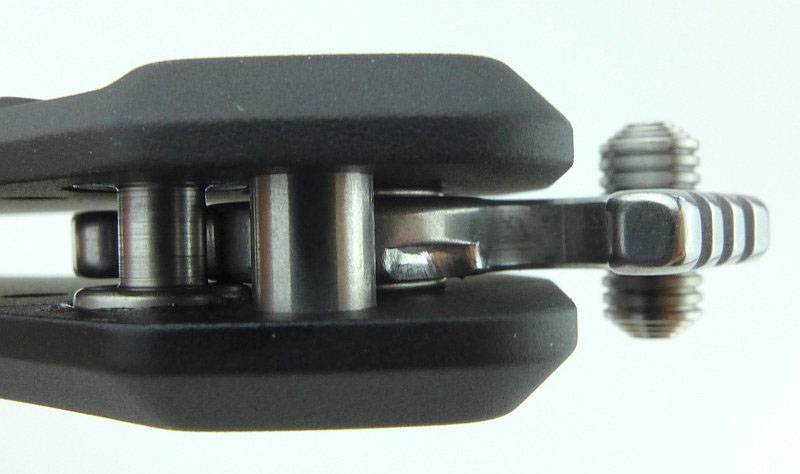
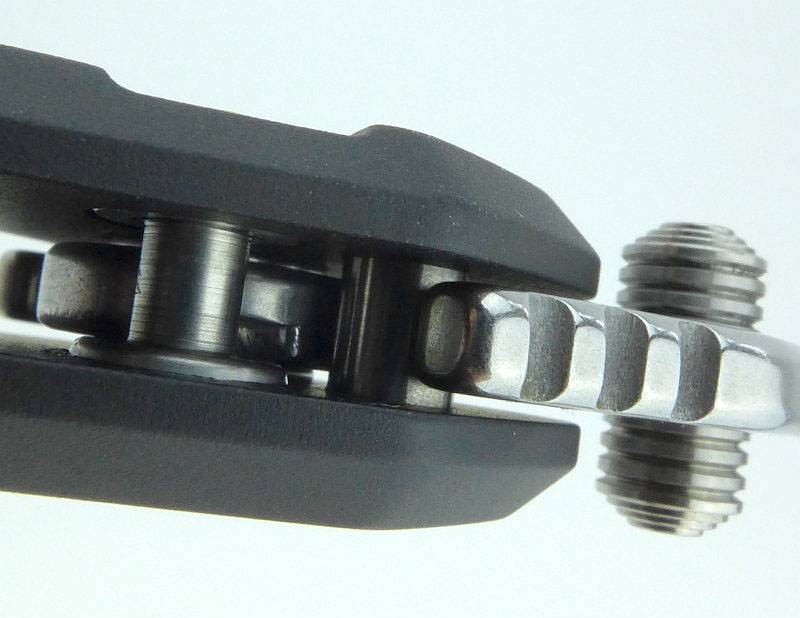
Finally looking within the handles you can see the double detent mechanism gripping the blade along with the internal stop pin.


The Blade and Handle – Detailed Measurements:
For full details of the tests and measurements carried out and an explanation of the results, see the page – Knife Technical Testing – How It’s Done.

The blade is made from M390 steel.

Being a slipjoint design the Tactical Reviews technical parameters also include peak torque measurements for opening and closing torque. This gives you an indication of the slipjoint mechanism’s blade stability. Comparative torques can be see on the Knife Technical Testing – How It’s Done page.

Explained by the Maker:
In this section I’m including words directly from the maker themselves.

HOO DESIGNS LIMITED trading as HOO KNIVES was founded in the United Kingdom on 30 March 2021 with the goal of offering premium, British-designed folding knives at fair and competitive prices.

Since then, we’ve expanded our range to include a variety of unique models, each utilising high-quality materials, ensuring durability and top-notch performance.

With a focus on non-locking sub 3 inch practical and safe use folding knives, we’re proud our products are used by professionals and enthusiasts worldwide. We continue to engage with our customers through social media and strive to deliver exceptional performance in every product, alongside a high degree of customer service.

In relation to our name, HOO KNIVES, many may be curious about the connection to the Sutton Hoo site. Sutton Hoo is a significant archaeological site located near Woodbridge, Suffolk, England, known for its medieval cemeteries dating back to the 6th and 7th centuries. The site is famous for the discovery of an Anglo-Saxon royal burial ship, and it has played an important role in British history and heritage. Our name pays homage to this rich historical connection, reflecting the craftsmanship, heritage, and timeless quality that we strive to embody in every knife we create.

Our logo was inspired by the Sutton Hoo helmet, one of the most iconic artefacts from the site. The helmet is part of what is widely regarded as the greatest treasure ever discovered on British soil. We chose to incorporate elements of this historic symbol into our branding to reflect the heritage, strength, and craftsmanship that define HOO KNIVES.

As we build on four years of history, HOO KNIVES continues to evolve and refine our designs. What started in 2021 with a vision to offer premium, British-designed knives at accessible prices has grown into a trusted brand among knife enthusiasts. With each model we release, we aim to offer a product that blends quality, functionality, and class while maintaining a focus on the needs of EDC users in the UK and around the world.

We’ve built a reputation for our commitment to design, performance, and customer service, and as we move forward, we’re excited to continue expanding our range and sharing our passion for knives with an ever-growing community. Every year, we learn, adapt, and strive to improve.

For the longest time members of the EDC community have asked if Hoo would ever make a Tanto Style Blade, we are very proud to reveal our intention to do just that! Introducing the Hoo Knives V4 Tanto.


The Factory edge up close:

Followers of Tactical Reviews will know my views on factory edges, but to recap:

Anyone using a knife will need to sharpen it. That first factory edge is just like the first tank of fuel that a new car comes with (or first charge of the battery).
A good factory edge is a ‘nice to have’ but not a ‘make or break’ for a good knife, as you will be putting your own edge onto it soon enough.
The factory edge does however indicate the care a knife maker has put into the final finish.
It is for this reason Tactical Reviews measures factory edge sharpness and specifications, and includes this information in the detailed technical testing.

As a further look at the factory edge, this section has been added to include some high magnification photos of the factory edges.


What is it like to use?

Flat, stone-washed handles that look great in their natural Titanium grey, and the sleekness of an all metal knife, which is somehow softened slightly but the surface finish and easing of the handle edges. It wants to be held and turned over in your hand a bit like a worry stone.

Hoo Knives V4’s design, considering it is based around the sub 3″ UK EDC Legal requirement, is still a comfortable size knife to hold and has a useful amount of cutting edge. Shown in this gallery, with your first finger firmly placed in the handle finger groove, the flipper tab will prevent the blade closing accidentally. Keeping a tight grip ensures the blade can’t close on you. (Of course you would use correct cutting technique to prevent this as well, wouldn’t you?)

One minor detail that I appreciate, is that with the subtle shaping of the handle at the butt to create a low profile grip hook, this raised section helps to better enclose the tip of the folded blade. All too often the very tip of a folding knife blade is a bit too accessible and can actually catch on your finger. In the case of the V4, that handle shaping at the butt keeps the blade tip well covered.

Combining a flipper tab and thumb stud to open the V4 gives you good flexibility. My personal preference is always to open a blade under full control, so I lean towards using thumb studs. With the thumb studs being tight into the handle on the V4, for an easier start you can use the flipper tab to partially pop the blade open, and then take over with the thumb studs to fully open the blade under manual control. While you certainly can flip the V4’s blade fully open, and also fully thumb it open, I really like this combined method with the tab popping the blade out and finishing with the thumb stud.

The slipjoint action is crisp out of the box and so far the double detent remains nicely crispy. The slip-joint torque figures presented earlier in the review bear this out well, and the blade is held perfectly firmly enough for a slip joint.

With the spring pressure acting on the blade, a slipjoint mechanism tends to mask the true feeling of its pivot bearings. The V4 is fitted with the Hoo Knives’ standard ceramic ball bearings, as used across all models (except the original production run of the V1). Blade rotation on these ceramic ball bearings is slick and precise.

Thanks in part to those ceramic bearings, but also the double-detent blade retention, Hoo Knives have also achieved a truly flippable slipjoint. This is a rare feat in the slipjoint world, as in most cases the blade spring in a slipjoint completely prevents the ability to flip open the blade, instead you do need a detent type of blade retention.


Pocket carry is very unobtrusive, with the slim deep-carry clip being very subtle. All the more sleek in appearance due to the clip’s fixing screws being inside the handle. The only downside to this is if you do want to move the side the clip is fitted to, you do need to take the knife apart.

Tantos have that very useful secondary point and angled chisel-like tip, and initially I was less impressed with cutting performance than I expected. The factory edge average BESS of 272 is OK, if not great, though the 50 degree inclusive edge angle made this factory edge a disappointing under performer. Putting a new 17DPS edge (around 200 BESS) totally transformed the V4 – now that is more like it.

If a tanto is not you favourite blade shape, check out the other Hoo Knives models, all of which are created with the same care as the V4, and as I am writing this, the latest Phoenix and Dragon models have joined the line up.

Just today, I was actually chiseling (push cutting) with the V4’s tanto tip to free up the action of a folding wooden table. Now the V4 is positively asking to be EDCed, and is being put to work on all the every day jobs that present themselves. The V4 is firmly earning its essential EDC status along with those other EDC items I won’t be without.


Review Summary

The views expressed in this summary table are from the point of view of the reviewer’s personal use. I am not a member of the armed forces and cannot comment on its use beyond a cutting tool or field/hunting knife.

Something that might be a ‘pro’ for one user can be a ‘con’ for another, so the comments are categorised based on my requirements. You should consider all points and if they could be beneficial to you.

_______________________________________________
What doesn’t work so well for me
_______________________________________________

Factory edge underwhelming (put your own on it).
Swapping the pocket clip side requires a full strip down.
Thumbs studs a bit scratchy/sharp.

_______________________________________________
Things I like
_______________________________________________

Super sleek deep-carry pocket clip.
A true flipper slipjoint.
M390 steel.
Full metal construction.
Natural stonewashed titanium handles.
Double-detent slip-joint.
Crisp action with good retention.
Ceramic ball bearings.
Flipper tab and Thumb studs.
Both easy to carry and a very useful size.
Great Hoo Knives customer service.

Review Videos

Starting with a short format sixty second review:


Onto a full video review covering many more details:


Discussing the Review:
Something new – will it work? A Tactical Reviews Subreddit.
TacticalReviewsChat on Reddit
Please visit there and start/join the conversation.

Knife Review: Spartan Blades PALLAS Button Lock

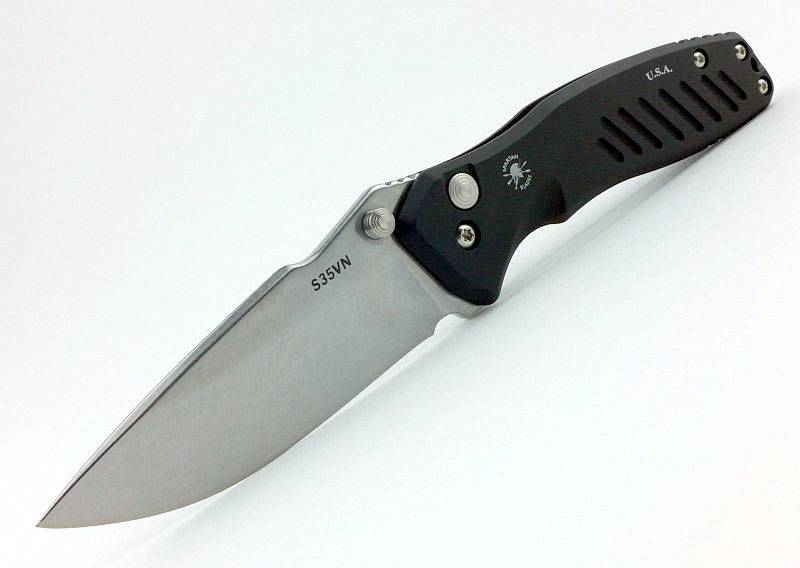
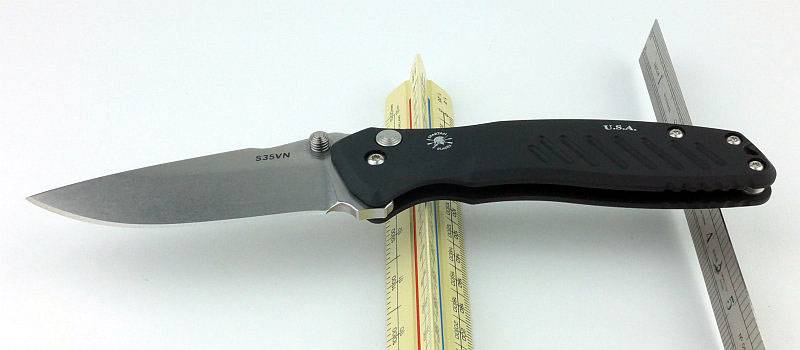
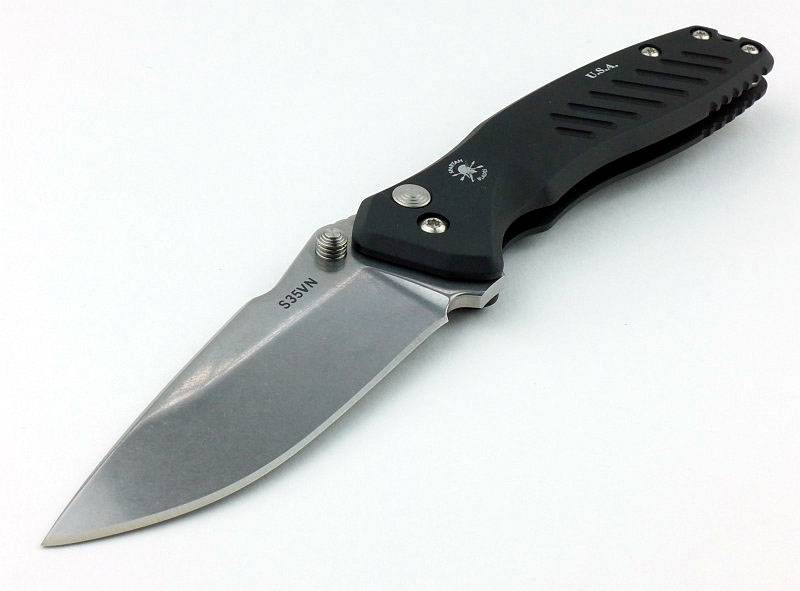
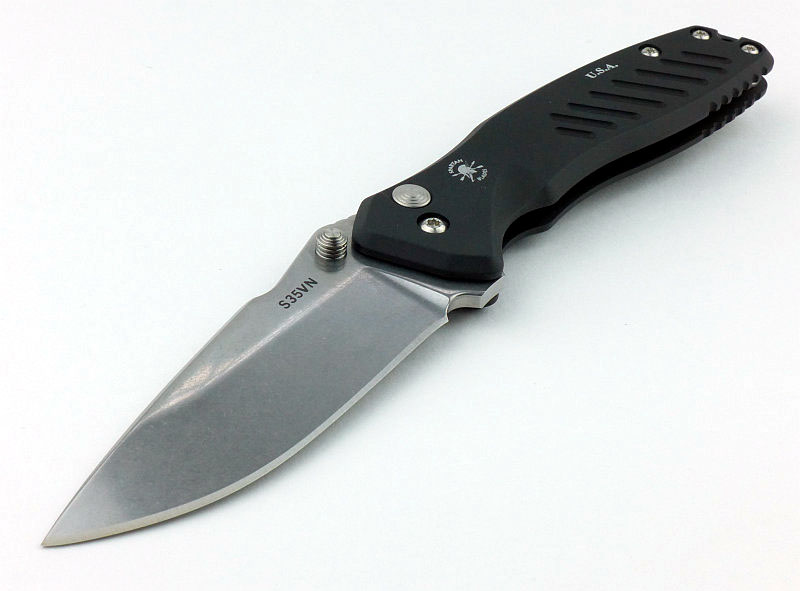
Spartan Blades LLC proudly make “Knives with Intent”, and their Pallas Button Lock folder is no exception, fulfilling its design brief exceptionally well.

 photo 31 Pallas side open P1190318.jpg

The Blade and Handle Geometry:

Most knife specifications have a basic description of the blade geometry, but in this section I will be taking a more detailed look at geometry and balance.
 photo 43 Pallas grind P1200581.jpg

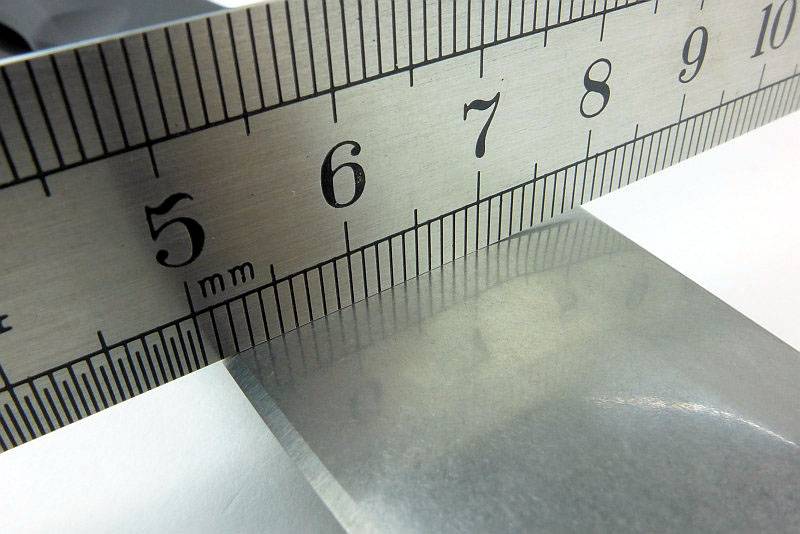
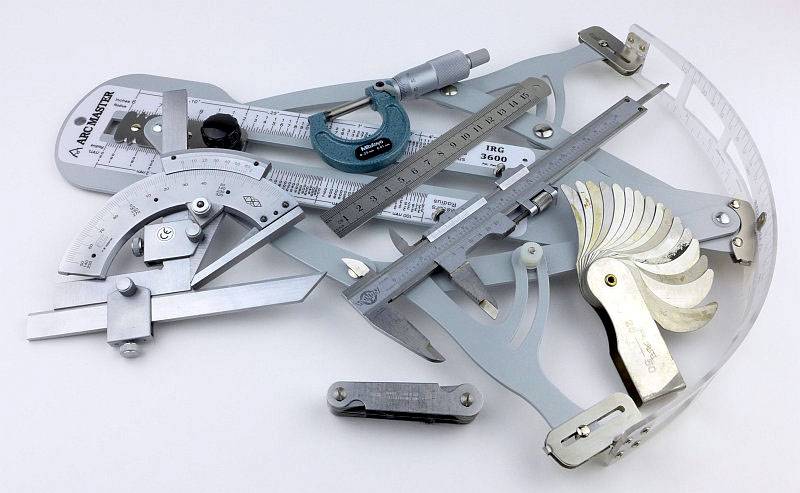
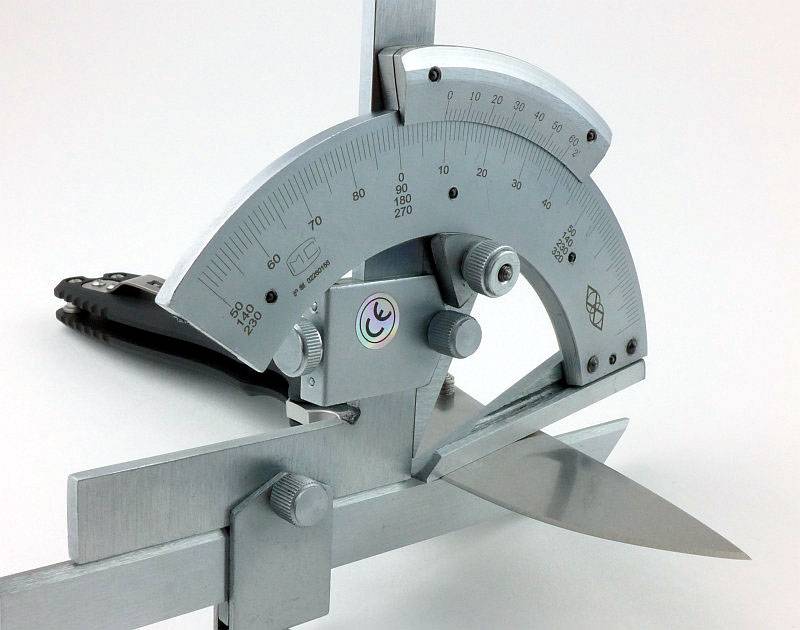
Using a set of gauges and precision measuring equipment including a Vernier protractor, callipers, fixed radius gauges and the unique Arc Master adjustable radius gauge (the one that looks like a crossbow).
 photo Knife measuring P1180483.jpg

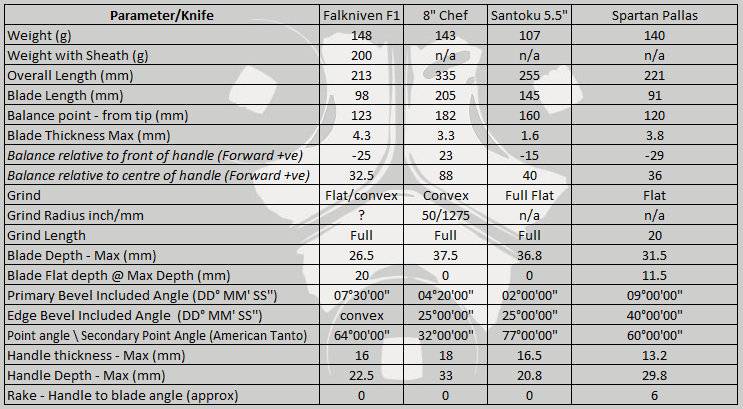
These measurements have been tabulated and are presented along with a few reference blades (8″ Chef’s Knife, 5.5″ Santoku and the popular Fällkniven F1).

Key aspects such as the primary bevel angle, grind type, blade depth, blade thickness, length, weight are detailed, along with balance information.
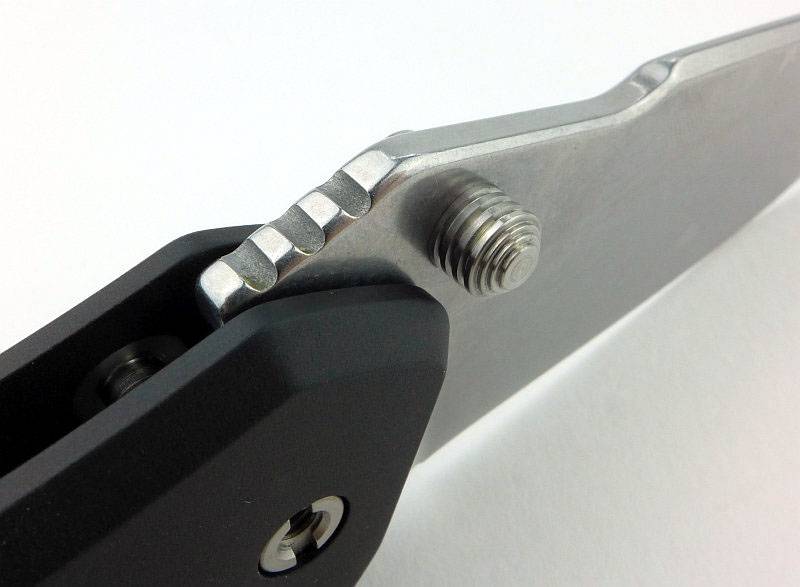
 photo 44 Pallas angle P1200606.jpg

The ‘Balance relative to the front of the handle’ tells you if the knife will feel front heavy, or if the weight is in your hand (a positive value means the weight is forward of the front of the handle). The ‘Balance relative to the centre of the handle’ indicates how close to a ‘neutral balance’ the knife has in the hand.
 photo 42 Pallas balance P1200573.jpg

In the case of full convex grinds the approximate centre of the grind is used for the primary bevel angle estimate.

 photo Spartan Pallas Parameters.jpg

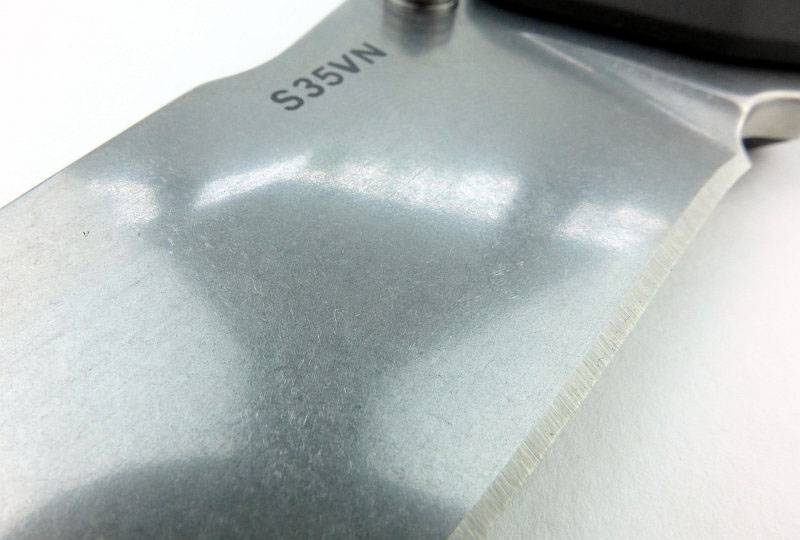
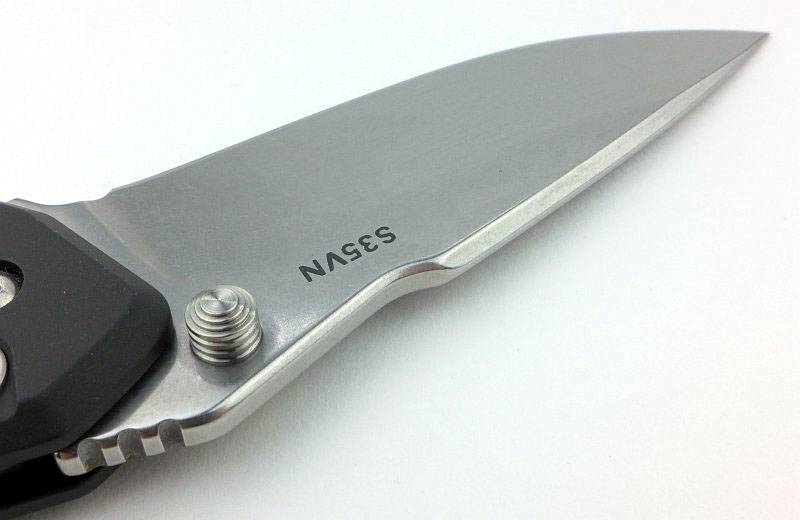
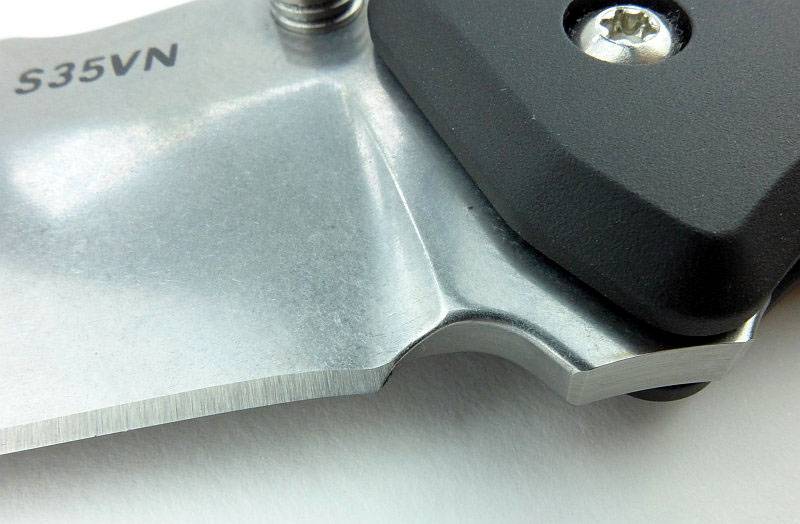
The blade is made from S35VN steel.

Explained by the Maker:

The reasons for certain design choices may not be clear when simply looking at an object, so this section is intended to give an insight into the thinking behind a design by speaking to the designer themselves.

Unfortunately I can’t always get time with the designer so will use this section to include relevant information about the knife and its designer.

Mark Carey (co-founder of Spartan Blades LLC) and I discussed the Pallas at IWA 2016, so I was able to find out a little of the thought processes that brought the Pallas folder into Spartan Blades’ line up.

The knife was actually designed by Spartan Blades’ other founder Curtis Iovito and named after PALLAS (PALE ES), the Titan god of warcraft from Greek mythology.

Mark, as an ex-serviceman himself, is passionate about helping to properly equip those in the armed forces with reliable tools. The Pallas was born out of a relatively simple need for a folding knife that could be easily closed with gloves on, and while being made of premium materials, would stay at an affordable price point.

With most liner or frame lock knives being awkward to close with gloves on, the button lock was an ideal format to make it easy to release the lock with even thick gloves on. For a blade you can rely on, CPMS35VN steel was chosen with a thickness sufficient to make it strong, without being excessively thick or heavy which would impede cutting. The S35VN blade rides on a set of Alpha bearings keeping it slick. To keep weight low and yet not add a high cost, 6061 aluminium was used for the frame along with stainless steel hardware.

In its standard format the Pallas has a flipper tab and thumb stud, either of which can be flicked to easily open the blade. In this review is a special modified version for the UK market. The modification was included following a discussion between Bruce of Heinnie Haynes and Mark, and required the flipper tab to be removed.

This ‘UK’ modified Pallas was created due to the UKBA tightening control over imported knives with quickly deployable blades. Flipper style knives are the primary target.

A few more details:

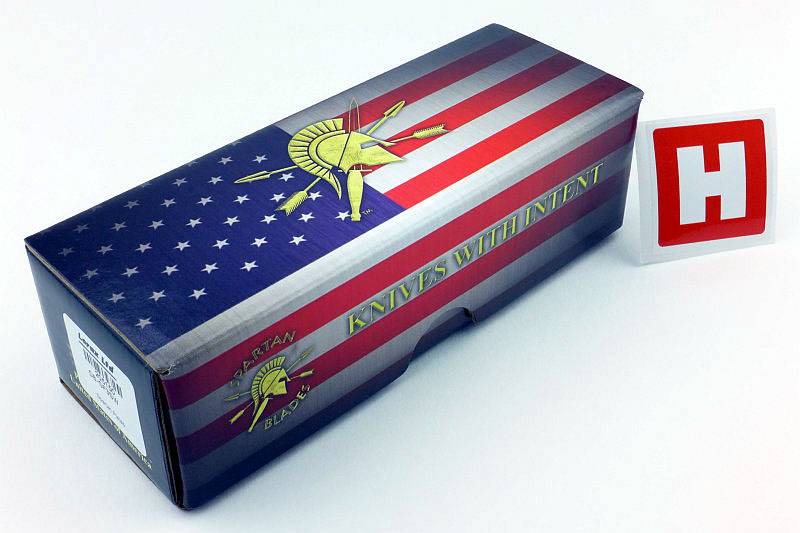
The Pallas box along with a Heinnie Haynes sticker to signify the creation of this ‘UK’ Version of the knife.
 photo 01 Pallas boxed H P1190180.jpg

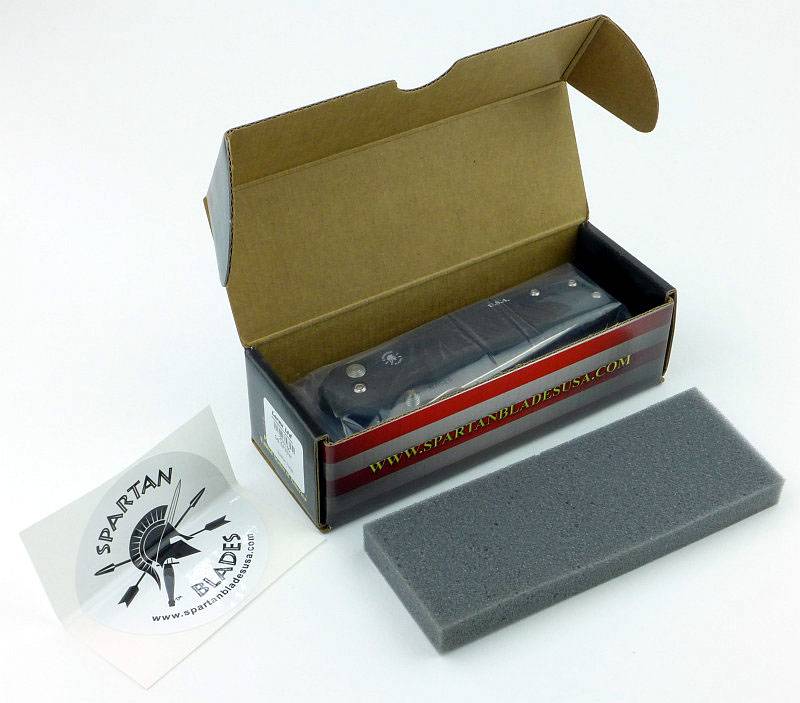
Flipping open the box, and the Pallas is sandwiched between foam liners with a Spartan Blades sticker included.
 photo 02 Pallas box open P1190188.jpg

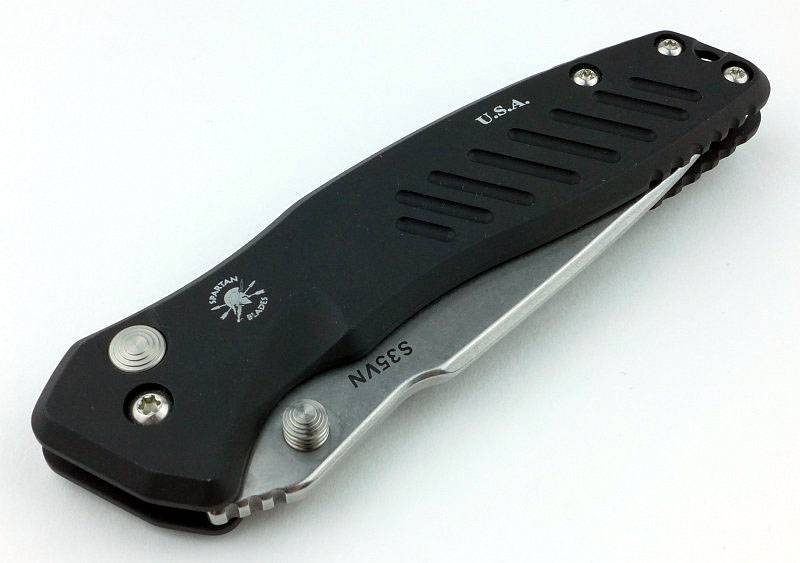
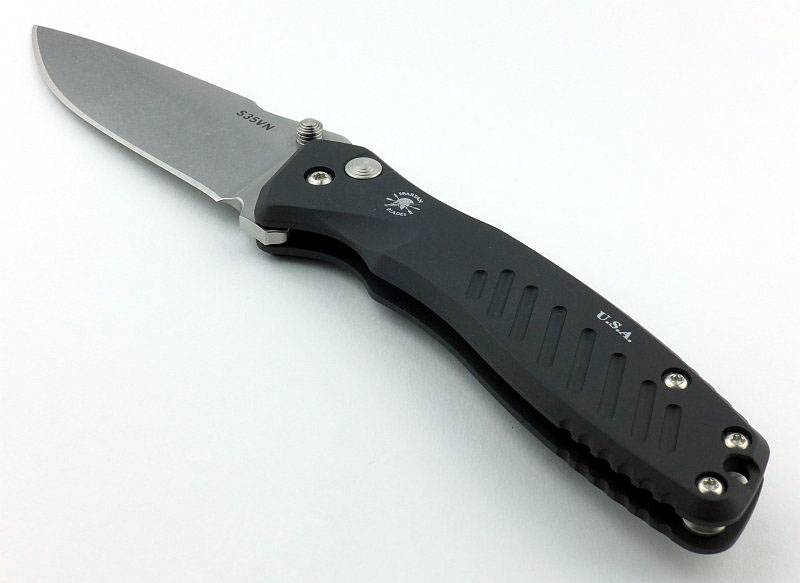
Fresh out of the box, the Pallas.
 photo 03 Pallas closed P1190190.jpg

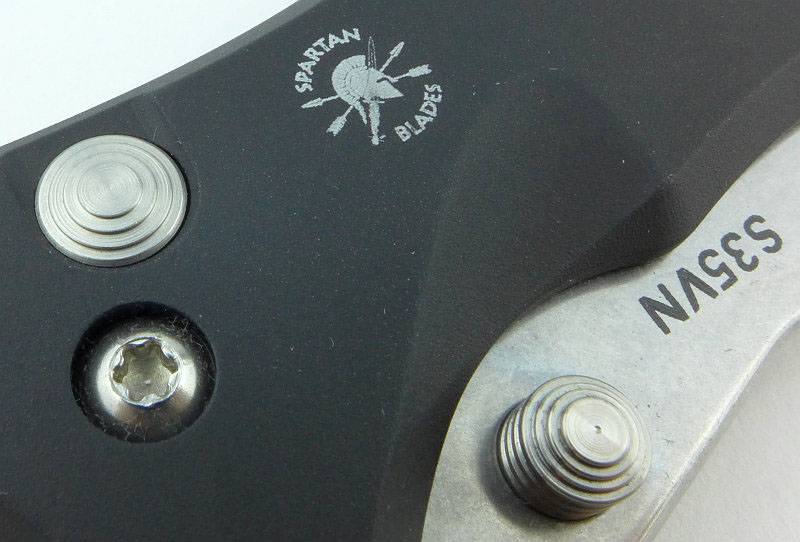
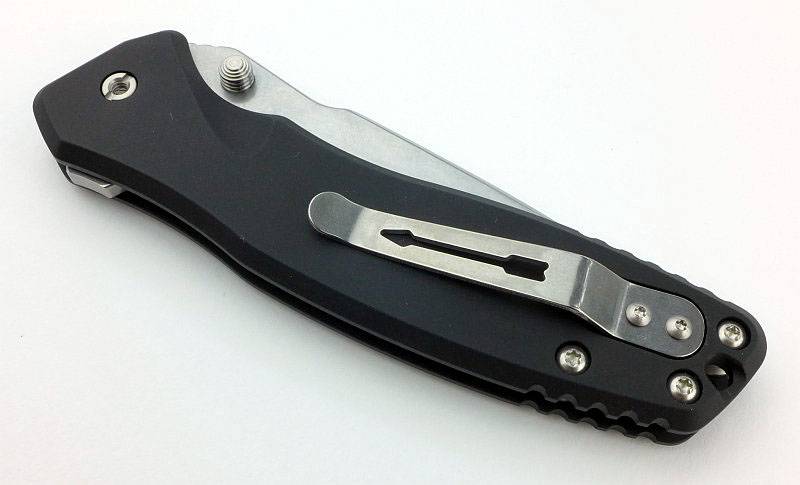
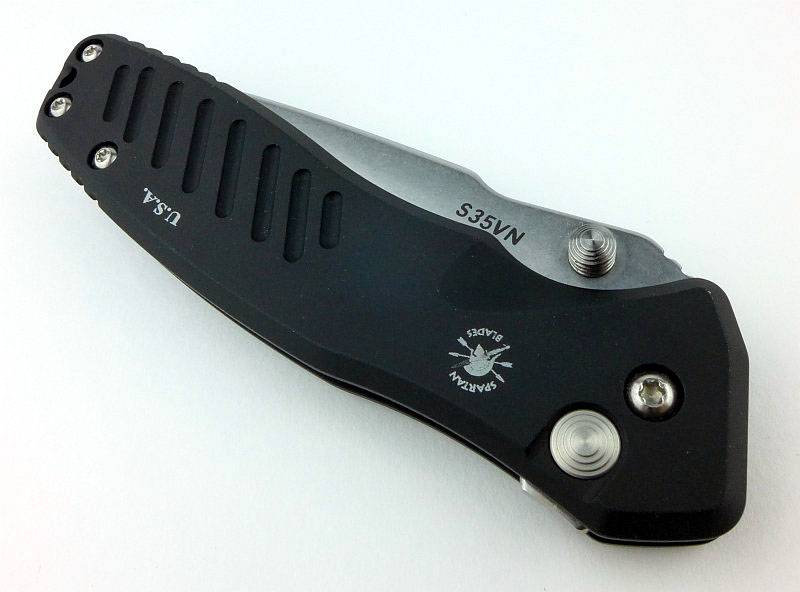
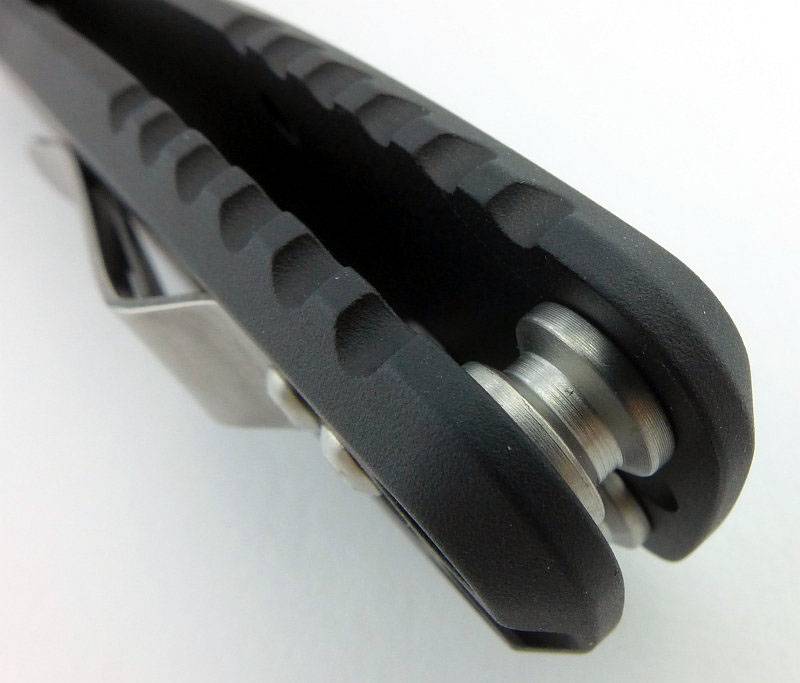
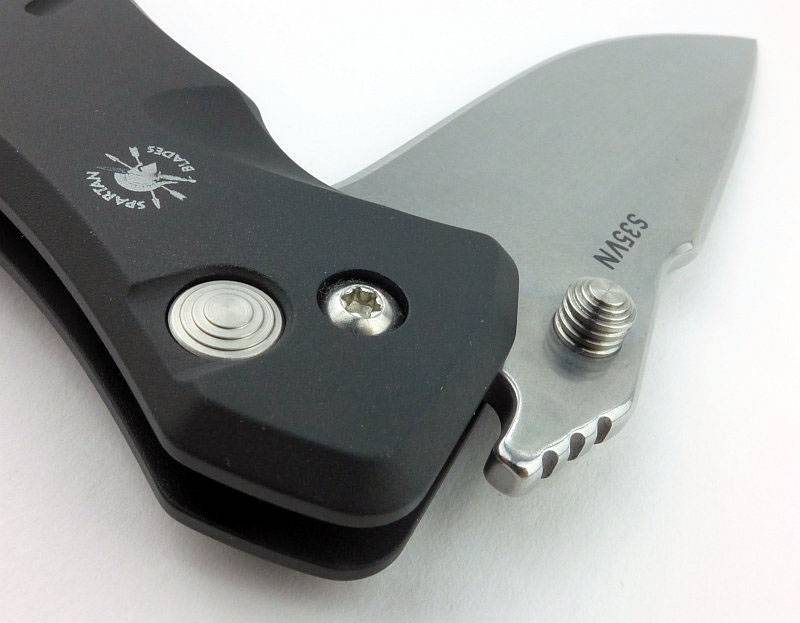
Straight in for a look at three key aspects of this knife, it is made by Spartan Blades (with the logo engraved in the handle), there is a button lock, and the blade is S35VN steel.
 photo 04 Pallas button stud logo P1190191.jpg

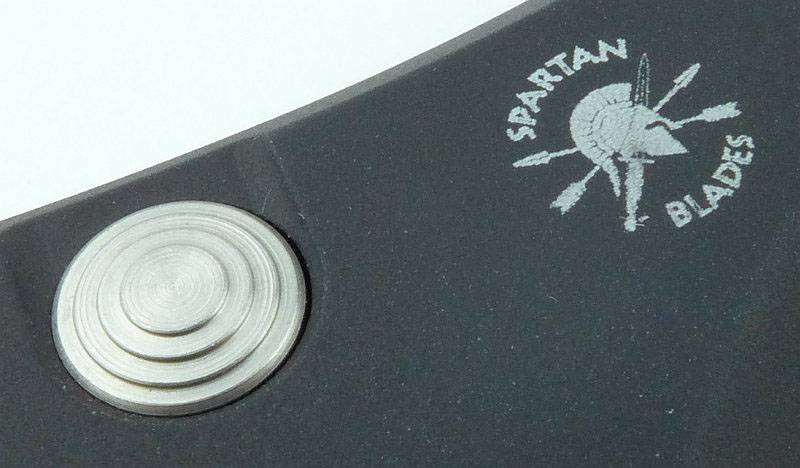
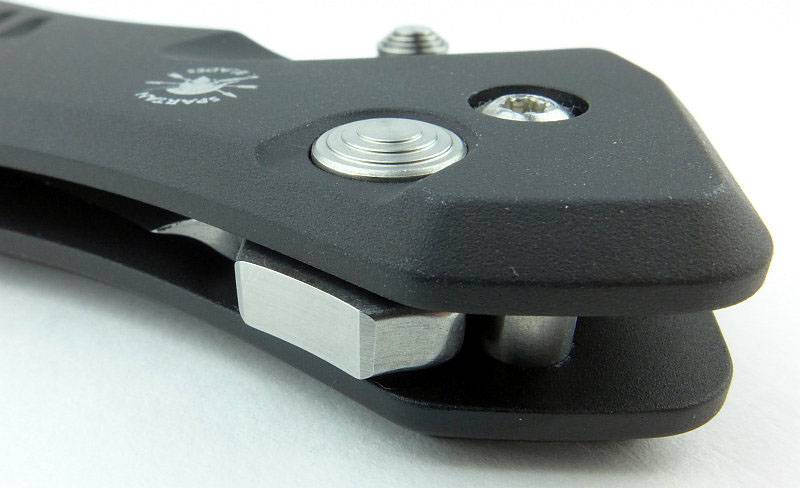
Closer still to the stainless steel button.
 photo 05 Pallas button logo P1190192.jpg

Despite an overall flat cross-section, the Pallas is full of curves that make the design flow and provide its ergonomics.
 photo 06 Pallas standing closed P1190200.jpg

Note the deviation from a standard Pallas in the there is no longer a flipper tab on this special UK version.
 photo 07 Pallas lying closed P1190204.jpg

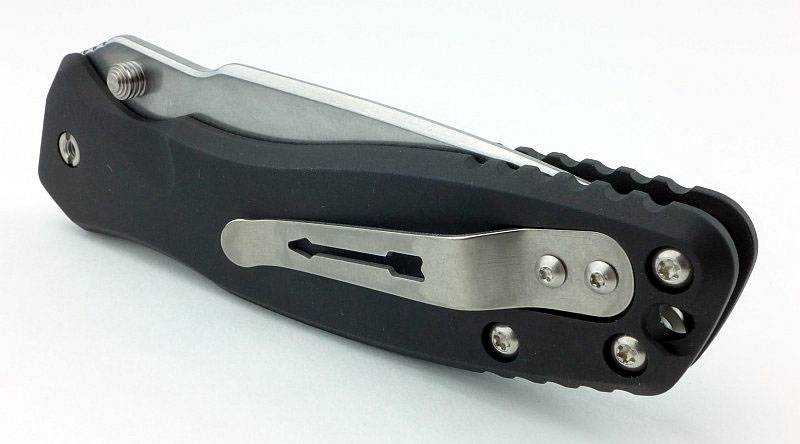
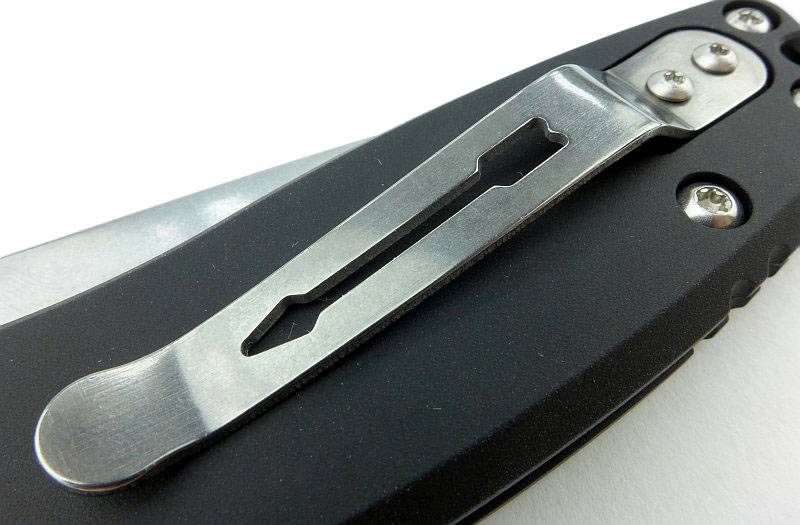
SpartanBlades’ signature titanium arrow pocket clip.
 photo 08 Pallas clip P1190206.jpg

The pocket clip is one sided and cannot be fitted to the side with the lock button.
 photo 09 Pallas lying closed P1190210.jpg

This is where the flipper tab would be on the standard Pallas.
 photo 10 Pallas UK version P1190214.jpg

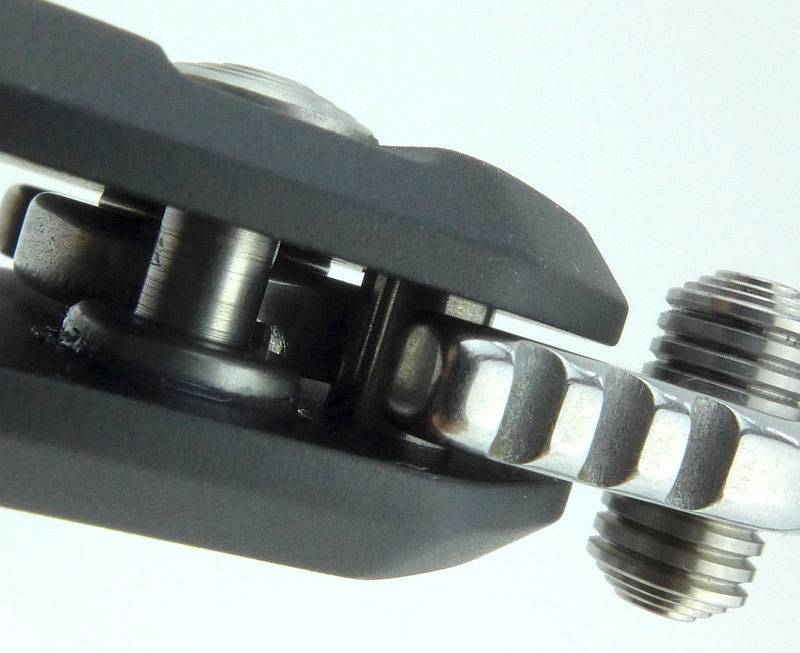
Button locks are far less common in non-autos, than other locking mechanism, so warrants a closer look. Here the blade has been opened slightly to allow the button and its shaft to be seen.
 photo 11 Pallas button inside P1190222.jpg

Viewed from a slightly higher angle you can see how the button has been pulled into the handle as the blade starts to open.
 photo 12 Pallas button inside P1190233.jpg

With the blade a little further open you can see the locking notch in the blade into which the button engages. You can see it is just to the right of the blade stop pin.
 photo 13 Pallas lock notch P1190238.jpg

The blade is now nearly fully open and the locking notch has nearly reached the button.
 photo 14 Pallas lock notch nearly open P1190243.jpg

And fully open the button has locked itself into the notch in the blade. The blade has also hit the stop pin and is firmly wedged between the two.
 photo 15 Pallas lock button engaged P1190245.jpg

Now the blade is fully open, the UK version trimmed off flipper tab can be seen more clearly.
 photo 16 Pallas no flipper P1190259.jpg

The overall view.
 photo 18 Pallas angle open reverse P1190264.jpg

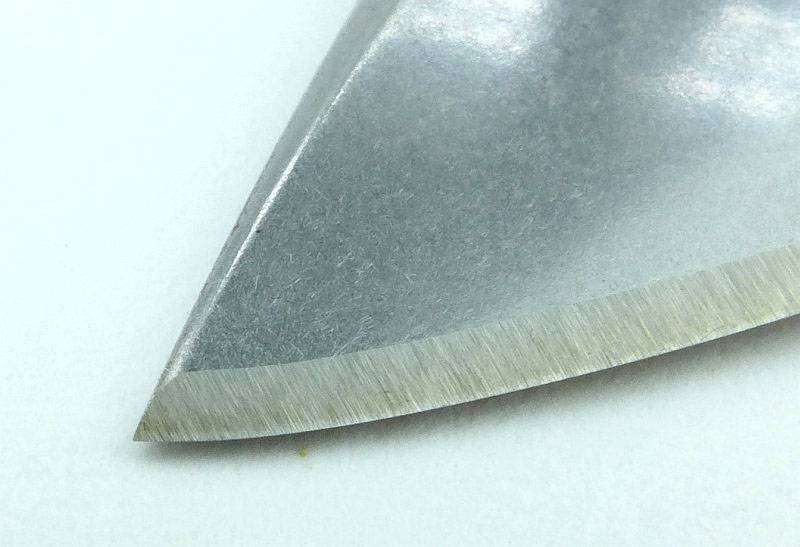
when looking closely at the blade tip you can see the contrast of the crispness of the final edge bevel and the rounded blade spine.
 photo 19 Pallas tip P1190272.jpg

The entire blade surface has a stonewashed finish.
 photo 20 Pallas stonewash P1190275.jpg

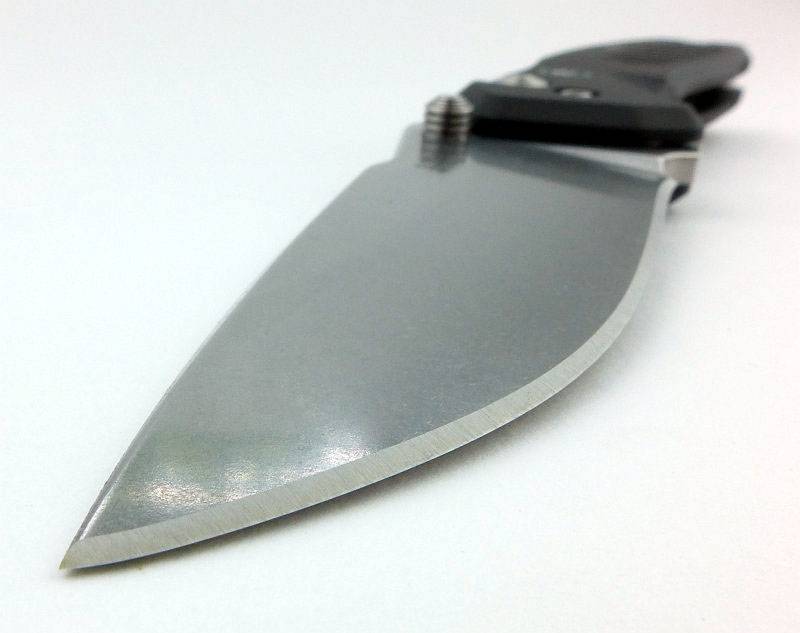
Not quite a full flat grind, the Pallas blade is a high flat grind.
 photo 21 Pallas blade grind P1190276.jpg

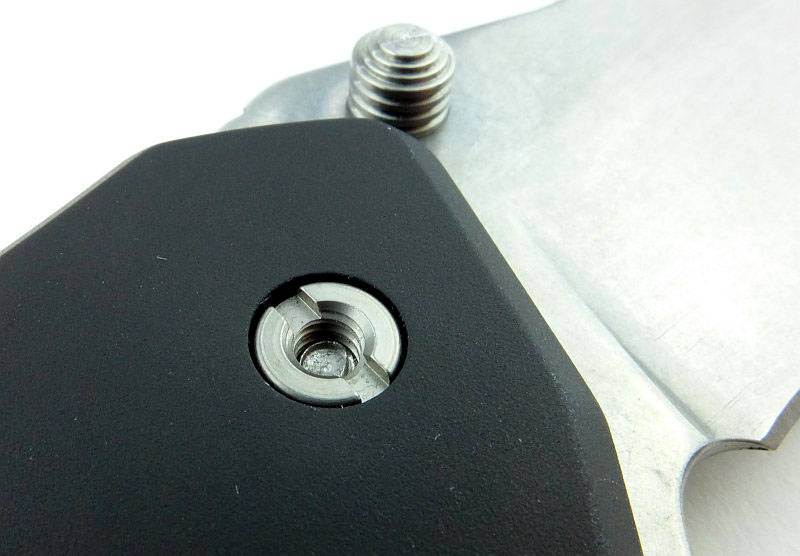
Each side of the pivot bolt is different, with a nut on this side.
 photo 22 Pallas pivot nut P1190285.jpg

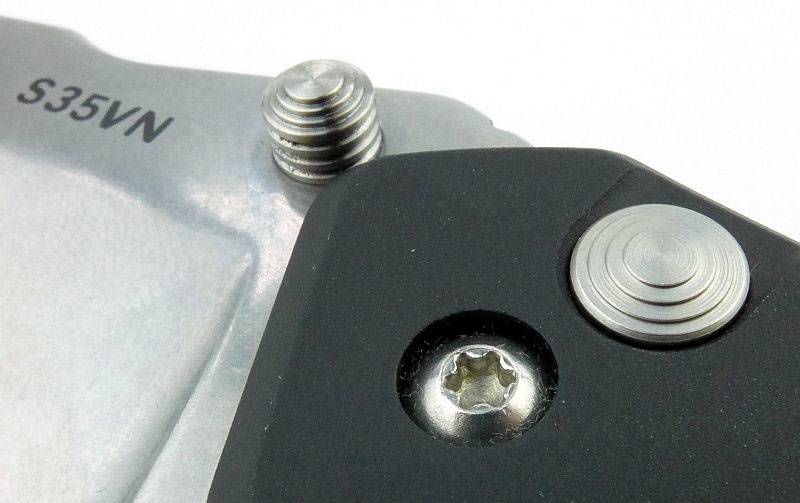
And a torx bolt head on the other side.
 photo 23 Pallas pivot bolt P1190280.jpg

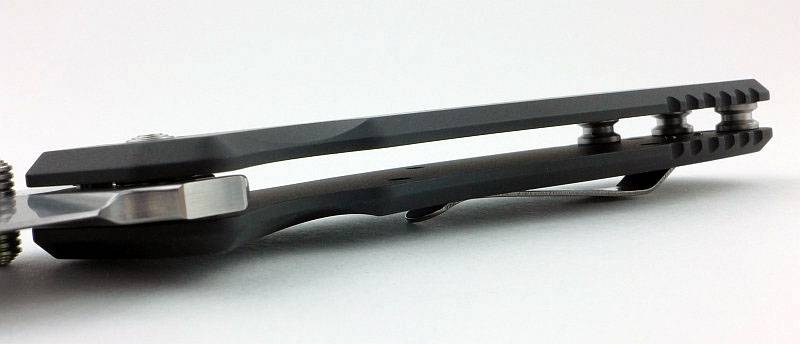
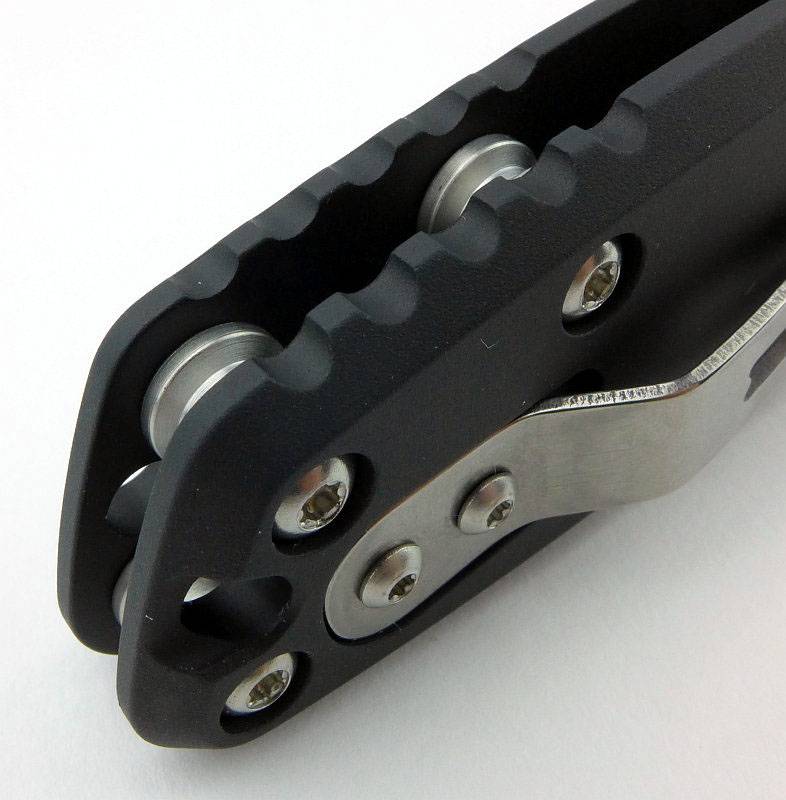
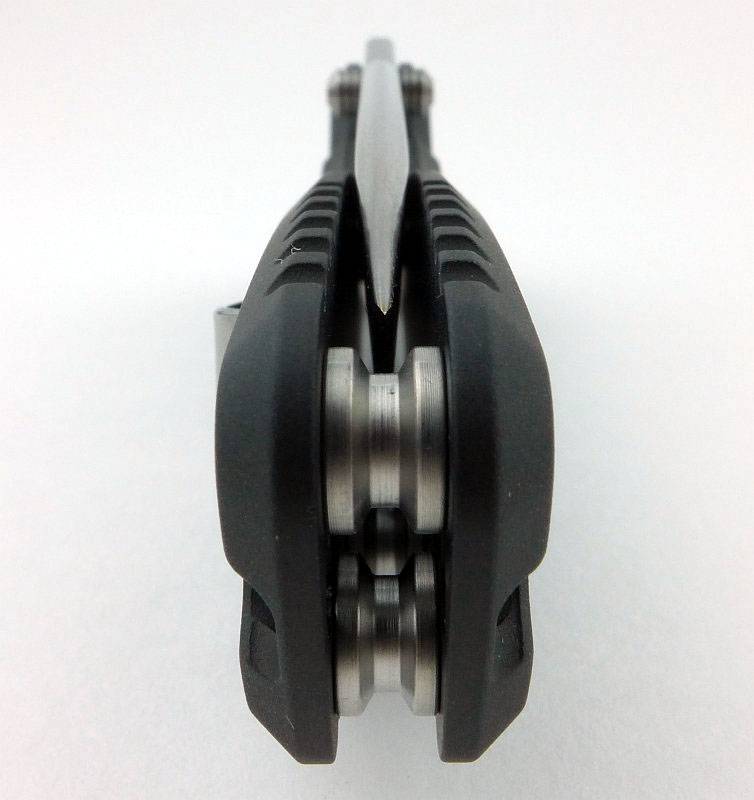
Though they look good, the handle spacers are also a very practical design with wide flats where they contact the handles and a slight waist which will reduce weight without any significant loss of strength.
 photo 24 Pallas spacers P1190289.jpg

You can see straight through the handle with the three spacers one end,and the blade pivot at the other.
 photo 25 Pallas spacers P1190293.jpg

All the edges of the spine are nicely rounded. So you won’t be striking sparks off fire-rods, but you also won’t be fraying your pockets.
 photo 26 Pallas spine P1190294.jpg

There is a little jimping for your thumb where the blade meets the handle.
 photo 27 Pallas jimping P1190298.jpg

Each side of the spacers are held with torx bolts, as is the pocket clip.
 photo 28 Pallas spacer bolts P1190302.jpg

Blade centring is spot on.
 photo 29 Pallas centring P1190307.jpg

When the blade is between one third and two thirds open you can see the blade-stop hook in the tang of the blade.
 photo 30 Pallas blade stop hook P1190315.jpg

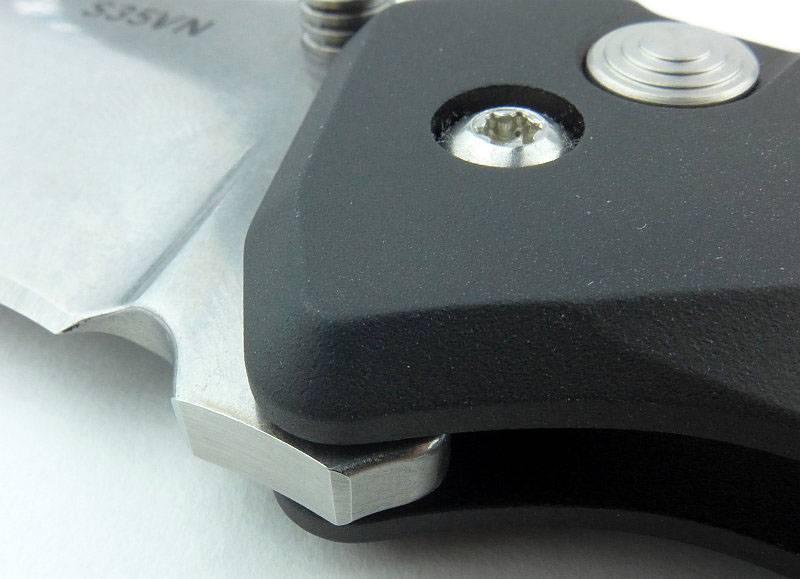
The cutting edge is terminated in a choil, and the plunge line is nicely radiused to reduce stress concentrators.
 photo 32 Pallas plunge choil P1190322.jpg

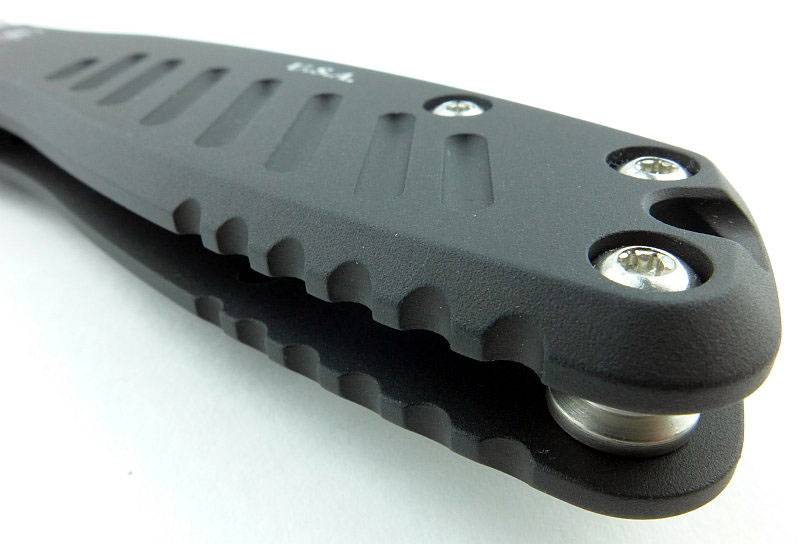
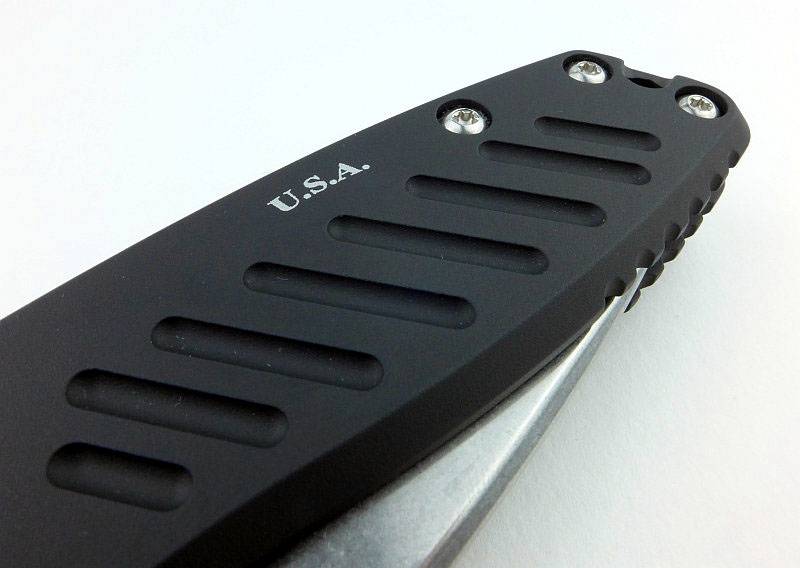
At the butt of the knife handle, there is jimping top and bottom giving a surprisingly useful amount of grip. I’d also take this opportunity to point out the surface texture of the anodised handles. There is a matt finish to the anodising due to what appears to be an underlying bead blasted surface.
 photo 33 Pallas handle jimping P1190325.jpg

Grooves cut into this side of the handle provide grip where your finger tips press onto the handle. Subtle and effective.
 photo 39 Pallas handle grip P1190366.jpg

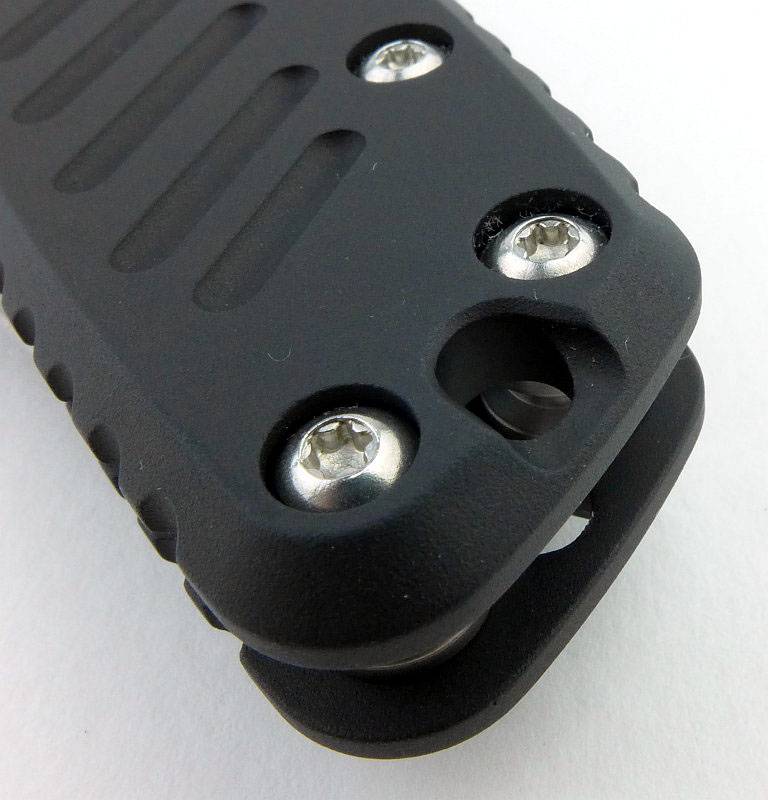
The lanyard hole goes through both handle slabs.
 photo 40 Pallas lanyard hole P1190368.jpg

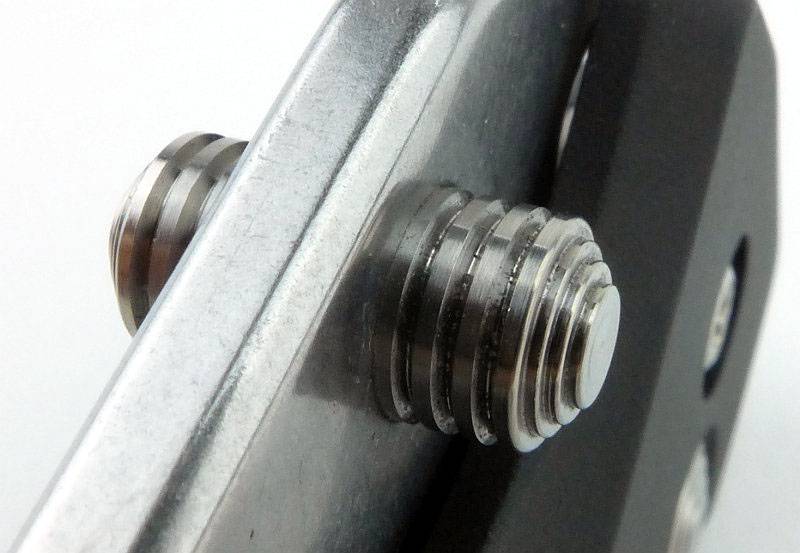
Lastly for this section, a close-up of the thumb stud which looks crisp and precise, yet without any sharp edges on the thumb contact surface.
 photo 41 Pallas thumb stud P1190377.jpg

What it is like to use?

I like a big folder, and though the Pallas is not really big, it certainly is a good size with its 3 3/4″ blade and 8 3/4″ opened length. For a knife of its size with all metal construction, the weight is impressively low making it easy to carry.

Admittedly I was slightly sceptical about the button lock from the point of view of a good tight lockup. Straight out of the box, my fears seemed to be proving true, HOWEVER (and yes a big however) this was only due to two reasons. Firstly without the flipper, I was only opening the blade slowly and the lock was then not engaging tightly, and secondly the button just needed a little use to settle in.

After more use, the lock was engaging tightly even when only opened gently on the thumb stud. So I would recommend all users to start with at least 30-40 good firm flicks open to bed the button lock in. After this the lock has been spot on and rock solid. Even with the UK version you can start to open the blade with the thumb stud, then flick it fully open with your wrist. For those with the knack, so can also flip the blade open using the thumb stud instead of the flipper tab (but be careful as you can easily catch the edge with your thumb doing this).

Another observation that was immediately obvious, is that the blade movement is super slick. Importantly the blade has no side-to-side play, but the movement is so smooth and easy I would go so far as to say it is the smoothest I’ve used to date (and I’ve handles hundreds of folders with and without ball-bearings). This may in part be due to the button lock mechanism allowing the blade tang to move freely, or possibly due to the high level of finish of all the moving parts.

The generous size of the knife means it is a comfortable handful with or without gloves. I would obviously prefer the added protection the flipper tab (finger guard) gives you, but for this UK version it is no less safe than other non-flipper folders.
(I take XL size gloves)
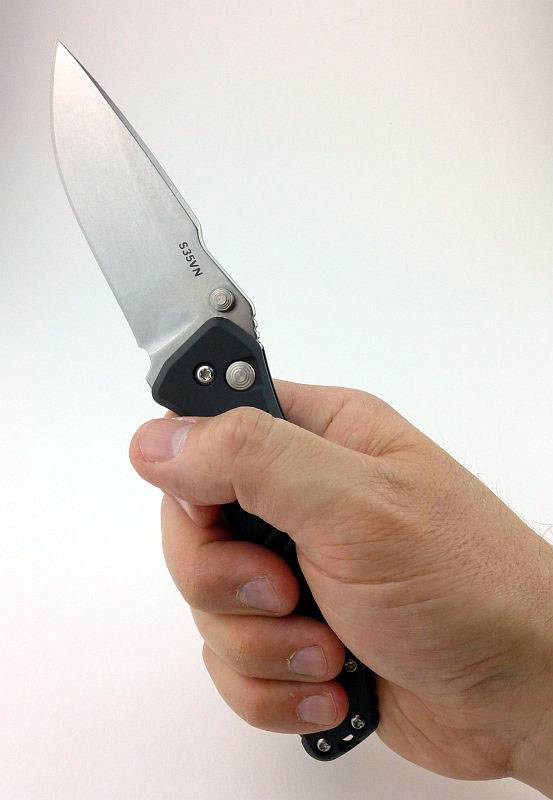
 photo 34 Pallas in hand P1190332.jpg

Taking up a thrust hold, the jimping on the blade gives you more grip.
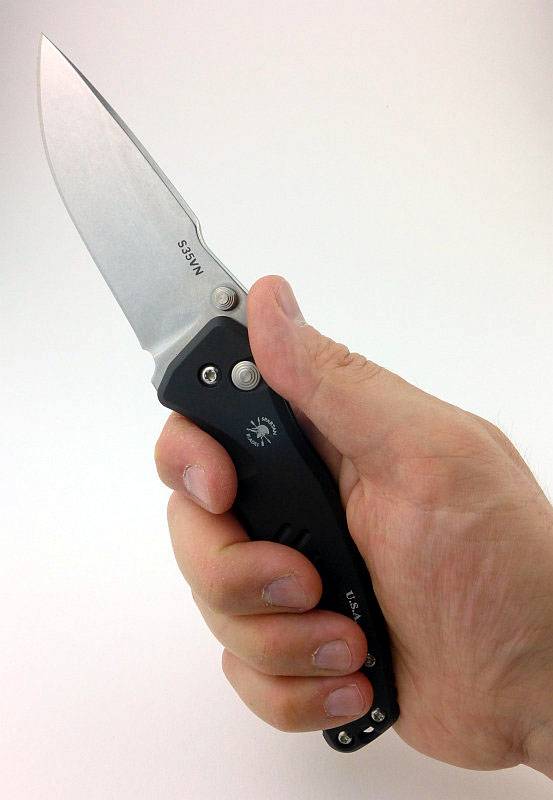
 photo 35 Pallas in hand P1190334.jpg

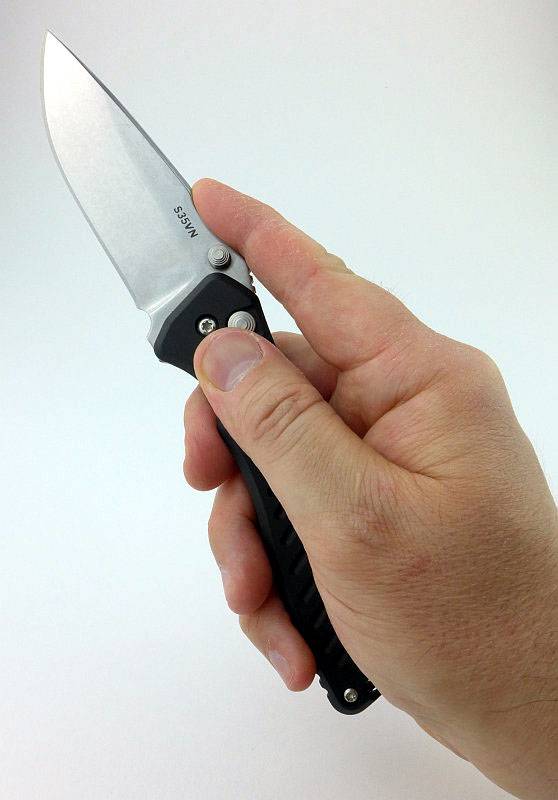
Though this was not the intention of the harpoon style blade, it just happens that for a fine working grip your first finger sits nicely against the harpoon spine. Like this of course you need to watch your thumb doesn’t hit the lock button. (So far I’ve not had any instances of an accidental press of the lock button)
 photo 36 Pallas in hand P1190337.jpg

When swapping between grips, your hand seems to fall into place with no adjustment required to eliminate any hotspots. Handle shaping is subtle but certainly works well for me.

With the button lock design being focused on ease of closing with gloves on, it is primarily a right-handed layout with the button being easy to reach with the thumb of your right hand. The clip is also fixed to one side (opposite to the button). The blade has a double-ended thumb stud and there is a depression on both handle sides giving easier access to the thumb stud, so at least for opening the Pallas is suitable for left-handed users as well. Are there any issues for left-handers? No, even using the Pallas left-handed I found the button easy to press with my first finger to close the blade. It is not as comfortable with the clip falling under your finger tips in a left-handed grip, but that is only a minor annoyance.

Another concern I had was of the button being accidentally pressed during use. So far I’ve not come close to doing this as the button appears to be far enough forward you positively have to try and press it. It is perhaps a small risk, but the completely safe and easy one-handed-closing the Pallas allows, has started to make this a firm favourite. While holding the button in, the blade is able to swing freely, so one-handed-closing is as easy as pressing the button and either flicking the blade closed or holding the blade upright and allowing it to swing closed. Many knives open easily, but few close this easily (when you want it to close).

I’m not a fan of pocket clips, and the Pallas clip looks quite thick, but thanks to being titanium, it has an ideal holding tension that is not too strong or weak.

Blade thickness is an excellent compromise between ultimate strength and cutting ability. It is thick enough that in some harder materials you start to feel it binding as the blade grind wedges into the cut, but the high flat grind helps this stay manageable. There is enough steel in the blade that you are not going to be worried about breaking it (unless you try to use it as a pry bar).

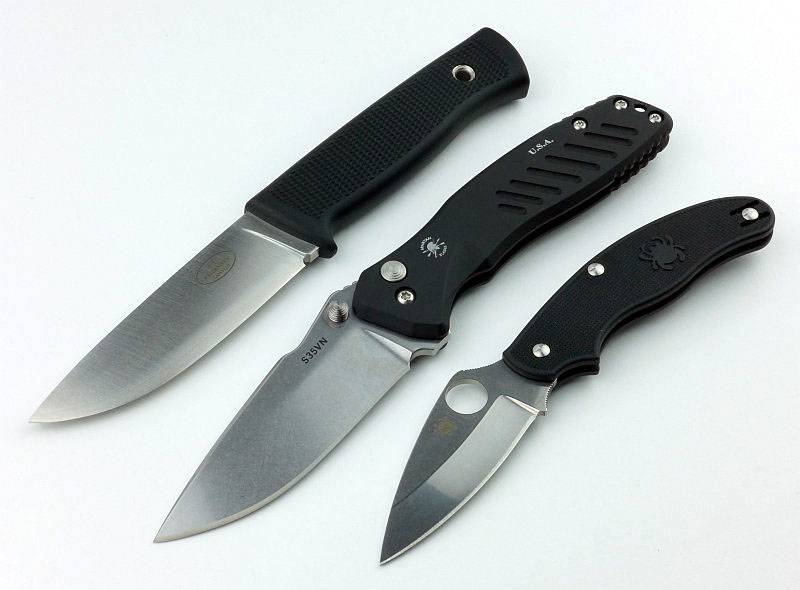
To give another idea of scale, here it is next to the Fällkniven F1 and a Spyderco UK Pen Knife.
 photo 37 Pallas size P1190353.jpg

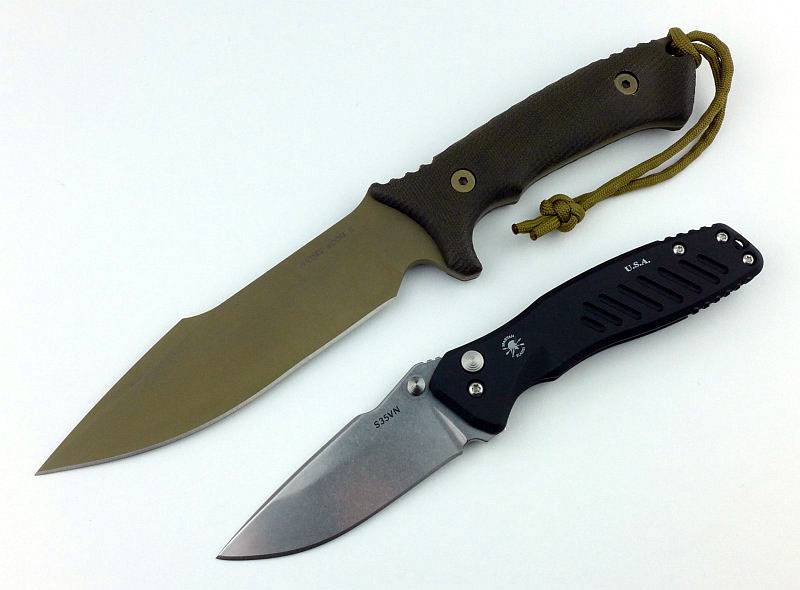
And also shown next to the Spartan Blades Harsey Model II.
 photo 38 Pallas size P1190360.jpg

Review Summary

The views expressed in this summary table are from the point of view of the reviewer’s personal use. I am not a member of the armed forces and cannot comment on its use beyond a cutting tool or field/hunting knife.

Something that might be a ‘pro’ for one user can be a ‘con’ for another, so the comments are categorised based on my requirements. You should consider all points and if they could be beneficial to you.

_______________________________________________ _______________________________________________
Things I like What doesn’t work so well for me
_______________________________________________ _______________________________________________
Button lock makes blade closing easy, with or without gloves. Lock initially needs some bedding in.
Safe and Easy One-Handed Closing. Small possibility of accidentally pressing the lock button during use (this did NOT happen during testing).
Strong S35VN Blade. Slightly biased for right-handed users.
Lightweight for its size.
Super smooth blade action.
Zero blade play.
Excellent fit and finish.
Titanium pocket clip.

 photo 17 Pallas angle open P1190262.jpg


Discussing the Review:

Please feel free to add comments to the review, but the ideal place to freely discuss these reviews is on a forum. If you started reading the shorter forum version of the review, but followed the link this full exclusive review, please return to that forum to discuss the review there.
If you read the review entirely on Tactical Reviews, please consider one of the following to join in any discussion.
EdgeMatters – Sponsored Reviews (UK based Forum for Knife Makers and Collectors)

BladeForums – Knife Reviews (US based Forum for Knife Discussion)

CandlePowerForums – Knife Reviews Section (Largest and Friendliest Flashlight Community Forum)