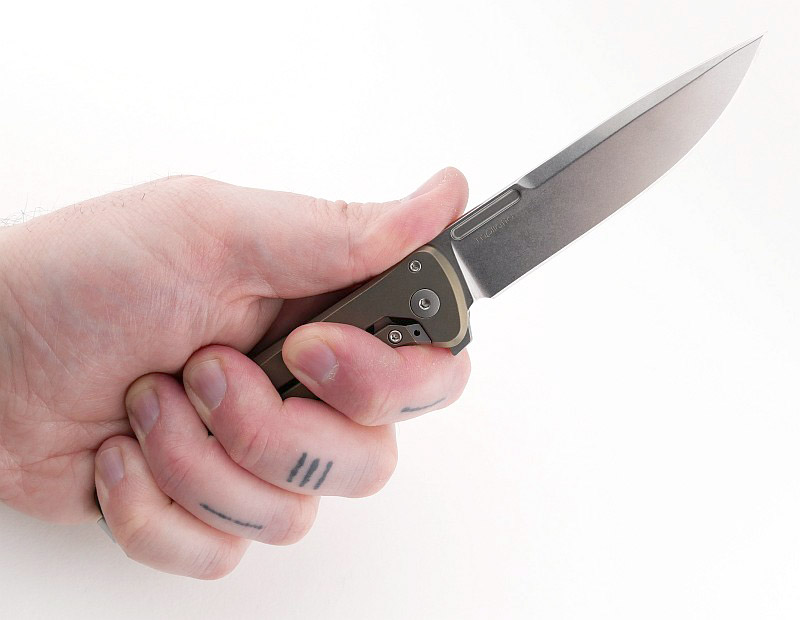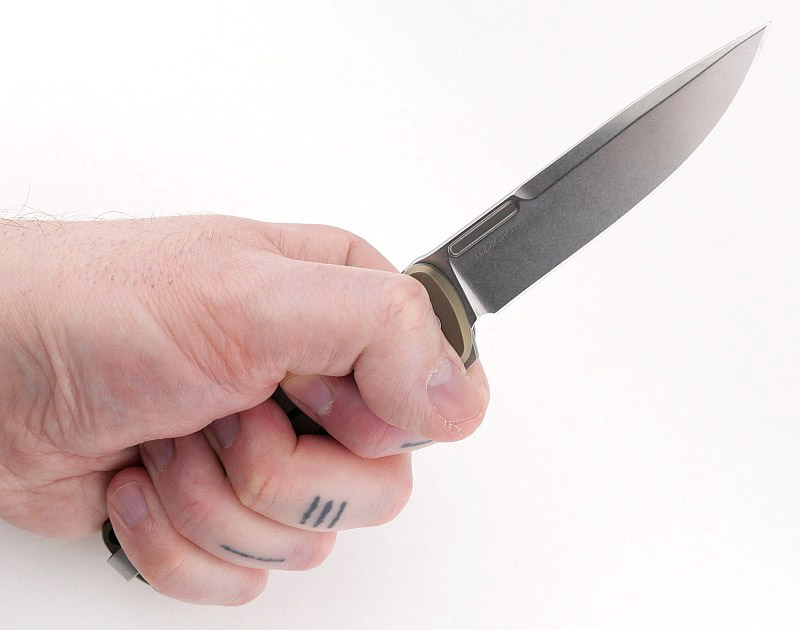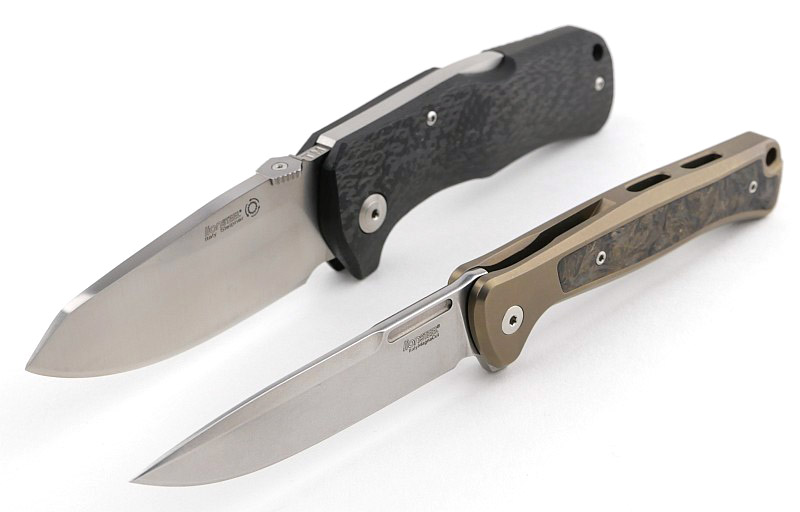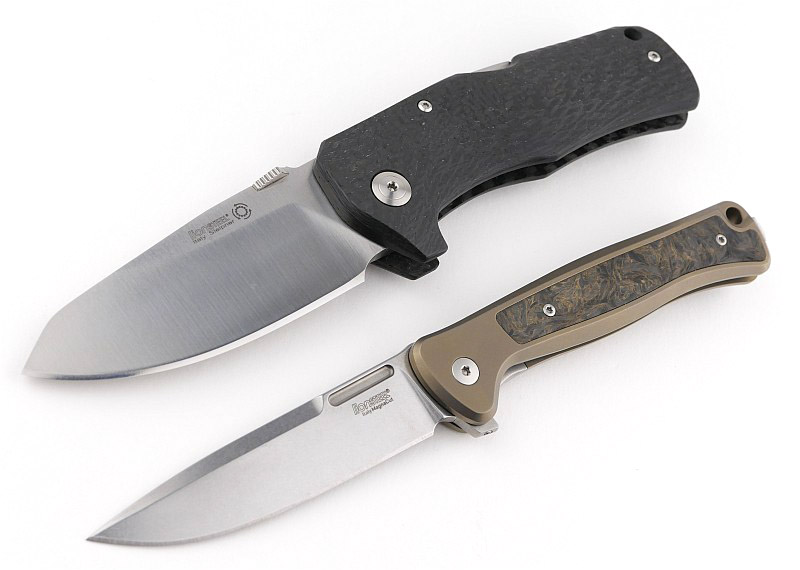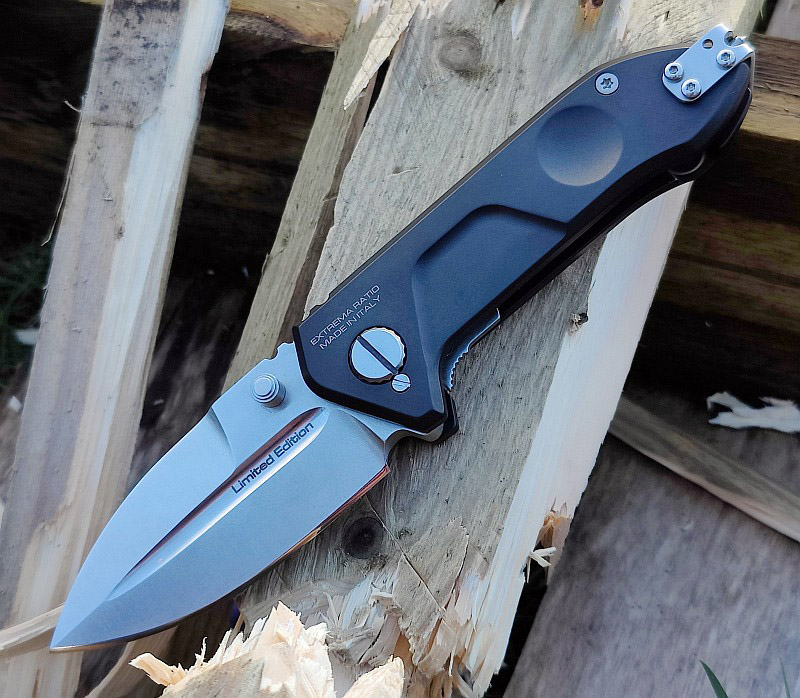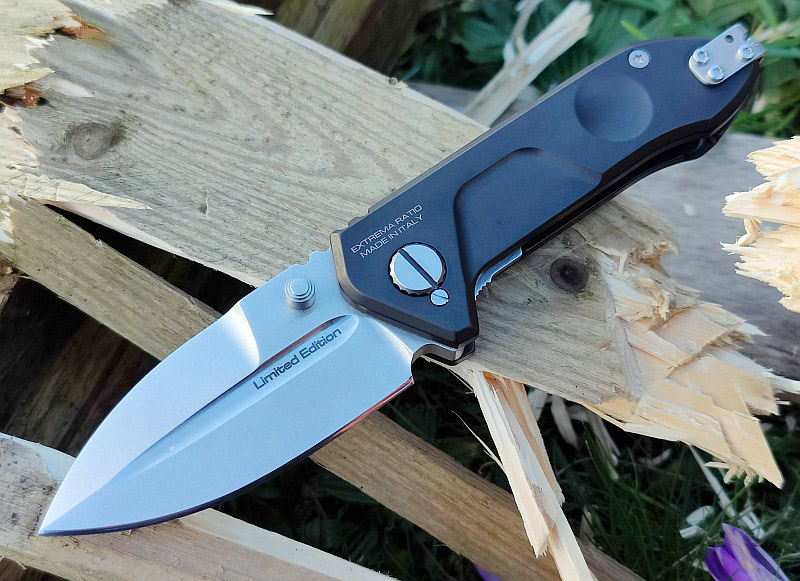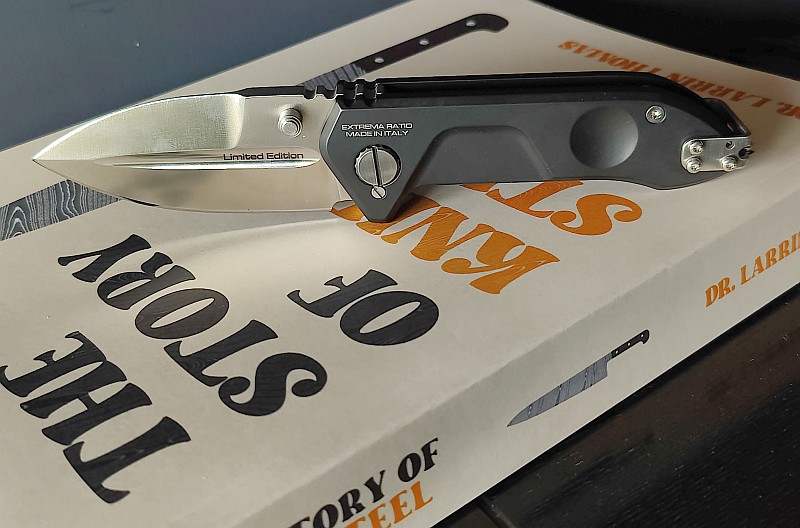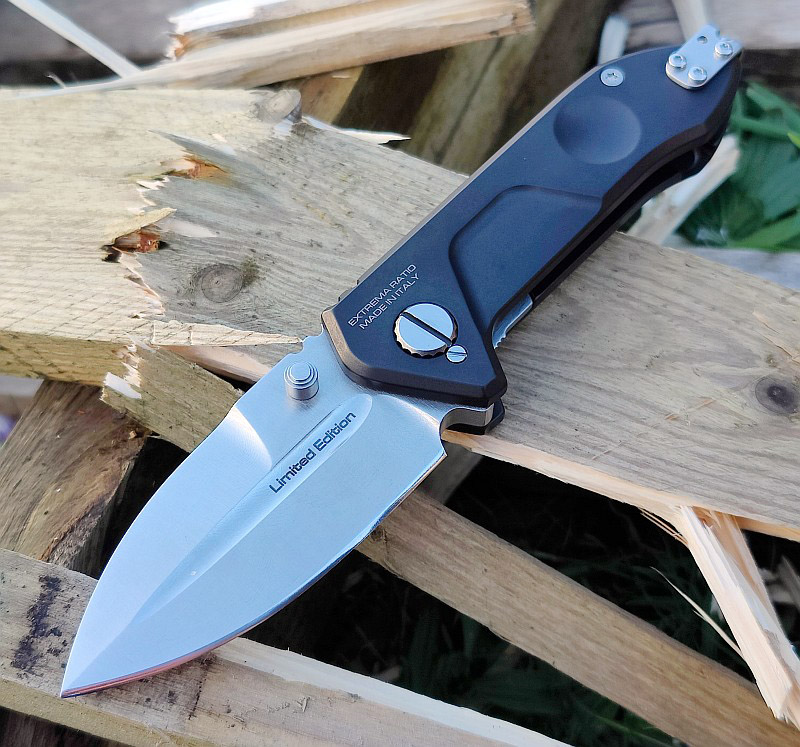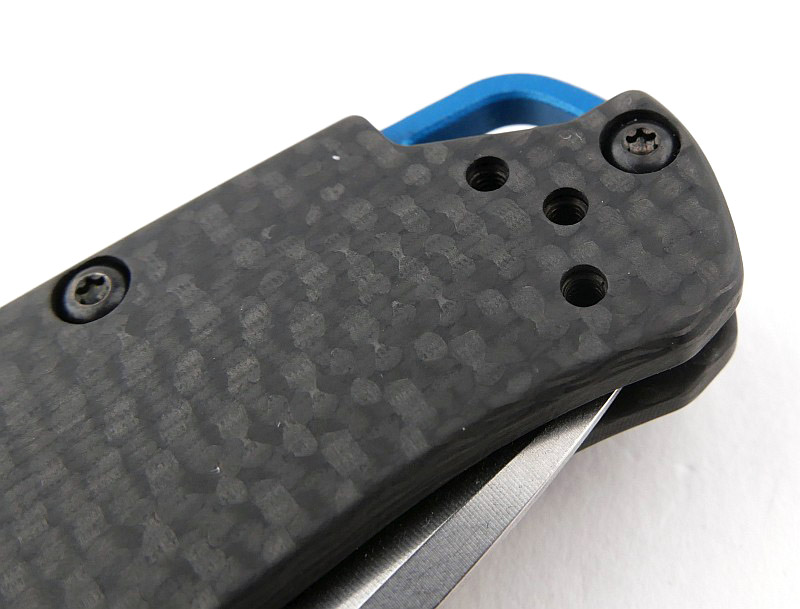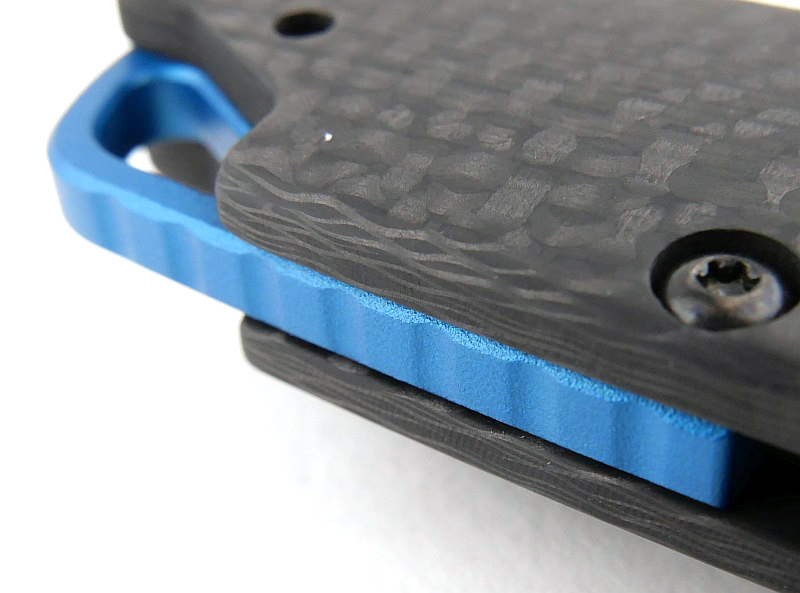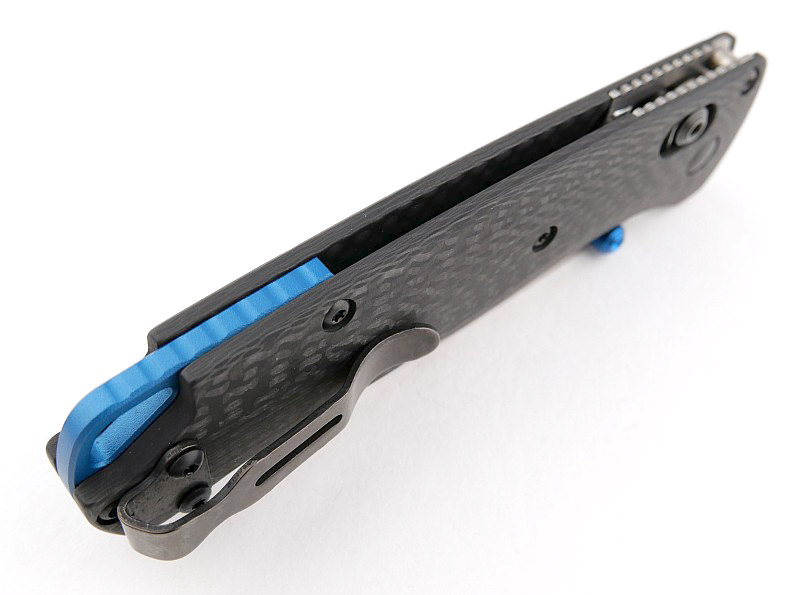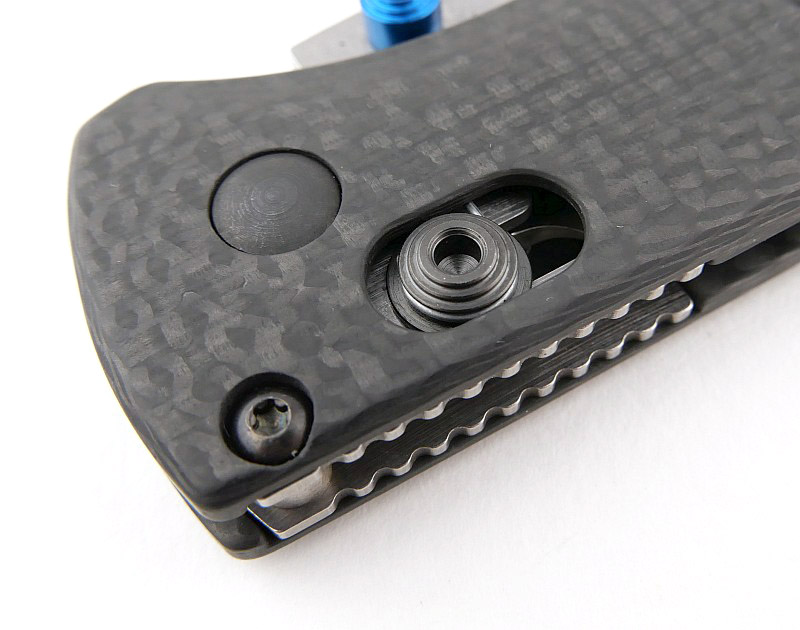
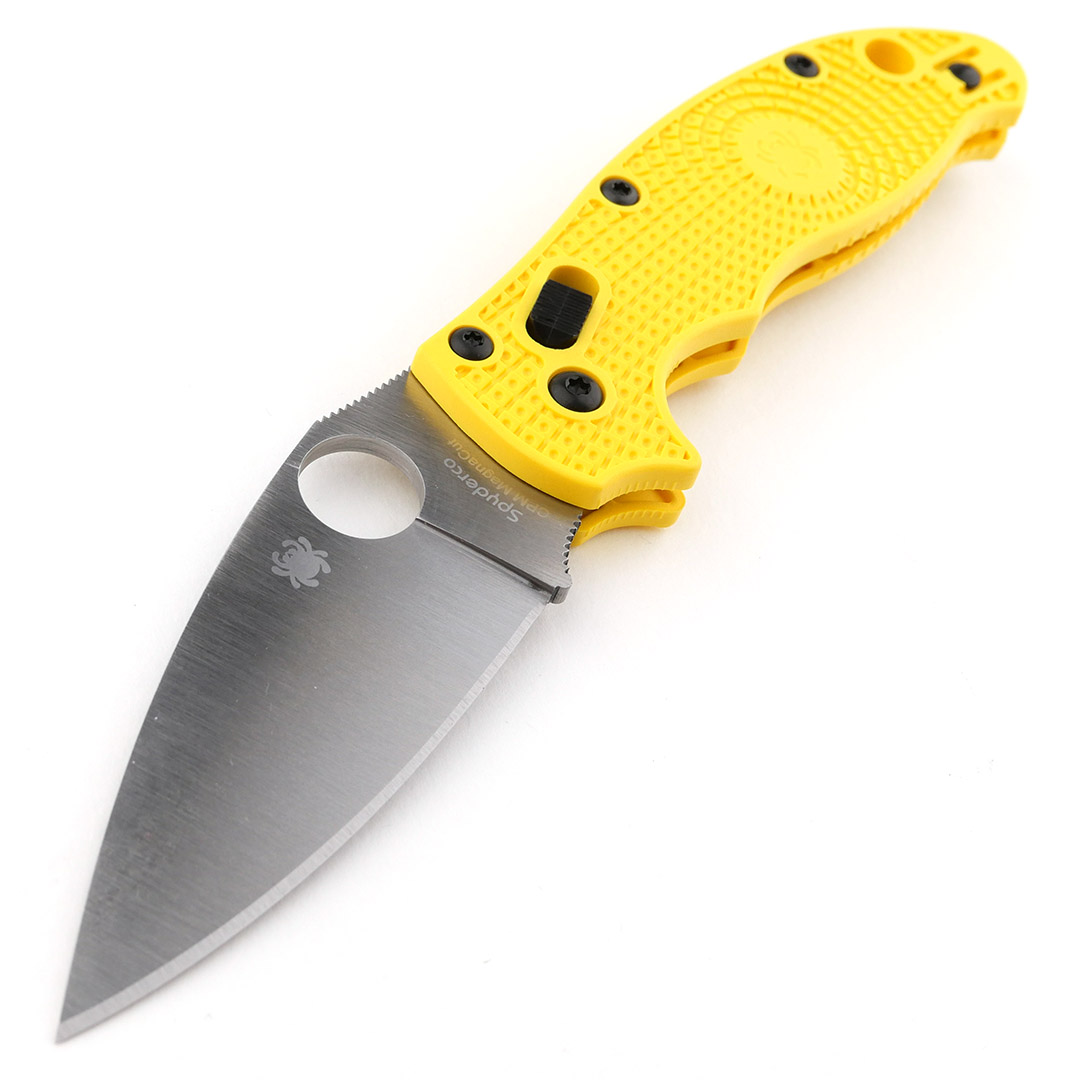
Knife Review: Spyderco Manix 2 Salt

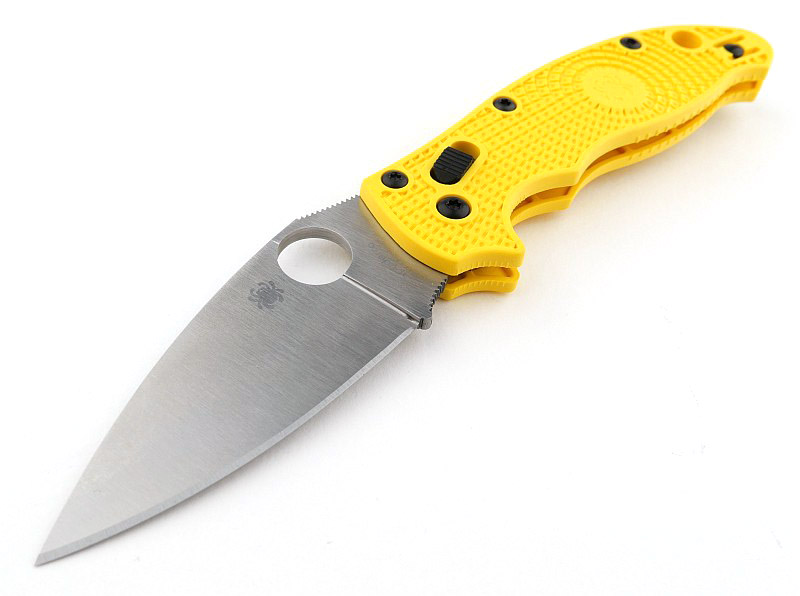
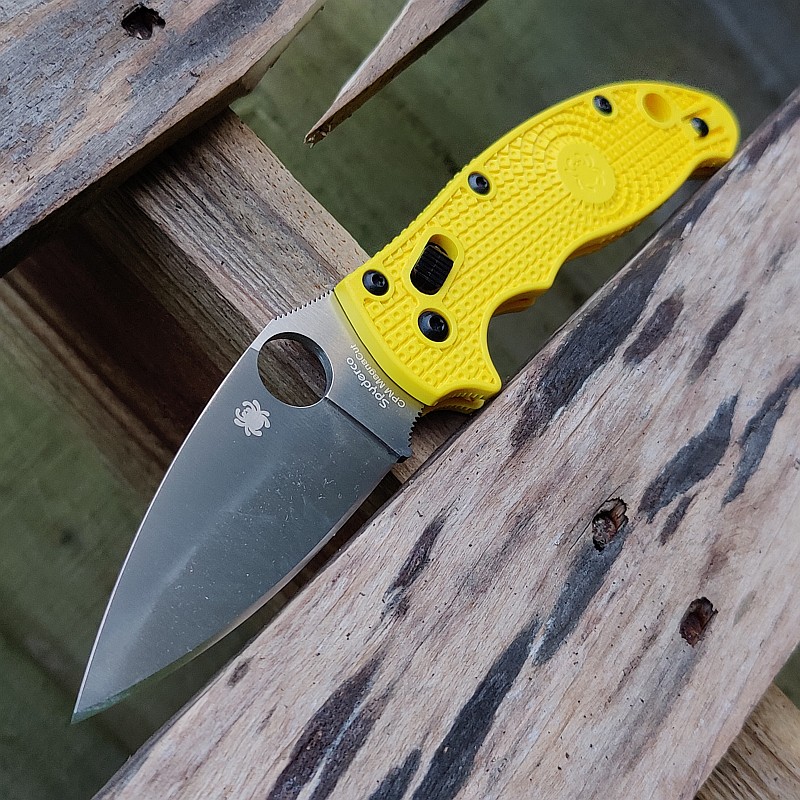
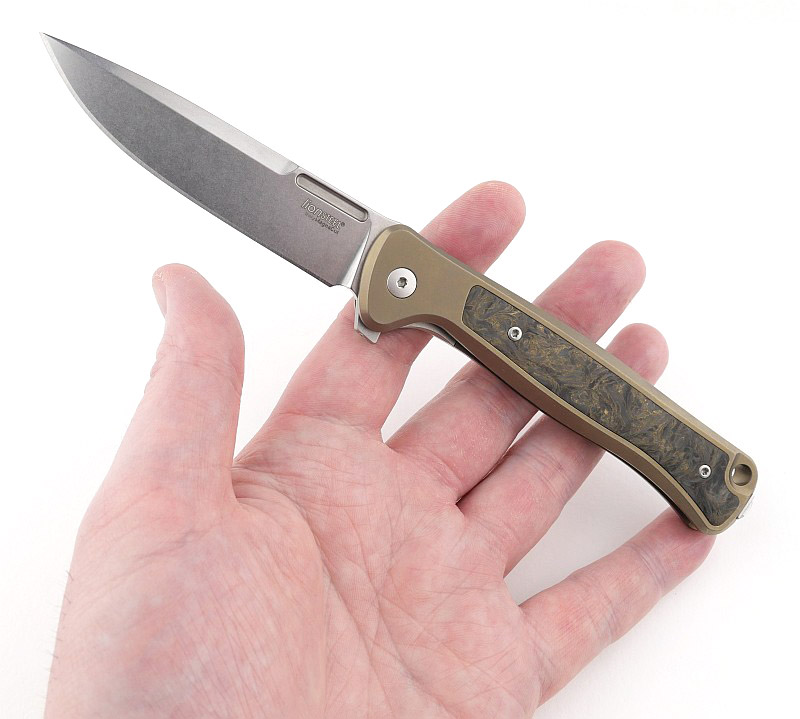
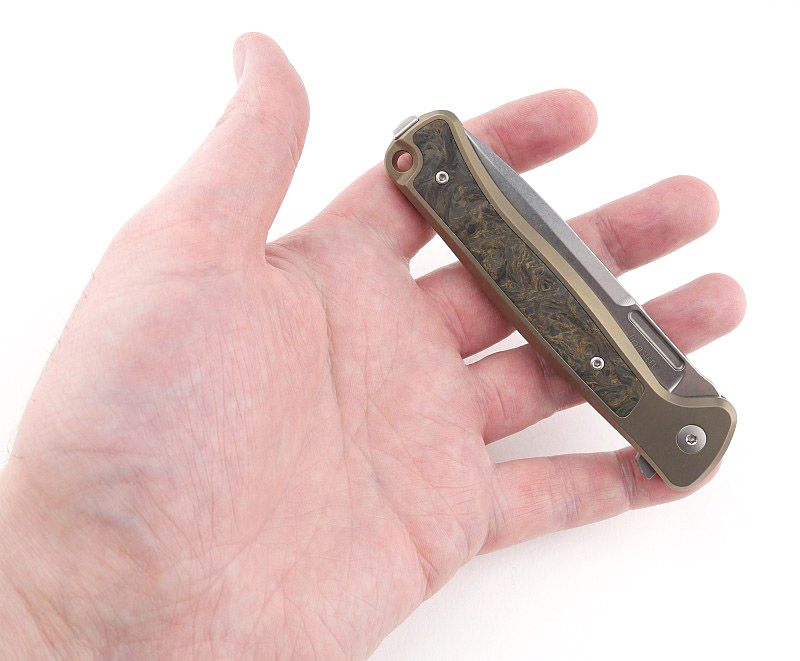
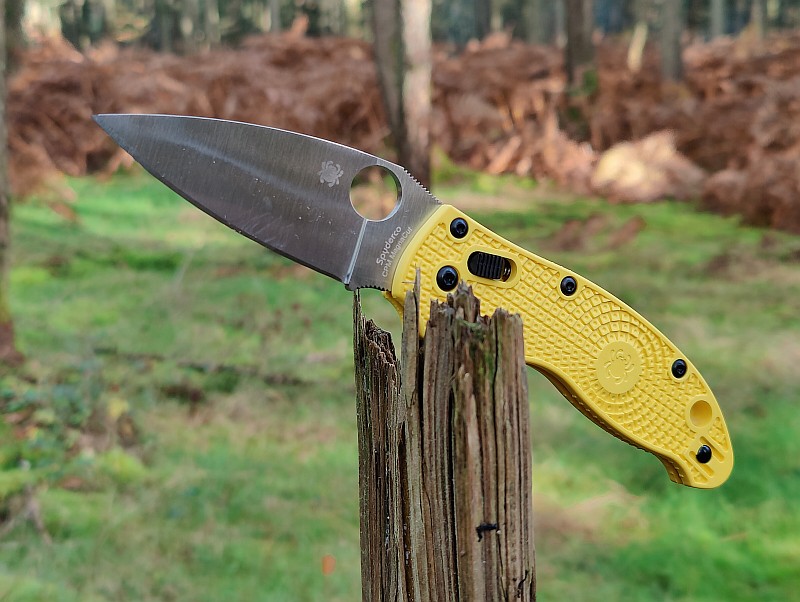
I’m a huge fan of Spyderco’s (ultra-low maintenance) Salt series; join me in a detailed review of the new Spyderco Manix 2 Lightweight Salt. The Manix 2 Salt combines classic signature Spyderco design with MagnaCut blade steel and super-corrosion-resistant handle components and fixings. Using a fibreglass-reinforced co-polymer (FRCP) handle ensures high strength and low weight. This model features a high visibility yellow handle that includes Spyderco’s signature Bi-Directional Texture grip pattern for a very secure grip in all conditions.

What’s in the box?:
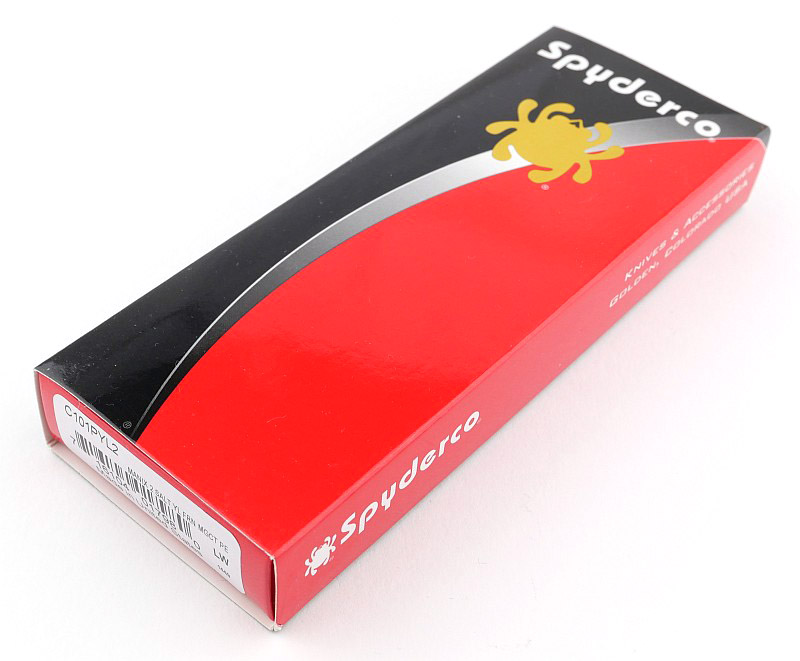
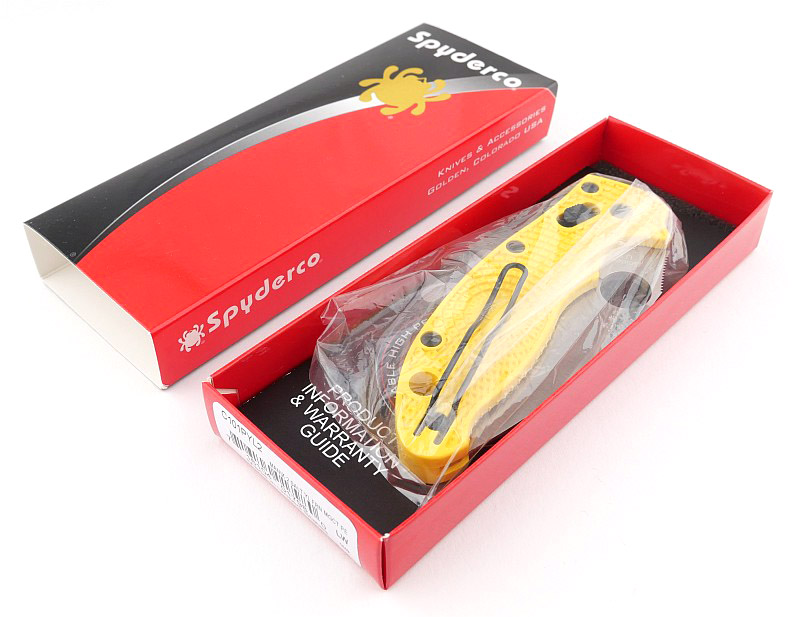
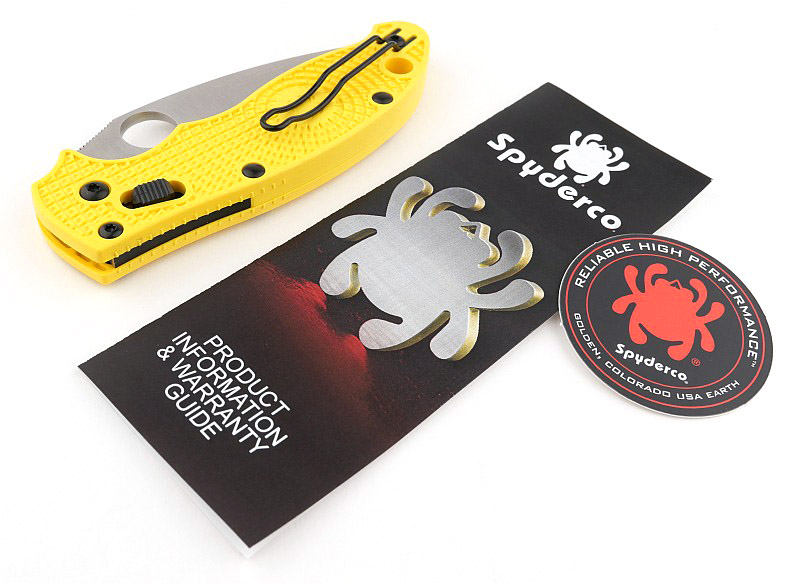
This Manix 2 Salt comes in the familiar Spyderco box. Included with the knife is a sticker and a leaflet about the exact model of knife.
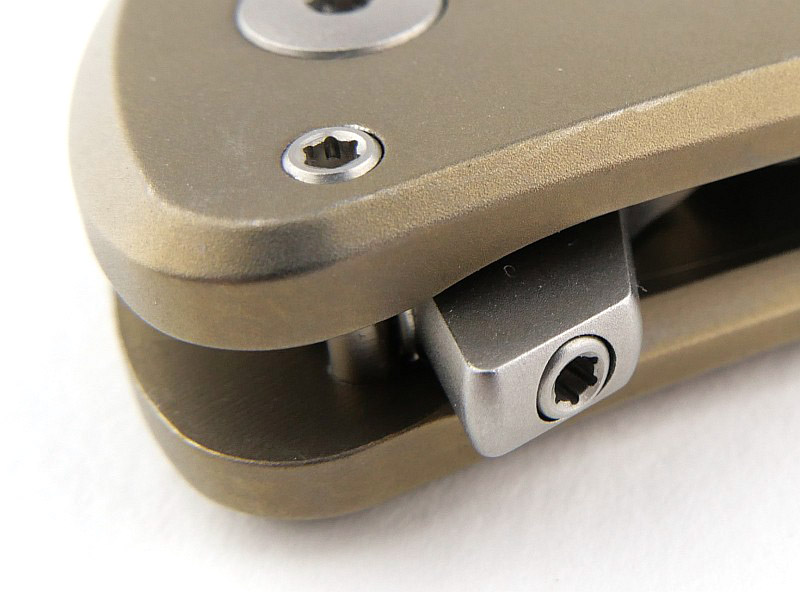
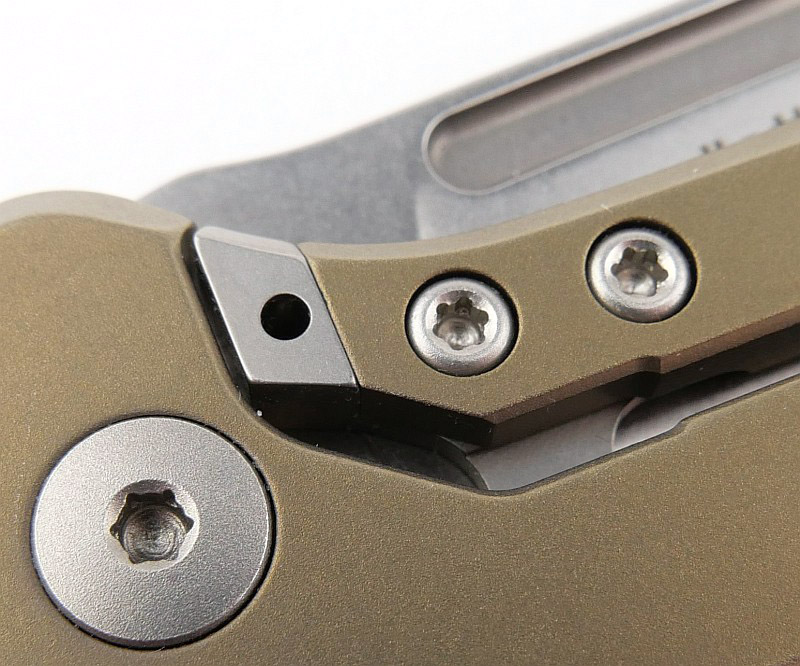
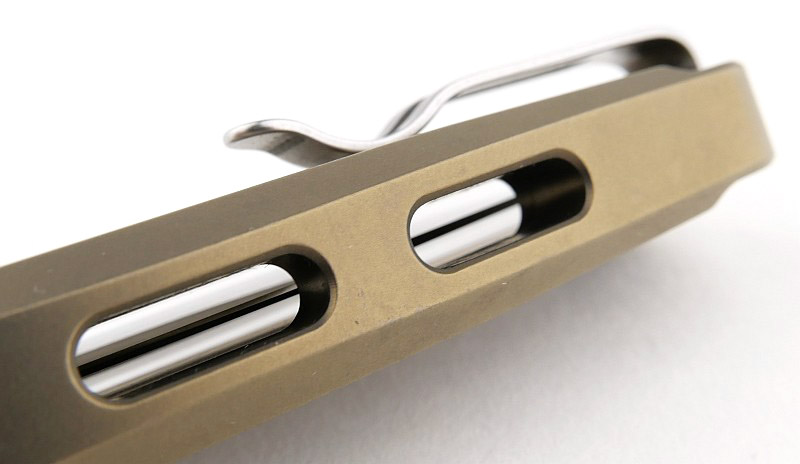
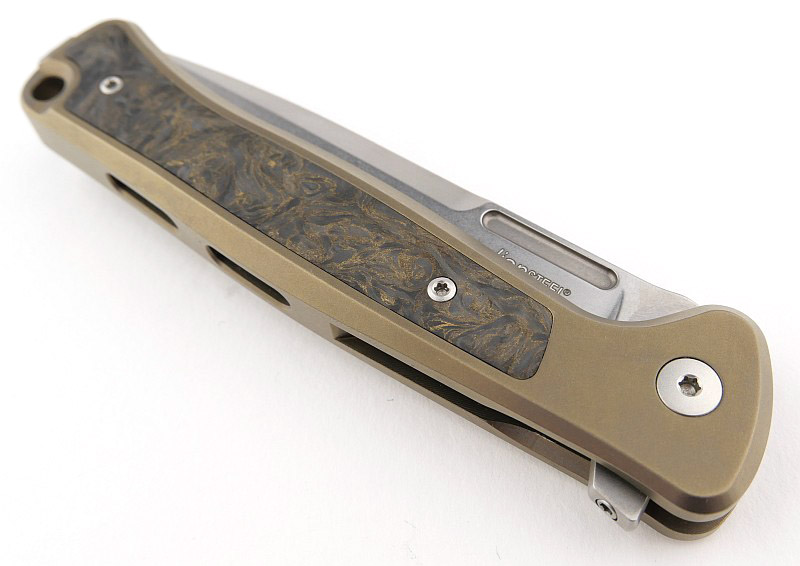
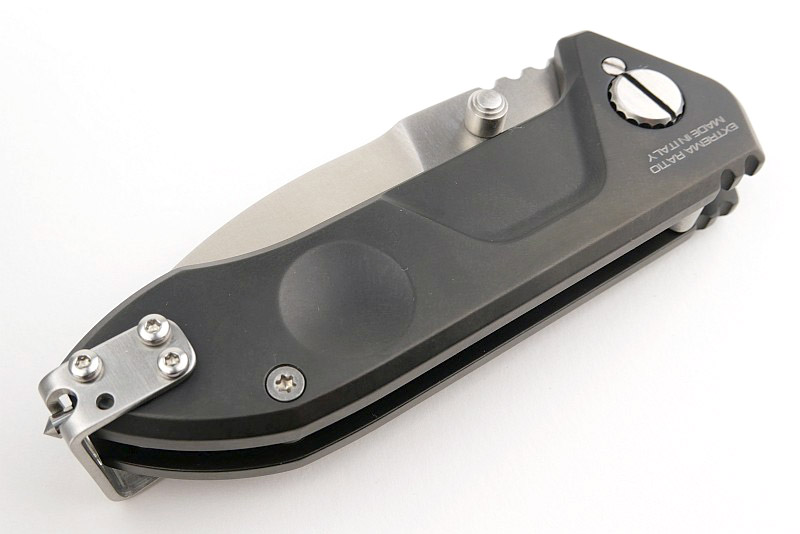
A good look round the Manix 2 Salt – Part 1 – Things to look out for here are:
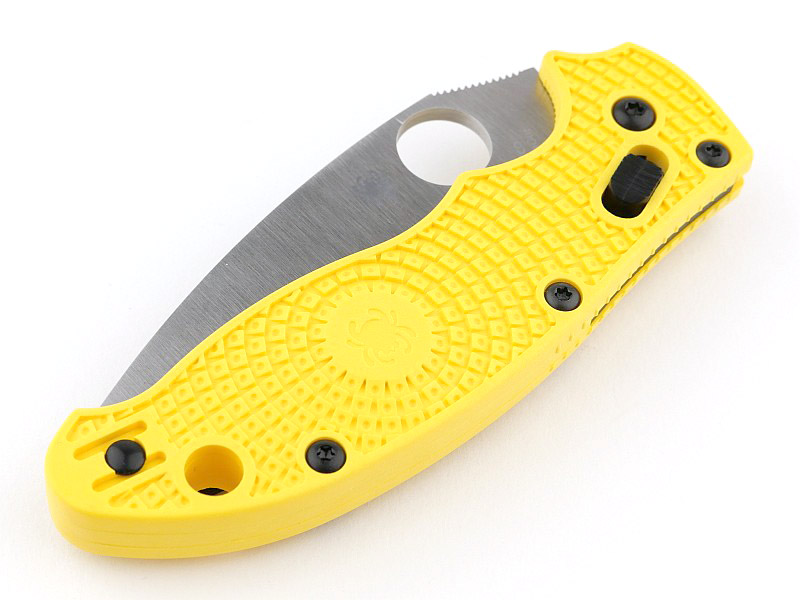
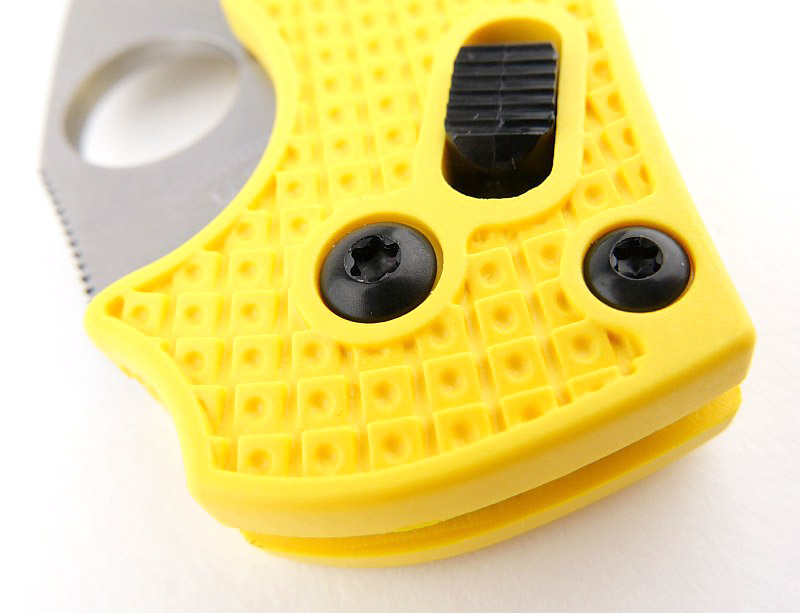
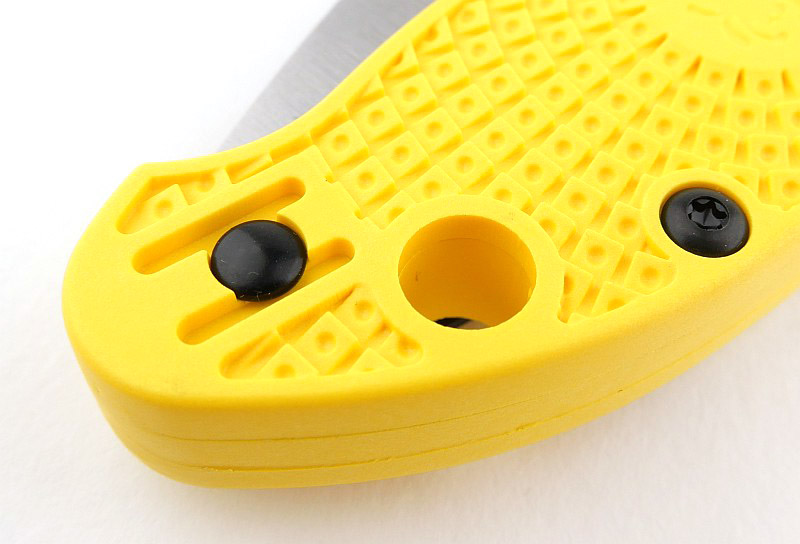
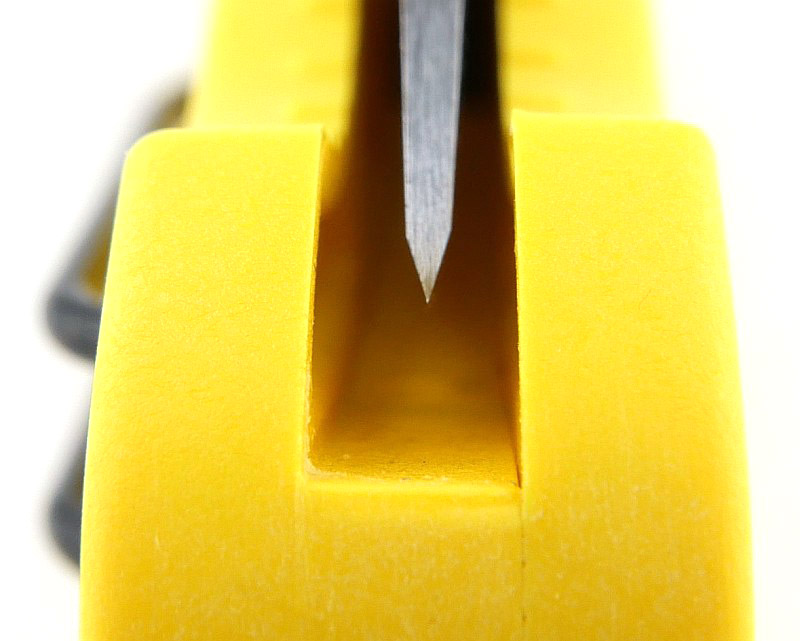
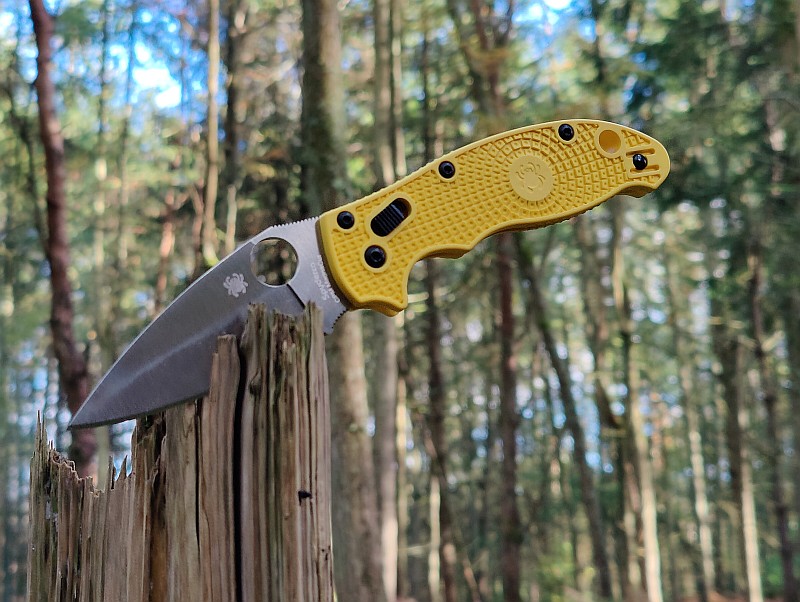
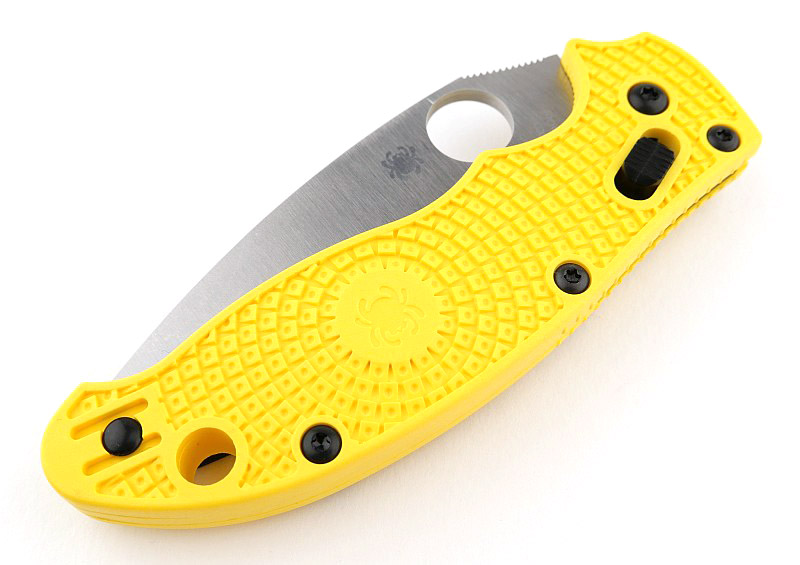
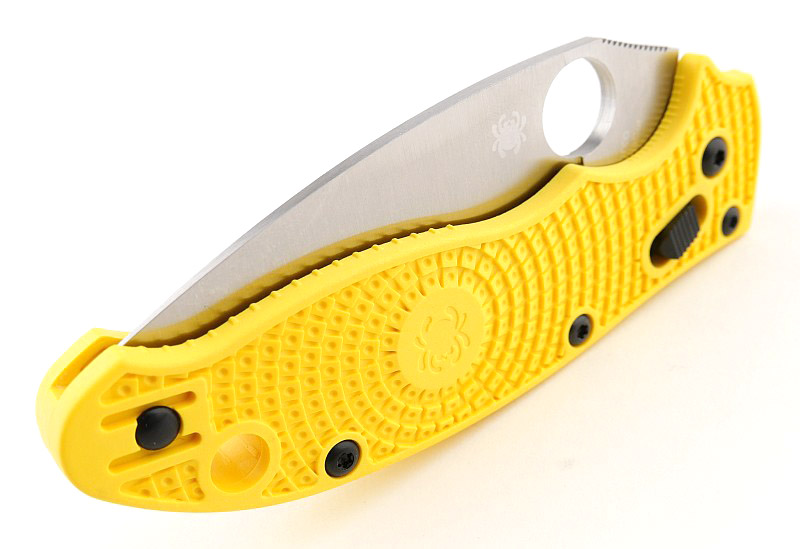
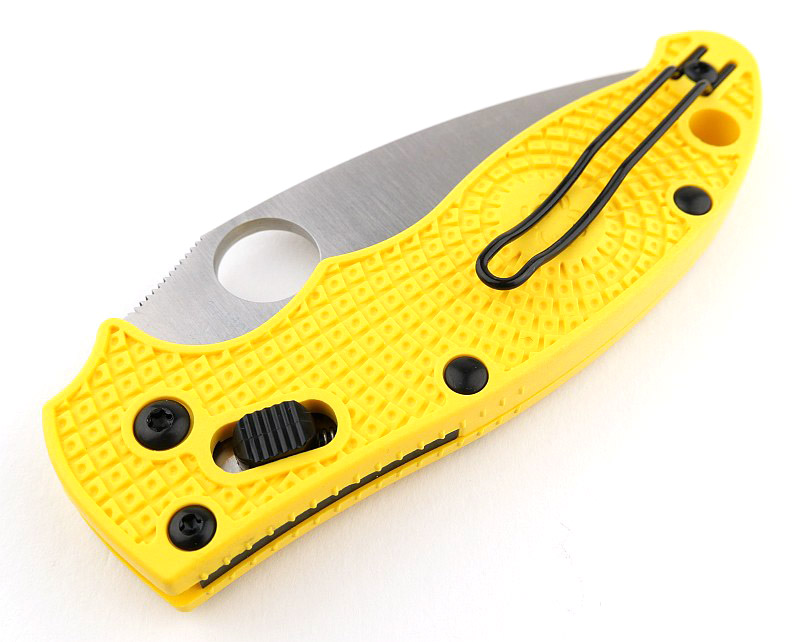
Starting with this gallery showing details of the Manix 2 when folded. The bright yellow handle making this Salt series knife really stand out. So often this high visibility can actually be one of the best safety and survival features, as you are much less likely to lose the knife, and can always spot it quickly when you put it down.
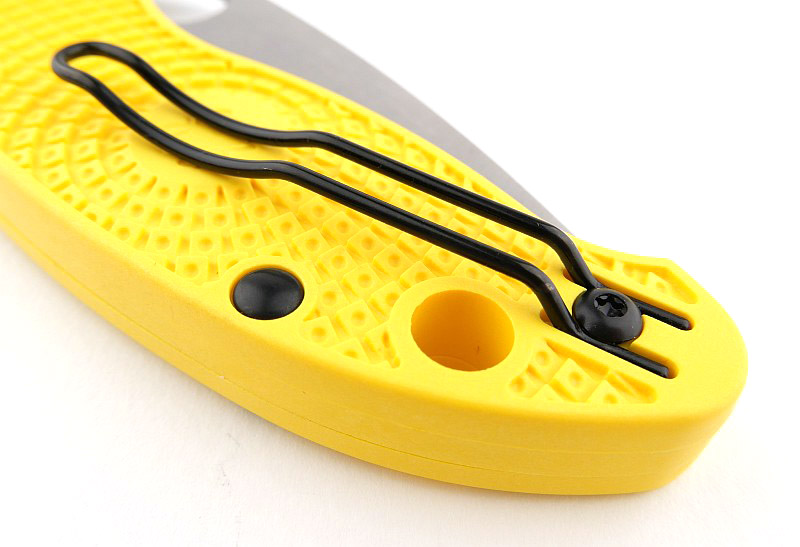
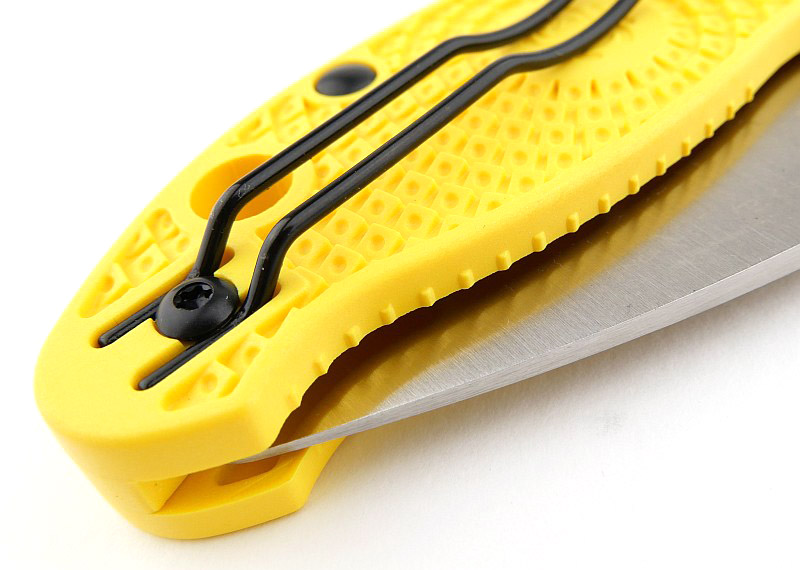
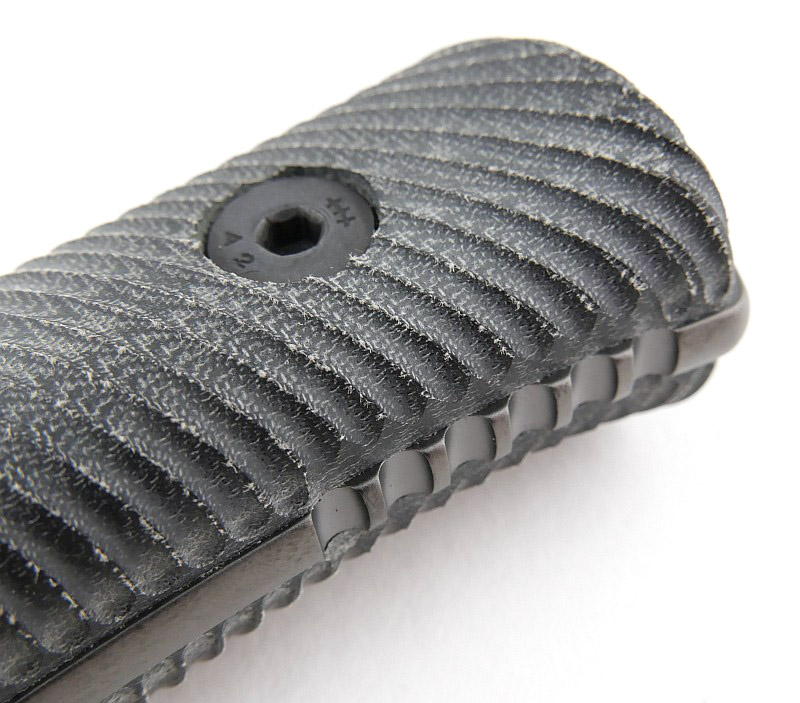
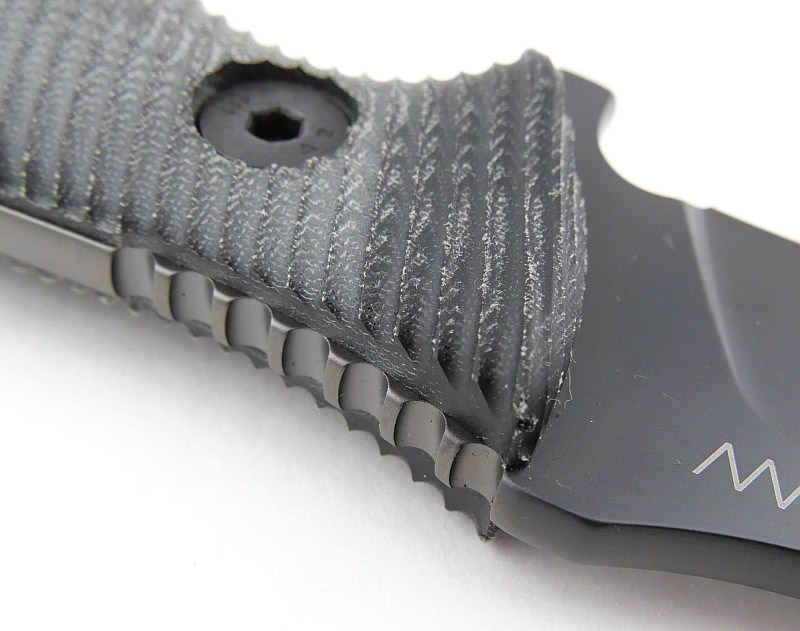
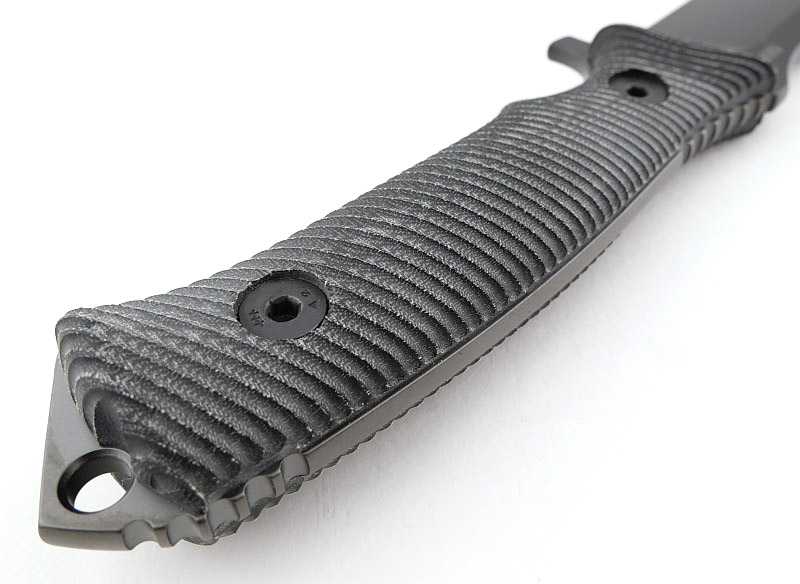
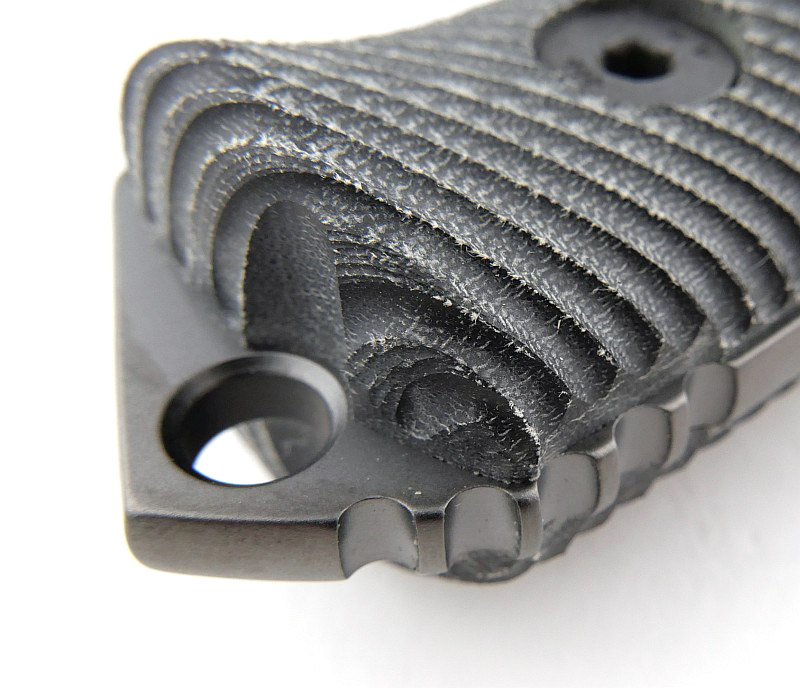
Spyderco have covered the handle with textured grip features, from the signature bi-directional texturing on the main flats of the handle to molded in jimping in several areas.
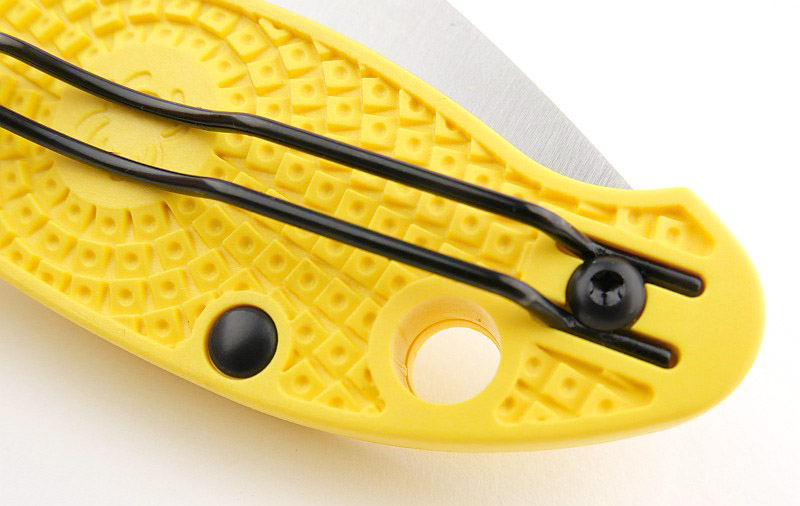
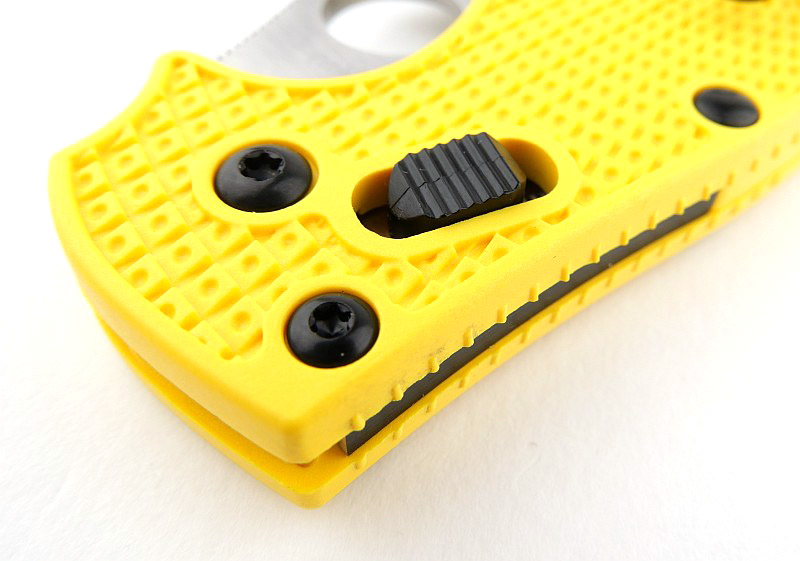
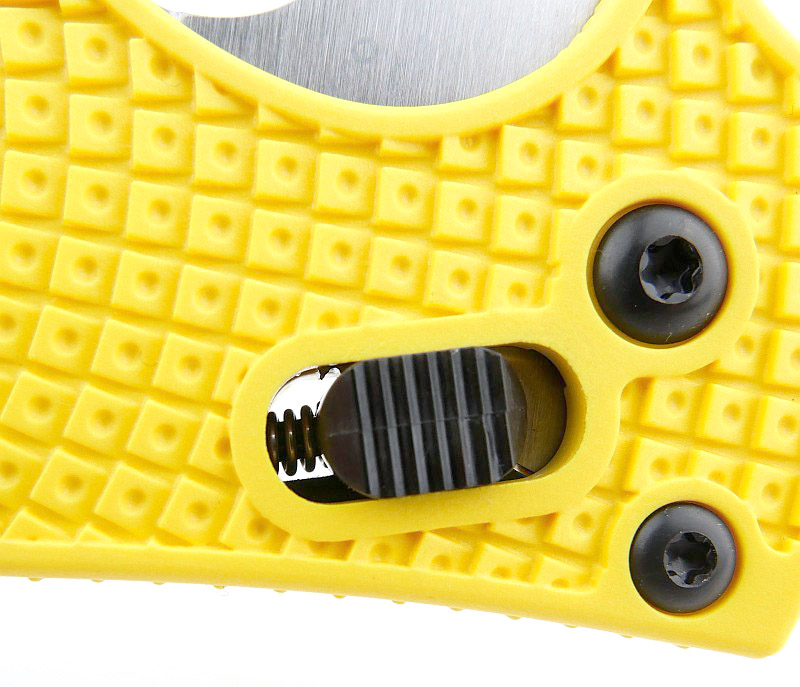
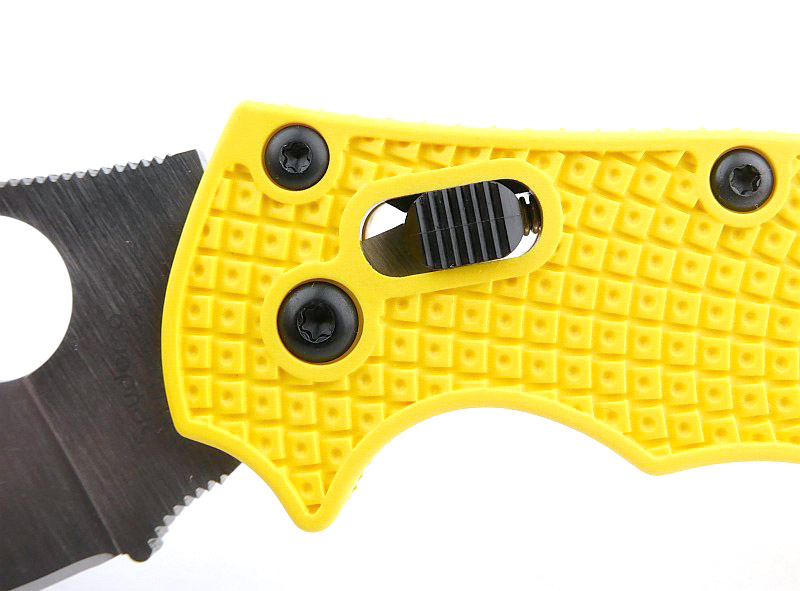
Also featuring another Spyderco signature design element, the tip-up wire spring pocket clip that can be fitted on either side of the handle. The Manix 2 Salt uses Spyderco’s Ball Bearing lock, and this has a black slider that contrasts against the yellow handle. Ending this gallery as the blade is opened.
A good look round the Manix 2 Salt – Part 2 – Things to look out for here are:
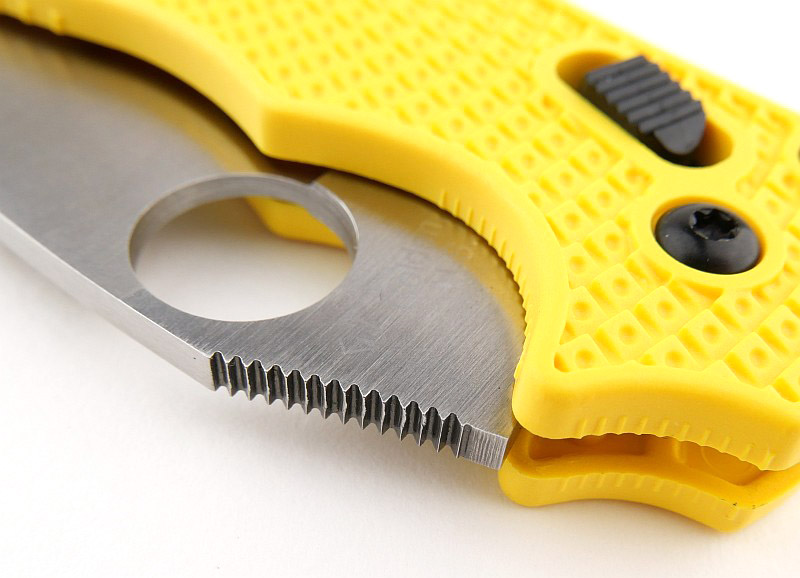
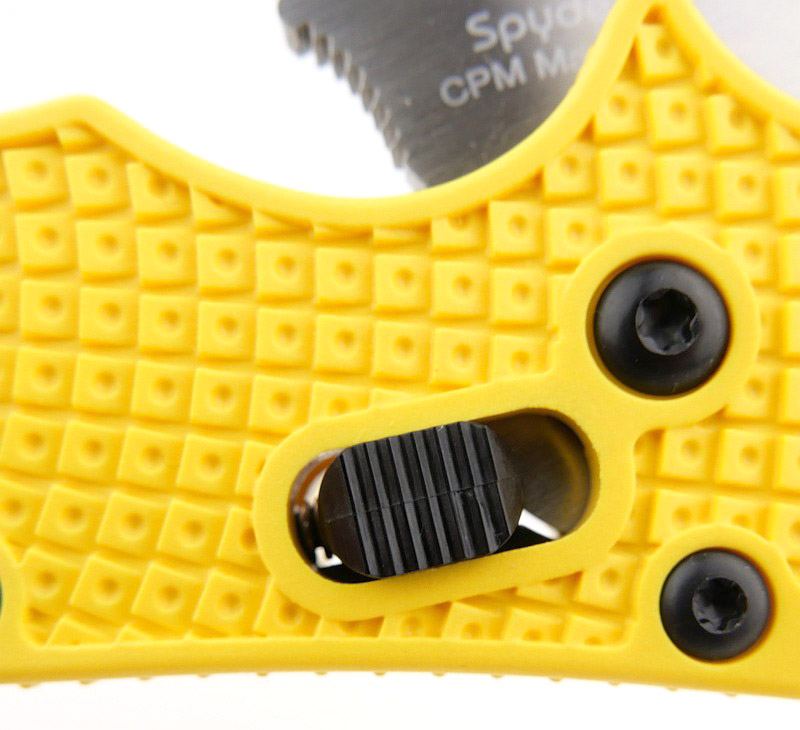
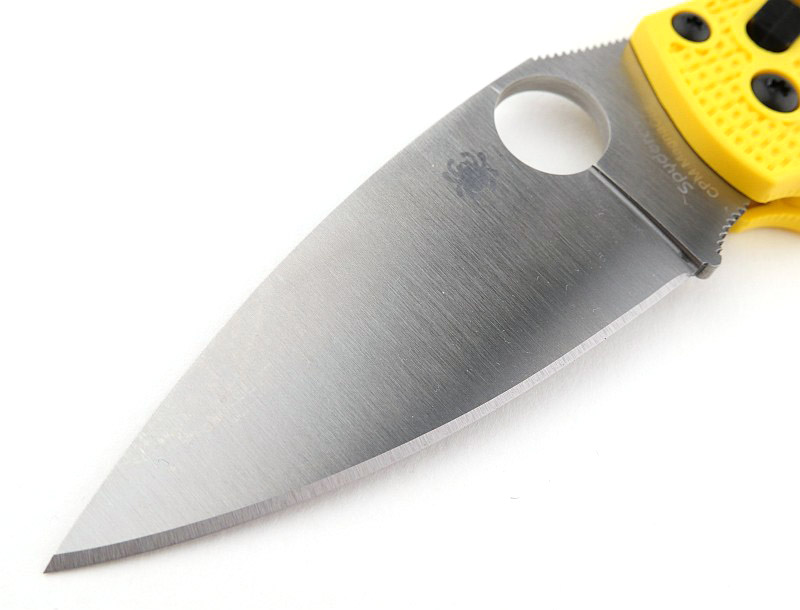
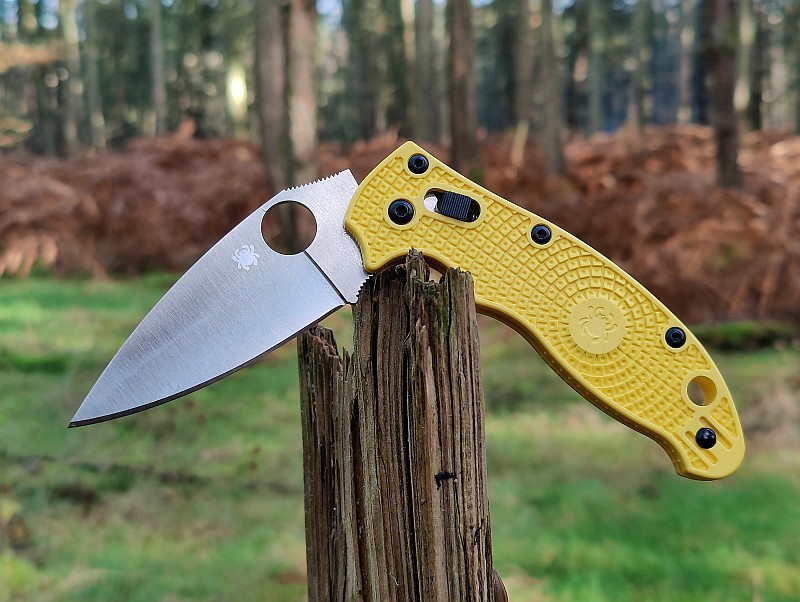
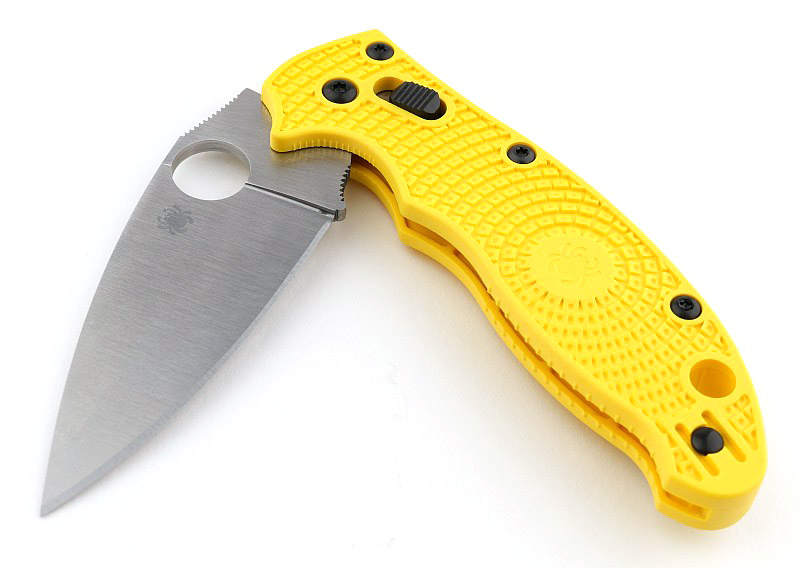
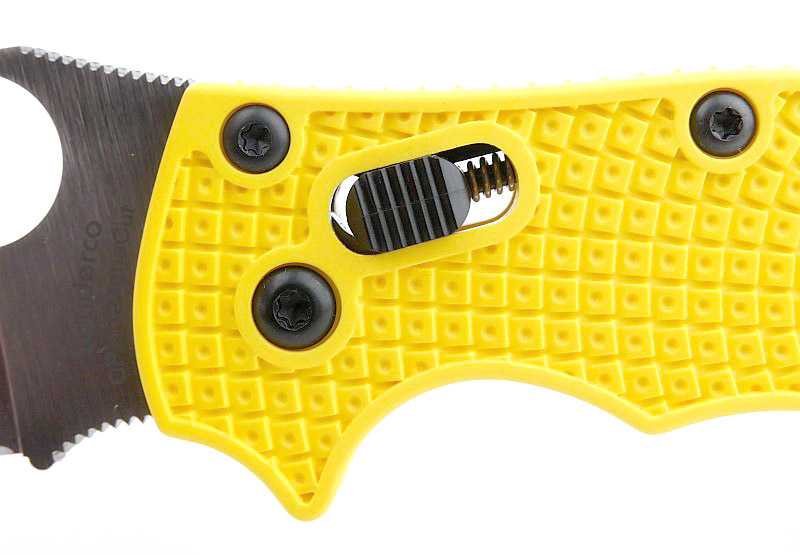
Opening the blade to reveal yet another Spyderco signature design – the full-flat-grind leaf-shaped blade with large opening hole. The lock slider shown at its maximum position, before it springs forward to engage the ball bearing; the coil locking spring is clearly visible.
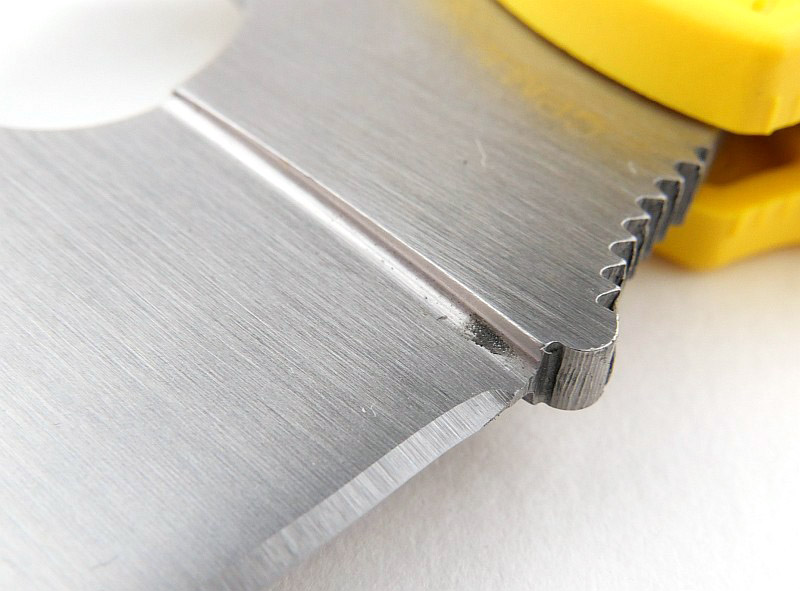
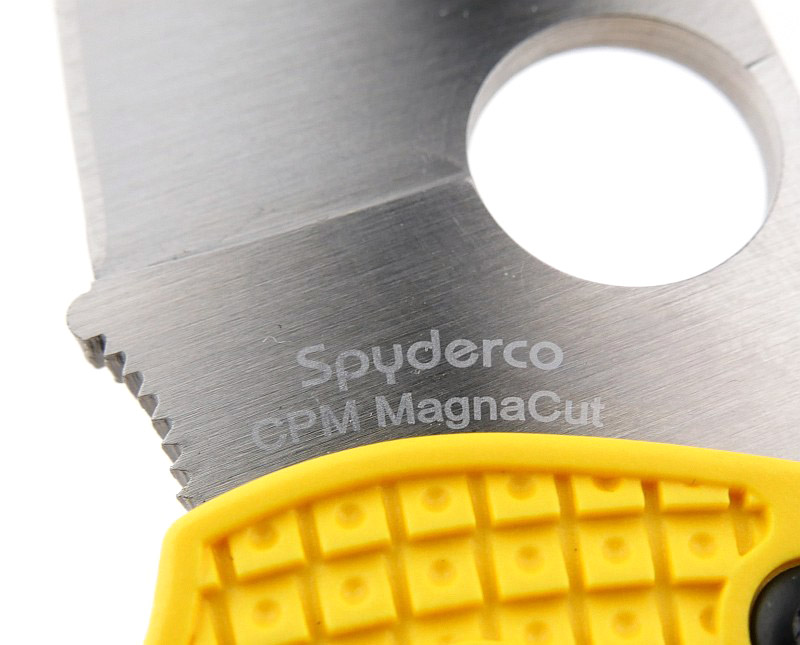
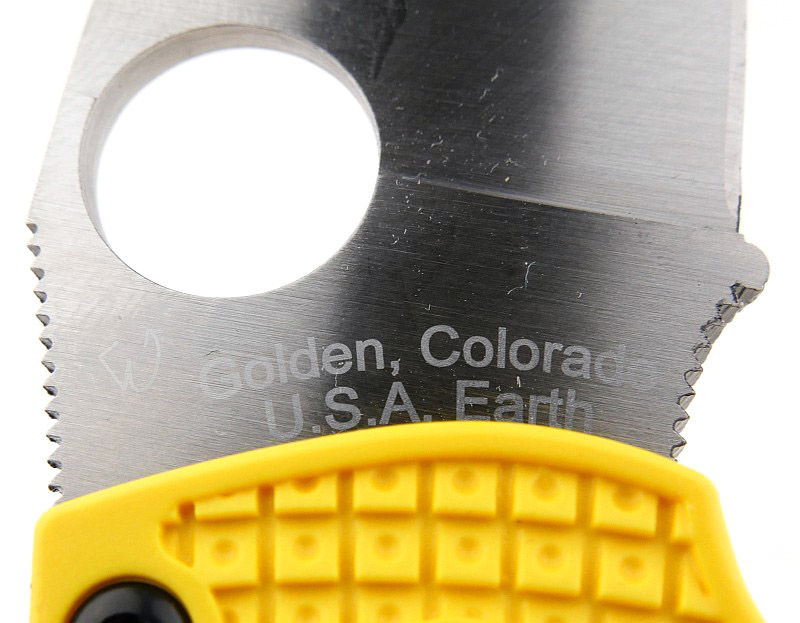
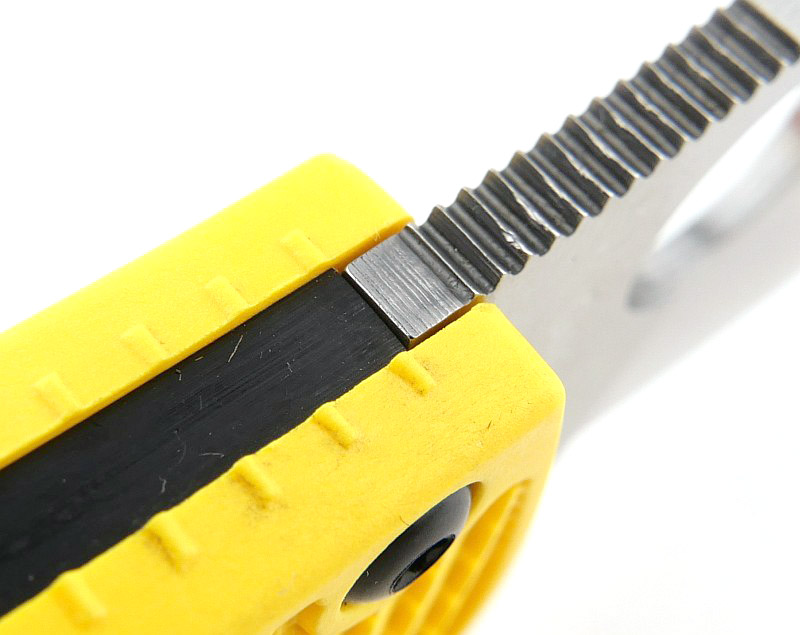
Jimping has been added on the blade next to the handle for both the first finger and thumb to ensure a rock solid grip. This Salt series knife comes in CPM MagnaCut, and when you look at the engraving it is quite different in appearance to most Spyderco’s, even leading some who have seen this knife to question its authenticity. This is not in question as it was handed to me by Spyderco at IWA 2024, so is without question the real deal.
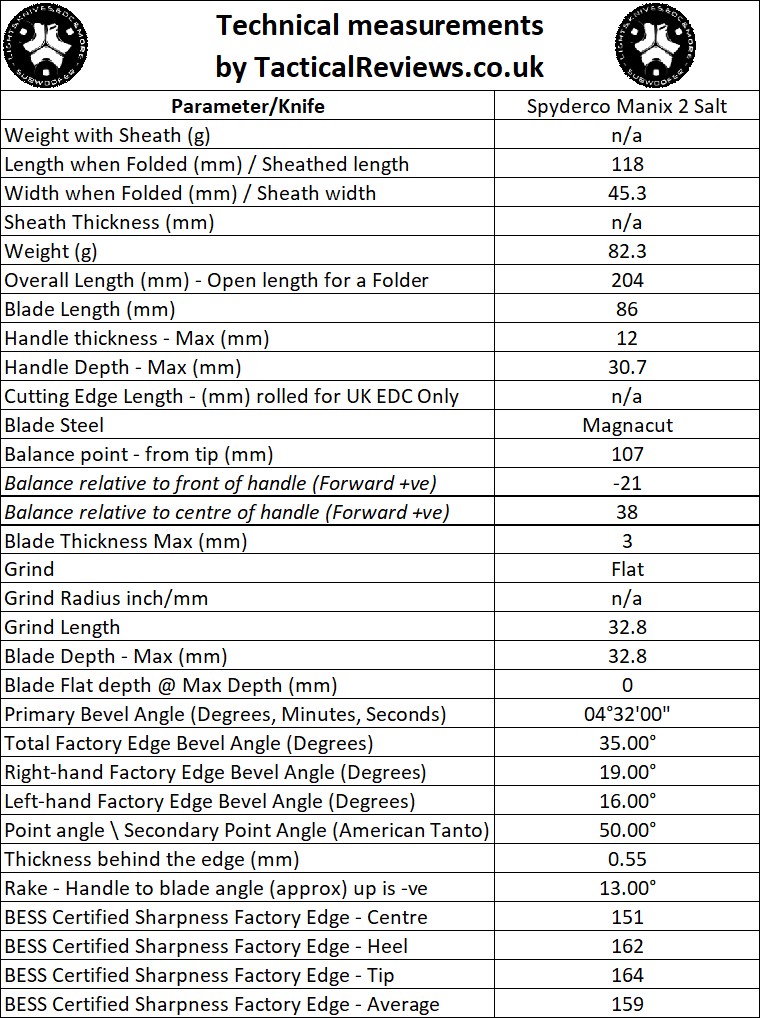
The Blade and Handle – Detailed Measurements:
For full details of the tests and measurements carried out and an explanation of the results, see the page – Knife Technical Testing – How It’s Done.

The blade is made from CPM MagnaCut steel.

The Factory edge up close:

Followers of Tactical Reviews will know my views on factory edges, but to recap:

Anyone using a knife will need to sharpen it. That first factory edge is just like the first tank of fuel that a new car comes with (or first charge of the battery).
A good factory edge is a ‘nice to have’ but not a ‘make or break’ for a good knife, as you will be putting your own edge onto it soon enough.
The factory edge does however indicate the care a knife maker has put into the final finish.
It is for this reason Tactical Reviews measures factory edge sharpness and specifications, and includes this information in the detailed technical testing.

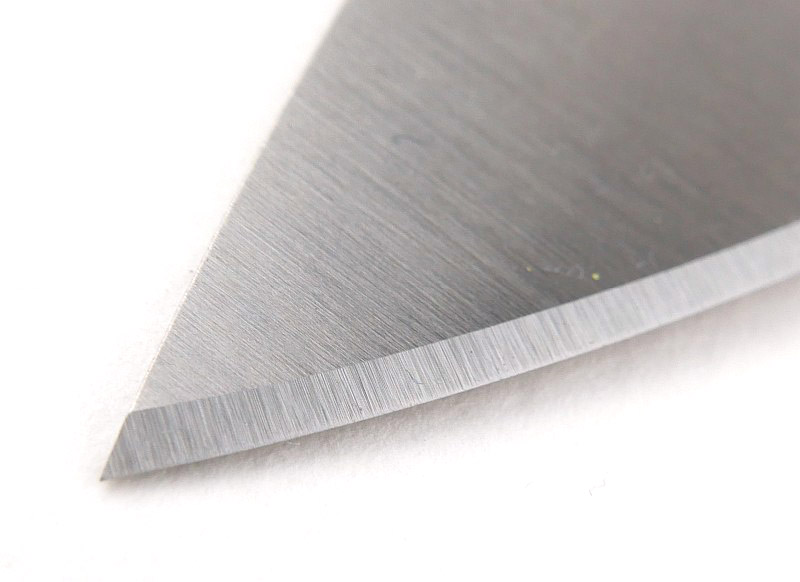
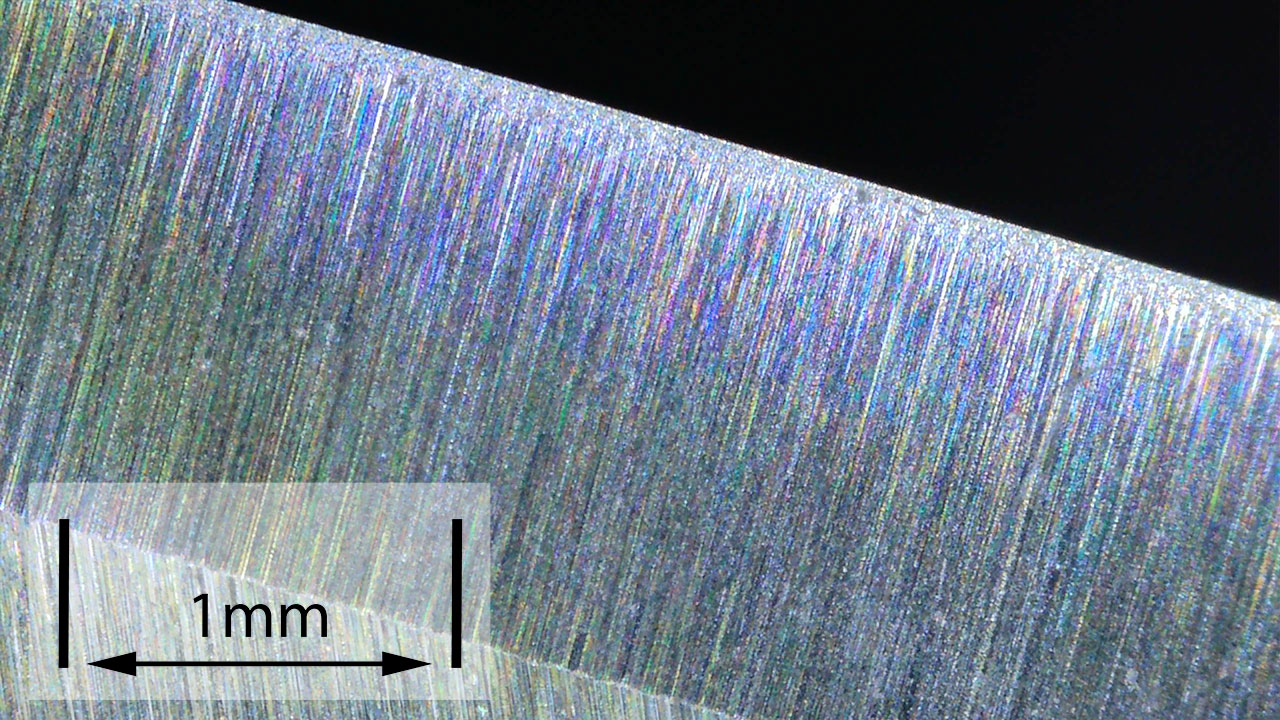
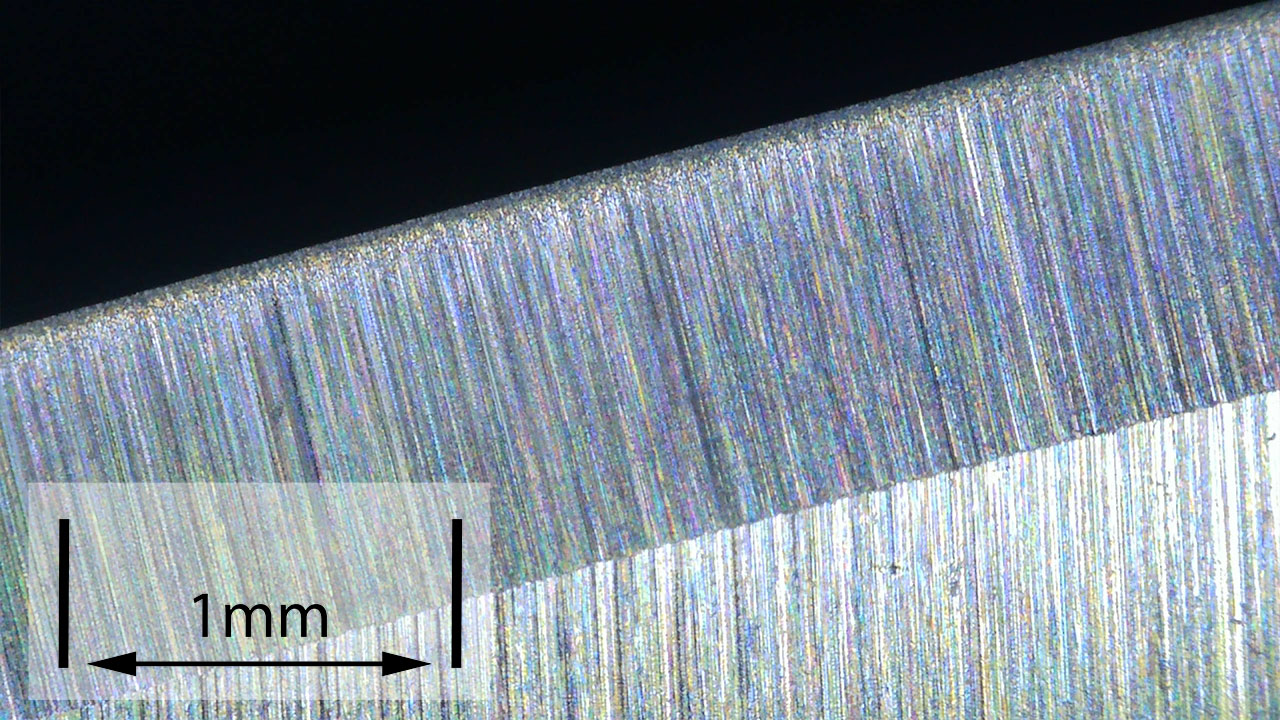
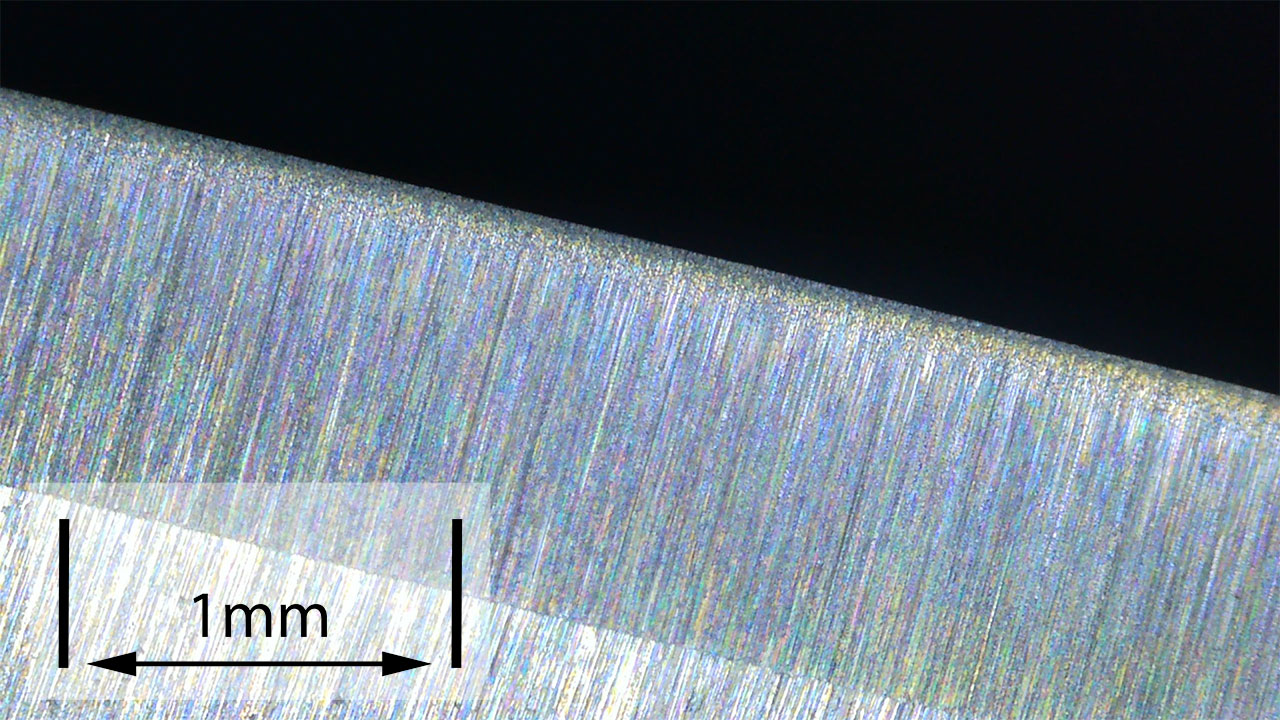
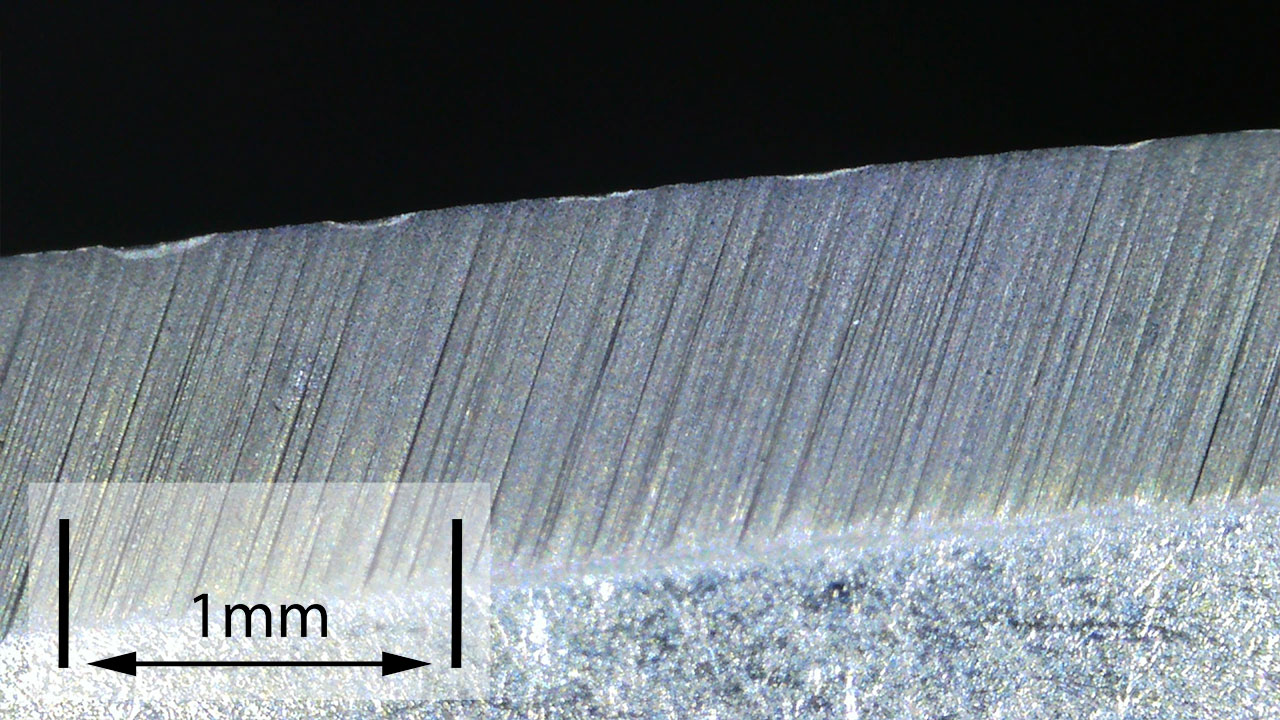
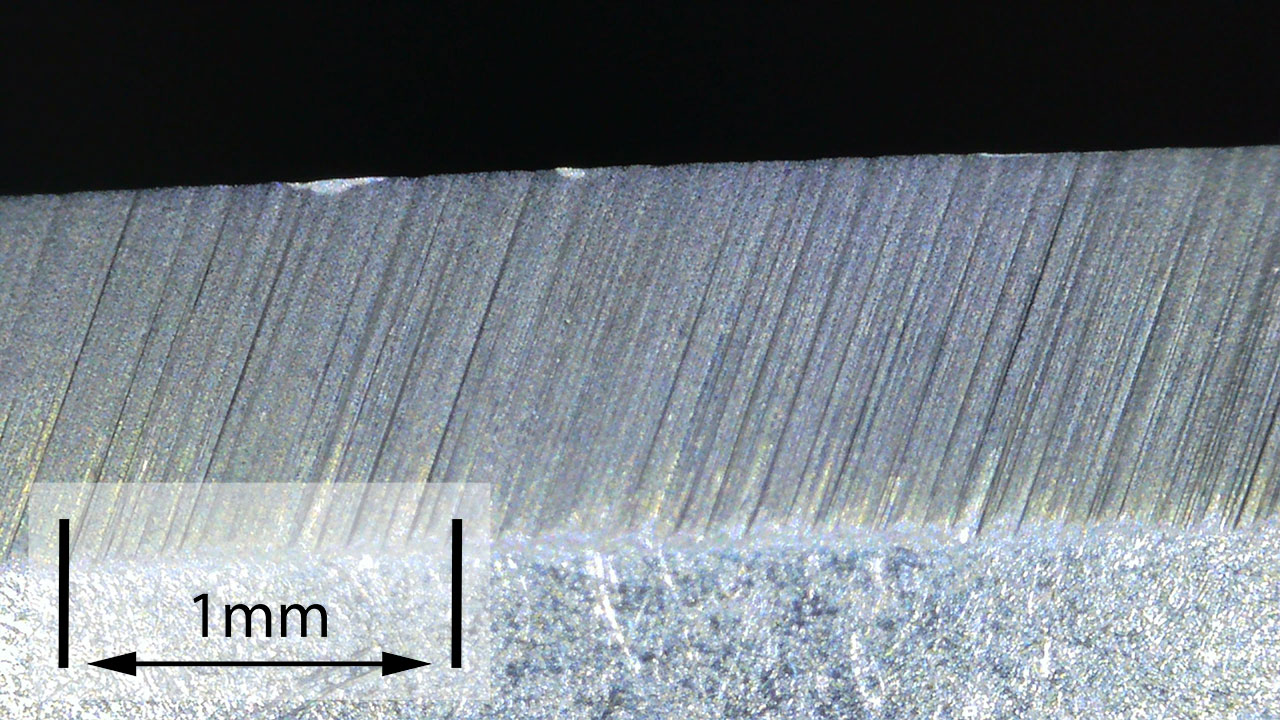
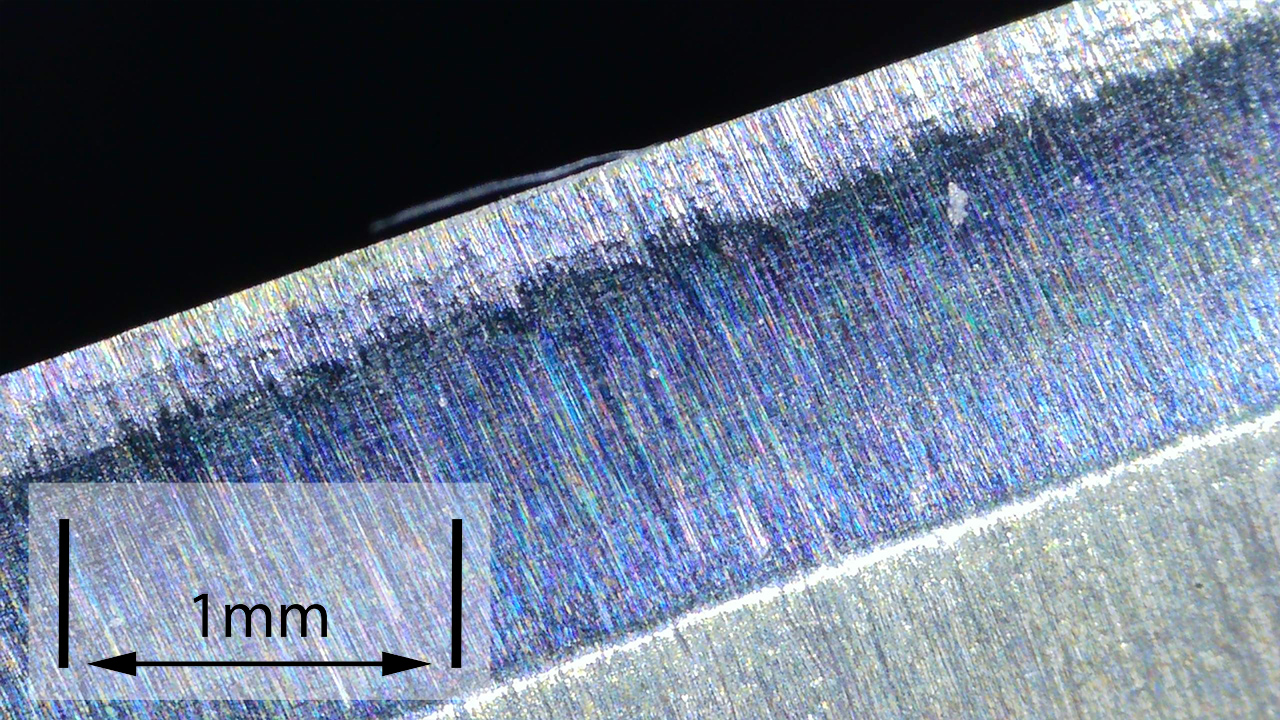
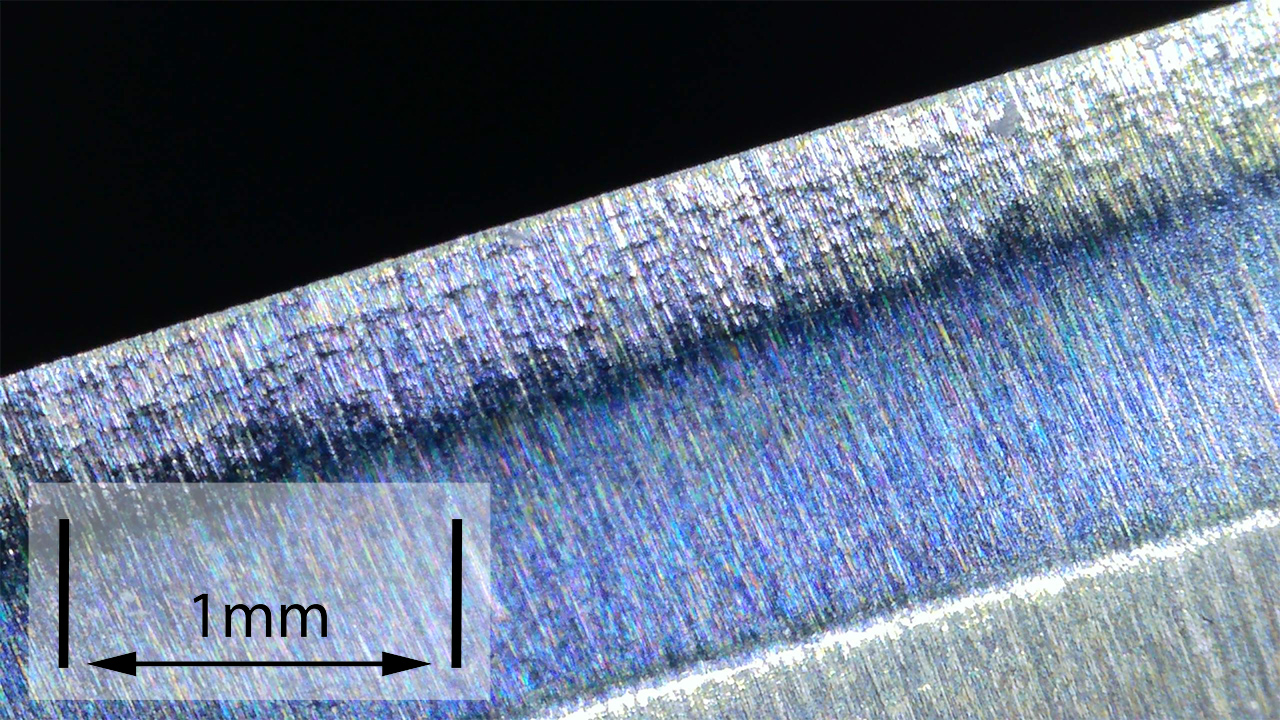
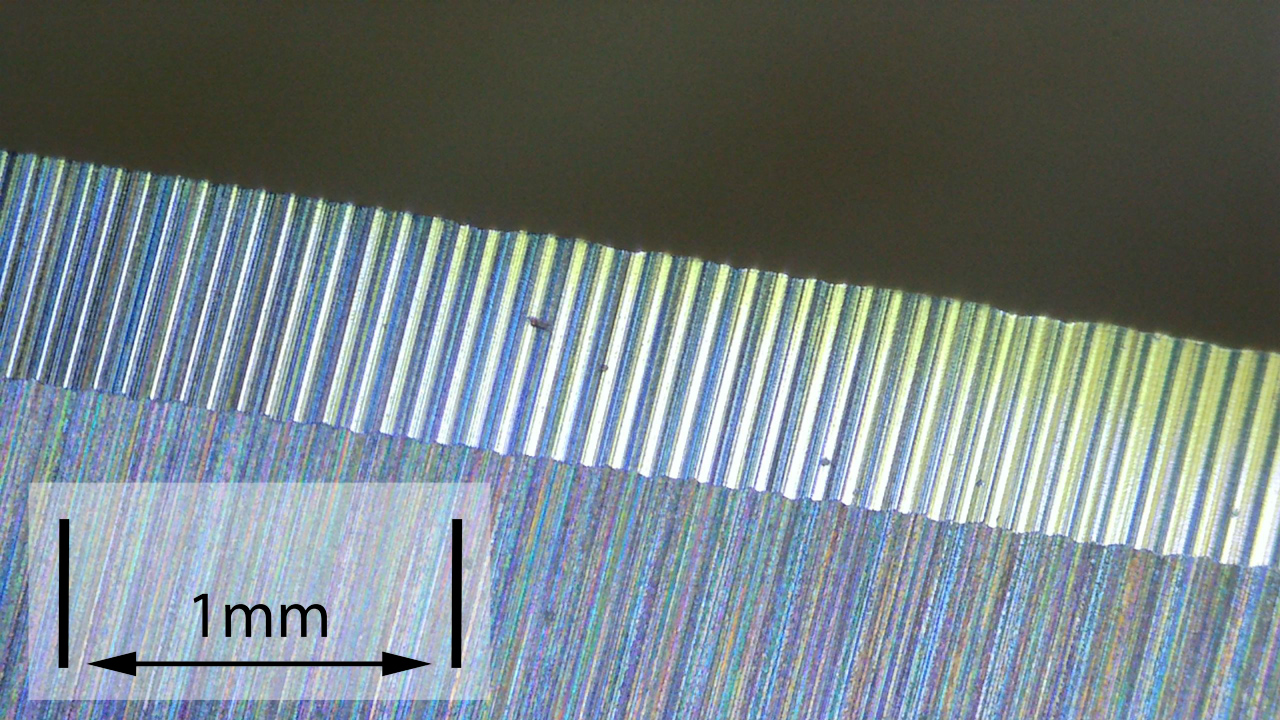
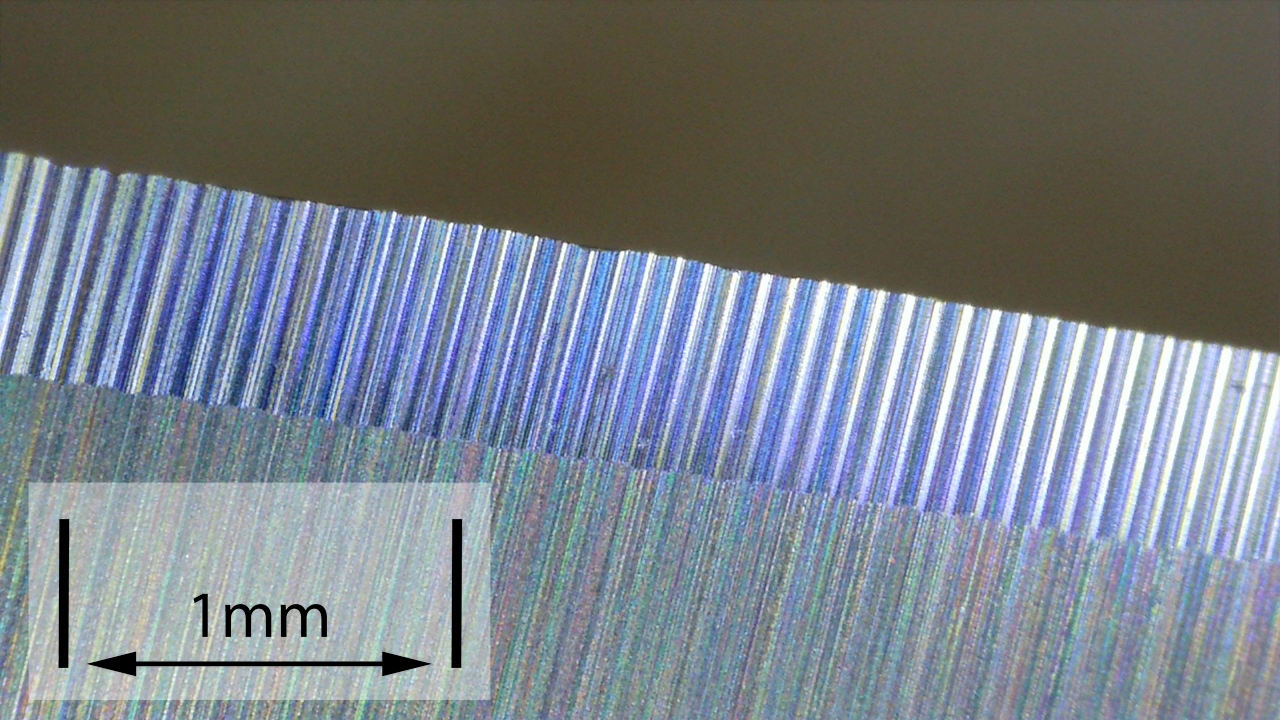
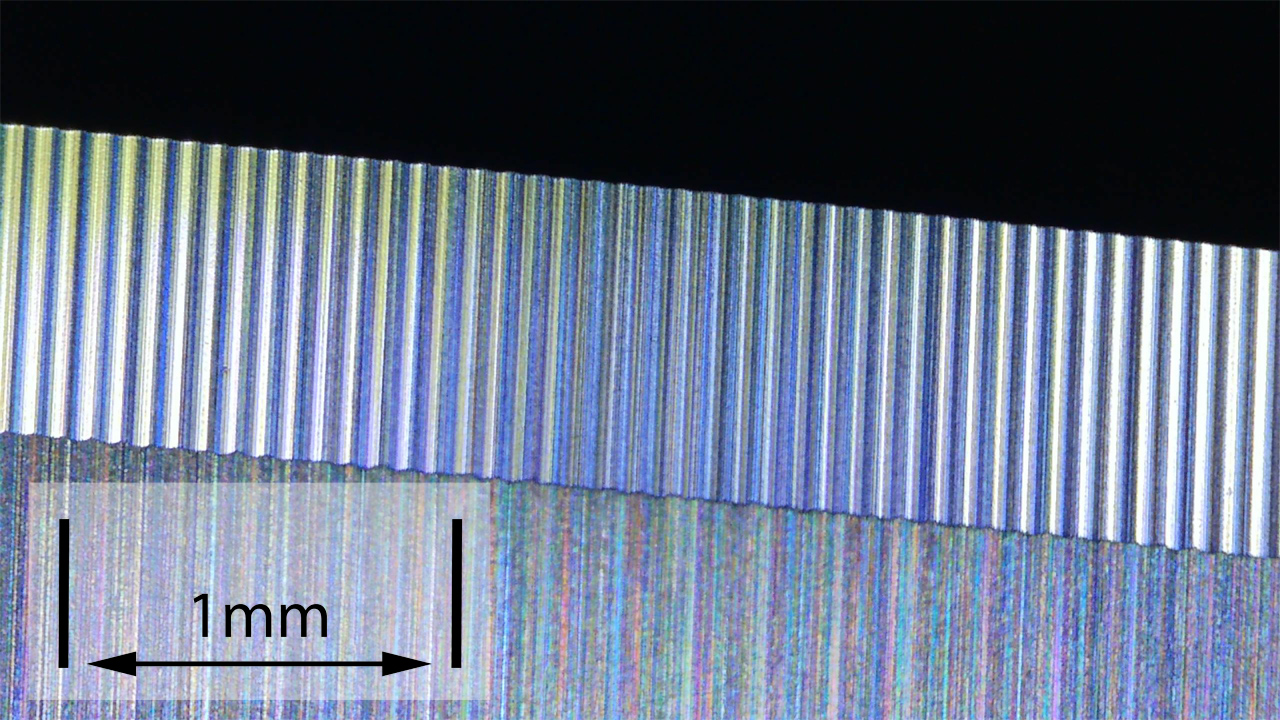
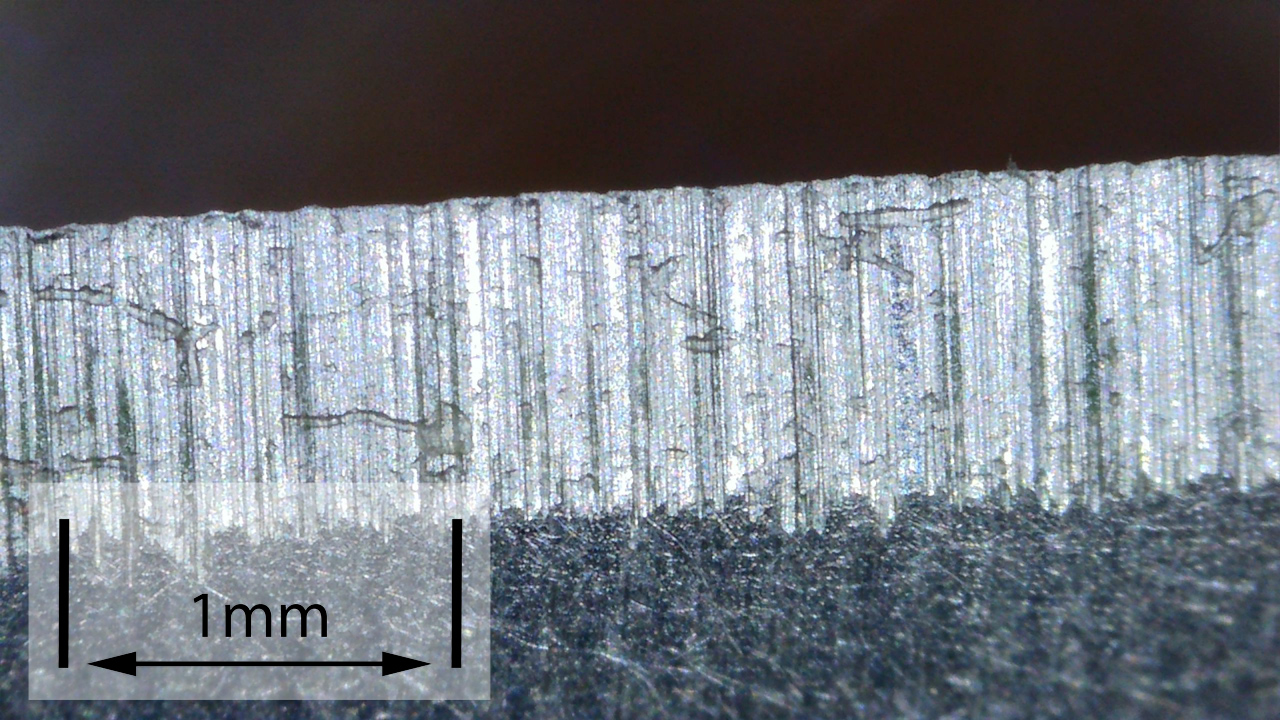
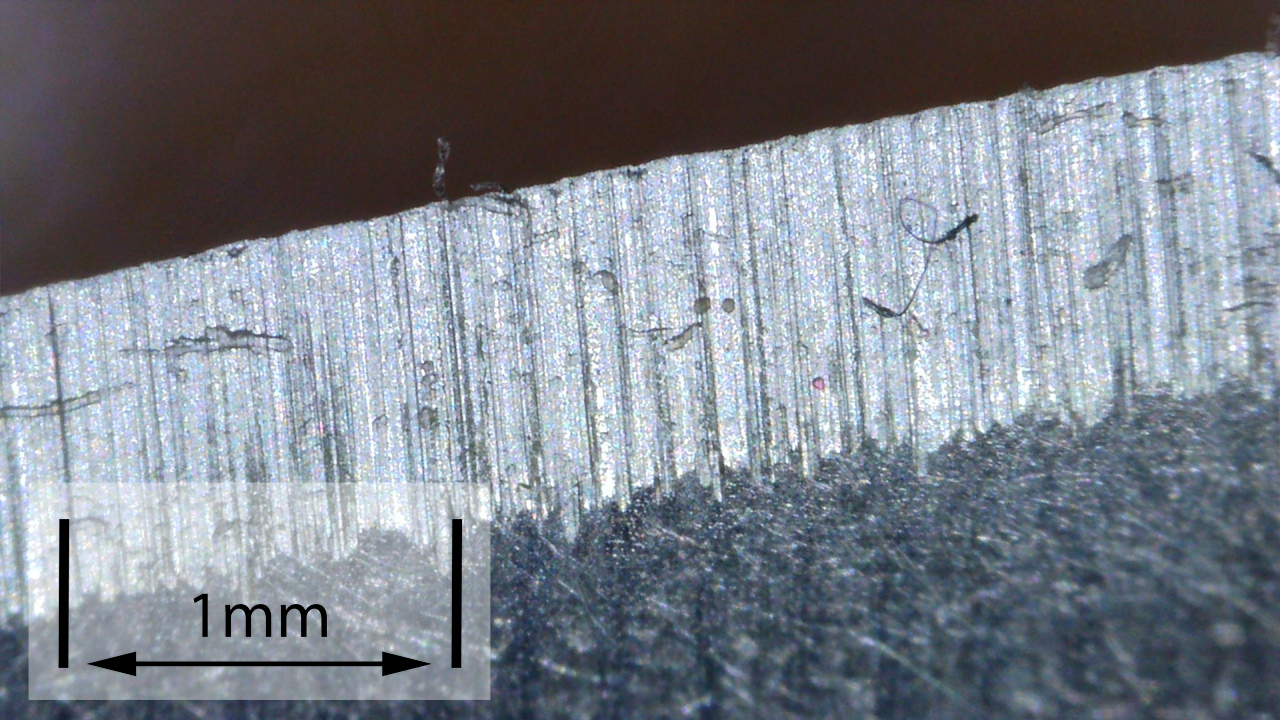
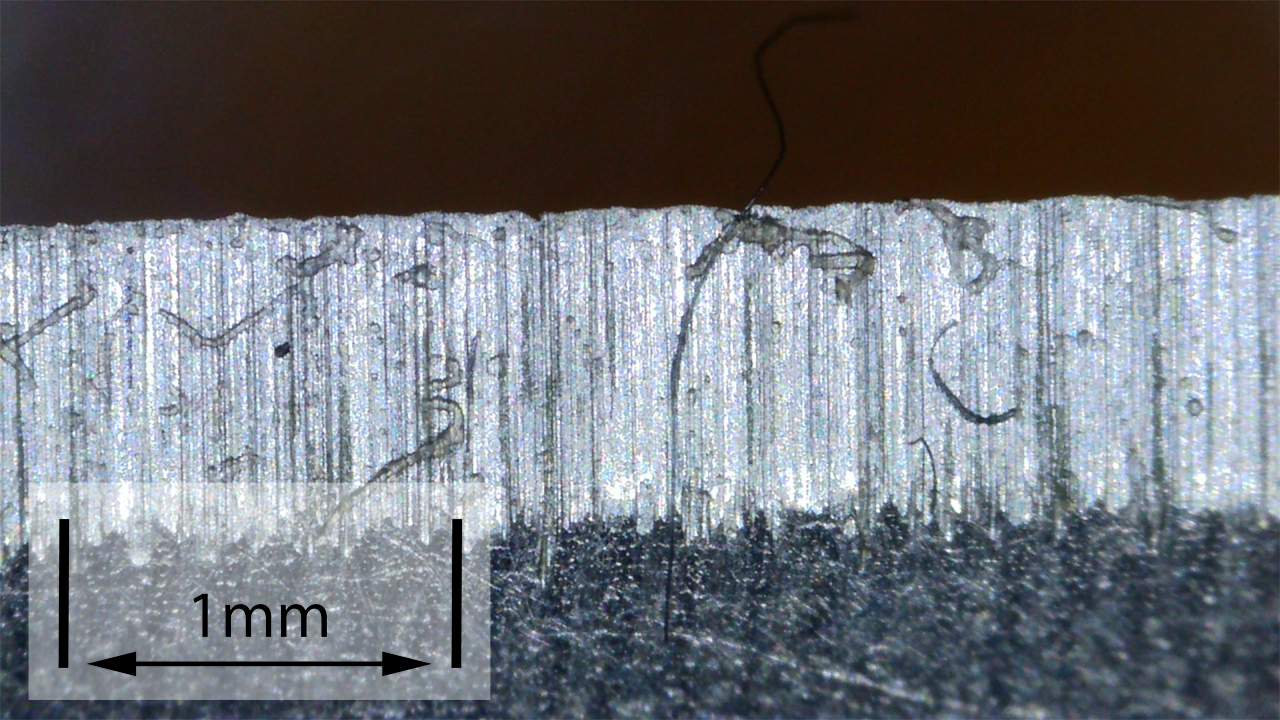
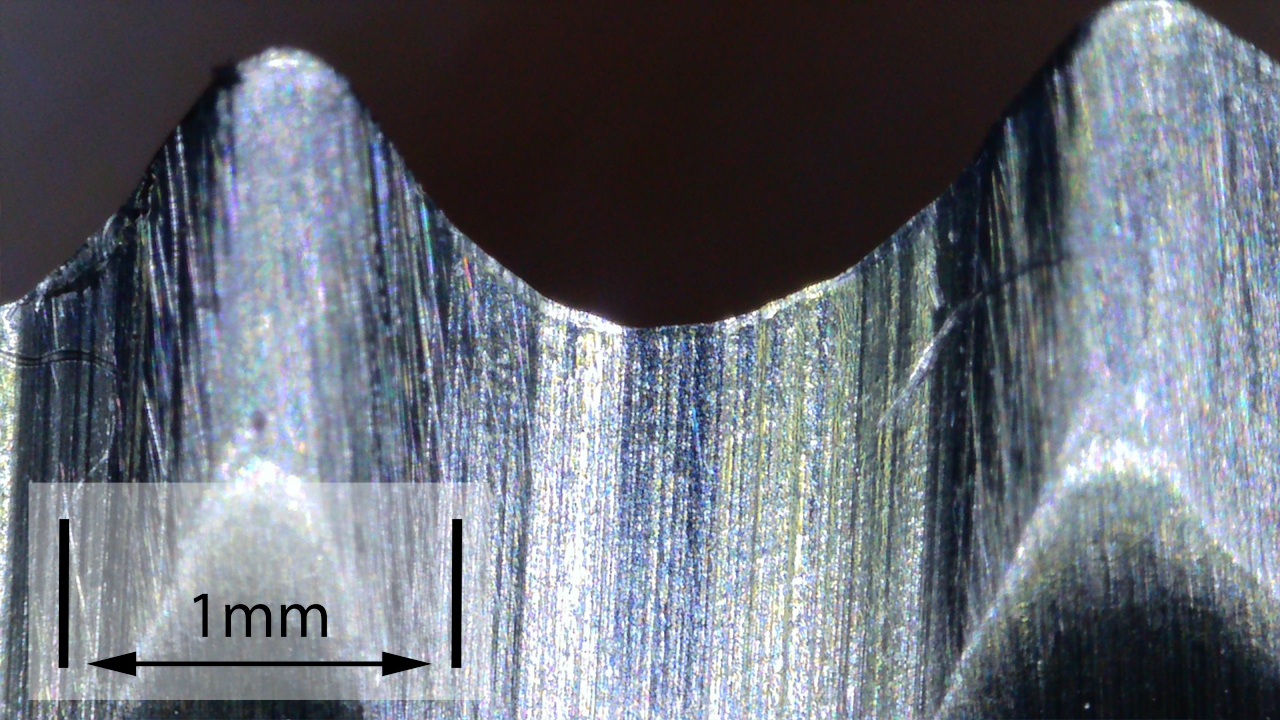
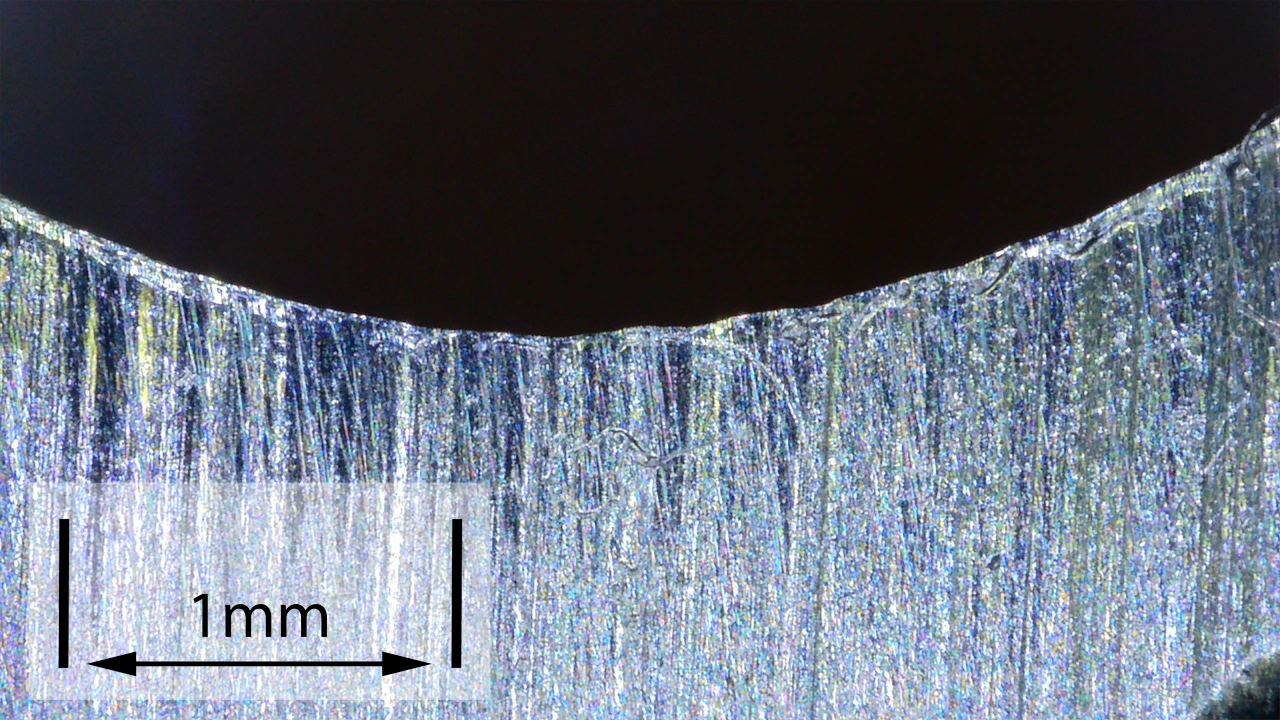
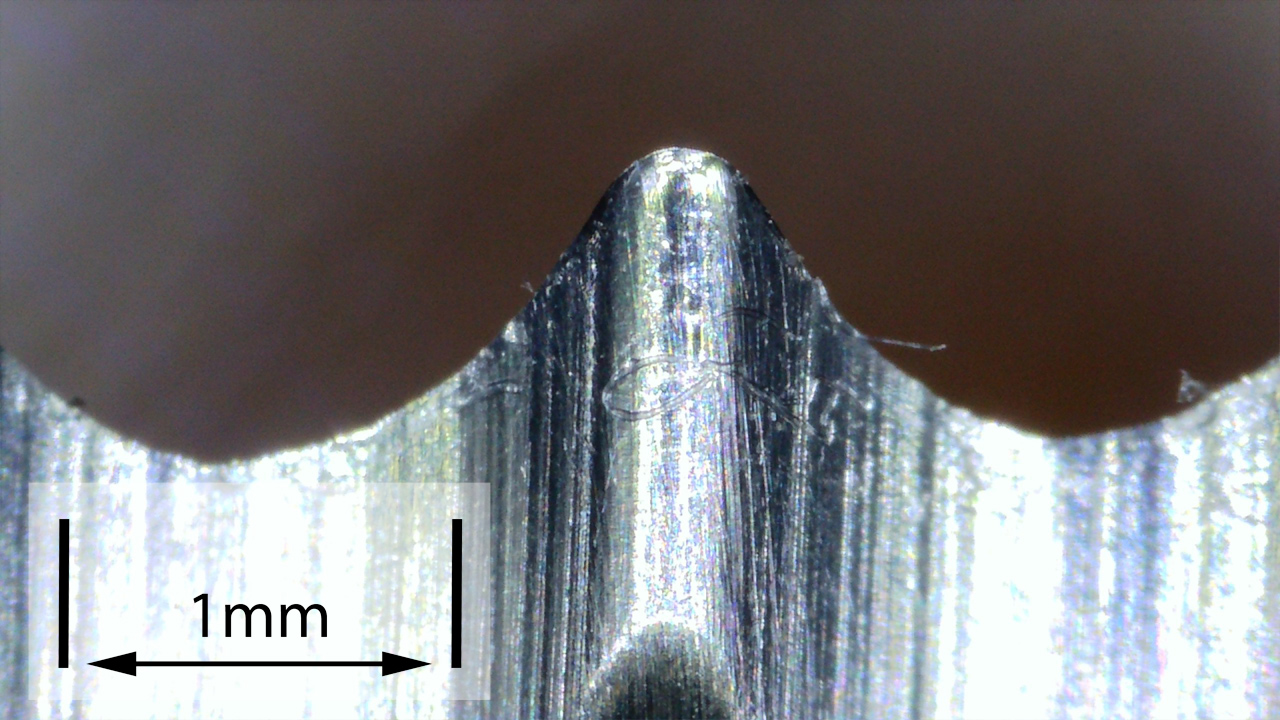
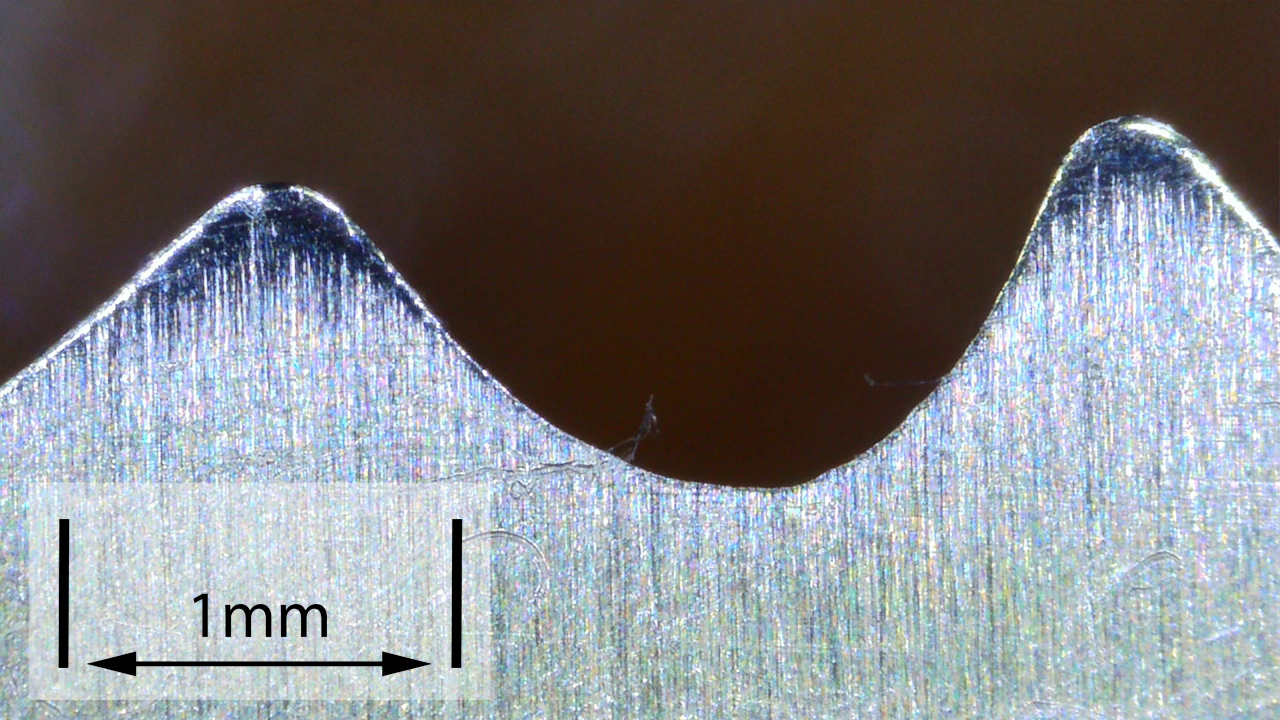
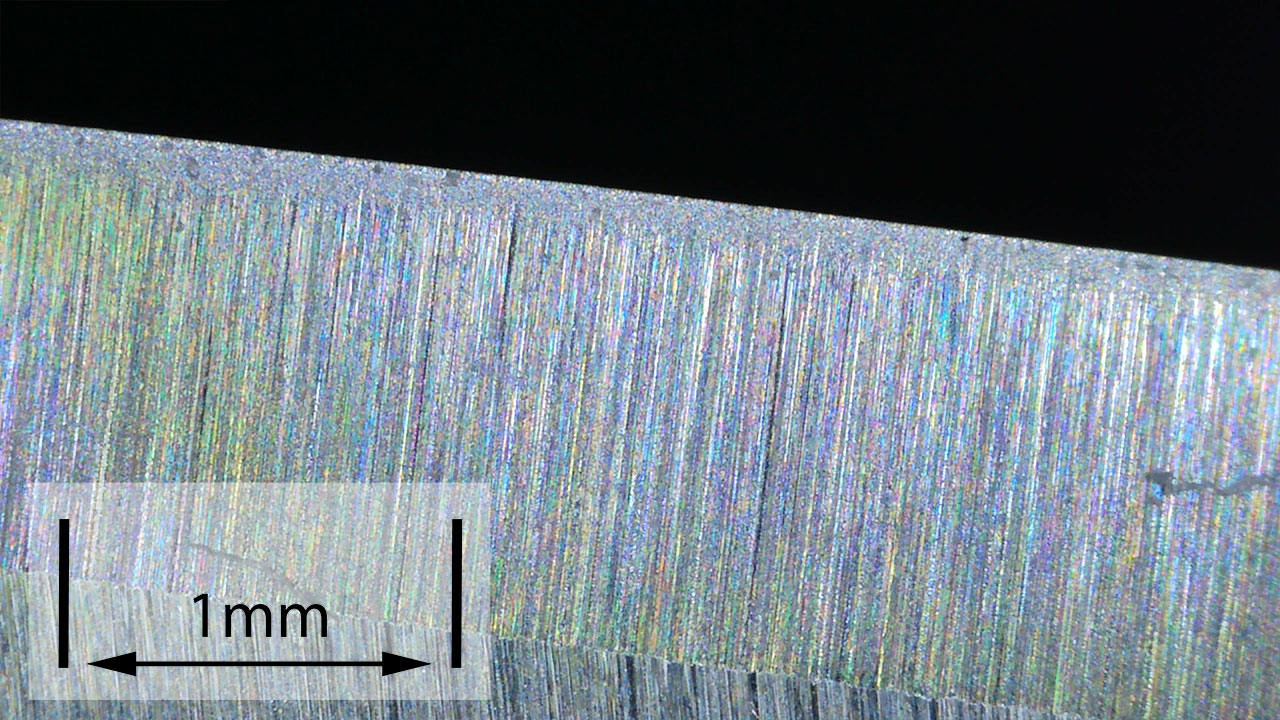
As a further look at the factory edge, this section has been added to include some high magnification photos of the factory edges.

Spyderco reliably produces exceptional factory edges, and this Manix 2 Salt is true to form.

What is it like to use?

Manix 2 is a generous sized knife, but the FRN handle and lack of steel liners keeps the weight right down, and despite the size is an unobtrusive carry, almost too easy to forget you are carrying it.

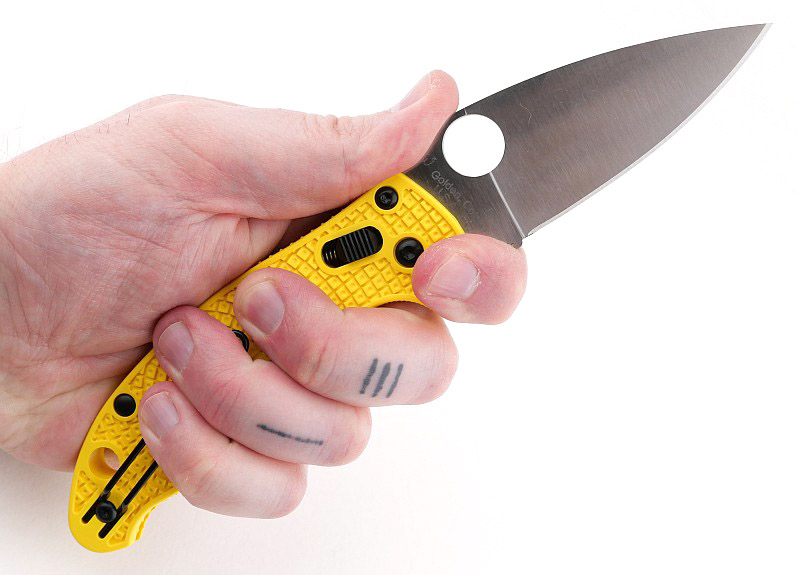
You can see how substantial it looks in the hand (I take XL sized gloves), substantial, but light and comfortable to hold. With the choked up grip position, the knife almost seems to shrink when you adjust your grip for more precise work.

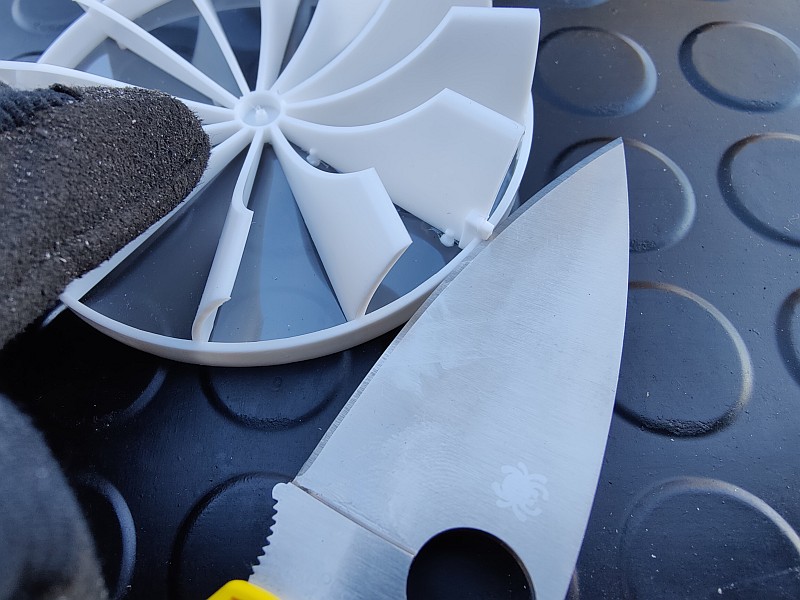
The large leaf-shaped full-flat-grind blade is very very ‘slicey’ and eager to part materials. Just the geometry wants to cut, and partnered with a great factory edge it cuts with ease right out of the box.
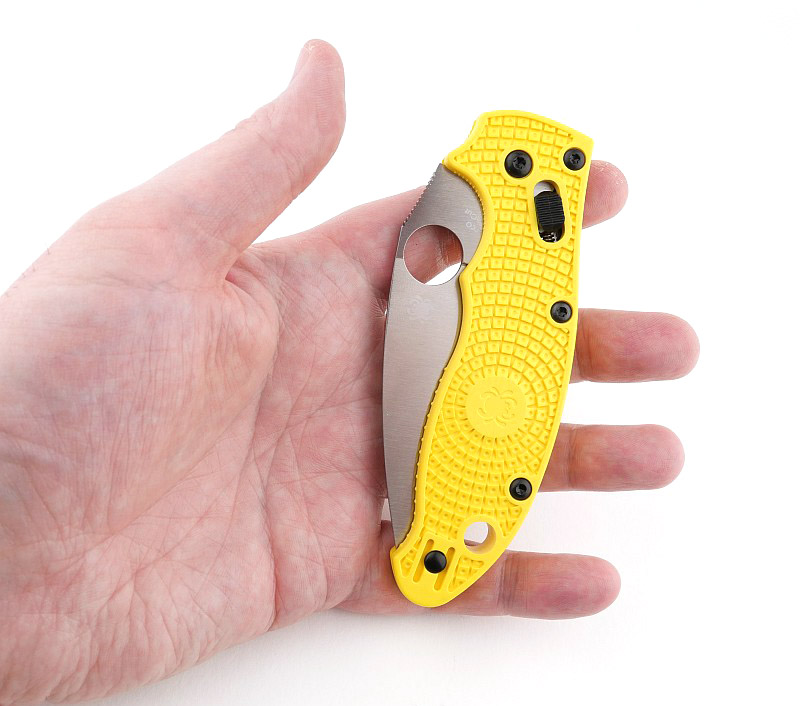
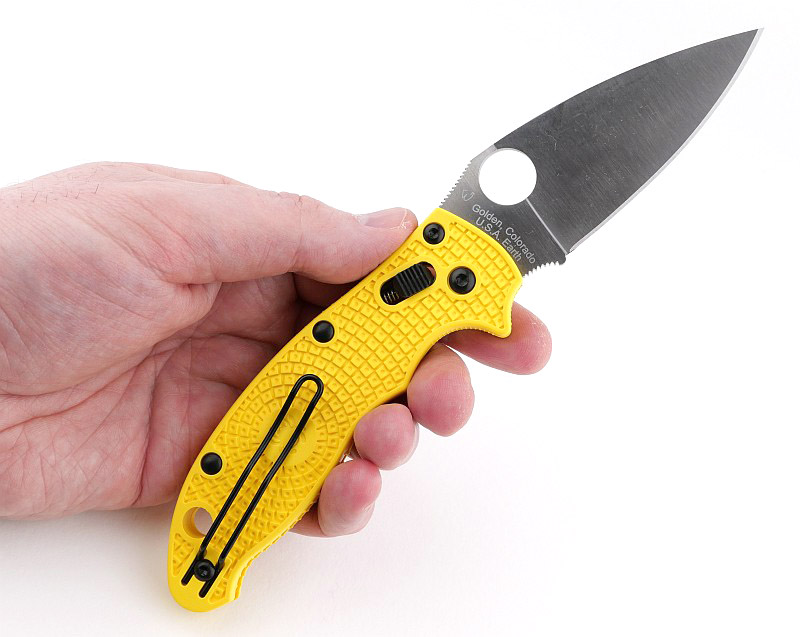
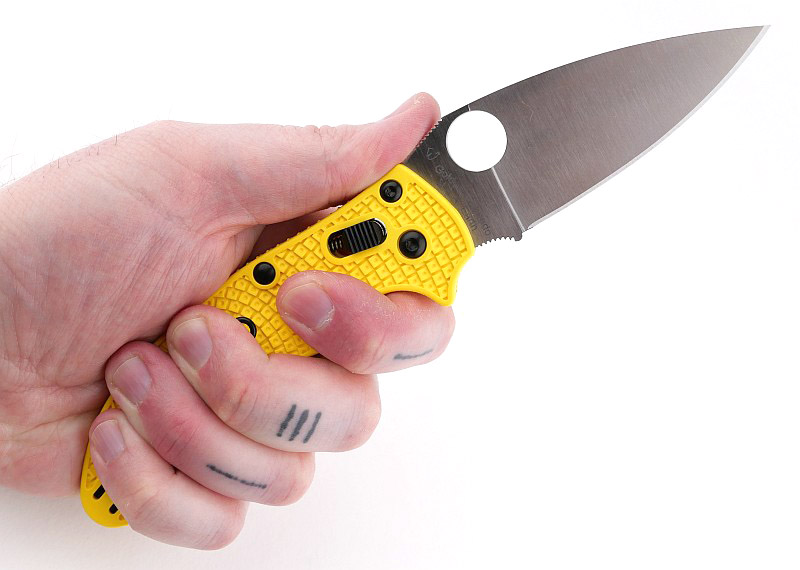
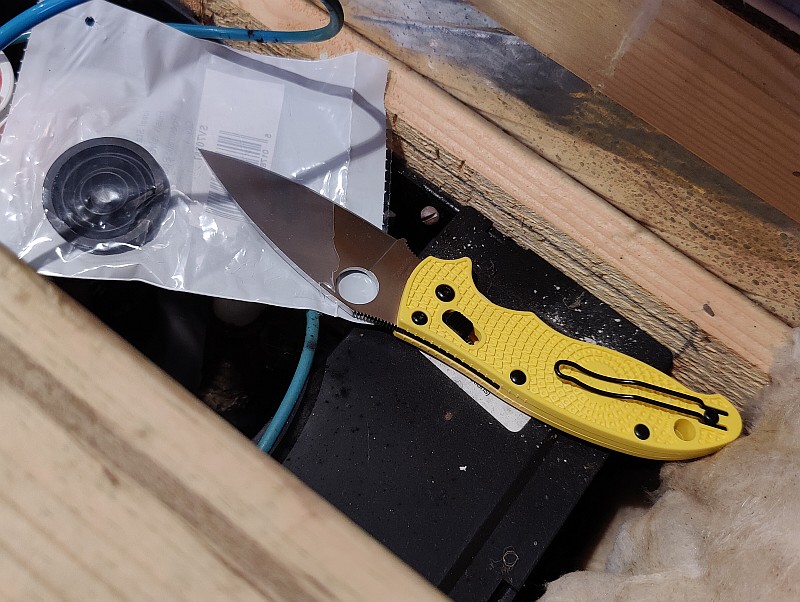
Putting it to good use for a couple of plumbing/bathroom jobs, but not even starting to test the corrosion resistance. Speaking of which I have previously carried out a sea water soak and exposure test on a Salt model, giving amazing results, as the knife was completely untouched by this. I wasn’t set up for this sea water test, so haven’t completed a similar corrosion test, but am confident from previous experience, and the fact this knife uses MagnaCut, that is will also be a waste of time.

Not only does this ‘Salt series’ make a great choice for highly corrosive environments, but it also allows you to have a virtually maintenance-free knife.

An ideal outdoor companion, with that high visibility handle making it a challenge to lose in the woods. Highly usable, and a real work-horse of a knife that is eager to get on with the next job.
Review Summary

The views expressed in this summary table are from the point of view of the reviewer’s personal use. I am not a member of the armed forces and cannot comment on its use beyond a cutting tool or field/hunting knife.

Something that might be a ‘pro’ for one user can be a ‘con’ for another, so the comments are categorised based on my requirements. You should consider all points and if they could be beneficial to you.

_______________________________________________
What doesn’t work so well for me
_______________________________________________

No sharpening choil. (might be a ‘pro’ for some)
Sides of the blade jimping are a bit sharp.

_______________________________________________
Things I like
_______________________________________________

Completely corrosion free.
Lightweight without sacrificing strength.
Large full-flat blade cuts with ease.
Great size for all-round use.
Secure Ball Bearing lock.
High visibility.
MagnaCut steel.
Ambidextrous pocket clip.
Very accessible large opening hole.
Excellent grip all over and around.
Top-notch factory edge.

Review Videos

Starting with a short format sixty second review:


Onto a full video review covering many more details:


Discussing the Review:
Something new – will it work? A Tactical Reviews Subreddit.
TacticalReviewsChat on Reddit
Please visit there and start/join the conversation.
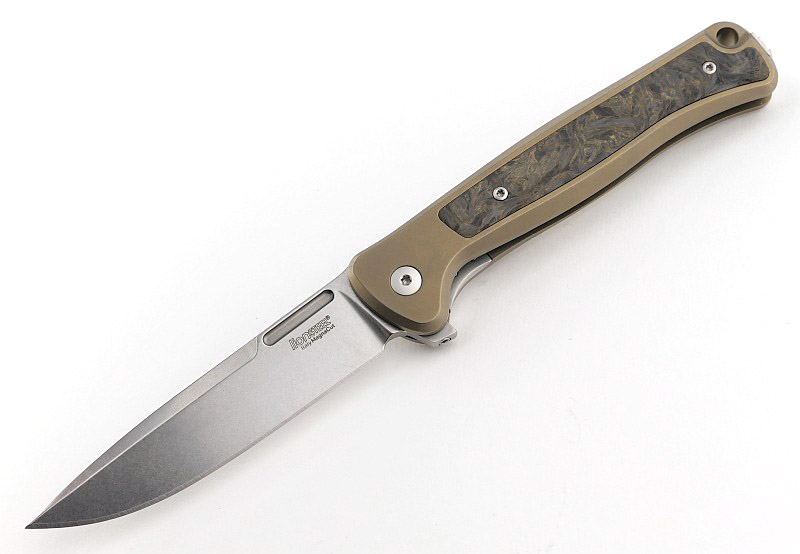
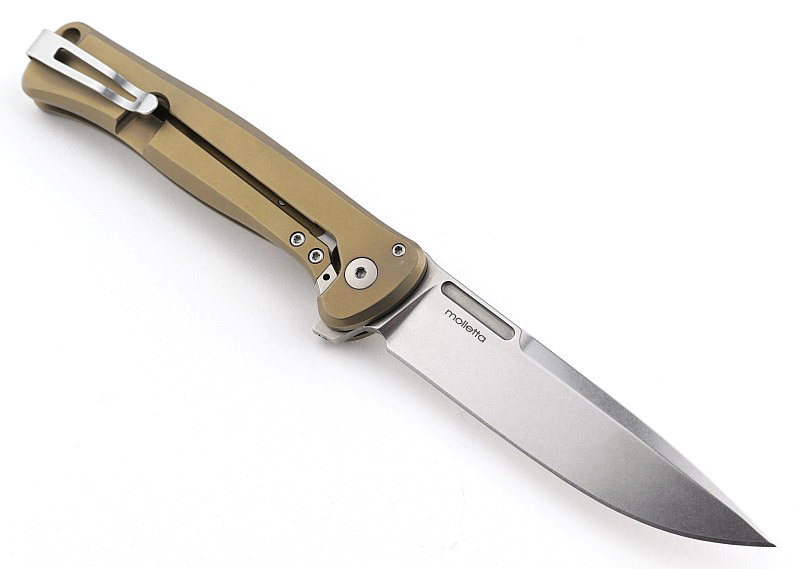
Knife Review: lionSTEEL Skinny

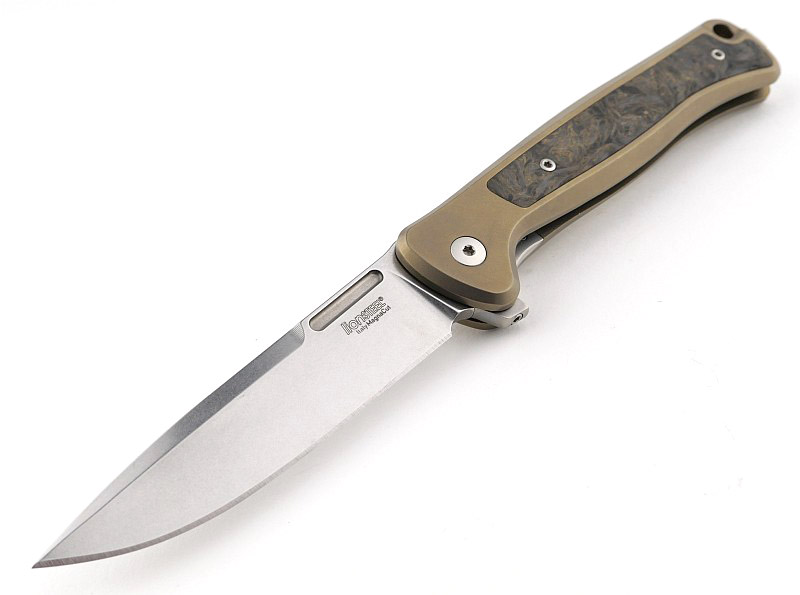
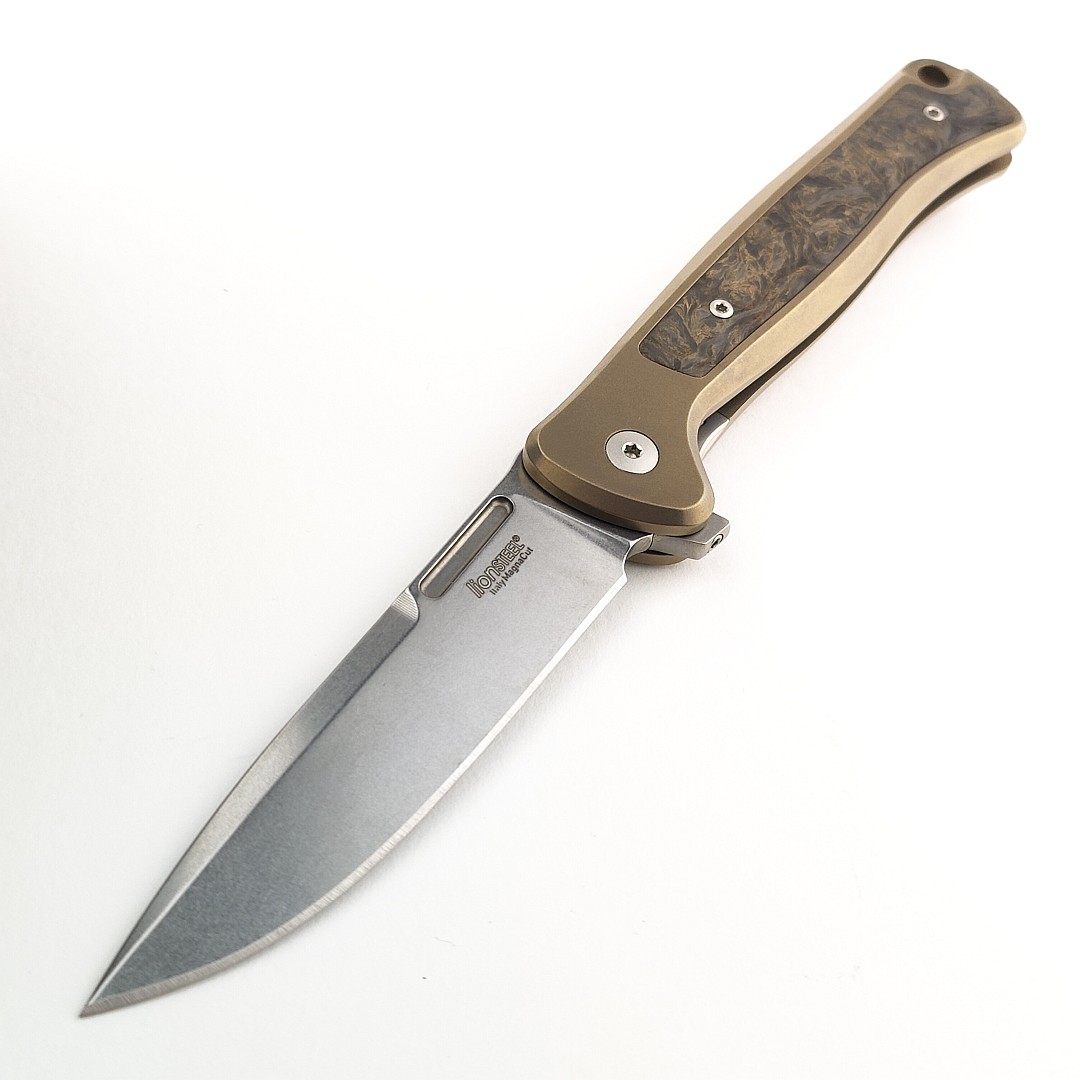
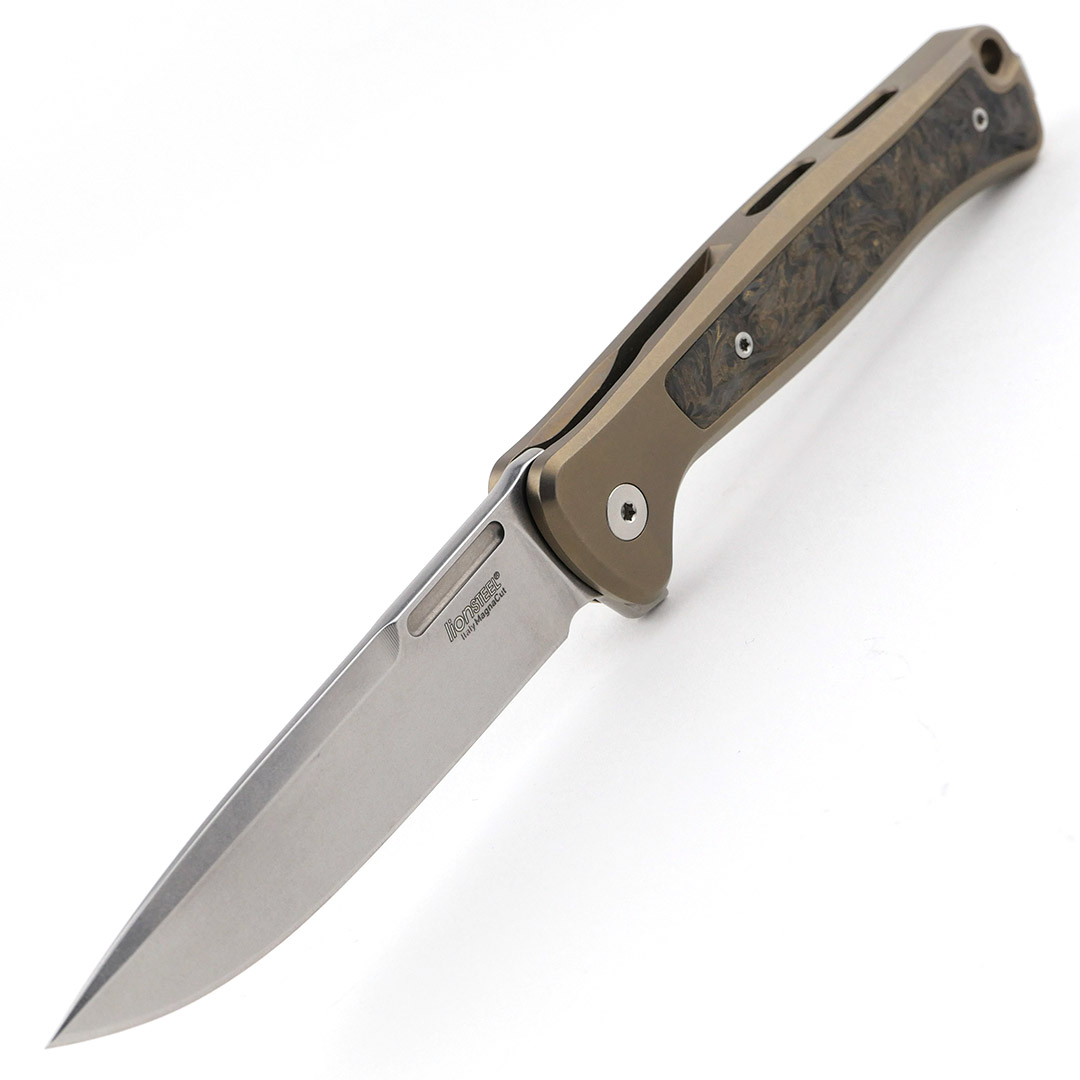
Join me in this lionSTEEL Skinny review (new for 2024), to take in all the details of this EDC folding knife. Made using lionSTEEL’s SOLID technology: the frame is made by milling a single solid piece of titanium or aluminium, producing a handle that is incredibly strong.
Skinny is very light and strong with the benefit that it fits into the pocket easily. Featuring a CPM MagnaCut steel blade in either stonewash or OldBlack finish.
The specific knife featured in this review was a display model used throughout IWA 2024, so might show a few imperfections.

What’s in the box?:

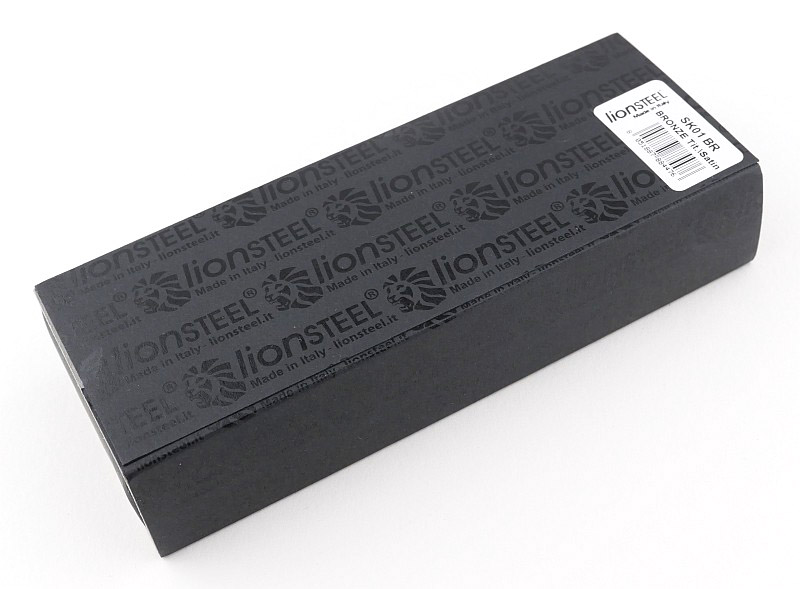
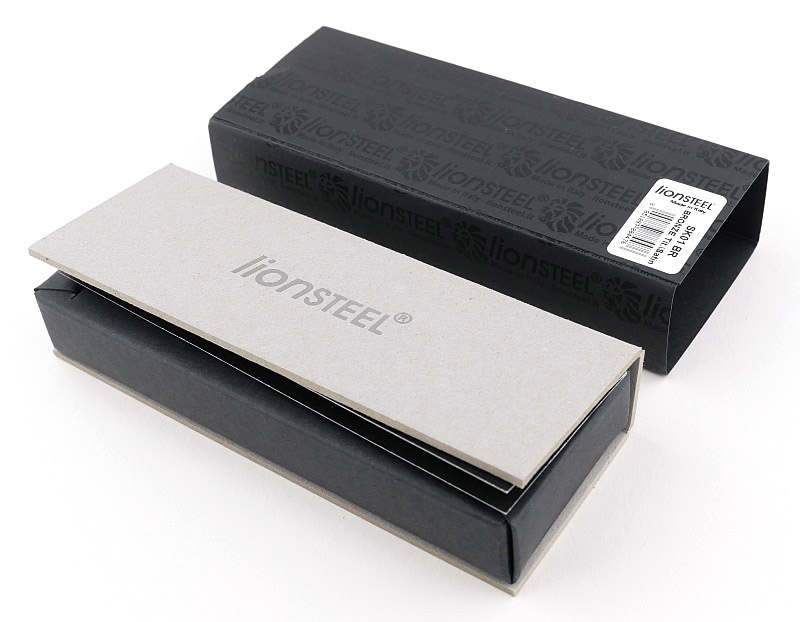
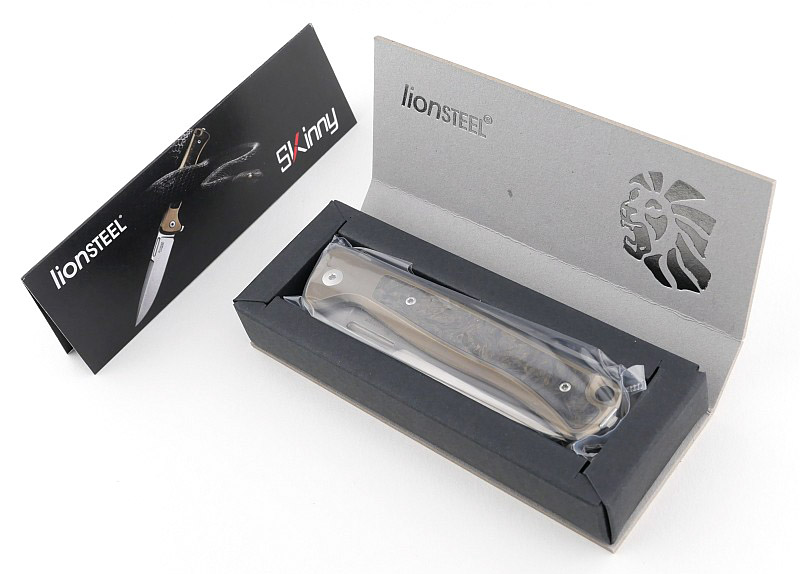
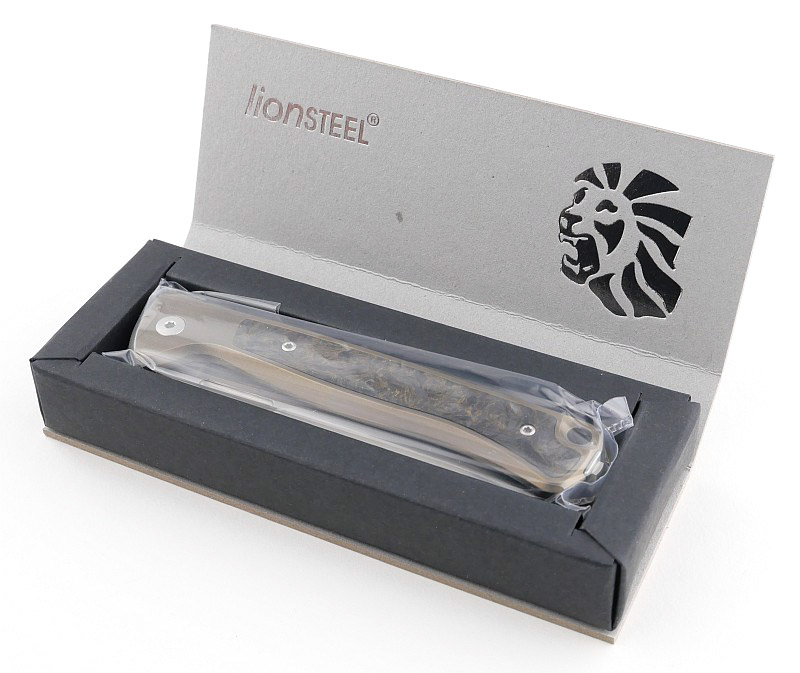
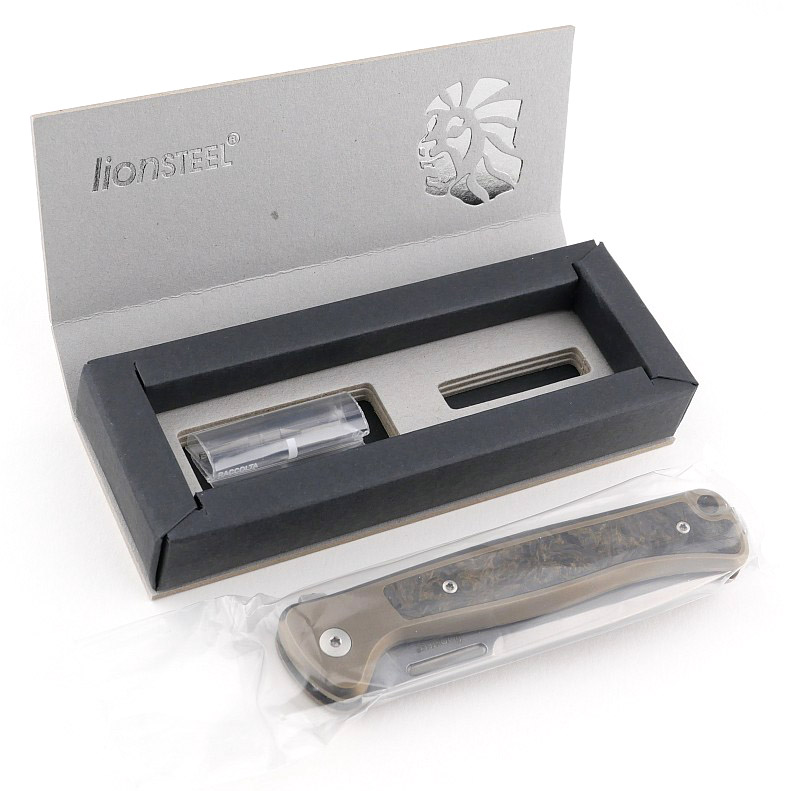
lionSTEEL use packaging like this for many of their folders. Made out of cardboard, but constructed so that it has structure and substance, and becoming more like a case than simple box.
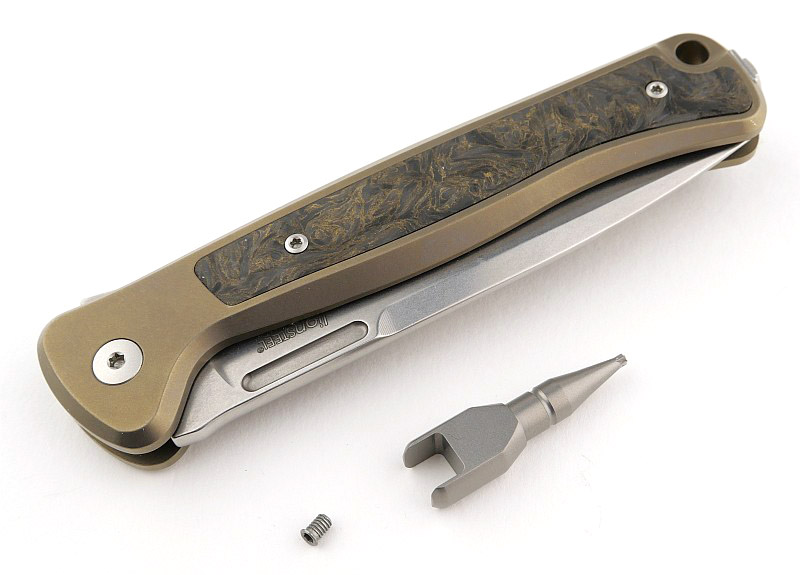
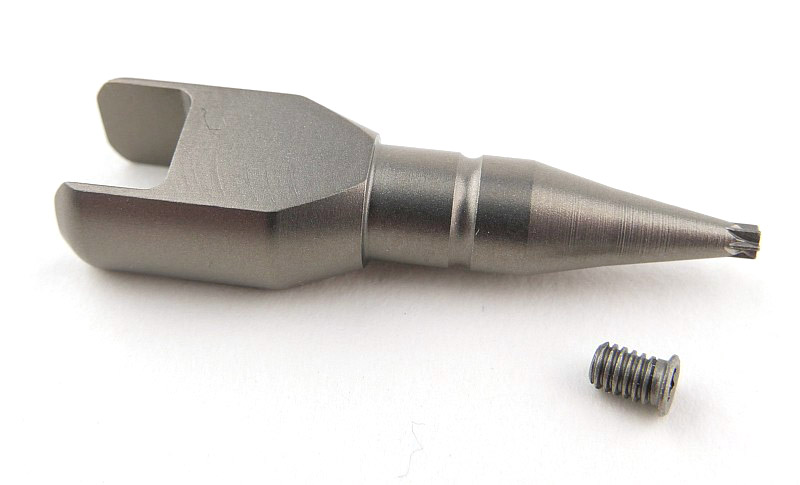
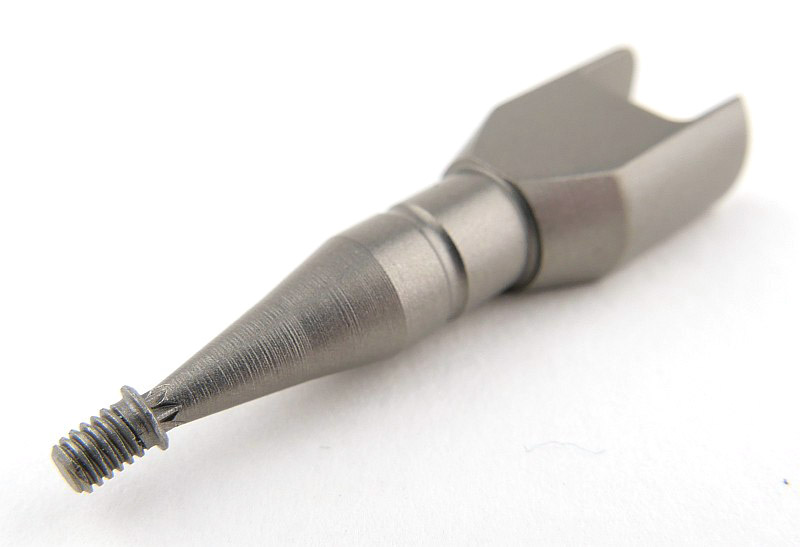
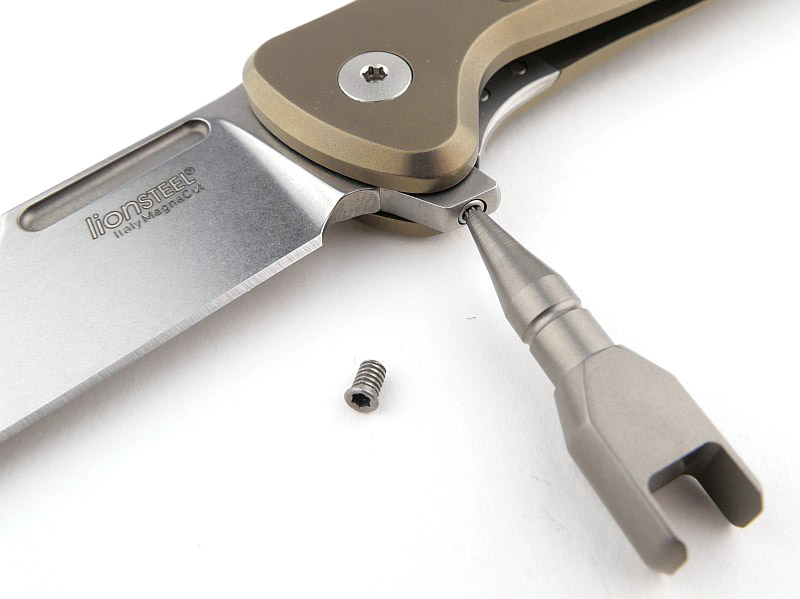
Inside this box are the Skinny and a small bag containing the U-Tool and a blanking screw. The U-Tool includes a spanner to fit the pocket clip bolt and a torx bit for the removable flipper tab (and fitting that blanking screw).


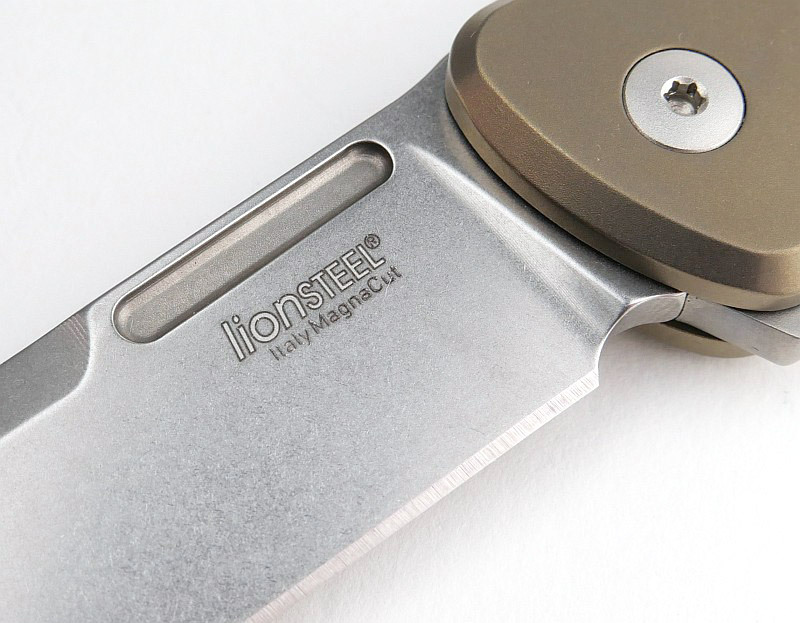
A good look round the Skinny Part 1 – the handle – Things to look out for here are:
For the detailed galleries I’ve split this into three parts to cover a main overview of the folded knife, then with the blade open and details of the blade, and finally the REF (Removable flipper) system.
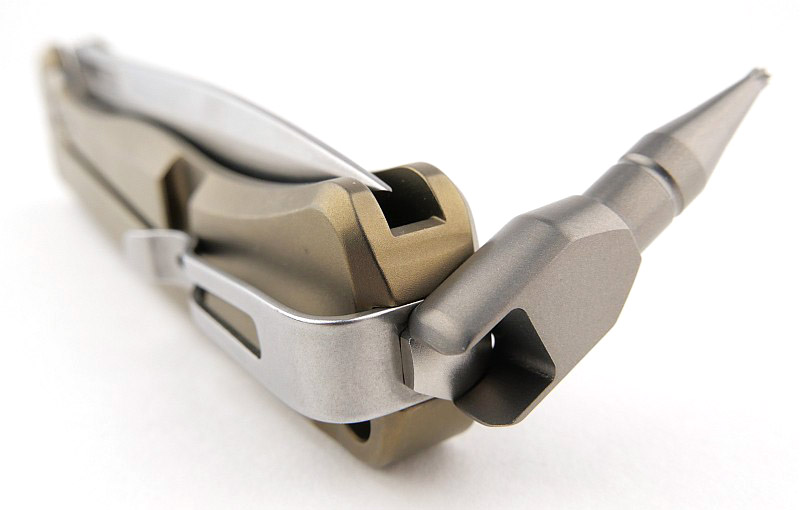
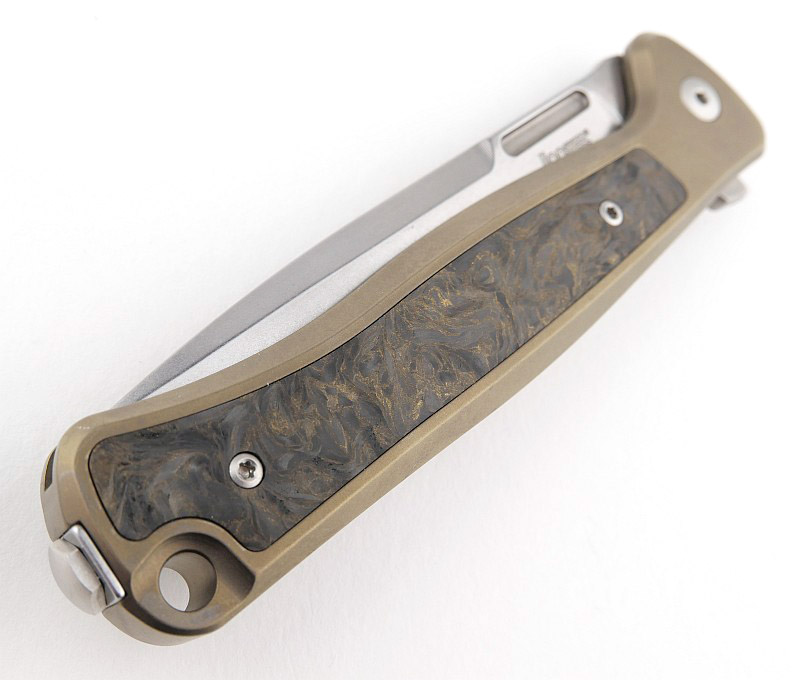
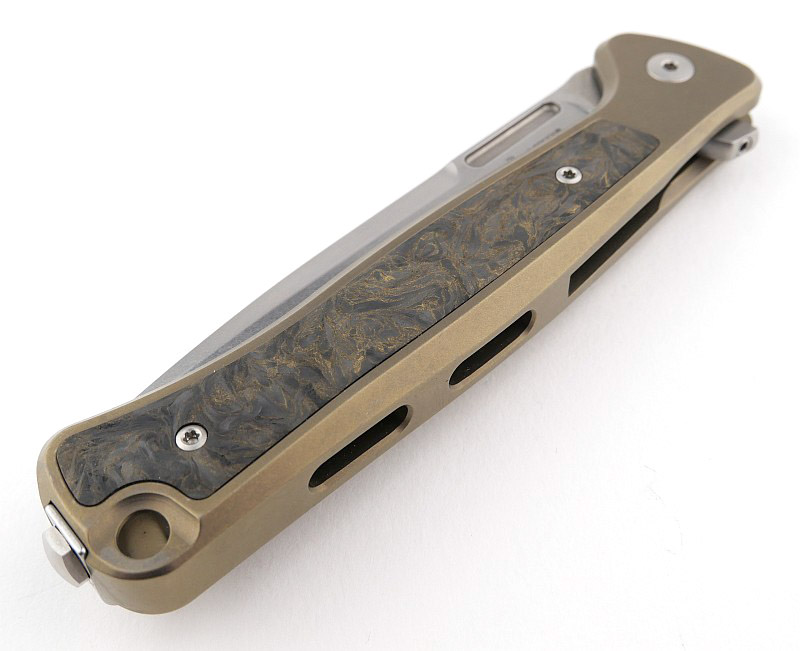
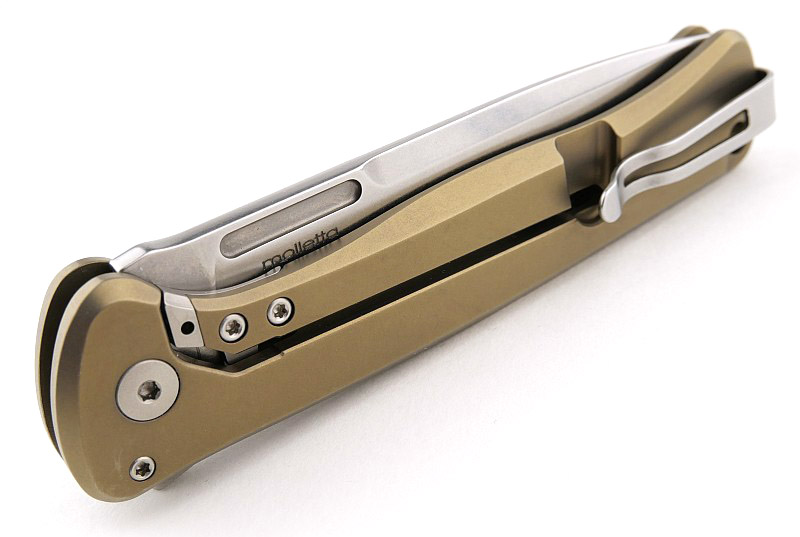
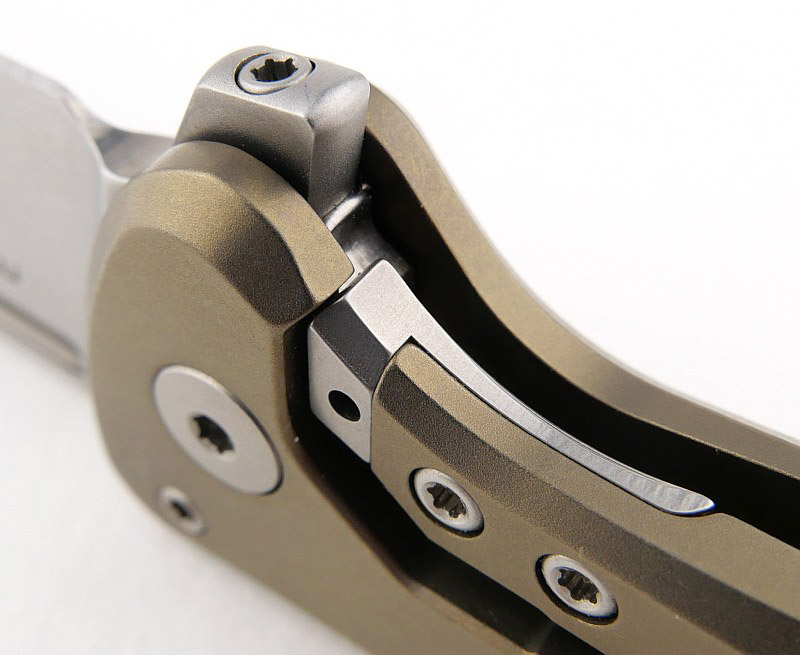
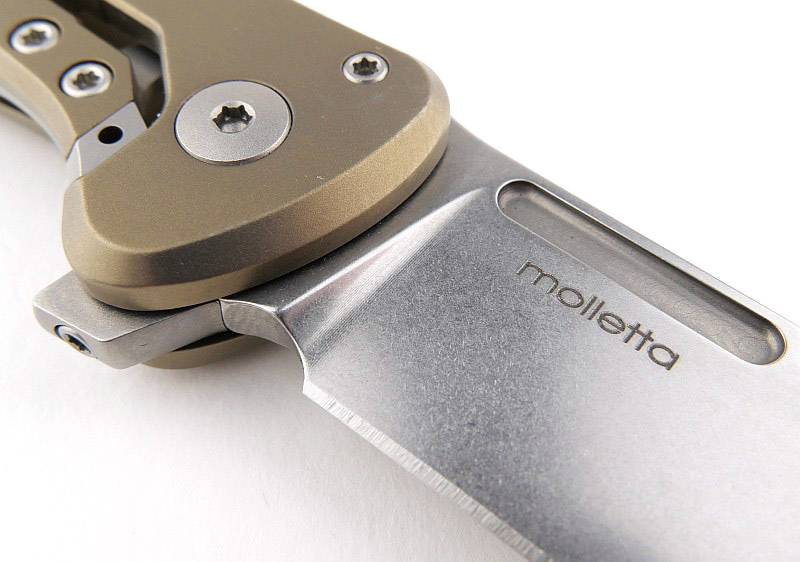
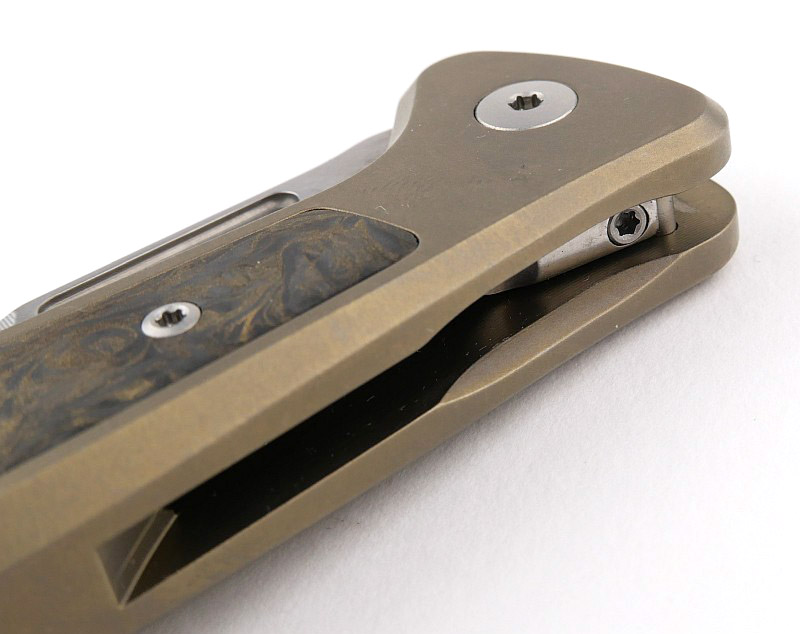
Skinny is a Molletta design, and has a deep carry steel pocket clip which can be fitted on either side of the frame using the “U-Tool” included in the box.
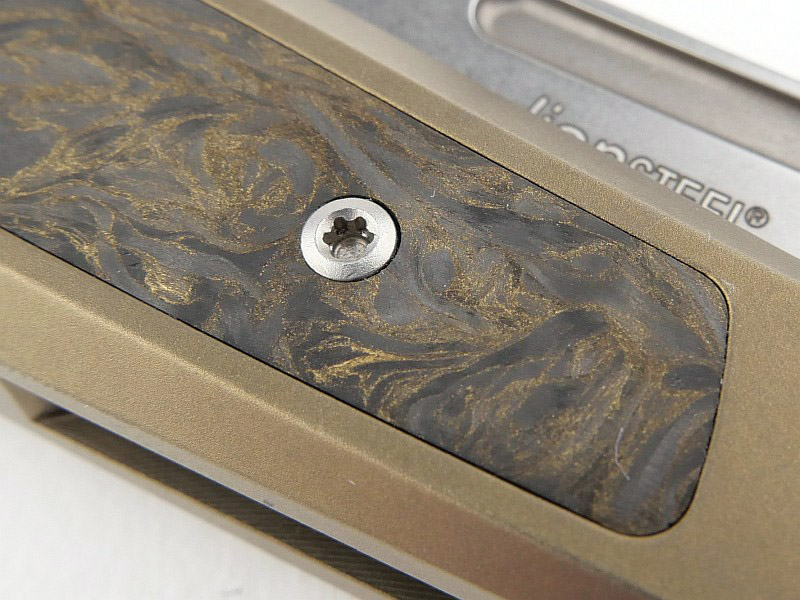
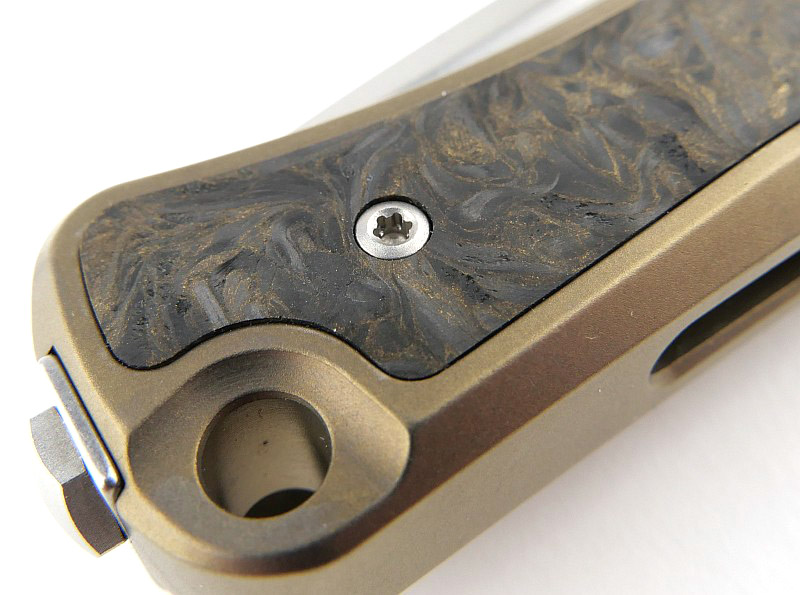
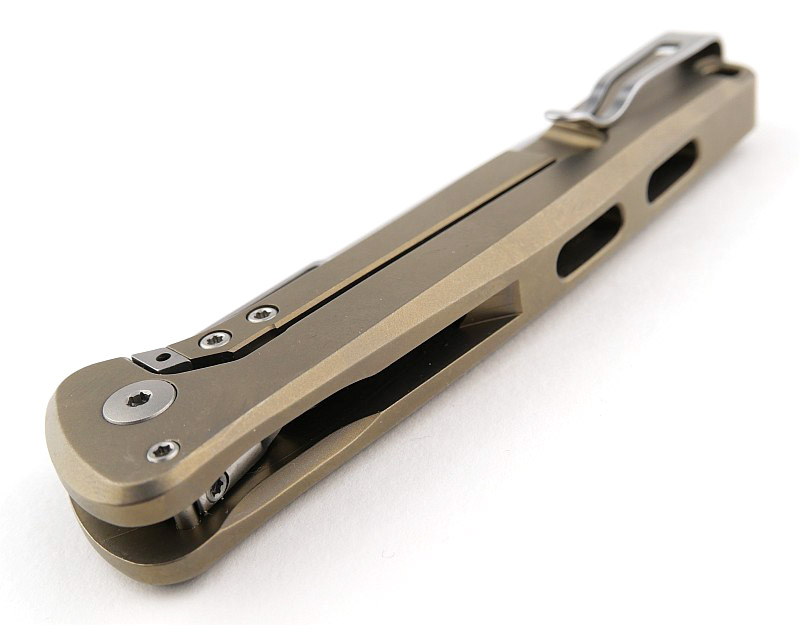
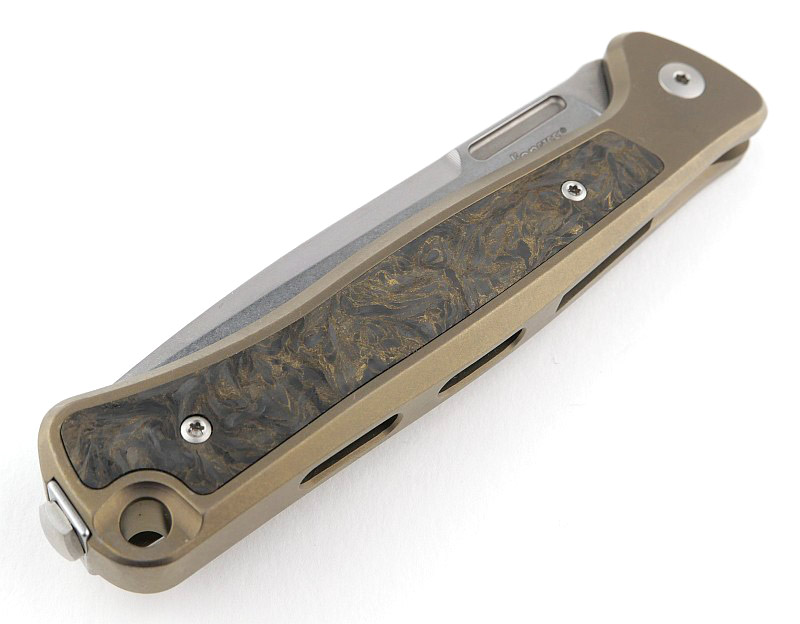
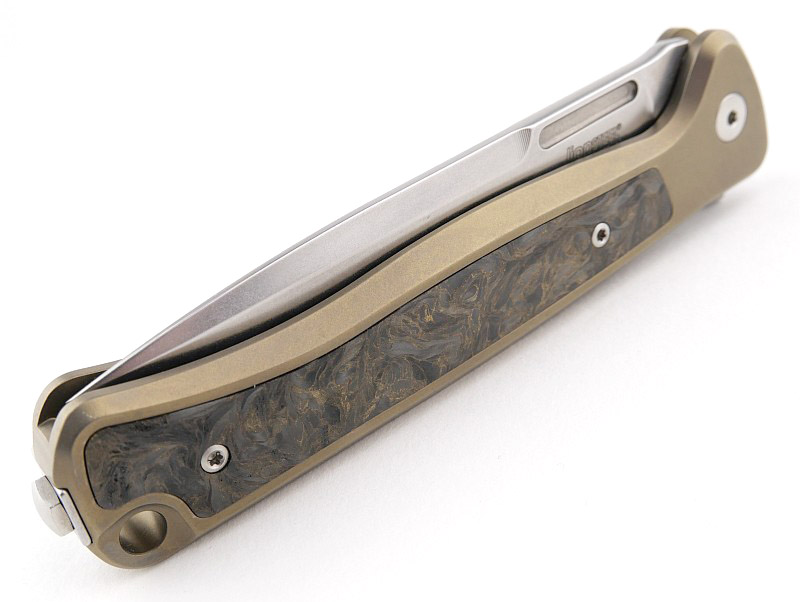
The handle is a lionSTEEL SOLID (milled from one single piece of titanium). In this version it has a Fat Carbon inlay on one side (and the integral lock bar on the other side).


A good look round the Skinny Part 2 – the blade – Things to look out for here are:
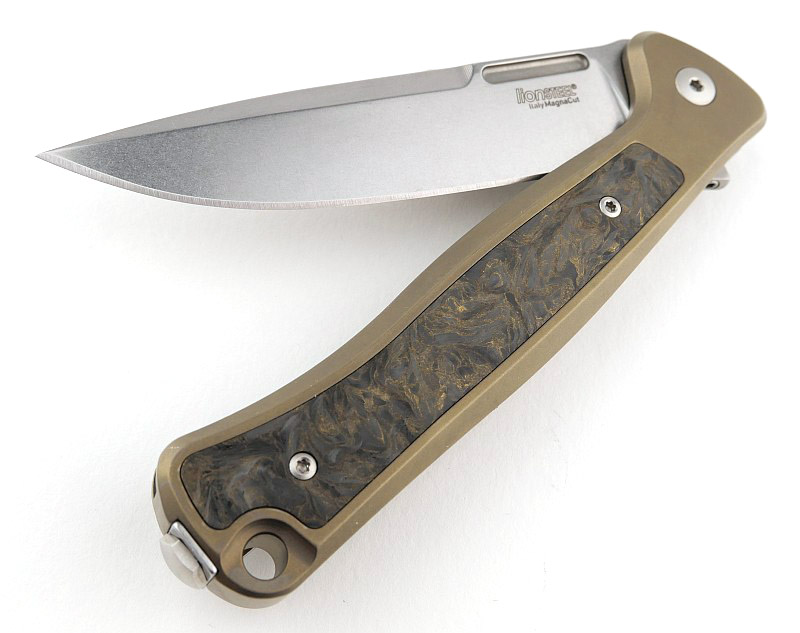
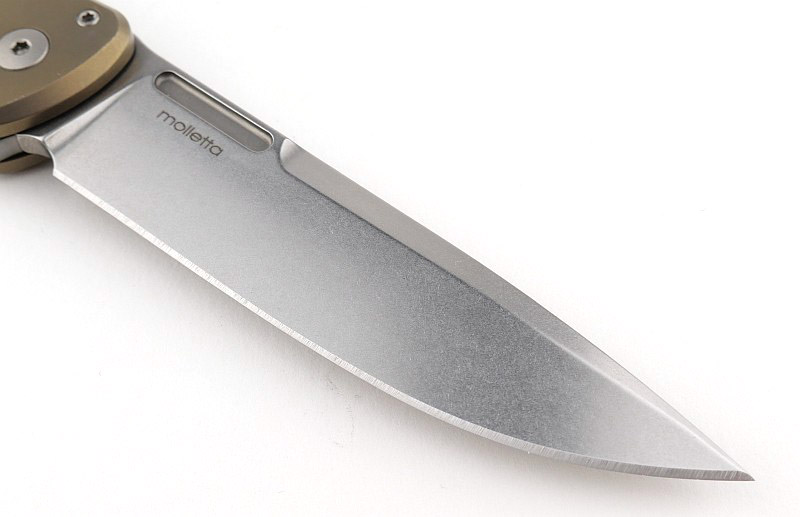
Pivoting out the long and slim MagnaCut blade really explains the reason for the knife’s name. Despite being slim, the Skinny is still a good sized knife overall and doesn’t feel ‘slight’.
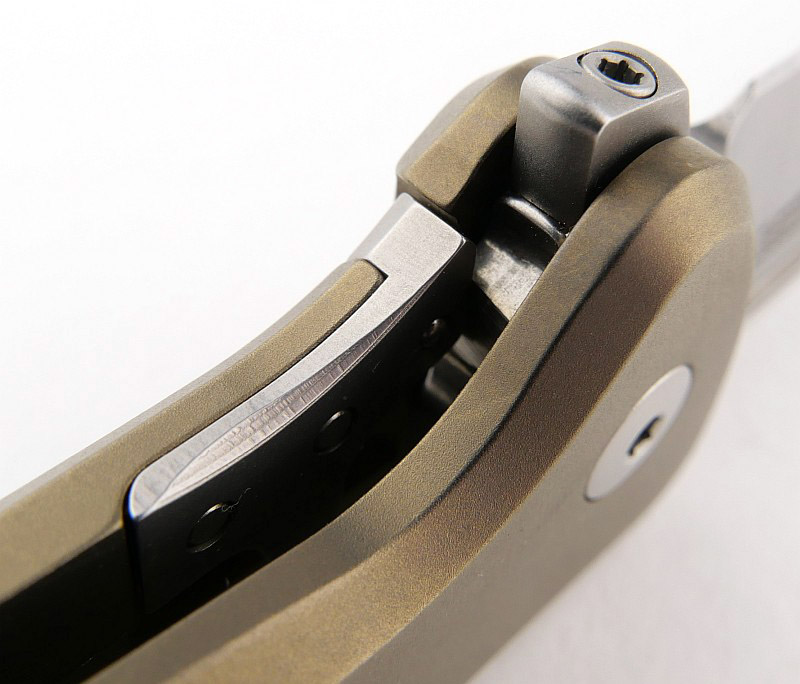
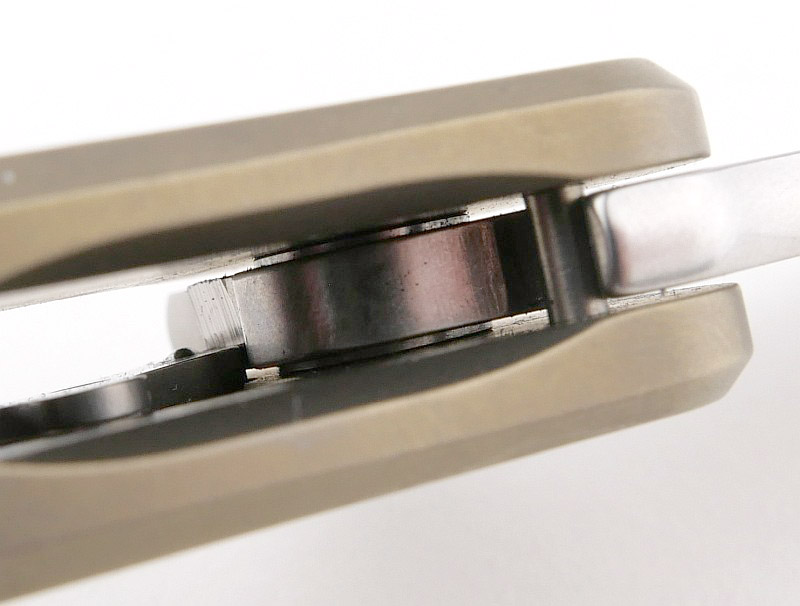
The lock bar is reinforced with a hardened steel insert with an over travel stop, and the blade pivots on an IKBS ball bearing.


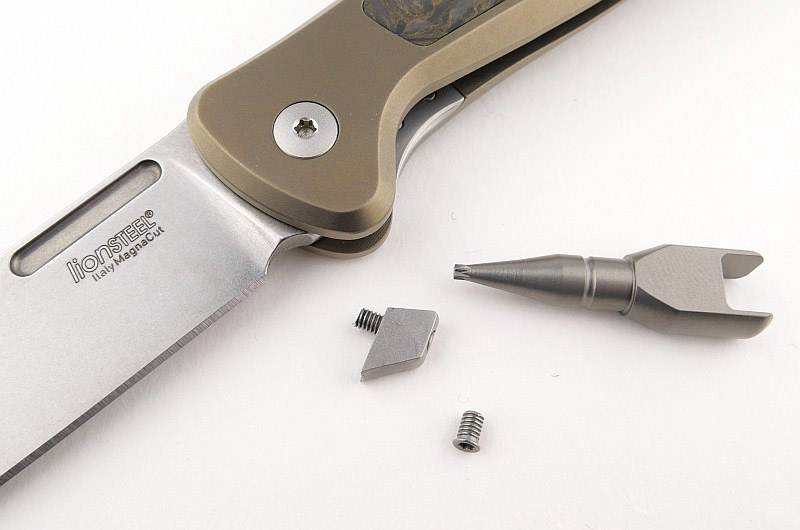
A good look round the Skinny Part 3 – the REF (Removable flipper) system – Things to look out for here are:
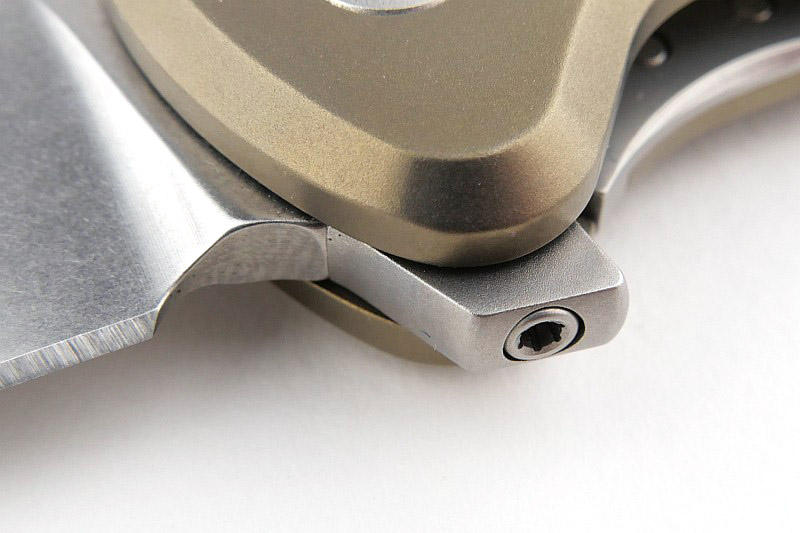
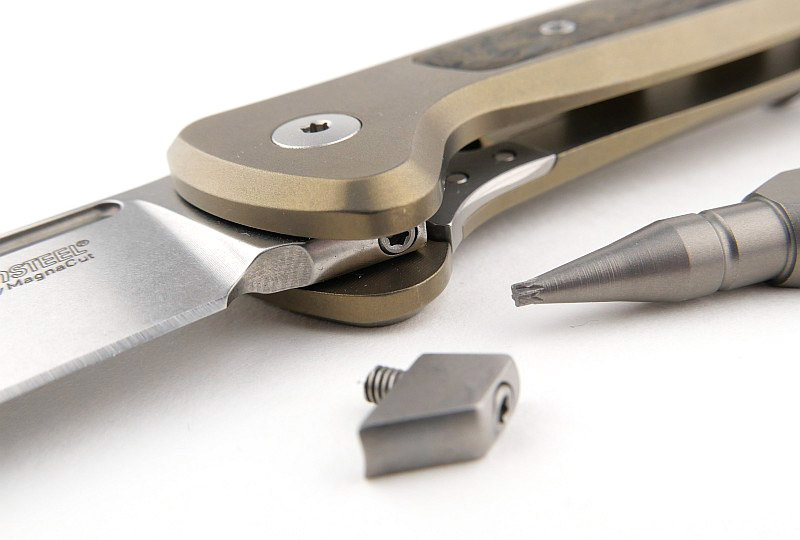
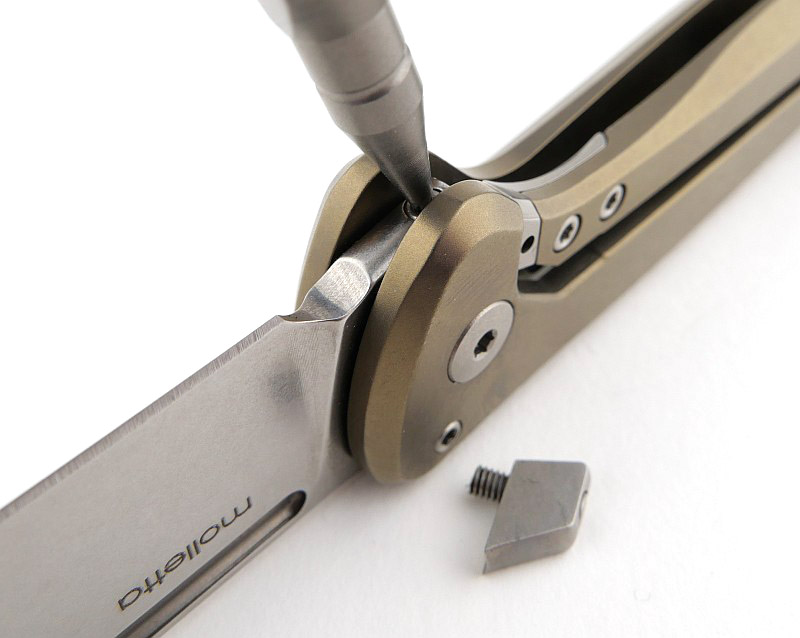
The Skinny is equipped with the lionSTEEL REF (Removable flipper) system, so if you don’t want the flipper you can unscrew the tab using the T6 torx tool and fit the second screw you find in the box to cap off the hole.
This slims the Skinny down even further, and the ‘nail nick’, which is actually a milled slot, then gives you the purchase to grip the blade and open it manually.


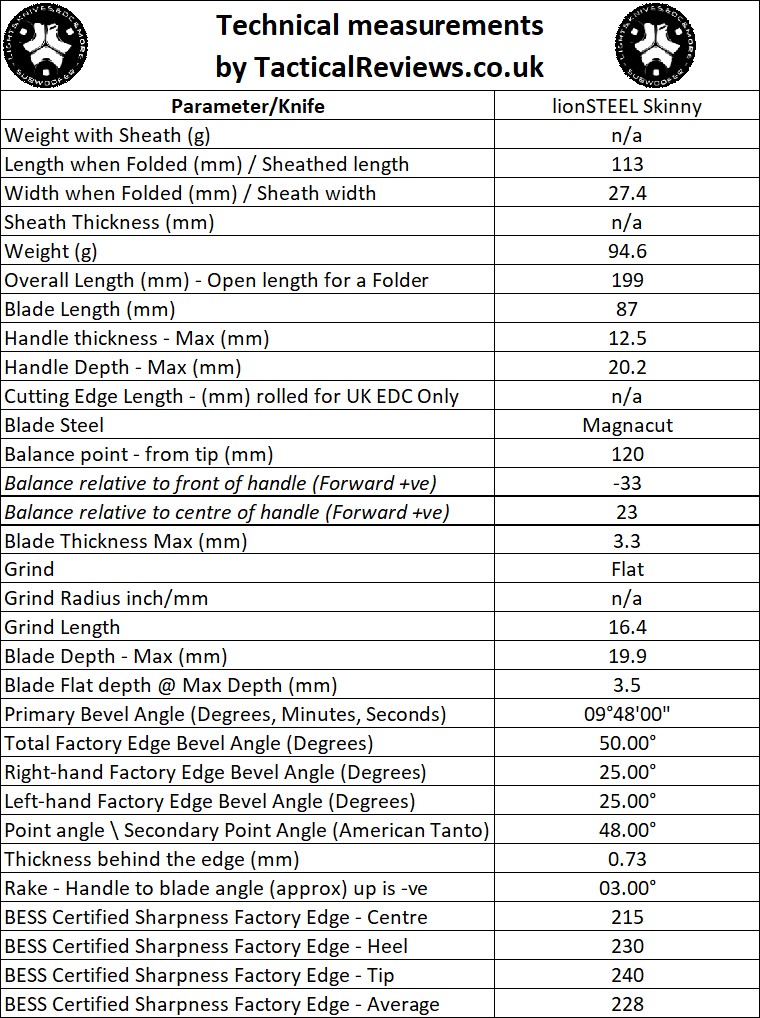
The Blade and Handle – Detailed Measurements:
For full details of the tests and measurements carried out and an explanation of the results, see the page – Knife Technical Testing – How It’s Done.

The blade is made from MagnaCut steel.


The Factory edge up close:

Followers of Tactical Reviews will know my views on factory edges, but to recap:

Anyone using a knife will need to sharpen it. That first factory edge is just like the first tank of fuel that a new car comes with (or first charge of the battery).
A good factory edge is a ‘nice to have’ but not a ‘make or break’ for a good knife, as you will be putting your own edge onto it soon enough.
The factory edge does however indicate the care a knife maker has put into the final finish.
It is for this reason Tactical Reviews measures factory edge sharpness and specifications, and includes this information in the detailed technical testing.

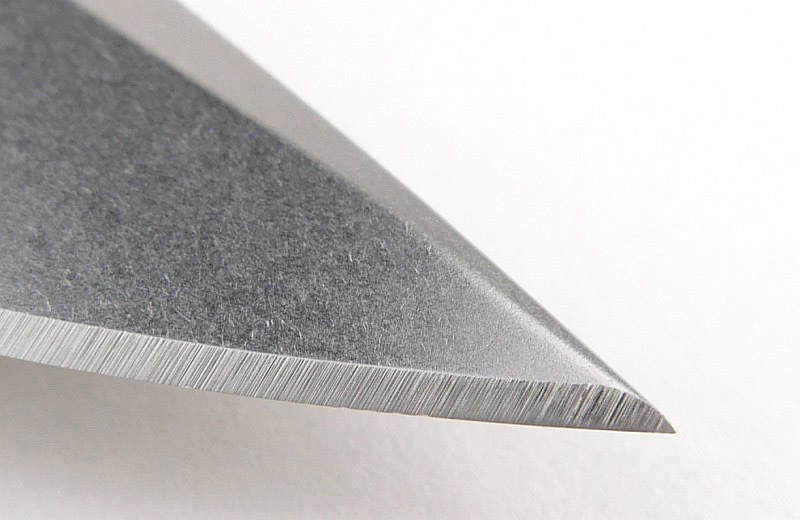
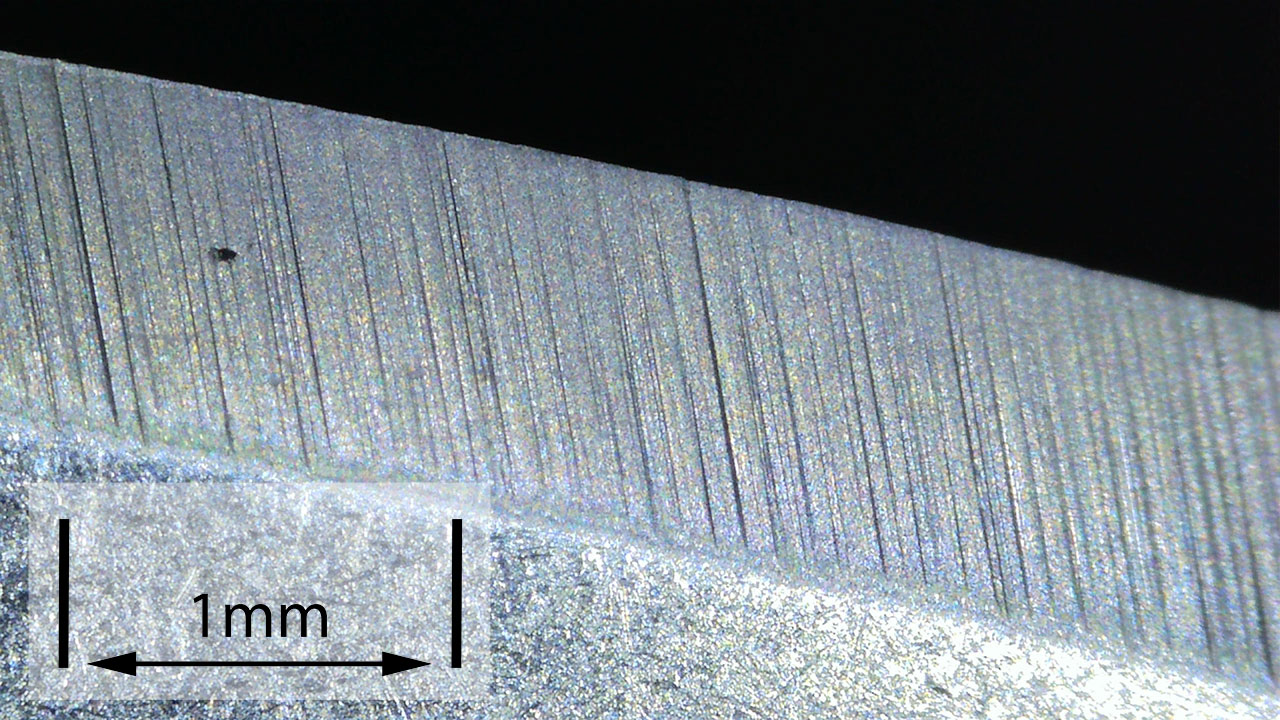
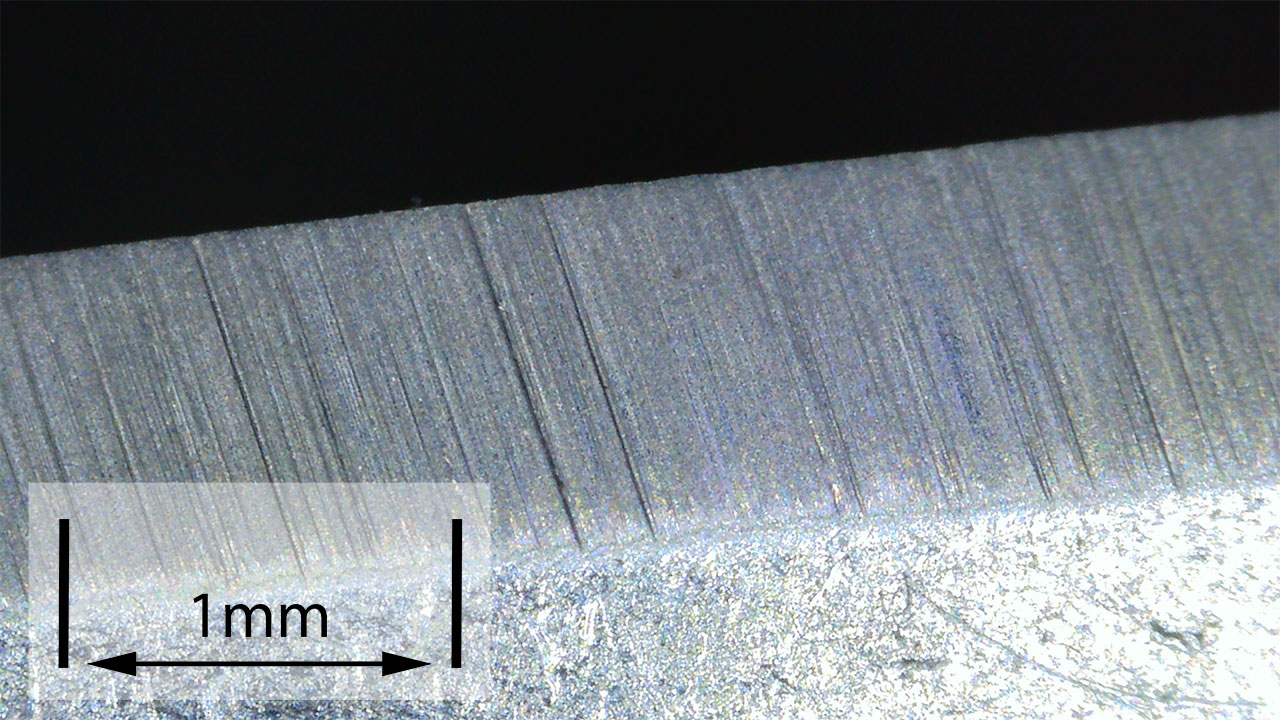
As a further look at the factory edge, this section has been added to include some high magnification photos of the factory edges.

Remember this was a demo knife at IWA 2024, so in a couple of these photos you can see some handling related edge damage, which you would otherwise not expect to see on the factory edge. It is shown out of interest that the edge damage is in the form of rolls and not chipping.


What is it like to use?

lionSTEEL are well known for their overbuilt folders including the TM-1 shown in the gallery for comparison. The Skinny is just as long as these larger folders, but significantly slimmer. This makes it so much easier to EDC, as it becomes very low profile in your pocket.
Shown here (in a hand taking an XL size glove), the Skinny is still a good sized knife and handles well. The fine blade is quite ‘pointy’ and is well suited to deep piercing cuts. One of the advantages of flipper tabs is that they act as a finger guard during use. This is true with the Skinny, but the shaped handle also incorporates a finger guard, so that even with the REF removed, grip and safety are not affected.


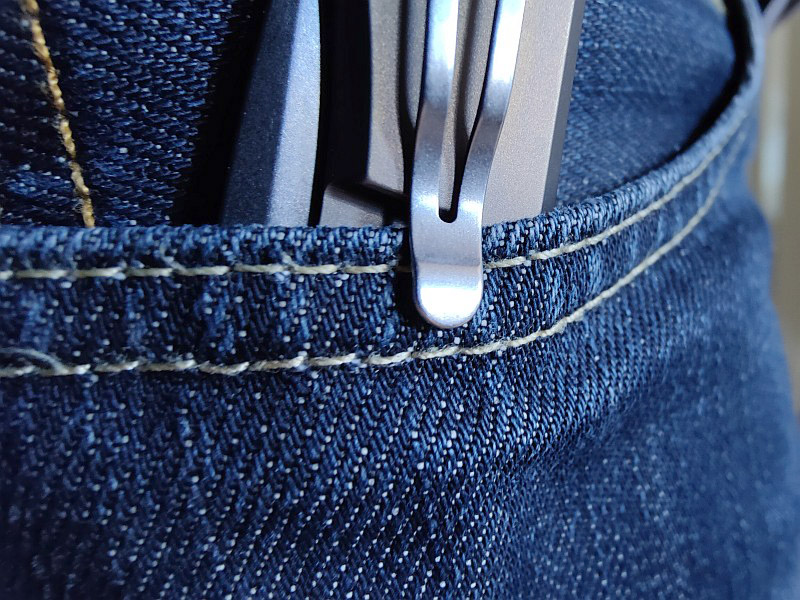
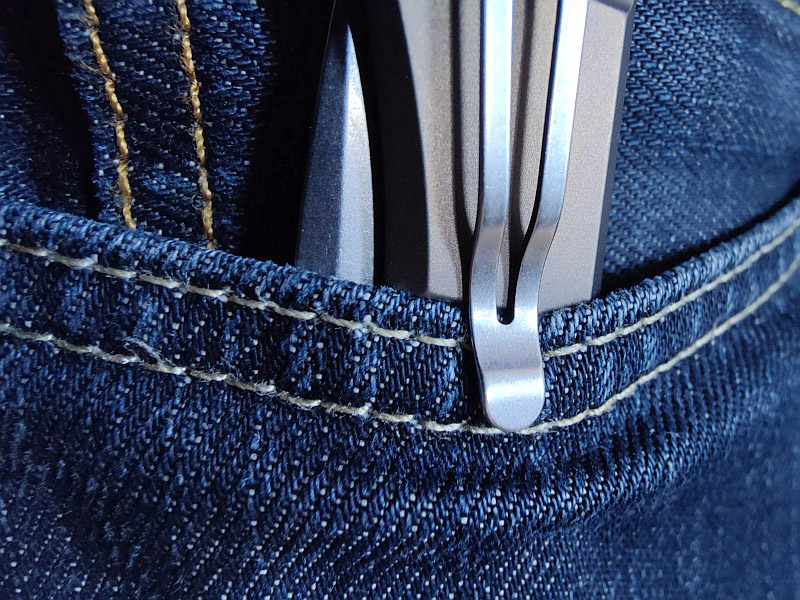
There are a couple of minor criticisms/observations that I’ll mention. The pocket clip, when mounted on the lock bar side, unfortunately lines up with the edge of the lock bar spring cut out. When you try to push the Skinny over the edge of your pocket, the cloth is pushed into lock bar spring cut out and jams, not allowing the clip to slip onto the pocket edge. This only affects fitting it to your pocket, not taking it out, and only when the clip is on the lock bar side. I have fitted the clip to the inlay side.
Shorter than most clips, the Skinny’s deep carry pocket clip is however, just right for grabbing the top edge of your pocket securely; no need for more, it is just right.
Something I have never experienced with any other integral lock folder, and that I believe has been noticeable with the Skinny only due to the slim handle and slim lock bar (perhaps the lock bar tension), was a squeak and vibration that could be felt when opening and closing the blade slowly.
A tiny drop of oil where the lock bar detent rides on the side of the blade immediately stopped this and it become slick again, but over time this does need a further drop of oil. Using a precision watch maker’s needle oiler allowed a very targeted application.

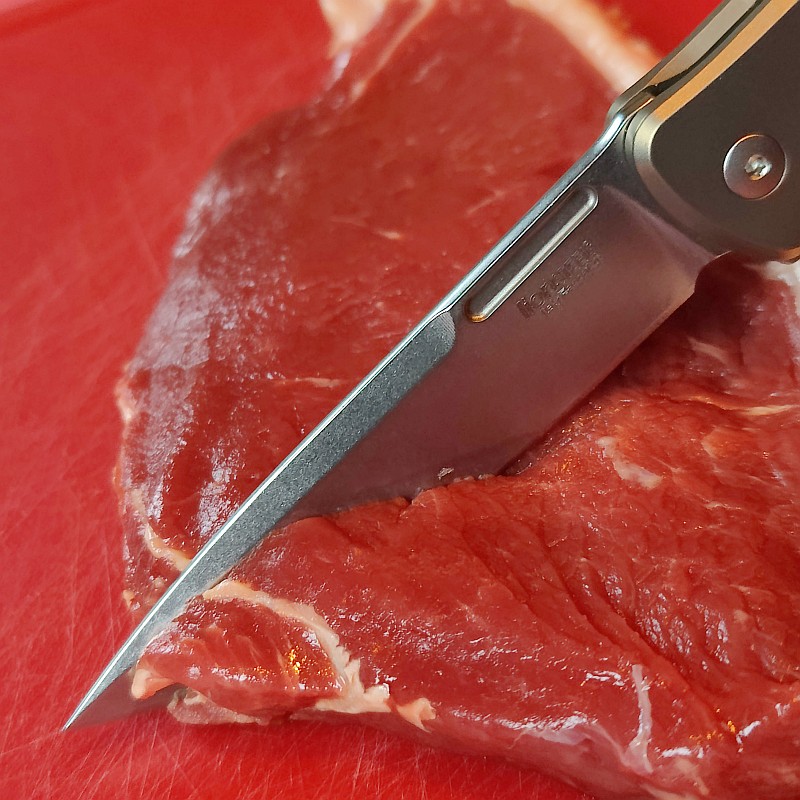
The final image here marks the end of an uninterrupted 38 years of me being a pescatarian. Friends and followers might know I have a chronic health condition, and with recent fresh inspiration to take a holistic new look of all aspects of my health and possible therapeutic changes I can make, I am taking a significant step by re-introducing meat into my diet.

This is no small change to make after 38 years, so required a ceremony of using a knife with a Magnacut blade, made by my friends at lionSTEEL, to prepare this first meal of meat. Meaningful to me at least, and the reason for including this here.


With the Skinny lionSTEEL have added nicely to their line up with a much slimmer locking folder that is very practical and usable for EDC tasks.

Review Summary

The views expressed in this summary table are from the point of view of the reviewer’s personal use. I am not a member of the armed forces and cannot comment on its use beyond a cutting tool or field/hunting knife.

Something that might be a ‘pro’ for one user can be a ‘con’ for another, so the comments are categorised based on my requirements. You should consider all points and if they could be beneficial to you.

_______________________________________________
What doesn’t work so well for me
_______________________________________________

Pocket edge catches in lock bar spring cut out.
Lock bar tension seems very high.

_______________________________________________
Things I like
_______________________________________________

SOLID construction (one piece handle).
REF (removable flipper system).
Deep carry pocket clip.
MagnaCut blade.
Hardened steel lock bar insert with over travel stop.
Versatile drop-point blade shape.
IKBS bearings
Titanium with Carbon Fibre inlay.
Slim and easy to carry.

Review Videos

Starting with a short format sixty second review:


Onto a full video review covering many more details:


Discussing the Review:
Something new – will it work? A Tactical Reviews Subreddit.
TacticalReviewsChat on Reddit
Please visit there and start/join the conversation.
Gear Review: MetMo Pocket Driver

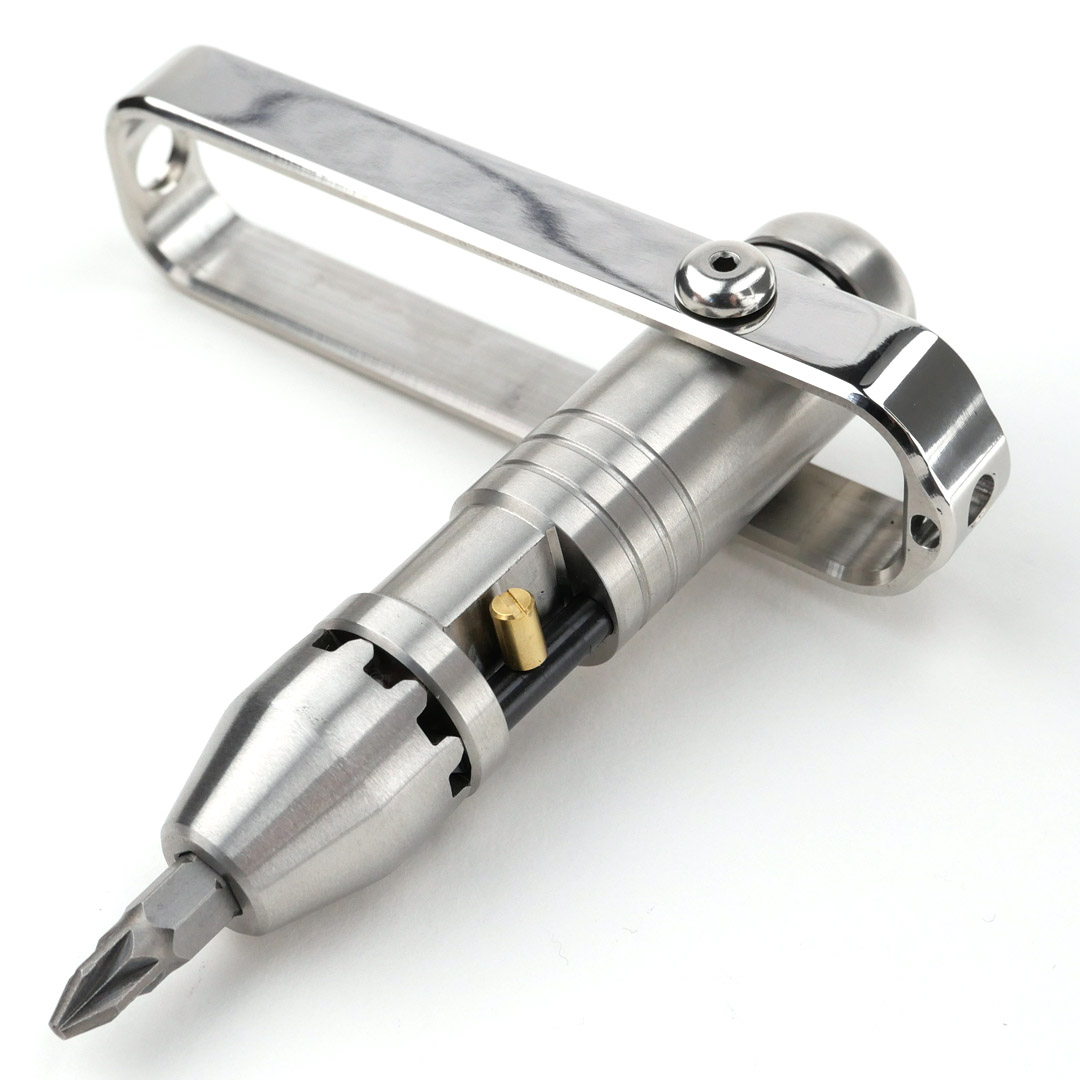
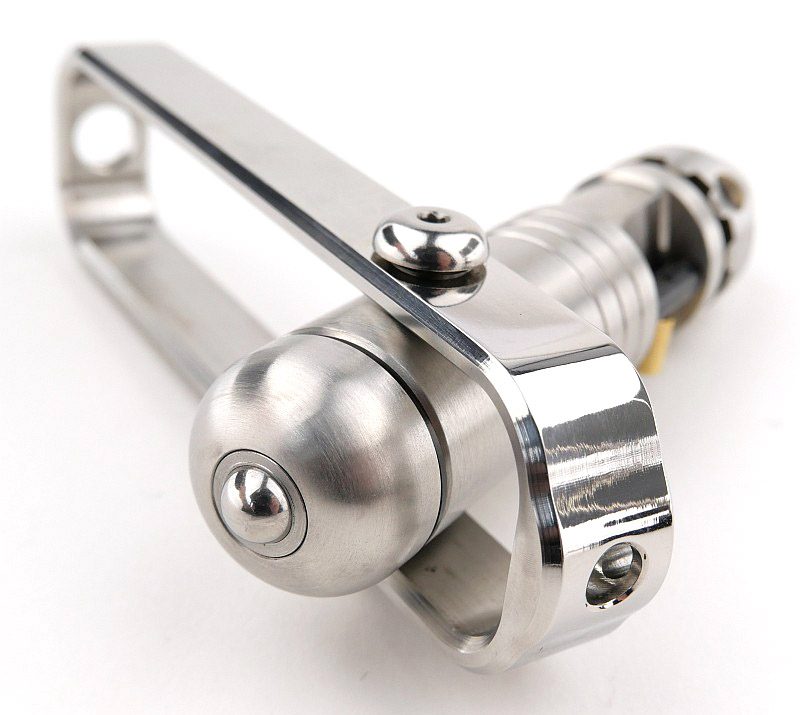
In this MetMo Pocket Driver review find out all about a super functional tool, and engineering masterpiece, revived and miniaturised by MetMo to create an EDC screwdriver unlike anything else. Based on one of the earliest forms of the ratchet screwdriver, originally patented by Conrad Baumann under the brand name Baumann-Weltrecord, in the 1920’s. Brought back to life, and to your pocket, by MetMo; using hardened materials and state of the art machining techniques to ensure the quality and reliability for which the original was known.

What’s in the box?:
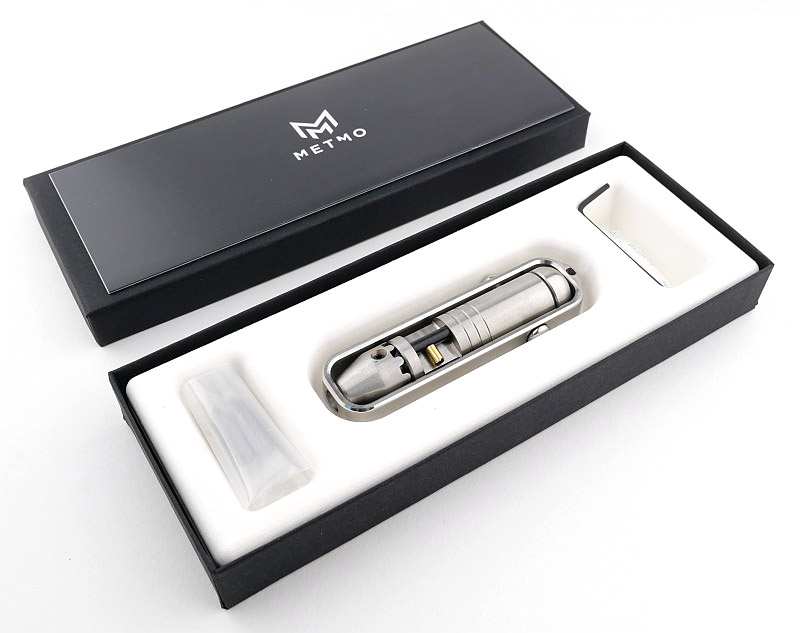
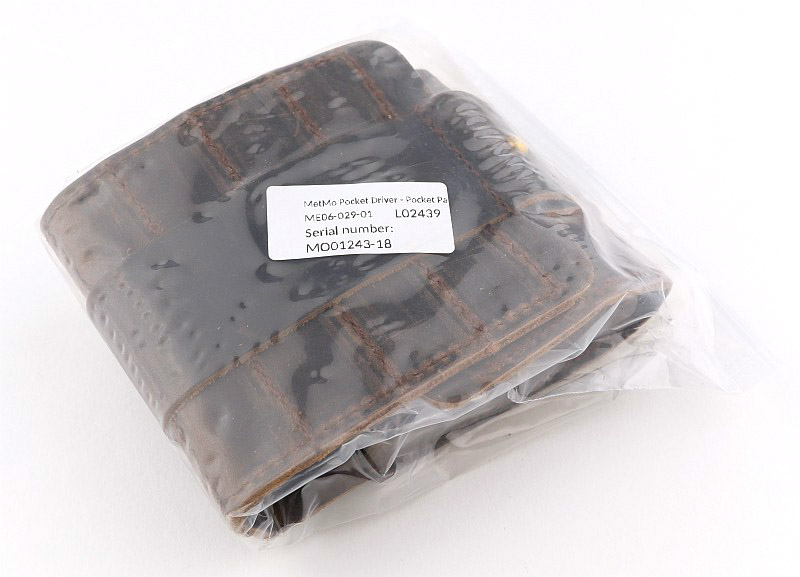
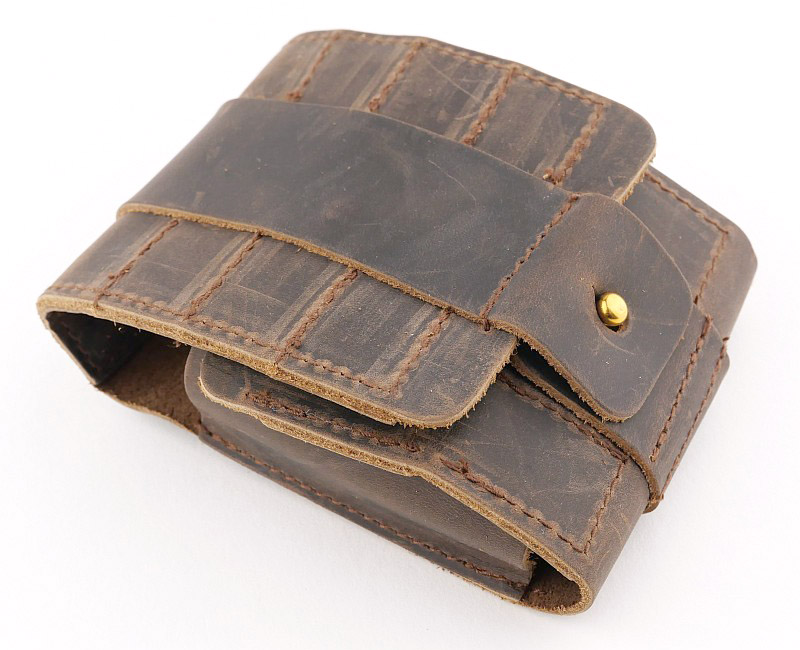
Shown here are the Pocket Driver and the Pocket Pack accessory. Each of these are covered in detail in the following sections.


A good look round the Pocket Pack – Things to look out for here are:

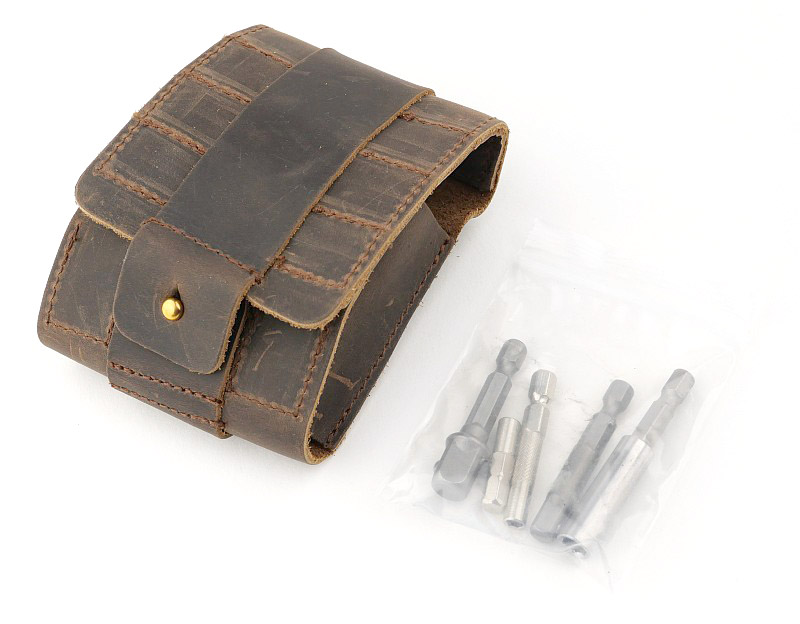
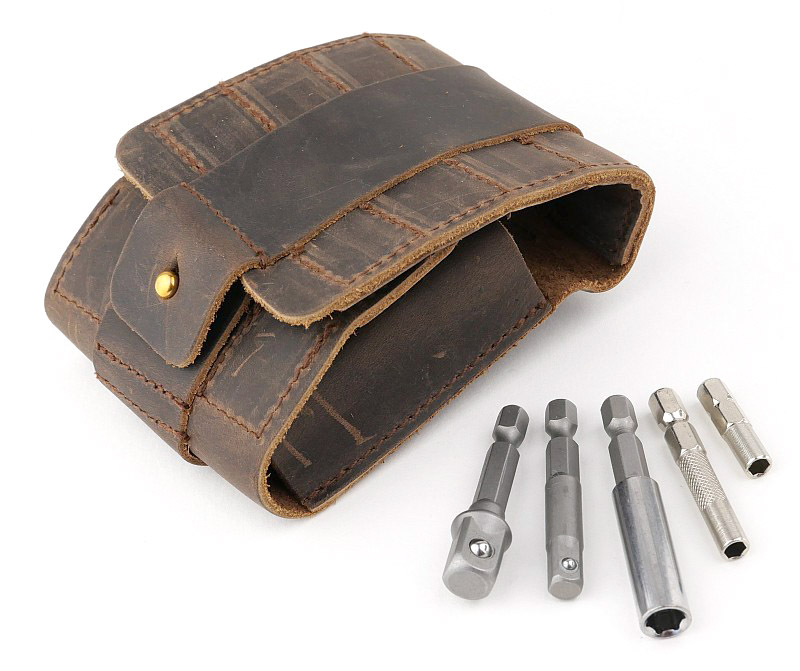
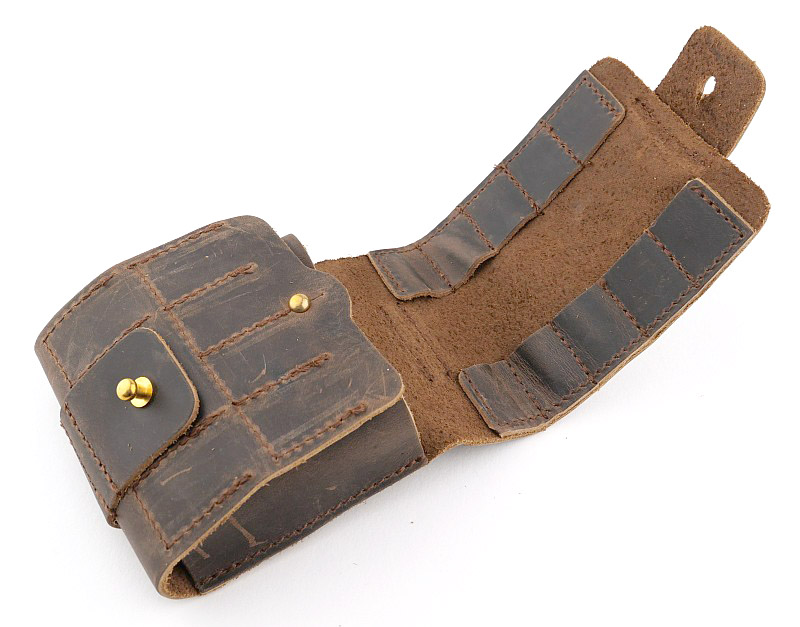
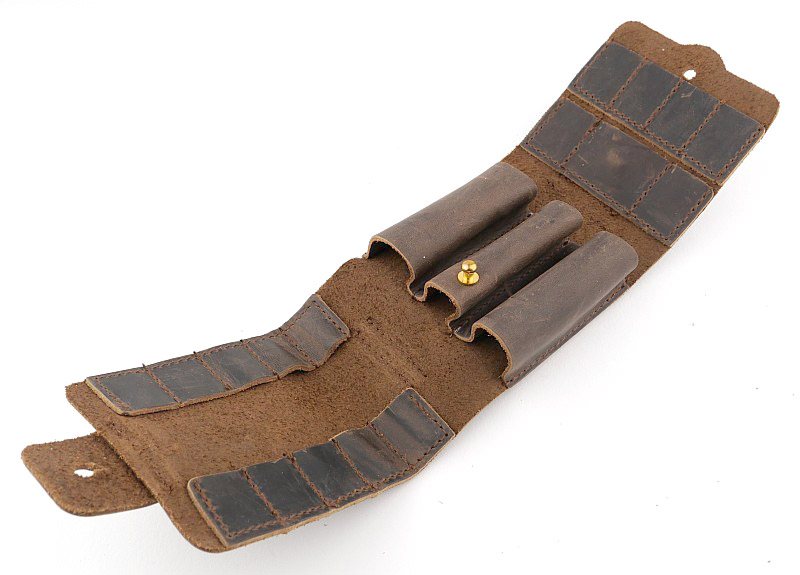
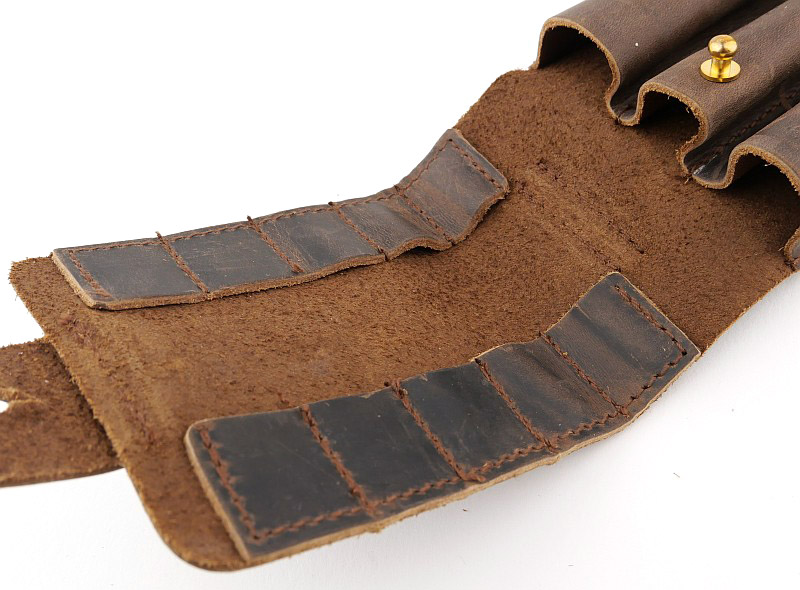
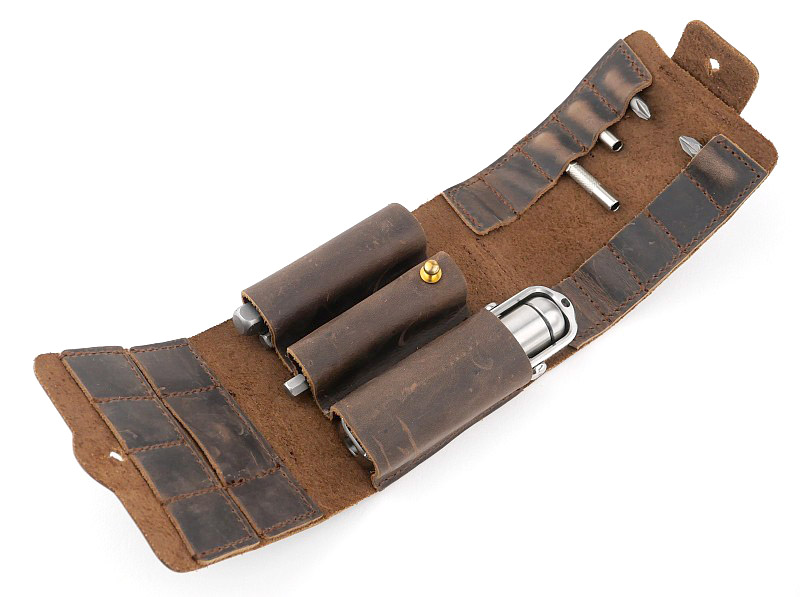
One of the optional accessories for the Pocket Driver, the Pocket Pack holds the Pocket Driver, plus a number of adapters and bits, so you can put together the most useful tool set for your needs.
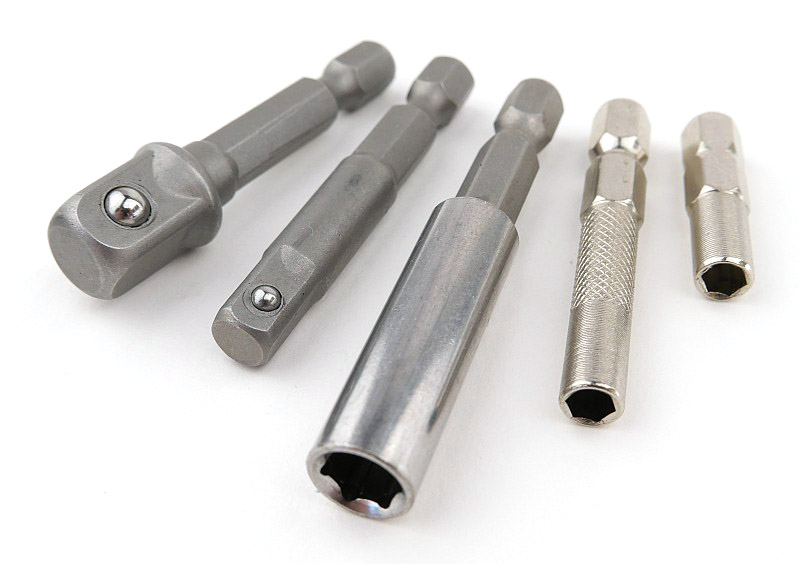
Included with the Pocket Pack are five bit holders/adapters from the 4mm precision bit adapter, going up to a 3/8″ square drive socket.
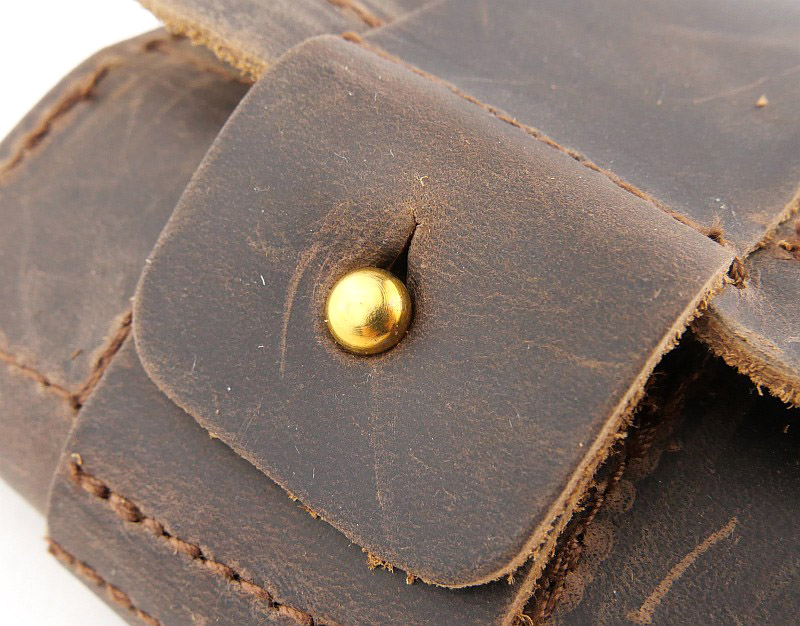
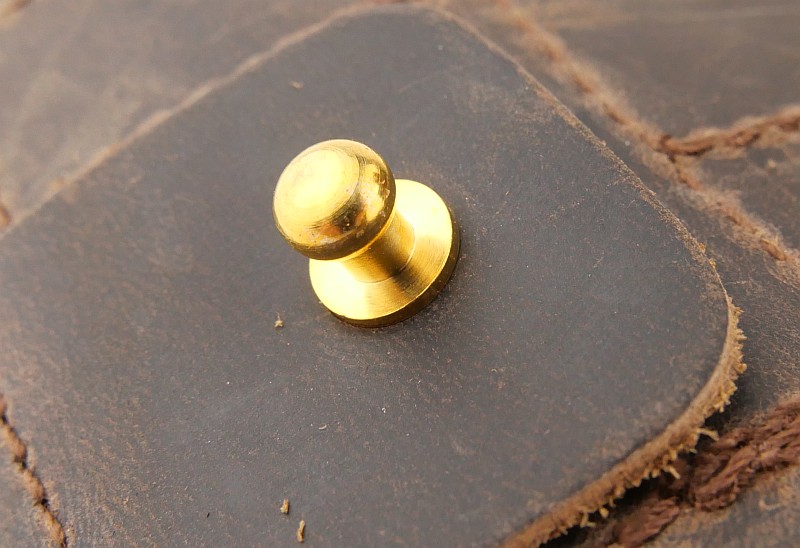
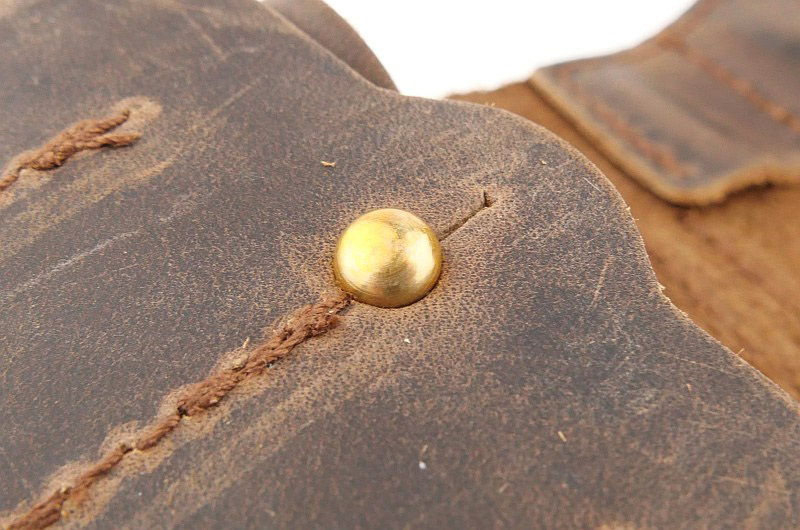
Made from leather with plenty of bit holder pockets, the bi-fold design uses brass post fittings to keep the pack neatly folded.
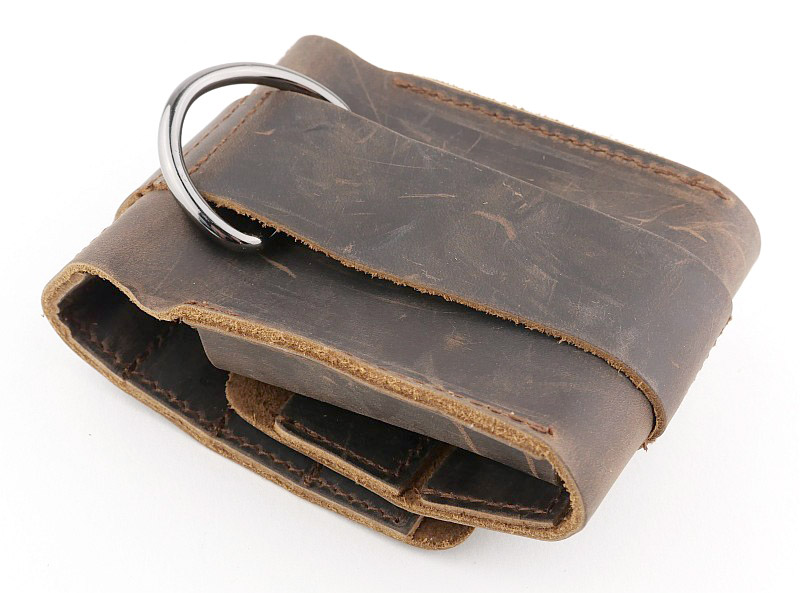
It also has a belt loop and D-loop hanger on the back so you can choose the best way to carry it.


A good look round the Pocket Driver – Things to look out for here are:

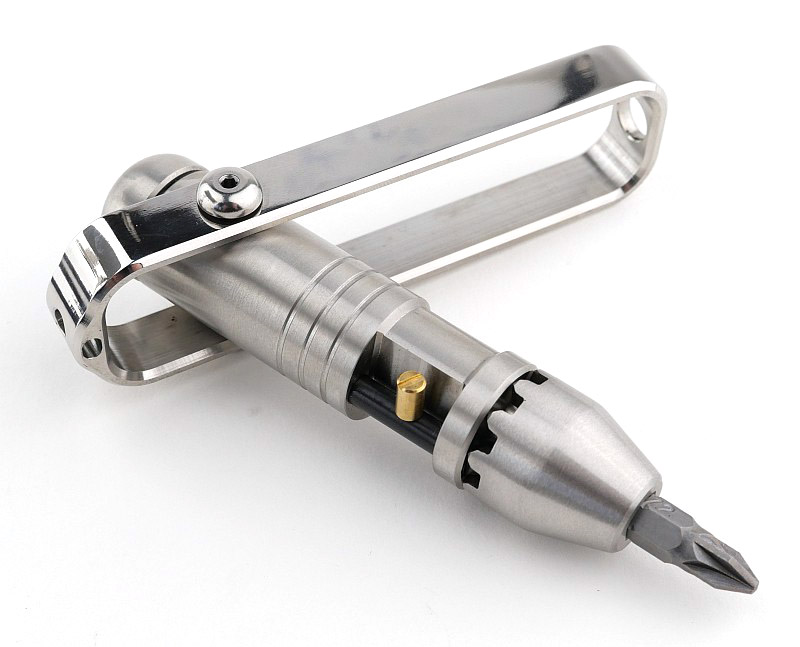
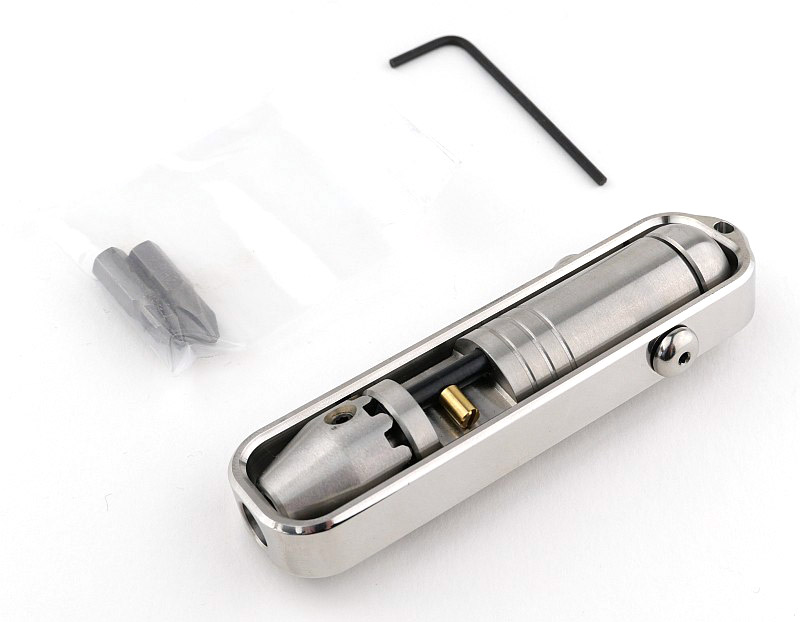
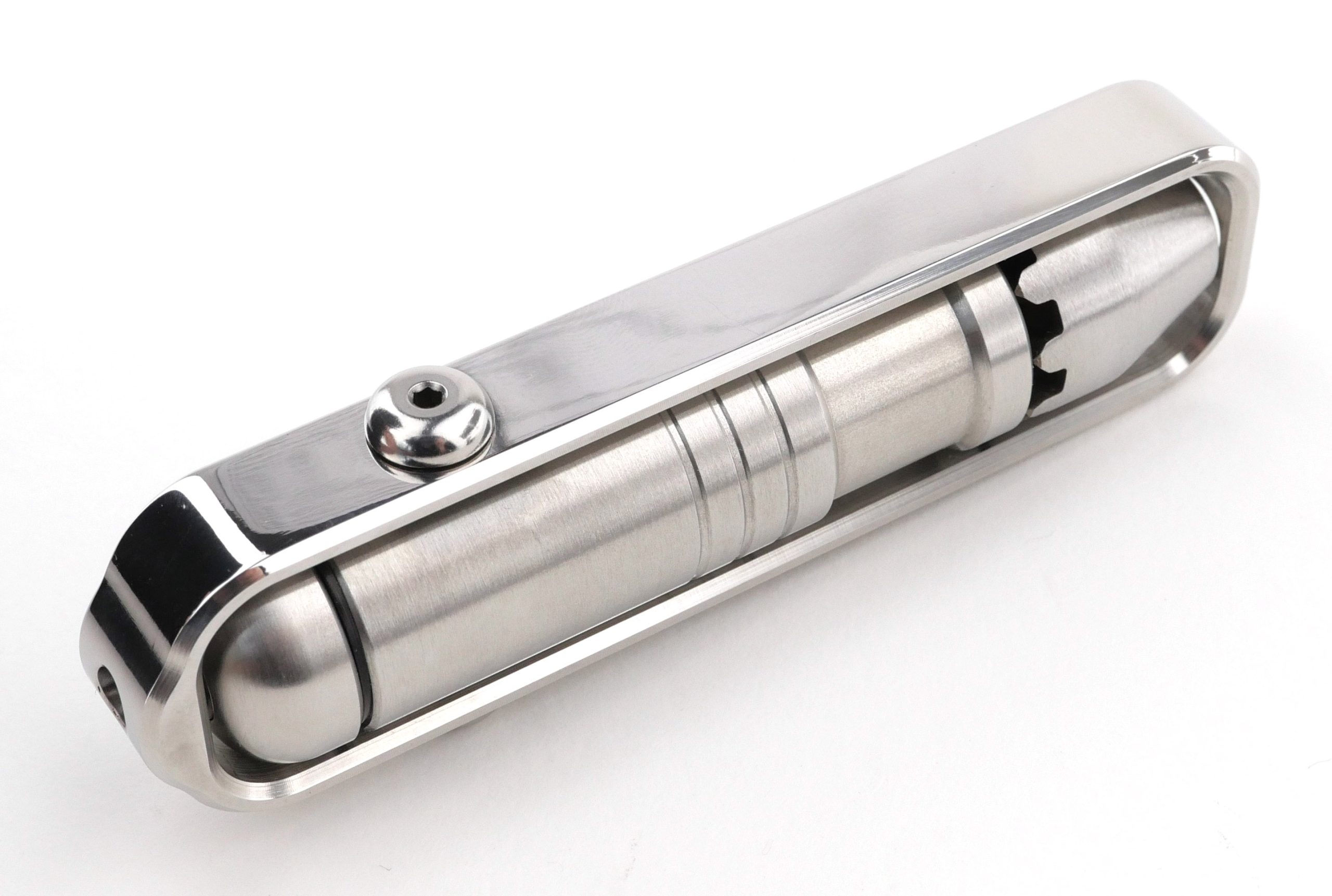
This is the full stainless steel version of the Pocket Driver. There are three variants from the lightest with aluminium body and handle, through to this version being the heaviest due to the stainless steel body and handle.

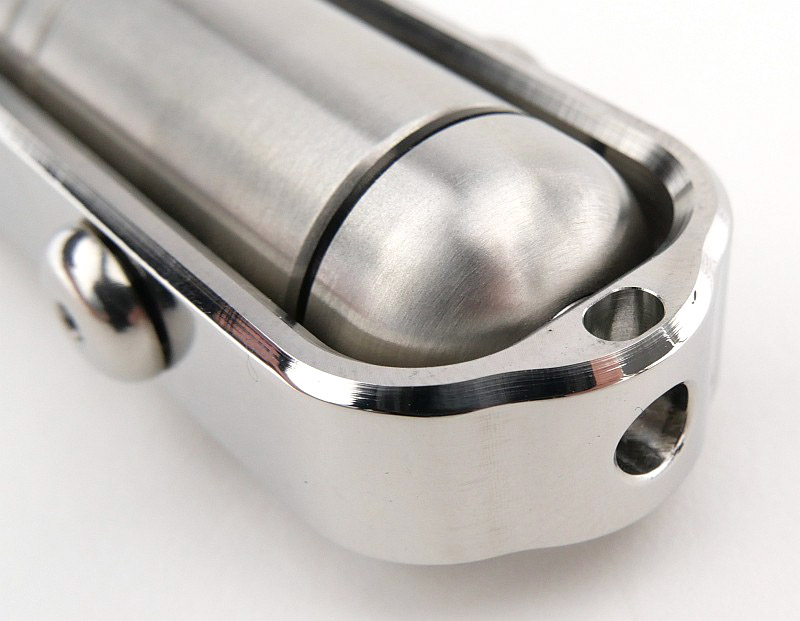
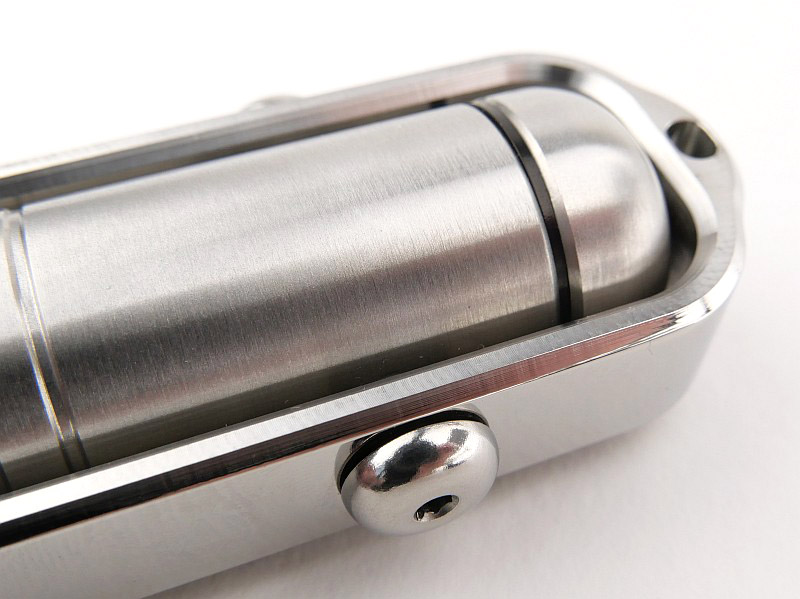
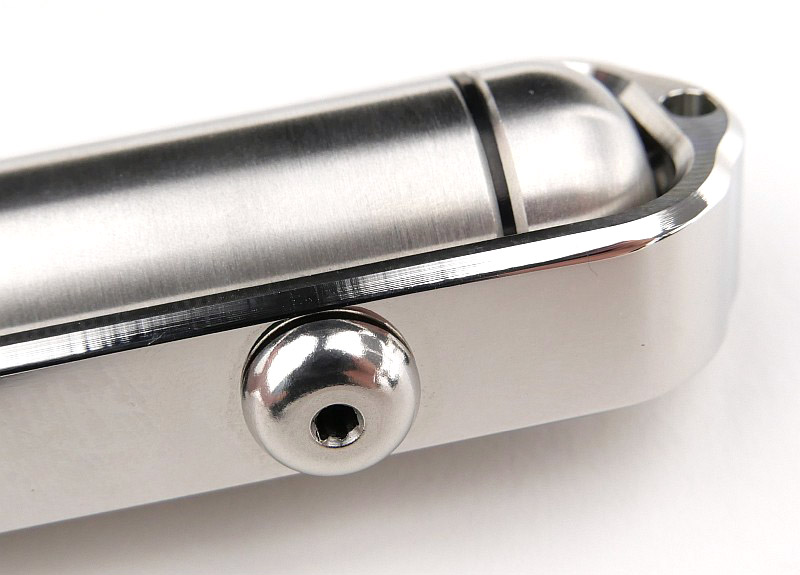
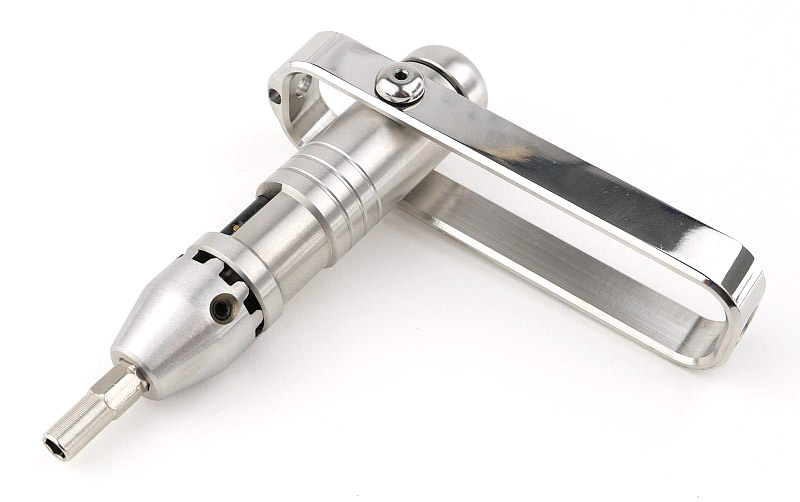
Immediately you are struck by the quality of finish with the folding handle, glorious in its pristineness. Though simple in concept, a folding handle ratchet screwdriver, as you look over the Pocket Driver the designed-in finesse is captivating.
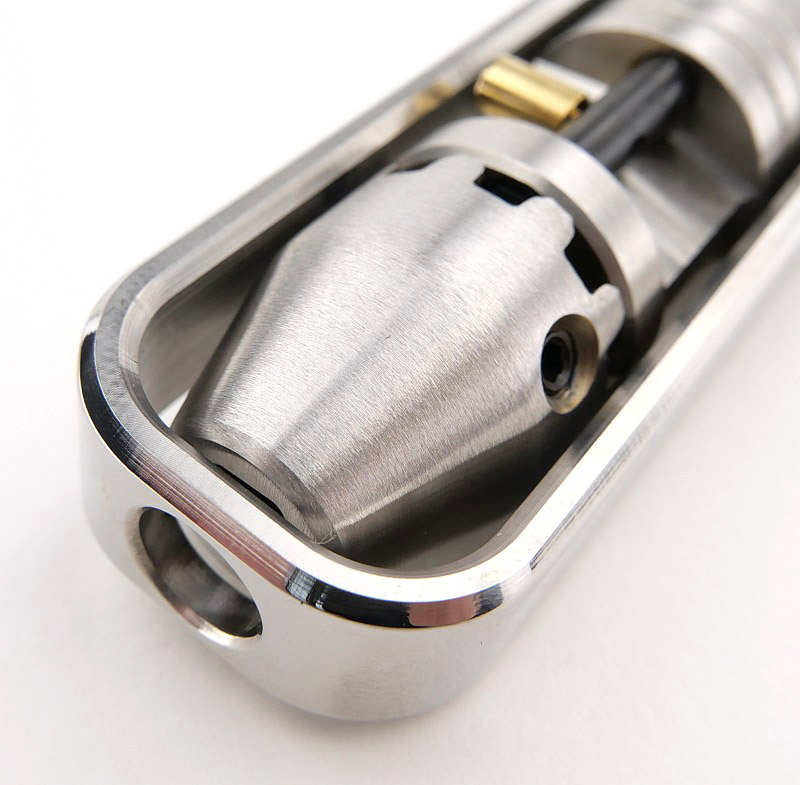
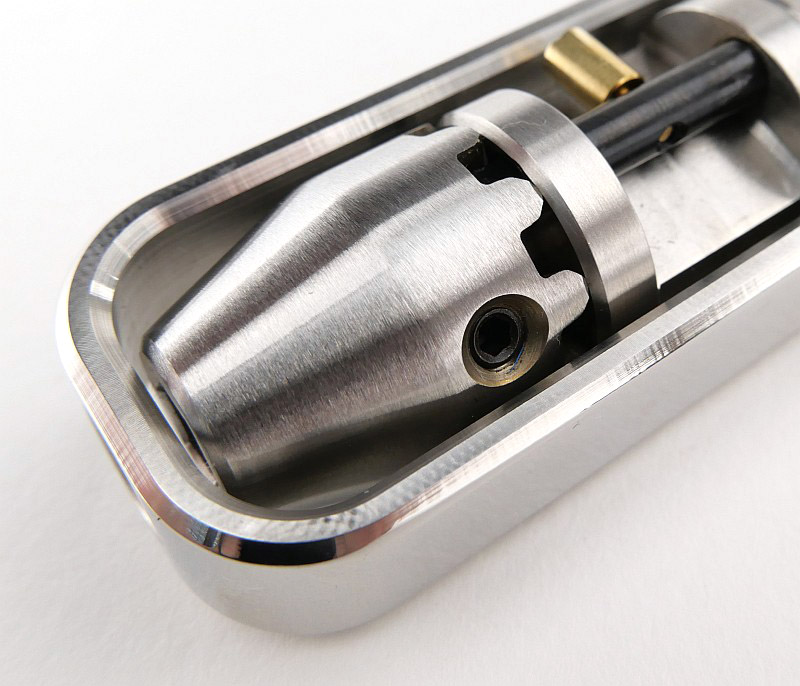
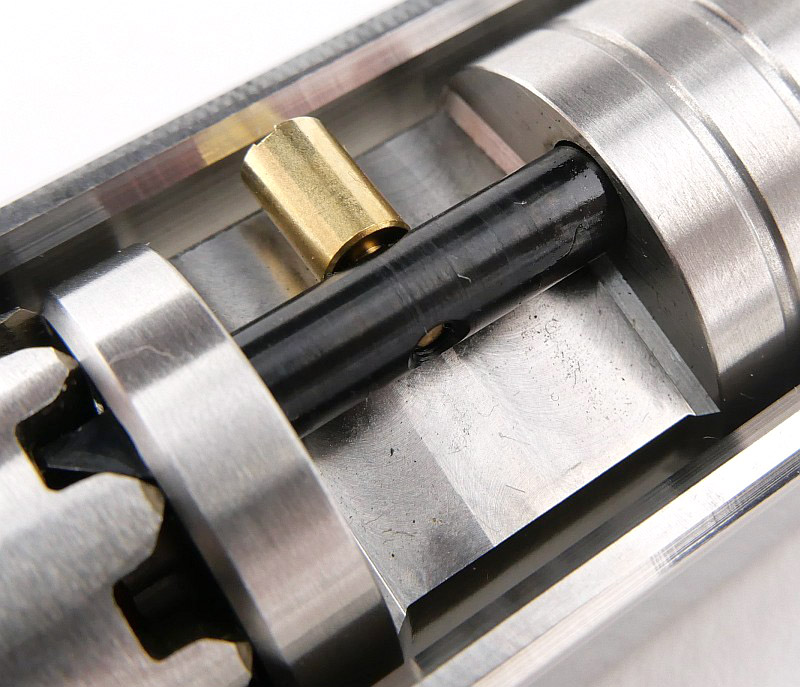
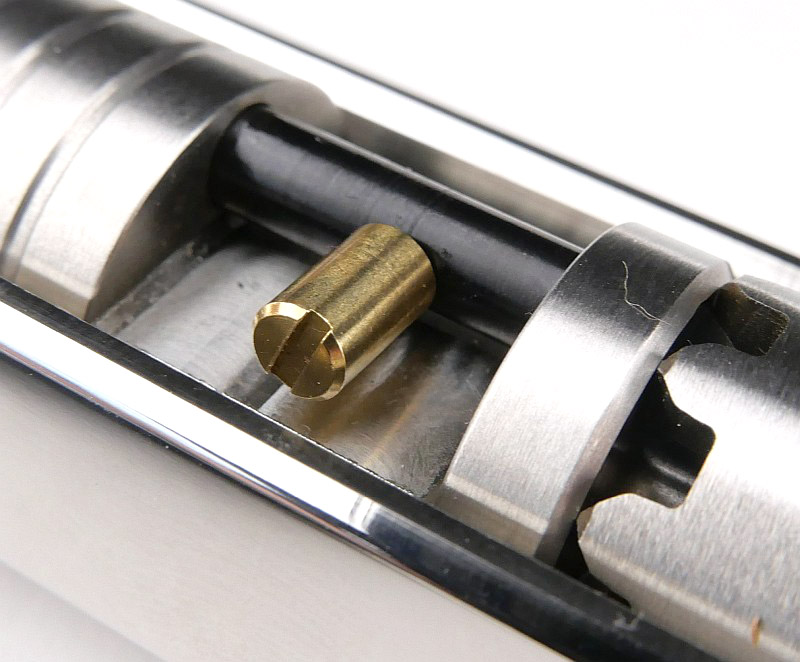
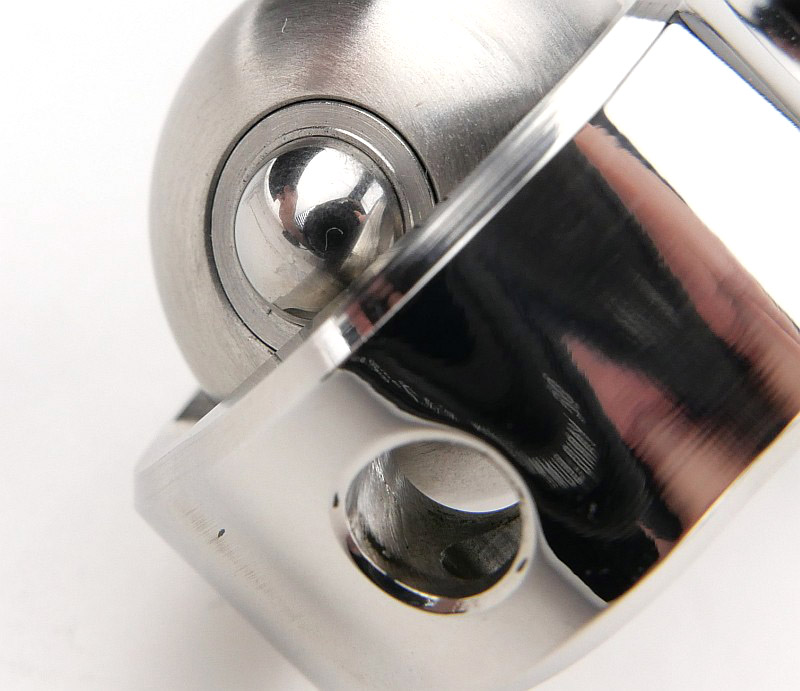
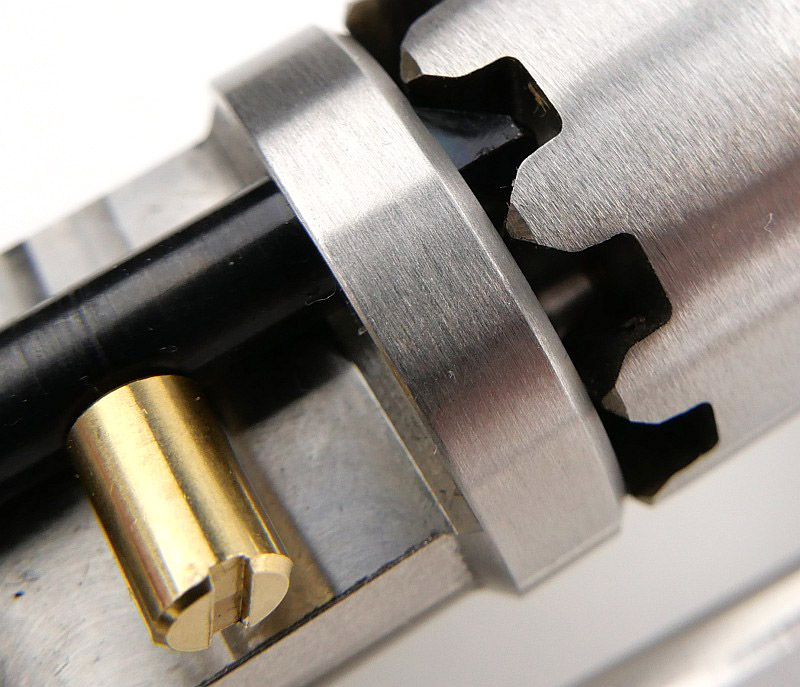
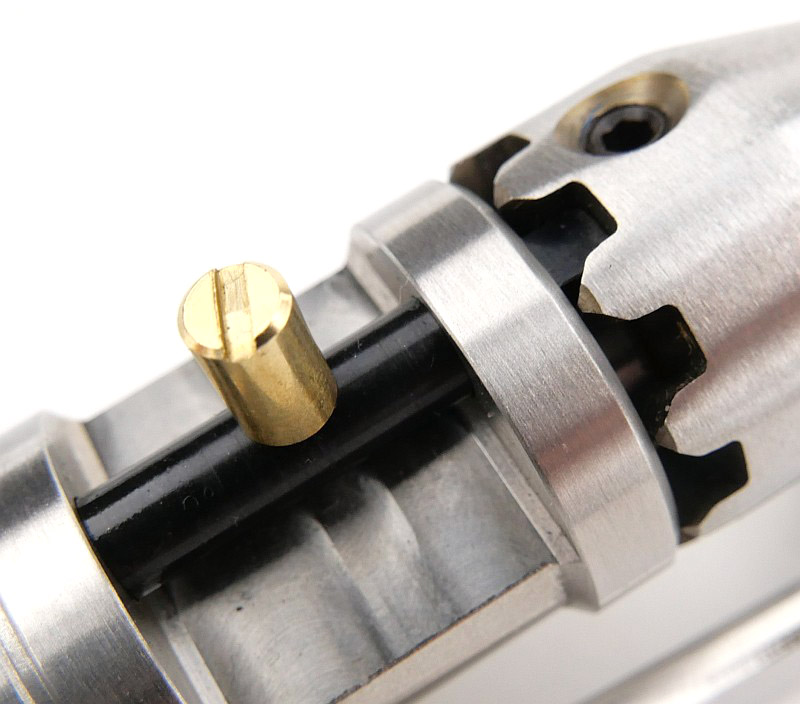
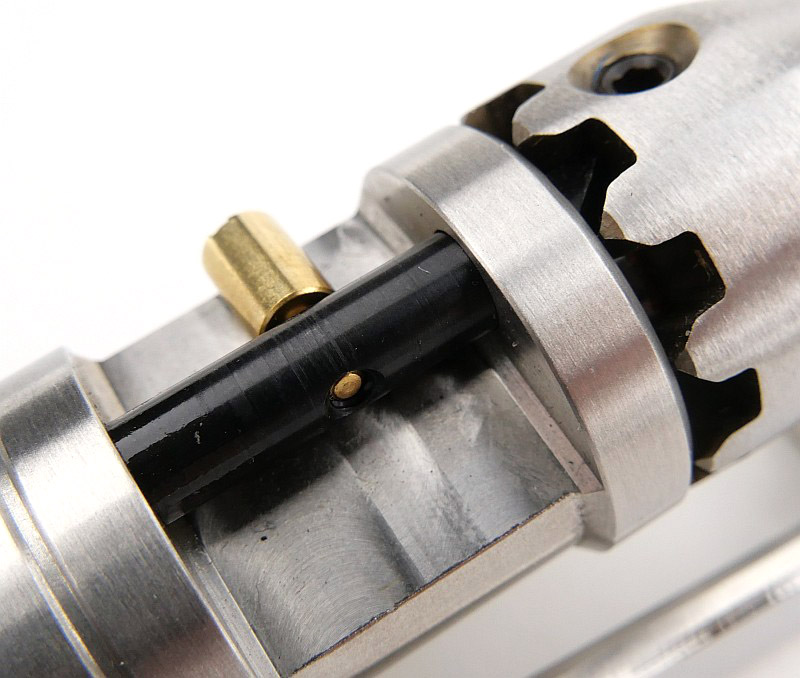
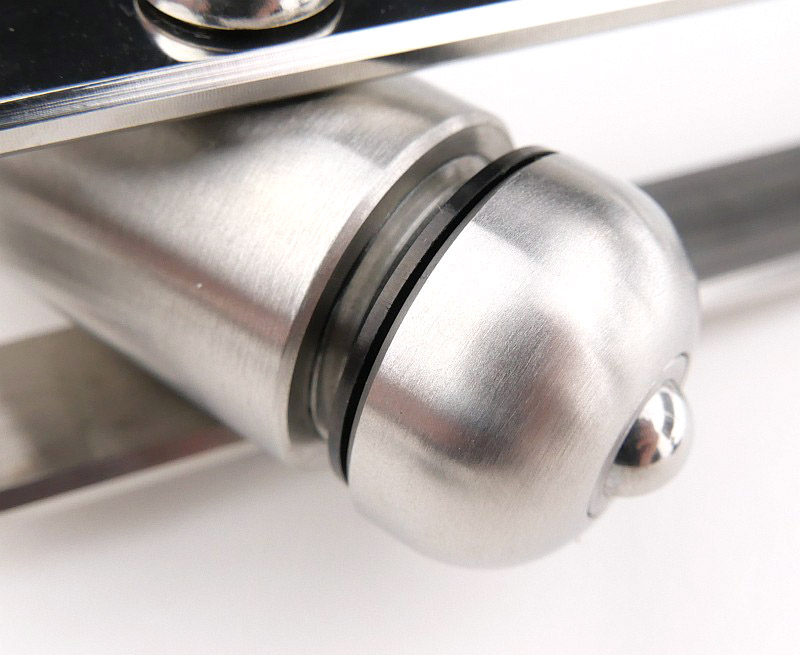
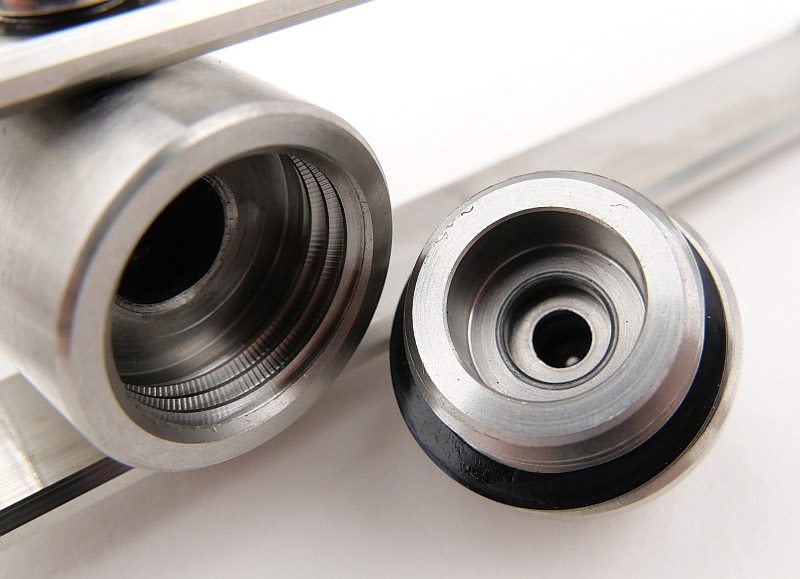
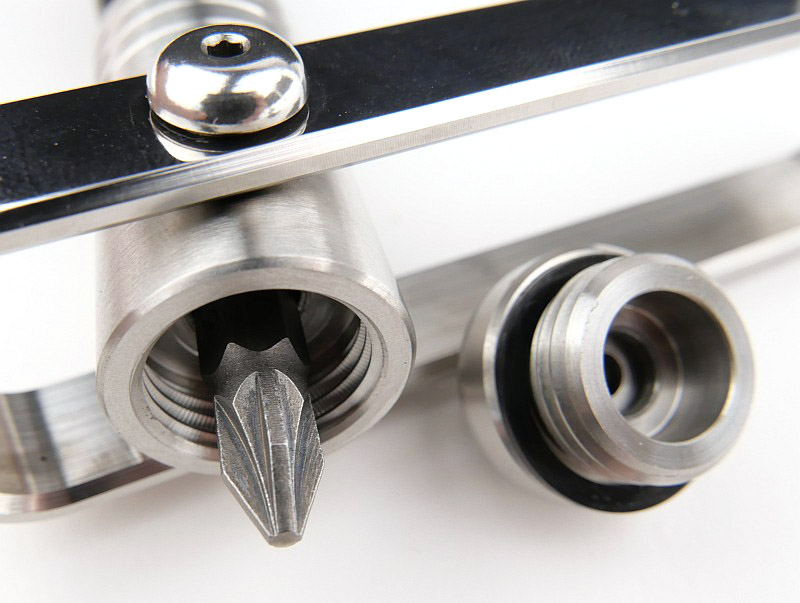
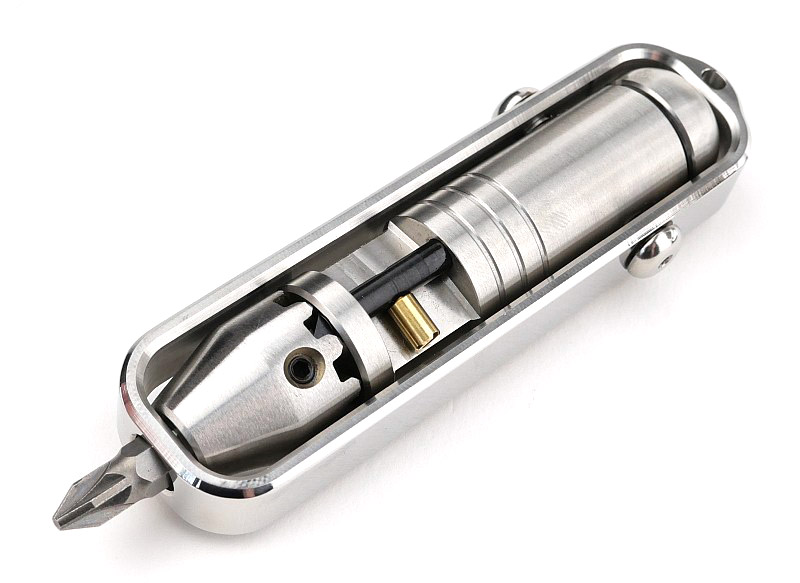
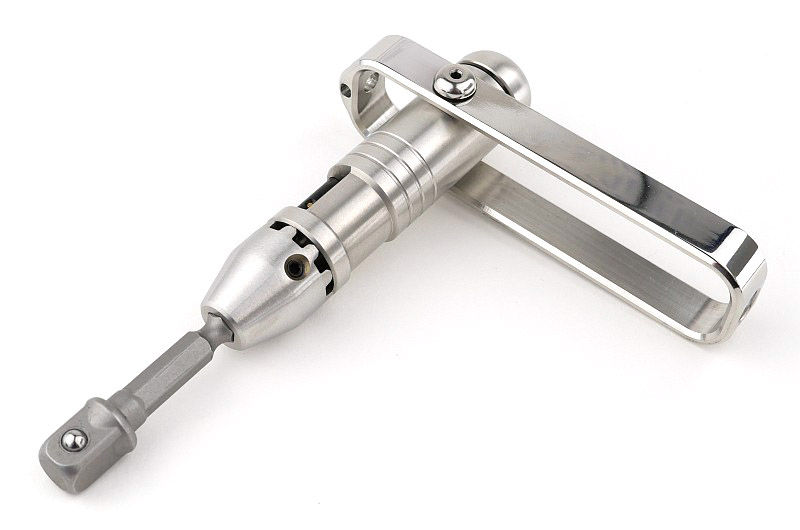
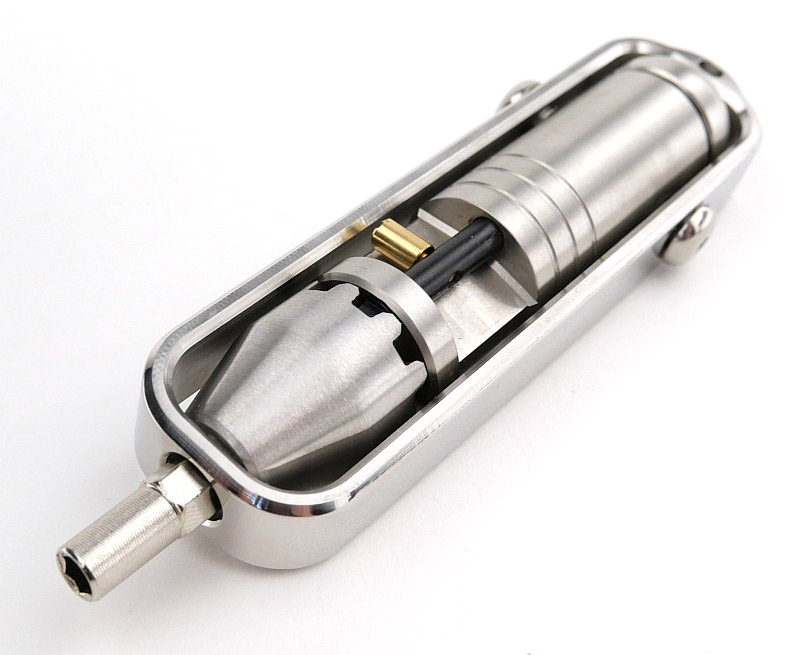
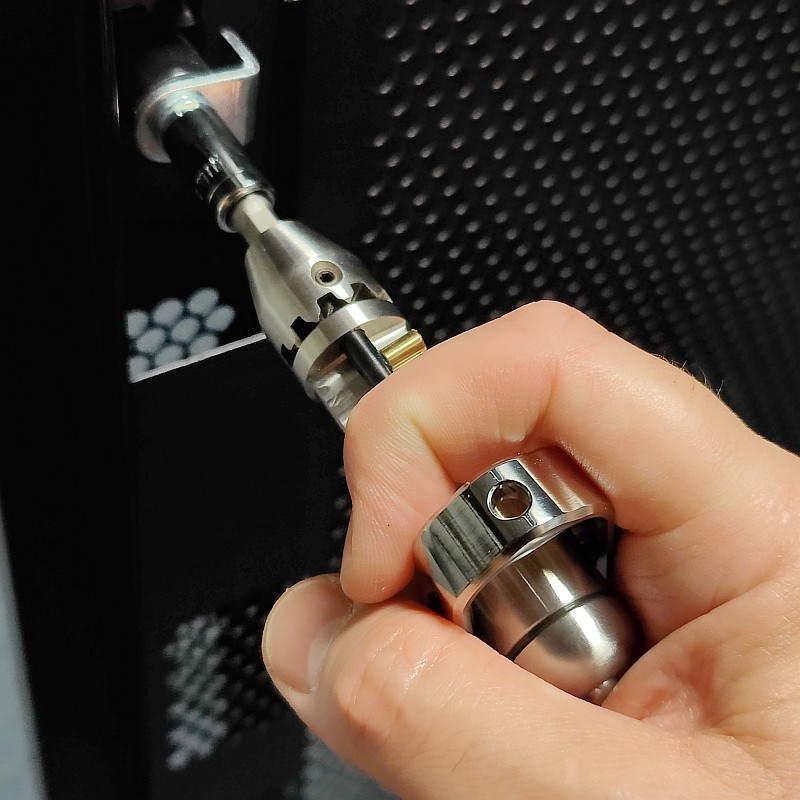
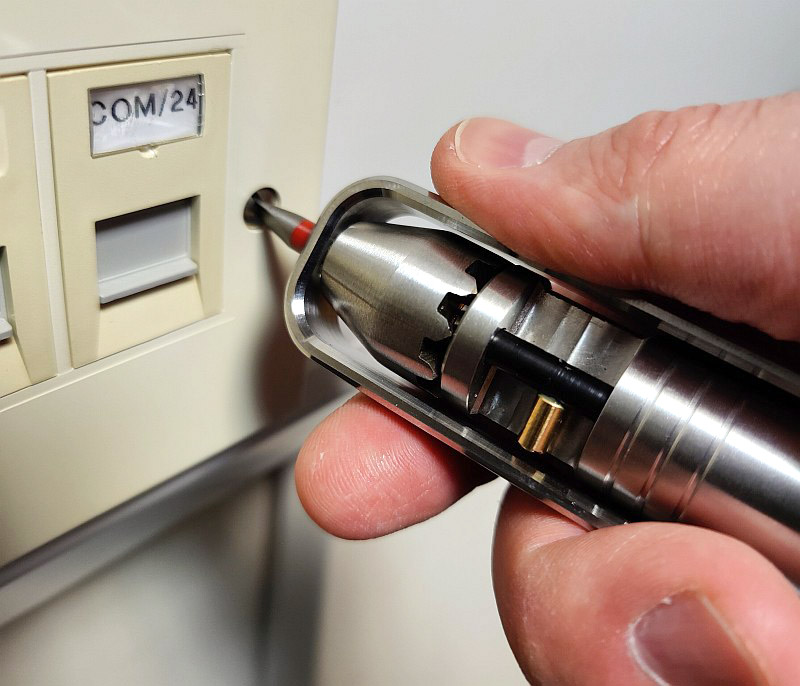
A small lanyard hole next to the handle detent hole. The rounded pivot bolts. A pass-through hole in the handle so when folded bits can be fitted, and the Pocket driver used as a compact straight screwdriver. Then the almost steampunk visible ratchet pin, direction lever and those ratchet teeth themselves. The bit storage compartment cover, incorporated in a such a way that with the handle folded it can’t come loose, completes the tool.


Just how powerful is it?:
Included in MetMo’s specifications for the Pocket Driver is its maximum torque (turning force) of 17Nm. Though only a rough estimate, it is considered that a person can apply up to 10Nm torque when using a standard screwdriver (which also varies depending on the handle shape). The Pocket Driver has a fold out handle, and this is where that extra turning force comes from.

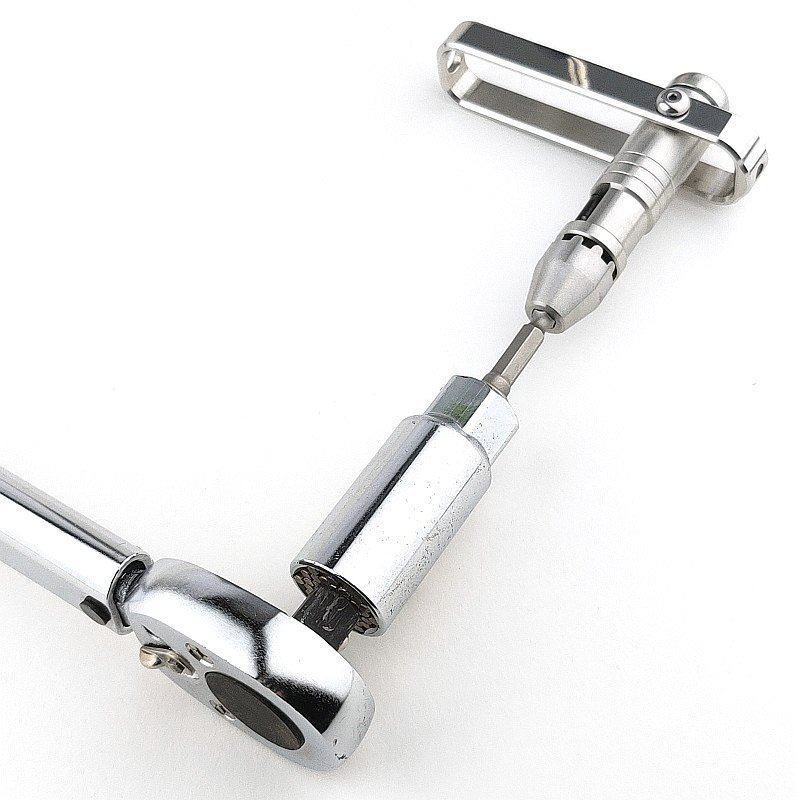
Not having an actual torque meter, I still wanted to attempt to measure how much force I could apply. As it happens, the torque wrench I have goes as low as 10ftlbs and adjusts in 1ftlb increments. So instead of taking a measurement, I could attempt to make the wrench ‘click’ on its preset torque and therefore show I had achieved that turning force. Though there isn’t a female-female 1/2″ square drive adapter, I have a ‘universal socket’ that would actually engage with the 1/2″ square drive of the torque wrench, meaning I was good to go with this test.
Working up from 10ftlbs, I found that after the success at 13ftlbs, I had maxed out and couldn’t ‘click’ 14 (all testing was with me holding both Pocket Driver and torque wrench, so I am sure I could have gone even higher if I was only holding the Pocket Driver).
This converts to a healthy 17.63Nm. Good job MetMo!

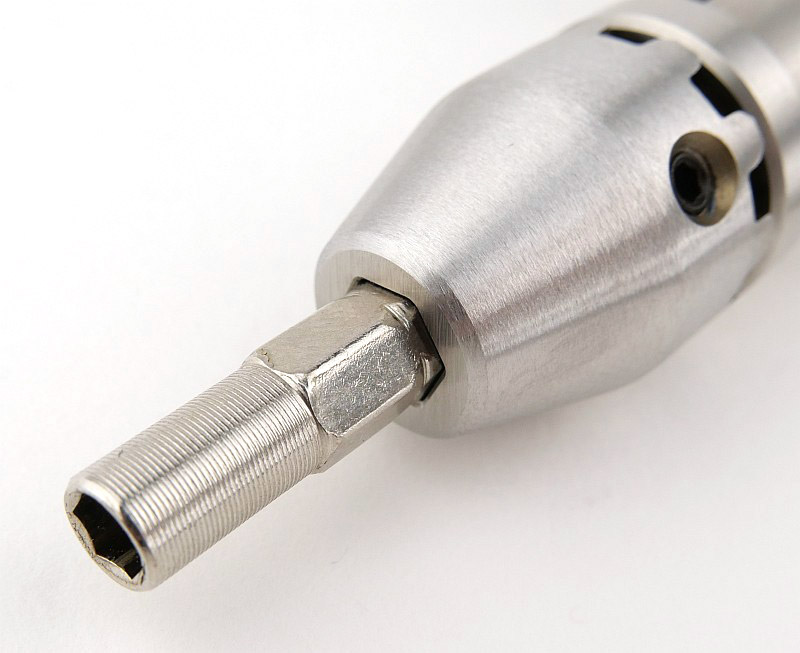
Also included in this gallery are some across-the-flats measurements taken with a vernier calliper to check the size of the hex bit holder socket and various bits/adapters.


What it is like to use?

What the Pocket Driver excels at are actually the heavier jobs rather than the smaller ones, despite its compact size. I say this for a few reasons in reference to the following gallery.
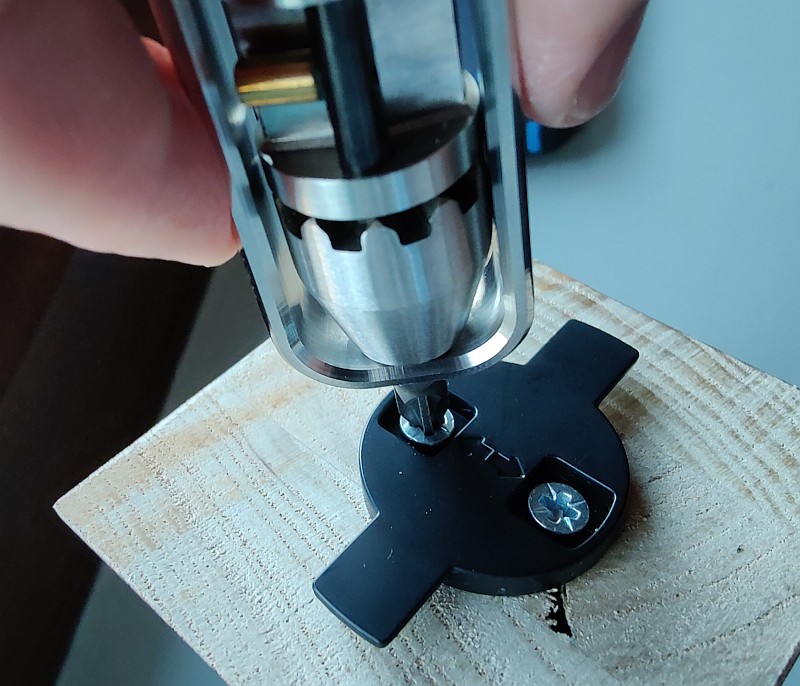
1/4″ standard bits (and in the first photo a PZ2 bit), which is a typical bit size likely to need a reasonable force to get tight, or undo. Using it with the handle folded, or deployed for much more force, makes good use of the ratchet.
Jumping up to the 3/8″ square drive that is included with the pocket pack, and realistically you will be using the fold-out handle to good effect.
Then we have the 4mm precision bit adapter, the type of bits used in this go down to 000 Phillips and T2 Torx, amongst others, where the side handle would guarantee stripped threads or heads. In fact even in-line, these sizes of screw won’t have enough resistance to turning to actually activate the ratchet action. If you do use the precision bit 4mm adapter you’ll be spinning the entire Pocket Driver like a fixed screwdriver; it’s no fault of the Pocket Driver, only a limitation of using it for fasteners that small.


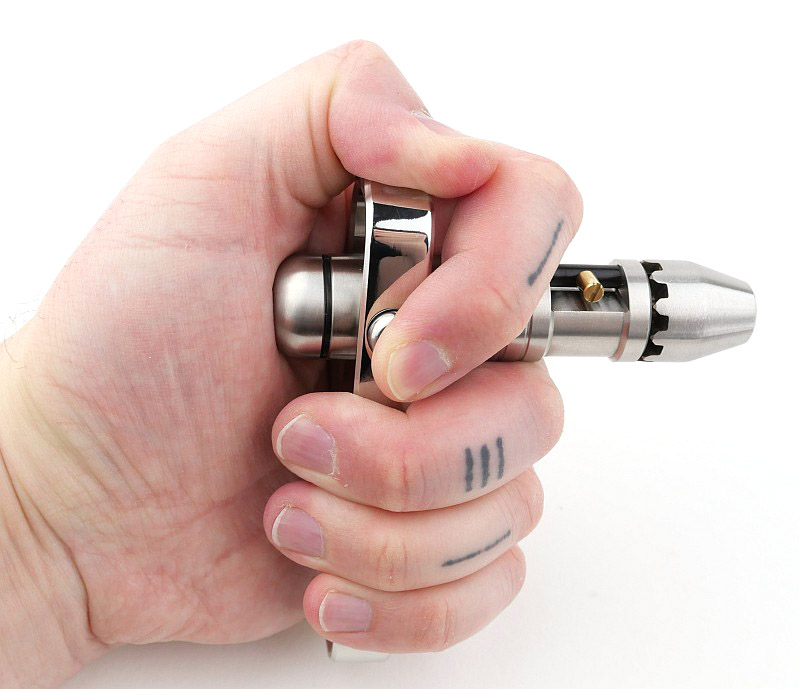
For scale I wear XL size gloves, and although this is the smaller version of the Driver tool from MetMo, you can see it comfortably sits in the hand with the folding handle being a good size to provide plenty of leverage.


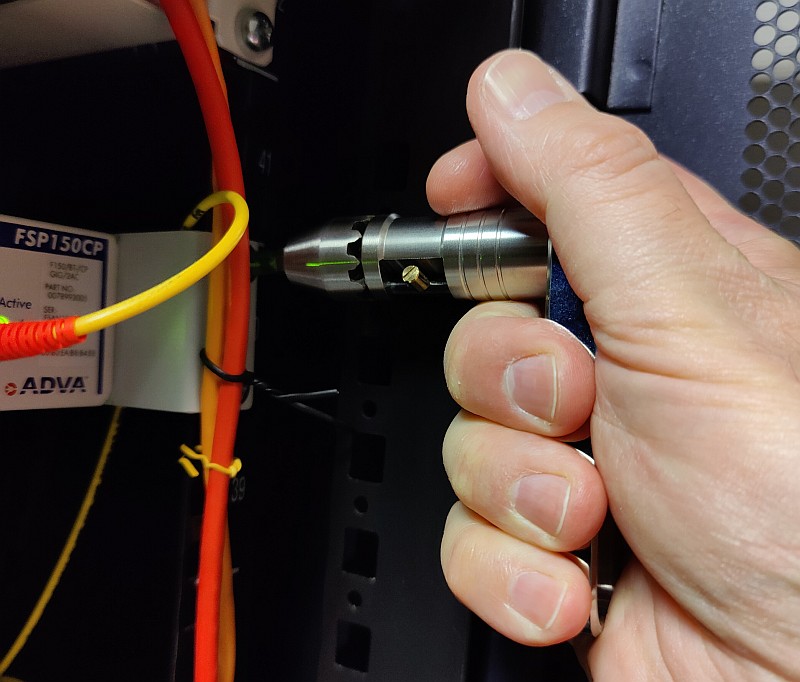
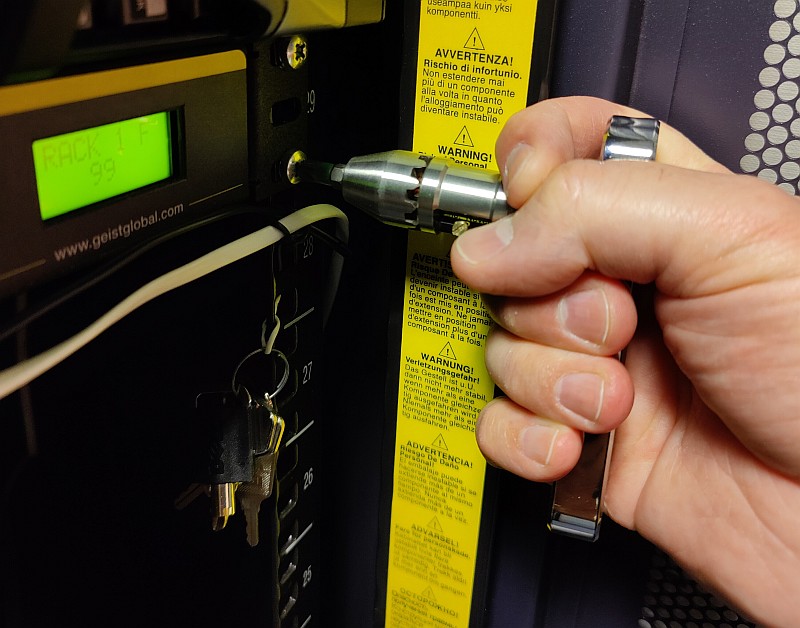
A pleasure to use, and working with any and all the bits you already have, here are just some of the jobs I’ve used the Pocket Driver for with 1/4″ bits, sockets, and even a hook driver bit. All that was asked of it was completed with ease.


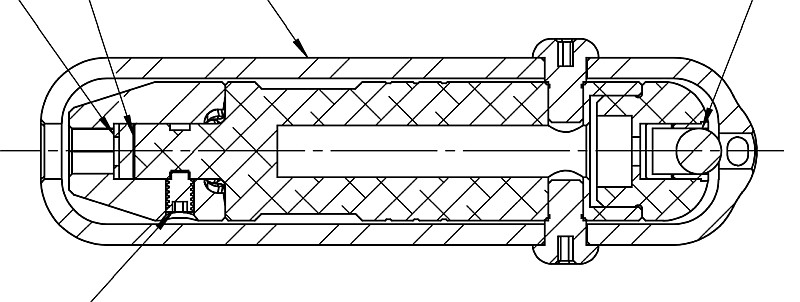
One final point, being a tool that will appeal to engineering enthusiasts, MetMo offer an optional extra to allow your appreciation to reach new heights – a PDF of the engineering drawings. Showing all details hidden away inside the Pocket Driver, this is an excellent way to satisfy your curiosity of what makes it tick.

Review Videos

Starting with a short format sixty second review:


Onto a full video review covering many more details:


Review Summary

The views expressed in this summary table are from the point of view of the reviewer’s personal use. I am not a member of the armed forces and cannot comment on its use beyond that covered in the review.

Something that might be a ‘pro’ for one user can be a ‘con’ for another, so the comments are categorised based on my requirements. You should consider all points and if they could be beneficial to you.

I’m starting with what doesn’t work so well, so I can finish on a more positive note.

_______________________________________________
What doesn’t work so well for me
_______________________________________________

Storage for only two bits.
The ratchet direction lever can be fiddly to access with the handle folded.
Ratchet lever is easily knocked out of place when set to the fixed position.

_______________________________________________
Things I like
_______________________________________________

Beautifully engineered.
High torque driving (17.63Nm).
Compatible with all 1/4″ hex bits.
Pleasing ‘action’ you won’t want to put down.
Choice of optional accessories.
Pocket Pack allows you to build a tool set around the Pocket Driver.
Seriously hard working tool – not just pocket jewellery.
Stainless steel construction for long life.

 
Discussing the Review:
Something new – will it work? A Tactical Reviews Subreddit.
TacticalReviewsChat on Reddit
Please visit there and start/join the conversation.
Light Review: Nitecore EDC33 and EDC35

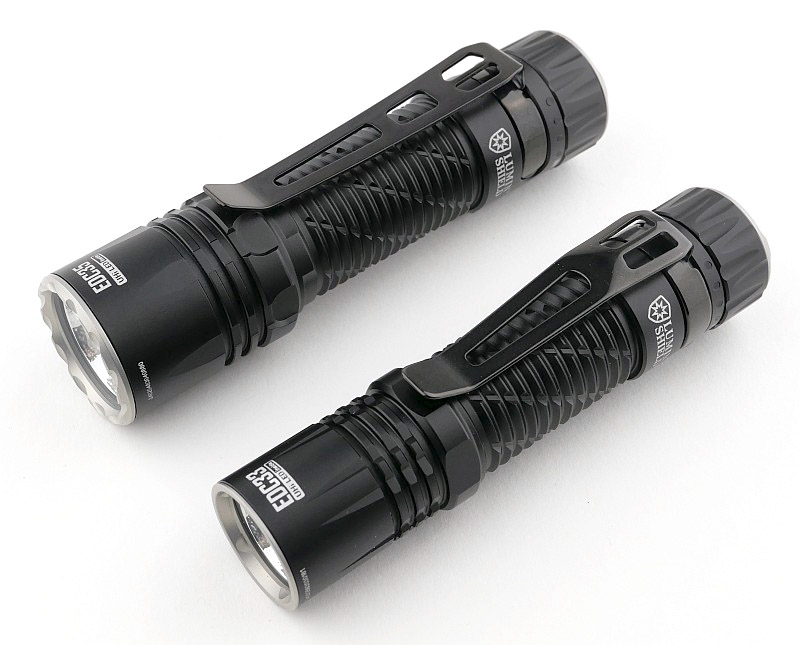
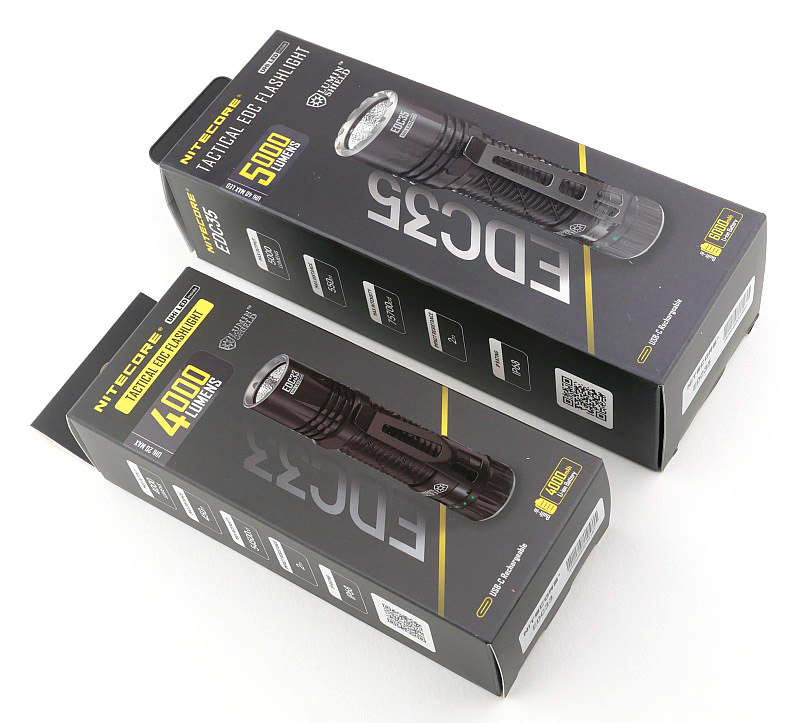
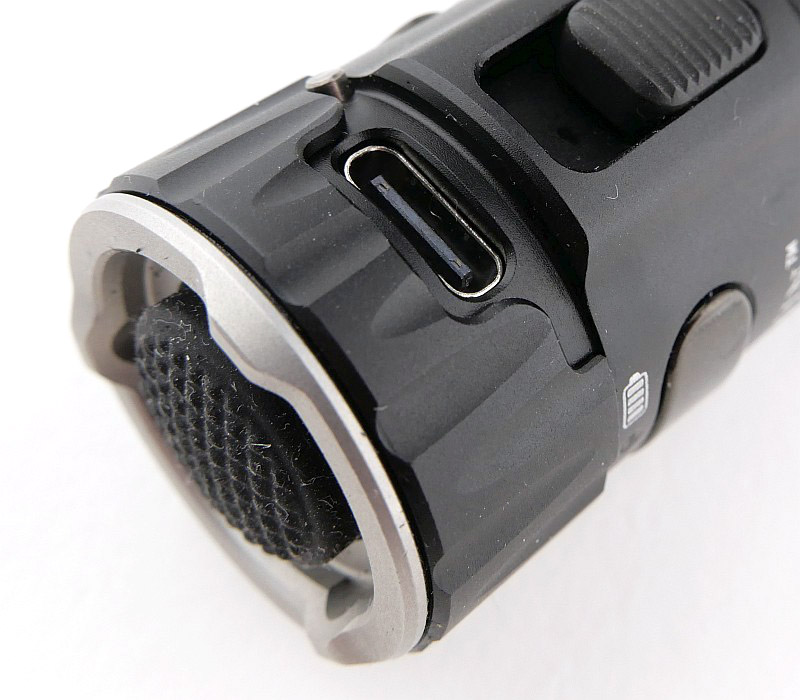
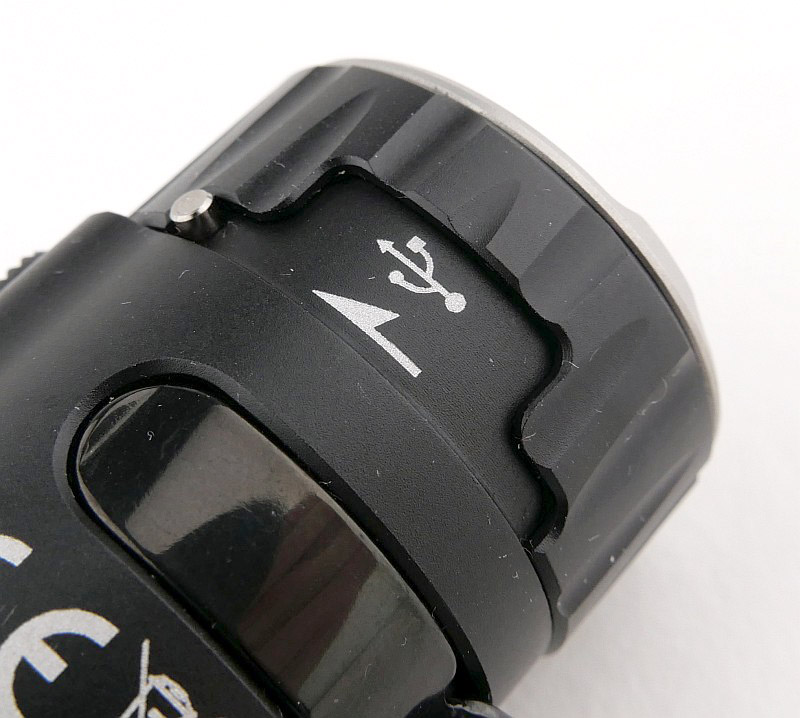
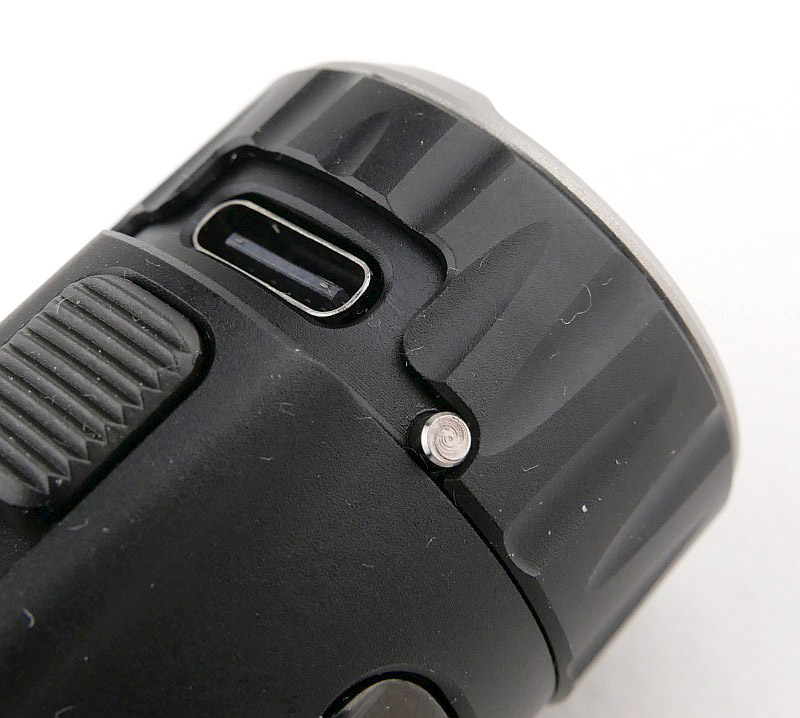
This is a detailed review of the Nitecore EDC33 and EDC35, two new Tactical EDC torches / flashlights featuring the NiteLab UHi 20 Max LED and UHi 40 MAX LED respectively. Each are powered by a built-in li-ion battery with USB-C charging port under a rotary cover.

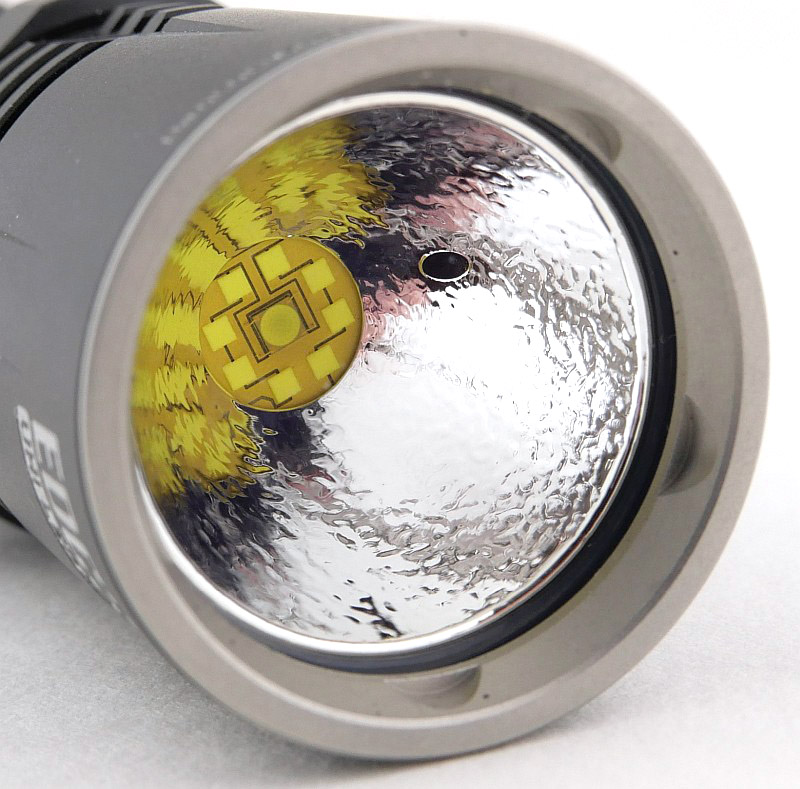
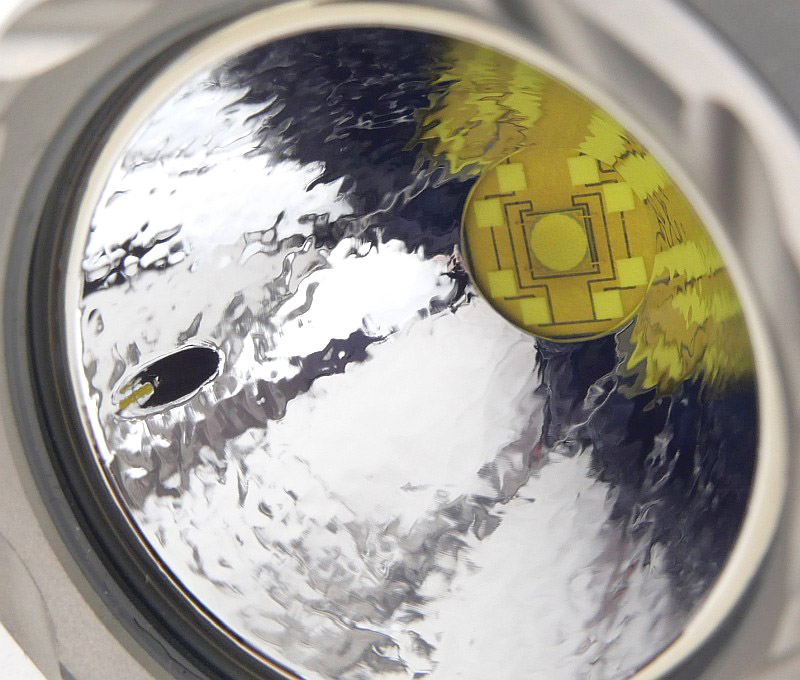
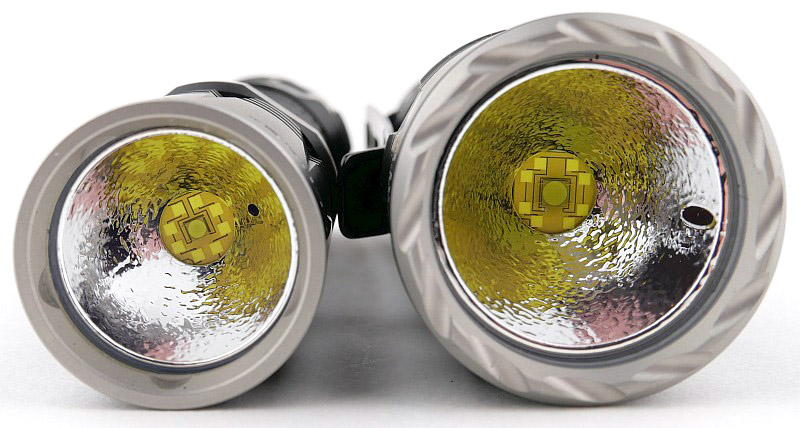
The UHi MAX LEDs combine a small but high-intensity main core with 8 auxiliary cores arrayed together into a single LED, offering long-range coverage, extreme brightness and the ability to seamlessly switch between spot and floodlight.

The “Lumin Shield” mode blasts an stunning 4000/5000 lumen maximum output wall of light.

Review Videos

Starting with a short format sixty second review:


Onto a full video review covering many more details:


What is in the box?:
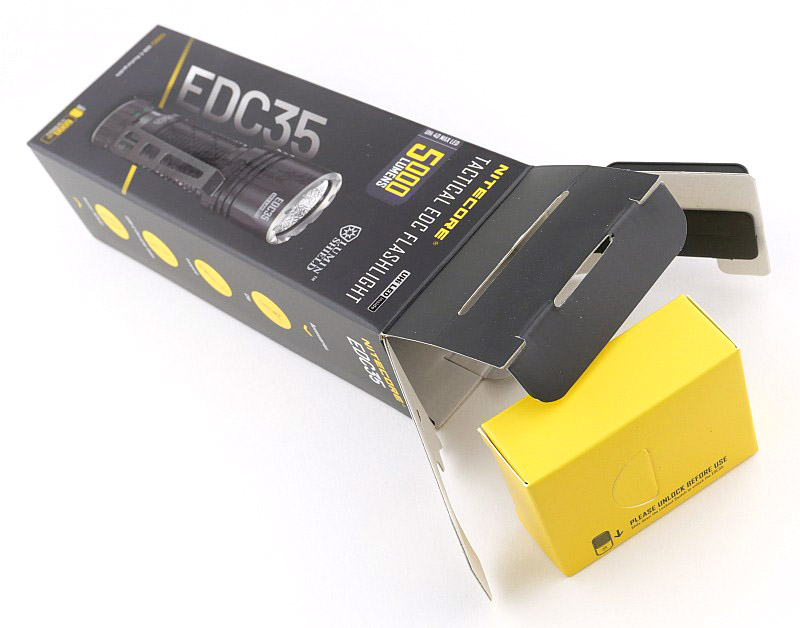
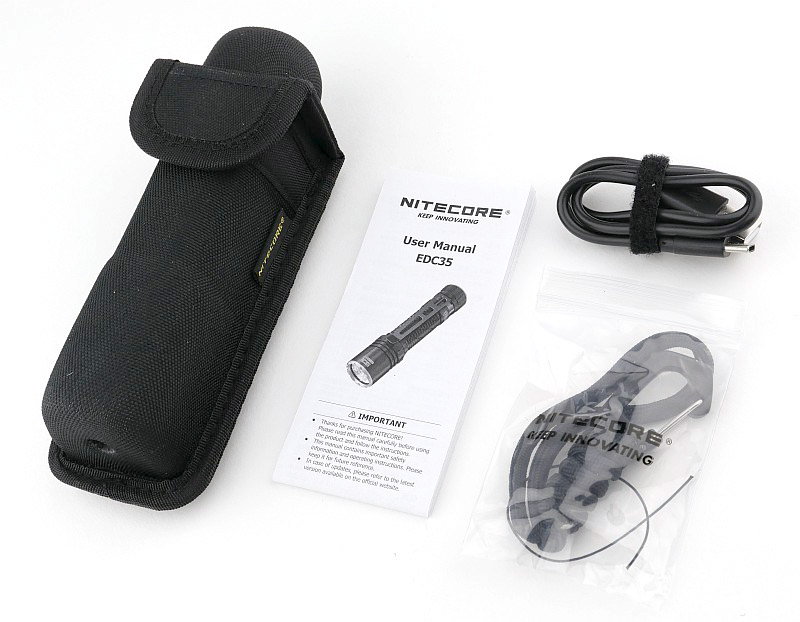
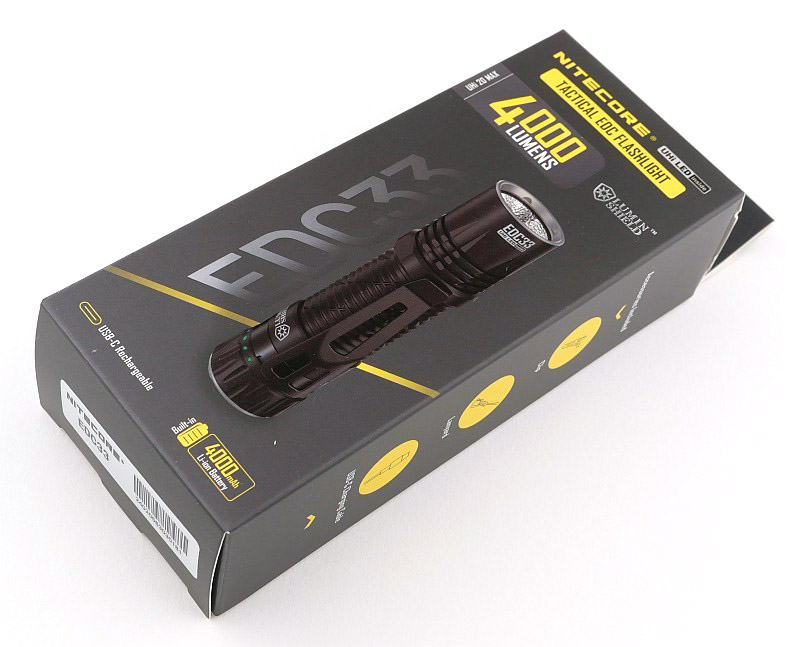
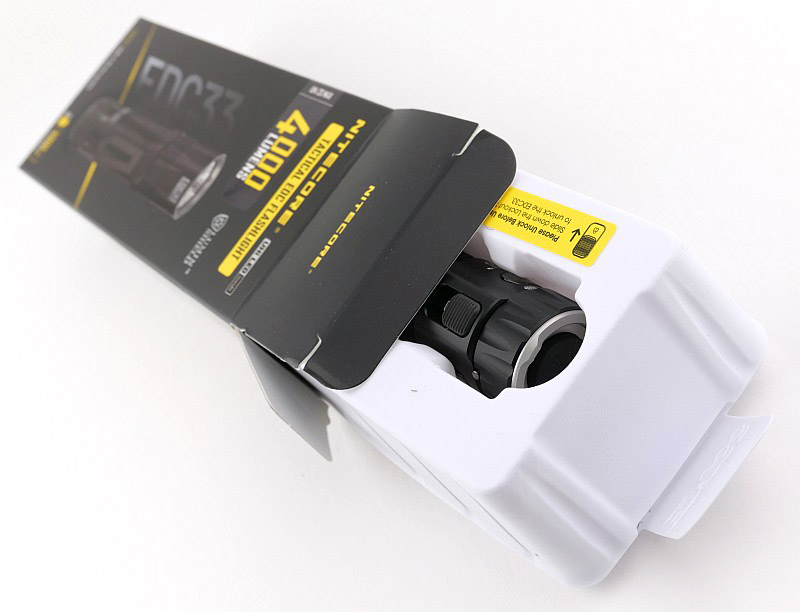
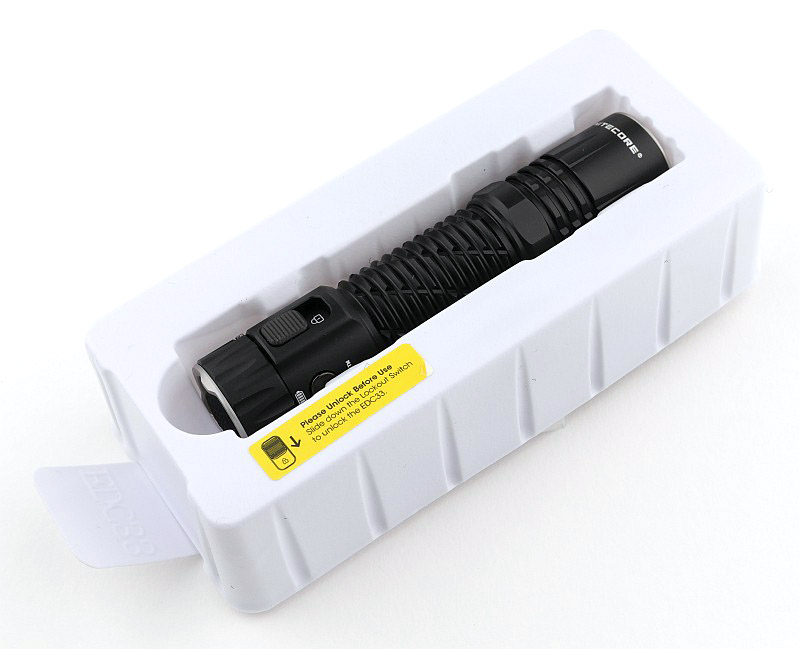
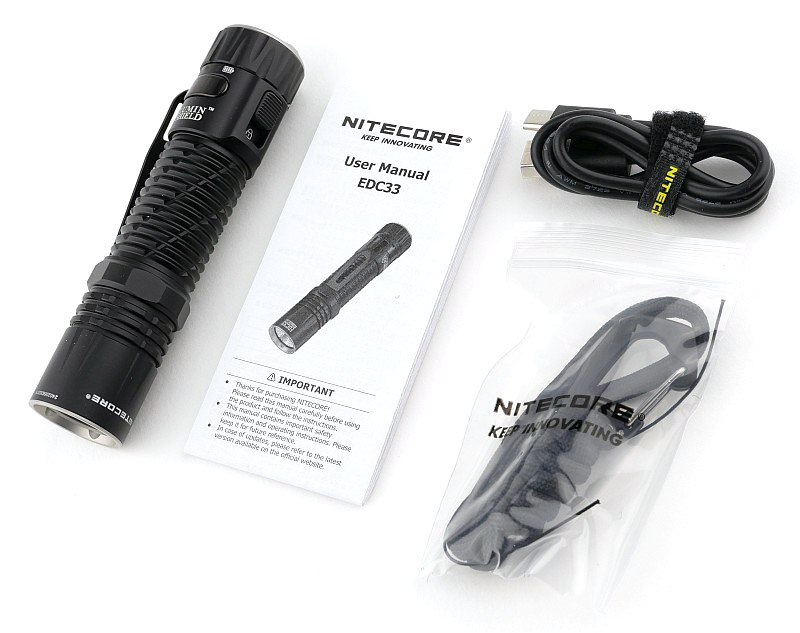
With the EDC35 also having a belt holster, the unboxing is a bit different as the EDC35 arrives in the holster. The EDC33 doesn’t have a holster and comes in a slide out plastic tray.


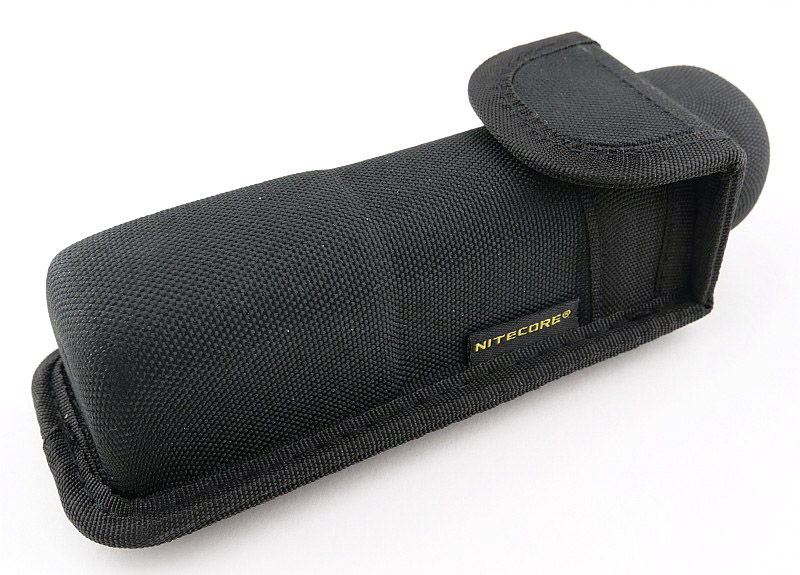
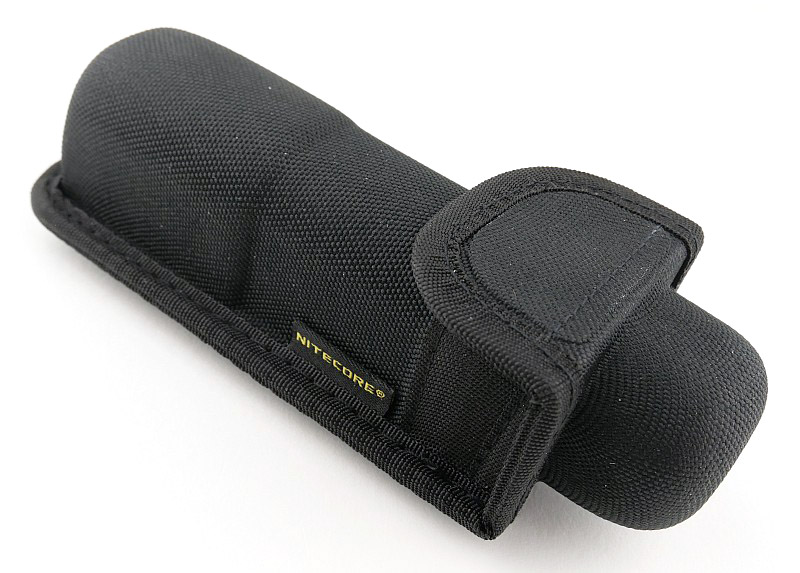
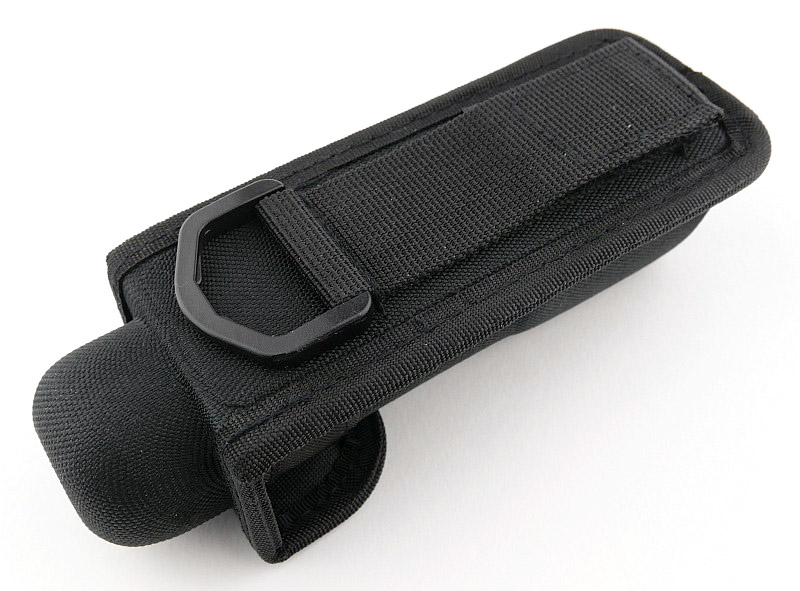
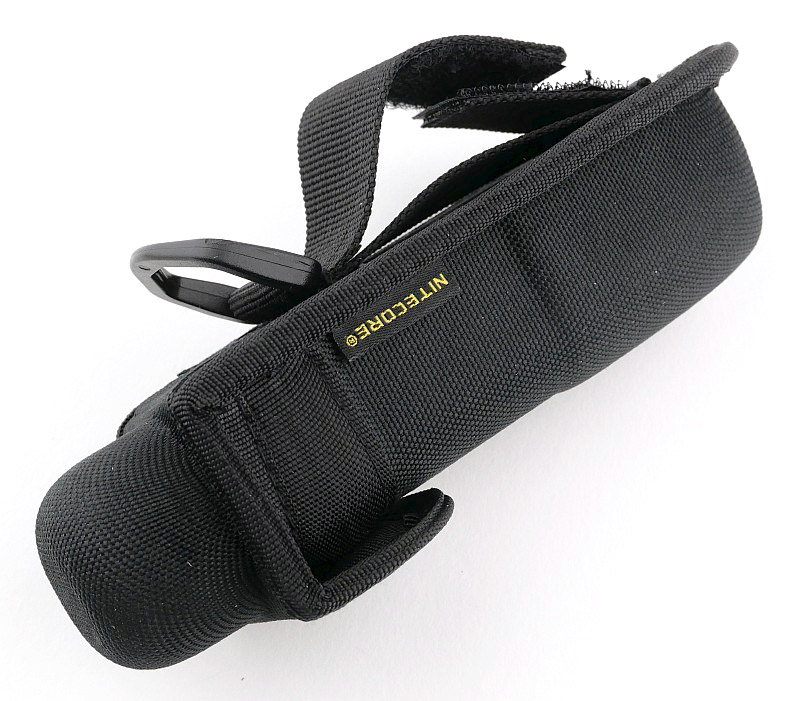
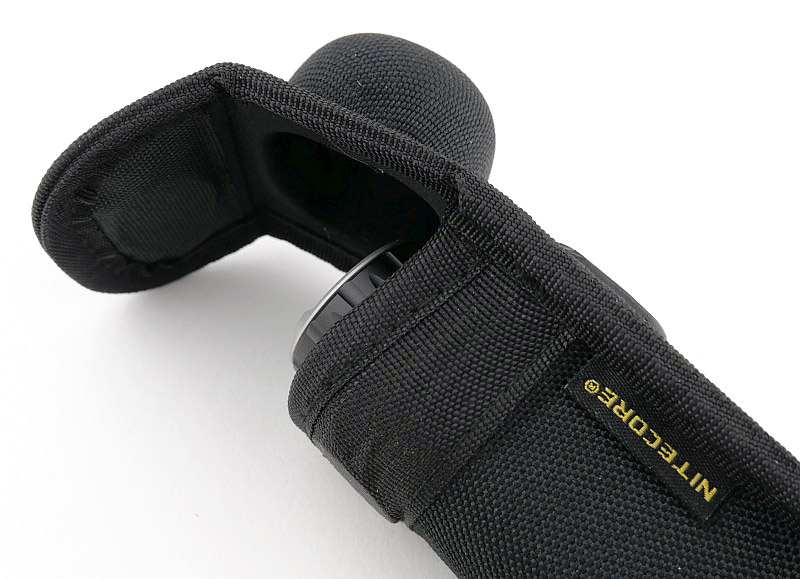
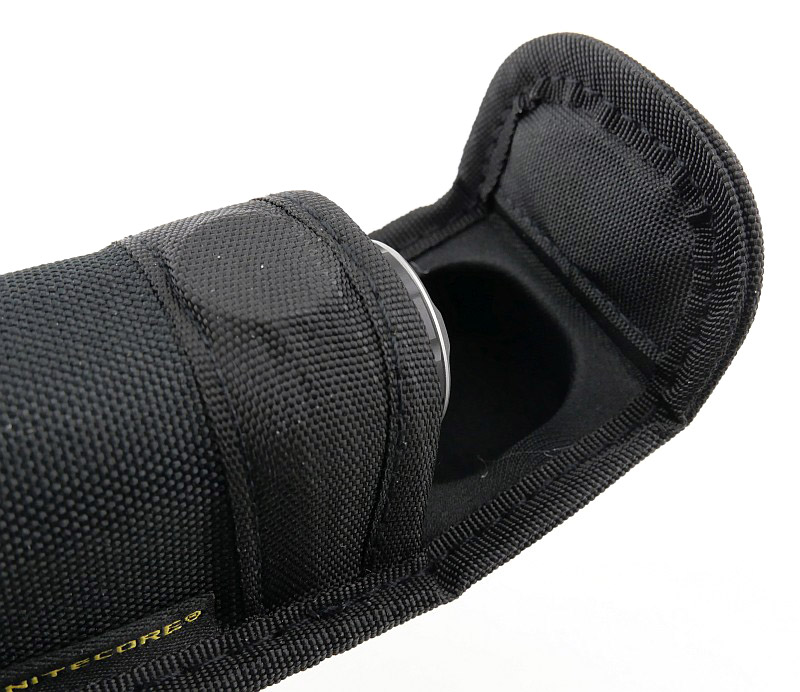
A good look round the EDC35 belt holster – Things to look out for here are:
This is a semi-rigid type of holster, so when empty is the same size as when the light is inside it. There is a magnetically secured flip-top opening which hinges towards the belt loop.
A D-loop hanger, fixed belt loop and Velcro closing belt loop provide options for mounting/carry.


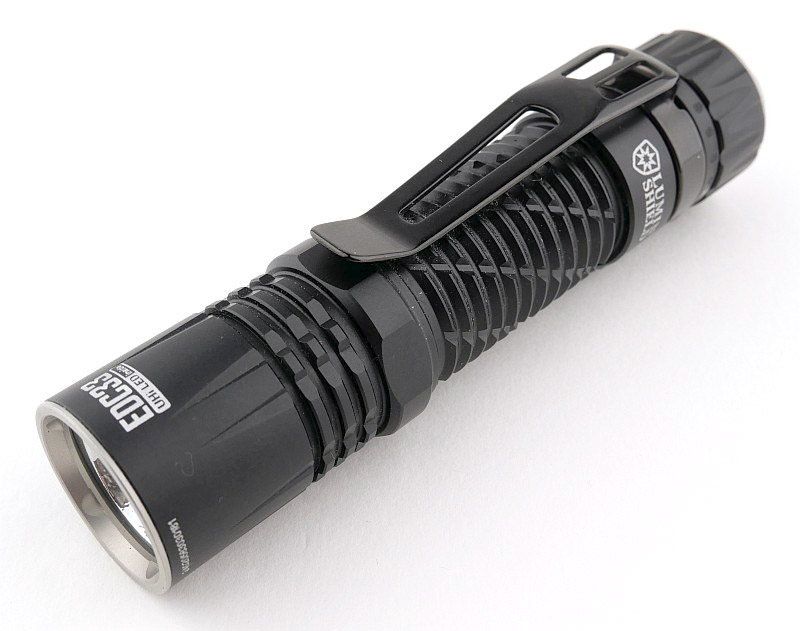
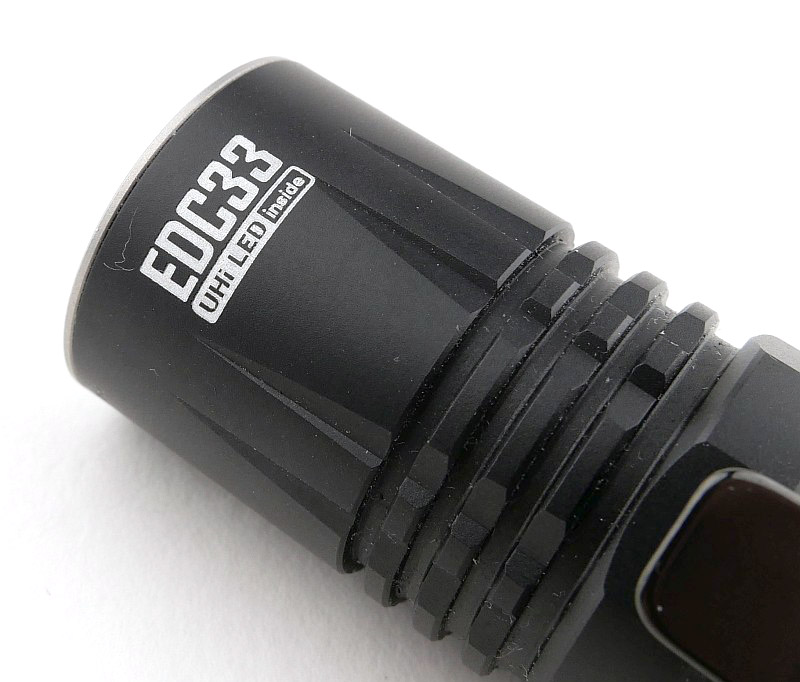
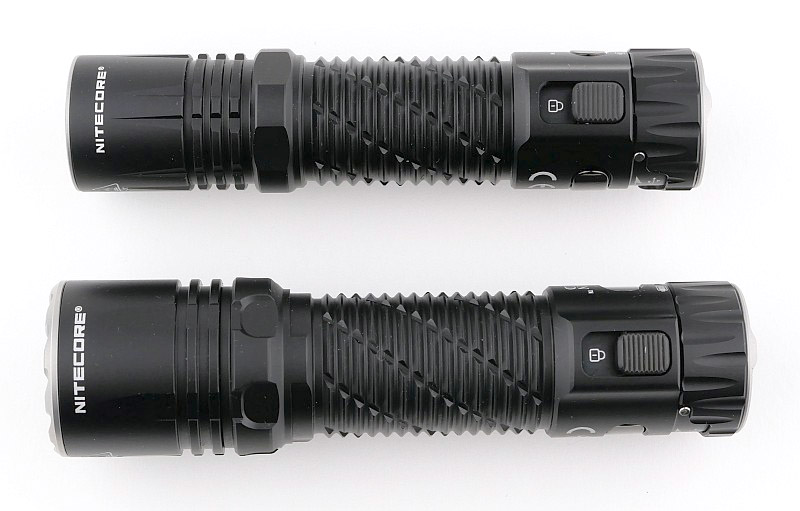
A good look round the EDC33 – Things to look out for here are:
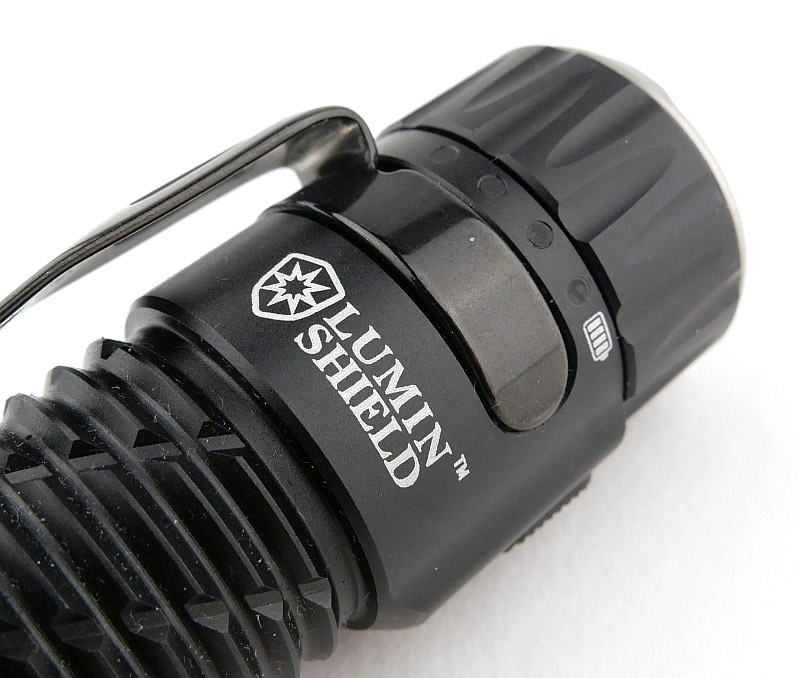
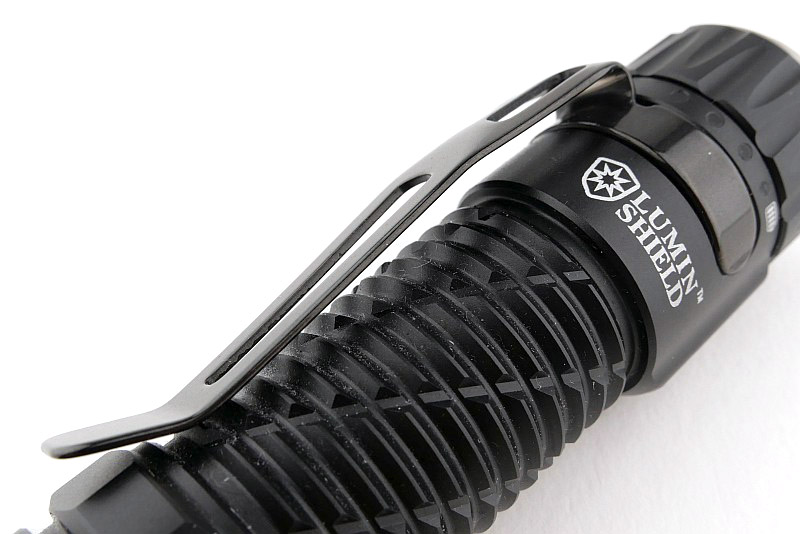
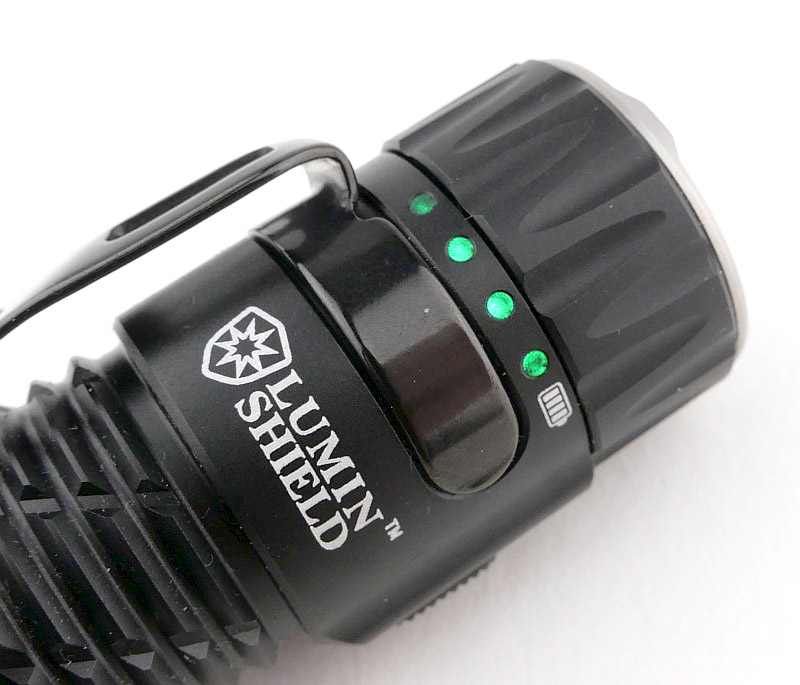
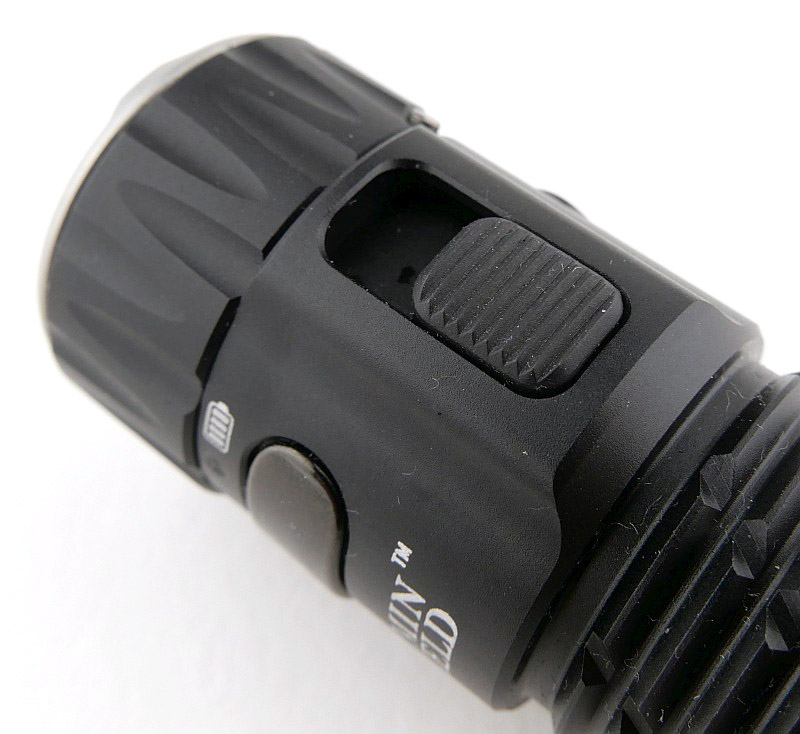
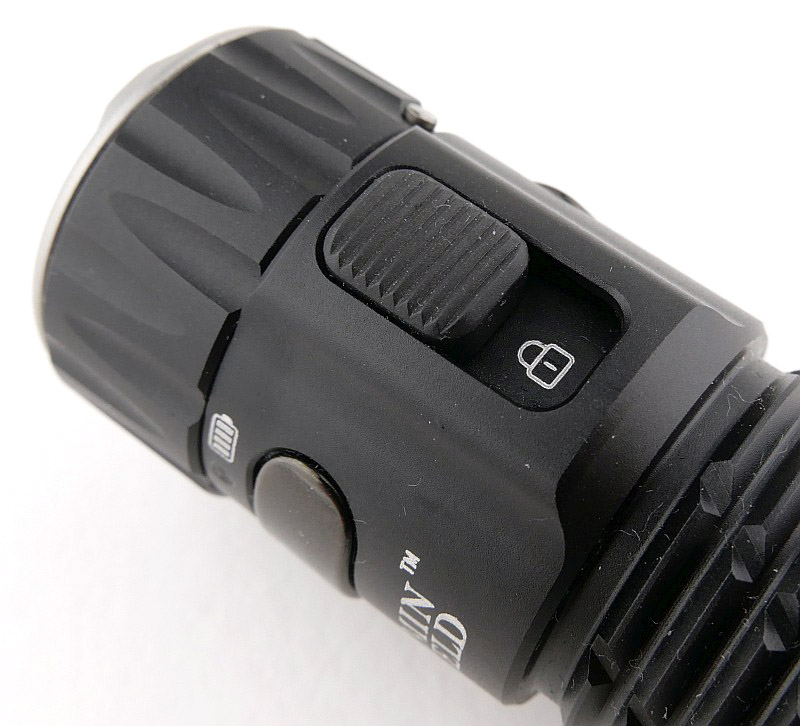
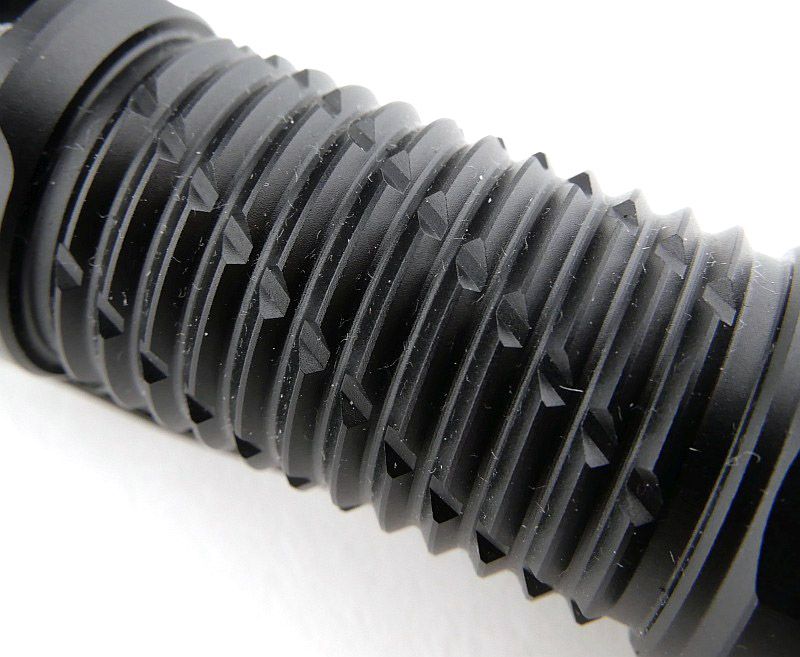
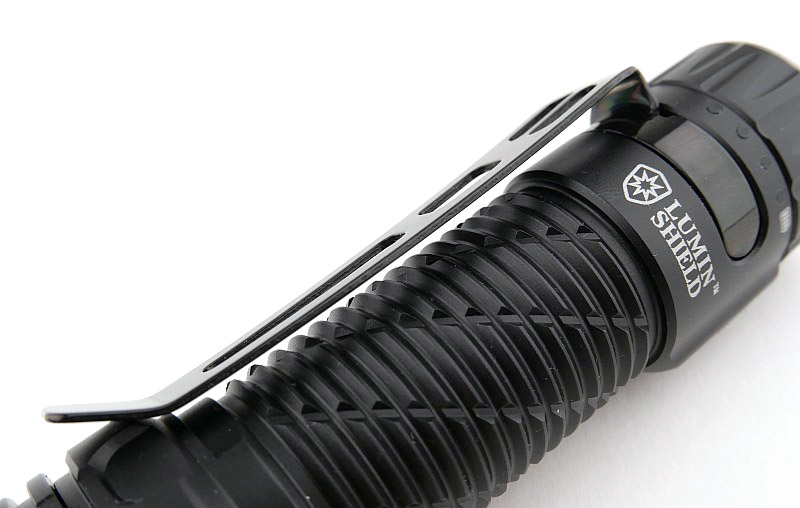
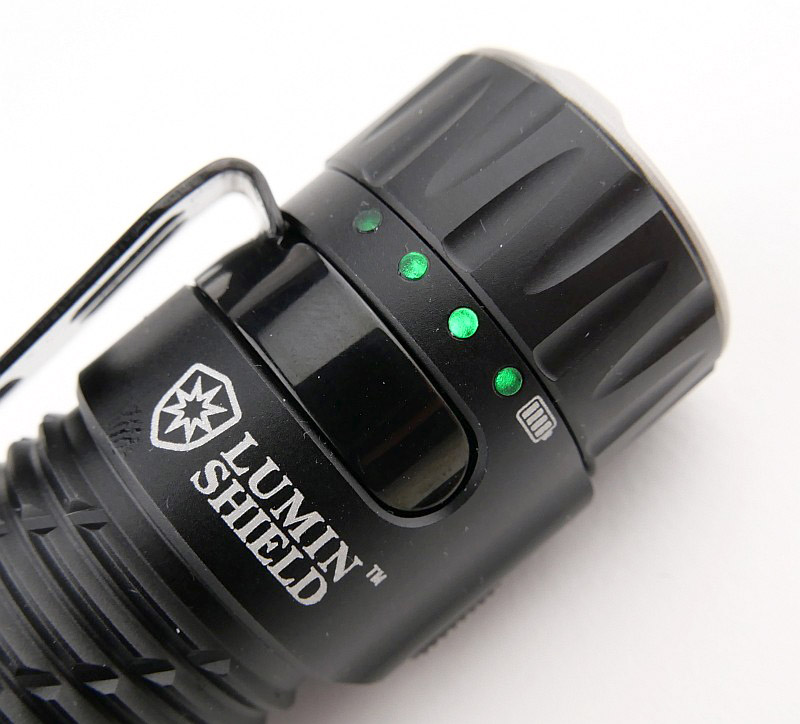
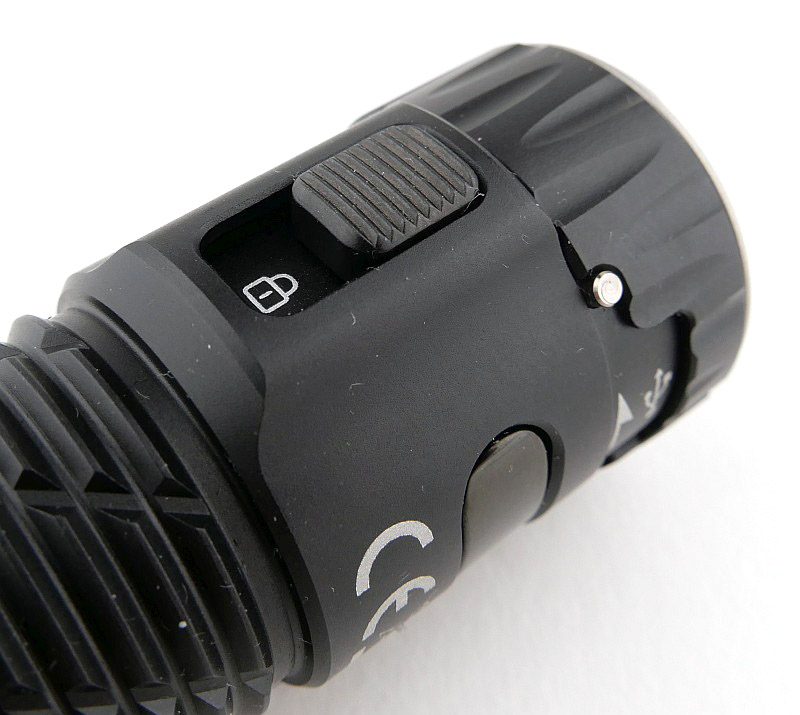
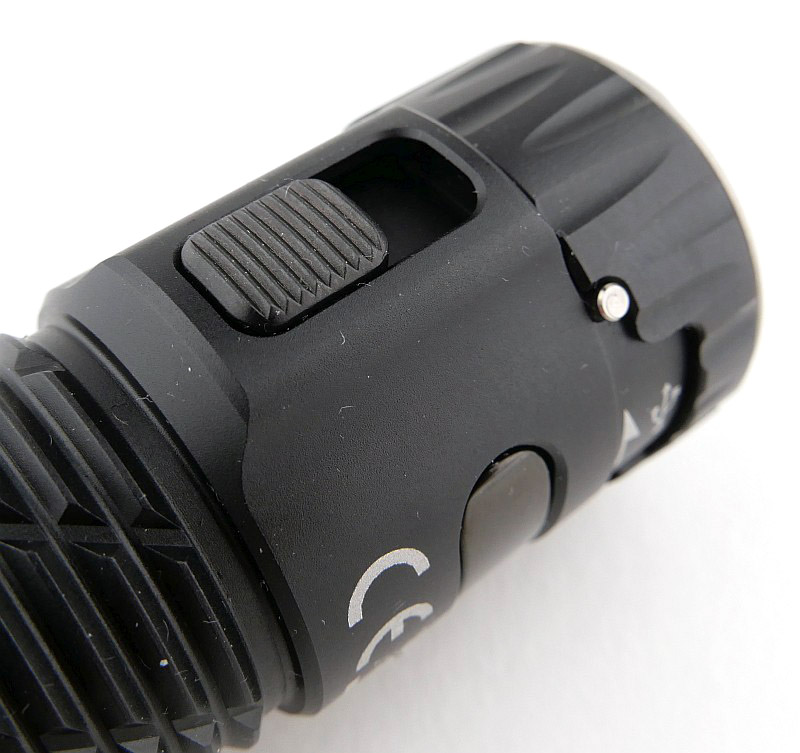
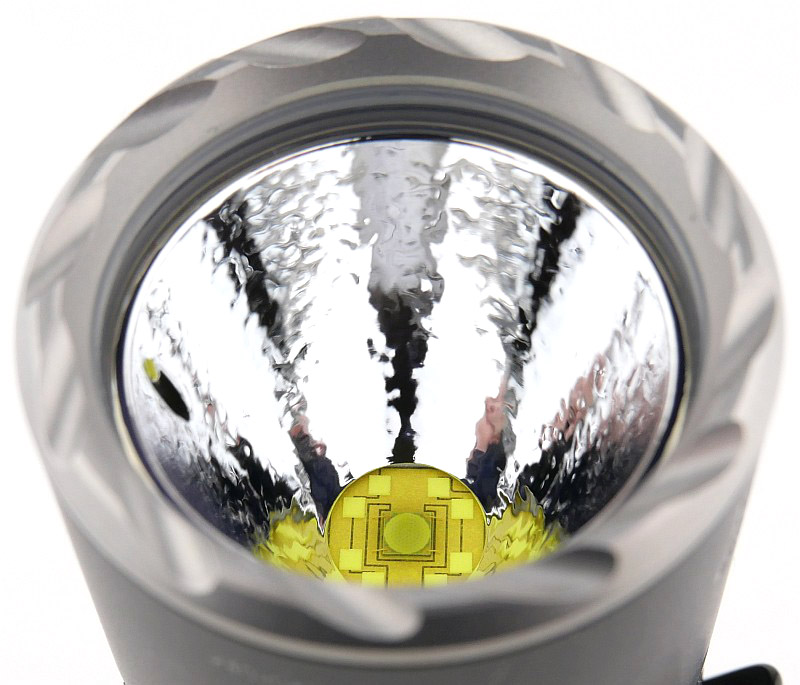
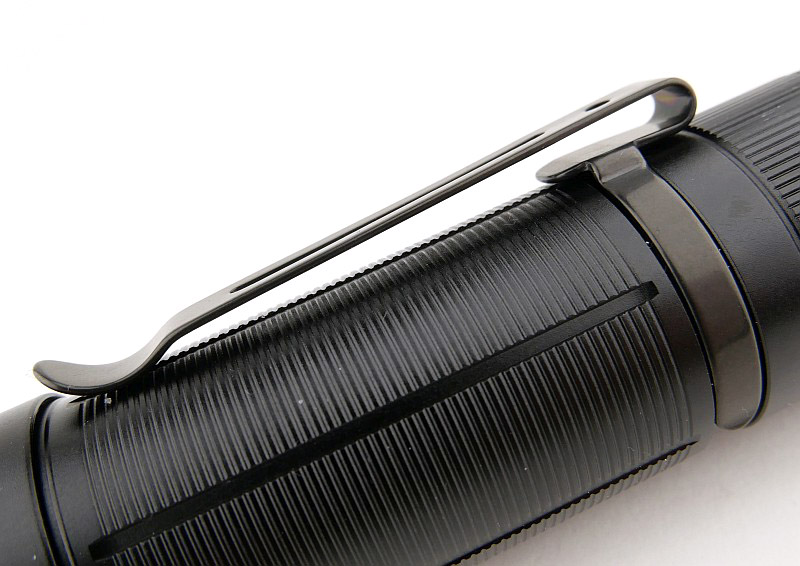
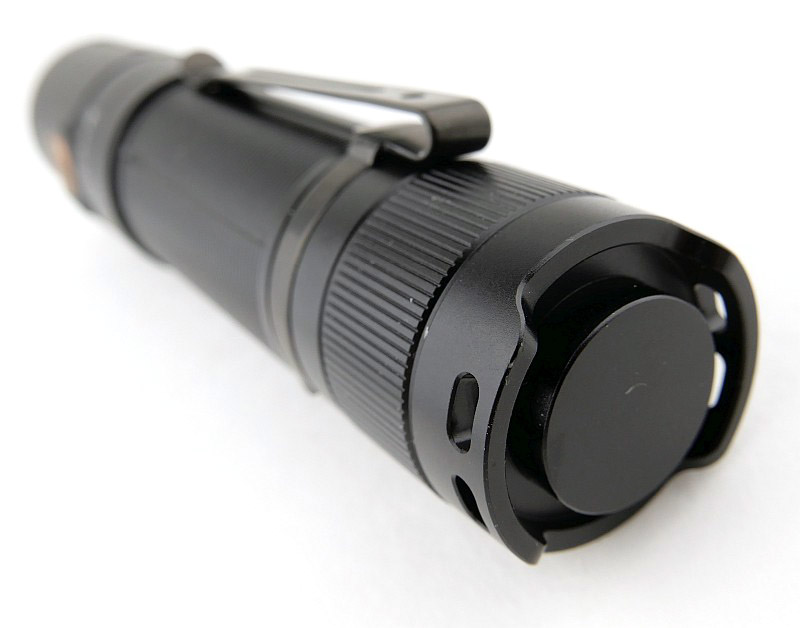
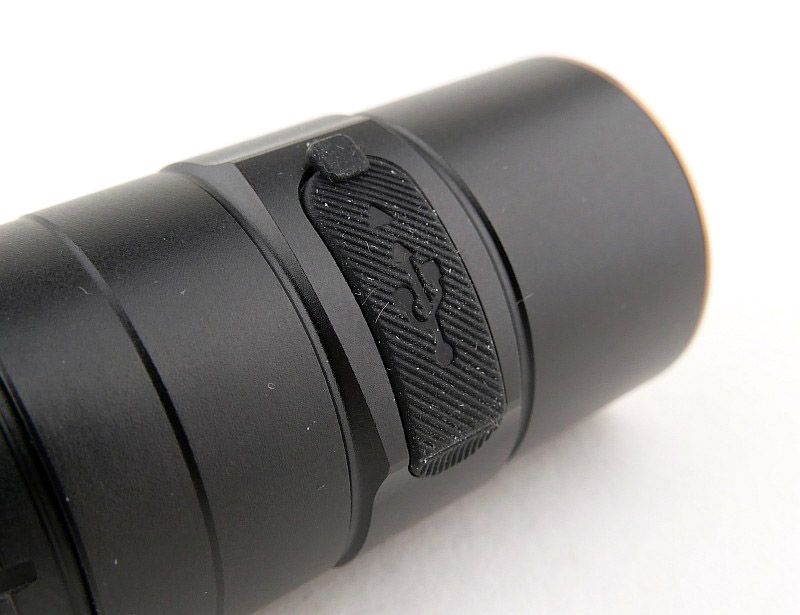
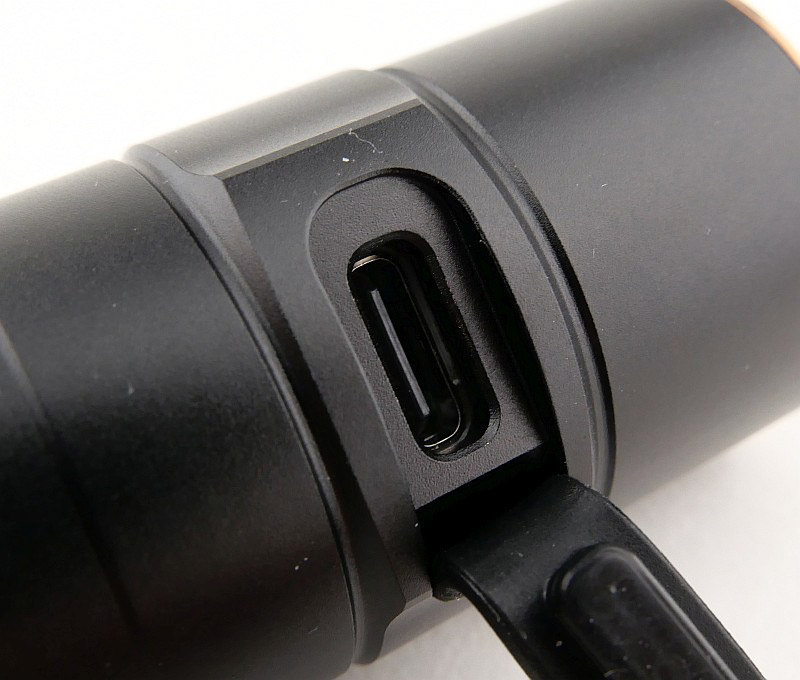
The smaller of the two models on test here (based around an 18650), the EDC33 is a straight tube layout with generous size pocket clip. A set of four battery charge level indicator lights sit just beneath the rotating USB-C port cover. The EDC33 has a sliding toggle lockout switch and a two-stage forward-clicky tailcap switch. The EDC33 uses a NiteLab UHi 20 Max LED.


A good look round the EDC35 – Things to look out for here are:
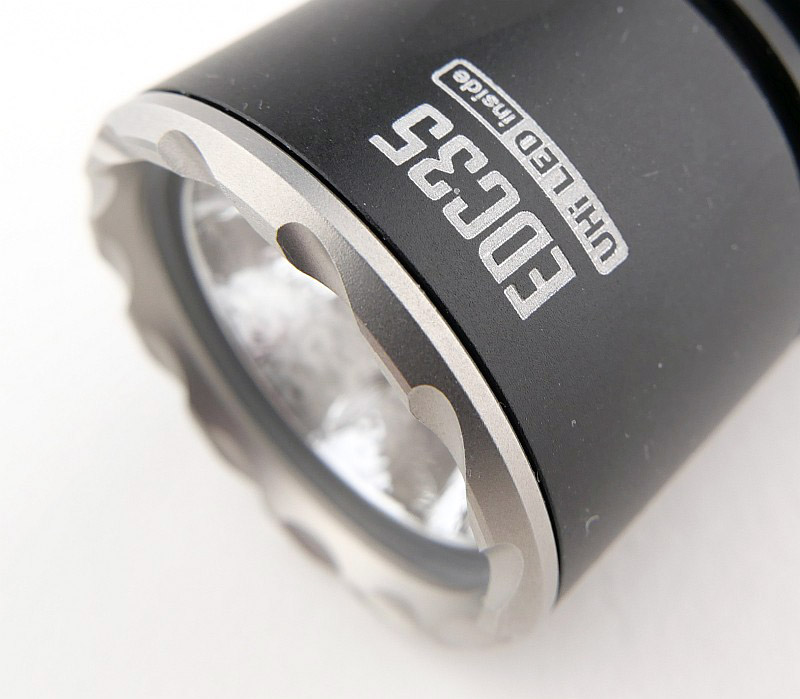
The larger of the two models on test here (based around an 21700), the EDC35 has a head larger than the body to allow for a bigger reflector to accommodate the higher output, and also includes a generous size pocket clip. A set of four battery charge level indicator lights sit just beneath the rotating USB-C port cover. The EDC35 also has a sliding toggle lockout switch and a two-stage forward-clicky tailcap switch. The EDC35 uses a NiteLab UHi 40 Max LED.


The beam

Please be careful not to judge tint based on images you see on a computer screen. Unless properly calibrated, the screen itself will change the perceived tint.

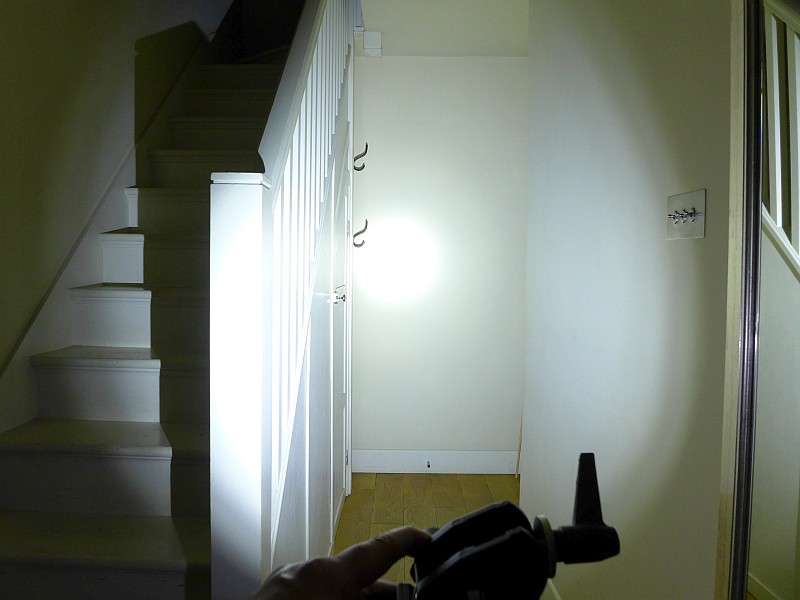
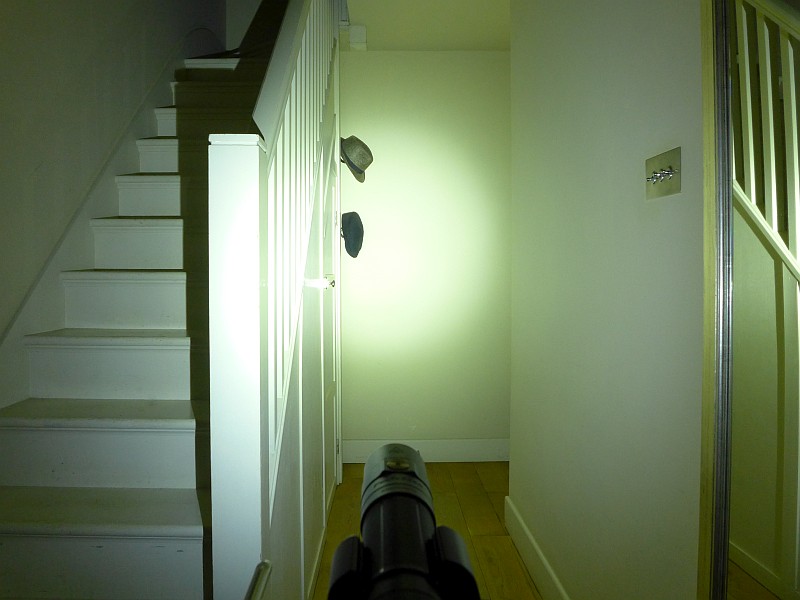
The indoor beamshot is intended to give an idea of the beam shape/quality rather than tint. All beamshots are taken using daylight white balance. The woodwork (stairs and skirting) are painted Farrow & Ball “Off-White”, and the walls are a light sandy colour called ‘String’ again by Farrow & Ball. I don’t actually have a ‘white wall’ in the house to use for this, and my wife won’t have one!

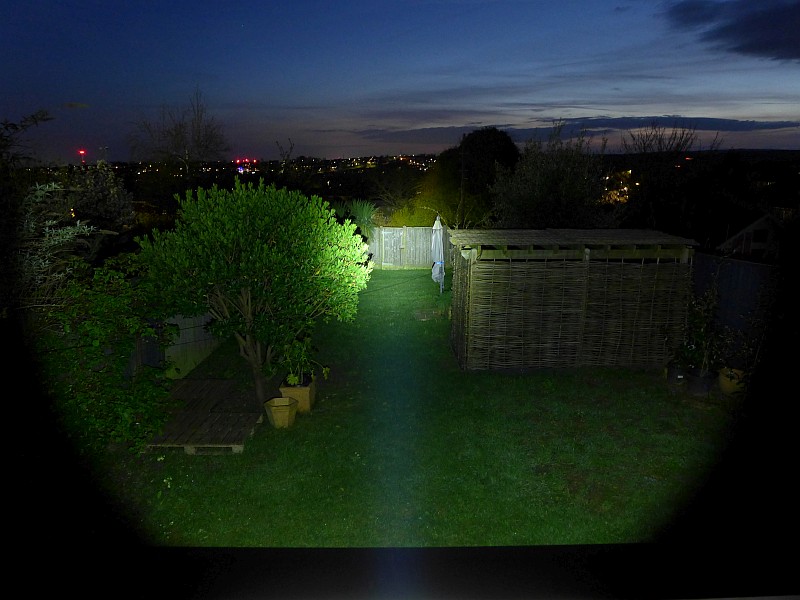
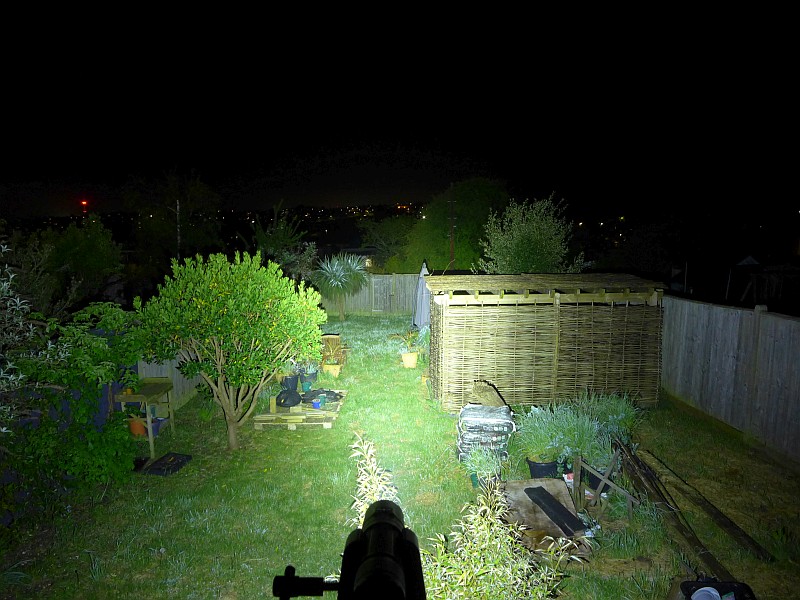
Exposures are not identical throughout the galleries – images are intended to show the beam shape and impression of what you see, rather than a brightness measurement.

EDC33 Beamshots:
Both for indoor and outdoor, the spot beam is shown first, then the ‘Lumin Shield’ beam.


EDC35 Beamshots:
Both for indoor and outdoor, the spot beam is shown first, then the ‘Lumin Shield’ beam.


EDC33 and EDC35 Beamshots:
This gallery uses all the previous images but groups them into comparative pairings for the EDC33 then EDC35 with each type of beam. As before this is the spot beam shown first followed by the ‘Lumin Shield’ beam for the indoor images and then the outdoor.


Batteries and output:

The EDC33 has a built-in 18650 cell and the EDC35 a built-in 21700 cell. Parasitic drain cannot be measured.

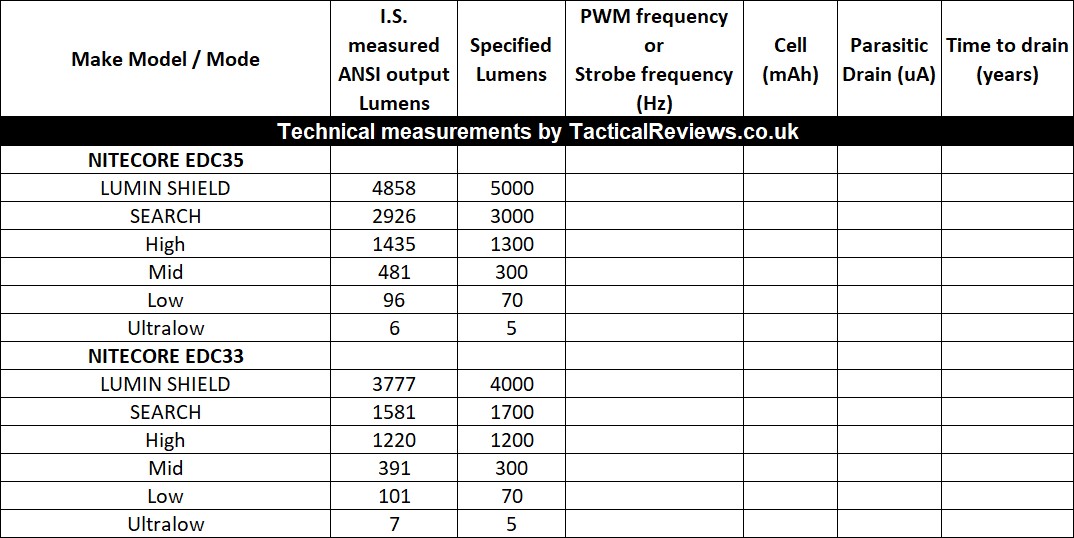
Please note, all quoted lumen figures are from a DIY integrating sphere, and according to ANSI standards. Although every effort is made to give as accurate a result as possible, they should be taken as an estimate only. The results can be used to compare outputs in this review and others I have published.

This table compares measured and specified outputs for each mode.

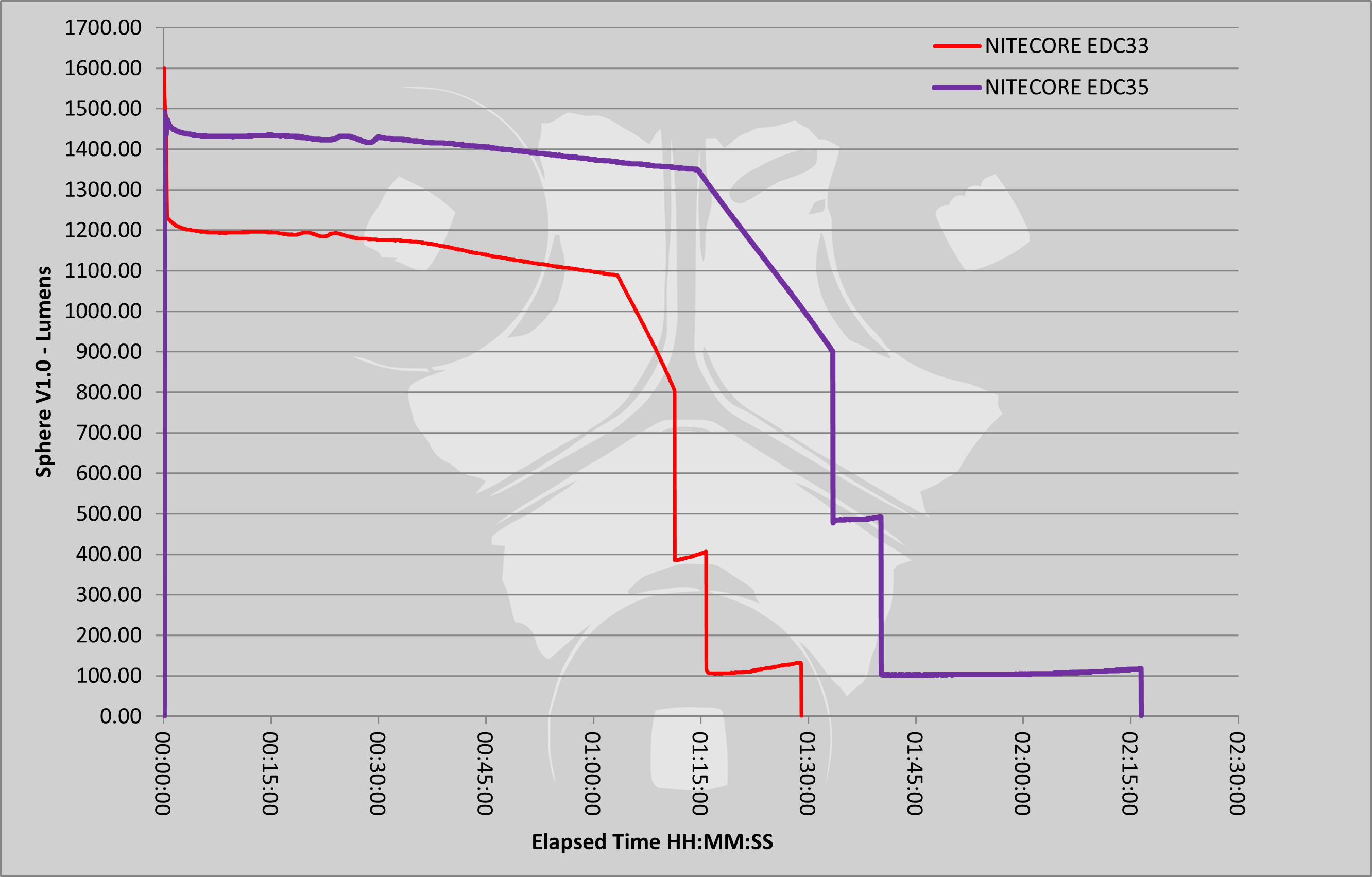
Runtime traces for each model on ‘High’.

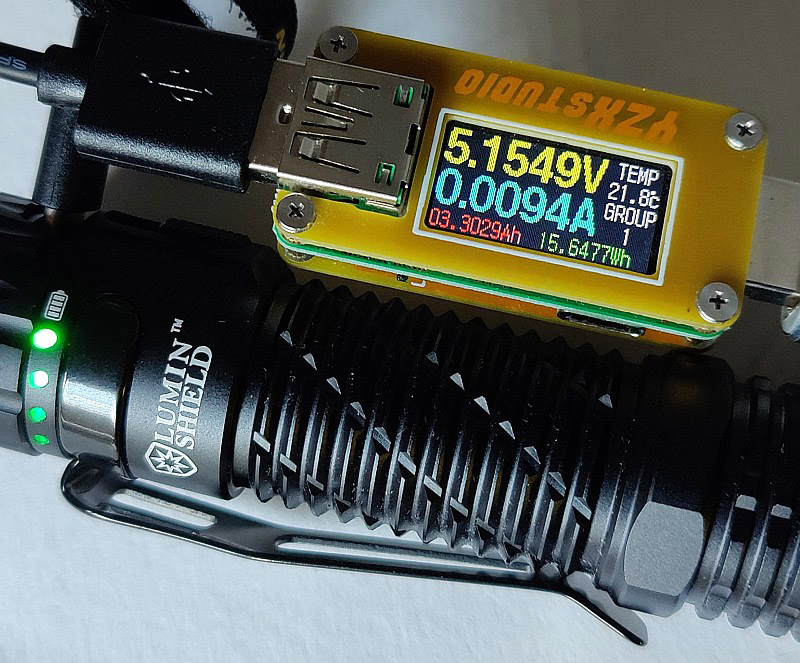
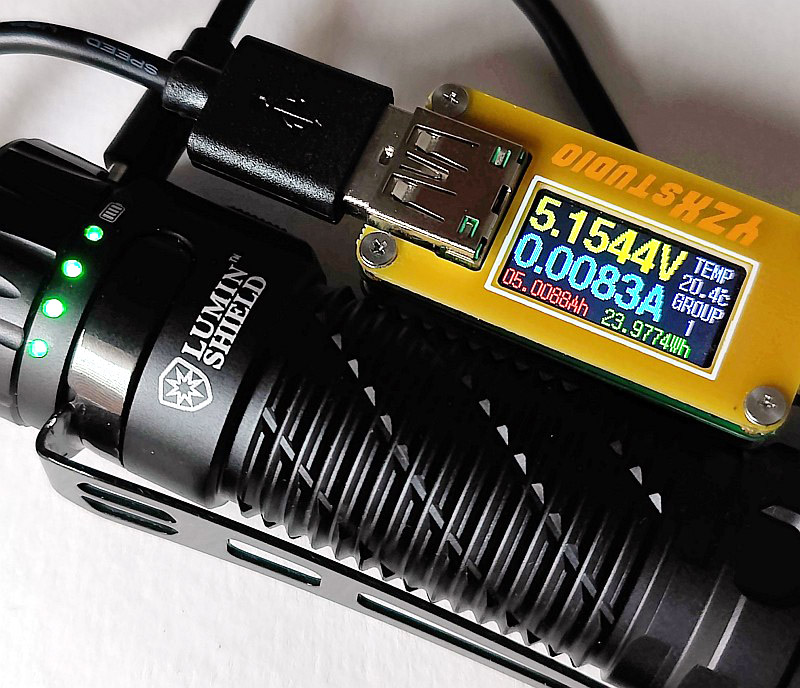
Also included in the gallery are the charging capacity measurements after recharging from the end of the runtime testing (show in Wh and Ah).


The EDC33 and EDC35 in use

These lights are BRIGHT! The Lumin Shield does exactly what it promises and blasts a wall of light. The power output is made all the more obvious by the heat generated in the head of each light, especially the smaller EDC33 where the head heats up very fast using Lumin Shield. The EDC35 has more mass and the heating is less immediate which does give you more working time with this mode before it becomes uncomfortable in a bare hand.

This leads me to suggest the main choice between the EDC33 and EDC35, with this being how much you want to use the higher or maximum outputs. The EDC35 has more mass to manage the heat produced, and larger battery capacity.

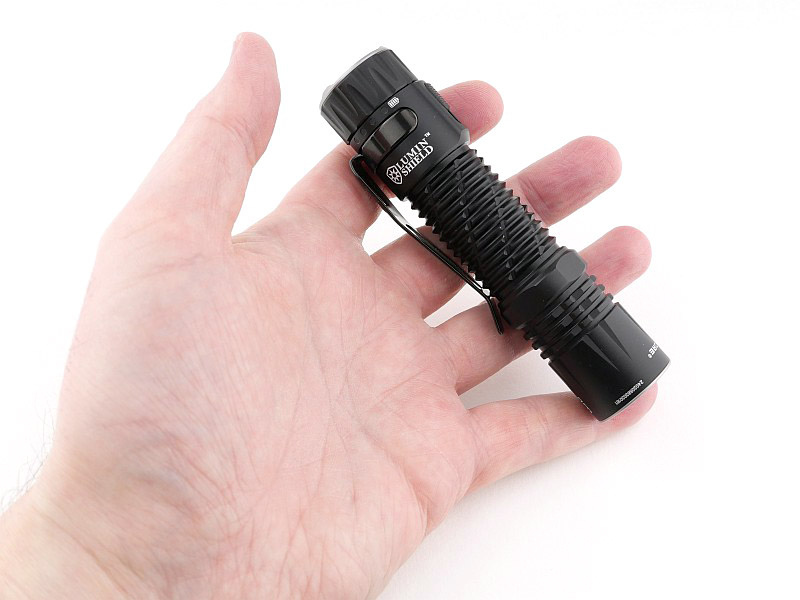
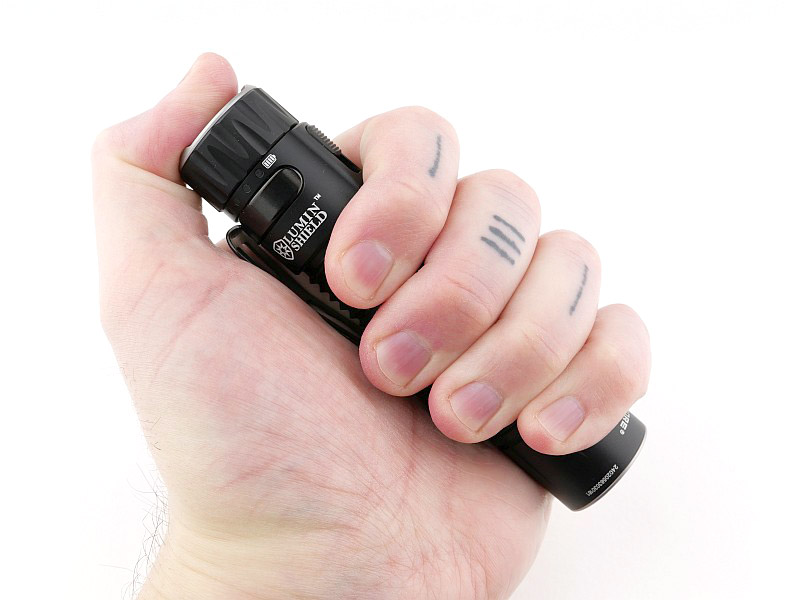
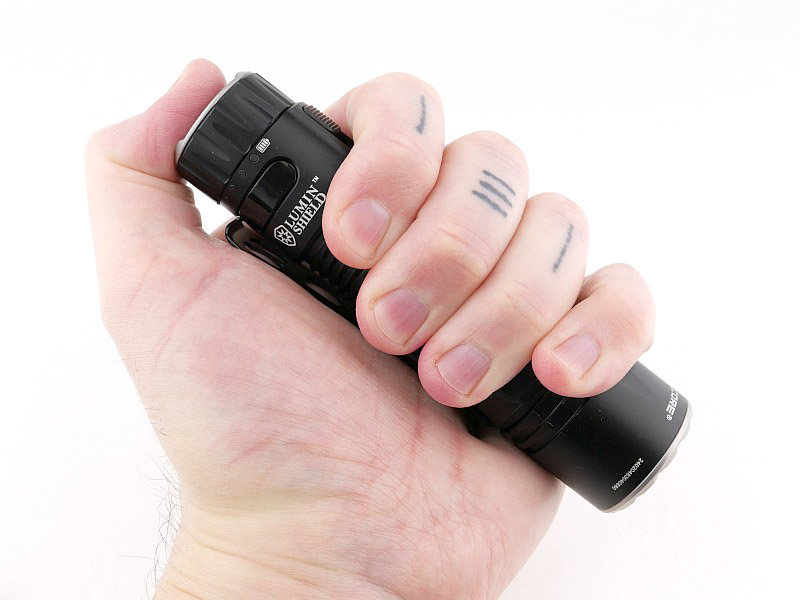
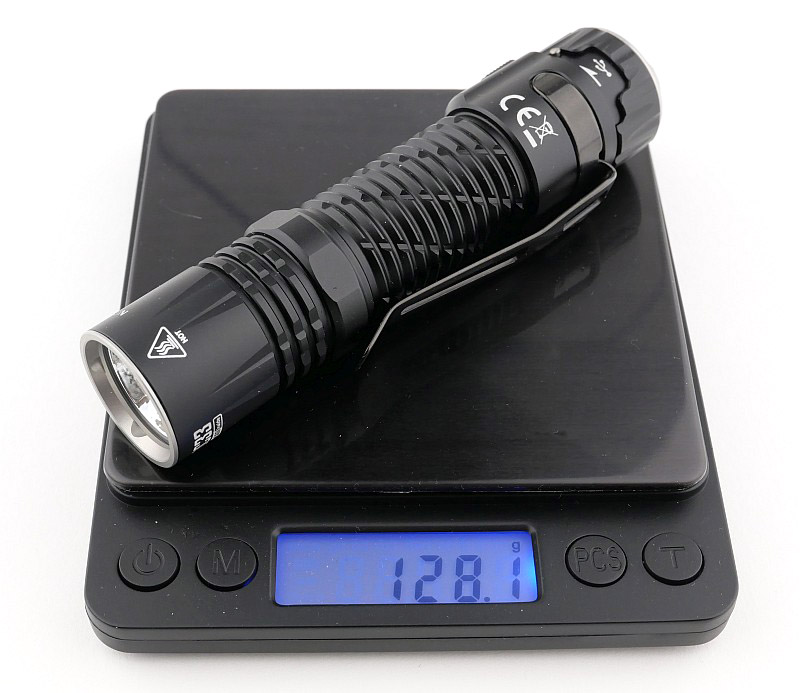
The next gallery shows the size of each in the hand (I take XL size gloves). In terms of weight, the EDC35 is 150% the weight of the EDC33, plus the holster and general bulk. This weight and size penalty gives you a longer runtime and ability to make use of the higher output for longer.


The choice of more comfortable use of maximum output, or ease of carry will then guide you to the right choice for you.

Though the EDC33 heats up fast on Lumin Shield, it does still give you a wall of light in a compact package, so as a backup this is extremely capable.

For my own use, I use lower outputs about 90% of the time, so this leads me to one of my main observations about using the EDC33 and EDC35, and that is it takes al lot of practice to reliably avoid triggering the Lumin Shield when in fact you really wanted the ultra-low output. Linger just a little too long on the tail switch, and instead of 5 lumen you get 4000 or 5000, or while trying to avoid that you fail to turn it on at all.

Clearly, the ‘Lumin Shield’ wall of light is the headline tactical defence function of these lights, and for that they are excellent. This mode is easily activated (almost too easily) and in the half-lockout is the mode still available. Take this as the primary function and you can then consider the lower outputs as a bonus.

To best manage the accidental activation of the Lumin Shield, I make sure to briefly close my eyes when trying to activate the daily modes, especially when I want the ultra low, and if I do accidentally unleash the 5000 lumens I don’t getting the full effect as I will have let go of the switch before I open my eyes.

Likewise for switching off when using lower modes, I don’t touch the tailcap, instead using the lockout switch to turn it off completely safely, as this will definitely not activate any other output mode.

Making the minor adjustments to how you operate the EDC33 and EDC35 allows the lower mode use to be smoother and not jar, and you still have the potential defensive wall of light ready to go if needed.

Review Summary
The views expressed in this summary table are from the point of view of the reviewer’s personal use. I am not a member of the armed forces and cannot comment on its use beyond that covered in the review.

Something that might be a ‘pro’ for one user can be a ‘con’ for another, so the comments are categorised based on my requirements. You should consider all points and if they could be beneficial to you.

_______________________________________________
What doesn’t work so well for me
_______________________________________________

Easy to accidentally activate the Lumin Shield.
Lowest mode still not that low at 5 Lm.

_______________________________________________
Things I like
_______________________________________________

Stunning ‘Wall of Light’ with Lumin Shield mode.
Secure grip pattern.
USB-C built-in charging port.
EDC35 has an extra large capacity 21700 cell.
EDC33 provides a smaller lighter option but with near 4000lm output.
Ultra-High output from the UHi 20 Max and UHi 40 MAX LEDs.
Safety sensor to detect obstructions.

Knife Review: Extrema Ratio FRAME ROCK XXV Anniversarium

Extrema Ratio have been celebrating their 25th Anniversary in style with a number of limited runs of new and old models.

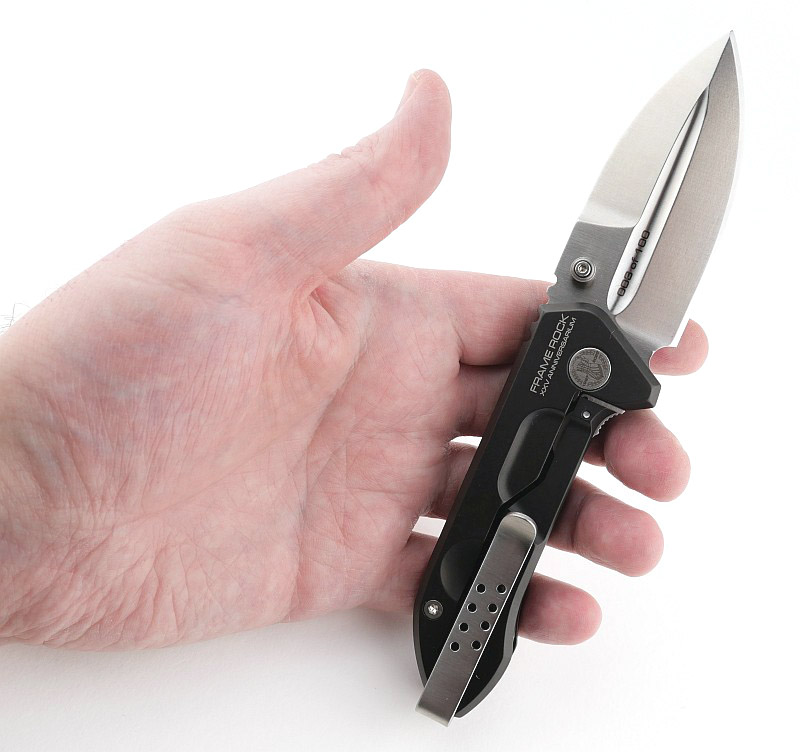
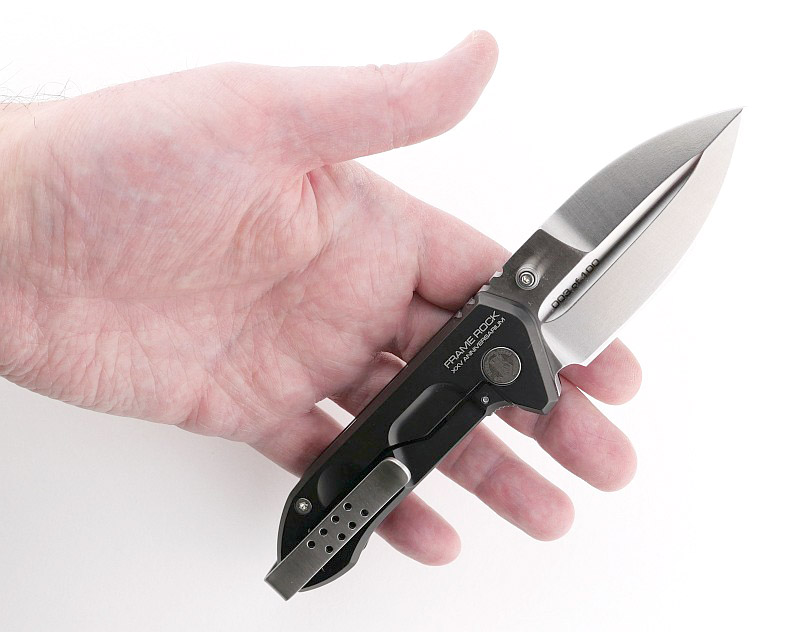
In this review we are looking at the XXV Anniversarium Limited Edition of the overbuilt folder, the FRAME ROCK. If you do miss out on the limited edition, most of the content here is perfectly valid for the standard FRAME ROCK, so limited or standard, you can get one of these ROCK solid folders.

This review of the Extrema Ratio FRAME ROCK includes an in depth video with overview and detailed measurements, plus image galleries and more.

Review Videos

Starting with a short format sixty second review:


Onto a full video review covering many more details:


What’s in the box?:
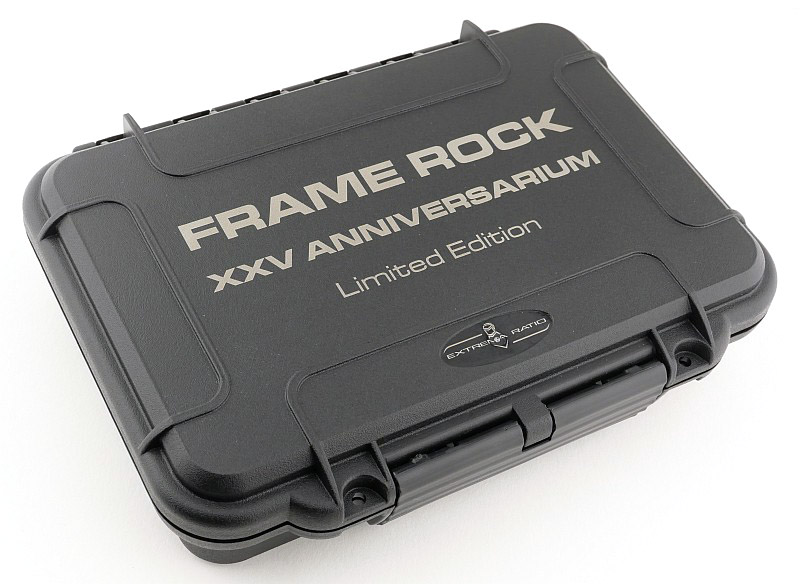
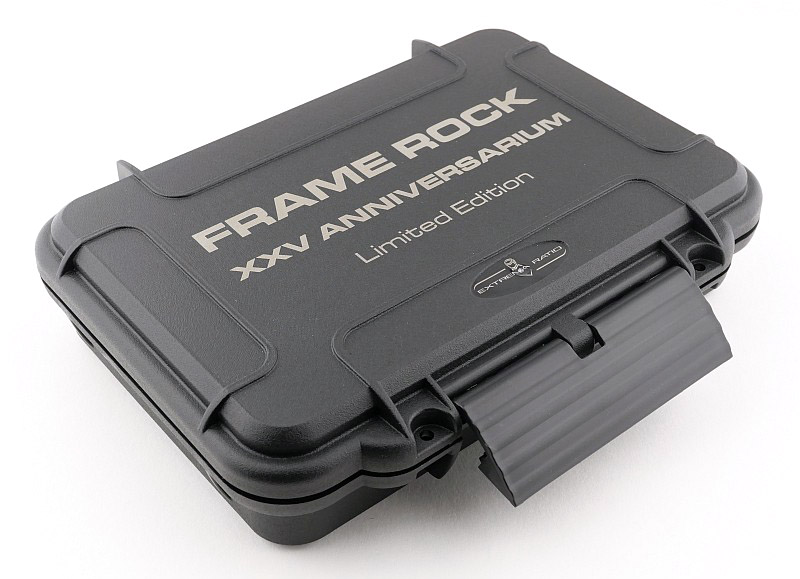
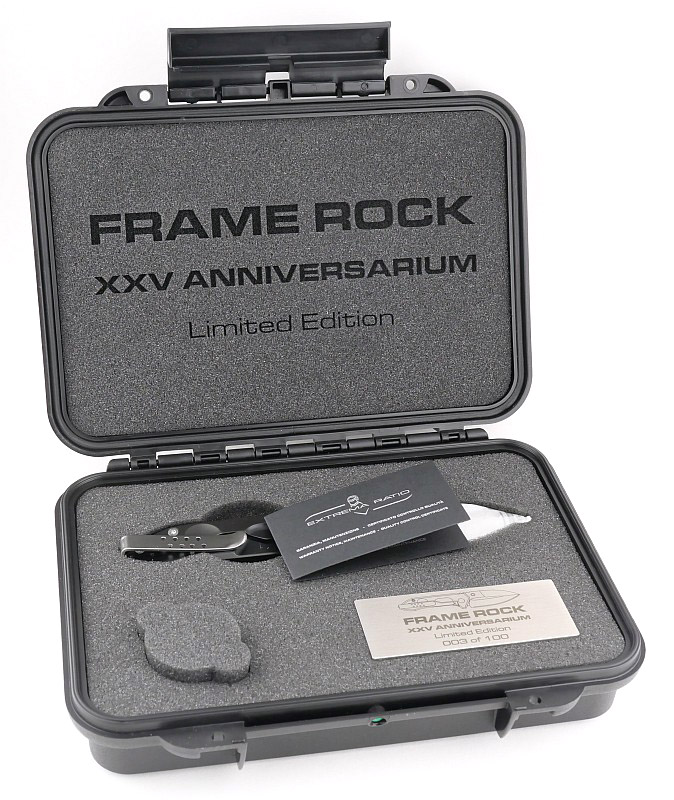
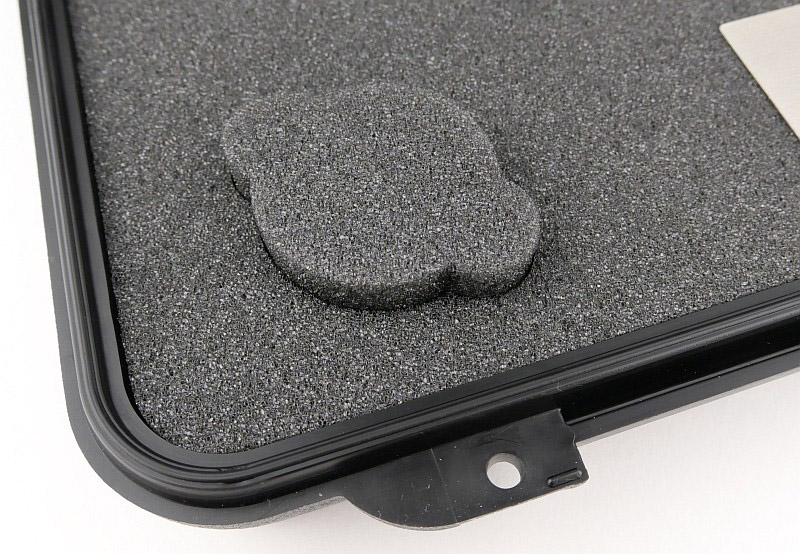
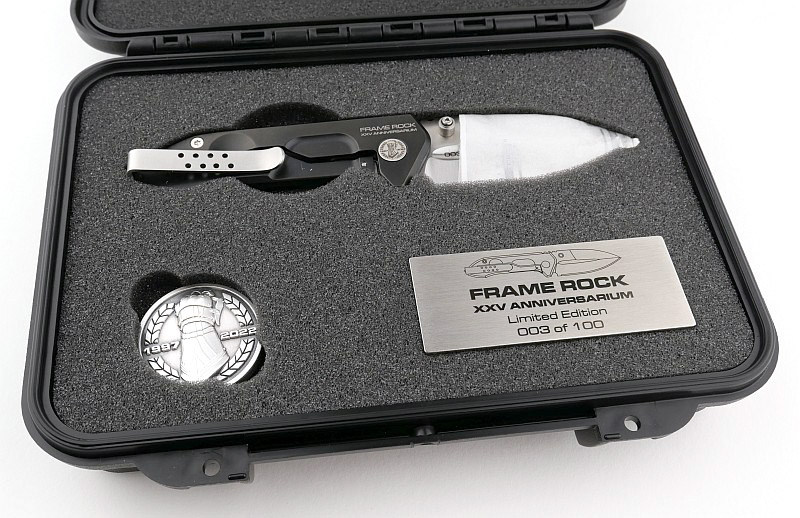
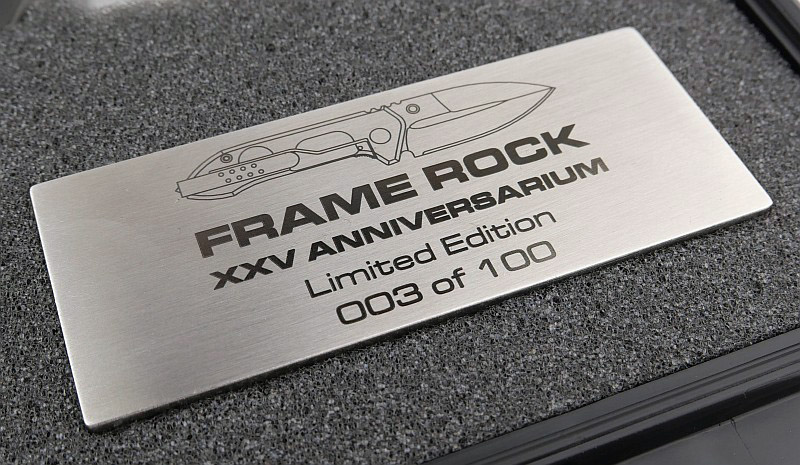
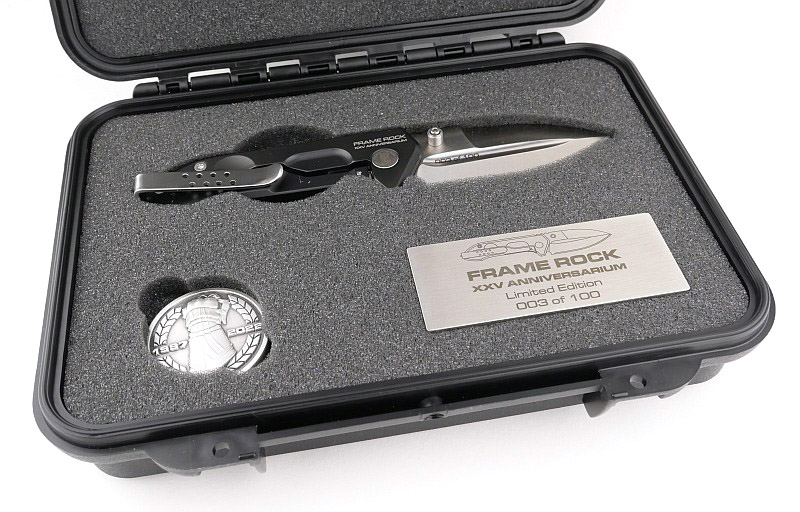
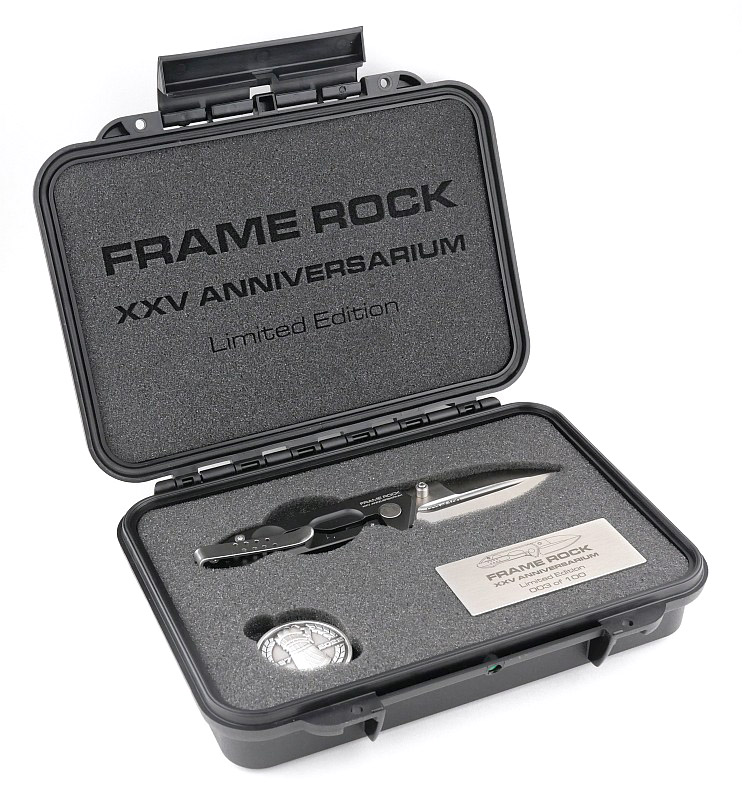
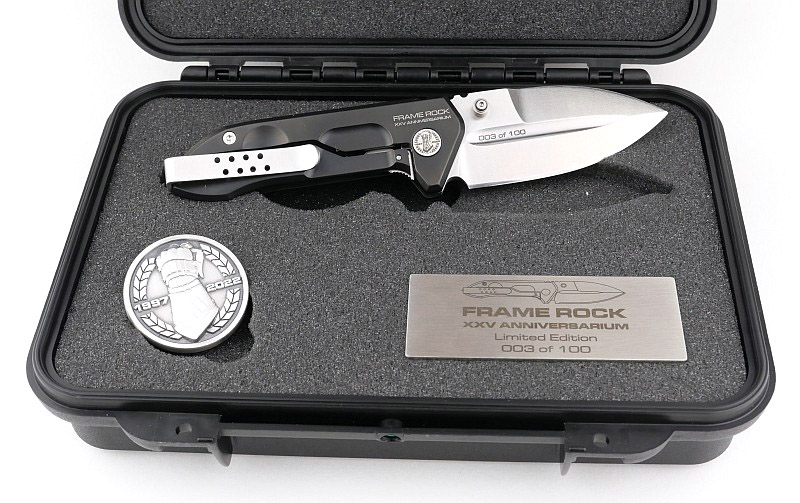
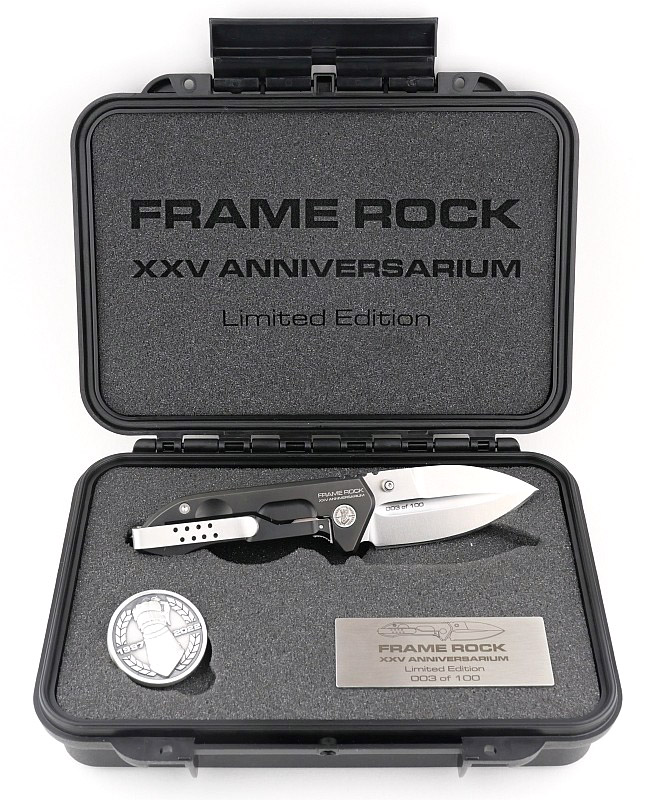
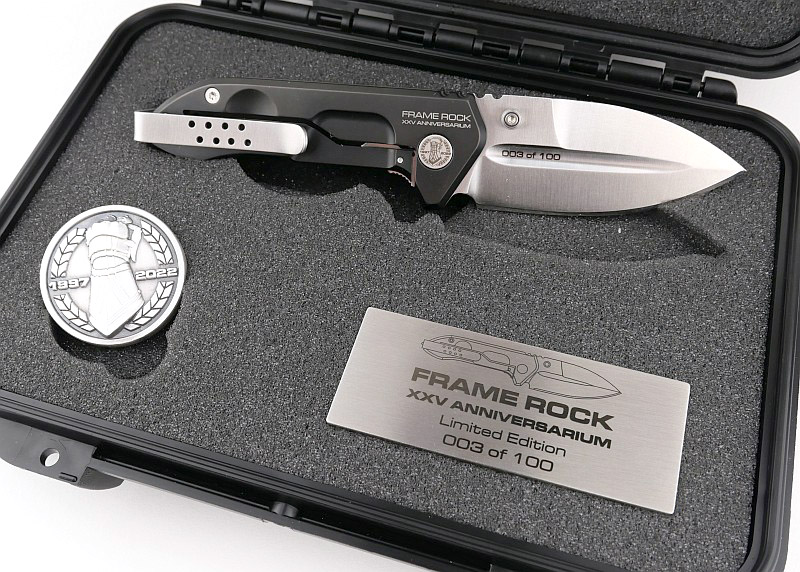
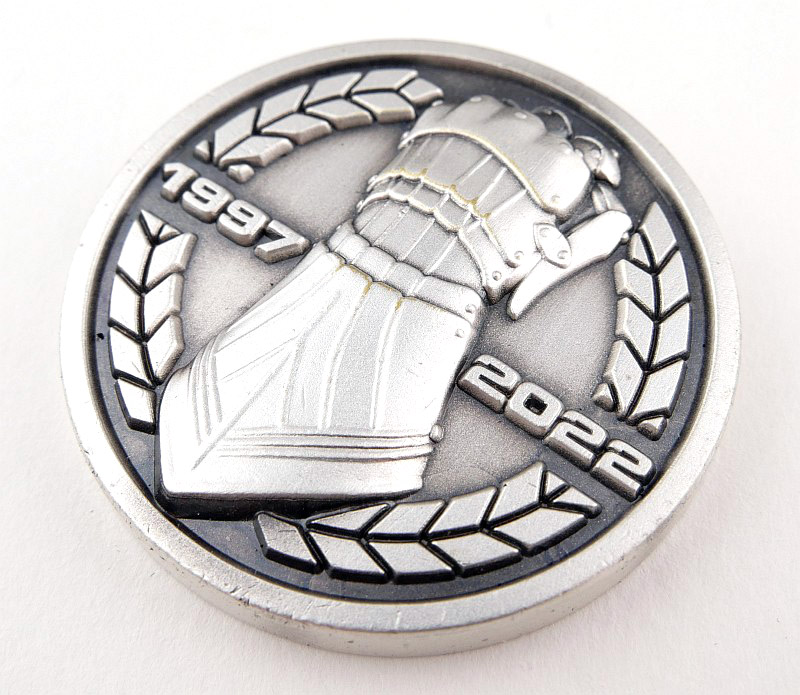
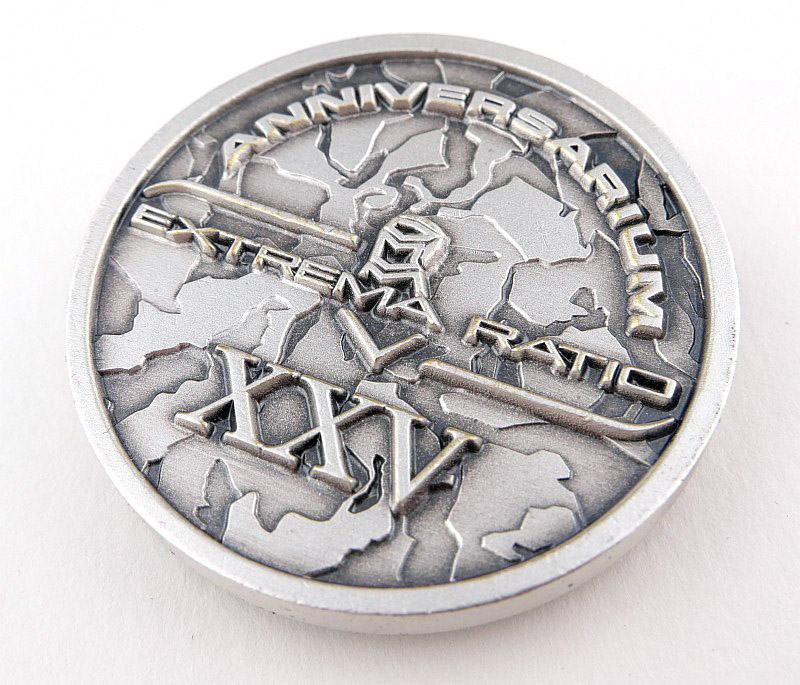
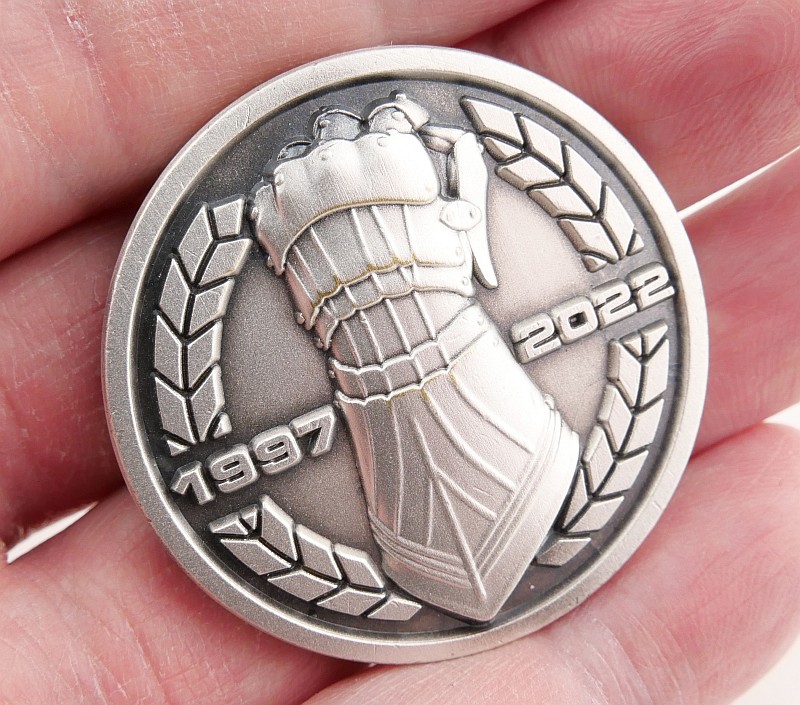
Included with the Anniversarium Limited Edition, is a special numbered presentation case and Anniversarium challenge coin. In this section, instead of unboxing we are looking at that special presentation case.


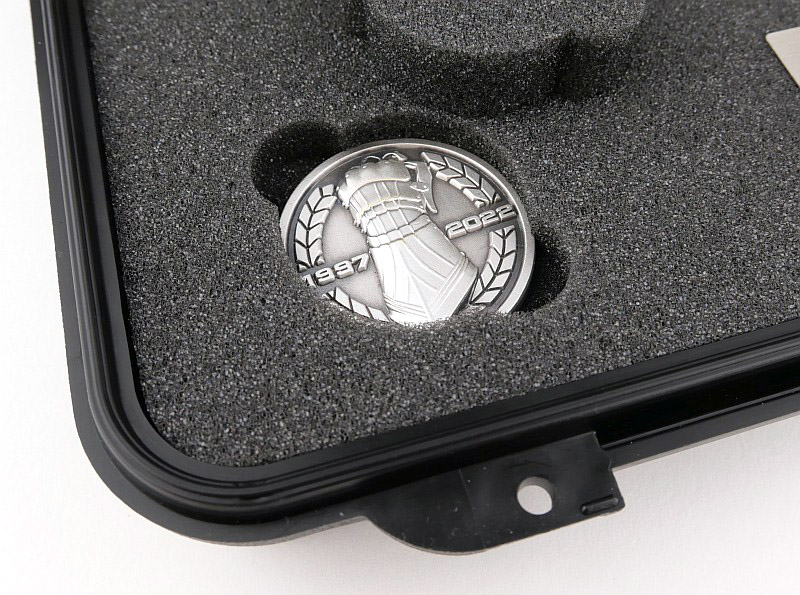
The Anniversary Coin:
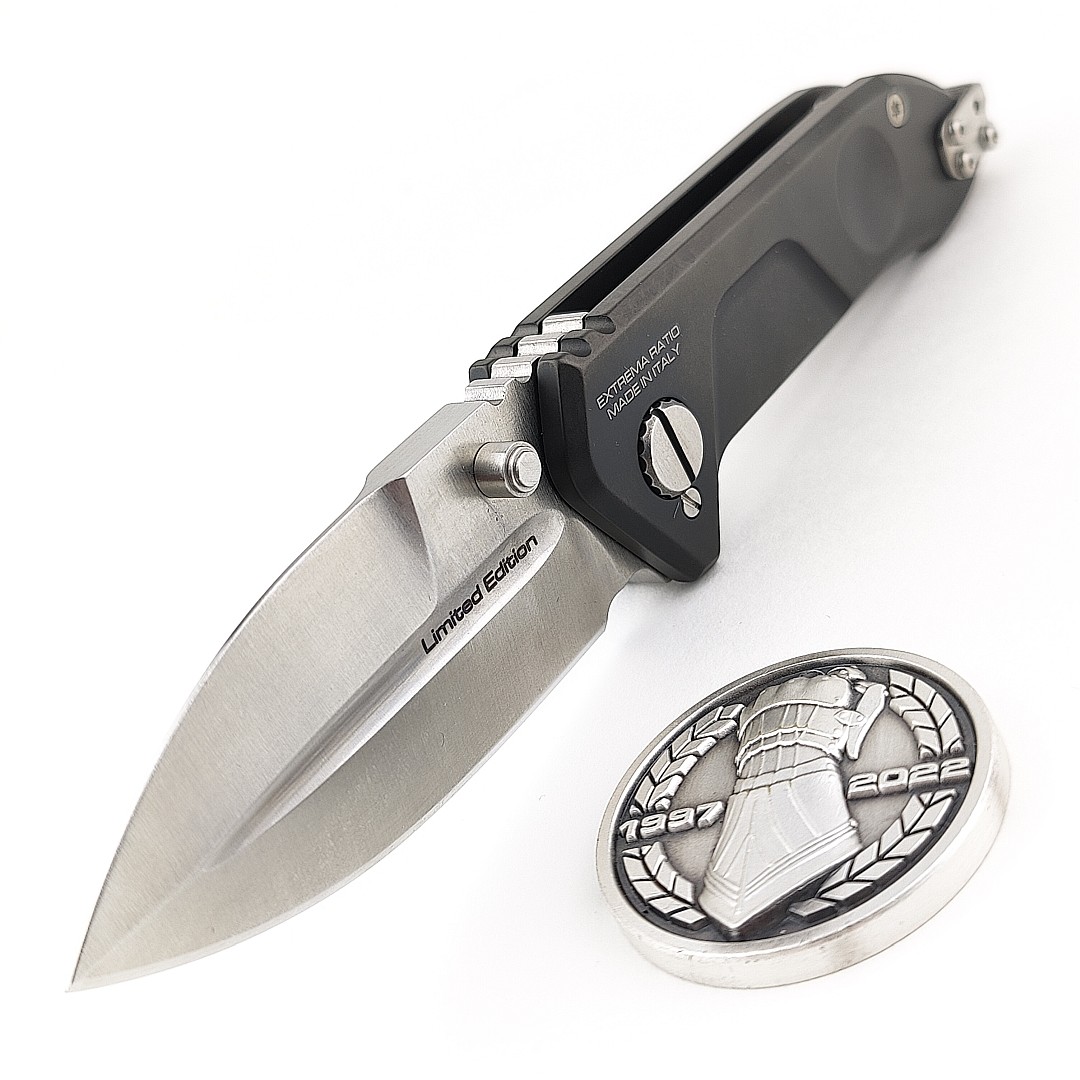
Before we move on, here are both sides of the Anniversarium challenge coin.


A REALLY good look round the FRAME ROCK – Things to look out for here are:
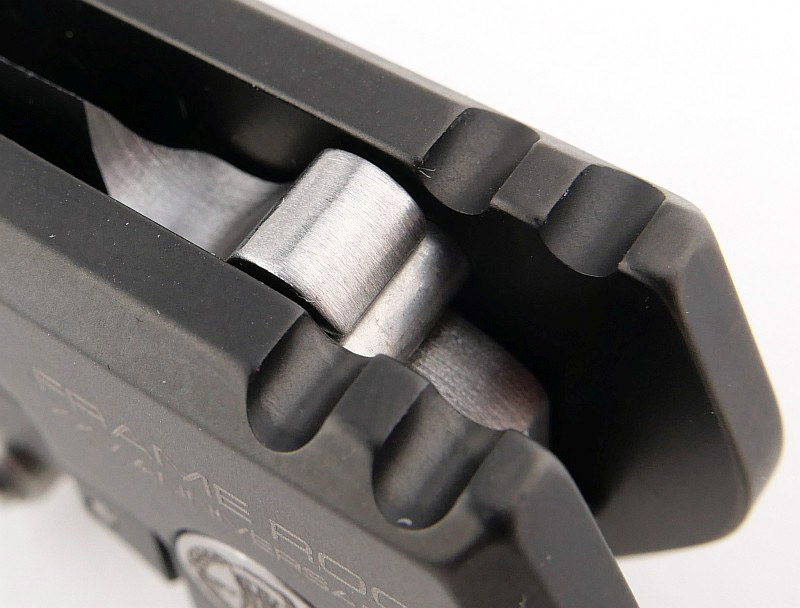
Unprecedented in size, this gallery contains more photos of details than ever before, to take in as much of this special edition as possible.
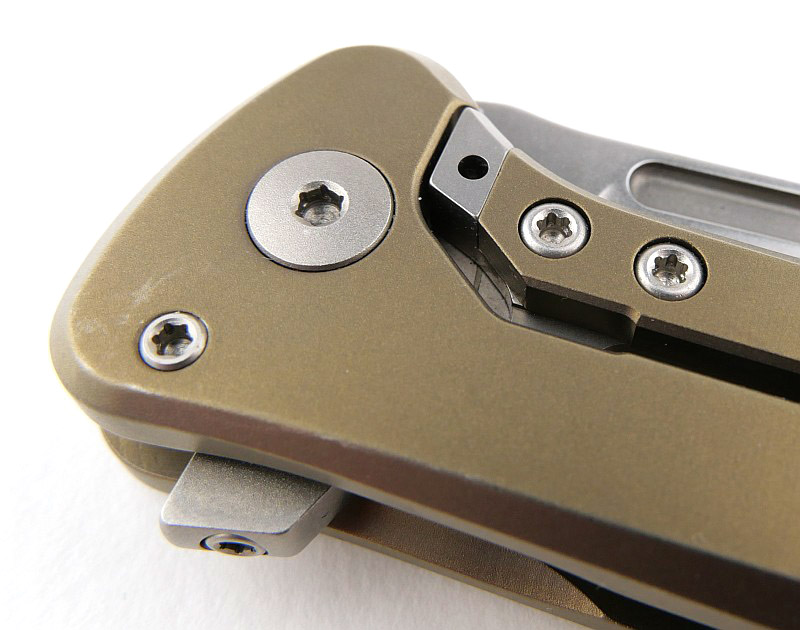
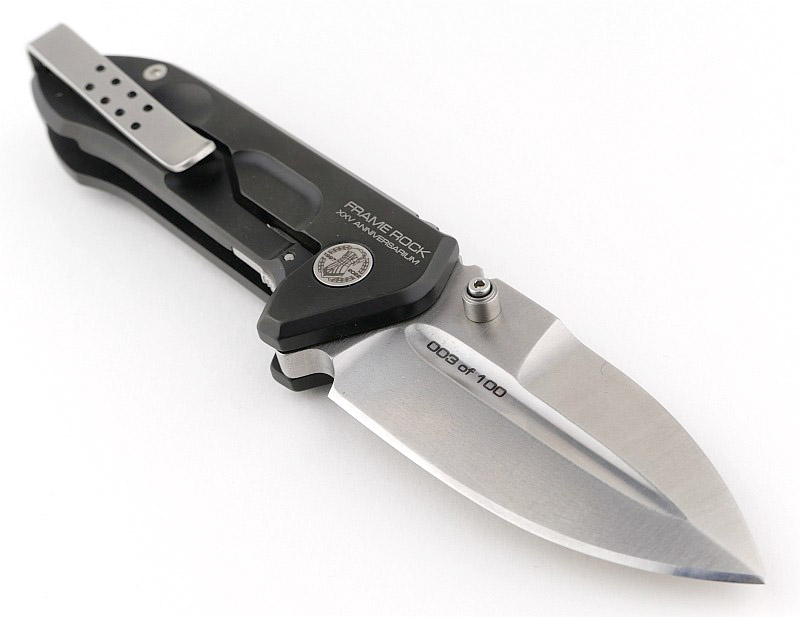
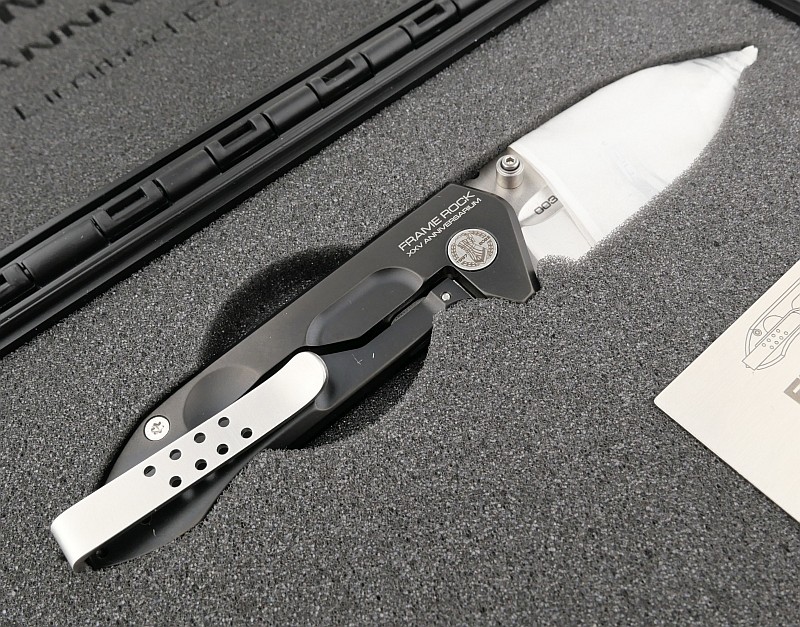
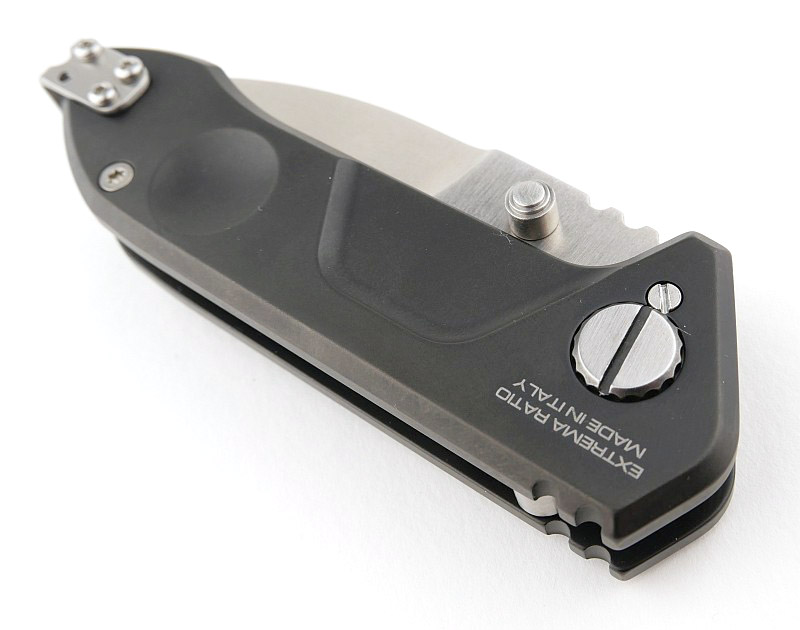
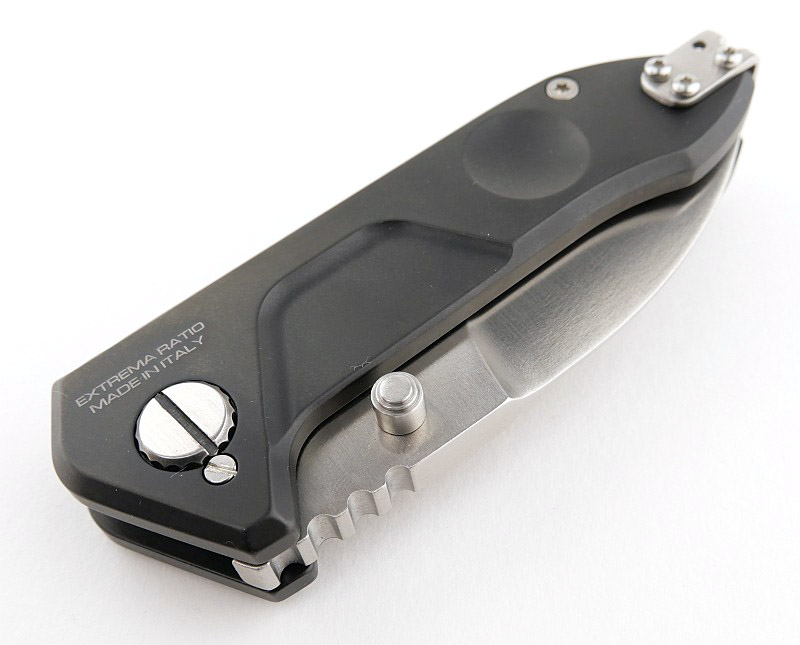
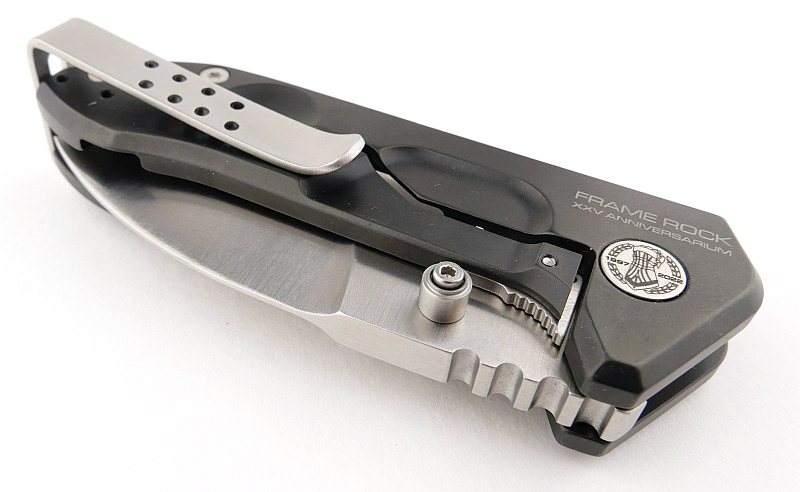
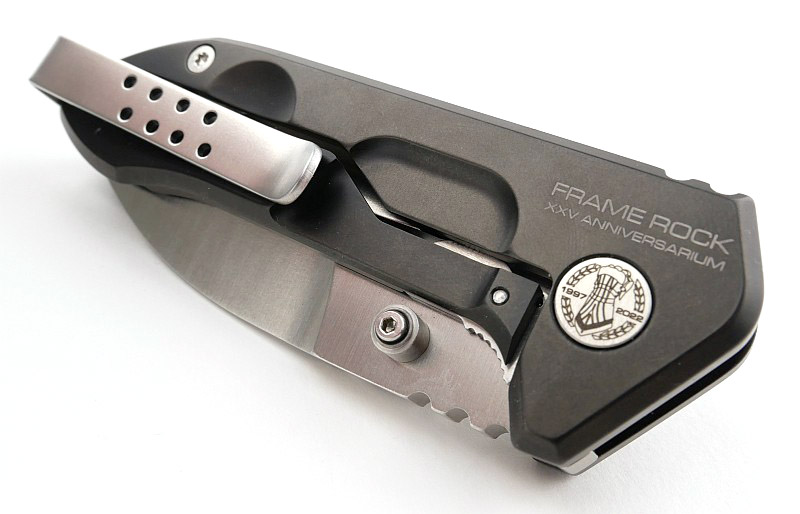
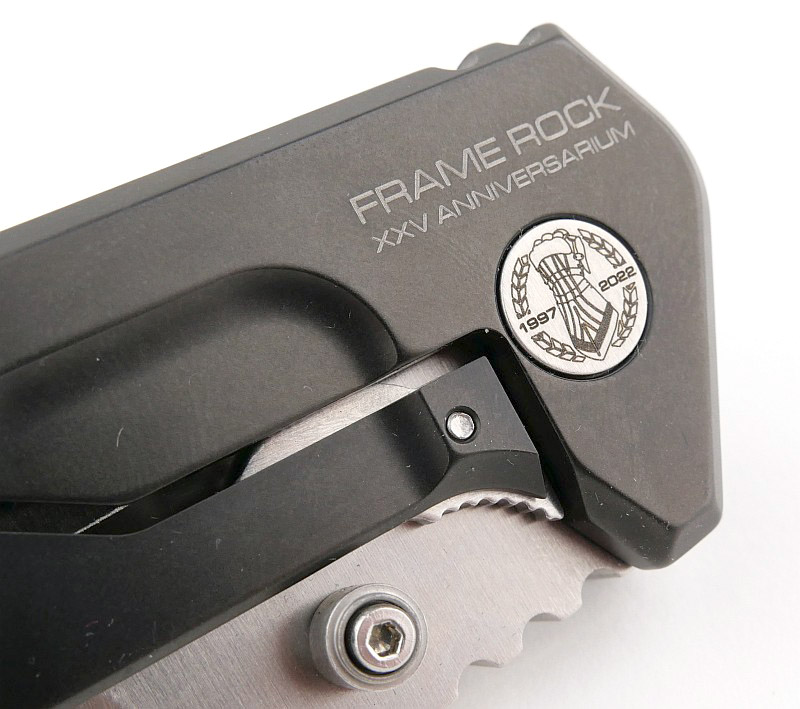
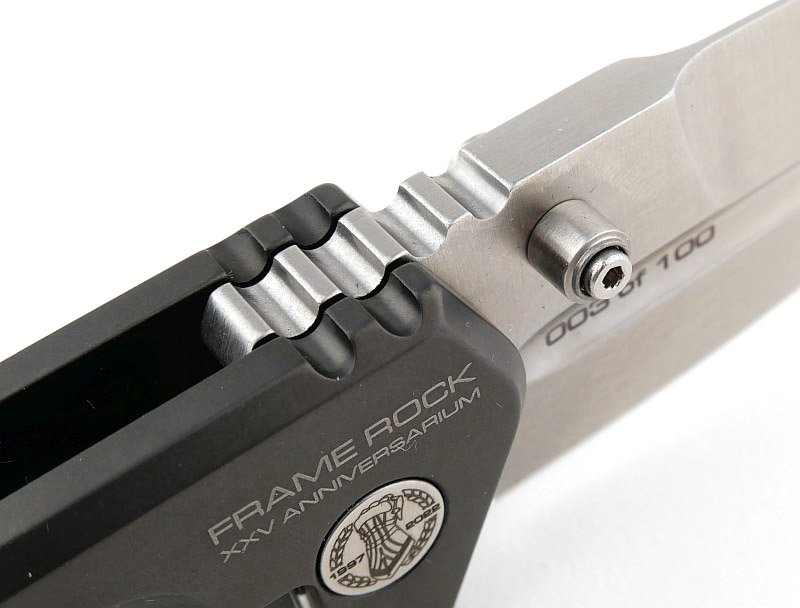
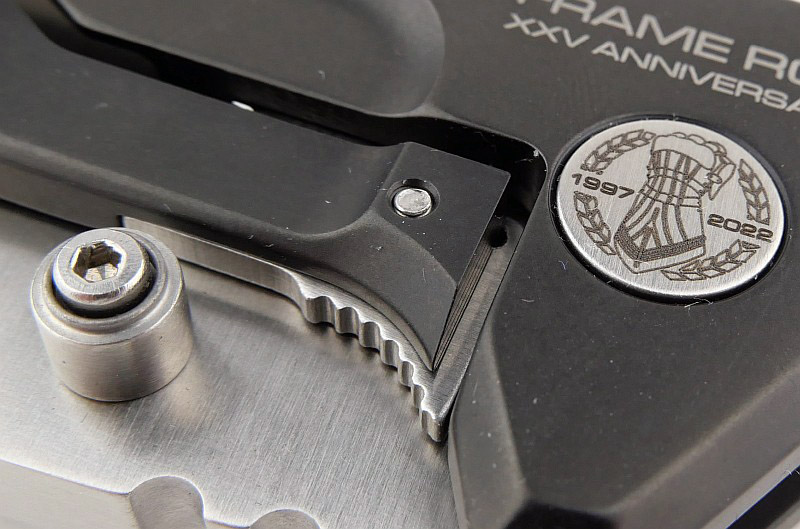
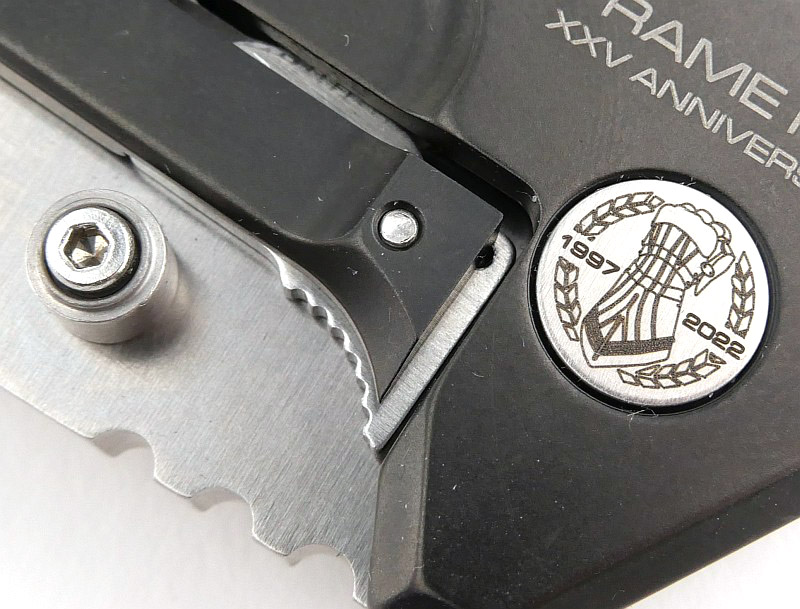
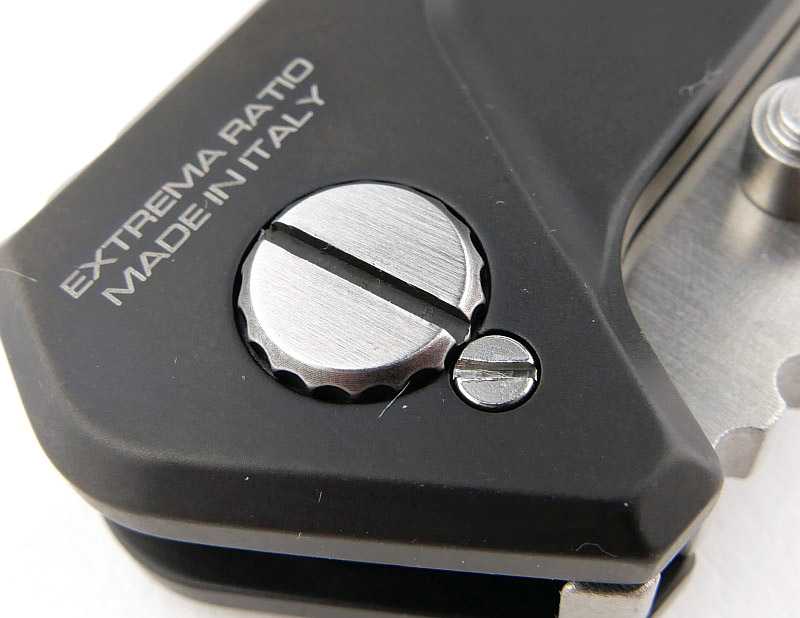
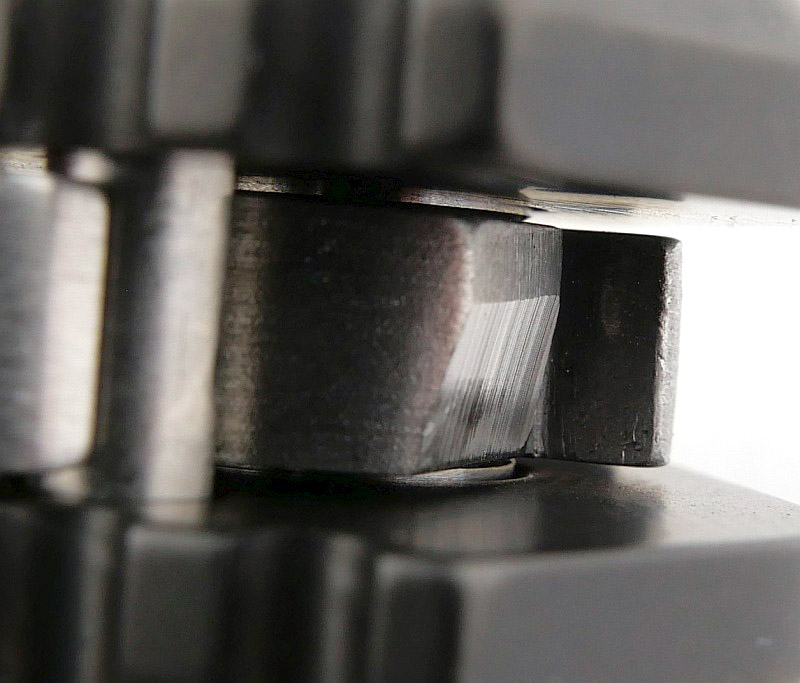
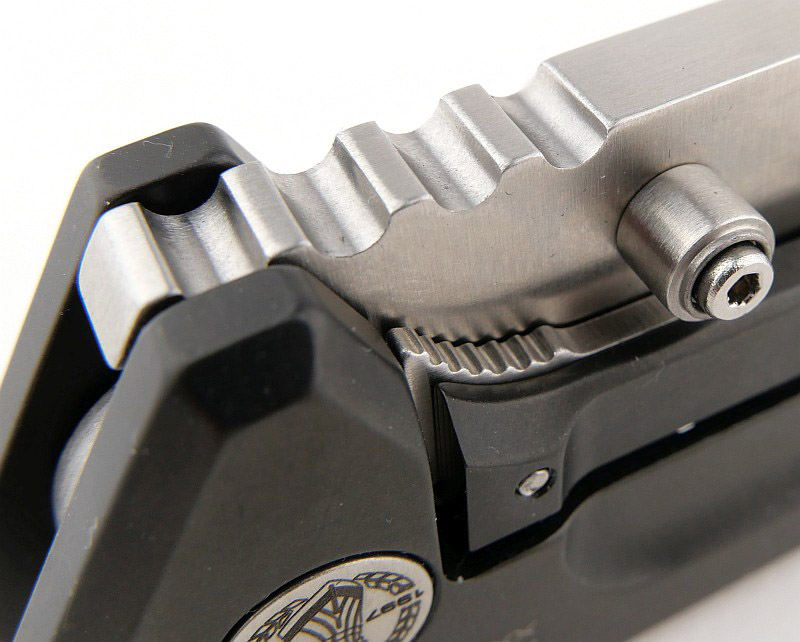
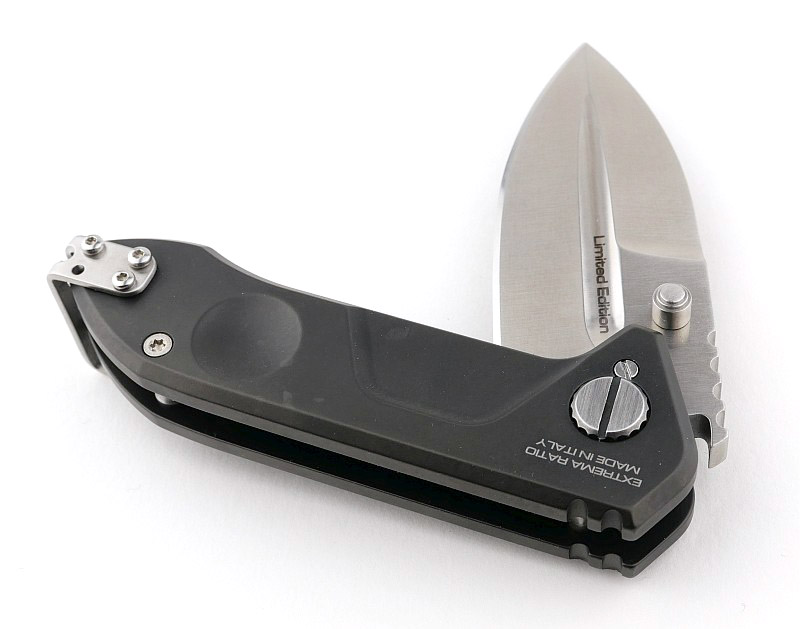
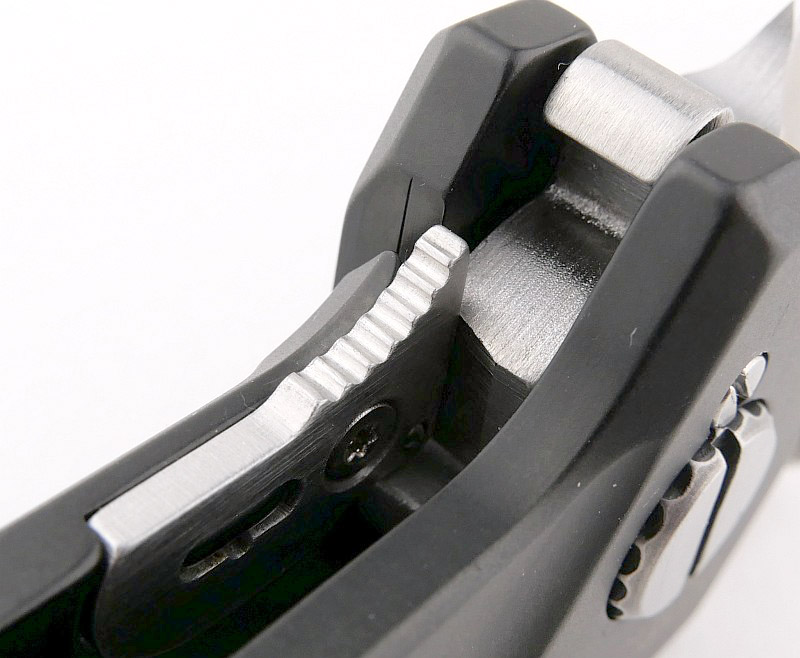
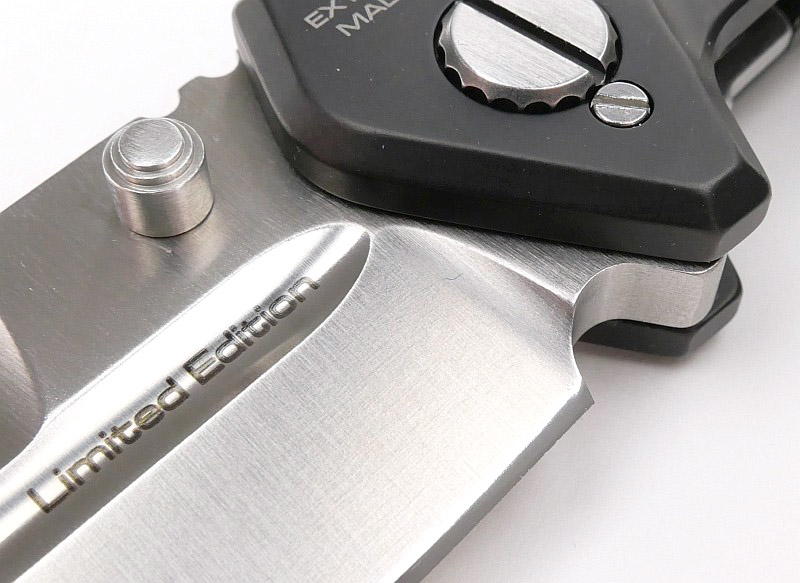
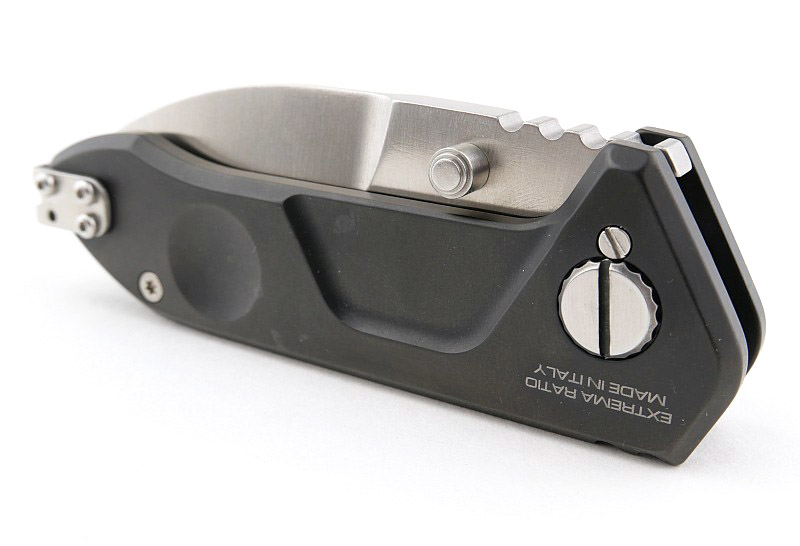
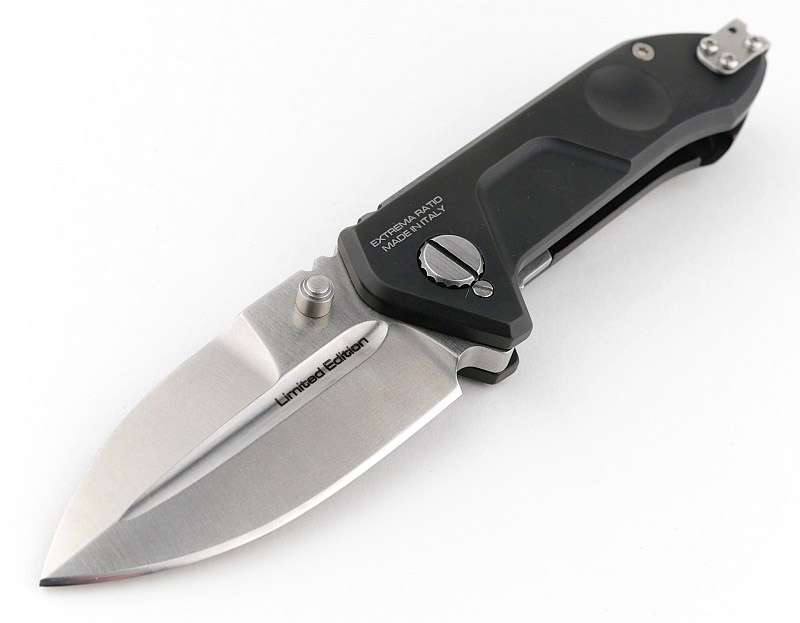
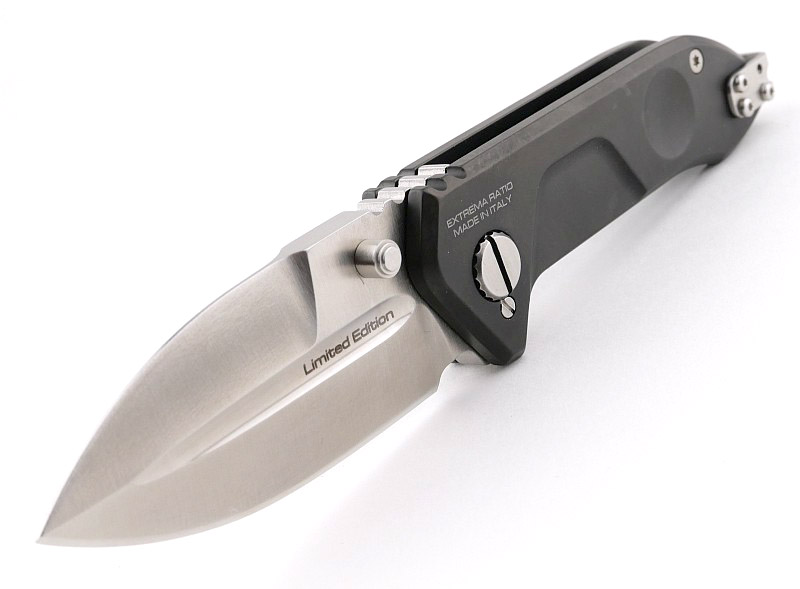
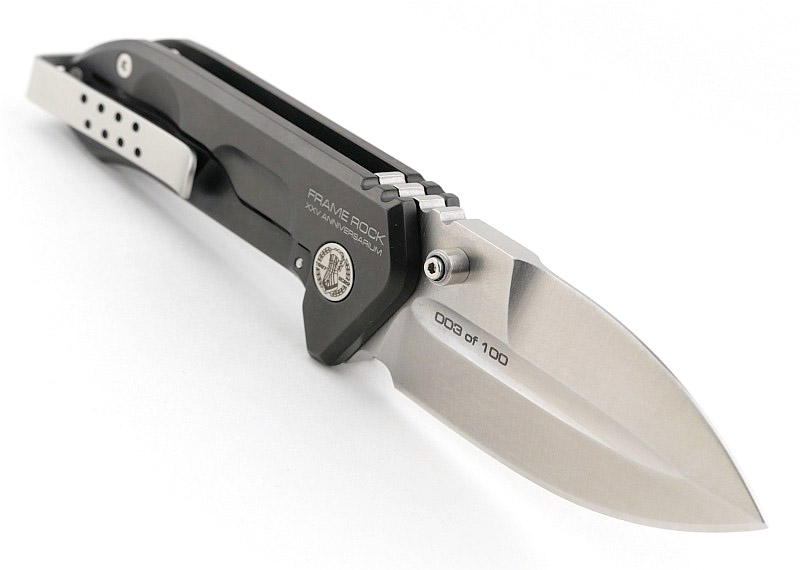
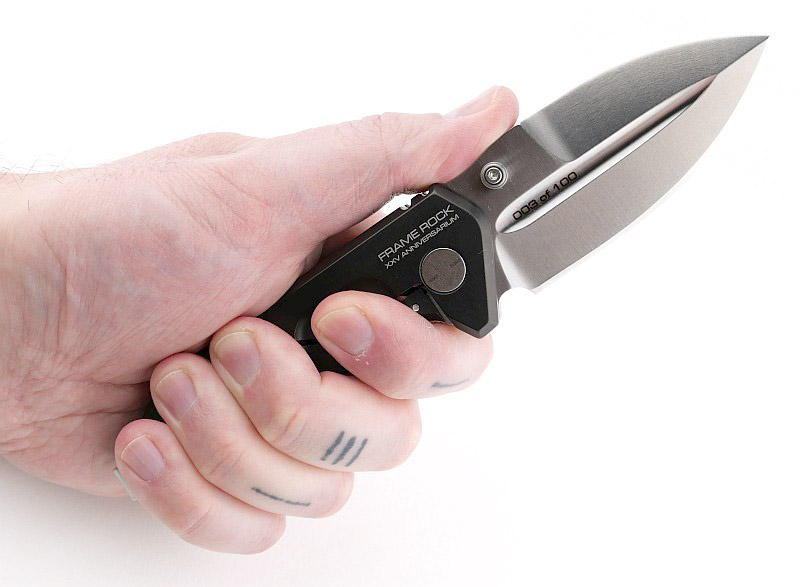
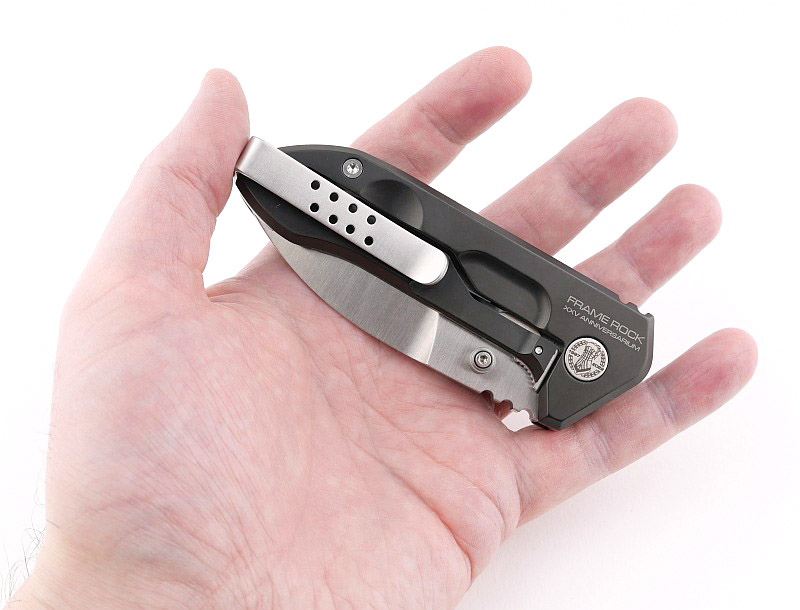
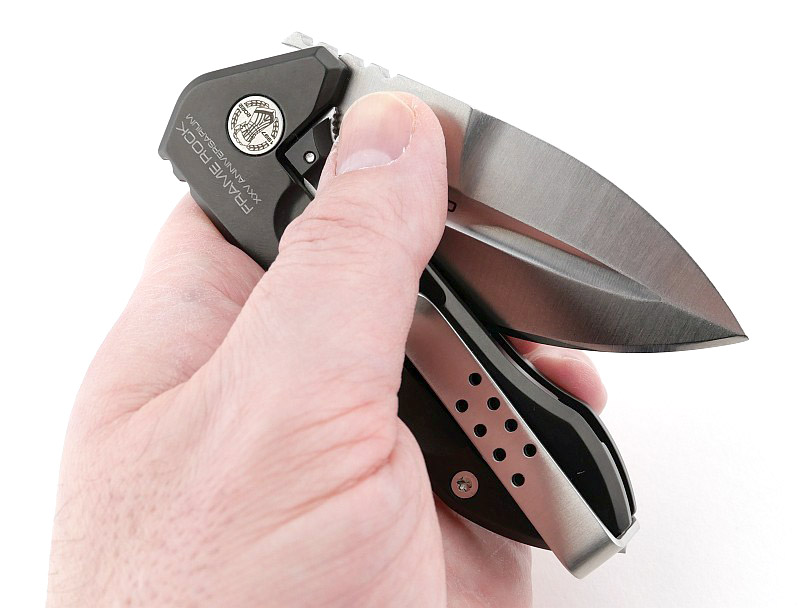
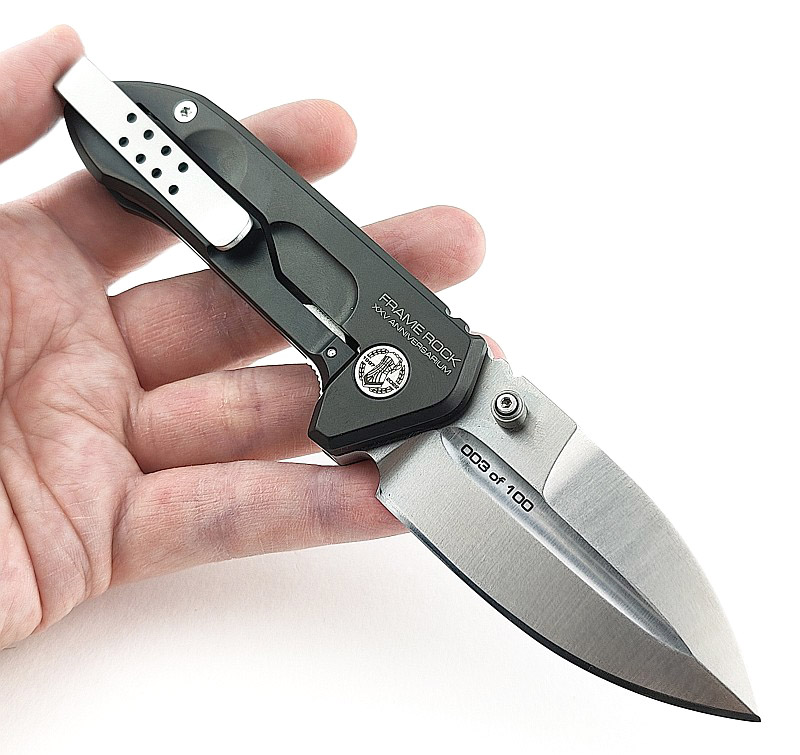
Folded or not, the FRAME ROCK is unmistakably Extrema Ratio with its grip pattern. The FRAME ROCK has presence even though it is relatively compact. On the plain head of the pivot bolt there is an engraving of the anniversary logo with a further XXV Anniversarium engraving just above this. Immediately you can see the 6mm thick blade stock with heavy jimping. An integral lock, the FRAME ROCK has a steel insert on the end of the lock bar to increase lock life and it can be replaced if needed.
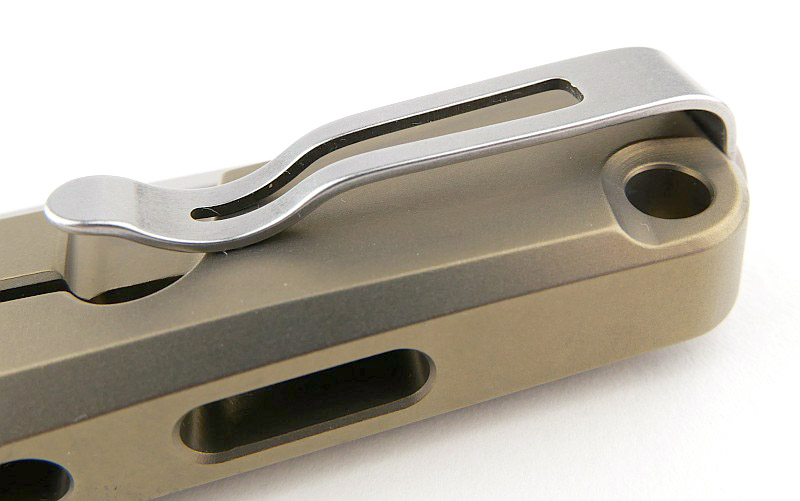
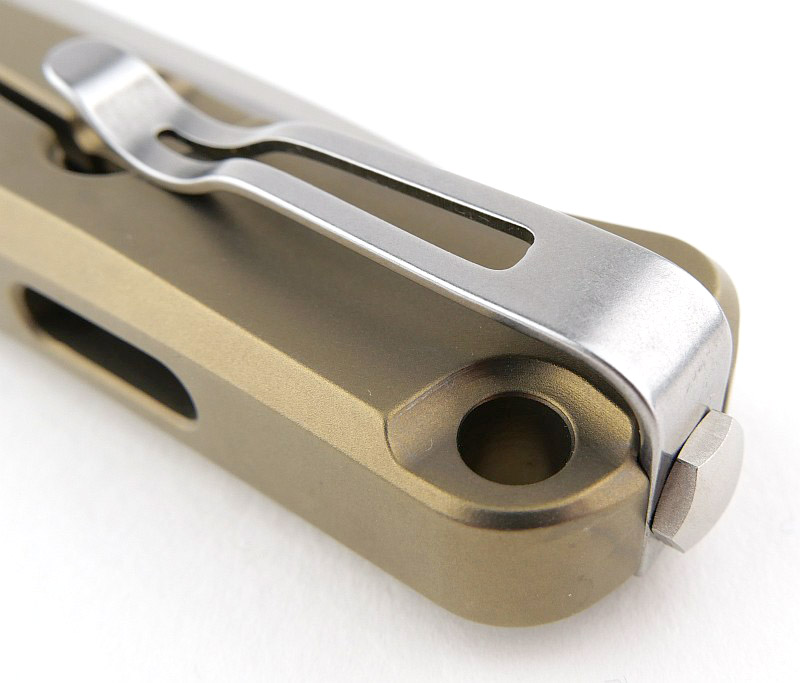
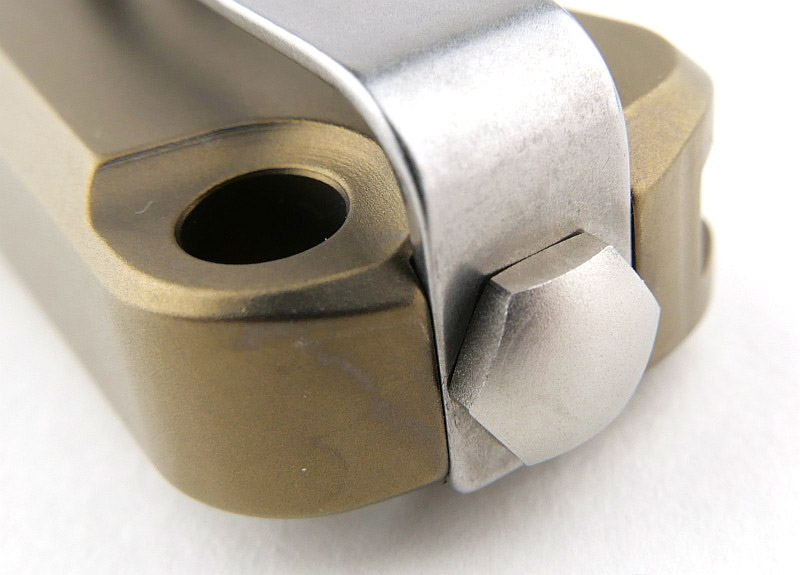
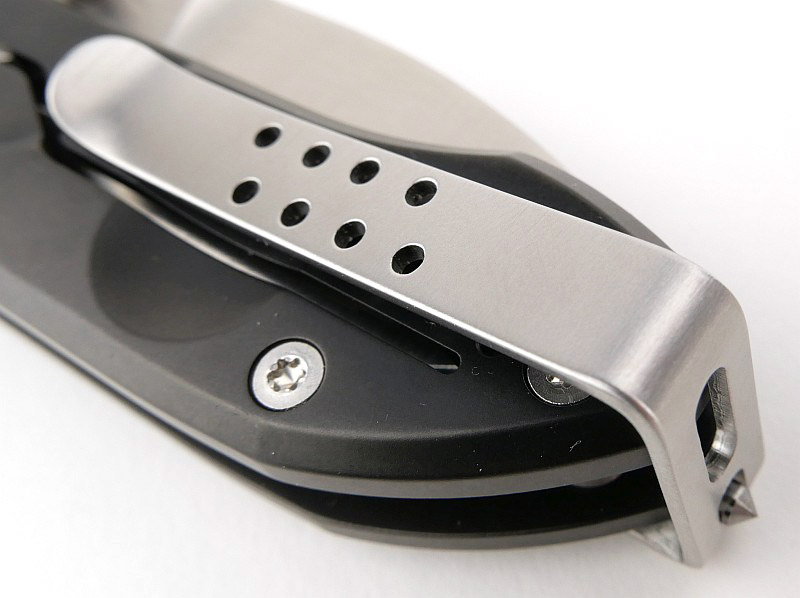
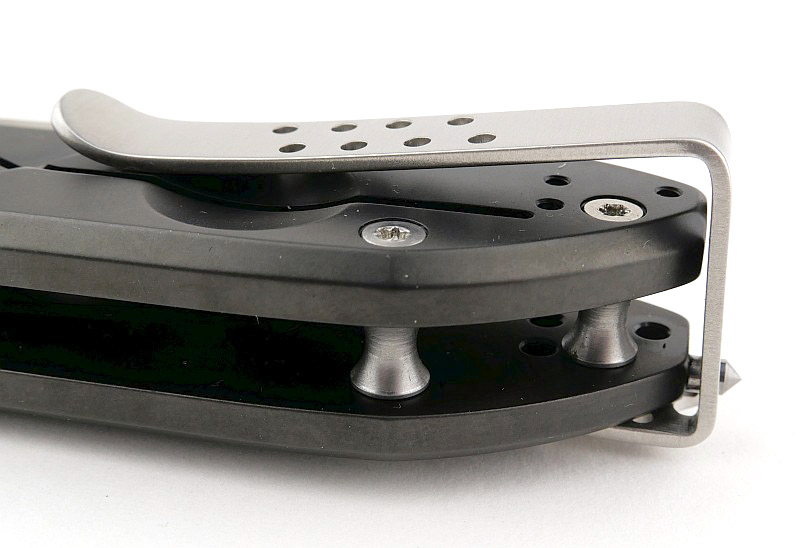
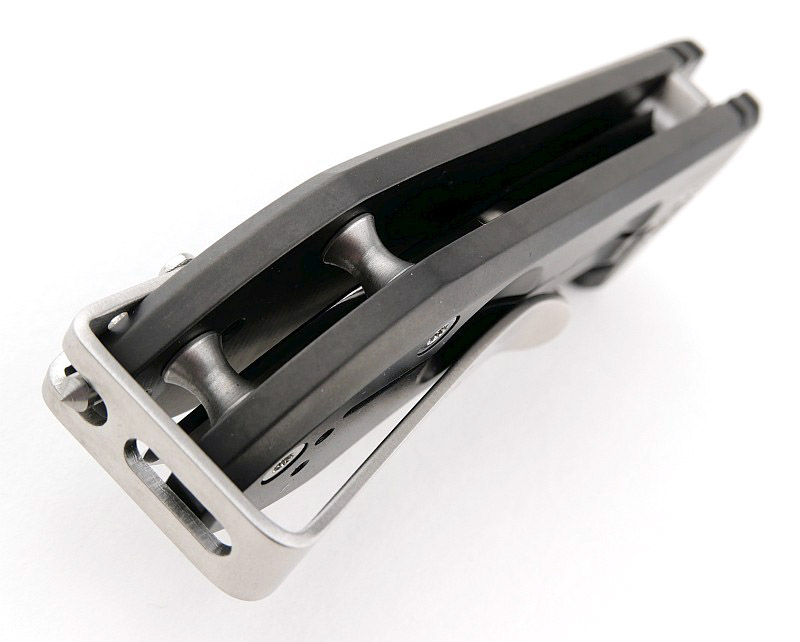
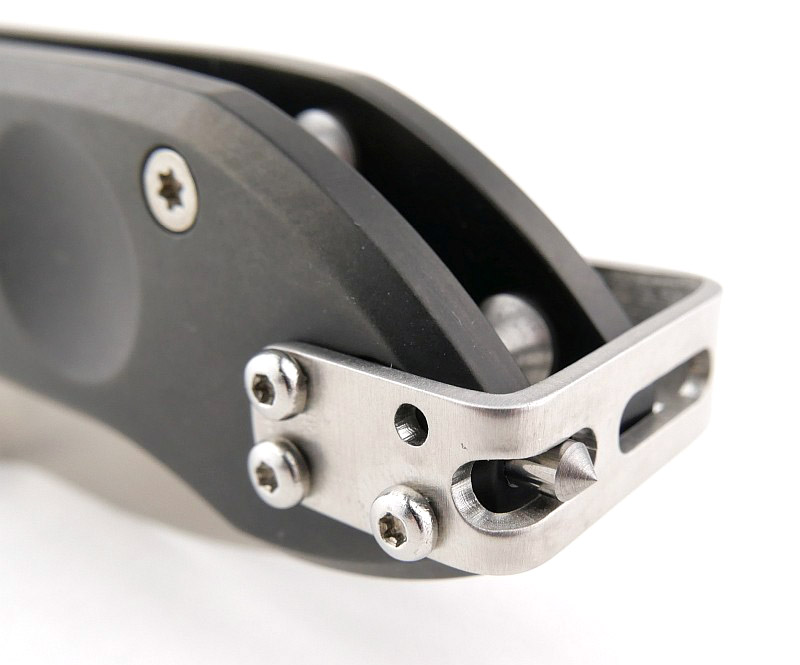
Extrema Ratio folders use a pivot bolt with locking screw that prevents loosening. Unusually, the deep carry clip wraps completely over the end of the handle, fixed onto the opposite side’s handle. As it wraps over it has a slot to allow the glass breaker to protrude through the clip (this can be fitted on the opposite side).
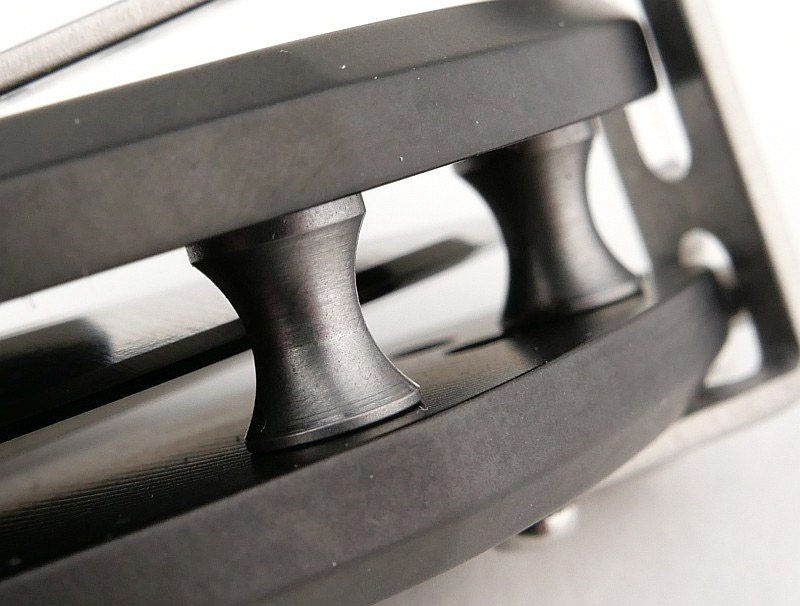
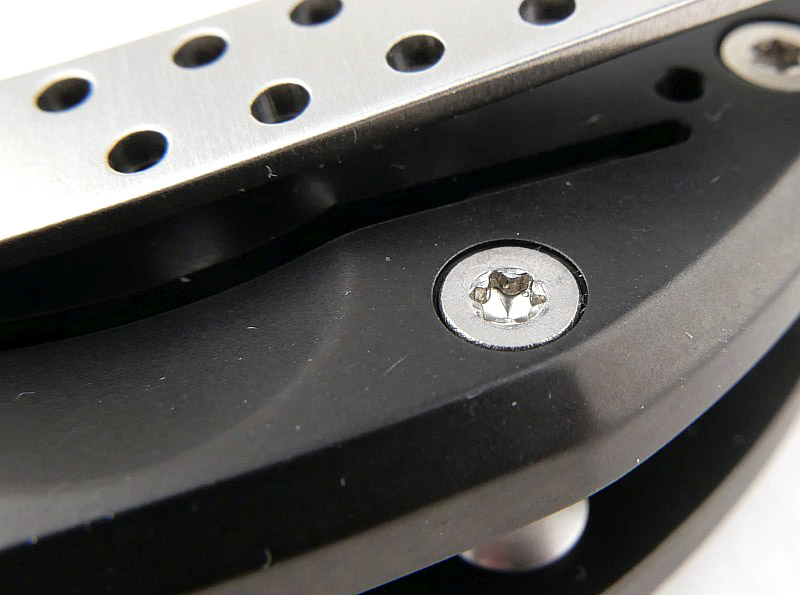
Waisted spacers hold the handles in place, and give the FRAME ROCK its open back layout.
As the glass breaker is fixed in the solid handle (not the lock bar side), to accommodate this, should you swap the clip side, there is an extra slot in the clip.
Looking right into the pivot, what is visible are the ball bearing cups for the pivot bearings that give the blade a smooth action.


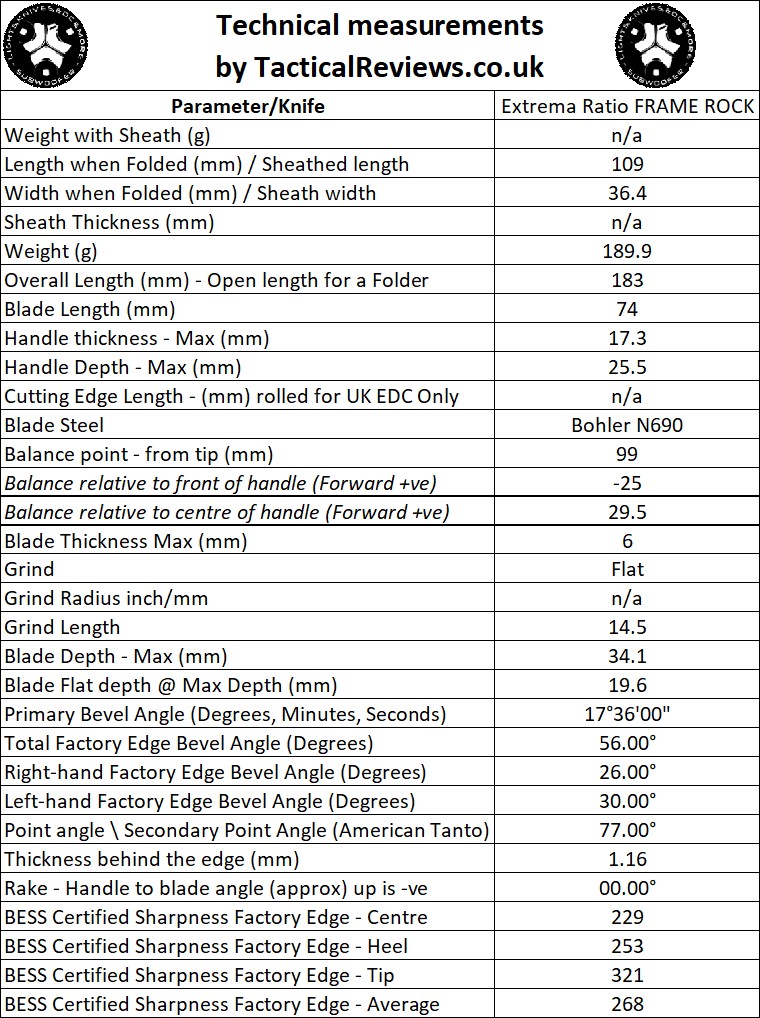
The Blade and Handle – Detailed Measurements:
For full details of the tests and measurements carried out and an explanation of the results, see the page – Knife Technical Testing – How It’s Done.

The blade is made from N690 steel.


The Factory edge up close:

Followers of Tactical Reviews will know my views on factory edges, but to recap:

Anyone using a knife will need to sharpen it. That first factory edge is just like the first tank of fuel that a new car comes with (or first charge of the battery).
A good factory edge is a ‘nice to have’ but not a ‘make or break’ for a good knife, as you will be putting your own edge onto it soon enough.
The factory edge does however indicate the care a knife maker has put into the final finish.
It is for this reason Tactical Reviews measures factory edge sharpness and specifications, and includes this information in the detailed technical testing.

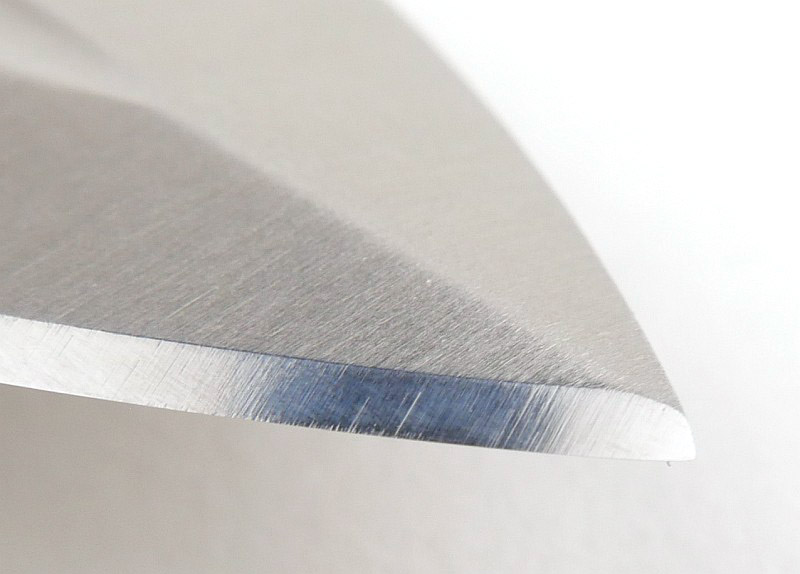
As a further look at the factory edge, this section has been added to include some high magnification photos of the factory edges.


What is it like to use?

A compact, heavyweight, overbuilt knife, it almost seems a contradiction, but the compact size actually allows for a relatively light weight for such a robust knife.
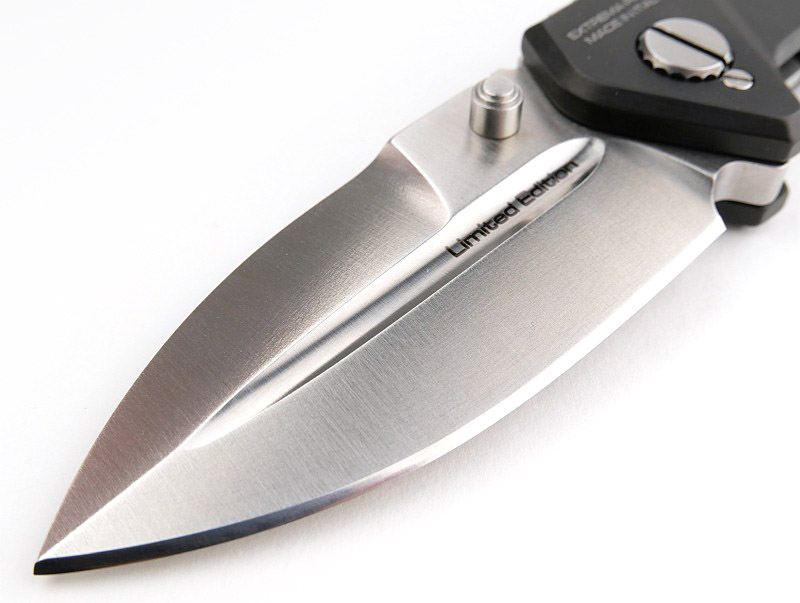
Featuring a beautiful spearpoint blade with fuller, using the same blade shape as the Contact and Contact C fixed blade models. The blade shape adds to the unique look the FRAME ROCK brings.
The more you handle it, the more you understand the allure of the unusual robustness for a knife of this size. Typically, overbuilt folders are much larger, but the FRAME ROCK fits within the hand, while having an incredible solidity – hugely satisfying.
Somehow it also belies belief that such a wide spearpoint could fit into the handle, looking all the more impressive as you swing it open.


For larger hands, the compact handle does mean the clip tends to dig in if you are working the FRAME ROCK hard, and in the left hand, the glass breaker can dig into your hand when taking a tight grip. But trade this off against the overbuilt strength you are carrying, a blade that will take on heavy tasks and not break a sweat.


Review Summary

The views expressed in this summary table are from the point of view of the reviewer’s personal use. I am not a member of the armed forces and cannot comment on its use beyond a cutting tool or field/hunting knife.

Something that might be a ‘pro’ for one user can be a ‘con’ for another, so the comments are categorised based on my requirements. You should consider all points and if they could be beneficial to you.

_______________________________________________
What doesn’t work so well for me
_______________________________________________

Glass breaker digs into hand when used left-handed.
Thick blade reduces slicing ability.

_______________________________________________
Things I like
_______________________________________________

Incredible robustness for its size.
Stunning spearpoint blade with fuller.
Deep-carry ambidextrous clip.
Replaceable steel lock bar insert.
Pivot-bolt locking-screw to prevent loosening.
Smooth ball-bearing blade pivot.
Thick Titanium frame.
Special numbered presentation case.
Anniversarium challenge coin.

 
Discussing the Review:
Something new – will it work? A Tactical Reviews Subreddit.
TacticalReviewsChat on Reddit
Please visit there and start/join the conversation.
Knife Review: ANV M311 COMPACT

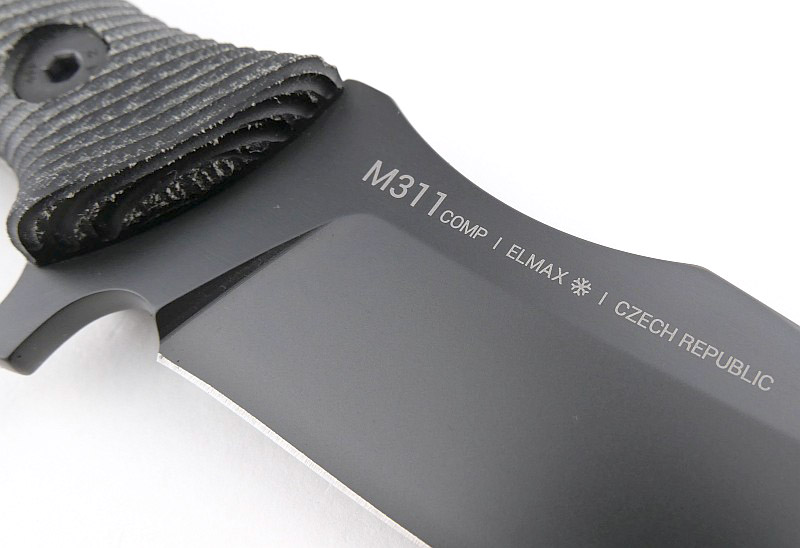
The M311 COMPACT is a scaled down version of the excellent M311 Spelter. The reduction is 13%, bringing the overall length down to 235mm and blade to 110mm, while completely retaining the M311’s distinctive characteristics.

With the M311 Spelter being one of my favourite knives, the announcement of the M311 COMPACT had me sitting on the edge of my seat waiting to get hold of one and try it out.

Join me in this detailed review of the ANV – ACTA NON VERBA Knives M311 COMPACT to see what it is really like.

Before we properly embark upon the full review of the M311 COMPACT, lets see what that 13% scaling down looks like compared directly to the original M311 Spelter.

Including the sheaths initially as this is the package you carry.

Then the knives themselves next to each other. 13% doesn’t sound much, but it makes a big difference. The original M311 Spelter is a substantial knife. With a 13% reduction, the M311 COMPACT becomes much more EDC than expedition.

Review Videos

Starting with a short format sixty second review:


Onto a full video review covering many more details:


A few more details:

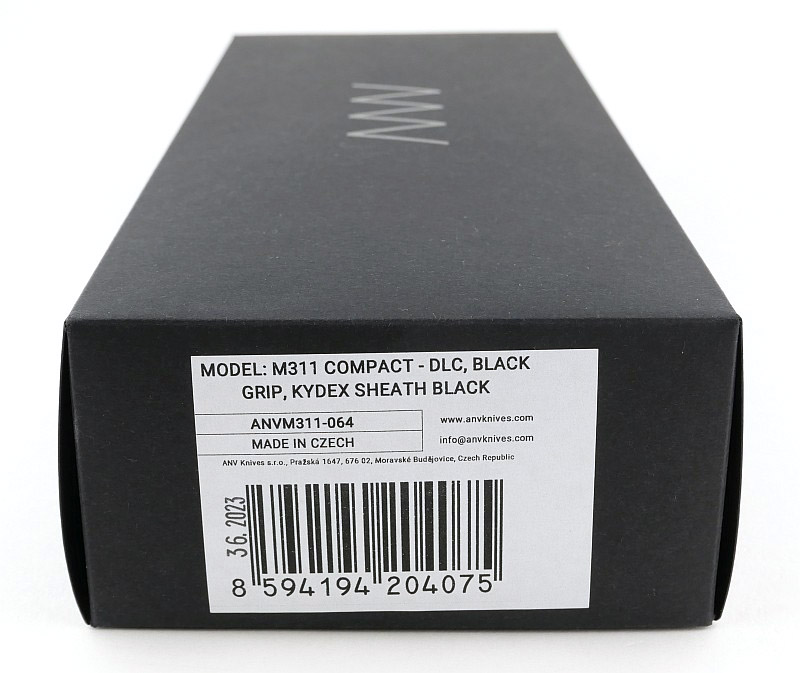
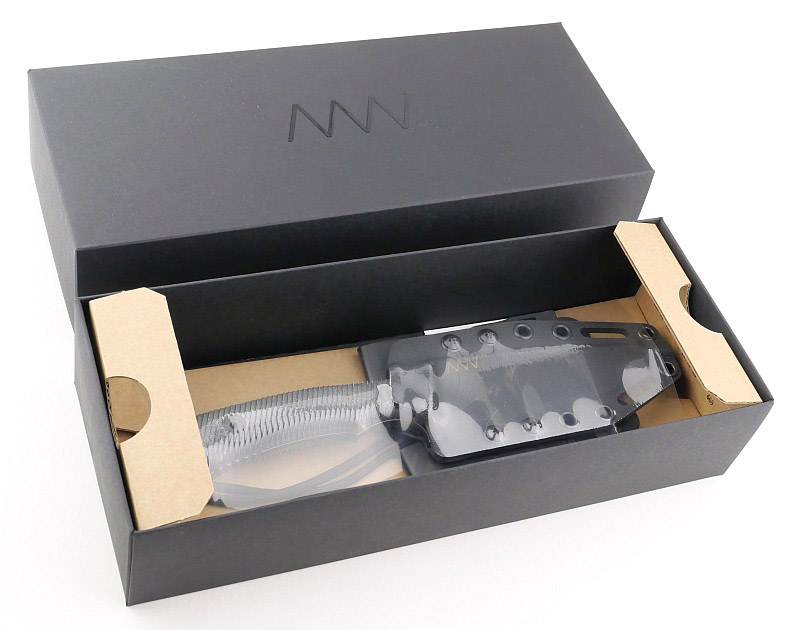
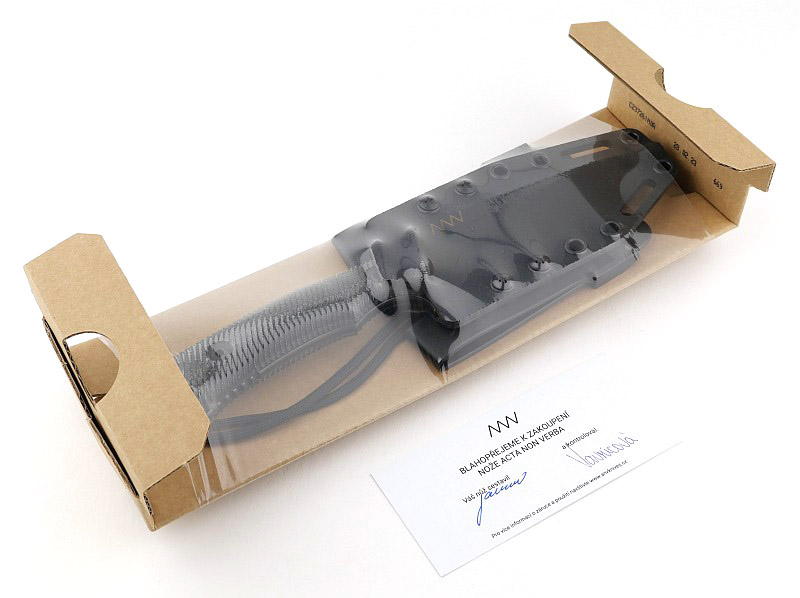
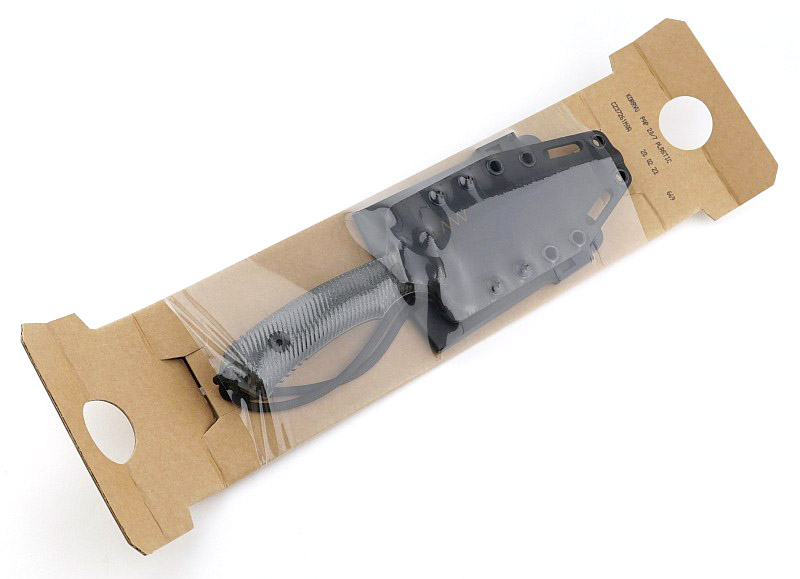
What’s in the box?:
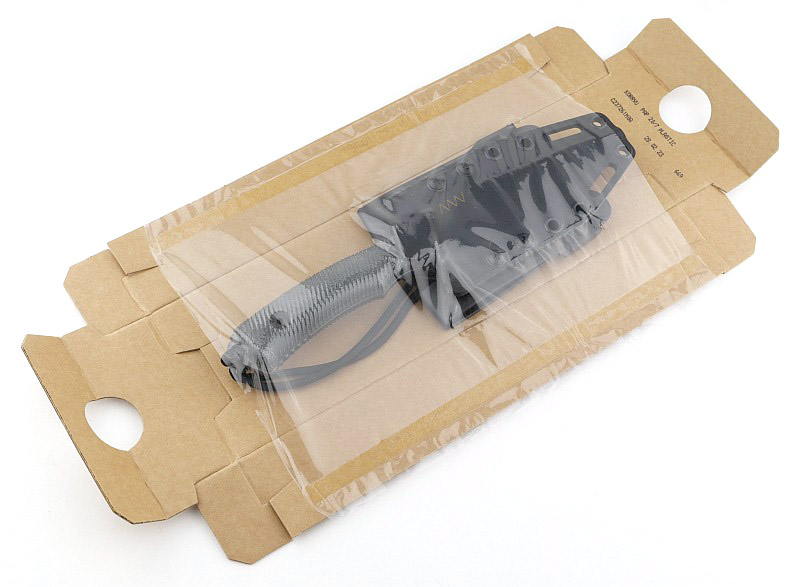
The ANV packaging has had a slight update where the knife is held in a liner which stretches a clear plastic film over the knife to keep it firmly in place.


A good look round the M311 COMPACT’s Sheath – Things to look out for here are:
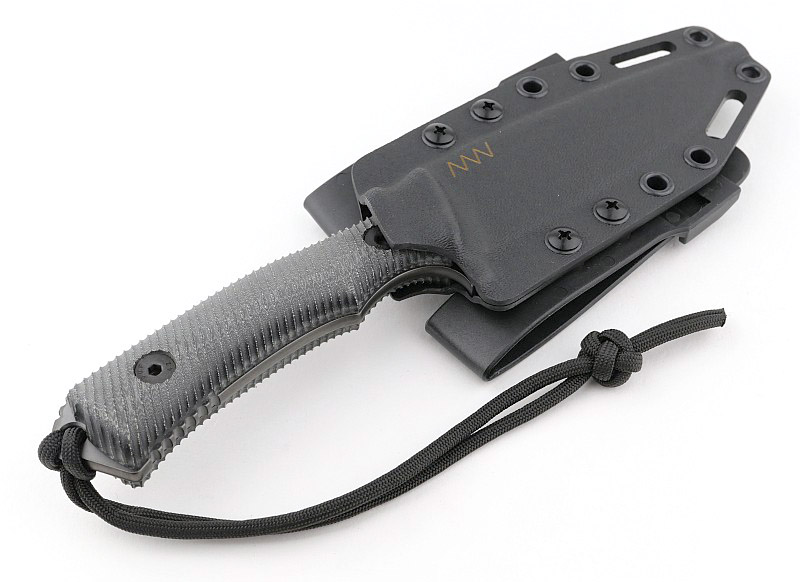
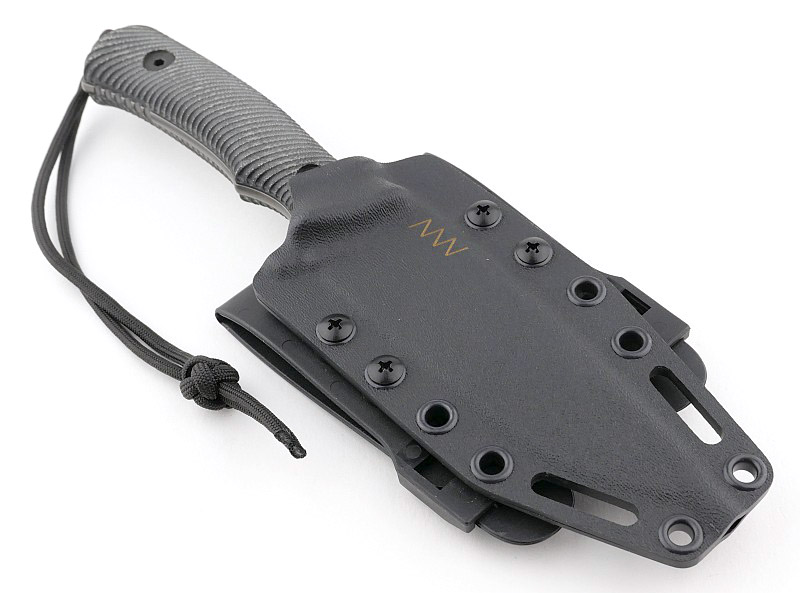
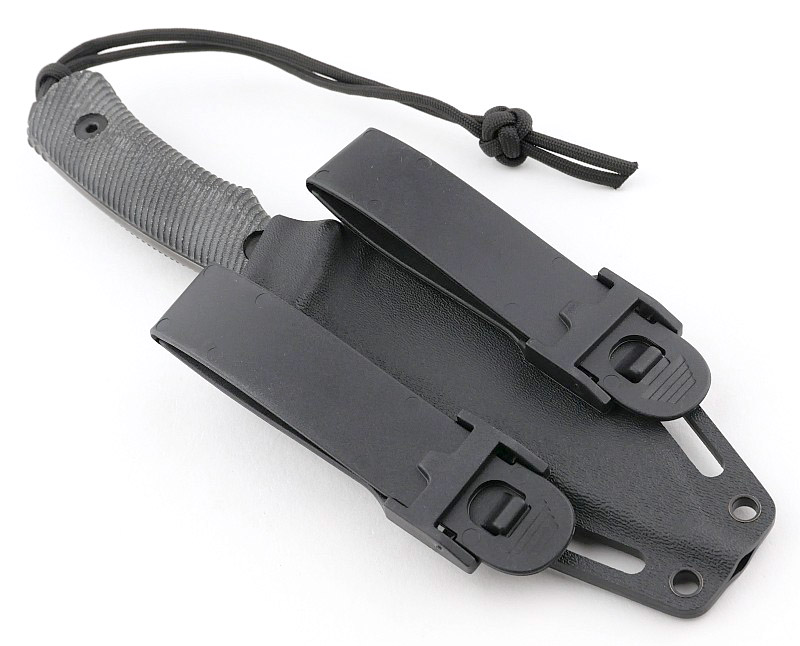
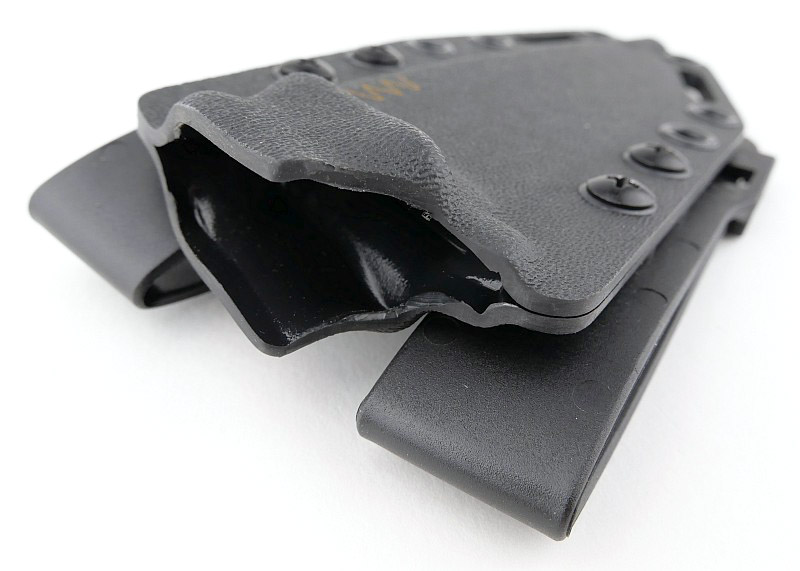
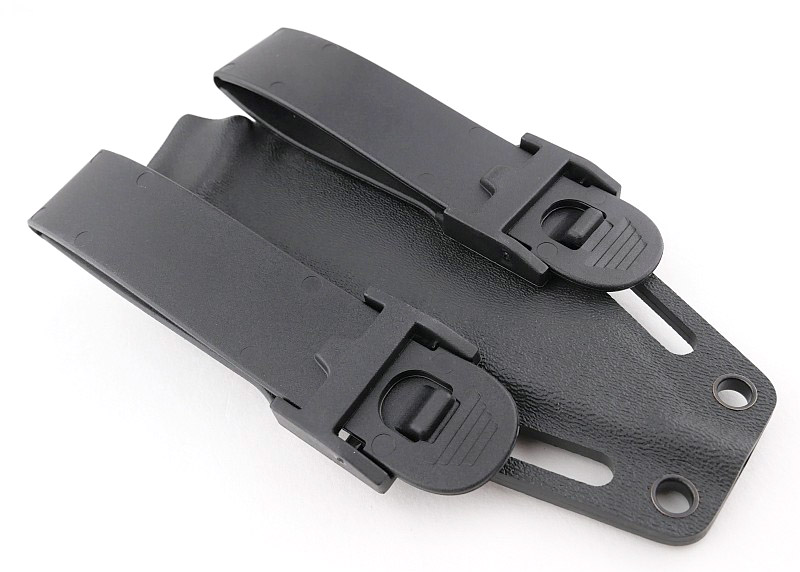
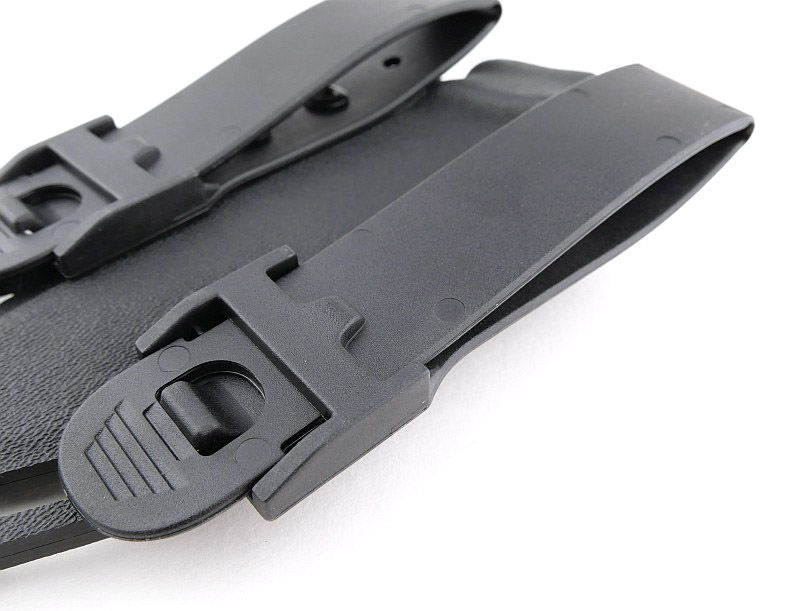
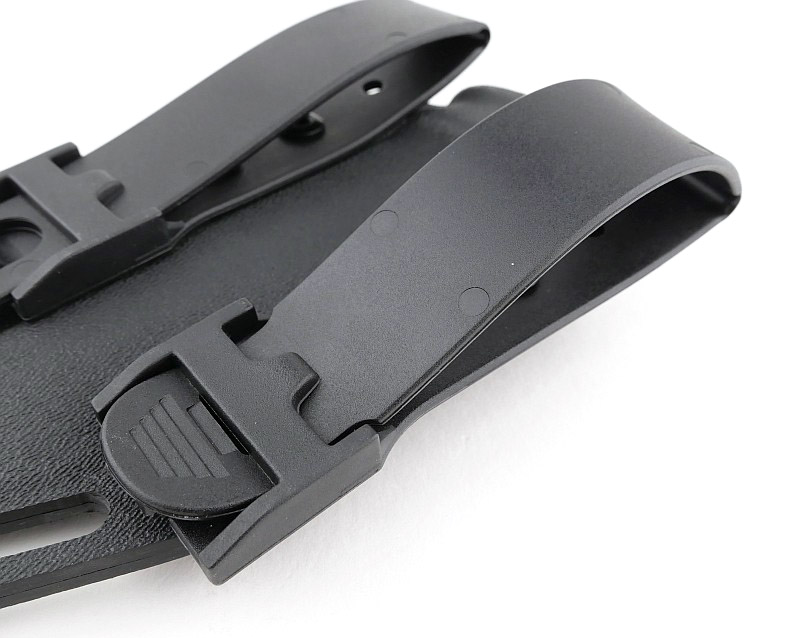
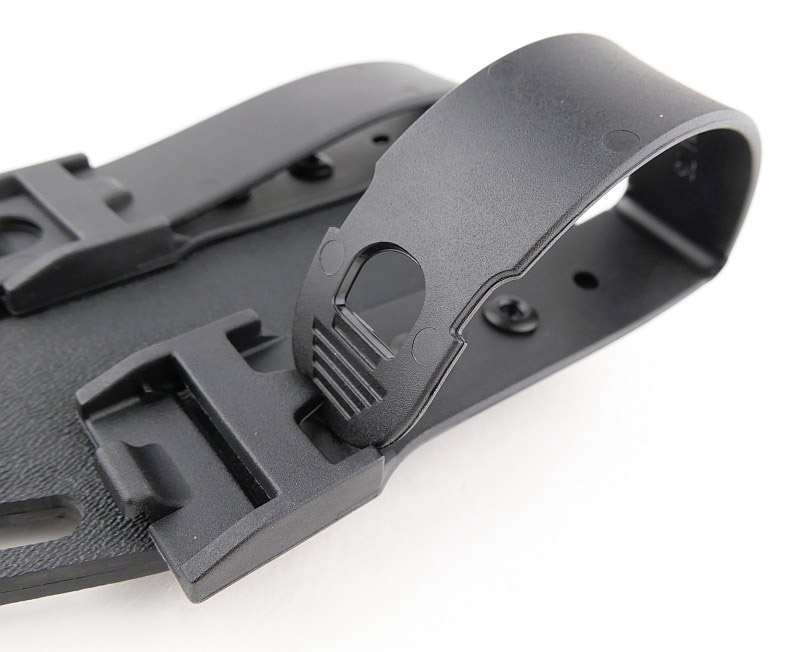
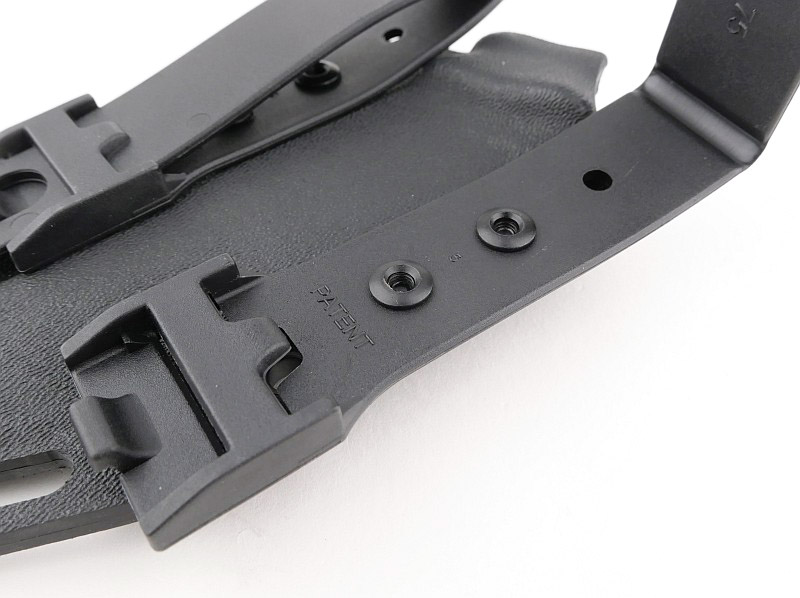
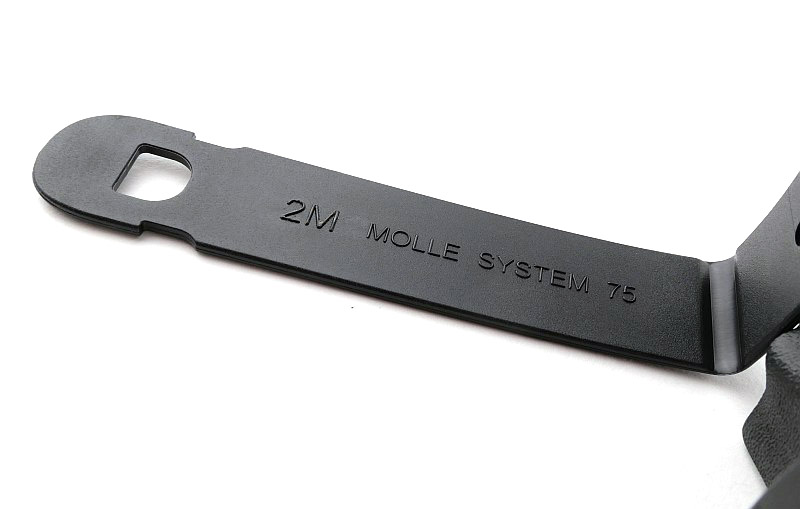
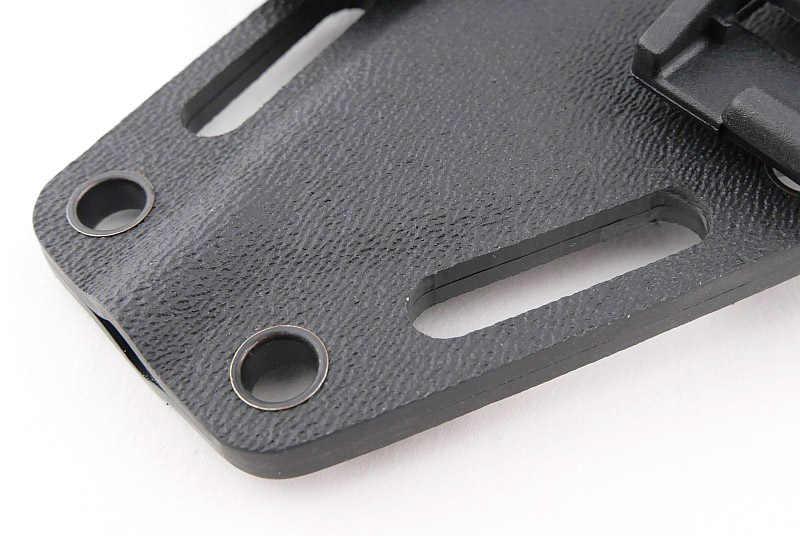
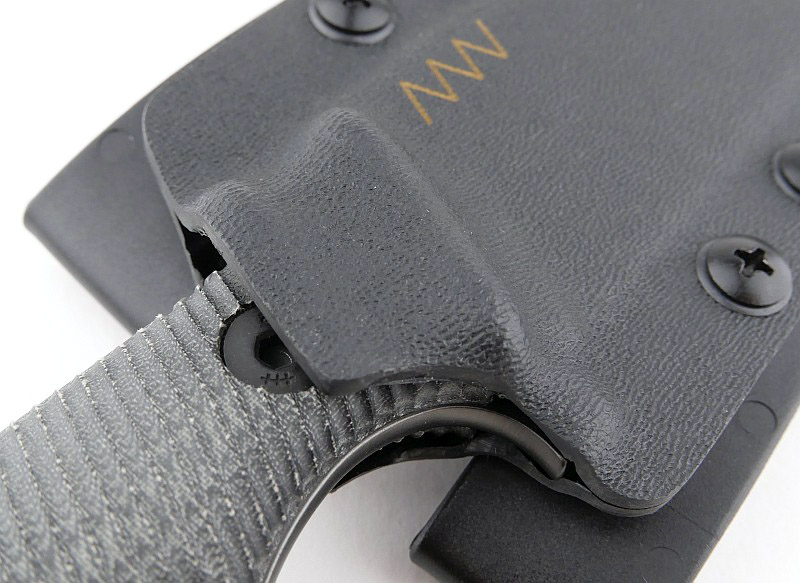
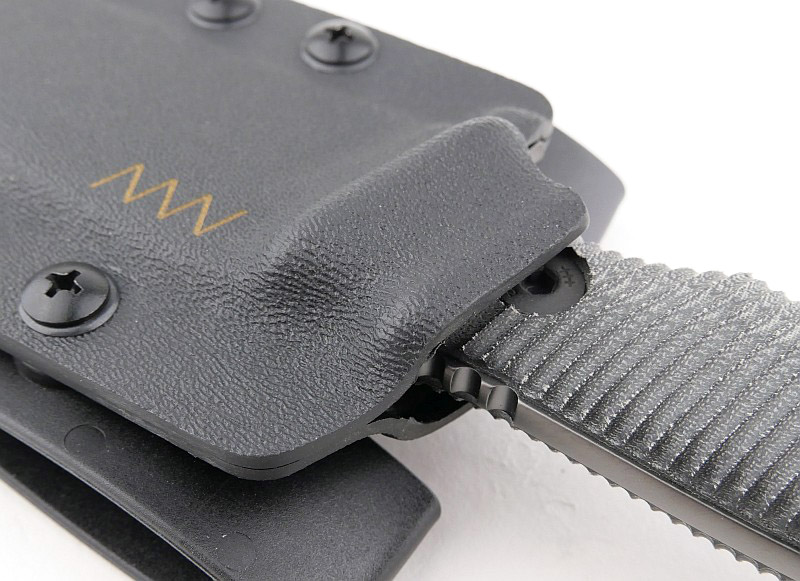
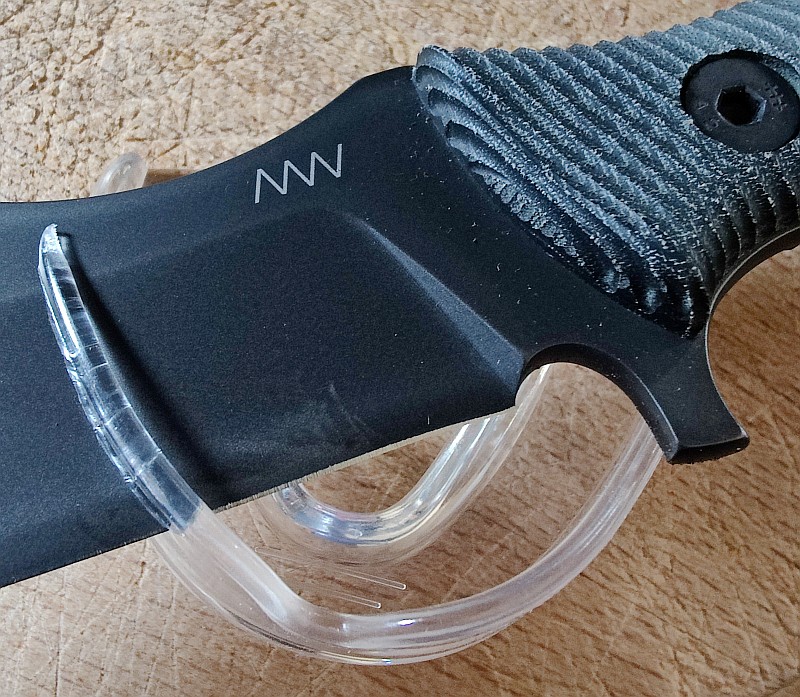
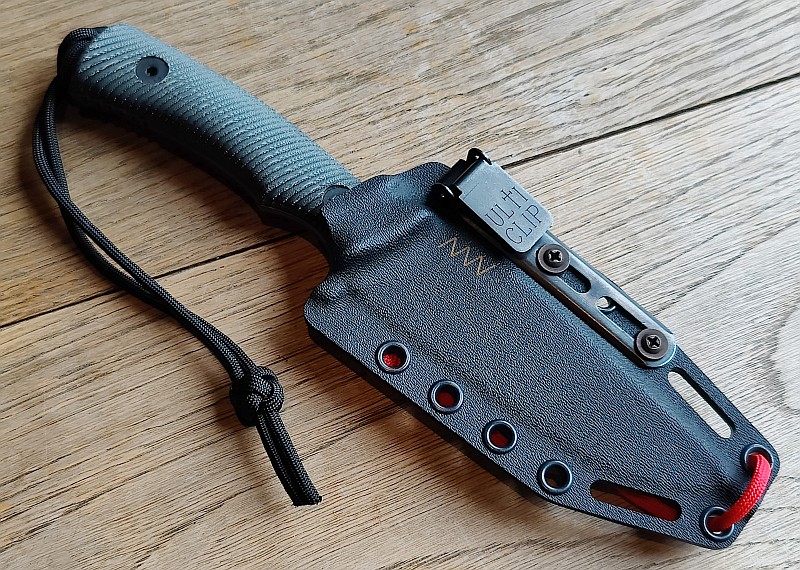
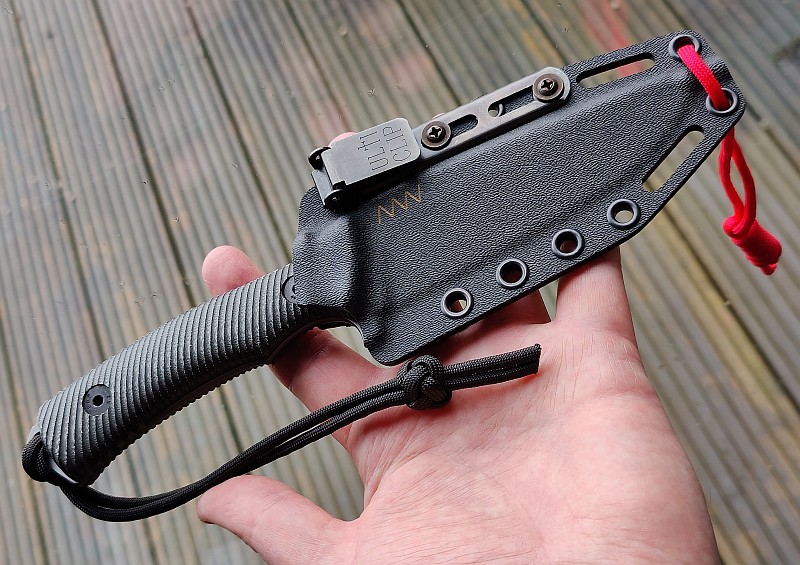
With the scaling down, all the parts ANV make are reduced, but the MOLLE straps are not, so become relatively more prominent features. Looking beyond these, we have a Kydex sheath with hollow rivets holding it together. A generous free running drainage hole at the tip of the sheath ensures easy flushing if needed, and the number of hollow rivets and slots give you lots of attachment points.


A good look round the M311 COMPACT – Things to look out for here are:
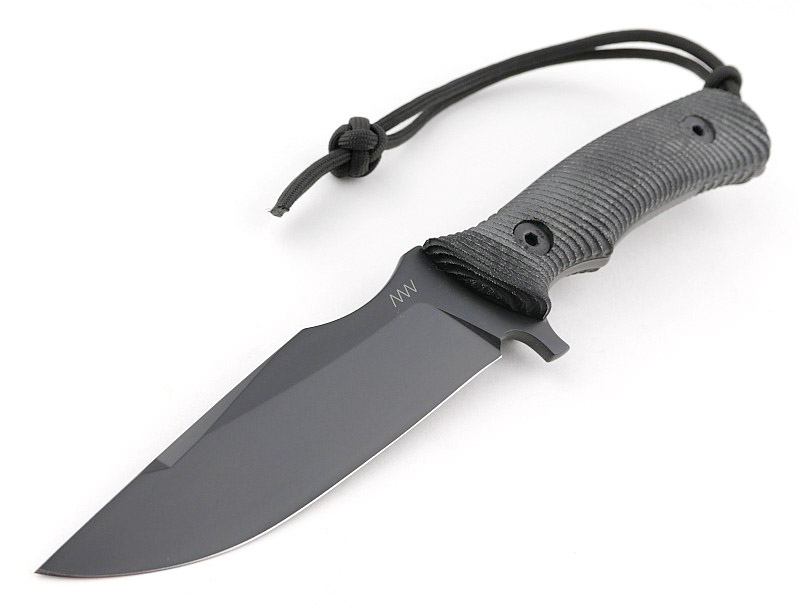
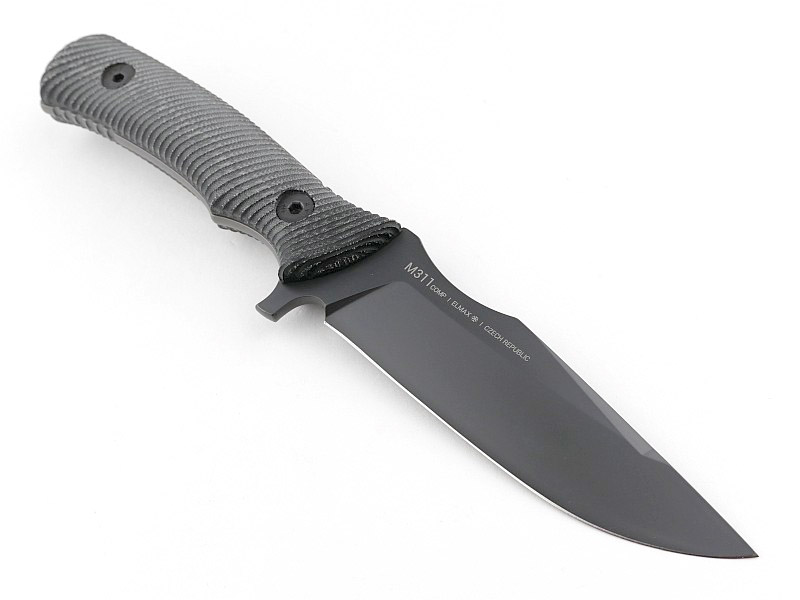
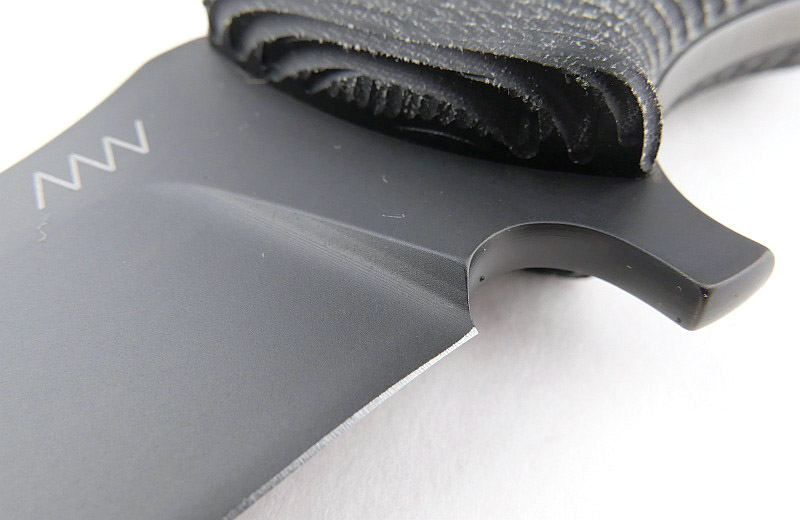
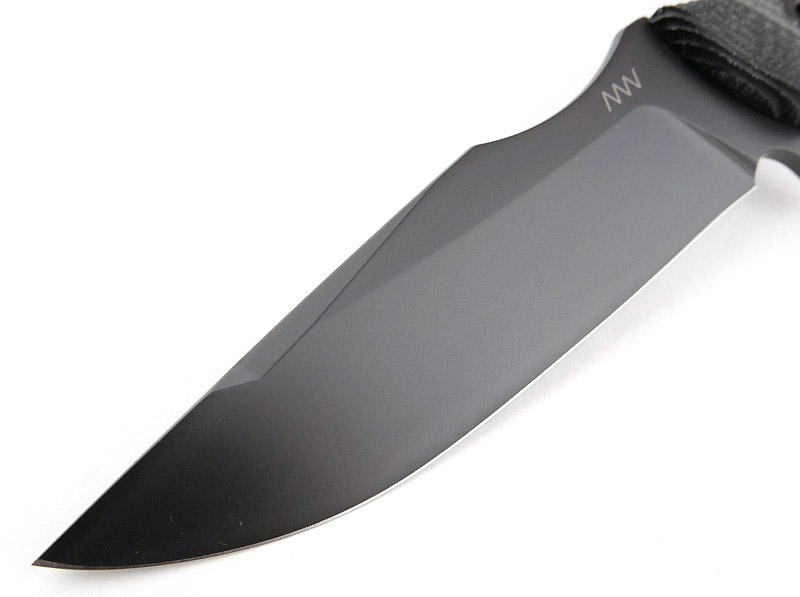
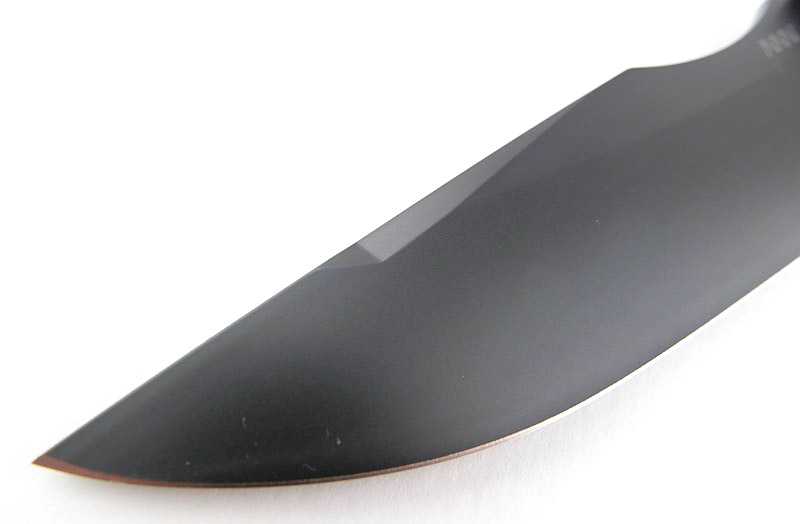
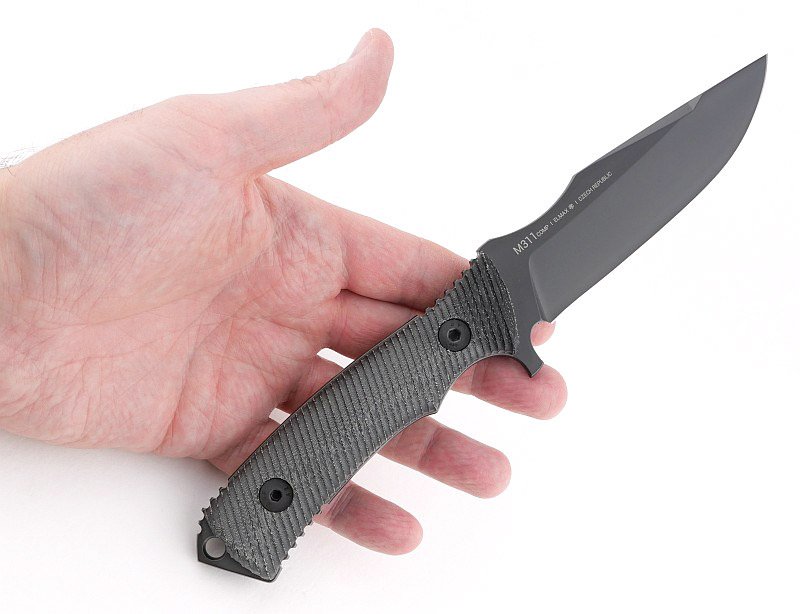
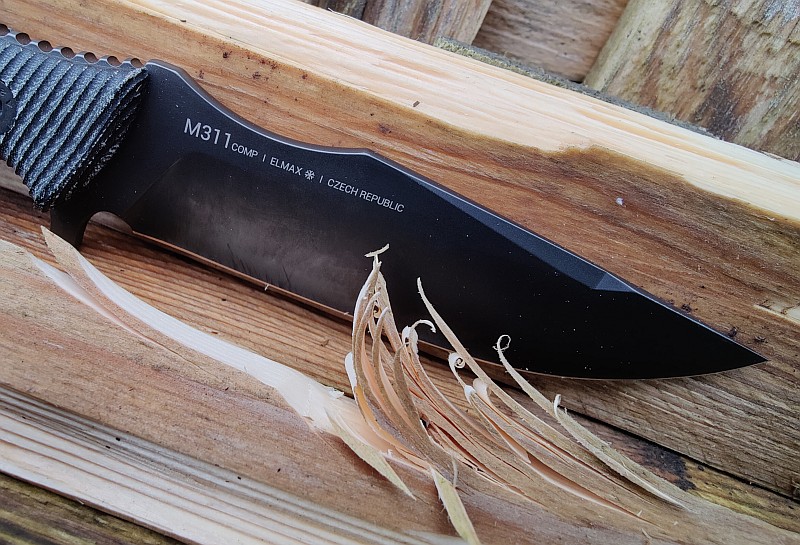
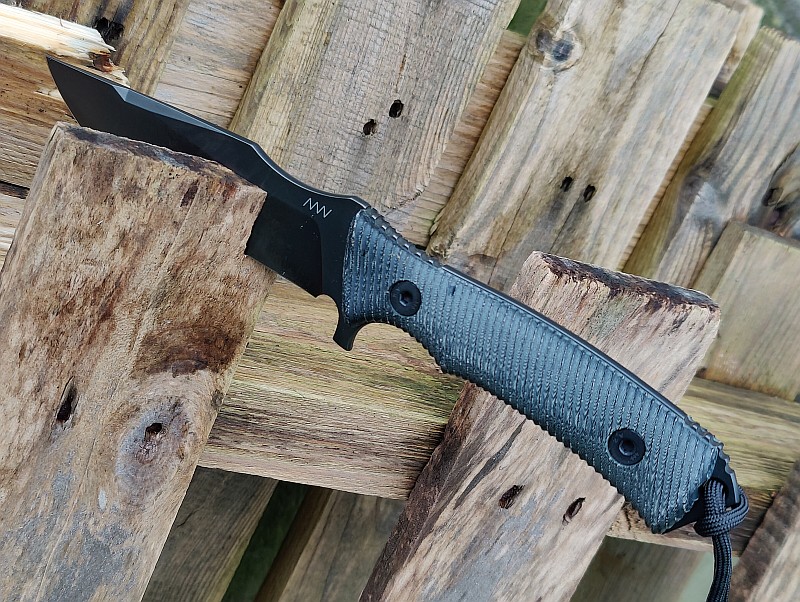
ANV’s distinctive swedged blade never disappoints on the looks front, giving it immediate appeal. It may be scaled down, but all the proportions and details are still spot on.
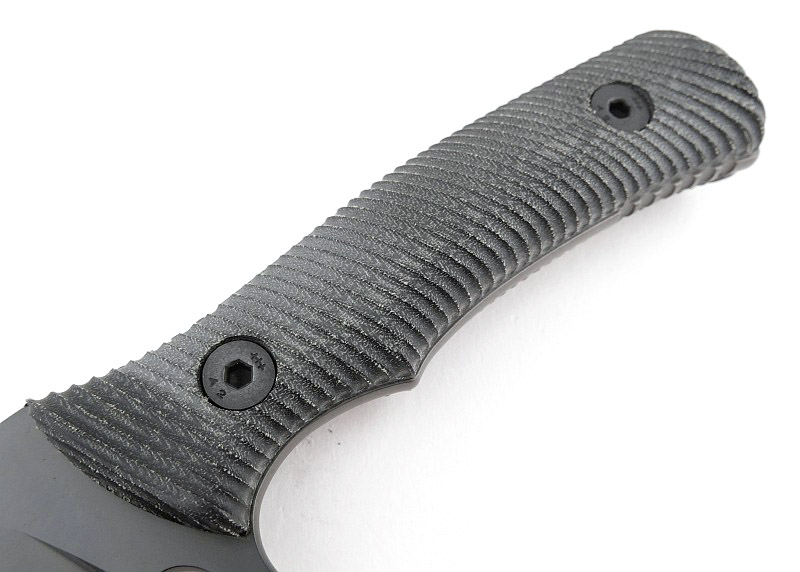
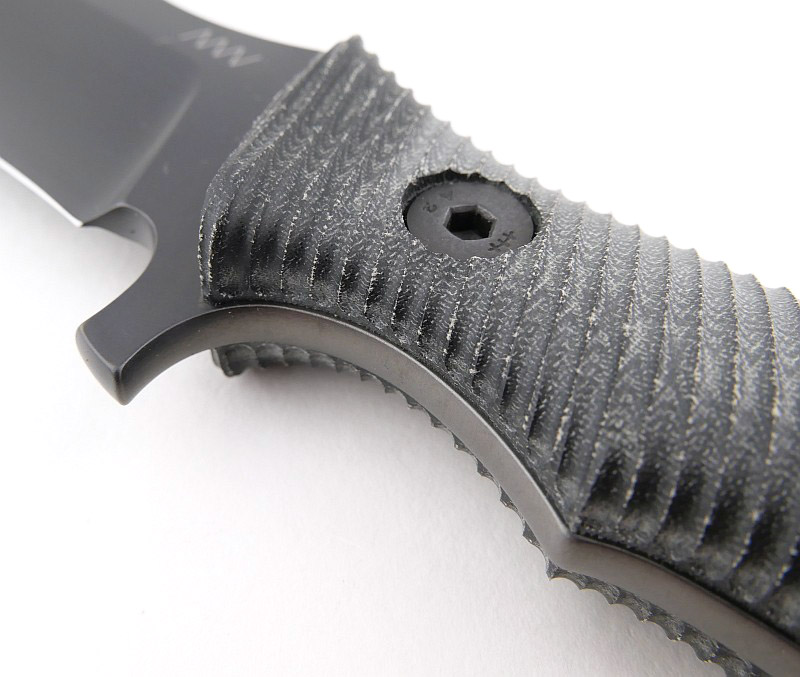
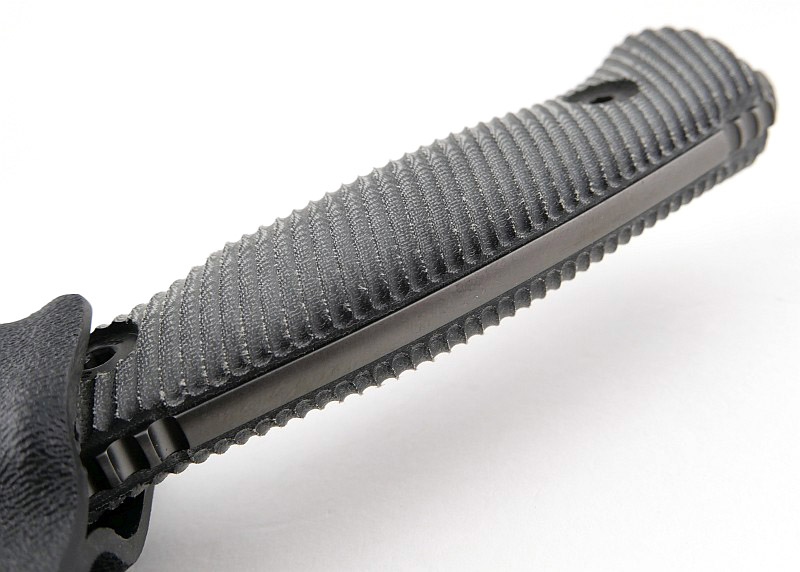
3D milled scales, finger guard and first-finger groove, all provide excellent grip, and then there are also three sections of jimping in the full tang. The M311 has a shaped thumb rest on the blade spine to allow for powerful cut control and pressure to be applied directly behind the edge.


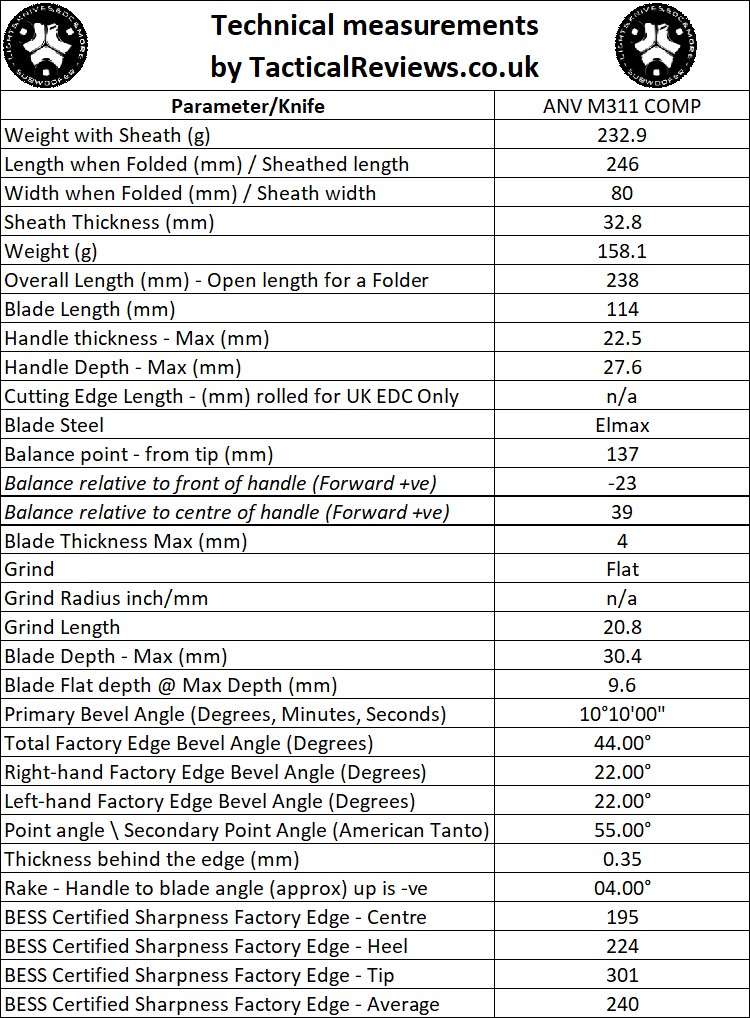
The Blade and Handle – Detailed Measurements:
For full details of the tests and measurements carried out and an explanation of the results, see the page – Knife Technical Testing – How It’s Done.

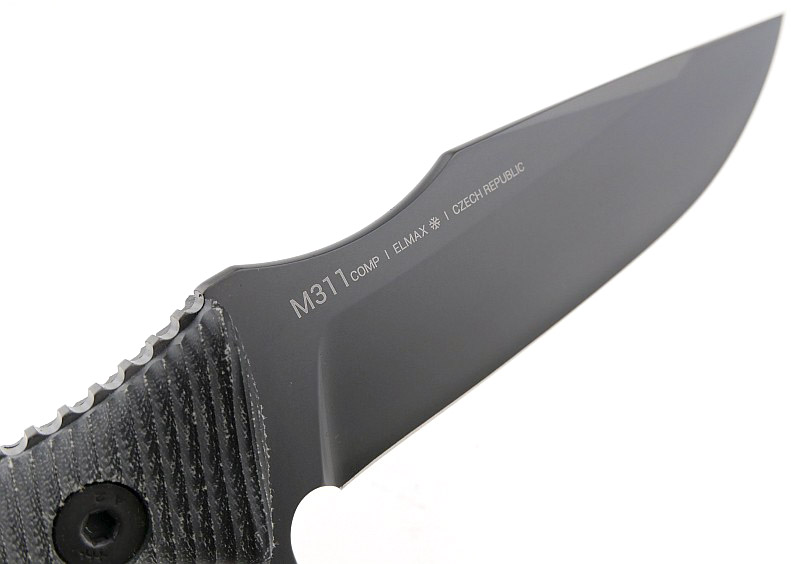
The blade is made from Elmax steel.


The Factory edge up close:

Followers of Tactical Reviews will know my views on factory edges, but to recap:

Anyone using a knife will need to sharpen it. That first factory edge is just like the first tank of fuel that a new car comes with (or first charge of the battery).
A good factory edge is a ‘nice to have’ but not a ‘make or break’ for a good knife, as you will be putting your own edge onto it soon enough.
The factory edge does however indicate the care a knife maker has put into the final finish.
It is for this reason Tactical Reviews measures factory edge sharpness and specifications, and includes this information in the detailed technical testing.

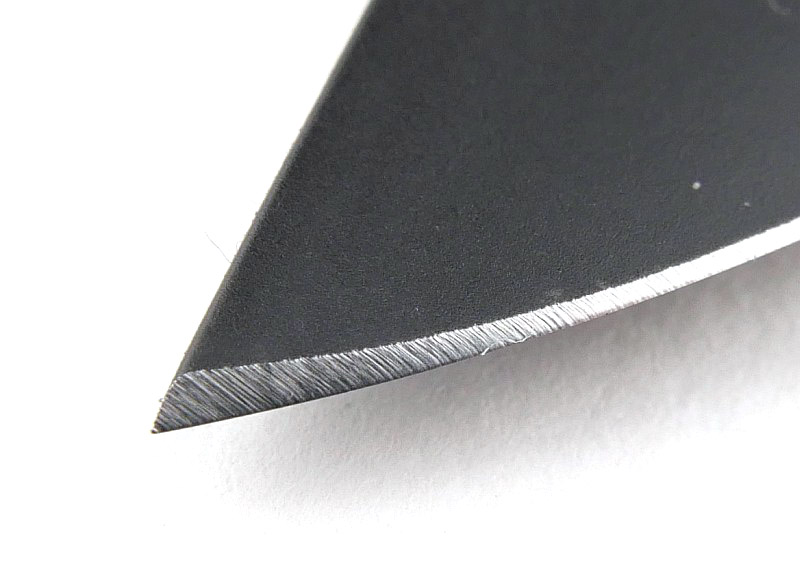
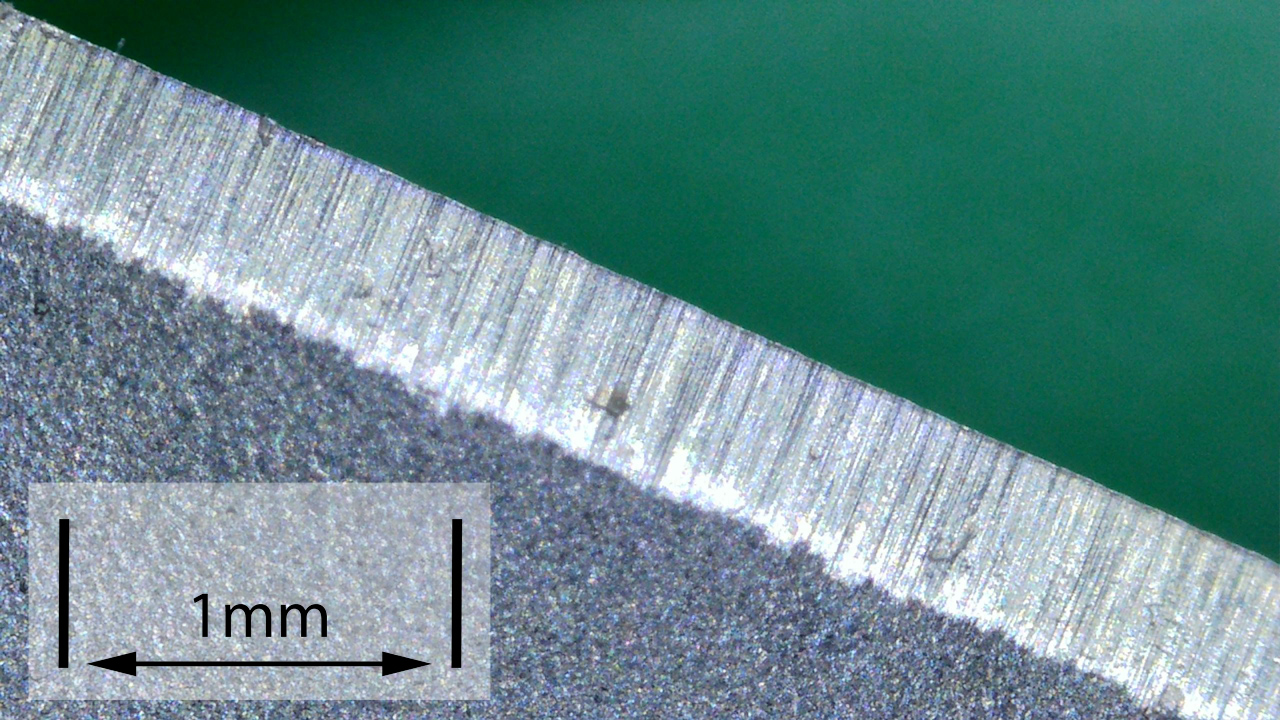
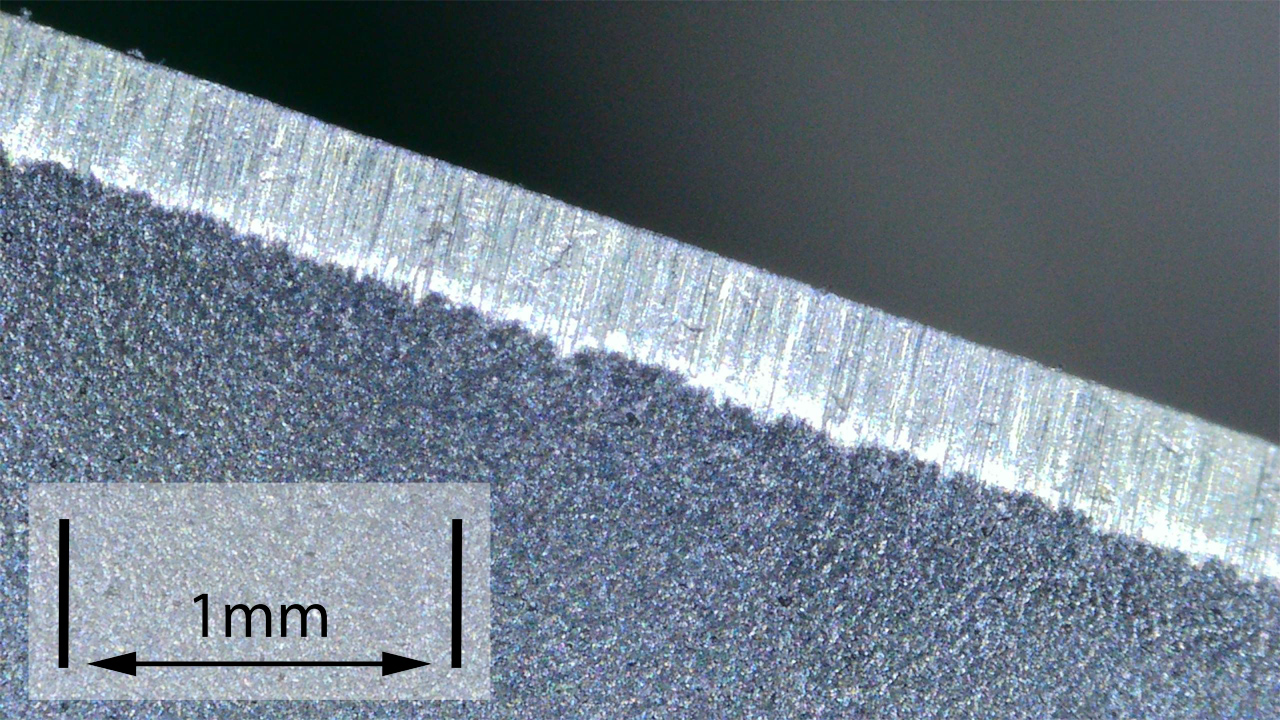
As a further look at the factory edge, this section has been added to include some high magnification photos of the factory edges.


What is it like to use?

Local laws may or may not allow a fixed blade to be carried as an EDC. Unfortunately where I live you need ‘good reason’ to carry a fixed blade in a public place, however on private property and when I do have good reason, my preference is for a compact fixed blade. The M311 COMPACT has muscled its way into my top carry spot, the closest a fixed blade can be to being my EDC.

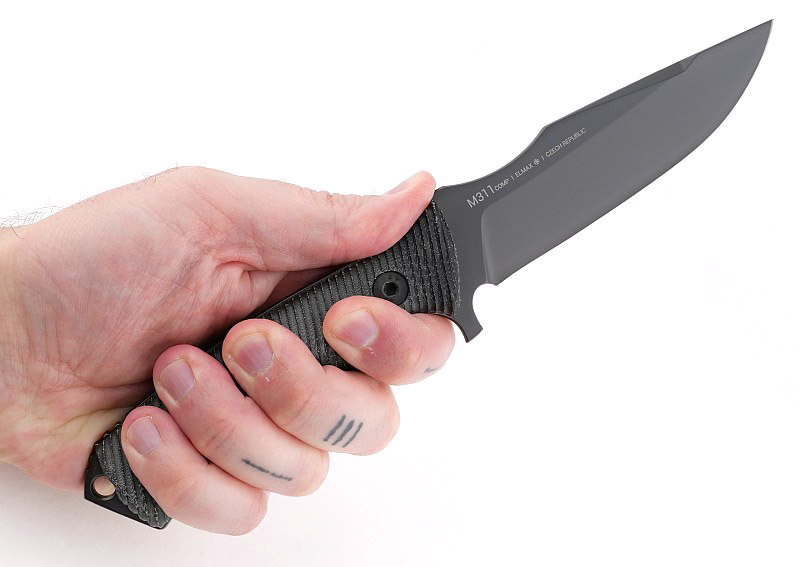
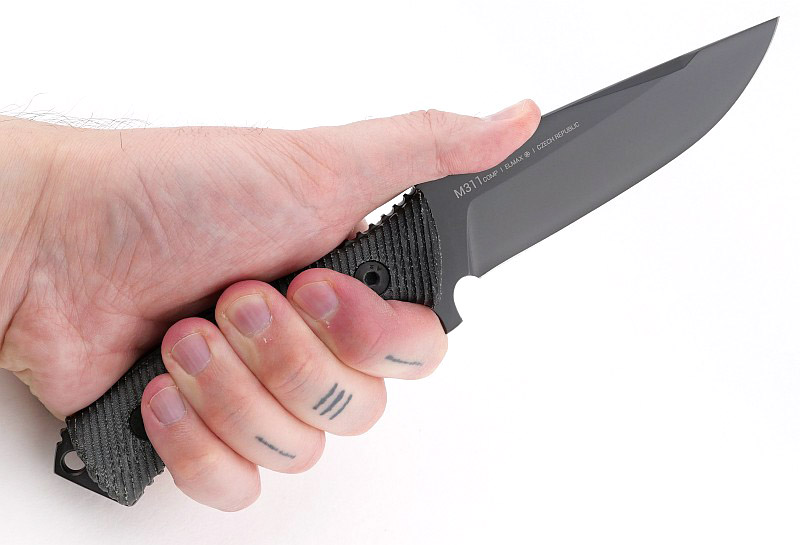
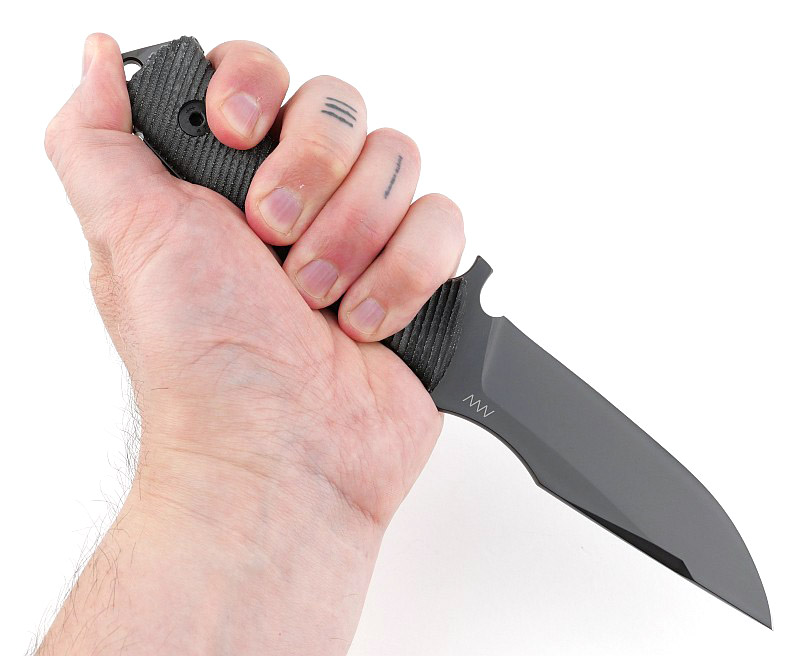
Take a look at it in the hand. (I take XL size gloves.) It is not small, but it is also not a large knife, instead finding a really efficient and effective sizing that gives you great cutting power without great size.
Multiple grip placements allow you to find the one that gives you the best advantage for any task.


Though the M311 COMPACT is a scaled down M311 Spelter, one observation I have is that oddly it feels ‘crisper’ in terms of its handle finish, and this makes it a little more abrasive to hold and use. Excellent grip, but oddly a touch more fatiguing to use purely from the roughness of the handle. This is a ‘feel’ more than anything really tangible, and for the tasks I tend to use it for, not a problem at all.

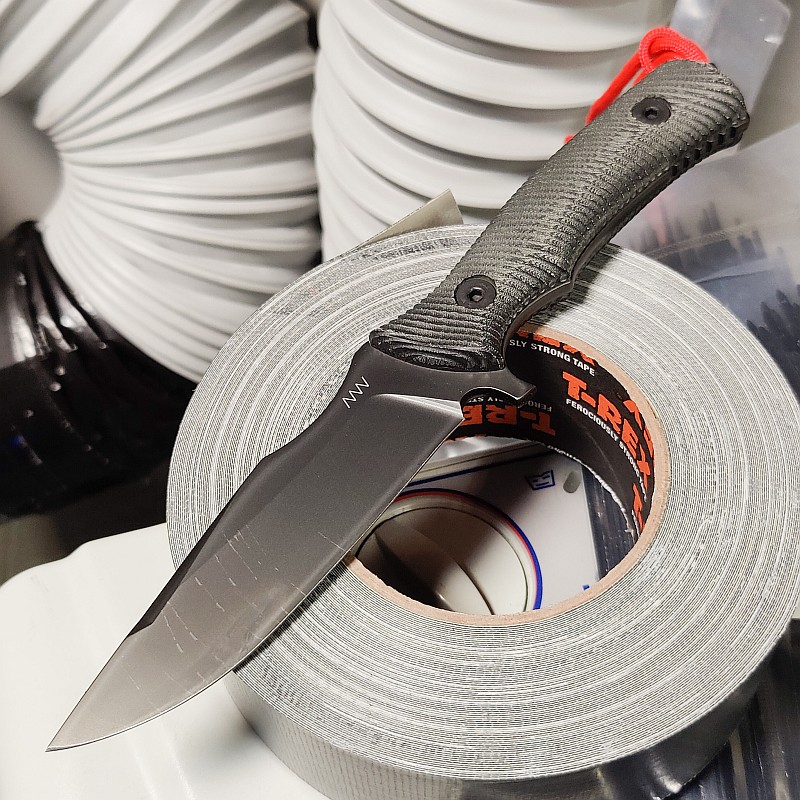
Wanting to be carried, the M311 COMPACT has made itself a go-to blade, patching up some air conditioning ducting, trimming down a mouth guard, and splitting up pallet wood are only some of the varied jobs it demanded to be used for.

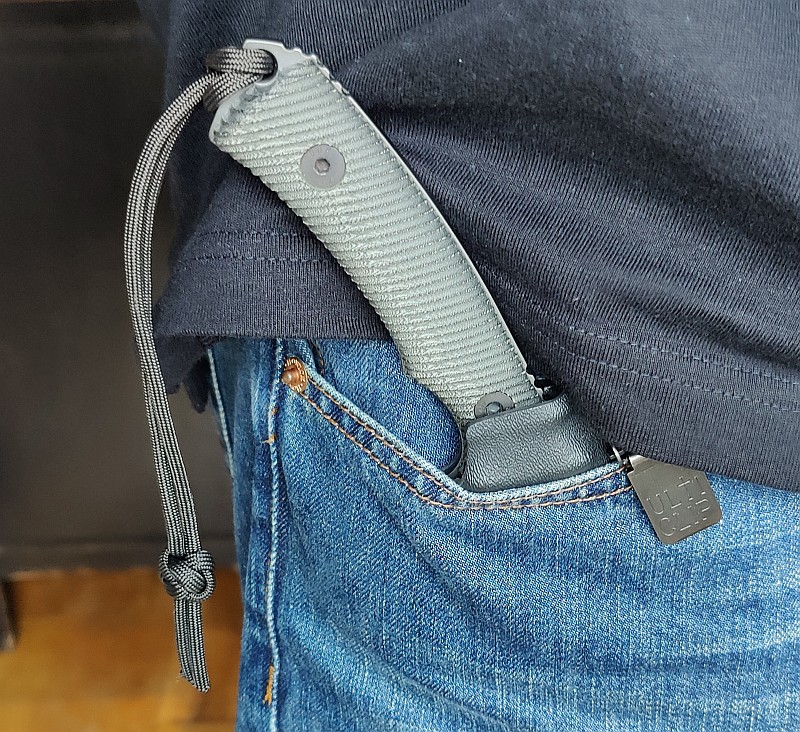
As I mentioned earlier, with the smaller scale M311, the MOLLE straps became larger, and I decided to drop these in favour of (at the moment) a single Ulti-Clip. The bare sheath allows the M311 COMPACT to slip easily into a pocket or bag, and adding an Ulti-Clip for pocket carry then makes it so easy to pick up the knife and re-sheathe over and over.


If you look at the position of the Ulti-Clip, this was settled on after trying several positions. Deeper carry makes the re-sheathing more difficult, with the finger guard often catching on the pocket edge. If the clip is fitted to the other side, the sheath twists away as you re-sheathe it, so this was the position that worked best for me. If you needed more stability, a second Ulti-Clip would lock it in place; this is just a personal preference.

Local law allowing I would carry this knife much more, I do however carry it as much as a possibly can. EDC or backup blade the M311 COMPACT demands to be picked up and used.

Review Summary

The views expressed in this summary table are from the point of view of the reviewer’s personal use. I am not a member of the armed forces and cannot comment on its use beyond a cutting tool or field/hunting knife.

Something that might be a ‘pro’ for one user can be a ‘con’ for another, so the comments are categorised based on my requirements. You should consider all points and if they could be beneficial to you.

_______________________________________________
What doesn’t work so well for me
_______________________________________________

The handle finish is a little too ‘crisp’ and abrasive.
MOLLE straps seem oversized.

_______________________________________________
Things I like
_______________________________________________

Everything else!
Ideal size for general utility and EDC.
Elmax steel.
Excellent grip.
Slim blade slices well.
Blade thick enough to be very strong.
Easy to fit different mounts to the sheath.
Light enough to forget you are carrying it.
Excellent handling.

 
Discussing the Review:
Something new – will it work? A Tactical Reviews Subreddit.
TacticalReviewsChat on Reddit
Please visit there and start/join the conversation.
Knife Review: Sandrin Knives Torino

A Tungsten Carbide bladed knife! The Torino from Sandrin Knives features a blade made from Polyhedral Tungsten Carbide (PTC), a flexible grade of tungsten carbide that has superb edge retention and measures HRC 71 on the Rockwell scale.
The Torino’s blade also has a unique ‘raw carbide’ finish, giving it its striking appearance. Pivoting on ceramic ball bearings provides a super smooth opening and closing action, with the blade held securely open by a Recoil Lock mechanism.
Join me in this review of the Sandrin knives Torino for a thorough look at the knife.

Review Video

A thorough look at the Sandrin Knives Torino with the Tactical Reviews detailed technical specifications and close up view over the entire knife.


A few more details:

A good look round the Torino – Things to look out for here are:
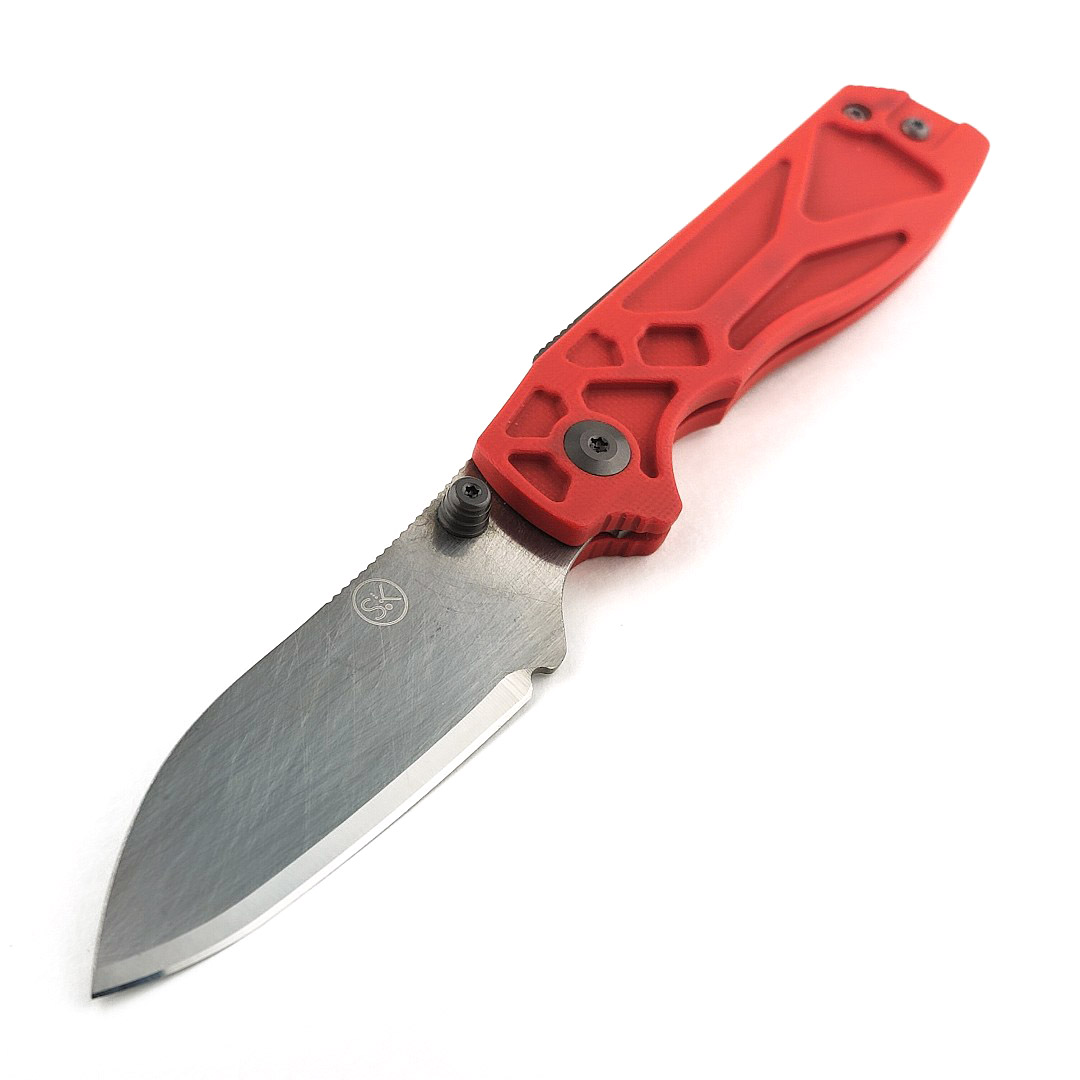
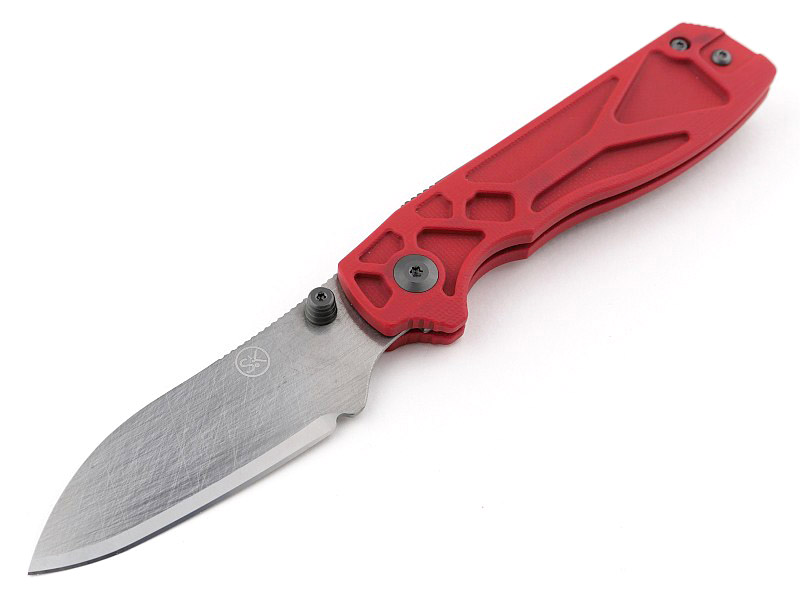
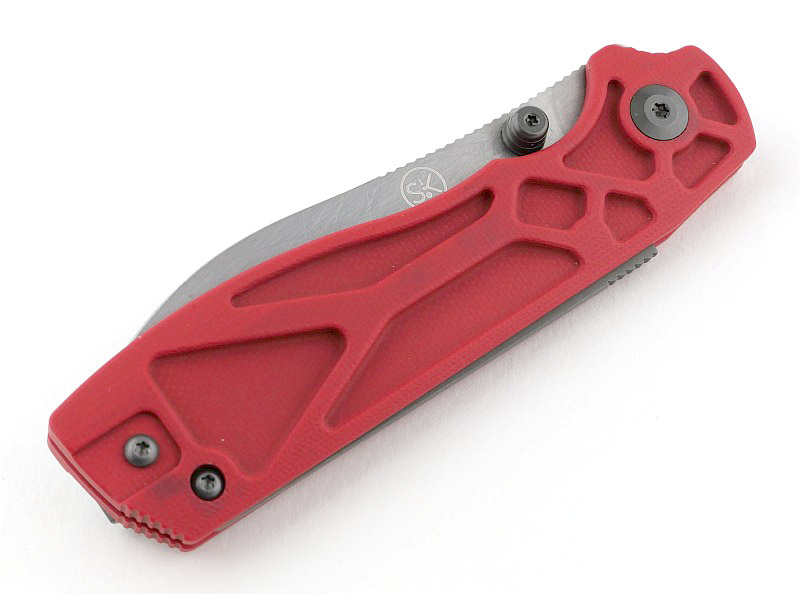
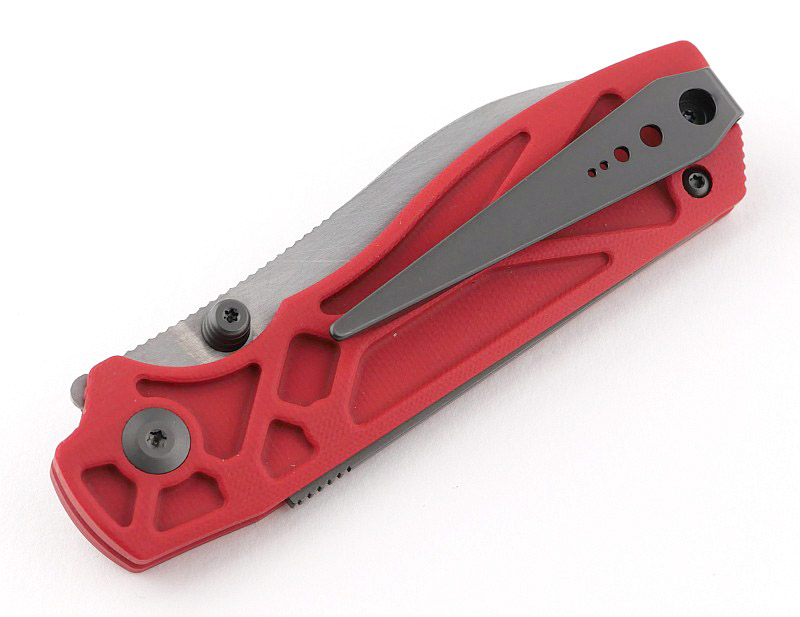
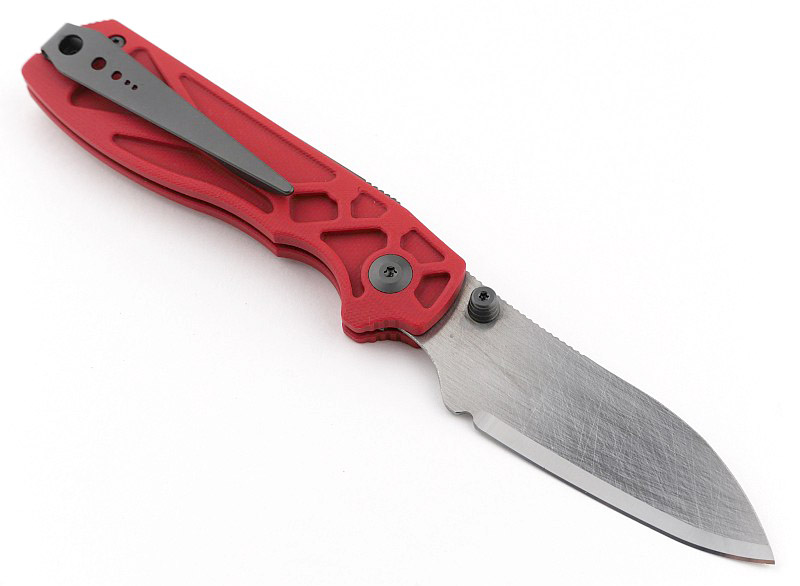
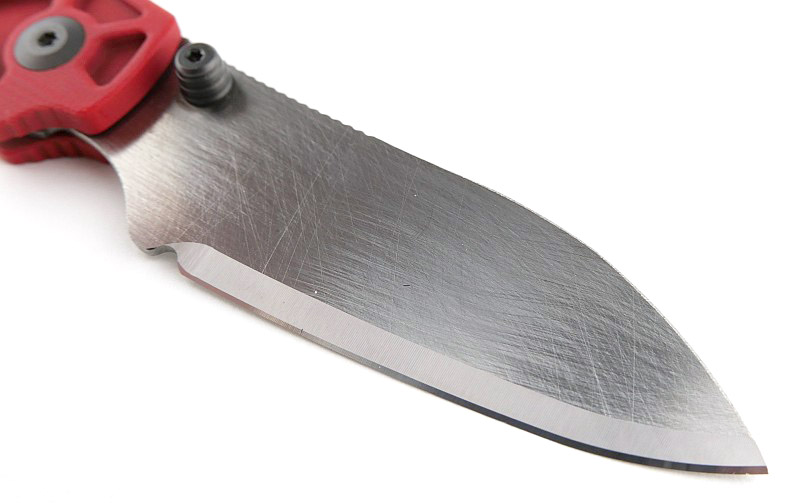
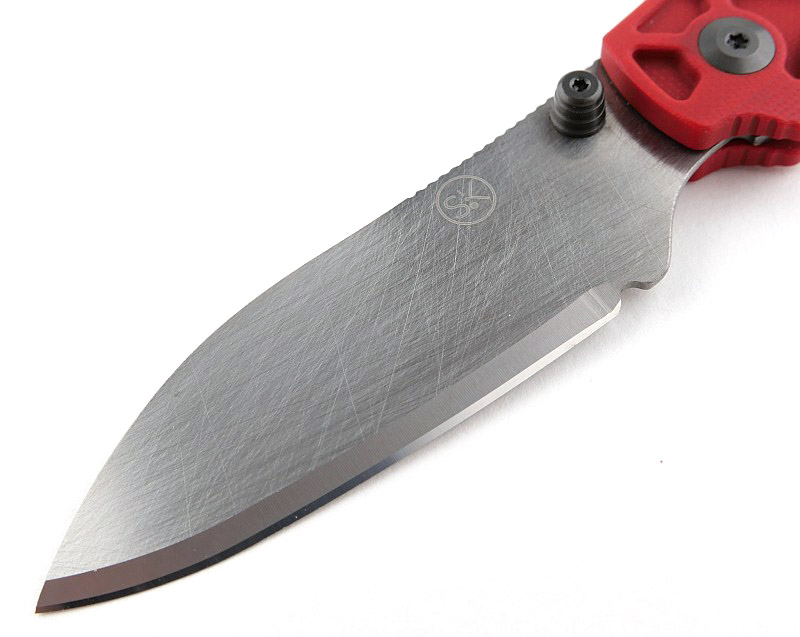
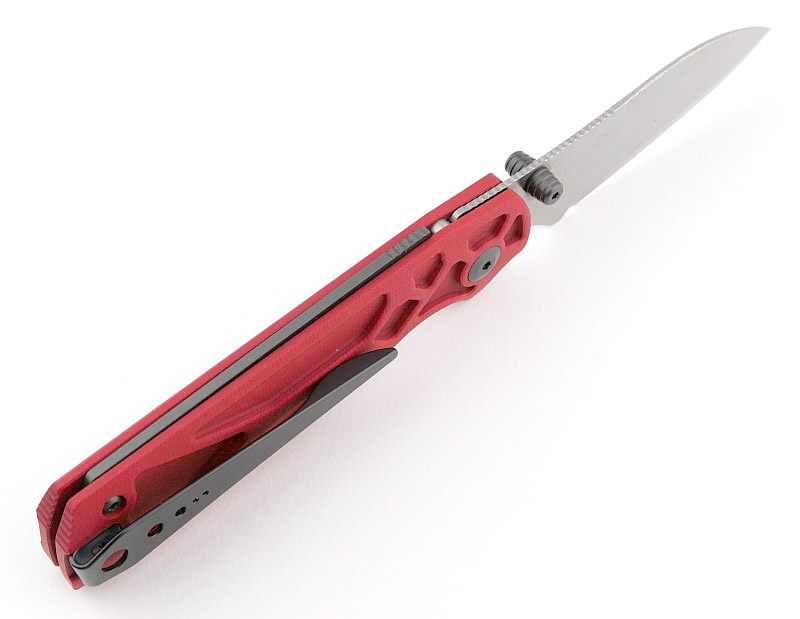
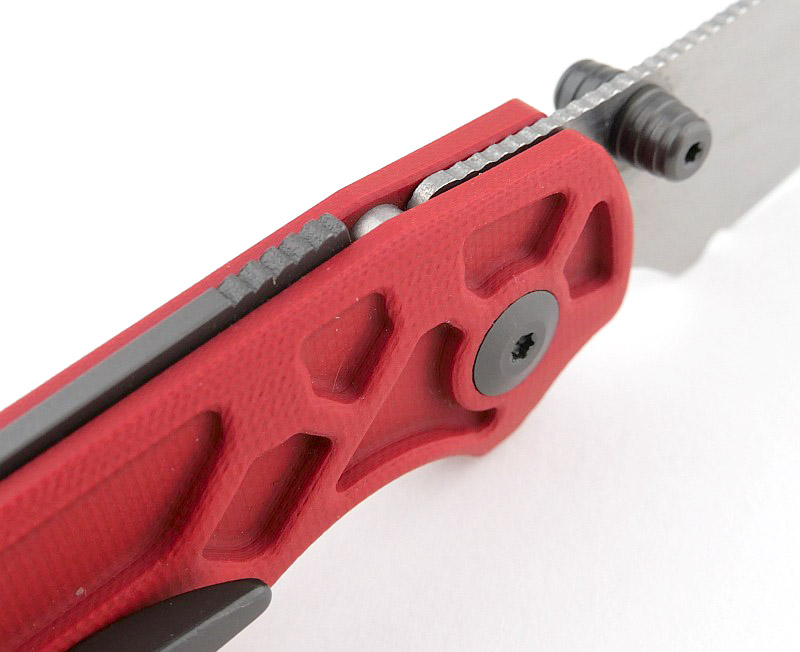
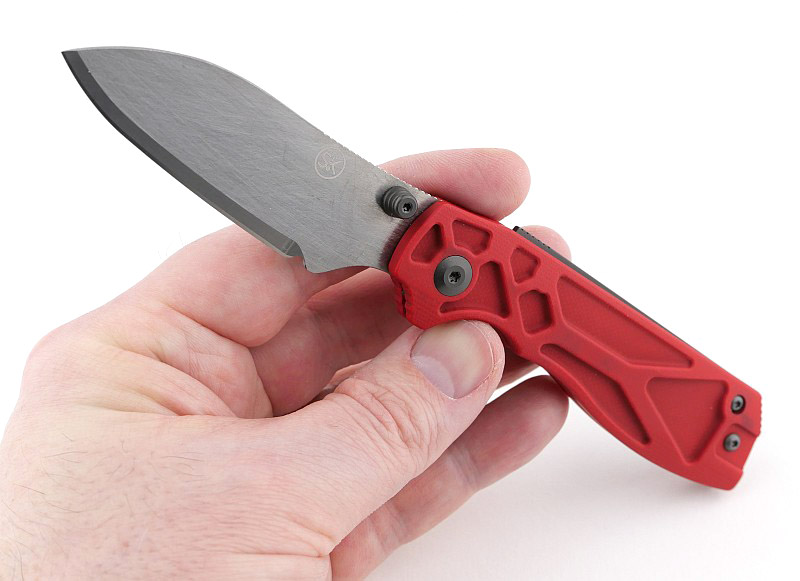
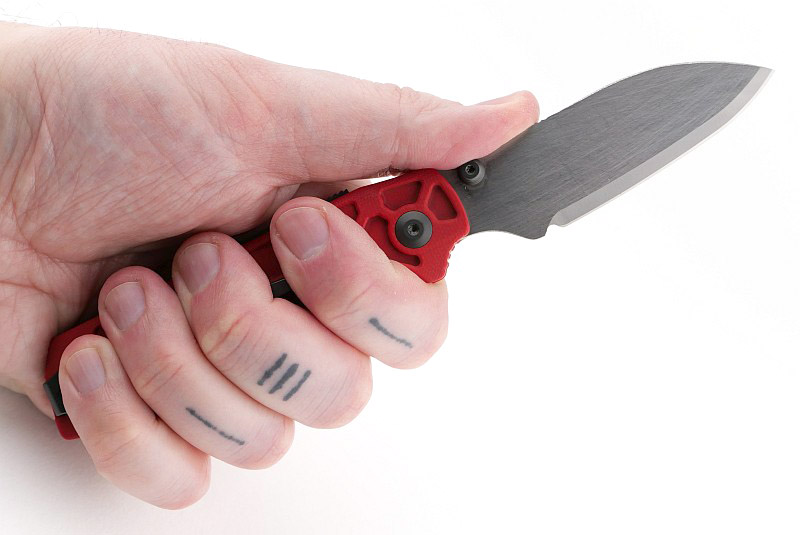
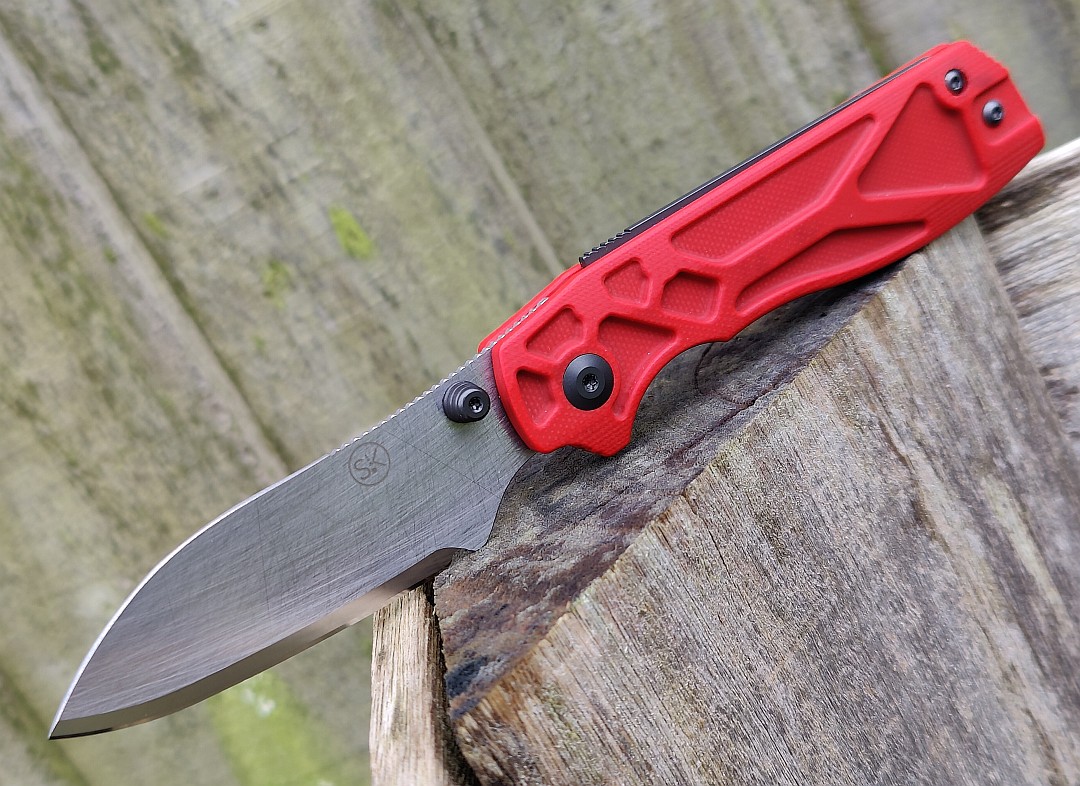
Using red, high visibility, milled G10 for the handles and a reverse-skeletonised design to reduce weight gives a very distinctive look to the Torino (even before you see the blade).
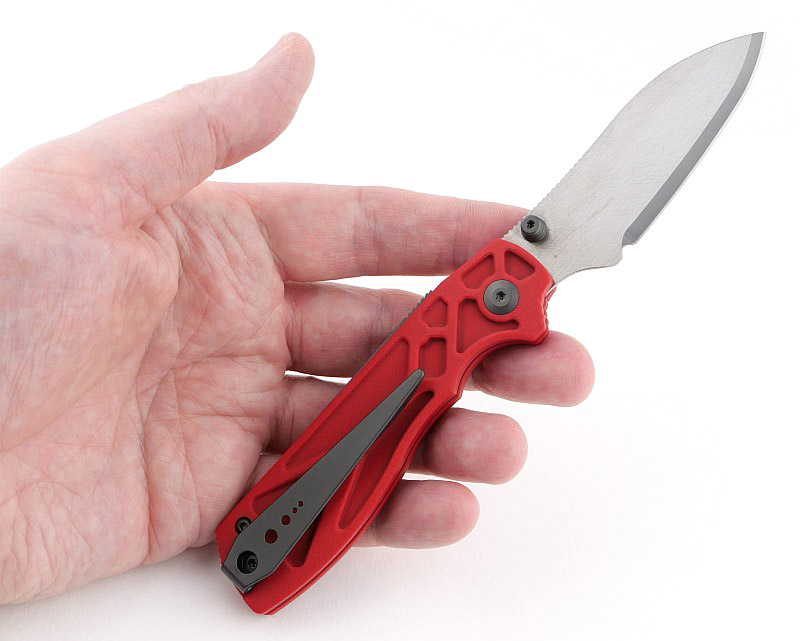
A black PVD coated pocket clip can be fitted on either side or removed completely.
The Polyhedral Tungsten Carbide blade’s raw TC finish adds further to the distinctiveness of this knife combined with the fact the Torino’s blade is super slim at a maximum of only 1.2mm thick!
Sandrin Knives have used a Recoil Lock for the Torino with a sliding back spacer lock lever on the back of the handle.
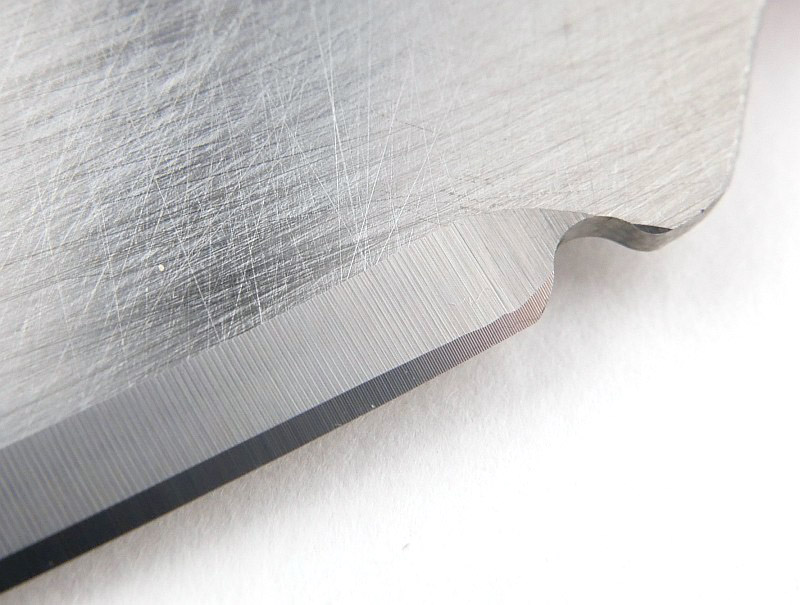
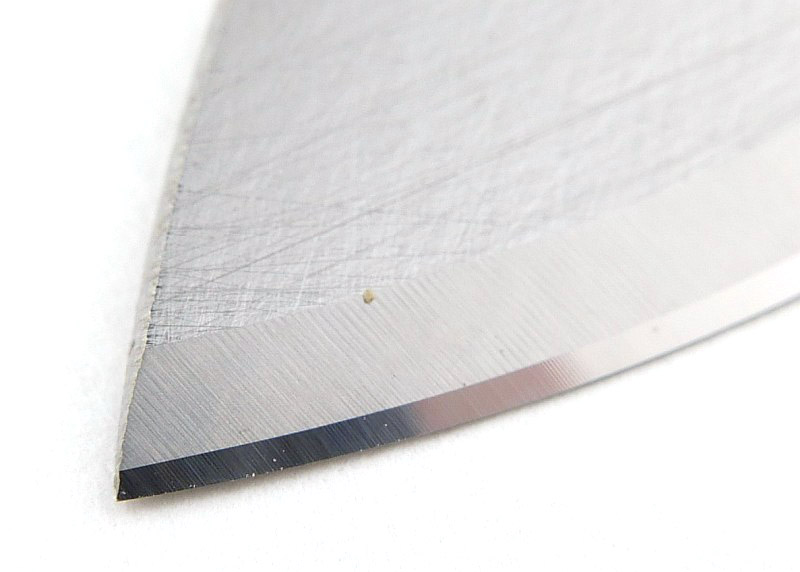
PTC, being super-hard at HRC 71, gives the Torino’s blade a very different look on the primary and edge bevel grinds.


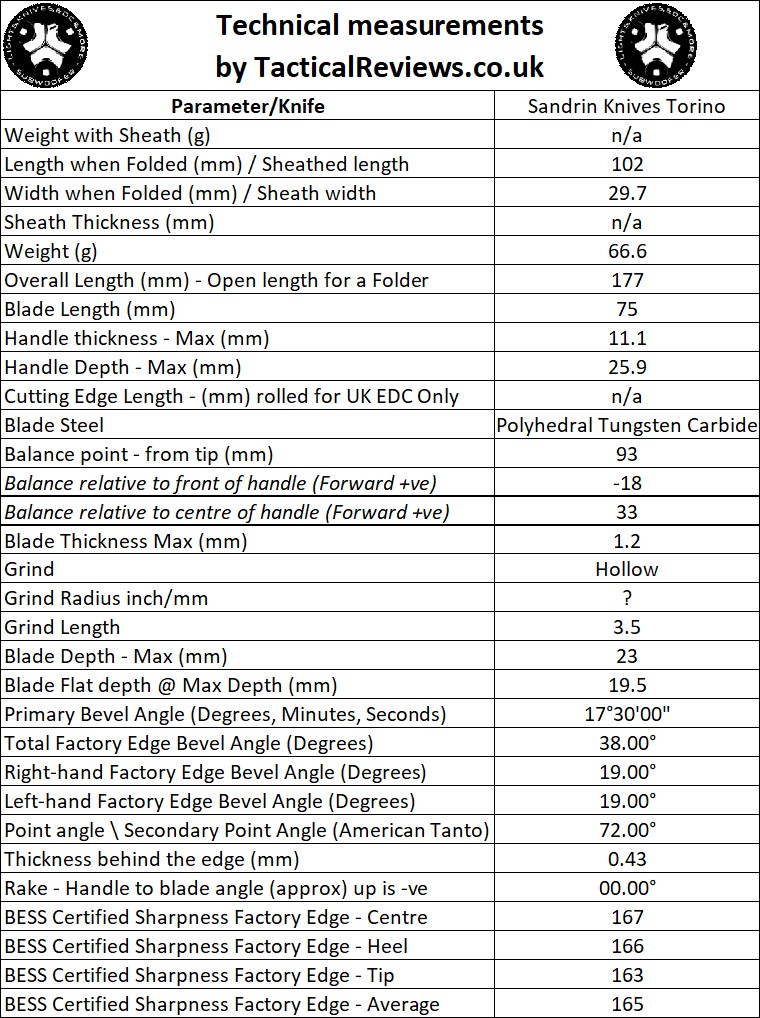
The Blade and Handle – Detailed Measurements:
For full details of the tests and measurements carried out and an explanation of the results, see the page – Knife Technical Testing – How It’s Done.

The blade is made from Polyhedral Tungsten Carbide.


Explained by the Maker:

With the unique material used for this knife blade, I’m including the manufacturer’s own description here for ease of reference.

An advancement in the science of blade materials, Sandrin knives are crafted from our patented Polyhedral Tungsten Carbide (PTC), a flexible grade of tungsten carbide that outperforms steel in edge retention. Measuring HRC 71 on the Rockwell scale of hardness, Torino retains its razor-sharp edge far beyond steel knives. We call this StaySharp Technology™. New for Torino is the blade’s raw carbide finish – its striking appearance is achieved by grinding the PTC with fine diamonds. Unlike steel, the Torino blade is completely rustproof making it suitable for both fresh and saltwater conditions. The blade’s thumb ramp features carefully executed jimping, while the rest of the spine and finger choil is chamfered for comfort.

Torino’s ceramic ball bearing action provides for a smooth opening and closing experience. A robust thumb stud provides for one handed blade deployment. But what really makes the Torino a modern marvel is a completely redesigned mechanism we call the Recoil Lock. This ingenious locking system is a gift to the knife community by knife wunderkind Snecx Tan, who refers to it as his PowerLock. Thank you, Snecx, for this remarkable innovation. The beauty of Tan’s recoil lock is the simple yet efficient design. The ambidextrous action delivers positive force (grip) to secure the blade in its rock-solid open position. Closing the knife is accomplished by sliding the backspacer to the rear, eliminating accidental blade unlock.

High-visibility red G-10 handles provide for quick acquisition in emergency situations. Stylized pockets serve to both reduce weight and add tactile feel for positive grip engagement. A reversible titanium pocket clip enables right- or left-hand carry and features our Fibonacci hole sequence design, a distinctive mathematical trademark of Sandrin Knives.

At only 2.29 ounces, Torino is so lightweight it practically disappears in your pocket. And, with a blade length of 2.95 inches, it’s also legal to carry in most jurisdictions.

The Factory edge up close:

Followers of Tactical Reviews will know my views on factory edges, but to recap:

Anyone using a knife will need to sharpen it. That first factory edge is just like the first tank of fuel that a new car comes with (or first charge of the battery).
A good factory edge is a ‘nice to have’ but not a ‘make or break’ for a good knife, as you will be putting your own edge onto it soon enough.
The factory edge does however indicate the care a knife maker has put into the final finish.
It is for this reason Tactical Reviews measures factory edge sharpness and specifications, and includes this information in the detailed technical testing.

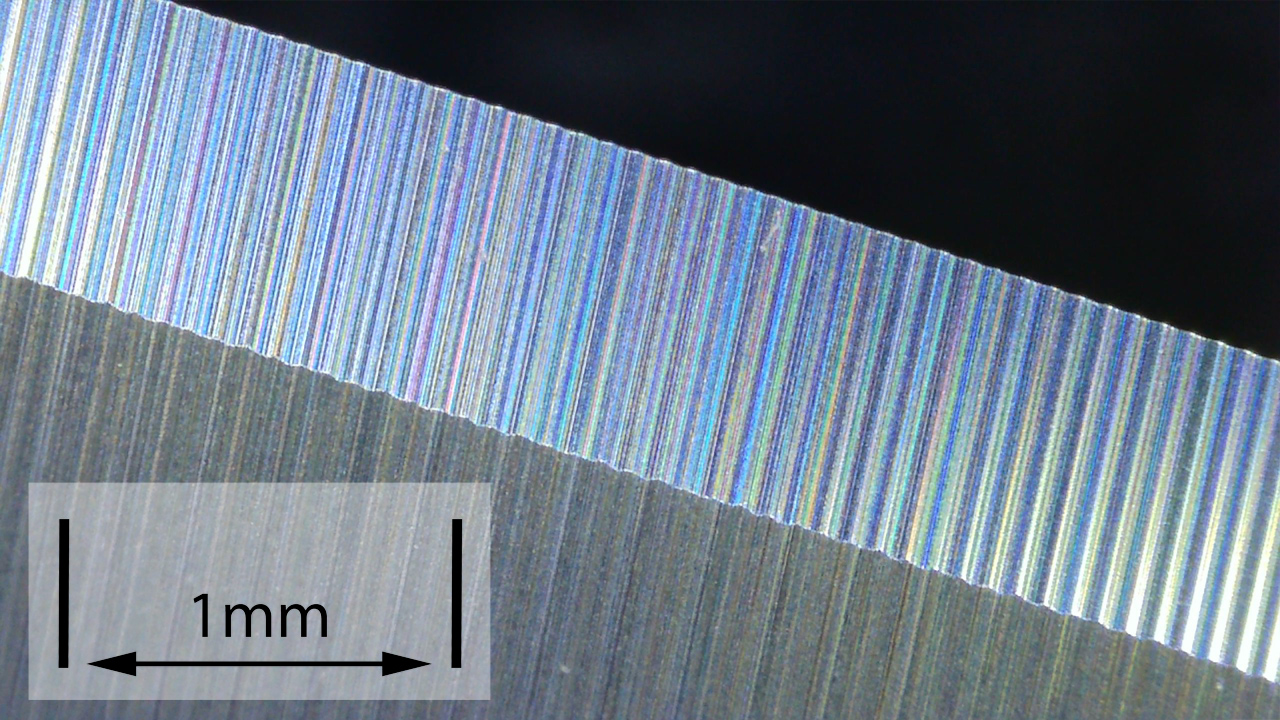
As a further look at the factory edge, this section has been added to include some high magnification photos of the factory edges.

The magnified images of the edge show the Torino’s blade’s different look. They also show what appears to be a micro-serration from the grinding process, which aids the cutting ability of this special material.


What is it like to use?
One of the most noticeable features of the Sandrin Knives Torino when you use it is the super-slim, super-slicey blade. The sharpness measurements for the factory edge, are in this case more important than most knives, as I suspect the PTC blade may be difficult to sharpen, and will almost certainly want diamond sharpeners.
Sandrin have supplied the Torino super sharp with the very impressive average BESS measurement of 165. I tend to sharpen a knife to less than 200 BESS, so this is sharper than my normal target sharpness.
Actually with it being so so hard, I’ve not yet worn the edge enough to want to sharpen it, so this aspect of using the PTC blade is to come later.
It certainly is lightweight and easy to carry.
The jimping on the spine of the blade is useful, but with the blade being only 1.2mm thick, I find it quickly becomes uncomfortable to apply a lot of force directly onto the blade spine.
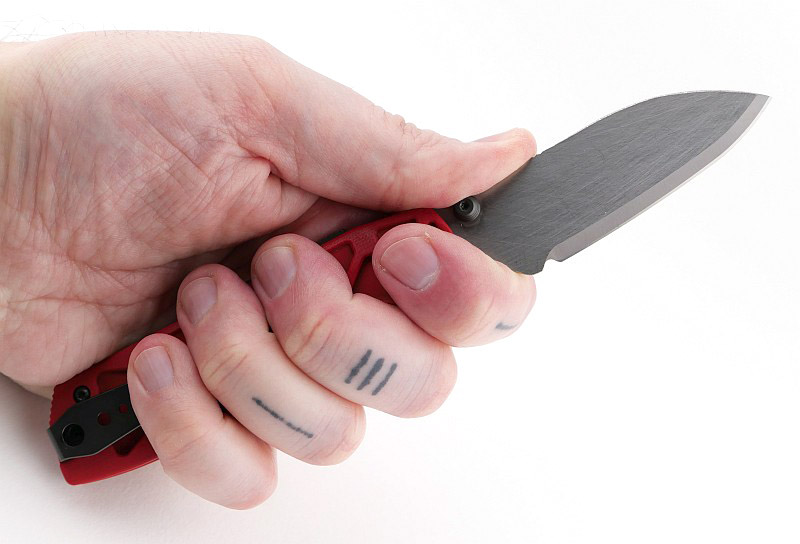
With the forward placed finger groove, choking up on the blade is natural and makes finer work really accurate.
For me, the only aspect that lets the Torino down somewhat is the spring pressure on the recoil lock combined with the finish on the lock lever – together these make unlocking with the pad of your thumb uncomfortable and not entirely reliable. I find I tend to have to curl my finger or thumb over and use my nail to get sufficient purchase to release the lock. If the lock bar protruded a little more and the spring pressure was slightly less, I think this would come together nicely.
However, that said, the recoil lock does allow the Torino to remain slim and gives a reliable lock-up.


Review Summary

The views expressed in this summary table are from the point of view of the reviewer’s personal use. I am not a member of the armed forces and cannot comment on its use beyond a cutting tool or field/hunting knife.

Something that might be a ‘pro’ for one user can be a ‘con’ for another, so the comments are categorised based on my requirements. You should consider all points and if they could be beneficial to you.

_______________________________________________
What doesn’t work so well for me
_______________________________________________

High spring force on the recoil lock.
Lock lever too low profile.

_______________________________________________
Things I like
_______________________________________________

High-tech blade material – Polyhedral Tungsten Carbide
Fantastic factory edge with BESS of 165
Incredibly long lasting sharpness.
Blade is only 1.2mm thick!
Lightweight design.
Reverse-skeletonised G10 handle.
Low profile recoil lock.
Slick blade movement on ceramic bearings.
Double-sided thumb studs.
Ambidextrous deep-carry titanium pocket clip.

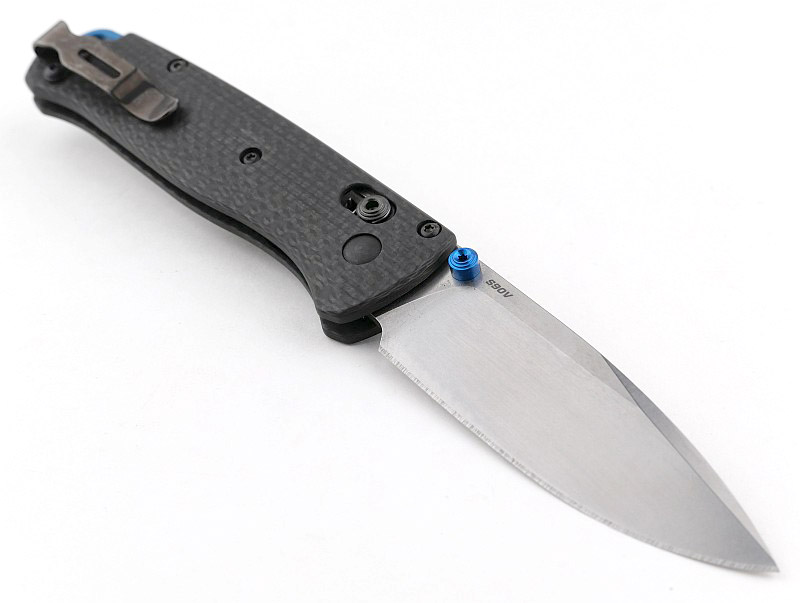
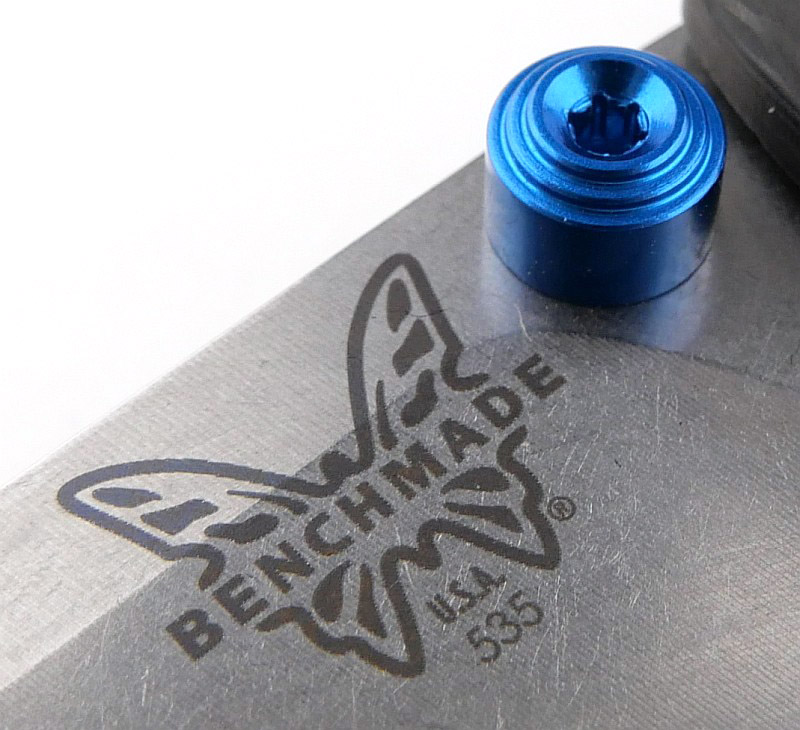
Knife Review: Benchmade Bugout 535-3

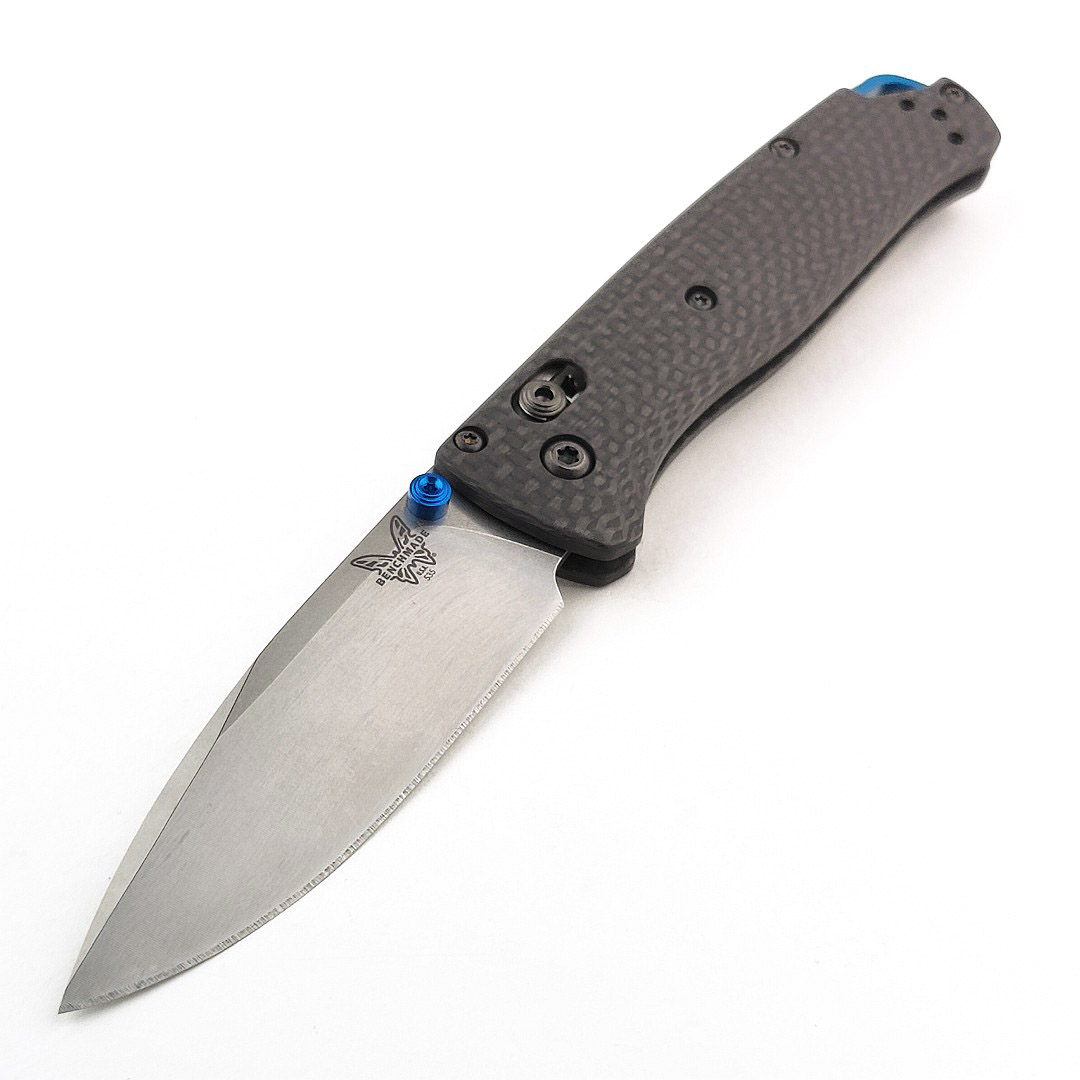
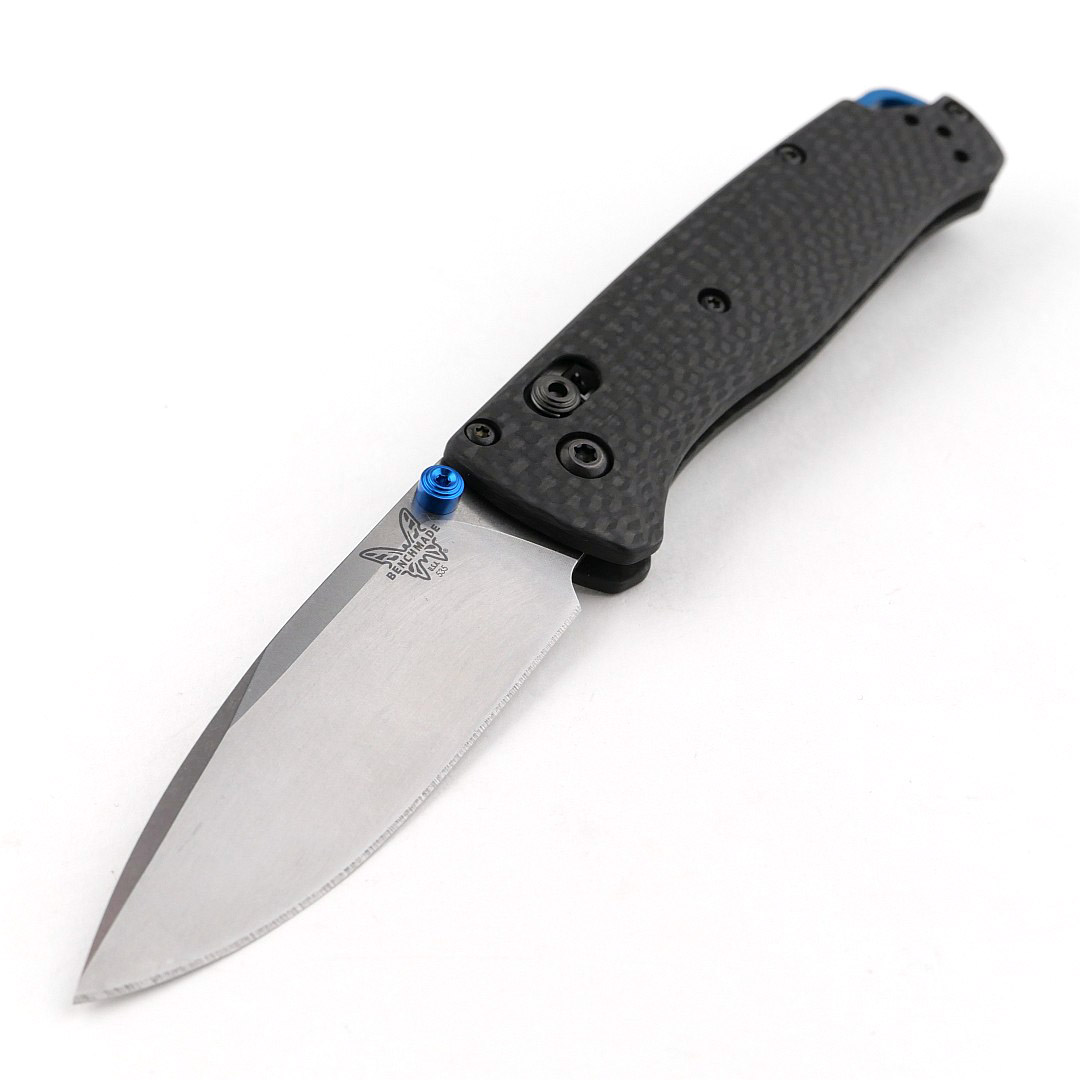
An even lighter, premium version of the already ultralight Benchmade Bugout, yes, that’s right. Join me in this is detailed review of the Benchmade 535-3, the special super-ultralight Bugout. Now, you say Carbon Fiber, I say Carbon Fibre, but let’s not worry about that (I might use either or both), and this is why the 535-3 is even lighter, as it has Carbon Fibre handles with the minimal steel inserts milled into them. The 535-3 is the Benchmade Bugout – Plus!

Review Videos

Starting with a short format sixty second review:


Onto a full video review covering many more details:


A few more details:

What’s in the box?:
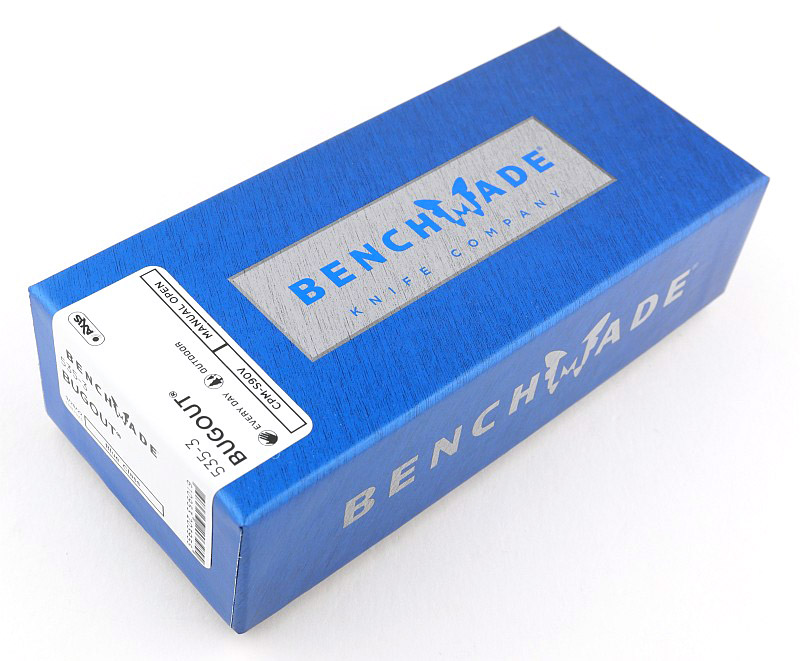
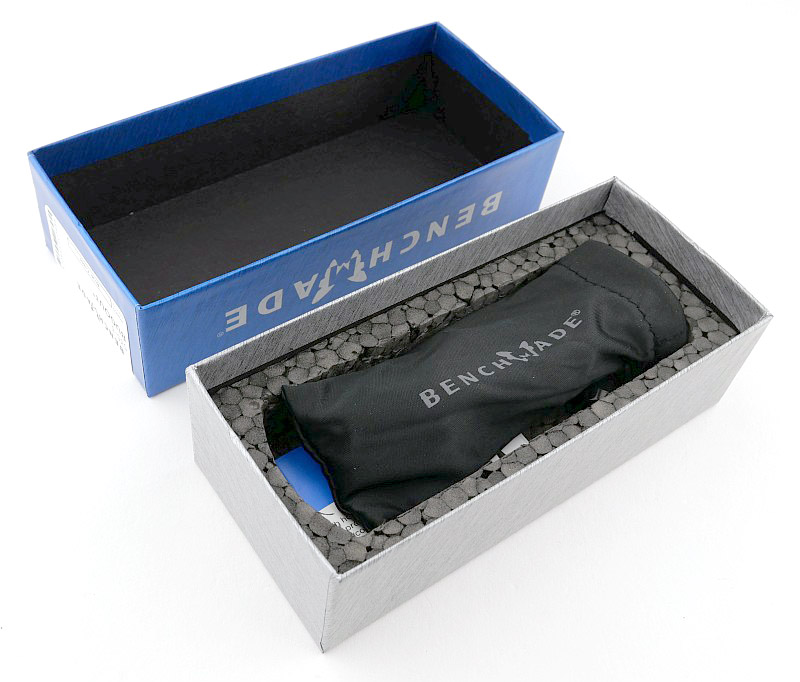
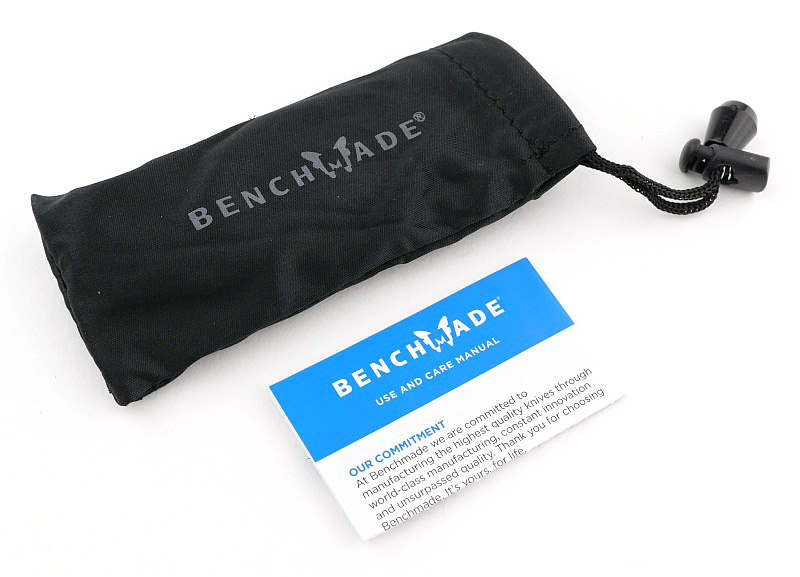
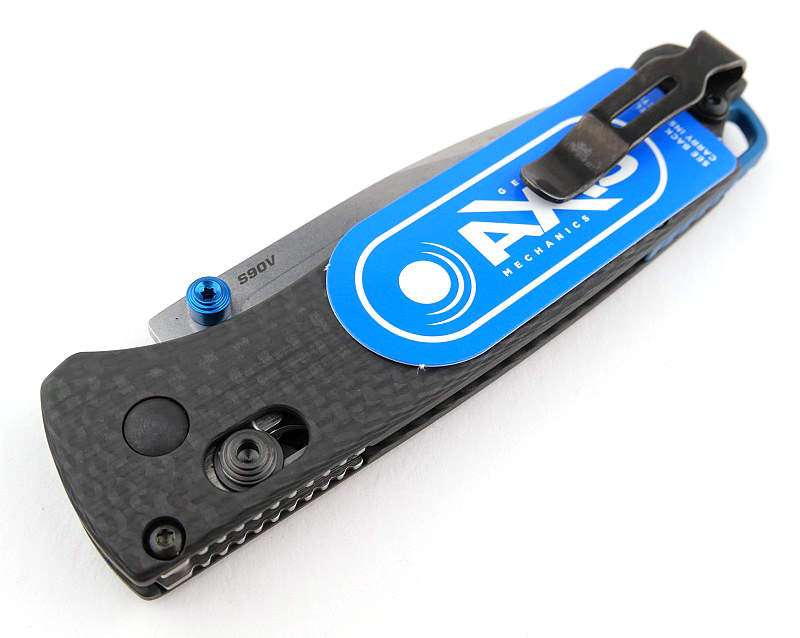
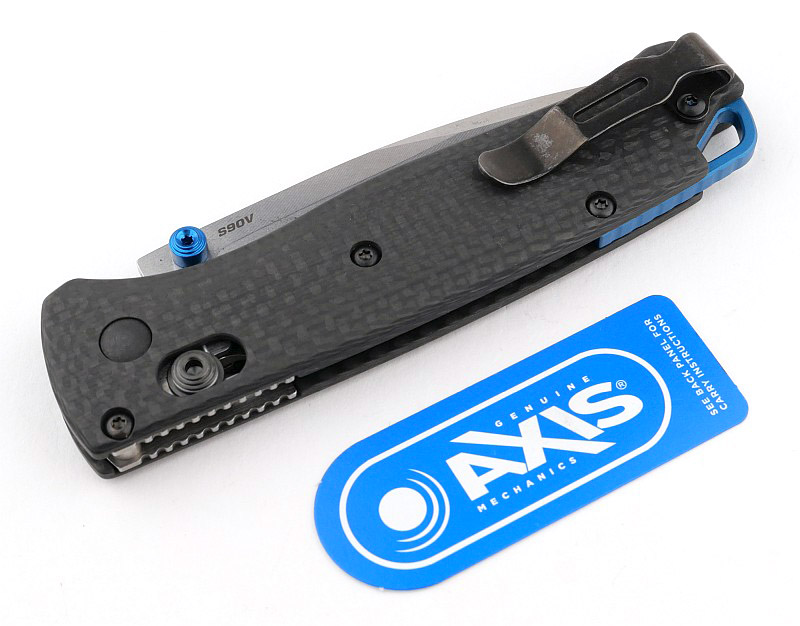
Very well presented in a foam lined box, the Bugout comes in a cloth bag that you can use to help keep the pocket fluff at bay. A clip/handle protector card also gives you information about the Benchmade Axis lock that the Bugout uses.


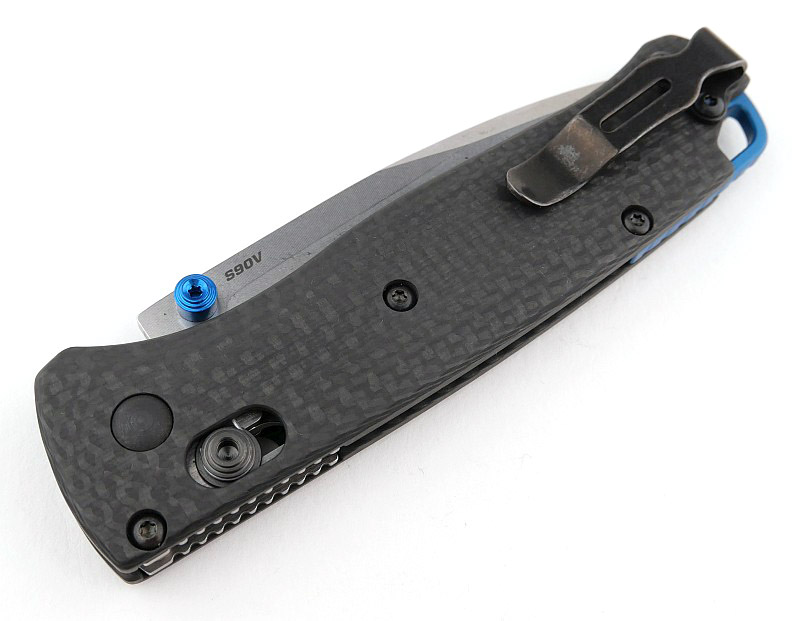
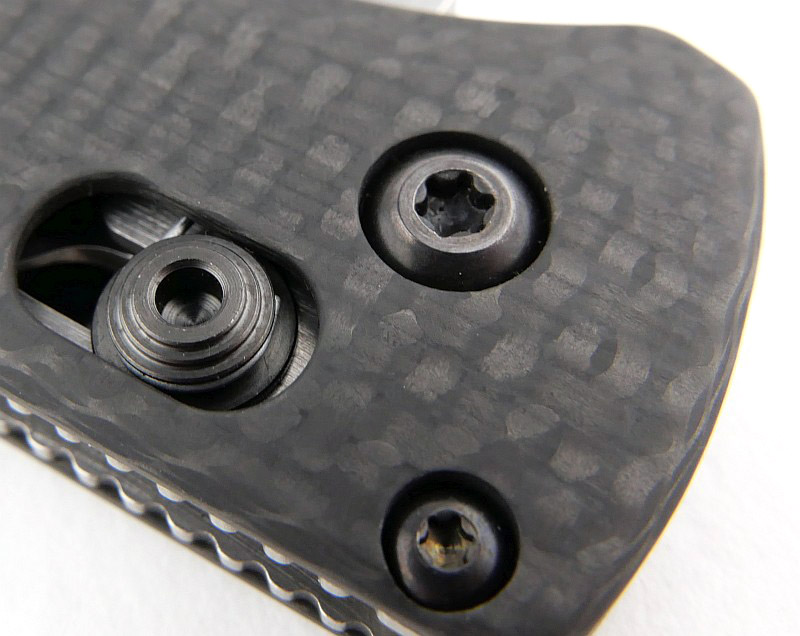
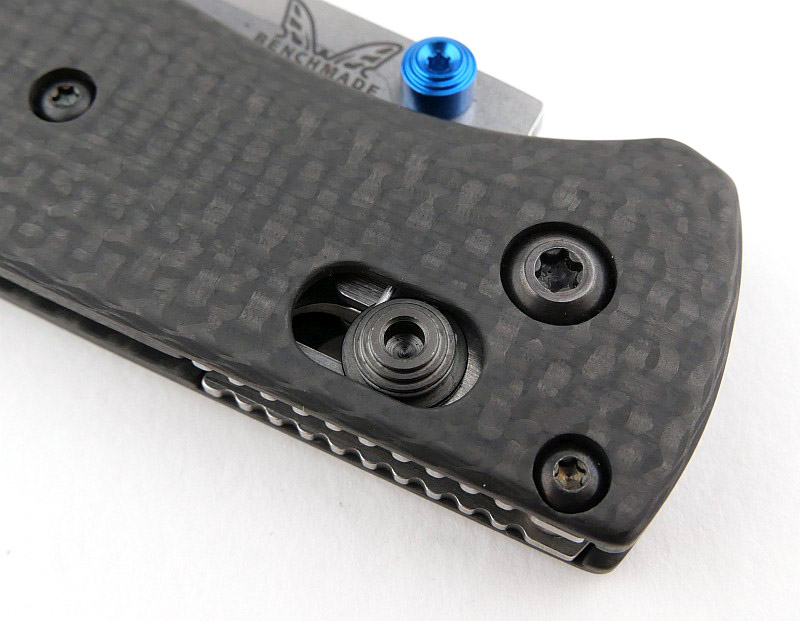
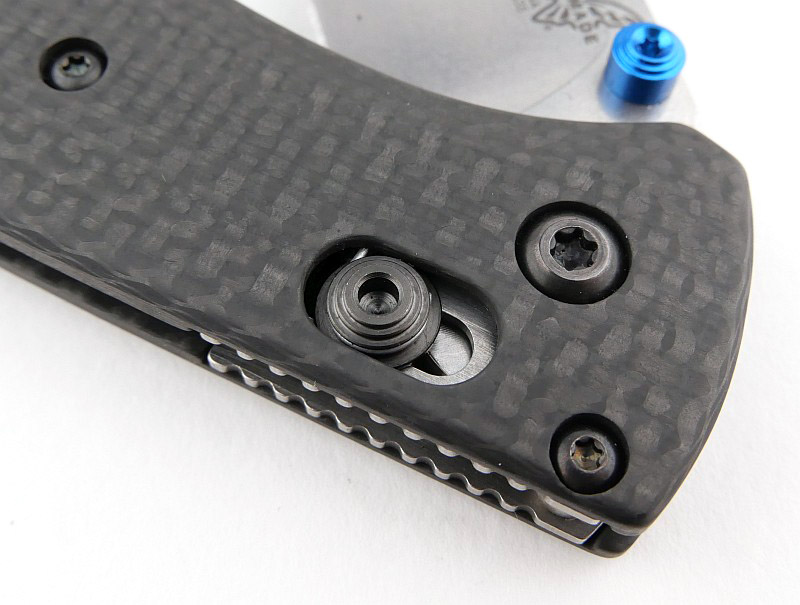
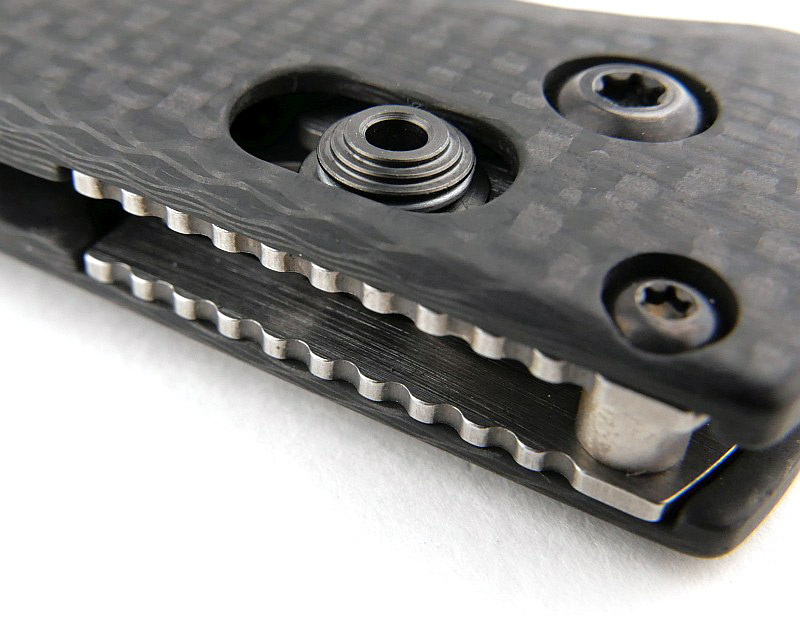
A good look round the Bugout 535-3 – Things to look out for here are:
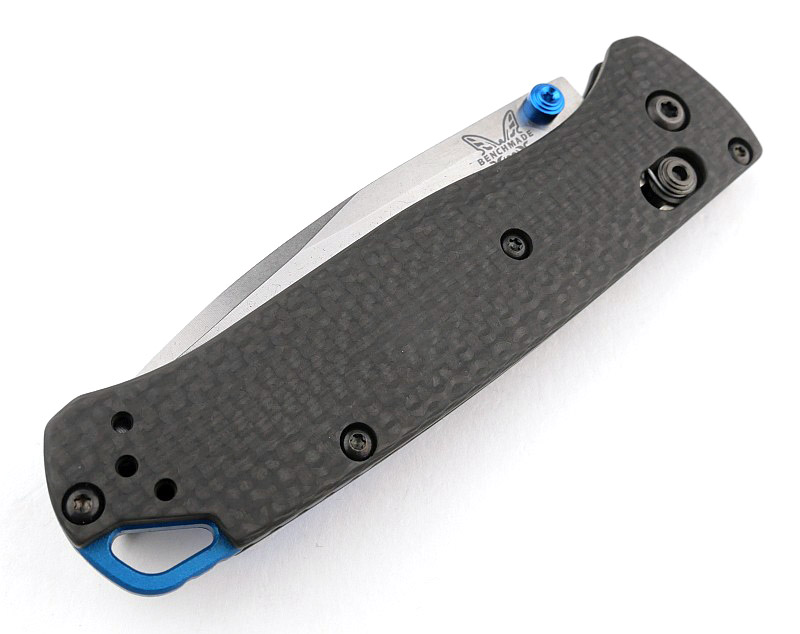
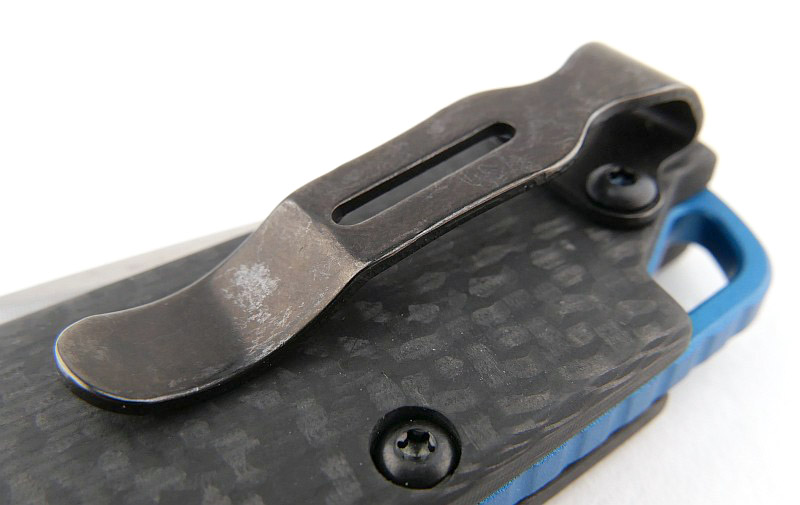
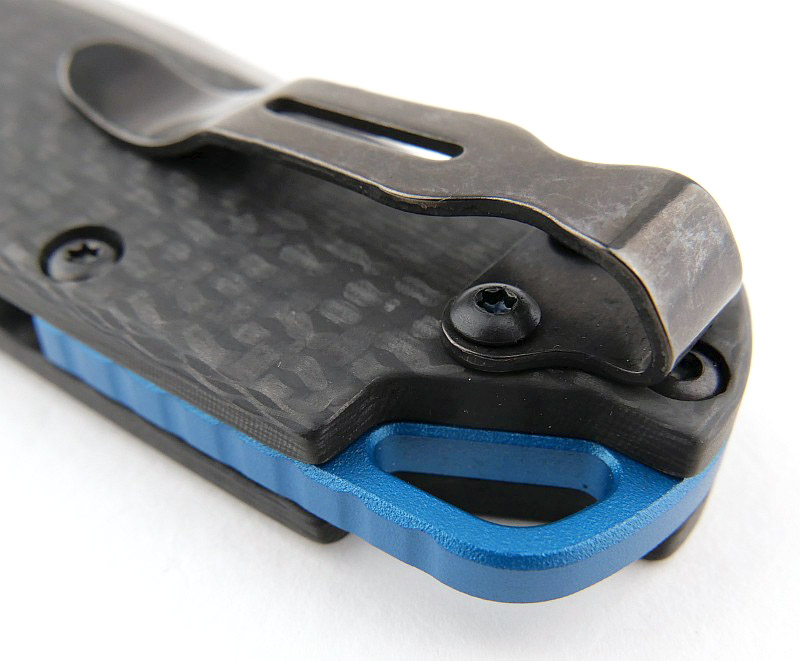
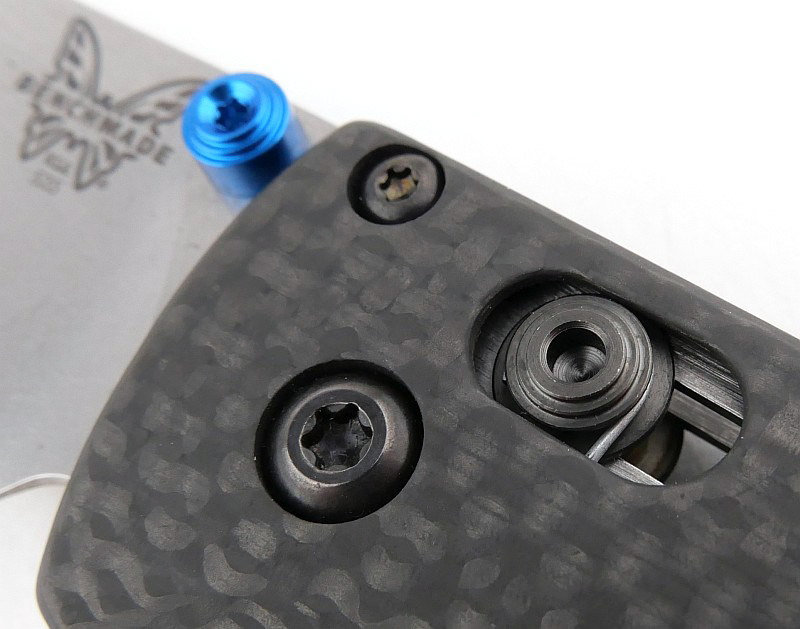
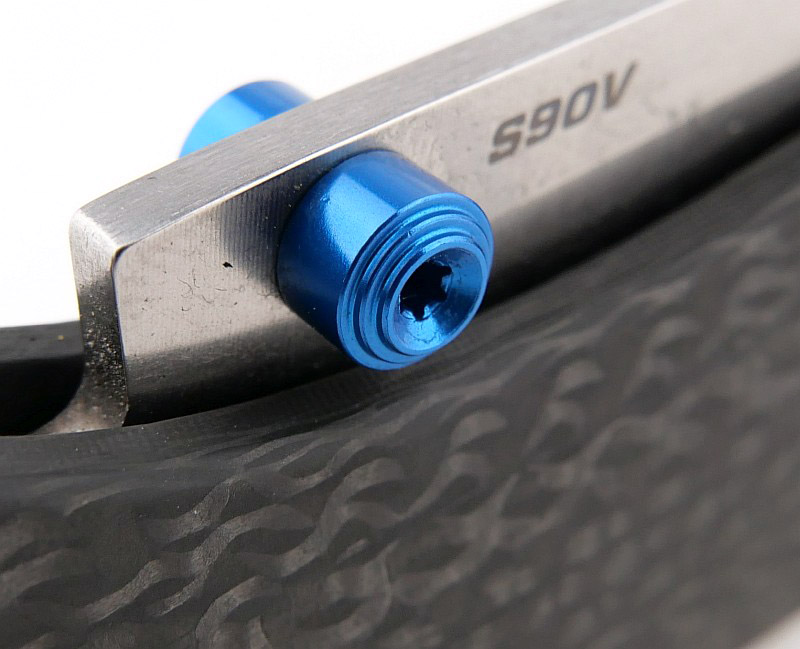
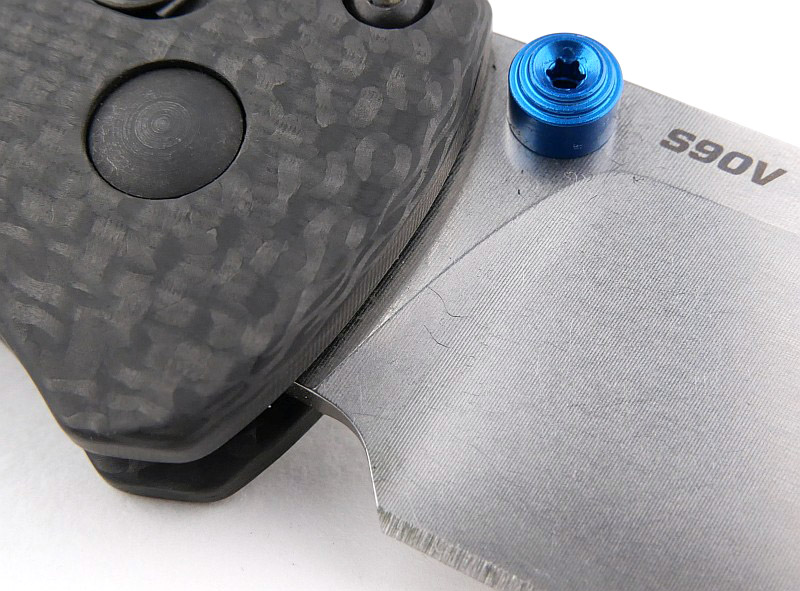
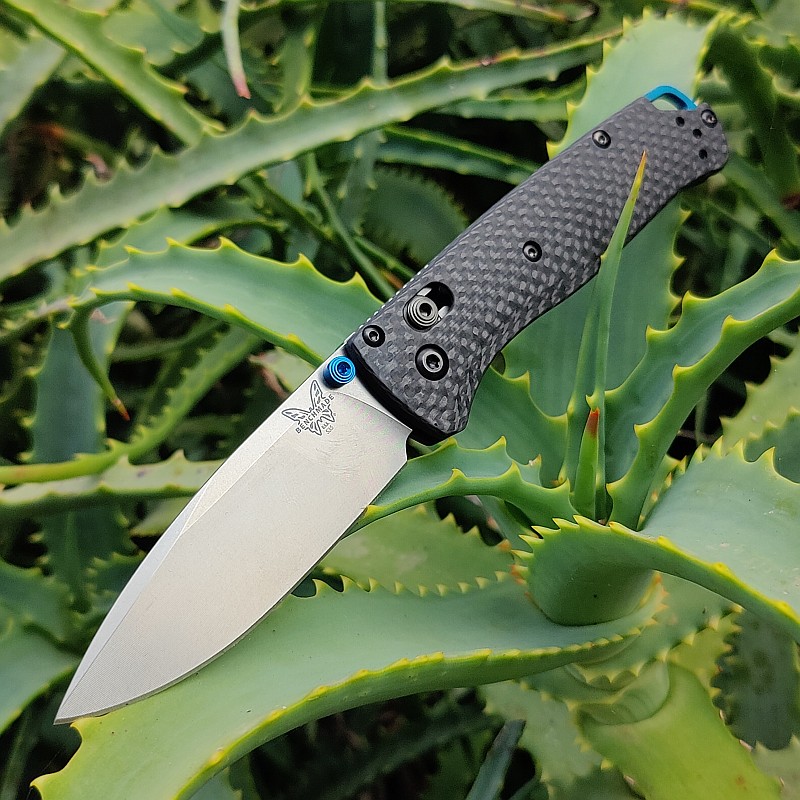
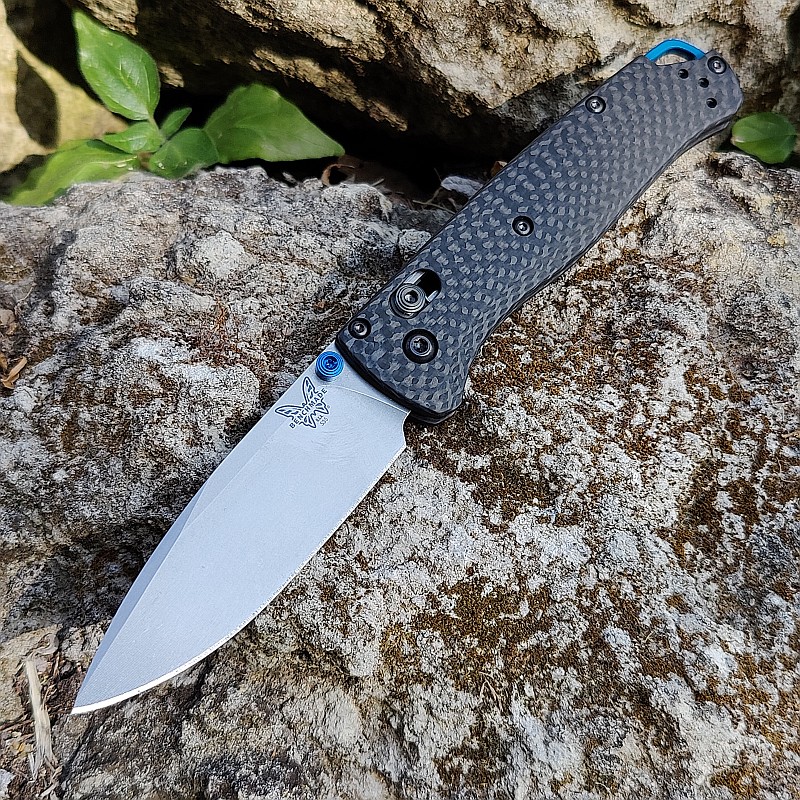
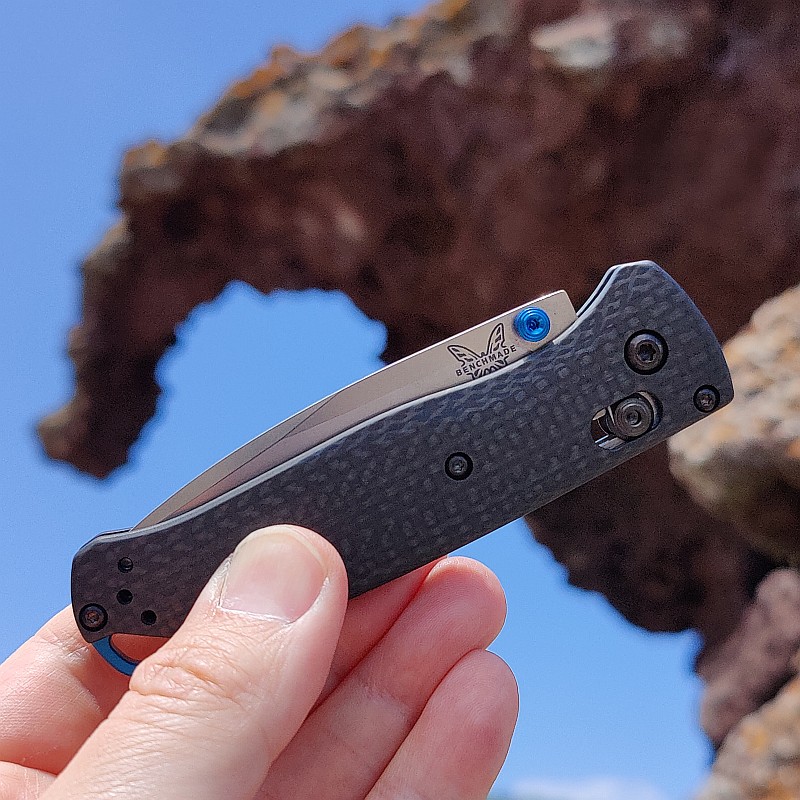
The Bugout uses a mini deep-carry steel pocket clip, that is removable and can be fitted on either side. Blue highlights on the spacer/lanyard hole and thumb stud, play beautifully off the black Carbon Fibre adding to the premium feel of this version of the Bugout.
Ultralight construction means there is only the one spacer and otherwise clear space through the handles.
One side of the pivot bolt is capped, and the torx screw head on the other side only. Torx screws are used throughout for the construction.
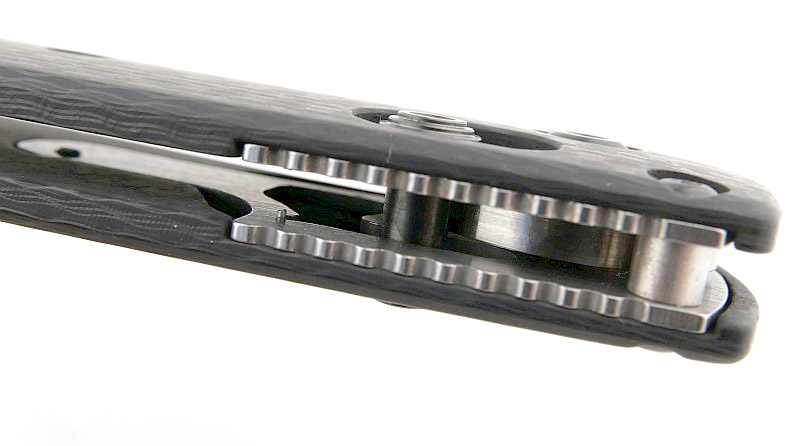
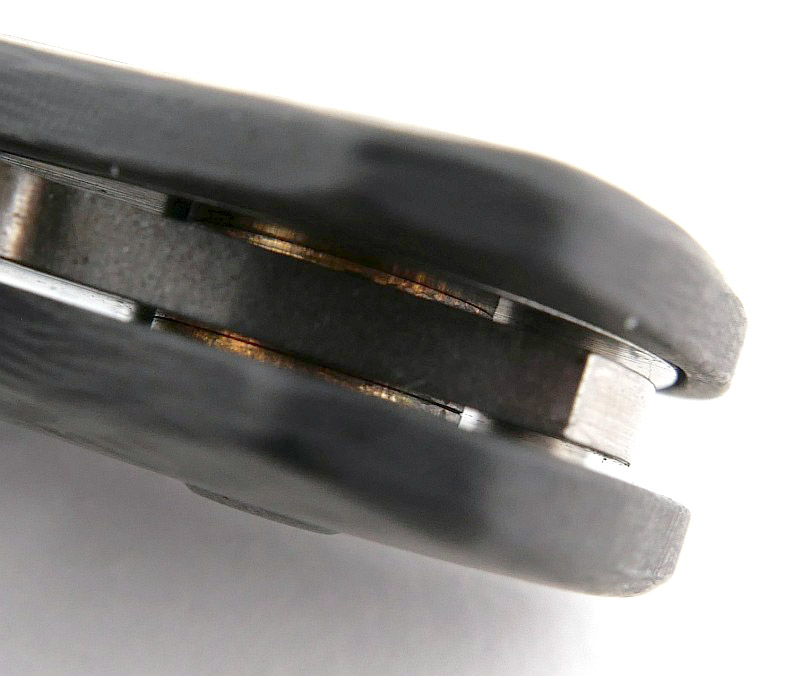
Looking in closely at the axis lock bar and how it moves as the blade is opened. The Bugout, despite being a lightweight knife, is also known for being tough, and the use of phosphor bronze washers adds to the robust and reliable build.
There is something about this particular blue and how it sings on the ambidextrous thumb studs.
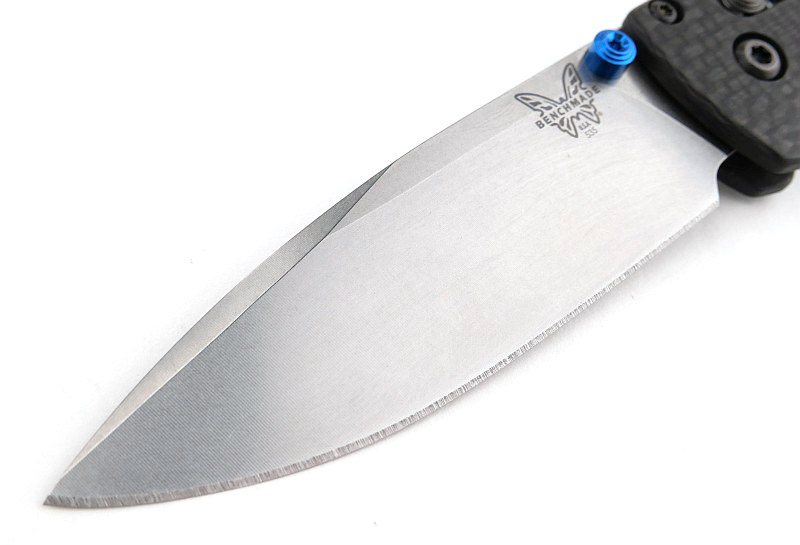
And then we have the Bugout’s slim, flat ground blade. No weak points, and very ‘slicey’ (should be a word if it isn’t) with a very useful shape. The smooth plunge line ensures maximum strength and exposed heel-edge provides easy maintenance and a useful rear-point (there isn’t a sharpening choil, but the end of the edge closest to the handle is unobstructed and easy to sharpen). This detail is something I look for in all knives, but especially an EDC knife.


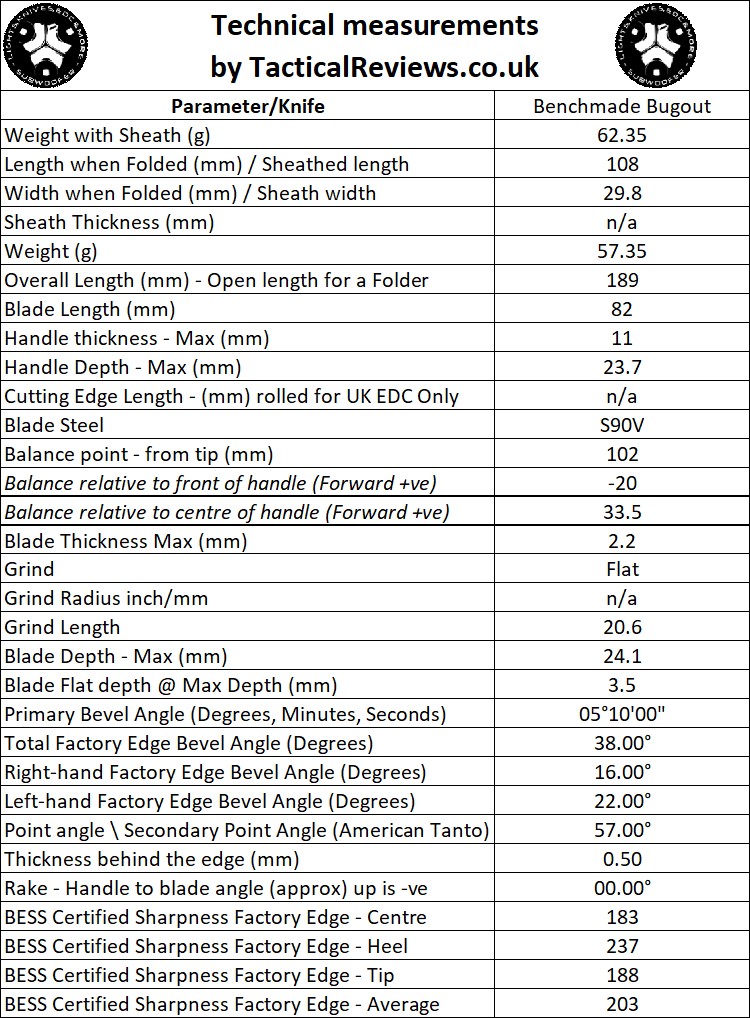
The Blade and Handle – Detailed Measurements:
For full details of the tests and measurements carried out and an explanation of the results, see the page – Knife Technical Testing – How It’s Done.

The blade is made from S90V steel.


The Factory edge up close:

Followers of Tactical Reviews will know my views on factory edges, but to recap:

Anyone using a knife will need to sharpen it. That first factory edge is just like the first tank of fuel that a new car comes with (or first charge of the battery).
A good factory edge is a ‘nice to have’ but not a ‘make or break’ for a good knife, as you will be putting your own edge onto it soon enough.
The factory edge does however indicate the care a knife maker has put into the final finish.
It is for this reason Tactical Reviews measures factory edge sharpness and specifications, and includes this information in the detailed technical testing.

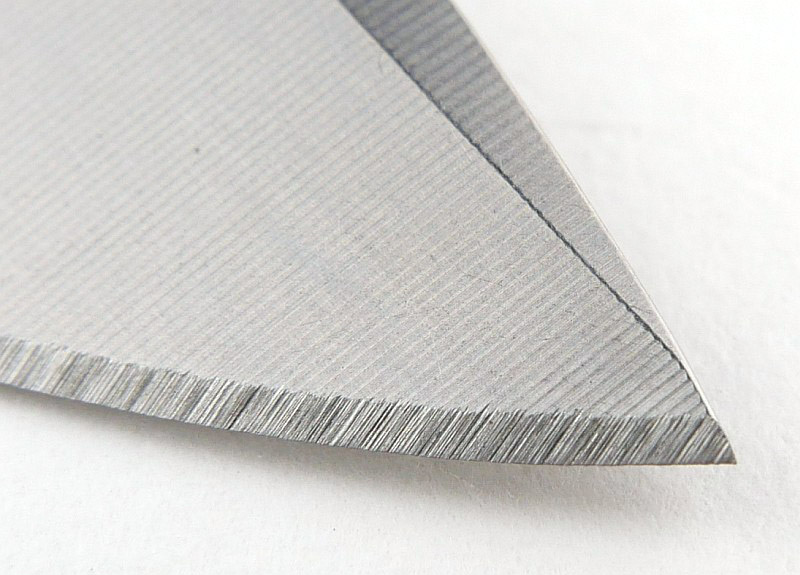
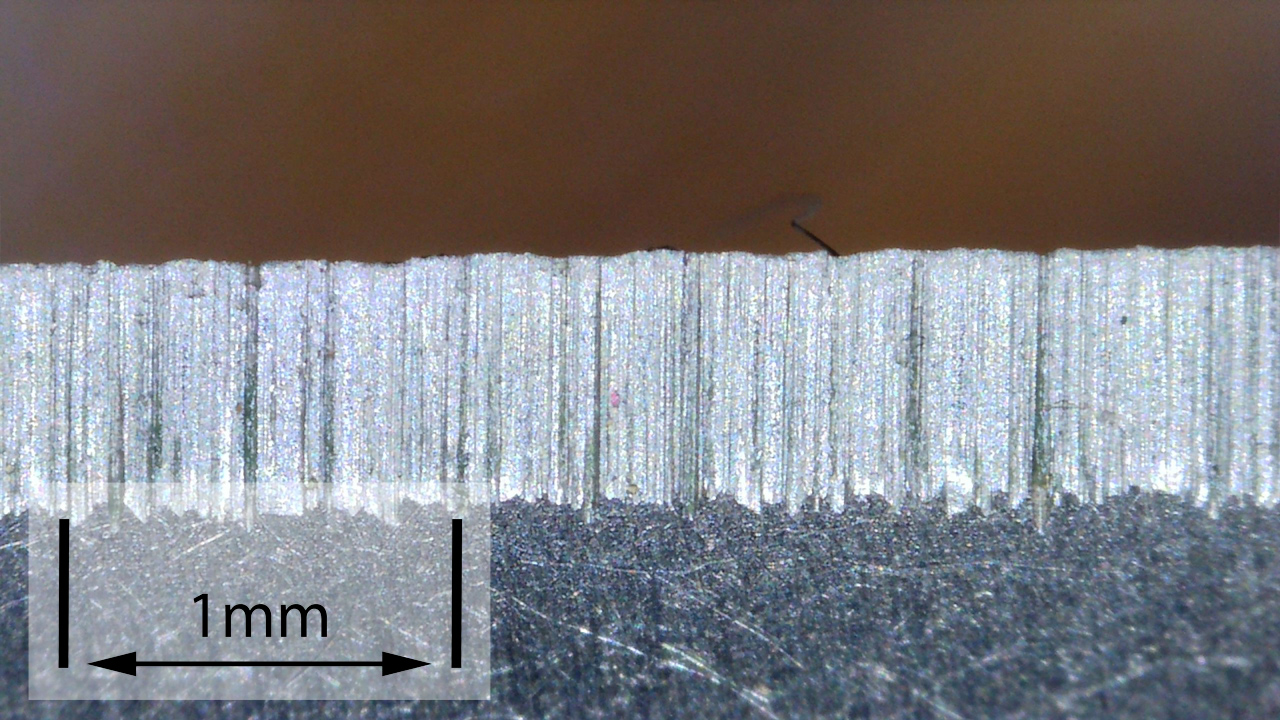
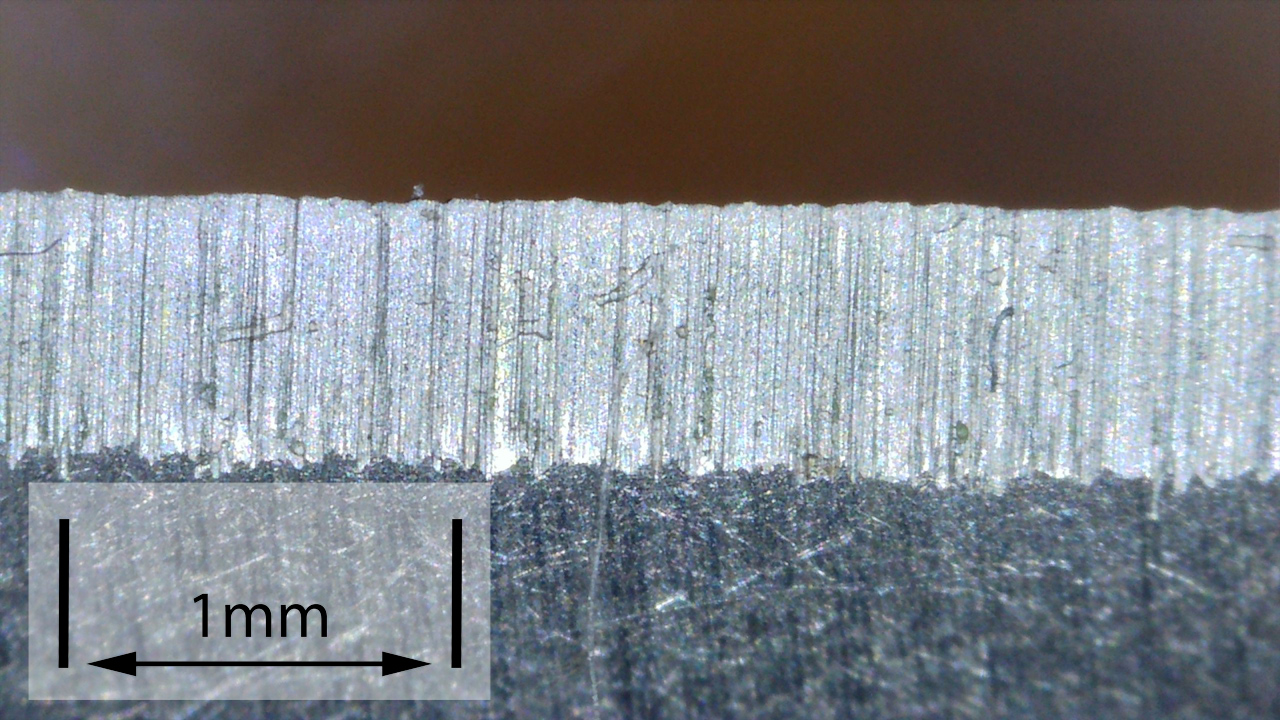
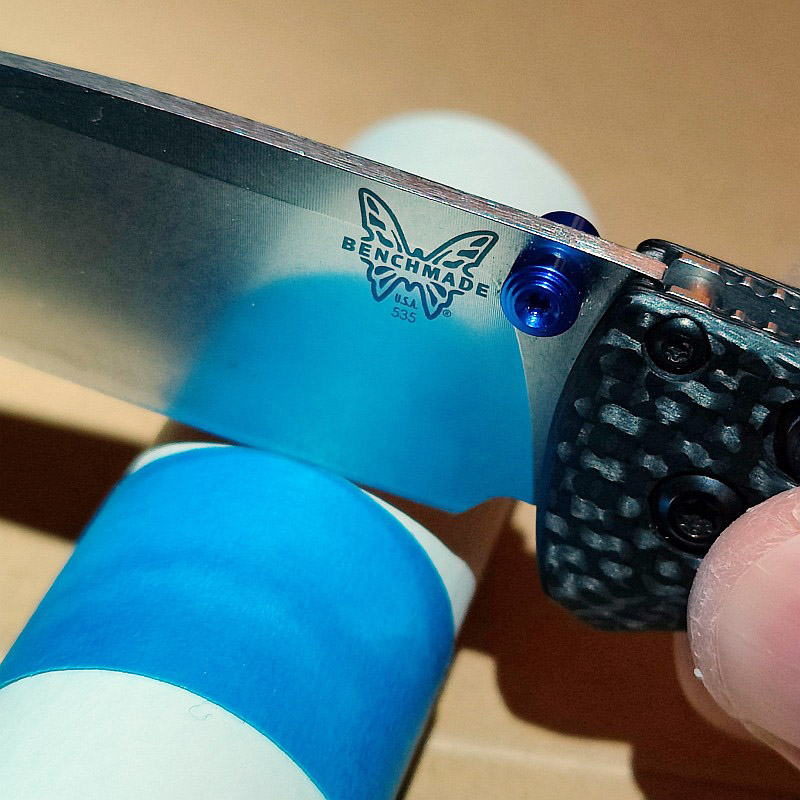
As a further look at the factory edge, this section has been added to include some high magnification photos of the factory edges.

Please be aware that these images were taken with the knife straight out of the box without any stropping and they do have some manufacturing residue visible on the edge.


What is it like to use?

The Bugout is a modern classic and has gained much favour and recognition. This is actually the first Bugout I’ve owned (not the first I’ve handled), so prior to this period of review testing I did not have much experience of using a Bugout. I’ve not been disappointed at all, quite the opposite.
With the 535-3 being the lightest Bugout to date, an already ultralight knife, it sits like a feather in your hand. The Carbon Fibre feels so light, comfortable and warm to the touch, you don’t want to put it down. How can it be so strong and so light?
Benchmade have also got the blade geometry spot on. Using a thinner blade, but not too thin, makes it slice exceptionally well. The exposed heel of the edge (similar to when a sharpening choil is used) makes sharpening of the entire edge easier. I find this secondary ‘point’ a very useful feature for fine work.
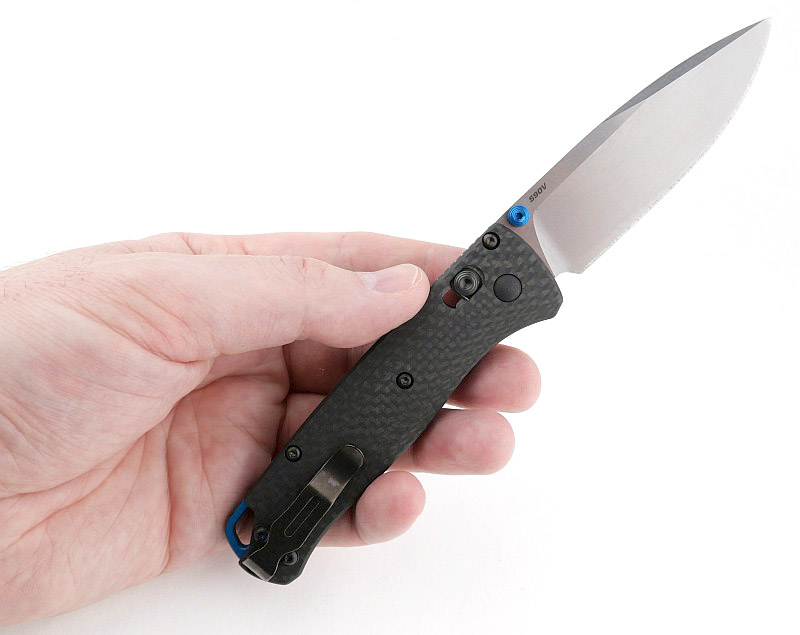
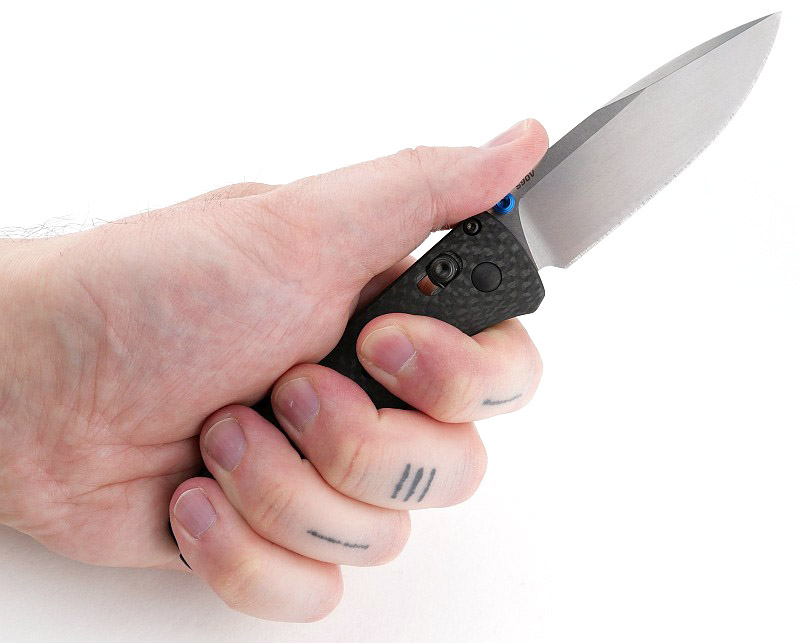
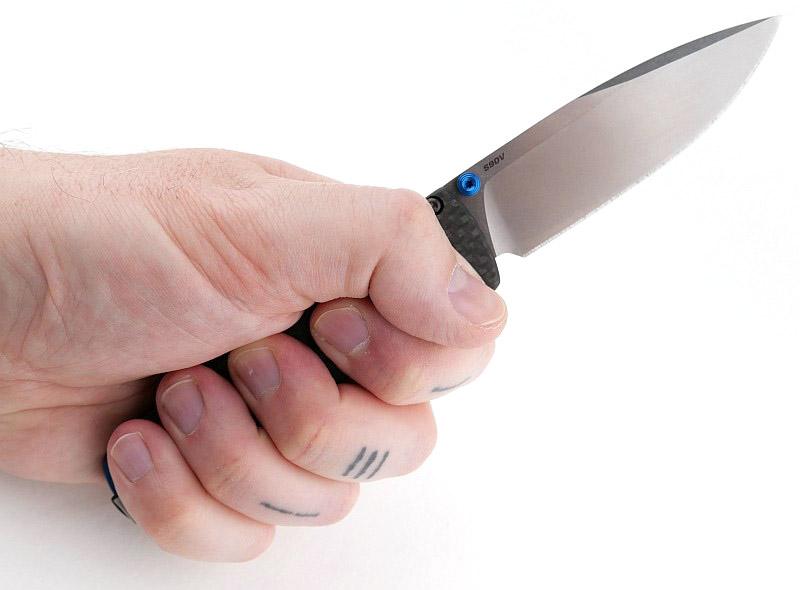
Shown here in my XL-glove-size hands, there is enough handle for a firm grip, while the overall knife is compact enough (and very slim) to forget you are even carrying it.


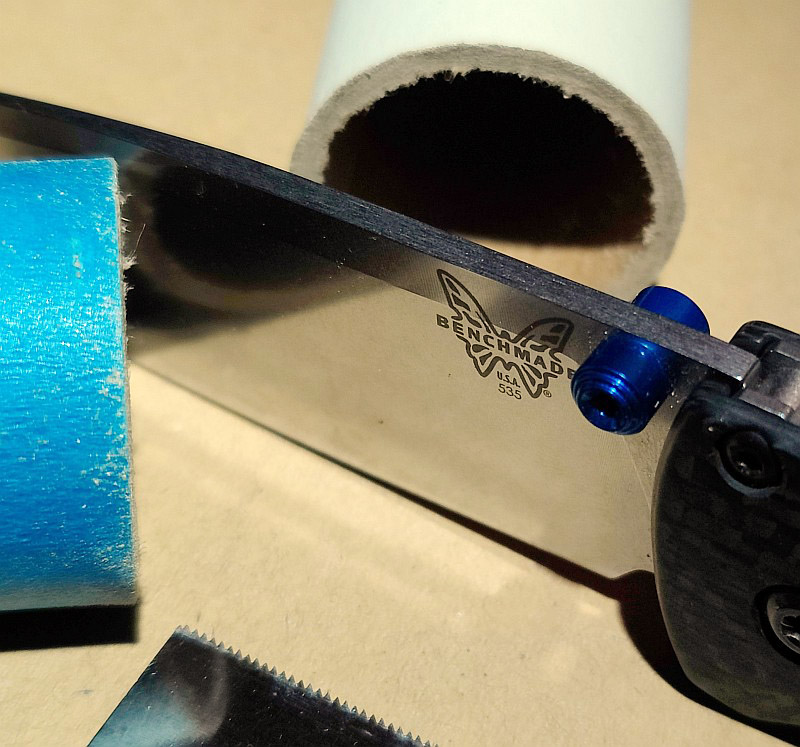
It’s proven its worth with all sorts of random jobs. Here a chandelier replacement candle tube being trimmed to length, and then its been out with me dealing with anything and everything else life has presented.
This edition with the Carbon Fibre handles has been making it so difficult to put down. It want’s you to carry it, it wants you to use it.
I hope this will remain a permanent part of the Benchmade Bugout line-up as it really is superb.


Review Summary

The views expressed in this summary table are from the point of view of the reviewer’s personal use. I am not a member of the armed forces and cannot comment on its use beyond a cutting tool or field/hunting knife.

Something that might be a ‘pro’ for one user can be a ‘con’ for another, so the comments are categorised based on my requirements. You should consider all points and if they could be beneficial to you.

_______________________________________________
What doesn’t work so well for me
_______________________________________________

Nothing to see here.
(There is no such thing as the ‘perfect’ knife, but I have nothing to complain about.)

_______________________________________________
Things I like
_______________________________________________

Super-Ultralight and slim.
Smooth, warm, comfortable Carbon Fibre handle.
Slim, strong blade.
S90V steel.
High-end fit and finish.
Deep carry clip.
Ambidextrous.
Demands to be handled and carried.

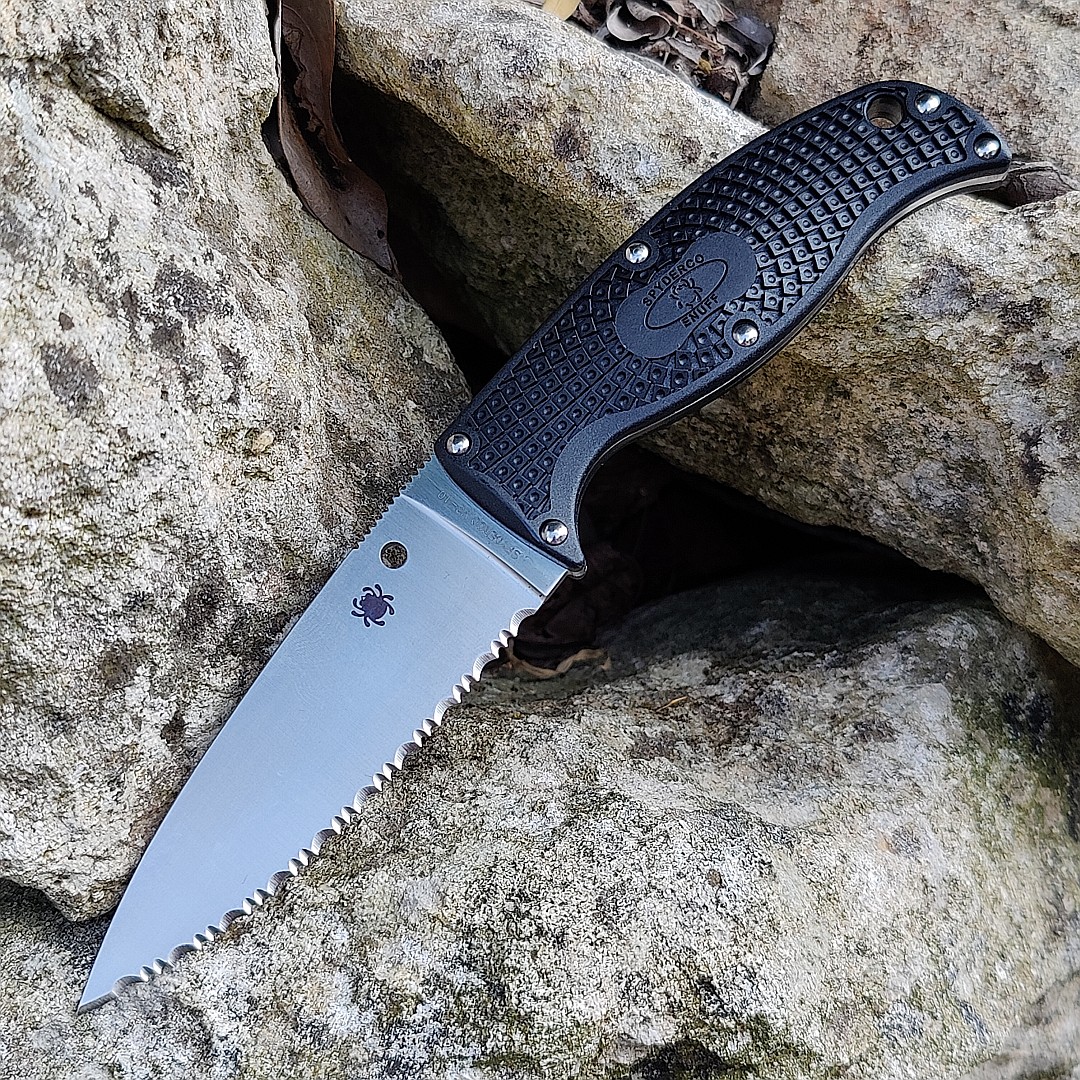
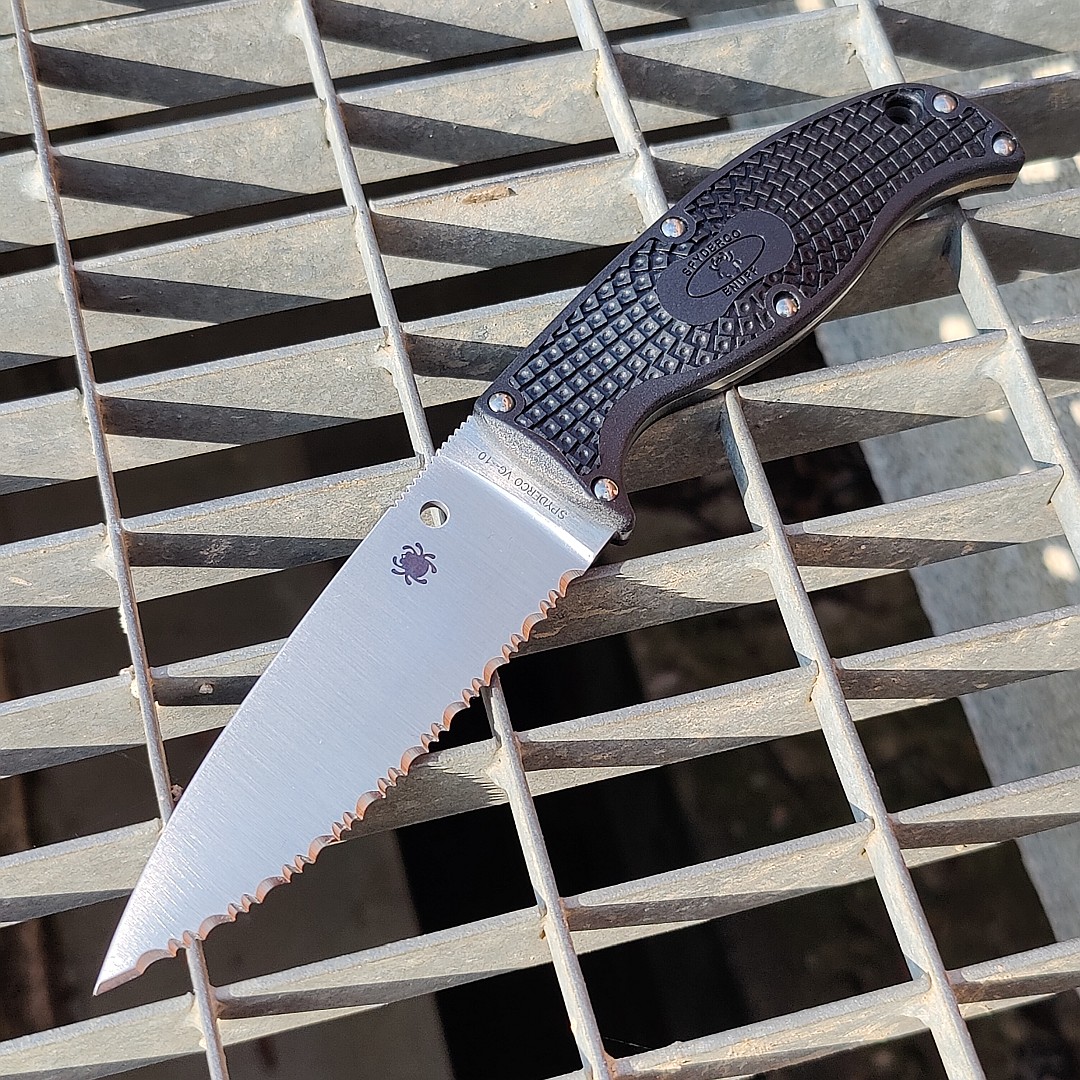
Knife Review: Spyderco Enuff 2

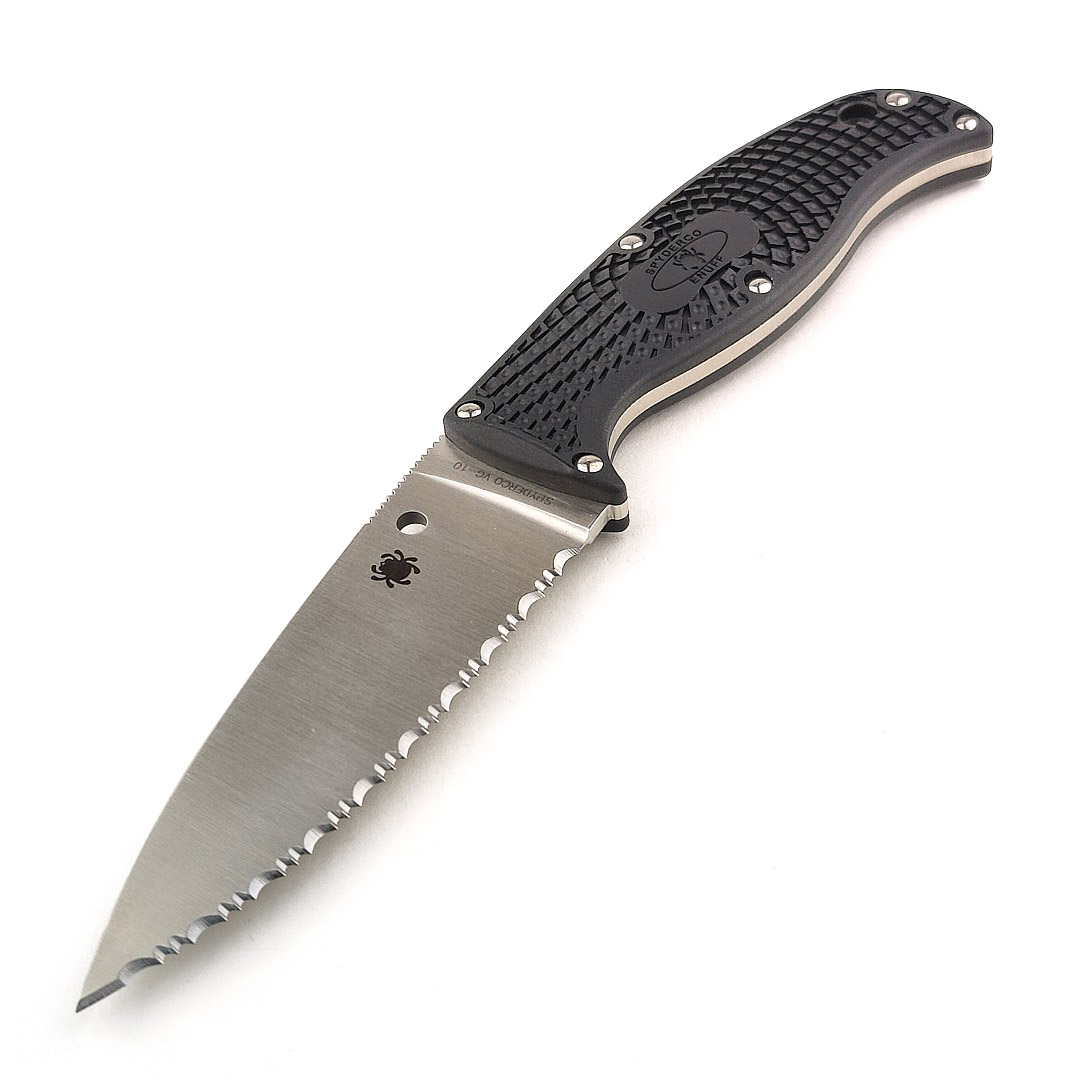
In this Spyderco Enuff 2 review, we will take in all the details of this fixed-blade knife. Enuff 2 is an expansion of the Enuff platform, designed by Spyderco’s Sal Glesser and originally created to emphasize the first few inches of the edge nearest the handle where most of the work is done. However, how much blade is “Enuff”, is a matter of opinion. For users who like the Enuff platform, but wanted just a bit more blade length, there’s the new Enuff 2.

Review Videos

Starting with a short format sixty second review:


Onto a full video review covering many more details:


A few more details:

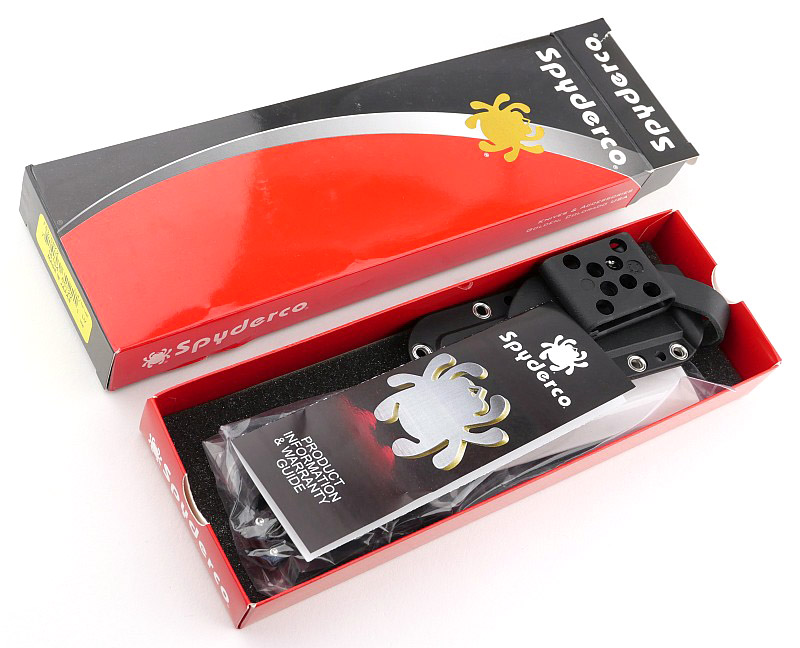
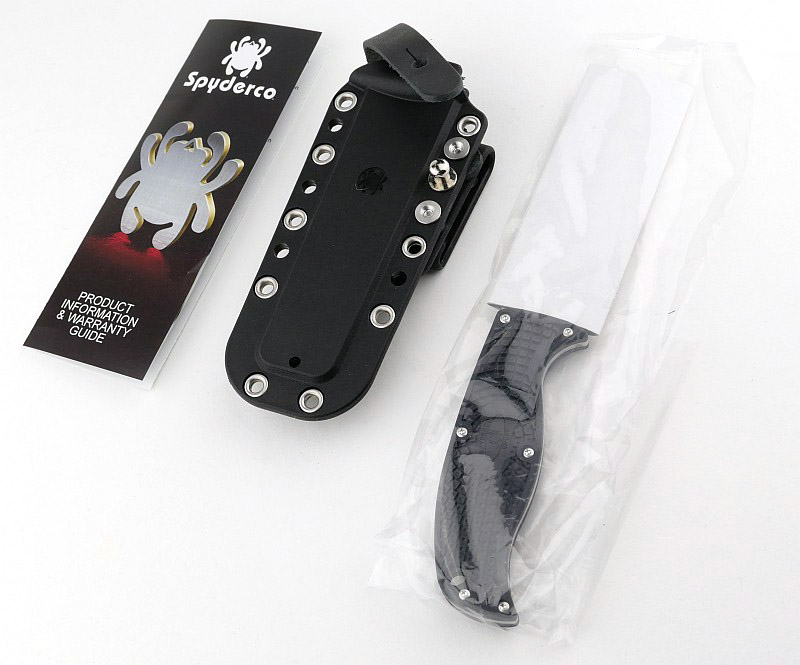
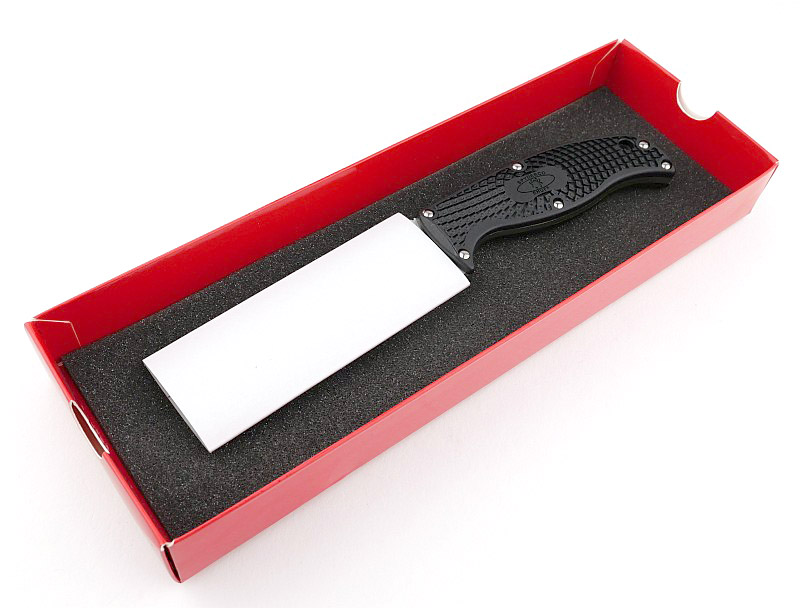
What’s in the box?:
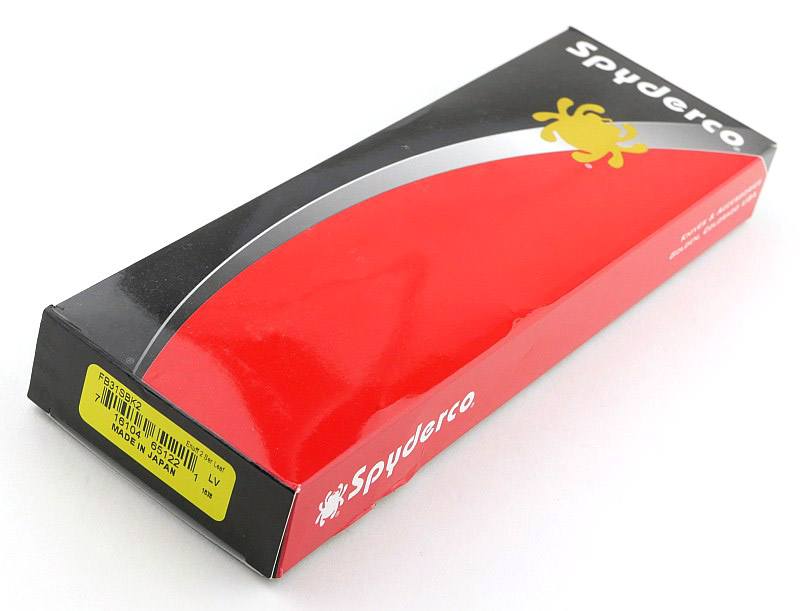
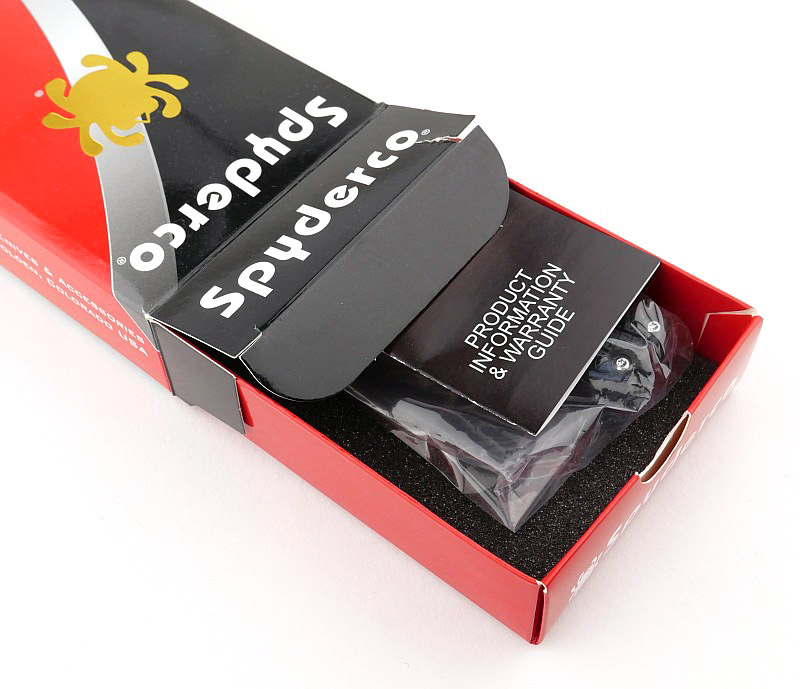
As you would expect from Spyderco.


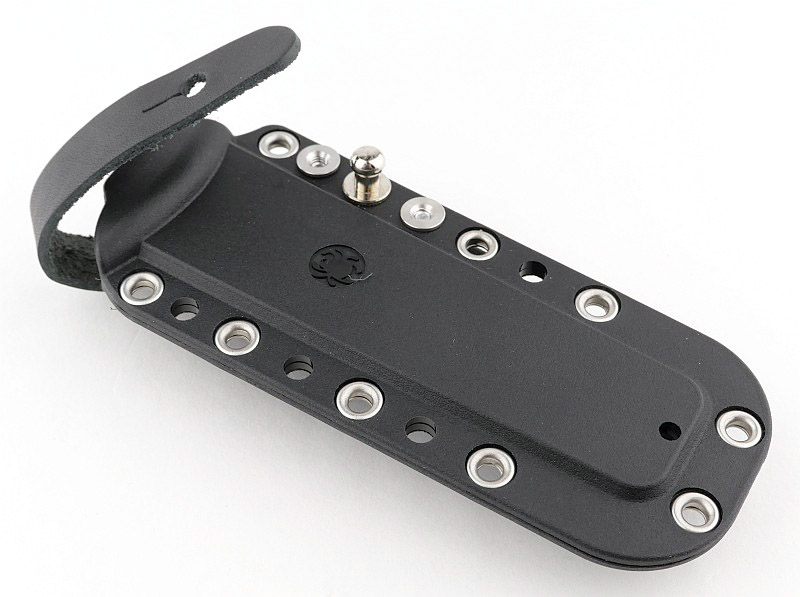
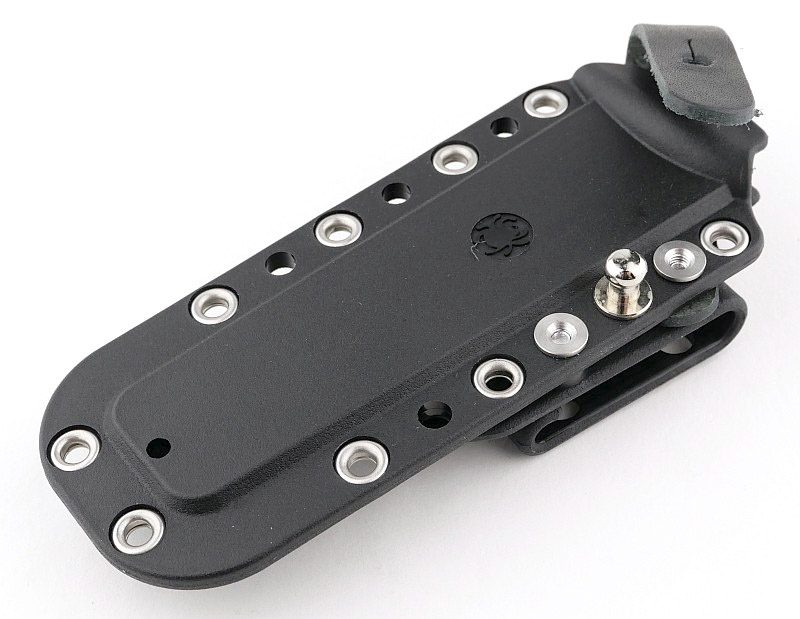
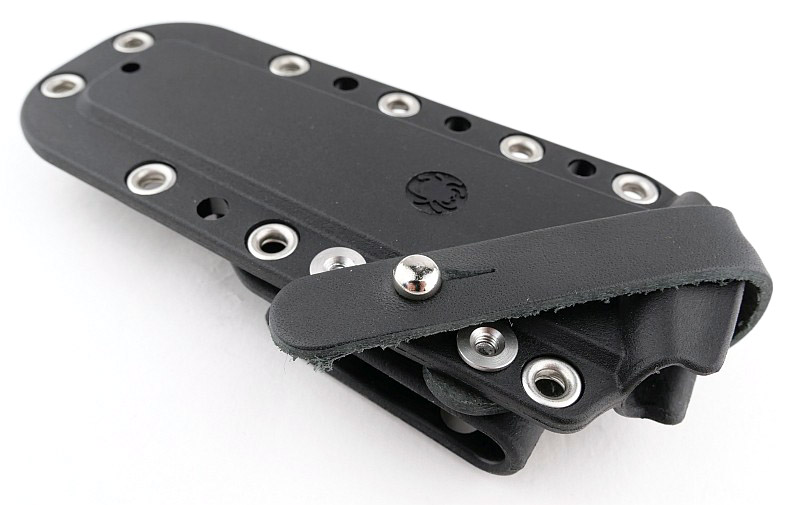
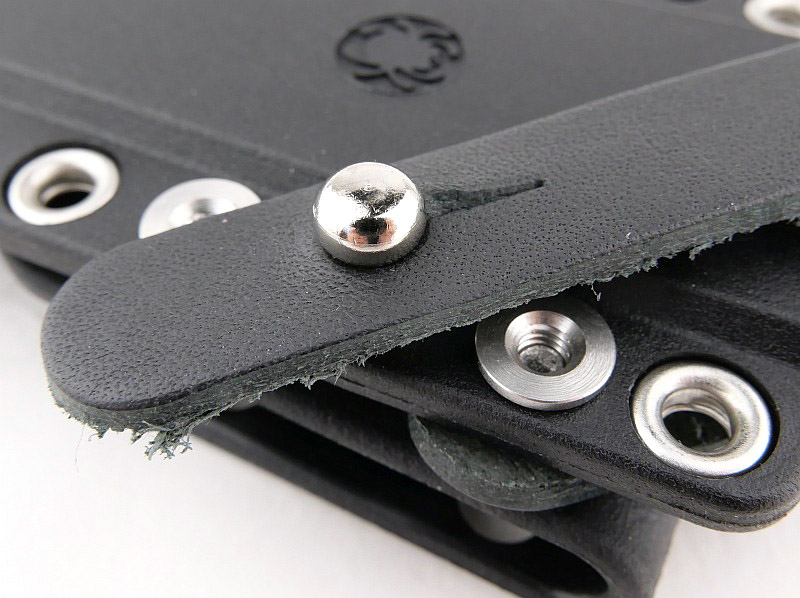
A good look round the Enuff 2 sheath- Things to look out for here are:
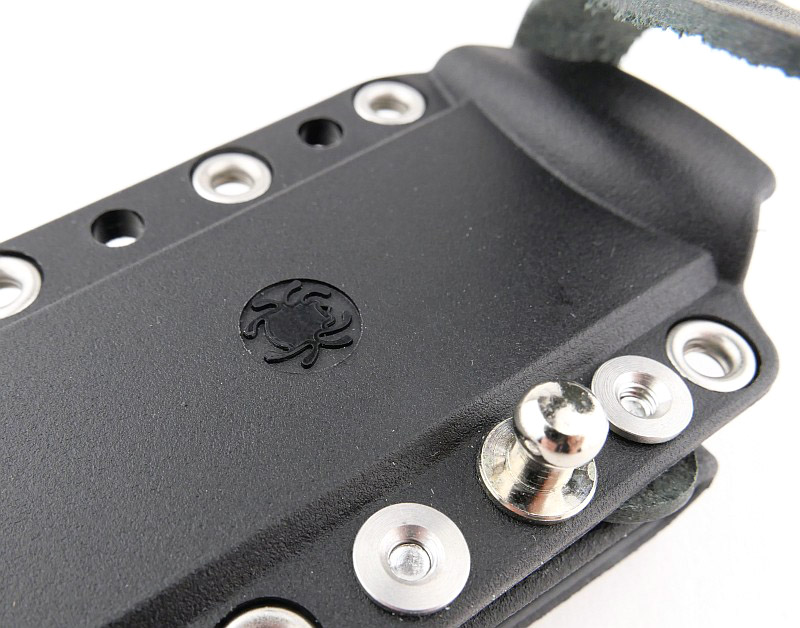
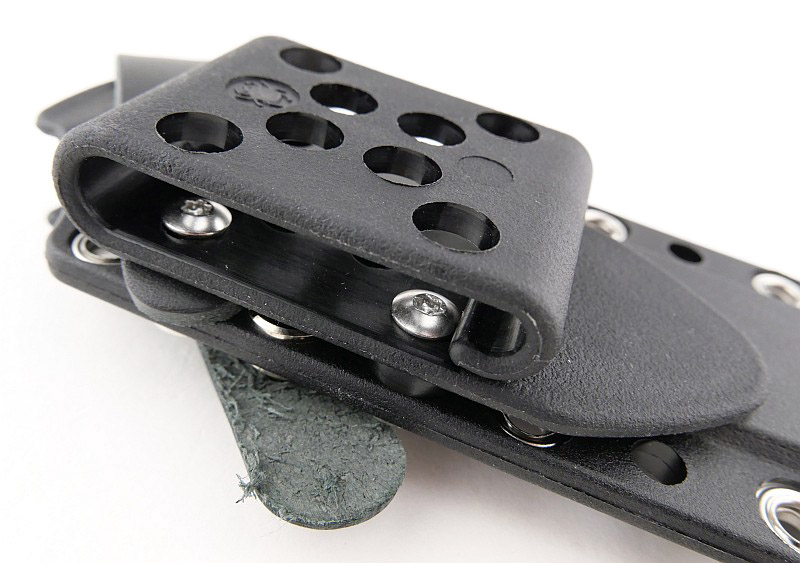
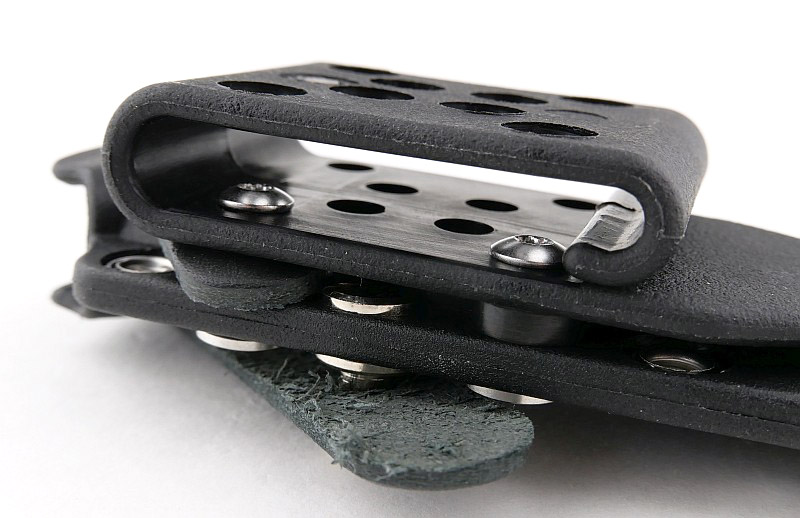
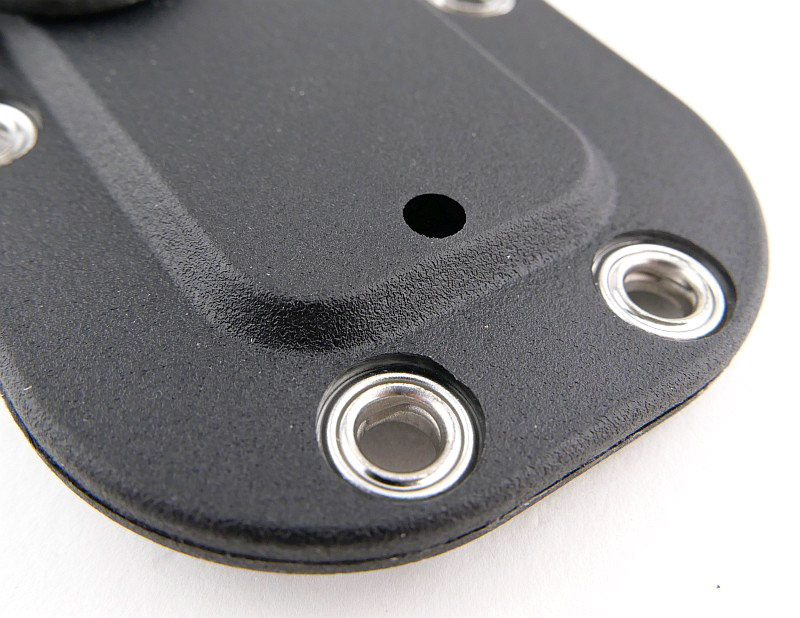
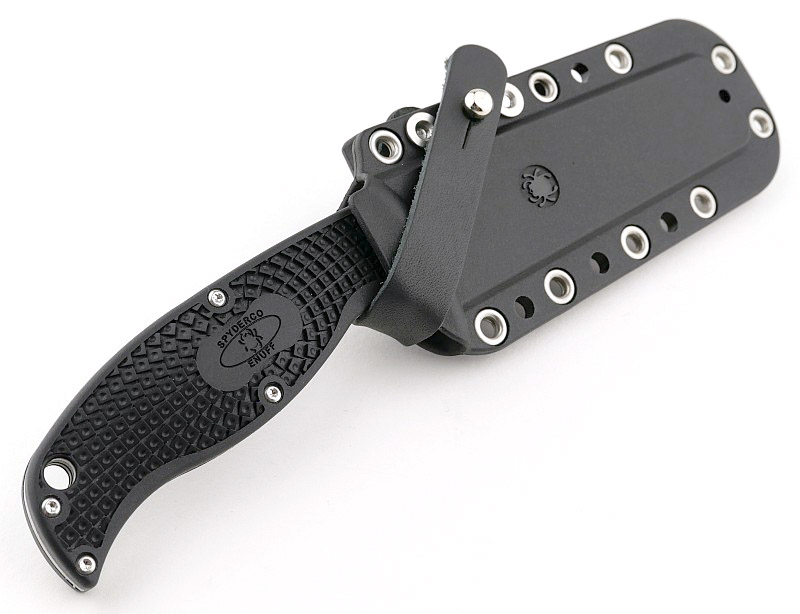
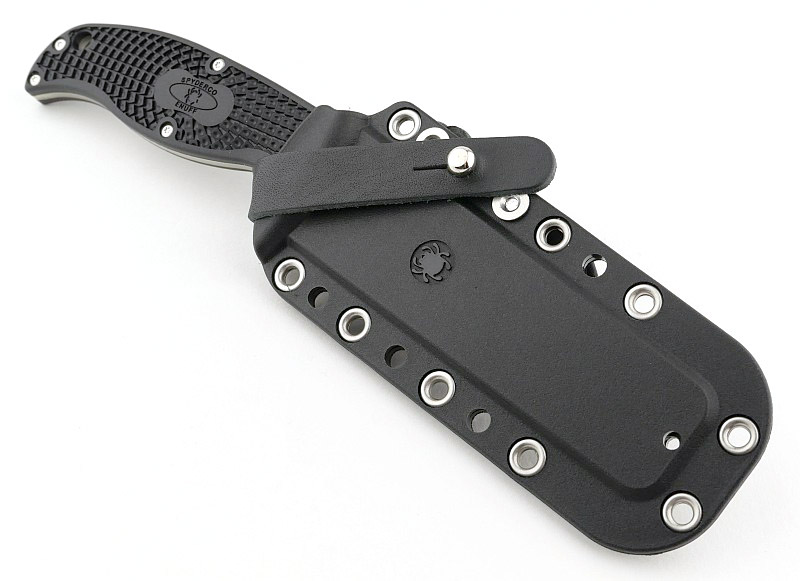
Formed of two molded plastic sections held together with metal eye rivets, the sheath is very slim. The belt clip makes the whole sheath quite a bit thicker, but can be removed easily if you are packing the knife away.
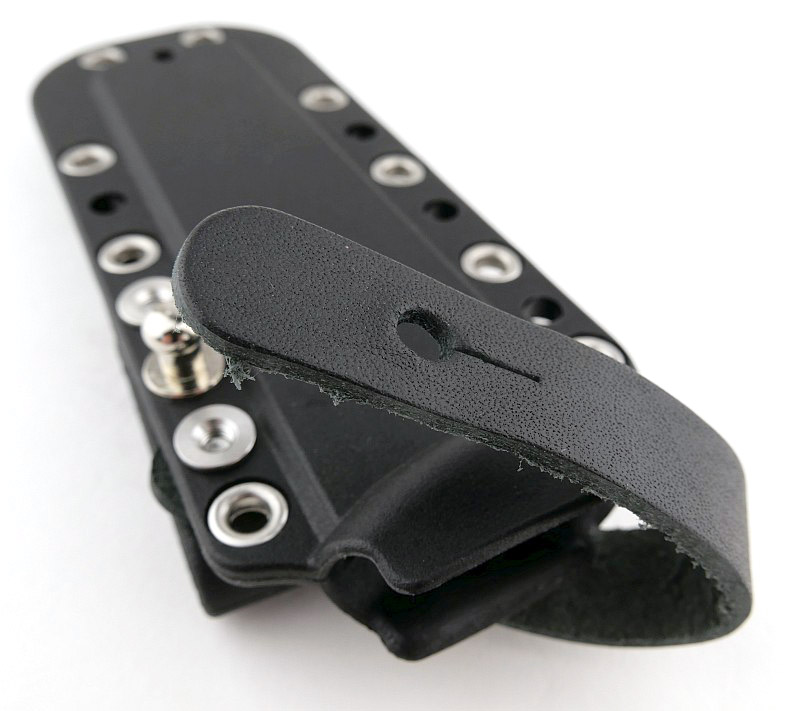
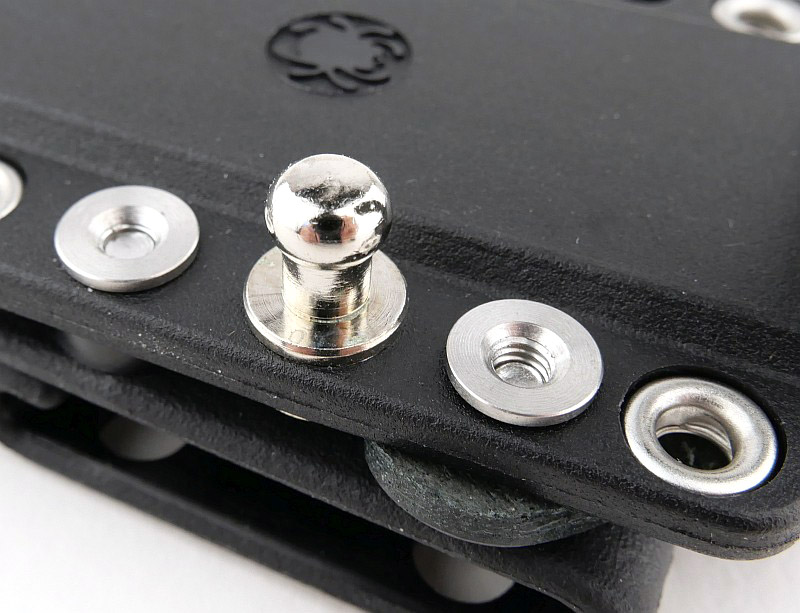
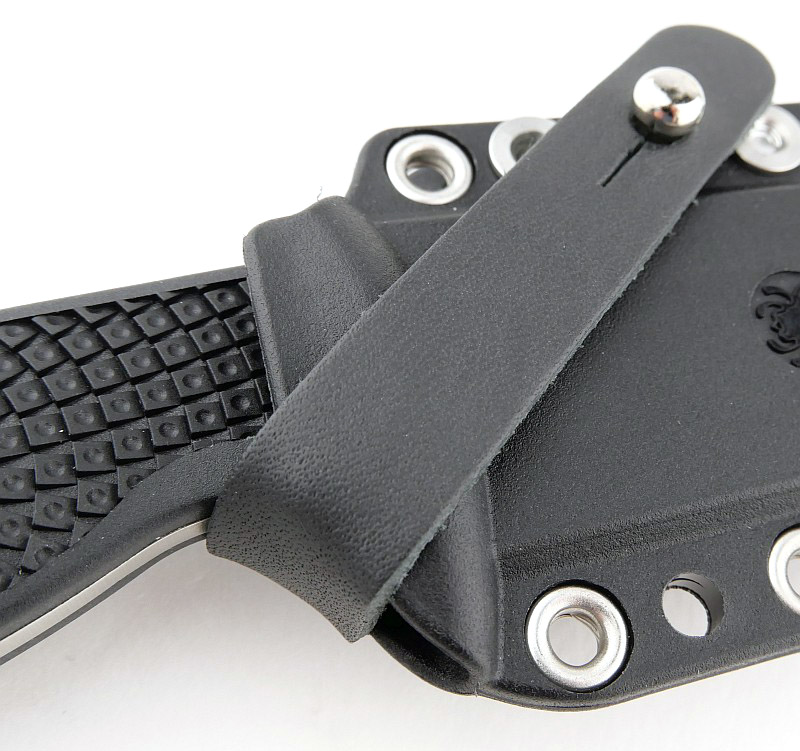
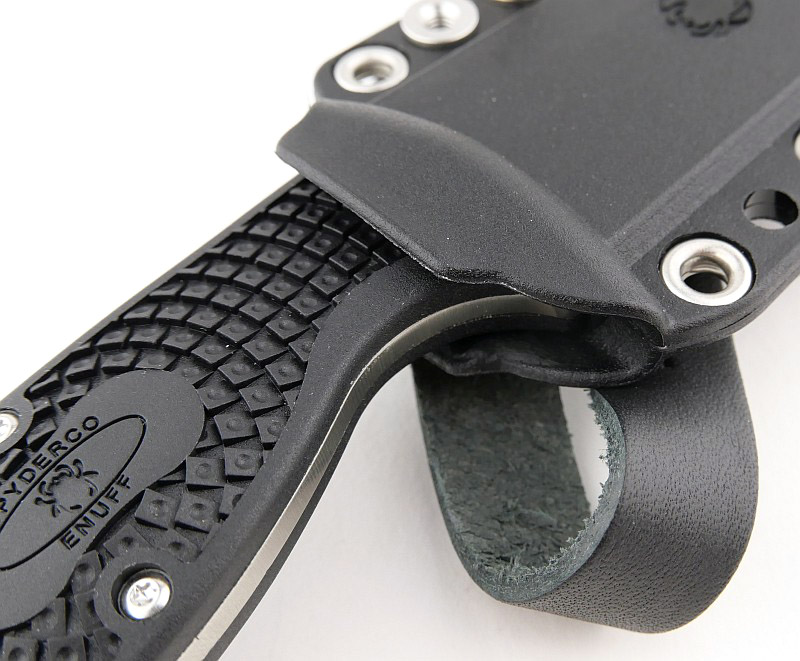
Out of the box, there is a secondary retention option of a leather strap. With the post that holds the end of the leather strap adding further bulk, this strap and its post are also easily removed if not needed.
The belt loop has a nice one-way system to prevent it accidentally coming off your belt. The sprung loop curls back under to catch onto the bottom of the belt and stop it pulling off.
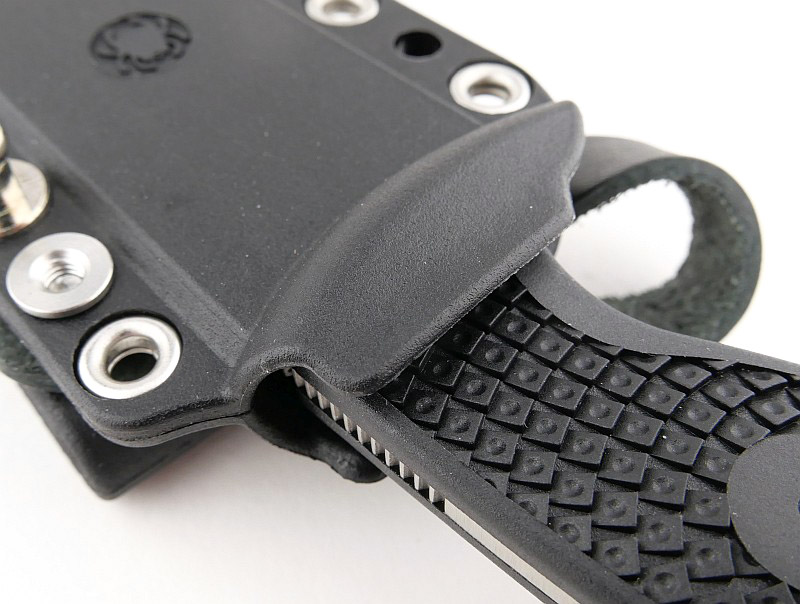
The molded sheath lips grip the handle firmly making the extra strap redundant unless you want a secondary retention on the knife.


A good look round the Enuff 2 – Things to look out for here are:
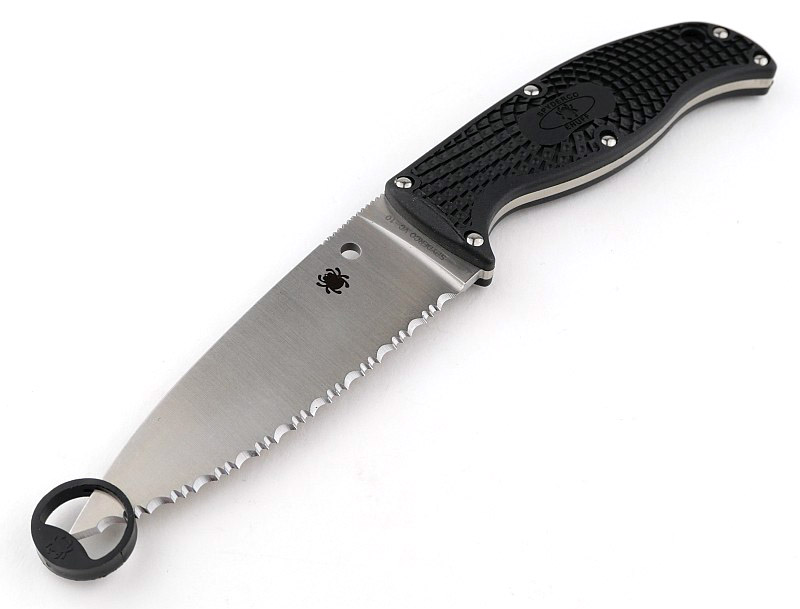
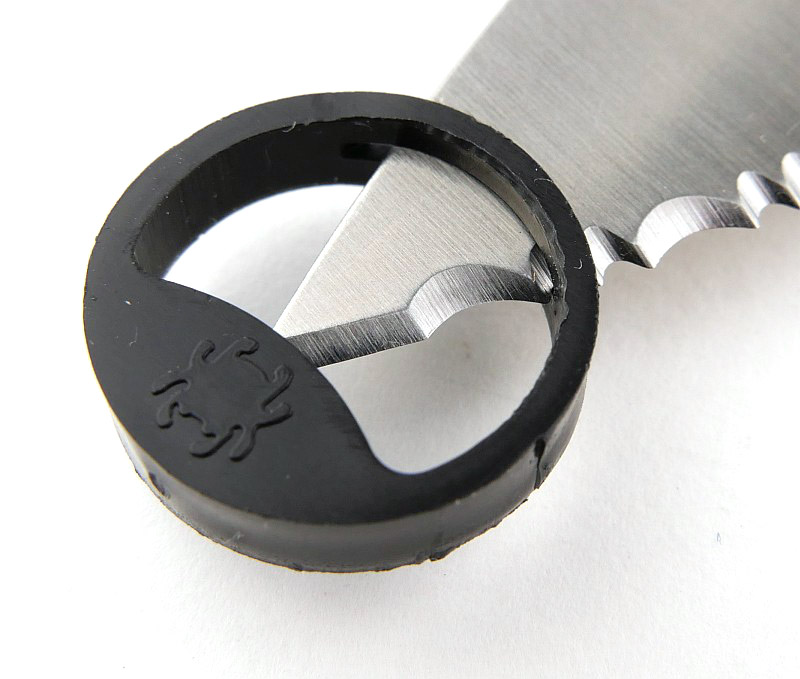
Starting this gallery off with the tip protector on the knife; it even has the Spyderco logo on it! (which you will discard, but just saying)
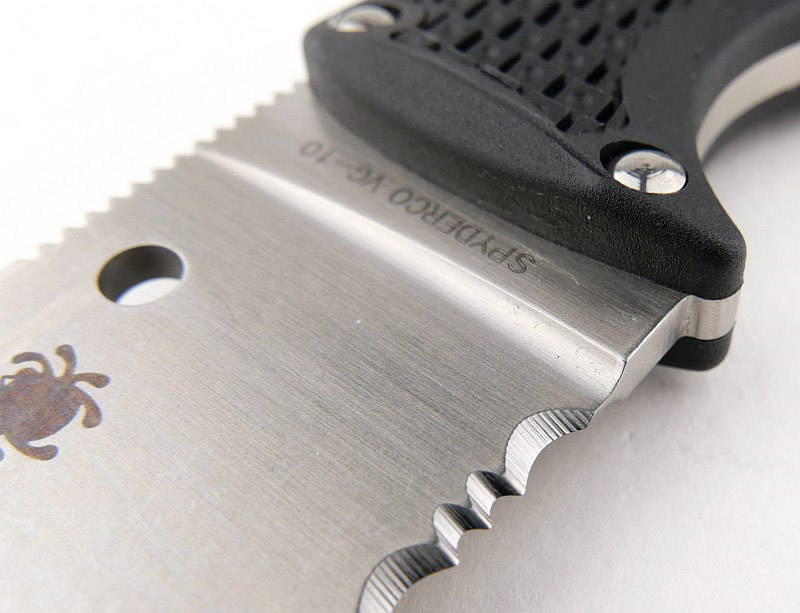
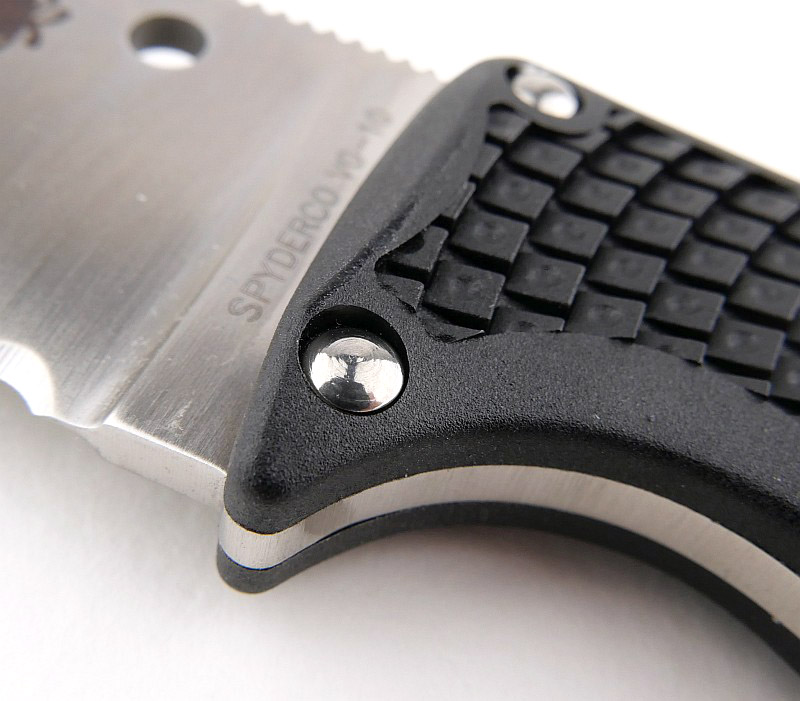
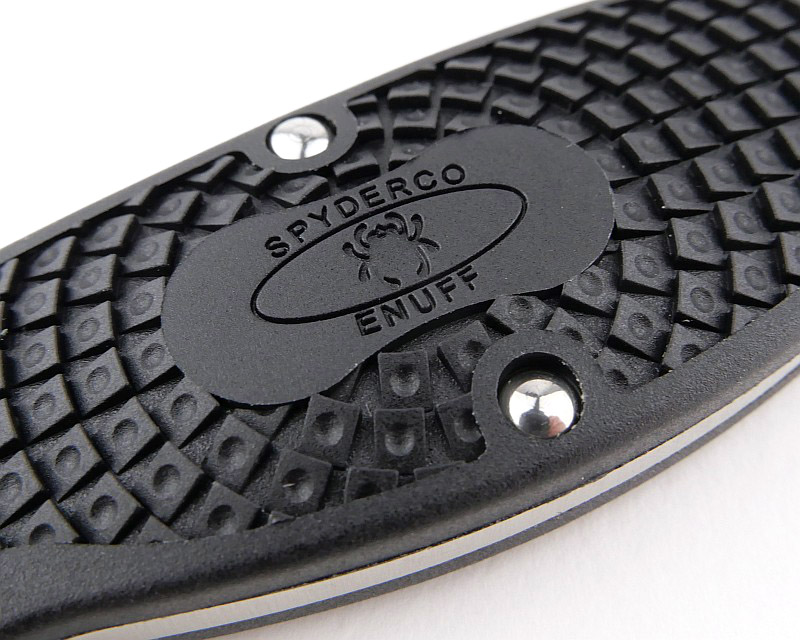
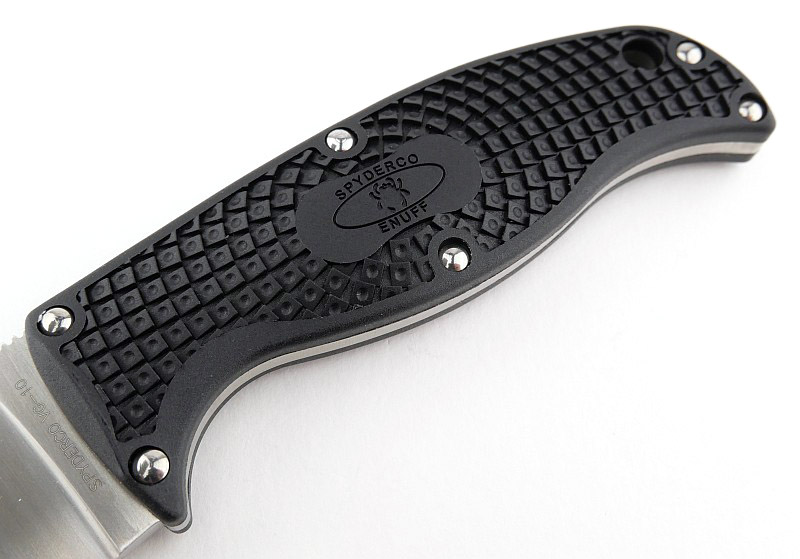
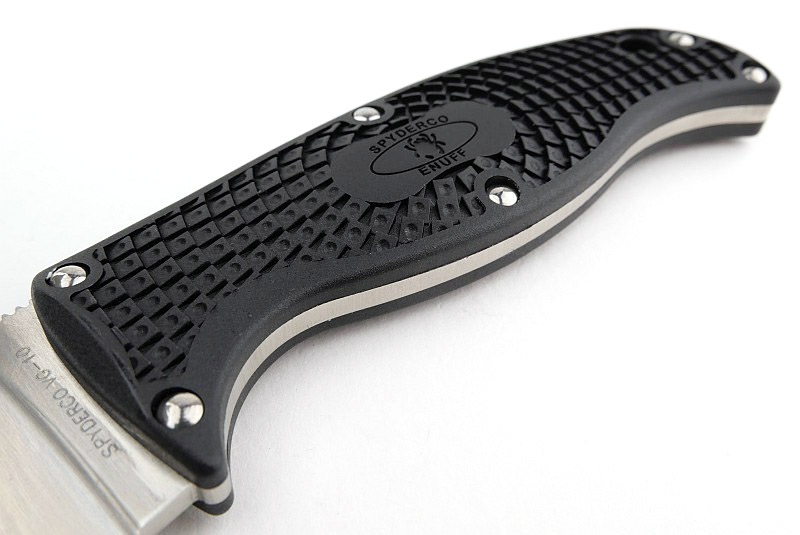
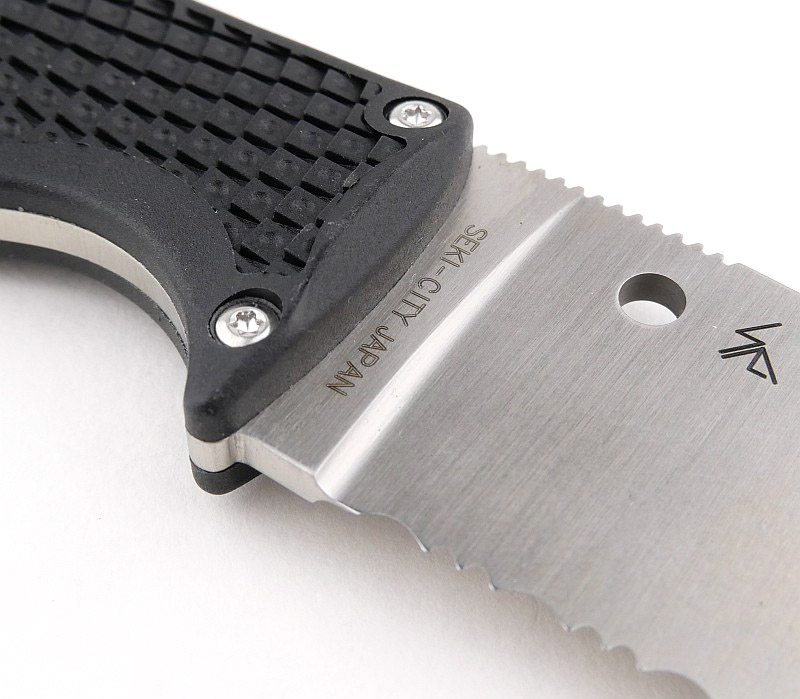
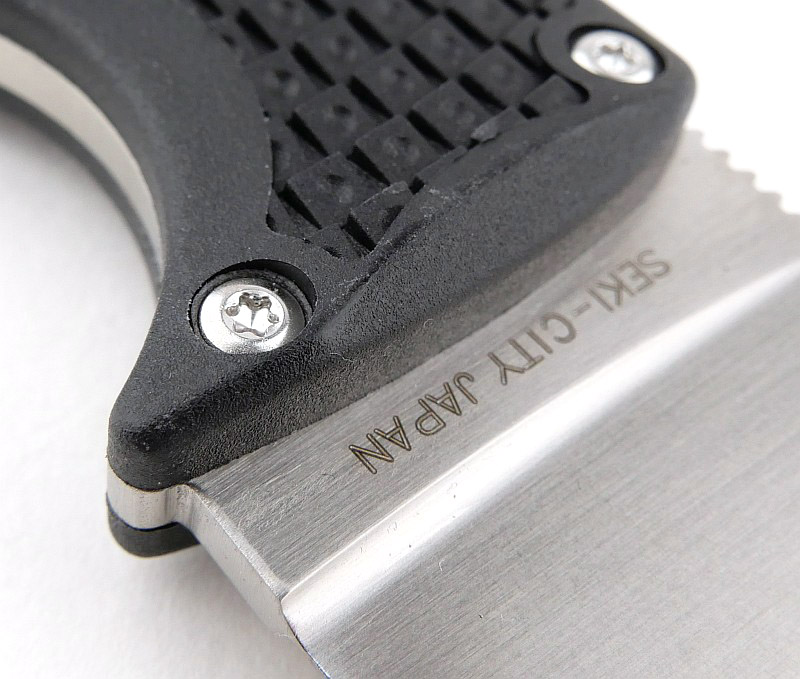
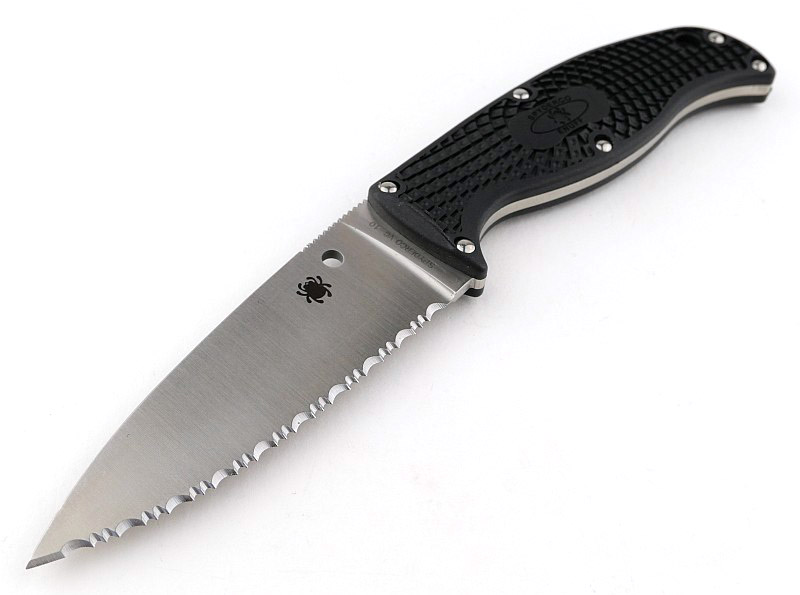
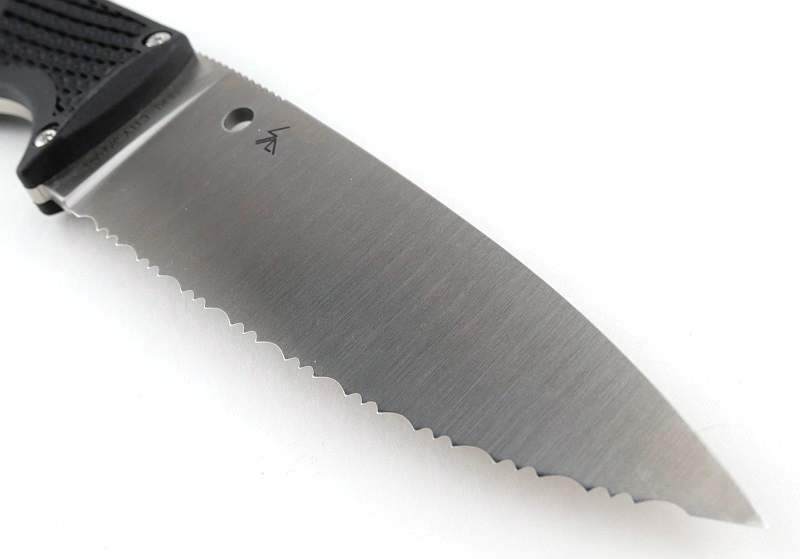
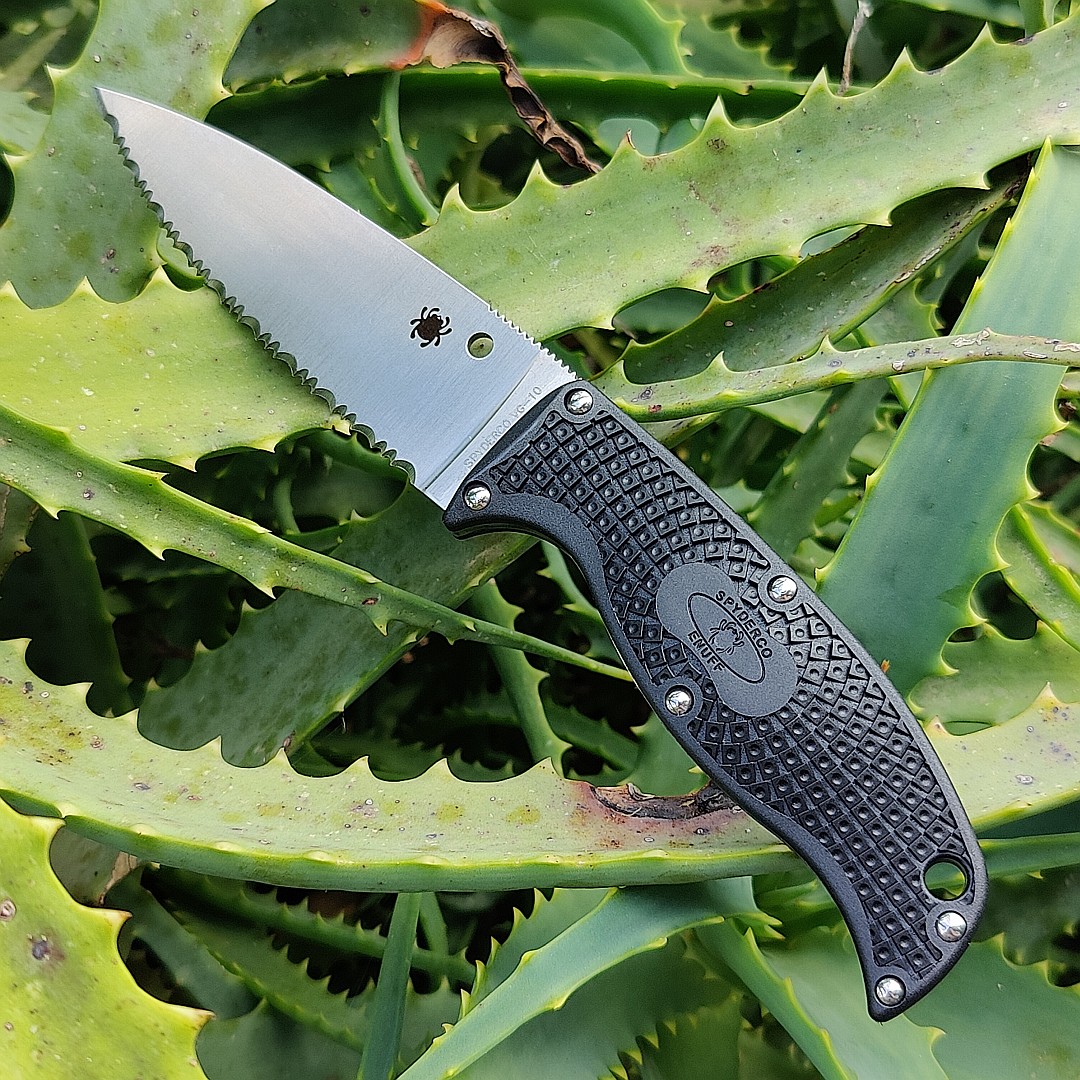
This Enuff 2 has the full Spyderedge serrated edge. Keeping the Enuff 2 slim but with a very secure grip, it has the distinctive Spyderco FRN scales with unique grip pattern.
A generous section of the blade spine has jimping for the thumb to grip.
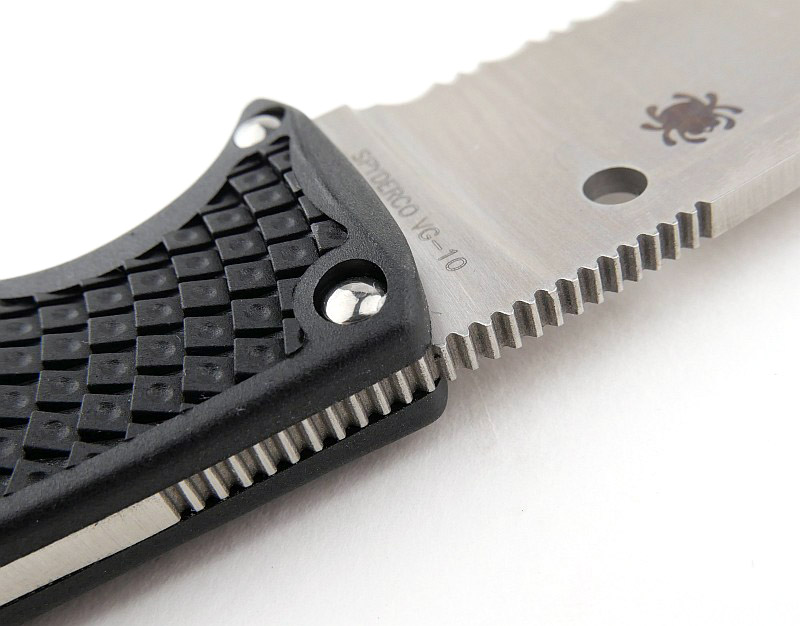
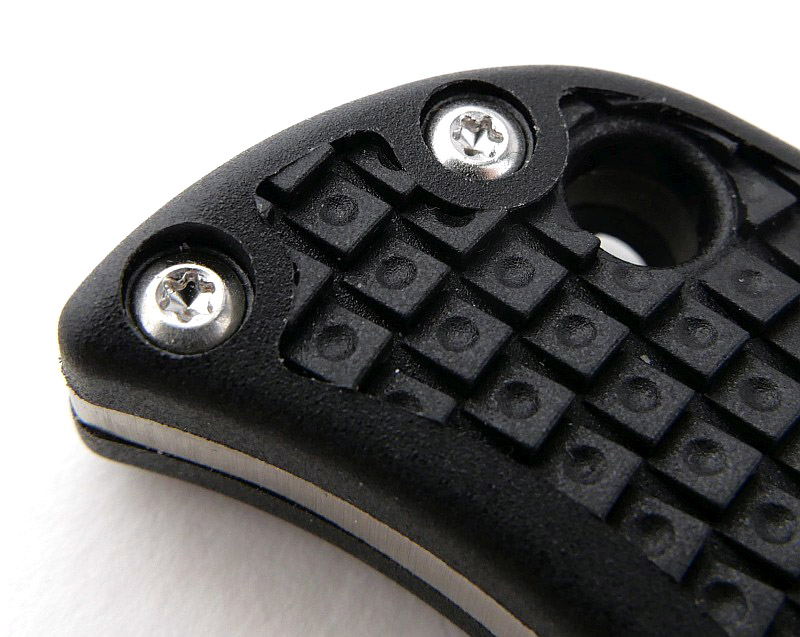
Flipping the knife over reveals a few differences form one side to the other. The handle screws being one of these, where on the reverse side they are torx screws, compared to the blank heads on the ‘front’. Also clear is the fact the Spyderedge is a chisel grind, so one side of the blade has no edge bevel at all, which is why the Spyderedge is so effective.


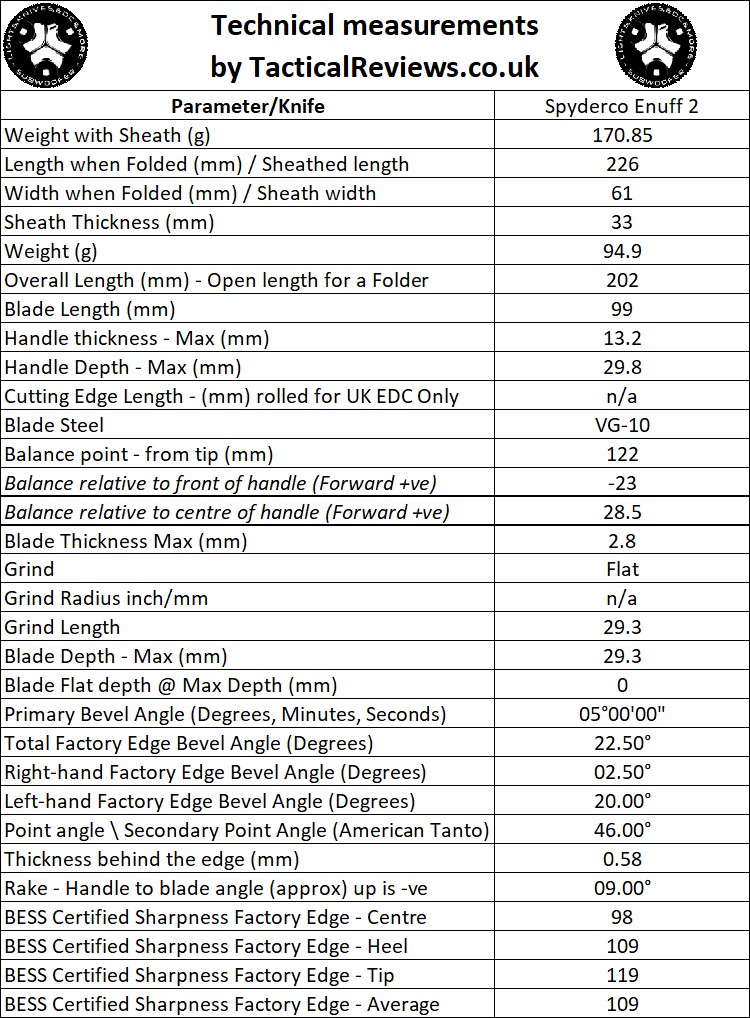
The Blade and Handle – Detailed Measurements:
For full details of the tests and measurements carried out and an explanation of the results, see the page – Knife Technical Testing – How It’s Done.

The blade is made from VG-10 steel.


The Factory edge up close:

Followers of Tactical Reviews will know my views on factory edges, but to recap:

Anyone using a knife will need to sharpen it. That first factory edge is just like the first tank of fuel that a new car comes with (or first charge of the battery).
A good factory edge is a ‘nice to have’ but not a ‘make or break’ for a good knife, as you will be putting your own edge onto it soon enough.
The factory edge does however indicate the care a knife maker has put into the final finish.
It is for this reason Tactical Reviews measures factory edge sharpness and specifications, and includes this information in the detailed technical testing.

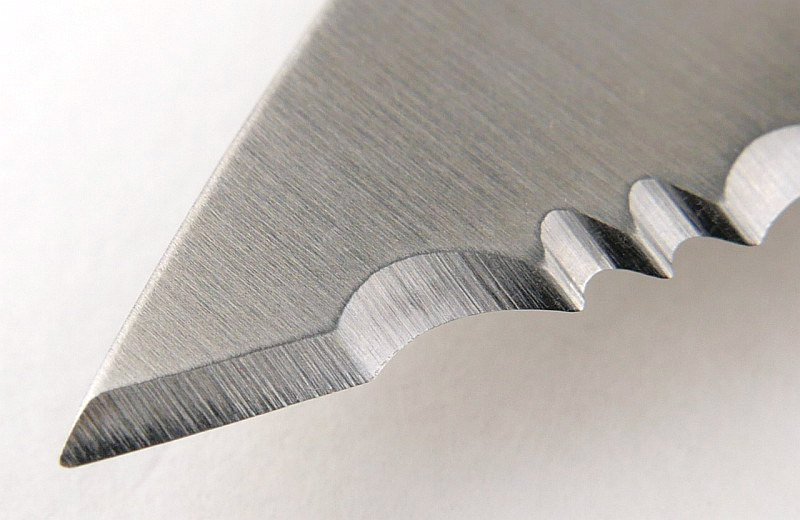
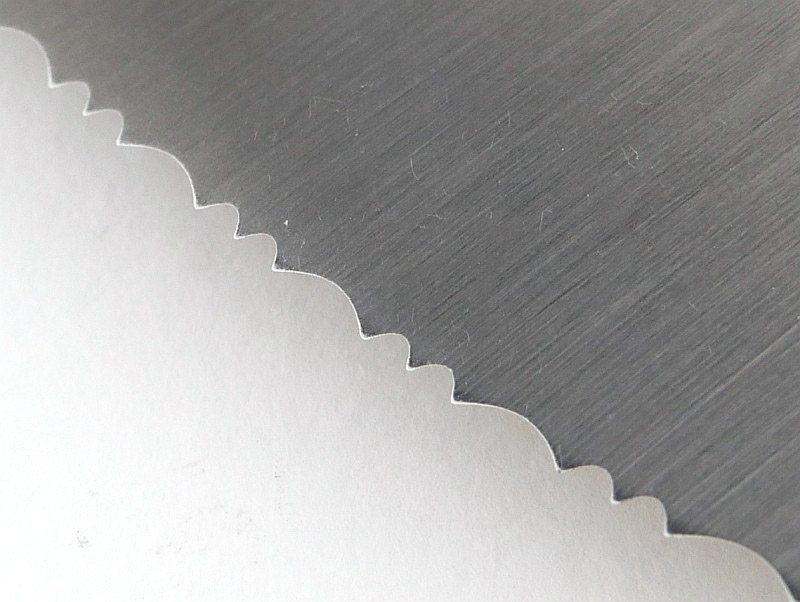
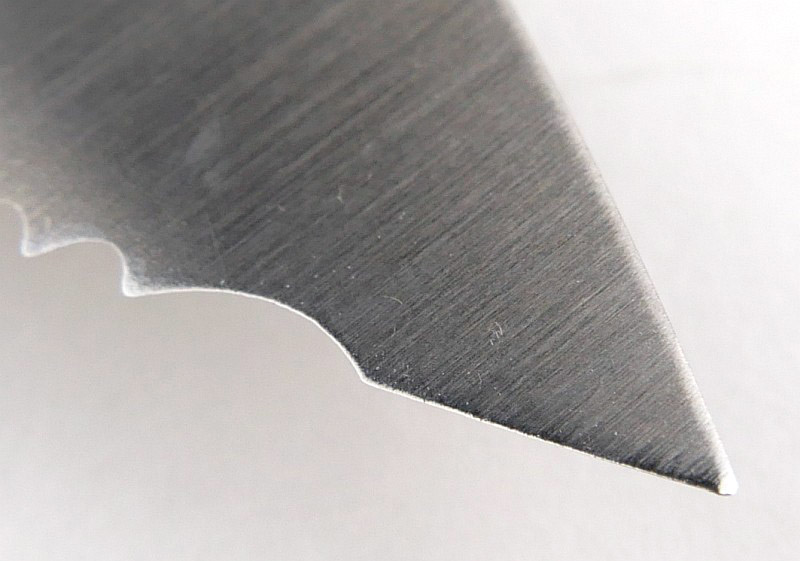
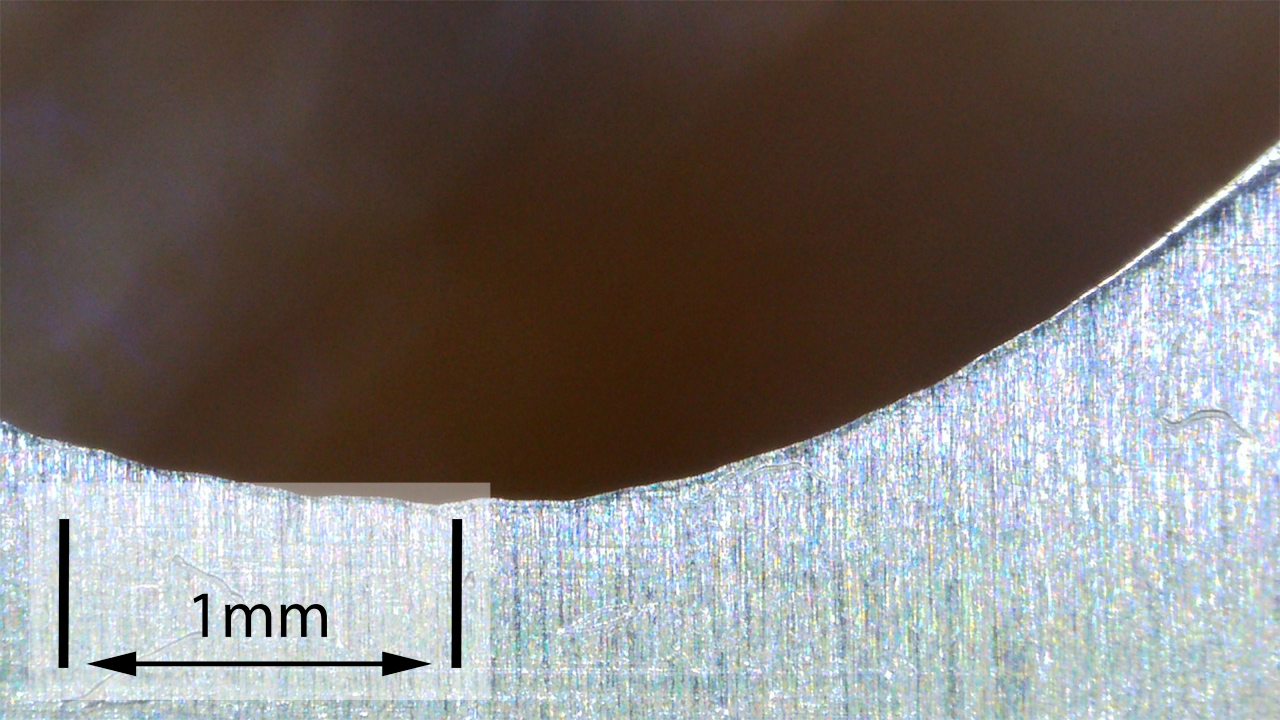
As a further look at the factory edge, this section has been added to include some high magnification photos of the factory edges.

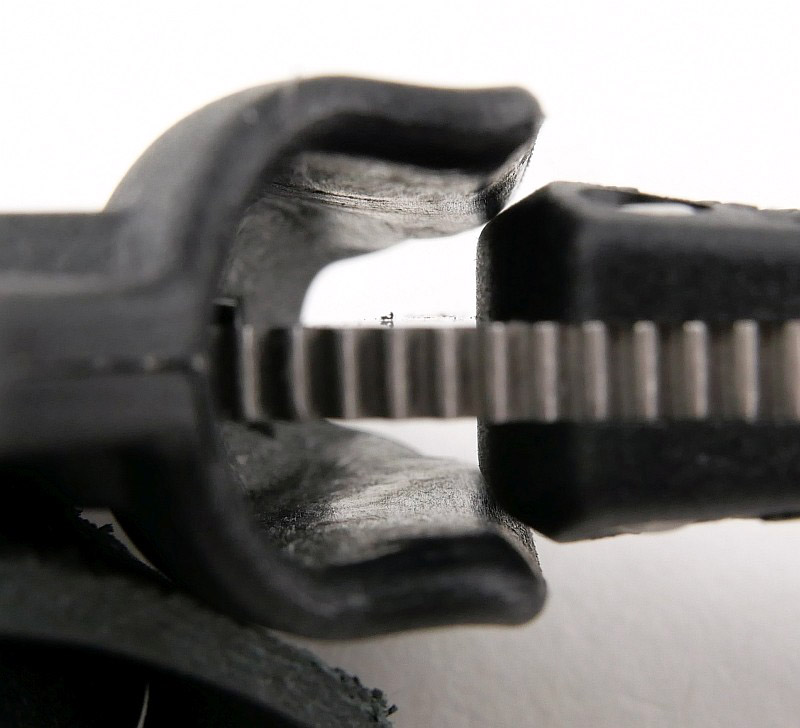
This gallery shows both sides and sizes of serrations with the chisel grind clearly evident.


What is it like to use?

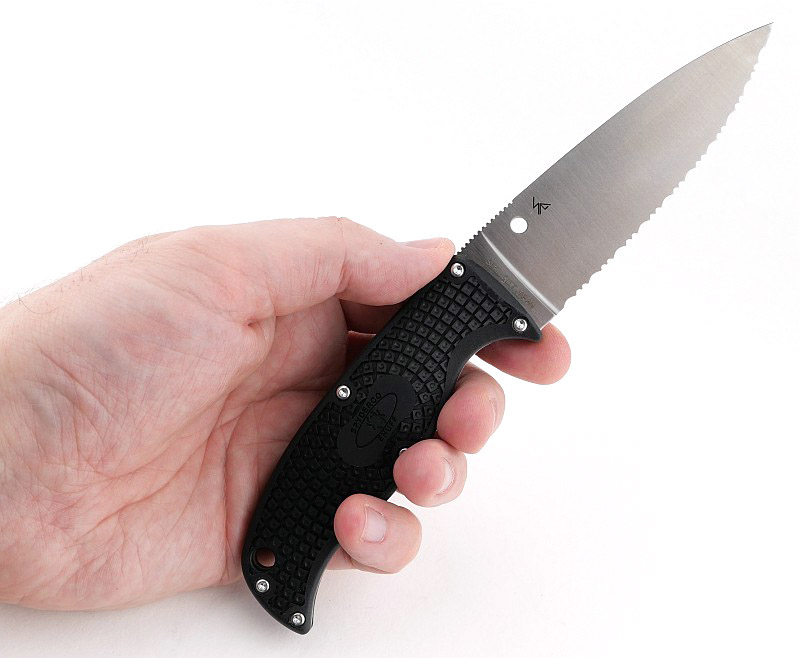
This is the first Enuff knife I’ve used, so I can’t comment on the original Enuff. Even the longer Enuff 2 is still a compact fixed blade. Having such a flexible sheath means you can change things around, add alternative mounts, or strip it down to basics to keep it as slim and light as possible.

For me the full Spyderedge makes this more of a backup knife. Depending on your typical cutting tasks you might want the serrated edge for a lot of fibrous cuts, but for me this is a less common type of cut. Again, in this instance its advantage of being able to go without maintenance for a long time and still cut well is pushing me towards being an excellent backup knife. The plain edge version would be a great daily use tool.

A slight disappointment is the finish around the exposed tang which is not up to normal Spyderco standards. It might be this example, or a characteristic of the line. There is zero impact on performance, just on aesthetics.

Another observation is that the Spyderco Spyderedge on this knife is effectively a right-handed edge (the plain edge version would not have handedness), although everything else about the Enuff 2 is ambidextrous.

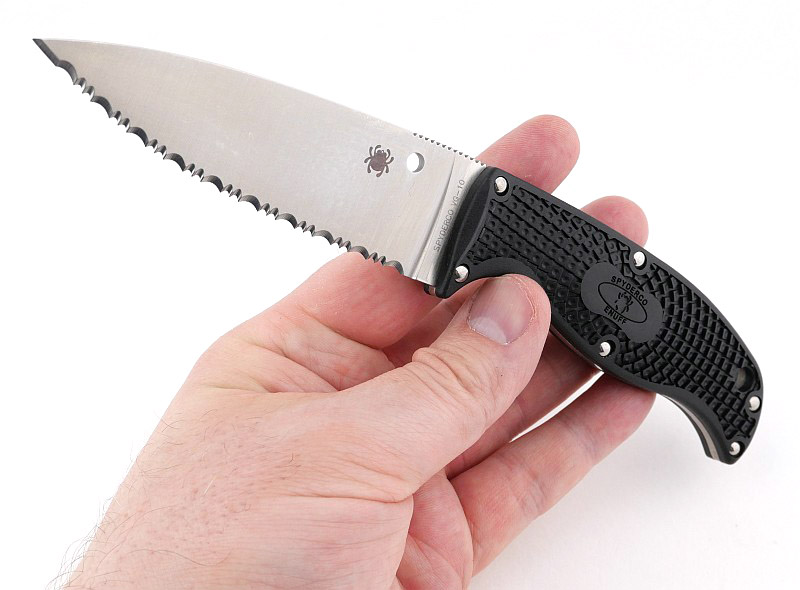
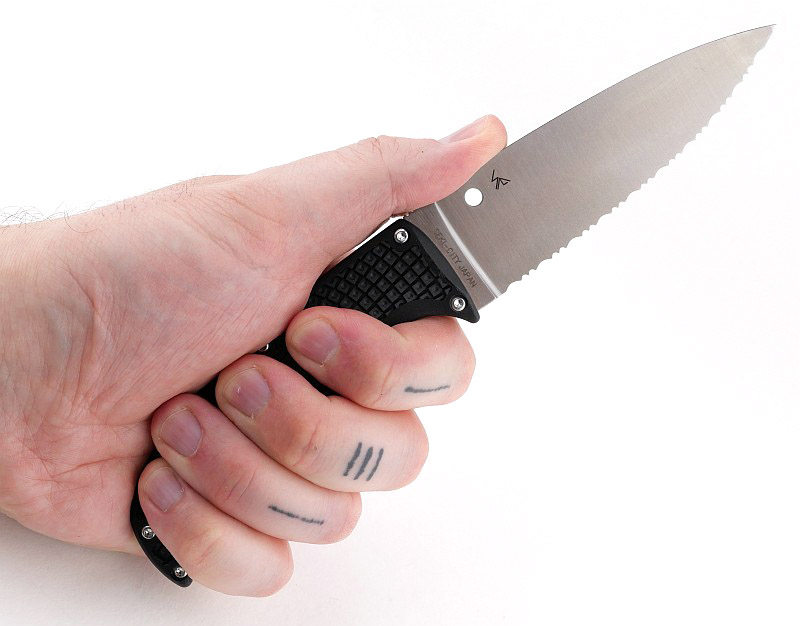
It is slim and light, and the Enuff design principles still hold true of the handle. I take XL size gloves, but the Enuff’s handle is still big enough for a firm and stable grip; it is not just the blade that is ‘Enuff’.


Review Summary

The views expressed in this summary table are from the point of view of the reviewer’s personal use. I am not a member of the armed forces and cannot comment on its use beyond a cutting tool or field/hunting knife.

Something that might be a ‘pro’ for one user can be a ‘con’ for another, so the comments are categorised based on my requirements. You should consider all points and if they could be beneficial to you.

_______________________________________________
What doesn’t work so well for me
_______________________________________________

Some areas of finish are not quite up to Spyderco standards.
Secondary retention strap seems unnecessary.

_______________________________________________
Things I like
_______________________________________________

Spyderedge serrations are super sharp.
Absolutely fantastic backup knife.
Reconfigurable sheath.
Secure and usable sheath retention.
Slim and easy to pack or carry.
Easy to handle and hold.
Large enough for most general tasks.
Excellent grip pattern.

It really is a ‘grate’ knife!!

 
Discussing the Review:
The ideal place to discuss this review is on the Tactical Reviews Facebook Page
Please visit there and start/join the conversation.
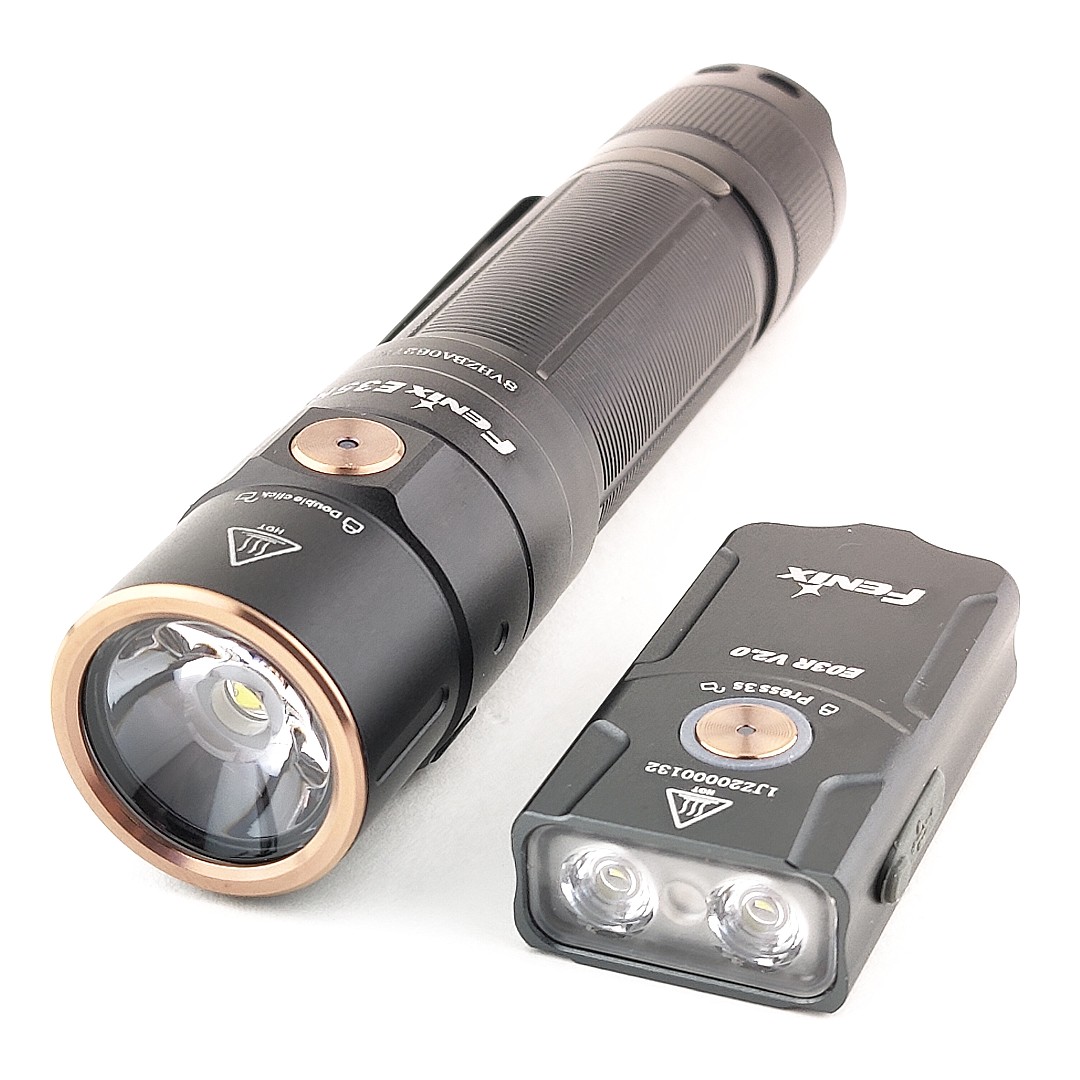
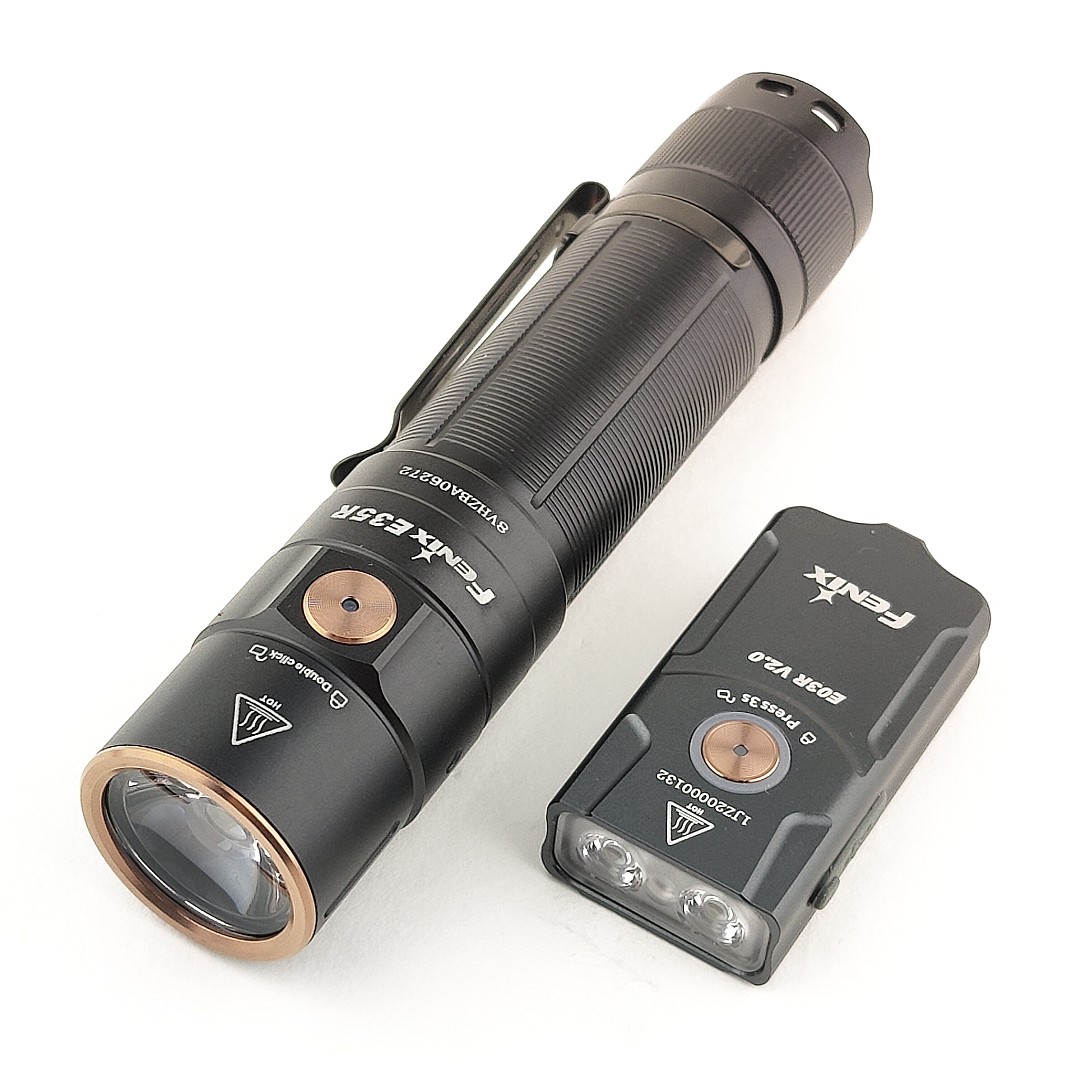
Light Review: Fenix E35R and E03R V2.0

Fenix are updating and upgrading two excellent EDC lights. The E03R V2.0 and E35R build on their predecessors and raise them to a higher level. Join me in this review of the Fenix E03R v2.0 and E35R to see how they perform and what improvements have been made.

Review Videos

For the E03R V2.0 first a short format sixty second review:


The short format sixty second review of the E35R:


Onto a full video review covering many more details of both:


What is in the box?:

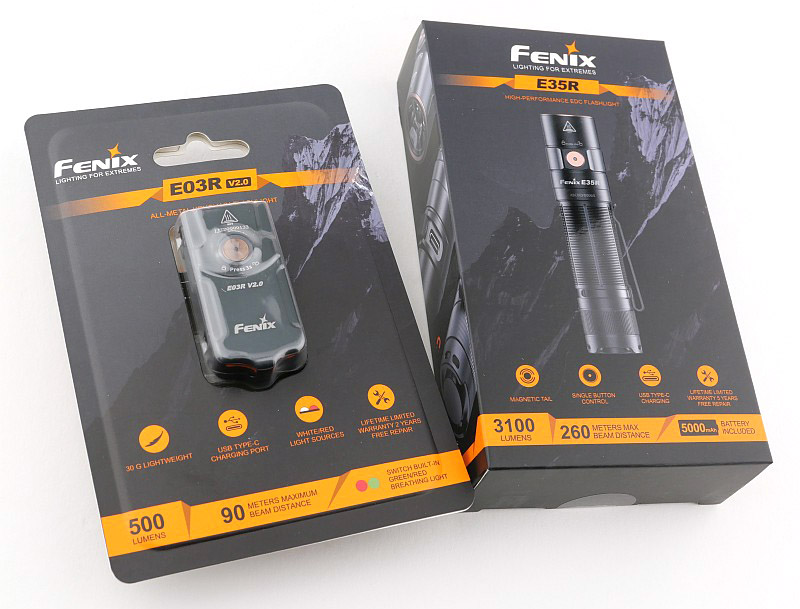
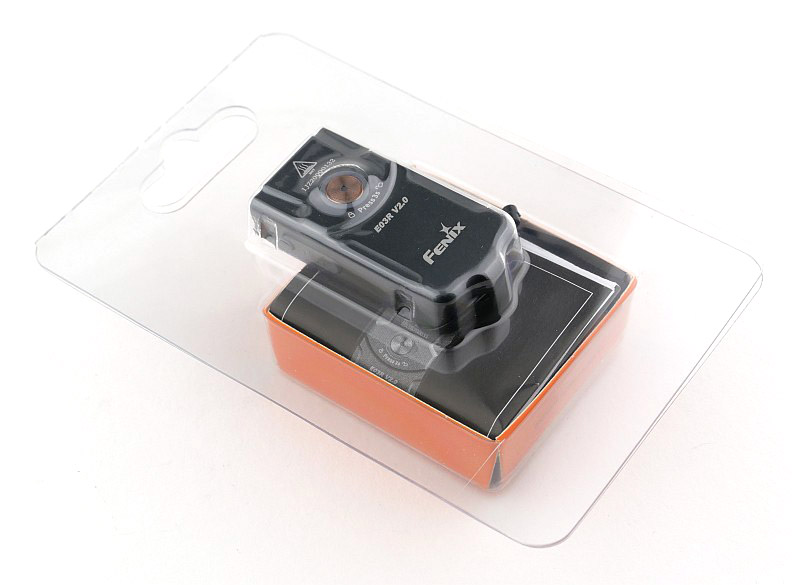
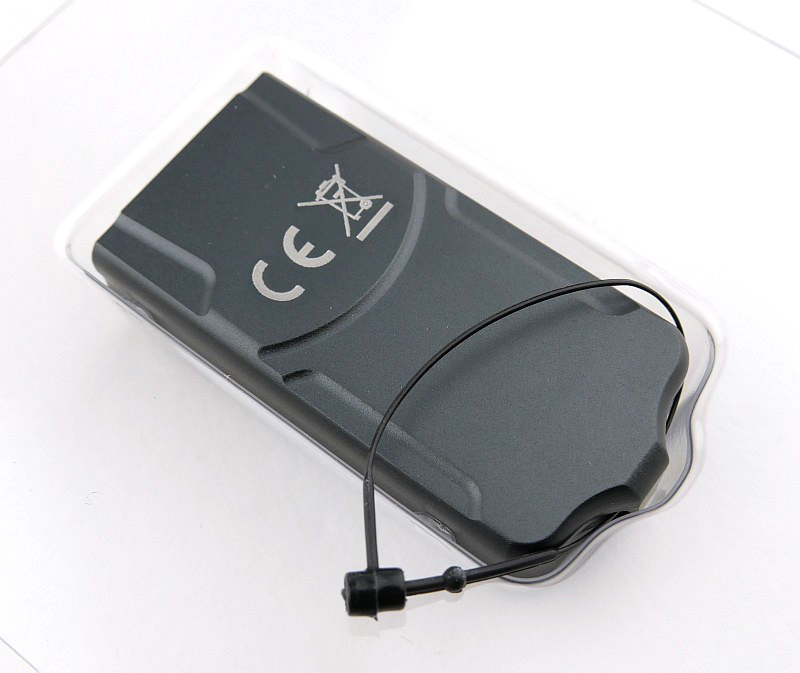
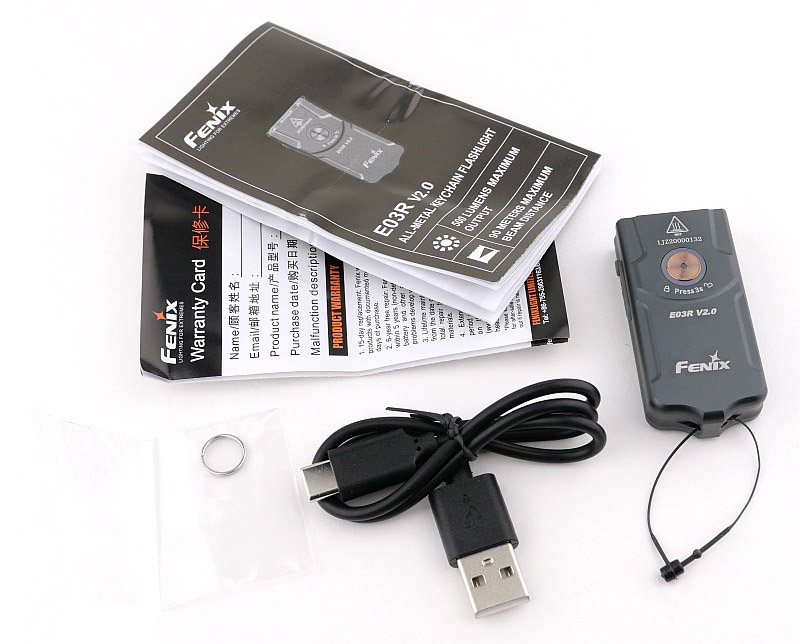
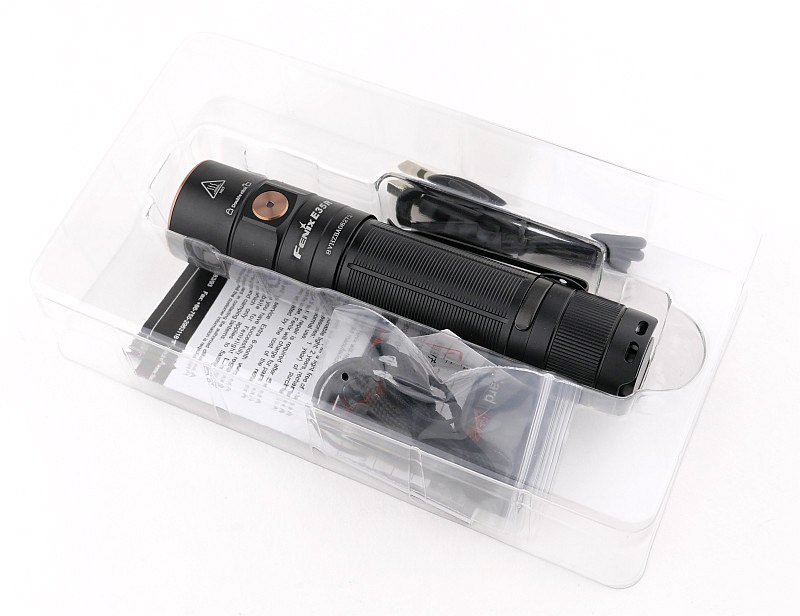
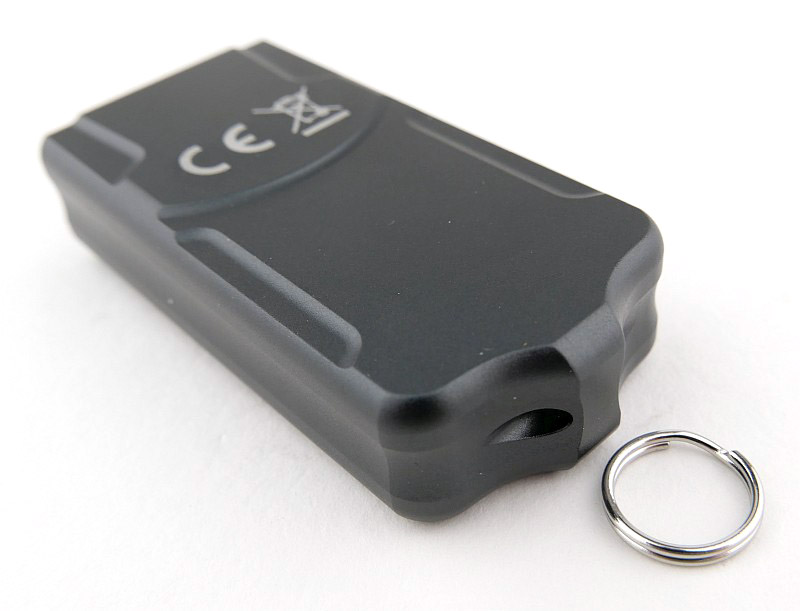
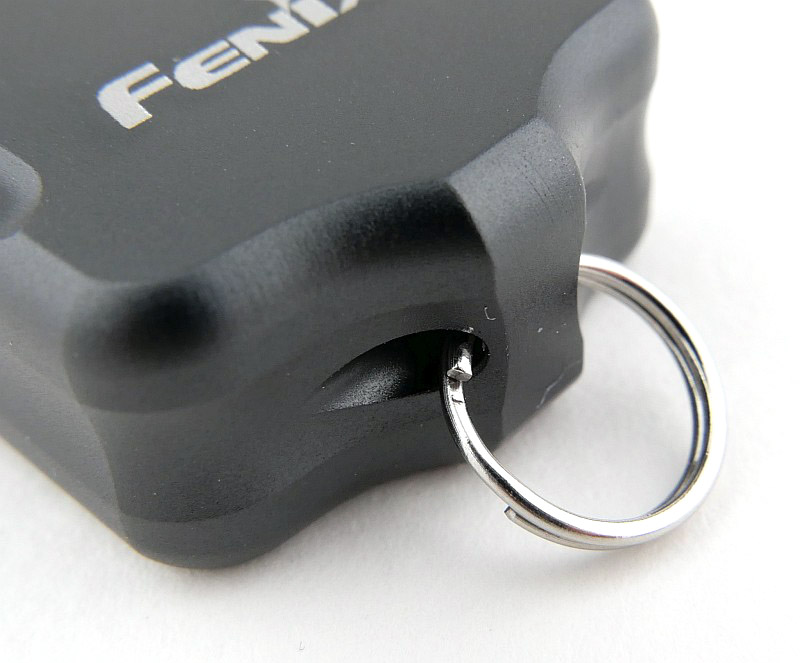
A brief look over the contents of the box for each of these lights. Starting with the E03R v2.0 in its plastic clamshell inner. To remove the E03R V2.0 from the package needs the plastic tie that comes fitted through the lanyard hole. Without this you can’t get a grip on it ton pull it out of the very tight fitting packaging. It comes with a USB-C charging cable, small split keyring and instructions.
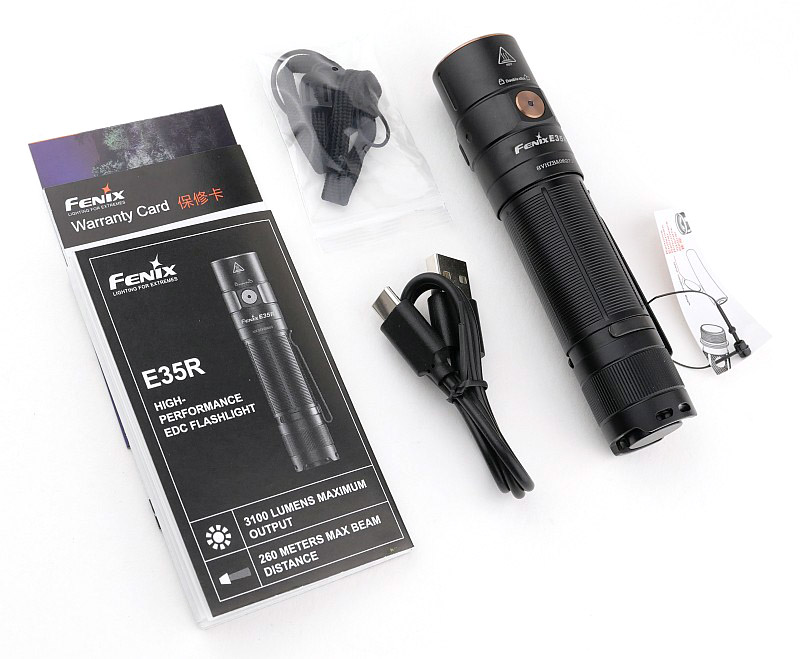
The E35R slides out of the outer cardboard box in a plastic tray. This comes with the battery already fitted, a USB-C charging cable, wrist strap and spare o-ring, plus the instructions.


A good look round the E03R V2.0 – Things to look out for here are:
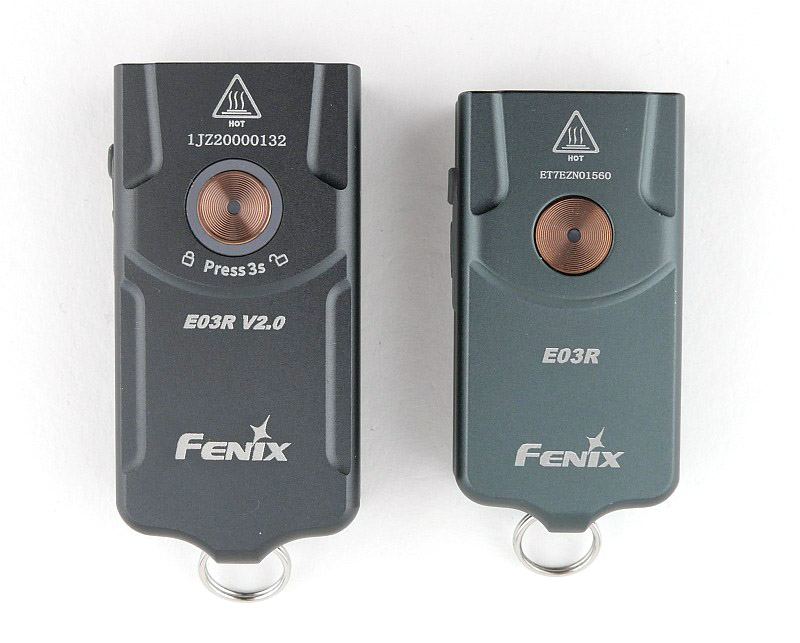
Before anything else, here is a side-by-side of the original E03R and the new V2.0. You can immediately see the increase in size that allows for the uprated output and runtime.

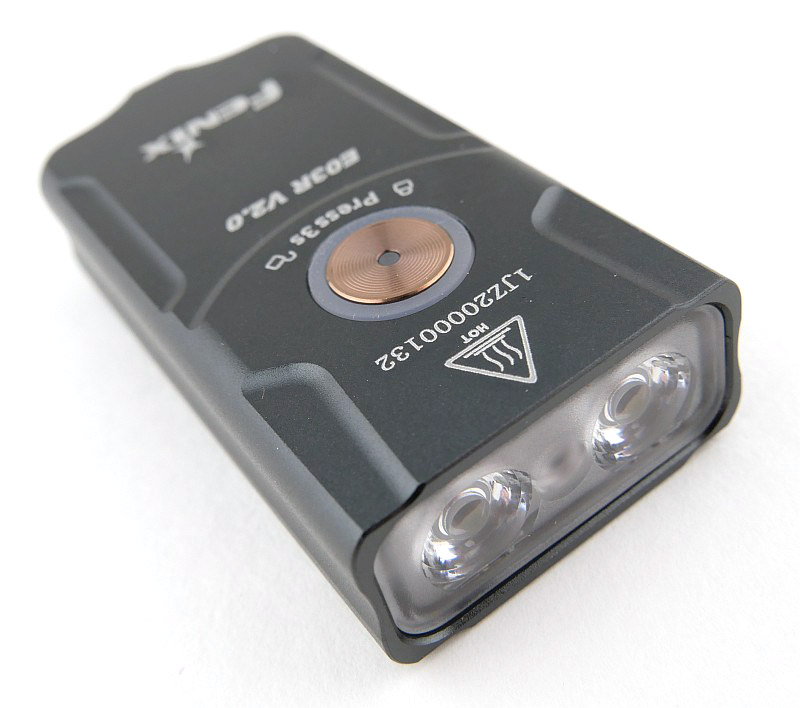
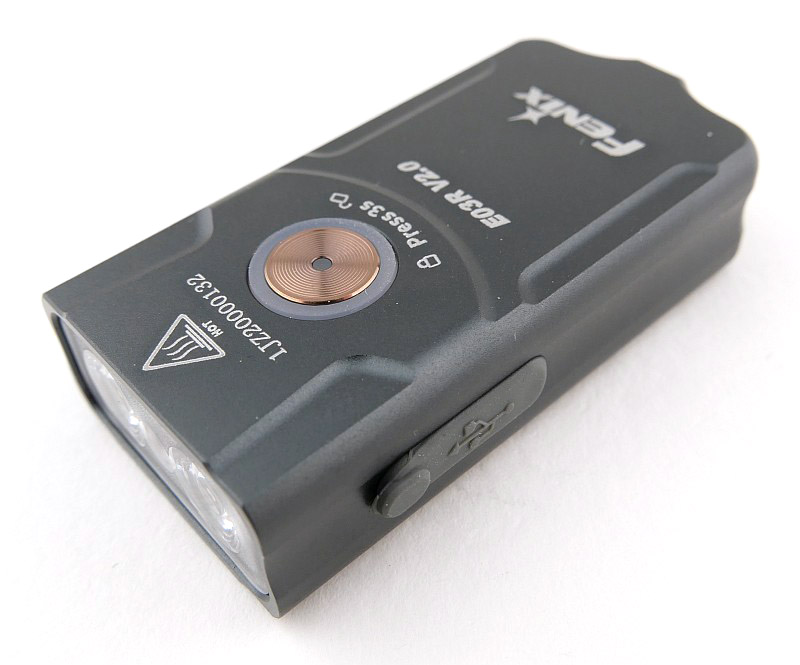
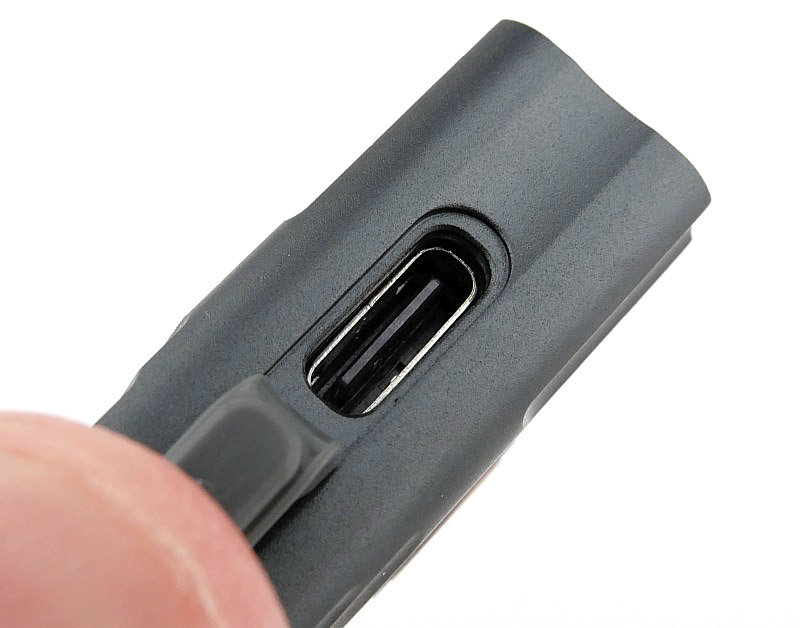
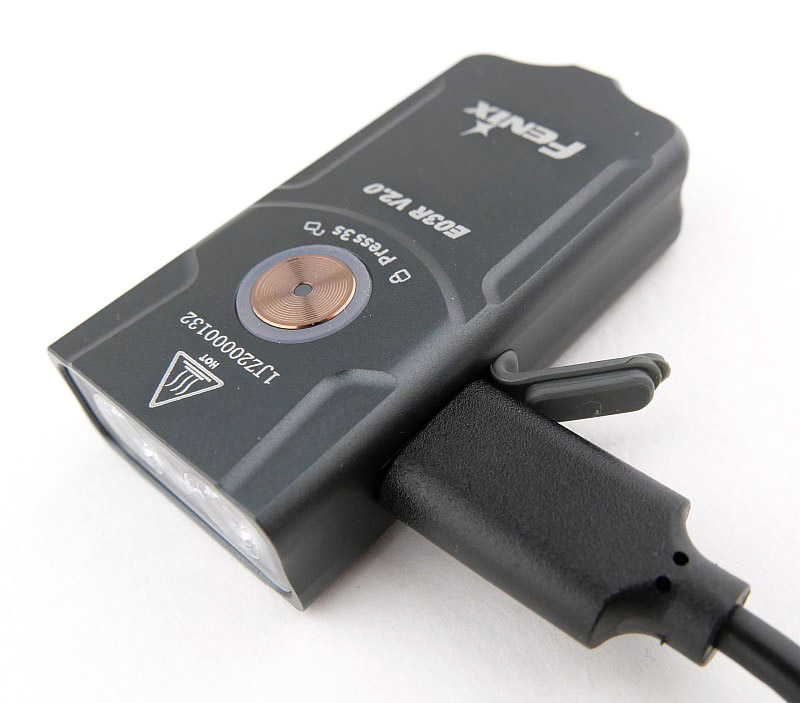
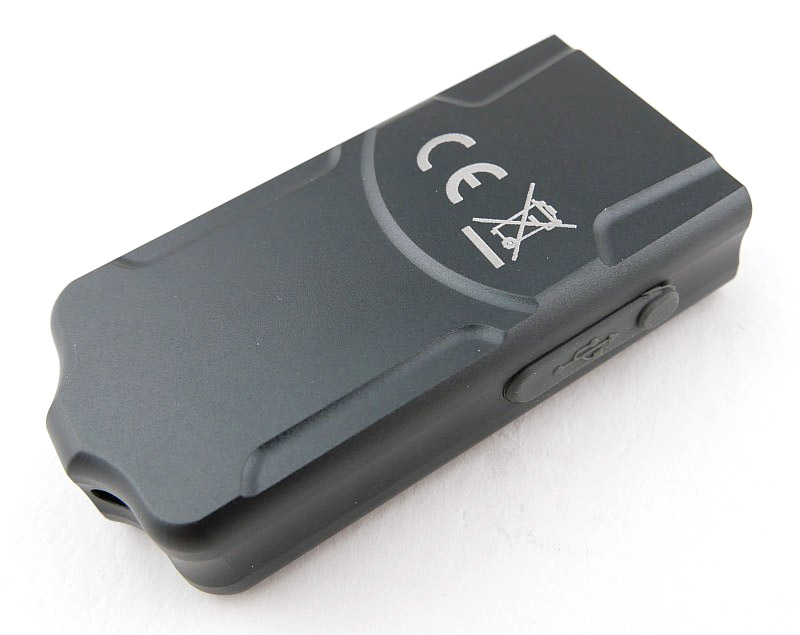
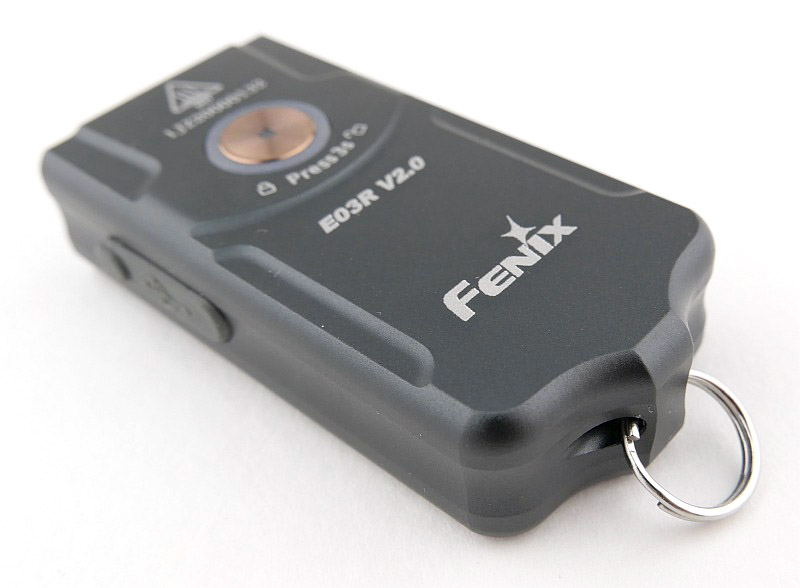
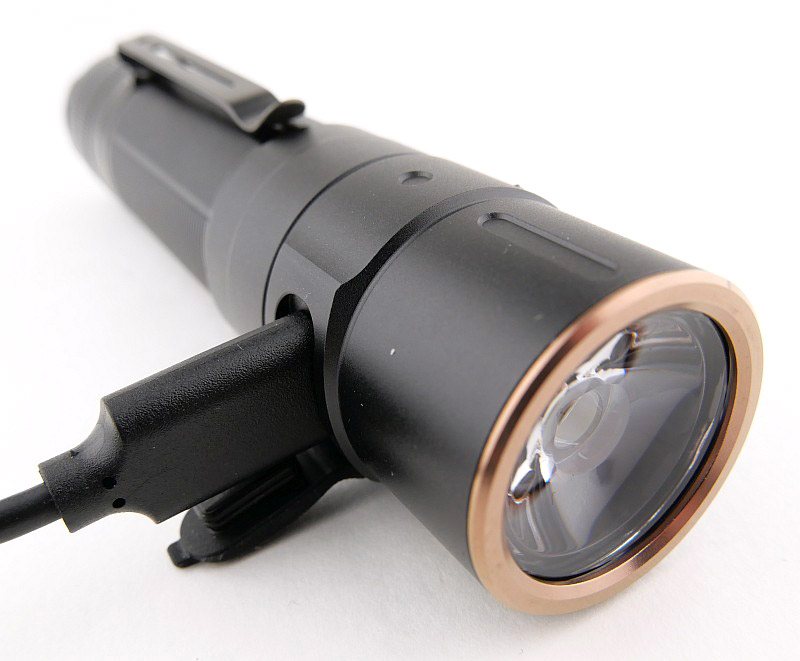
At the front is the twin TIR optic for the main white beam (with central optic for the Red beam). On the side is a rubber port cover for the USB-C charging port. The power switch has an outer illuminated ring. The switch’s centre also has an indicator light for the state of charge. Details of the split-ring keyring are shown.


Taking a more detailed look at the E35R:

The side by side comparison to the original E35 is included in the video earlier in the review. Most noticeable is the addition of the USB-C charging port. Visually, apart from that, the E35R is almost identical to the E35.

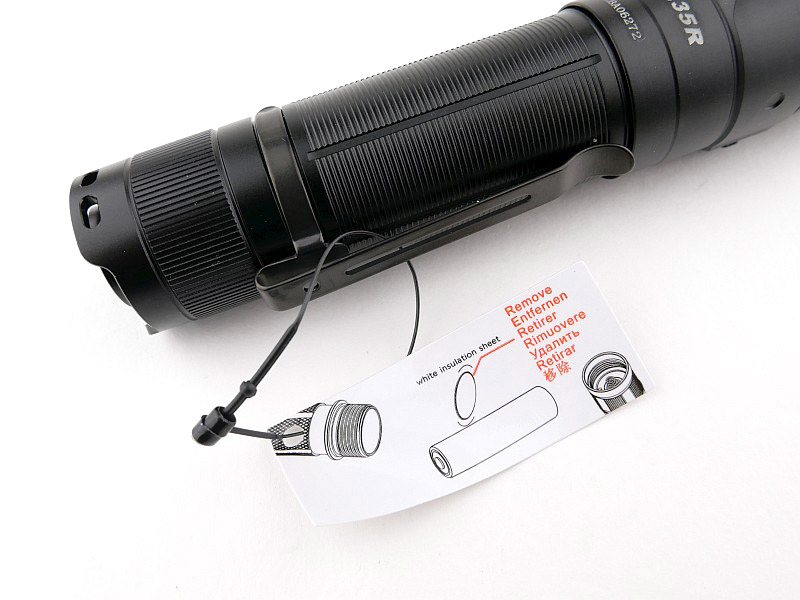
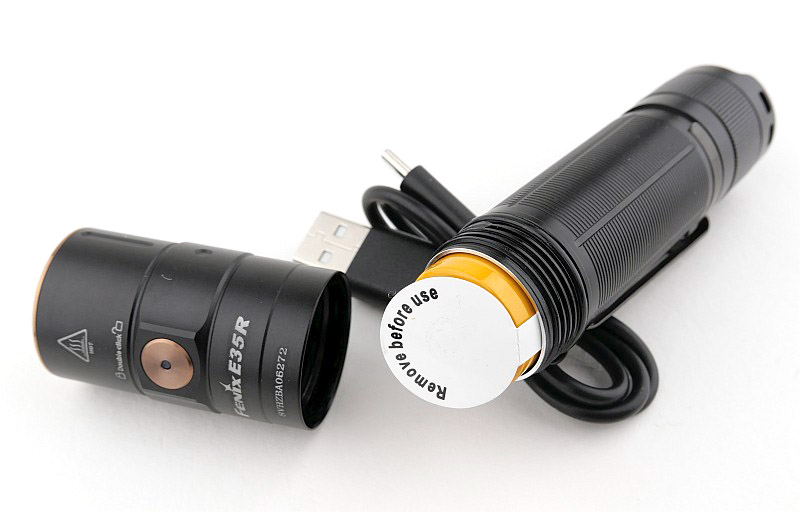
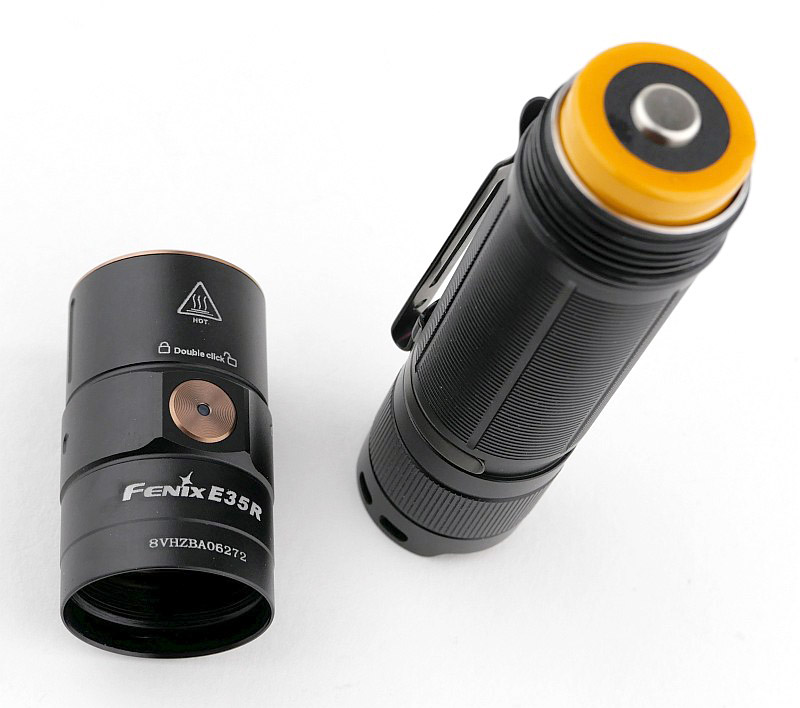
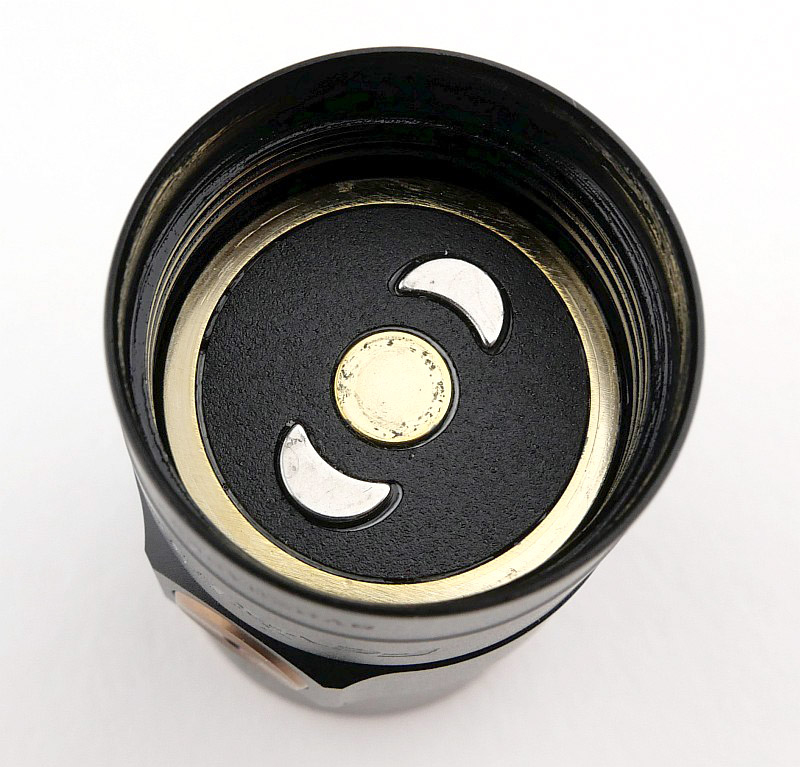
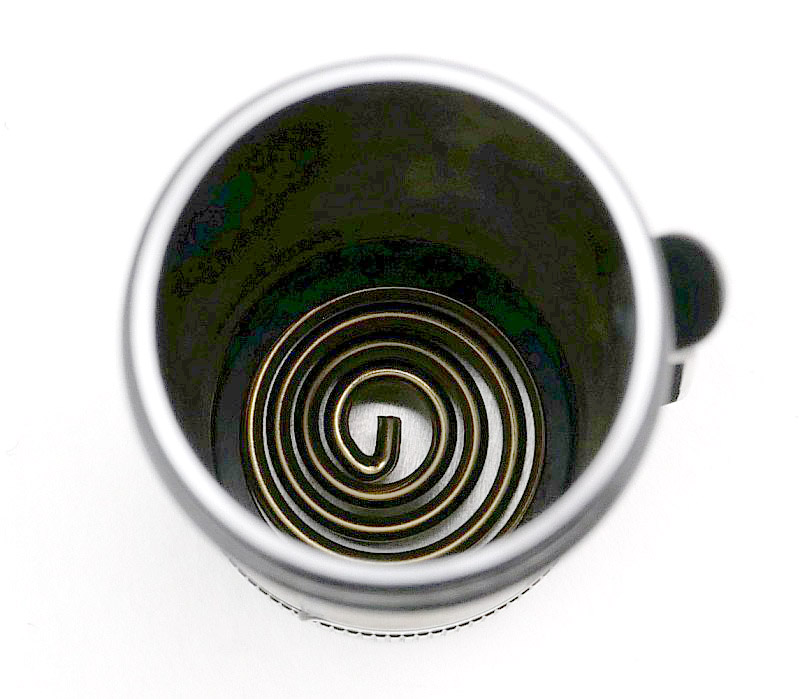
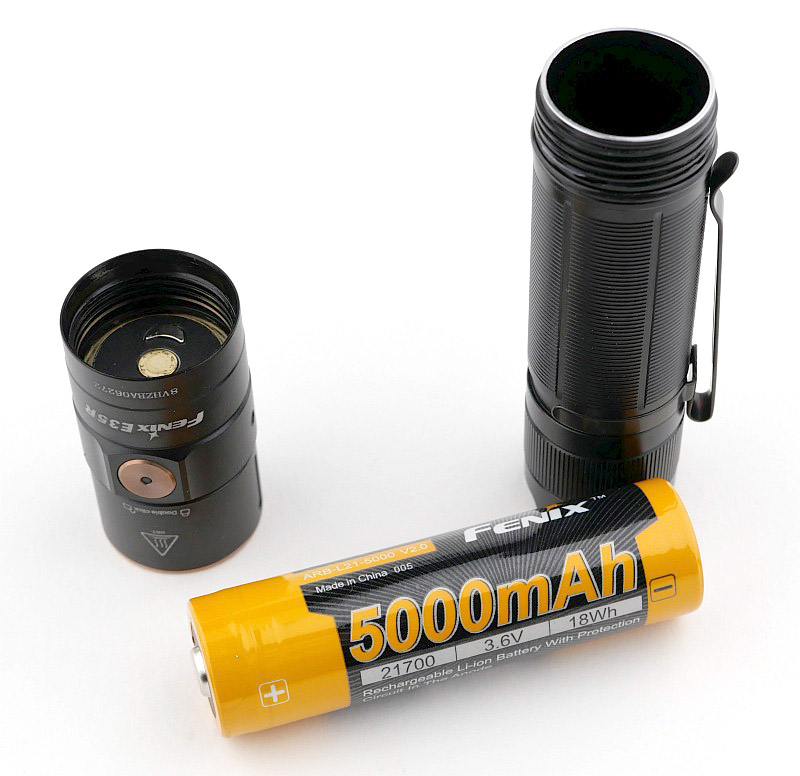
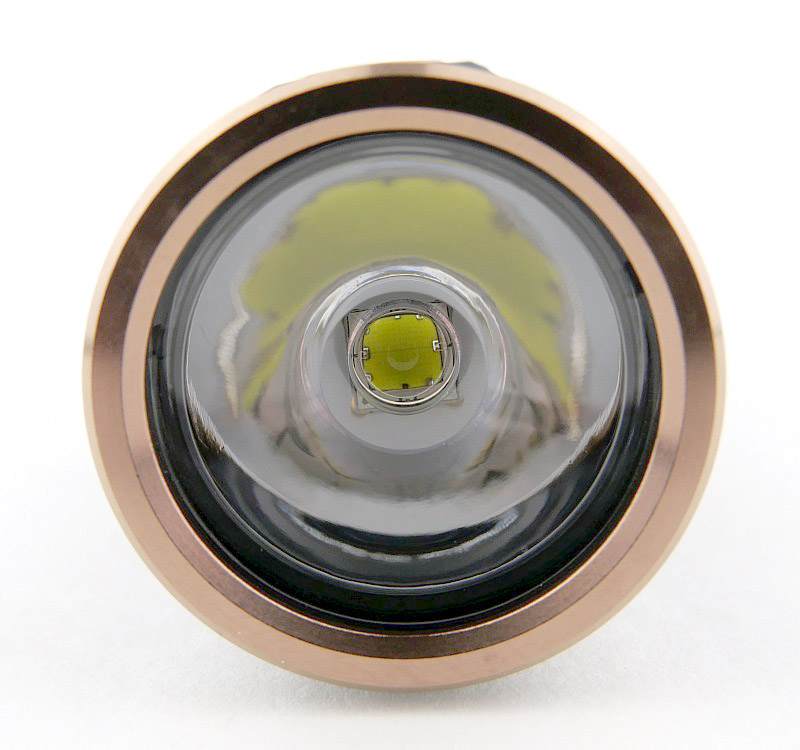
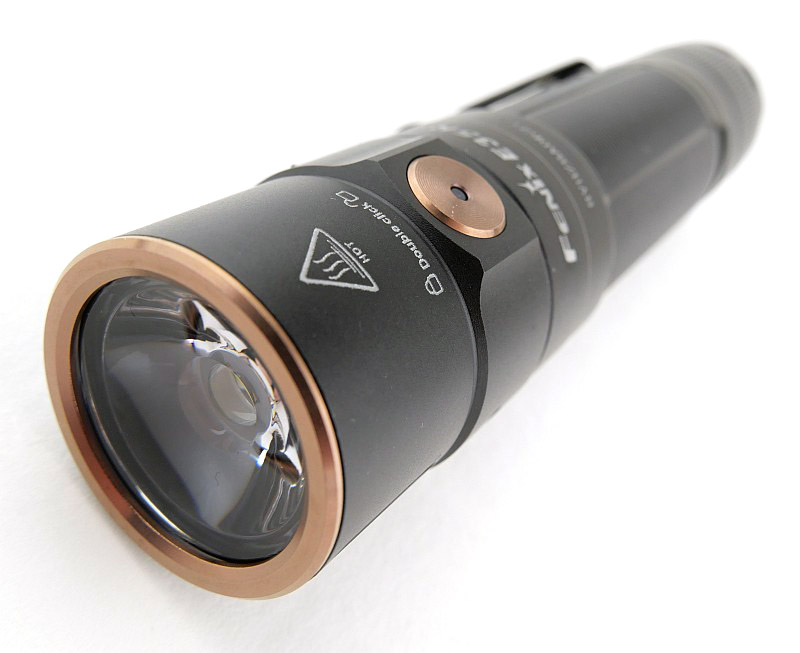
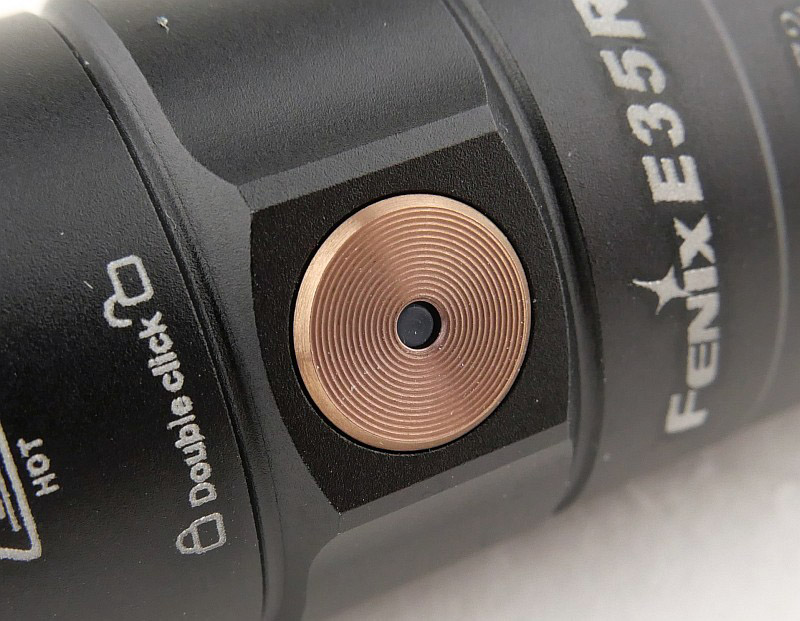
In case you think it is faulty out of the box, Fenix has included a label to remind you to remove the in-transit insulator which protects the E35R from discharging in storage. For the E35R, it is the head rather than tail that unscrews to access the battery compartment. The contacts in the head include physical reverse polarity protection. In the tail is a single strong coil spring to keep the 21700 5000mAh cell in place. The threads are near-square in profile. There is a bronze detail ring round the TIR optic to match the colour of the power switch. To indicate the battery level the centre of the power switch lights up either solid, or a flashing. A steel pocket clip is included. One other addition in the update is the E35R now having a magnetic tail.

The beam

Please be careful not to judge tint based on images you see on a computer screen. Unless properly calibrated, the screen itself will change the perceived tint.

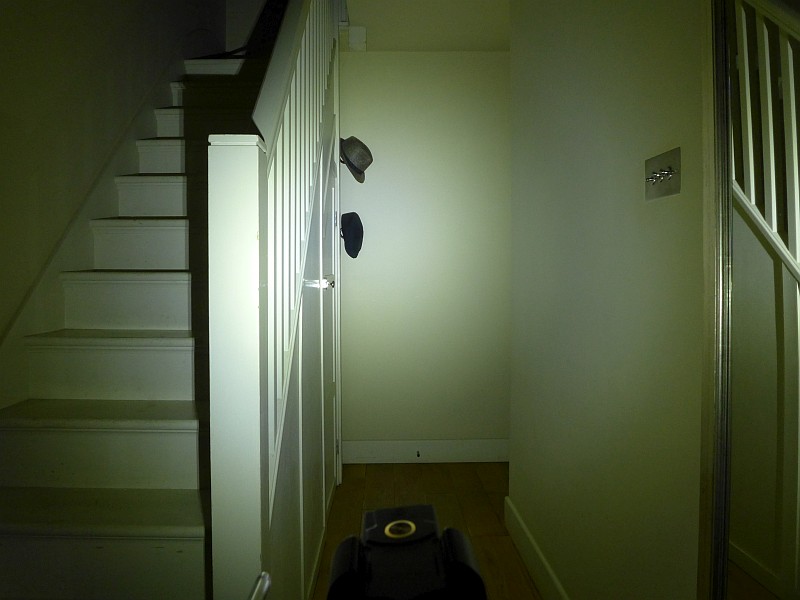
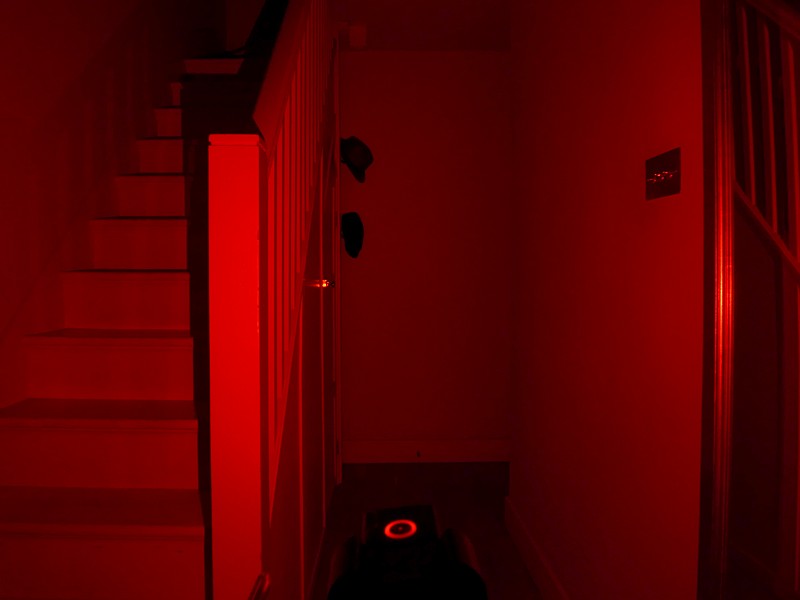
The indoor beamshot is intended to give an idea of the beam shape/quality rather than tint. All beamshots are taken using daylight white balance. The woodwork (stairs and skirting) are painted Farrow & Ball “Off-White”, and the walls are a light sandy colour called ‘String’ again by Farrow & Ball. I don’t actually have a ‘white wall’ in the house to use for this, and my wife won’t have one!

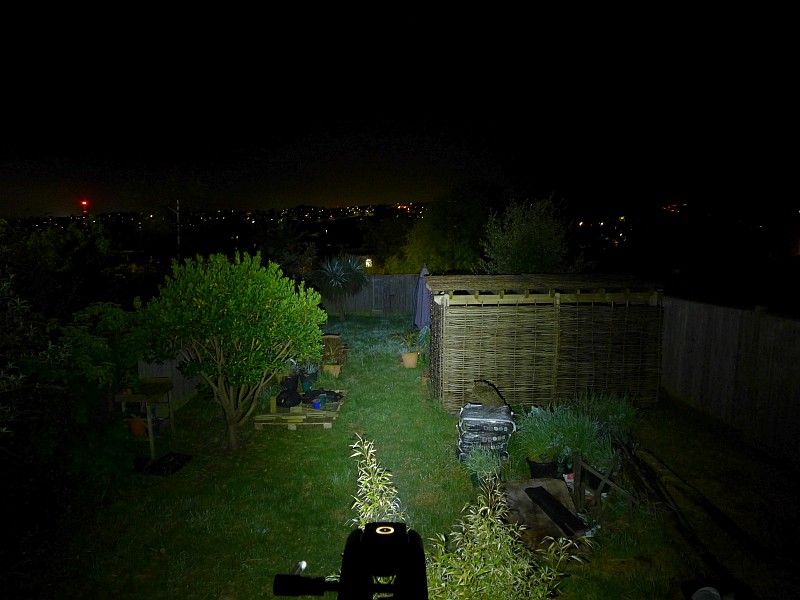
This gallery starts with the E03R V2.0 indoors, white and red beams. The red beam exposure is intentionally longer to show the shape of the beam, not the relative brightness to the white. However, for the outdoor beamshots, the exposure for white and red is similar, and is intended to show the red beam range is, of course, very limited.
Then the last two beamshots are the E35R, showing the very strong performance.


Batteries and output:

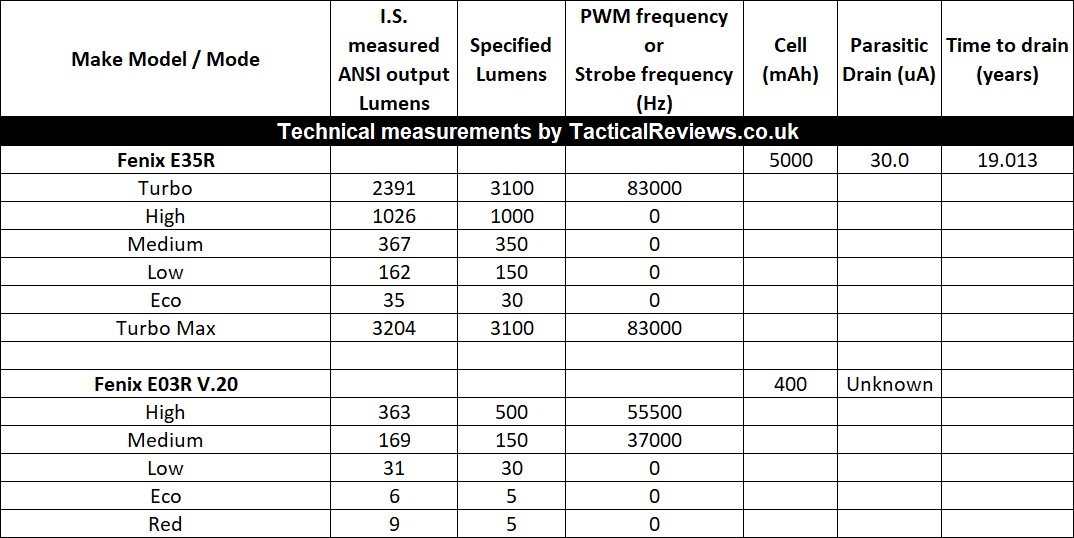
The E03R V2.0 has a built in li-po 400mAh cell, and the E35R runs on a removable 21700 5000mAh cell.

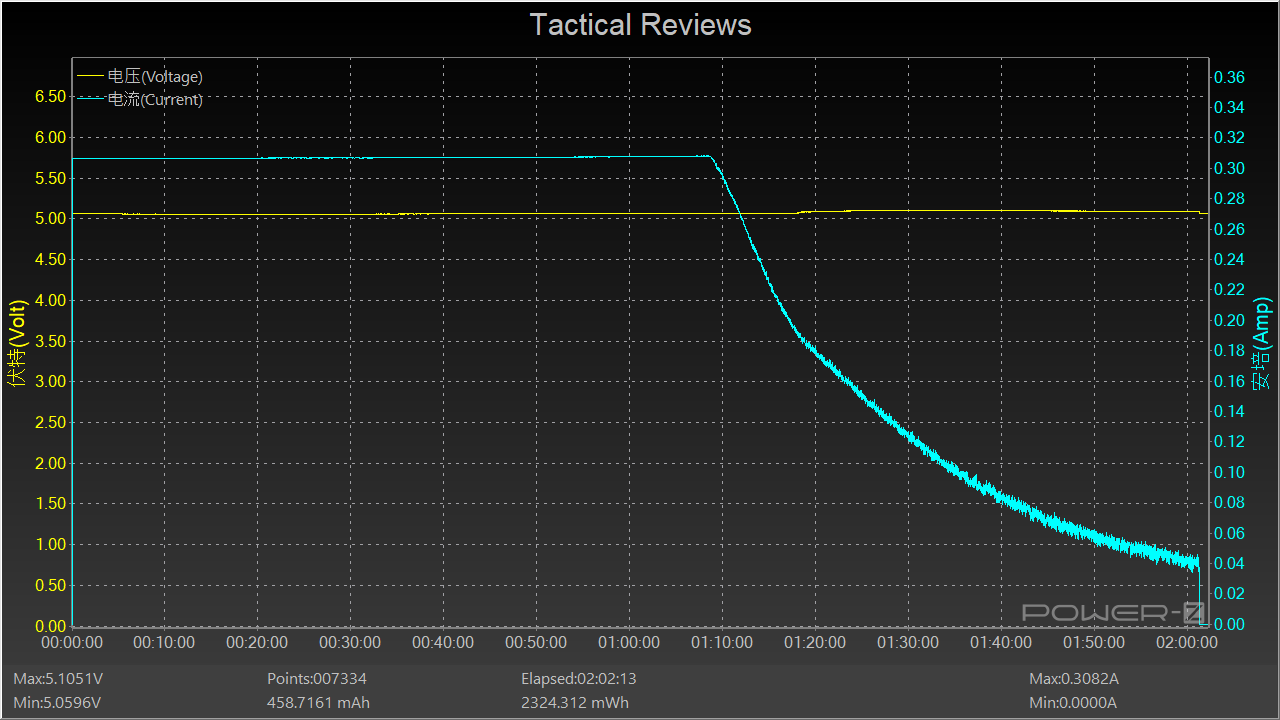
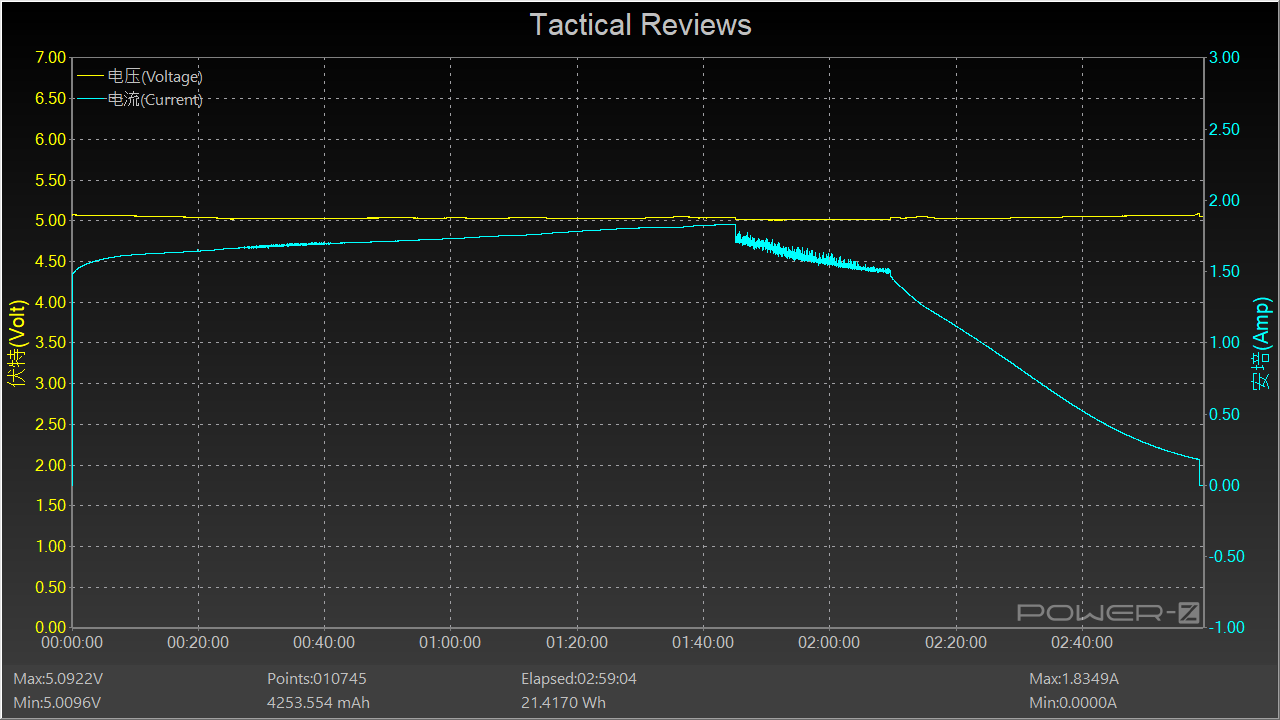
These images are the charging traces for the E03R V2.0 and E35R.


Please note, all quoted lumen figures are from a DIY integrating sphere, and according to ANSI standards. Although every effort is made to give as accurate a result as possible, they should be taken as an estimate only. The results can be used to compare outputs in this review and others I have published.

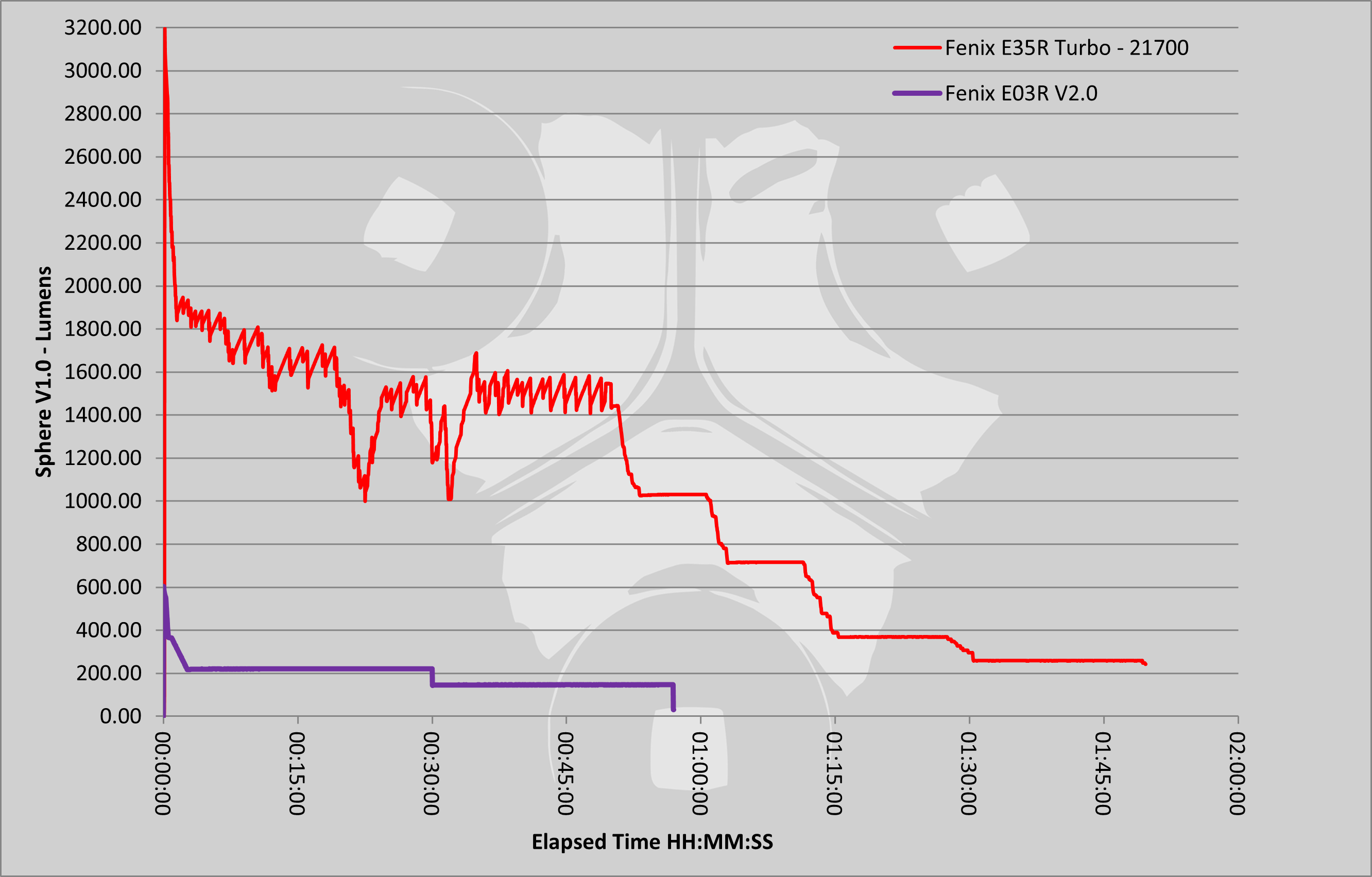
When carrying out runtime tests, I always use a cooling fan to at least represent some of the cooling provided by your hands, and also the lower temperatures outside. Not using any cooling would be unrealistic.
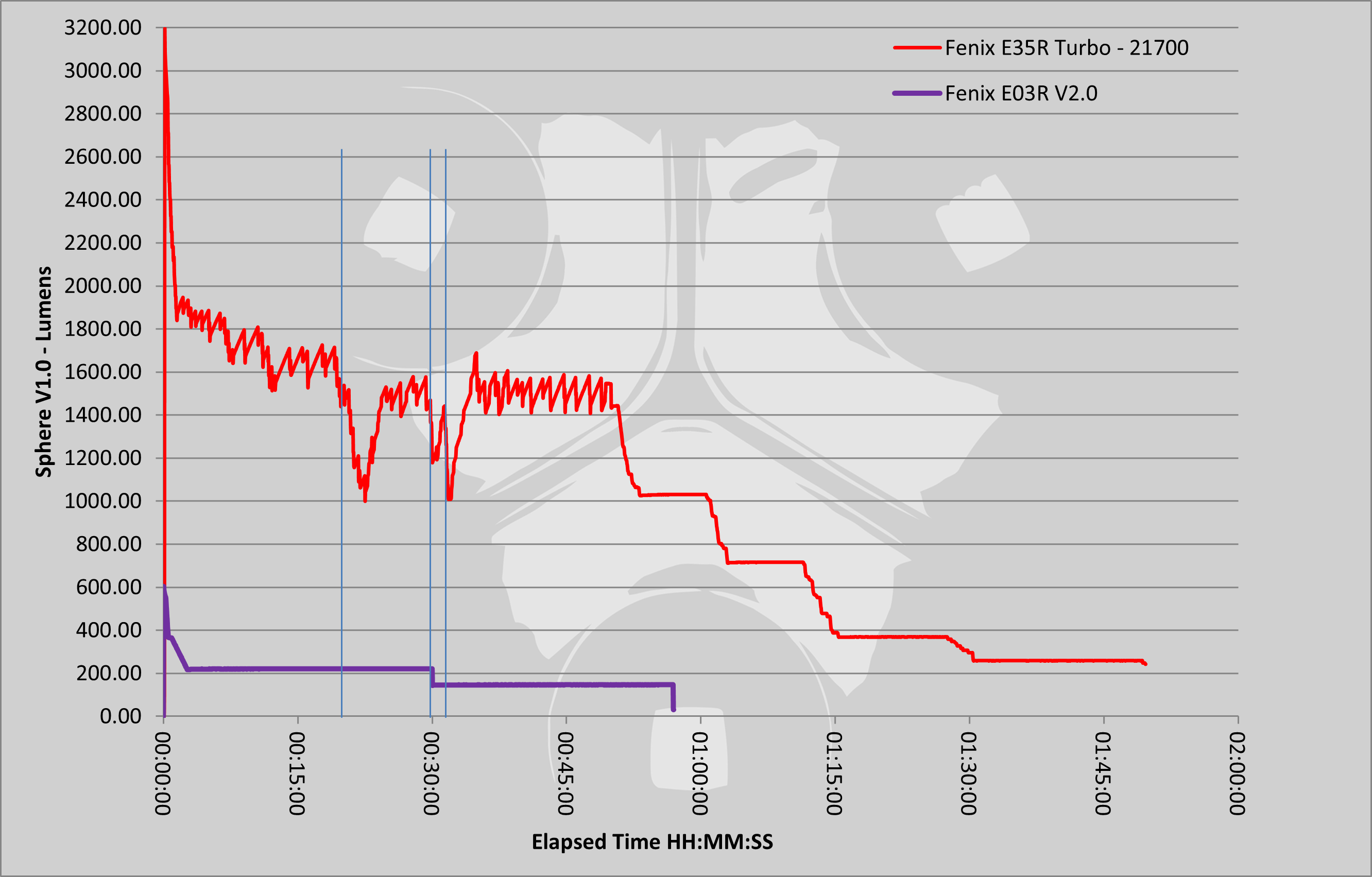
In this run of the E35R, there were actually three power cuts that stopped the cooling fan running (the logging was running on battery), and this corresponds with drops in the output due to the thermal regulation ramping down the output.
The E03R V2.0 output is very predictable and stable and needs no further comment.
In the gallery, the second image has the times of the power cuts marked so you can see the corresponding drops in the E35R’s output.
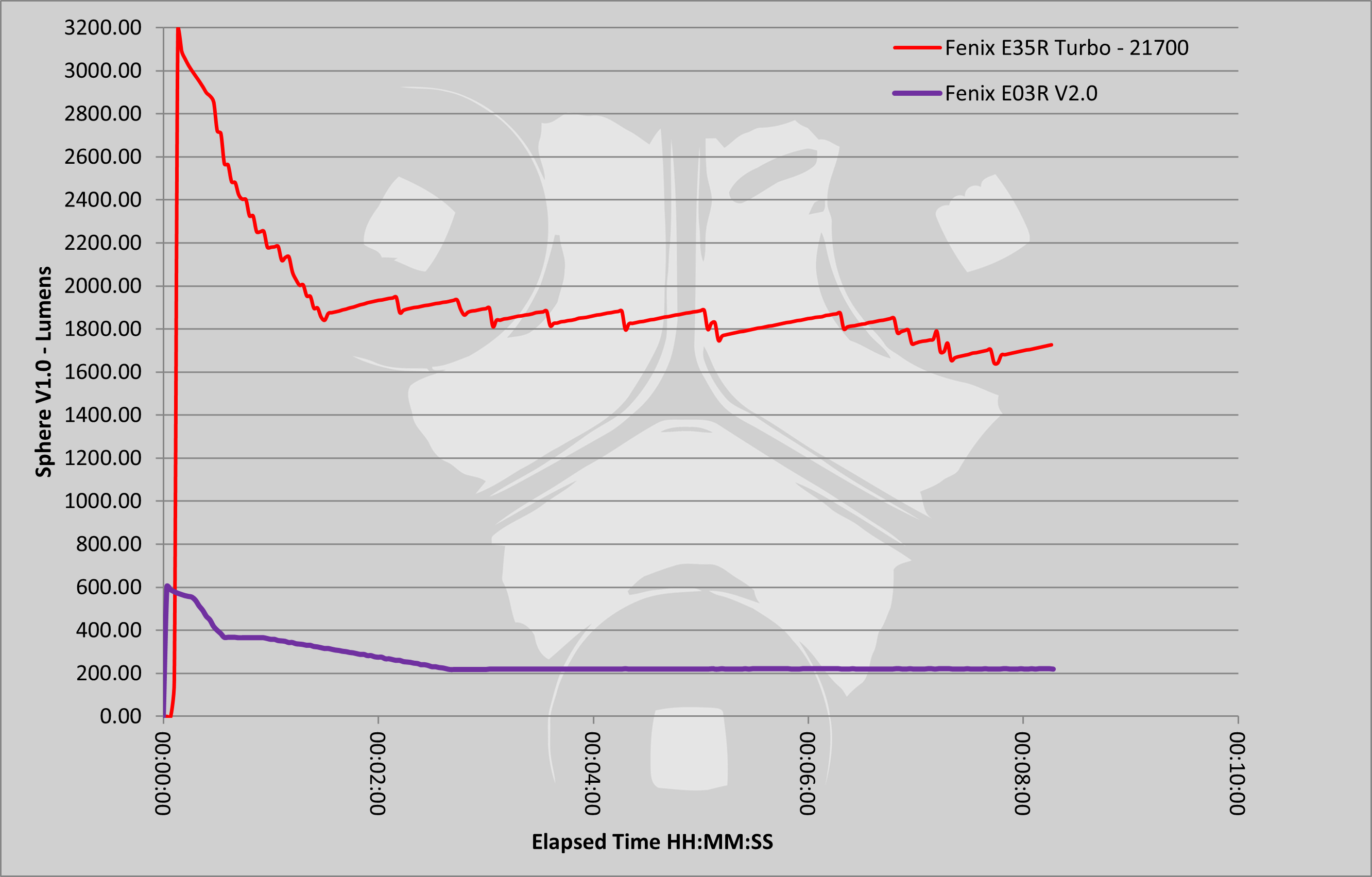
Showing just the start of the output trace, the final image in the gallery shows the thermal regulation controlling the output.


The E03R V2.0 and E35R in use

Since Fenix first previewed the E03R V2.0, the debate has been based largely around if they have made it too big for a key chain light. Ultimately only you can make that decision, but I’ve found it a very good size. Being slightly larger it is more readily to hand (easier to get a grip on), and the added functions raise its usefulness even more.

I particularly like the ‘breathe’ modes of the E03R V2.0. A soft locator light which give a confidence that when in an unfamiliar place you can activate the breathe mode and then always be able to find where the E03R V2.0 is.

For a light that is going to be knocking around, and in and out of pockets, the timing of the power switch activation seems spot on. I’ve not had any accidental activations, and not really bothered with the lockout. It is good to have the option, but so far no warm pockets.
Between these two lights, the interface is effectively the same, so it is very natural to pair them. Of course the E35R is a single white light LED that goes up to an amazing 3000lm output.

At that maximum output the E35R does get hot quickly, and as shown in the runtime graphs, cannot be maintained – but take a moment and look at those graphs again. The E35R, with good cooling, is running at over 1500lm for an hour. This is a solid performance for a EDC pocket light.
I would prefer one lower mode on the E35R, but for most people, the available modes are going to work well.

With the power button being relatively low profile, it can be a bit hit and miss to find, especially with gloves. To get around this, what I do is to line up the pocket clip so it is opposite the power switch. You then use the pocket clip to index your grip and find the power switch without looking.

The original E35 was a good powerful compact light. It was just slightly smaller and a little lighter, and just enough light wrapped around a 21700 cell. Fenix have now managed to also squeeze in the on-board charging and magnetic base which are worthy updates and make the E35R a complete package.

So far, on testing the magnetic base of the E35R, I’ve found issues with slippage if put onto a smooth vertical surface. The magnet holds the light, but the finish on the tail is so smooth, if the surface is also smooth the E35R usually slips and slides down. If the magnet is holding a horizontal surface it is very secure. It is less about the magnet’s strength and more about there being enough grip between the E35R and the surface to not slide downwards.

‘New and improved’ is often a false claim, but for this pair of EDC lights from Fenix, it really is.


Review Summary
The views expressed in this summary table are from the point of view of the reviewer’s personal use. I am not a member of the armed forces and cannot comment on its use beyond that covered in the review.

Something that might be a ‘pro’ for one user can be a ‘con’ for another, so the comments are categorised based on my requirements. You should consider all points and if they could be beneficial to you.

_______________________________________________
What doesn’t work so well for me
_______________________________________________

E35R – Could do with a lower mode for household use.
E35R – Tends to slide down smooth vertical magnetic surfaces.
Nothing else for either.

_______________________________________________
Things I like
_______________________________________________

E35R – 3000lm maximum output.
E35R – built around the 21700 cell.
E35R – simple and effective user interface.
E35R – magnetic tail.
E35R – built-in USB-C charging.
E03R V2.0 – ‘breath’ locator beacon mode.
E03R V2.0 – white and red output (and green in breath).
E03R V2.0 – built-in USB-C charging.
E03R V2.0 – great combination of size, weight, power and runtime.