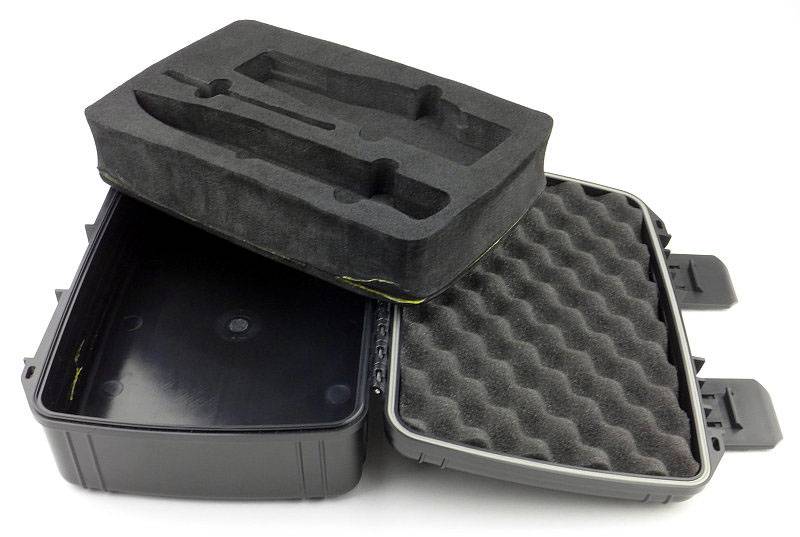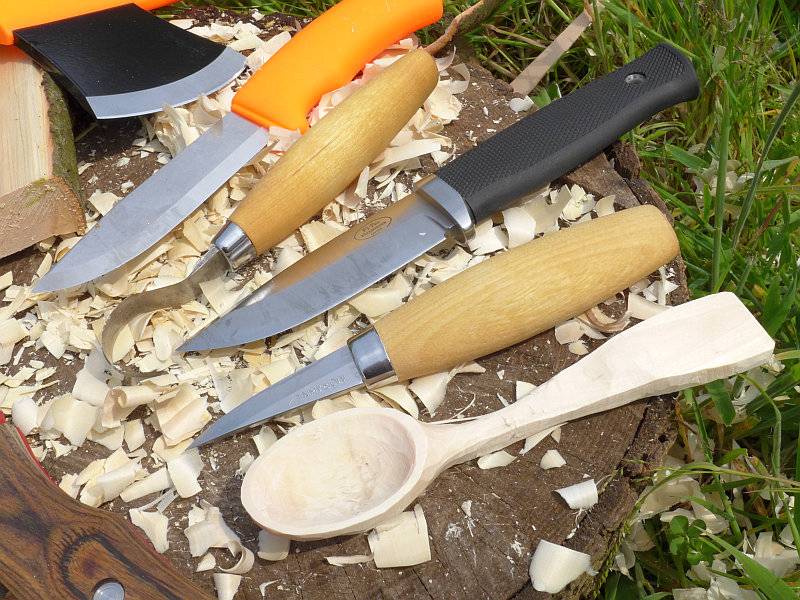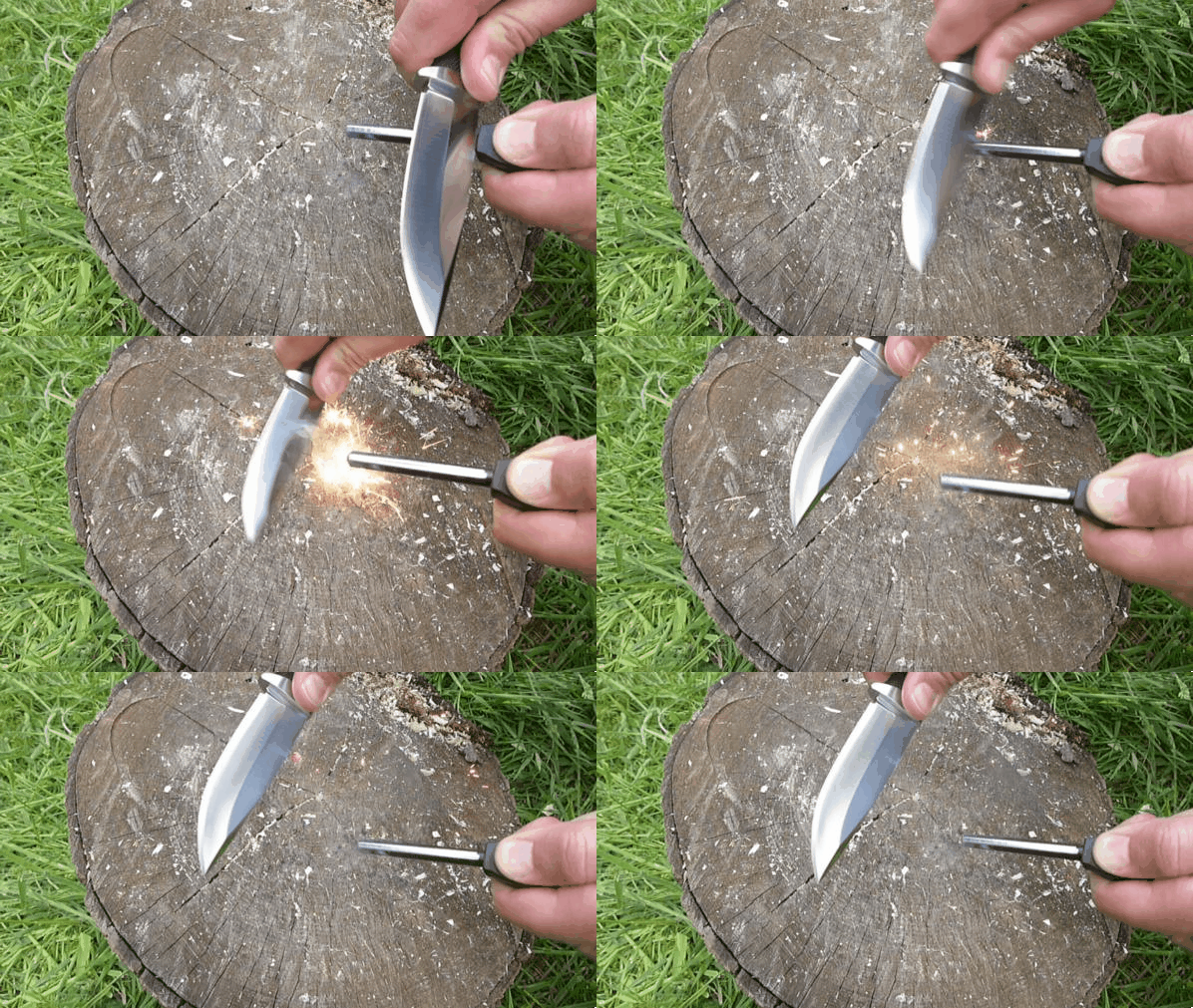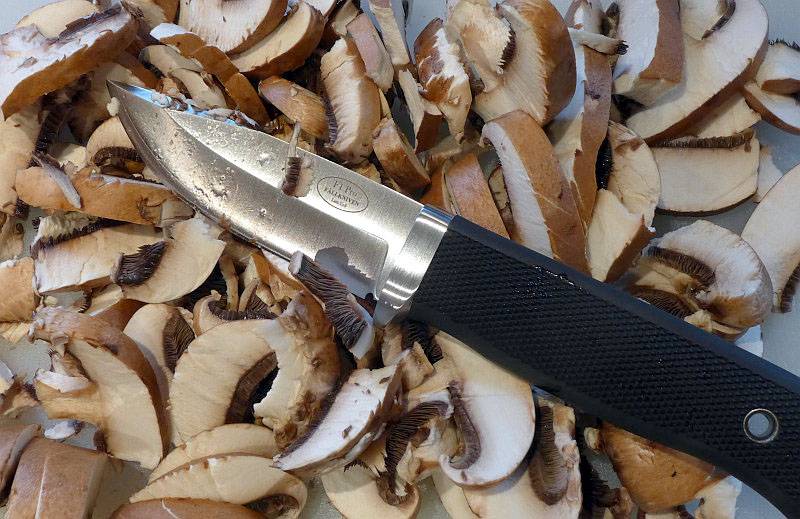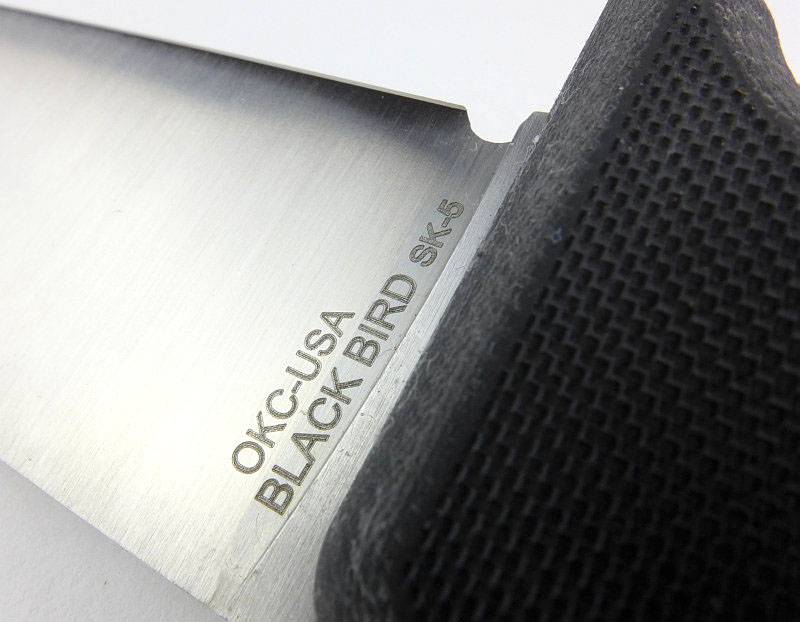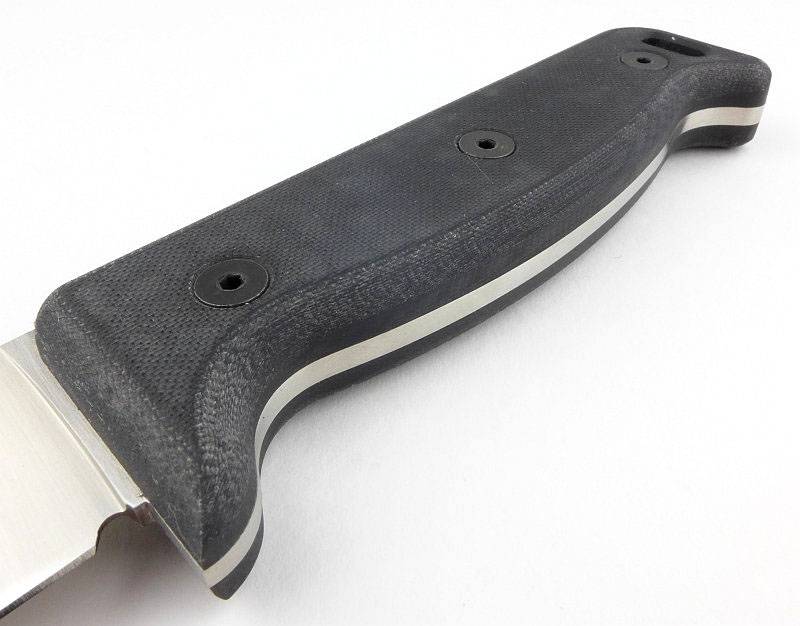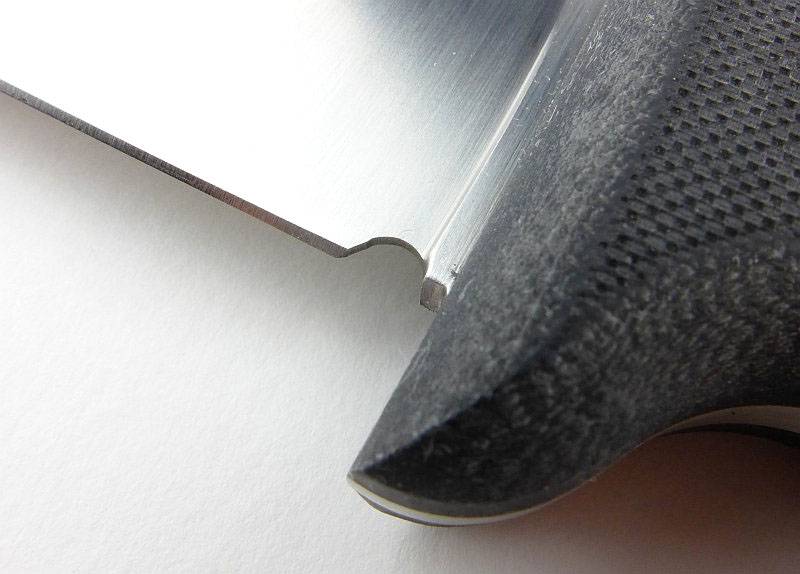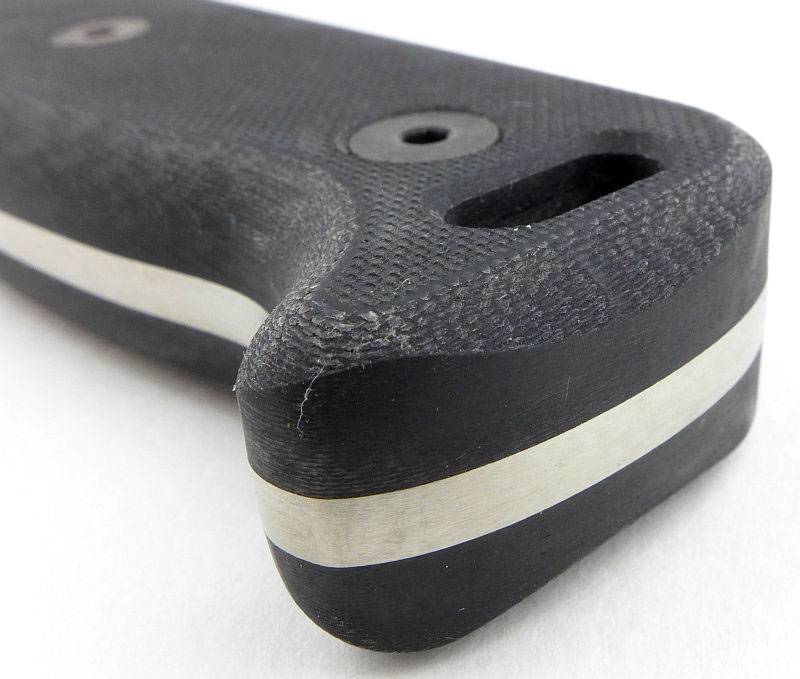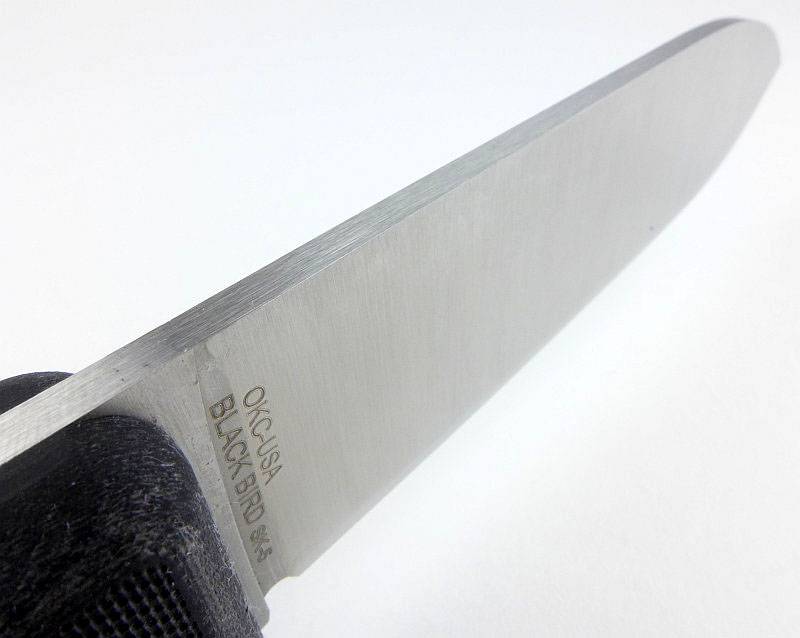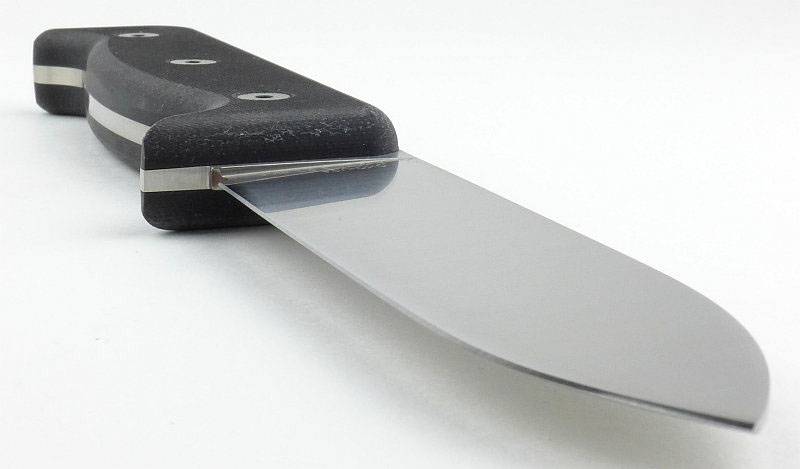
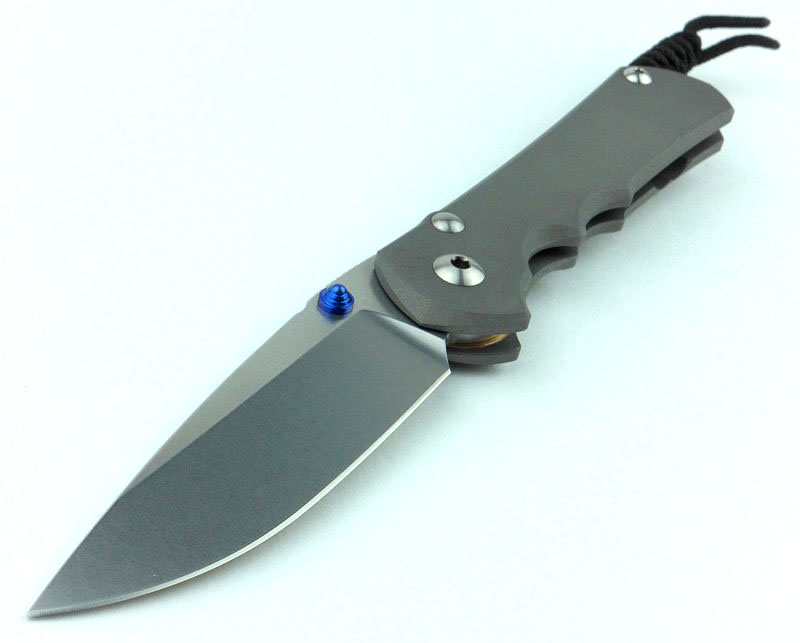
Knife Review: Chris Reeve Knives Large Inkosi

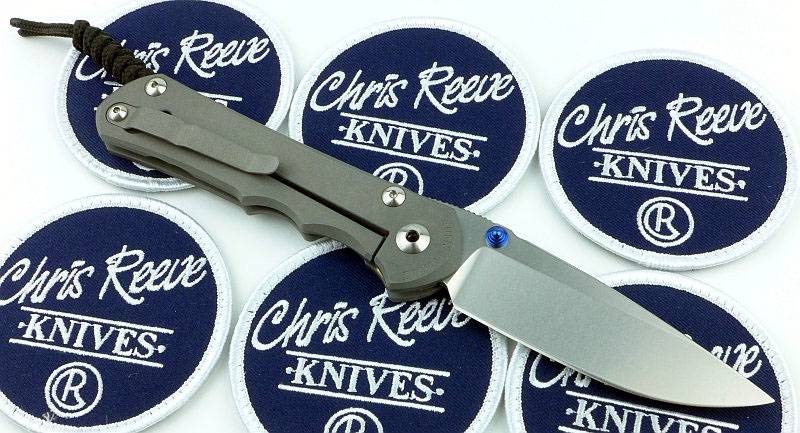
The original Inkosi was launched at Blade Show 2016, and was designed to include improvements to Chris Reeve’s already tried and tested (and industry changing) Sebenza models. Never one to stand still, Chris knew he could improve on his original design with certain key changes to the pivot, bearing, frame and lock. Rather than apply all these changes to the established formula of the Sebenza models, a new line was created to allow these features to be incorporated into the most advanced Chris Reeve folding knife yet. With a trend to smaller more pocketable models, the first Inkosi was created as a compact folding knife, but demand has been strong for a larger version of this knife, and here it is. The Large Inkosi now replaces the Sebenza 25.
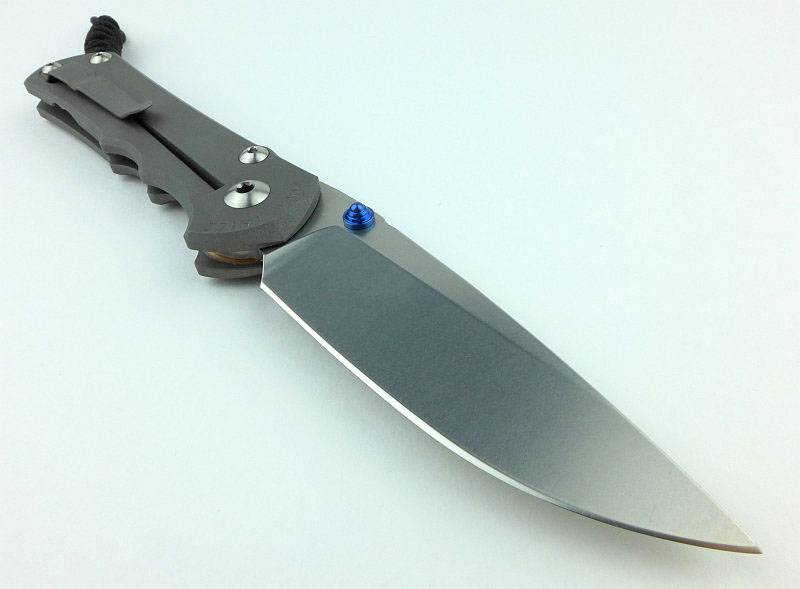
 photo 28 L Inkosi angle open P1200420.jpg

The Blade and Handle Geometry:

Most knife specifications have a basic description of the blade geometry, but in this section I will be taking a more detailed look at geometry and balance.
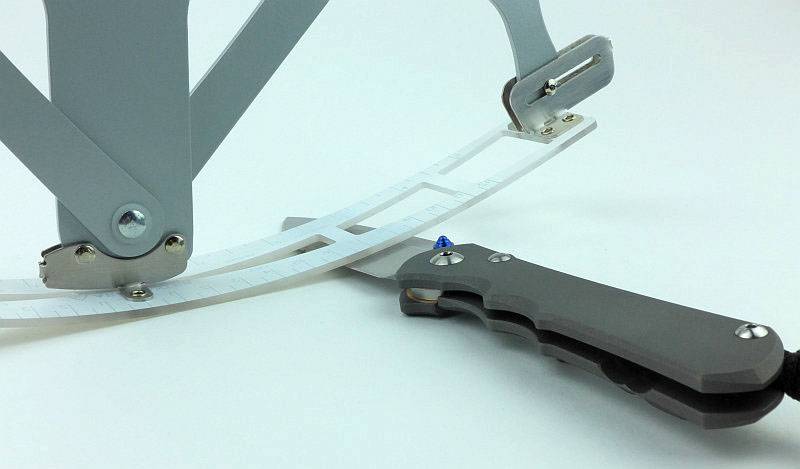
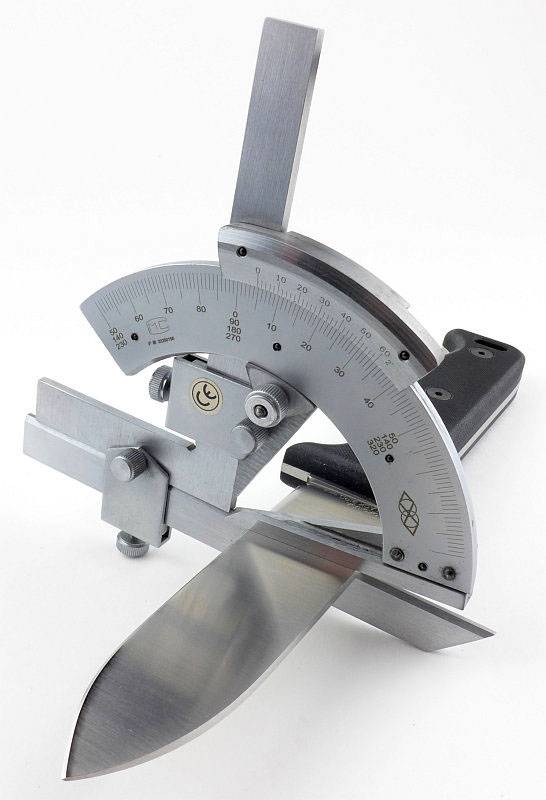
 photo 56 L Inkosi grind measure P1200597.jpg

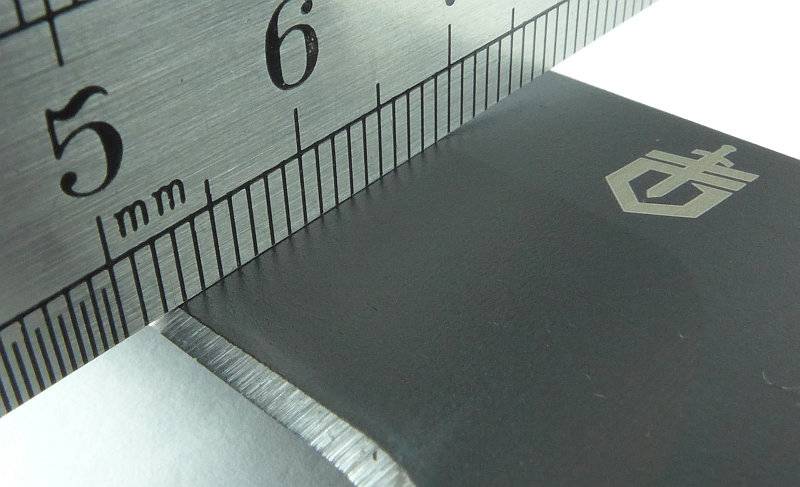
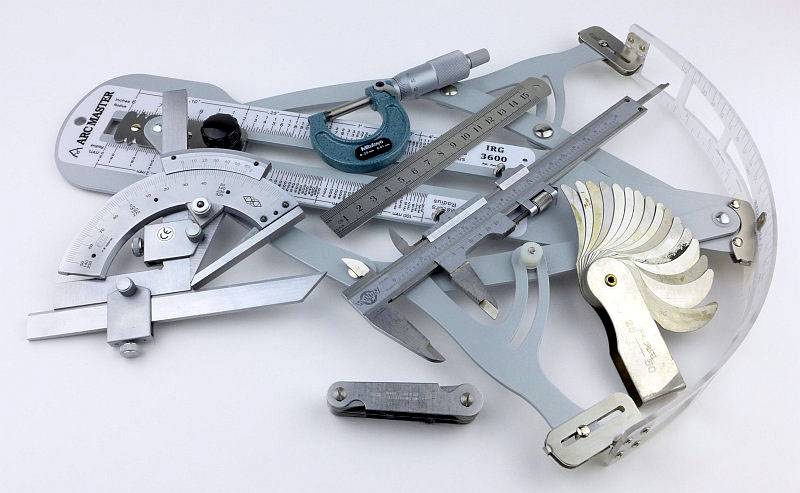
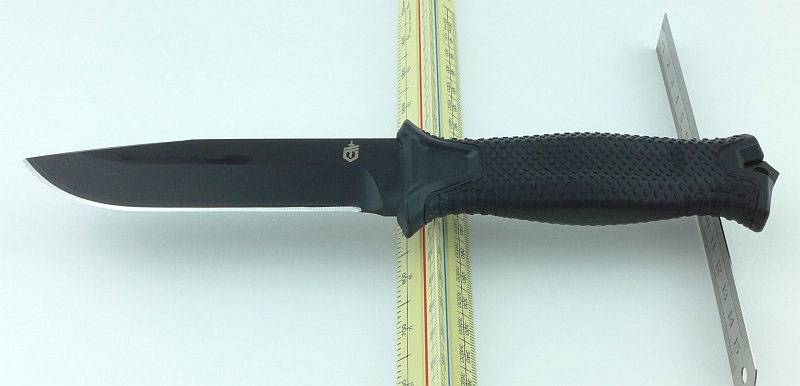
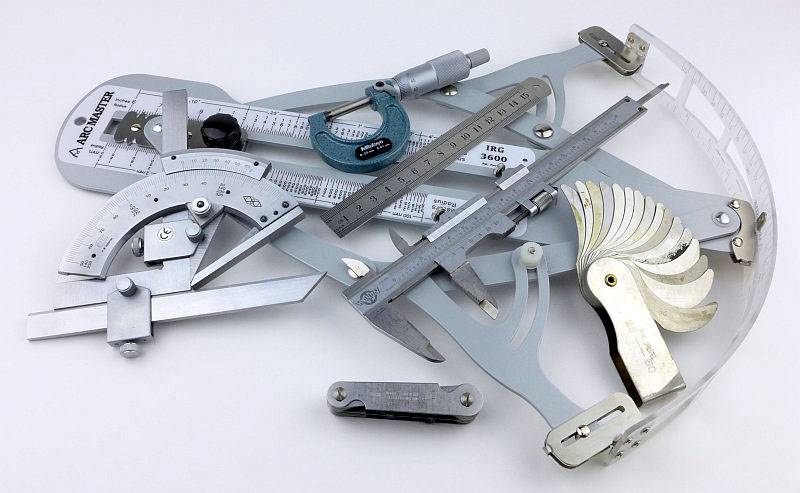
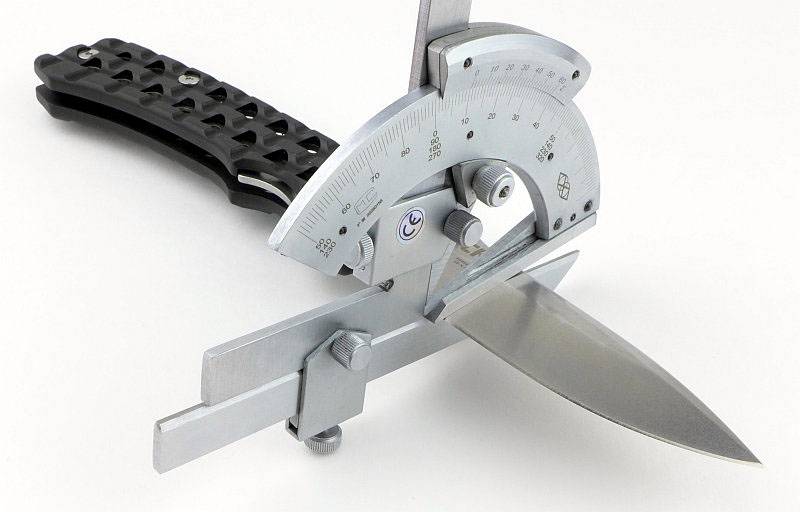
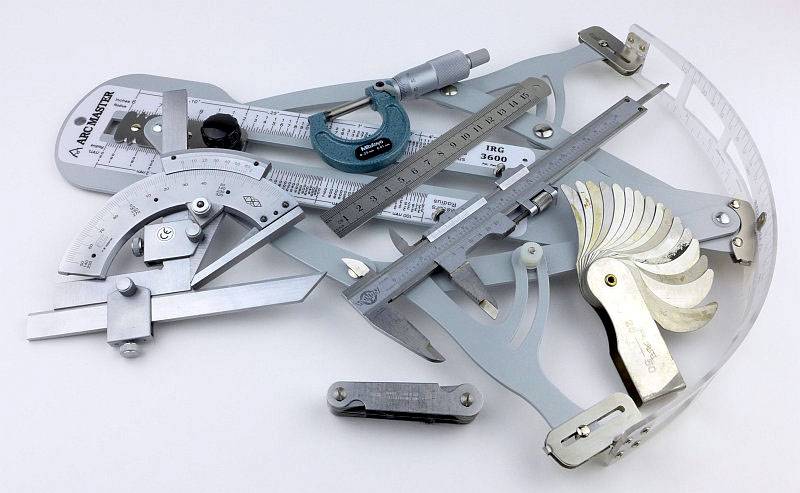
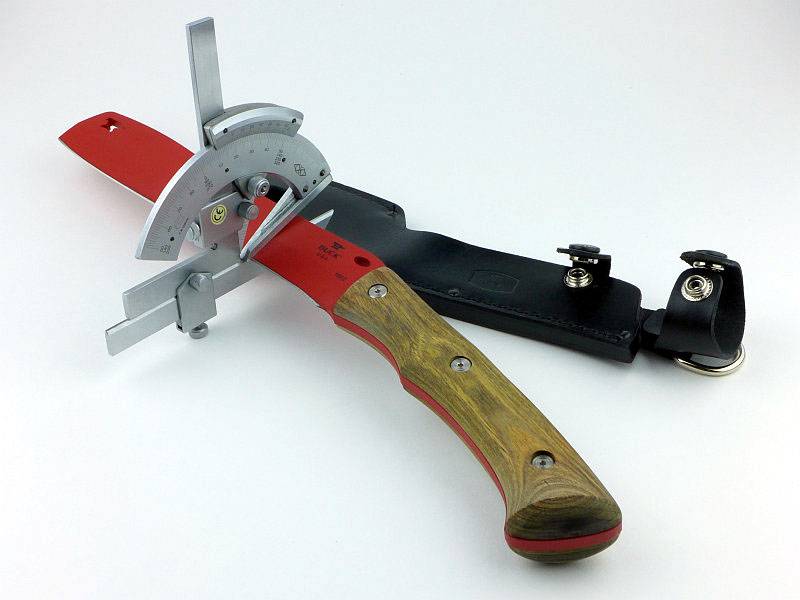
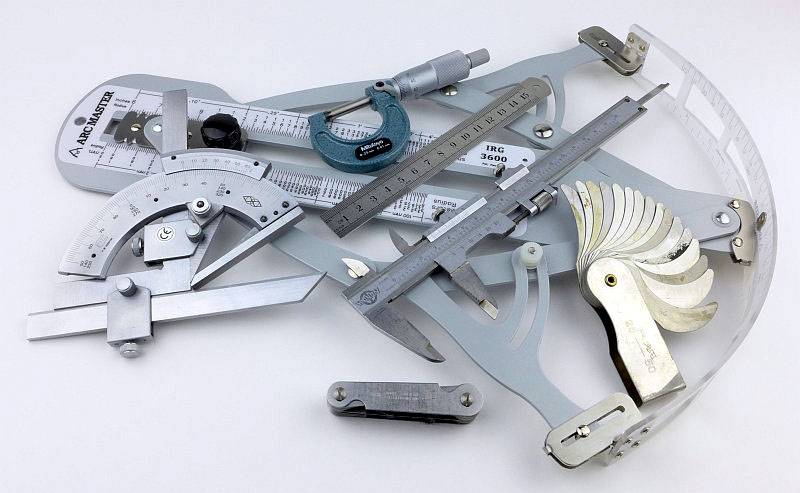
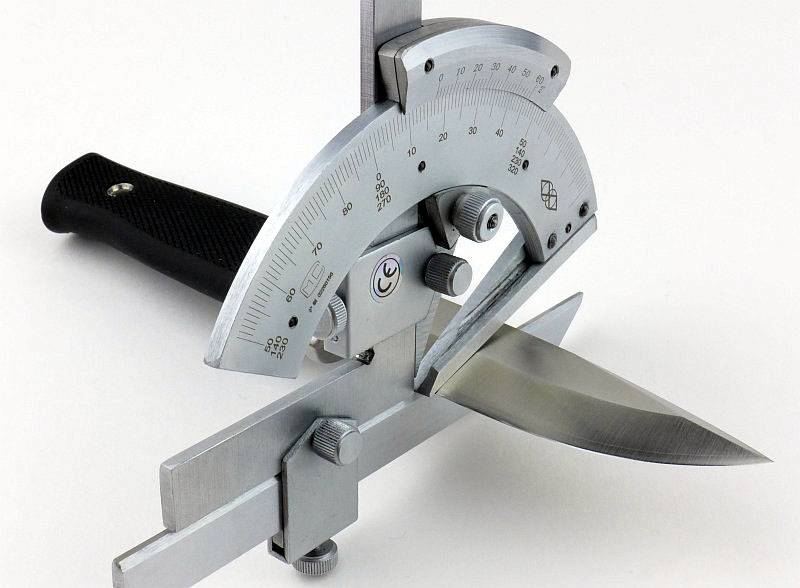
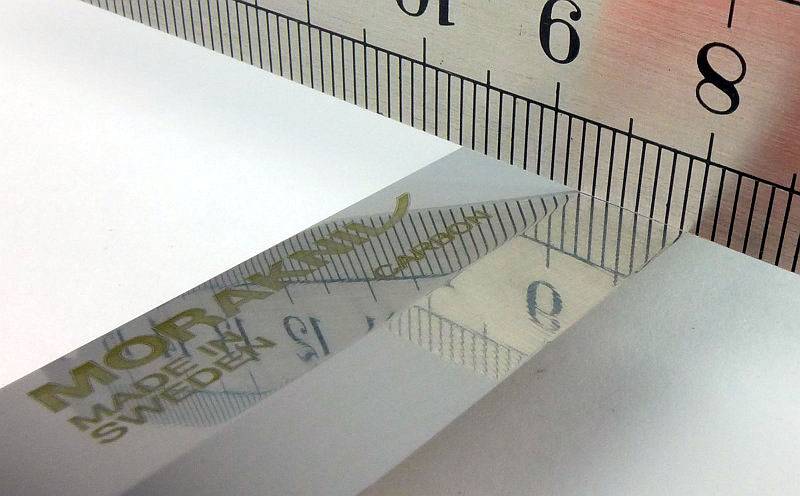
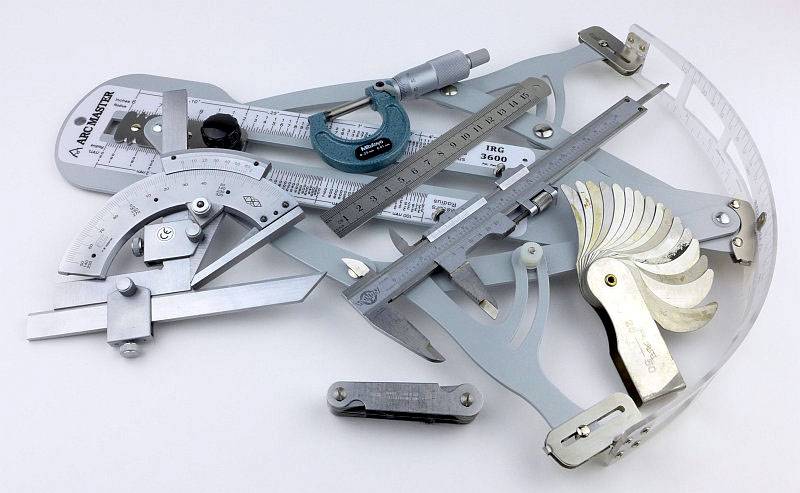
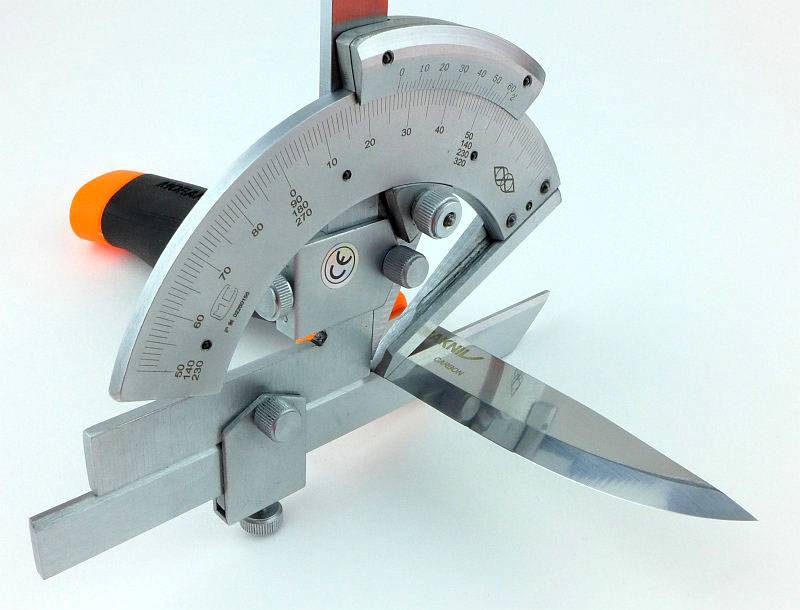
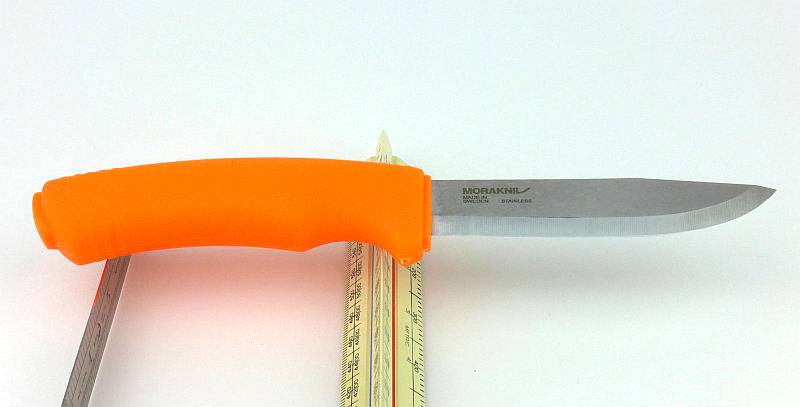
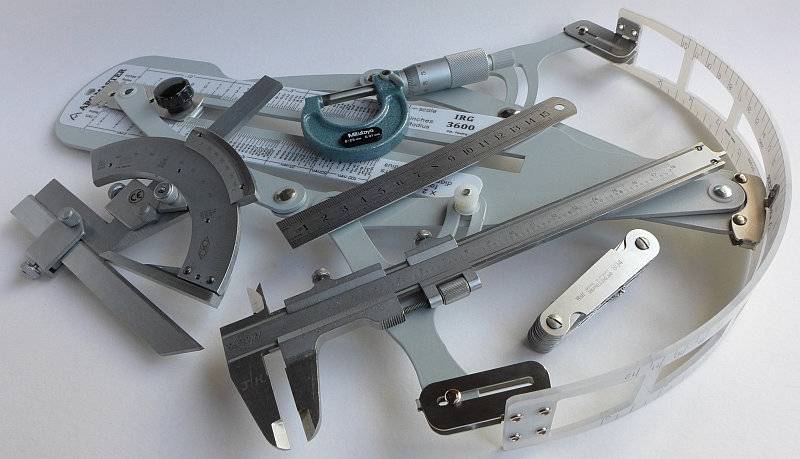
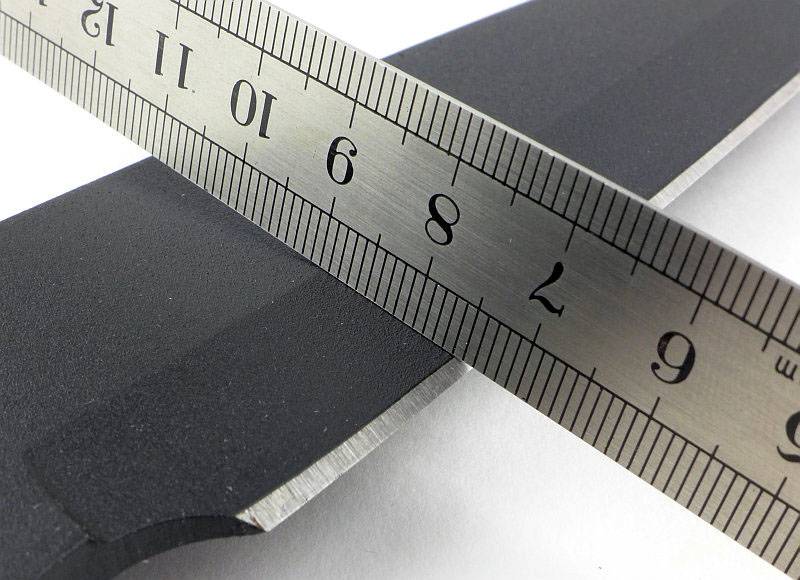
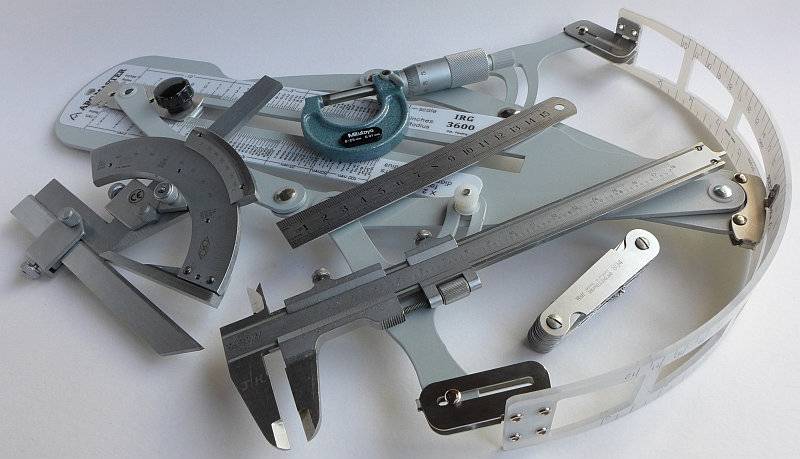
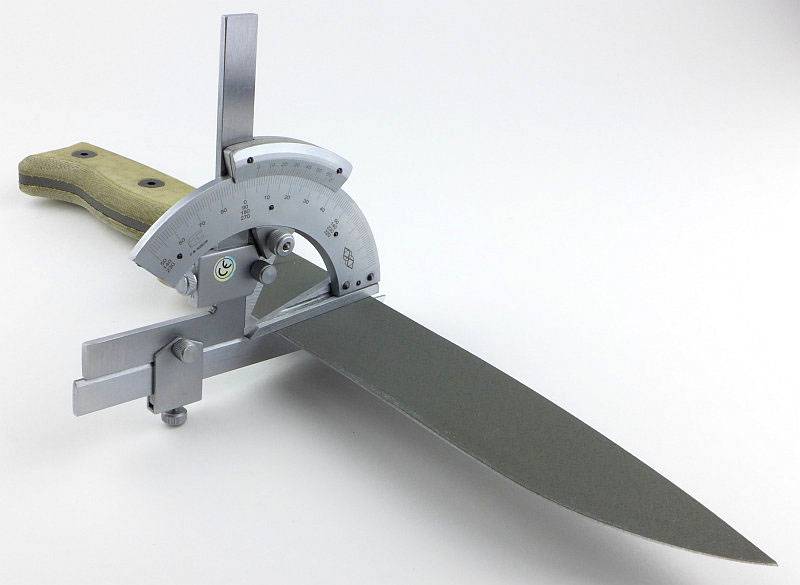
Using a set of gauges and precision measuring equipment including a Vernier protractor, callipers, fixed radius gauges and the unique Arc Master adjustable radius gauge (the one that looks like a crossbow).
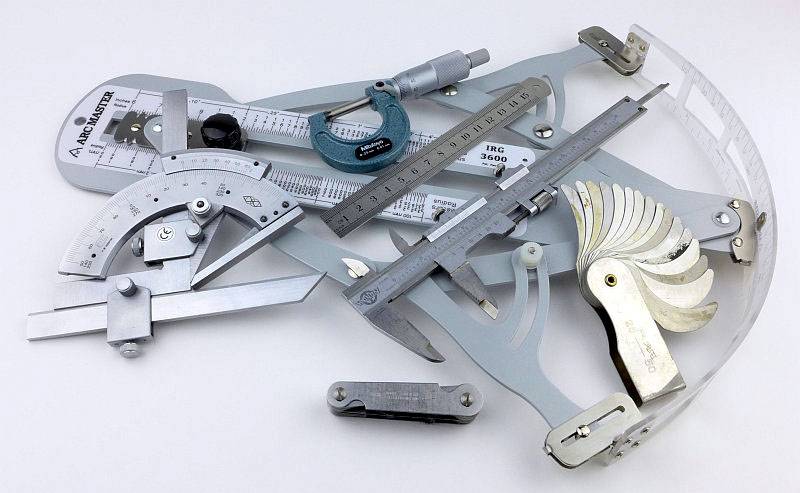
 photo Knife measuring P1180483.jpg

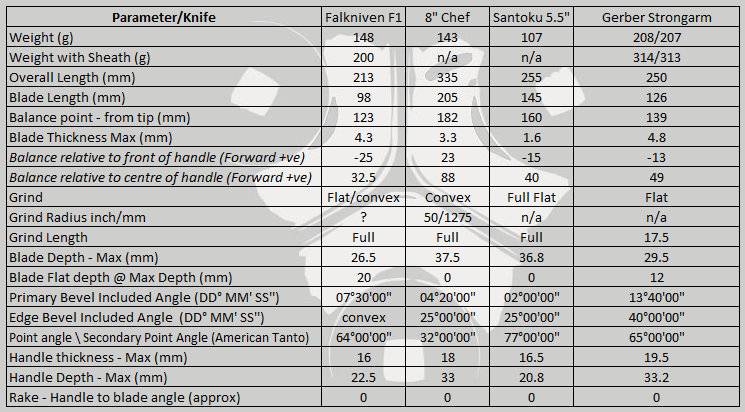
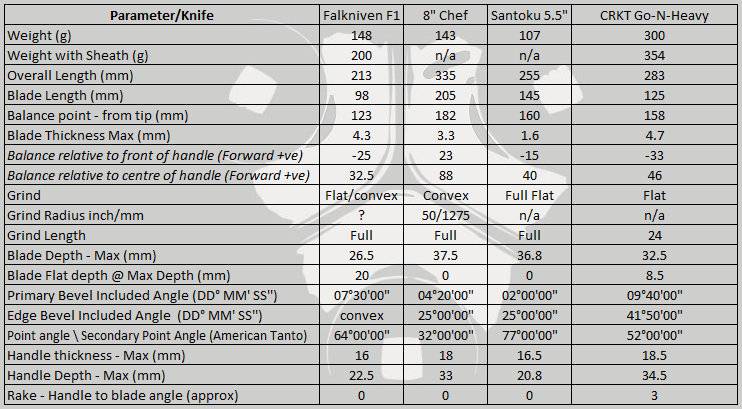
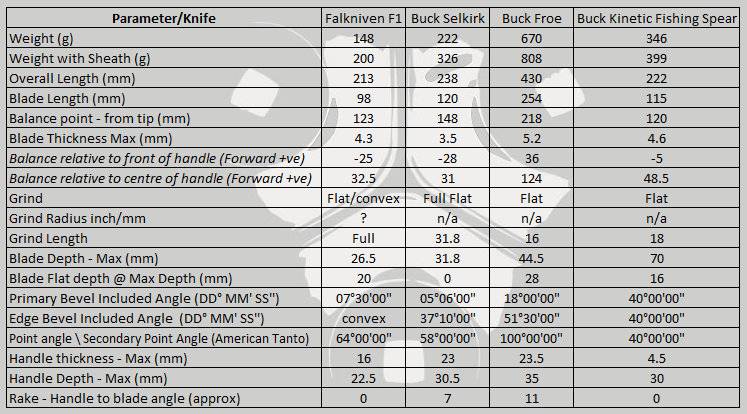
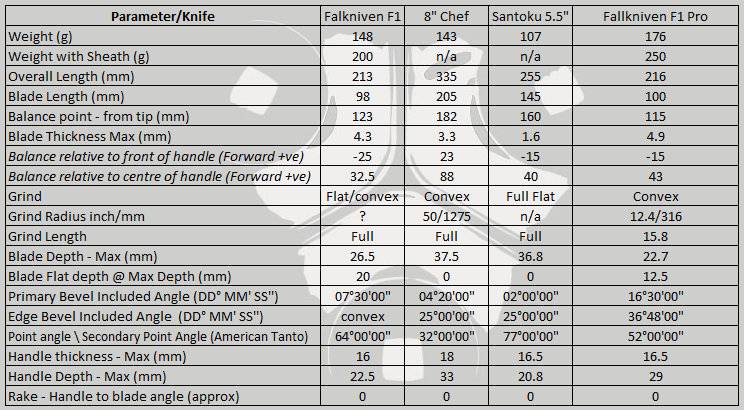
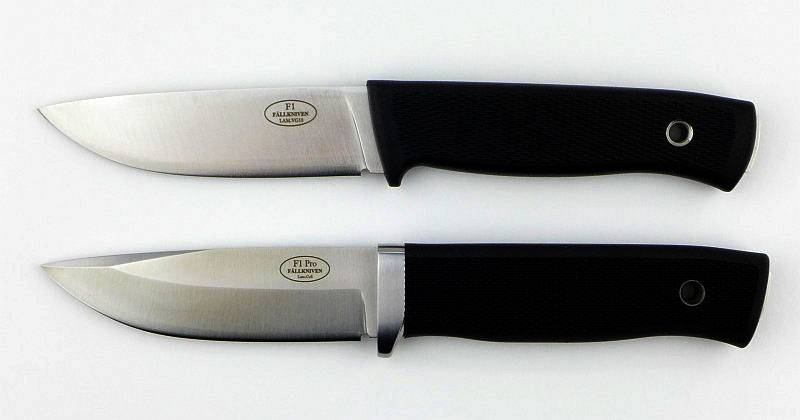
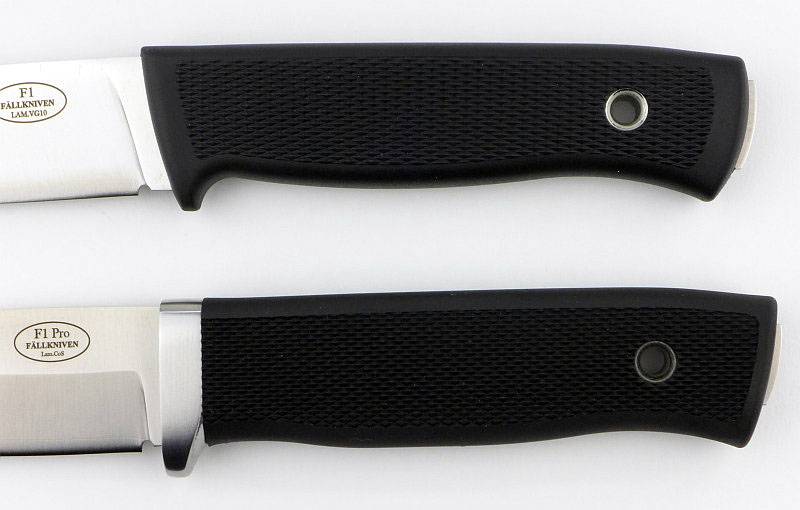
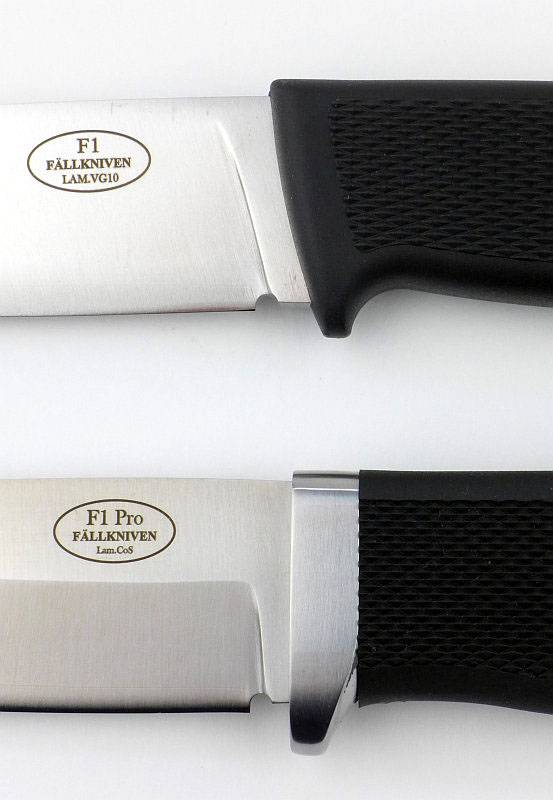
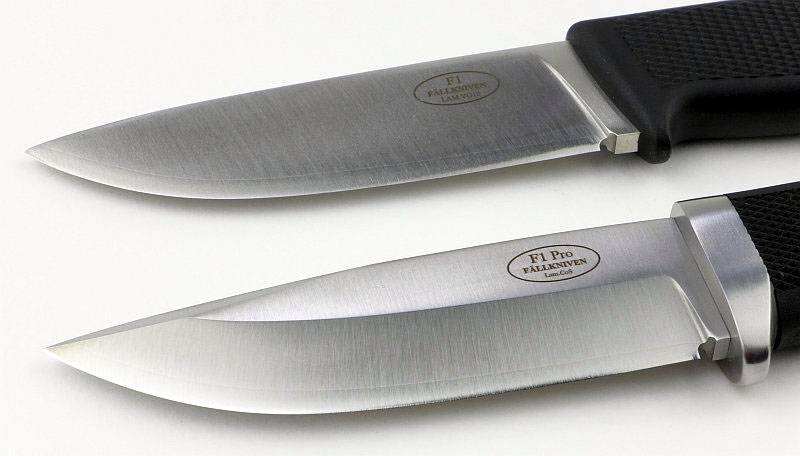
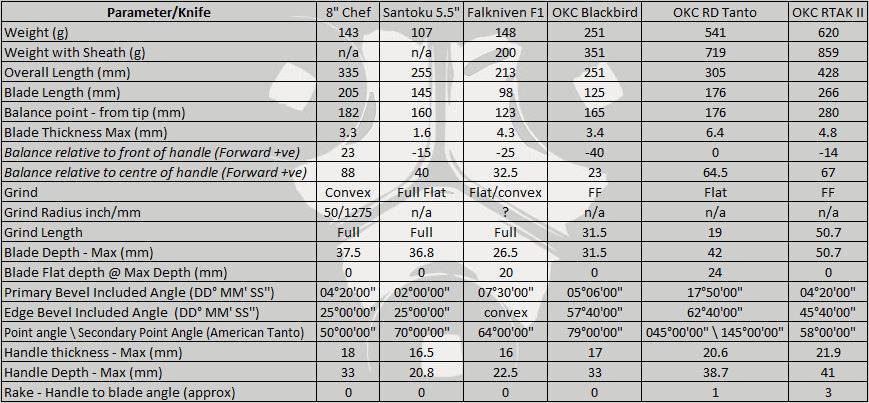
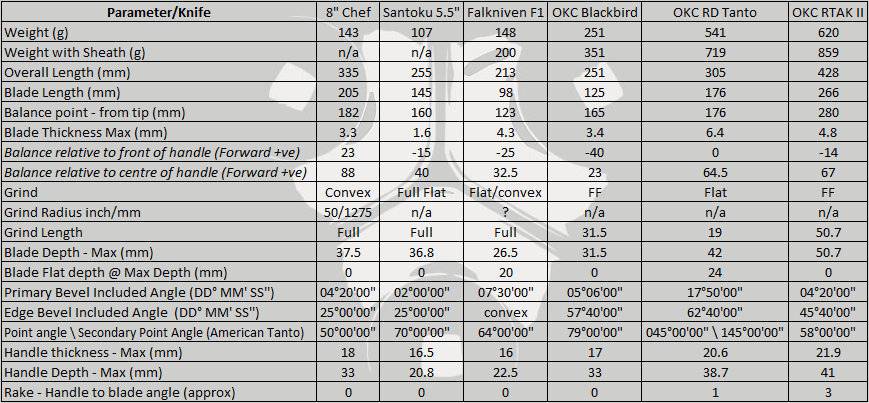
These measurements have been tabulated and are presented along with a few reference blades (8″ Chef’s Knife, 5.5″ Santoku and the popular Fällkniven F1).

Key aspects such as the primary bevel angle, grind type, blade depth, blade thickness, length, weight are detailed, along with balance information.
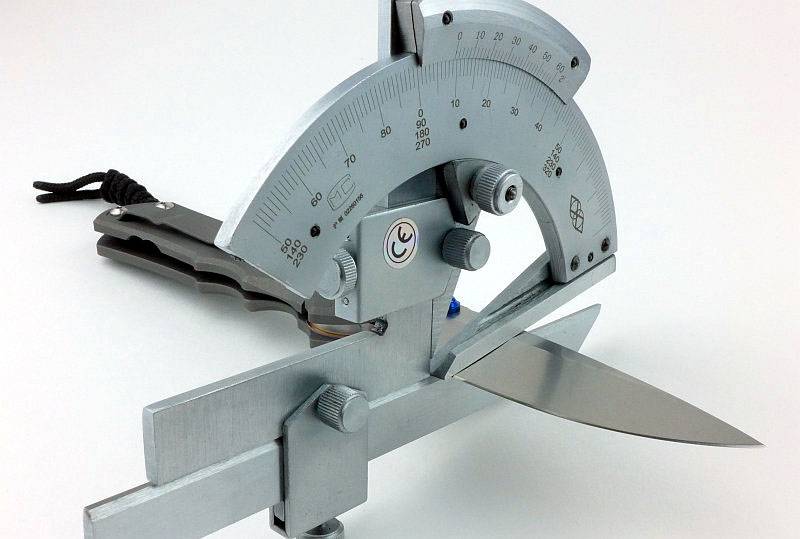
 photo 58 L Inkosi grind angle P1200604.jpg

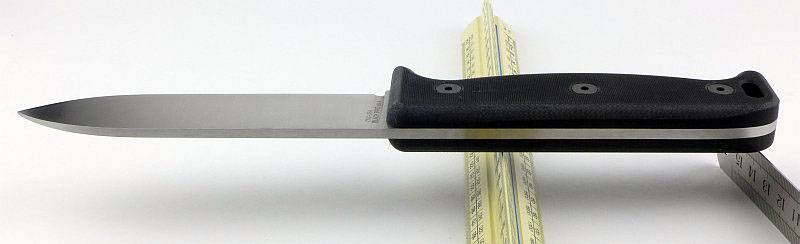
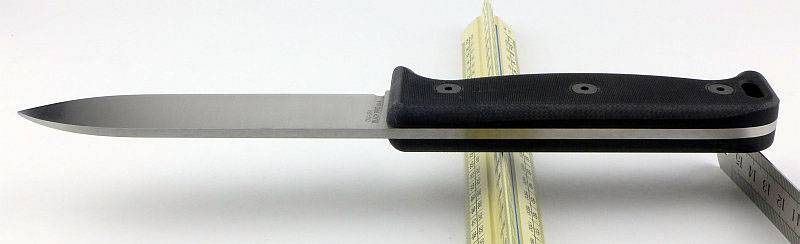
The ‘Balance relative to the front of the handle’ tells you if the knife will feel front heavy, or if the weight is in your hand (a positive value means the weight is forward of the front of the handle). The ‘Balance relative to the centre of the handle’ indicates how close to a ‘neutral balance’ the knife has in the hand.
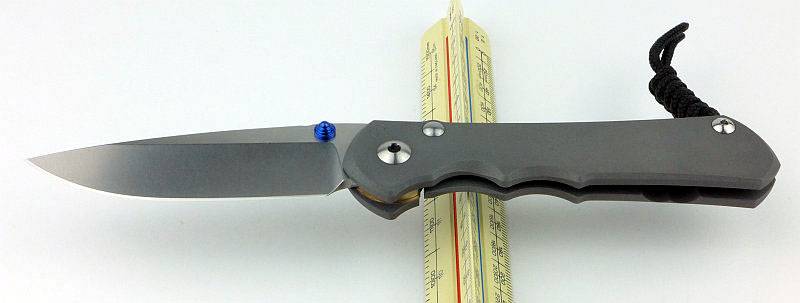
 photo 53 L Inkosi balance P1200569.jpg

In the case of full convex grinds the approximate centre of the grind is used for the primary bevel angle estimate.
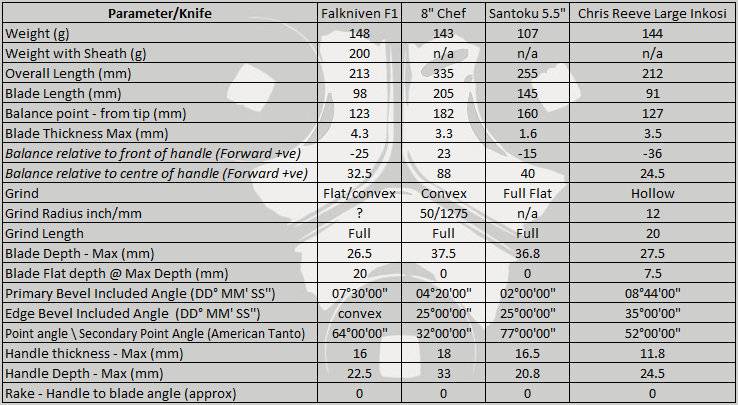
 photo CRK Large Inkosi Parameters.jpg
The blade is made from S35VN steel at 59-60RC.

Explained by the Maker:

The reasons for certain design choices may not be clear when simply looking at an object, so this section is intended to give an insight into the thinking behind a design by speaking to the designer themselves.

Unfortunately I can’t always get time with the designer so will use this section to include relevant information about the knife and its designer.

The history of this review goes back to before the release of the Large Inkosi and to IWA 2016 where I was fortunate to be able to speak to Tim Reeve about the Inkosi. It was during this discussion that Tim told me the Large Inkosi was in development. My own preference is for a larger lock knife, so I couldn’t wait for the Large Inkosi to be released.

Tim talked me through the design improvements introduced with the Inkosi which actually include all the major parts, the pivot, bearing, frame and lock.

There is one feature of the Large Inkosi which is not new, but is worthy of mentioning as it is now a CRK design feature that was introduced in the Sebenza 25, the ‘Large Hollow Grind’. The shape of this grind is itself not new, having been common when you go back to older production methods. Before grinding wheels were mass produced in smaller sizes, blades were ground on much larger wheels than are generally used today. Modern grinders tend to have smaller diameter wheels, so hollow grinds have become deeper and more pronounced. This has given the hollow grind its very sharp thin edge, but a blade which hangs up on the shoulders of the hollow grind when cutting deeply. With the growing popularity of the full flat grind, thanks to its smooth cutting action, the modern hollow grind has been losing traction.

That said, both hollow and flat grinds have their place and individual benefits. When looking to make the folding knife as useful as possible, CRK didn’t just follow the trend of going one way or the other, but instead wanted a blade that blends the best of hollow and flat grinds. Using a much larger wheel to grind the blade results in a ‘Large Hollow Grind’ which is almost flat, but slightly hollowed. This stops the blade hanging like a hollow grind would, and allows for more sharpening cycles before the blade edge starts to thicken up. This image (borrowed from CRK) shows how the ‘Large Hollow Grind’ fits between flat and hollow grinds.
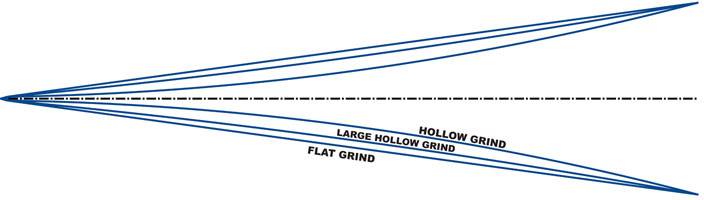
 photo largehollowgrindweb.jpg

Here you can see the slight dip of the grind with a flat edge lying across it.
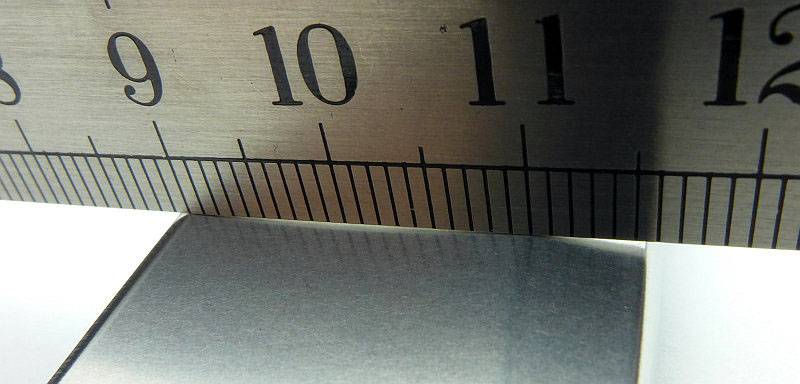
 photo 54 L Inkosi grind P1200578.jpg

In the previous section ‘The Blade and Handle Geometry:’ you could see the size of the hollow grind being measured with the Arc Master radius gauge. This is a closer look at the measuring arc sitting in the hollow grind with the gauge set at 12″ radius, so a 24″ wheel has been used for this grind.
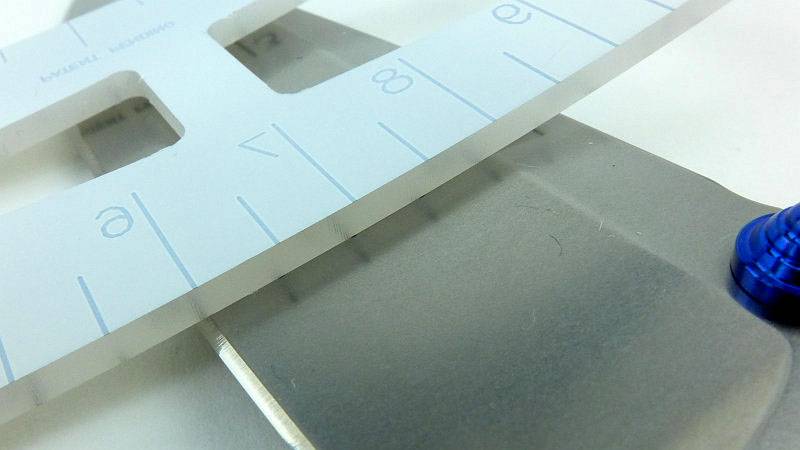
 photo 57 L Inkosi grind measure close P1200593.jpg

This next image is a big hit of detail as it shows the Large Inkosi almost fully disassembled. For the moment there are two specific details I’d like to focus on and they are the large pivot and shaped phosphor bronze washers.
In earlier designs, the size of the washer on the lock side was limited by the end of the lock bar and if the washer were to have a cut out, it might rotate and then interfere with the lock. In turn, the size of the washer limited the size of the blade pivot, as if the pivot were made larger, the washer would become smaller and provide less support to the blade.
Taking the washer to the maximum size allowed by the handles means it can then be shaped to locate on the blade stop pin and not rotate into the way of the lock bar. It also allows the washers to be the same both sides bringing equal stability to each side of the blade.
Now that the washer has broken free of the earlier limits, it is possible to increase the size of the blade pivot and so increase the strength of this joint.
However, all this extra contact area increases friction with the blade tang, making the knife more difficult to open, so large perforations have been added to the washers to reduce friction without weakening the support of the blade. The perforations also store more lubricant and offer space for small particles of dirt to move away from the contact surfaces of the blade and washer, helping to prevent blade from stiffening up over time.
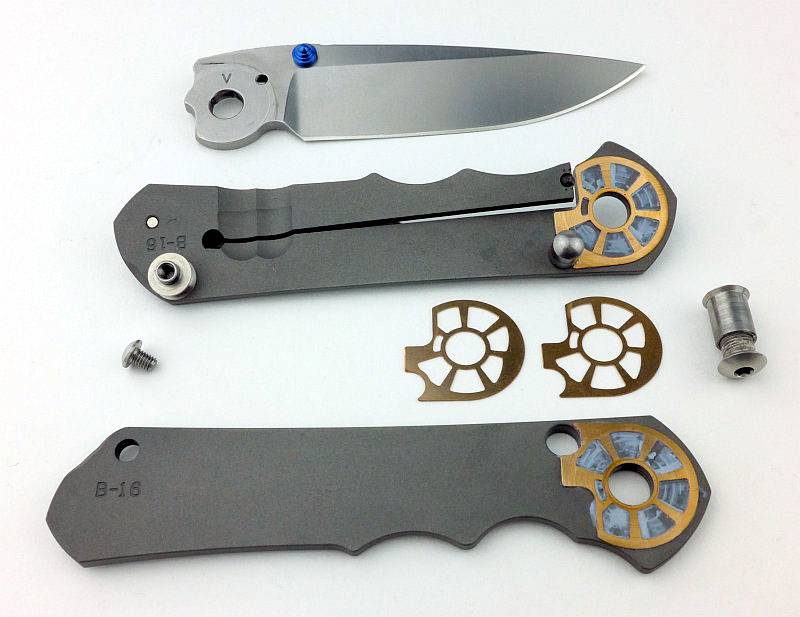
 photo 14 InkosiWasher Step all parts plus new P1230240.jpg

Only with the knife fully disassembled can you get a really good look at another design feature, the ceramic ball used in the lock.
Other integral locks use either the titanium itself or an insert of hardened steel for the locking surface. Looking to improve on both if these and increase the service life, CRK have employed some of the hardest material available, ceramic.

A one-eighth inch ceramic ball with hardness of 97RC acts as the interface between the lock bar and the blade tang. It also doubles up as the detent ball that holds the blade in the closed position. Due to the detent now becoming the locking surface as well, you get a uniquely smooth feel when opening the Inkosi. For just about every other integral/liner lock, when the blade is nearing fully open, the detent ball clicks as it drops off the locking surface of the blade tang. Only after this pre-lock click does the actual lock click into place. It means you get this double click as the blade is opened into the locked position. With the Inkosi, when you start to use it, you’ll notice the absence of this pre-lock click as it is not what you are used to. You open the blade and the only click is the lock bar falling into place. This is only possible with the dual purpose ceramic ball.
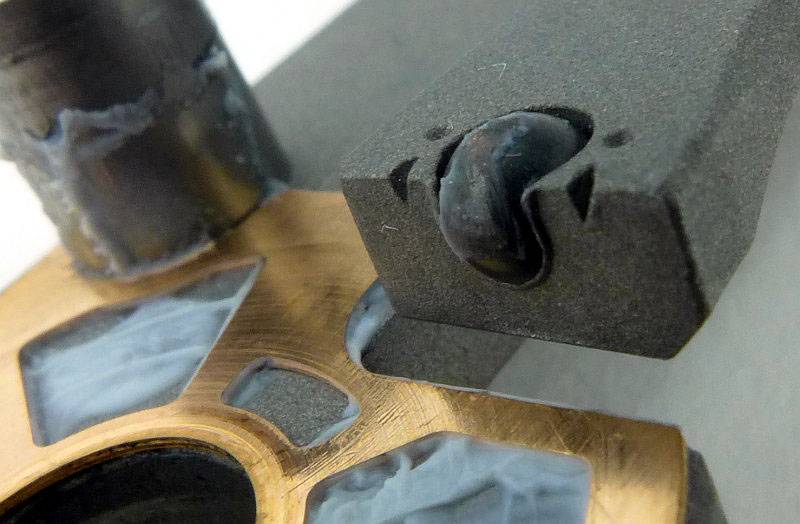
 photo 32 Inkosi details lock ball P1230233.jpg

Unlike a standard lock interface, which uses two flat surfaces, we now have a round ceramic ball which would create a point-contact on the blade tang, so instead of having a flat locking surface on the blade tang, the Inkosi has a rounded groove with the same curvature as the ball.
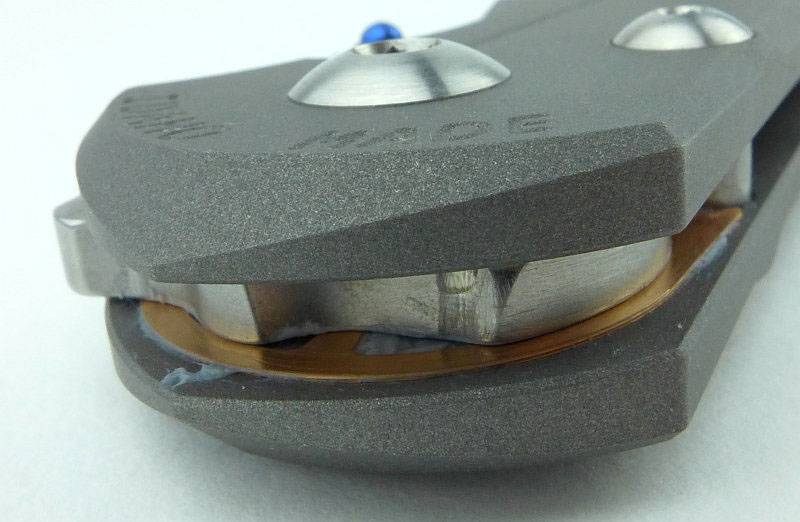
 photo 23 L Inkosi washer lock groove P1200402.jpg

The ball and groove mate securely and this interface also stabilises the lock bar as it can’t flex away from the handle. (NOTE: since the review sample was provided, CRK have found the ball track groove on the tang to be unnecessary, so it is no longer included on current production Inkosi knives.)
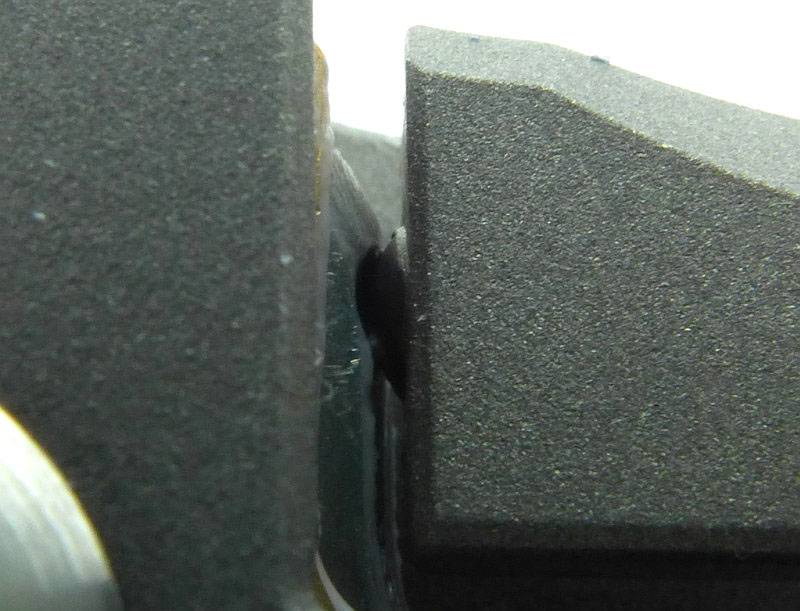
 photo 33 L Inkosi ceramic ball P1200442.jpg

Another innovation in the Inkosi is the slip-through stop-pin in the frame. One end of the stop-pin is secured to one side of the frame with a bolt, but the other end simply fits through a hole in the front of the frame and is not fixed in place.
Of course this only works as well as it does due to the high precision of the fit of the stop-pin on the floating side, and this configuration provides an excellent advantage in the operation of the knife.
Traditionally the stop sleeve, which spaces the frame/handle parts, needed to be very precisely sized to ensure that the fit of the assembled knife was tight, but not too tight. If that stop sleeve is a touch too wide you get blade play.
With the slip-through stop-pin, the advantage is that the front face of the handle can move along it as you set your pivot tension. The Sebenza has a stop sleeve that has to be machined to a width accurate within a few tenths of a thousandth requiring a lot of fitting to ensure the knife operates as it should.
From a manufacturing perspective, this feature removes the need for the fitting of the stop sleeve, however, the main advantage is really for the owner of the knife, as the slip-through stop-pin guarantees that even once the knife wears in, the action can always be set perfectly, with no blade play and perfect washer contact, just by adjusting the pivot; the stop-pin will never need any adjustment because it is self adjusting.
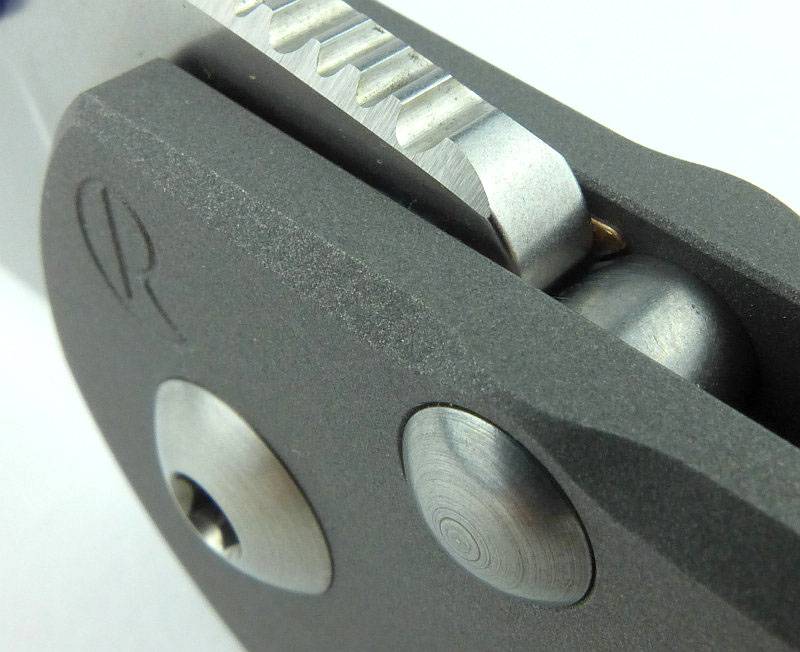
 photo 37 L Inkosi stop pin contact P1200454.jpg

A few more details:

Amazing how this box generates a real sense of anticipation and excitement. (NOTE: CRK have subsequently updated the packaging.)
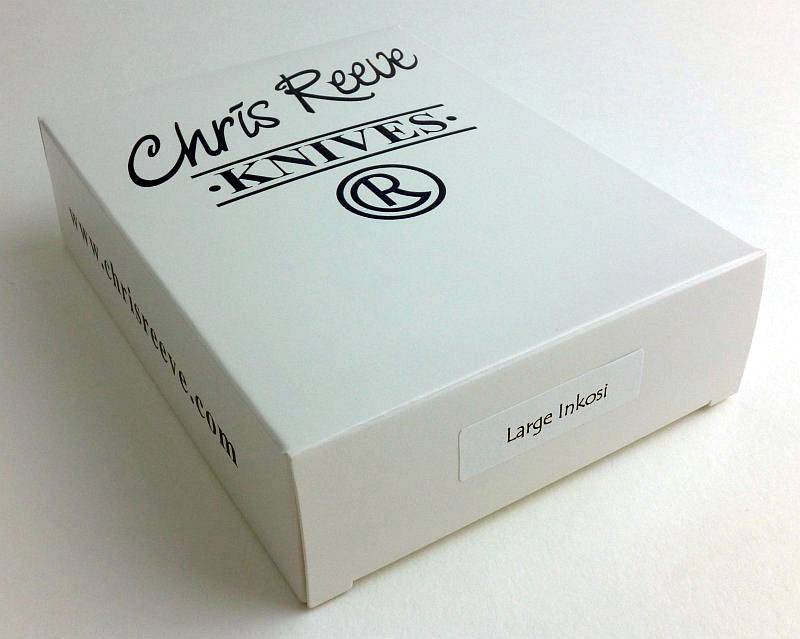
 photo 01 L Inkosi box P1200318.jpg

Personally, I’m not sure a knife should come with a warning it is sharp, but there it is.
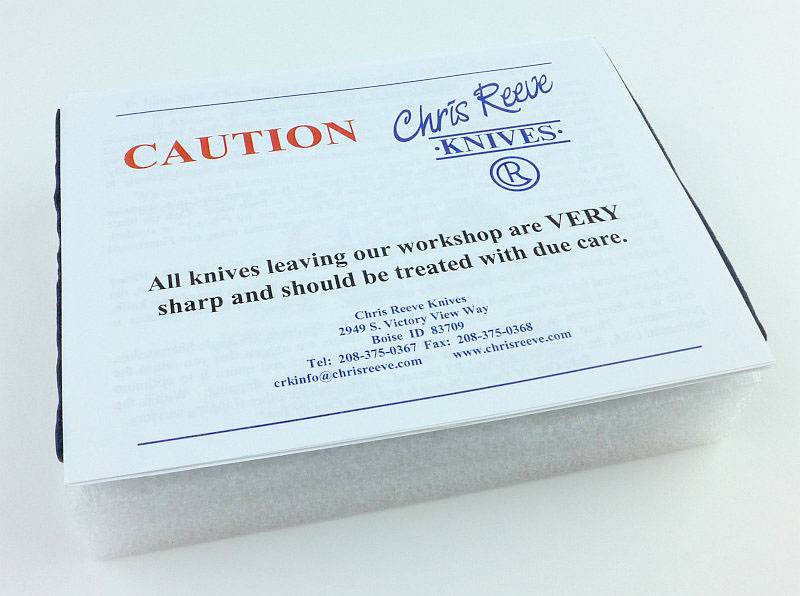
 photo 02 L Inkosi warning P1200320.jpg

The birth certificate of one of the first Large Inkosi knives.
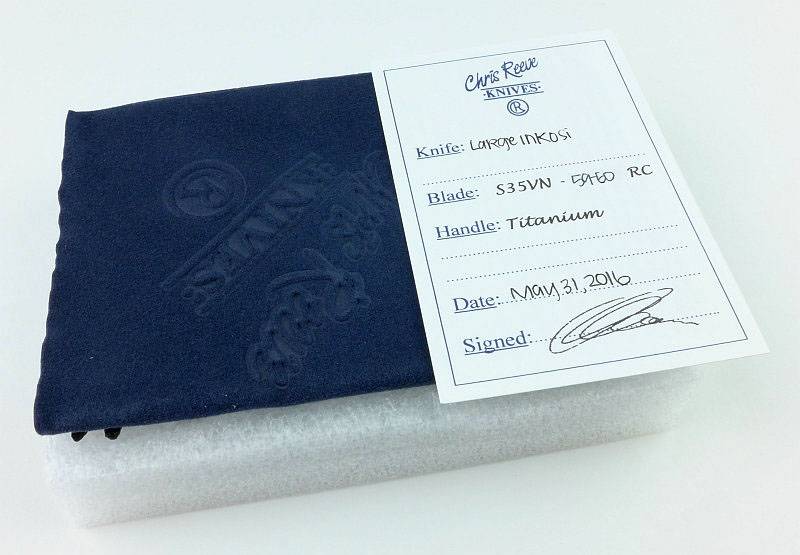
 photo 03 L Inkosi certificate P1200325.jpg

Nestled into a foam liner is the Large Inkosi and some accessories.
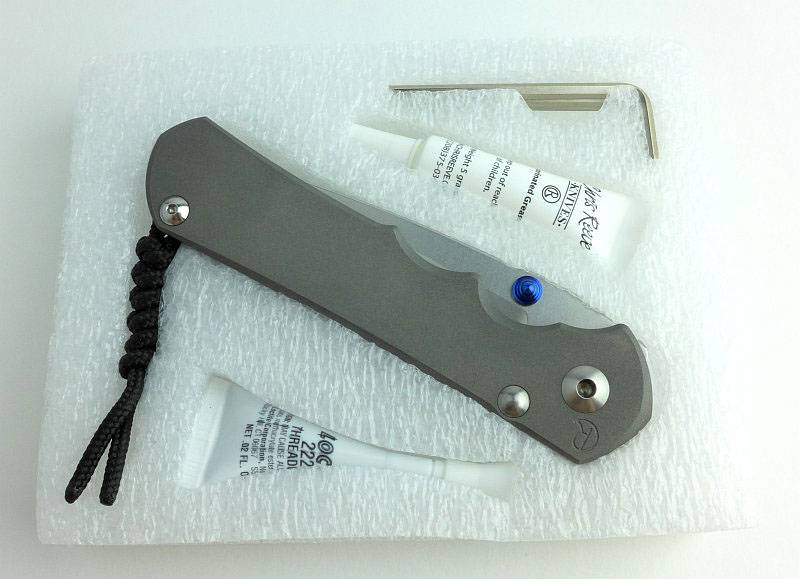
 photo 04 L Inkosi box tray P1200331.jpg

Along with the Large Inkosi you get a CRK cleaning cloth, two Allen keys for the pivot and one for the spacer and stop-pin bolts. there is also a tube of grease and thread-lock, giving you a full service kit.
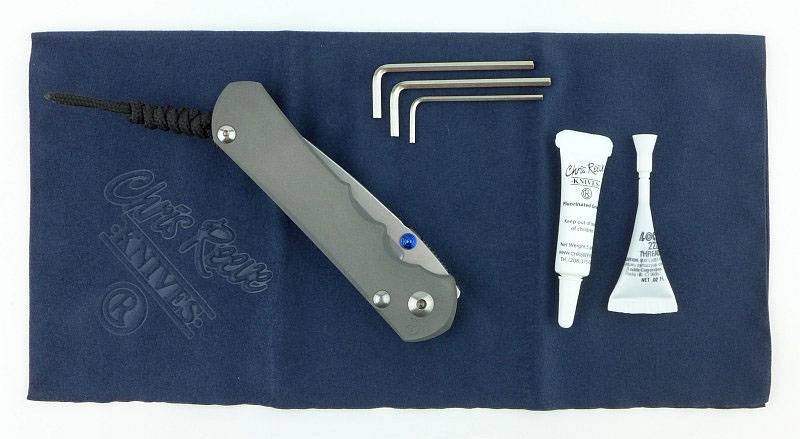
 photo 05 L Inkosi box contents P1200337.jpg

Not to skip over this too soon, please note that these are not unbranded tools, you get WIHA Allen keys.
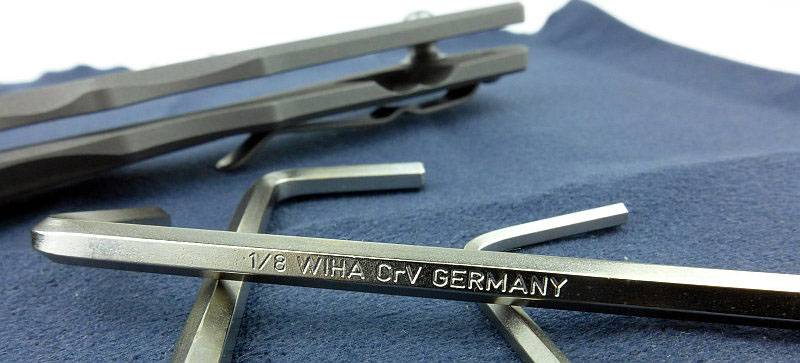
 photo 02 InkosiWasher tools P1230169.jpg

The grease is a fluorinated grease and thread-lock is Loctite 222.
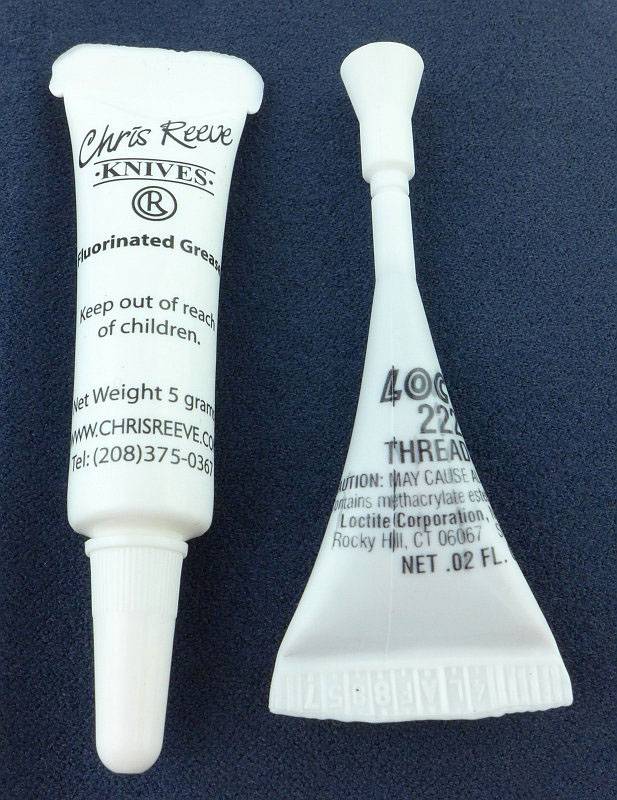
 photo 06 L Inkosi tubes P1200340.jpg

There is something special about that box-fresh CRK knife.
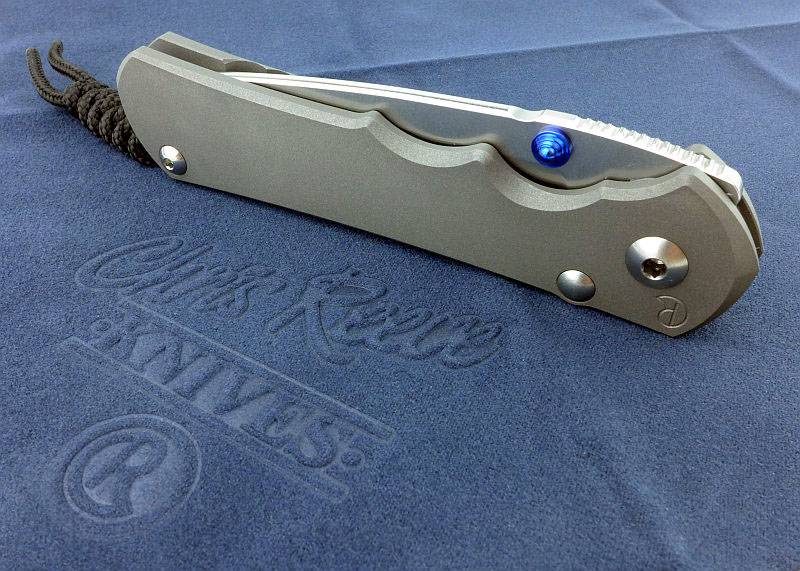
 photo 07 L Inkosi cloth P1200349 copy.jpg

The Large Inkosi arrives with a knotted cord lanyard already fitted to the knife.
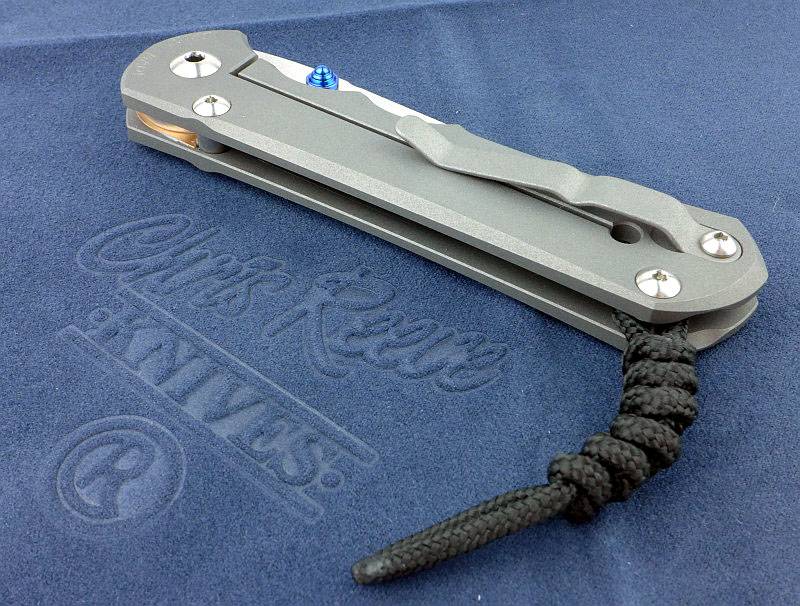
 photo 08 L Inkosi cloth2 P1200353.jpg

As with the Sebenza 25, the Inkosi has finger grooves in the handle.
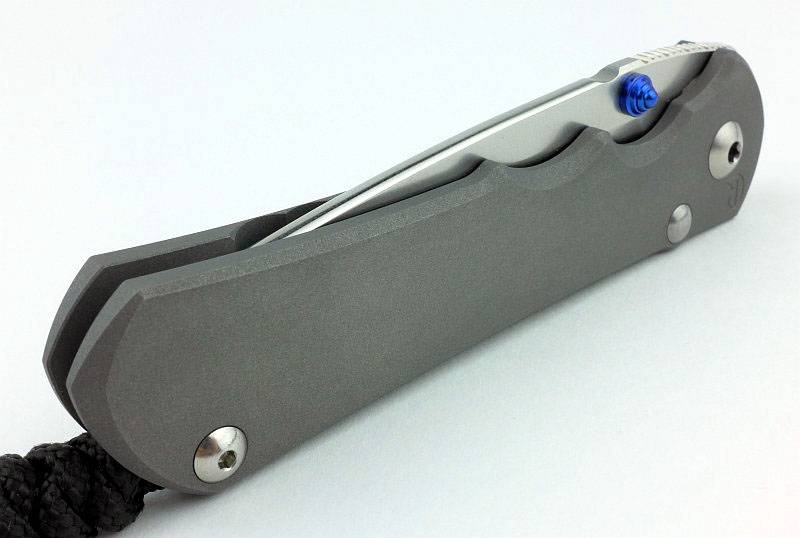
 photo 09 L Inkosi angle P1200355.jpg

Fit, and finish is flawless, just as you would expect with CRK.
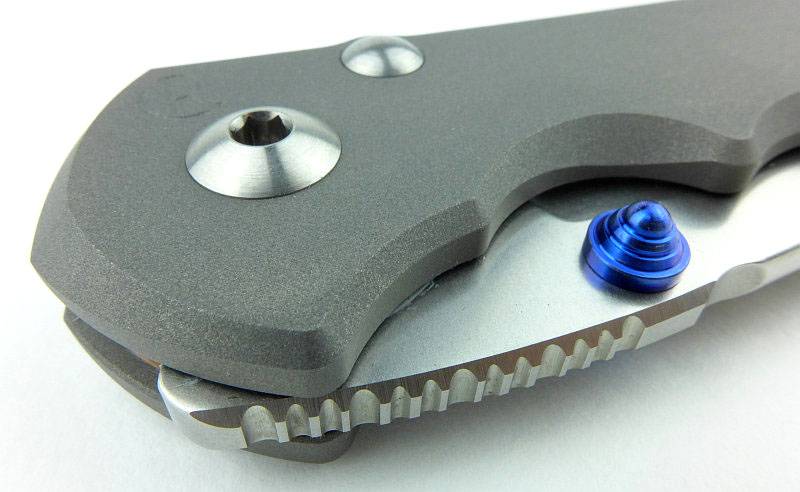
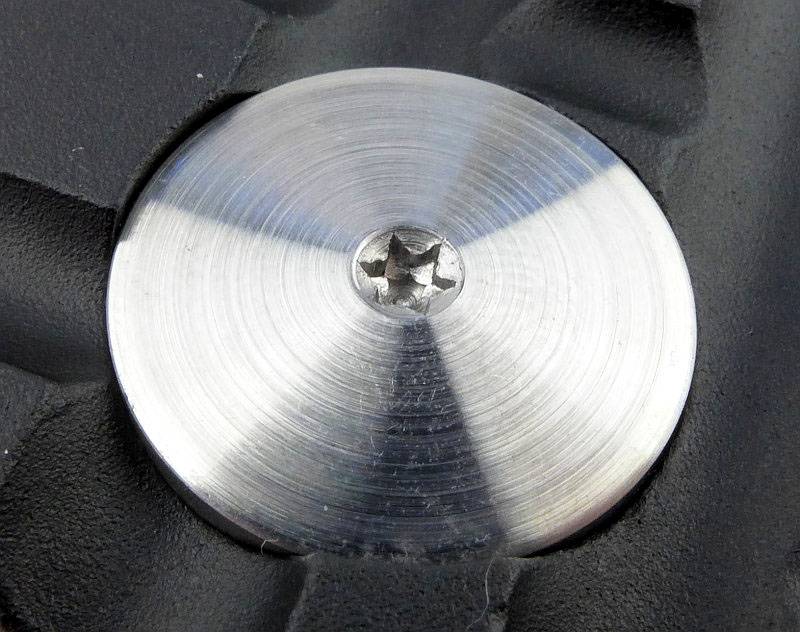
 photo 12 L Inkosi pivot pin stud P1200364.jpg

The understated logo sits next to the large pivot bolt.
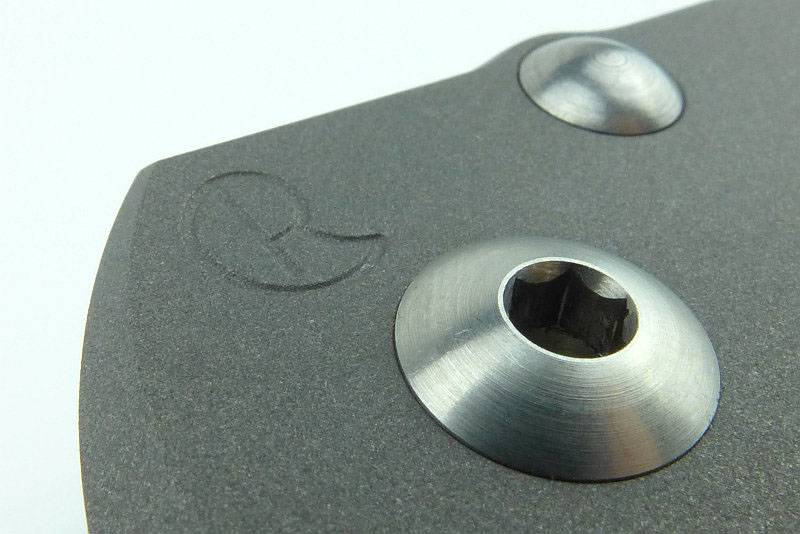
 photo 13 L Inkosi pivot logo P1200368.jpg

Switching to the back of the frame and you can see the left-hander’s thumb stud, but there is less space between it and the lock bar than for the right-handed thumb stud.
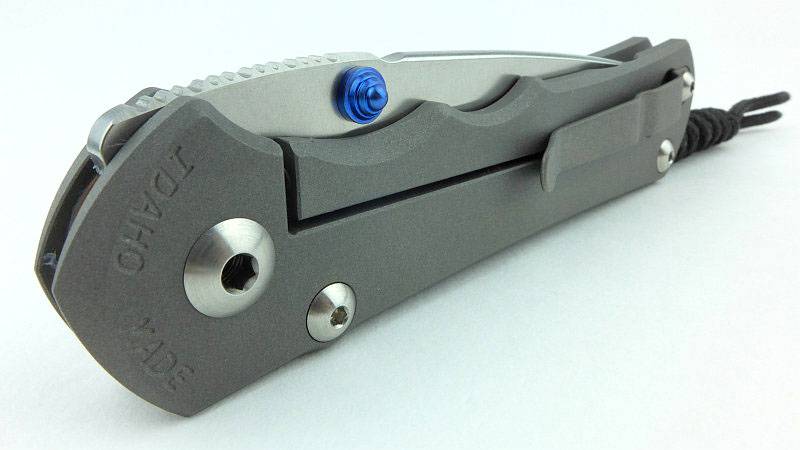
 photo 14 L Inkosi lock side P1200369.jpg

On the back, the pivot bolt looks identical. You can also see the stop-pin bolt as the stop-pin is only fixed to the back of the frame.
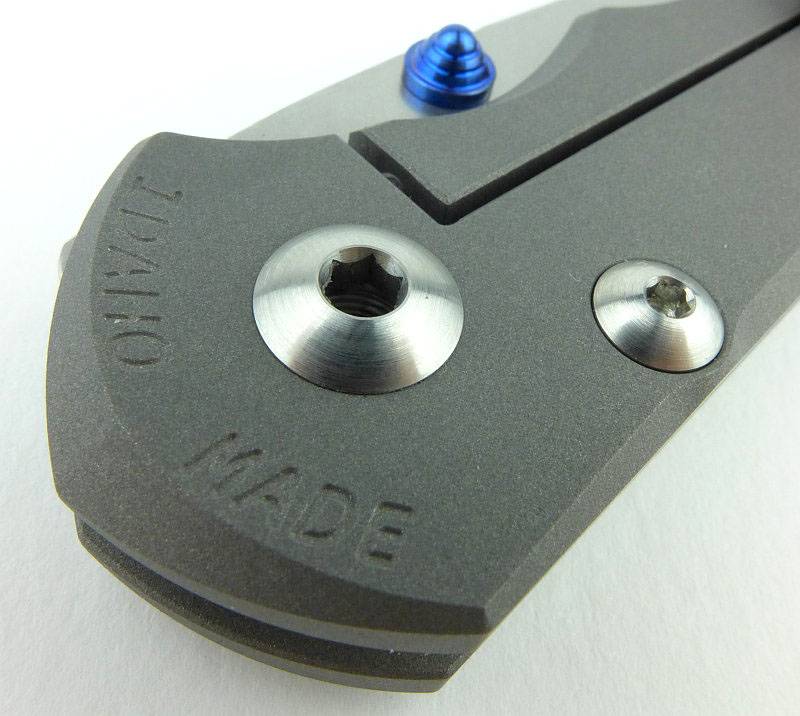
 photo 15 L Inkosi Idaho made P1200373.jpg

Start casting your eyes towards that pocket clip.
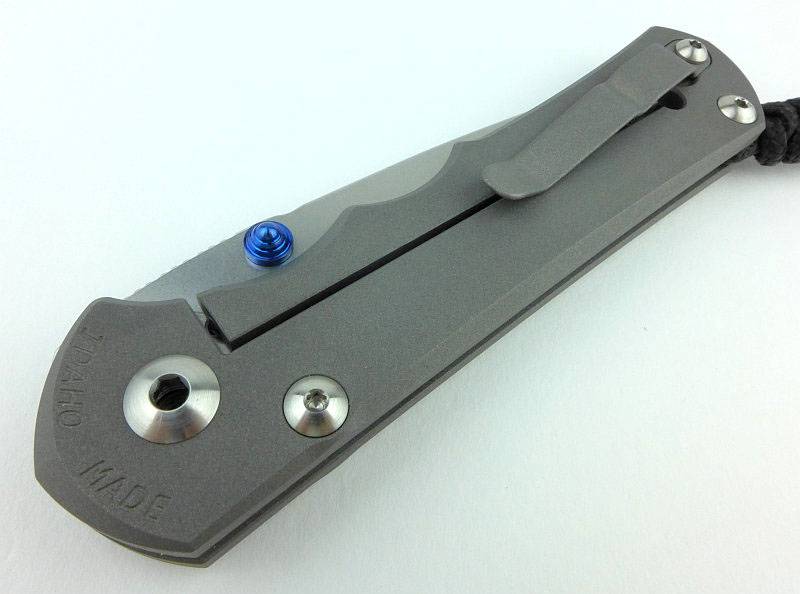
 photo 16 L Inkosi full lock side P1200375.jpg

Another part of the CRK folder design that has changed is the movement of the clip so that it sits directly onto the frame instead of onto the lock bar. This ensures no additional pressure on the lack bar which might make opening the knife more difficult.
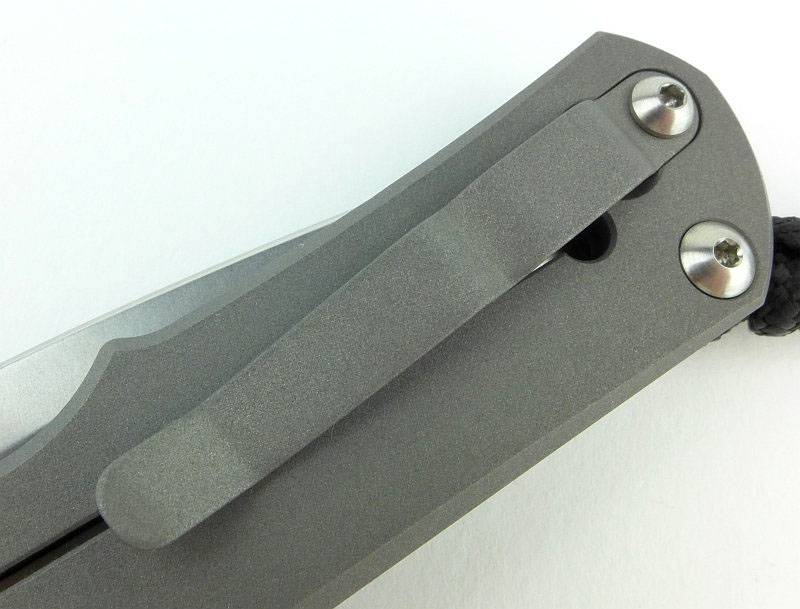
 photo 17 L Inkosi clip angle P1200376.jpg

Giving excellent grip, there is a section of asymmetrical pattern jimping on the thumb ramp.
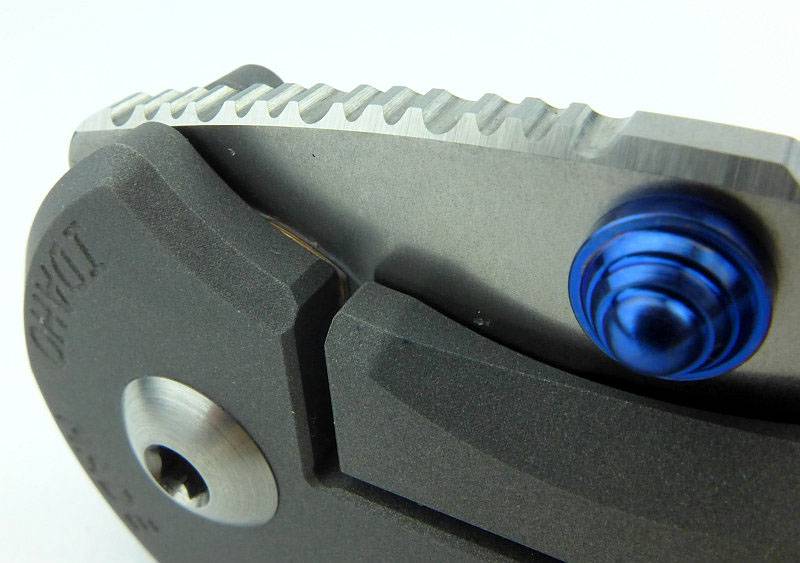
 photo 19 L Inkosi jimping P1200384.jpg

A single bolt holds the clip in place and can easily be removed if you prefer not to have a clip.
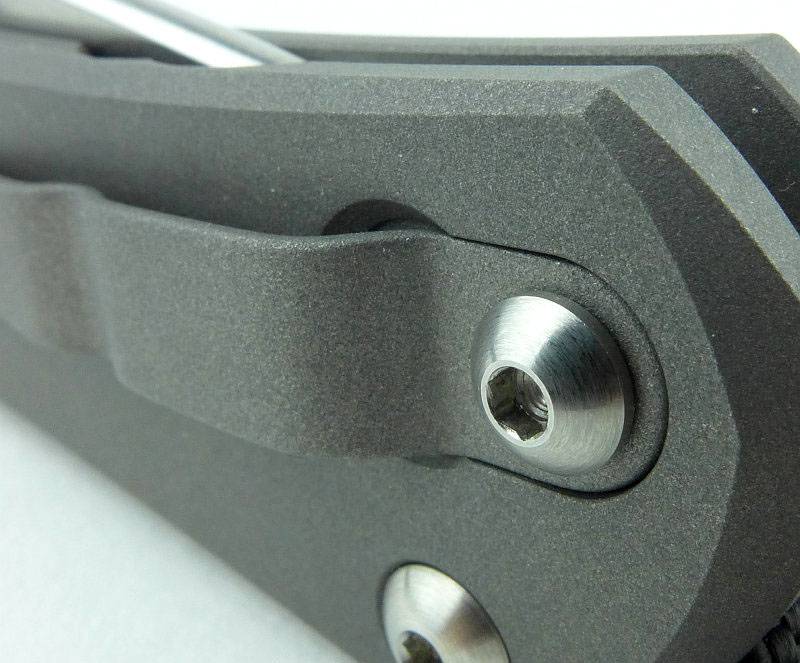
 photo 20 L Inkosi clip fixing P1200387.jpg

To create the lock bar spring, two large radius scallops are cut out of the bar.
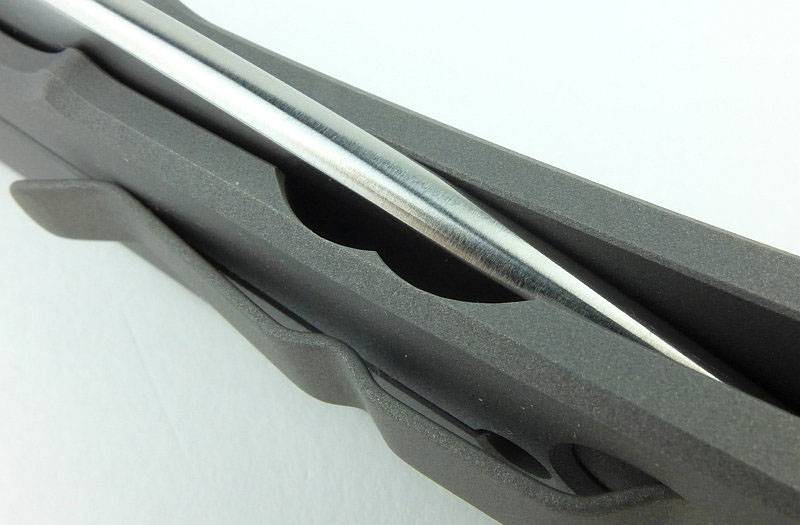
 photo 21 L Inkosi lock spring P1200391.jpg

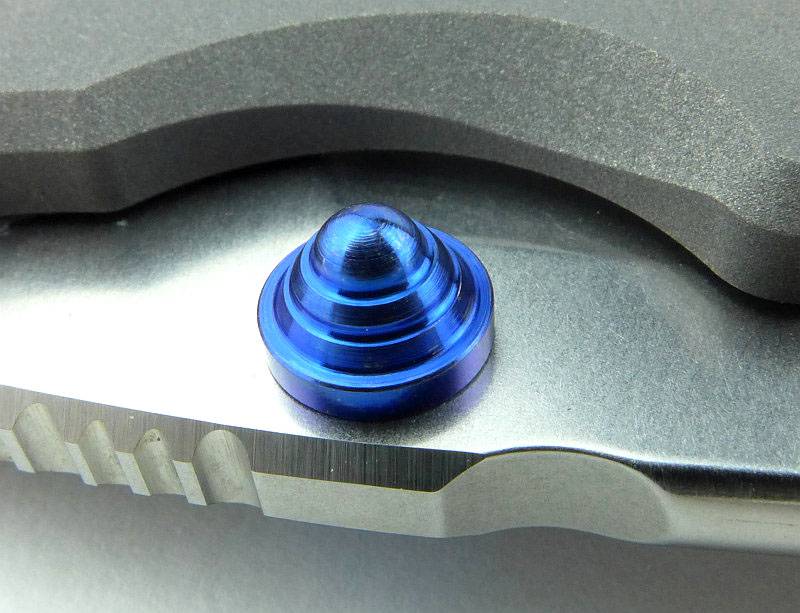
Providing the spot of colour, the ambidextrous thumb stud is blue PVD finish.
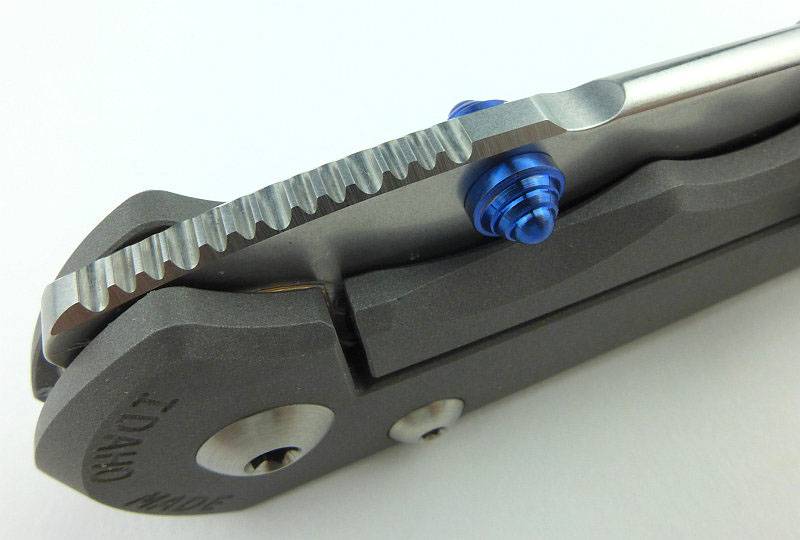
 photo 25 L Inkosi stud spine P1200408.jpg

With the blade partway open, here you can see the ceramic ball is out of the detent hole and sitting on the side of the blade tang. Like this the lock bar now stands slightly proud of the frame.
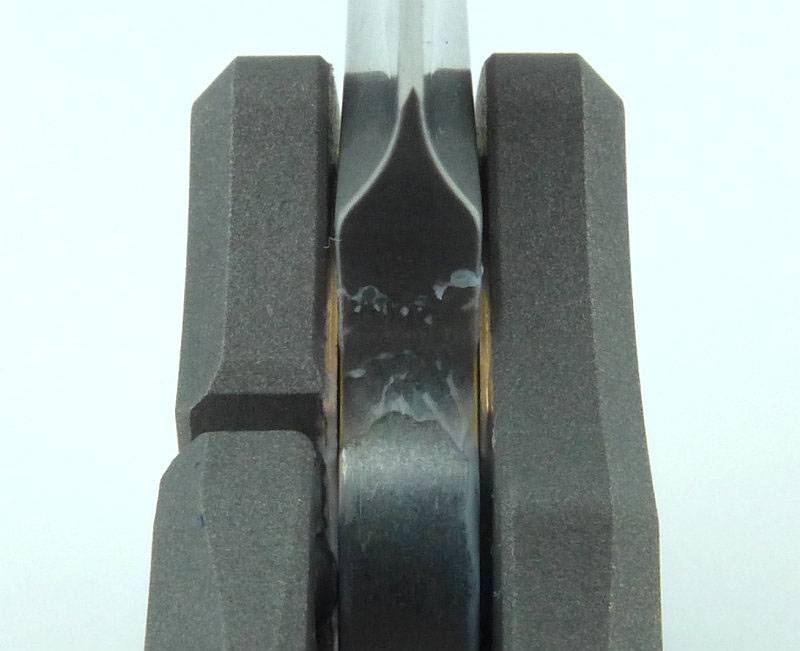
 photo 26 L Inkosi lock bar out P1200415.jpg

When the lock engages, the lock bar has clearly moved into the frame. Also note here how the washer is actually larger than the blade tang.
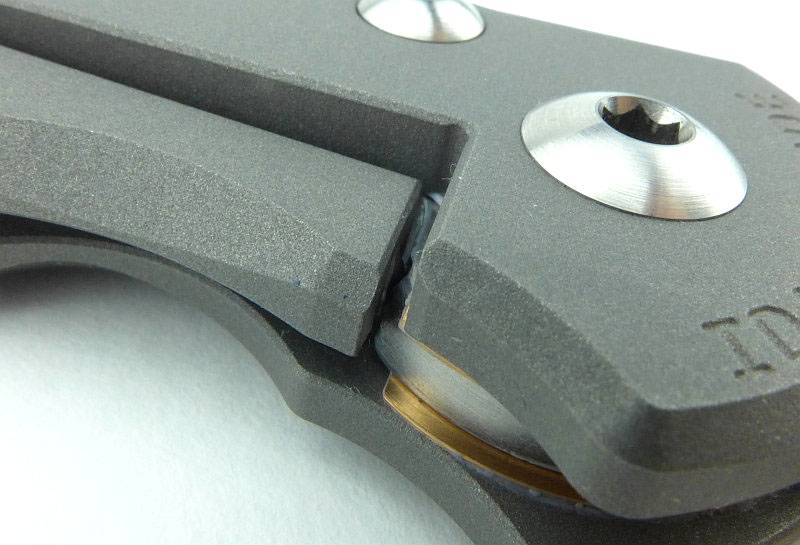
 photo 27 L Inkosi lock bar engaged P1200419.jpg

The blade has a beautifully even stonewash finish.
 photo 28 L Inkosi angle open P1200420.jpg

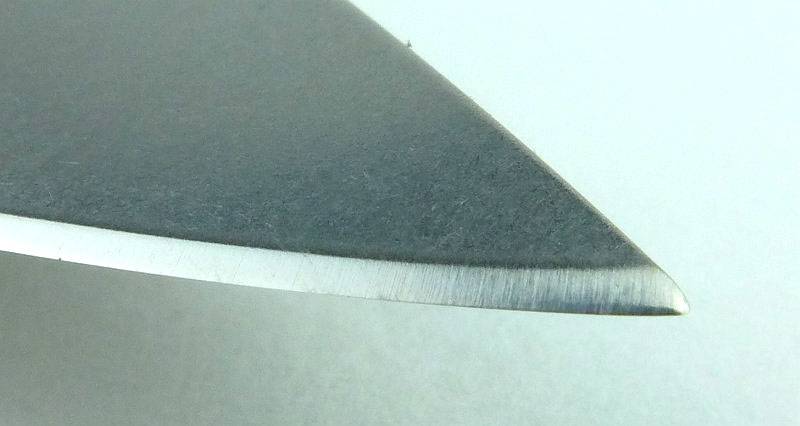
Zooming in to the blade tip.
 photo 29 L Inkosi blade tip P1200422.jpg

With the blade now open, both sides of the finger grooves can be seen. The first finger groove is deeper on the front of the frame giving right-handers easier access to the thumb stud.
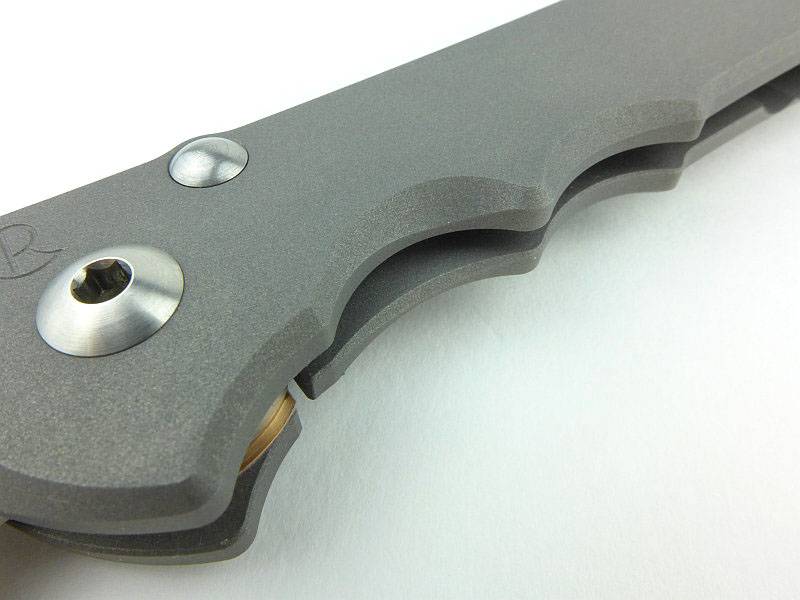
 photo 31 L Inkosi finger grooves P1200434.jpg

In the assembled knife you can see how the over-sized washers are fitted to the lock bar cutout in the frame.
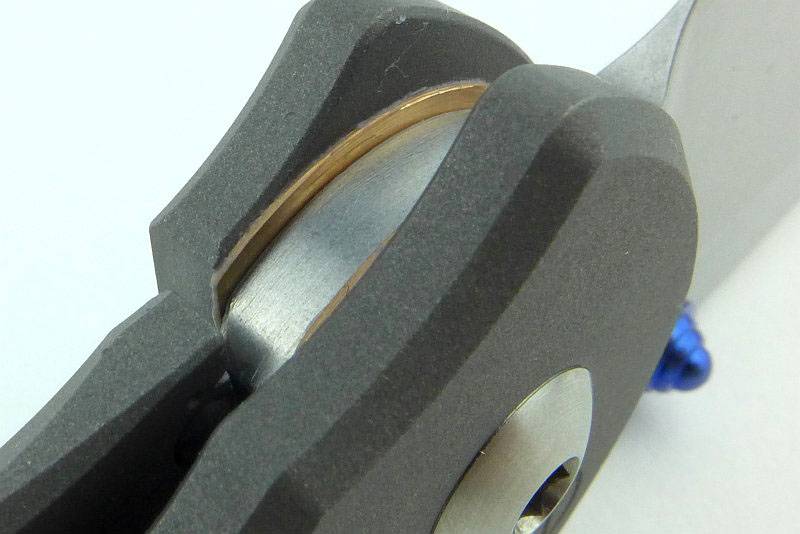
 photo 32 L Inkosi washer cut P1200437.jpg

A nicely radiused plunge line takes you from the blade grind to the full thickness of the blade tang.
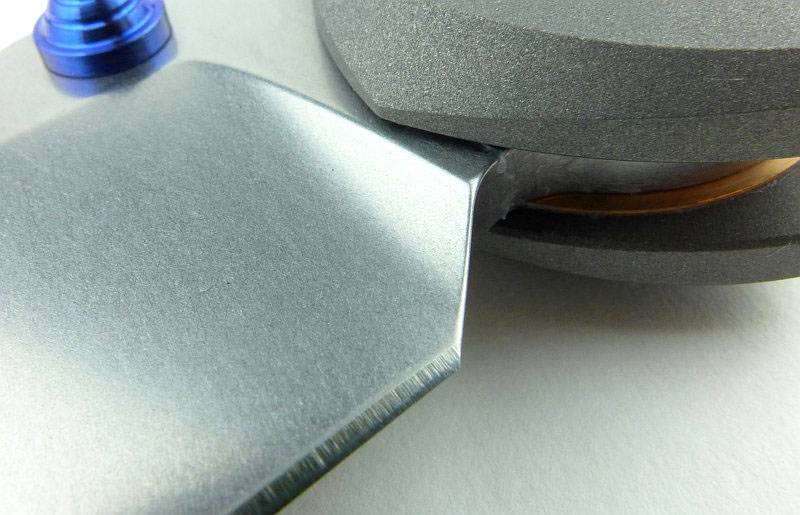
 photo 39 L Inkosi plunge line P1200467.jpg

Though it looks almost like a flat grind, the large hollow grind is noticeable as the light plays on the blade. (Of course it would help if this image was animated, but it is not.)
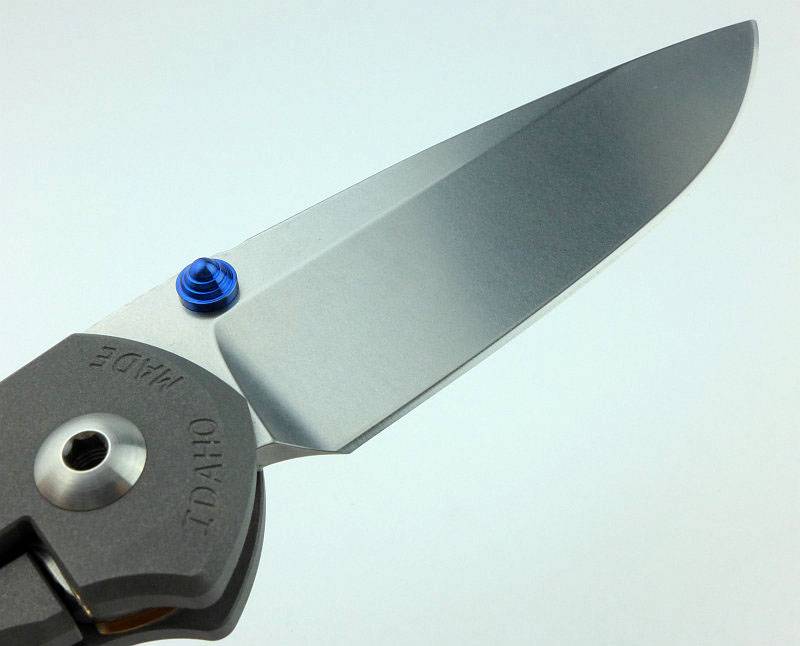
 photo 40 L Inkosi large hollow P1200473.jpg

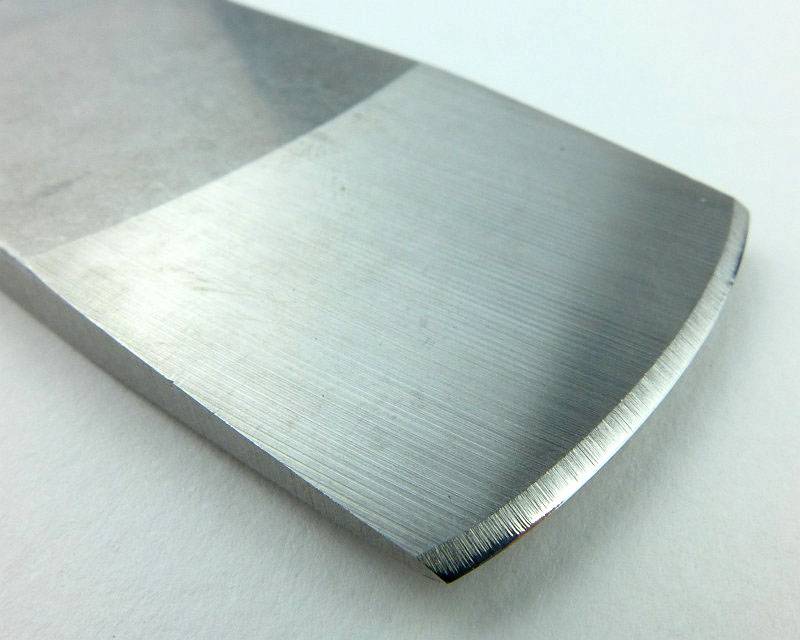
There is a gentle curve to the blade spine which is very comfortable to press on. It does mean you won’t be striking sparks of a ferro-rod with it.
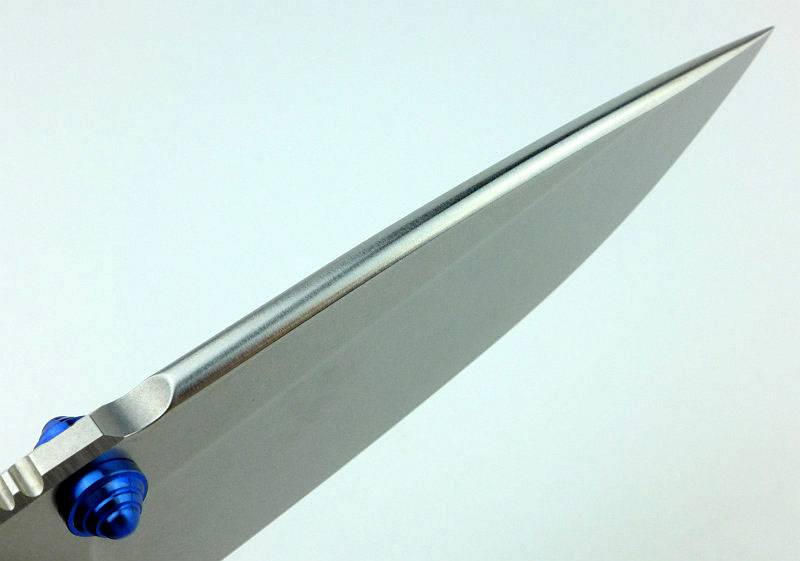
 photo 41 L Inkosi spine P1200476.jpg

A close-up look at the thumb stud.
 photo 44 L Inkosi thumb stud P1200499.jpg

On the first run of Large Inkosi knives the washer perforations were a little too large and could be seen when the blade is closed. Not a functional issue, but a potential point for dirt to collect. This washer design has been updated now.
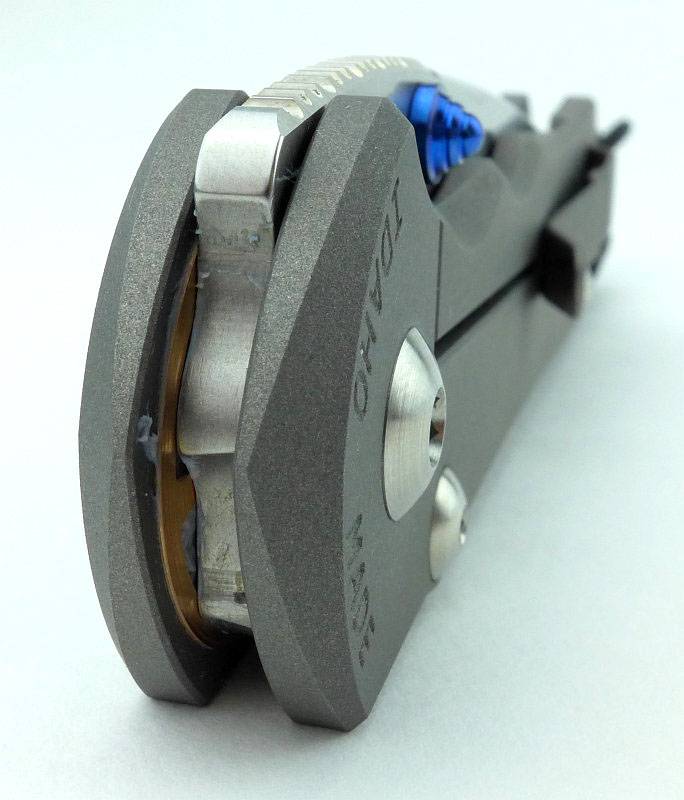
 photo 45 L Inkosi blade tang P1200504.jpg

CRK have really got it spot on with the pocket clip. I generally don’t like them because they are never quite right, mainly too aggressive. In this case the tension is soft enough to be easy to use, but strong enough to hold. The bead blasted surface finish of the frame and clip give plenty of hold without being too abrasive.
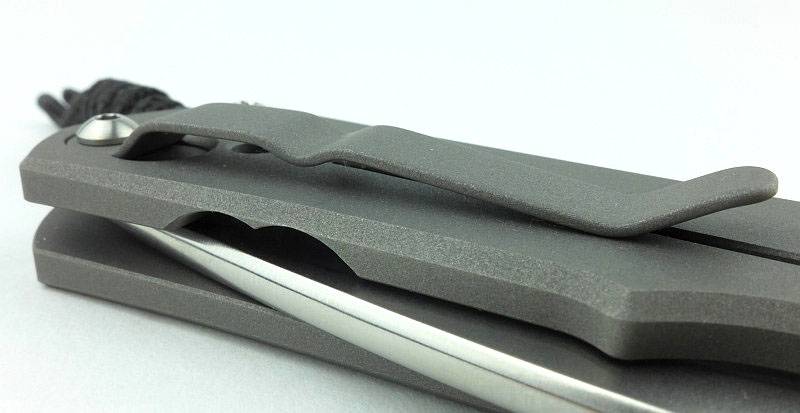
 photo 46 L Inkosi clip P1200516.jpg

What it is like to use?

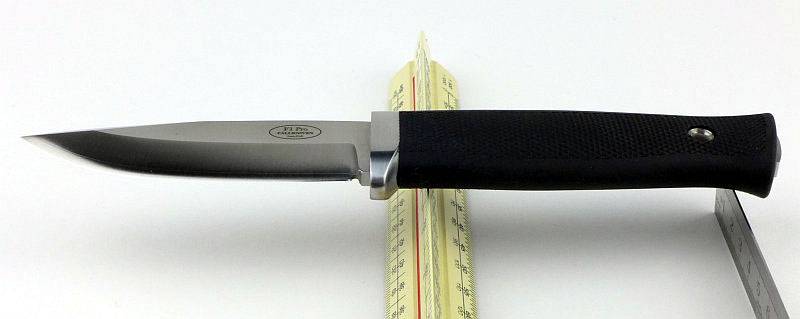
Ok, so this is the Large Inkosi, but how big is ‘Large’? I’ll start with my standard comparison, so here it is next to the Fällkniven F1 and a Spyderco UK Pen Knife.
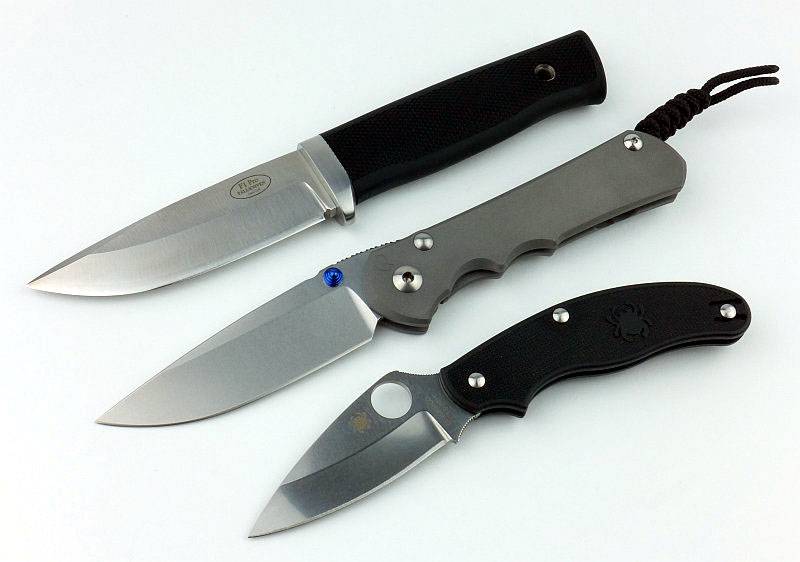
 photo 52 L Inkosi size P1200557.jpg

Then just for gratuitous CRK viewing, here it is with a Pacific.
 photo 50 L Inkosi with Pacific P1200531.jpg

And in the hand. (I take XL size gloves). So it is not really all that large, it is just the larger size of CRK folder. While we are looking at it in the hand, I’m going to mention those finger grooves. It often seems that the Sebenza 21 vs 25 debate has been very polarising with owners being adamant that the they love or hate the 25’s finger grooves. I was concerned they might be problematic, but for my XL size hands, I can happily say that in all the time I’ve been using this knife I have actually not noticed the finger grooves. Clearly this is a good sign as the knife was secure in my hand but without anything digging in.
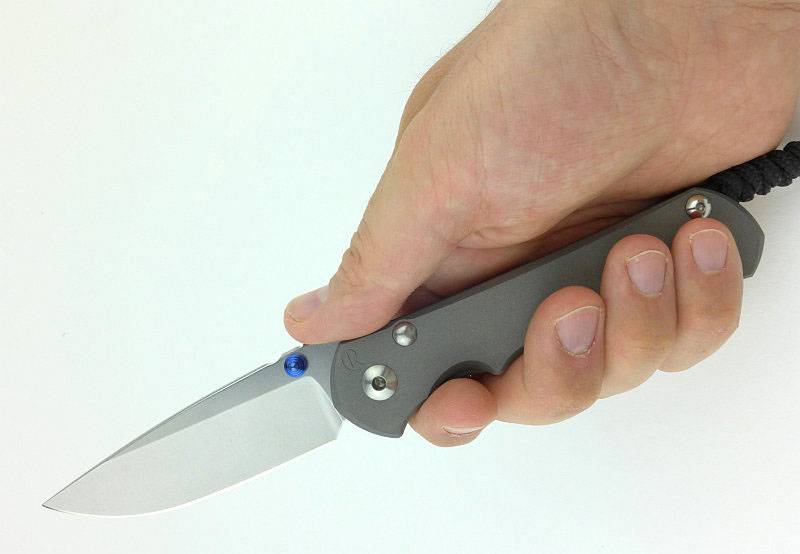
 photo 38 L Inkosi in hand P1200460.jpg

Lanyards, hmmm. Not my thing. So this was to come off, but I thought I would just note down how it was tied so I could put it back.
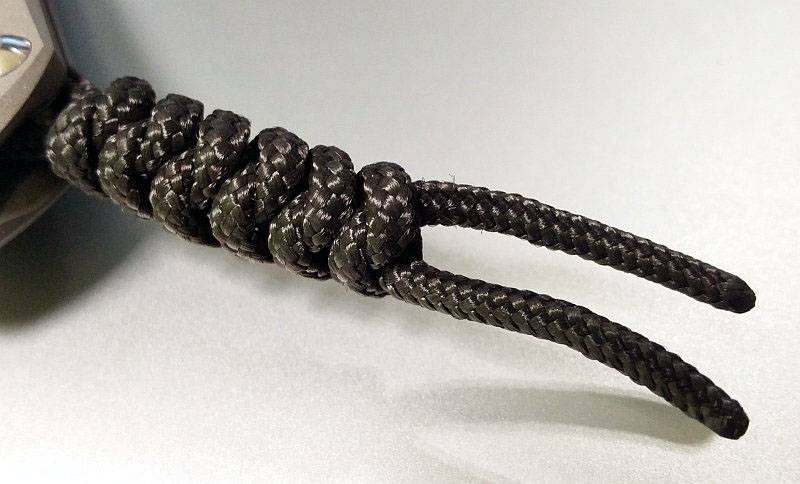
 photo 60 L Inkosi lanyard IMG_20160628_160656.jpg

Loosening the first knot shows it is tied like this.
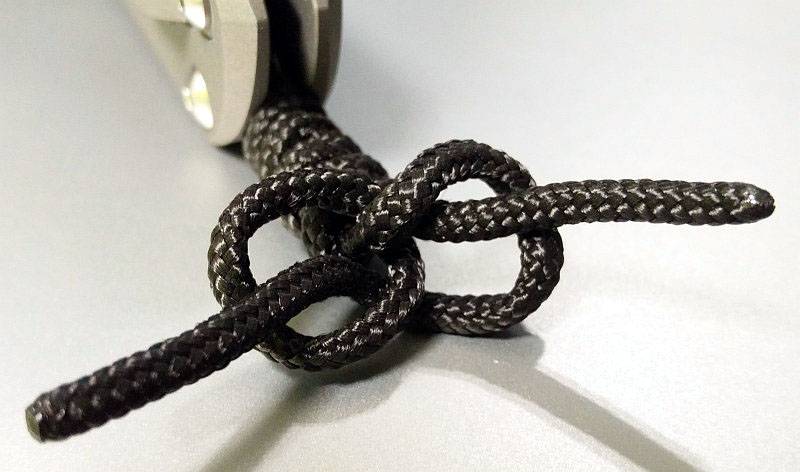
 photo 61 L Inkosi lanyard IMG_20160628_161111.jpg

And repeated all the way back to the first knot round the frame spacer. And with that removed I started putting the knife to work.
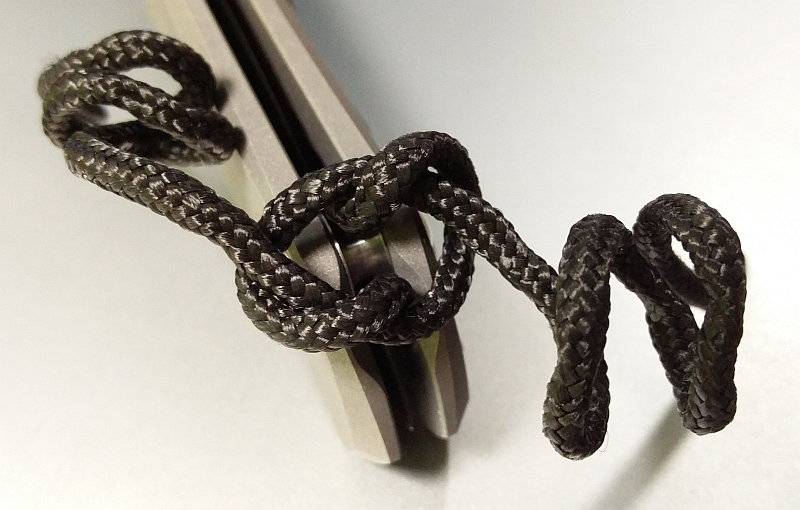
 photo 62 L Inkosi lanyard IMG_20160628_161641.jpg

Although serviceable, I’m afraid the factory edge didn’t have quite enough bite for my liking, so it had a session on the Wicked Edge. Much better!
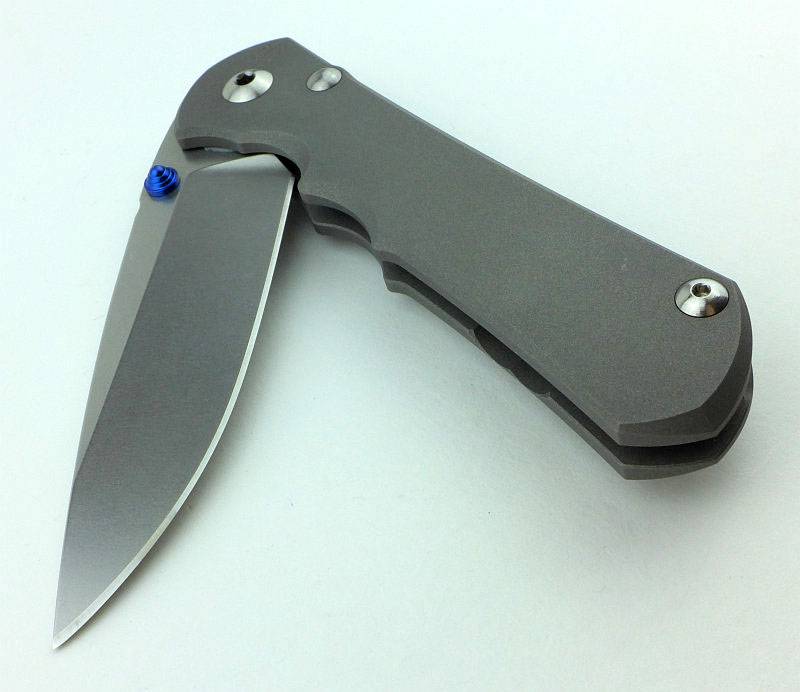
 photo 67 L Inkosi wicked edge P1250279.jpg

Recycling day was much more interesting now. Here was a large heavy duty box needing to be broken down. Made from ‘BC’-Flute double-wall heavy duty shipping cardboard, this was a bigger job than the average box.
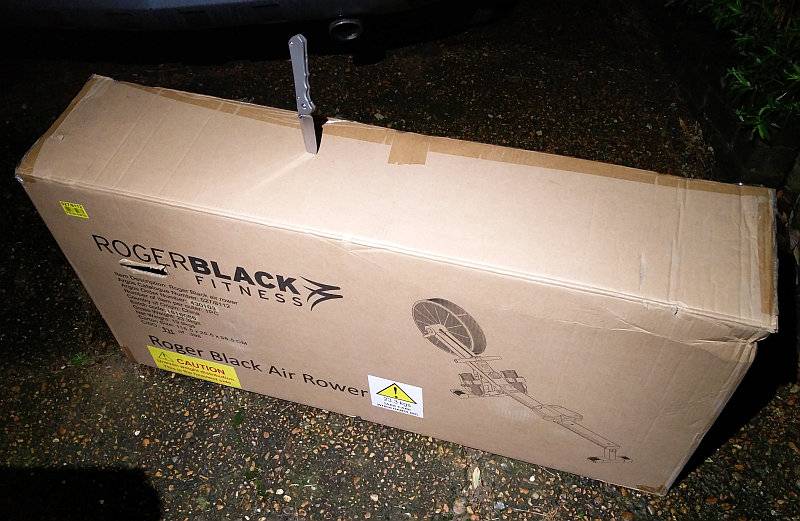
 photo 63 L Inkosi recycling IMG_20170116_183445.jpg

Done. That was easy and enjoyable. Give me another to do.
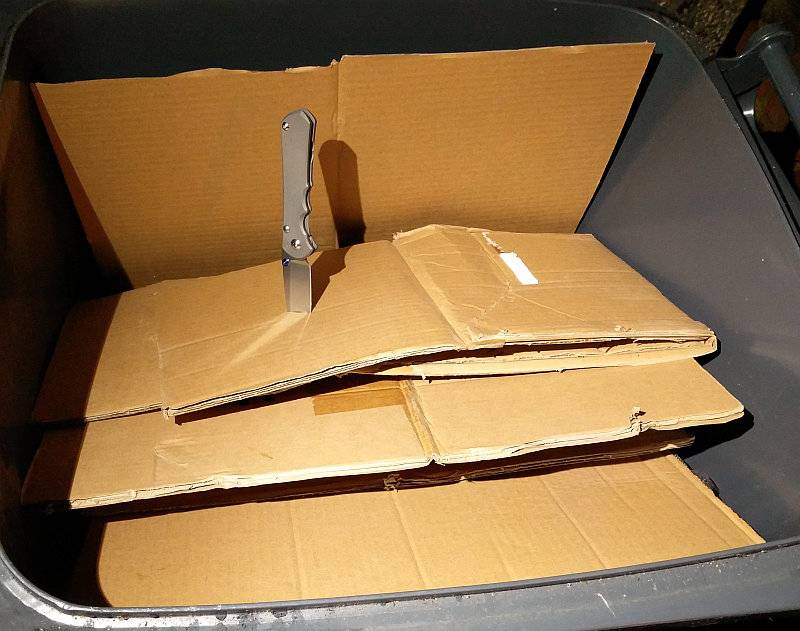
 photo 64 L Inkosi recycling IMG_20170116_184731.jpg

The last cut through this was crisp as the blade slid through with ease. Feeling just as smooth in the cut as a full flat grind, possibly even smoother as there is less blade to material contact than with a FFG.
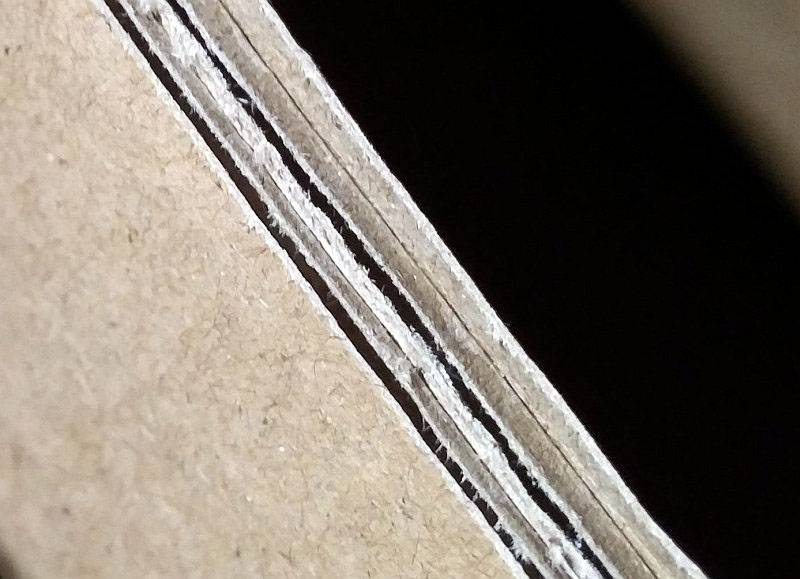
 photo 65 L Inkosi recycling cut IMG_20170116_184810.jpg

Outdoors and the Large Inkosi makes quick work of wood carving. Even when applying a good force to the cut, the finger grooves in the handle were not noticeable.
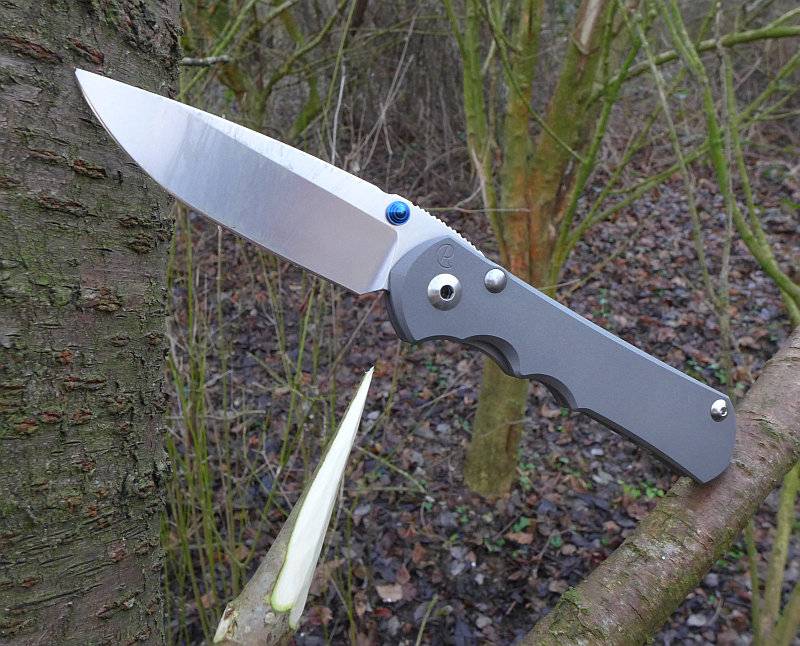
 photo 66 L Inkosi in the woods P1250177.jpg

CRK have taken their already time-tested design and made several improvements to it, improvements you might never actually notice in real world use, unless you push the knife to its absolute limits. I suspect many CRK owners appreciate knowing that the knife is as good as it can be and that if they really did need to push it further than normal, it won’t let them down.

The Large Inkosi is the next generation of a classic folding knife from CRK, and has been designed with such a thorough and thoughtful attention to function and detail that it is more than just a knife; it is a highly desirable object and a pleasure to use.

Review Summary

The views expressed in this summary table are from the point of view of the reviewer’s personal use. I am not a member of the armed forces and cannot comment on its use beyond a cutting tool or field/hunting knife.

Something that might be a ‘pro’ for one user can be a ‘con’ for another, so the comments are categorised based on my requirements. You should consider all points and if they could be beneficial to you.

_______________________________________________ _______________________________________________
Things I like What doesn’t work so well for me
_______________________________________________ _______________________________________________
CRK Build Quality. Slim metal handle not ideal for extended use.
Ceramic ball lock interface. Thumb stud access poor for left-handers.
Large pivot. Exposed washer perforations can accumulate dirt.
Oversized phosphor-bronze washers provide enhanced blade support.
Slip-Through Stop-Pin ensures perfect frame/washer/tang alignment.
Large Hollow Grind gives a blend of flat-grind and hollow-grind benefits.
Only two bolts need to be undone to service the knife.
Finger grooves and thumb-ramp jimping give excellent grip.

 photo 51 L Inkosi patches P1200543.jpg


Discussing the Review:

Please feel free to add comments to the review, but the ideal place to freely discuss these reviews is on a forum. If you started reading the shorter forum version of the review, but followed the link this full exclusive review, please return to that forum to discuss the review there.
If you read the review entirely on Tactical Reviews, please consider one of the following to join in any discussion.

EdgeMatters – Sponsored Reviews (UK based Forum for Knife Makers and Collectors)

BladeForums – Knife Reviews (US based Forum for Knife Discussion)

CandlePowerForums – Knife Reviews Section (Largest and Friendliest Flashlight Community Forum)
Light Review: Rofis TR20

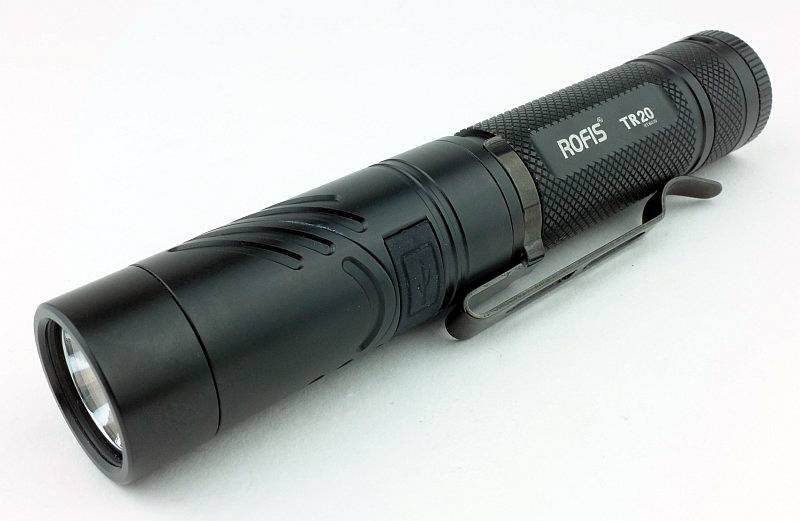
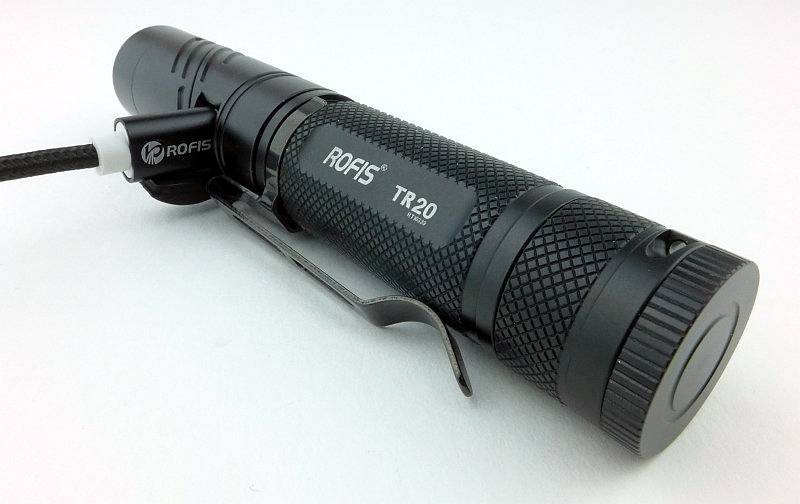
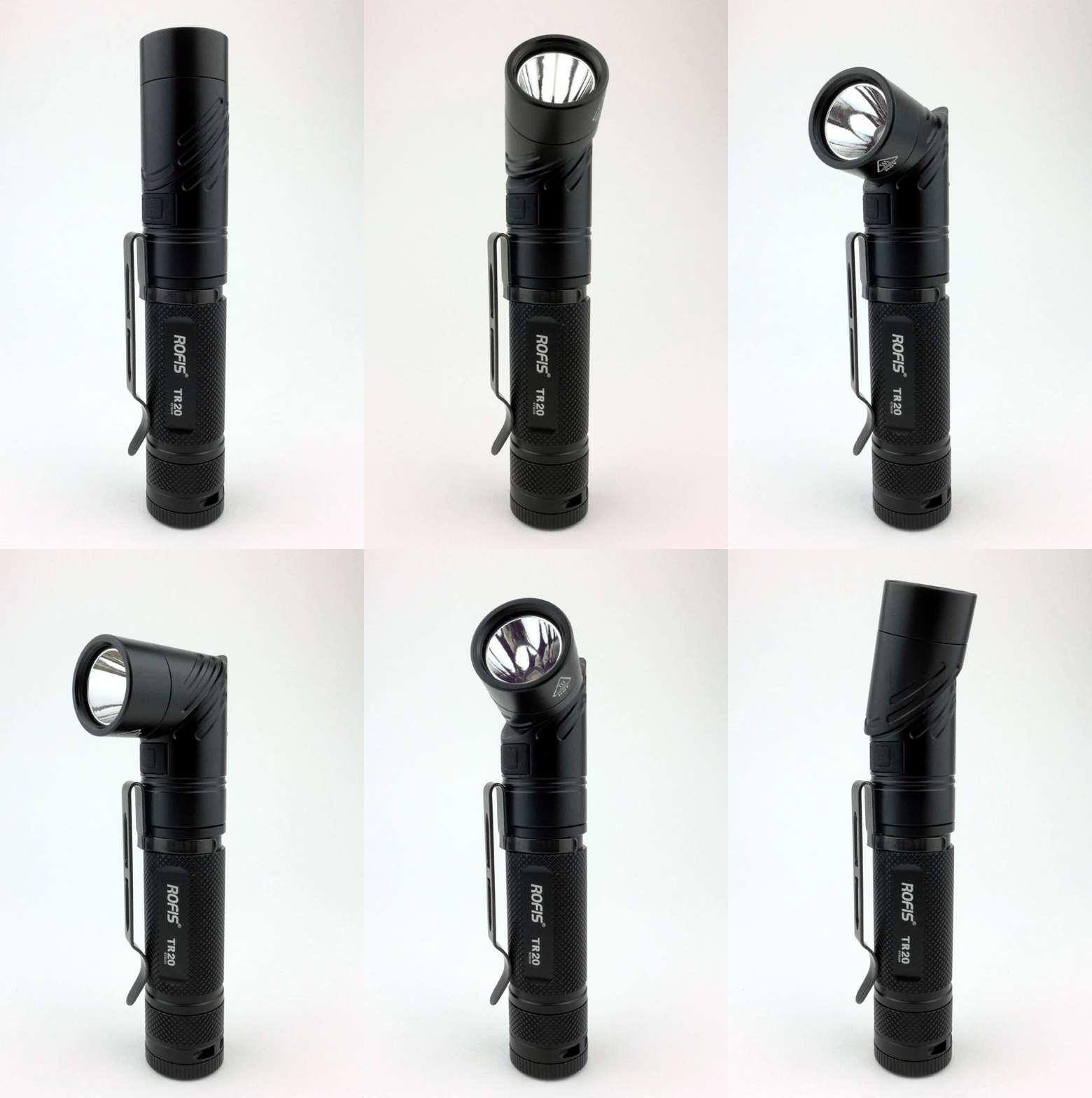
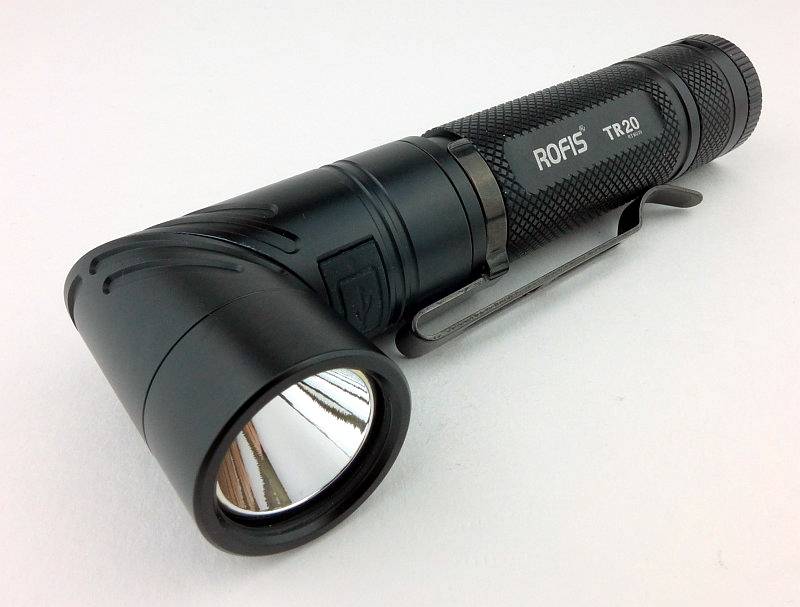
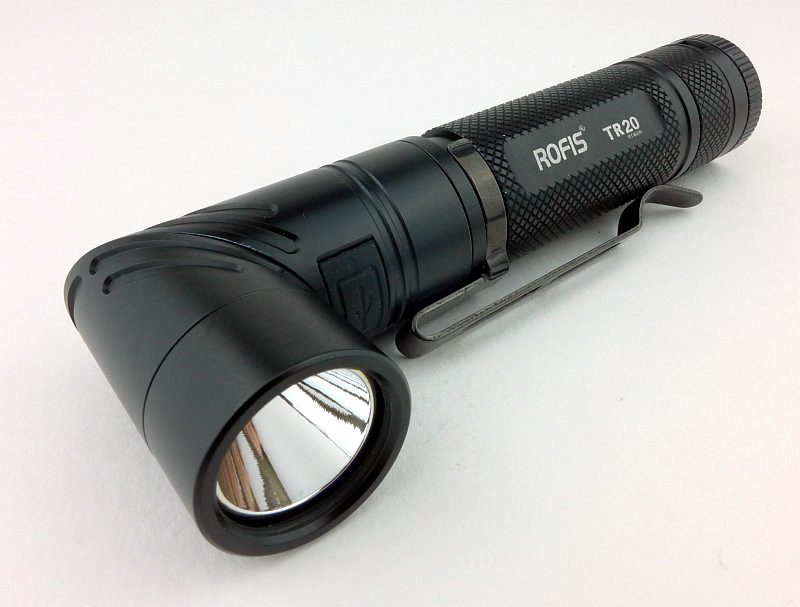
Rofis were the first manufacturer I came across which have made a standard tubular light that transforms into a right-angle light. They have applied the same principle to a couple of different models, and in this review we are looking at the TR20, which is an 18650 powered model with built in USB charging, making it an all-in-one lighting solution.

 photo 00 Rofis TR20 feature P1240405.jpg

Taking a more detailed look:

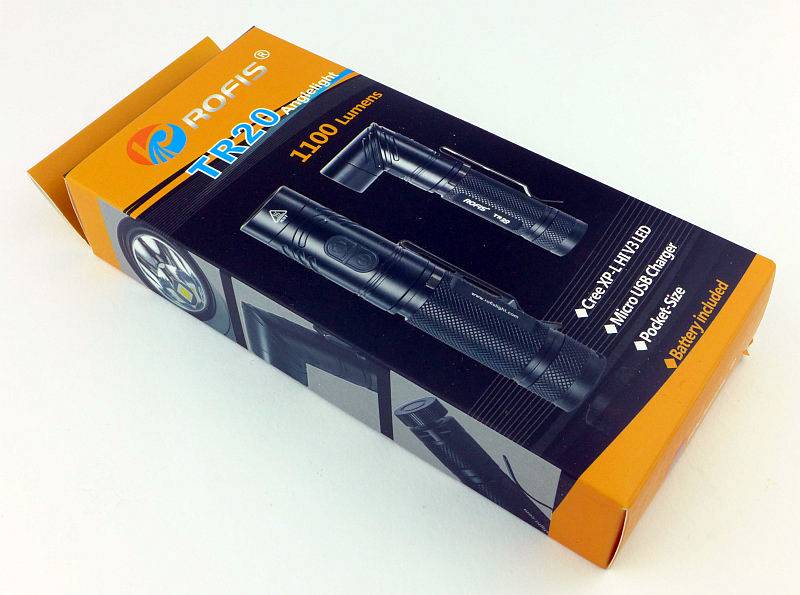
The TR20’s box.
 photo 01 Rofis TR20 box P1240376.jpg

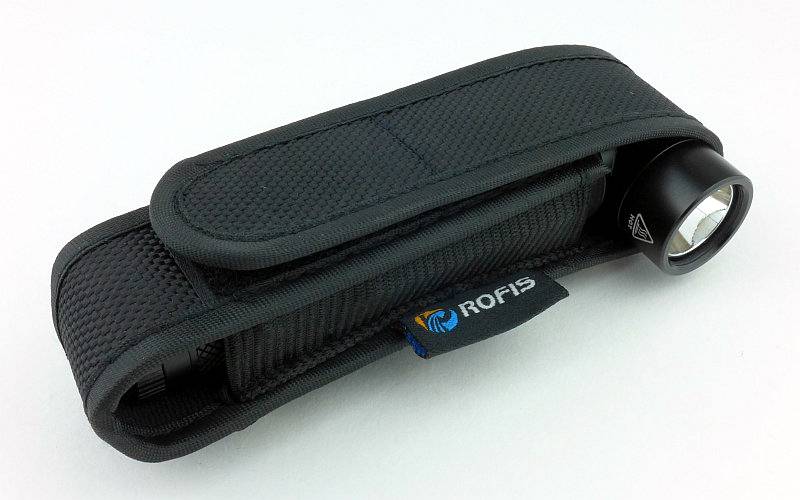
Included in the box is the TR20 (with 3400mAh cell inside), holster, USB cable, wrist lanyard, two o-rings, a spare USB port cover and the instructions.
 photo 02 Rofis TR20 box contents P1240379.jpg

The UBS cable is of a nice quality with metal plugs and a braided cable.
 photo 03 Rofis TR20 USB Cable P1240385.jpg

On the holster there is an apparently overly long patch of Velcro, but we shall see about that later.
 photo 04 Rofis TR20 holster P1240389.jpg

There are three loops on the holster, a D-ring, a fixed belt loop and a loop secured with a press-stud.
 photo 05 Rofis TR20 holster loops P1240393.jpg

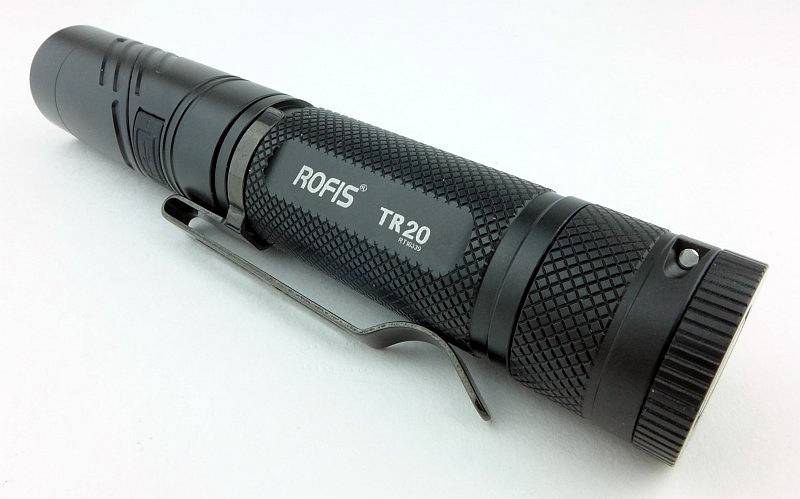
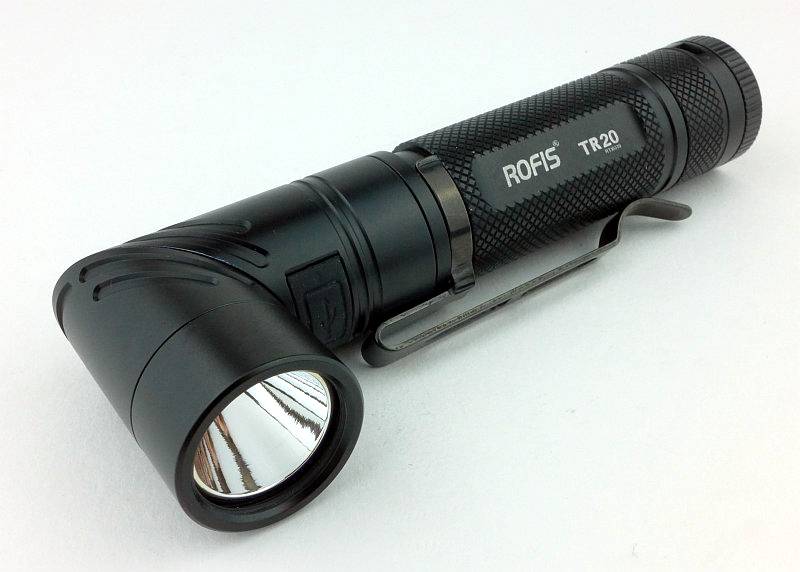
And here we have the TR20 in its ‘normal’ tubular configuration.
 photo 06 Rofis TR20 angle P1240396.jpg

Switching round for a different view.
 photo 08 Rofis TR20 rear angle P1240415.jpg

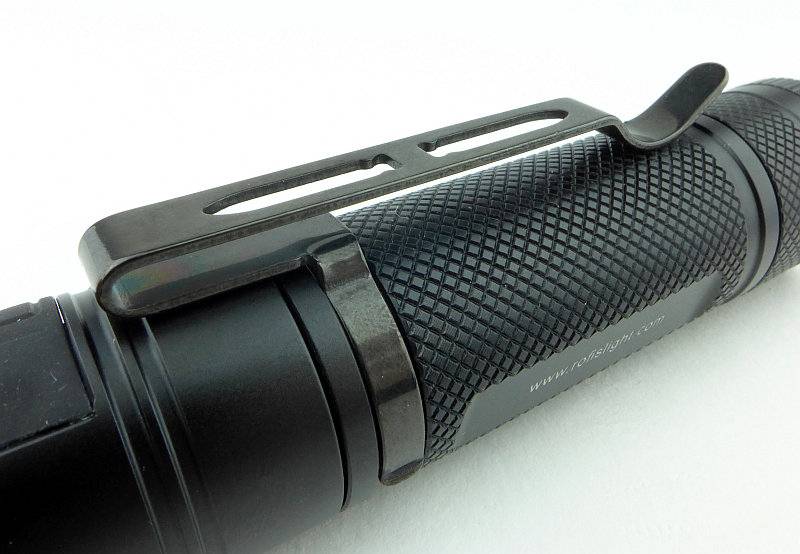
Fitted to the TR20 is a long steel pocket clip.
 photo 09 Rofis TR20 clip P1240418.jpg

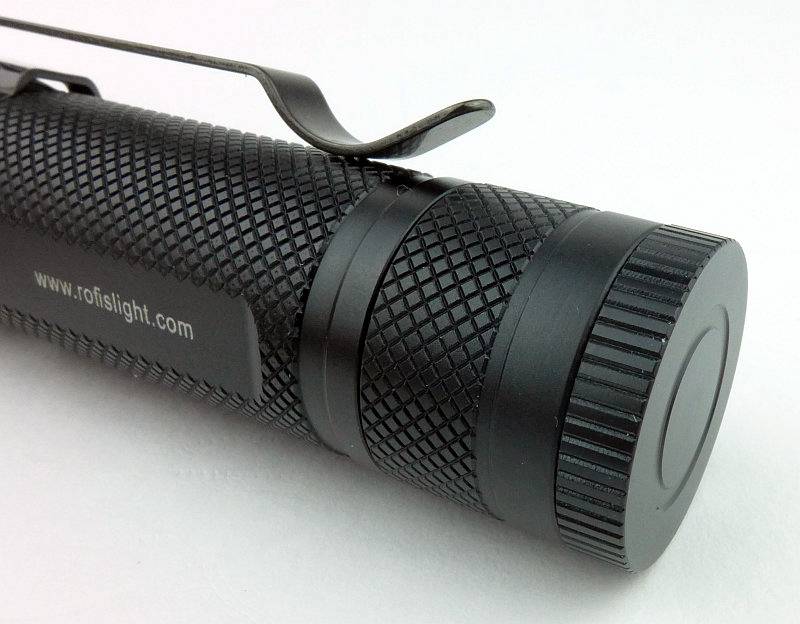
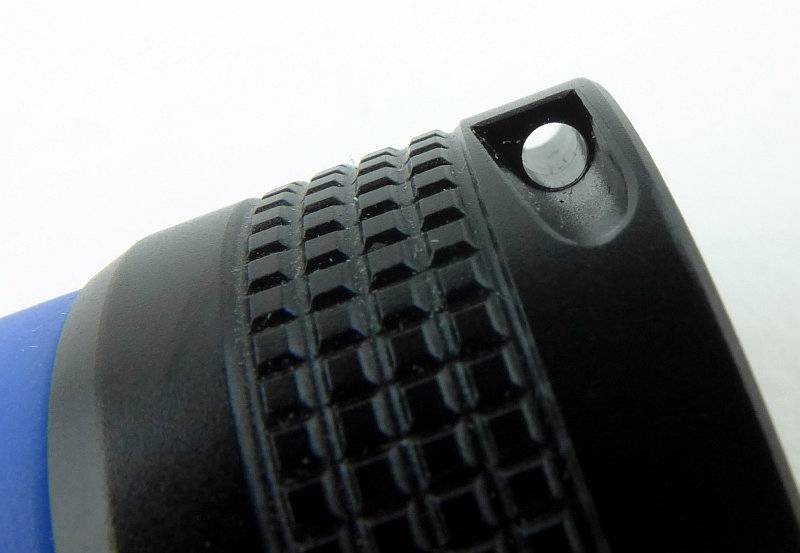
The tail-cap has a plain appearance, but the very end looks slightly different.
 photo 10 Rofis TR20 tail P1240421.jpg

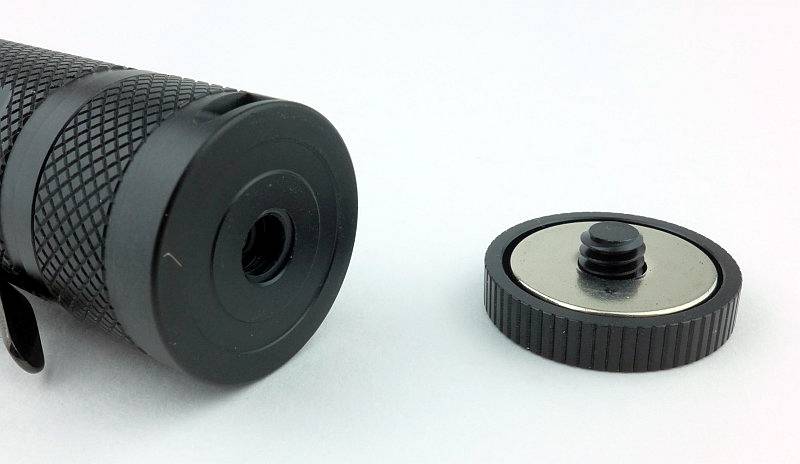
The explanation for the way the tail-cap looks is that screwed onto the end is a removable magnet.
 photo 11 Rofis TR20 magnet off P1240425.jpg

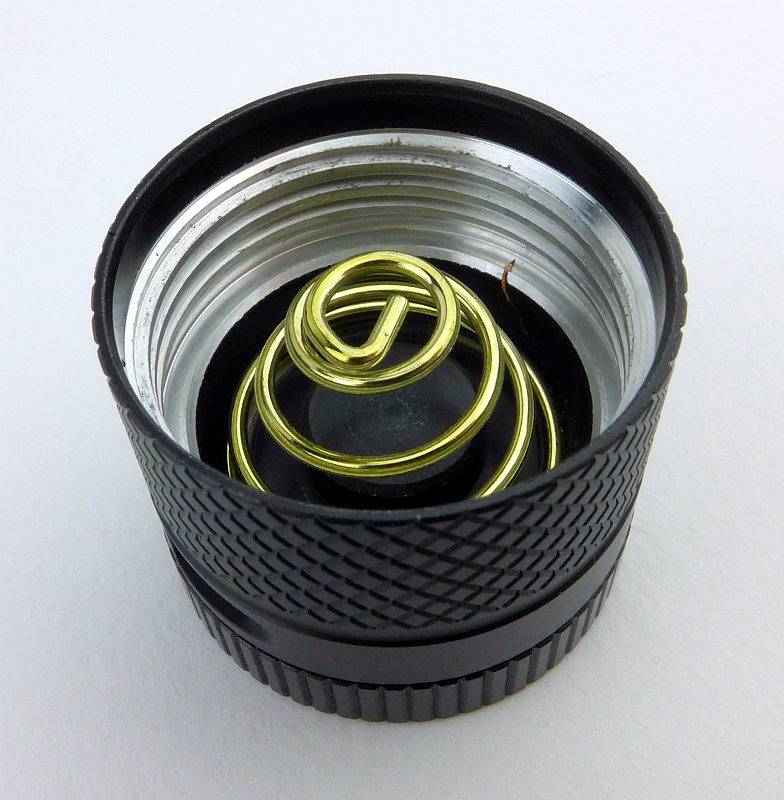
Inside the tail-cap there is a gold plated spring contact. Bare threads mean there is no physical lock-out.
 photo 12 Rofis TR20 tail contacts P1240430.jpg

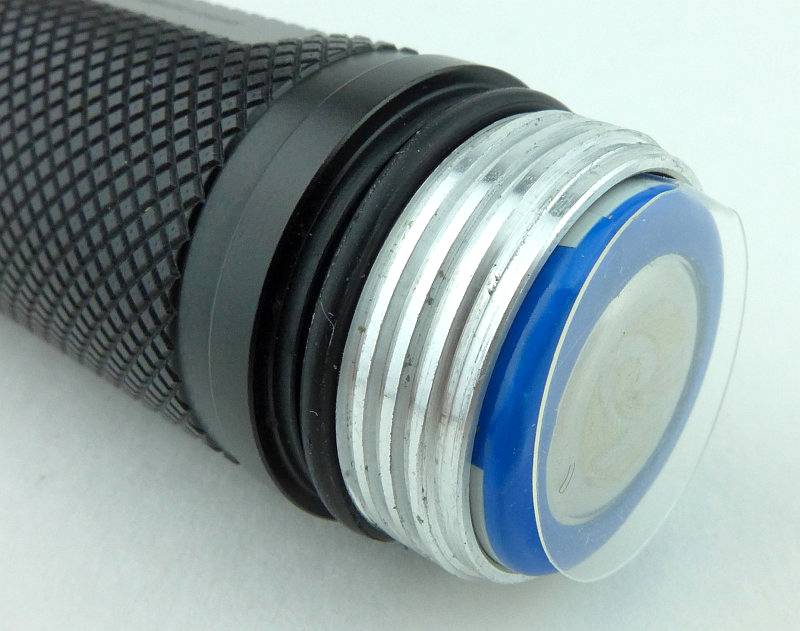
As the TR20 ships with the 18650 inside, it comes with an insulator which you need to remove.
 photo 13 Rofis TR20 insulator P1240434.jpg

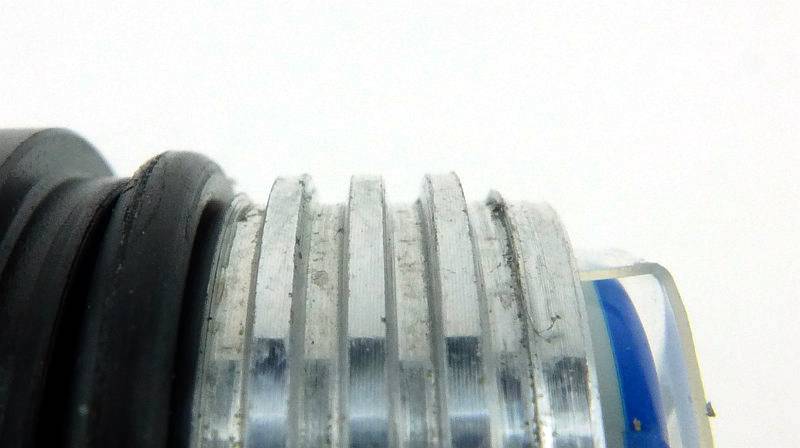
Square cut threads are used for the tail-cap.
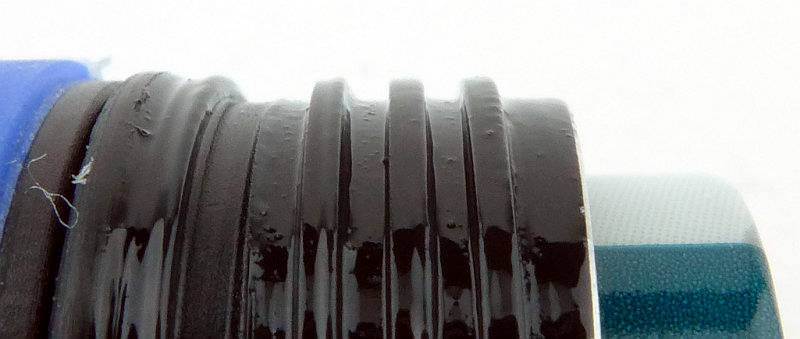
 photo 14 Rofis TR20 threads P1240437.jpg

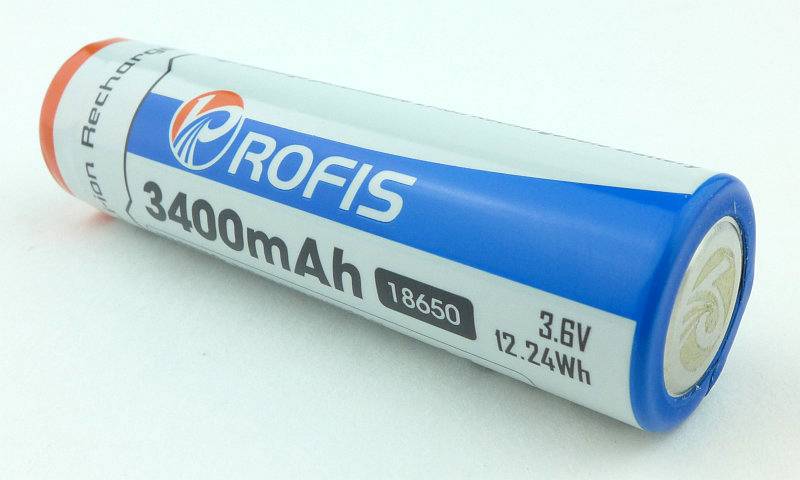
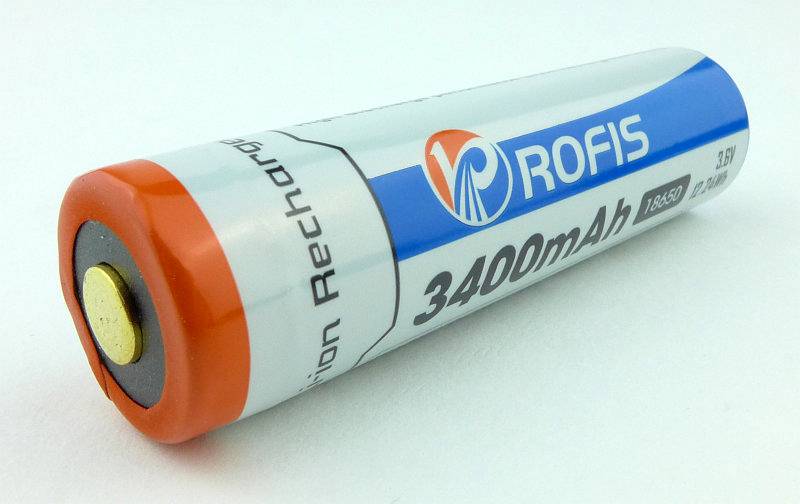
It is a Rofis branded cell that is included.
 photo 15 Rofis TR20 cell P1240440.jpg

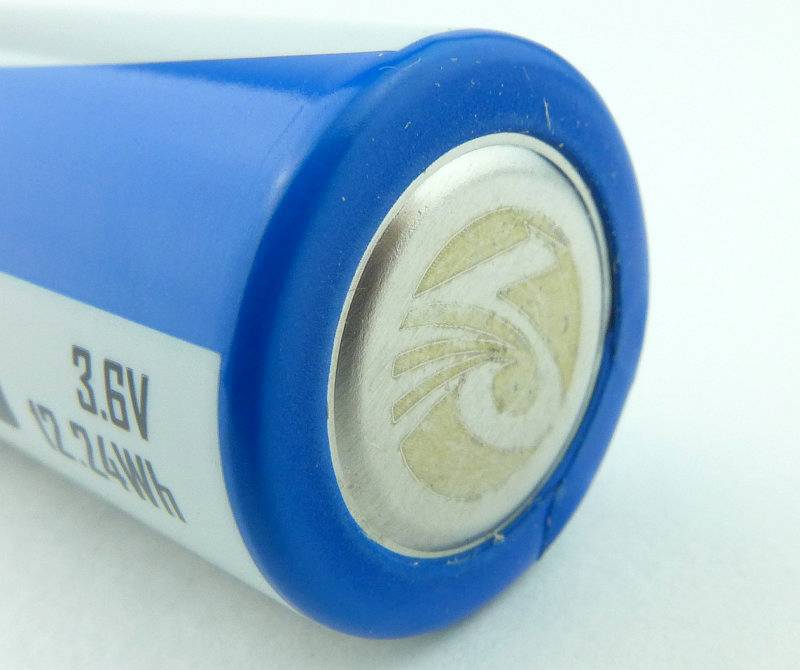
An unnecessary detail, but a nice touch is that the negative terminal has the Rofis logo etched into it.
 photo 16 Rofis TR20 cell logo P1240442.jpg

The positive terminal is gold plated.
 photo 17 Rofis TR20 cell positive P1240446.jpg

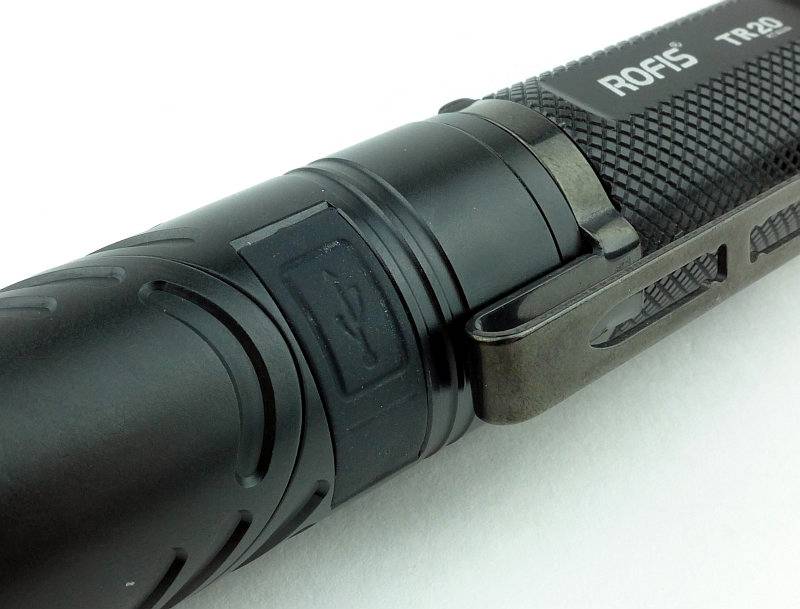
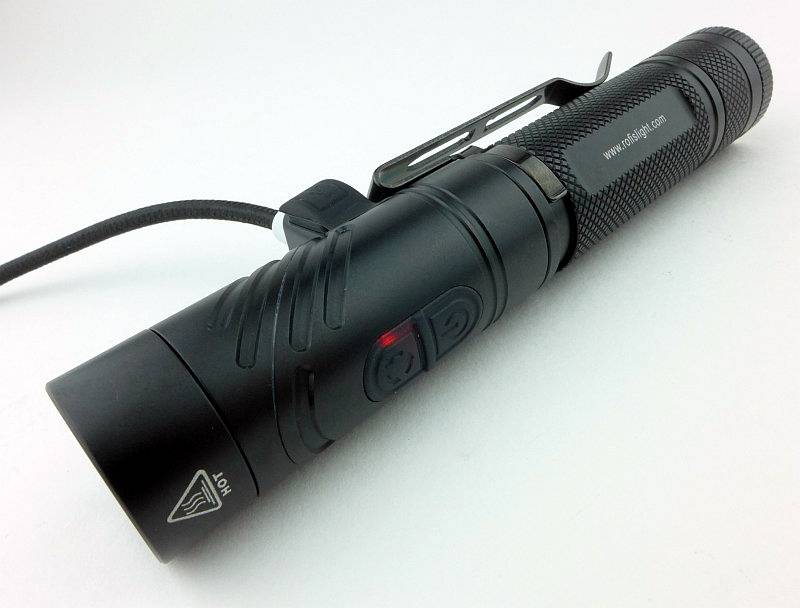
Opposite the control switches is the rubber USB port cover.
 photo 18 Rofis TR20 USB cover P1240449.jpg

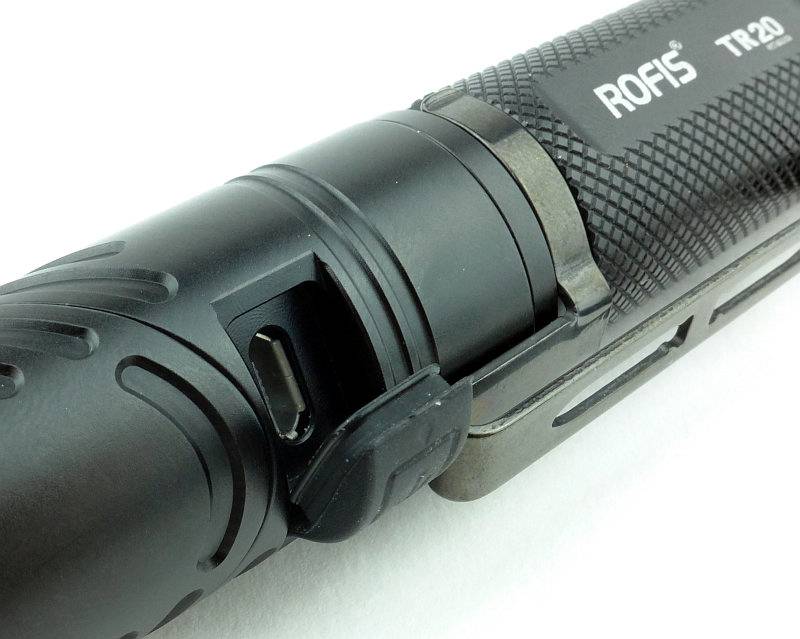
Using your nail, you prise the hinged cover out.
 photo 19 Rofis TR20 USB cover open P1240452.jpg

Here the supplied USB cable has been plugged in for charging.
 photo 20 Rofis TR20 USB connect P1240462.jpg

While charging, the red indicator light in the dual switch is on. Once charged this will go green. Also note the dual switch where the front part is the mode change switch and the rear part is the power switch.
 photo 21 Rofis TR20 USB charging P1240458.jpg

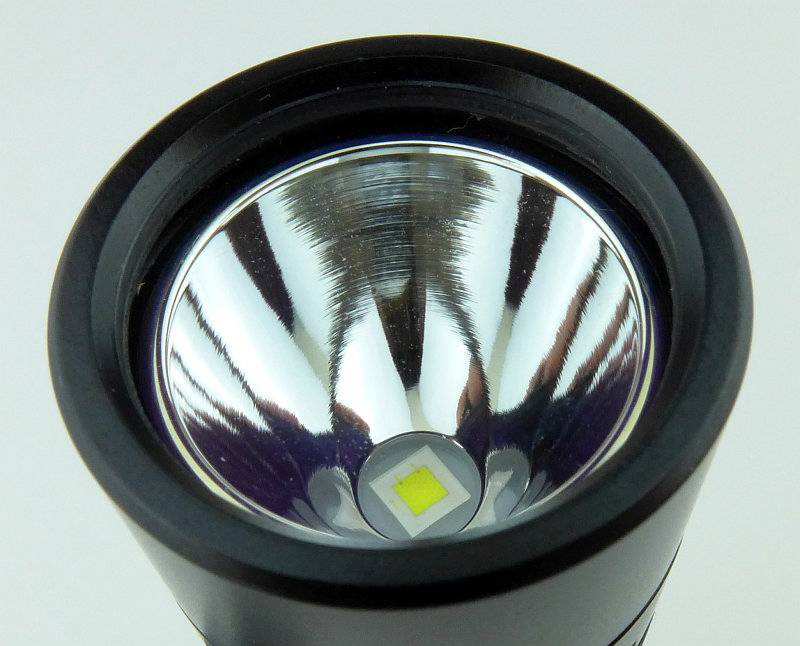
The smooth reflector does have a few visible machining marks in it, but these don’t aversely affect the beam.
 photo 22 Rofis TR20 reflector P1240463.jpg

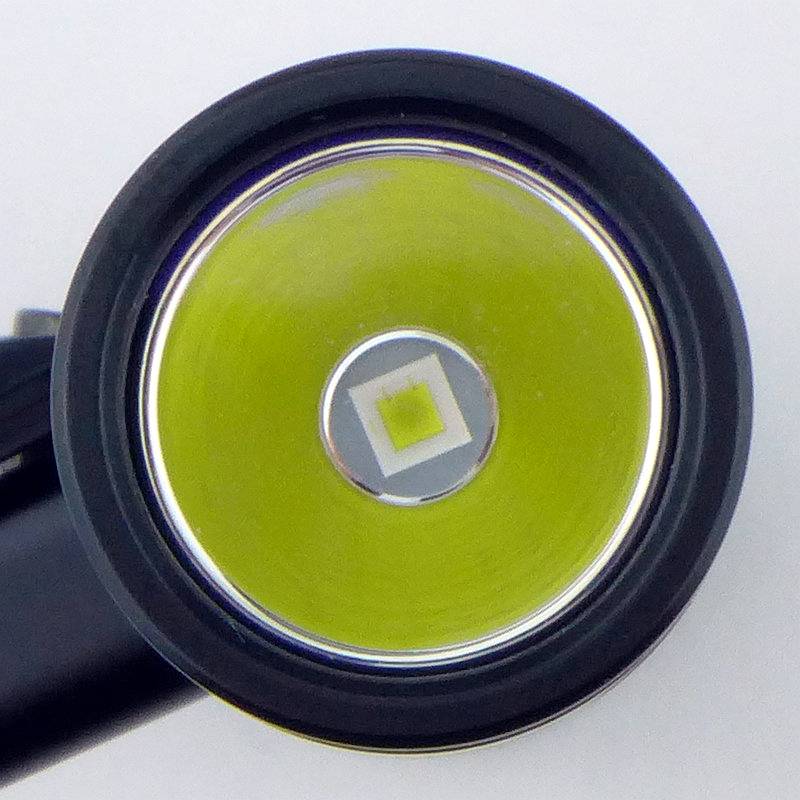
A XP-L Hi V3 LED is used.
 photo 23 Rofis TR20 LED P1240473.jpg

So, the reason for the extended Velcro area on the holster is so that when the TR20 is transformed into a right-angle light the flap folds over further and still fits the TR20 perfectly with the lens sticking out sideways.
 photo 24 Rofis TR20 holster 90 P1240475.jpg

The beam

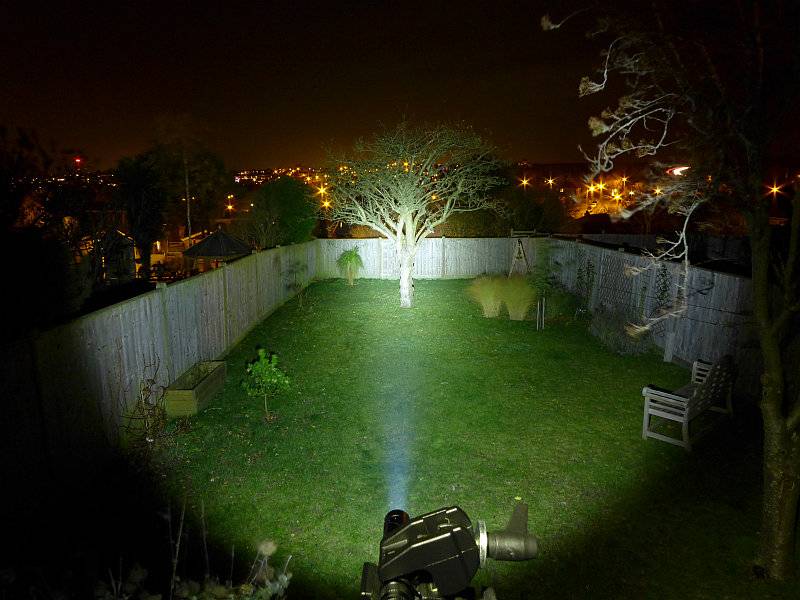
Please be careful not to judge tint based on images you see on a computer screen. Unless properly calibrated, the screen itself will change the perceived tint.

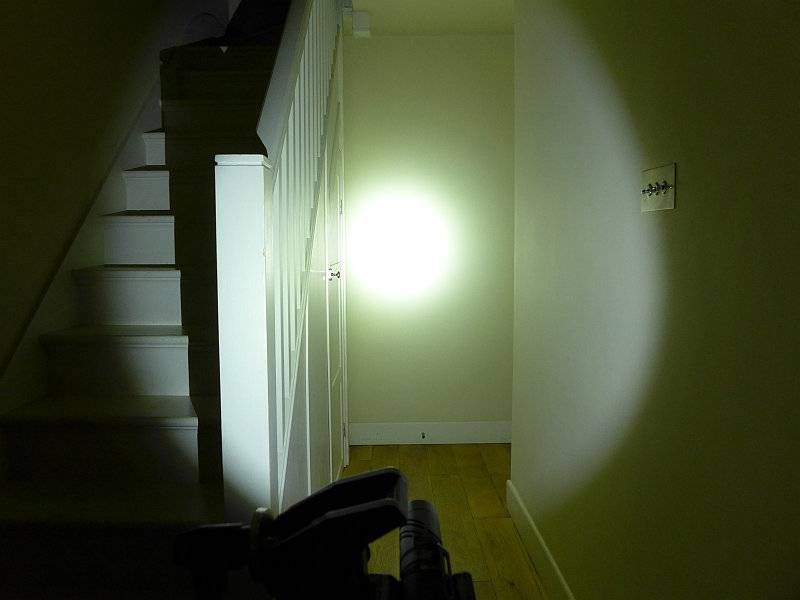
The indoor beamshot is intended to give an idea of the beam shape/quality rather than tint. All beamshots are taken using daylight white balance. The woodwork (stairs and skirting) are painted Farrow & Ball “Off-White”, and the walls are a light sandy colour called ‘String’ again by Farrow & Ball. I don’t actually have a ‘white wall’ in the house to use for this, and the wife won’t have one!

Starting indoors, the TR20 does have a bright hot spot, but the transition to the spill is smooth and the spill is sufficiently bright that the beam does not appear unbalanced.
 photo 25 Rofis TR20 indoor beam P1240743.jpg

Moving outdoors you can see how the spill is nice a bright and gives a good view. Though not a flood beam, the beam has a good useful width.
 photo 26 Rofis TR20 outdoor beam P1240696.jpg

Modes and User Interface:

The TR20 has 6 constant output modes (Turbo, High, Mid, Low, Lower and Ultra-Low) and three flashing modes (Strobe/Beacon/SOS) controlled by a dual button.

From OFF, to switch ON to the last used constant output (not including directly accessed modes), briefly press the Power switch. When ON, press the Mode switch to cycle through Turbo -> Ultra-Low -> Low -> Mid -> High back to Turbo etc. To switch OFF briefly press the Power switch.

From OFF, for direct access to Turbo, press and hold the Power switch for more than 1s.

From OFF, for direct access to Ultra-Low, press and hold the Mode switch for more than 1s.

To access flashing modes, from ON, press and hold the Mode switch for more than 1s. This will activate strobe. Press and hold the Mode switch for more than 1s again to switch to Beacon mode. Press and hold the Mode switch for more than 1s once more to activate SOS.
Once activated, pressing the mode switch briefly returns the TR20 to the previous steady mode, or a brief press of the Power switch will turn the TR20 OFF.

The TR20 is Strobe-Ready and to activate Strobe directly from OFF, double-click the mode switch.

There is a lockout mode included. With the TR20 OFF, press and hold both buttons simultaneously for 3s to enter lockout. When entering Lockout, the TR20’s red indicator light in the dual switch will come on to indicate Lockout has been activated. Like this the buttons will not turn the TR20 on. To exit Lockout press and hold both buttons simultaneously for 3s and the TR20 will turn ON in Low mode.

Lastly when turning the TR20 ON, or changing mode, after 3s the dual power switch will light up to indicate the remaining battery power. This will light green if there is more than 50% battery left, red if there is less than 50% and will flash red if the battery is low.

Batteries and output:

The TR20 runs on a standard 18650 which is supplied.

To measure actual output, I built an integrating sphere. See here for more detail. The sensor registers visible light only (so Infra-Red and Ultra-Violet will not be measured).

Please note, all quoted lumen figures are from a DIY integrating sphere, and according to ANSI standards. Although every effort is made to give as accurate a result as possible, they should be taken as an estimate only. The results can be used to compare outputs in this review and others I have published.

___________________________________________ ________________________________ ________________________________
Rofis TR20 using specified cell I.S. measured ANSI output Lumens PWM frequency or Strobe frequency (Hz)
___________________________________________ ________________________________ ________________________________
Turbo – Rofis 3400mAh 18650 883 0
High – Rofis 3400mAh 18650 503 0
Medium – Rofis 3400mAh 18650 199 0
Low – Rofis 3400mAh 18650 72 0
Lower – Rofis 3400mAh 18650 19 0
Ultra Low – Rofis 3400mAh 18650 9 0

* Beacon and Strobe output measurements are only estimates as the brief flashes make it difficult to capture the actual output value.

Peak Beam intensity measured 15600 lx @1m giving a beam range of 250 m.

There is parasitic drain at 83.8uA. When using a 3400mAh cell it will take 4.63 years to drain the cell.

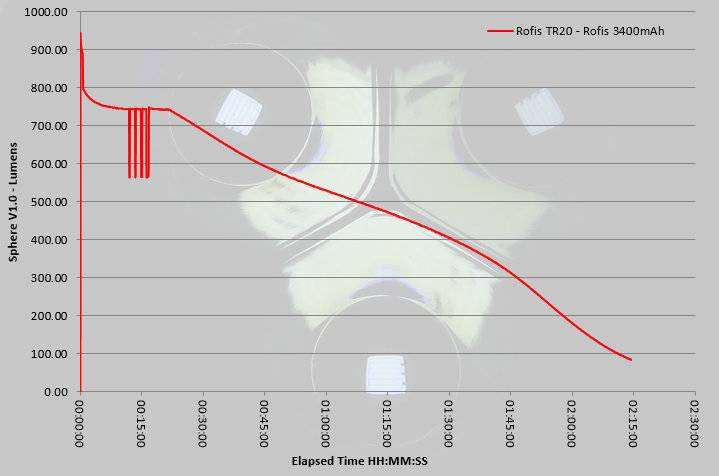
At switch-on the near 900lm output is short lived and after only around 30s starts to decline to the 750 running output. There are some unexplained dips around the 15 minute mark where the output briefly drops to 560lm but then goes back up to 750lm again. After 20 minutes from switch-on the TR20 no longer maintains regulation and the output starts a steady decline until the end of the ANSI runtime at 2h 15m.
 photo Rofis TR20 runtime.jpg

Troubleshooting

This section is included to mention any minor niggles I come across during testing, in case the information helps anyone else.

No issues were encountered during testing.

As per the description of this section, this information is provided in case anyone else finds a similar ‘issue’ that might be fixed in the same way.

The TR20 in use

Right-angle lights are incredibly useful and bring an added dimension to the function of a light. Personally I find the variety of grip options they bring make them amongst the most comfortable to use, with a natural pointing of the beam as well as allowing various arm and hand positions that still direct the beam forward where you want it. If I had to choose between a straight or right-angle light it would be a right-angle that I would choose, but there is a definitely a place for the straight tube light. Why have to choose one or the other when you can have both?
 photo TR20 500ms.gif

Having a dual-switch does make the UI very functional, but these types of switches don’t work so well when using gloves as you can’t feel the two parts of the switch. For gloved hands the two switch parts are a bit small so you can miss the part you meant to press. Gloved use may not be the highest priority because this light is not a tactical light, it is a utility light.

Another example of how functional this light is, is the holster that adjusts to the straight or right-angle configurations. But there is more. When in the right-angle configuration, the control buttons now line up with the gap on the side of the holster opposite the lens. In this way you can operate the TR20 when it is still in the holster giving you easy access and hands free use; this is the real benefit.
 photo 24 Rofis TR20 holster 90 P1240475.jpg

USB charging and the use of a standard 18650 cell adds convenience and ease of carrying a spare cell. The power indicator which tells you ‘Over 50%’, ‘Under 50%’ and ‘Empty’ is better than nothing, but might tend to lead you to keep topping up once you hit ‘Under 50%’. At least you only need to flip the USB port cover aide and hook it up to your USB charger.

One aspect that very much surprised me, and it is one I’ve heard others have found, is that the rotation of the head to transform to and from the right-angle configuration is very stiff. I’m known for a pretty strong grip and am the person at the archery club who is asked to pull out the arrows others can’t. I say this as I feel that if I find this too stiff, I think there are plenty of people who would struggle with it. Clearly you don’t want the head swing back round to straight, and this certainly won’t, but you do want to be able to transform it easily. Another way to look at it though, is that any concerns that the articulation of the head might introduce a weakness certainly doesn’t seem to be the case.

The instructions say that the last used output mode is memorised, but doesn’t mention that this does not include a mode activated by the direct access option. Only the mode set when the TR20 is on and the mode switch pressed to choose the level is memorised. As I typically use the Ultra-Low level, this is the reason I’ve become aware of this. To be sure you get the lowest level you will need to use the direct access method for Ultra-Low rather than relying on the ‘last used’ mode. This behaviour is good as you end up with direct access to one additional mode; if you have memorised medium, but have used the direct access to get ultra-low, simply switching it off and on again gets you back to medium.

Magnetised lights leave me in two minds; I find them more annoying than useful as they stick to everything I didn’t want them to, the TR20 completely removes this annoyance by making it very easy to remove the magnet, and not only that, but the threaded hole left where the magnet was will fit onto a tripod.

A quick observation about the lockout mode; As the only indication you have entered lockout is a flash of the red indicator in the dual switch, when you are pressing both parts of the dual switch, your fingers mostly hide the red light. It would be easier to see if the main LED was given a brief flash to let you know it was going into lockout.

Pocket clips are normally something I strip off straight away, largely because they are often too stiff and damage the pocket. Rofis have got this clip spot on. It is long and stable, yet the spring force is low enough not to be harsh and damaging. Add to this the right-angle configuration and the pocket clip is much more practical than on many lights.

Overall, the ability to transform the light into two different configurations overrides any minor quibbles with this light and makes it very attractive and very useful.

Review Summary

_______________________________________________ _______________________________________________
Things I like What doesn’t work so well for me
_______________________________________________ _______________________________________________
Transforms from a straight to right-angled configuration. Head is very stiff.
Direct access to Turbo, Ultra-low and Strobe. Dual button is difficult to use with gloves.
Removable Magnet. Lockout indication not clear.
Tripod mount.
Excellent clip.
Holster adjusts to straight or right-angle configuration.
Built in USB charging.


Discussing the Review:

Please feel free to add comments to the review, but the ideal place to freely discuss these reviews is on a forum. If you started reading the shorter forum version of the review, but followed the link this full exclusive review, please return to that forum to discuss the review there.
If you read the review entirely on Tactical Reviews, please consider one of the following to join in any discussion.

CandlePowerForums – Flashlight Reviews Section (Largest and Friendliest Flashlight Community Forum)

EdgeMatters – Sponsored Reviews (UK based Forum for Knife Makers and Collectors)

Light Review: Olight S2A Baton

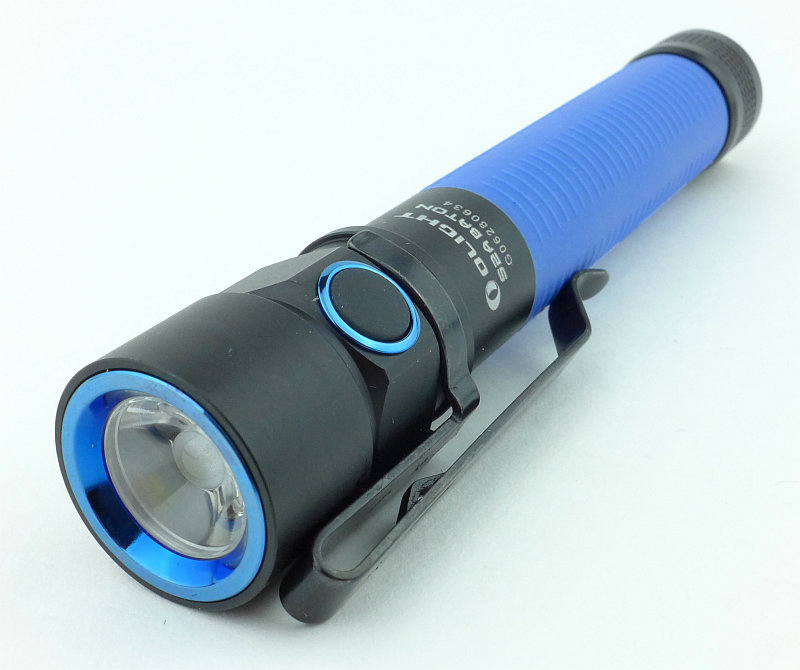
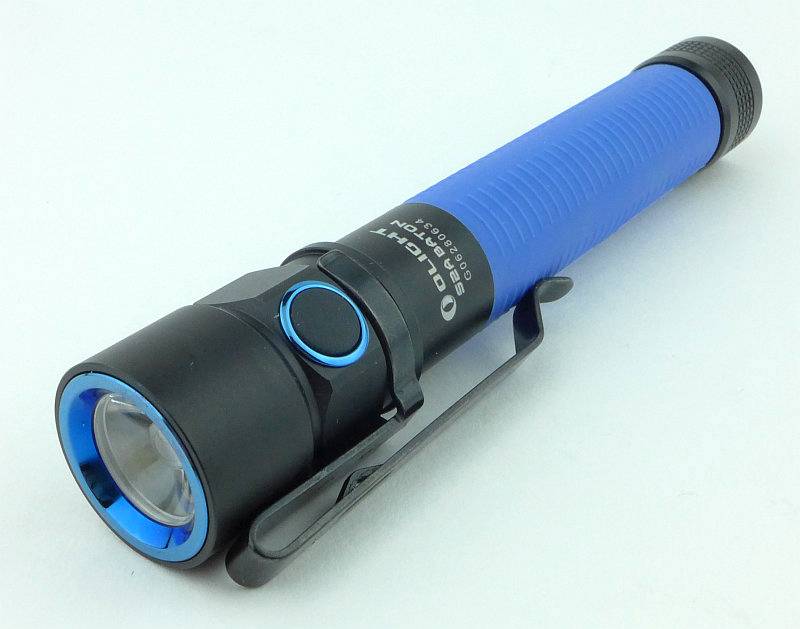
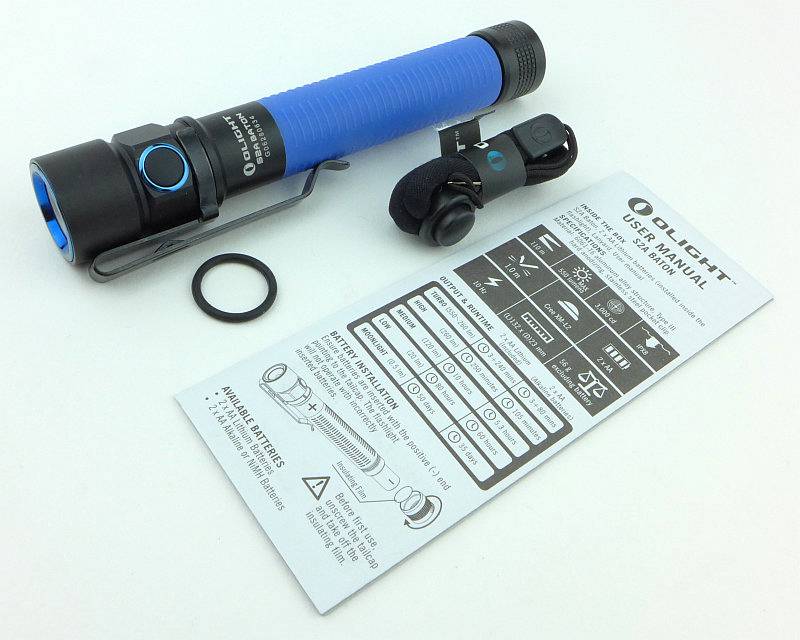
Olight’s Baton line-up gets a 2xAA powered version at last. Though the beautifully compact S1 is a fantastic light (previously reviewed) my personal ideal form factor is the 2xAA for ease of holding yet remaining compact. It also has the added advantage that AA cells are the easiest to come by, so travelling with or gifting this light is trouble free.

 photo 05 Olight S2A angle P1220461.jpg

Taking a more detailed look:

Looking very sharp in a clear plastic box with cardboard insert, you get a good look at the light even before you get your hands on it.
 photo 01 Olight S2A boxed P1220449.jpg

Inside the box is the S2A, a spare o-ring, a lanyard and the instructions.
 photo 02 Olight S2A box contents P1220454.jpg

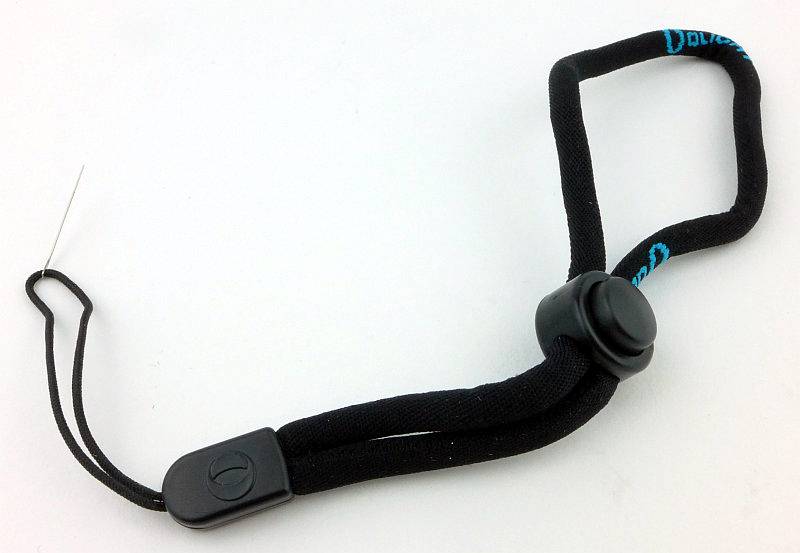
The lanyard has a really nice fabric tube cord and what is that we can see on the attachment loop?
 photo 03 Olight S2A lanyard P1220457.jpg

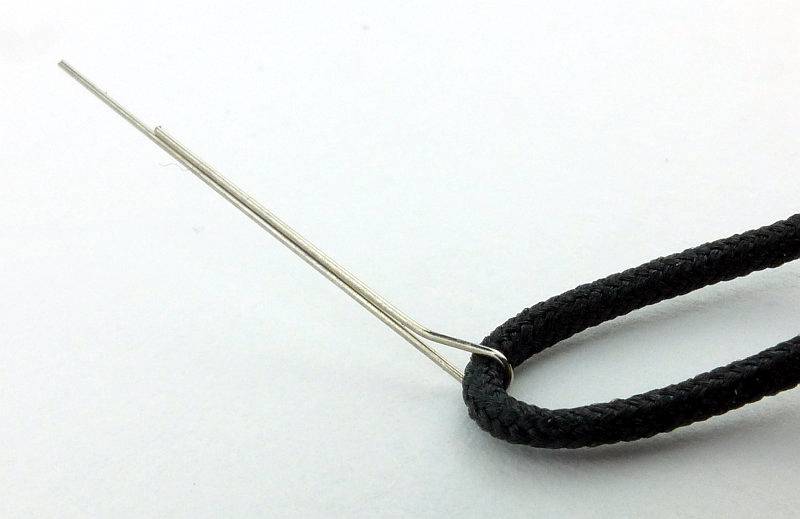
Thank you Olight! It is a wire puller for fitting the lanyard through the small hole in the tailcap. A thoughtful addition and makes life easier. Of course you can do something similar yourself (as I have for some time) but here it is ready to go.
 photo 04 Olight S2A lanyard puller P1220459.jpg

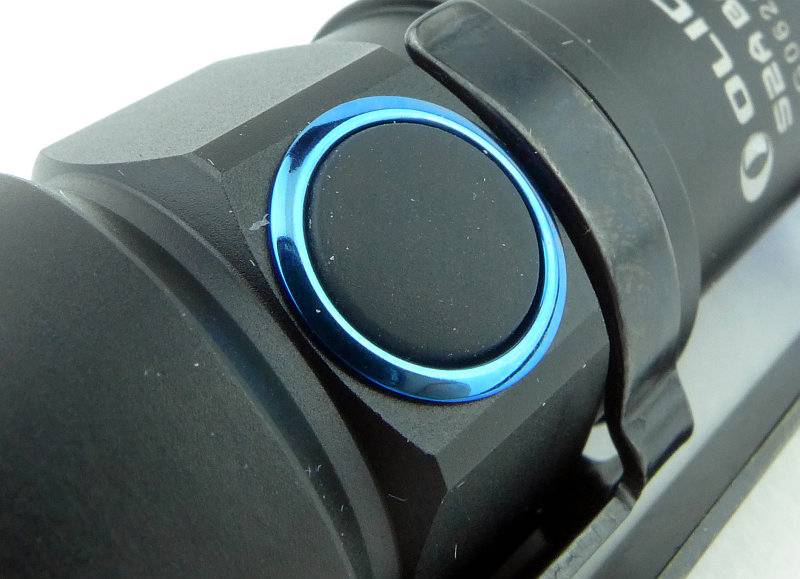
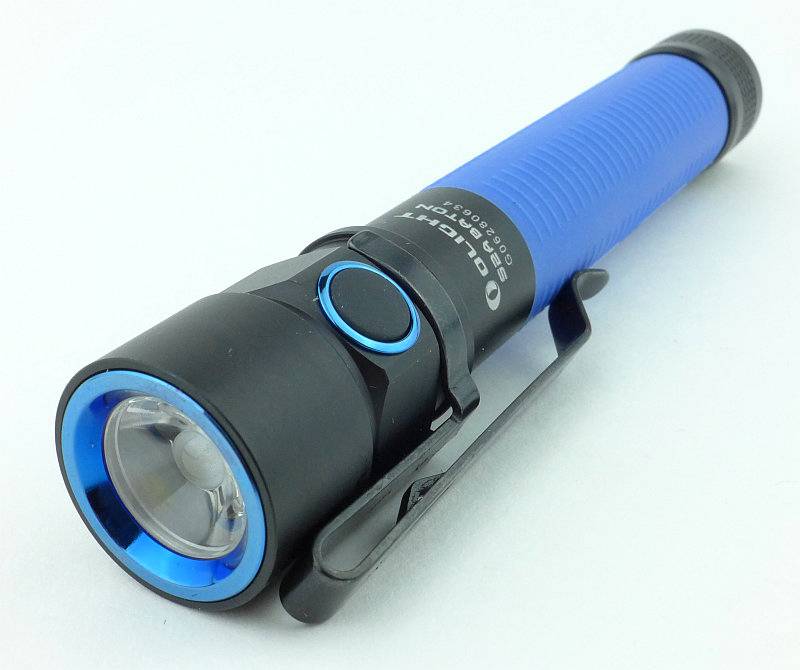
Surrounding the side-switch is a blue PVD ring which matches the bezel.
 photo 06 Olight S2A switch P1220466.jpg

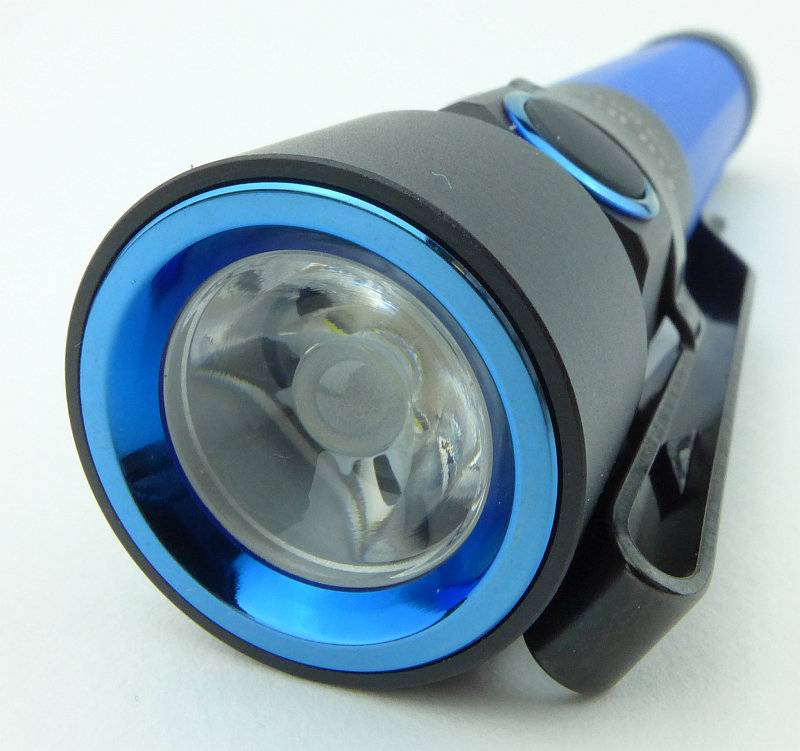
The blue PVD bezel ring surrounds the S2A’s TIR optic.
 photo 08 Olight S2A optic P1220477.jpg

The S2A comes with a deep pocket carry clip which can be removed or swivelled to any position to help you locate the power switch.
 photo 09 Olight S2A clip P1220480.jpg

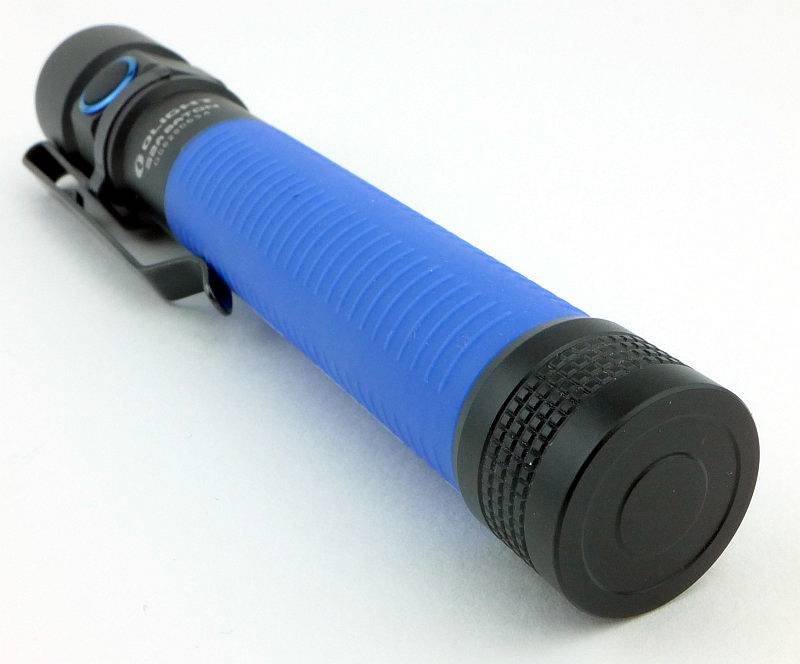
A very plain and compact tail-cap is used as there is no switch to accommodate.
 photo 10 Olight S2A tailcap P1220483.jpg

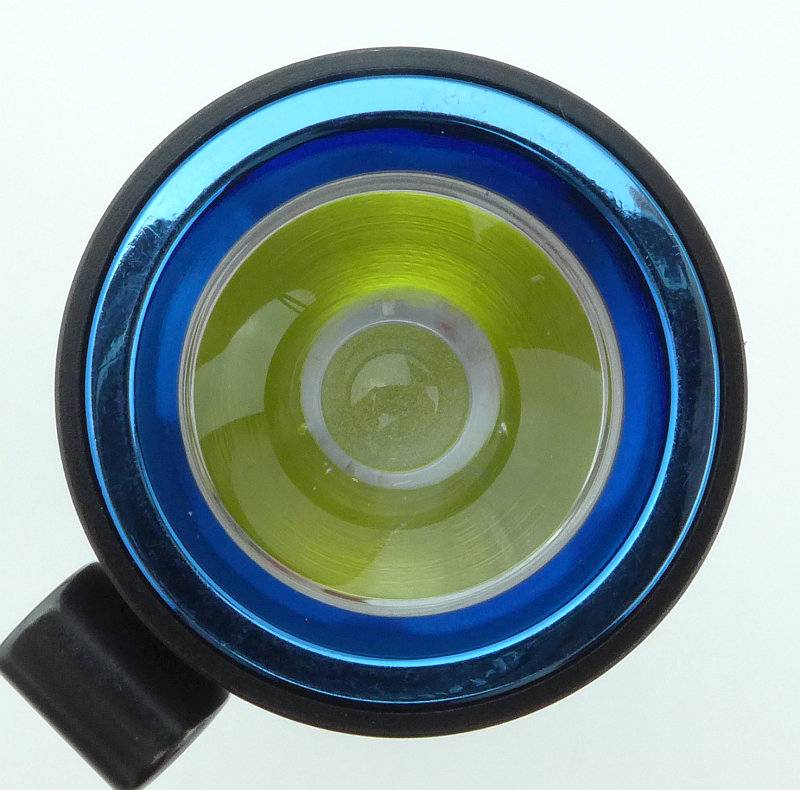
Behind that TIR optic is a XM-L2 LED.
 photo 11 Olight S2A led P1220486.jpg

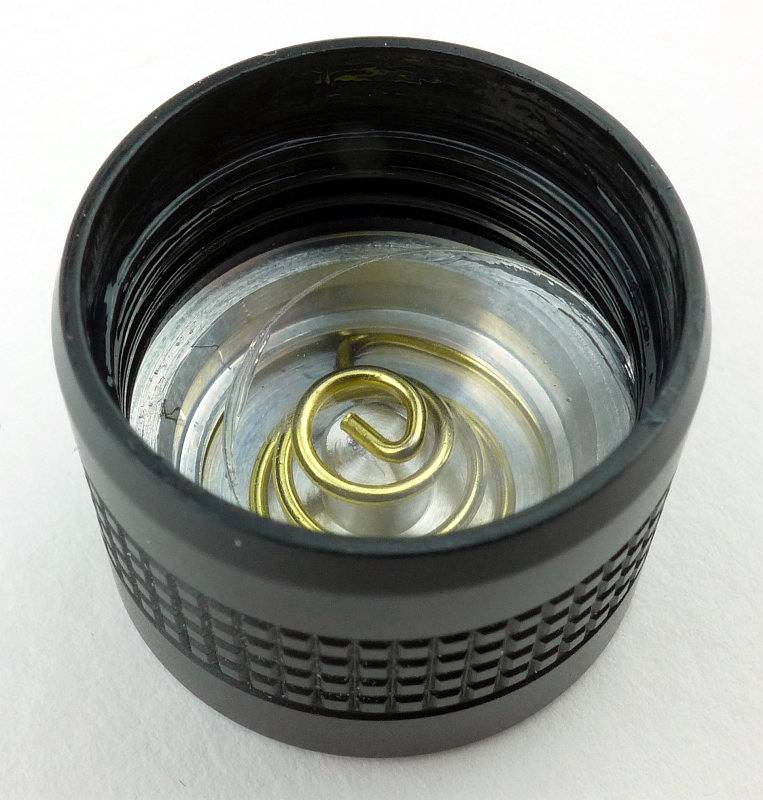
Looking inside the tail-cap. Note, that unlike the S1, the S2A has no magnet, and also shown here is a plastic insulator disc which is present when you get the S2A, as it comes with 2xAA Lithium cells loaded inside.
 photo 12 Olight S2A tail contact P1220496.jpg

Very neatly cut fully anodised square threads are used.
 photo 13 Olight S2A threads P1220501.jpg

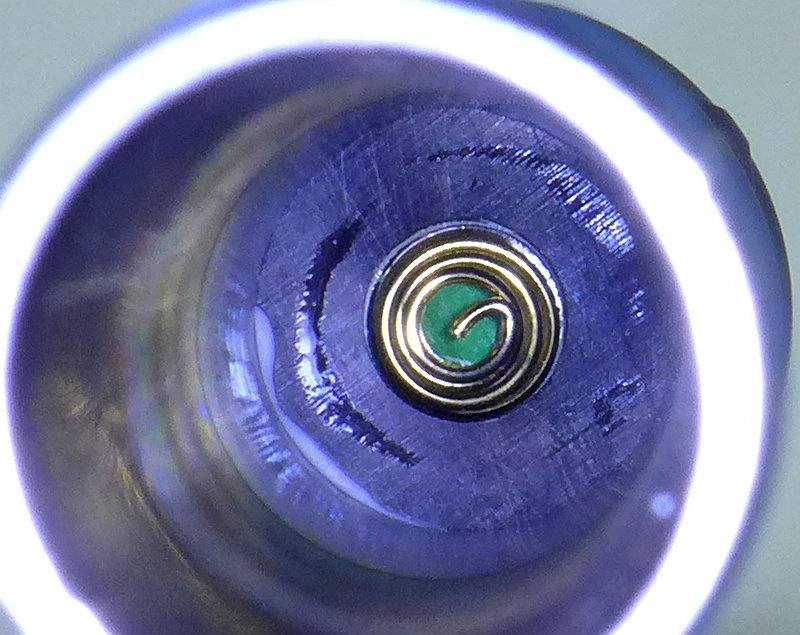
Peering inside the battery tube you can make out the positive contact spring.
 photo 15 Olight S2A head contact P1220510.jpg

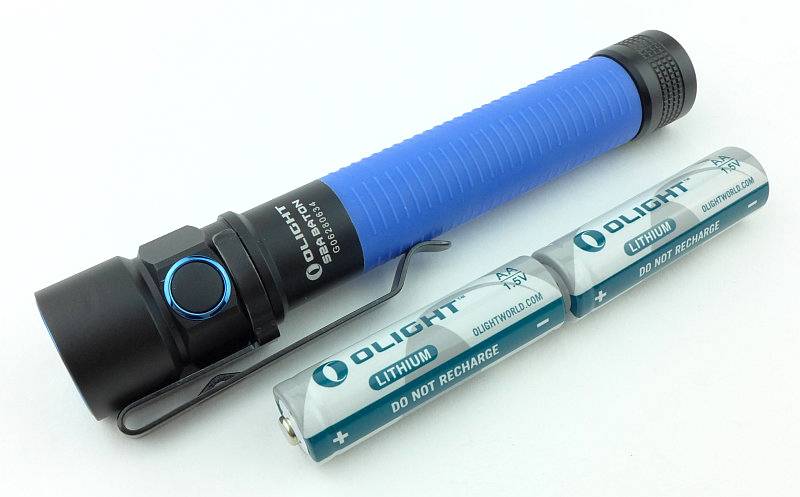
It really isn’t much bigger than the two AA cells that power it.
 photo 14 Olight S2A with cells P1220506.jpg

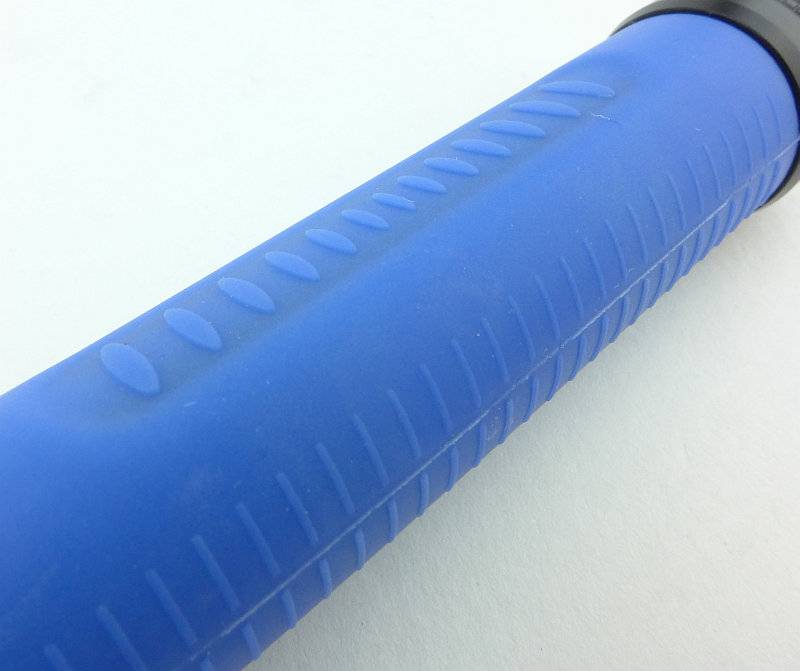
Over the battery tube is a silicon rubber skin-safe grip (more on that later).
 photo 16 Olight S2A grip P1220520.jpg

An excellent quality of finish even under closer scrutiny. Here is the lanyard hole in the tail-cap.
 photo 17 Olight S2A lanyard hole P1220523.jpg

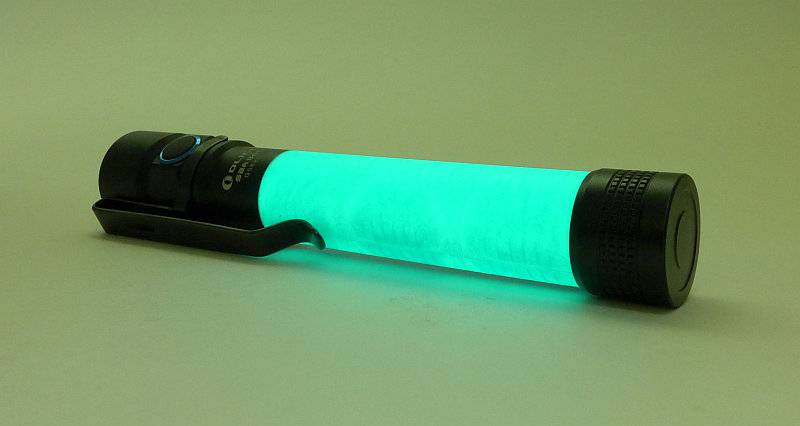
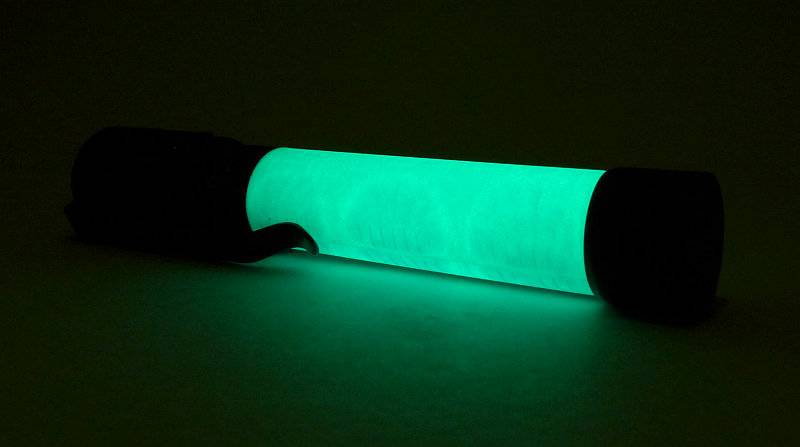
I said we would be coming back to this, the rubber grip. Well, what a nice surprise it was to see that it glows!
 photo 20 Olight S2A glowing grip P1230337.jpg

The GITD grip is a very useful location feature.
 photo 21 Olight S2A glowing grip P1230339.jpg

The beam

Please be careful not to judge tint based on images you see on a computer screen. Unless properly calibrated, the screen itself will change the perceived tint.

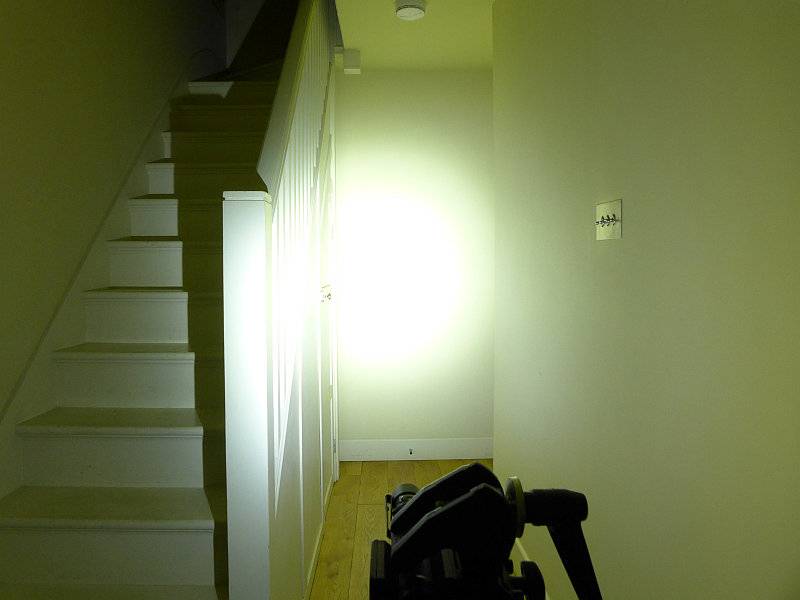
The indoor beamshot is intended to give an idea of the beam shape/quality rather than tint. All beamshots are taken using daylight white balance. The woodwork (stairs and skirting) are painted Farrow & Ball “Off-White”, and the walls are a light sandy colour called ‘String’ again by Farrow & Ball. I don’t actually have a ‘white wall’ in the house to use for this, and the wife won’t have one!

Starting off indoors, the 600lm beam is way more than you need at this range. There is a defined hot-spot with a very wide spill round it.
 photo 18 Olight S2A indoor beam P1230327.jpg

For a 2xAA light the 600lm gives it very good mid-range ability, though the spill becomes much less useful out here, with the hot-spot taking over.
 photo 19b Olight S2A outdoor beam P1240692.jpg

Modes and User Interface:

The S2A has six output modes, Turbo, High, Medium, Low, Moonlight and Strobe and a single click-switch on the side.

Basic ON/OFF operation is carried out with a single click of the side switch. The S2A will turn on to the last used constant mode including moonlight (this does not include Strobe).

To change the brightness, while ON, press and hold the switch to cycle through Low-> Medium -> High -> Low -> Medium etc. Release the switch once you have the required output.

There are a few special functions:
Moonlight mode – from OFF, press and hold the switch for 1s until the Moon mode is activated.
Direct access to Turbo – from OFF, double-click the switch.
Strobe – From ON or OFF, triple-click the switch.
Timer – From ON, double-click the side switch. The S2A will blink one or two times. Once means the 3 minute timer is activated, twice means the 9 minute timer is activated. To swap between 3 and 9 minutes timers, double-click the switch.

Timer mode means that the S2A will turn itself off after the specified time, and this can be started from any mode (including Strobe and Moonlight).

Batteries and output:

The S2A runs on 2xAA cells either Alkaline, NiMh, or AA Lithium.

To measure actual output, I built an integrating sphere. See here for more detail. The sensor registers visible light only (so Infra-Red and Ultra-Violet will not be measured).

Please note, all quoted lumen figures are from a DIY integrating sphere, and according to ANSI standards. Although every effort is made to give as accurate a result as possible, they should be taken as an estimate only. The results can be used to compare outputs in this review and others I have published.

___________________________________________ ________________________________ ________________________________
Olight S2A using specified cell I.S. measured ANSI output Lumens PWM frequency or Strobe frequency (Hz)
___________________________________________ ________________________________ ________________________________
Turbo – AA Eneloop 596 0
High – AA Eneloop 282 0
Medium – AA Eneloop 132 0
Low – AA Eneloop 17 0
Moon – AA Eneloop Below Threshold 0
Turbo – AA Lithium 546 0

* Beacon and Strobe output measurements are only estimates as the brief flashes make it difficult to capture the actual output value.

Peak Beam intensity measured 3500 lx @1m giving a beam range of 118 m.

There is parasitic drain but is incredibly low at 1uA (216 years to drain the cells).

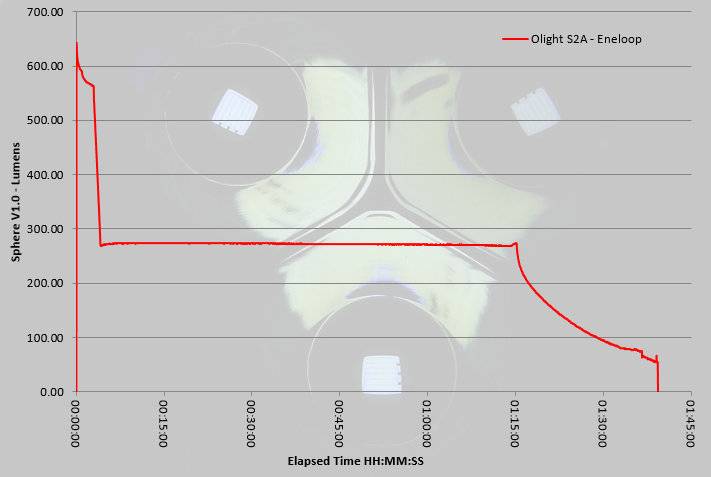
What is very impressive with the S2A is that 600lm Turbo output. This is pushing it for 2xAA, and only with the Eneloops did I get this peak measurement. Like many other lights, the output drops after 3 minutes down to its much more normal 270lm level which the AAs can keep up with. This output is very well regulated for 1h 15m, after which is starts to drop off. There is a sharp cut off around 1h 40m, but you get plenty of warning the output is dropping.
 photo Olight S2A runtime.jpg

Troubleshooting

This section is included to mention any minor niggles I come across during testing, in case the information helps anyone else.

No issues were encountered during testing.

As per the description of this section, this information is provided in case anyone else finds a similar ‘issue’ that might be fixed in the same way.

The S2A in use

For anyone that has read my other reviews of the Olight Batons, you will already know I think they have got the UI spot on. For non-tactical use, the side switch is king, falling nicely under your thumb and being very natural to use. Then there is the simple control options but that give your direct access to moonlight, Turbo, Strobe and last used modes; what more could you want?

I wouldn’t have thought it, but the timer mode has also proven useful letting you get tucked up in a sleeping bag, or even to give you a way of keeping a rough track of time. I’ve certainly used it that way when only wanting to be out for so long and getting easily distracted, the 9 minute timer switches the light off which I pop straight on again and head back. You are sure to find several uses once you try it out.

Having the rubber grip does make it very secure to hold, and stops it from feeling cold when temperatures are low. The best part of this is the GITD feature. The glow does last several hours, but you will need dark adapted eyes to see it after an hour or so, and it might not make it through a long night. Even so this is a great addition.

The brightness of the hot-spot did surprise me a little as I was hoping for a beam with slightly more flood. (This is a personal preference as unless I want a thrower, I always find full flood easier to use for my needs.) Indoors I have felt some hot-spot blinding and have had to use a ceiling bounce instead of direct illumination. Outside that hotspot does become useful, so there is a good balance making this an all-rounder.

Negligible parasitic drain allows for this to be loaded up and on standby without worrying if your cells are running down, so I applaud Olight for that excellent 1uA drain; I won’t be worried in 216 years time that the cells have run down!

Although I also have a preference for single cell lights, as you don’t have to cell match, the 2xAA format does give you quite a bit more power and runtime plus the benefit of being a good size to hold. This really hits a sweet spot for me in format and usability and is now a favourite EDC light.

Review Summary

_______________________________________________ _______________________________________________
Things I like What doesn’t work so well for me
_______________________________________________ _______________________________________________
600lm output (from 2xAA). No holster supplied.
Side switch. Hot-spot can be too bright indoors.
Direct access to Moonlight, Turbo and Strobe.
Timer function.
Glow-in-the-Dark rubber grip.
AA powered.

 photo 00 Olight S2A feature P1220465.jpg


Discussing the Review:

Please feel free to add comments to the review, but the ideal place to freely discuss these reviews is on a forum. If you started reading the shorter forum version of the review, but followed the link this full exclusive review, please return to that forum to discuss the review there.
If you read the review entirely on Tactical Reviews, please consider one of the following to join in any discussion.

CandlePowerForums – Flashlight Reviews Section (Largest and Friendliest Flashlight Community Forum)

EdgeMatters – Sponsored Reviews (UK based Forum for Knife Makers and Collectors)

Knife Review: Gerber Strongarm

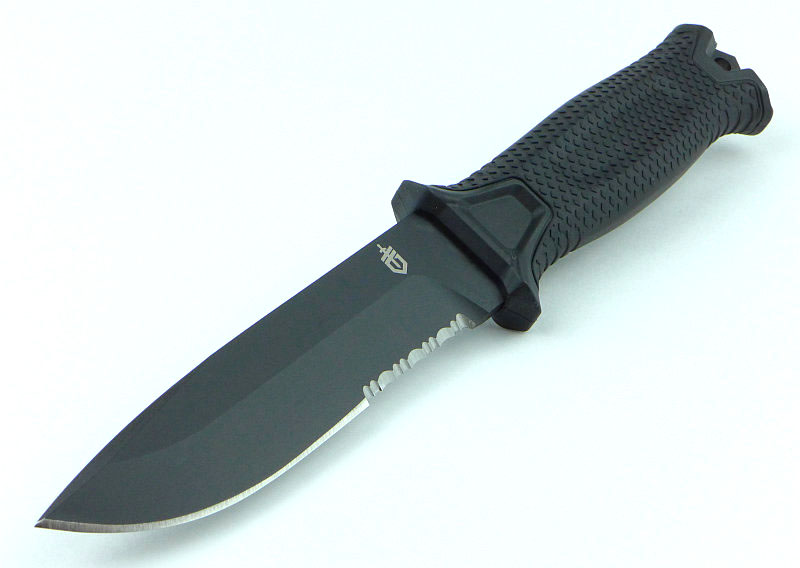
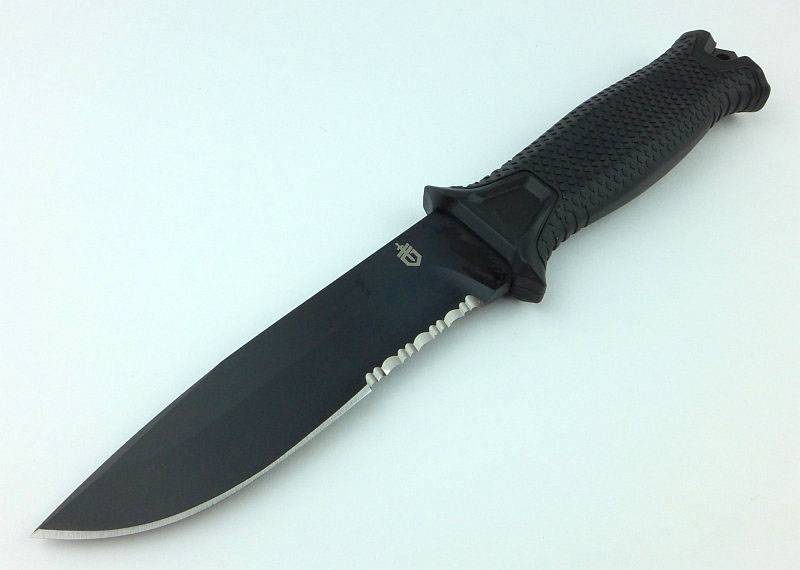
Gerber’s latest incarnation of the military/tactical survival knife has taken its evolution to another level. Paring down each element of the design to provide the essential functions without any excess bulk has resulted in a tool that works with you and remains totally reliable.

 photo 00 Strongarm feature P1190485v2.jpg

The Blade and Handle Geometry:

Most knife specifications have a basic description of the blade geometry, but in this section I will be taking a more detailed look at geometry and balance.
 photo 47 Strongarm grind P1200587.jpg

Using a set of gauges and precision measuring equipment including a Vernier protractor, callipers, fixed radius gauges and the unique Arc Master adjustable radius gauge (the one that looks like a crossbow).
 photo Knife measuring P1180483.jpg

These measurements have been tabulated and are presented along with a few reference blades (8″ Chef’s Knife, 5.5″ Santoku and the popular Fällkniven F1).

Key aspects such as the primary bevel angle, grind type, blade depth, blade thickness, length, weight are detailed, along with balance information.

The ‘Balance relative to the front of the handle’ tells you if the knife will feel front heavy, or if the weight is in your hand (a positive value means the weight is forward of the front of the handle). The ‘Balance relative to the centre of the handle’ indicates how close to a ‘neutral balance’ the knife has in the hand.
 photo 46 Strongarm balance P1200560.jpg

In the case of full convex grinds the approximate centre of the grind is used for the primary bevel angle estimate.

 photo 51 Strongarm Parameters.jpg

The blade is made from 420HC steel.

Explained by the Maker:

The reasons for certain design choices may not be clear when simply looking at an object, so this section is intended to give an insight into the thinking behind a design by speaking to the designer themselves.

Unfortunately I can’t always get time with the designer so will use this section to include relevant information about the knife and its designer.

The Strongarm is the result of an evolution of Gerber’s survival knives which I can trace back through several models. In this section I’d like to share a personal perspective of the evolution that has lead to the Strongarm. This might not be how Gerber would chart its development, but is based on my own knives and experience.

As any child of the 80s will know, the 1982 film ‘Rambo – First Blood’ has been one of the most influential films in terms of interest in survival and in knife design at the time. With Lyle knives way out of reach, I ended up owning some of the rather nasty cheap hollow handle Rambo style knives. There were other more serious designs available but pricing also made them out of reach.

Still hankering after a decent and stylish blade I was struck by the appearance of one in another film from 1988 staring Sidney Poitier and Tom Berenger – Deadly Pursuit (Shoot to Kill). In this film Tom Berenger’s character is carrying a Gerber BMF (Basic Multi-Function) in its original pattern with 8″ blade, and this was the saw back version that wasstill in fashion at the time. I loved it and knew this was the knife I had to have. Unfortunately with the UK market starved of this knife I had to wait for one to arrive, and when it did changes had been made to the size and grind. It now had a 9″ blade and the one I found didn’t have the saw-back. It was still a meaty solid knife, so had to do. The BMF was produced by Gerber between 1986 and 1998 and had several ‘updates’ during this time.

In the following evolution photographs is the original pattern BMF I eventually found only a couple of years ago (and this one has been on active duty in war zones).

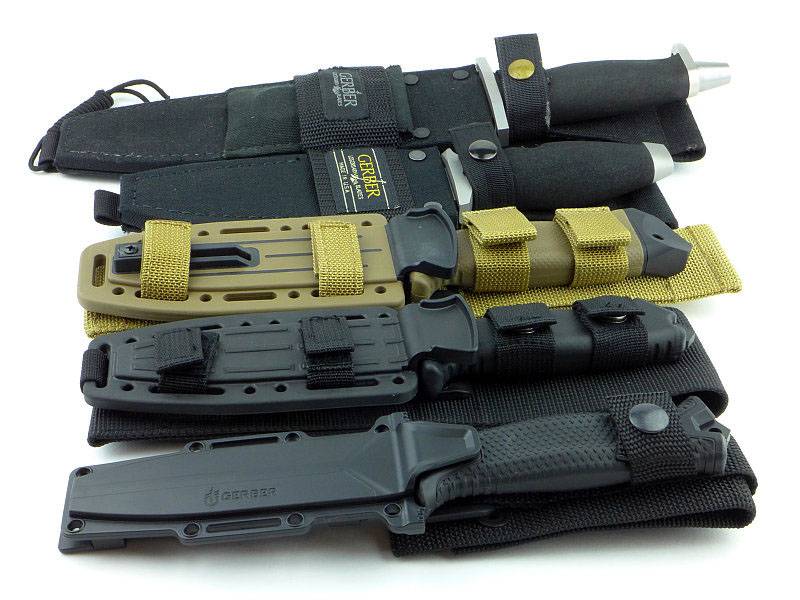
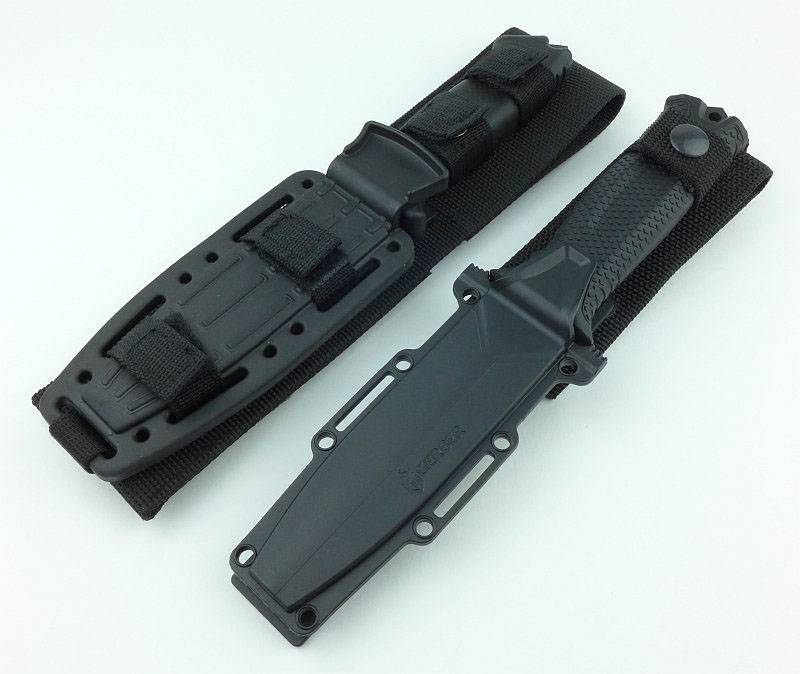
The sheath is as important as the knife in providing the overall package, so starting here we can see all the knives in this evolution in their sheaths. The knives shown are the BMF 8″ saw-back, then a LMF, the LMF II, a Prodigy and finally the Strongarm.
 photo 41 Strongarm evolution P1190818.jpg

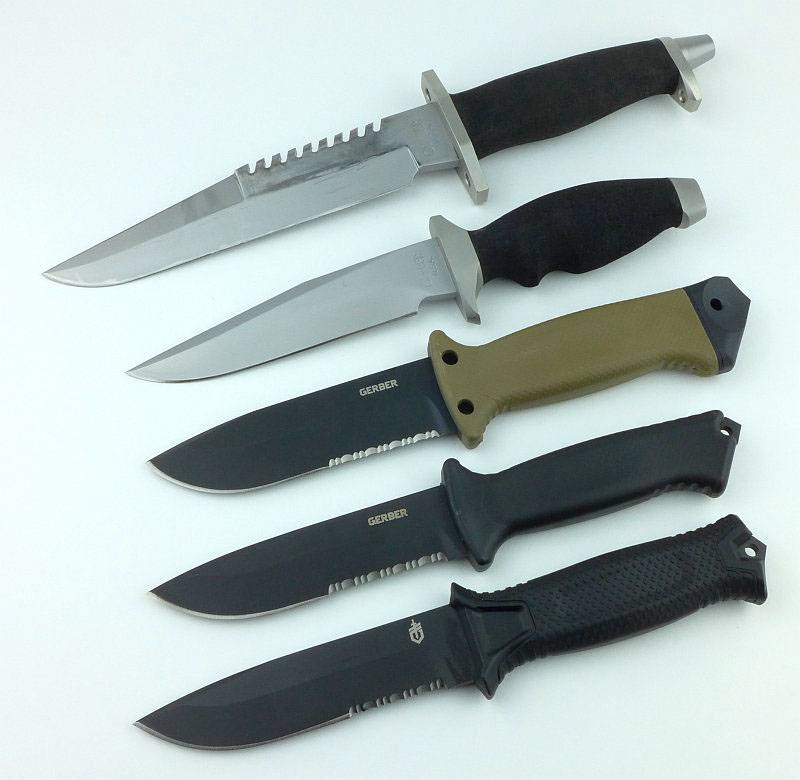
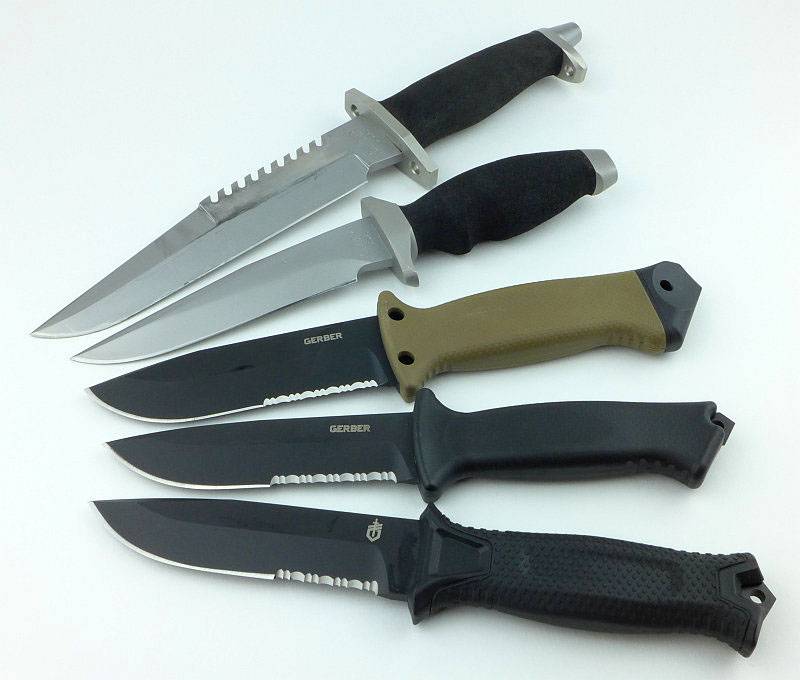
With the BMF (first made in 1986) being a big knife there was demand for a similar design but smaller. In 1988 Gerber released the LMF (Light Multi-Function). In its first year the LMF had a full flat grind, but from 1989 onwards (until 1997 when it was discontinued) it was the style shown here. The original LMF had the bias towards blade length as a proportion of overall length. After a few years, the LMF was reborn in May 2005 as the LMF II designed specifically as a military survival knife. Becoming known as the standard by which all survival knives should be judged, many found the LMF II a little too big, so a smaller alternative was made with the name Prodigy. Working hard to make this knife all the more versatile, Gerber designed the multi-mount and tweaked the design further to create the Strongarm.

 photo 43 Strongarm evolution P1190839.jpg

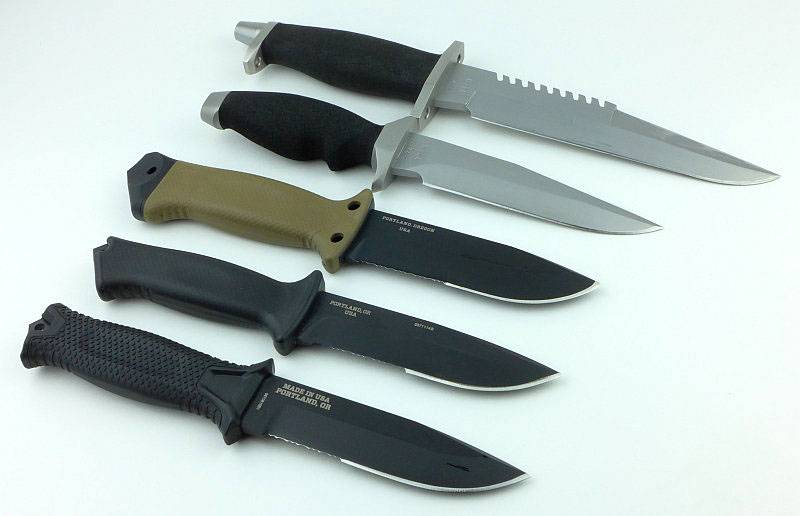
Following the evolution series you can see how blade and handle lengths changed over time.
 photo 45 Strongarm evolution P1190832.jpg

A few more details:

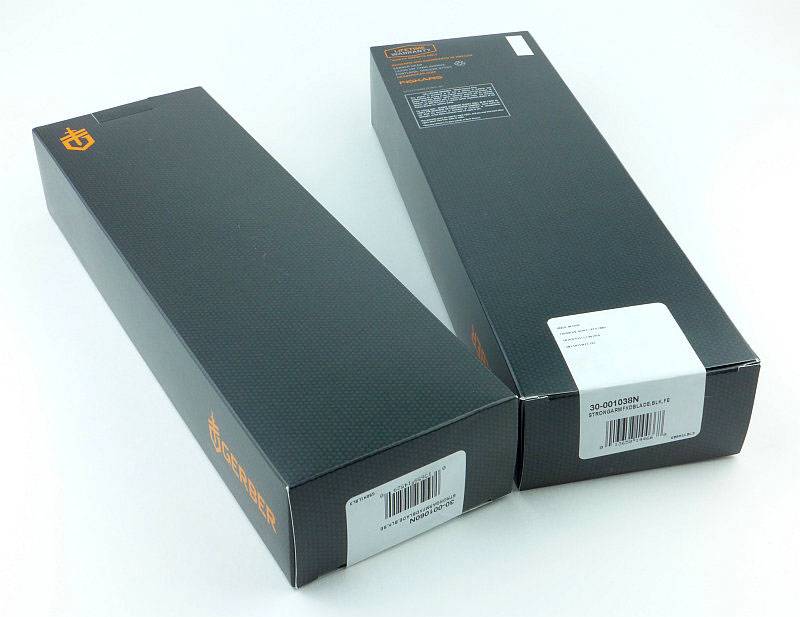
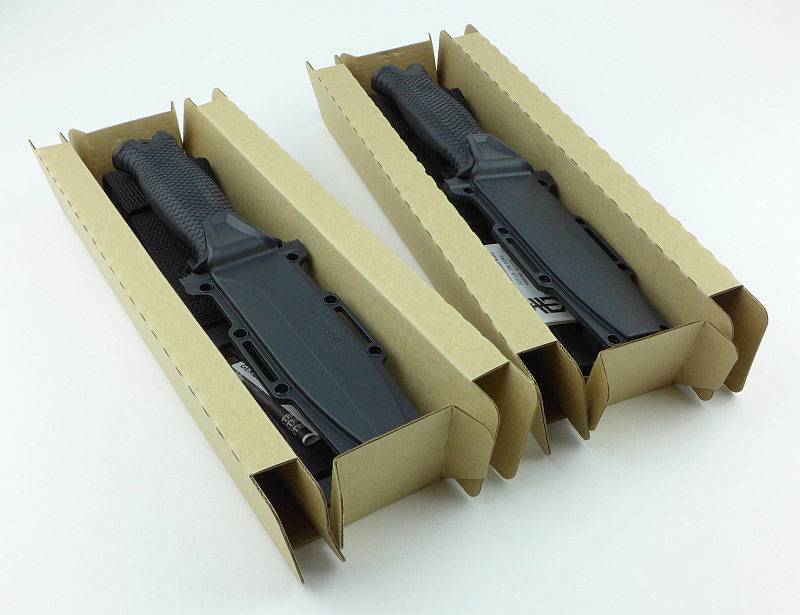
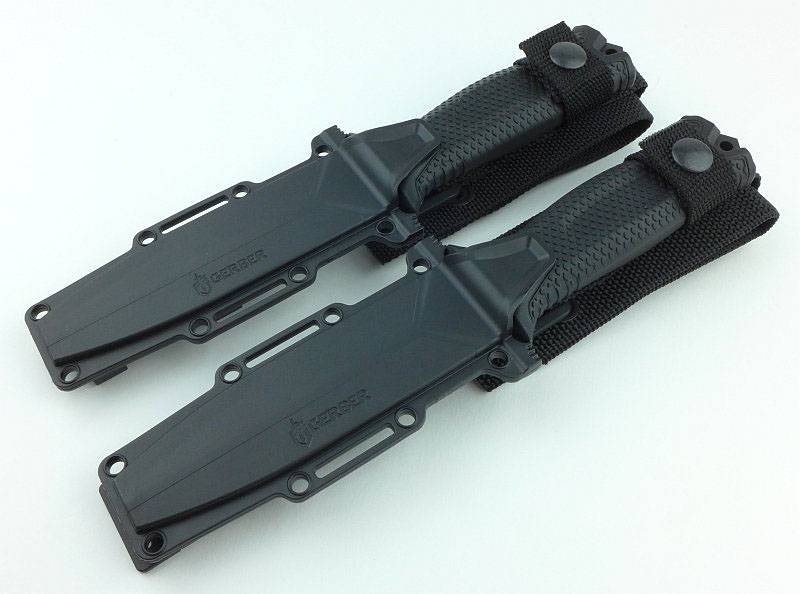
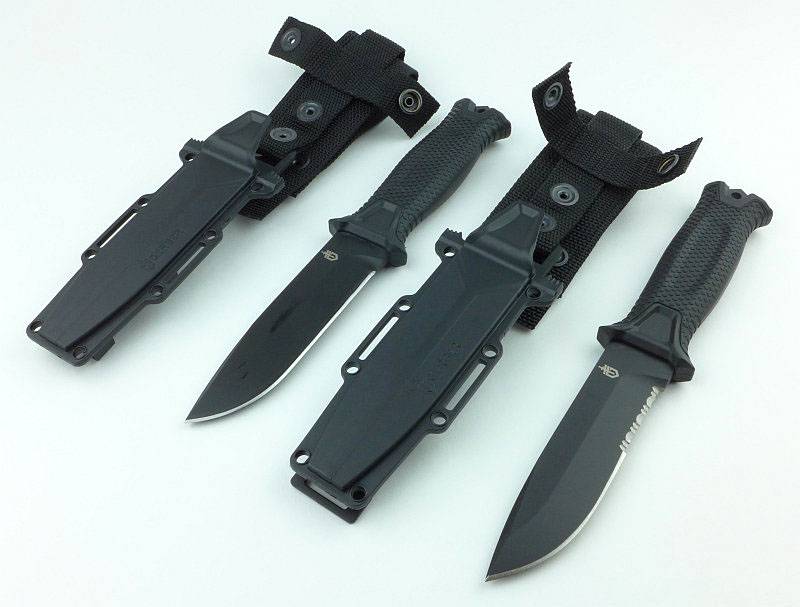
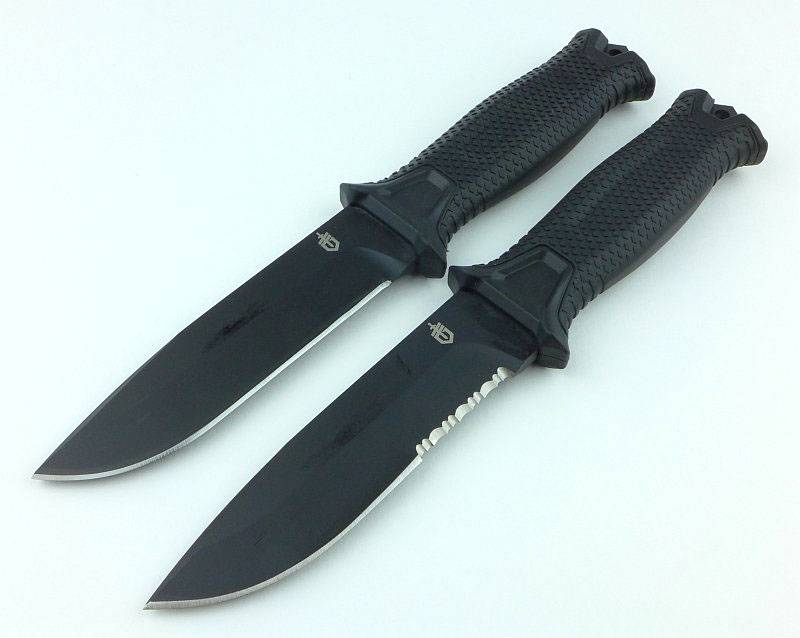
Both the plain edge and part-serrated version were provided for review, hence the two boxes.
 photo 01 Strongarm boxed P1190423.jpg

A cardboard insert keep the knife in place and prevents the striker pommel breaking through the outer box.
 photo 02 Strongarm unboxing P1190424.jpg

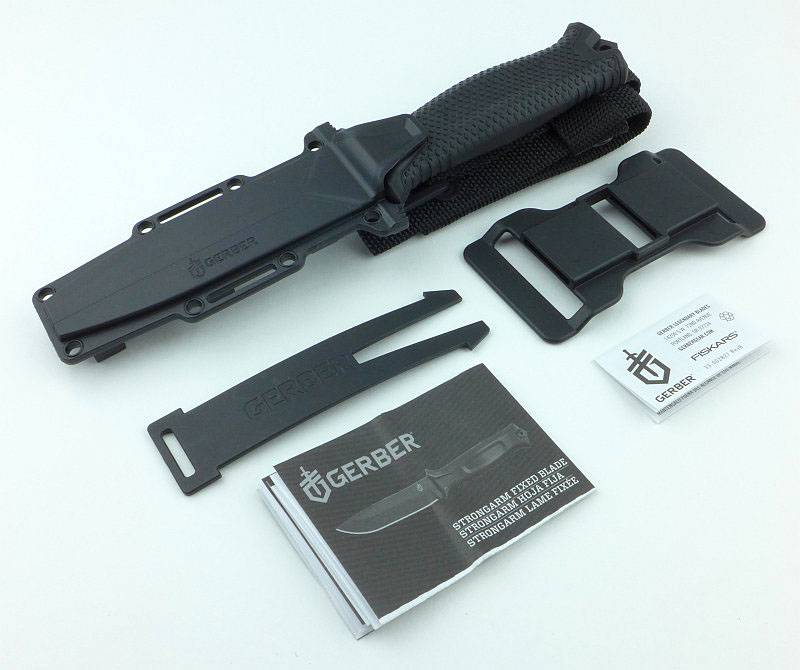
Fresh out of the box, and as well as the sheathed knife there is the PALS webbing clip, a horizontal belt loop adapter and the instructions.
 photo 03 Strongarm unboxed P1190431.jpg

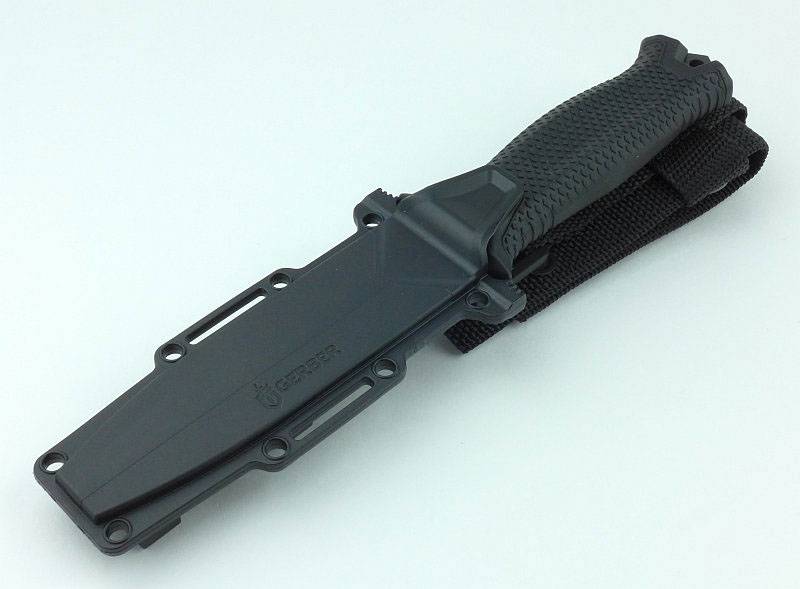
It is immediately obvious how much more streamlined Gerber have made the Strongarm compared to earlier knives in the line.
 photo 04 Strongarm sheathed P1190440.jpg

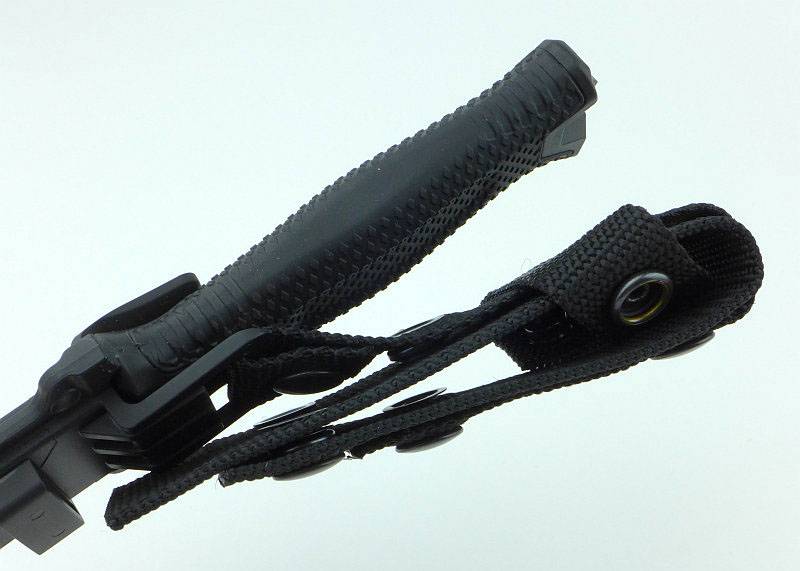
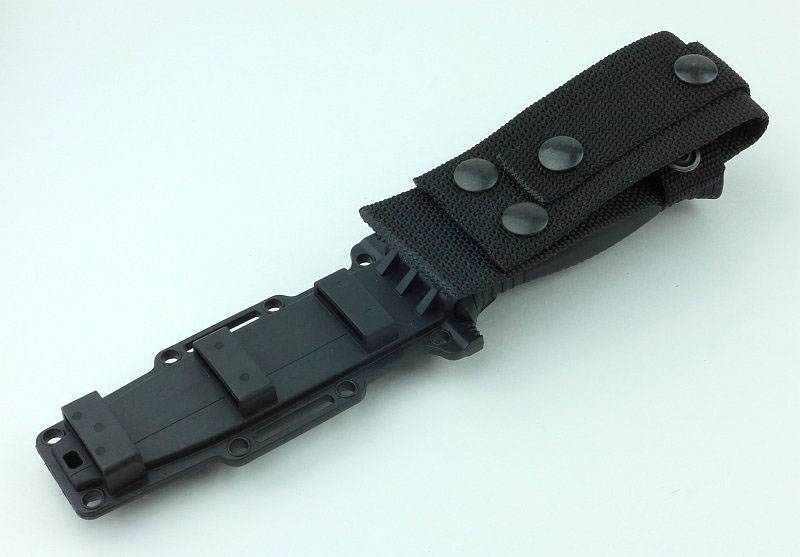
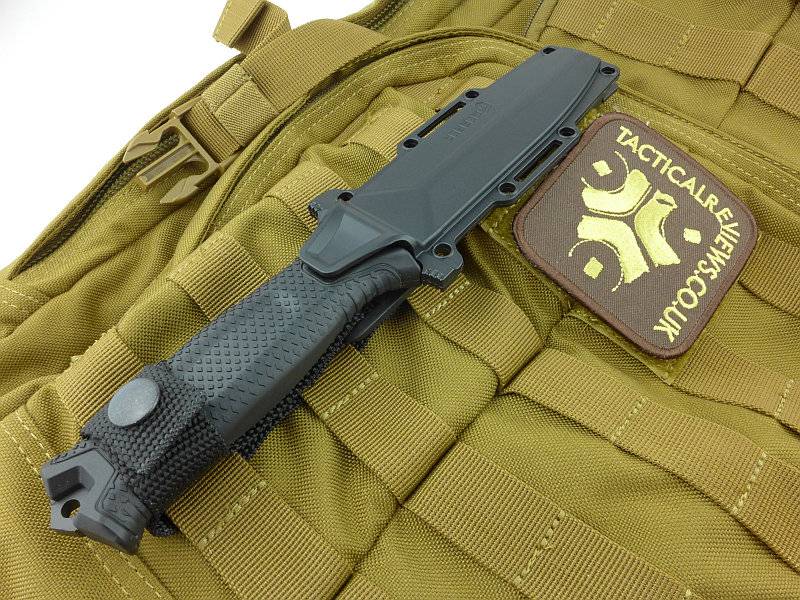
The moulded plastic sheath is suspended by a webbing hanger. For those sharp eyed readers you might notice that only a single press-stud is used for the hanger loop on the sheath, but even if this were to become un-popped, it cannot come out of the sheath while the knife is in the sheath.
 photo 05 Strongarm hanger P1190443.jpg

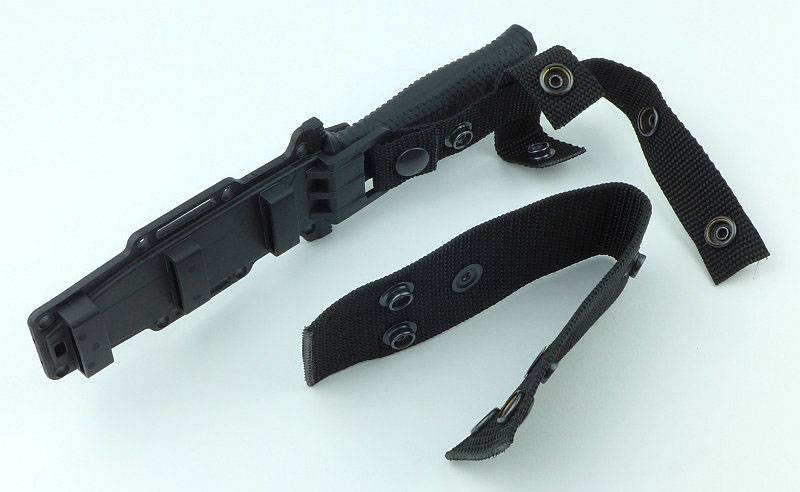
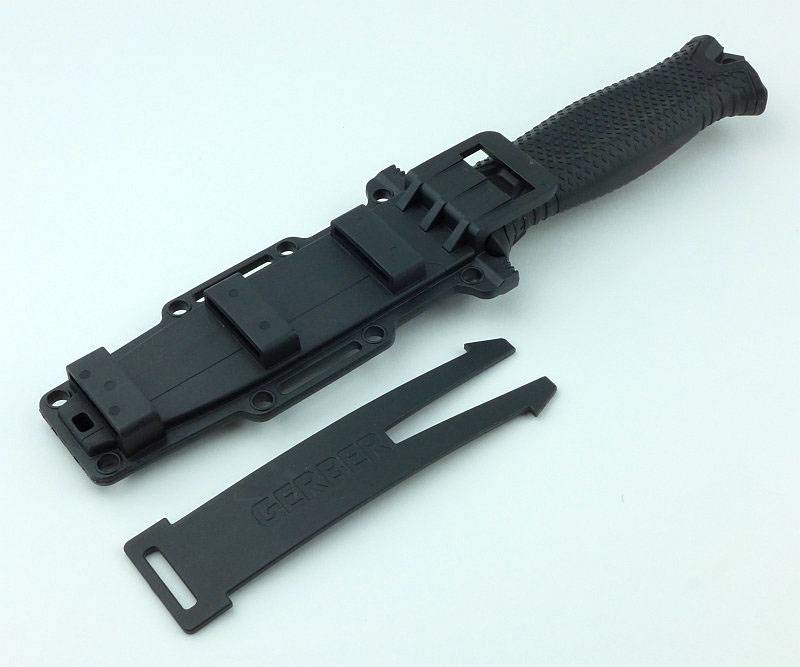
These are the parts of the sheath hanger/belt loop.
 photo 06 Strongarm hanger parts P1190445.jpg

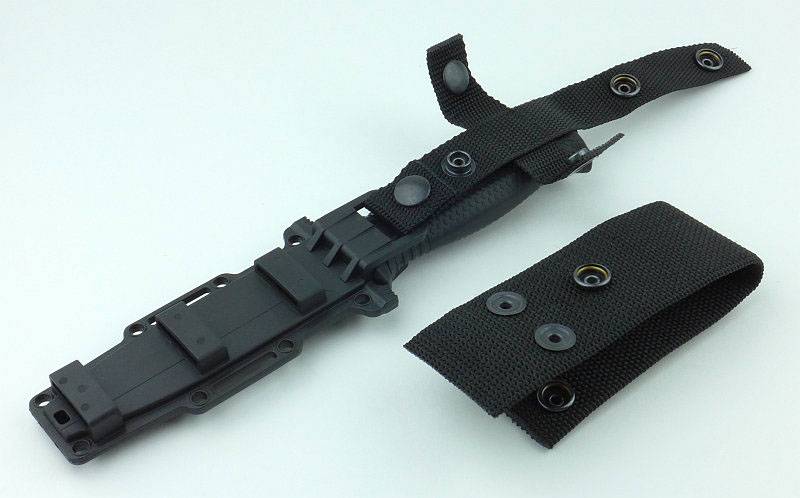
To replace the belt loop, lay out the hanger strap as shown. (The cross piece is a knife retention strap for added security)
 photo 07 Strongarm hanger parts assemble P1190449.jpg

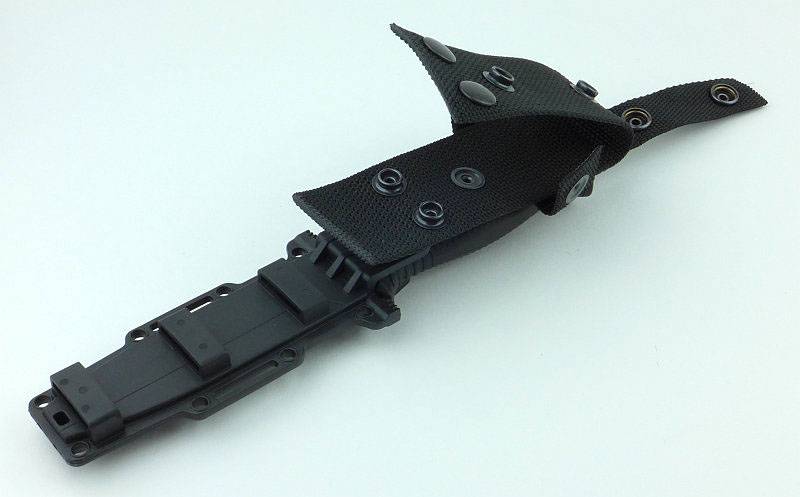
Fit the belt loop in place with the single press-stud on the underneath.
 photo 08 Strongarm hanger parts assemble P1190452.jpg

Close the belt loop with its two press-studs.
 photo 09 Strongarm hanger parts assemble P1190455.jpg

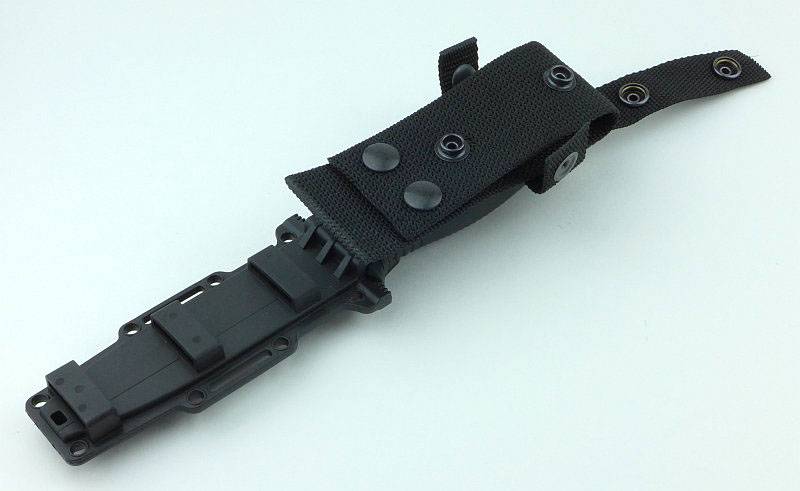
Then lay the hanger strap over the top and secure the two press-studs.
 photo 10 Strongarm hanger parts assemble P1190457.jpg

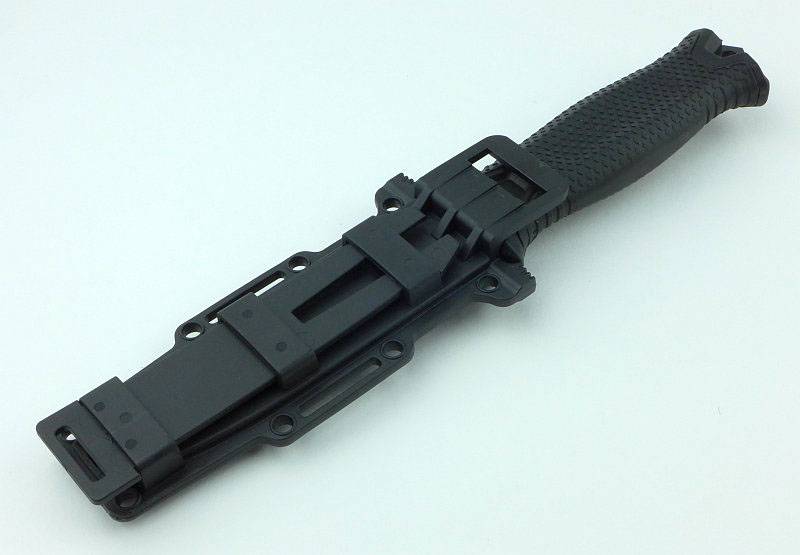
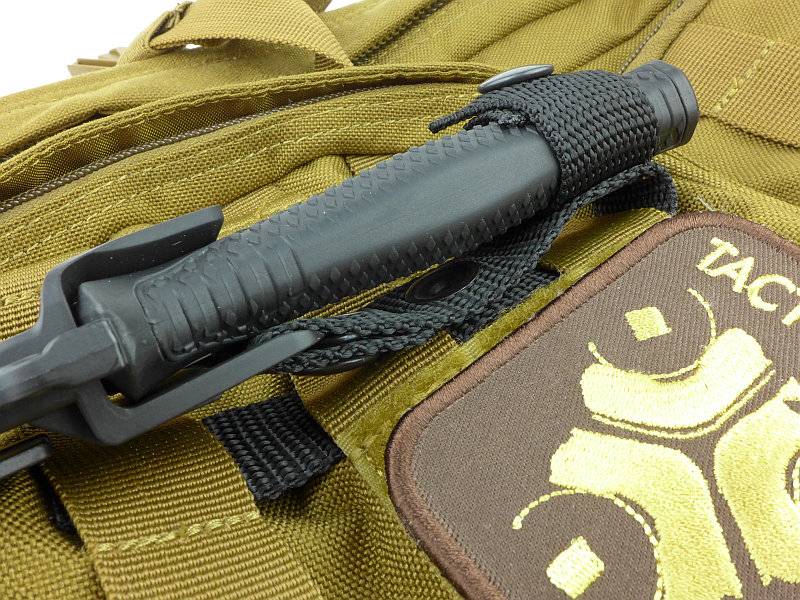
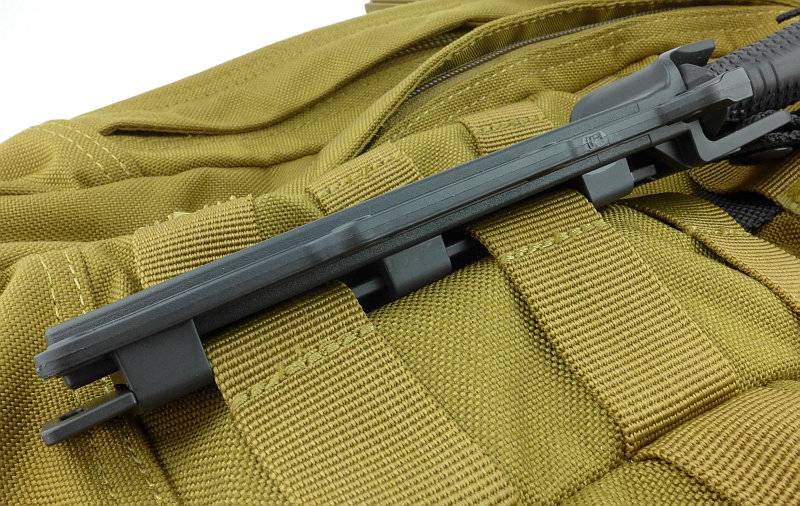
Taking the hanger off for clarity, here we are looking at the moulded sheath’s PALS fixing.
 photo 11 Strongarm PALS P1190460.jpg

Once in place over the PALS webbing you slide the locking bar through the loops to attach it.
 photo 12 Strongarm PALS P1190463.jpg

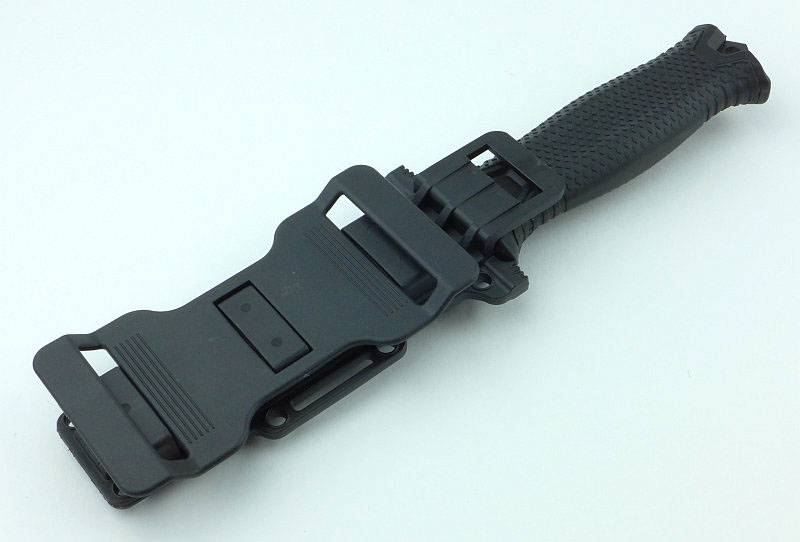
The PALS fixing can also be used to fit the horizontal belt loops.
 photo 13 Strongarm horiz Belt P1190466.jpg

Despite the blade being stainless steel, and having a black ceramic coating the Strongarm arrived with an oiled blade.
 photo 14 Strongarm oil P1190468.jpg

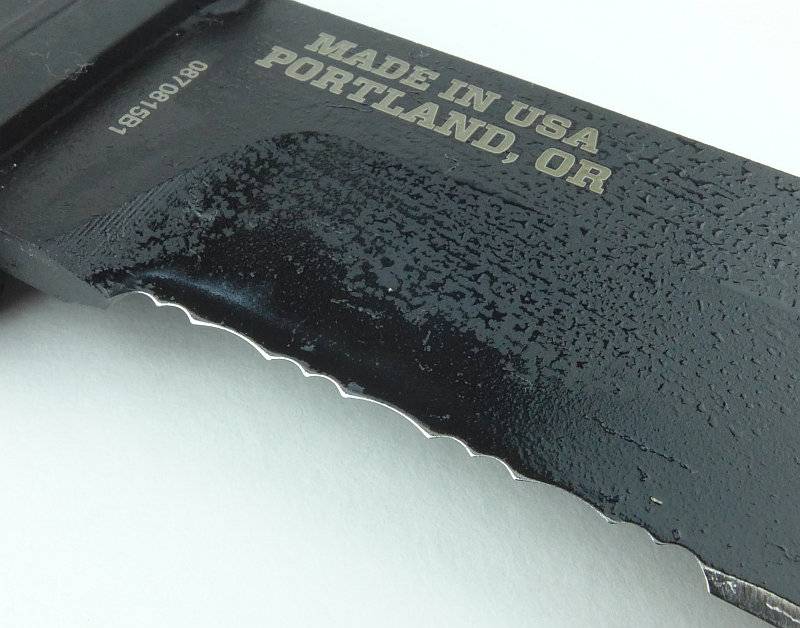
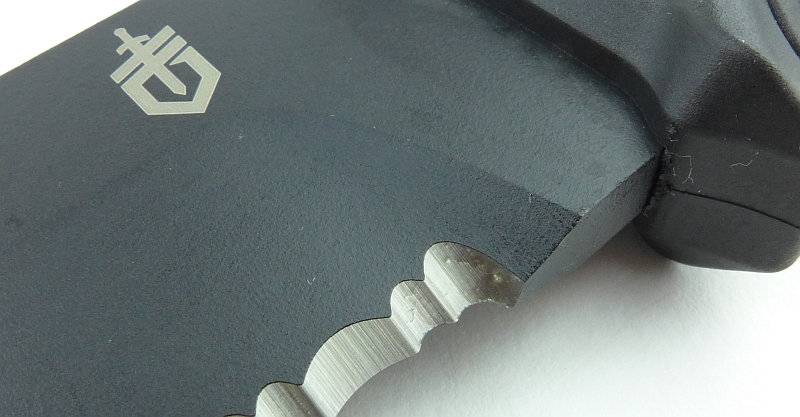
Each knife has a serial number and “Made in USA Portland, OR” proudly inscribed on the blade.
 photo 15 Strongarm serration back P1190472.jpg

The ceramic coating seems to have a slight non-stick effect as the oil beads up on it.
 photo 16 Strongarm serration front P1190481.jpg

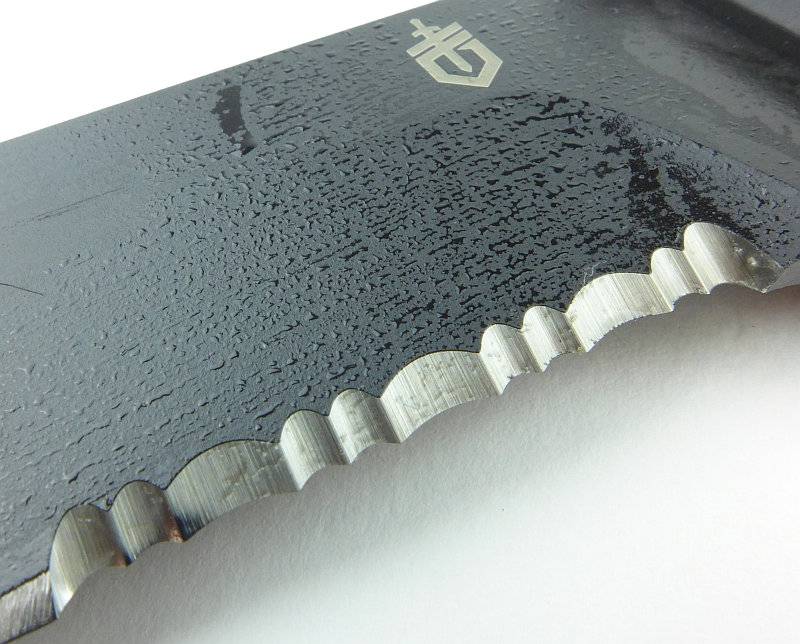
You might also note that the length of the serrations is less than one third of the blade’s cutting edge.
 photo 17 Strongarm angle P1190484.jpg

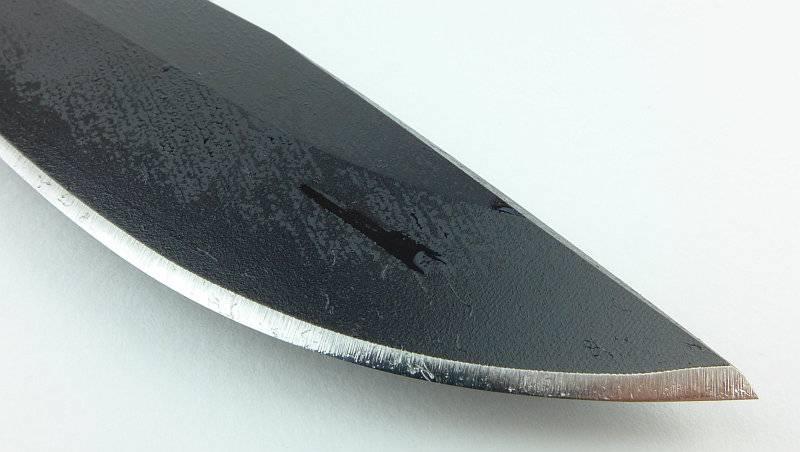
The grind provides a powerful and strong point to the knife.
 photo 22 Strongarm tip P1190724.jpg

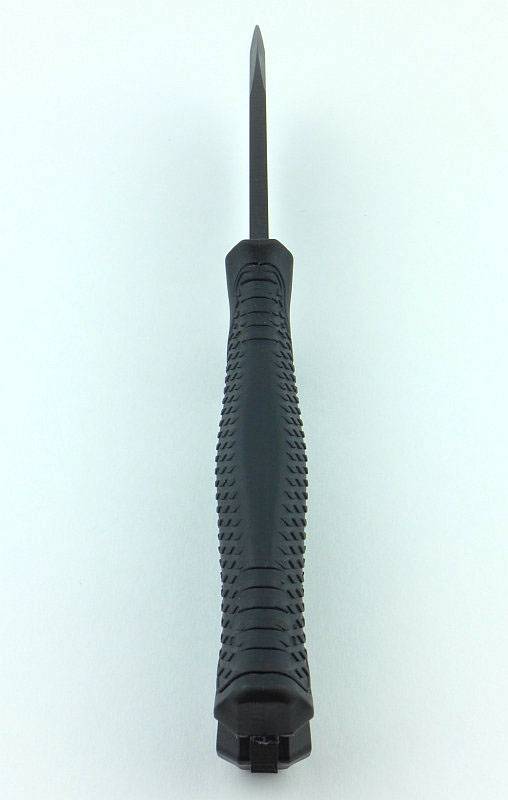
Despite the grip looking quite flat when in the sheath, you can see there is a definite palm swell.
 photo 23 Strongarm swell P1190725.jpg

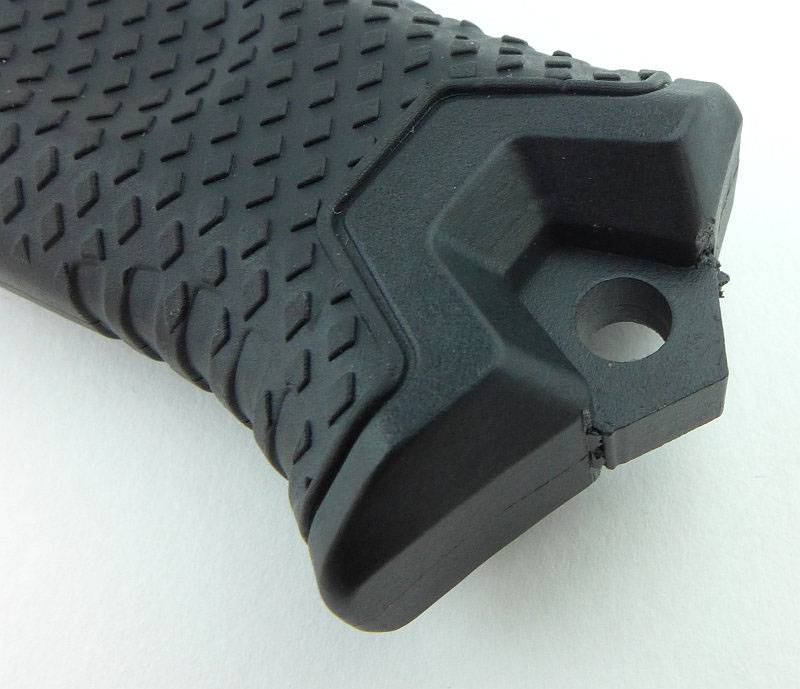
The full tang protrudes from the handle providing a lanyard hole and glass breaking point.
 photo 24 Strongarm glass breaker P1190728.jpg

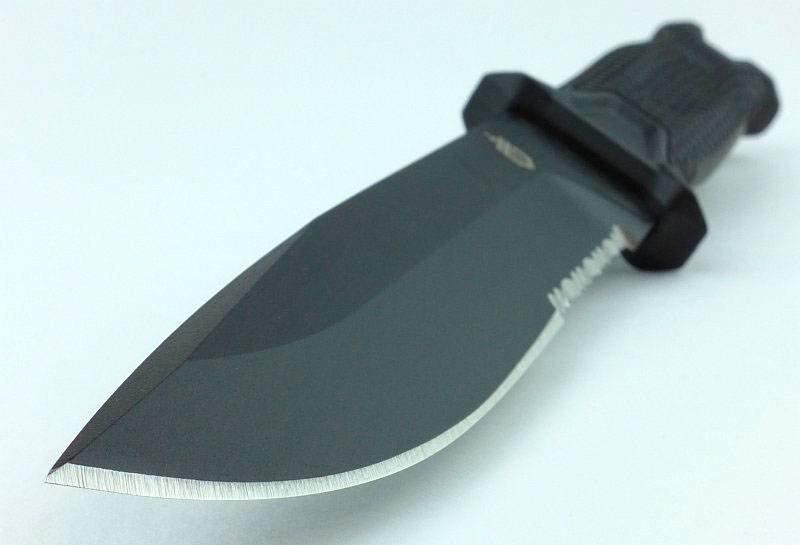
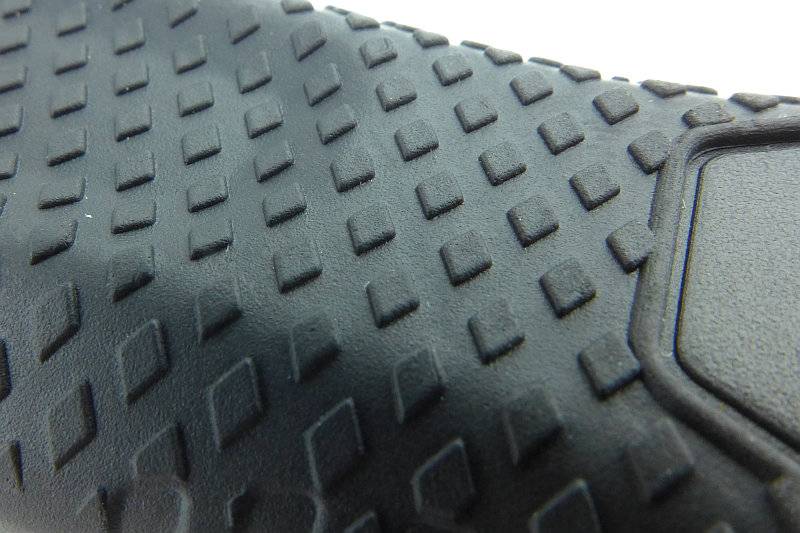
There is a rubber over-mould on the glass-filled nylon handle which has a diamond-shaped raised grip pattern.
 photo 25 Strongarm grip P1190735.jpg

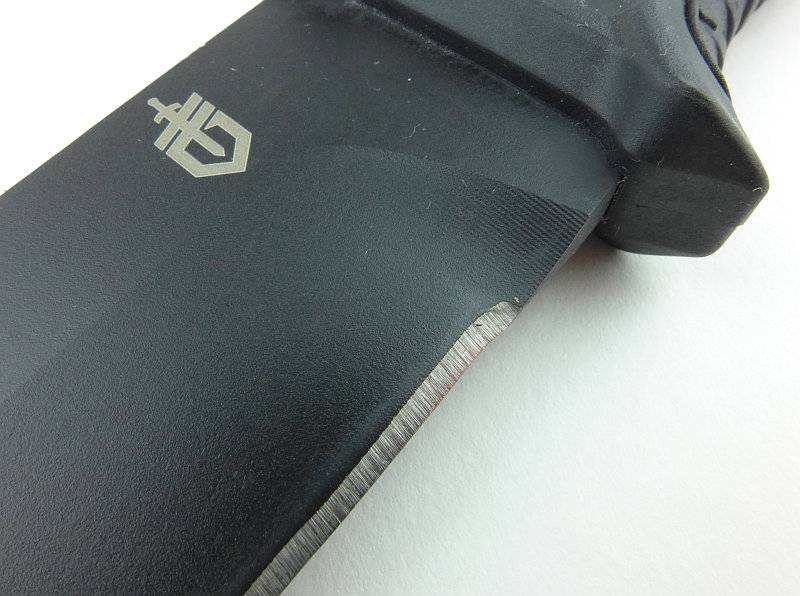
Keeping the blade strength to the maximum the plunge line is a smooth curve transitioning from cutting edge to ricasso.
 photo 26 Strongarm plunge P1190738.jpg

Looking at how the cutting edge terminates for the plain edge version. I shall probably be adding a sharpening choil myself to this one.
 photo 40 Strongarm plain edge P1190804.jpg

As you would expect, when sheathed there is no visible difference between the plain and part-serrated versions.
 photo 28 Strongarm both P1190763.jpg

Let’s have a quick look over the difference between them.
 photo 29 Strongarm both P1190768.jpg

Starting with a simple side-by-side.
 photo 30 Strongarm both P1190770.jpg

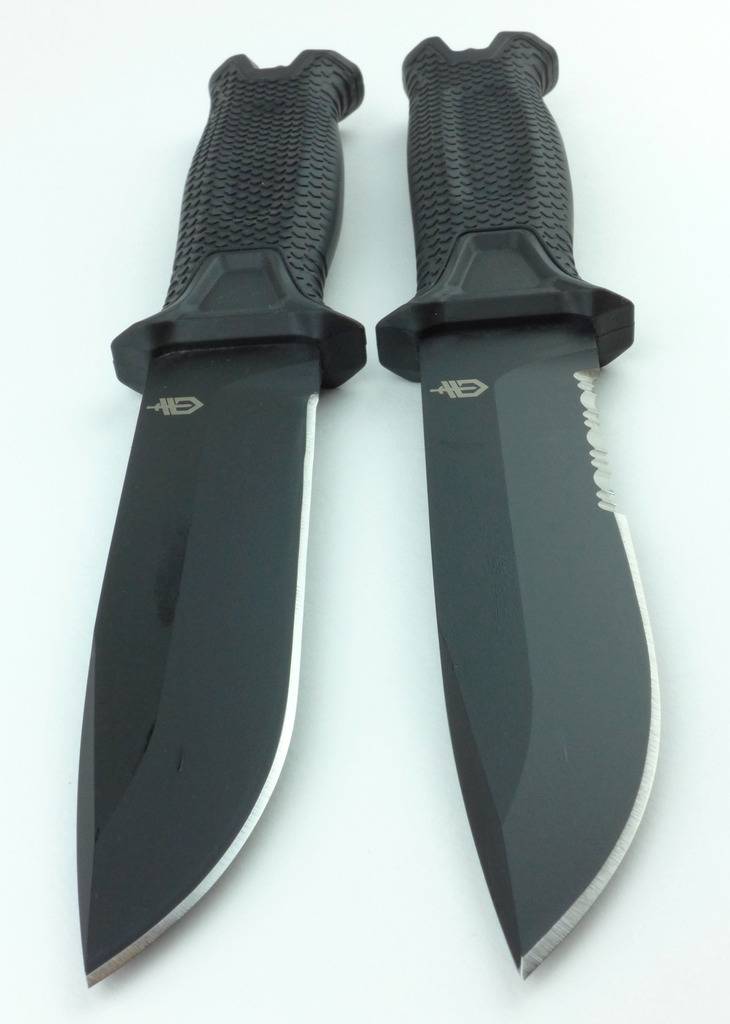
Of course, the blades are made from exactly the same blade blank.
 photo 31 Strongarm both P1190771.jpg

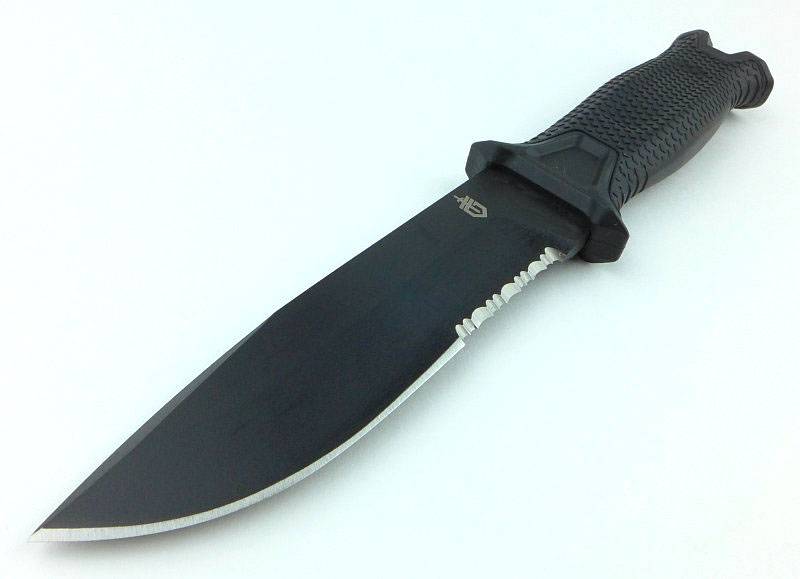
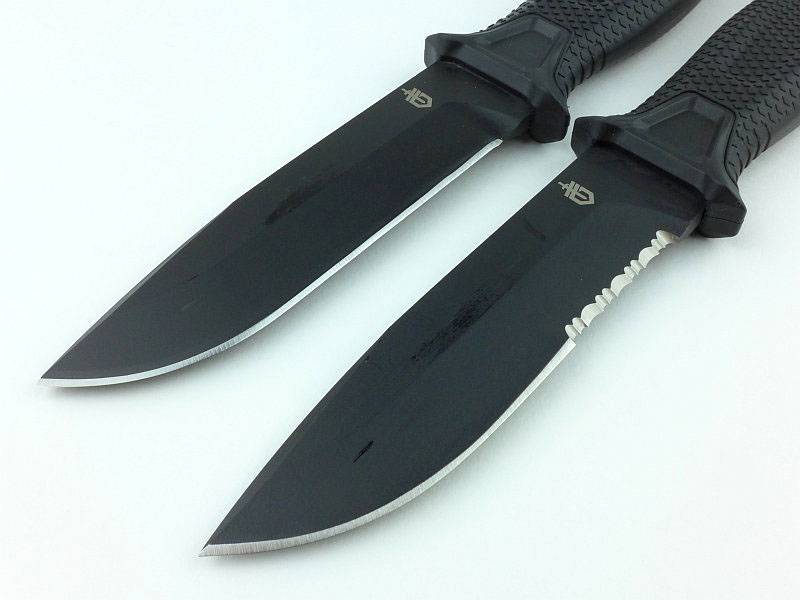
Having that part-serrated edge always seems to make that version look as if it has more ‘belly’ near the front of the blade. This is because the serrations have to be cut quite deeply into the blade due to being a single bevel grind.
 photo 32 Strongarm both P1190774.jpg

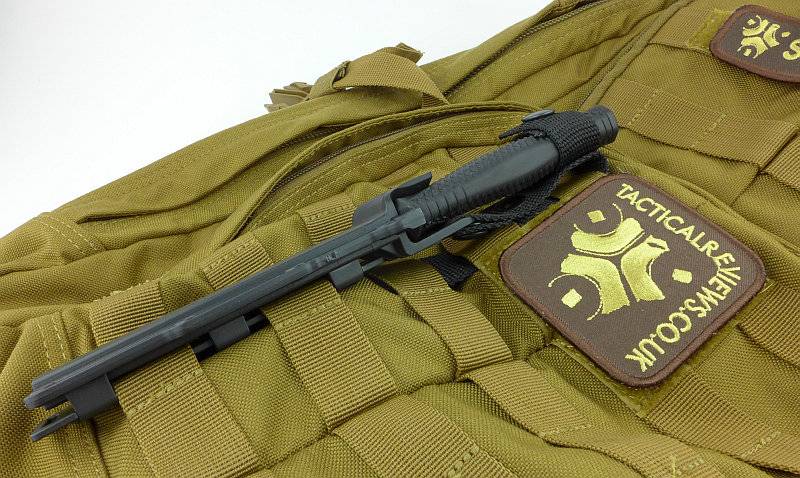
Now we have had a good look over the Strongarm, it is time for that PALS attachment. Thanks to the secure retention system in the sheath, the knife can be happily mounted tip up or down.
 photo 18 Strongarm PALS P1190716.jpg

When PALS mounting you remove the belt loop and use the hanger strap to keep the handle from flapping. This hanger strap has one press-stud to secure it to the webbing and the rest of the strap needs to be tucked out of the way.
 photo 19 Strongarm PALS detail P1190713.jpg

The plastic sheath fits into the PALS webbing like this.
 photo 20 Strongarm PALS detail P1190710.jpg

A very neat PALS compatible system and far more compact than the LMF II or Prodigy.
 photo 21 Strongarm PALS detail P1190706.jpg

What it is like to use?

I’d like to start this section with a little comparison to its most closely related sibling, the Prodigy. I really like the LMF II and Prodigy, so if there are any comments that sound anti-either of them it is only by way of saying how the Strongarm has improved on them.

The most obvious difference is the size of the sheath and the retention tab. The new retention system is secure, but much easier to use. Overall the force required to remove the knife is slightly less with the Strongarm, but still plenty strong enough to keep the knife in place. There are also two thumb tabs moulded into the sheath to give you a leverage point for bringing the knife out of the sheath under much more control than just pulling it out. The streamlining of the sheath makes a huge difference to the apparent size of the knife when carrying it.
 photo 33 Strongarm prodigy compare P1190778.jpg

Once the Prodigy and Strongarm are out of their sheaths they are more similar in appearance but with several key differences that we will take a look at.
 photo 34 Strongarm prodigy compare P1190784.jpg

The area of the handle where the retention system holds the knife is quite different. For the older Prodigy, the normal moulded guard is gripped by the sheath, but in the Strongarm a clearly dedicated section of the guard is specifically shaped for the sheath to click into. In this way, instead of the sheath needing to grip the ‘normal’ handle, the new Strongarm has had the retention system designed into the knife handle making it much more precise.
Also of note is the handle texture on the Strongarm; while the Prodigy feels very comfortable and has good grip, the grip pattern of the Strongarm makes it feel rough and like it is positively holding onto you.
 photo 36 Strongarm prodigy compare P1190789.jpg

The part-serrated portion of the blade on the Strongarm has been reduced. This is most welcome as the serrated part of the Prodigy blade did seem to dominate it.
 photo 37 Strongarm prodigy compare P1190792.jpg

Two features we can notice here are the position of the striker on the pommel, and the grip length. The striker on the Strongarm is more central than on the Prodigy making it more natural to strike on target. Though the handle itself is the same overall length, the grip hook has been pushed further along the handle effectively making the grip longer giving more room for a gloved hand.
 photo 38 Strongarm prodigy compare P1190794.jpg

Finishing up in this comparison with an overhead shot which shows how similar the overall dimensions are to the older Prodigy.
 photo 39 Strongarm prodigy compare overall P1190801.jpg

In the Strongarm, Gerber have pitched the size bang-on for an easily carried but still capable survival knife. For reference, I take XL size gloves. Personally I prefer a little more body to the grip, but this does need to work well for the average hand and I can still get a good grip without it feeling too small.
 photo 27 Strongarm in hand P1190747.jpg

I don’t have the facilities to test the Strongarm in an escape/rescue/breaching scenario so instead have to focus on more of the survival and camping aspects. Both the plain edge and part-serrated version are on test, and personally I favour the plain edge as a general working tool, but do see a place for the part-serrated as a backup tool. One of the reasons I don’t like the part-serrated blade is for the wood preparation and carving round the camp. As shown here the serrations make significant shaping in those power cuts carried out close to the handle. It certainly cuts well, but serrations cuts best when slicing and not so well in push cuts. Also if your uses are for cutting a lot of fibrous material and ropes/cords, then the serrations are going to be a real boon.
 photo 48 Strongarm whittle P1250185.jpg

Thanks to the thick blade stock, the Strongarm’s blade has enough weight in it to work on its own hacking into branches. Here is a rather untidy job on some dormant wood and is my first attempt while I was getting a feel for the best grip to use (two or three finger).
 photo 49 Strongarm hack P1250188.jpg

So even before you have found yourself a baton, it gets through some smaller branches easily enough. More fatiguing than a bigger heavier knife, but it will do the job.
 photo 50 Strongarm hack P1250198.jpg

Having followed the evolution of the Gerber line to the Strongarm, there isn’t a single feature I would undo and want to revert to an earlier version. I still like and use the earlier knives, but the Strongarm is an improvement over them in every way, not least the ease of carry. Remember the ‘best’ survival knife is the one you have on you, so where I might not carry the LMF II, I would carry the Strongarm.

Review Summary

The views expressed in this summary table are from the point of view of the reviewer’s personal use. I am not a member of the armed forces and cannot comment on its use beyond a cutting tool or field/hunting knife.

Something that might be a ‘pro’ for one user can be a ‘con’ for another, so the comments are categorised based on my requirements. You should consider all points and if they could be beneficial to you.

_______________________________________________ _______________________________________________
Things I like What doesn’t work so well for me
_______________________________________________ _______________________________________________
Simple and effective blade retention system. Retention strap press-stud was initially too stiff and caused fraying of the strap.
Part-serrated and Plain Edge versions available. Blade a little too thick for good food preparation.
Multi-mount sheath with belt, horizontal and PALS options.
Full Tang.
Ambidextrous sheath.
Enough weight in the blade to chop.


Discussing the Review:

Please feel free to add comments to the review, but the ideal place to freely discuss these reviews is on a forum. If you started reading the shorter forum version of the review, but followed the link this full exclusive review, please return to that forum to discuss the review there.
If you read the review entirely on Tactical Reviews, please consider one of the following to join in any discussion.

BladeForums – Knife Reviews (US based Forum for Knife Discussion)

CandlePowerForums – Knife Reviews Section (Largest and Friendliest Flashlight Community Forum)
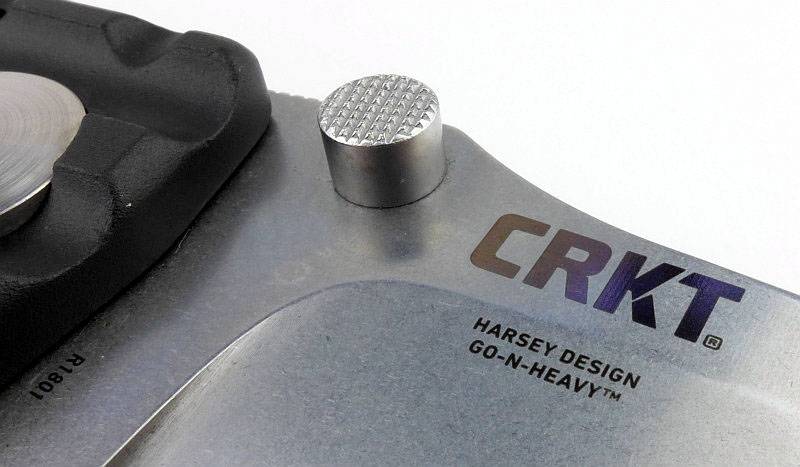
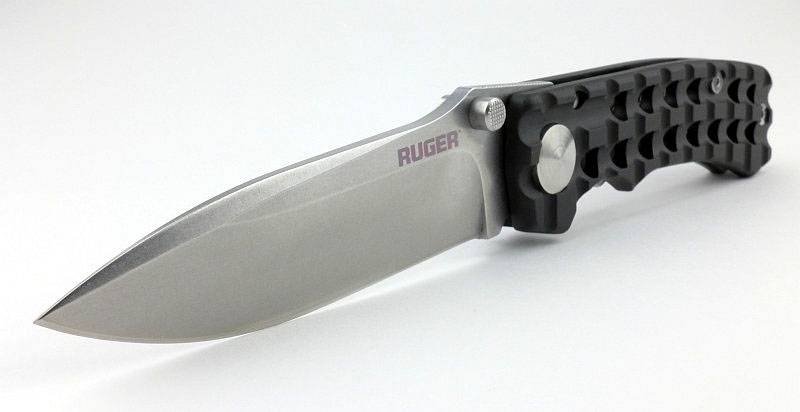
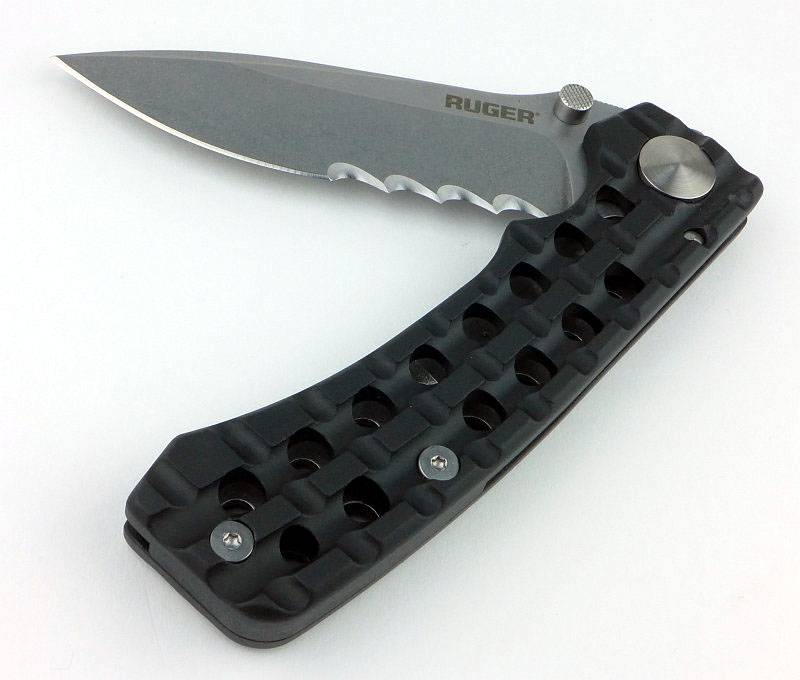
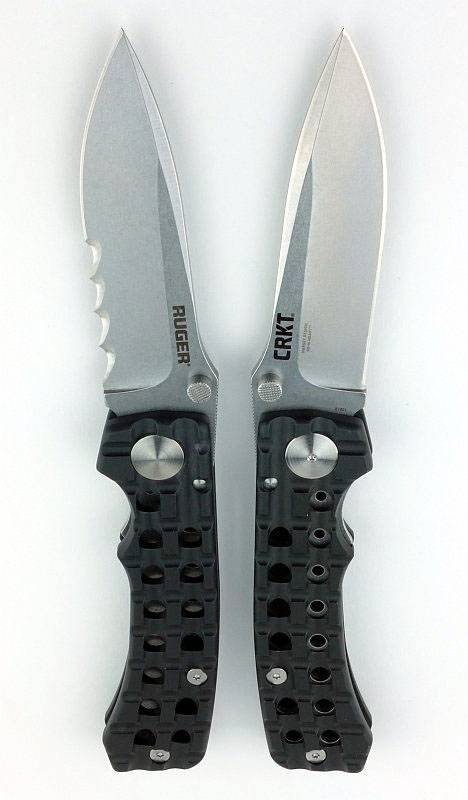
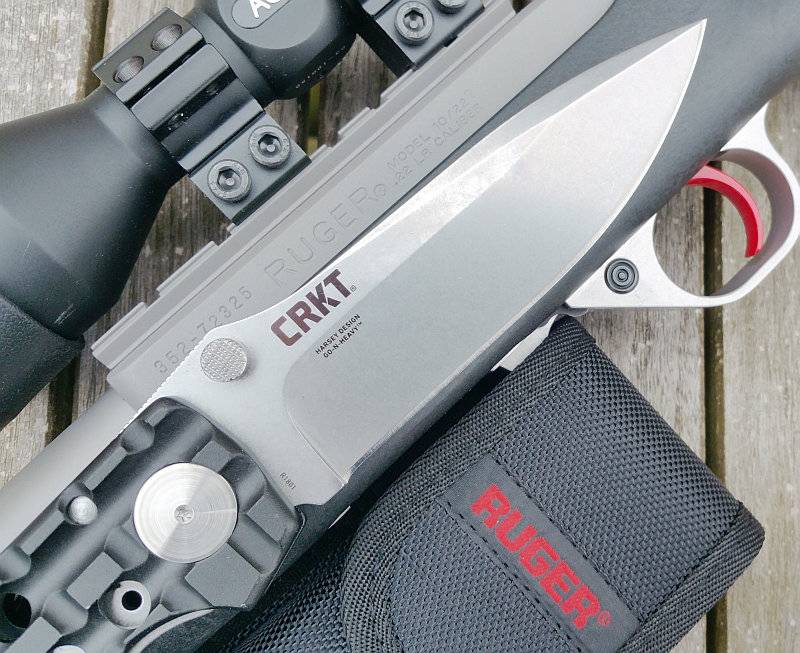
Knife Review: Ruger / CRKT GO-N-HEAVY (Plain and Veff Serrated Versions)

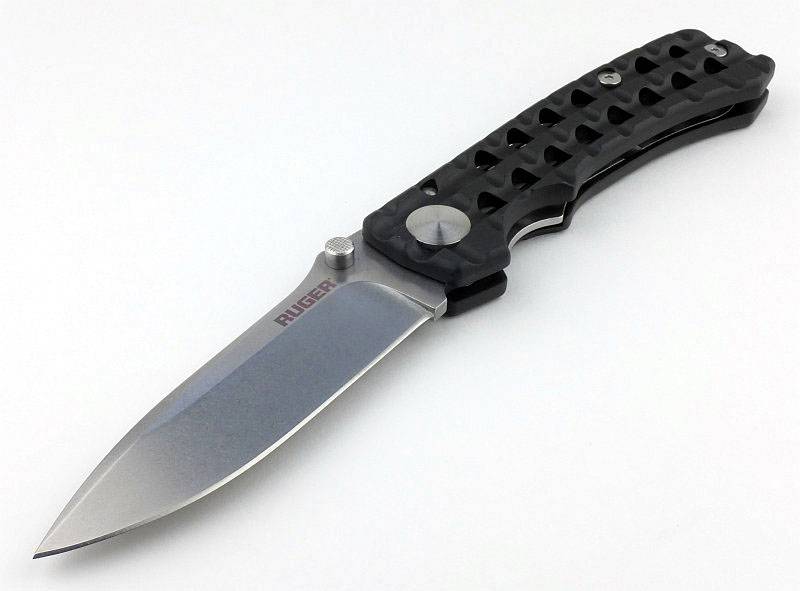
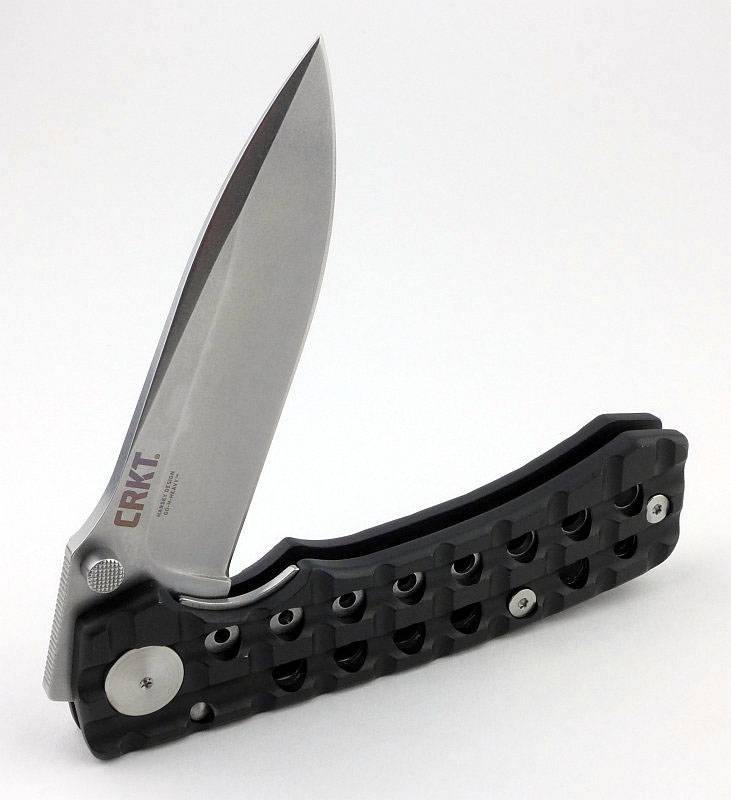
One of my highlights of IWA 2016 was a visit to the CRKT stand, and on that stand was a knife I could not leave IWA without. Amongst the new Ruger line of knives (produced by CRKT) was the super-sized Go-N-Heavy which stood out not only due to its size, but for the distinctive look which comes from a combination of the design brief for the Ruger line of knives and its pedigree of being a William Harsey design.

 photo 17 GoNHeavy open P1170642.jpg

The Blade and Handle Geometry:

Most knife specifications have a basic description of the blade geometry, but in this section I will be taking a more detailed look at geometry and balance.
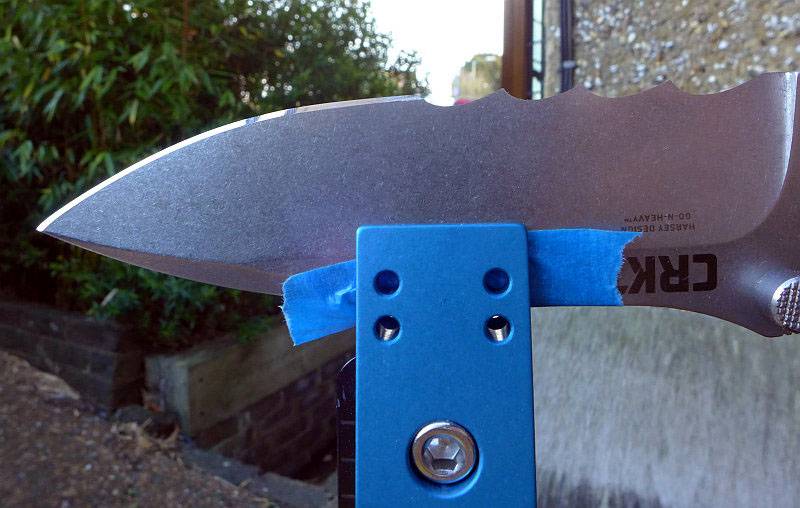
 photo 33 GoNHeavy flat grind P1180539.jpg

Using a set of gauges and precision measuring equipment including a Vernier protractor, callipers, fixed radius gauges and the unique Arc Master adjustable radius gauge (the one that looks like a crossbow).
 photo Knife measuring P1180483.jpg

These measurements have been tabulated and are presented along with a few reference blades (8″ Chef’s Knife, 5.5″ Santoku and the popular Fällkniven F1).

Key aspects such as the primary bevel angle, grind type, blade depth, blade thickness, length, weight are detailed, along with balance information.
 photo 32 GoNHeavy grind P1180537.jpg

The ‘Balance relative to the front of the handle’ tells you if the knife will feel front heavy, or if the weight is in your hand (a positive value means the weight is forward of the front of the handle). The ‘Balance relative to the centre of the handle’ indicates how close to a ‘neutral balance’ the knife has in the hand.
 photo 31 GoNHeavy balance P1180534.jpg

In the case of full convex grinds the approximate centre of the grind is used for the primary bevel angle estimate.
 photo GoNHeavy parameters.jpg

The blade is made from 8Cr13Mov steel, the washers from Teflon and the handles are hard anodised 6061-T6 Aluminium.

Explained by the Maker:

The reasons for certain design choices may not be clear when simply looking at an object, so this section is intended to give an insight into the thinking behind a design by speaking to the designer themselves.

Unfortunately I can’t always get time with the designer so will use this section to include relevant information about the knife and its designer.

While discussing the Ruger knives with CRKT, there were a couple of insights into the processes that led to the final designs of the knives.

The project started with Ruger approaching CRKT and asking them to design a special line of knives for them. The knives had to represent Ruger, so would not simply be any old design, but had to fit in with the feel of Ruger’s products.

As one of the designers CRKT have worked with before, it turns out that Bill Harsey had already been working on a design that was reminiscent of the Picatinny rails on the SR line of rifles. Never quite making it off his workbench, it seemed a perfect fit, so was adopted for the Go-N-Heavy and Go-N-Heavy Compact knives in the Ruger lineup. The Ruger range also includes a total of 23 different models, fixed and folding, plain edges and part-serrated.

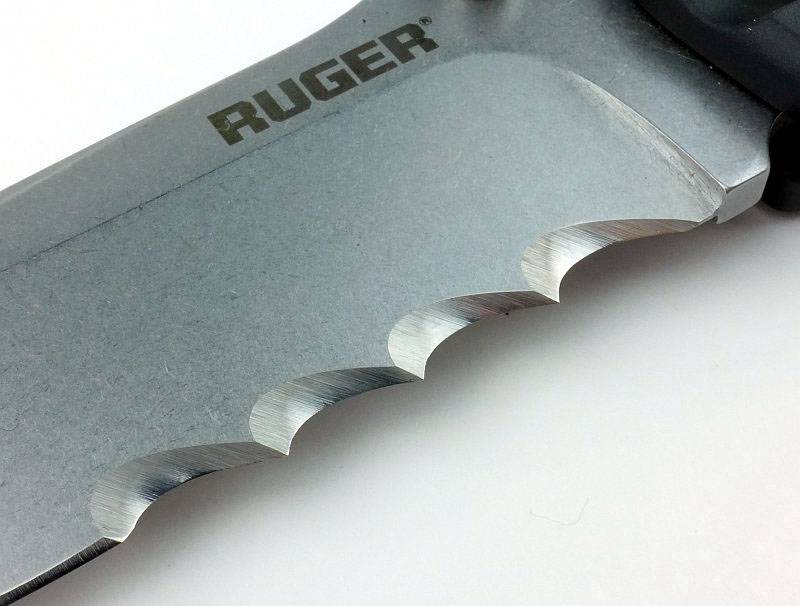
A feature used in CRKT knives are the unique Veff Serrations (which we will see in more detail). A different take on the design of serrations where the scallops are angled to give a positive feed into the cut. The effect is similar to a normal wood saw where the teeth cut into the material in one direction, but ride over the surface (clearing the cut) in the other. Veff serrations give real bite to the cut. We will cover these in more detail later.

A few more details:

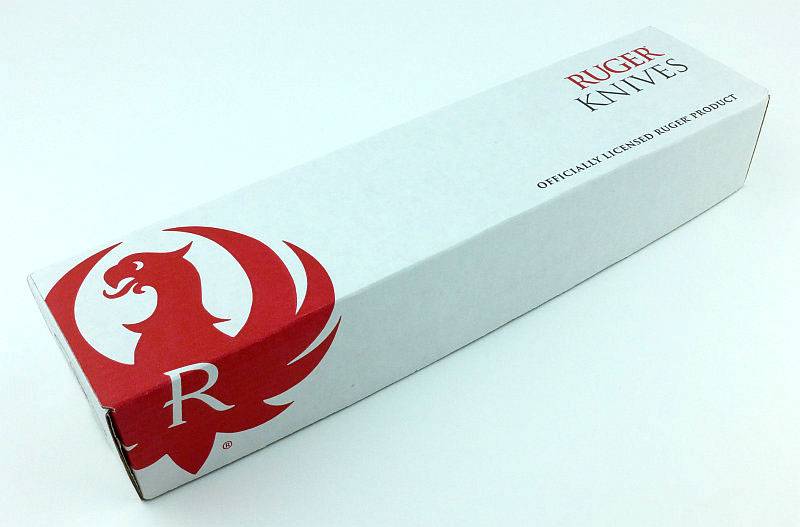
This review is going to look at both versions of the Go-N-Heavy, the plain edge and part-serrated (Veff serrations). The knife arrives in a Ruger branded box.
 photo 01 GoNHeavy box P1190016.jpg

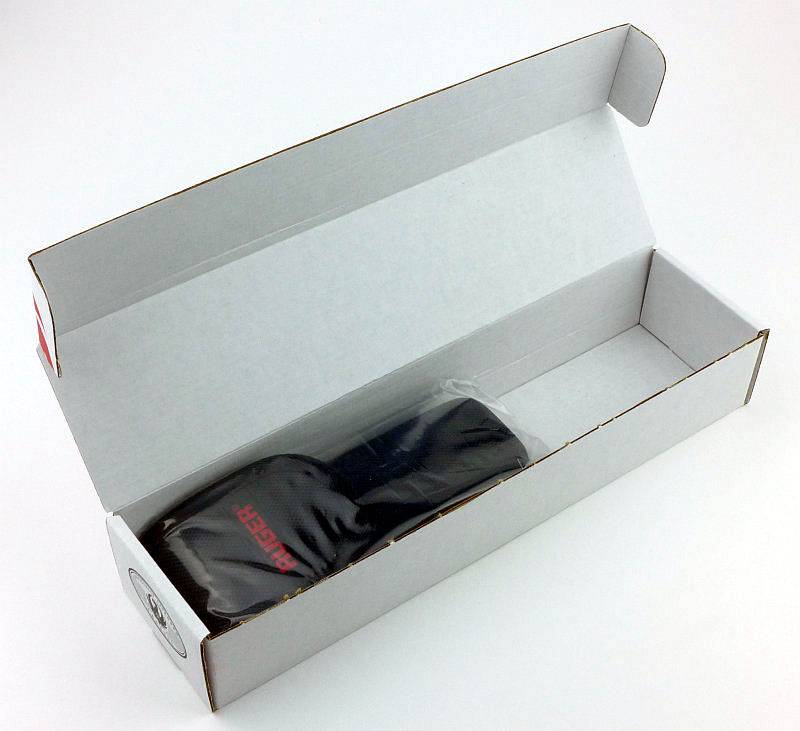
Inside the knife is in its belt pouch and wrapped in a plastic bag.
 photo 03 GoNHeavy box open P1190022.jpg

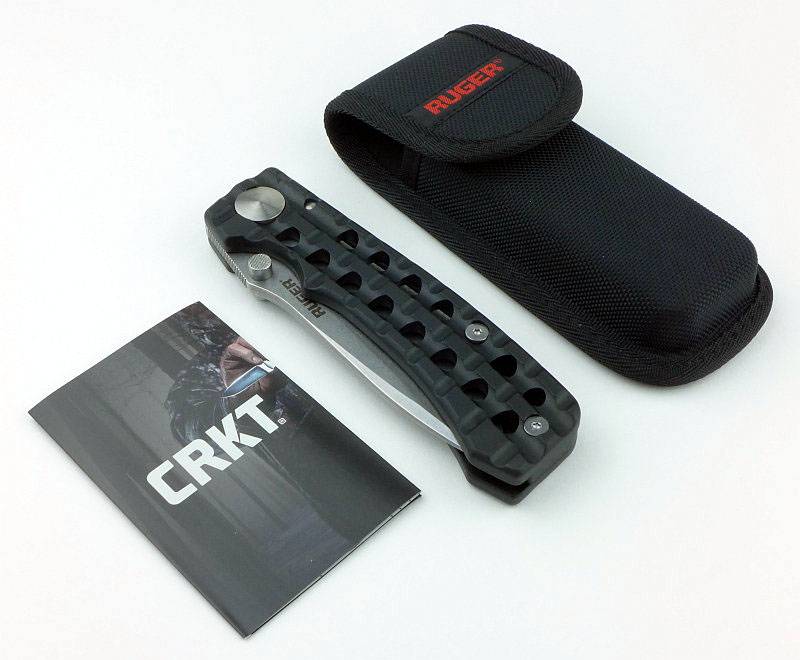
Along with the knife and belt pouch is a CRKT leaflet.
 photo 04 GoNHeavy box contents P1190030.jpg

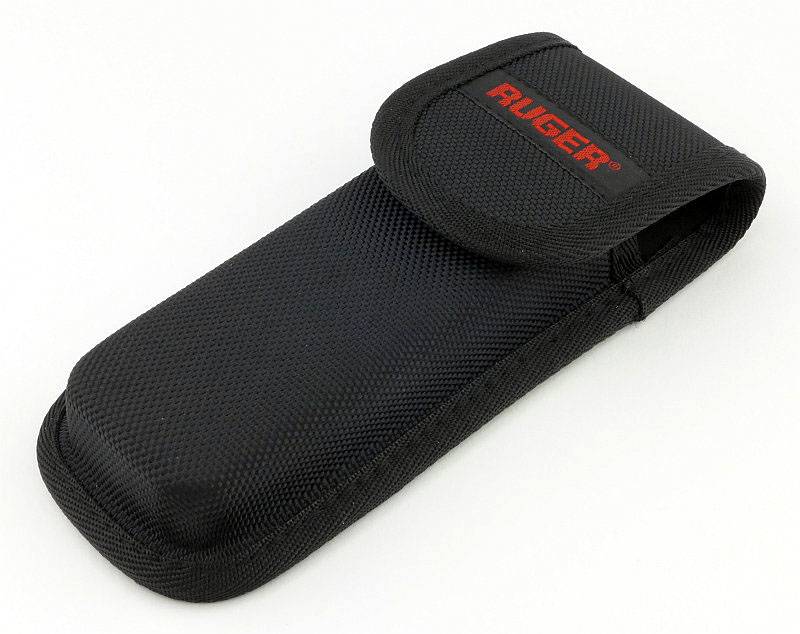
Especially important as this is a large folder, there is a well finished nylon belt pouch.
 photo 06 GoNHeavy holster front P1170601.jpg

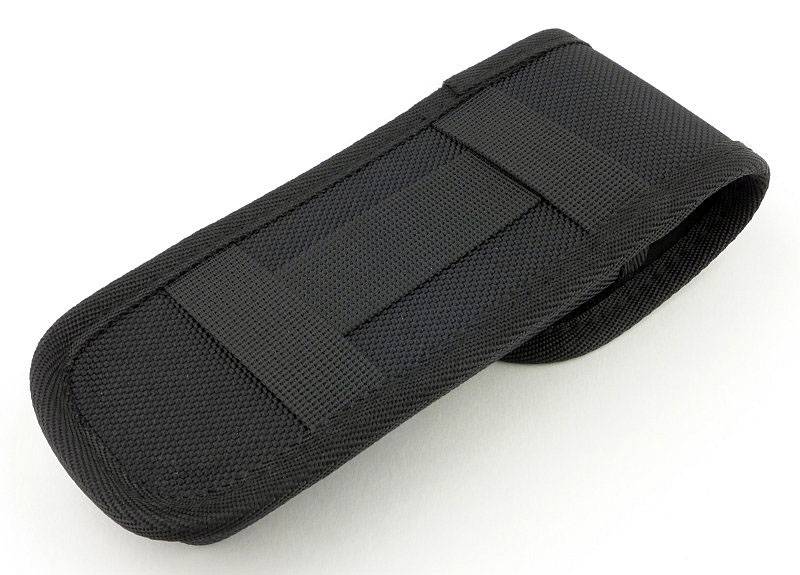
The belt pouch loops allow for horizontal or vertical carry positions.
 photo 07 GoNHeavy holster back P1170604.jpg

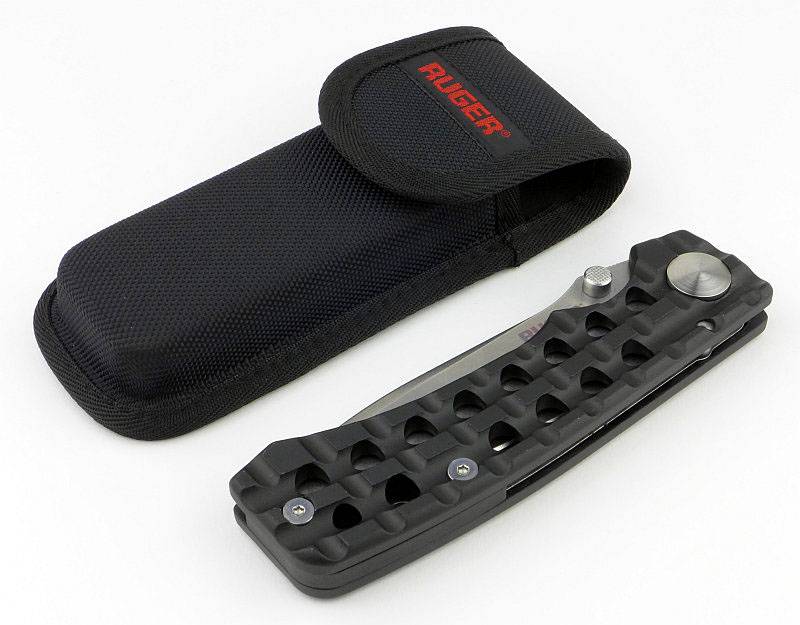
That large belt pouch is filled by the Go-N-Heavy.
 photo 08 GoNHeavy knife and holster P1170607.jpg

Let’s take a look round this, starting with the Ruger side of the blade.
 photo 09 GoNHeavy knife closed P1170609.jpg

Then the CRKT side of the blade. (On this side you can see the stainless steel lock insert/liner.)
 photo 10 GoNHeavy knife closed P1170613.jpg

Centring is pretty much spot on. Oddly, I’m looking at the actual knife right now and it looks better than this photo.
 photo 11 GoNHeavy centring P1170617.jpg

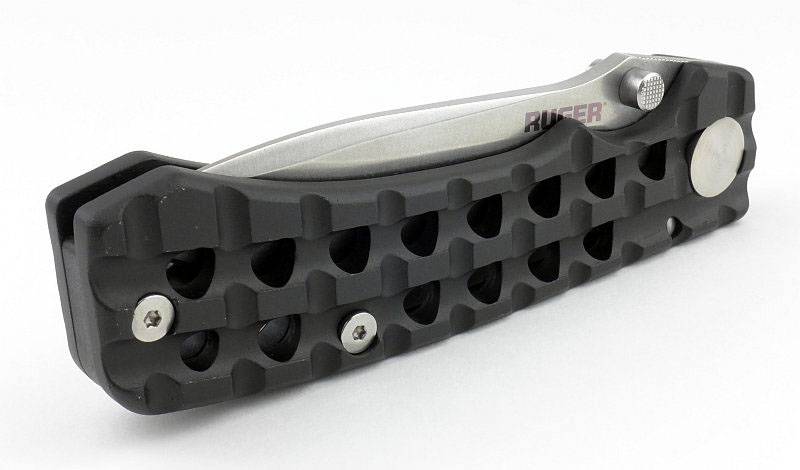
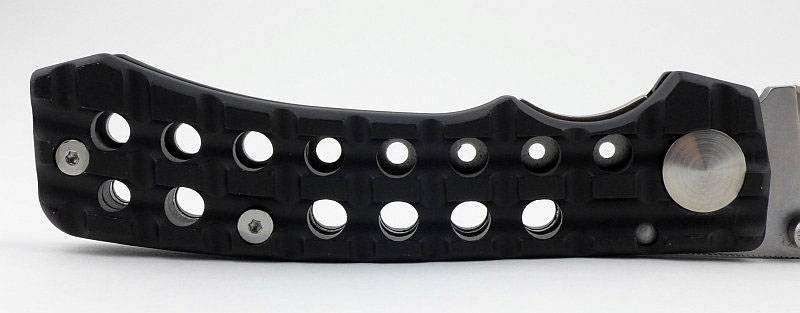
Loving the details in the handle. Though not a Picatinny rail, it is certainly reminiscent of one.
 photo 12 GoNHeavy handle P1170620.jpg

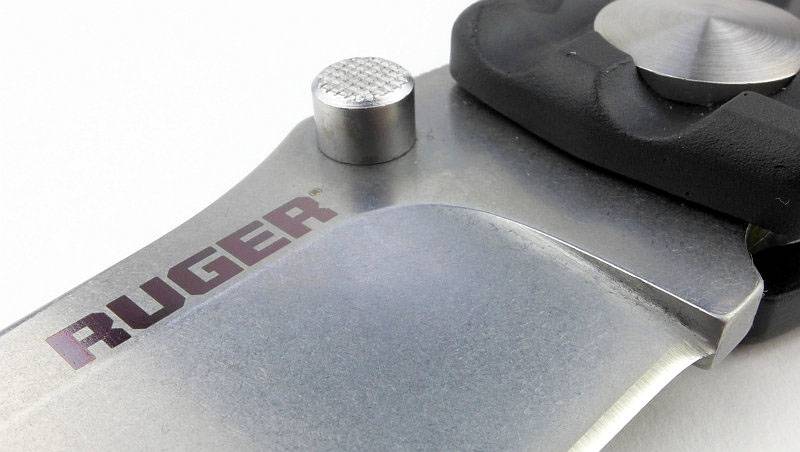
Enough blade is exposed to allow two handed opening, but there is also an ambidextrous thumb stud fitted to the blade.
 photo 13 GoNHeavy thumb P1170624.jpg

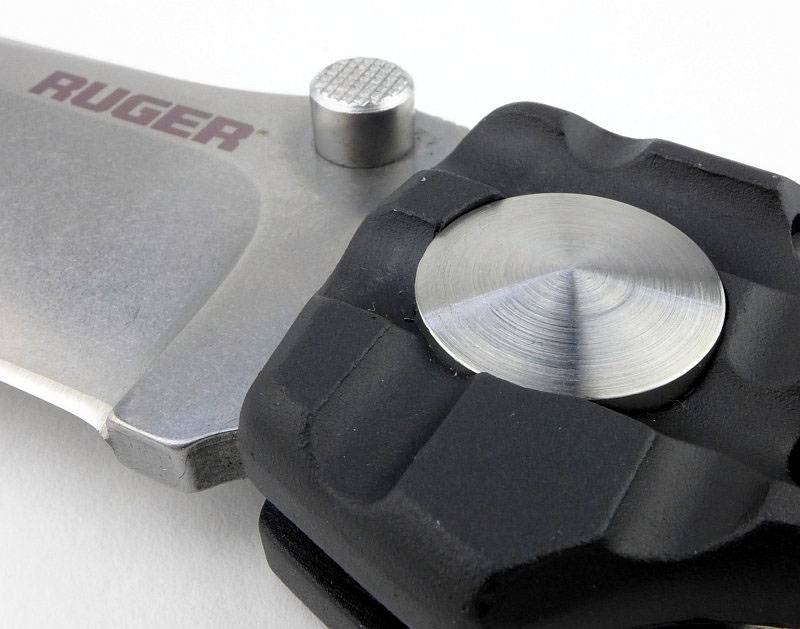
One side of the pivot has a torx fitting for adjustment. The pivot bolt appears big and oversized, but this is for stylistic reasons and sits very well with the black anodised handles.
 photo 14 GoNHeavy pivot P1170628.jpg

Here we can see the blade stop pin and locking surface (which is fresh and unused straight out of the box).
 photo 15 GoNHeavy stop pin P1170633.jpg

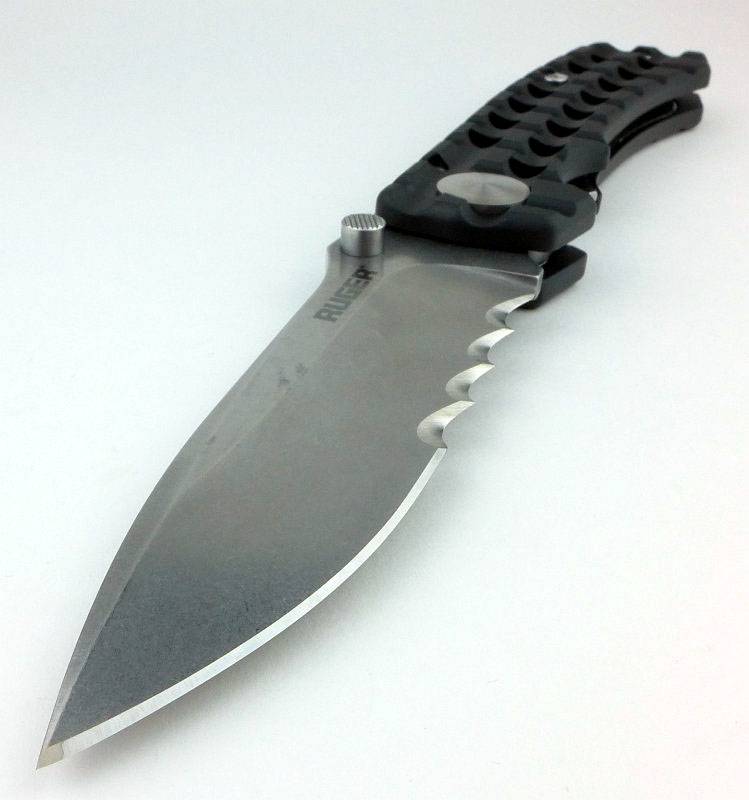
And out comes that nice big blade with recognisable Harsey style.
 photo 16 GoNHeavy part open P1170636.jpg

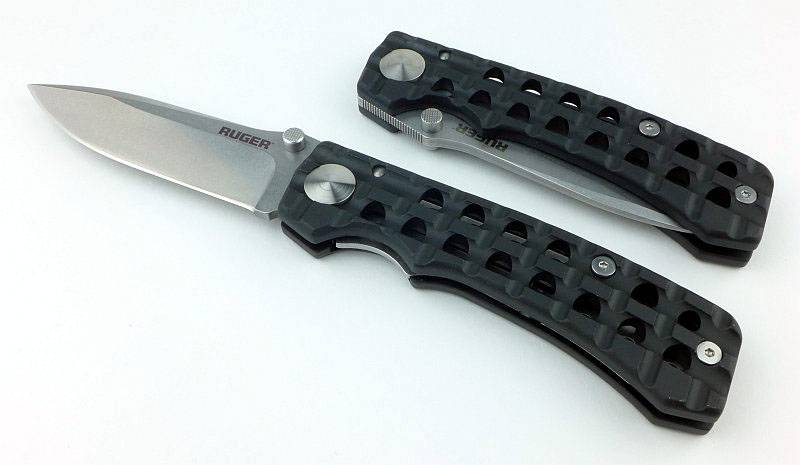
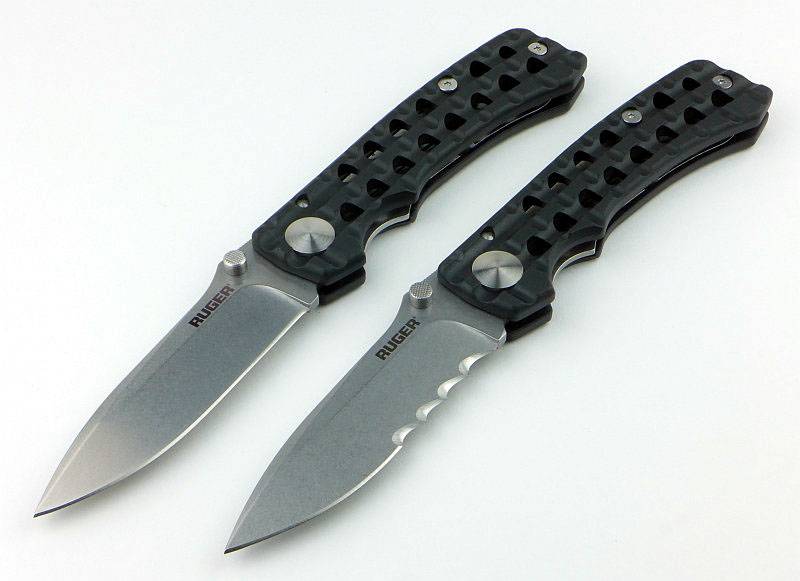
Both versions together to show how it looks open and closed.
 photo 05 GoNHeavy open and closed P1190031.jpg

One side of the blade has the CRKT logo, plus model, engraved into the surface.
 photo 18 GoNHeavy logo P1170646.jpg

Lock engagement straight out of the box looks a little light, but was strong and soon settled in slightly with use.
 photo 19 GoNHeavy lock P1170649.jpg

Stepping back a little this view shows how the stainless liner fits into a recess in one of the aluminium handles.
 photo 20 GoNHeavy lock bar P1170653.jpg

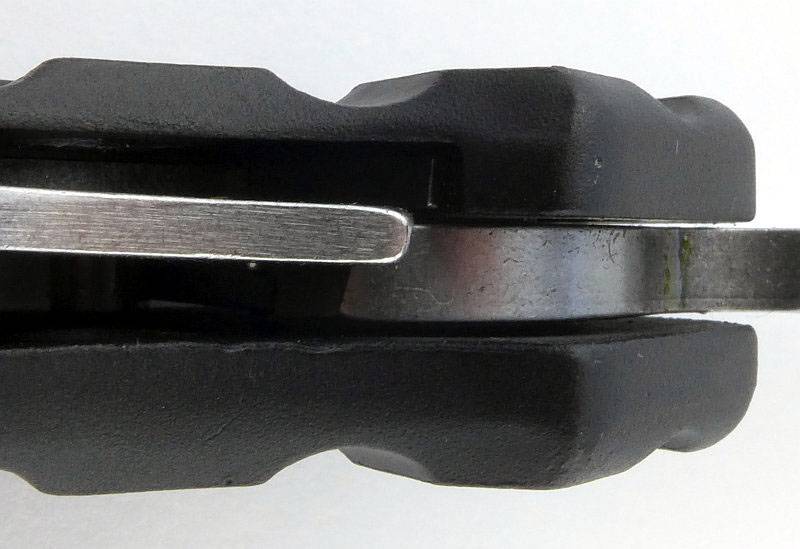
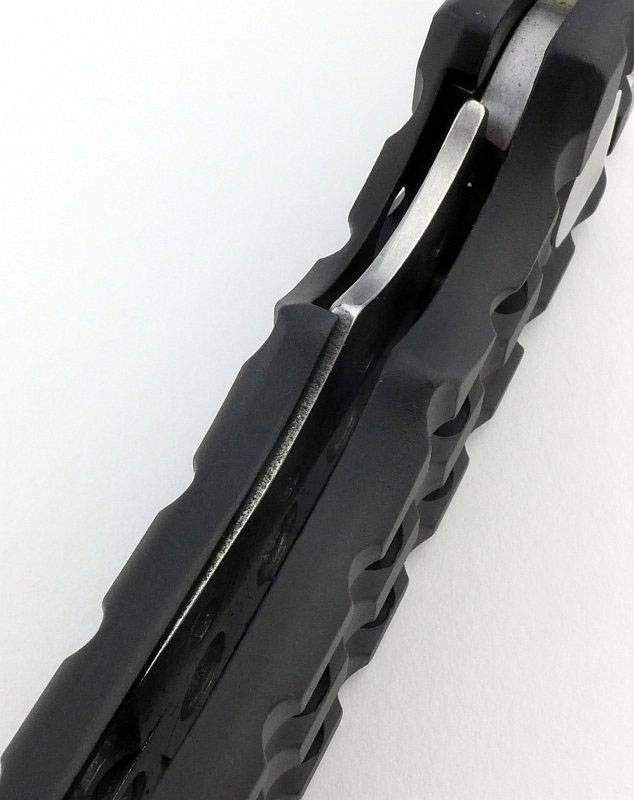
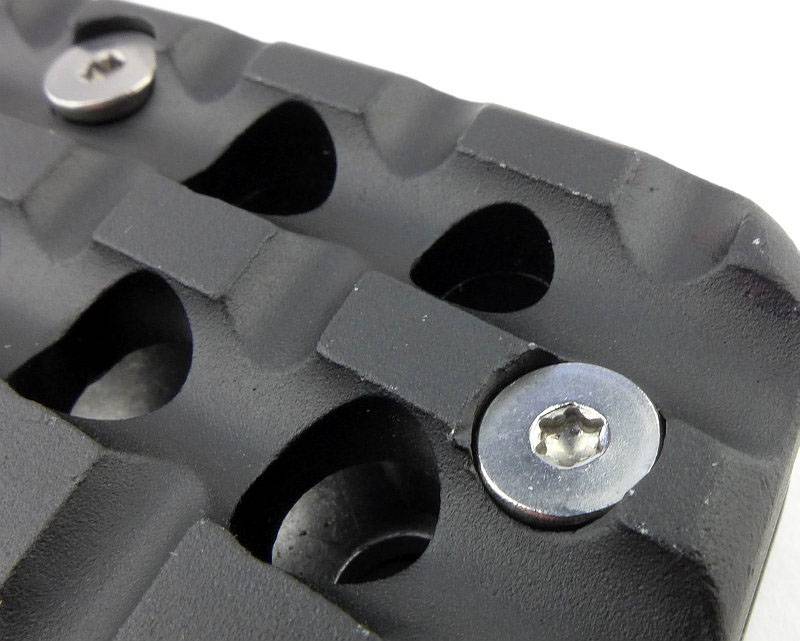
The holes in the handles do go all the way through. You might also spot that the holes in the stainless steel liner are slightly smaller.
 photo 21 GoNHeavy holes P1170655.jpg

Only one side of the pivot bolt has a torx fitting. The other side is completely plain.
 photo 22 GoNHeavy pivot 2 P1170659.jpg

The plunge line is neatly executed.
 photo 23 GoNHeavy plunge P1170663.jpg

Torx bolts are used to hold the handles together.
 photo 24 GoNHeavy handle screw P1170666.jpg

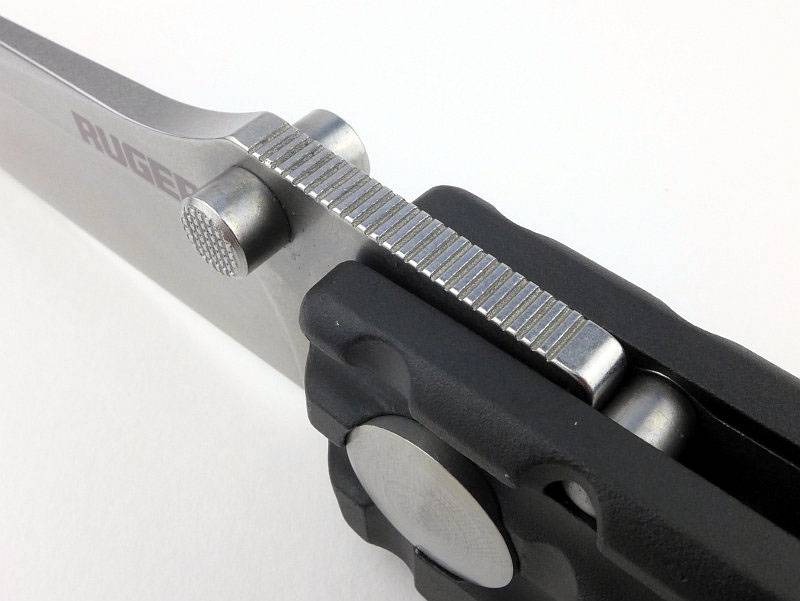
On the thumb ramp there is some fine jimping to give you extra grip.
 photo 28 GoNHeavy jimping P1170696.jpg

Taking a very close look into the Go-N-Heavy with the blade open you can see the detent ball on the side of the lock bar which holds the blade in the closed position.
 photo 29 GoNHeavy detent P1170703.jpg

There is a nice flowing semi-swedge on the blade spine.
 photo 25 GoNHeavy angle P1170677.jpg

Now a switch over to the part-serrated version featuring Veff serrations.
 photo 34 GoNHeavy veff P1190041.jpg

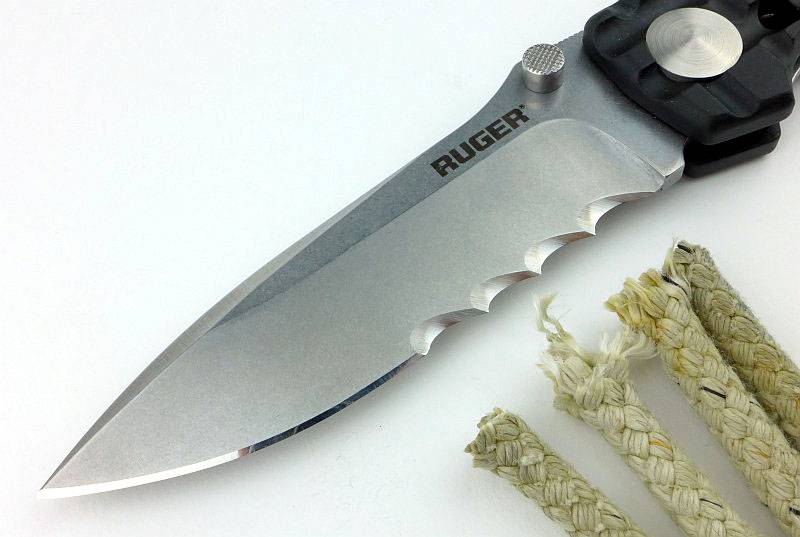
Really heavy-duty serrations with only four scallops in the serrated area.
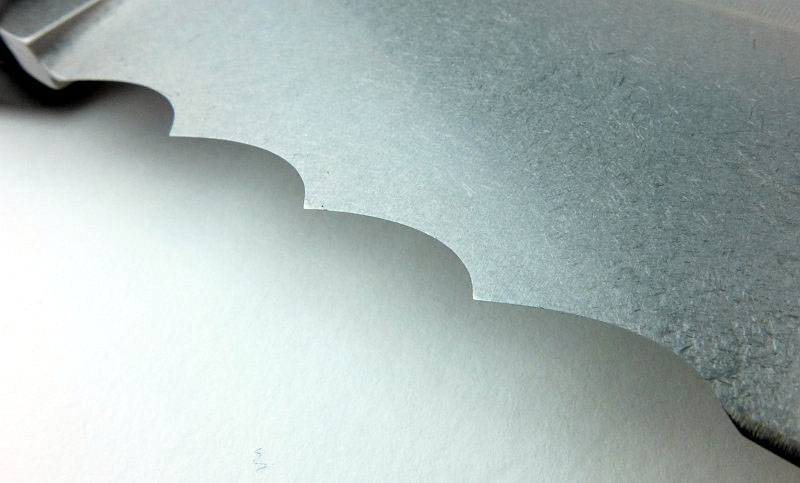
 photo 35 GoNHeavy veff serrations P1190047.jpg

From the other side of the blade you can see the serrations are cut with a single bevel.
 photo 36 GoNHeavy veff single bevel P1190054.jpg

The two versions.
 photo 38 GoNHeavy both P1190085.jpg

What is the Go-N-Heavy like to use?

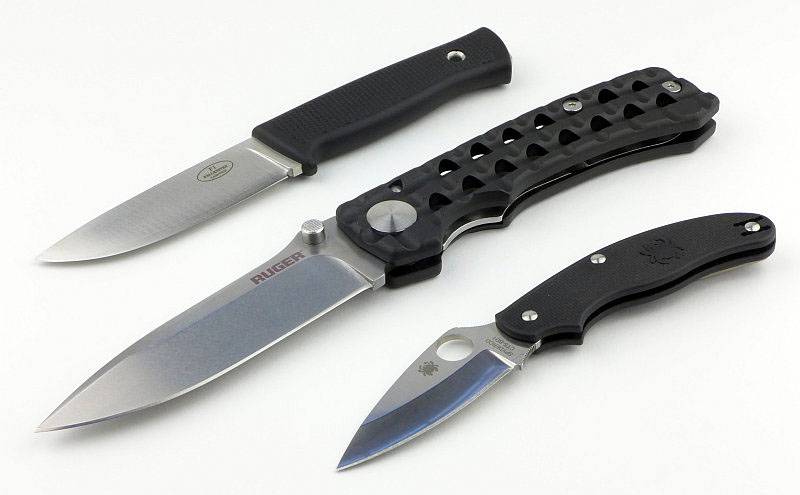
Before we go onto using it, to start with we have to get the proper ideal of scale, so here the Go-N-Heavy is next to the Fällkniven F1 and a Spyderco UK Pen Knife. Yes, it really dwarfs the Fällkniven in blade and handle.
 photo 27 GoNHeavy size P1170691.jpg

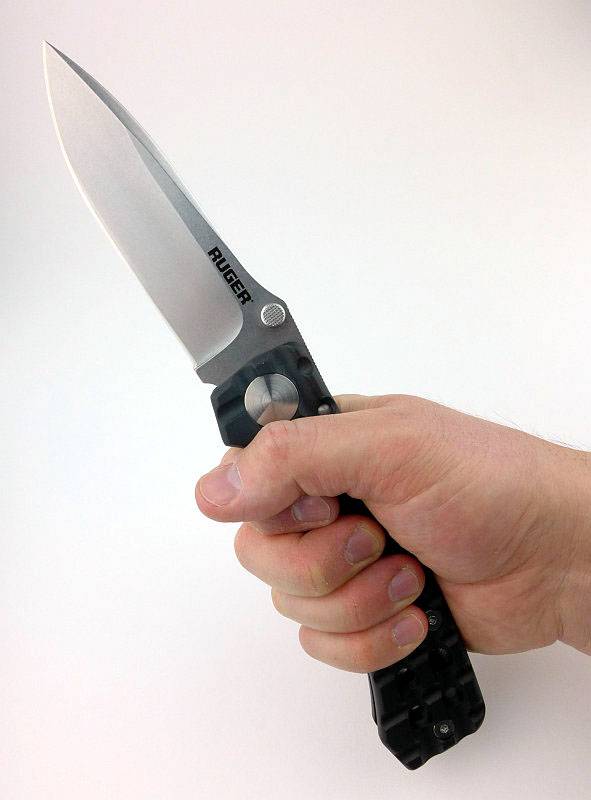
I take XL size gloves, and this knife makes my hand look small. What the large handle does allow for however are a range for different grip positions all of which remain comfortable.
 photo 30 GoNHeavy in hand P1170714.jpg

Ok, I’m not going to argue that it is the most practical knife, but saying that there are plenty of occasions I want to have a large knife with me but can’t really justify a fixed blade. The Go-N-Heavy gives you a knife with presence but which is small enough when folded to pop into a bag or onto your belt and not be too noticeable; until you need it.

There is also just something so satisfying about a big folder, watching that large blade appear and the knife double in size. When at IWA I found it very difficult to put down, and knew exactly which CRKT knife I wanted to test.

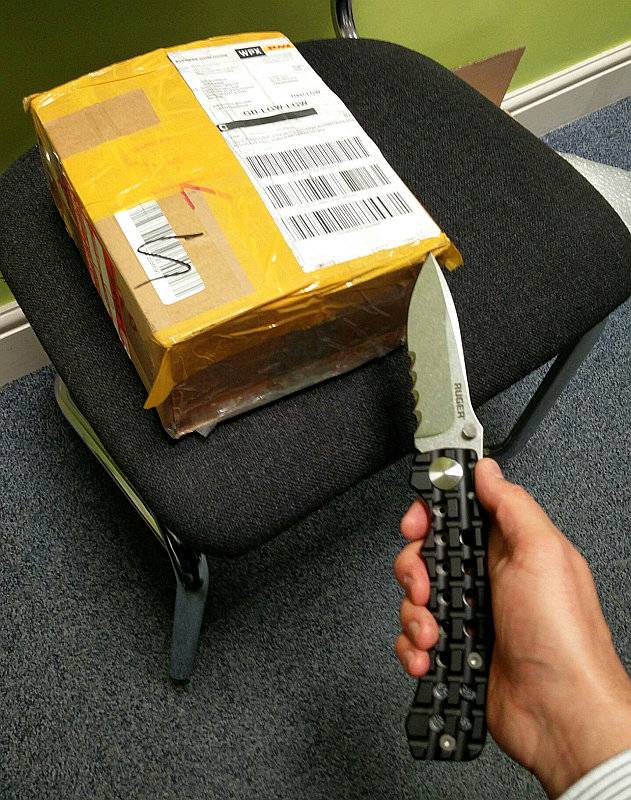
Perhaps a little over sized for a box cutter (especially as you might end up going through the entire box and cutting the contents), but it did the job. Clearly this is not what the knife was intended for.
 photo Box cutter IMG_20161006_133916.jpg

Though the factory plain edge was serviceable enough, I decided to give it a bit of an upgrade and pop a Wicked Edge onto it.
 photo Wicked edge GoNHeavy P1230401.jpg

Looks rather nice with its new edge.
 photo Wicked edge GoNHeavy P1230411.jpg

Unfortunately no large rope cutting tasks have yet presented themselves, so I’ve had to make do with smaller ropes. On the smaller sizes, the rope tends to stick in one of the serrations rather than the serration sawing through. It makes it more like a series of line cutting hooks. You need to scale up the cutting job to really get the Veff serrations showing their power. They look great, and are very aggressive, but on smaller jobs they can be hard work.
What you really can feel is the effect of the angled serrations; they actively bite deeper into the material as you cut instead of riding over the surface. In the right cutting job it makes for a very aggressive and efficient cut. For smaller jobs you often have to push the cut away from you to stop the teeth biting so deeply.
 photo 40 GoNHeavy veff cut P1230442.jpg

Serrated or plain edge, its your call and depends on your requirements (I’d love to see a mid-serrated version – see The Mid-Serrated Blade – A new concept from Subwoofer). Either one will give you a really satisfying super-sized folder.
 photo 39 GoNHeavy both P1190091.jpg

Review Summary

The views expressed in this summary table are from the point of view of the reviewer’s personal use. I am not a member of the armed forces and cannot comment on its use beyond a cutting tool or field/hunting knife.

Something that might be a ‘pro’ for one user can be a ‘con’ for another, so the comments are categorised based on my requirements. You should consider all points and if they could be beneficial to you.

_______________________________________________ _______________________________________________
Things I like What doesn’t work so well for me
_______________________________________________ _______________________________________________
Super-Sized Folder. Serrations are too large for some jobs.
Harsey Design. Smaller hands may struggle to open one handed.
Multiple grip options.
Distinctive Styling.
Veff Serrations have excellent bite.
Belt pouch included.

 photo 40 GoNHeavy ruger IMG_20160326_121119.jpg


Discussing the Review:

Please feel free to add comments to the review, but the ideal place to freely discuss these reviews is on a forum. If you started reading the shorter forum version of the review, but followed the link this full exclusive review, please return to that forum to discuss the review there.
If you read the review entirely on Tactical Reviews, please consider one of the following to join in any discussion.

EdgeMatters – Sponsored Reviews (UK based Forum for Knife Makers and Collectors)

BladeForums – Knife Reviews (US based Forum for Knife Discussion)

CandlePowerForums – Knife Reviews Section (Largest and Friendliest Flashlight Community Forum)
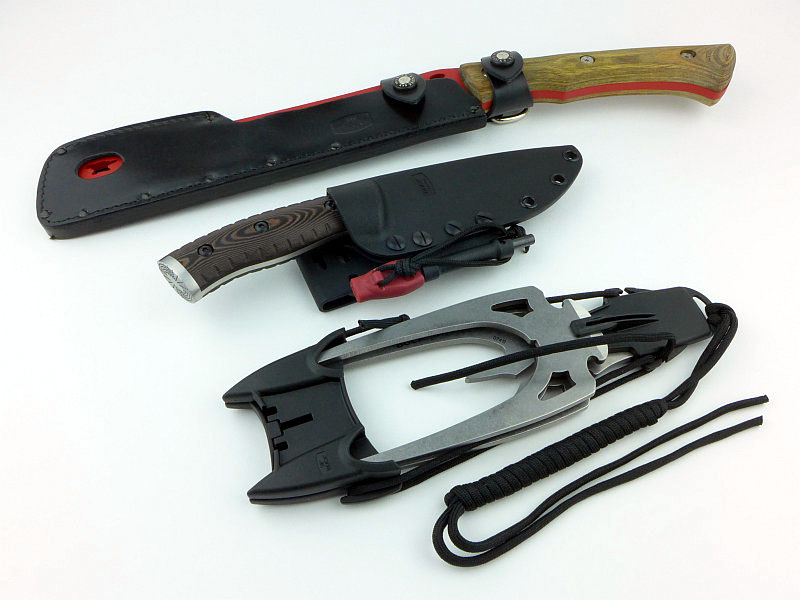
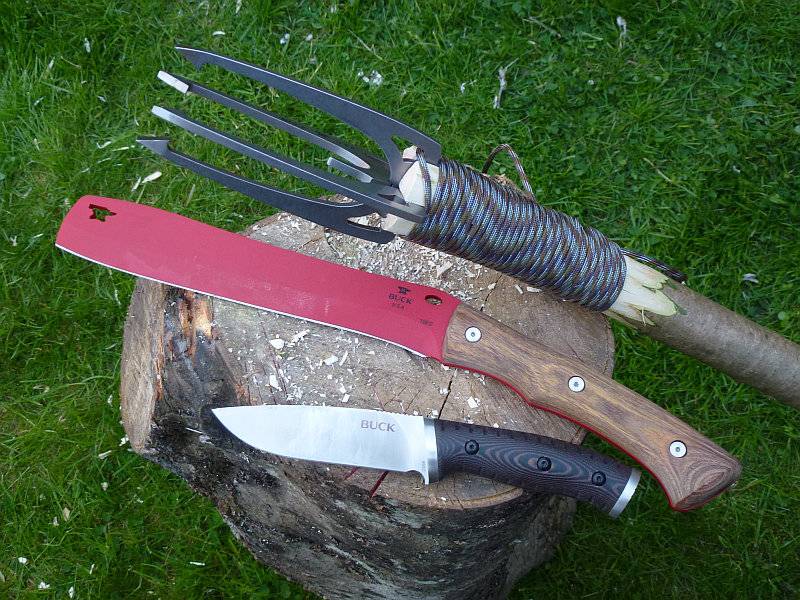
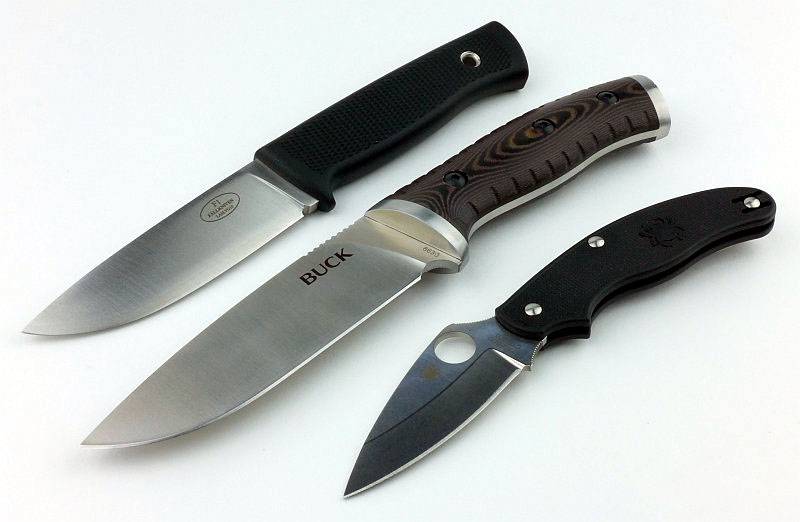
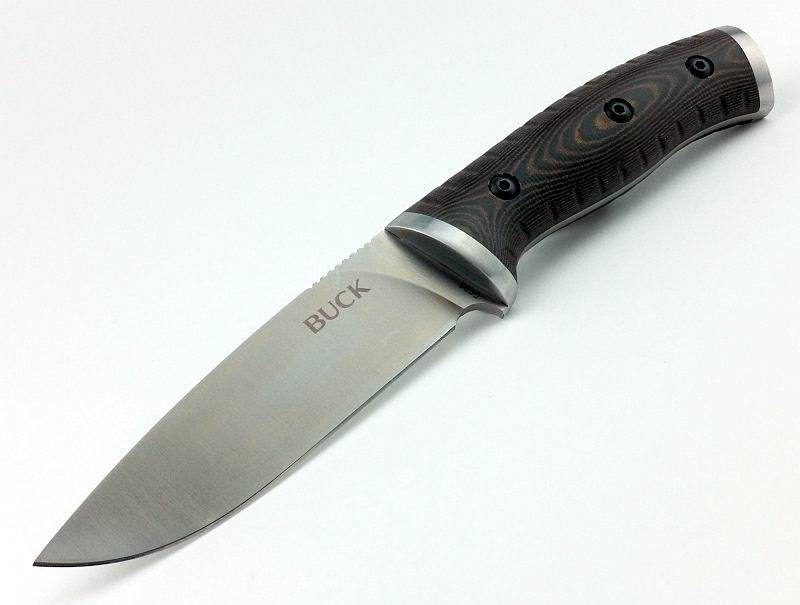
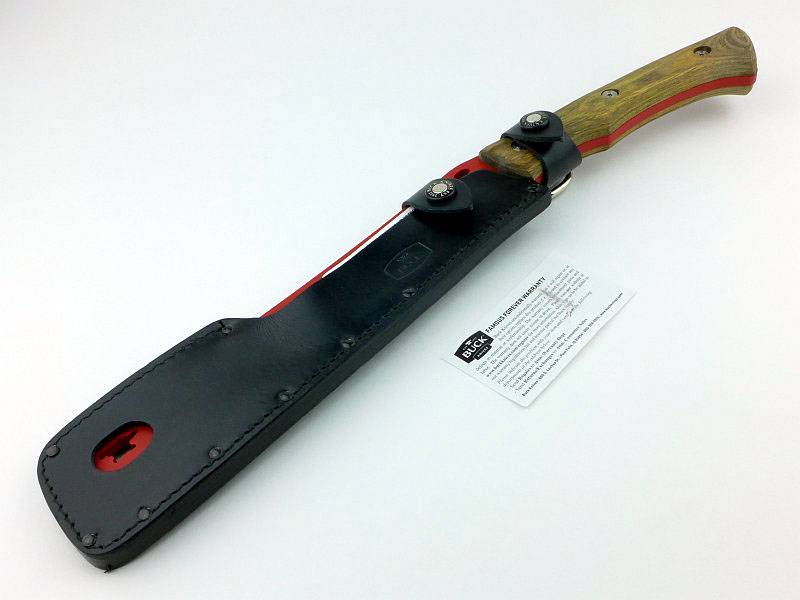
Knife Review: Buck Selkirk, Compadre Chopping Froe and Kinetic Fishing Spear

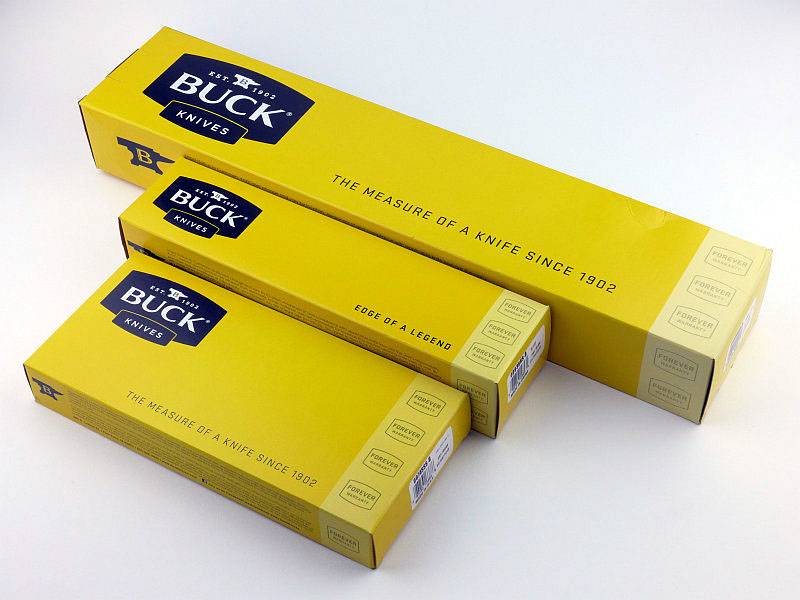
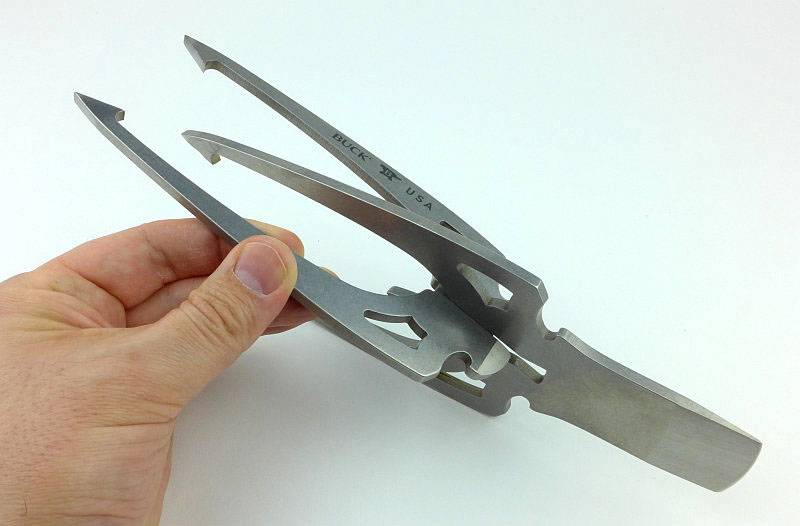
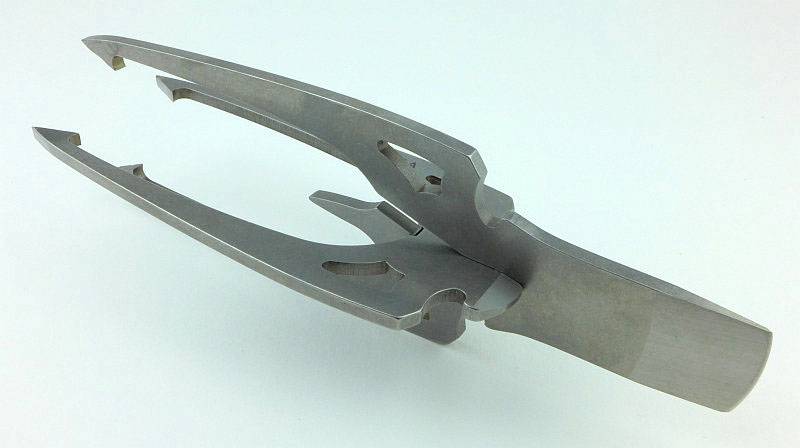
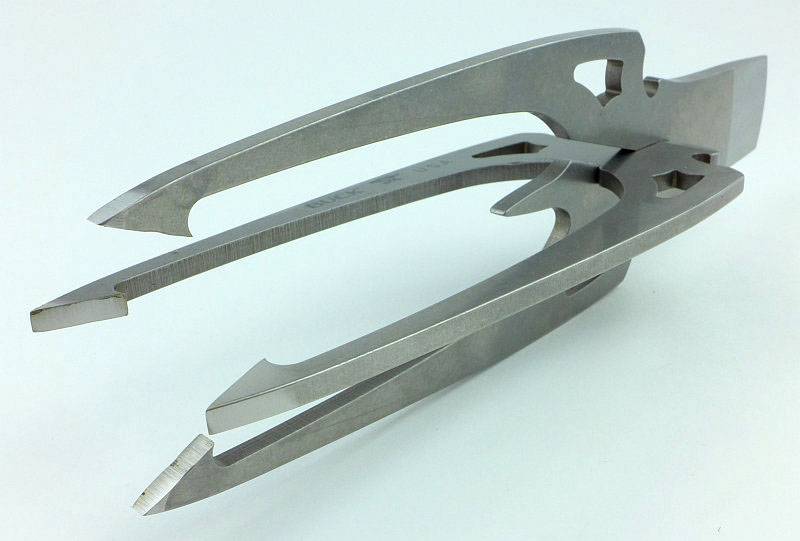
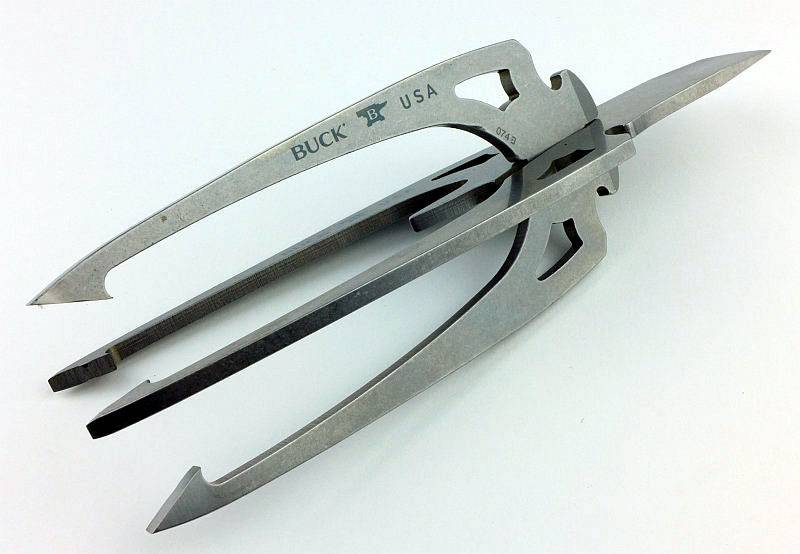
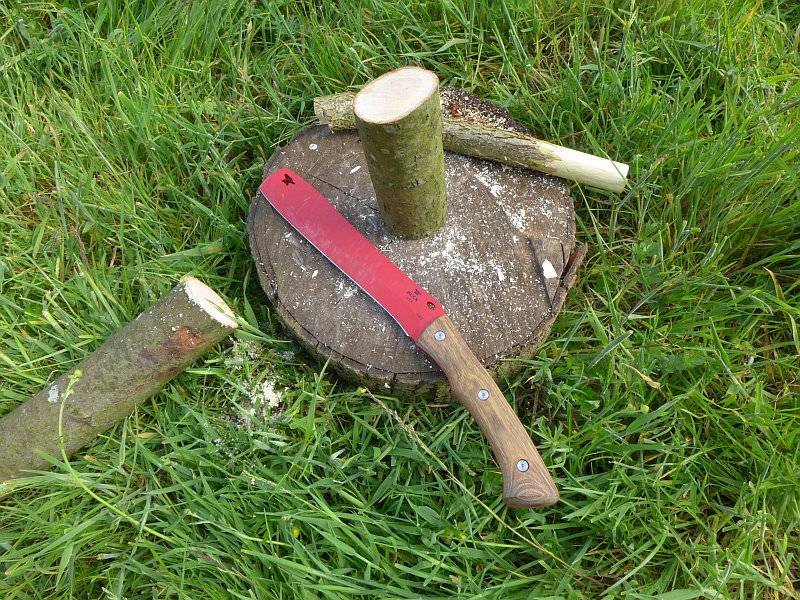
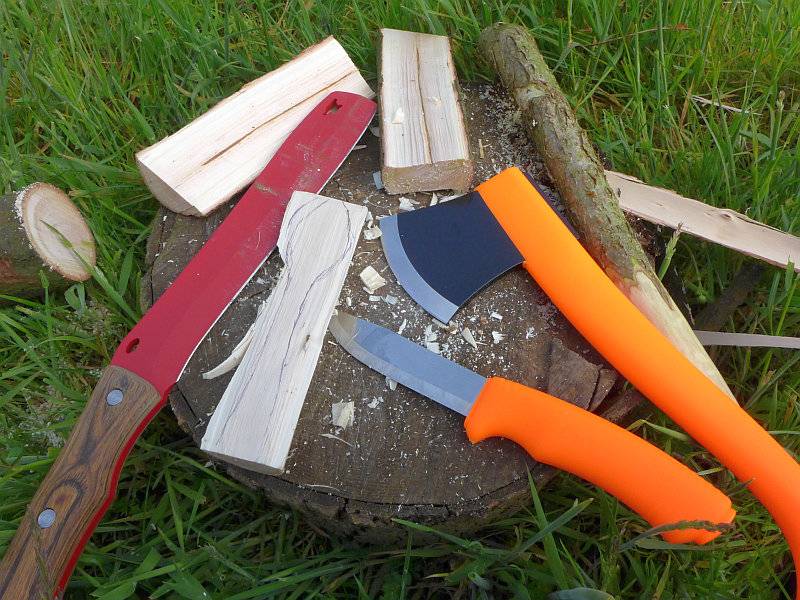
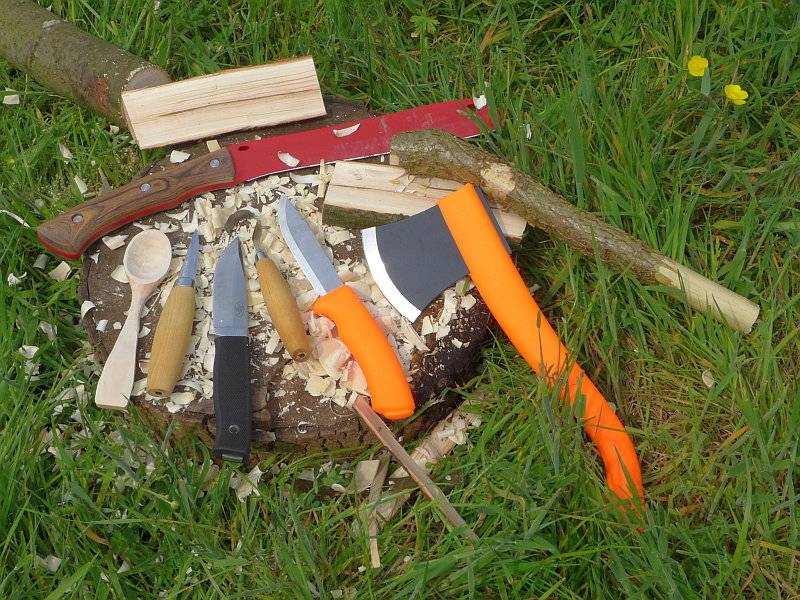
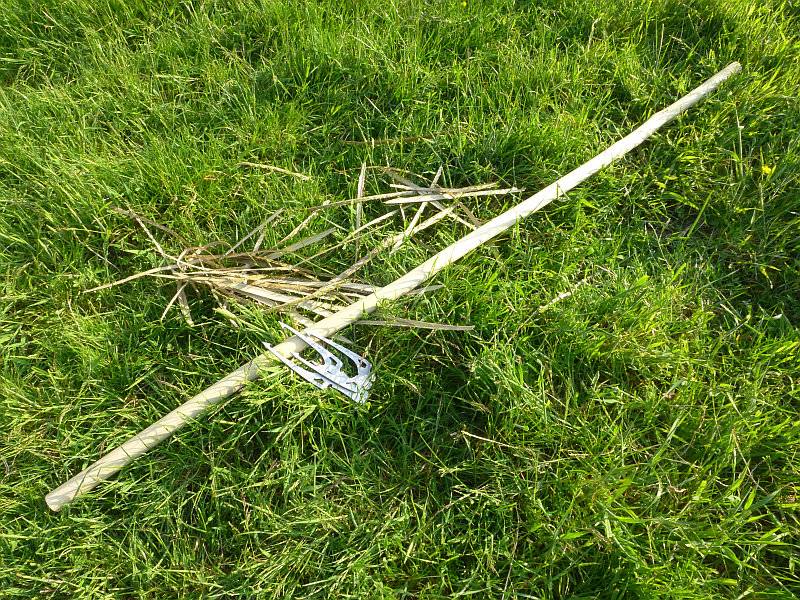
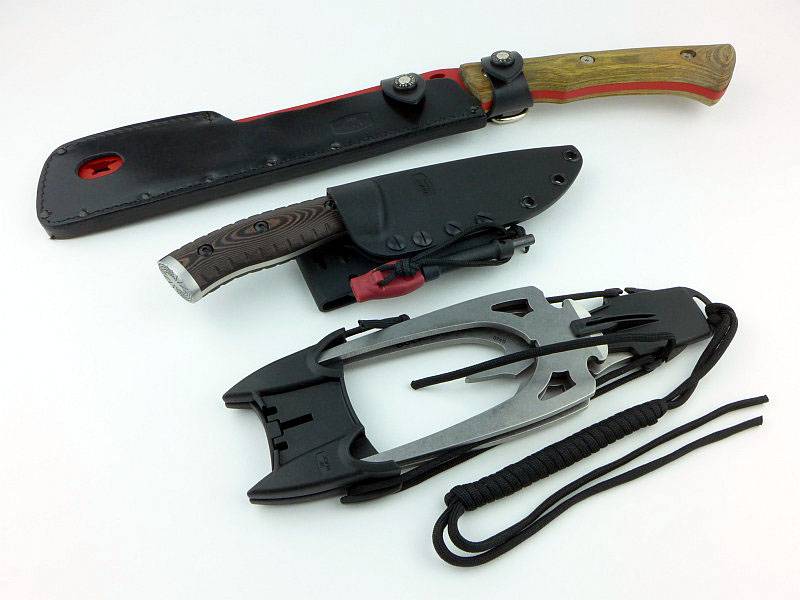
Buck’s Selkirk, Compadre Chopping Froe and Kinetic Fishing Spear were specifically chosen for this review to compliment each other for camp/survival tasks. Following a visit to Buck at IWA 2016 I’ve been able to give these a good workout to see how they fare.

 photo 0 07 trio P1030840.jpg

The Blade and Handle Geometry:

Most knife specifications have a basic description of the blade geometry, but in this section I will be taking a more detailed look at geometry and balance.
 photo 25 Selkirk grind P1180965.jpg

Using a set of gauges and precision measuring equipment including a Vernier protractor, callipers, fixed radius gauges and the unique Arc Master adjustable radius gauge (the one that looks like a crossbow).
 photo Knife measuring P1180483.jpg

These measurements have been tabulated and are presented along with a few reference blades (8″ Chef’s Knife, 5.5″ Santoku and the popular Fällkniven F1).

Key aspects such as the primary bevel angle, grind type, blade depth, blade thickness, length, weight are detailed, along with balance information.
 photo 54 Froe grind angle P1180981.jpg

The ‘Balance relative to the front of the handle’ tells you if the knife will feel front heavy, or if the weight is in your hand (a positive value means the weight is forward of the front of the handle). The ‘Balance relative to the centre of the handle’ indicates how close to a ‘neutral balance’ the knife has in the hand.
 photo 24 Selkirk balance P1180963.jpg

In the case of full convex grinds the approximate centre of the grind is used for the primary bevel angle estimate.

 photo Buck Parameters.jpg

Explained by the Maker:

The reasons for certain design choices may not be clear when simply looking at an object, so this section is intended to give an insight into the thinking behind a design by speaking to the designer themselves.

Unfortunately I can’t always get time with the designer so will use this section to include relevant information about the knife and its designer.

The following comments are noted from a walk-through that Joseph Piedmont kindly gave at SHOT Show.

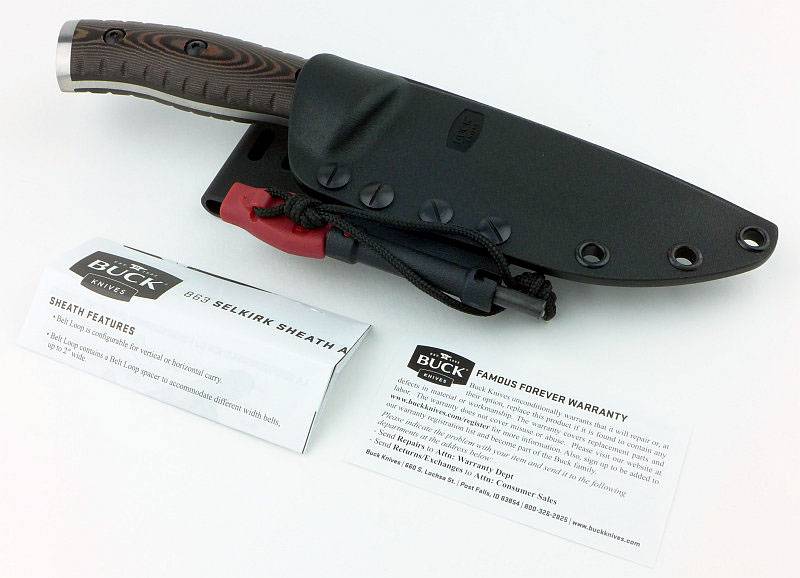
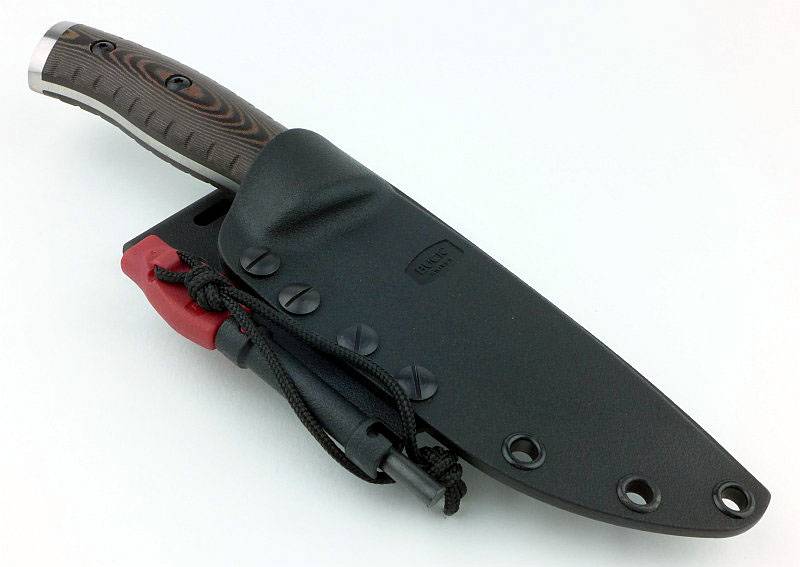
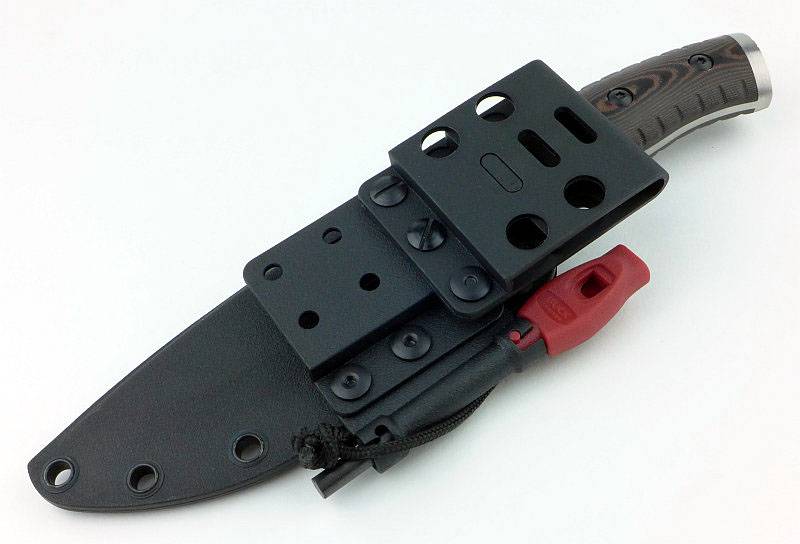
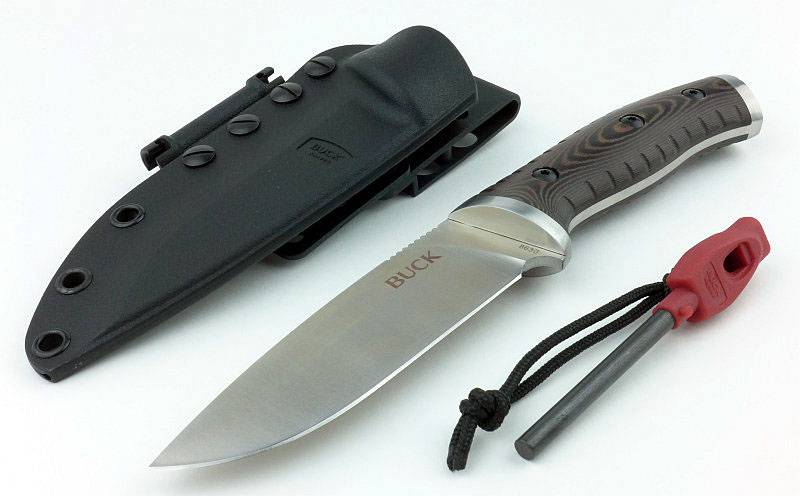
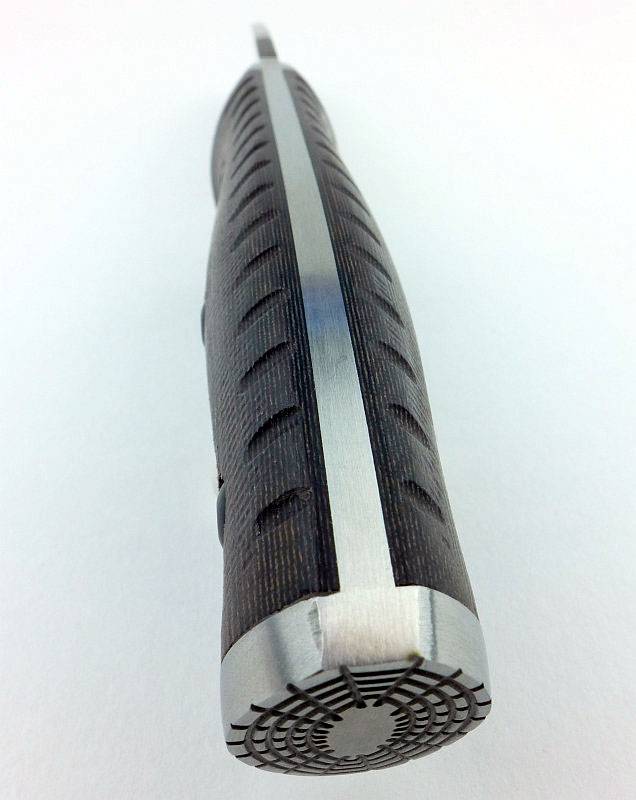
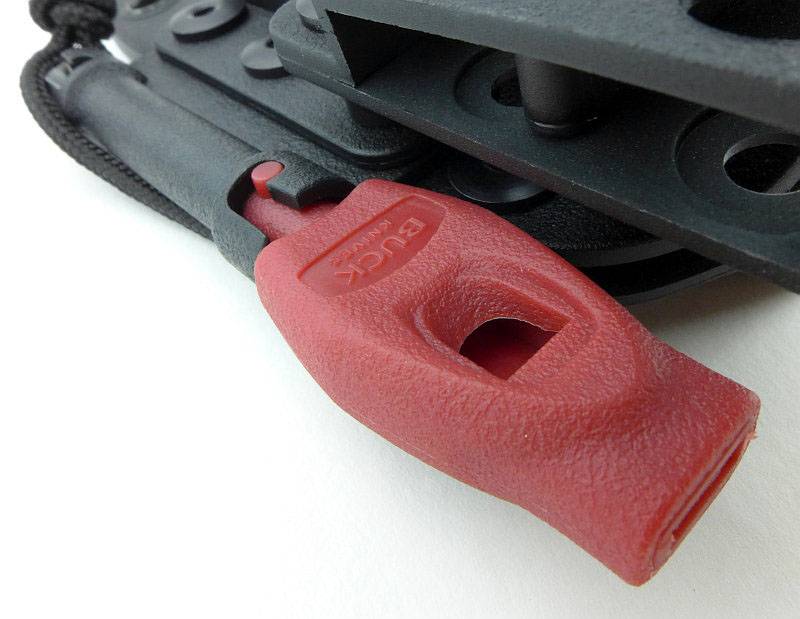
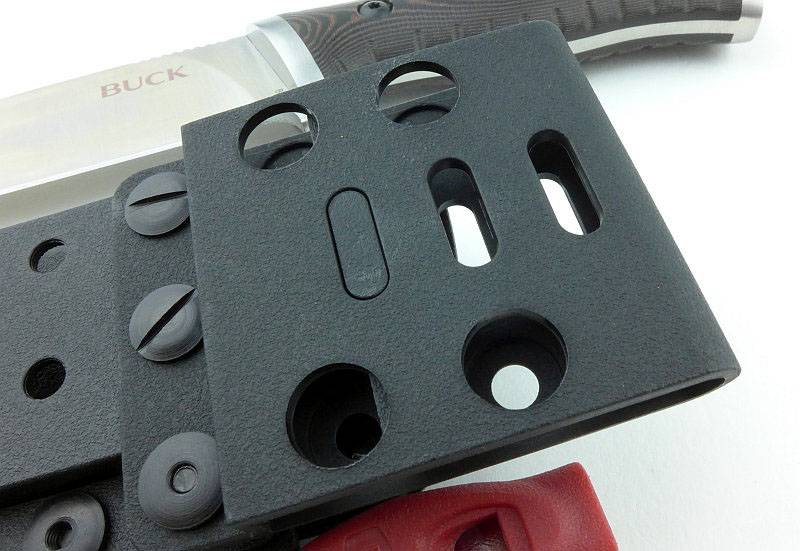
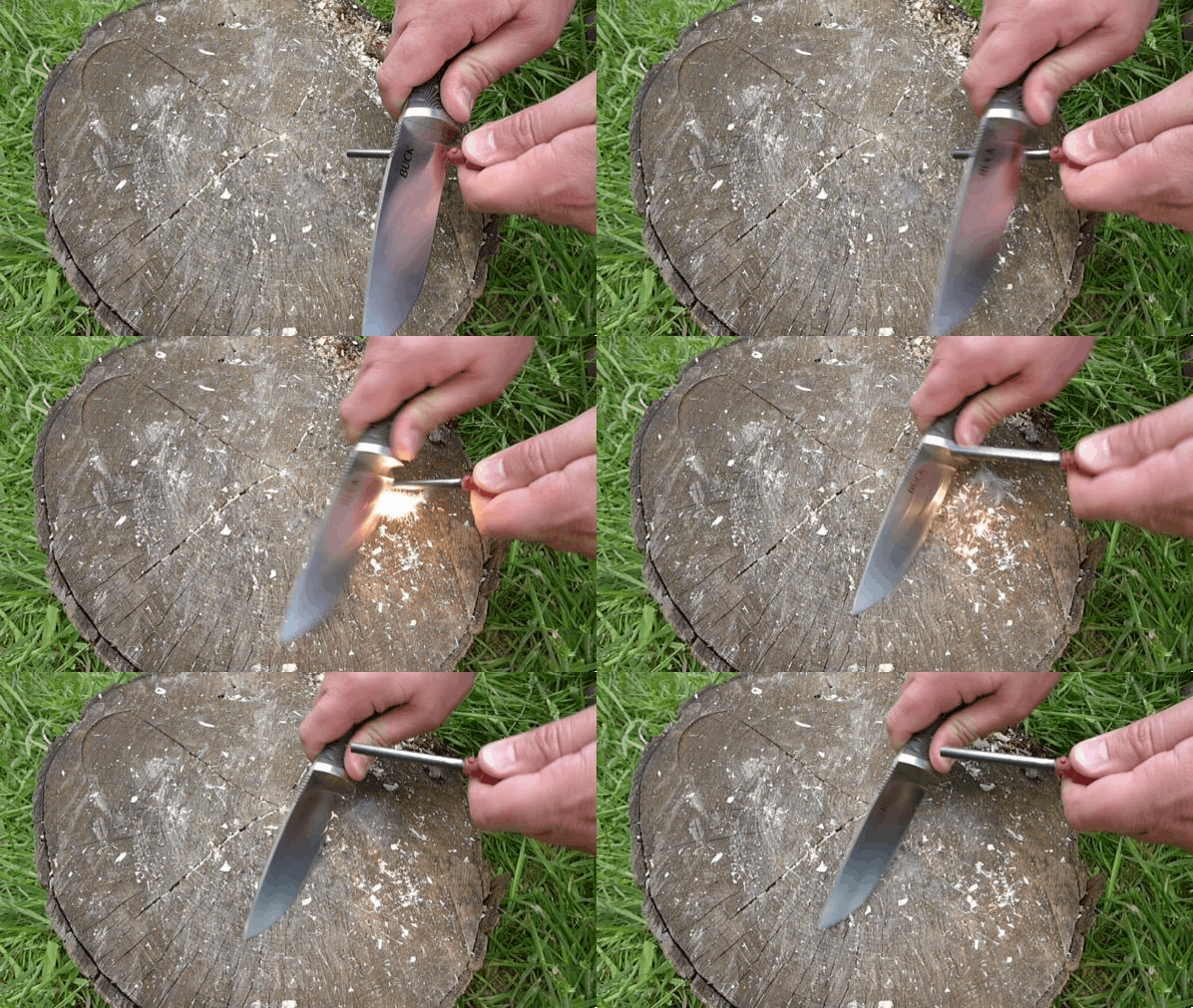
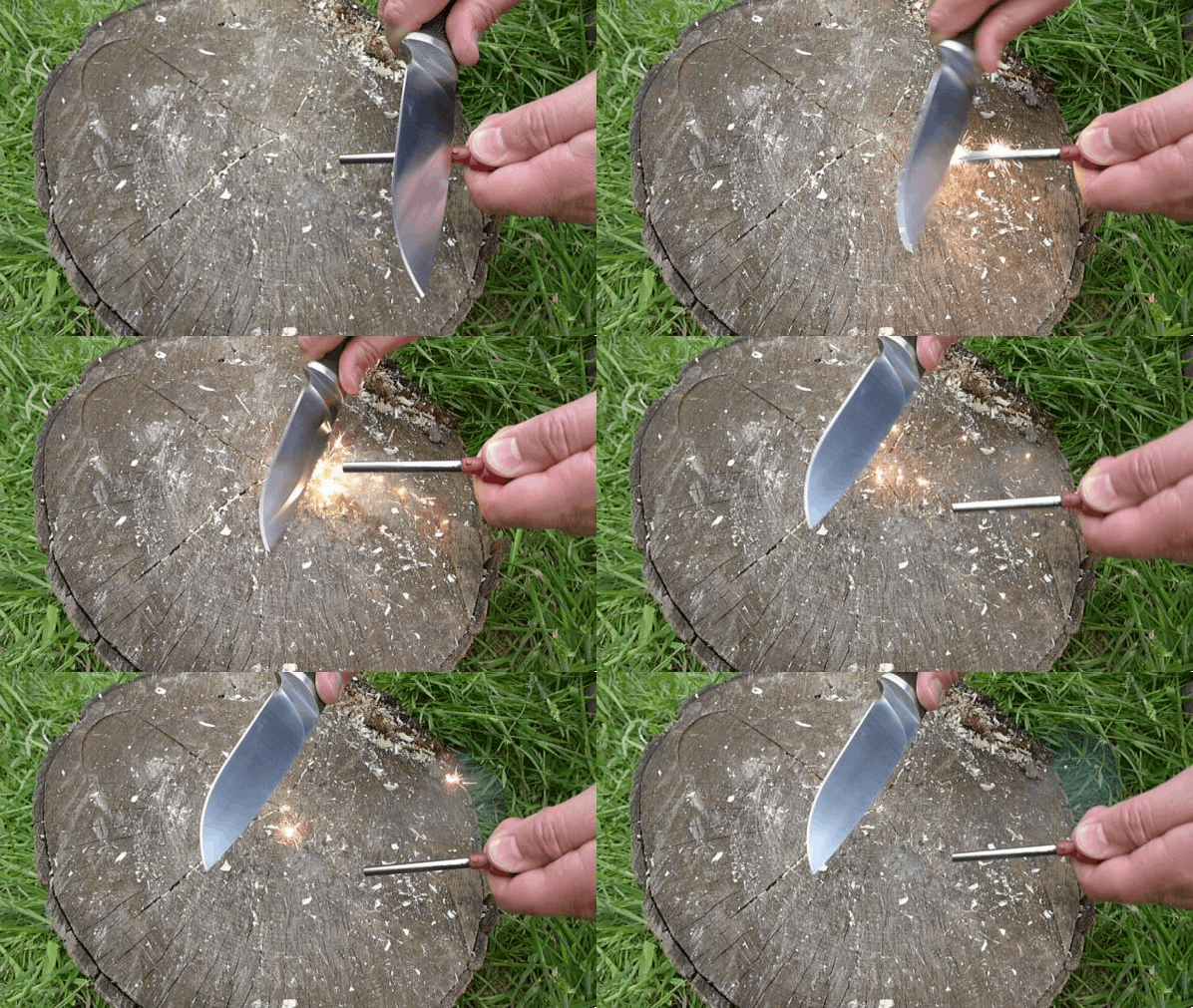
Model 863, the Selkirk is Buck’s new survival knife which includes a fire-rod with whistle for signaling. The sheath is moulded plastic and features multi-carry capability that can be reconfigured to allow for vertical or horizontal carry, and even upside-down as a neck knife.

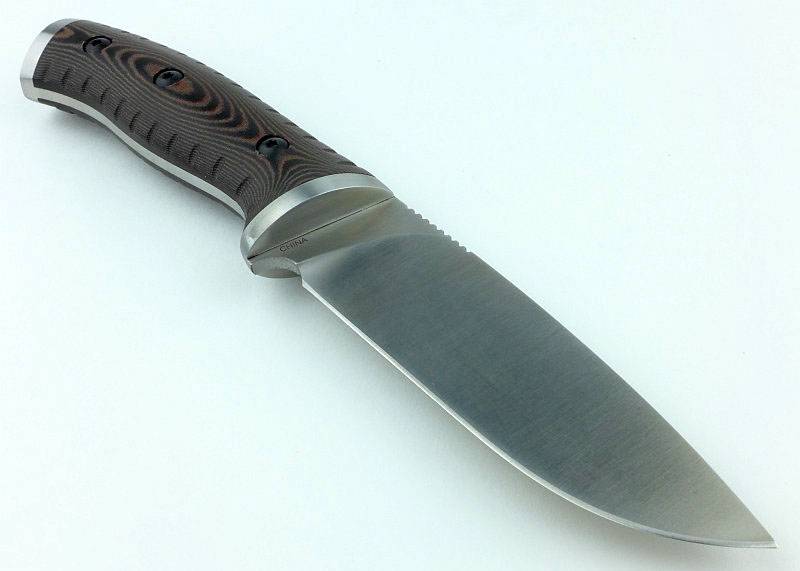
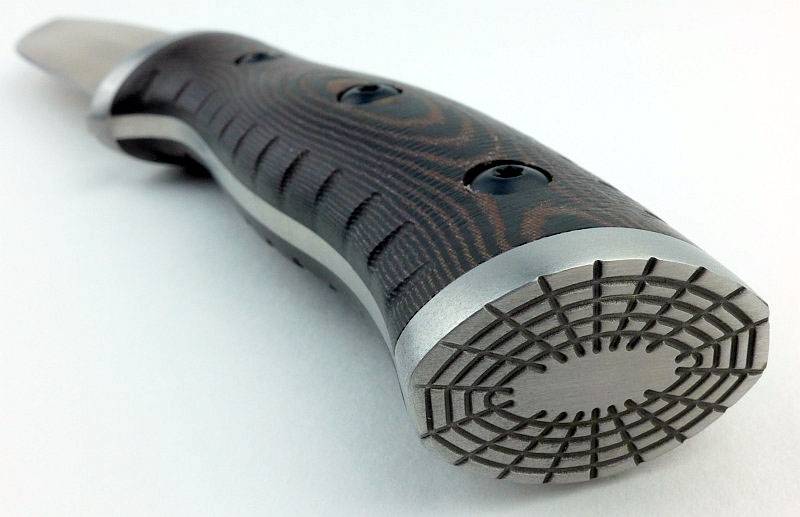
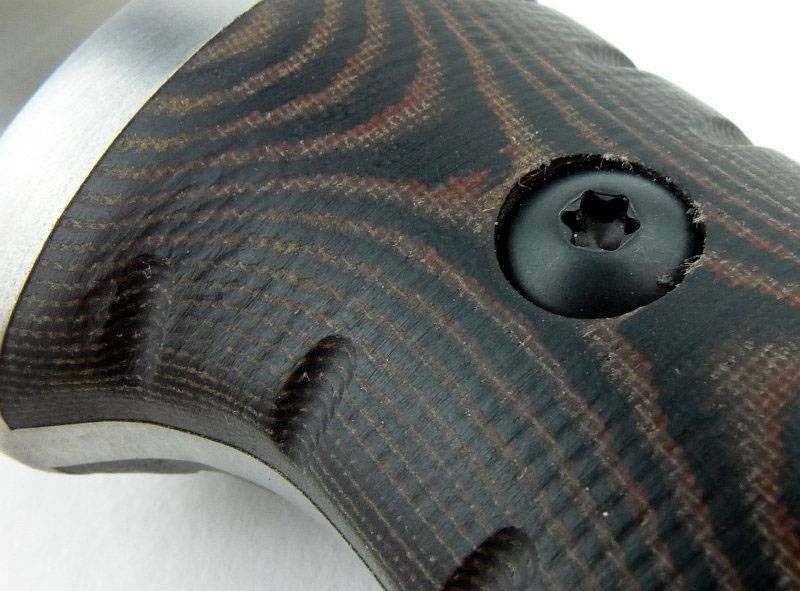
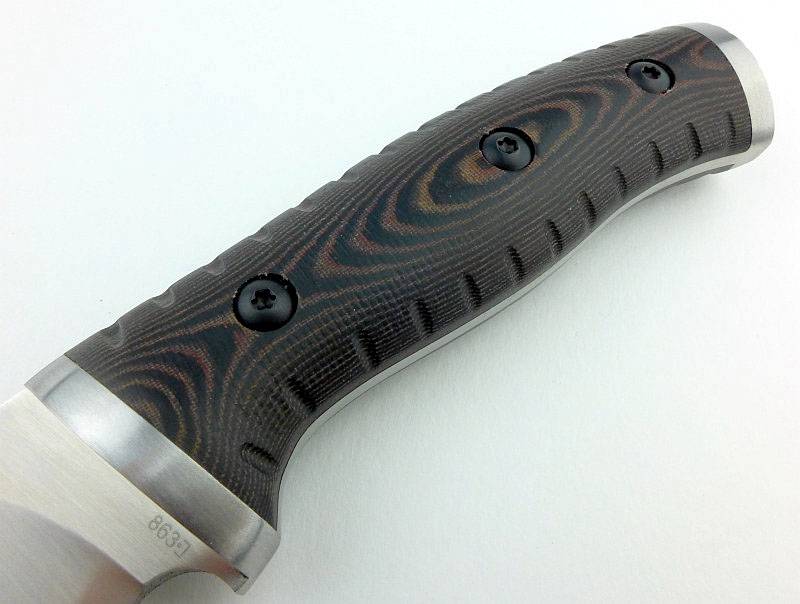
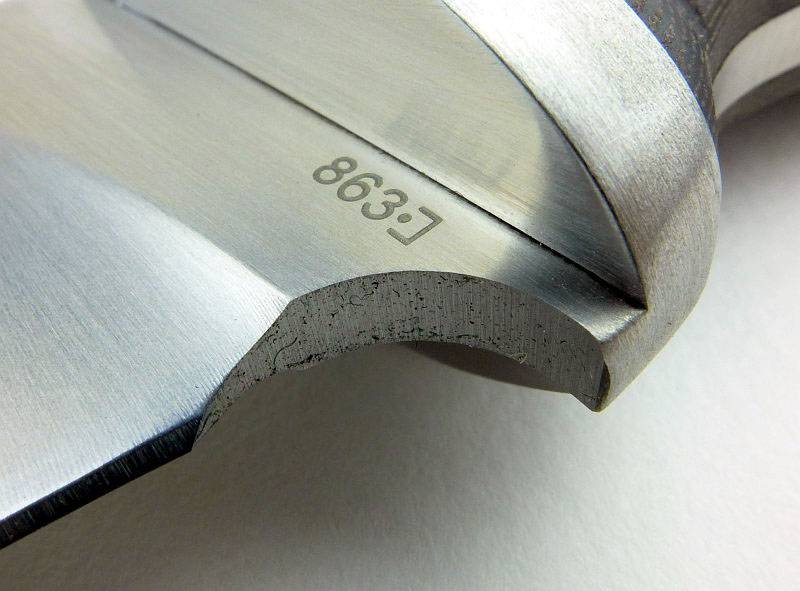
The knife itself is a flat-grind drop-point featuring a guard and a hammer pommel. The handle has custom micarta sides. The choil is left with its sharp ground edge to allow it to be used with the fire-starter and have a nice grip to get good sparks.

The Selkirk’s sheath has a nice crisp snap-in, really holding the knife, so you won’t have to worry about it falling out.

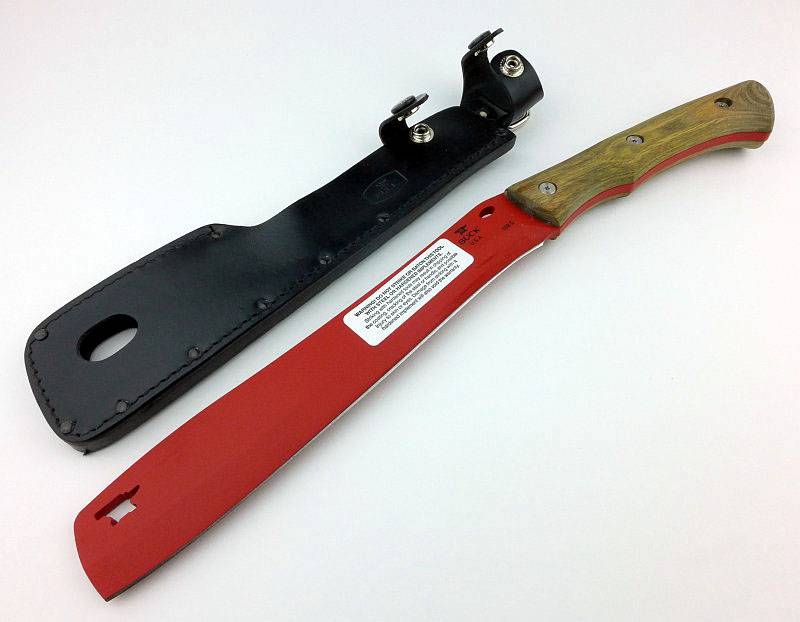
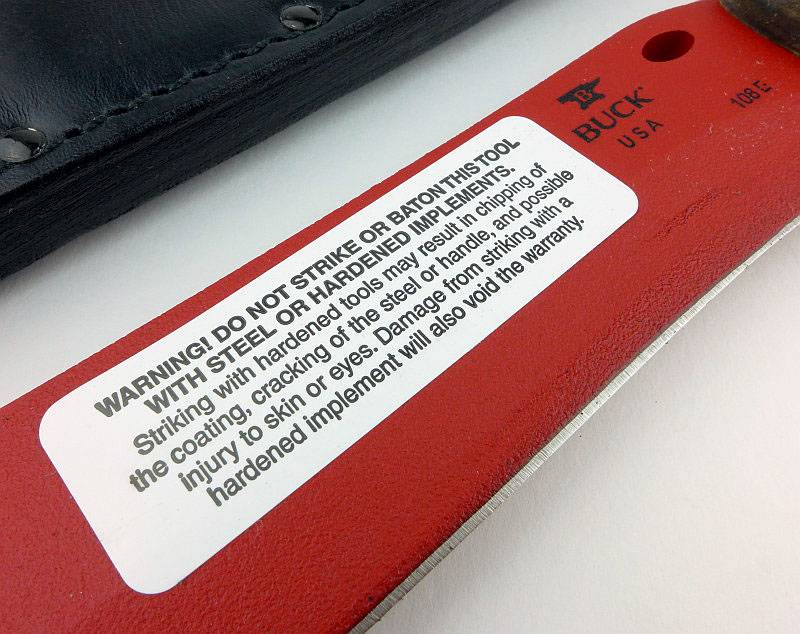
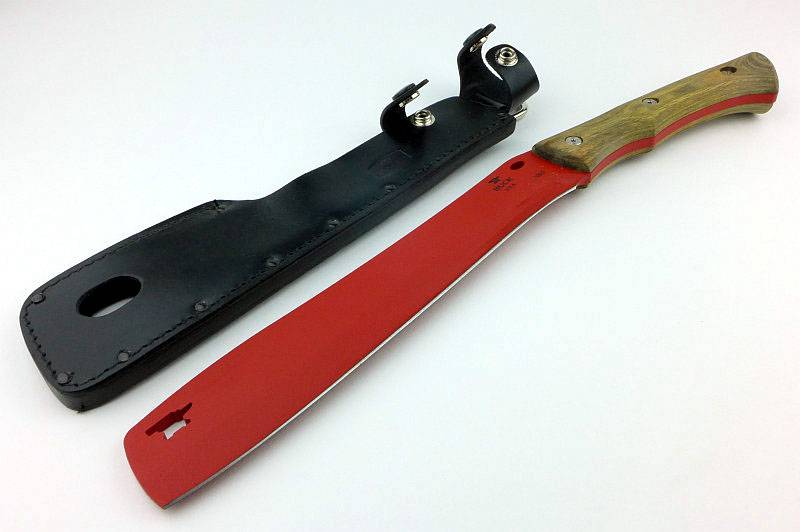
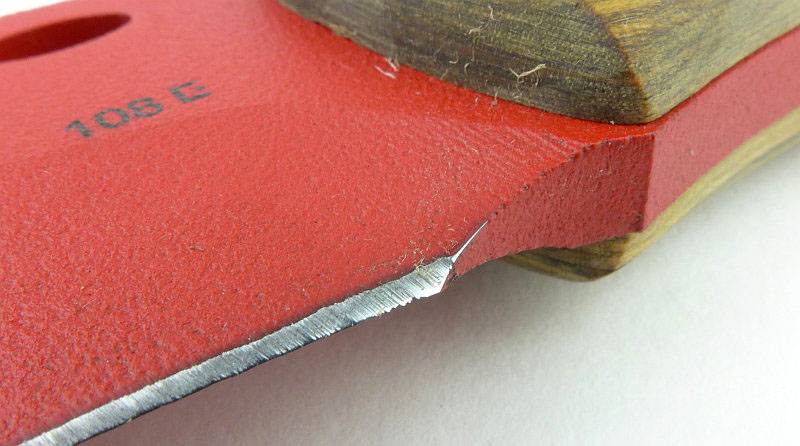
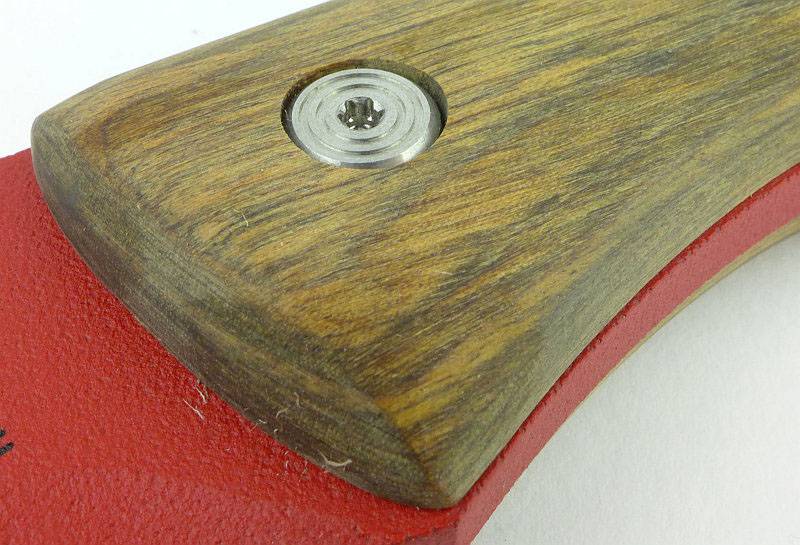
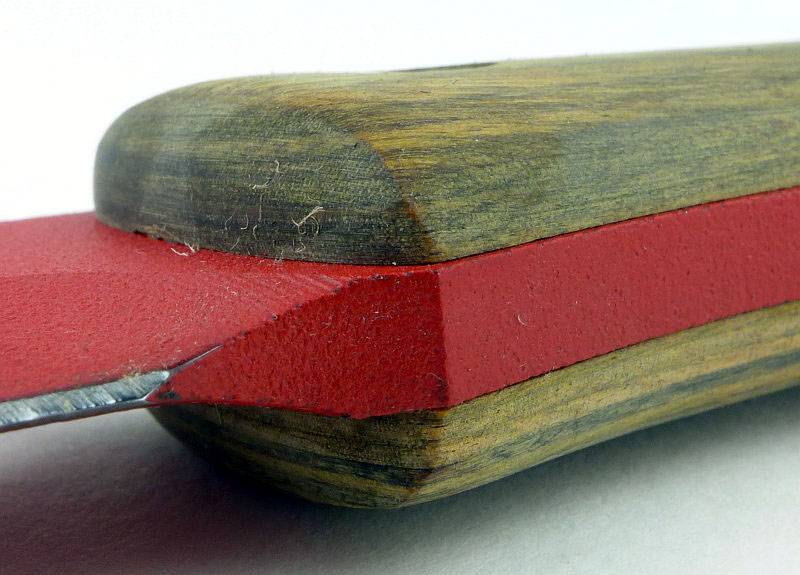
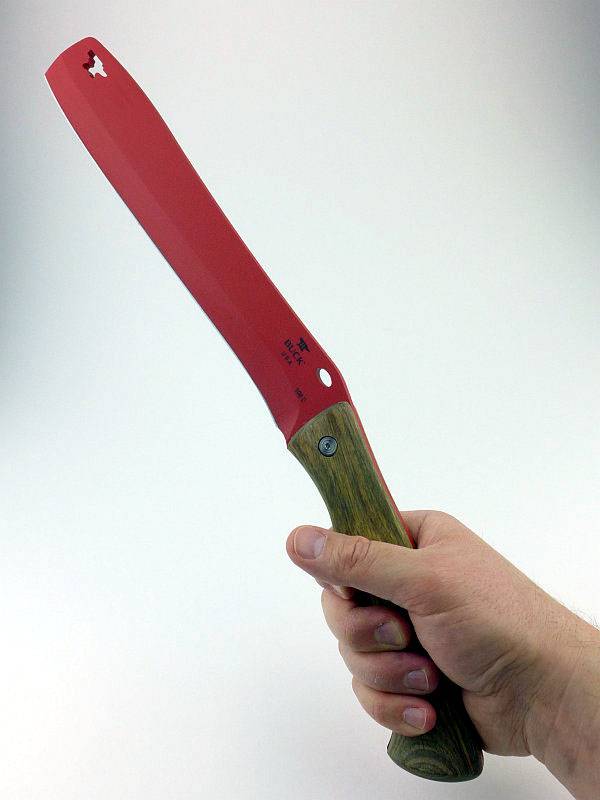
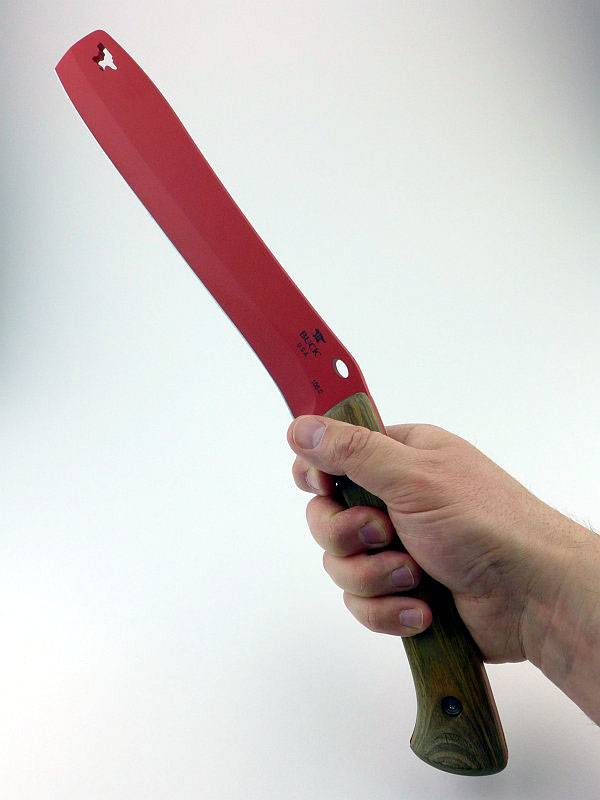
Chopping Froe model 108 is fitted with American walnut handles and a red powder coated 5160 blade. This is part of the camping and outdoor survival series. Red was chosen to tie in camping of yesteryear (where it was common to use red-headed hatchets), with the camping of today.

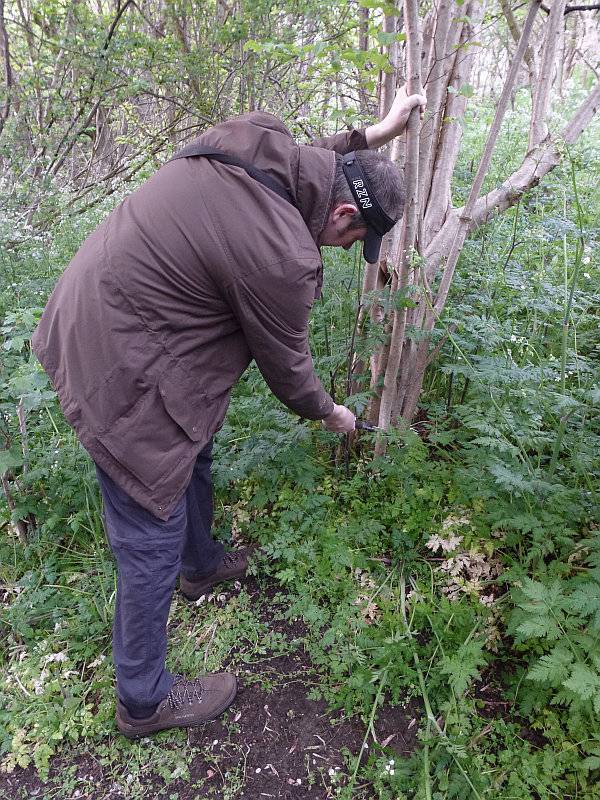
The knife was modelled from a Scandinavian tool with the same name used to chop kindling. Buck have modified it with the handle and putting a knife edge on it to make it more versatile. (Reader’s NOTE: a traditional froe has a dull edge, a handle at 90 degrees to the blade, and is use for controlling and advancing a split in a piece of wood)

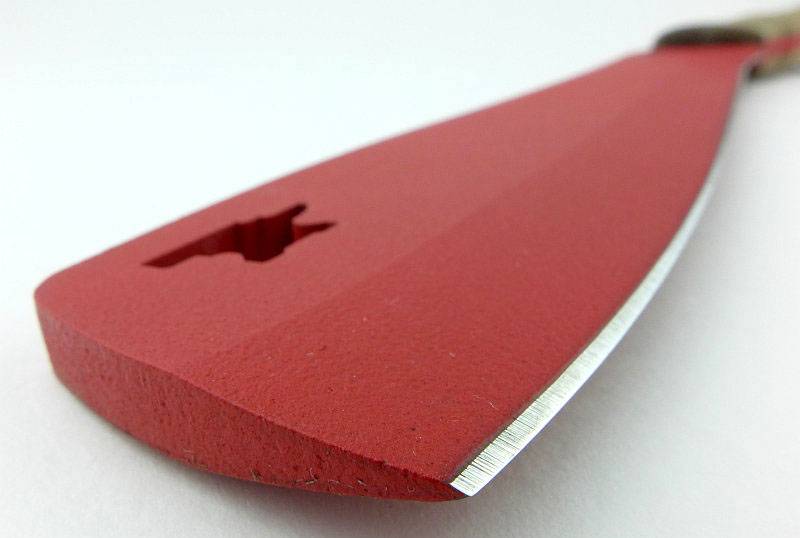
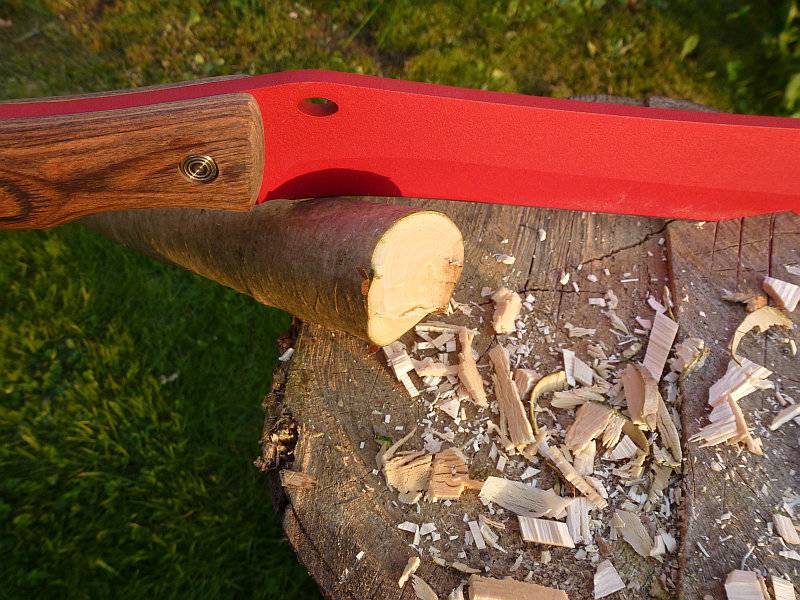
The Buck froe has been given a very steep grind producing a wedge behind the knife edge. When splitting wood, the knife edge starts the cut, but the wedge takes over so the knife edge is not finishing the cut.

The black leather sheath protects the blade and the D-ring makes it really easy to connect it to your gear or hang it up.

The Kinetic Fishing spear is one of three new spears. This range goes from the smallest, the Hunt Spear, to the Two Tined Gig spear, and finally the 074 Fishing Spear. The fishing spear is the most involved design with two interconnecting pieces. In its folded-flat state the spear is covered front and back by a plastic sheath tied together with paracord. The paracord is held in place with a moulded pinch-grip making it quick and easy to secure and release. The two parts of the spear lock together to form a four point spear. It has the same chisel on the back as the other two spears, and crucially needs to be driven deep enough into the stick to engage the secondary wedge. The beauty of this design is that the sheath parts go from the flat packed configuration into a cross shaped safety cover for the four points when it is mounted.

One trick to be aware of when mounting the spear heads is to wrap the paracord onto the stick before pounding the spear into the end of the stick. This really tightens up the paracord giving a very secure fit.

A few more details of the Selkirk Survival Knife:

Before concentrating on the Selkirk, here are the boxes for all three together.
 photo 00 01 Buck Boxed P1180722.jpg

The Selkirk arrives in its sheath with ferrocerium rod and whistle, plus an instruction leaflet for the sheath mounting options and a warranty card.
 photo 01 Selkirk Contents P1180728.jpg

Though it looks like a Kydex type of sheath, it is a moulded plastic.
 photo 02 Selkirk Sheath front P1180731.jpg

On the back of the sheath, the belt loops can be removed and refitted in different positions.
 photo 03 Selkirk Sheath back P1180734.jpg

All the components lined up with the sheath, knife and ferrocerium rod/whistle.
 photo 04 Selkirk parts P1180740.jpg

The Selkirk has a nice deep blade with full flat grind.
 photo 05 Selkirk angle P1180743.jpg

Buck say that the pommel (rear bolster) can be used as an improvised hammer.
 photo 06 Selkirk pommel P1180745.jpg

Looking close up at the handle micarta sides you can see the semi-smooth finish and additional grip grooves.
 photo 07 Selkirk grip detail P1180748.jpg

An overall view of the handle. The layers in the micarta act as contour lines showing the shaping.
 photo 08 Selkirk grip P1180749.jpg

From a different angle you can see the palm swell and grip flaring.
 photo 20 Selkirk handle swells P1180787.jpg

A very close view of the choil and its sharp edges for striking the fire-rod.
 photo 09 Selkirk choil P1180752.jpg

Going closer still for a look at the point and how the cutting edge has been formed from a coarse grit followed by a polishing process.
 photo 10 Selkirk point P1180756.jpg

On the spine there is an area of jimping for the thumb to sit on. On this example this was well formed and not too sharp.
 photo 11 Selkirk jimping P1180758.jpg

Keeping on the up-close theme, the moulded sheath has the Buck logo moulded into it.
 photo 13 Selkirk sheath brand P1180768.jpg

Next to the fire-rod holder are the sheath screws which adjust the retention tension of the sheath. You can change how much force is needed to remove and insert the knife by adjusting these screws.
 photo 14 Selkirk sheath screws P1180769.jpg

On the lower part of the whistle is a bayonet fitting to hold the fire-rod in place. There is also a cord which can be stretched over the end of the rod to further secure it.
 photo 15 Selkirk ferro rod whistle P1180770.jpg

Inside the belt loop is a moveable adjuster block to cater for different width belts.
 photo 16 Selkirk belt loop adjuster P1180775.jpg

At the tip of the sheath there are metal rivets that provide tying points.
 photo 17 Selkirk sheath rivets P1180777.jpg

The overall impression of this knife is good, but its mass produced character is visible when you start looking and small details. Here the micarta handle is not a perfect fit.
 photo 18 Selkirk finish P1180782.jpg

Still looking for flaws, this time at the pommel, the grinding is not that precise and filler appears to have been used between the micarta and steel pommel.
 photo 19 Selkirk finish P1180784.jpg

The Selkirk with a couple of other well known knives to provide the scale. (Fällkniven F1 and a Spyderco UK Pen Knife)
 photo 22 Selkirk size P1180797.jpg

One last look at this knife before moving onto the Froe.
 photo 21 Selkirk angle P1180792.jpg

A few more details of the Compadre Chopping Froe:

First impressions are really good thanks to the leather sheath the Froe arrives in. The only other item in the box is the warranty card.
 photo 30 Froe contents P1180804.jpg

Immediately obvious are some nice touches like the retaining strap’s popper cover having Buck’s logo and name on it.
 photo 31 Froe popper P1180811.jpg

Also of note with the retaining strap is that the metal back of the popper that sits against the handle has been covered to prevent it marking the wooden handle.
 photo 51 Froe sheath popper back P1180883.jpg

There is a cut-out in the sheath that shows the Buck anvil logo cut into the blade.
 photo 32 Froe sheath detail P1180813.jpg

Pressed into the leather sheath is the Buck logo.
 photo 33 Froe sheath logo P1180815.jpg

The sheath is well stitched and riveted for extra strength.
 photo 34 Froe sheath stitching P1180818.jpg

On the back of the sheath the rolled rivet heads are not as neat as on the front, but fit with the rivet colour used for the hanging loop.
 photo 35 Froe sheath reverse P1180820.jpg

The rolled over heads of the rivets on the back of the sheath look like this.
 photo 36 Froe sheath rivet reverse P1180823.jpg

A nice heavy duty D-ring is used for the hanger.
 photo 37 Froe sheath hanger P1180826.jpg

Opening the two retaining straps allows the Froe to slide out.
 photo 38 Froe unsheathed P1180829.jpg

A very obvious label warning you not to strike the Froe’s blade with hardened tools is on the side of the blade. This is no different to traditional froes or any other blade you might baton with.
 photo 39 Froe warning P1180833.jpg

Whipping the label off gives you the full effect of the red powder coating.
 photo 40 Froe no label P1180835.jpg

The ‘tip’ of the blade shows the splitting wedge design of the blade grind.
 photo 41 Froe point wedge P1180840.jpg

There is a subtle choil next to the handle.
 photo 42 Froe choil P1180844.jpg

At the top of the blade next to the handle there is a hole in the blade. Though this could be used as a wrist strap attachment point, I would advise you to be very careful if you want to do this as it can become more dangerous than the tool coming out of the hand.
 photo 43 Froe hole P1180846.jpg

The American walnut handle slabs are held on with nice looking bolts.
 photo 44 Froe wooden handle P1180849.jpg

Blade stock used for the Froe is substantial.
 photo 45 Froe thick blade P1180853.jpg

Having a long handle, the Froe can be used with different grips.
 photo 46 Froe handle P1180857.jpg

looking along the Froe to show more of the contours of this tool.
 photo 47 Froe contours P1180859.jpg

There is a nice swell at the pommel to prevent slipping, but no striking surface. If you hammer on, or with, this tool you risk damaging the handle. This view also shows the handle is made from plywood, not solid wood, as this will be more resilient and resistant to cracking.
 photo 48 Froe pommel P1180863.jpg

A few more details of the Kinetic Fishing Spear:

And now for something completely different, a fishing spear.

Folding flat, the Kinetic Fishing Spear is very neat in its folded state.
 photo 60 Kinetic contents P1180889.jpg

This package is held together by a paracord tie and a pinch-grip.
 photo 61 Kinetic tie point P1180896.jpg

Pulling the end of the cord out of the pinch-grip you can start to unwind it.
 photo 62 Kinetic opening P1180897.jpg

Releasing one side of the plastic cover.
 photo 63 Kinetic opening P1180900.jpg

The pinch-grip has small teeth to hold onto the cord.
 photo 64 Kinetic tie teeth P1180903.jpg

The same piece of cord then releases the other side of the cover.
 photo 65 Kinetic opening P1180905.jpg

Fully unwound the cord comes completely off the cover.
 photo 66 Kinetic opening P1180908.jpg

Now you can slide off the lower cover.
 photo 67 Kinetic opening P1180911.jpg

And then the point covers, which also slide apart to give two separate pieces.
 photo 68 Kinetic opening P1180917.jpg

The shorter of the two parts of the spear head slides into a slot in the larger part.
 photo 69 Kinetic fitting together P1180918.jpg

This then rotates into place, and in this position cannot move backwards or forward.
 photo 70 Kinetic together P1180921.jpg

When assembled the spear suddenly looks very capable.
 photo 71 Kinetic together front P1180925.jpg

The smaller piece has the Buck logo on it.
 photo 72 Kinetic together angle P1180927.jpg

As does the larger piece.
 photo 77 Kinetic logo P1180946.jpg

A really cleaver feature is that the two pieces of the point guard slide together to form a cross shape.
 photo 73 Kinetic guard P1180935.jpg

This cross shaped guard can then cover the points of the assembled spear head.
 photo 74 Kinetic guard fitted P1180937.jpg

There is a barb on each of the four points.
 photo 75 Kinetic barb P1180939.jpg

A chisel point is provided on the tang of the larger piece of the spear that can both be used for some of the spear pole preparation, and to make it easier to drive into the end of the pole.
 photo 76 Kinetic axe P1180944.jpg

What are they like to use?

It is not that I expected anything to be bad about the Selkirk, but it has really surprised me just how good it has been for me to use. Not only that, but anyone I’ve handed it to has also been impressed with how good it feels in the hand.

Remembering that I take an XL size glove, this is how the Selkirk looks in the hand.
 photo 12 Selkirk in hand P1180767.jpg

The shaping of the handle is excellent. The palm swell is just enough to sit very naturally, and the curve of the handle allows your hand to work with the Selkirk. Flaring at the front and back of the handle stops you hand moving, and even working hard with this knife on hot days with sweaty hands didn’t cause any issues.
Resting between cutting jobs, the Selkirk just seems to stay in place in a relaxed hand, and when working I was never aware of the handle, instead all my focus was allowed to fall onto the cutting task and directing the blade. I did not expect this level of comfort and control.

I’m going to look at more of the Selkirk in use later on, but switching now to the fire-lighting capability of the Selkirk, and how well it strikes sparks from the ferrocerium rod.

As the product description from Buck specifically says the choil has been left with a sharp corner to use for striking sparks, I’ll start with this. Once you get through the outer coating of the new rod, you then start to get proper sparks. Using the choil does work OK, but is not that good.
 photo Buck Selkirk Choil Ferro 600px 200ms.gif

Flip the blade round and use the spine instead and you are rewarded with a bigger shower of sparks. So the specific feature of using the choil to strike sparks is a little redundant. What you do have is a choice of more or less sparks. Striking fewer sparks with the choil will wear the fire-rod away less and may be all you need.
 photo Buck Selkirk Spine Ferro 600px 200ms.gif

Scaling up in size we have the heavy Chopping Froe. Here the grip is closest to the pommel and gives the greatest striking advantage.
 photo 49 Froe in hand P1180872.jpg

For more control you can grip the Froe handle near the blade. This is good for finer chopping tasks, but the blade edge is not really sharp enough (due to the edge angle) for fine carving or slicing cuts.
 photo 50 Froe in hand P1180874.jpg

When I initially saw the rake of the Froe’s blade, I thought it would be awkward to use, and if working onto a chopping block, the angle does mean you can’t really strike down onto the block and have the edge strike squarely, you always end up cutting into the edge of the block.

Moving to free-cutting when you are chopping through branches or the trunks of smaller trees, then this rake actually ensure the edge strikes at a slight angle which does enhance the cutting power. The Froe is very efficient when used in this way.

The more I use the Buck Froe, the more I would compare it to a hatchet rather than a knife, but a hatchet with a very long edge and which does not need a precisely positioned strike to get a good result. The knife edge, despite being sharp enough, is not well suited to anything but chopping. The blade thickness and steep primary grind make it pretty hopeless for slicing cuts and the overall size/weight and rake make fine work difficult.

Finally a quick mention of the Kinetic Fishing Spear. Unfortunately I’ve not been able to spear any fish with it so far. Not due to always missing, but due to a lack of suitable fishing opportunities. Mounted it seems very capable and with an overall good balance, but unfortunately up to now that is as far as I can comment.

Mounting the Kinetic Fishing Spear

One small project that would cover all three of these Buck products is to make a shaft for the Kinetic fishing spear head. A quick visit to a local wooded site resulted in a pole for a first attempt.
 photo 0 01 Collecting staff P1030781.jpg

Working onto a cutting block I used the Froe to trim the pole to length and to prepare a baton for later. As you can see here the Froe has cut quite deeply into the edge of the cutting block.
 photo 0 02 trimming staff P1030809.jpg

The spear head needs a cross shaped split to fit into. For finer control than the Froe would provide, instead I went for batoning the Selkirk to create the split.
 photo 0 03 splitting pole P1030821.jpg

A quick clean up of the end of the pole.
 photo 0 04 remove bark P1030824.jpg

And setting the Kinetic spear head into place.
 photo 0 05 insert spear P1030827.jpg

Then using a cord wrap to hold the spear head firmly. (keeping the cord in a single piece and using a whipping technique to secure the ends.
 photo 0 06 cord wrap P1030831.jpg

All ready to go, the fearsome Kinetic spear and the partnership of the Selkirk and Froe.
 photo 0 07 trio P1030840.jpg

Onto another project, and in this instance I was making a wooden spoon. This requires some careful splitting of a small log, so again I whipped up a baton and used this for making the controlled split with the Froe.
 photo 01 spoon start P1190531.jpg

The splitting worked very well and the Froe also did a little rough shaping, before it became a little awkward to use due to the rake.
 photo 02 spoon split P1190535.jpg

Other tools were used, but it all started with the Froe.
 photo 03 spoon P1190550.jpg

While things were going well I decided to have another go at the spear’s pole. I found a rather good piece of hazel, and this time cleaned off all the bark with the Selkirk.
 photo Fishing spear 01 start P1190494.jpg

The size of the pole was chosen to suit the tang of the spear head.
 photo Fishing spear 02 closer P1190495.jpg

Pre-split using the Selkirk, the Kinetic spear head was then tapped into place.
 photo Fishing spear 03 cross P1190501.jpg

Wrapped tightly with paracord to secure the head. As the wood dries further the cord needs to be re-wrapped to stay tight.
 photo Fishing spear 04 whipped P1190508.jpg

Ready to go, the only issue, no suitable fishing spots round here.
 photo Fishing spear 05 overall P1190506.jpg

Review Summary

The views expressed in this summary table are from the point of view of the reviewer’s personal use. I am not a member of the armed forces and cannot comment on its use beyond a cutting tool or field/hunting knife.

Something that might be a ‘pro’ for one user can be a ‘con’ for another, so the comments are categorised based on my requirements. You should consider all points and if they could be beneficial to you.

_______________________________________________ _______________________________________________
Things I like What doesn’t work so well for me
_______________________________________________ _______________________________________________
Selkirk – Excellent handling. Selkirk – Fit/Finish is not the best.
Selkirk – Versatile sheath. Selkirk – Ferrocerium rod retention may not be secure if not using the cord loop.
Selkirk – All rounder FFG blade.
Selkirk – Hammer pommel.
Selkirk – Ferrocerium rod with Whistle.
Froe – Effective heavy chopper. Froe – Relatively expensive.
Froe – Great for splitting even large logs. Froe – Poor performance for other cutting tasks.
Froe – Very sturdy leather sheath. Froe – Blade rake is awkward when cutting onto a block.
Froe – Long Handle allows different grips.
Kinetic – Strong construction. Kinetic – Requires mounting before it can be used.
Kinetic – Guard can be used folded or assembled. Kinetic – It is necessary to hammer on the prongs to mount it.
Kinetic – Cord is provided.

 photo 00 02 Buck UnBoxed P1180950.jpg


Discussing the Review:

Please feel free to add comments to the review, but the ideal place to freely discuss these reviews is on a forum. If you started reading the shorter forum version of the review, but followed the link this full exclusive review, please return to that forum to discuss the review there.
If you read the review entirely on Tactical Reviews, please consider one of the following to join in any discussion.

EdgeMatters – Sponsored Reviews (UK based Forum for Knife Makers and Collectors)

BladeForums – Knife Reviews (US based Forum for Knife Discussion)

CandlePowerForums – Knife Reviews Section (Largest and Friendliest Flashlight Community Forum)
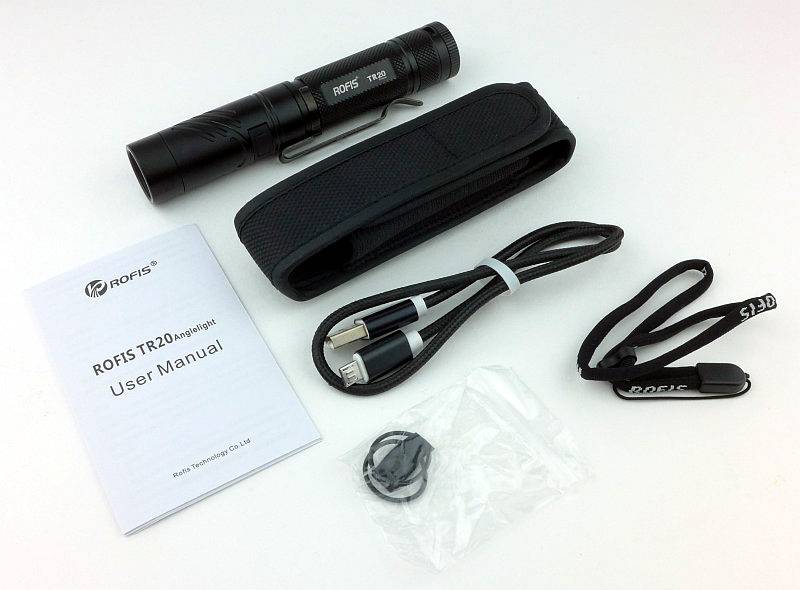
Knife Review: Fällkniven F1 Pro

Although Fällkniven have a winning formula with their F1 Survival knife, (the official survival knife of Swedish Air Force pilots since 1995), Fällkniven’s desire for continual improvement led them to start work on the Pro Series, including the F1 Pro, in 2010.

 photo 34 F1 PRO with sheath P1170966.jpg
The Pro Series consists of the F1 Pro (featured here) as well as the S1 and A1 Pro models.

The Blade and Handle Geometry:

Most knife specifications have a basic description of the blade geometry, but in this section I will be taking a more detailed look at geometry and balance.

 photo 40 F1 PRO grind P1180553.jpg

Using a set of gauges and precision measuring equipment including a Vernier protractor, callipers, fixed radius gauges and the unique Arc Master adjustable radius gauge (the one that looks like a crossbow).
 photo Knife measuring P1180483.jpg

These measurements have been tabulated and are presented along with a few reference blades (8″ Chef’s Knife, 5.5″ Santoku and the popular Fällkniven F1).

Key aspects such as the primary bevel angle, grind type, blade depth, blade thickness, length, weight are detailed, along with balance information.
 photo 39 F1 PRO geometry P1180548.jpg

The ‘Balance relative to the front of the handle’ tells you if the knife will feel front heavy, or if the weight is in your hand (a positive value means the weight is forward of the front of the handle). The ‘Balance relative to the centre of the handle’ indicates how close to a ‘neutral balance’ the knife has in the hand.
 photo 38 F1 PRO balance P1180542.jpg

In the case of full convex grinds the approximate centre of the grind is used for the primary bevel angle estimate.

 photo F1 PRO parametersV2.jpg

The blade is made from laminated (Outer)420J2/(Centre)CoS (Cobalt-Special) steel.

Explained by the Maker:

The reasons for certain design choices may not be clear when simply looking at an object, so this section is intended to give an insight into the thinking behind a design by speaking to the designer themselves.

Unfortunately I can’t always get time with the designer so will use this section to include relevant information about the knife and its designer.

Peter Hjortberger (Founder of FÄLLKNIVEN AB) told me a little of the origin of the F1 – The F1 story started with an inquiry from two pilots in the Swedish Air Force (Swedish ”Flygvapnet”). They had a very, very simple sheath knife in their survival dress (leg pocket), a knife that cost less than one GBP. Considering that they were flying an air-fighter costing a huge amount of money, the pilots thought that they should carry a knife which was the same quality level as their aircraft.

Though there is quite a long story behind the F1 Pilot Survival knife, the ”F” comes from ”Flygvapnet”, but you can also consider it to be like the ‘F1’ of Formula One racing, or why not ‘F’ like in Fällkniven.

The F1 knife became such a worldwide success that Peter decided to stop selling products from other brands and concentrate the company on developing their own knives. From 1995 this has been the focus of the company and the reason behind Fällkniven’s good reputation all around the world.

Before getting into the detailed look at the F1 Pro, there is a list of upgraded features that Fällkniven have published so you can keep an eye out for them in the photos (especially the F1/F1 Pro comparison section). I’m going to quote the statement from Fällkniven and add some more detail as we go.

“1. The laminated VG10 steel is replaced with a laminate cobalt steel (lam. CoS) which, amongst other things, ensures a durable edge and improved edge retention.” – Uprating the steel has allowed the hardness to be increased from 59HRC to 60HRC without compromising durability. Cobalt is very beneficial in steel alloys and is used in drill bits suitable for drilling hardened steels. The composition of the CoS used by Fällkniven is shown below compared to the VG10.

Steel analysis
VG10
Composition
(59 HRC)
CoS
Composition
(60 HRC)
Cr – 15.00 Cr – 16
Co – 1.40 Co – 2.5
Mo – 1.05 Mo – 1.5
C – 1.00 C – 1.1
Si – 0.60 V – 0.3
Mn – 0.50 W – 0.3
V – 0.20 Si – trace
P – 0.030 P – trace

“2. The blades are consistently thicker causing an increased torsional rigidity – they will withstand even greater external forces than before.” – Currently unpublished, but Fällkniven have assured me that the breaking test result of the F1 Pro has provided a very positive result compared to the standard VG10 F1.

“3. The tapered tang is wider and thicker and thus significantly stronger.” – Though I’m not going to cut off the Thermorun handles to expose the tangs, when looking at the comparison photos of the pommel you can clearly see the thicker tang.

“4. The crossguard is made of stainless steel and permanently mounted to the tang.” – Though in real use, the F1’s finger guard has not let me down, the fact it is rubber has always concerned me slightly. The F1 Pro however now has a steel finger guard allowing you to much more confidently apply pressure to it.

“5. The convex edge has been refined to improve the cutting properties.” – The F1 I have actually appears to have a mostly flat grind with only the last 4-5mm convexed to the cutting edge. With the F1 Pro I can clearly see the edge is convexed through the entire primary grind to the edge.

“6. The zytel sheaths are redesigned meaning they are more durable and are better suited to the Molle attachment system.” – Without becoming too large, the F1 Pro sheath is far more robust and includes slots that can accommodate MOLLE straps.

“7. The knives are supplied with our most valued combination whetstone, the DC4. It offers both a diamond whetstone and a ceramic stone for field sharpening.” – Really this just makes the F1 Pro package complete, as you might already have a sharpening system. The DC4 however provides a combination diamond/ceramic stone in a pocket size package making it easy to carry into the field. Well worth having.

“8. The knives are packed in shock-resistant, waterproof boxes that can be used for storage of smart phones, GPS, documents, survival gear and much more.” – Packaging and presentation of the F1 Pro is excellent, and the case can be used for other purposes once you have stripped out the foam liner (easier said than donewith the one I had) giving you a tough case that is small enough to be packable and large enough to be useful.

Keep an eye out for these features in the following sections.

A few more details:

In keeping with Fällkniven’s normal product packaging the F1 Pro arrives in a white cardboard box.
I like the Swedish sense of humour as this is the first knife I have received which came with a supply of Fällkniven branded sticking plasters.
 photo 01 F1 PRO boxed P1170850.jpg

Inside the cardboard box is the tough, waterproof, plastic case.
 photo 02 F1 PRO case P1170858.jpg

Opening the case you find the contents nicely organised.
 photo 03 F1 PRO case open P1170861.jpg

The liner is a substantial closed-cell foam with finger cut-outs to make it easy to remove the items.
 photo 04 F1 PRO case insert P1170864.jpg

You have the F1 Pro knife, its sheath, the DC4 stone and a case for the DC4.
 photo 05 F1 PRO case contents P1170870.jpg

You can buy the DC4 separately, but in keeping with the uprated features of the F1 Pro you get this great stone with the F1 Pro. The gold side is the one with a diamond coating. With harder blade steels, the diamond makes it much easier to achieve a good result while not taking too long.
 photo 06 DC4 diamond P1170880.jpg

Flipping the DC4 over, it has a ceramic side which allows for a finer finish once the diamond side has done most of the work.
 photo 07 DC4 ceramic P1170881.jpg

As it comes out of the box, the sheath has the belt loop tucked into the top.
 photo 08 F1 PRO sheath tucked P1170884.jpg

Pulling out the belt loop and you can see the retaining strap as well.
 photo 09 F1 PRO sheath untucked P1170887.jpg

While looking at the sheath, let’s have a closer look as the new strapping points on side. This is the first one.
 photo 10 F1 PRO sheath MOLLE P1170889.jpg

On the other side, there is a cut-out in the middle of the strap loop which allows for the movement of the plastic sprung tab which holds onto the F1’s guard. When removing or inserting the F1 Pro, this tab moves far enough out that it would touch the strap loop if it did not have this cut-out.
 photo 11 F1 PRO sheath MOLLE P1170893.jpg

The webbing belt loop is riveted onto the back of the sheath.
 photo 12 F1 PRO sheath back P1170897.jpg

When sheathed, you can hold the sheath upside-down and even without the retaining strap done up, the knife doesn’t fall out, but for complete security the retaining strap is closed round the end of the handle.
 photo 13 F1 PRO sheathed P1170900.jpg

And now for the star of this review, the F1 Pro itself.
 photo 15 F1 PRO angle P1170909.jpg

Taking a close look at the tip of the blade. You can see the line where the outer and centre steels join.
 photo 16 F1 PRO blade tip P1170912.jpg

Looking closer still at the lamination join and cutting edge. Where the steels join it appears as if it is slightly softer as during the finishing processes the line has become slightly recessed. This is not a problem, just an observation.
 photo 35 F1 PRO lamination detail P1170975.jpg

Giving the edge a proper termination the F1 Pro has a choil centred on the plunge line.
 photo 18 F1 PRO choil P1170919.jpg

Often a point of weakness due to stress concentrators, the F1 Pro’s plunge line has a nicely radiused transition from primary grind to the ricasso.
 photo 19 F1 PRO plunge P1170922.jpg

The fit of the guard to the blade is excellent, but if looking closely at the grip to guard fit, the Thermorun handle material extends slightly beyond the guard.
 photo 20 F1 PRO guard P1170924.jpg

As with the F1, the tang of the F1 Pro is exposed at the pommel.
 photo 21 F1 PRO pommel P1170926.jpg

A flared tube is used for the lanyard hole and also secures the grip. The flaring of the tube not only keeps it in place, but also means the lanyard hole has no sharp edges that might have frayed the cord.
 photo 22 F1 PRO lanyard hole P1170929.jpg

The sides of the handle have a moulded diamond knurling pattern.
 photo 23 F1 PRO grip P1170932.jpg

Not actually sharp, the corners of the blade’s spine do strike sparks from ferrocerium rods.
 photo 25 F1 PRO spine P1170937.jpg

Comparing the F1 and F1 Pro:

This review is not simply a comparison of the F1 and this new F1 Pro, but it would not be complete without looking at the two side-by-side.

Starting with an overall view, the F1 Pro’s heavier build is immediately obvious. The new guard and modified blade grind really stand out.
 photo 26 F1 PRO compare angle P1170942.jpg

Staying with an overall view but this time directly side on. Overall dimensions are very similar.
 photo 27 F1 PRO compare straight P1170943.jpg

Focusing in on the handles, the F1 Pro has a slightly deeper grip with less pronounced palm swell.
 photo 28 F1 PRO compare handles P1170946.jpg

The new guard sits perpendicular to the edge. On the Original F1 the guard sweeps backwards.
 photo 29 F1 PRO compare guard P1170948.jpg

With a thicker blade stock and sabre grind, the blade of the F1 Pro is significantly stronger than the already strong F1.
 photo 30 F1 PRO compare blades P1170950.jpg

The exposed tangs also show the thicker blade stock used for the F1 Pro.
 photo 31 F1 PRO compare pommels P1170952.jpg

A view looking down onto the cutting edge of each knife to show the blade and handle thickness.
 photo 32 F1 PRO compare tickness P1170957.jpg

Lastly the F1 and F1 Pro sheaths side-by-side. The F1 Pro’s sheath is a bit chunkier than the F1’s.
 photo 33 F1 PRO compare sheathed P1170958.jpg

What it is like to use?

With the huge success of the F1, the ‘improved’ F1 Pro certainly has a lot to live up to. Initially I expected the F1 Pro to overshadow the F1 and make it virtually obsolete, but the reality is not so. Both knives have a place, and their differences are what would make you choose one over the other.

Picking up the F1 Pro, you can feel that it is nearly 20% heavier than the F1 though this is not a bad thing, just in keeping with its stronger build.

My hands take an XL size glove, so usually I prefer generously sized handles, especially if I’m going to work hard with it. That said, I’ve always appreciated the F1 being a relatively compact knife, and the F1 Pro still maintains this. A slightly larger grip fits in with this knife as an overall package very well. Even though the sheath has grown slightly as well, it still remains a lot of knife crammed into a small package.
 photo 37 F1 PRO in hand P1170992.jpg

Switching quickly to the hard case supplied with the F1 Pro. You can always leave the case as it came and put the F1 back into it, but once you have the F1 Pro out, you are not going to want to put it back into storage. I keep this one to hand, and it is very easy to pop into a backpack if getting into the great outdoors. So that case….what to do with it? Leaving the foam insert in it is no help as it will only accommodate the F1 Pro, so this needs to come out. With the case being listed as a reusable item, I was surprised that this foam did not want to come out. It seemed very firmly glued into place and I was about to give up when I found that the double-sided tape holding the foam layers together was partially out and sticking the foam to the side of the case as well. After much prying (this is a stiff closed-cell foam), I managed to get it free in one piece. The less patient might have used the F1 Pro to shred this foam liner. Of course, once out, the case can now be used for whatever you like.
 photo 41 F1 PRO case reuse P1180563.jpg

Time to get out into the field and try it out for various tasks. The first was a bit of wood carving. Not the only knife used for this, but one of the most comfortable thanks to the thick blade stock and the way the edges of the spine were finished. Placing your thumb onto the spine allows for power and control over the cut. After working with it in this way for quite some time, my thumb was not suffering at all and I could have carried on all day (but had other things to do).
 photo 34 spoon P1190553.jpg

As mentioned above, the spine was very comfortable to press onto, so I wondered how well it would strike a ferrocerium rod (really an essential for a survival knife). It turned out to be really rather good, giving a concentrated and directed shower of sparks.
 photo Fallkniven F1 Pro Ferro 600px 200ms Balanced.gif

I thought I would give it a try in the kitchen as well to see what its food preparation capabilities were. A blade this thick is always going to struggle a bit with deeper cuts and this test really showed this. Starting with mushrooms, the cuts were easy and controllable, but the slices were bent over and split by the thick blade.
 photo 50 F1 PRO kitchen P1220672.jpg

Moving to a thinner vegetable, it handled the mange-tout with ease and the baby sweetcorn were half cut, half split apart.
 photo 51 F1 PRO kitchen P1220679.jpg

The biggest challenge to the blade thickness was a crisp courgette. Cutting was easy but there was a great deal of splitting once the blade got a little deeper. Altogether though, the cutting was easy, and even if not my first choice for food preparation, the F1 Pro worked well enough.
 photo 53 F1 PRO kitchen P1220683.jpg

A little mention of that convex edge and maintaining it. For many, the maintenance of a convex edge is challenging. It is easy to set a knife at an angle and sharpen it, but the convex edge is a curve. This can be made even more difficult with an extended convexed edge, and in the case of the F1 Pro, the entire primary grind is convexed. To sharpen a convex edge you need to remove material over the entire convexed section, so for the F1 it means you really need to work on the entire primary grind. It will never look like new once you have done this. You can of course start to put a standard bevel onto the F1 Pro and it will still work well. I sometimes do this and once the bevel has got a little larger I just knock off the shoulder of the bezel (adding a second bevel) giving a pseudo convex effect. It is generally much easier to do this in the field than attempt a full convex sharpen.

Reader’s Note: There is a commonly known ‘simple’ convexing method using wet and dry paper and a mousemat, so you may want to look into this for maintenance at home. It is not really an ‘in the field’ method. Convexing by hand with a flat stone requires practice and a methodical approach, but can be done in the field with a small stone.

Is the F1 Pro going to be right for you? If you want a high strength, compact and efficient cutting tool, then the answer will be ‘yes’. You could also choose the tried and tested, proven design of the original F1, which gives you a slightly lighter and more compact overall package (at the cost of some blade strength), and this would be fine for most users and most conditions. ‘Most conditions’ being the crucial part of that description, as should you find yourself in an emergency situation where the knife might be tested to its limits, you might prefer to have all the strength you possibly could. The F1 Pro has that extra strength ‘in case’ you need it.

Taking the F1 Pro on its own merits, and you have an extremely sturdy, easily manageable cutting tool with excellent edge retention (thanks to the Cobalt Steel). The F1 Pro is a complete package with the knife/sheath, DC4 sharpener and reusable plastic case.

Review Summary

The views expressed in this summary table are from the point of view of the reviewer’s personal use. I am not a member of the armed forces and cannot comment on its use beyond a cutting tool or field/hunting knife.

Something that might be a ‘pro’ for one user can be a ‘con’ for another, so the comments are categorised based on my requirements. You should consider all points and if they could be beneficial to you.

_______________________________________________ _______________________________________________
Things I like What doesn’t work so well for me
_______________________________________________ _______________________________________________
Builds on an already proven formula and reputation. Quality and strength comes at a higher price.
Cobalt steel edge. Relatively heavy for its size.
Very strong blade. Convex edge can be more difficult to maintain with standard whetstones.
Strikes a ferrocerium rod well. Thicker blade less suited to deeper cuts.
Thick spine is very comfortable to push with the thumb for heavy cuts.
Price also includes the DC4 sharpener and reusable waterproof case.


Discussing the Review:

Please feel free to add comments to the review, but the ideal place to freely discuss these reviews is on a forum. If you started reading the shorter forum version of the review, but followed the link this full exclusive review, please return to that forum to discuss the review there.
If you read the review entirely on Tactical Reviews, please consider one of the following to join in any discussion.

EdgeMatters – Sponsored Reviews (UK based Forum for Knife Makers and Collectors)

BladeForums – Knife Reviews (US based Forum for Knife Discussion)

CandlePowerForums – Knife Reviews Section (Largest and Friendliest Flashlight Community Forum)
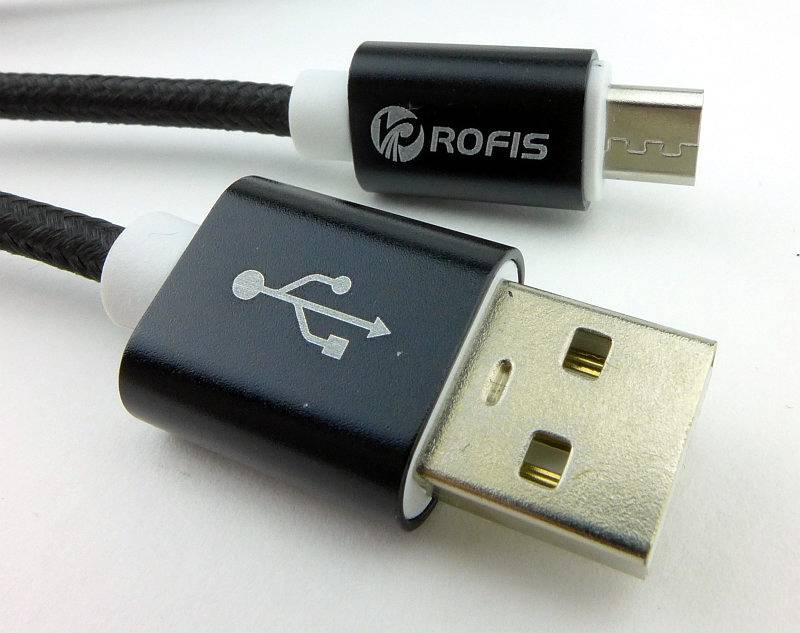
Knife Review: Morakniv – A Look at the Classics

Morakniv’s products are extremely well known, but with most people being more used to simply calling them a ‘Mora’. Of course Mora is actually the name of the place in Sweden where these famous knives are made. It was when the two major knife making companies in Mora (Frosts and KJ Eriksson) merged in 2005 that ‘Mora of Sweden’ was born and customers referred to their ‘Mora’ knife. Building on its strong branding, on the 1st of January 2016 Mora of Sweden officially changed its name to ‘Morakniv AB’ after the products it makes – Knives from Mora.

With three new models coming onto the Morakniv range (Garberg, Kansbol and Eldris), in this article, Tactical Reviews is looking at several of the core products in the Morakniv lineup including the Companion, Bushcraft Survival, Axe, and Sharpeners.

 photo 19 Morakniv fan P1180701.jpg

The Blade and Handle Geometry:

Most knives specifications have a basic description of the blade geometry, but in this section I will be taking a more detailed look at geometry and balance.

 photo 22 Morakniv blade grind P1180987.jpg

Using a set of gauges and precision measuring equipment including a Vernier protractor, callipers, fixed radius gauges and the unique Arc Master adjustable radius gauge (the one that looks like a crossbow).
 photo Knife measuring P1180483.jpg

These measurements have been tabulated and are presented along with a few reference blades (8″ Chef’s Knife, 5.5″ Santoku and the popular Fällkniven F1).

Key aspects such as the primary bevel angle, grind type, blade depth, blade thickness, length, weight are detailed, along with balance information.
 photo 23 Morakniv blade angle P1180990.jpg

The ‘Balance relative to the front of the handle’ tells you if the knife will feel front heavy, or if the weight is in your hand (a positive value means the weight is forward of the front of the handle). The ‘Balance relative to the centre of the handle’ indicates how close to a ‘neutral balance’ the knife has in the hand.
 photo 21 Morakniv bushcraft balance P1180983.jpg

In the case of full convex grinds the approximate centre of the grind is used for the primary bevel angle estimate.

With the large number of knives in this review, three tables have been prepared. Starting with the reference knives and the Axe.
 photo 40 parameters.jpg

Then all the Companion models together, as well as the 120 wood carving model.
 photo 41 parameters.jpg

In the final set, the Bushcraft Survival models are shown amongst the Companions and Axe for comparison.
 photo 42 parameters.jpg

A few more details:

Designed as working tools, Morakniv products arrive in a variety of packaging ranging from none to blister packs and boxes.
 photo 01 Morakniv Packaing P1180575.jpg

Being the most popular of Morakniv’s products, the Companion comes in several different versions. Ignoring colour variations, the main types are (from left to right), the Companion (Stainless Steel), Serrated Companion (Stainless Steel), Companion Heavy duty (Carbon Steel) and the Companion Tactical (Stainless Steel).
 photo 02 Morakniv Packaing P1180600.jpg

All companion versions come with the same design plastic sheath (colours vary), but the Tactical version has an additional sheath cover which is MOLLE compatible. The Morakniv fluorescent orange is very bright!
 photo 03 Morakniv Companions P1180605.jpg

Taking just the Companion knives themselves, the main differences are the thicker blade of the Heavy Duty, and the black ED coated blade of the Tactical.
 photo 04 Morakniv Companions P1180609.jpg

The Companions are considered about the best value outdoor knife on the market, and as a step up in performance, the Bushcraft Survival models are also rated very highly for their value for money. Both models come in a cardboard backed blister pack.
 photo 05 Morakniv Bushcraft Survival P1180616.jpg

Opening these is easy and does not require another knife thanks to a well thought out design allowing you to get a finger under the plastic part and pull it open.
 photo 12 Morakniv easy open P1180669.jpg

Morakniv have put an impressive package together with a heavy duty blade, diamond sharpener on the sheath and an integrated firesteel. The sheath has an option of two different hangers.
 photo 06 Morakniv Bushcraft Survival P1180641.jpg

The hangers fit into the back of the sheath, and you have the choice of a fully enclosed belt loop which can handle wider belts, or a hook-over style belt loop. With the knife in the sheath, these loops cannot be removed.
 photo 08 Morakniv Bushcraft Survival belt loops P1180652.jpg

The ‘Survival Bushcraft’ has a Stainless Steel blade, and the ‘Survival Bushcraft Black’ has a Carbon steel blade.
 photo 07 Morakniv Bushcraft Survival blades P1180649.jpg

The ferrocerium rod fits into a holder on the side of the sheath.
 photo 09 Morakniv Bushcraft Survival ferro P1180656.jpg

Here the ‘Survival Bushcraft’ is shown in the sheath with the enclosed belt loop fitted, and the ‘Survival Bushcraft Black’ knife and ferrocerium rod are shown next to the sheath which has the belt clip fitted.
 photo 10 Morakniv Bushcraft Survival ferro P1180658.jpg

Next up in the whistle-stop tour are the Outdoor Axe and three diamond sharpeners.
 photo 11 Morakniv Axe sharpeners P1180665.jpg

Unpackaged for a better view. Like the Companions and Survival Bushcraft models, the orange handle of the Outdoor Axe is very fluorescent.
 photo 13 Morakniv Axe sharpeners P1180672.jpg

Though this image is low in contrast, you can see the Outdoor Axe still bears to older ‘Mora of Sweden’ mark, but the box it came in was branded Morakniv.
 photo 14 Morakniv mora brand P1180675.jpg

Like the Companion Tactical the Outdoor Axe has an ED coated blade.
 photo 15 Morakniv Axe P1180680.jpg

The Axe blade is Boron Steel.
 photo 16 Morakniv Axe edge P1180683.jpg

A perfect camping trip kit here with the Outdoor Axe, Bushcraft Survival, and a 120 for fine whittling when relaxing next to a roaring camp fire.
 photo 17 Morakniv kit P1180687.jpg

What are they like to use?

There are a couple of good reasons the Morakniv products are so popular; the first is their great value for money, so much so the Companion is almost disposable, and you won’t have to shed a tear if you lose one. Then there is the fact that they handle really well, being light, comfortable to hold and work with for long periods, and are very efficient cutters. The Scandi-grind used also makes them very easy for everyone to sharpen as you have a built-in edge angle guide.

Taking time to specifically re-assess these knives, I spent a couple of days making a few camping accessories from pot hangers to a spoon.

Roughing out a spoon requires a lot of wood removal, but you also need to be careful; the Outdoor Axe made light work of this.
 photo 32 spoon split P1190535.jpg

A bit of a jump forwards here and in the shaping of this spoon, the Companion models were also used. Comparing the Companion and Bushcraft Survival is not straightforward. The Companion with its thinner blade does cut with less resistance carving wood and cutting other materials, but the Bushcraft Survival’s thicker blade makes it more robust if batoning with it and also gives a more comfortable spine to push on for certain cuts.

For the tighter radiuses the 120 wood carver is king, and for the bowl of this spoon you really do need a hook knife and the Mora 162 is the one I had to hand.
 photo 34 spoon P1190553.jpg

Looking at the back of the bowl, nice clean cuts can be seen in all directions.
 photo 35 spoon cuts P1190617.jpg

Not yet mentioned is the Serrated Companion. It was not well suited to woodcarving, and has a particular place when you are dealing with fibrous materials. Personally I would keep the Serrated version on standby for a few specific tasks rather than have it as a general use knife, and with the Companions being so inexpensive you can have both plain and serrated blades without breaking the bank.

Moving more into the ‘survival’ area, though a Companion would serve you well if it were the only blade you had, the Bushcraft Survival is that much more sturdy and has a built-in diamond sharpener and a fire-steel; definitely a more complete package.

The spine of the Bushcraft Survival has been left with a sharp corner to make striking the fire-steel effective and this is a typical strike. (slowed down to better show the sparks).

 photo Mora Bushcraft Survival Ferro 600px 200ms.gif

Morakniv have been making tools for a very long time, and their tools are designed to be used; you don’t buy a Morakniv as a drawer queen. It is clear when you use them, they have been designed very well and perform admirably. We are not talking super-steels here though, so you will need to maintain the edge and not expect them to survive extreme punishment.

With Morakniv, you will find you tend to end up with quite a few. One in the tool box, one or two in the fishing tackle box, one in the car, ………..(fill in your own here)…..and several for the family when going camping. Tools you are happy to use, lend or give as gifts. When did you get your first Morakniv?

Review Summary

The views expressed in this summary table are from the point of view of the reviewer’s personal use. I am not a member of the armed forces and cannot comment on its use beyond a cutting tool or field/hunting knife.

Something that might be a ‘pro’ for one user can be a ‘con’ for another, so the comments are categorised based on my requirements. You should consider all points and if they could be beneficial to you.

_______________________________________________ _______________________________________________
Things I like What doesn’t work so well for me
_______________________________________________ _______________________________________________
Great value for money. Steels not as tough as more expensive knives.
Reliable build quality. Not full tang (Stick tangs used).
Choice of light or heavy duty blades. Scandi-grind not suited to all cutting tasks.
Diamond sharpeners available (or included).
Choice of Stainless or Carbon Steels.

 photo 18 Morakniv blades P1180690.jpg


Discussing the Review:

Please feel free to add comments to the review, but the ideal place to freely discuss these reviews is on a forum. If you started reading the shorter forum version of the review, but followed the link this full exclusive review, please return to that forum to discuss the review there.
If you read the review entirely on Tactical Reviews, please consider one of the following to join in any discussion.

EdgeMatters – Sponsored Reviews (UK based Forum for Knife Makers and Collectors)

BladeForums – Knife Reviews (US based Forum for Knife Discussion)

CandlePowerForums – Knife Reviews Section (Largest and Friendliest Flashlight Community Forum)
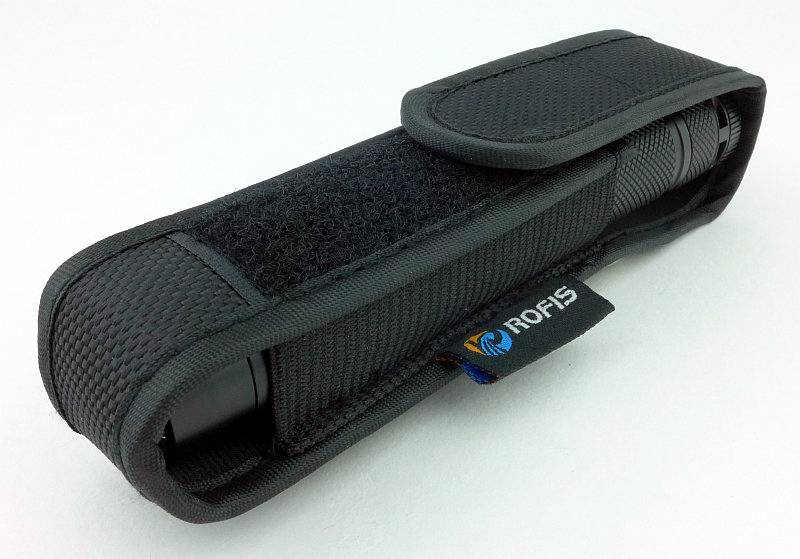
Knife Review: Ontario Knife Company Black Bird SK-5

The Ontario Knife Company Black Bird SK-5 review is the third of a three-knife review series featuring the Black Bird SK-5, RD Tanto and RTAK II. (See – OKC Group Review.)

 photo 01 OKCtrio sheathed P1140542.jpg

The Black Bird SK-5 is a survival knife designed by Paul Scheiter and is intended to be highly functional and yet very simple.

 photo 13 Blackbird angle2 P1130908.jpg

The Blade and Handle Geometry:

Most knives specifications have a basic description of the blade geometry, but in this section I will be taking a more detailed look at geometry and balance.
 photo 30 Blackbird measuring2 P1140190.jpg

Using a set of gauges and precision measuring equipment including a Vernier protractor, callipers, fixed radius gauges and the unique Arc Master adjustable radius gauge (the one that looks like a crossbow).

These measurements have been tabulated and are presented along with a few reference blades (8″ Chef’s Knife, 5.5″ Santoku and the popular Fällkniven F1).

Key aspects such as the primary bevel angle, grind type, blade depth, blade thickness, length, weight are detailed, along with balance information.
 photo 29 Blackbird measuring P1140186.jpg

The ‘Balance relative to the front of the handle’ tells you if the knife will feel front heavy, or if the weight is in your hand (a positive value means the weight is forward of the front of the handle). The ‘Balance relative to the centre of the handle’ indicates how close to a ‘neutral balance’ the knife has in the hand.
 photo 31 Blackbird balance P1140196.jpg

In the case of full convex grinds the approximate centre of the grind is used for the primary bevel angle estimate.

 photo OKC Parameters BlackbirdRDTantoRTAKII.jpg

The blade is made from 154CM steel.

Explained by the Maker:

The reasons for certain design choices may not be clear when simply looking at an object, so this section is intended to give an insight into the thinking behind a design by speaking to the designer themselves.

Unfortunately I can’t always get time with the designer so will use this section to include relevant information about the knife and its designer. The following information was noted from an interview with Paul Scheiter by Adam from Equip2Endure

Starting with the name, why is it the SK-5? Well, the ‘SK’ of ‘SK-5’ stands for Survival Knife and the ‘5’ is for its 5 inch blade length, so SK-5 allows for a possible future series with an SK-4 and SK-3.

The concept of this knife is to have sheer simplicity and to achieve maximum function because of that. There is nothing gadgety on the knife, and it only has the bare basics. This gives a knife that has everything it needs and nothing that it doesn’t.

The result is something that is very comfortable in the hand which you can use for hours on end. There are no abrupt angle changes anywhere that your hand would come in contact with, so you are not going to get hotspots and blisters. This is really important for a survival knife where you will be doing a lot of wood processing and splitting.

A notable point is the steel choice of 154CM; in addition to there being a good compromise of edge retention and corrosion resistance, it allows for there not to be a powder-coat on the blade. Amongst other things, not having the powder-coat makes it easy to strike a ferro-rod.

The full flat grind gives the ideal cutting geometry; it stays as thin as possible for as long as possible, and reduces the calories used when cutting wood.

A spear point tip puts a little more metal behind the point, making it less prone to breaking if it gets torqued. The tip itself is placed in the dead centre line of the blade making tasks, such as the initial shaping of a bow drill pit, straightforward as this knife will drill very nicely.

The pommel of the knife is flat and perpendicular to the blade so that if you wanted to use it as a spear head (which would not be recommended, but sometimes it may be a necessity), you can carve a shelf into a piece of wood so the pommel seats perfectly onto this, giving you thrusting power, then you put the lashing around the handle to complete the spear.

Blade stock thickness at 0.13 inches was chosen as a sweet spot where you can confidently baton with it but not take away too much from wood carving which is the primary intention.

At various shows, Paul has noted that people have generally been surprised that it is a lot lighter than it looks.

On a final note about how to carry the knife, Paul Sheiter’s preferred carry option is not to wear the knife on his belt but to use a high over-the-shoulder strap/band (like a cross-body sling bag) as it allows the knife to be kept in sight to the front of the body and if wearing a winter coat you don’t have to lift the coat to access the sheath.

A few more details:

Just as with the others in this series, the Black Bird SK-5 comes in Ontario Knife Company’s standard knife box.
 photo 01 Blackbird boxed P1130826.jpg

Inside the box the knife has a cardboard protector over the blade, and the knife is not fitted into the sheath. There was also a letter explaining that this knife had upgraded G-10 handle slabs.
 photo 02 Blackbird box contents P1130833.jpg

The first proper view of the Black Bird and its sheath.
 photo 04 Blackbird with sheath2 P1130851.jpg

Before going back to the knife, a quick look at a few details of the sheath. On the back, the sheath has a PALS/MOLLE strap for mounting on a pack, vest or load carrier.
 photo 05 Blackbird sheath back P1130856.jpg

The press stud used on the retention strap is a military specification type where you can only release it from one direction.
 photo 06 Blackbird sheath popper P1130860.jpg

It is possible to change the fit of the retention strap using the Velcro adjustment.
 photo 07 Blackbird sheath detail P1130866.jpg

Inside the sheath is a felt liner.
 photo 08 Blackbird sheath liner P1130878.jpg

As well as there being PALS webbing on the front of the sheath, here you can also see the drainage hole at the bottom to allow water out.
 photo 09 Blackbird sheath drainage P1130885.jpg

Back to the knife and its details. On one side the maker and model are engraved on the blade near next to the handle.
 photo 10 Blackbird engraving P1130889.jpg

There are three details I’d like focus on in this photograph:
– The generous lanyard hole allows for easy fitting of a lanyard.
– Inside the lanyard you can see evidence of the water-jet cutting and slightly imperfect fit of the handle material, but on the outer edges of the handle and blade tang have been ground to a smooth finish.
– We are looking at the handle grip hook which gives plenty of purchase for all tasks.
 photo 11 Blackbird hook detail P1130897.jpg

Although the handle slabs are flat sided, they have been well rounded to remove sharp edges. Three bolts are used to secure the grips.
 photo 14 Blackbird grip P1130910.jpg

A close look at the blade tip showing the blade-flat surface finish as well as the factory edge and its finish.
 photo 15 Blackbird tip detail P1130917.jpg

One of my personal preferences, a sharpening choil.
 photo 16 Blackbird choil P1130919.jpg

As mentioned earlier, the handle slabs and blade tang are ground/sanded to a completely flush fit.
 photo 17 Blackbird grip detail P1130924.jpg

A sharp edge is left all along the spine meaning you can strike a ferro-rod from any part of the spine that suits you.
 photo 19 Blackbird along the blade P1130936.jpg

Though not a mirror finish, you can see the reflection of the handle on the blade flat so you could use the knife for signaling.
 photo 21-27 Blackbird along the blade flat P1140162.jpg

Unlike the other OKC knives in this series of reviews, the Black Bird’s sheath has only a single retaining strap. There is enough room for the knife to come about half an inch out of the sheath with the retaining strap closed.
 photo 22 Blackbird sheathed P1130972.jpg

For the last photo in this section, we have en extremely close view of the peely-ply G-10 handle texture.
 photo 26 Blackbird texture P1140138.jpg

What it is like to use?

As the designer Paul Scheiter noted earlier, the SK-5 does feel lighter in the hand than you would expect – immediately manoeuvrable and easy to use. This is largely thanks to the full flat grind keeping just enough steel in the blade for strength without being overly thick and heavy.

There is no ‘ideal blade length’, as everyone has their own preferences, but being the only Black Bird so far, the choice of 5 inches for a general purpose survival knife is really hitting the spot for me.

To give an idea of scale, here it is next to the Fällkniven F1 and a Spyderco UK Pen Knife.
 photo 23 Blackbird size P1130984.jpg

At 5″, the blade is half the overall length of the knife. Combining this with the full flat grind and full tang, even though the blade is 5″, the balance point is brought right back into the hand (see ‘The Blade and Handle Geometry:’ section), and this is the reason it feels light and easy to handle.

With this blade length you still have great control over the point and enough length to make batoning easy (if you need more than 5″ to baton, you should probably choose smaller wood or be making wedges for splitting instead).

Overall the package is small enough to carry easily, immediately making it more likely to be your survival knife (as a ‘survival knife’ is the knife you have with you when you need it).

The Black Bird is extremely comfortable in the hand, though the grip is a little boxy due to the flat sides.
 photo 32 Blackbird in hand P1140303.jpg

Not to get started on the subject of factory edges (which by necessity have to be created quickly, typically with belt sanders, and are usually not the best edge that knife can have), but in this case I need to mention the factory edge on the Black Bird sample I received. Check back to the measurements I took and you see it was a 58 degree inclusive angle out of the box; this is more like an angle you might choose for an axe. My initial testing was with the factory edge including comparing it to the other OKC knives. (OKC said this was an anomaly as the factory edge is not normally that steep)

Despite such a large edge angle it still cut very well just requiring a higher angle of attack for each cut. Unsurprisingly it was by far the most controlled carver of all three.
 photo 08 OKCtrio Blackbird stick P1160293.jpg

Despite not needing a sharpen at this point, I wasn’t satisfied with the factory edge angle, so decided to reprofile to around 38 degrees. Even using DMT diamond stones, the 154CM steel proved to be very hard to work and the reprofiling took me a good four hours. The edge bevel is around three times as wide as the original factory edge. Was it worth it? Well, YES, a complete transformation!

Reprofiling the edge has taken a capable cutter and made it supremely efficient and eager. On a simple paper cut test it now glides through with a push cut where previously it cut perfectly well but needed some drawing across the edge. In wood I have to be careful not to over-cut. (Remember to sharpen your knives to suit you and don’t be afraid to change the edge angle)

Another characteristic this knife has is its inoffensive look. By this I mean the fact that it has a SAK style spear point which makes it look more utilitarian than many ‘survival’ knives on the market. If other people are more comfortable when they see the knife you are more likely to carry it and have it with you when you need it (if you are bothered what others might think). Obviously when sheathed you can’t see this, but overall it is easy to carry unobtrusively. If you take it out to whittle or use it for frivolous cutting tasks it doesn’t look like a weapon. It might seem a minor point, but so far I’ve found this knife getting more positive reactions than any other I’ve carried.

Review Summary

The views expressed in this summary table are from the point of view of the reviewer’s personal use. I am not a member of the armed forces and cannot comment on its use beyond a cutting tool or field/hunting knife.

Something that might be a ‘pro’ for one user can be a ‘con’ for another, so the comments are categorised based on my requirements. You should consider all points and if they could be beneficial to you.

_______________________________________________ _______________________________________________
Things I like What doesn’t work so well for me
_______________________________________________ _______________________________________________
Excellent Handling and Balance. Grip could be more contoured.
Comfortable for extended use. Factory Edge too steep.
154CM steel with great edge retention. 154CM is harder to sharpen than other steels.
Full Flat Grind.
Showers sparks from ferro-rods.
Aftermarket sheaths available.

 photo 28 Blackbird angle4 P1140165.jpg


Discussing the Review:

Please feel free to add comments to the review, but the ideal place to freely discuss these reviews is on a forum. If you started reading the shorter forum version of the review, but followed the link this full exclusive review, please return to that forum to discuss the review there.
If you read the review entirely on Tactical Reviews, please consider one of the following to join in any discussion.

EdgeMatters – Sponsored Reviews (UK based Forum for Knife Makers and Collectors)

BladeForums – Knife Reviews (US based Forum for Knife Discussion)

CandlePowerForums – Knife Reviews Section (Largest and Friendliest Flashlight Community Forum)
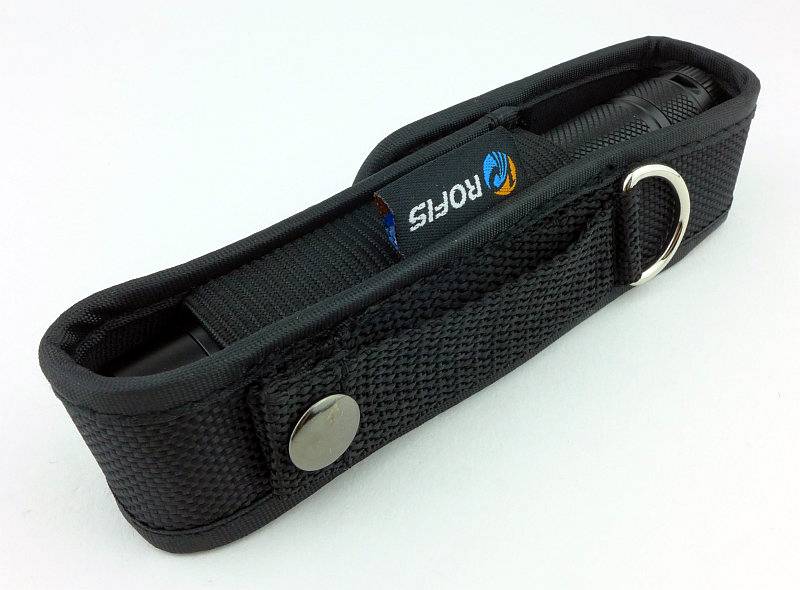
Knife Review: Ontario Knife Company – Group Review

After selecting a set of three knives I felt represented what Ontario Knife Company bring to the market (Blackbird SK-5, Ranger RD Tanto and RTAK-II), I originally intended to present a single group review.
As I have got to know them better, I found that individual reviews would work better, so this page is to tie together the review series and provide a single point of reference to link to all three reviews, plus provide a few group shots for comparison.
This article includes some exclusive images and comments, so is worth getting to the end of before going to an individual review.

03 Apr 2016 – ‘Ranger’ RD Tanto
06 Apr 2016 – RTAK-II
18 Apr 2016 – Blackbird SK-5

 photo 01 OKCtrio sheathed P1140542.jpg

 photo 09 OKCtrio in log P1160300.jpg

Explained by the Maker:

The reasons for certain design choices may not be clear when simply looking at an object, so this section is intended to give an insight into the thinking behind a design by speaking to the designer themselves.

See individual reviews for this exclusive information.

A few more details:

The images at the beginning of this group review page show the unsheathed knives together. This image better shows how the sheathed knives compare in size.
 photo 02 OKCtrio sheathed P1140548v2.jpg

Looking at blade stock thickness, top left is the RTAK-II, middle RD Tanto and bottom right is the Blackbird SK-5.
 photo 03 OKCtrio blade thickness P1140571.jpg

Moving back to show the three blades sitting next to each other.
 photo 04 OKCtrio comparison P1140575.jpg

The Blade and Handle Geometry:

Most knives specifications have a basic description of the blade geometry, but in this section I will be taking a more detailed look at geometry and balance.

 photo 36 RD Tanto flat grind P1140603.jpg

Using a set of gauges and precision measuring equipment including a Vernier protractor, callipers, fixed radius gauges and the unique Arc Master adjustable radius gauge (the one that looks like a crossbow).

These measurements have been tabulated and are presented along with a few reference blades (8″ Chef’s Knife, 5.5″ Santoku and the popular Fällkniven F1).

Key aspects such as the primary bevel angle, grind type, blade depth, blade thickness, length, weight are detailed, along with balance information.
 photo 32 RTAK II angle P1140389.jpg

The ‘Balance relative to the front of the handle’ tells you if the knife will feel front heavy, or if the weight is in your hand (a positive value means the weight is forward of the front of the handle). The ‘Balance relative to the centre of the handle’ indicates how close to a ‘neutral balance’ the knife has in the hand.
 photo 31 Blackbird balance P1140196.jpg

In the case of full convex grinds the approximate centre of the grind is used for the primary bevel angle estimate. This table includes the parameters for all the OKC knives in this series of reviews.
 photo OKC Parameters BlackbirdRDTantoRTAKII.jpg

What they are like to use?

There is too much detail to describe each of these blades strengths and weaknesses in detail, so I’ll just use this opportunity to show the pointed-stick comparison side-by-side
 photo 05 OKCtrio whittlers P1160278.jpg

The RTAK-II is an excellent cutter.
 photo 06 OKCtrio RTAKII stick P1160289.jpg

As a super tough extraction/digging/rescue tool, the RD Tanto struggles a bit for some basic cutting. It excels at heavy tasks though.
 photo 07 OKCtrio RDTANTO stick P1160291.jpg

With the factory edge the Blackbird works well enough, but the edge angle is steep. This photo is from before an edge reprofiling after which the SK-5 cuts furiously well.
 photo 08 OKCtrio Blackbird stick P1160293.jpg

Review Summary

The views expressed in this summary table are from the point of view of the reviewer’s personal use. I am not a member of the armed forces and cannot comment on its use beyond a cutting tool or field/hunting knife.

Something that might be a ‘pro’ for one user can be a ‘con’ for another, so the comments are categorised based on my requirements. You should consider all points and if they could be beneficial to you.

Here I’ve included a very basic summing up of each knife. See individual reviews for detailed information.

_______________________________________________ _______________________________________________
Knife In a nutshell
_______________________________________________ _______________________________________________
Blackbird SK-5 No-nonsense survival knife
Ranger RD Tanto Super tough extraction/rescue tool
RTAK-II Fantastic all-rounder

 photo 10 OKCtrio on log P1160316.jpg


If you enjoyed my reviews, please remember to ‘Like’ me on Facebook and follow me on Twitter to get all the latest updates and news. You can also find exclusive insights on Instagram and Pinterest