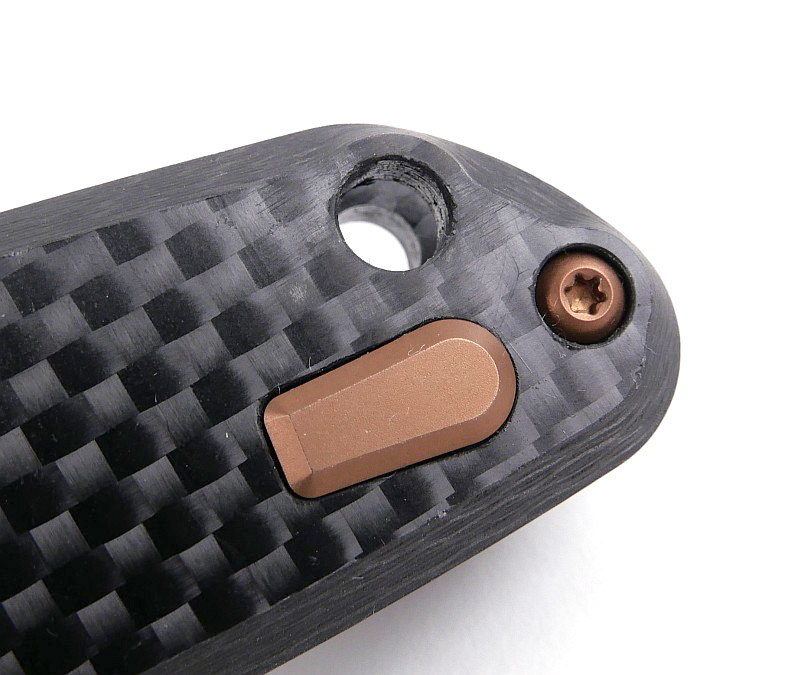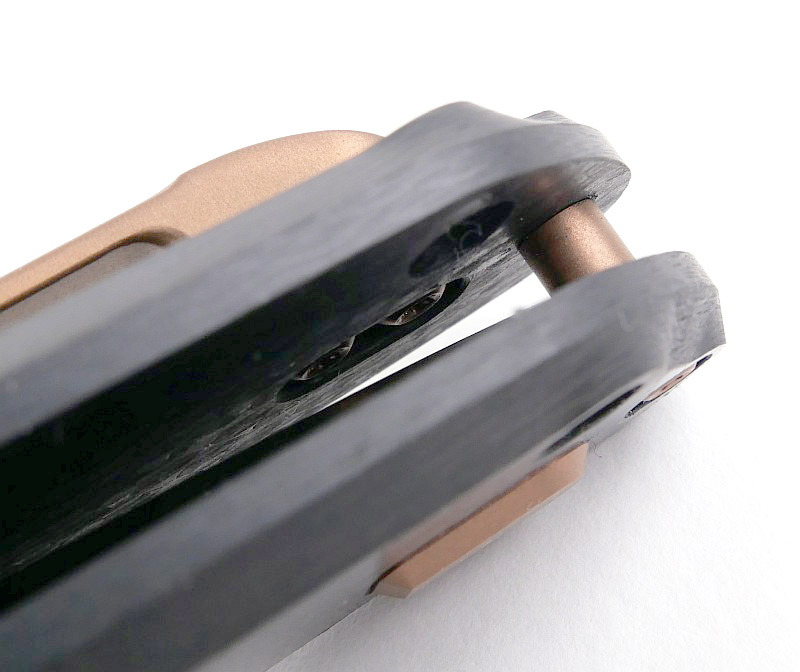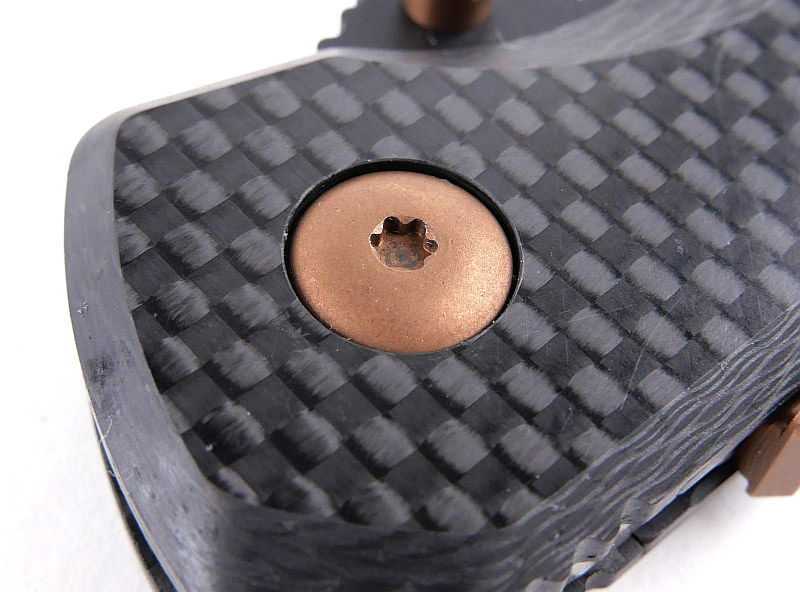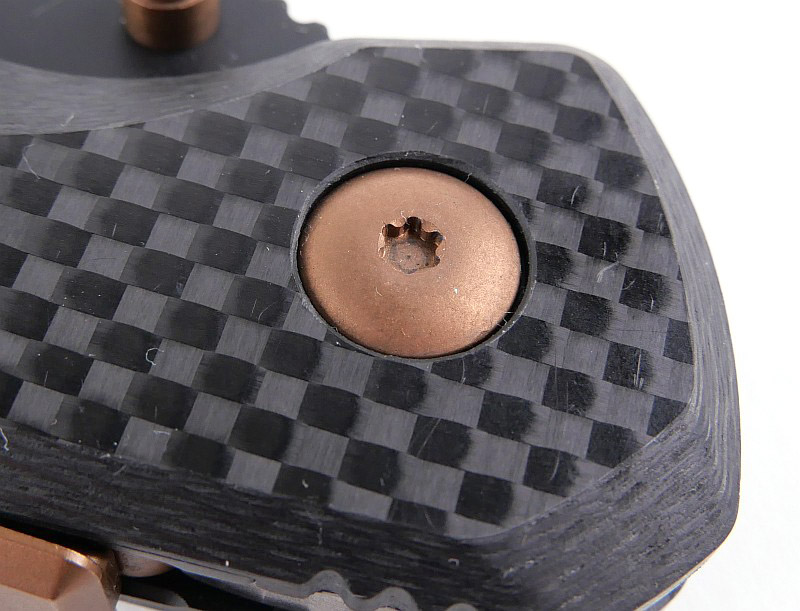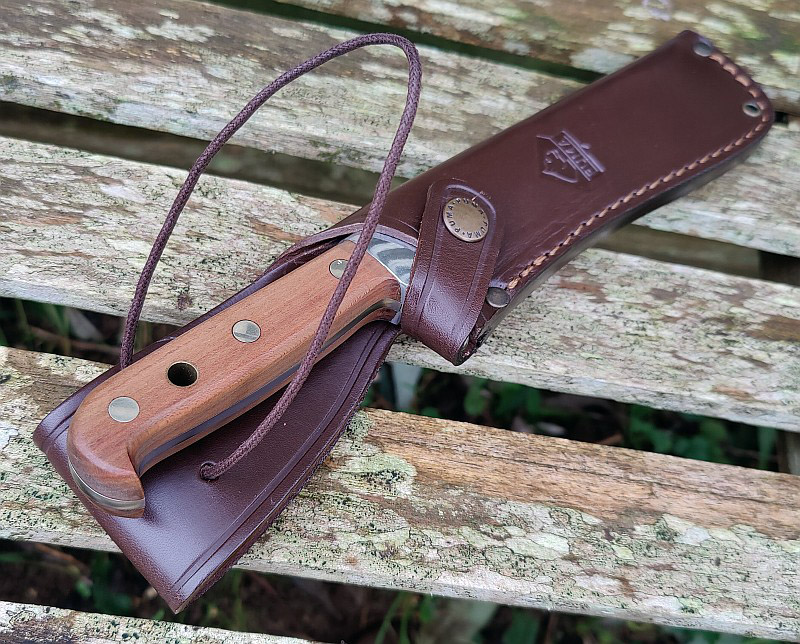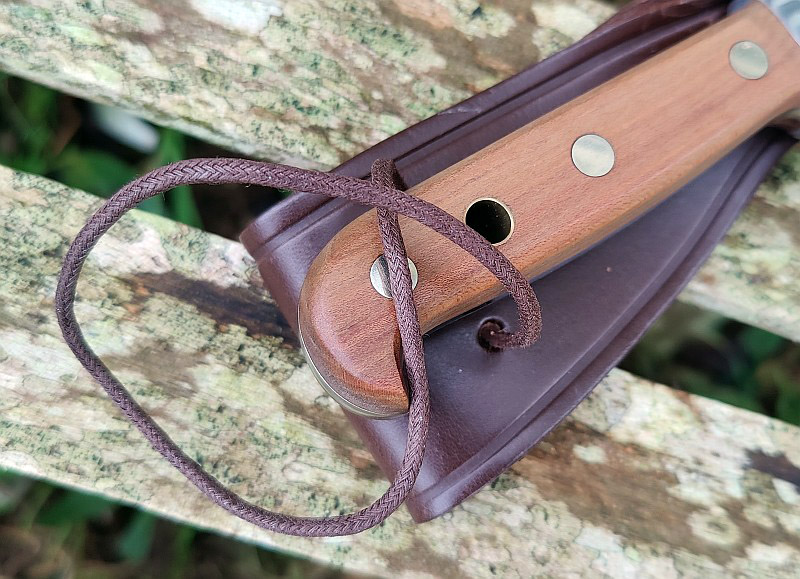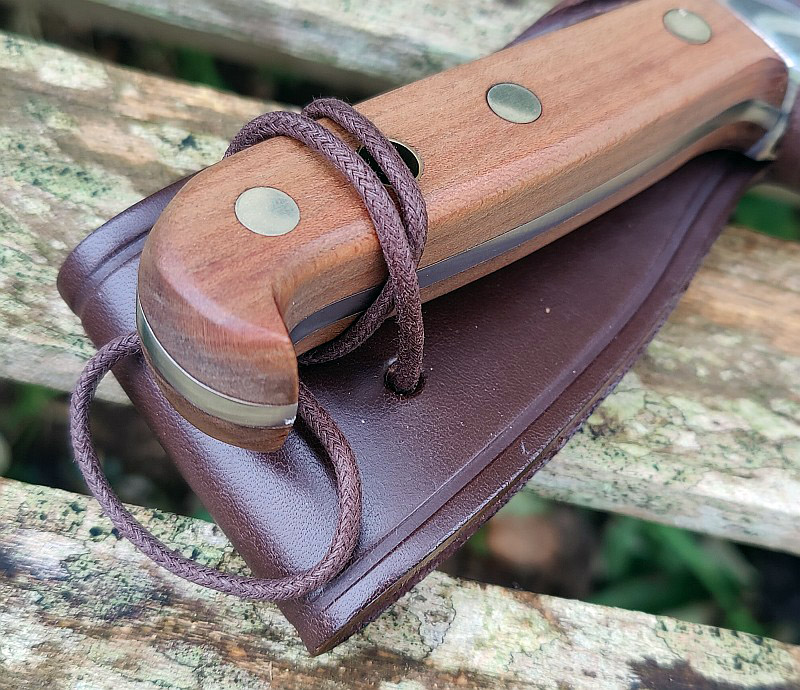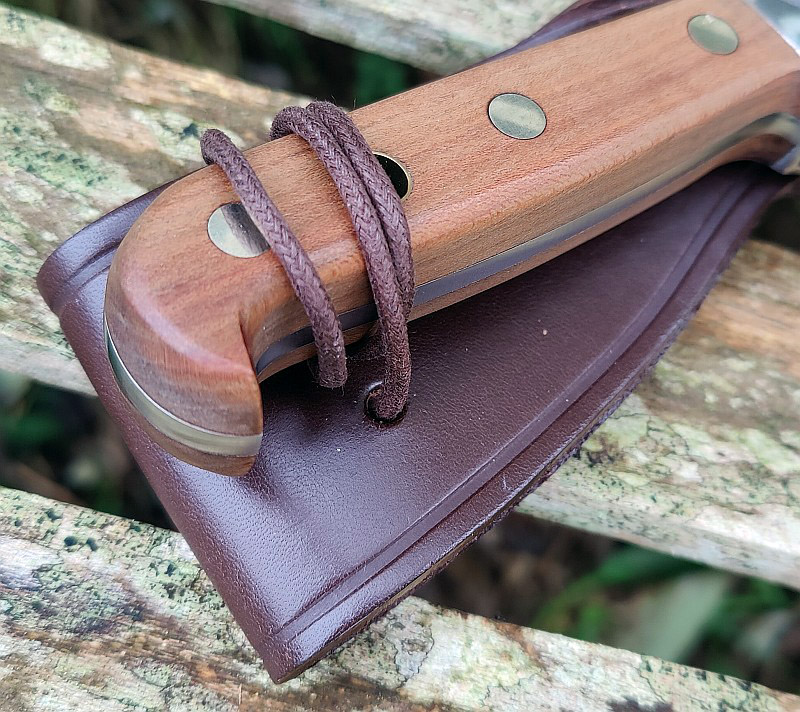
Knife Review: Extrema Ratio Numen

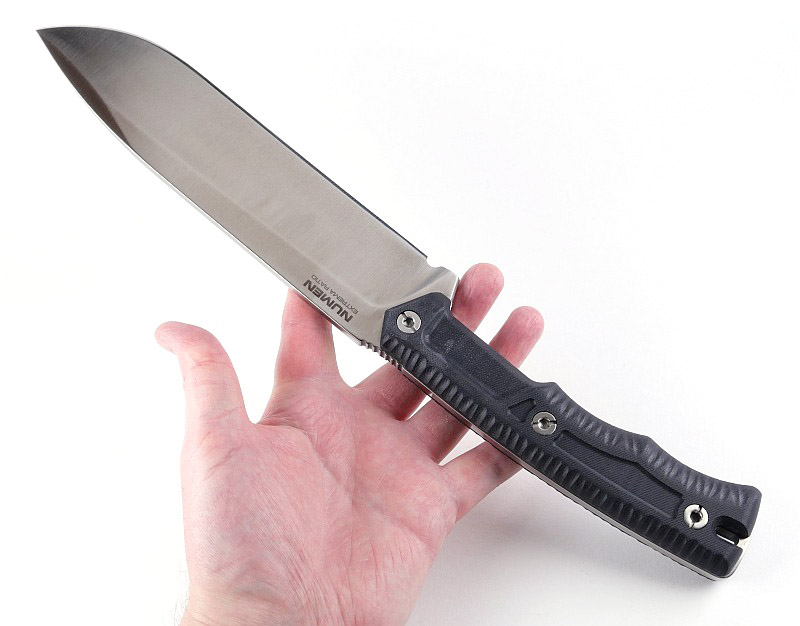
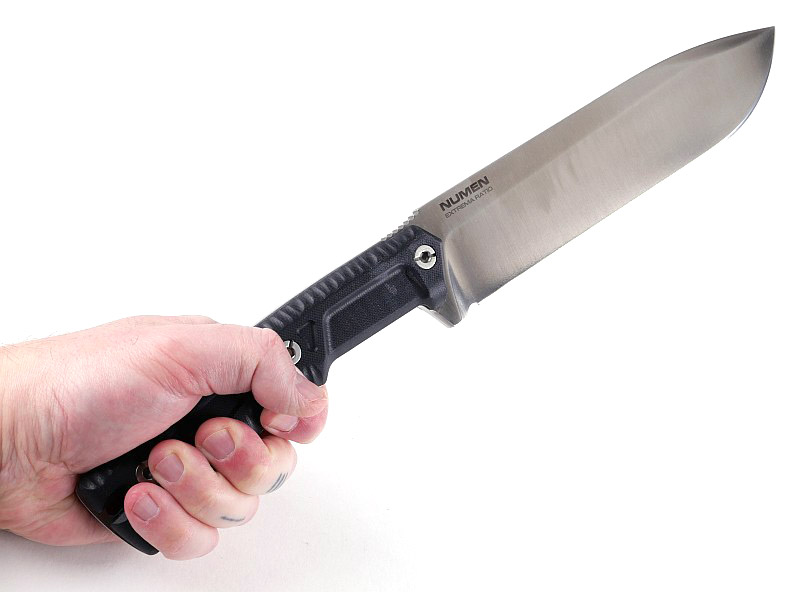
In this detailed review of the Extrema Ratio Numen, Tactical Reviews presents a detailed look at Extrema Ratio’s latest super-versatile survival knife. Join me in this Extrema Ratio Numen Review for all the details.

Extrema Ration named this survival knife after the ancient Roman concept of numen, an invisible force that guides and protects in crucial times. It is not an anthropomorphic god with a definite personality, but a discrete power that exerts its influence in every situation.

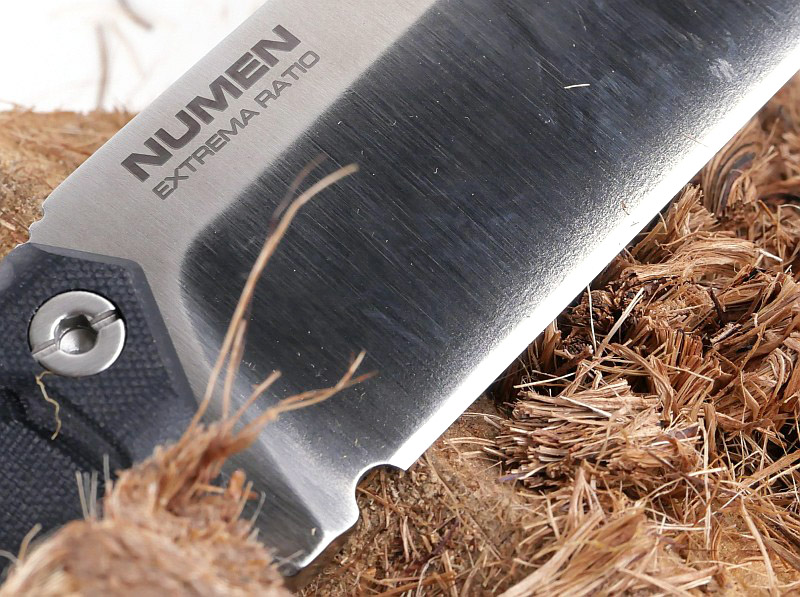
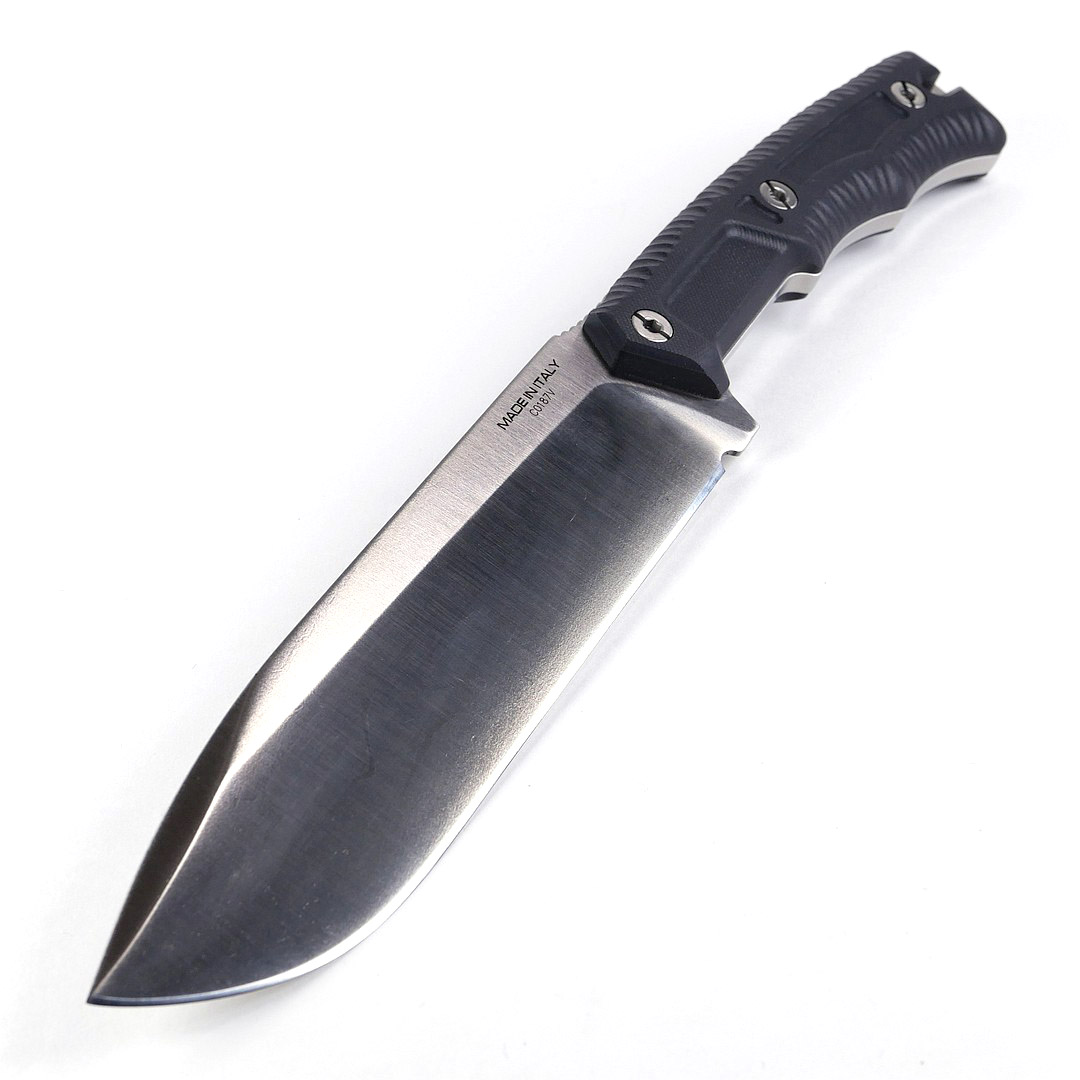
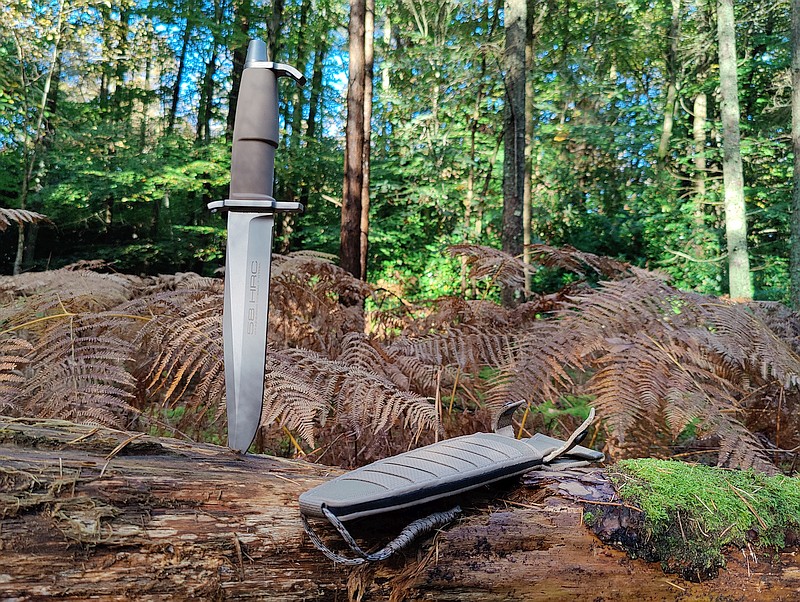
The version featured in this review is Numen Satin – made of Böhler N690 (58 HRC) steel for reliability and corrosion resistance. Also available in an S600 steel version (64 HRC) that has greater wear resistance and toughness.

Designed in collaboration with Daniele Dal Canto, AIGS Guide (Italian Survival Guide Association), Numen is a sturdy, versatile and highly functional knife, designed to be a silent but powerful companion, made to deal with the toughest challenges with a full tang construction, making Numen ideal for cutting down, pruning, batoning, chopping and woodworking.

The design of the blade makes it perfect for heavy-duty work, but the versatile handle also allows for more precise cuts.

Could Numen be your ideal companion and loyal ally for all your adventures? Join me in this Extrema Ratio Numen Review to find out.

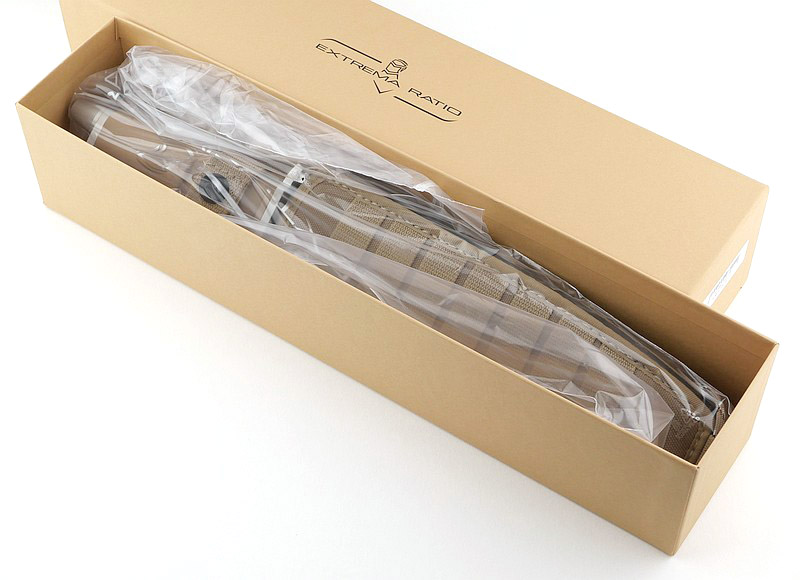
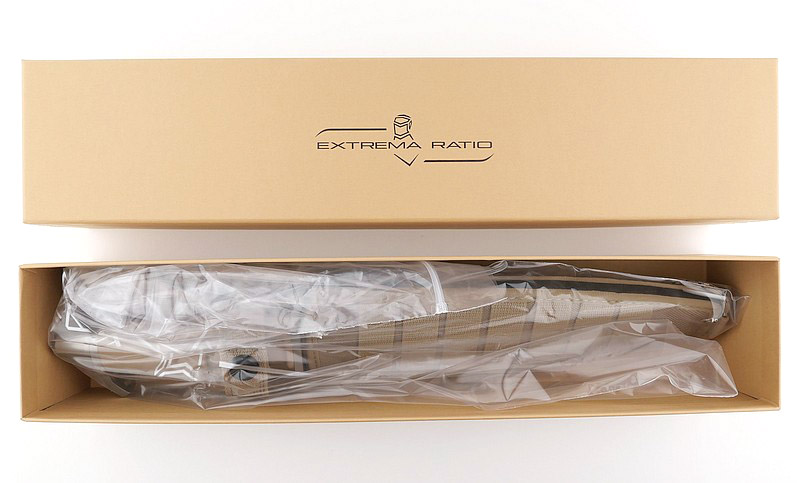
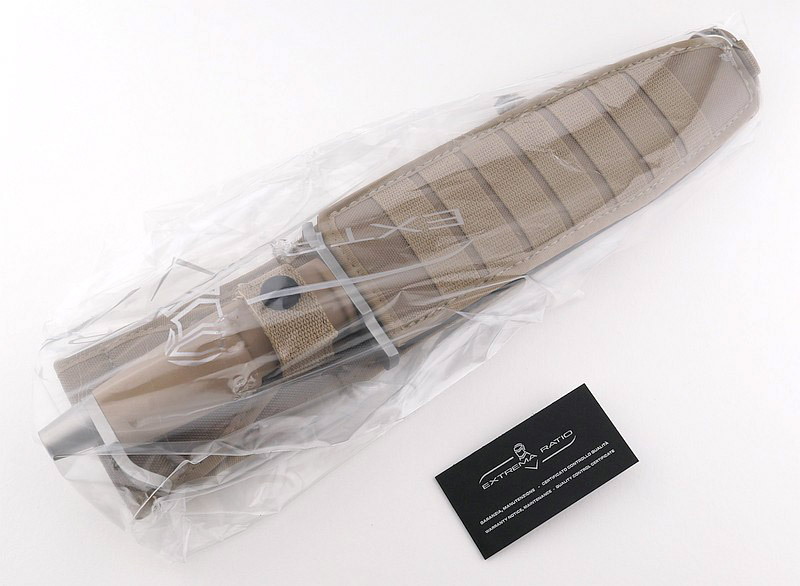
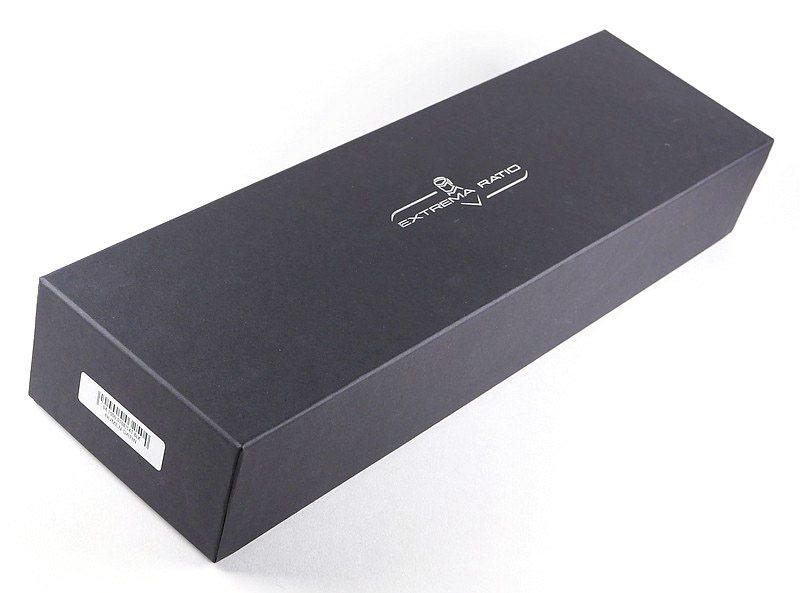
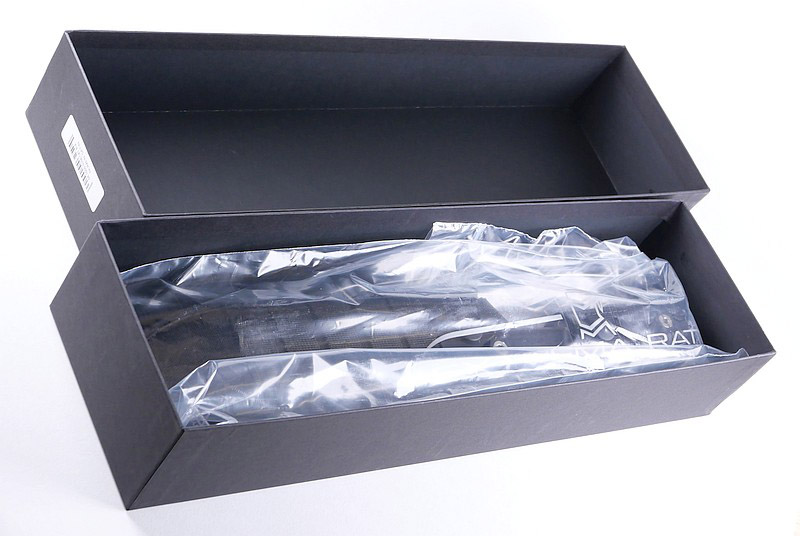
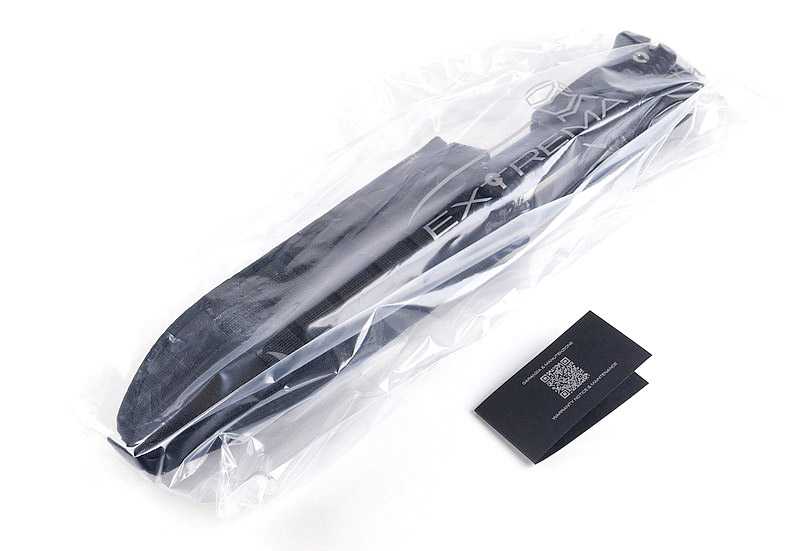
What’s in the box?:

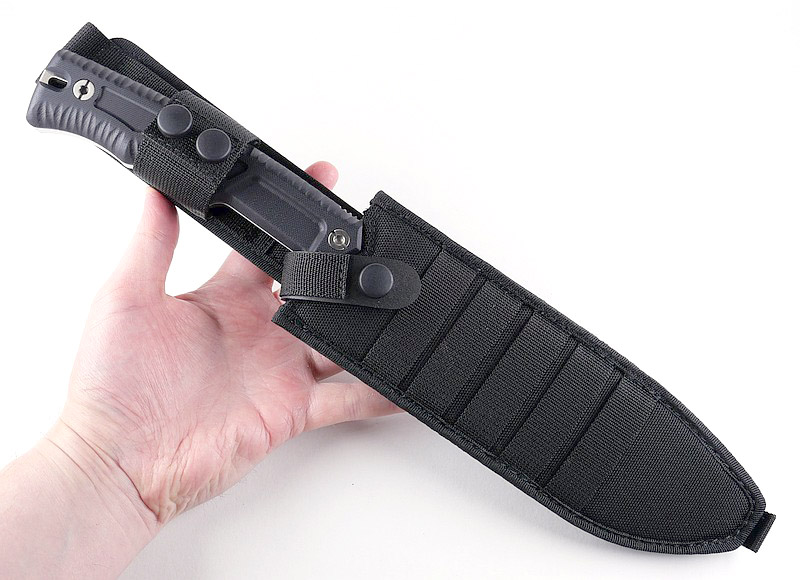
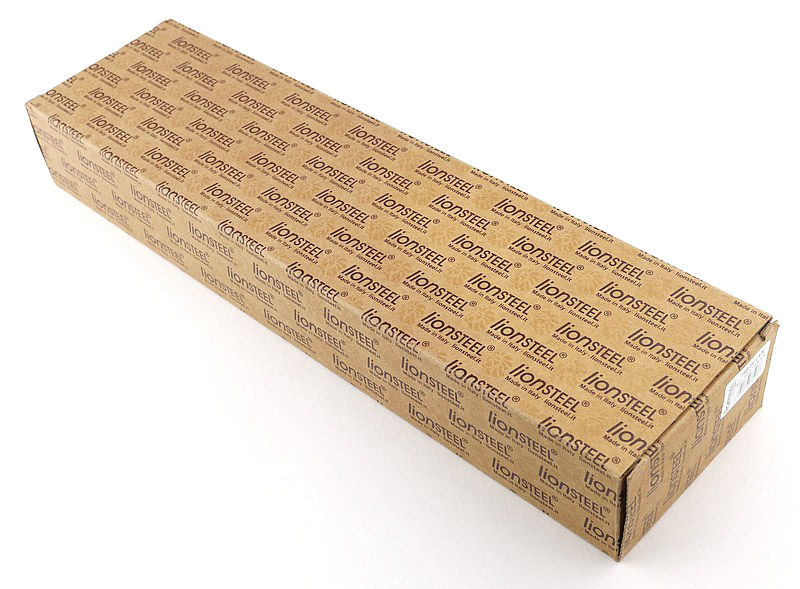
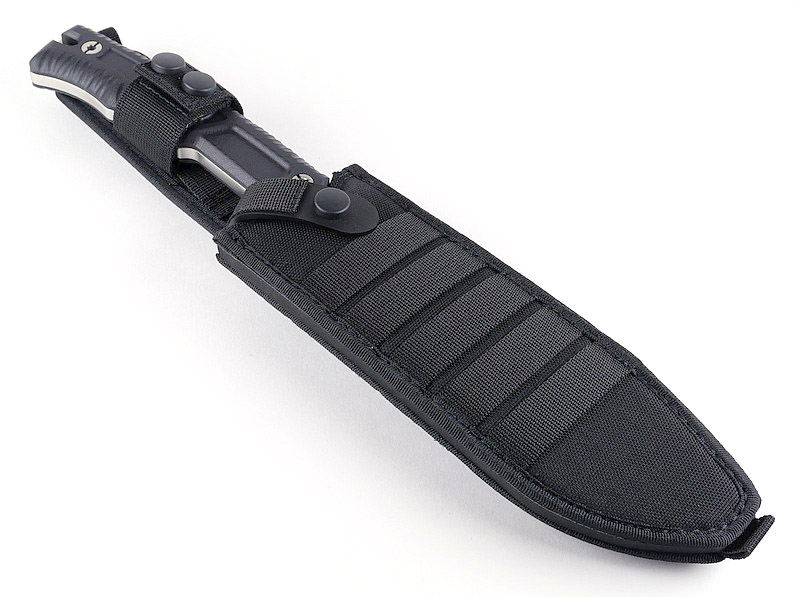
Or, “What’s in the BIG box?” as this is a substantial knife (and I may be repeating that comment a few times). Simply put it is the sheathed knife in a plastic bag along with the quality control card. Then, for scale, I’ve put my XL glove-size hand on top, which doesn’t quite do justice to the size.


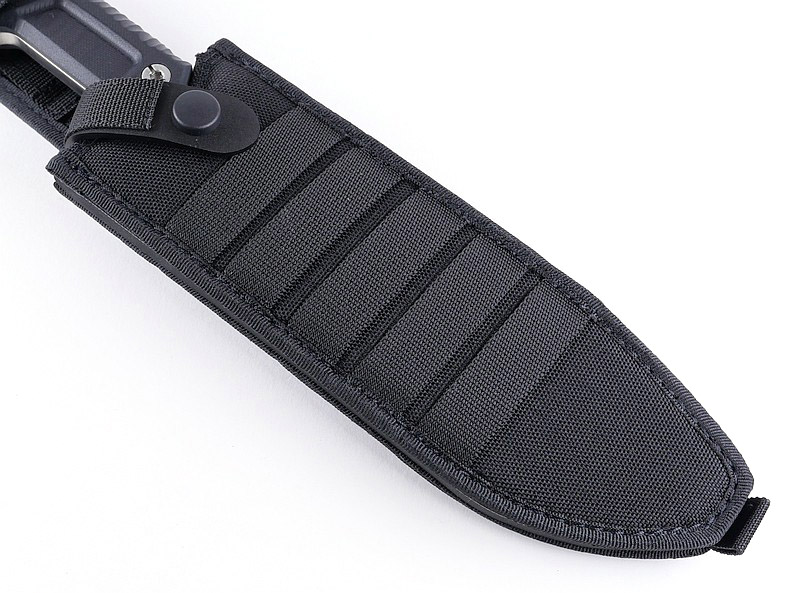
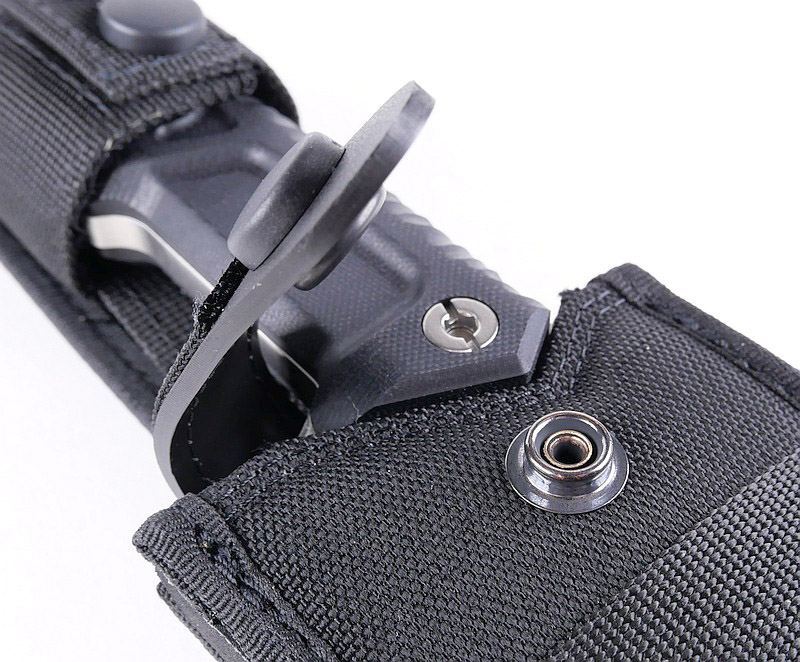
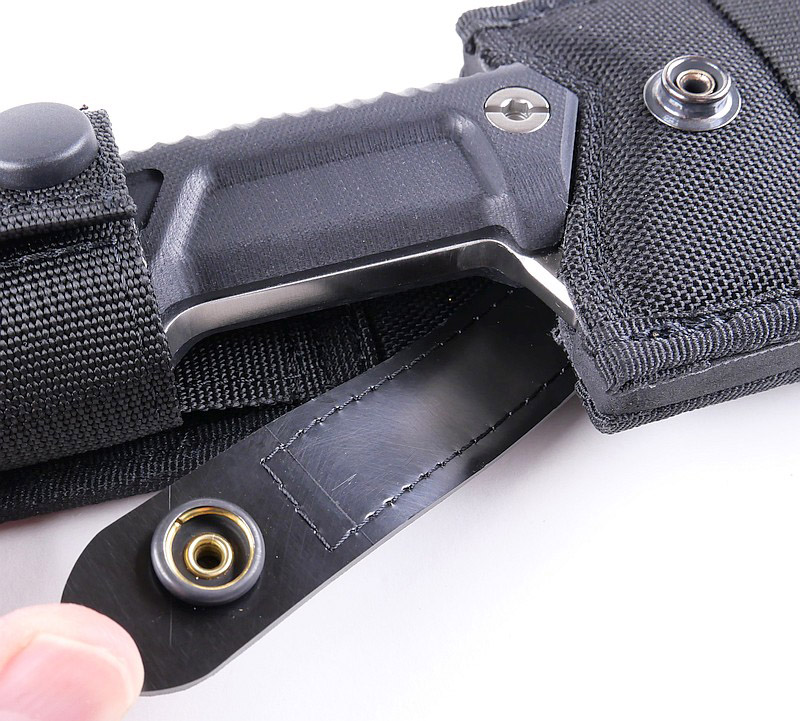
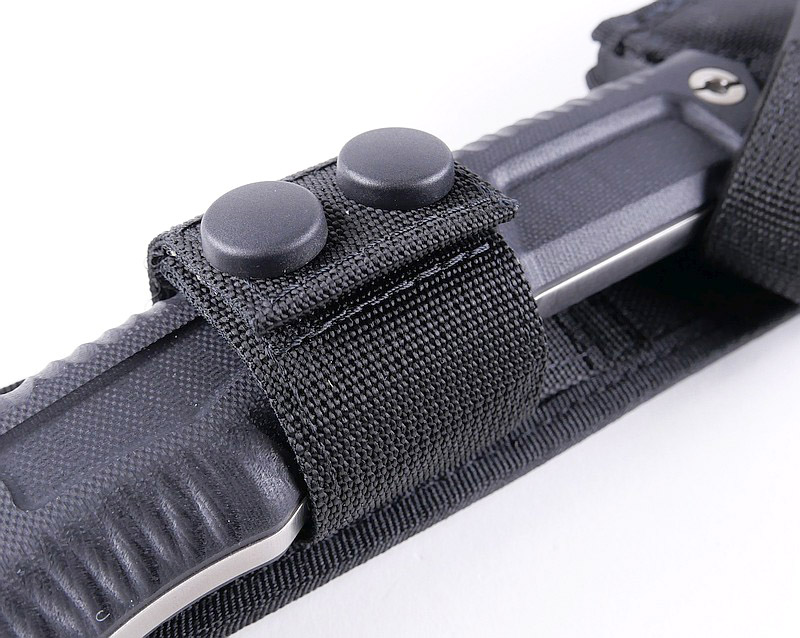
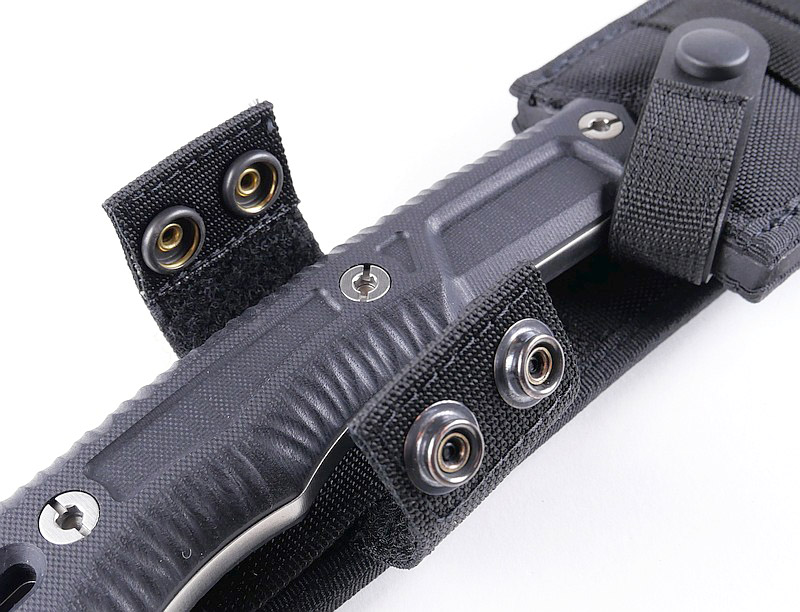
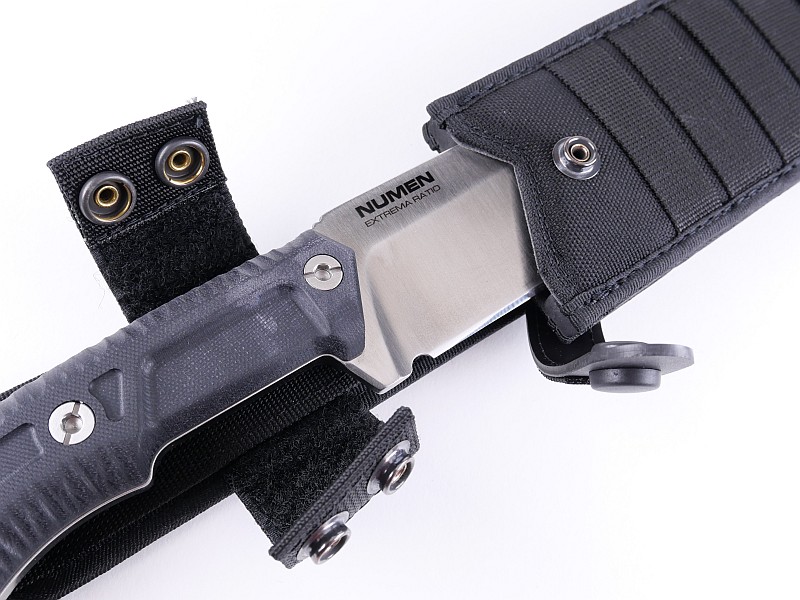
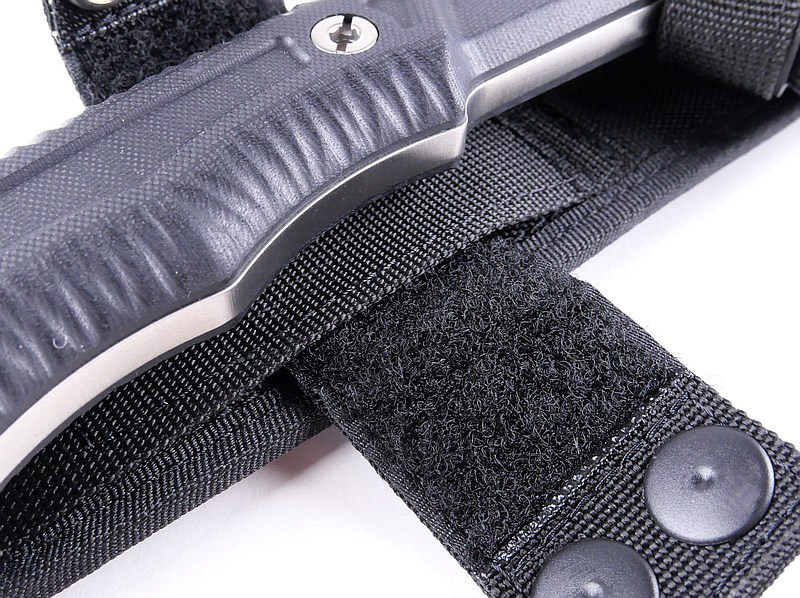
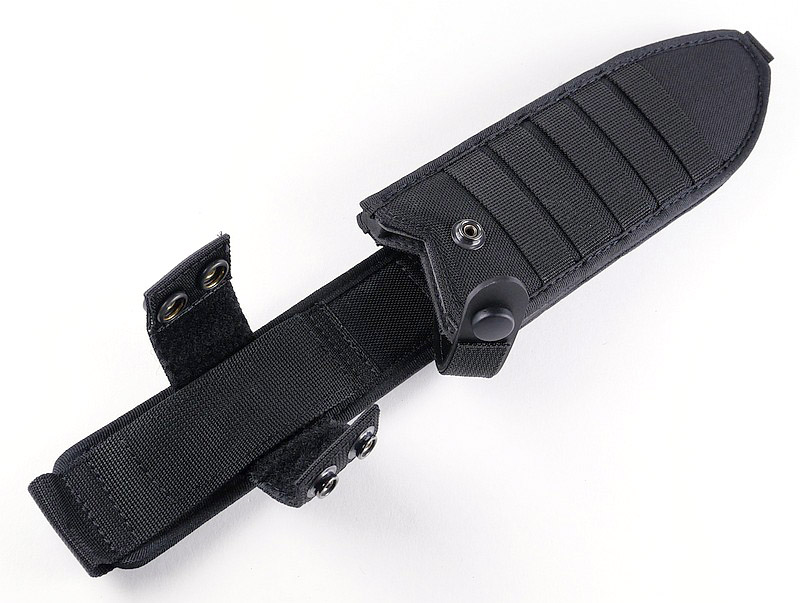
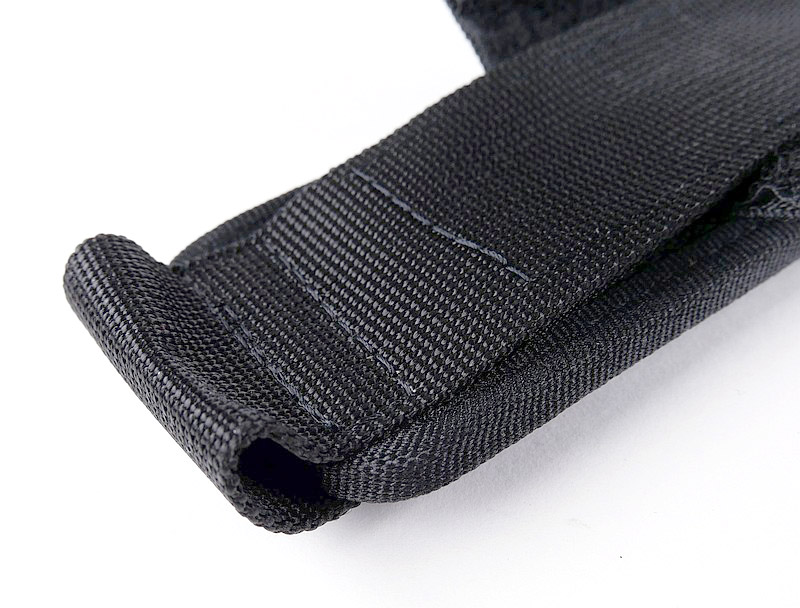
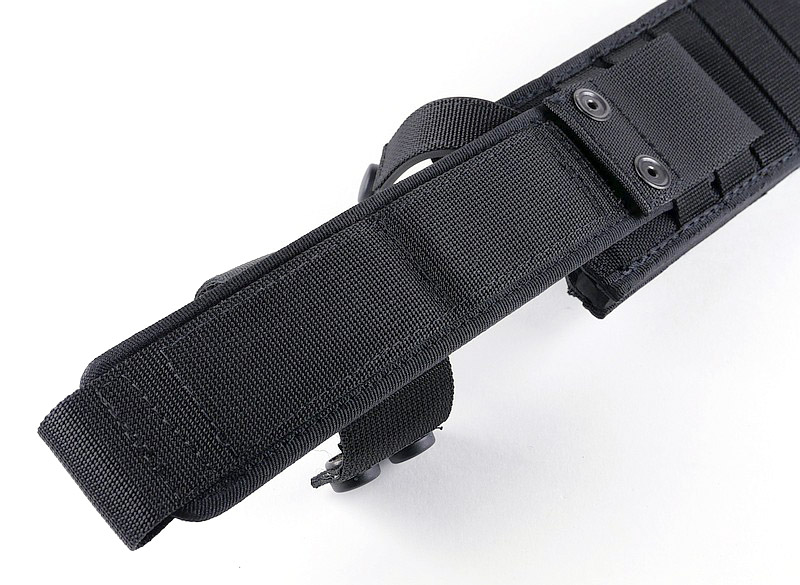
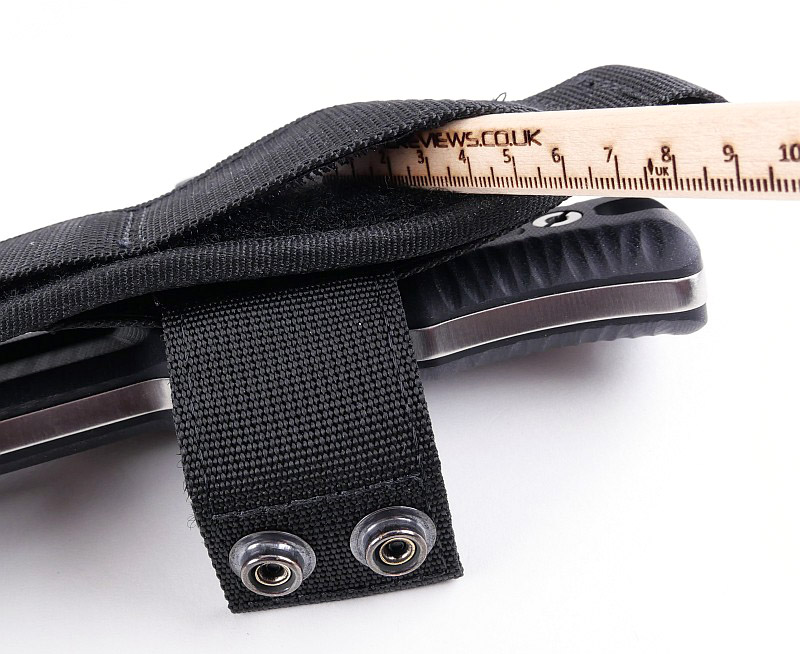
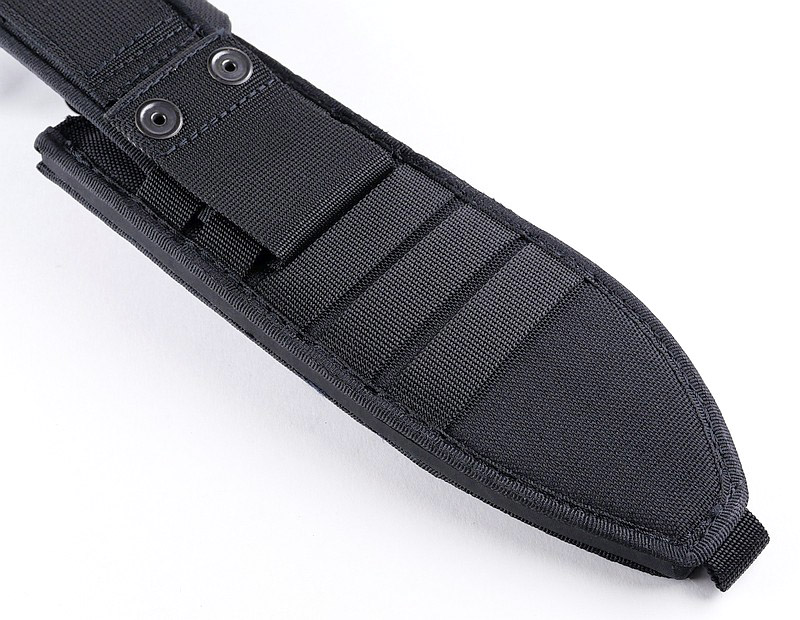
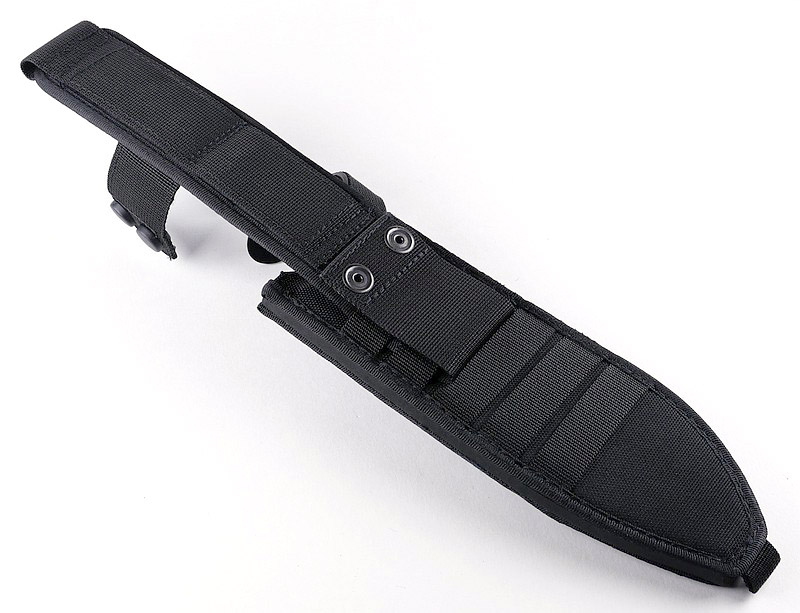
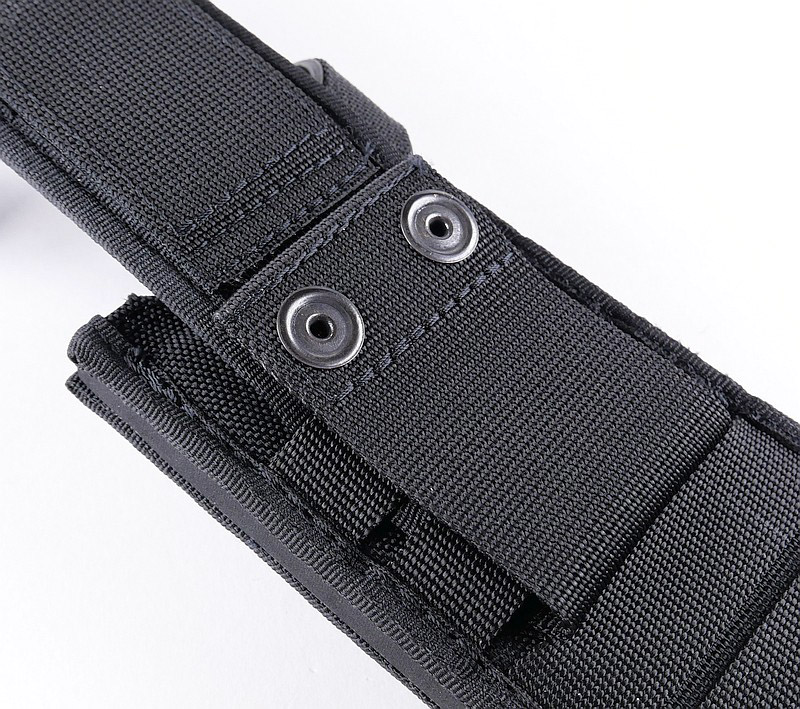
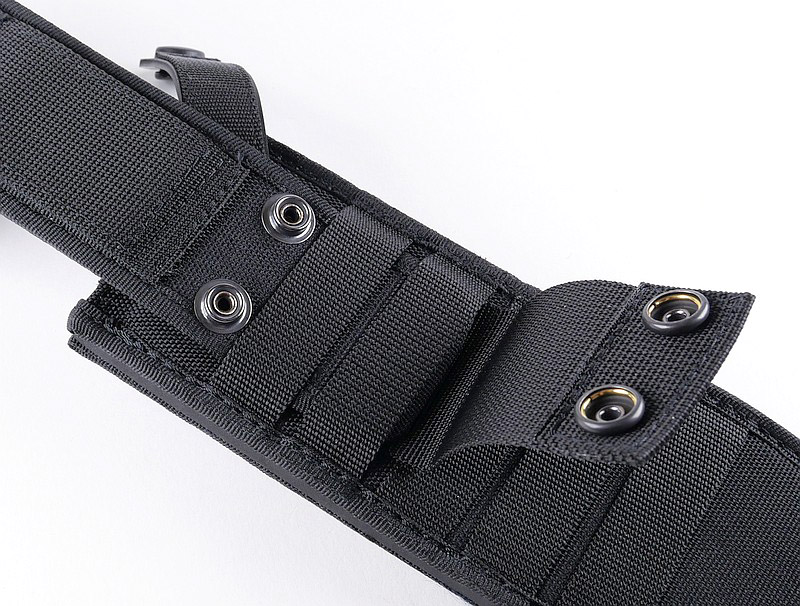
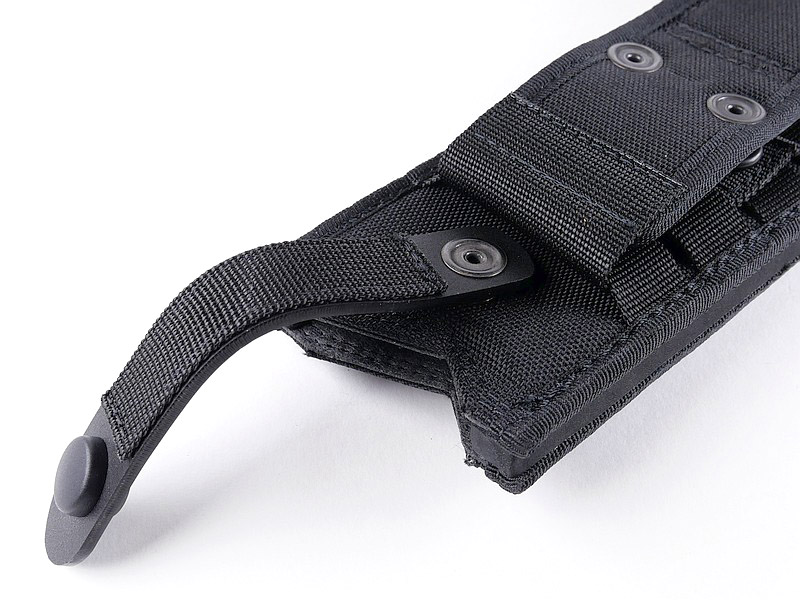
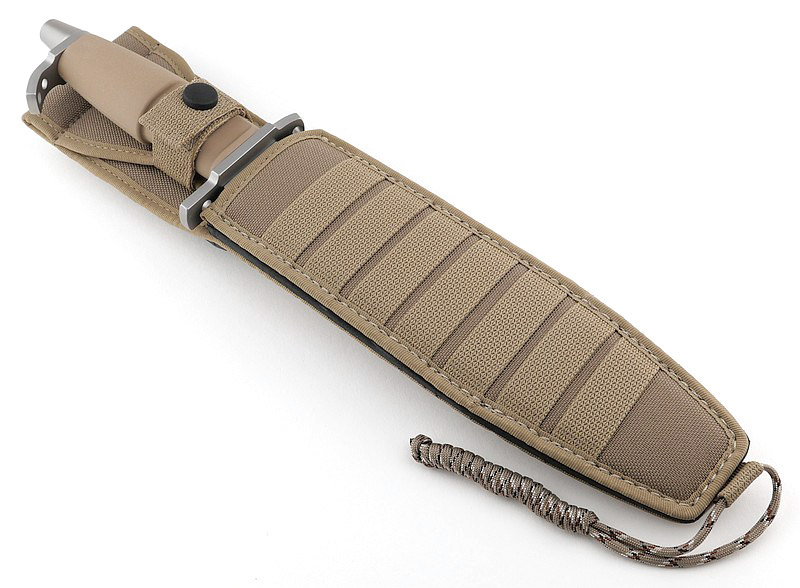
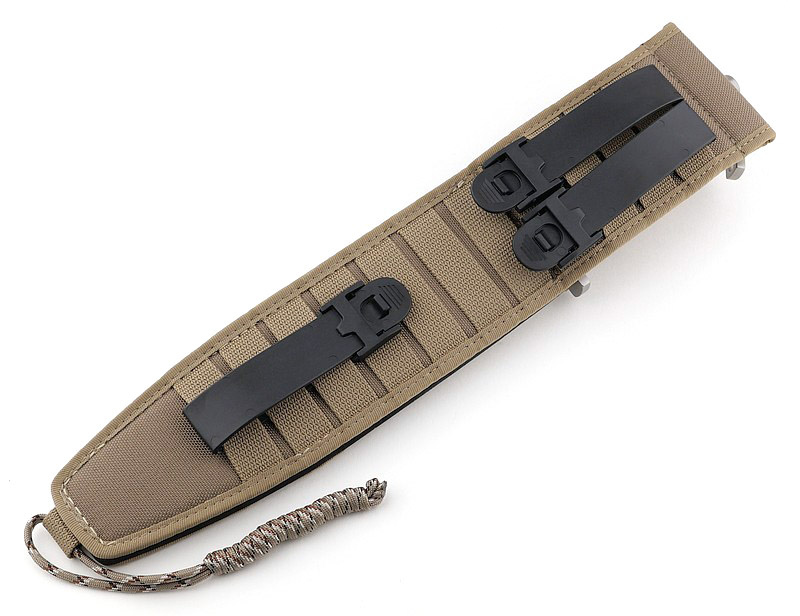
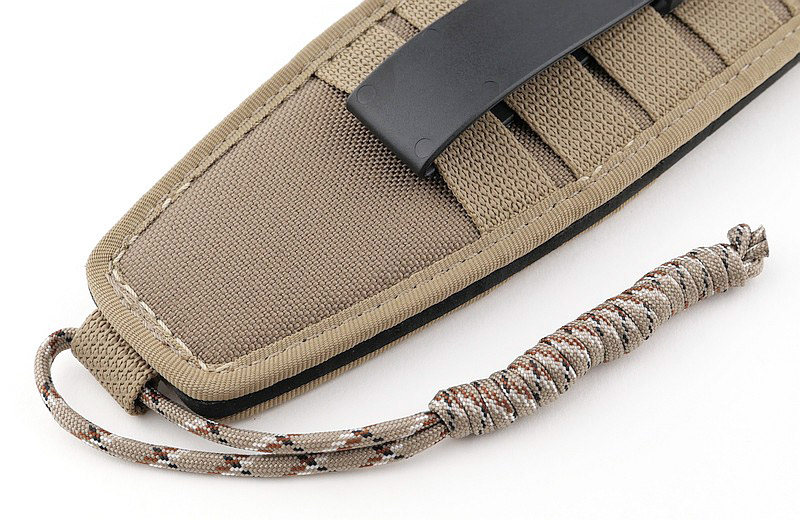
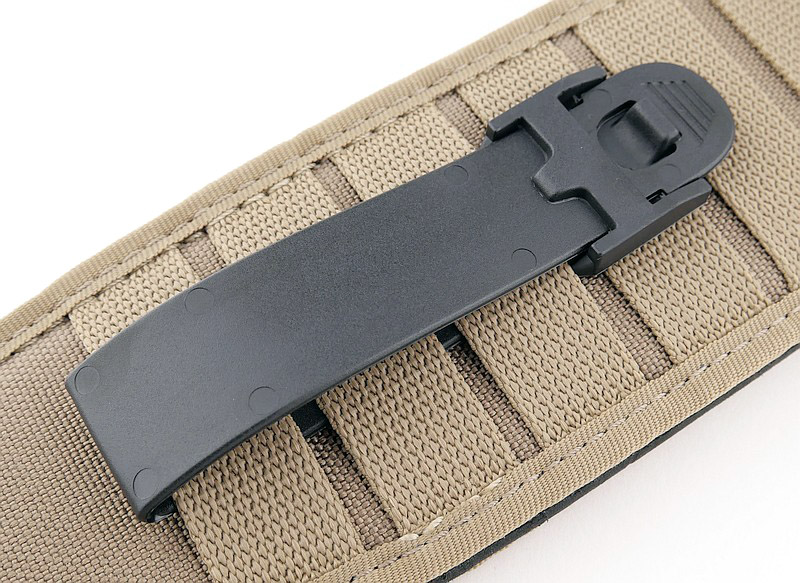
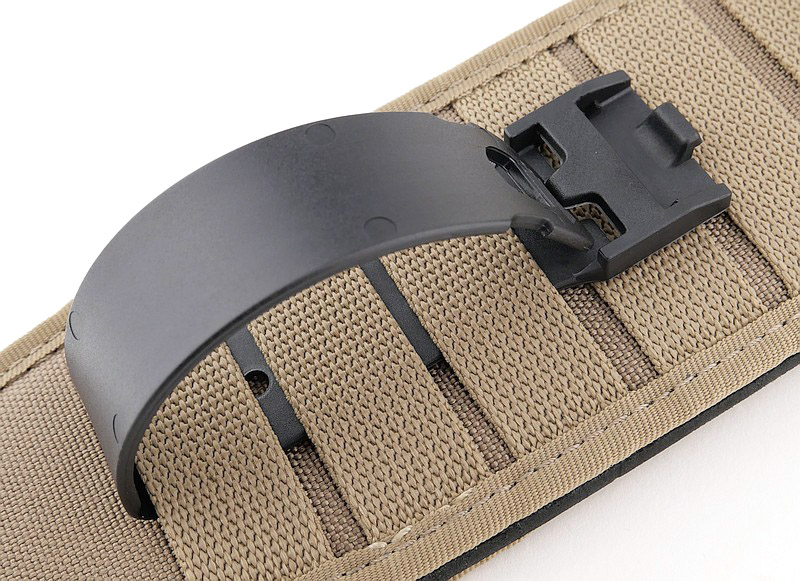
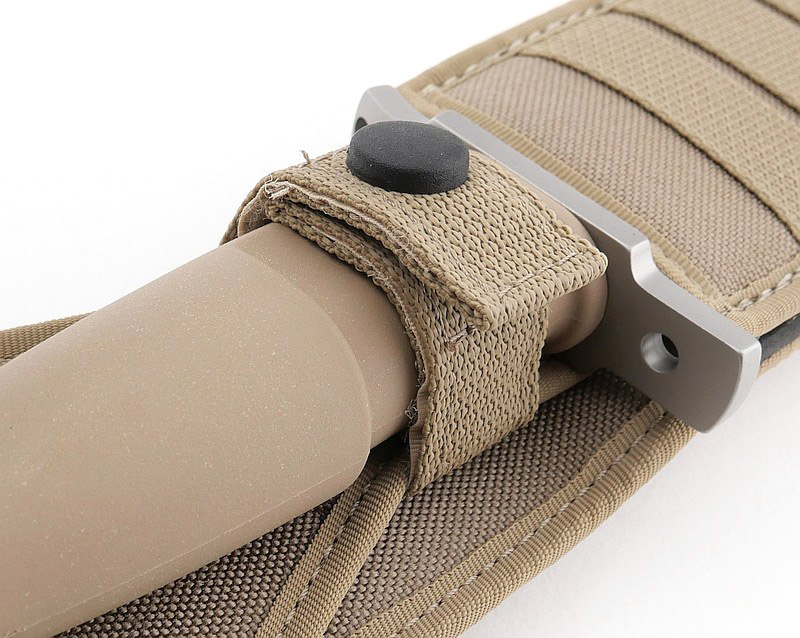
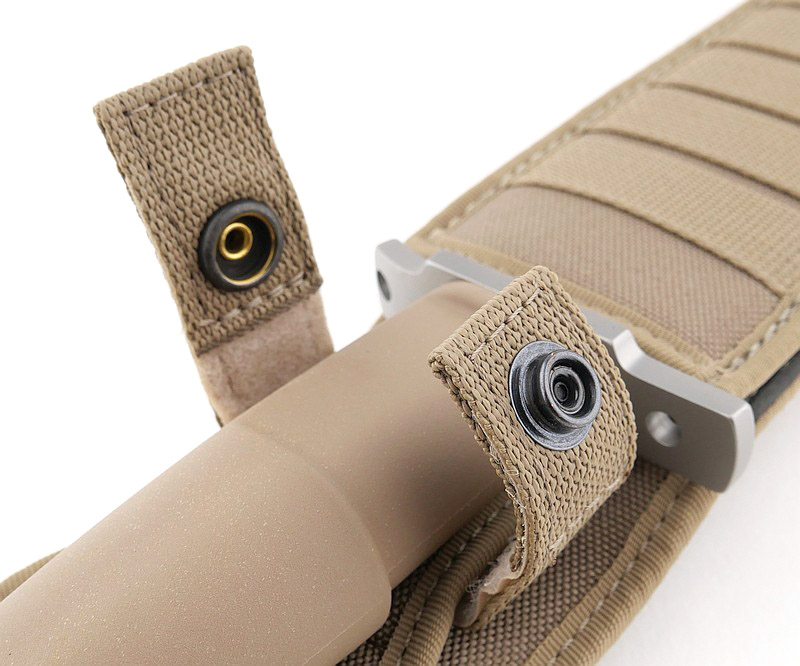
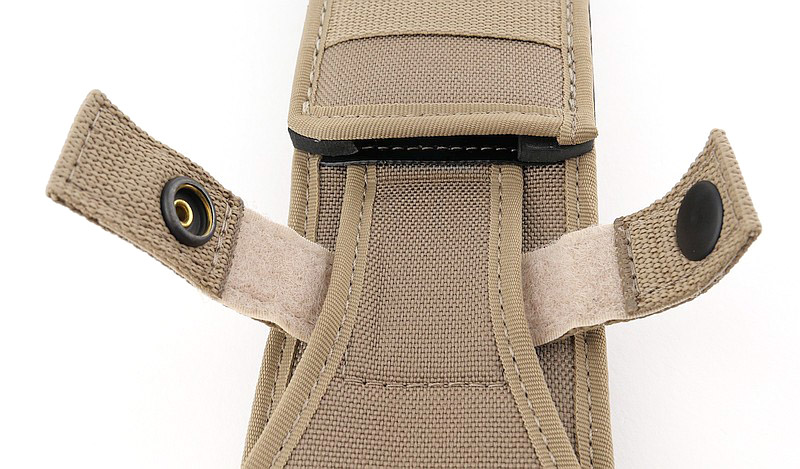
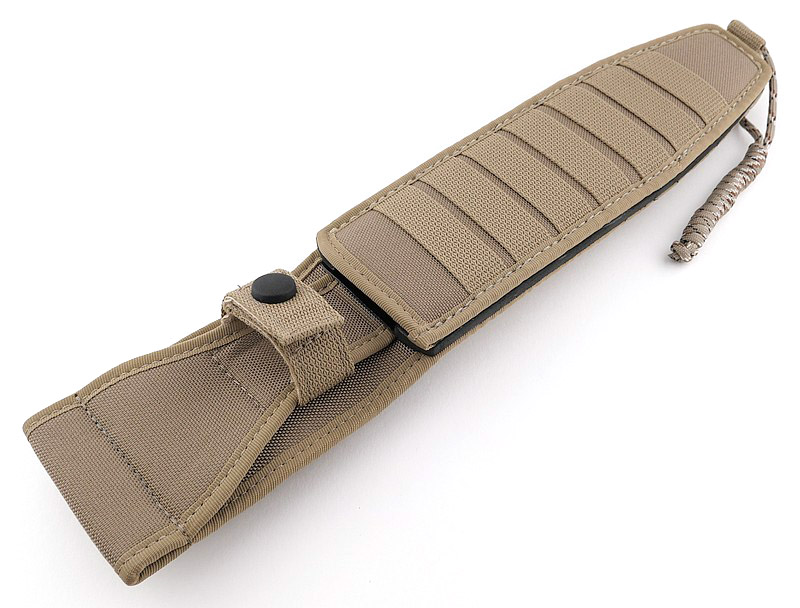
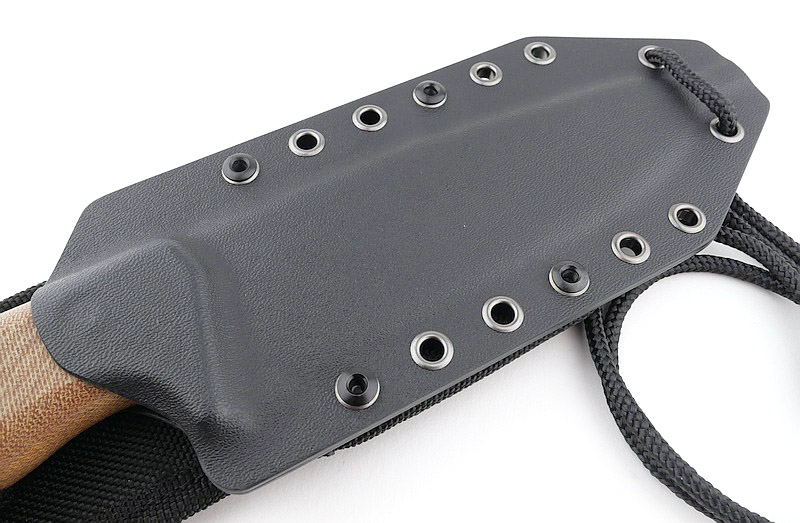
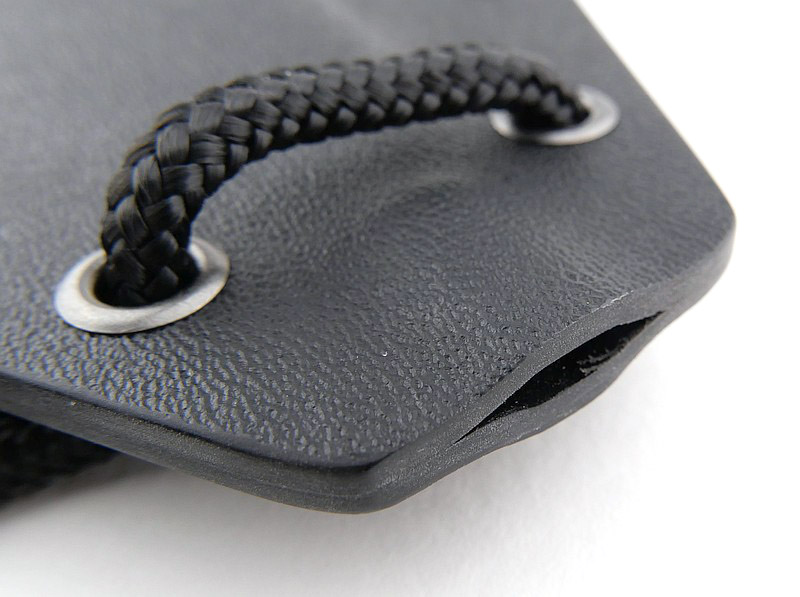
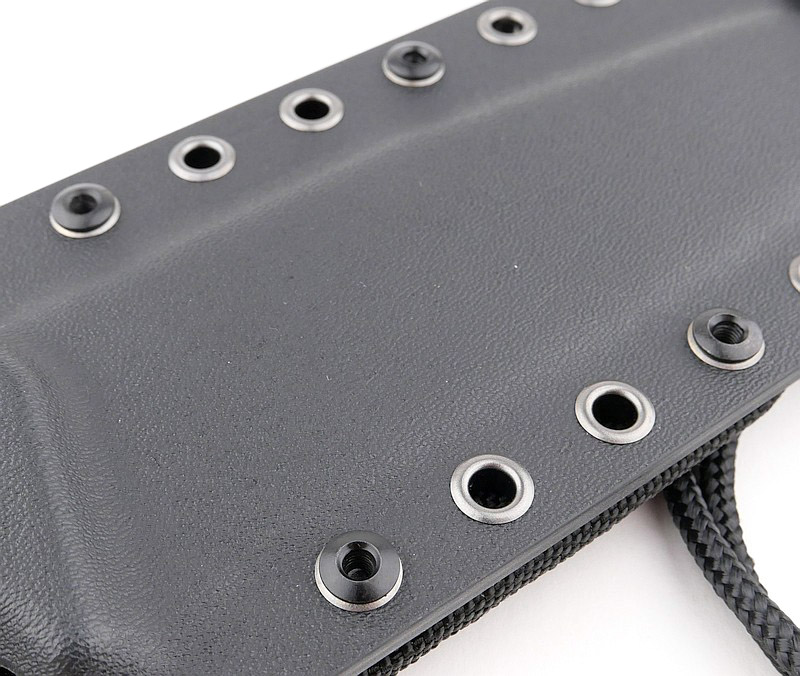
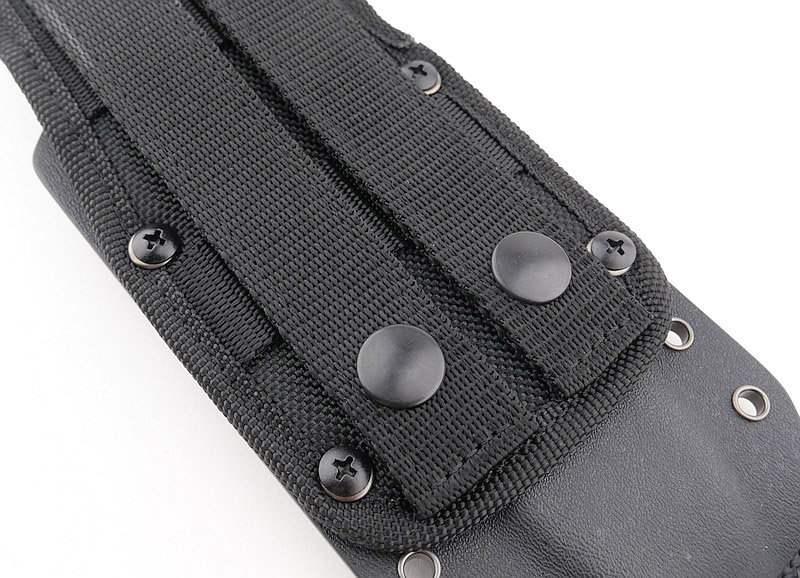
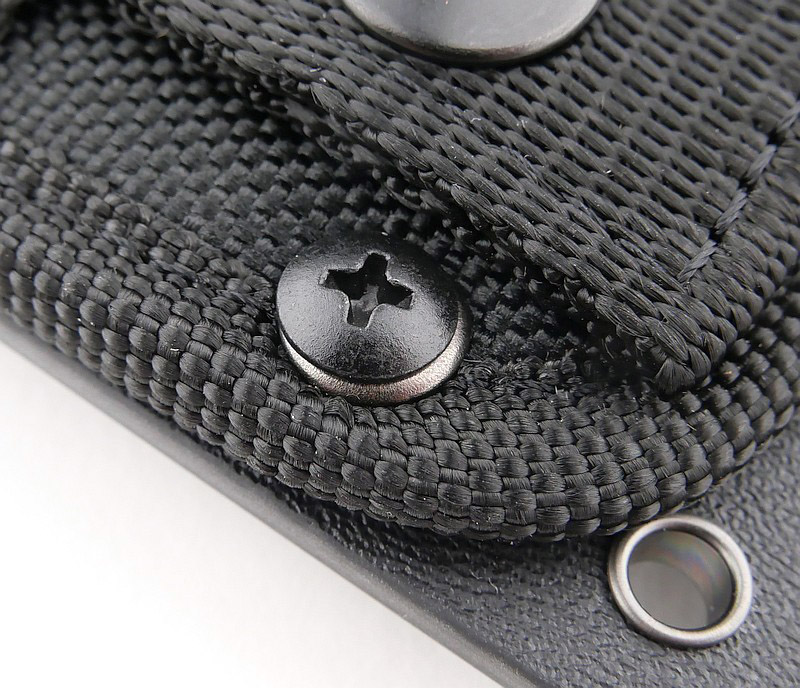
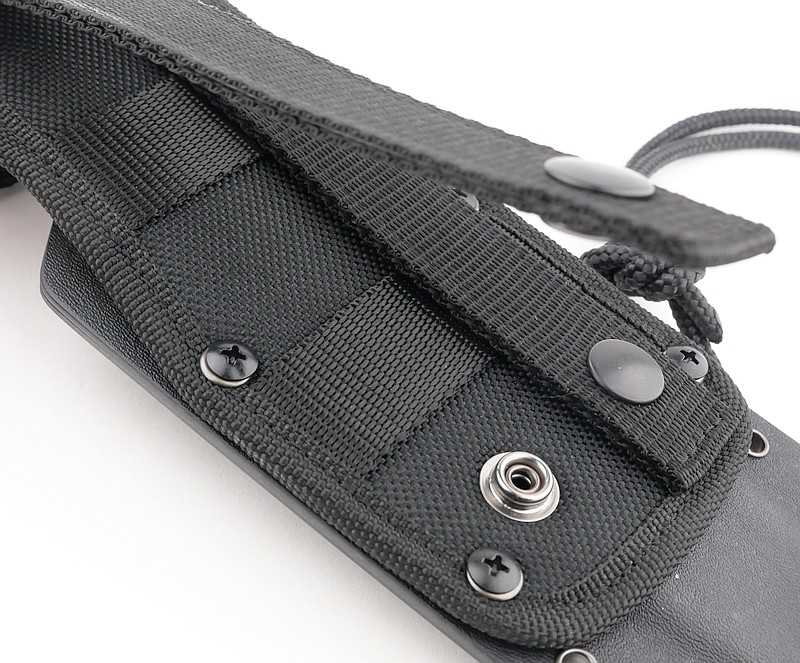
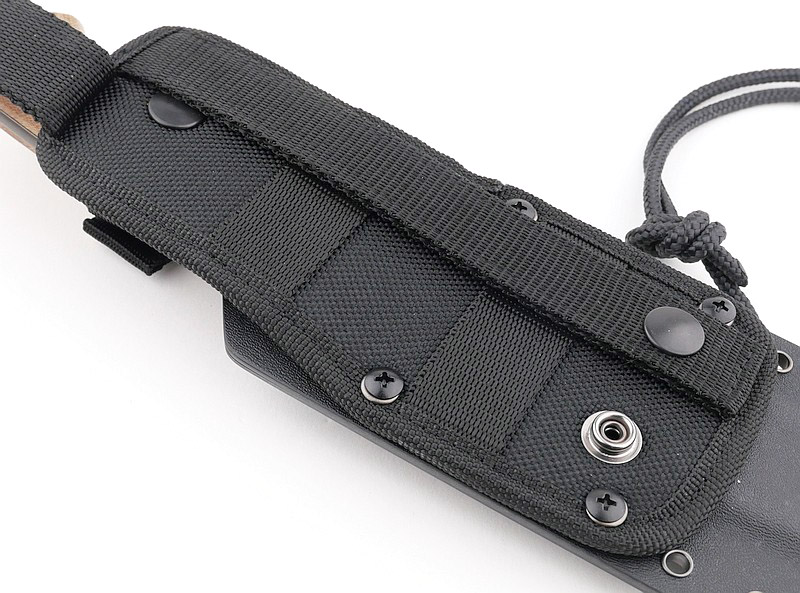
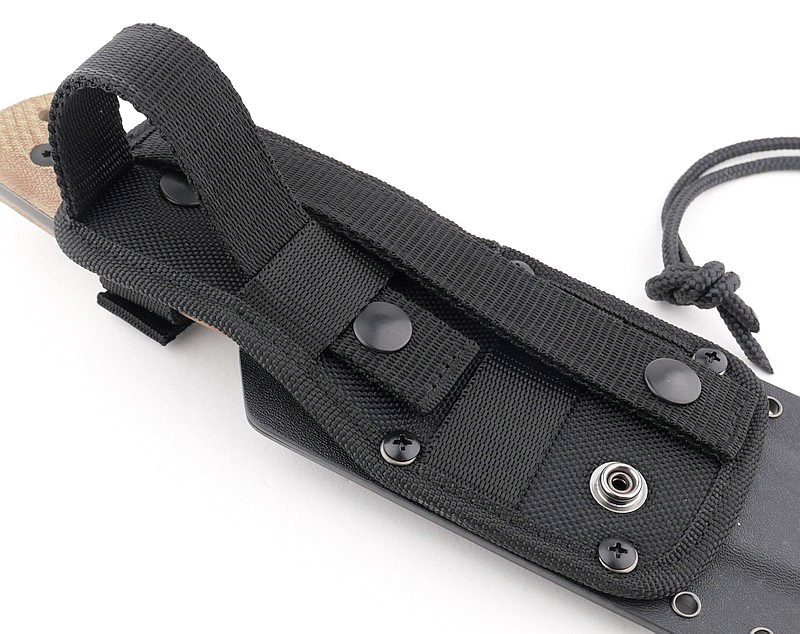
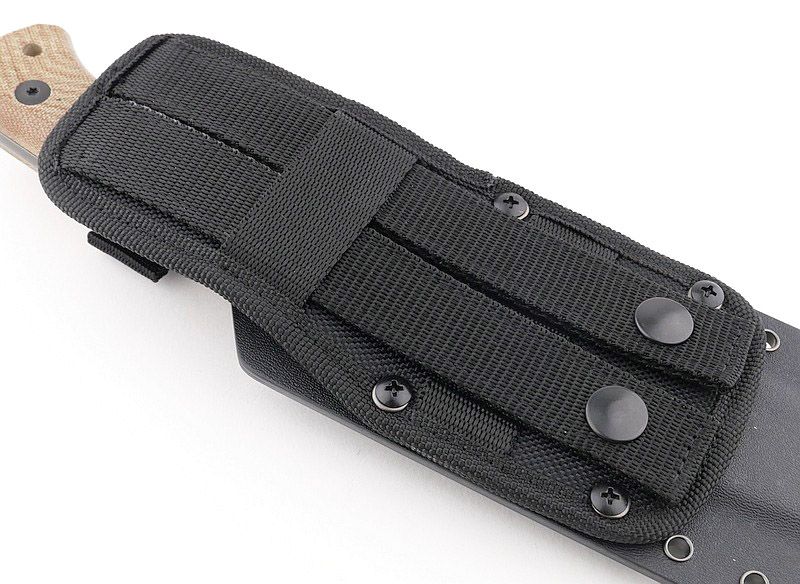
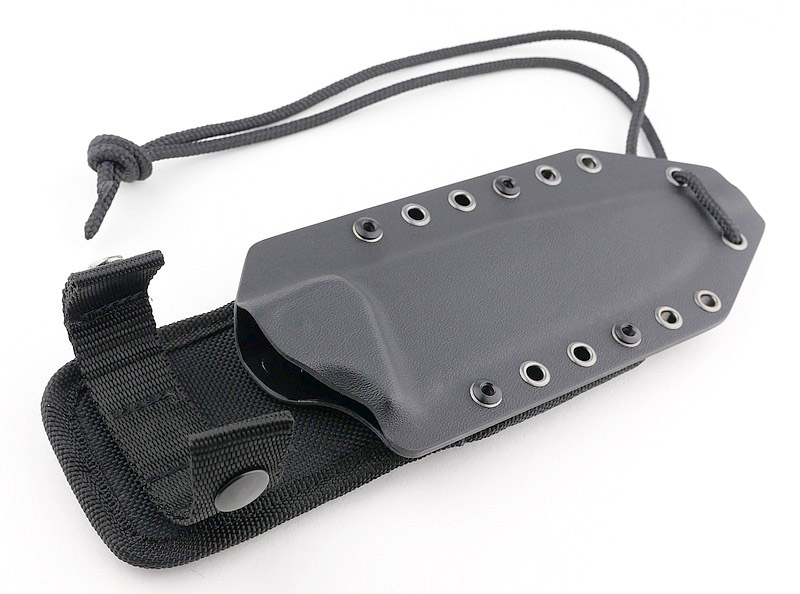
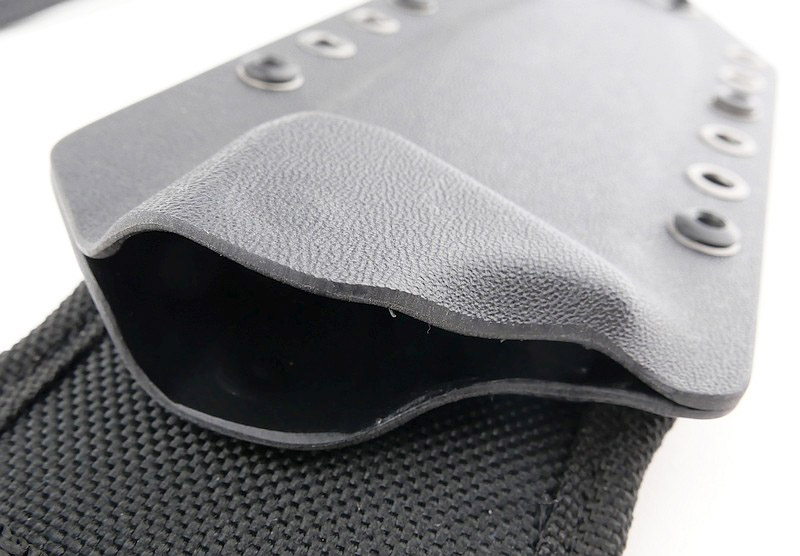
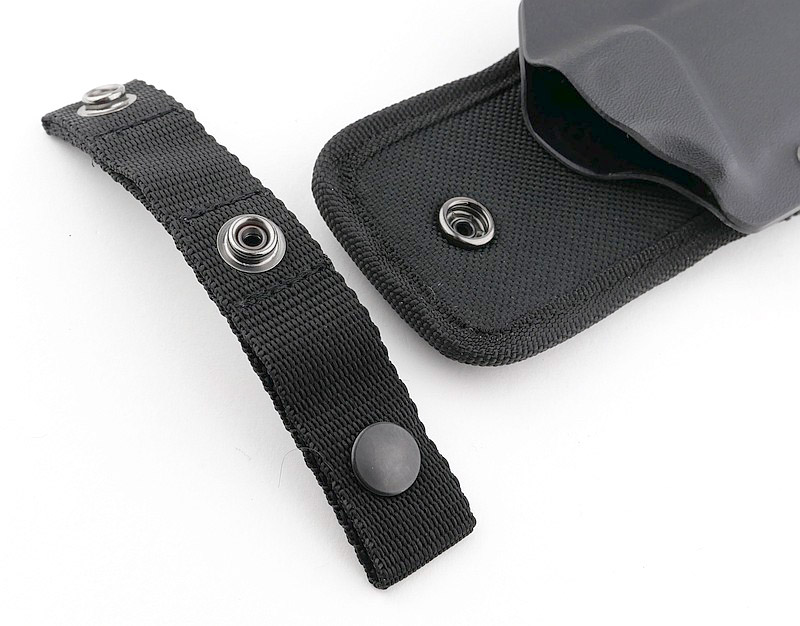
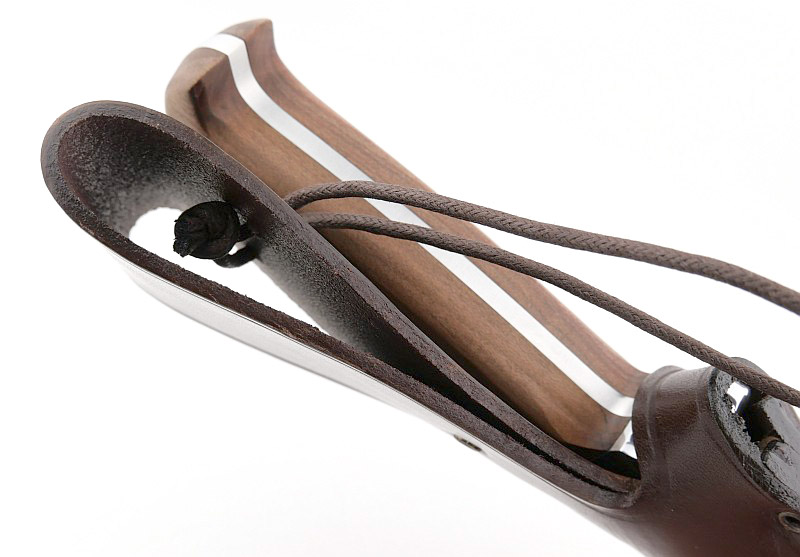
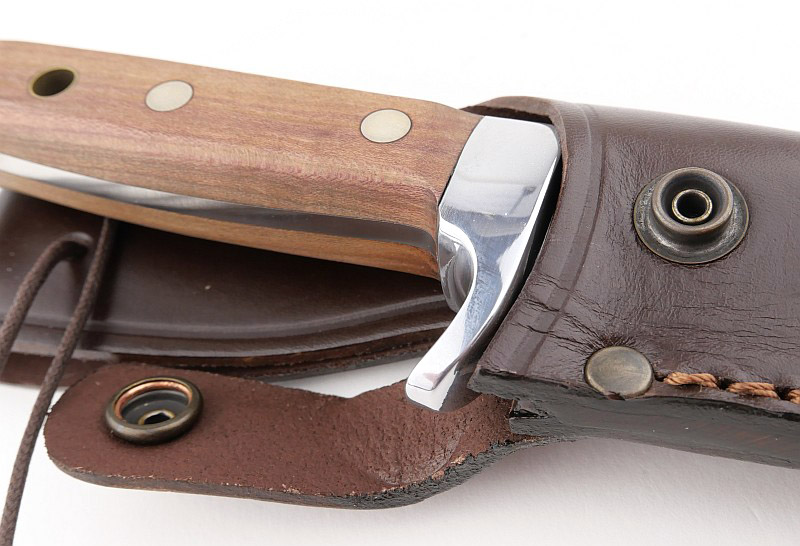
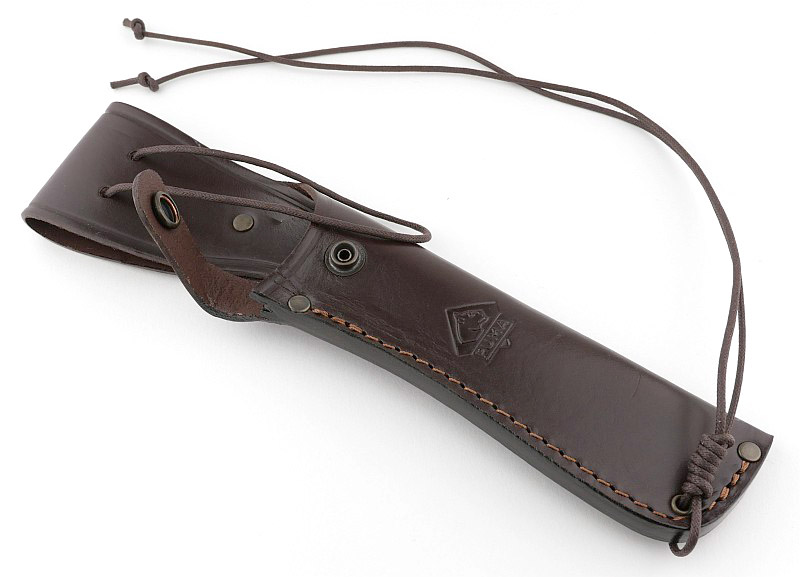
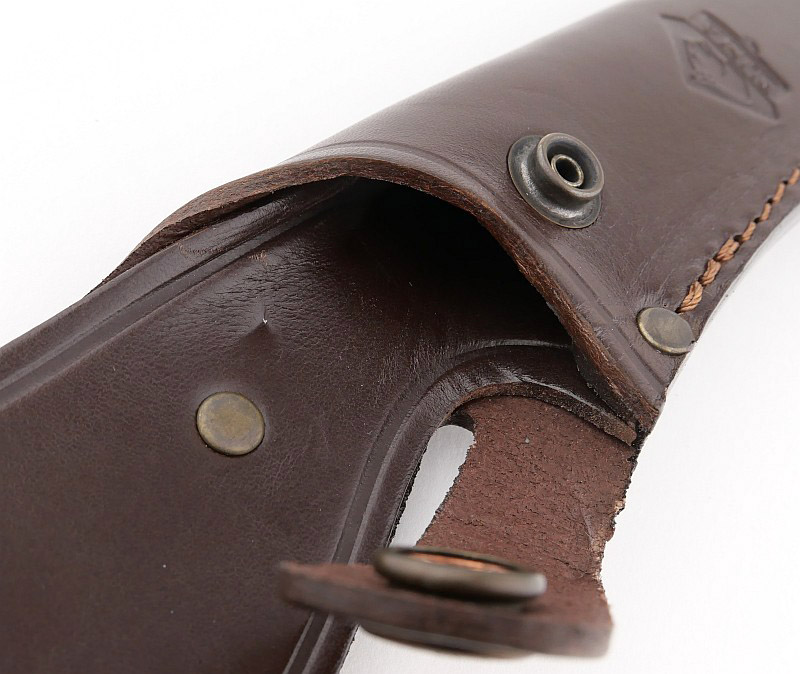
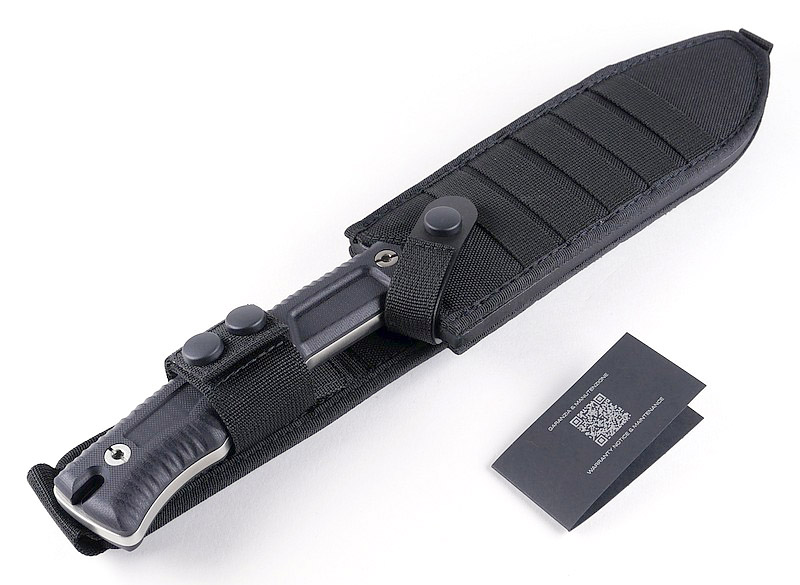
A good look round the Numen’s Sheath – Things to look out for here are:

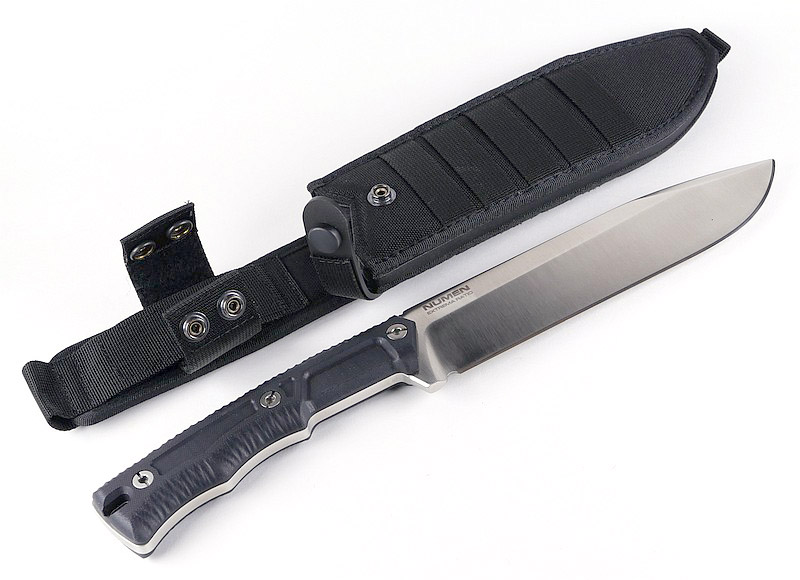
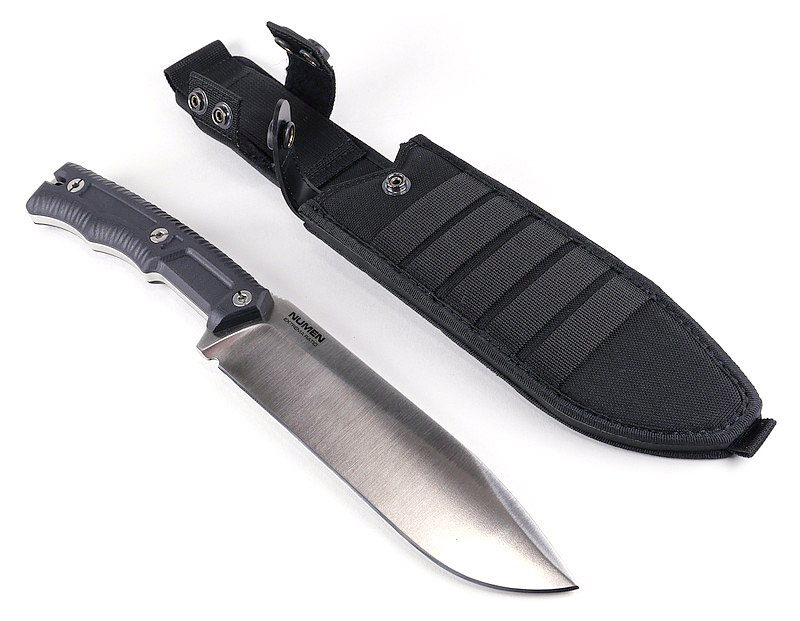
Extrema Ratio always give you a super-functional, tough and reliable sheath to carry the knife, and the Numen has exactly that. Lots of thought has gone into this ambidextrous sheath to make sure it stands up to heavy use alongside the Numen. This gallery has had to be quite large to show all of the features.
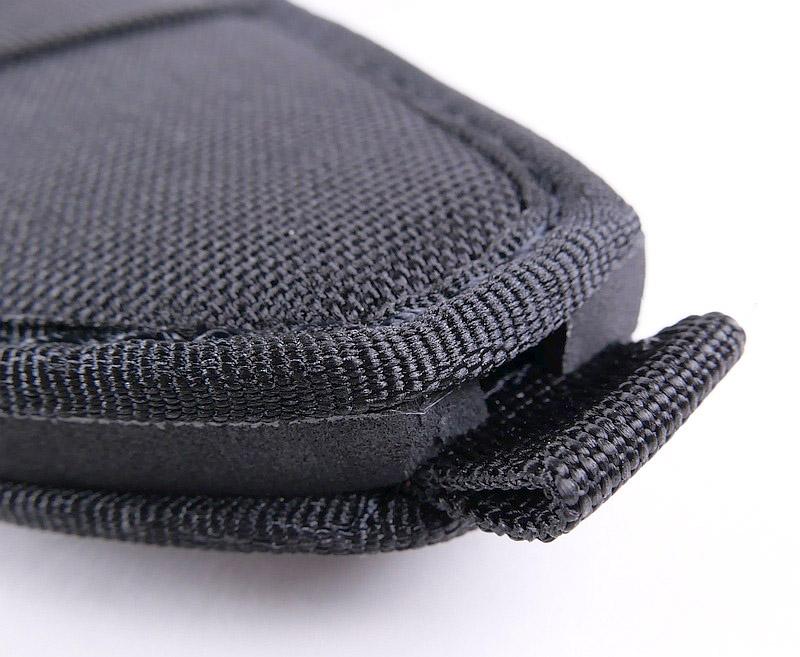
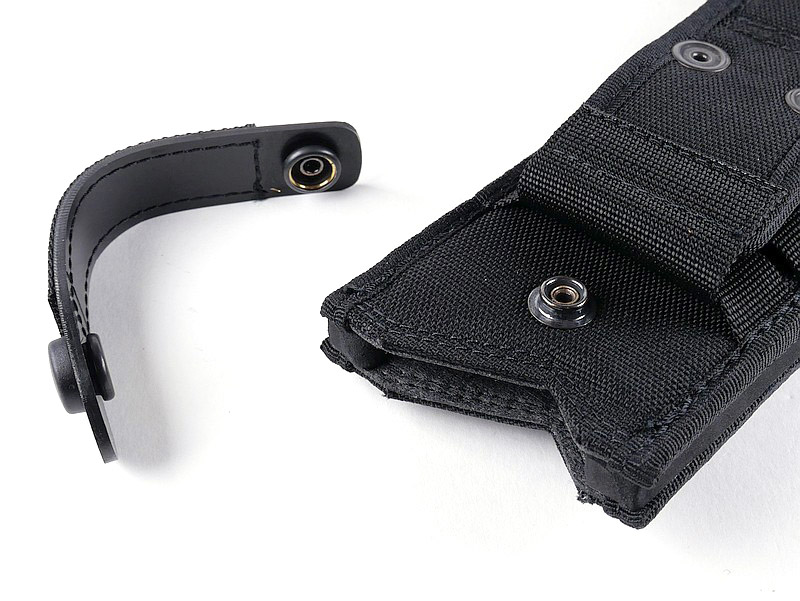
The main body of the sheath has webbing on both sides for securing the hanger and providing additional load carrying options. The tip of the sheath has a good size drainage hole next to the leg tie loop. Retention straps are always at risk of being cut when sheathing and unsheathing the knife, so to counter this Extrema Ratio have used a flexible solid plastic strip for the strap. The visible side of the strap has fabric sewn onto it to make it look completely in keeping with the rest of the sheath, but that plastic will resist cutting for a very long time, much more than a fabric strap.
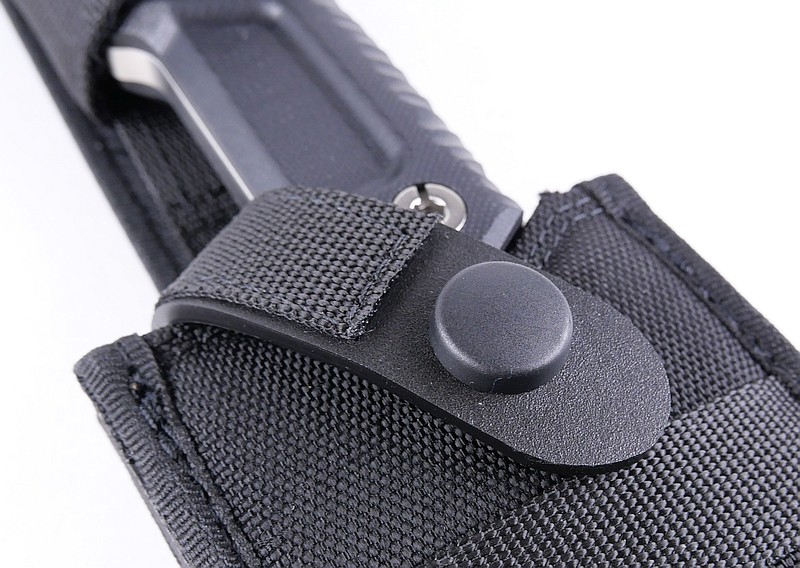
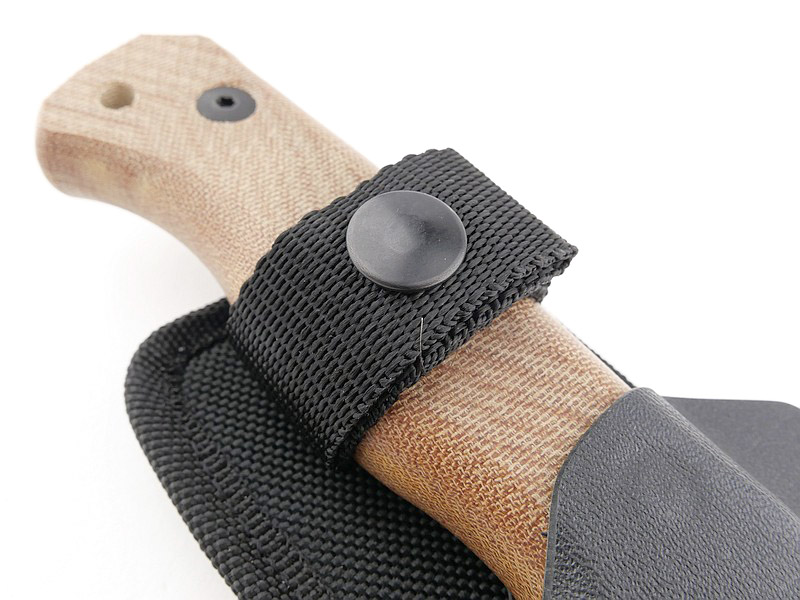
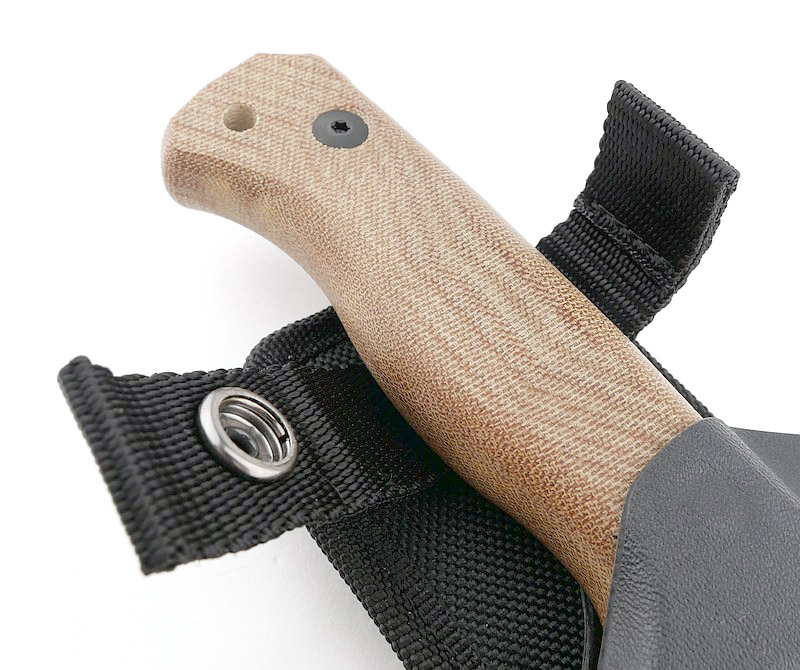
Typical for Extrema Ratio; as well as the standard retention strap, there is a handle retention strap that ensures the knife stays completely stable when not actively in use by preventing the handle flapping about, and reducing the chance of anything getting caught over the handle. This has two press studs, the inside surface of which have a plastic caps, to avoid any metal contacting the G10 handle.
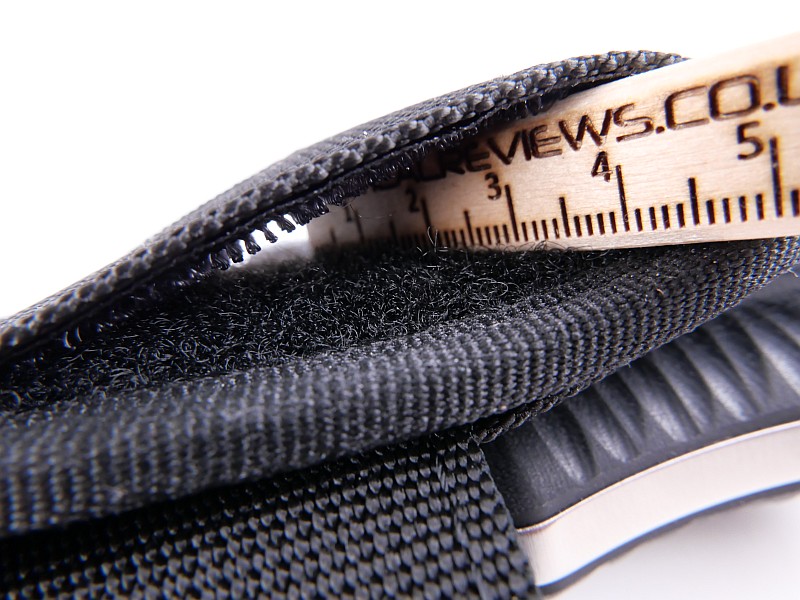
Now onto the removable, reconfigurable hanger. At the very top of this is a cord channel and flipping to the back there are two separate belt loops. Both the belt loops has a full Velcro lining so that once fitted to whatever belt/web you choose, the loop locks down to hold it tightly reducing slipping and flapping.
The hanger itself fits to the webbing on the sheath body using a flap with two press studs; this allows you to remove it or reposition it to suit, and to go between right and left handed configurations. Hand in hand with this, the retention strap is fitted with a press stud on both ends, so when changing handedness of the sheath, the retention strap is popped off and swapped round.
This level of function is exceptional and characteristic of Extrema Ratio’s designs.


A good look round the Numen – Things to look out for here are:

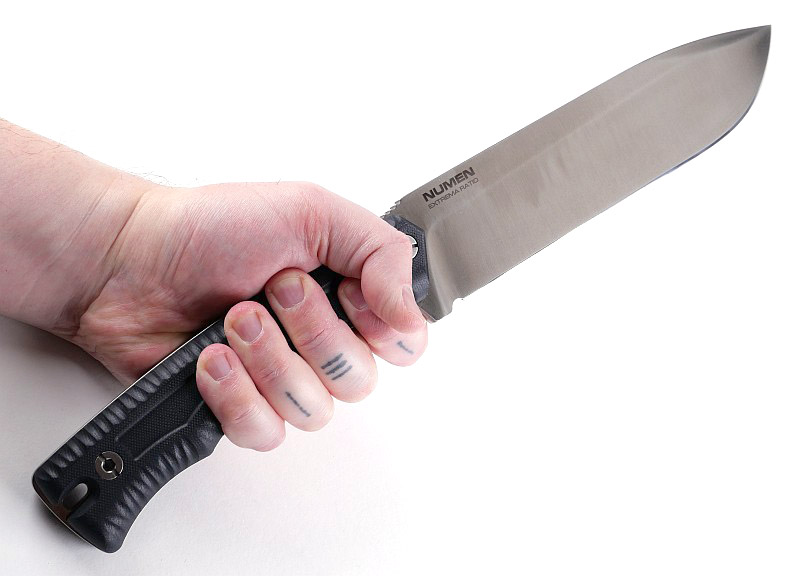
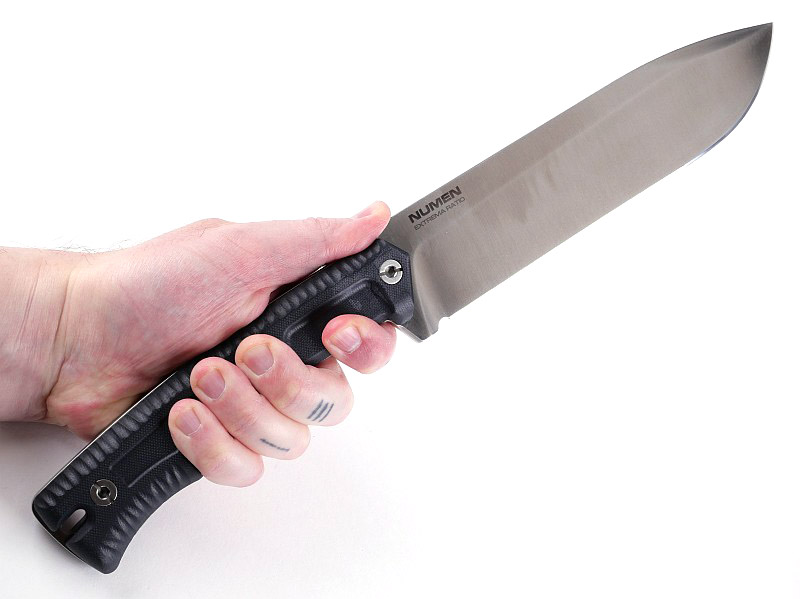
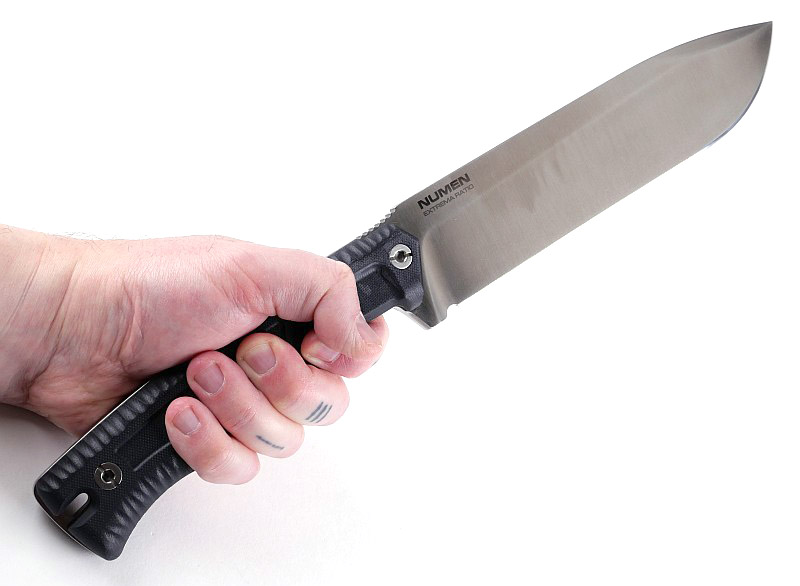
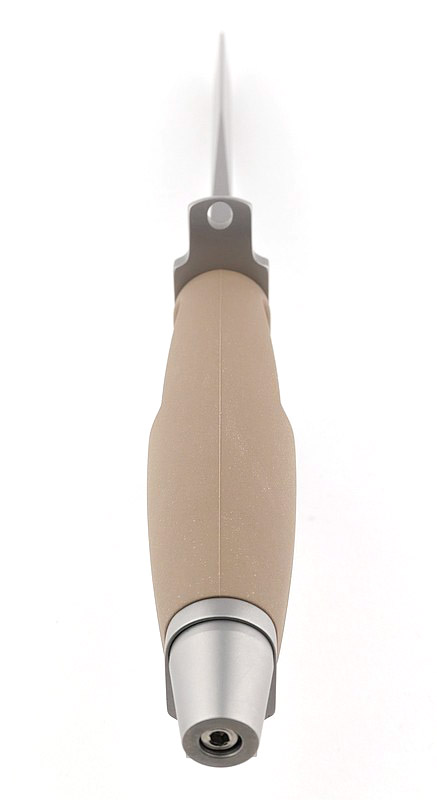
Possibly the most notable feature (apart from overall size) is the length of the Numen’s handle – almost half the entire length of the knife. Handles are of course ‘hand’ sized, so for smaller knives, this is expected, but a large, long-bladed knife, the size of handle is usually much shorter than the blade. We’ll come back to the benefits of this later.
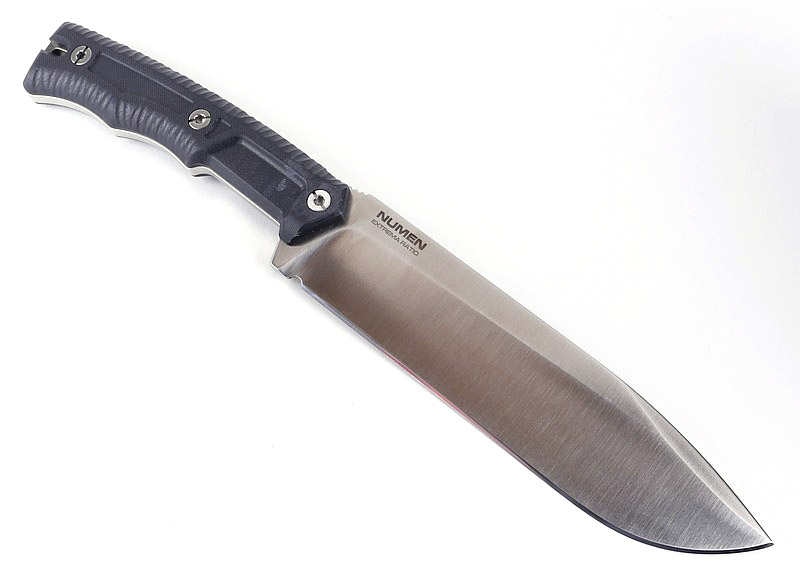
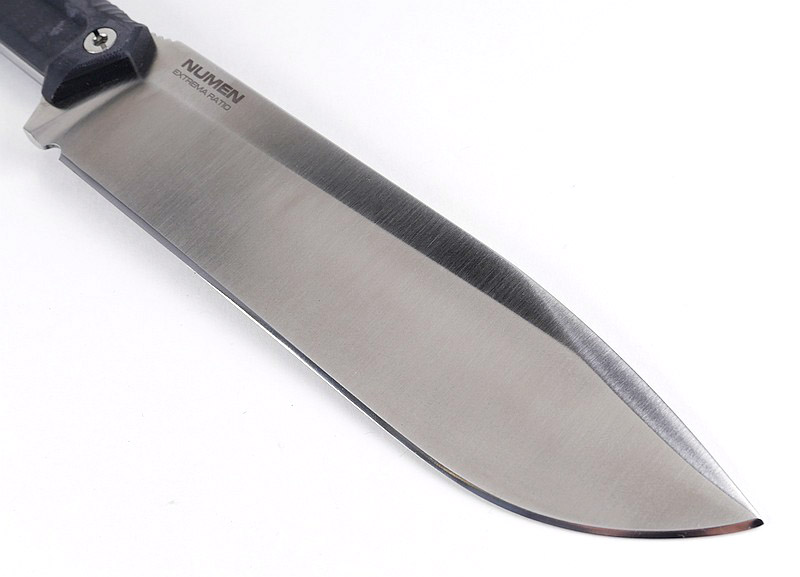
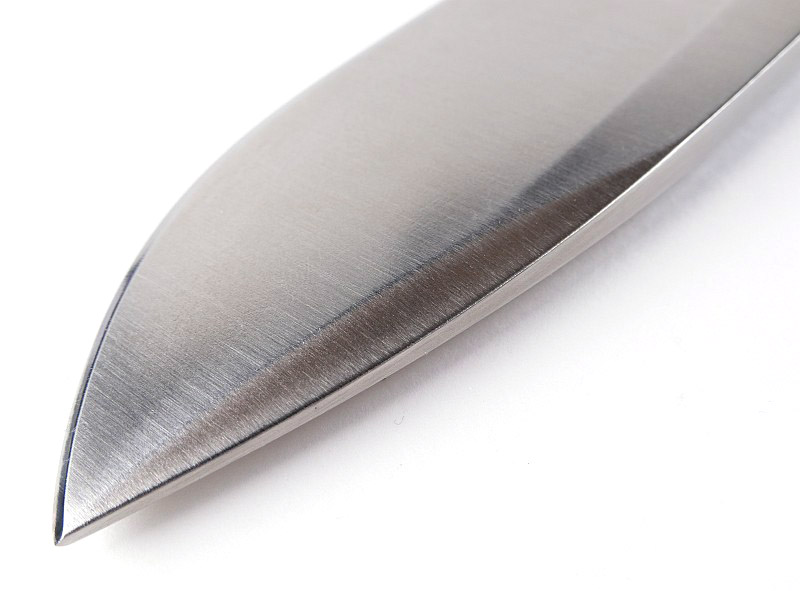
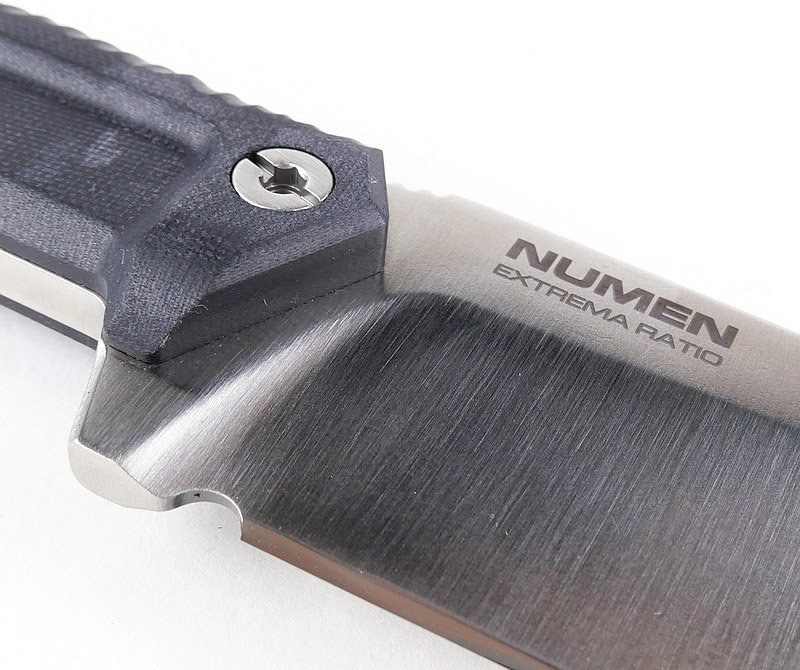
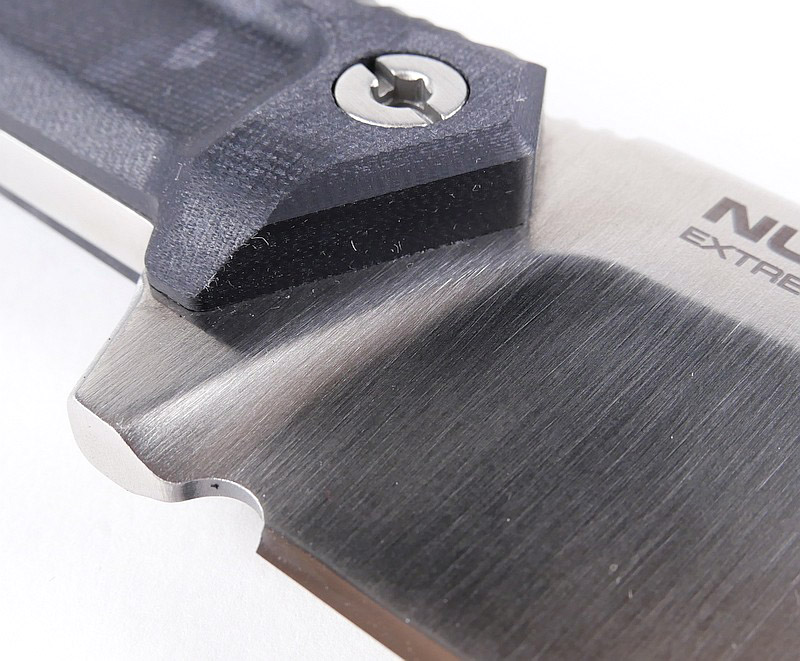
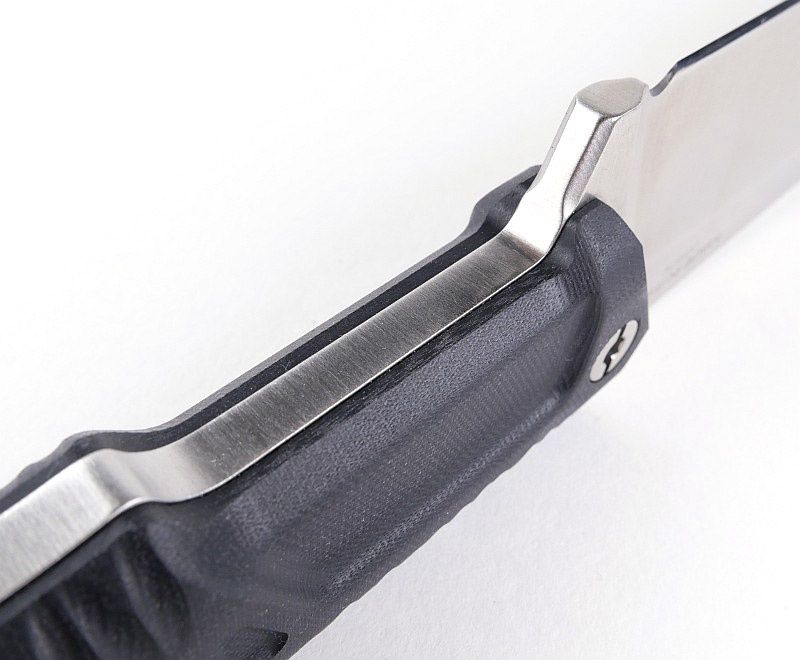
Numen’s blade is made to take seriously heavy use. Thick blade stock and a tapering flat grind sweeping towards a strong tip. The plunge line is well radiused to reduce stress concentrators, and a sharpening choil allows for full length edge sharpening with the choil being large enough to also not focus stresses.
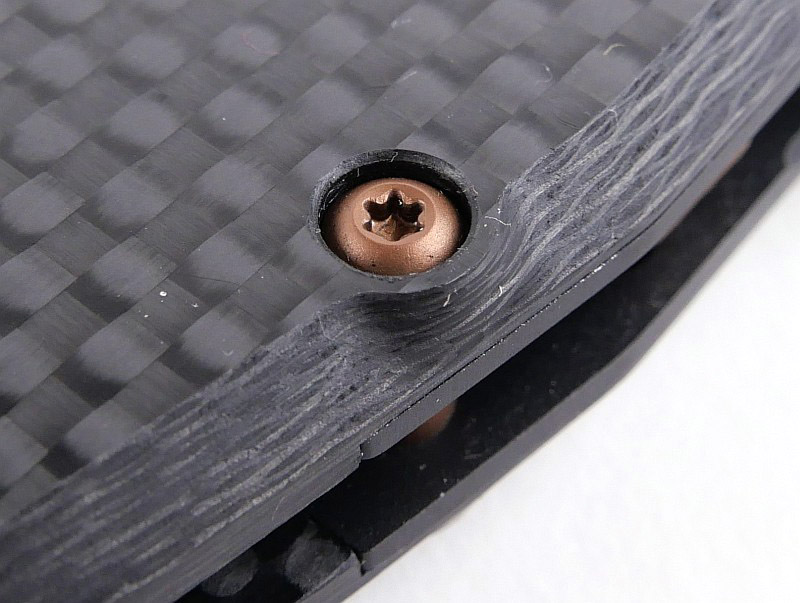
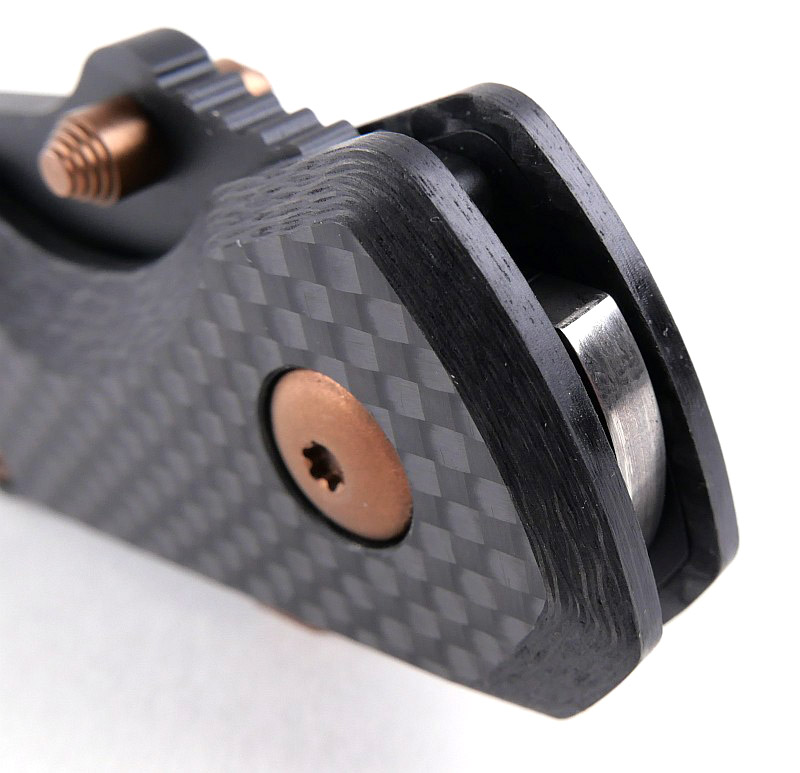
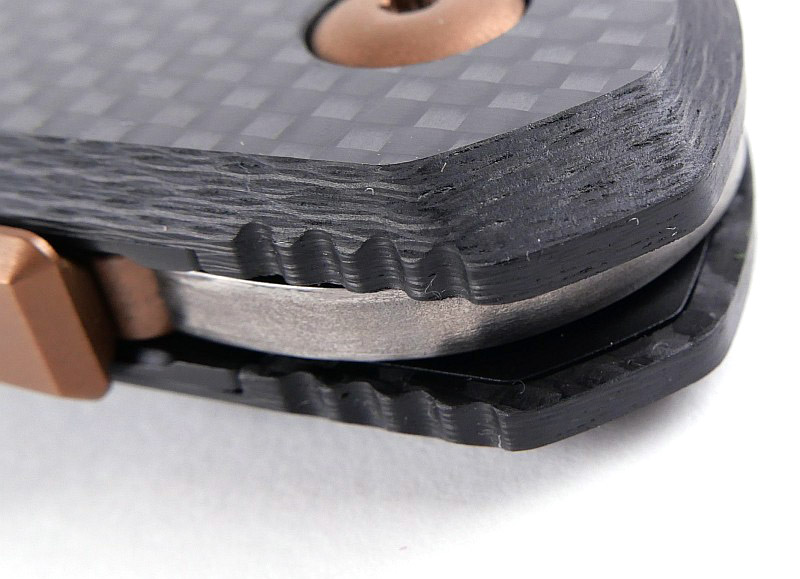
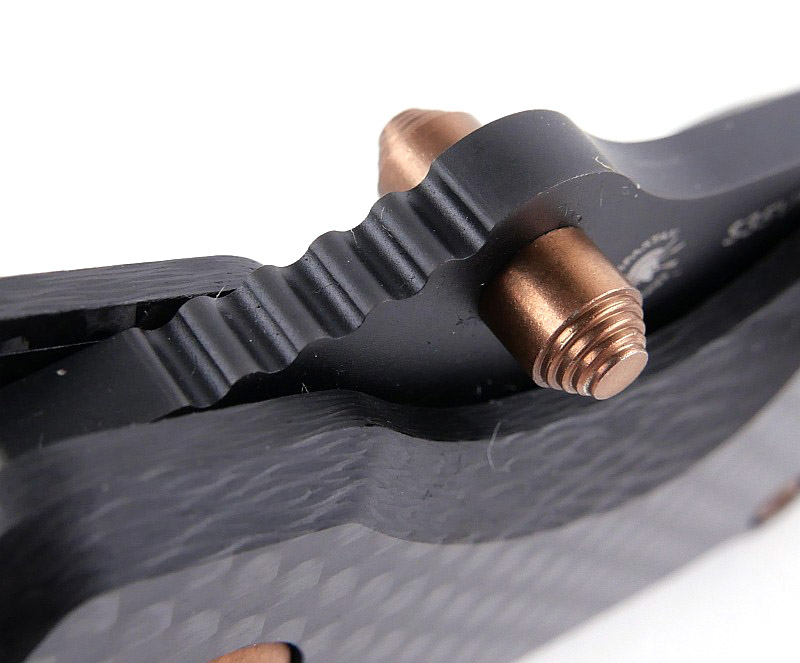
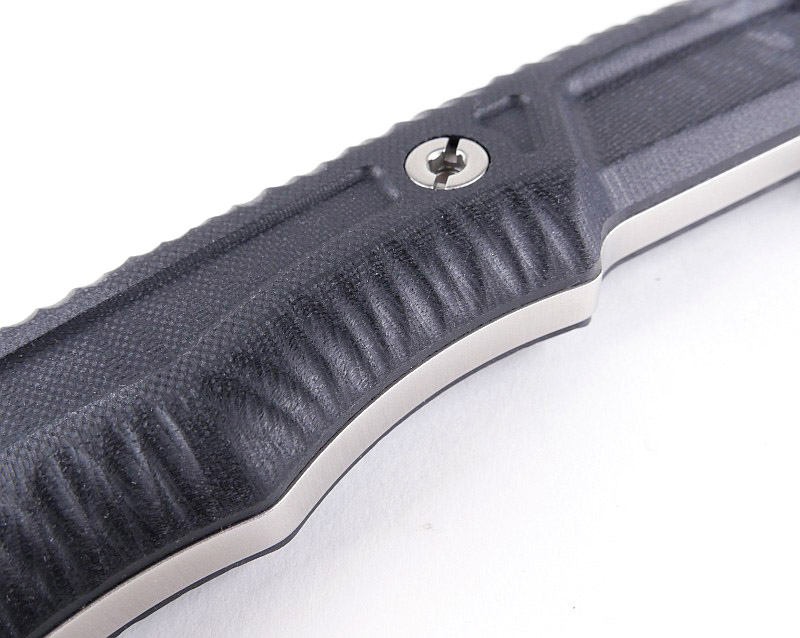
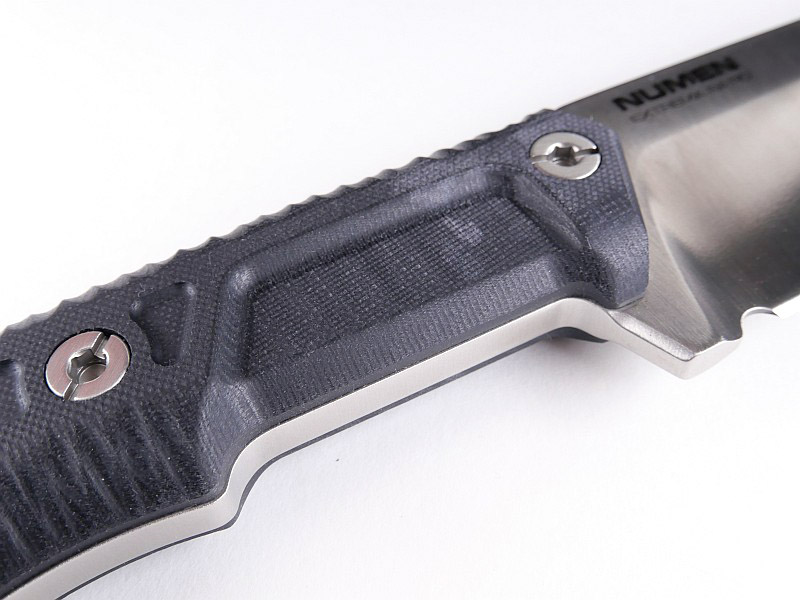
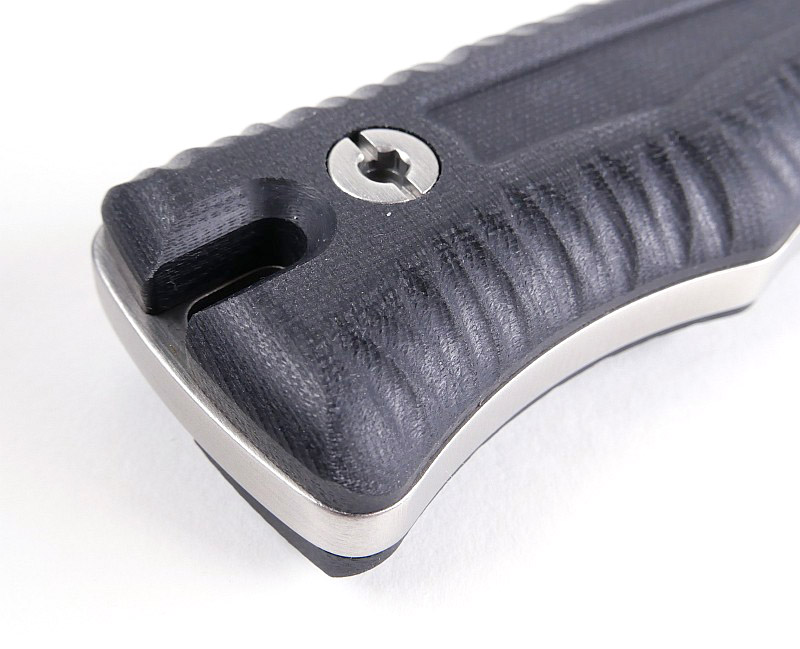
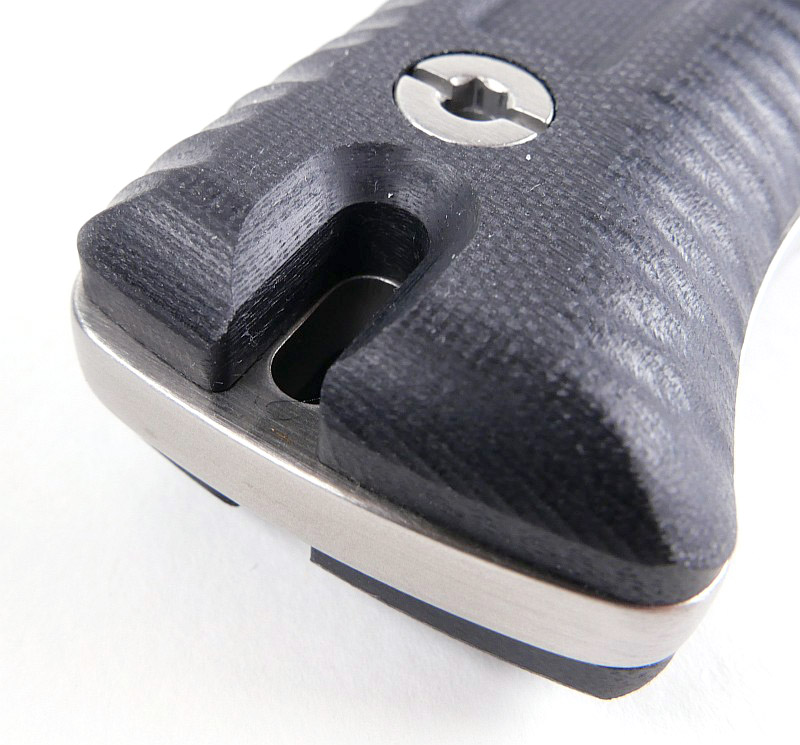
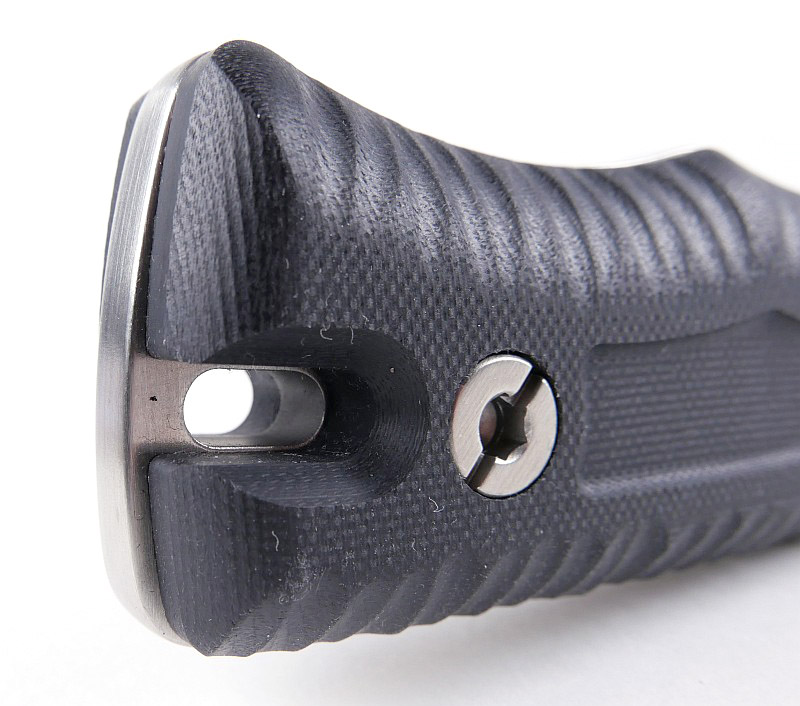
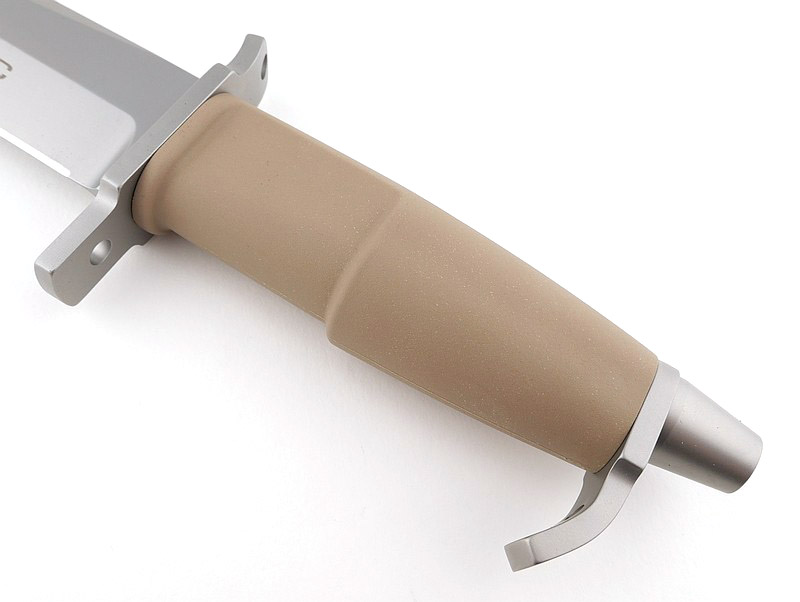
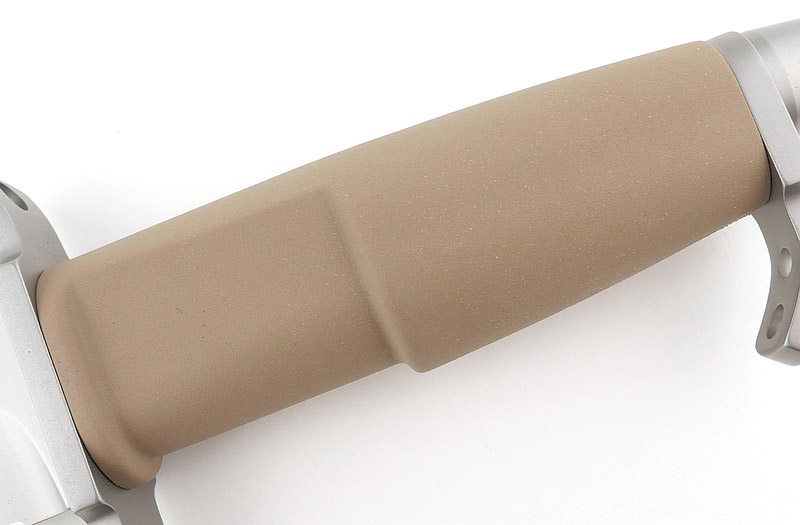
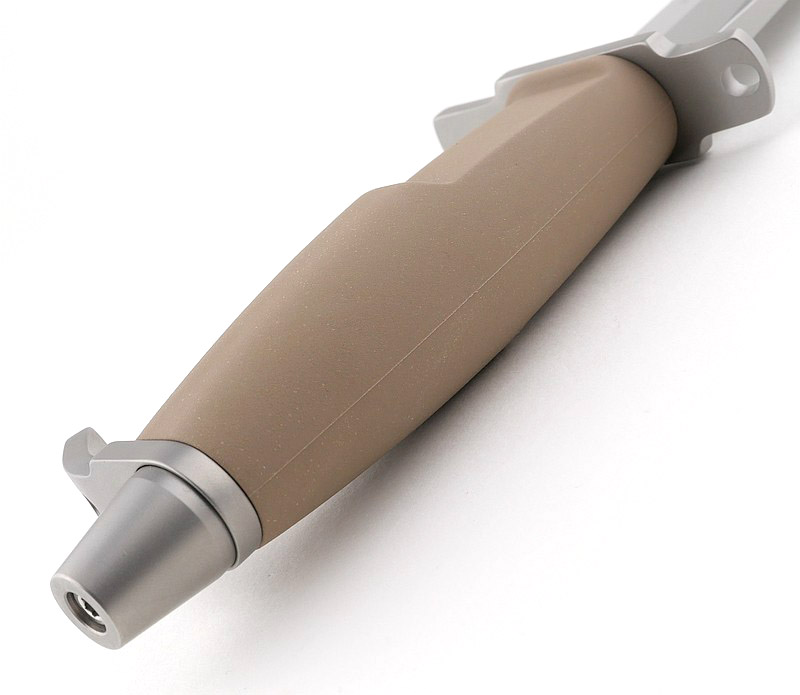
G10 handles with complex shaping that includes the distinctive Extrema Ratio first and second finger grip groove, are precisely finished and fit perfectly to the blade tang. Texturing all along the handle edges enhances grip wherever you position your hand. For the fully choked up grip there is also a section of thumb jimping on the spine for stability.


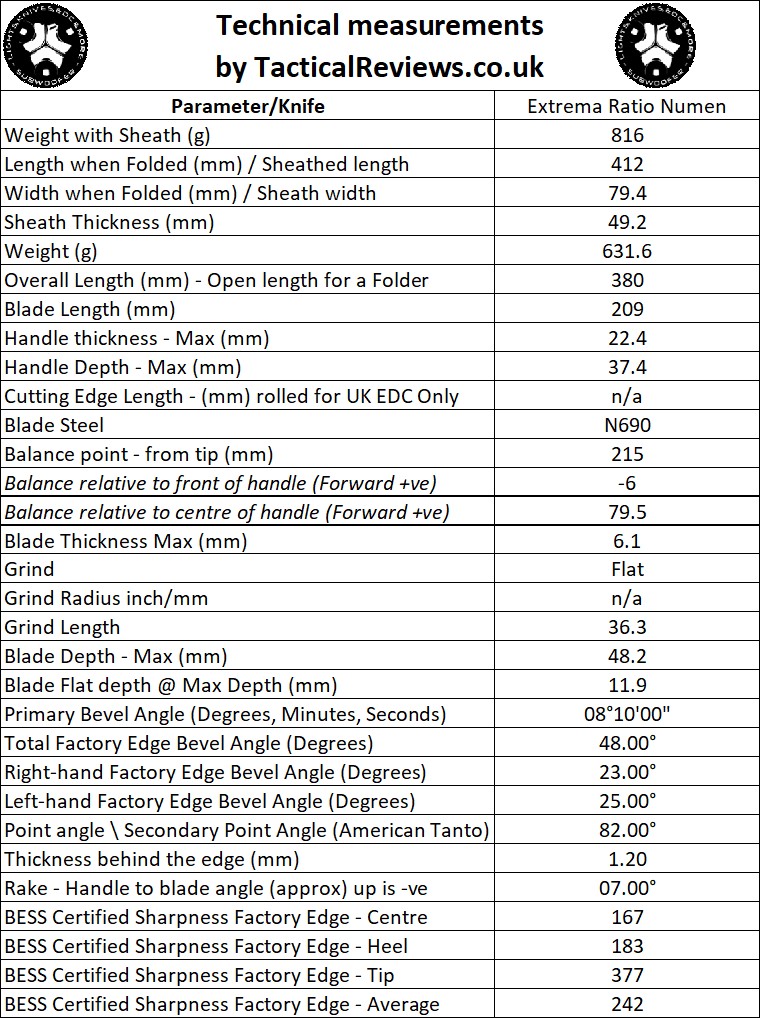
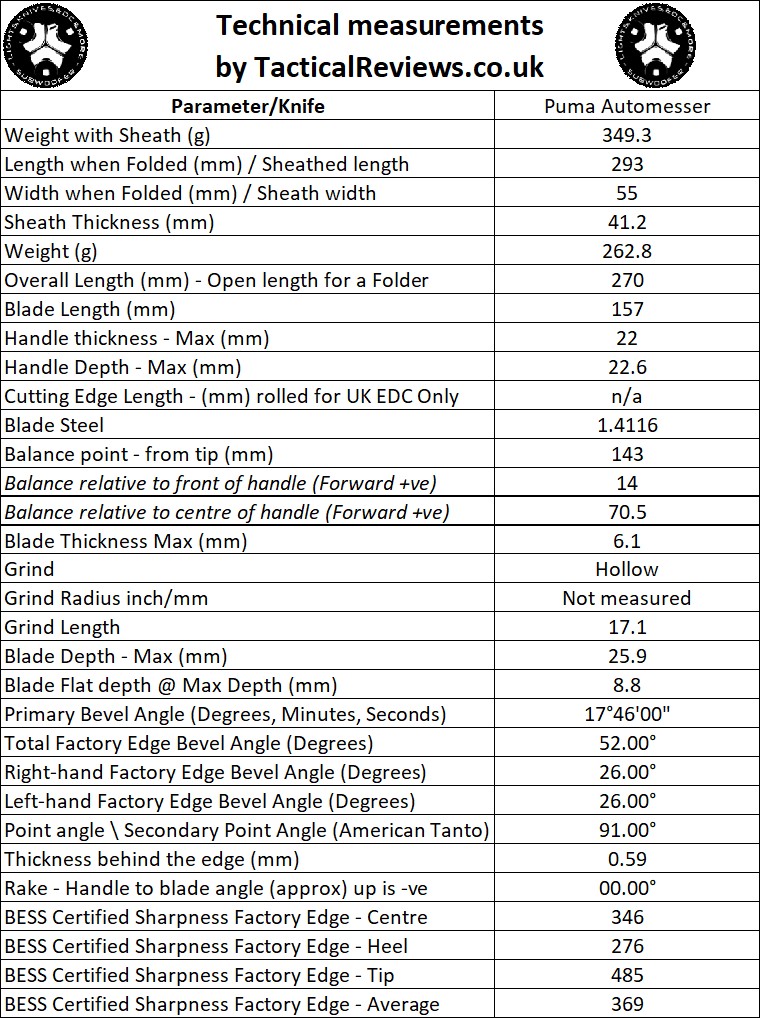
The Blade and Handle – Detailed Measurements:

For full details of the tests and measurements carried out and an explanation of the results, see the page – Knife Technical Testing – How It’s Done.

The blade is made from N690 steel.


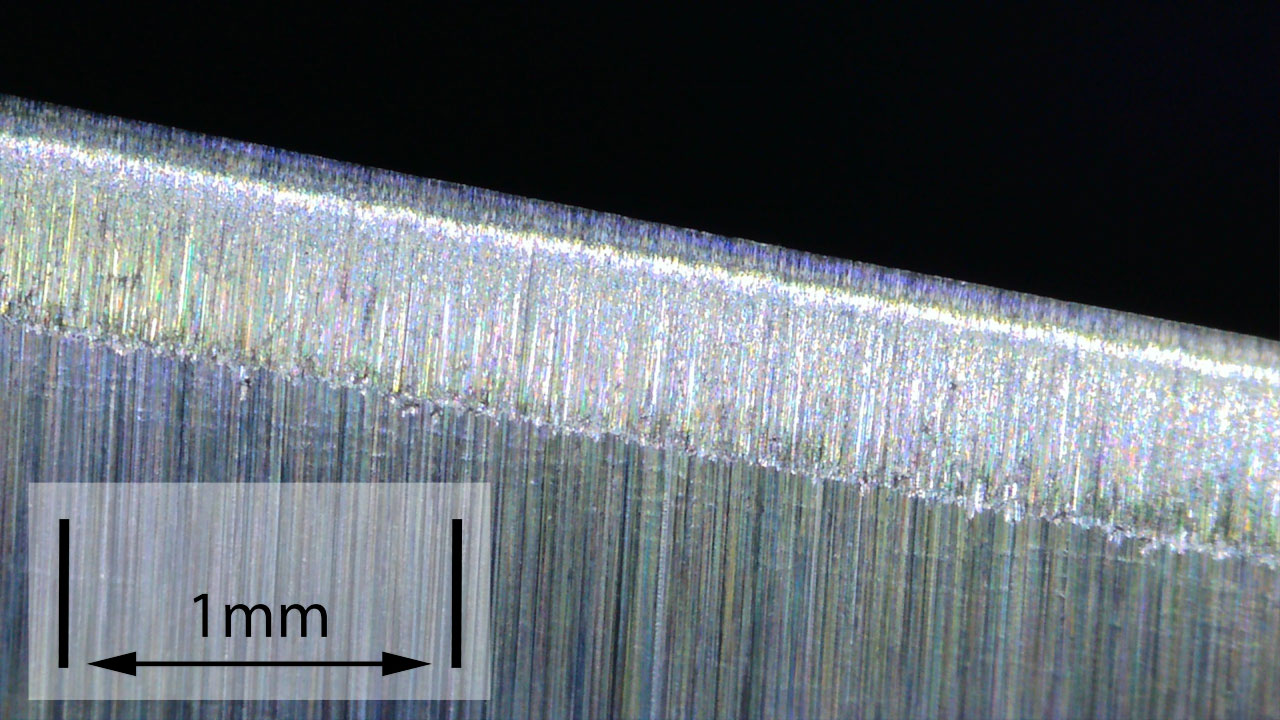
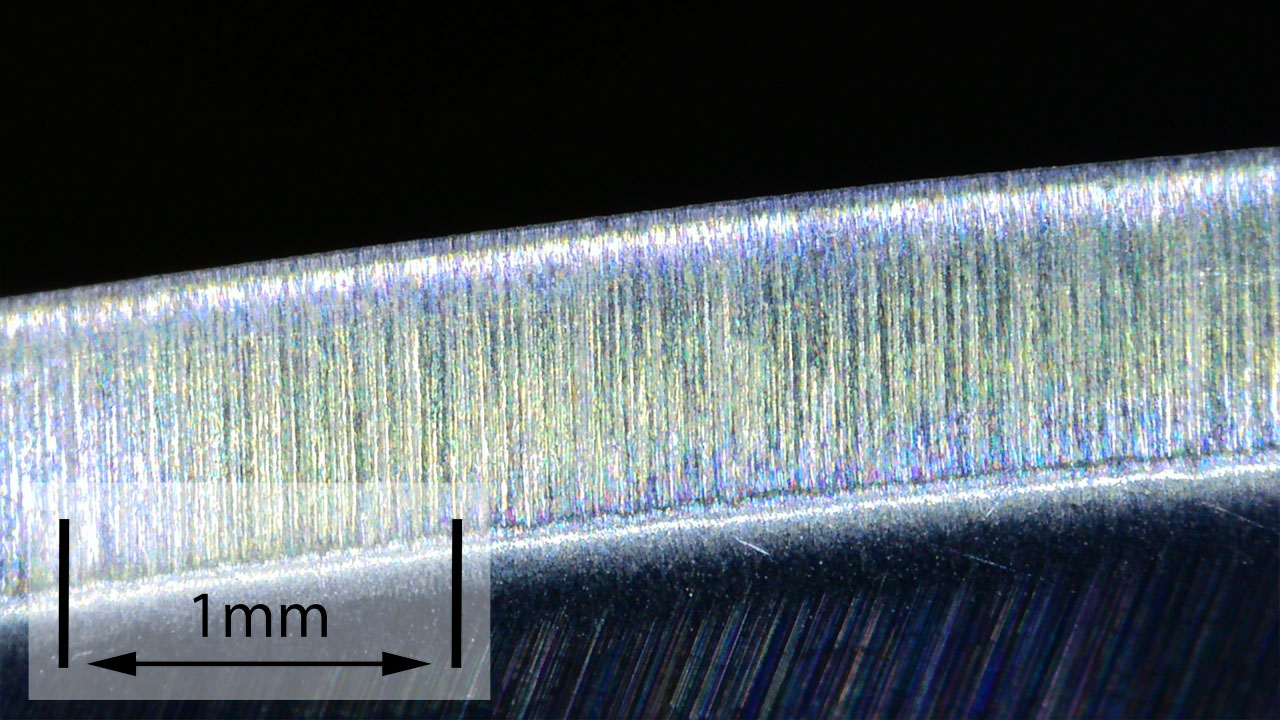
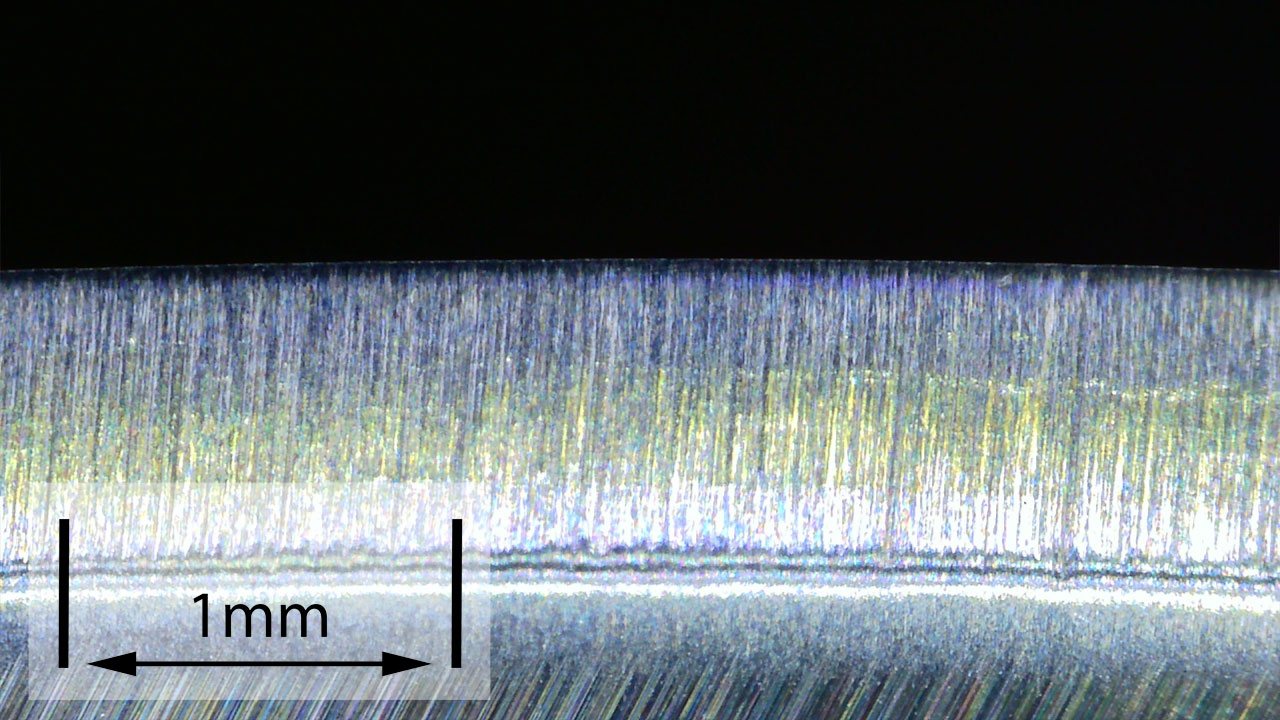
The Factory edge up close:

Followers of Tactical Reviews will know my views on factory edges, but to recap:

Anyone using a knife will need to sharpen it. That first factory edge is just like the first tank of fuel that a new car comes with (or first charge of the battery).
A good factory edge is a ‘nice to have’ but not a ‘make or break’ for a good knife, as you will be putting your own edge onto it soon enough.
The factory edge does however indicate the care a knife maker has put into the final finish.
It is for this reason Tactical Reviews measures factory edge sharpness and specifications, and includes this information in the detailed technical testing.

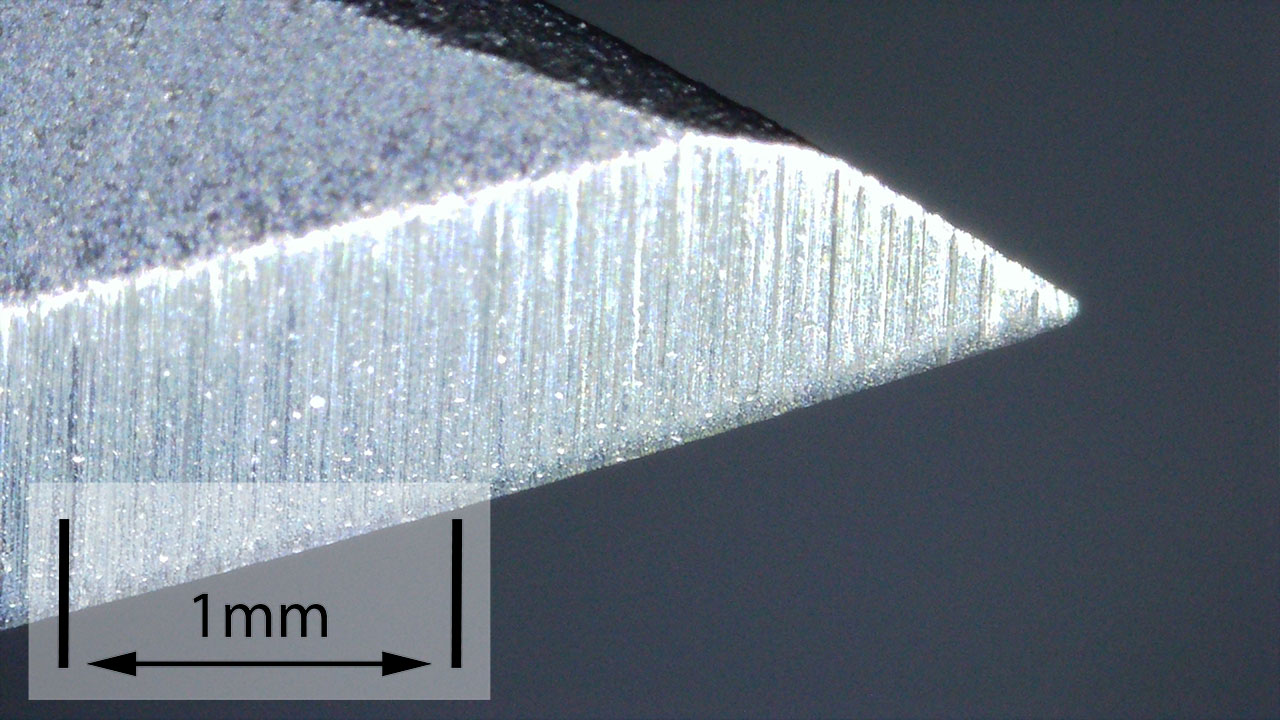
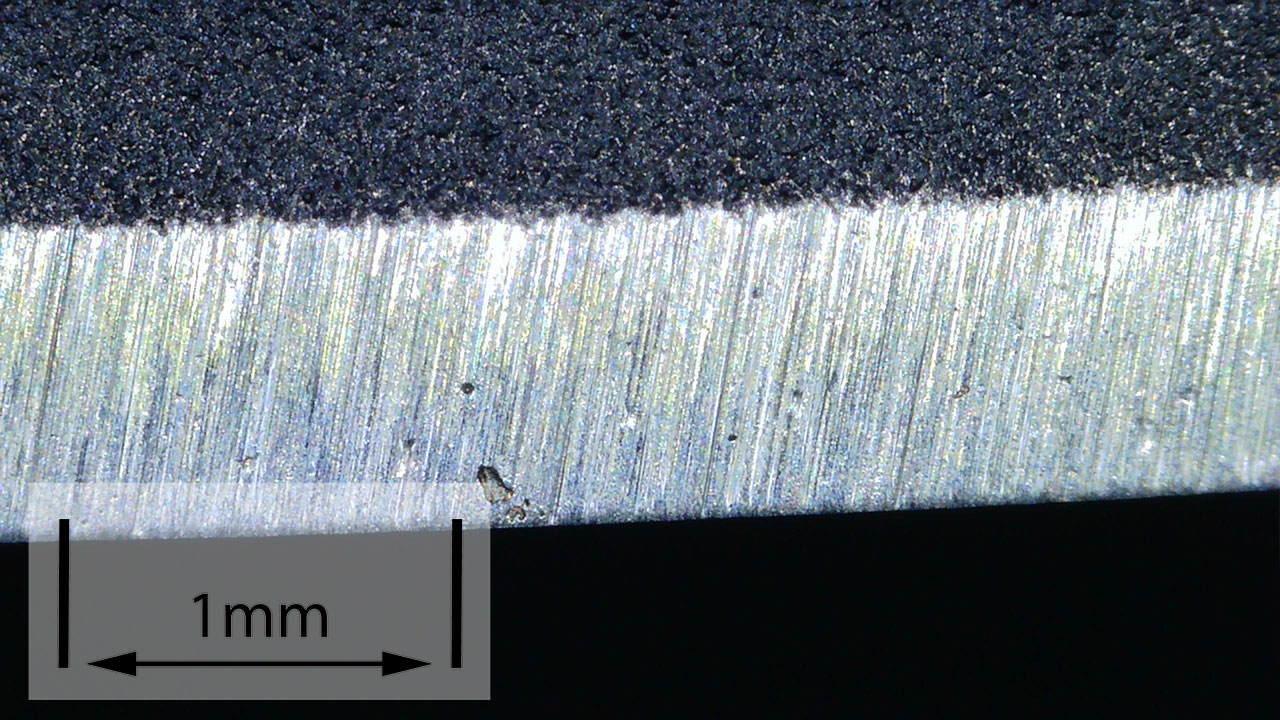
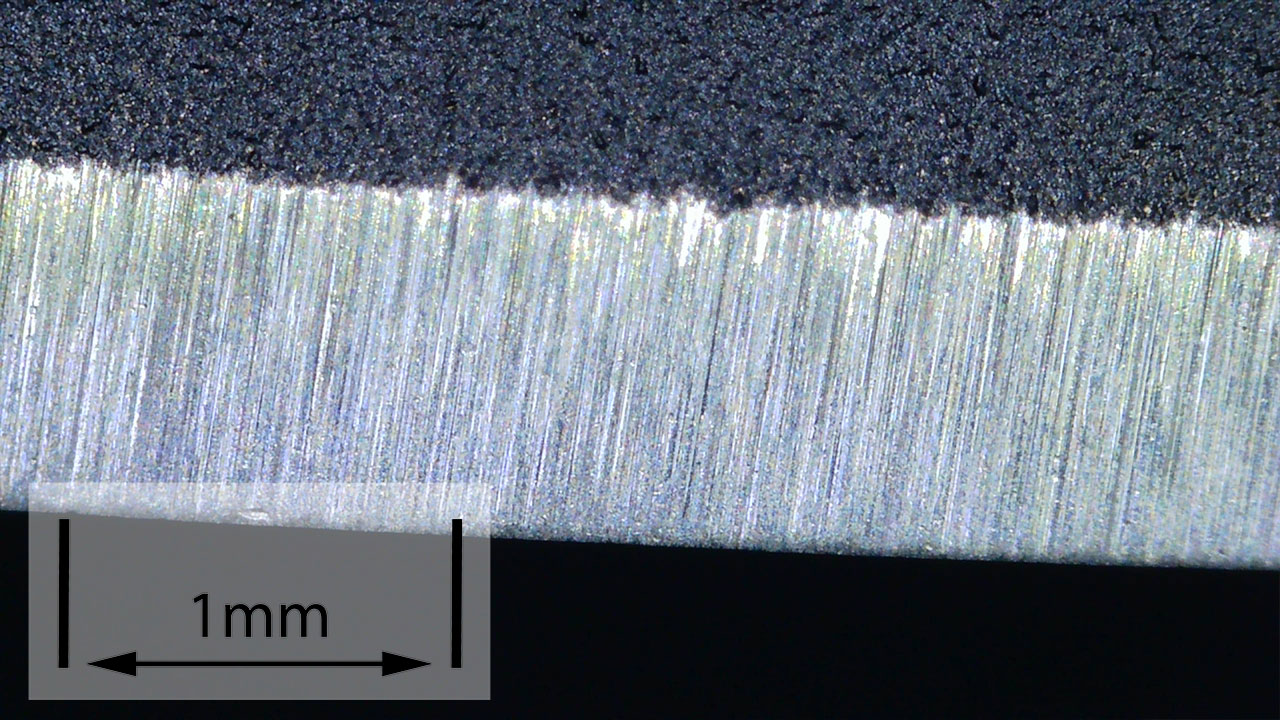
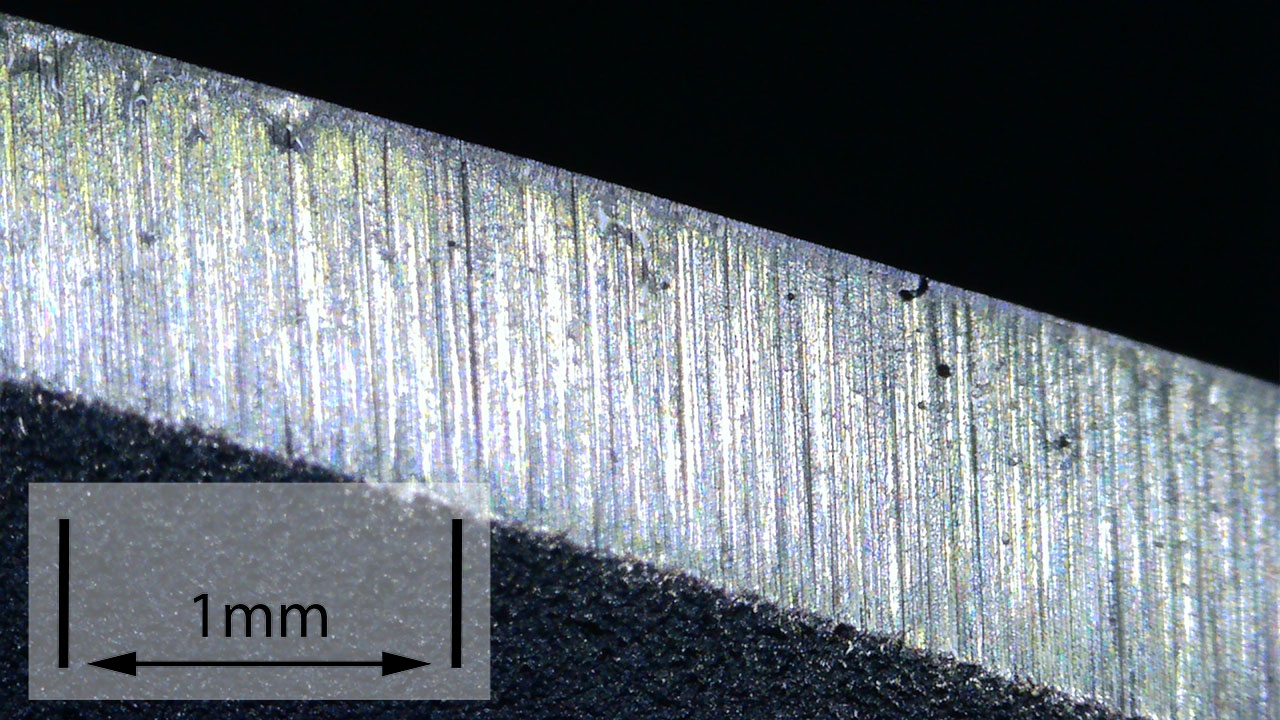
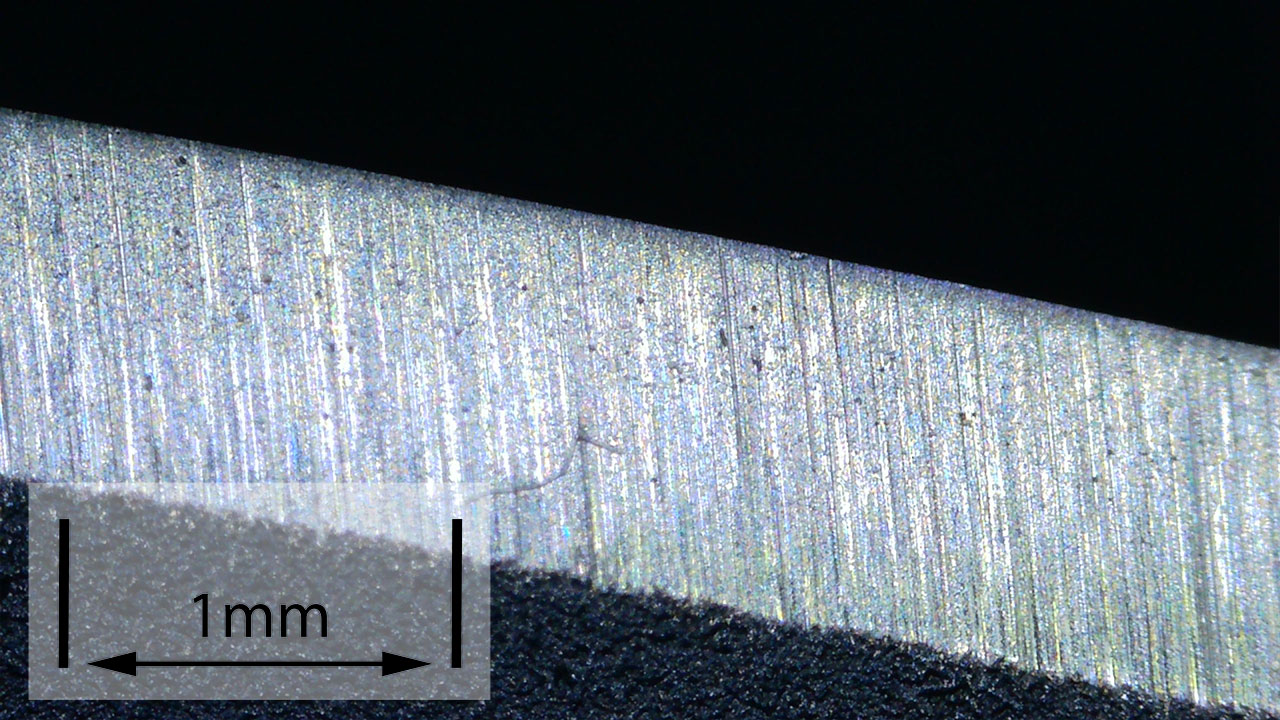
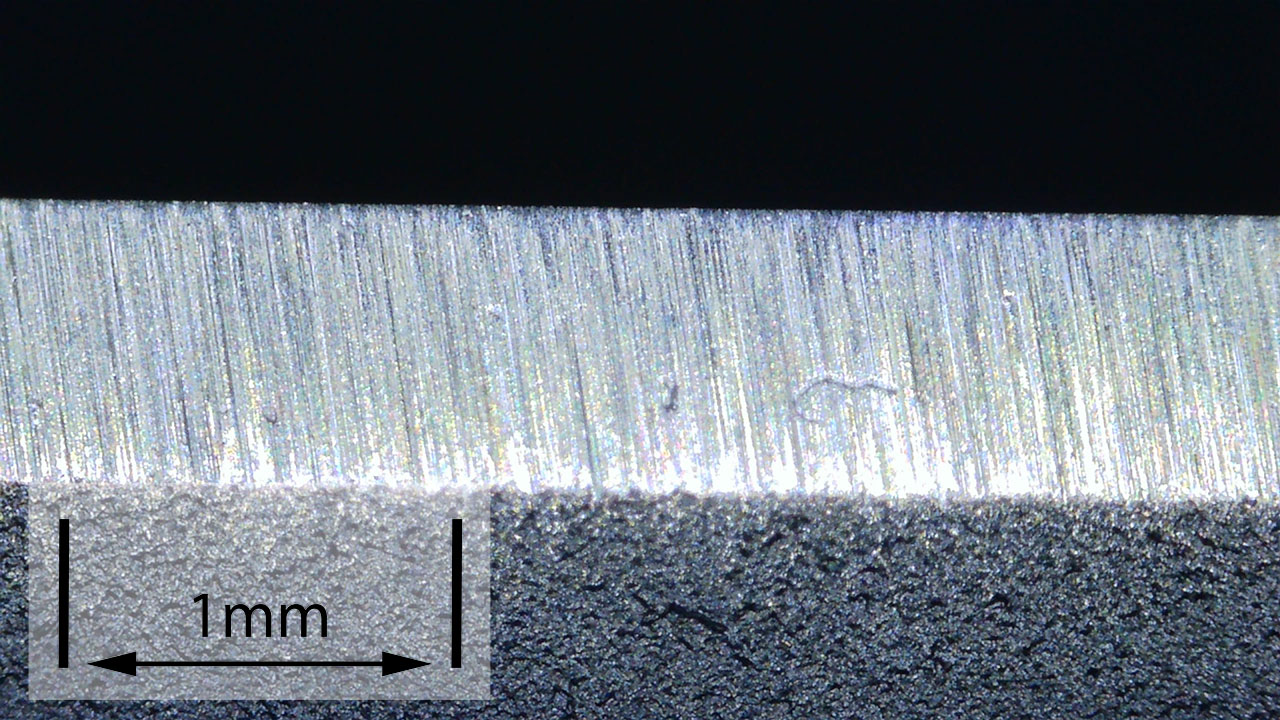
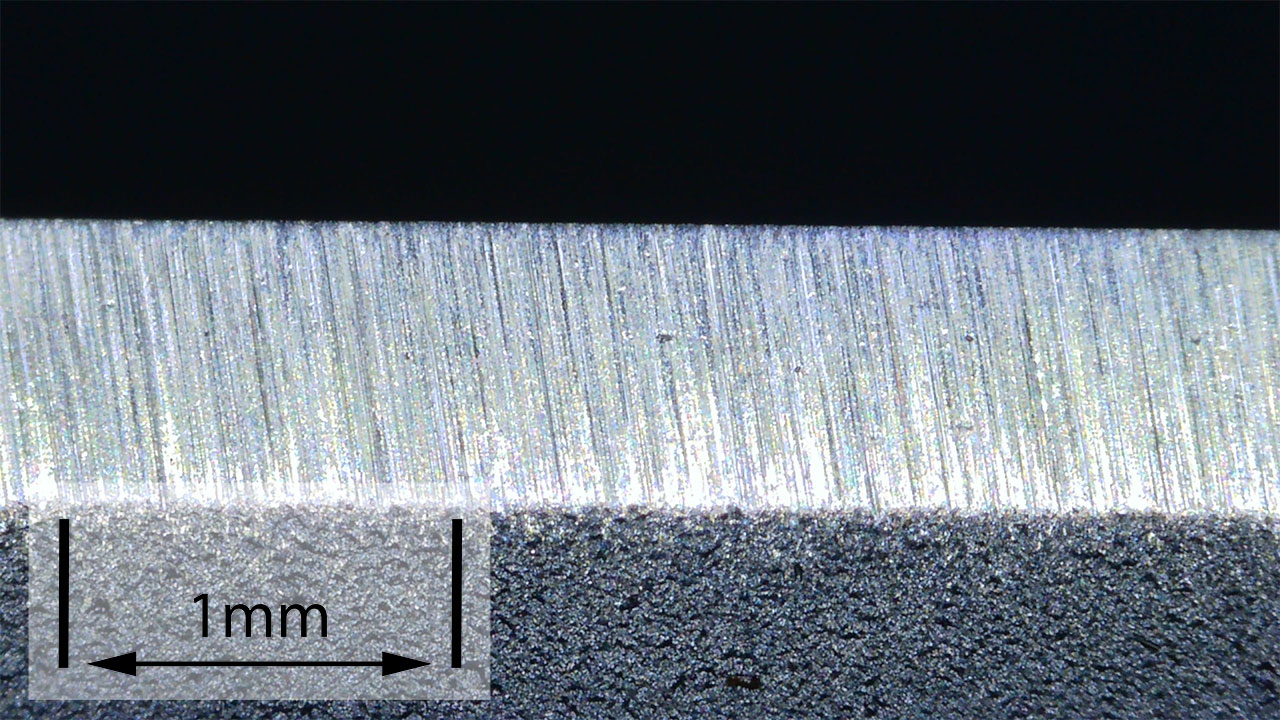
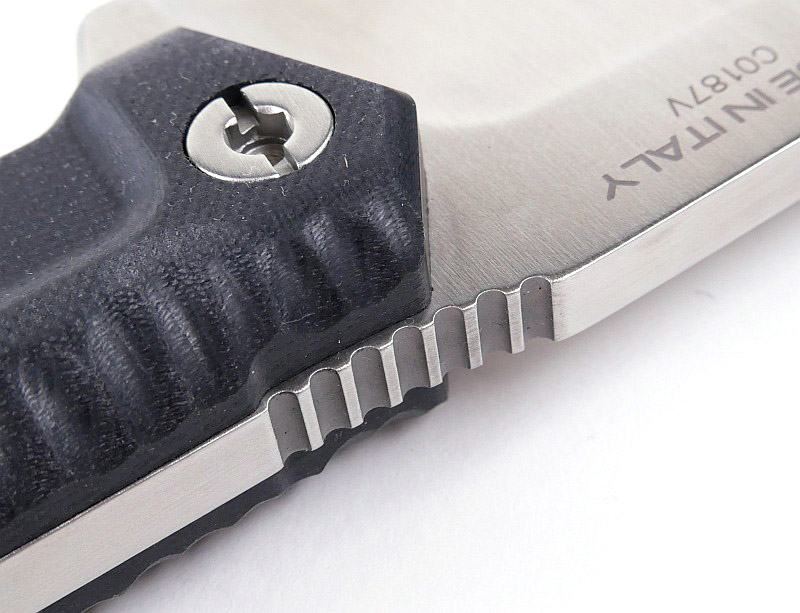
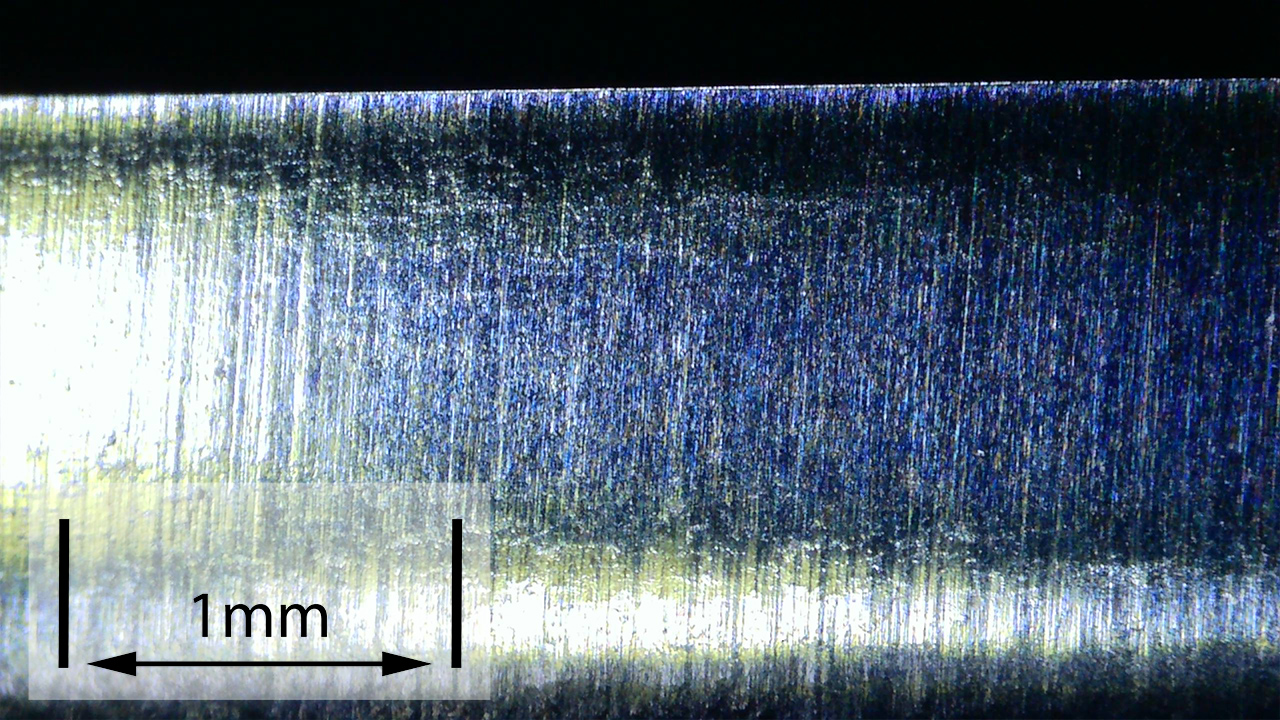
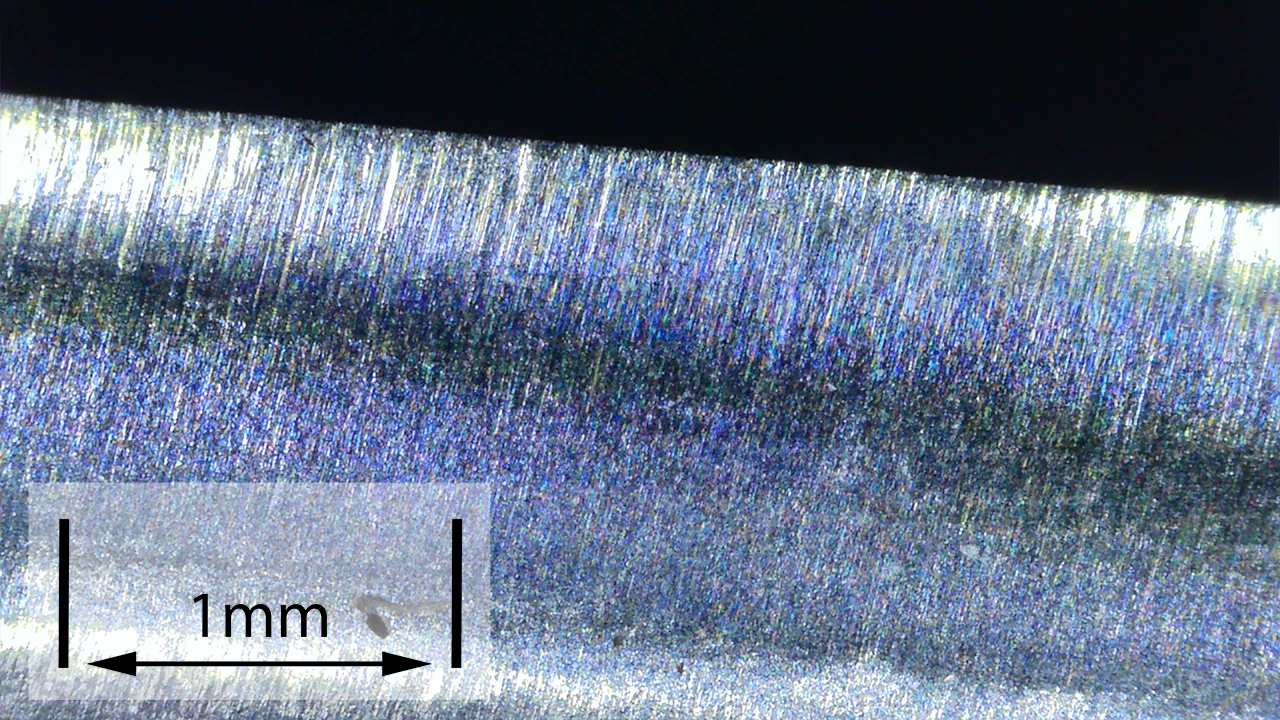
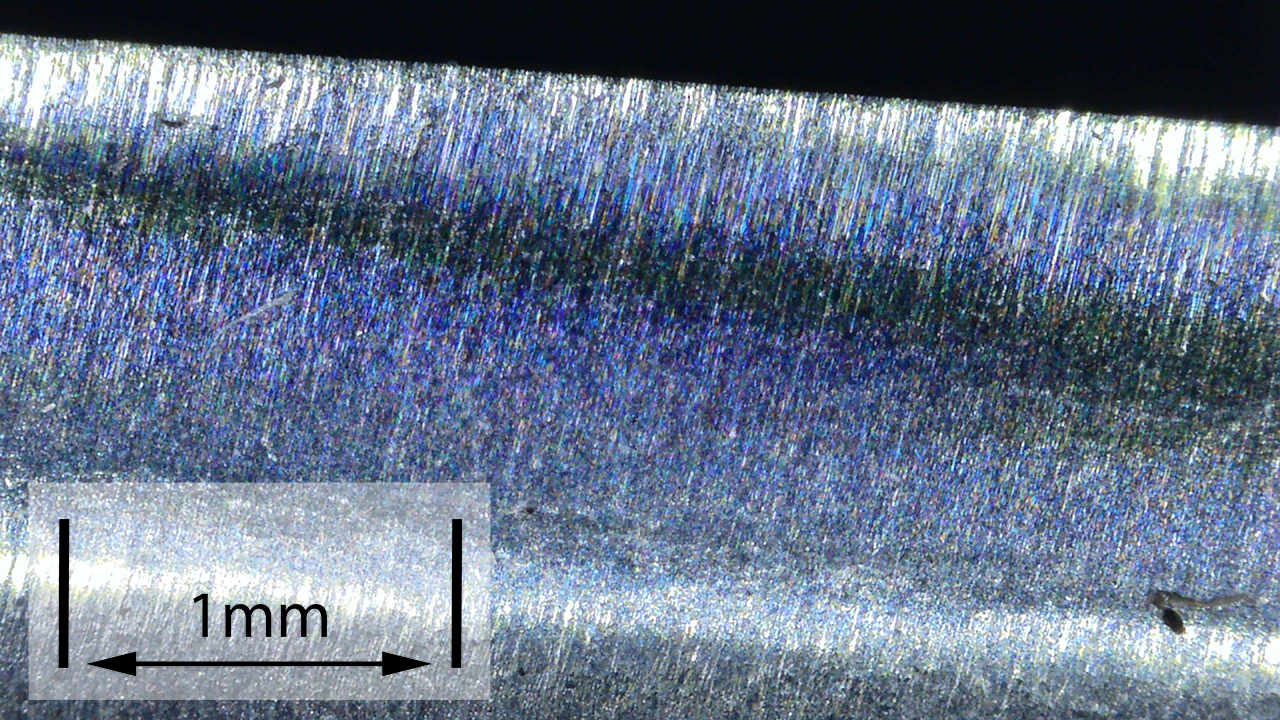
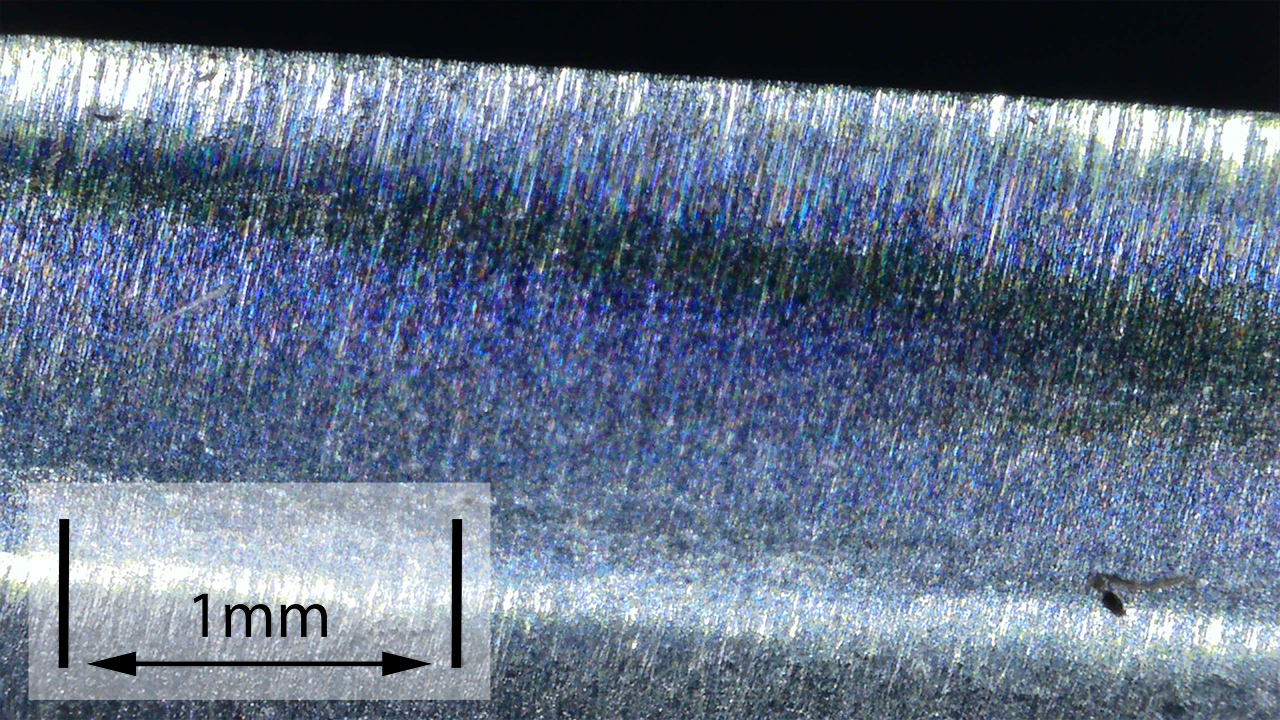
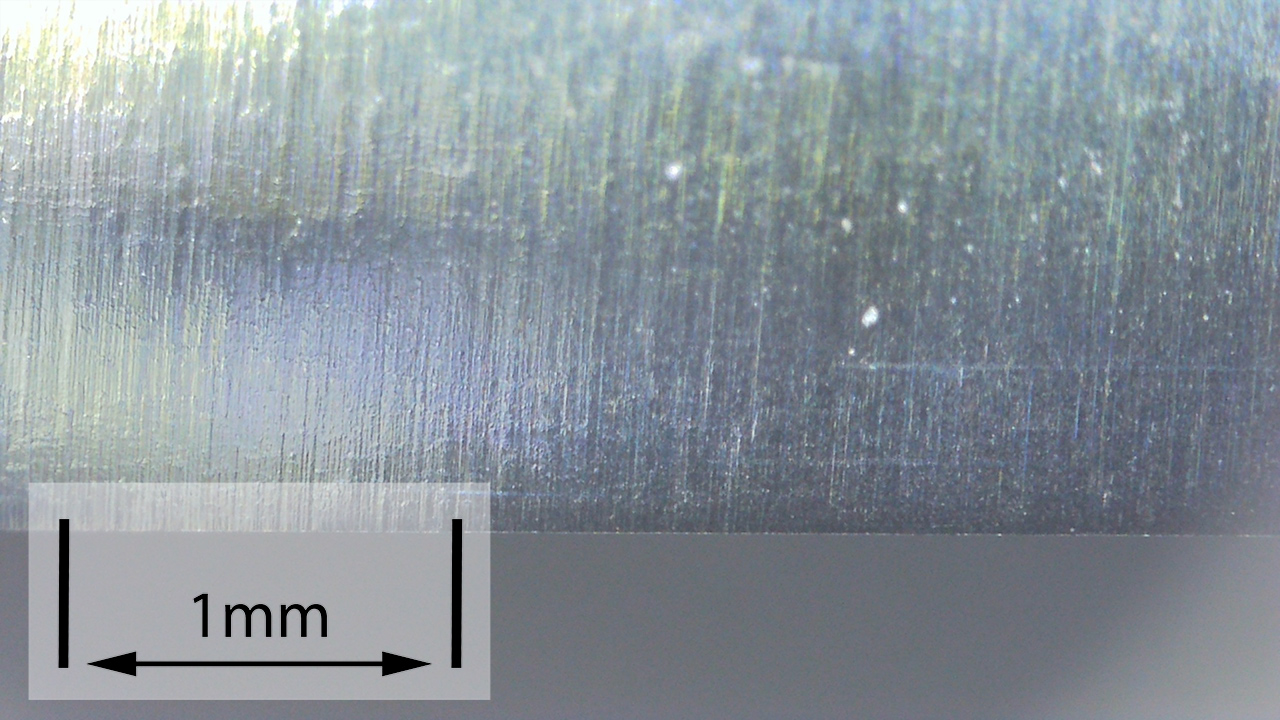
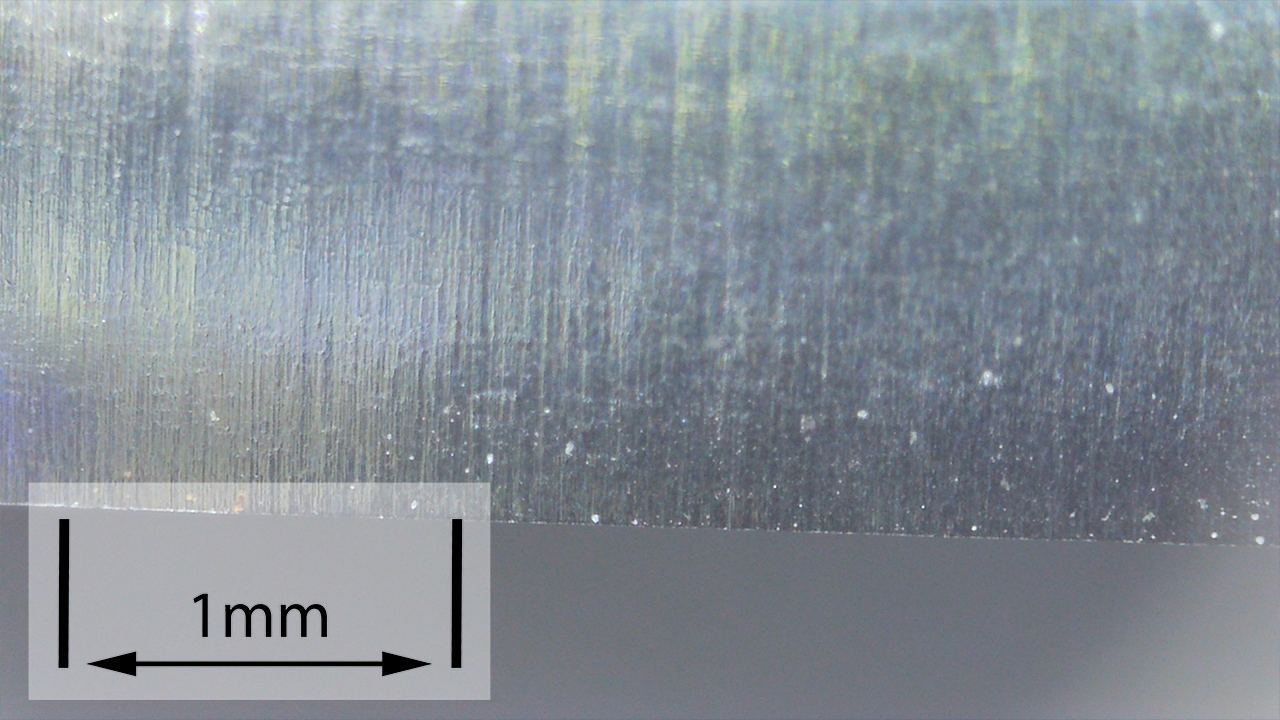
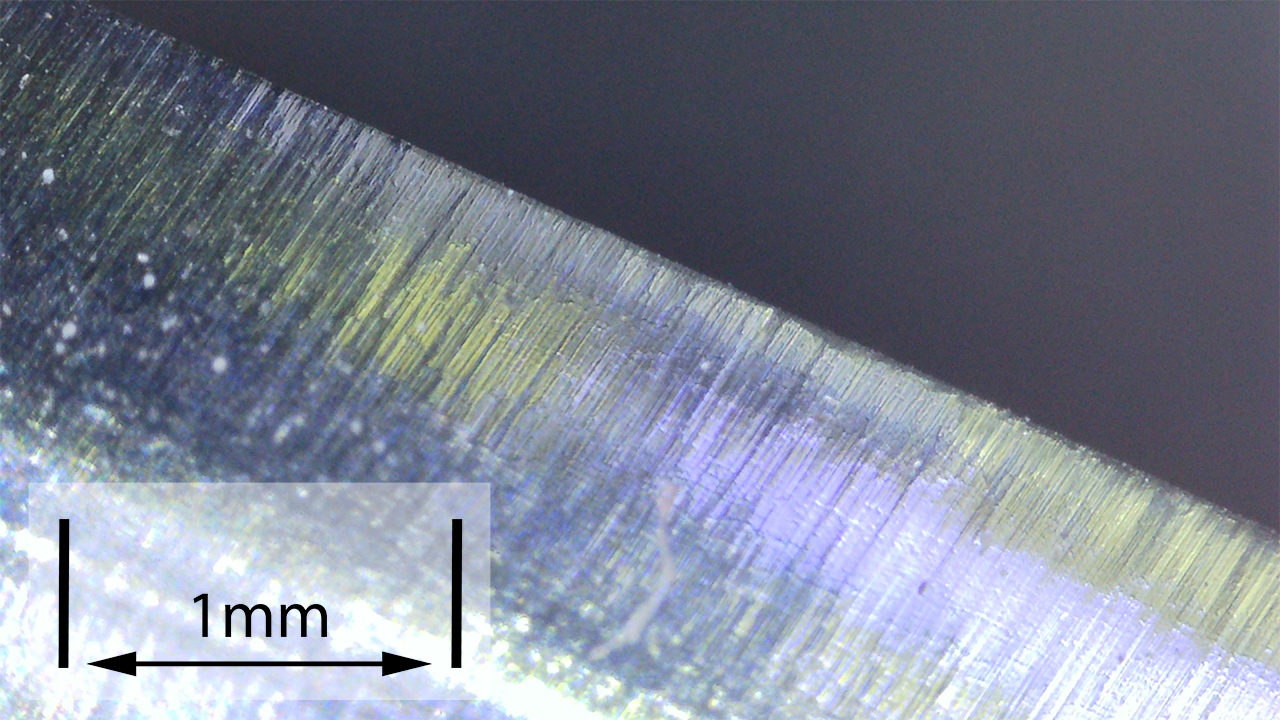
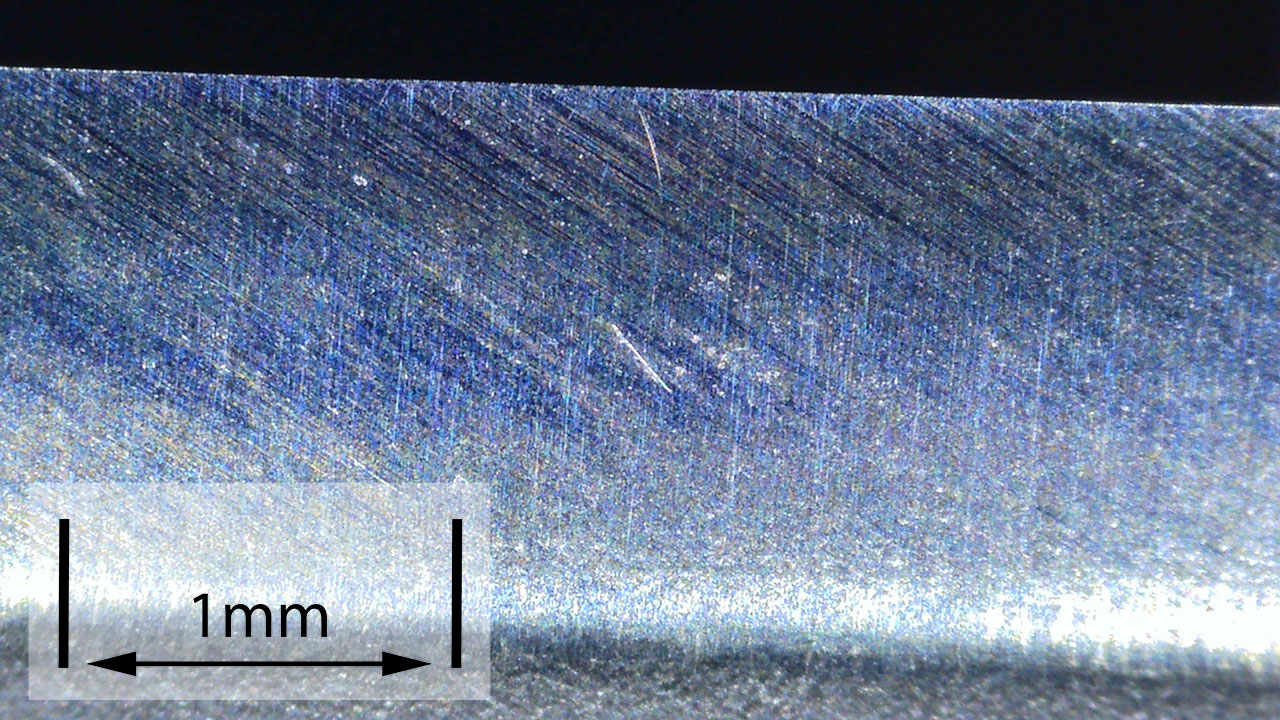
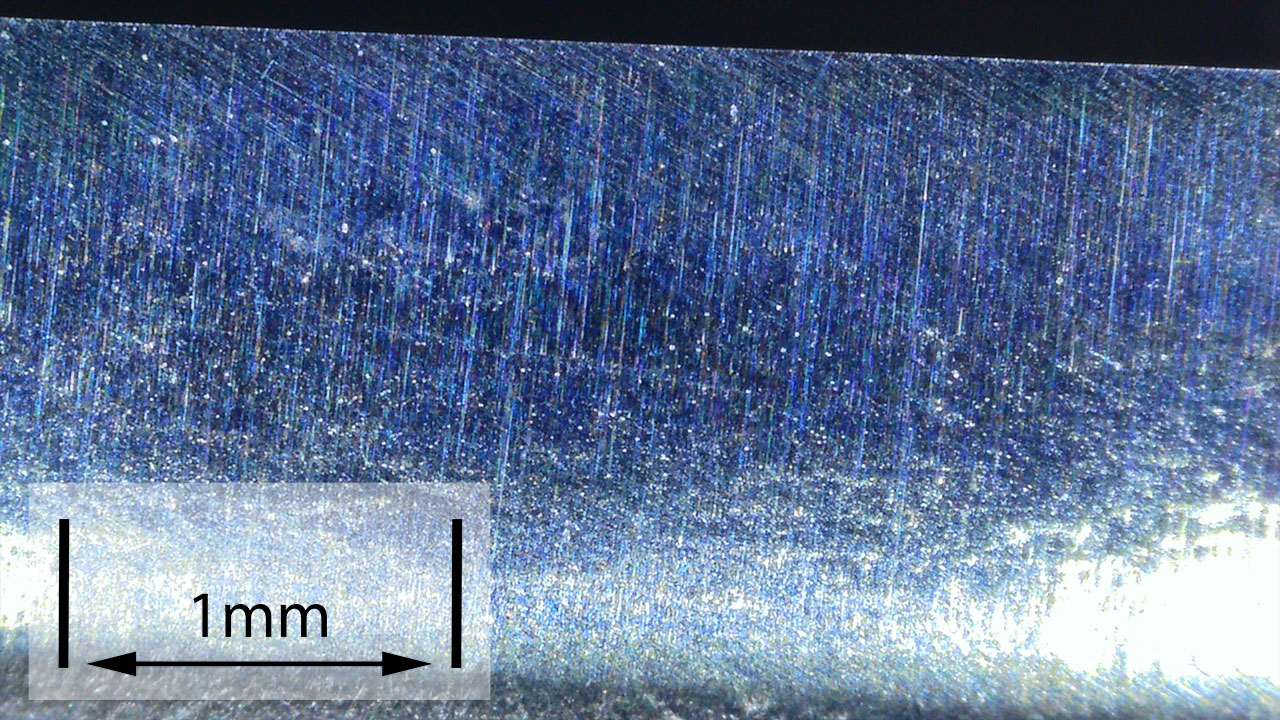
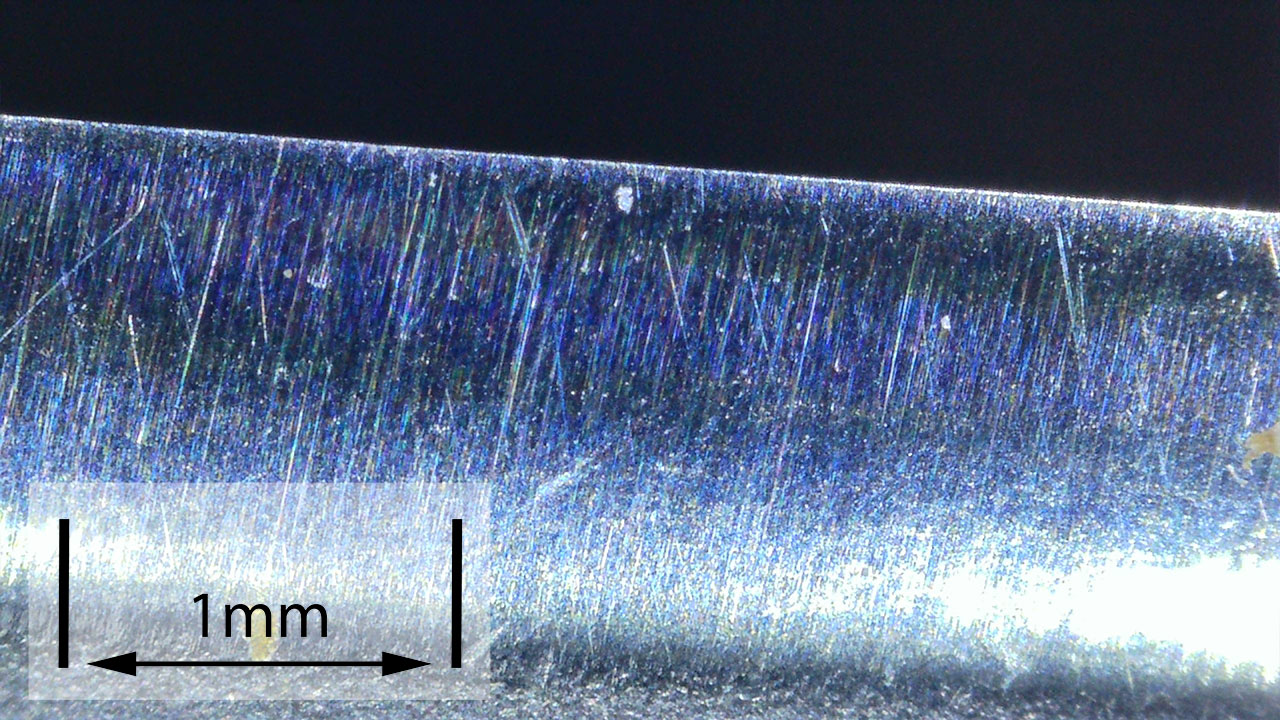
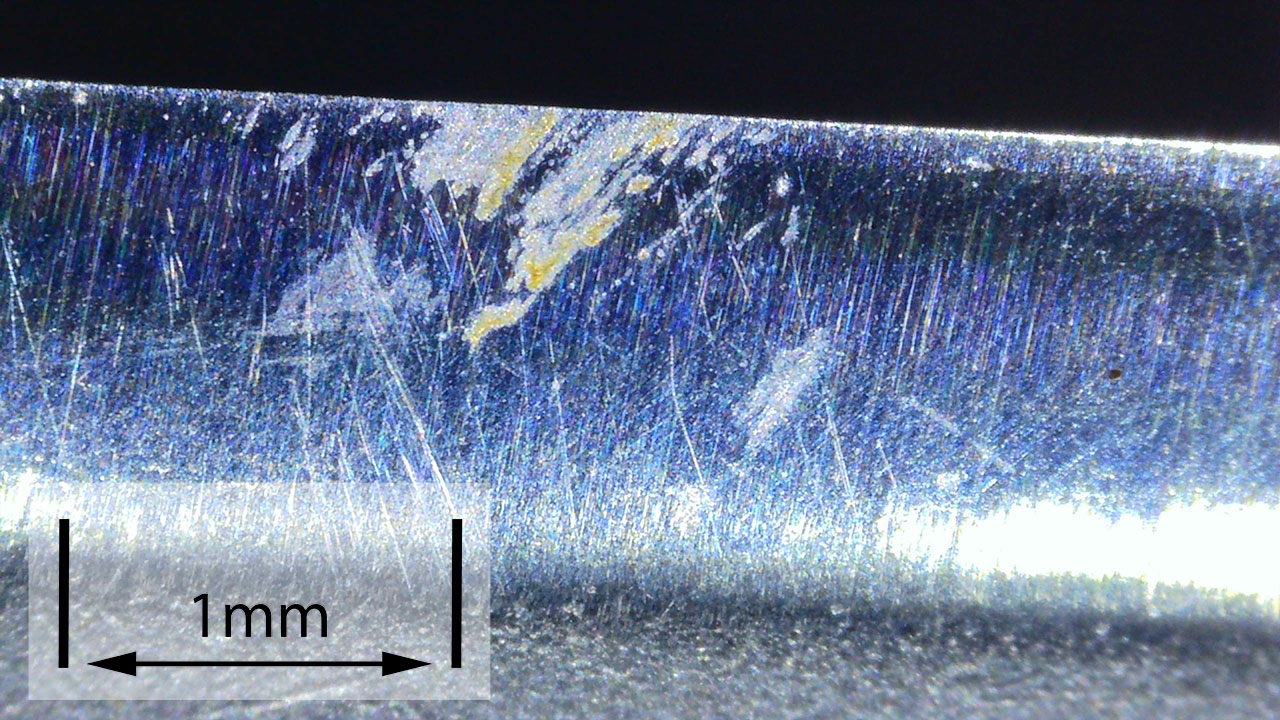
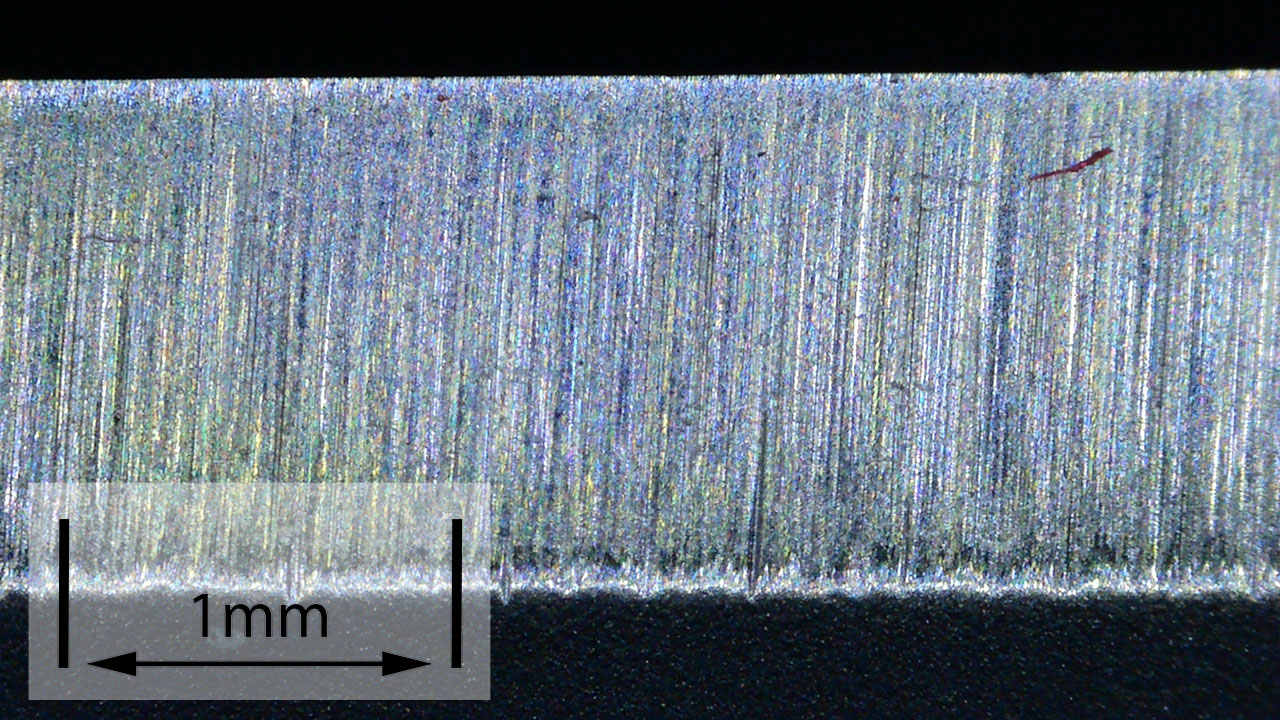
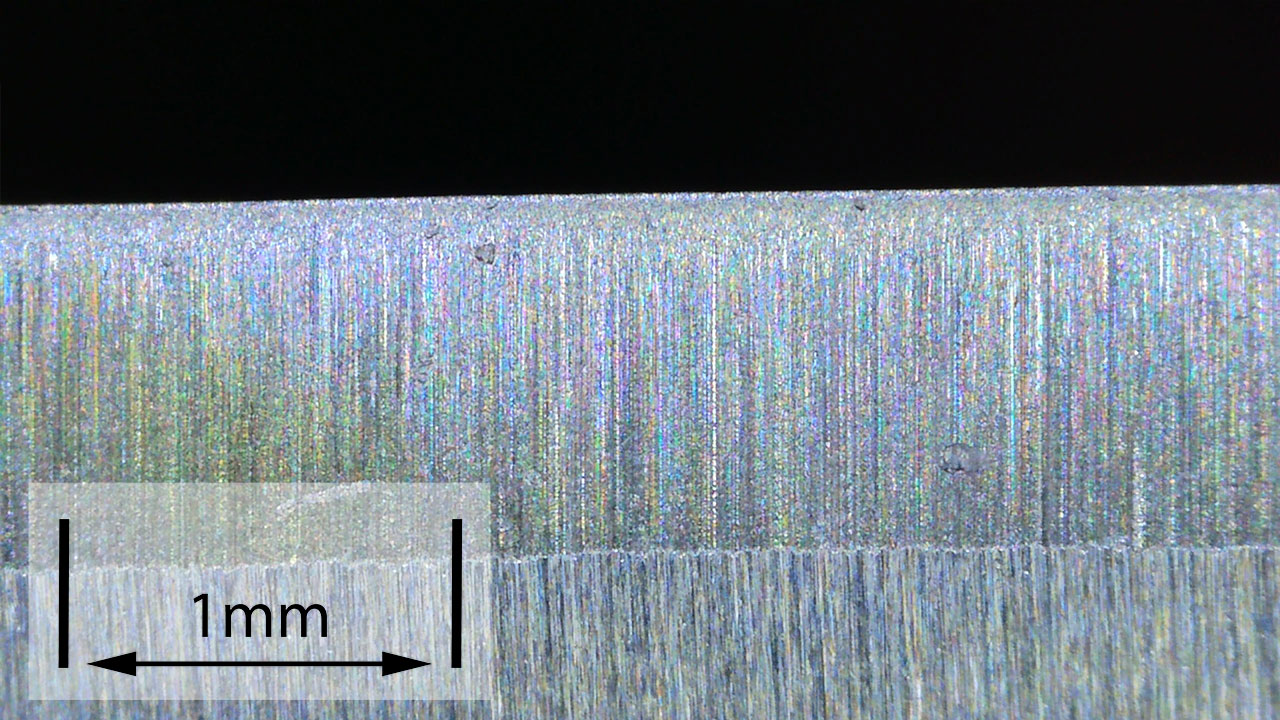
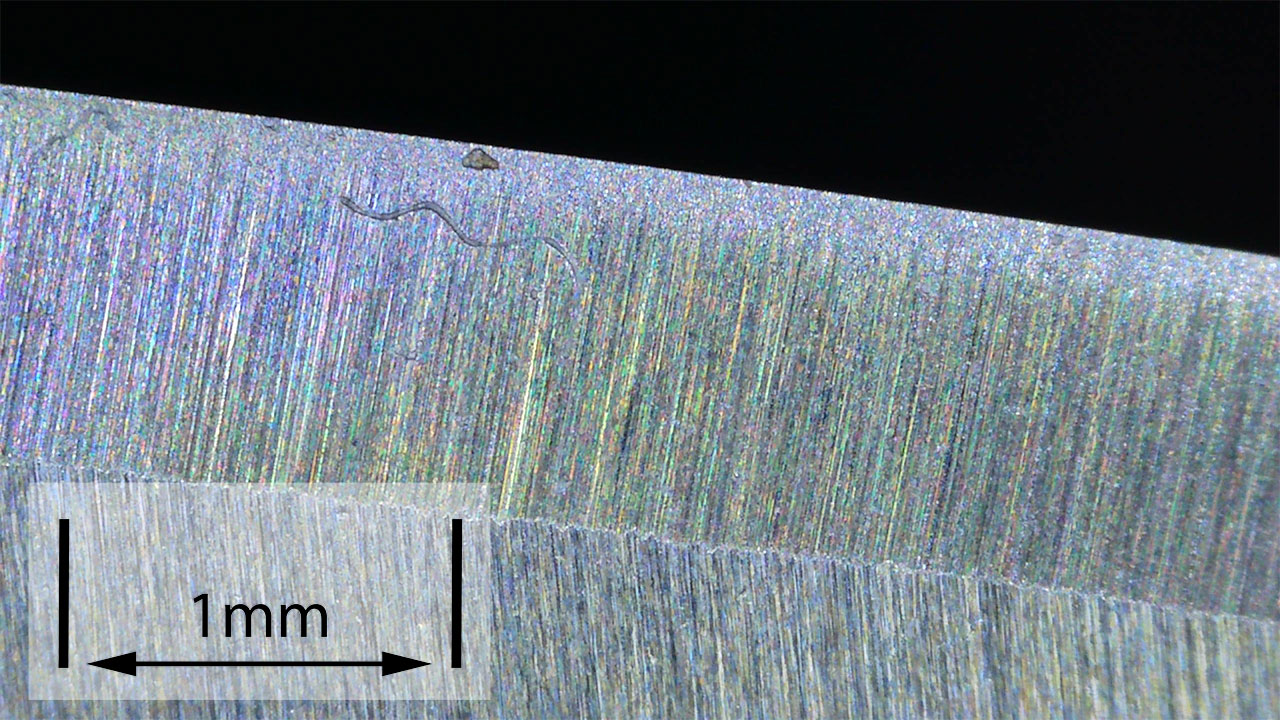
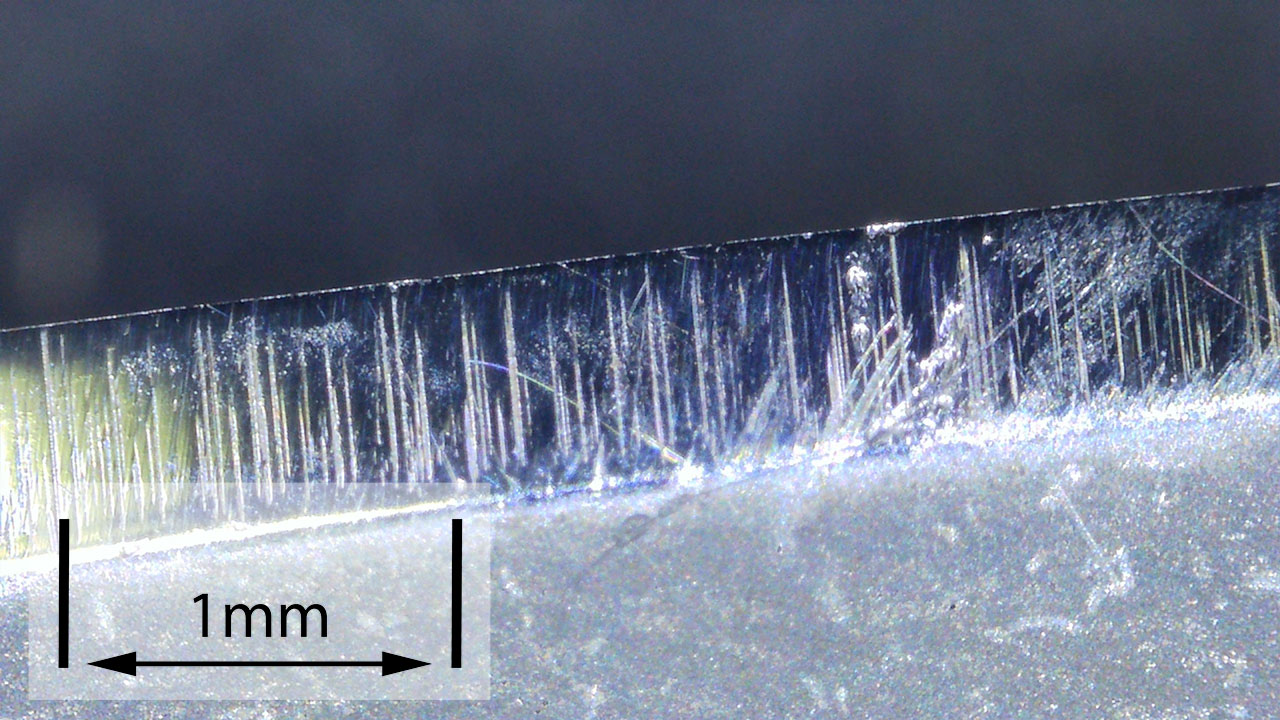
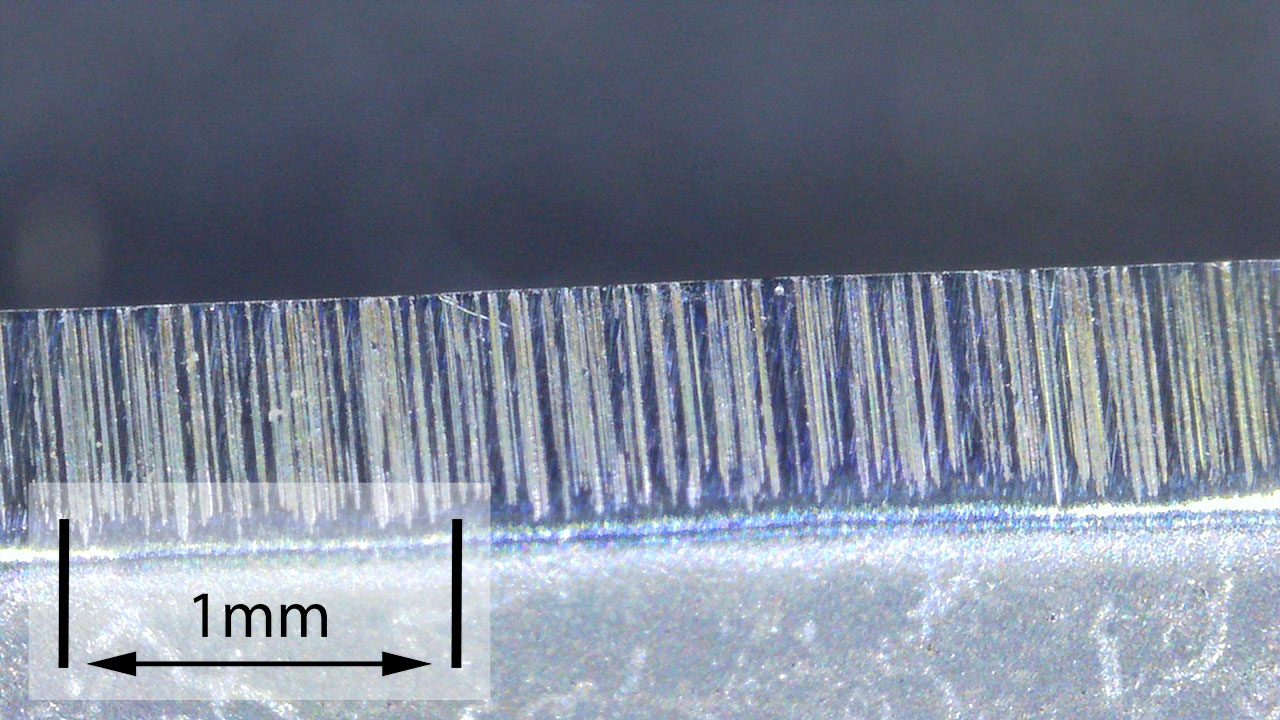
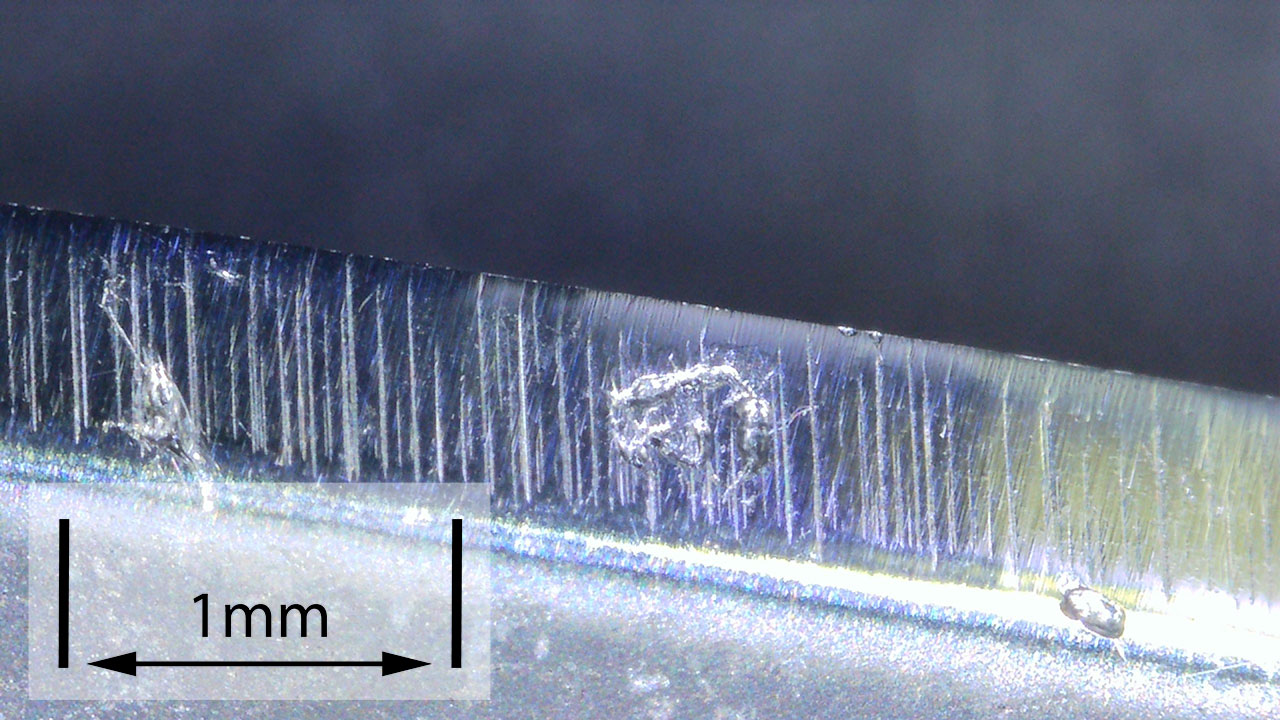
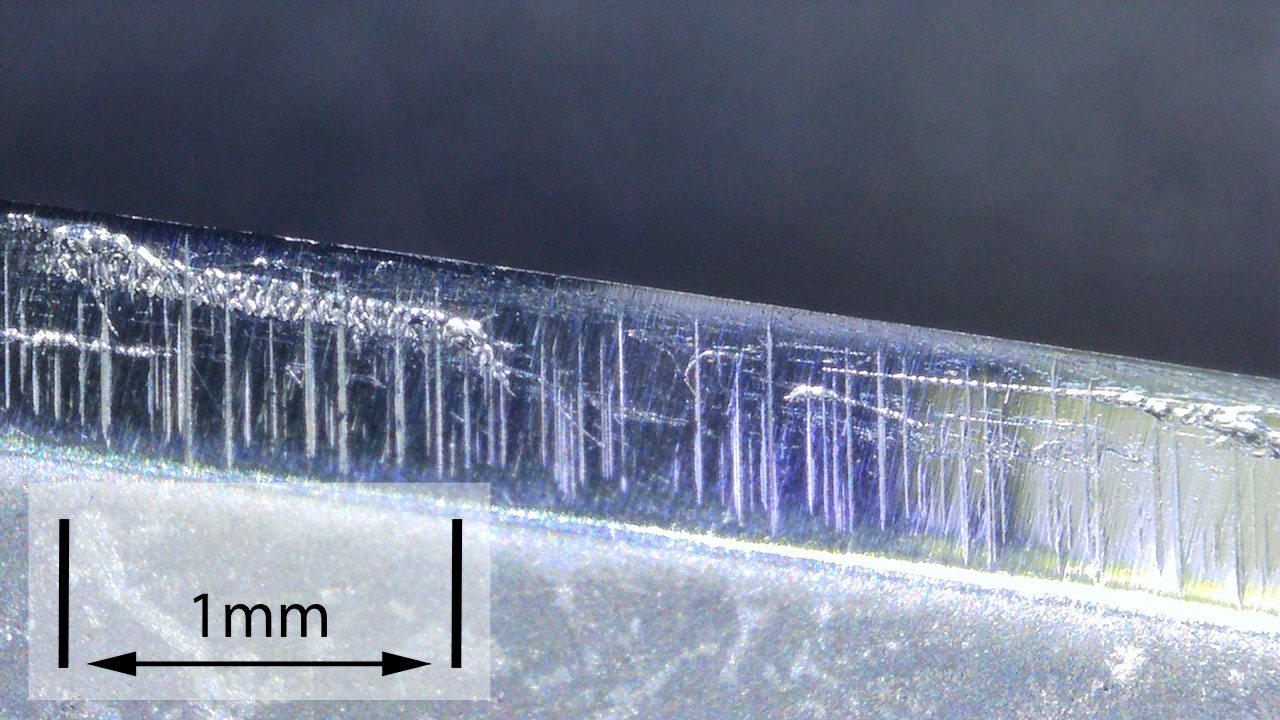
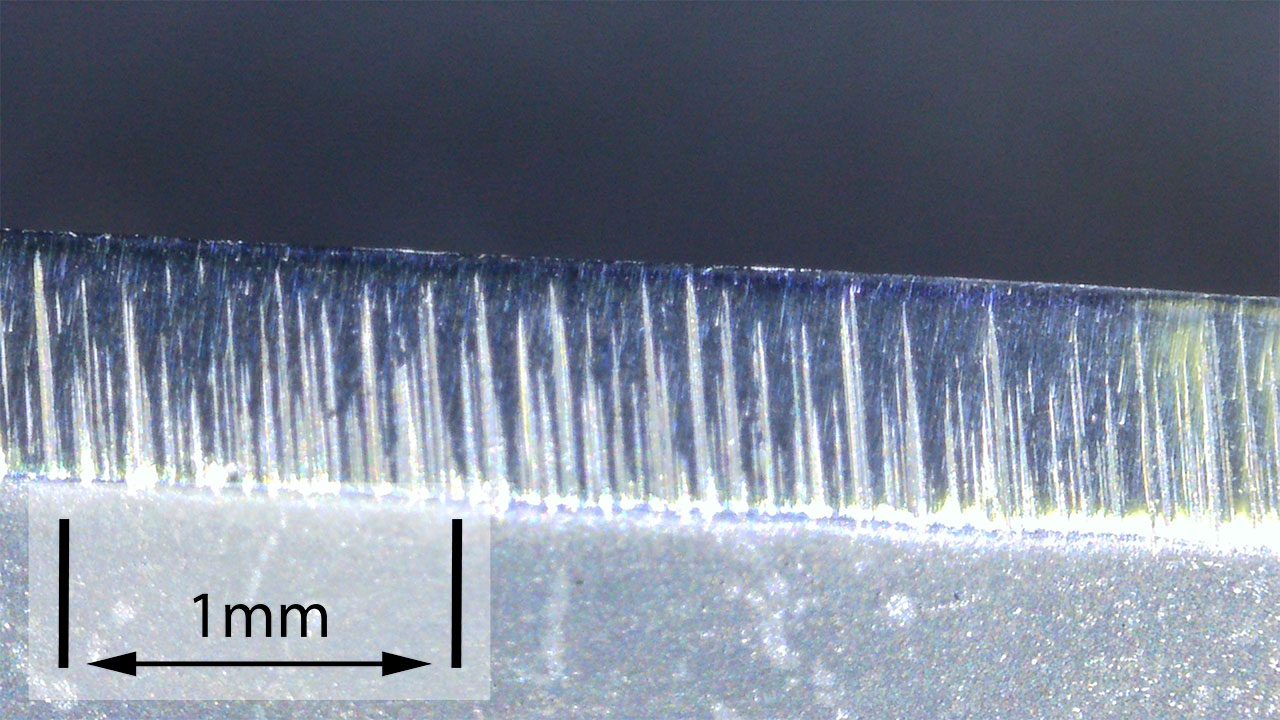
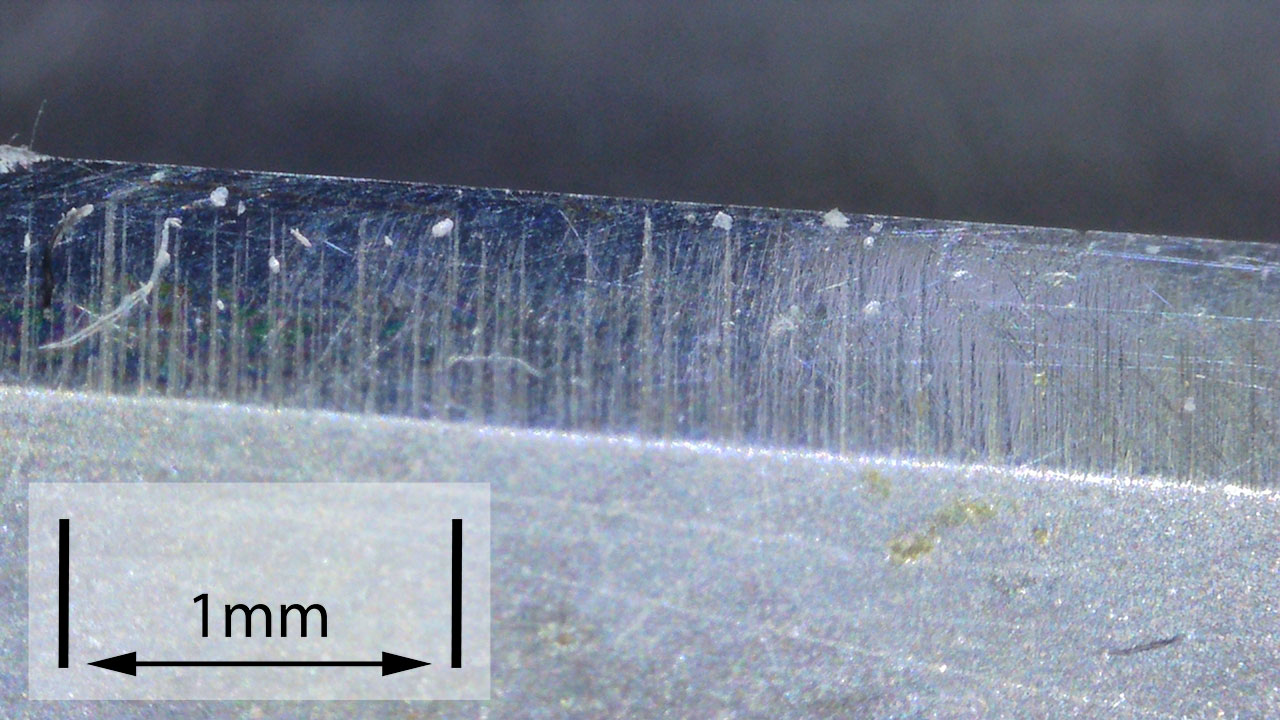
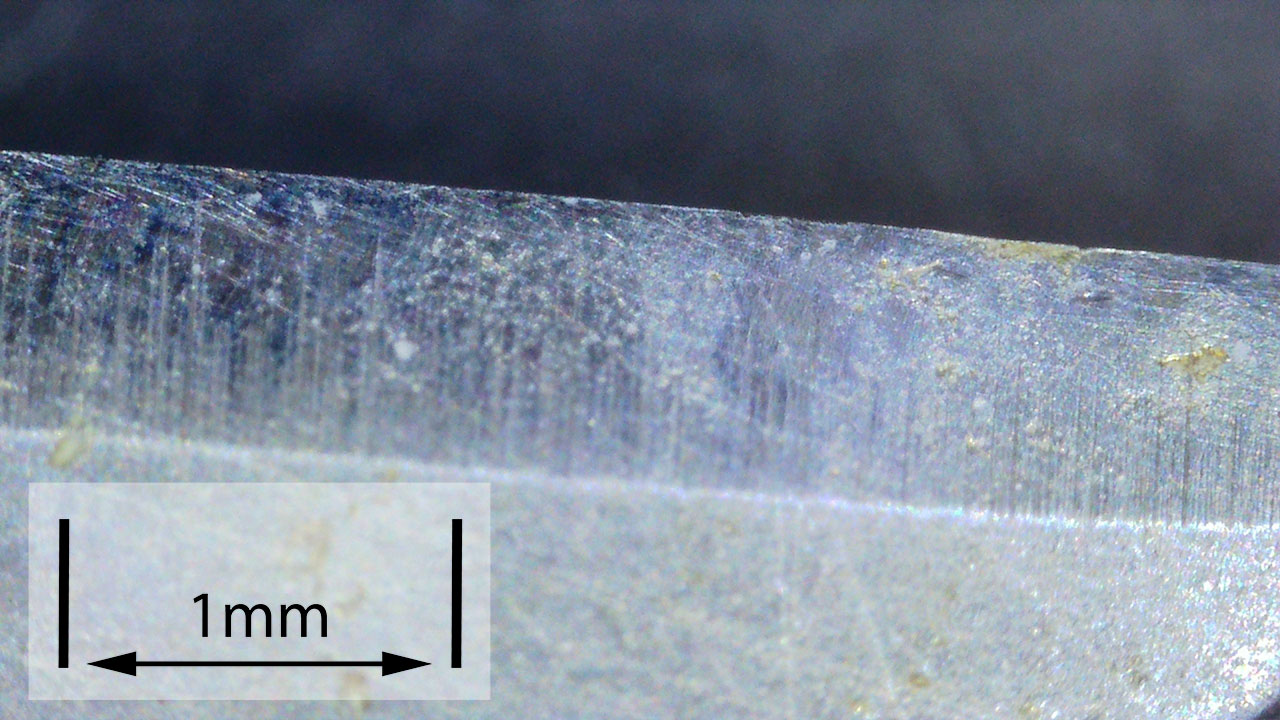
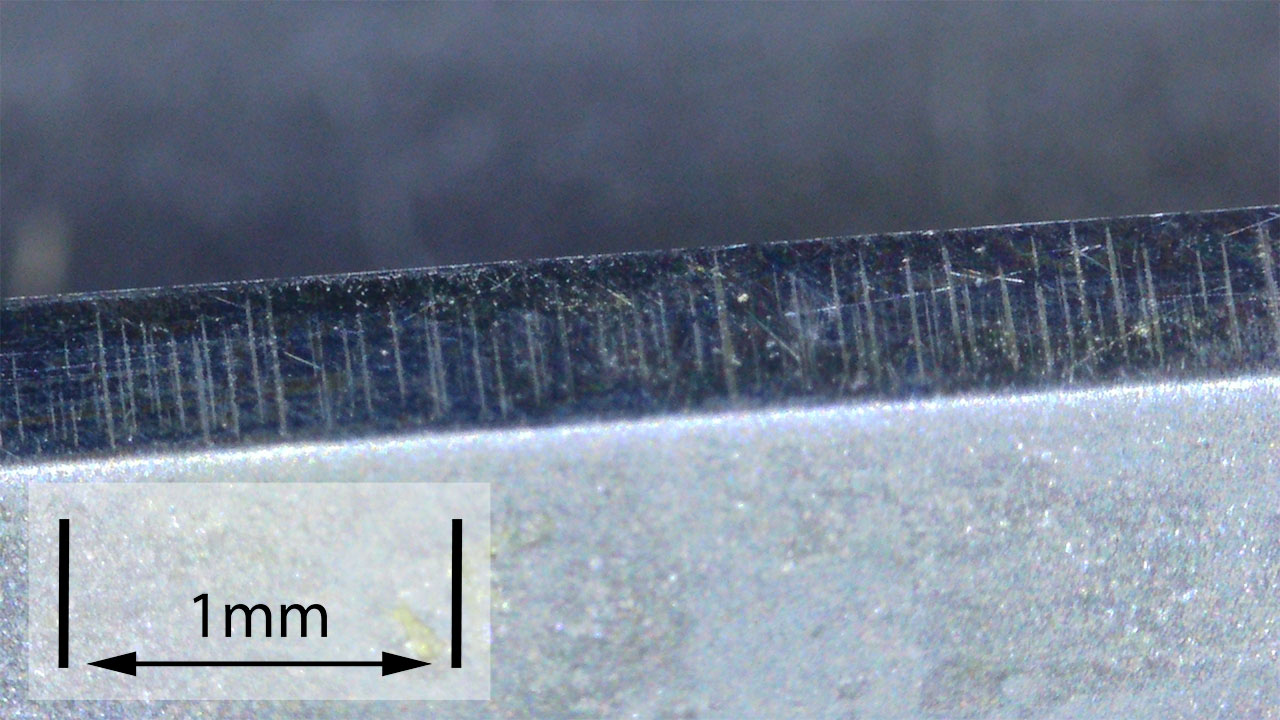
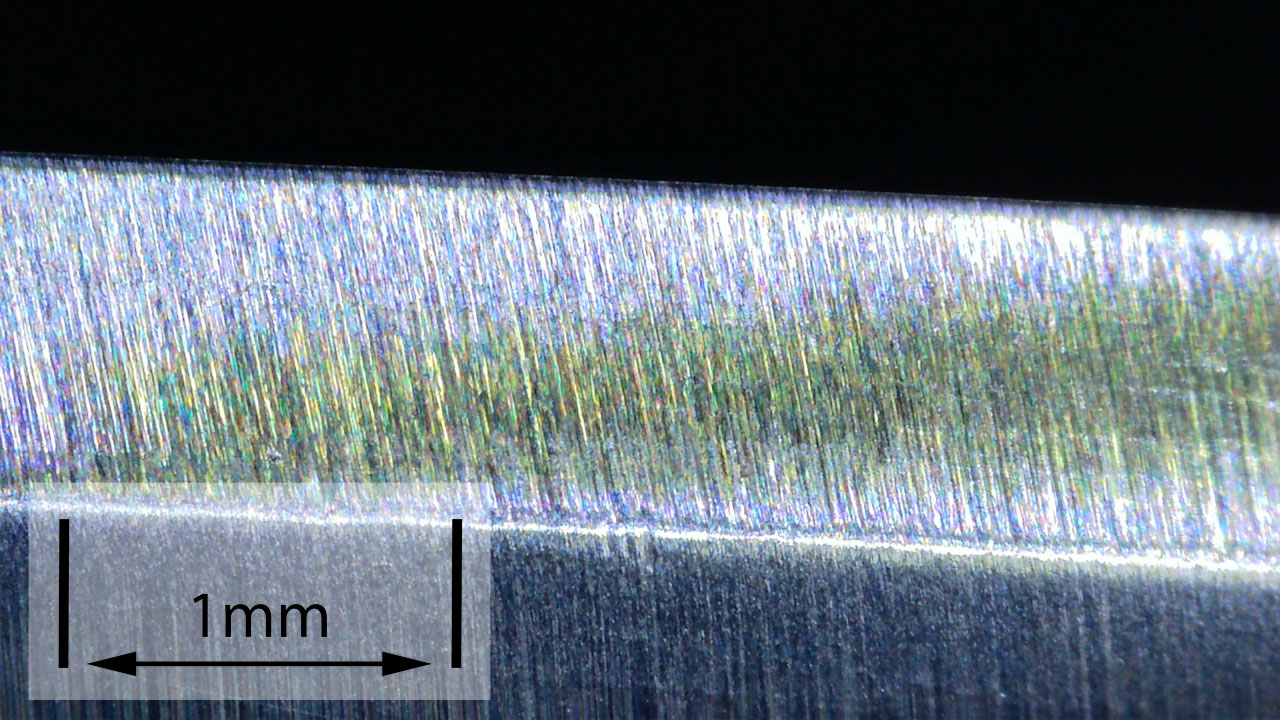
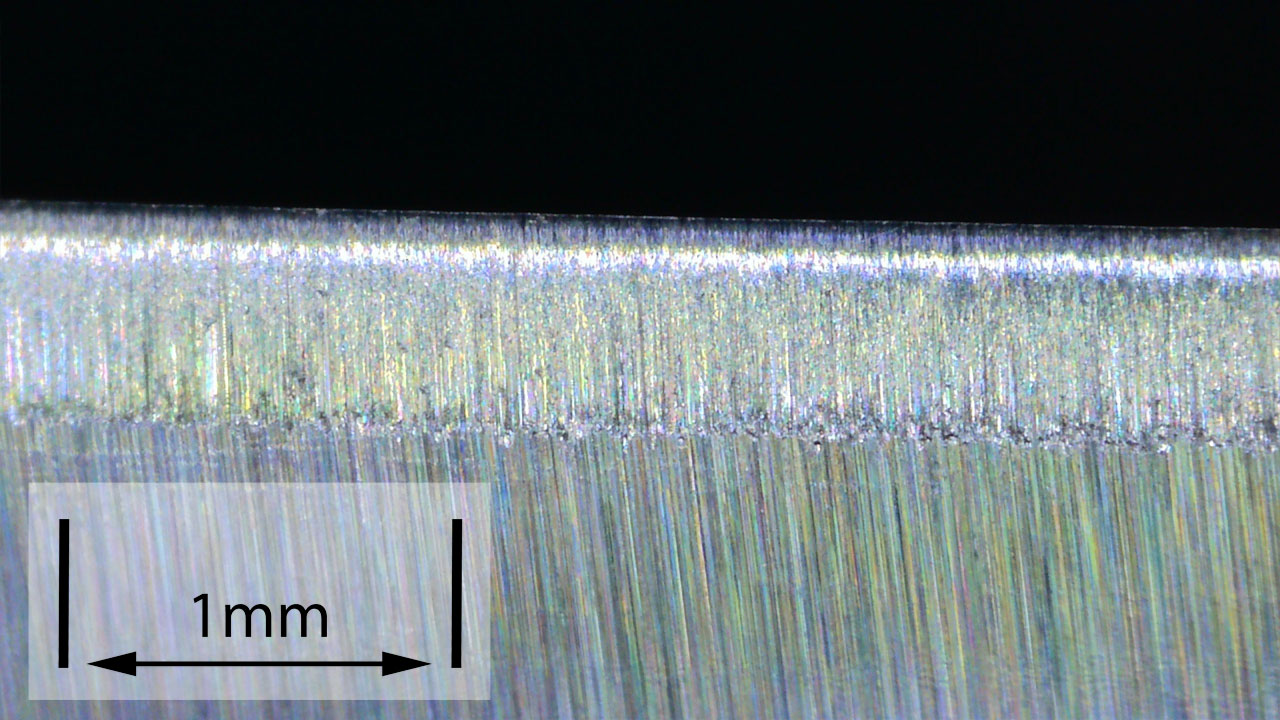
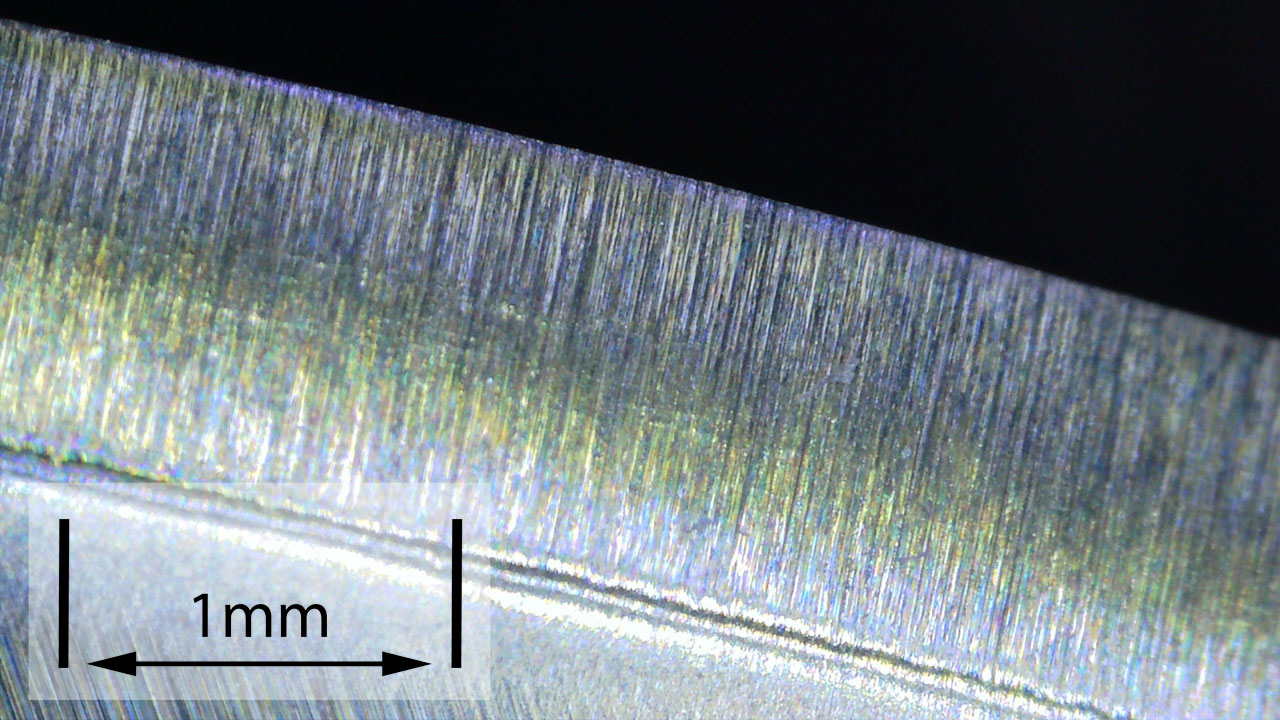
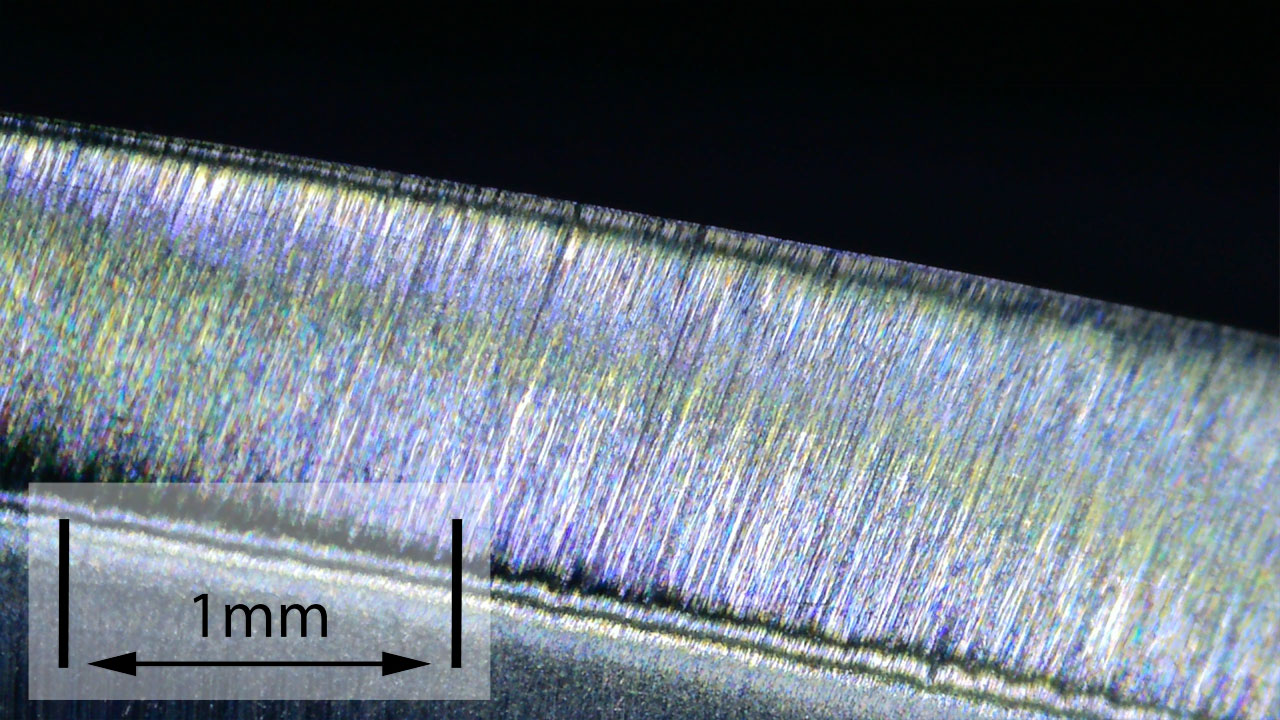
As a further look at the factory edge, this section has been added to include some high magnification photos of the factory edges.

The Numen’s edge actually proved more challenging than most to get close-up images of. The factory edge was very sharp and had plenty of bite.


What is it like to use?

It is not the biggest or heaviest knife I’ve carried, so I don’t want to overplay that aspect of the Numen, but the more you carry larger blades, the more you understand when it is worth the extra size and weight, and when it starts to become a burden. So, yes, it is a commitment to decide to carry the Numen, as you will be aware of it at times. However, that awareness of its presence is rewarded with complete confidence in this versatile, robust tool which is capable of jobs you would otherwise have to carry a hatchet to be able to do. As well as heavy tasks, this workhorse of a tool is also capable of fine control and precision cutting thanks to its handle accommodating so many different grip positions.

The gallery shows overall scale with my XL glove-size hand, then working through the finer grip positions to the heaviest chopping grip all the way at the butt. Thanks to the excellent handle grip design, this extreme hand placement felt absolutely secure during all the heaviest chopping.


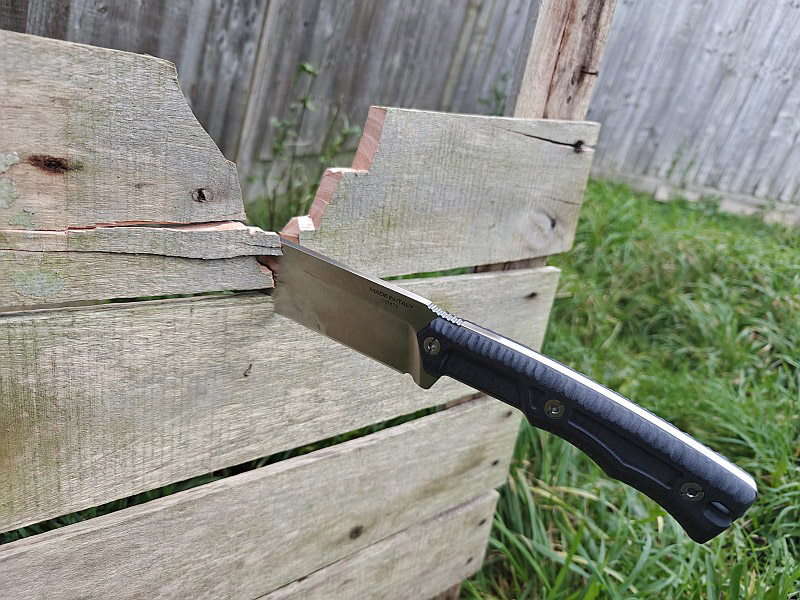
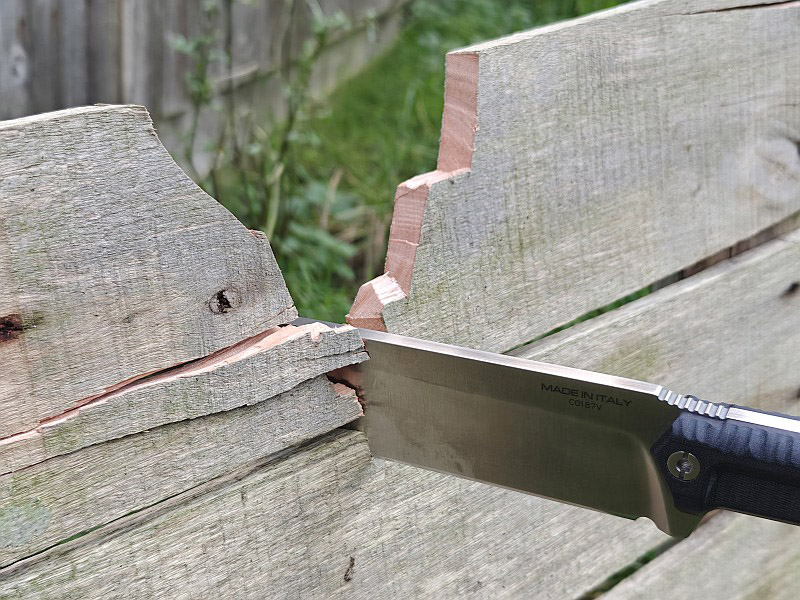
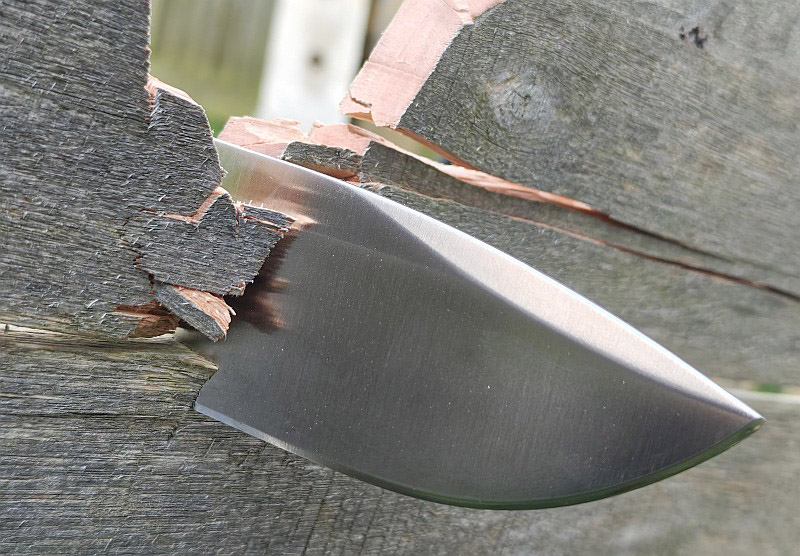
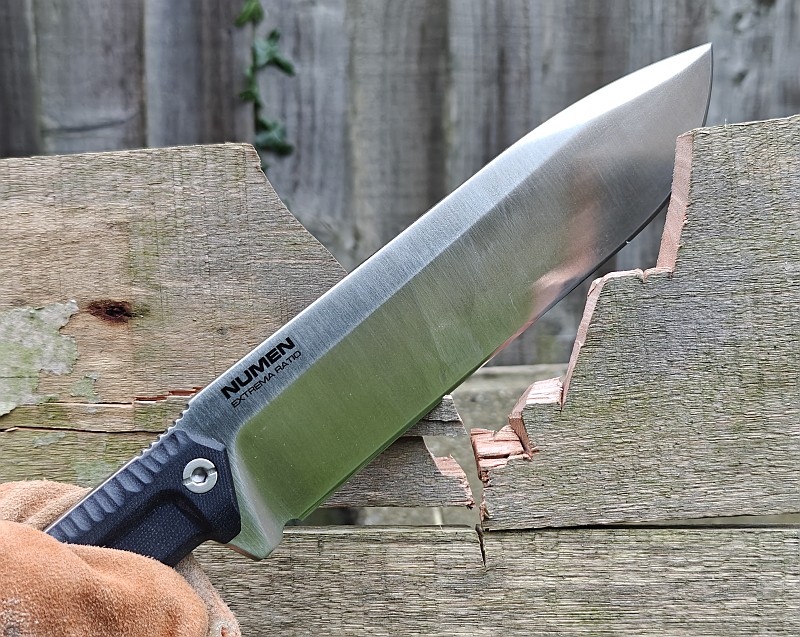
At the time of writing I didn’t have any suitable green wood for testing the chopping. Instead a trusty pallet chop test, which, as it happens, was an Italian pallet, and one made of an unknown hardwood which is well seasoned. So a suitably tough chopping test, not green wood, not softwood, but seasoned hardwood.

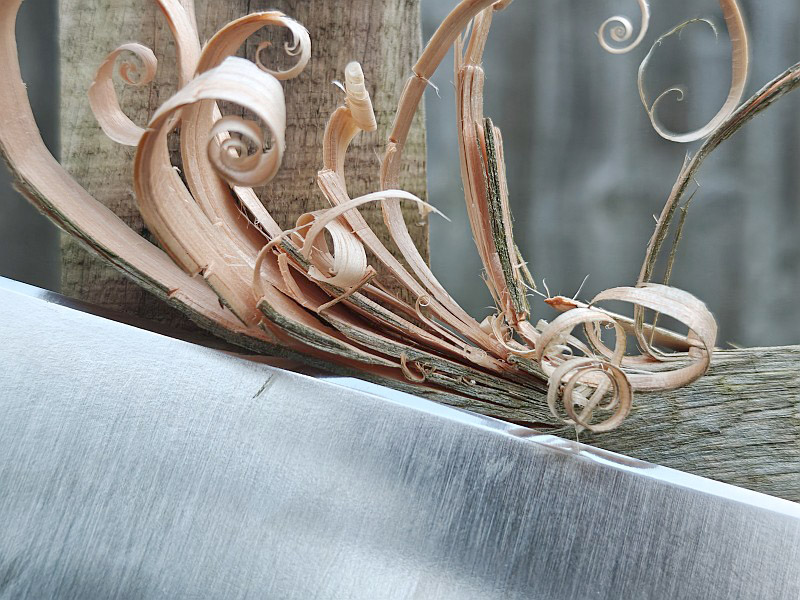
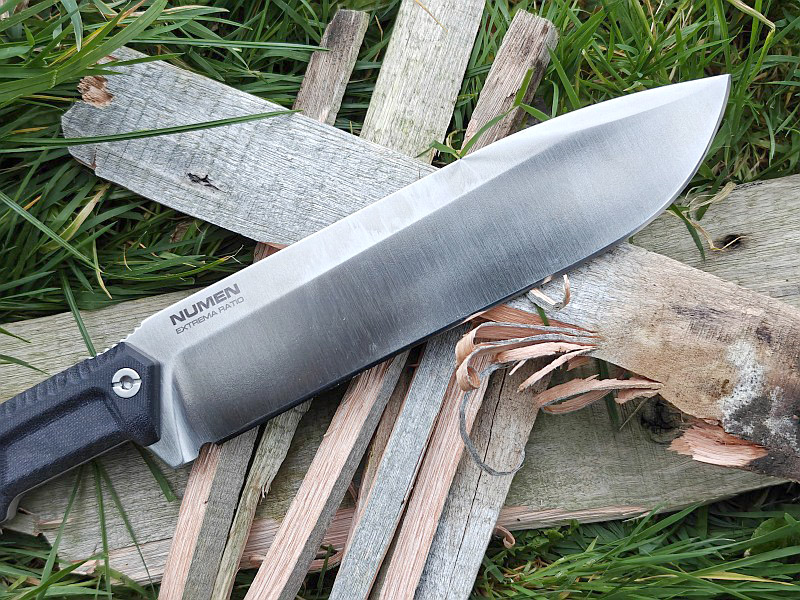
Clearly visible are the large steps in the cut from the power of the Numen’s strikes, easily finishing off the board and into the next one. Kindling and feather sticks easily processed. Despite the size of blade, I still prefer to baton kindling due to the improved control when more than one hit is required to split the wood.

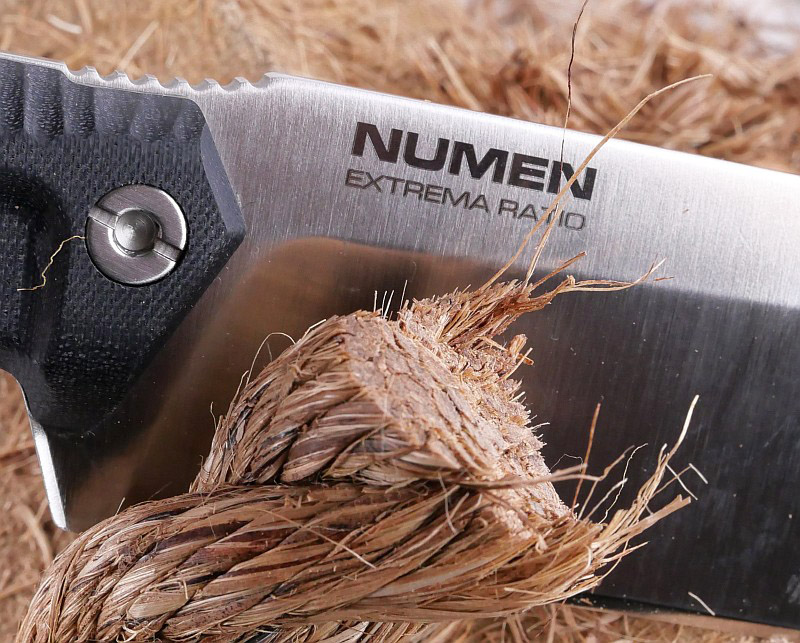
Following the heavy chopping tests, I happened to have some 1″ manilla rope out for some other cutting tests. The wide wedge of the Numen’s blade would not be well suited to this type of cut, but I gave it a go anyway. The bite from the now used factory edge was excellent, only stopping in the cut due to the hardness of the new rope. Positioning the rope on the cutting block edge to give relief during the cut, and the Numen gave a really clean cut through this tough fibrous material. (Now wishing I’d had a hanging rope cut test set up, but didn’t.)

Of course, with a blade stock of 6.1mm, the Numen cannot be the best slicer, but understanding this and using technique to provide relief when cutting harder materials, it does really well. The length of handle giving you great purchase to apply force with control, and be able adjust your grip position to best effect.

A good sheath is as important as a good knife, and Extrema Ratio reliably give you a great sheath to carry the knife. Even a detail as small as the cut-resistant retaining strap elevates the reliability of the Numen’s sheath. With a modular assembly and adjustments (like the movable position of the secondary retention strap) you didn’t know you needed until you realise you have them, it is possible to fine tune how you carry the Numen. Most importantly, thanks to the quality of the sheath, you know Numen will still be there when you need it.


Extrema Ratio Numen Review Summary

The views expressed in this summary table are from the point of view of the reviewer’s personal use. I am not a member of the armed forces and cannot comment on its use beyond a cutting tool or field/hunting knife.

Something that might be a ‘pro’ for one user can be a ‘con’ for another, so the comments are categorised based on my requirements. You should consider all points and if they could be beneficial to you.

_______________________________________________
What doesn’t work so well for me
_______________________________________________

Blade thickness impedes slicing ability.
Velcro in belt loop slows down fitting and removal from your belt.

_______________________________________________
Things I like
_______________________________________________

Extended handle provides a range of grip positions.
Powerful chopping action.
Flexible mounting due to modular sheath.
Ambidextrous sheath.
Anti-cut retention strap.
Super-tough full tang blade.
Balanced even for finer work.
Very secure grip.
Choice of N690 or S600 steels.

Extrema Ratio Numen Review Videos

Starting with a short format sixty second review:


Onto a full video review covering many more details:


Discussing the Review:
Something new – will it work? A Tactical Reviews Subreddit.
TacticalReviewsChat on Reddit
Please visit there and start/join the conversation.
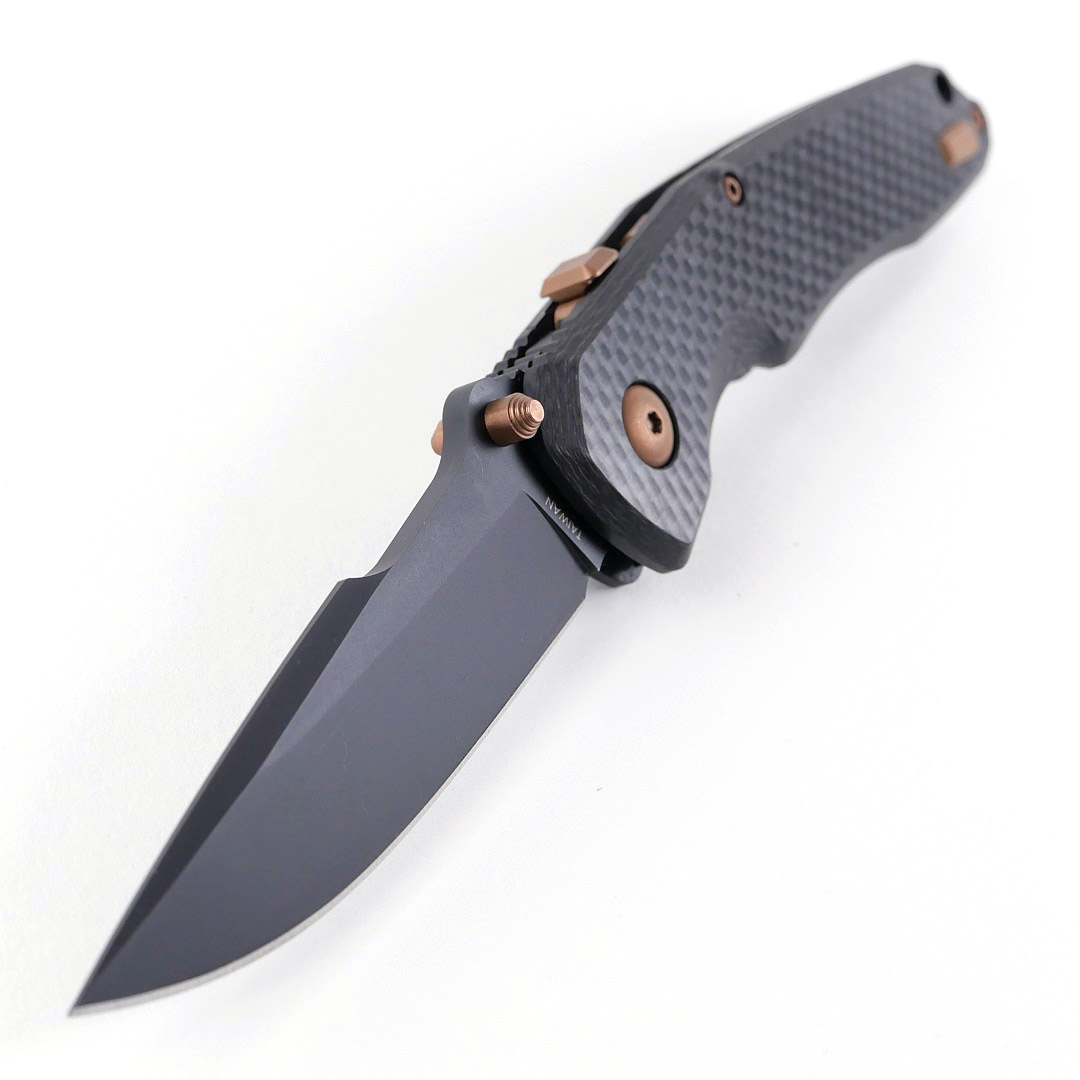
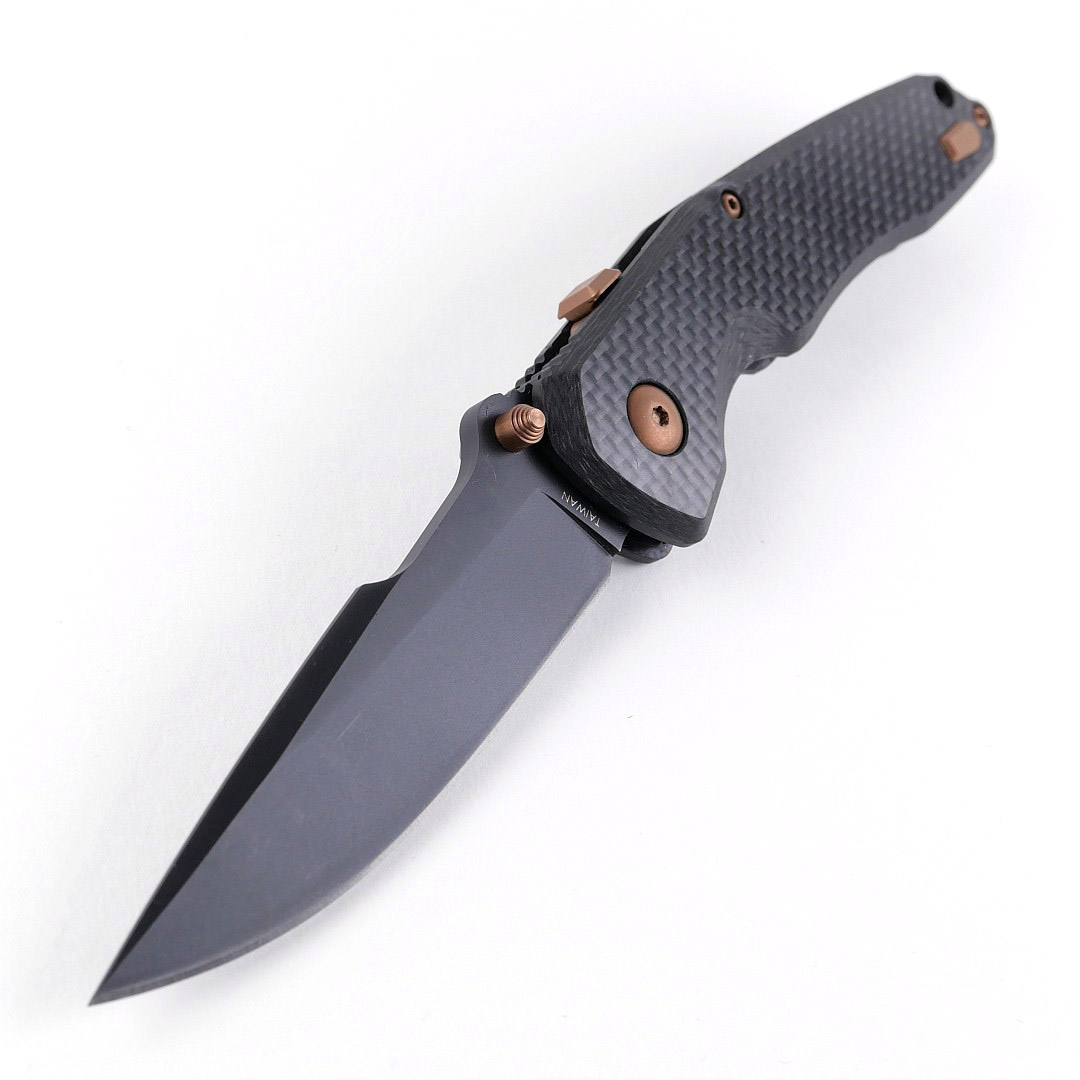
Knife Review: UG Tools TiNy SecuriTi

TiNy by name, but definitely not in strength and performance; this is a detailed review of the UG Tools TiNy superlight knife. Not just the TiNy, but the special ‘SecuriTi’ edition, specifically designed to prevent unauthorised snatching of the knife from the owner by means of an added security lock. More on that later in this UG Tools TiNy SecuriTi review.

Before saying more about the knife, just a quick explanation of the maker’s name. UG Tools in full is Utsch & Gierse Tools, and for the review video titles I’ve written this as U.G. Tools with full stops to separate the U & G. I did this to specifically demonstrate how their name should be said. They are not pronounced like a well know brand of footwear, nooooooo, Utsch & Gierse are U.G. Tools, but write this simply as UG tools. Don’t sound like a caveman, say the name as it should be 🙂

UG Tools TiNy has already made its mark, giving you a superlight fixed blade without sacrificing strength through ingenuous use of 3D printed Titanium handles (referred to as 3DTi) that allow a short tang blade to have the stability and strength of a full tang knife at a much lower weight.

What’s in the box?:
In fact there is no box as this was an exhibition knife from EnforceTac 2025 (held immediately prior to IWA 2025), and shows a little wear on the Ulti-clip mount and this edition’s special security latch.

This review knife has the Floe pattern handle texturing, 3D printed sheath made of PA11 (polyamide) which incorporates the SecuriTi’s added security lock, and has been designed to perfectly integrate with Ulti-Clip UltiLink mounting system.


A good look round the SecuriTi’s Sheath – Things to look out for here are:
First in the gallery are photos showing the integration of the Ulti-Clip UltiLink mounting system into the TiNy’s sheath. UG Tools have made the sheath to use this mounting system so the integration could not be better.
The titanium lever that sits above the UltiLink is the SecuriTi’s security latch. Other sheath details are a retention tension adjusting screw, drainage hole and integrated thumb ramp for removing the knife from the sheath.


A good look round the TiNy’s handle and blade – Things to look out for here are:
After an overall look at the proportions, it’s time for a closer look at the 3DTi printed handle with Type II anodised finish. All TiNy models have the integral guard, and the SecuriTi has the additional security latch integral keeper hole for the latch hook to grip.
This review knife features the Floe pattern handle texturing (or giraffe pattern as renamed by a friend).
Another SecuriTi specific feature is the Ceramic ball glass breaker in the butt of the handle. Next to this is a blind loop lanyard hole.
And now onto the blade, the only conventionally manufactured part (not 3D printed), a 100 mm drop point blade made of 2.8 mm thick MagnaCut with stonewashed and DLC coated finish. A sharpening choil ensures you can re-sharpen the entire cutting edge.


Explained by the Maker:
In this section I’m including words directly from the maker themselves.

“Our 3DTi-knives combine extremely low weight with the stability of a full-tang.

Our 3DTi Handles

Our 3D-printed titanium handles were developed by us with clear goals: To achieve the best balance of weight and stability with the highest functionality and perfect ergonomics. In many iterations, the moulds were repeatedly adjusted over a year and subjected to strict stress tests of the knives (and our nerves) until we were satisfied with the result. With a average wall thickness of 1 mm, the high-strength titanium of the handle is still incredibly stable and allows for a blade with an unusually short tang that has no disadvantages: the titanium supports the tang and force is dissipated into the handle evenly. In addition to the extreme weight saving, another advantage is a large hollow space inside (expect with TiNy-models) which, in combination with our titanium screw cap, provides a storage space for various applications. In addition to our ruby sharpening rod, each individually important item can be stored absolutely dry in the handle.

Our Blades

We source our blades from a renowned Solingen contract grinder, with whom we also work together on the optimal ergonomics of our blades and select suitable steels. We have our blades hardened at the special German hardening shop Werz. Here we have full control over the final result. We fit the blades into the handle without play and glue them into the titanium handle over the entire surface with high-strength adhesive. For even more safety, with most models the blade is additionally screwed from the inside. So it remains fully functional in the unlikely event of the adhesive coming off. The adhesive reliably seals the gap to the handle and prevents dirt and moisture from penetrating. It is possible to have worn or damaged blades replaced by us at a reasonable price.

Our Sheaths

Knife sheaths have always been one of our biggest bottlenecks. Knife sheaths typically are made of leather or Kydex and are produced by hand. Due to our large number of blade-handle combinations, we were unable to have sufficient quantities produced economically. The problem: injection moulded sheaths were far from meeting our requirements. That’s why we developed 3D printable sheaths especially for our knives. They are made of PA11 (polyamide) and have, varying by model, for example a removable belt loop, drain holes, an adjusting screw for the perfect fit of the knife and other features. They are available for right- & left-handers. In the future we will offer 3D-printed sheaths and leather sheaths.

Our TiNy series in Floe design was developed with the goal of offering our no-compromise 3DTi design in even more compact and lightweight form. The TiNy with droppoint blade in MagnaCut is, despite the extremely low weight of only 80 grams, as stable as a full-tang of the same length. This makes the TiNy the perfect unobtrusive companion for everyday use(EDC) or a no-compromise backup knife with impressive stability.”


The Blade and Handle – Detailed Measurements:
For full details of the tests and measurements carried out and an explanation of the results, see the page – Knife Technical Testing – How It’s Done.

The blade is made from Magnacut steel.


The Factory edge up close:

Followers of Tactical Reviews will know my views on factory edges, but to recap:

Anyone using a knife will need to sharpen it. That first factory edge is just like the first tank of fuel that a new car comes with (or first charge of the battery).
A good factory edge is a ‘nice to have’ but not a ‘make or break’ for a good knife, as you will be putting your own edge onto it soon enough.
The factory edge does however indicate the care a knife maker has put into the final finish.
It is for this reason Tactical Reviews measures factory edge sharpness and specifications, and includes this information in the detailed technical testing.

As a further look at the factory edge, this section has been added to include some high magnification photos of the factory edges.


What is it like to use?

For this special edition TiNy, as the SecuriTi, I envision it typically being on a load carrier platform or pack shoulder strap to provide maximum accessibility.

Exactly the reason the security latch was added, as being so accessible, there is a chance of unauthorised snatching, which the latch counters brilliantly. For the owner of the knife, releasing the security latch is completely natural, you need only place your thumb, as you would normally, to pop the knife from the sheath, but then apply a little sideways force to the latch lever to release the security latch.
Any attempt to just grab the knife handle will not gain access to the knife as it just won’t come free from the sheath.


Once in your hand this is now no longer about the SecuriTi edition, but instead the UG Tools model, the TiNy. Shown here in my XL-glove size hands, it is a compact knife, not a tiny one. Tiny in terms of weight, yes, 85 grams for an all metal construction fixed blade without compromise on comfort or strength. You can see that the ergonomics of the handle and blade make this excellent as a general purpose utility knife.
Considering the ergonomics of the sheath as well, the integral jimped thumb ramp for releasing the knife (which has the security latch lever next to it) makes one handed opening a breeze when the sheath is not mounted to a belt or load carrier; you just pop and flick the sheath off.


Before getting on to some cutting tests, the TiNy has a full metal handle, which meant I needed to test UG Tools’ claim about cold weather use:
“In winter, the low mass with the poor thermal conductivity of titanium ensures that the handle is at body temperature in just a few seconds, even in wet and cold conditions, making it suitable for use in all climates.”

While it is true that Titanium has a conductivity around 22 W/m·K, compared to steel at around 45 W/m·K, another factor is also the low mass of the UG Tools handle construction with a wall thickness of around 1mm, meaning there is also less metal to need to warm up than other metal handle knives.

So for this test I left the TiNy in the freezer overnight to soak it down to a crispy -20°C then, thermal camera ready, straight out of the freezer and in my hand.

The gallery shows how the purely Titanium part of the handle is warming rapidly. Where the steel knife tang is inserted into the handle it stays cold longer. Considering the knife was at -20°C, it wasn’t ‘warm’ but it also didn’t freeze to my skin or otherwise feel particularly uncomfortable.


One other factor in this cold weather test that does make a difference is the surface finish. UG Tools use a Type II anodising carried out after an initial coarse sand blasting. The Type II anodising used creates plasma sparks that “melt” the surface on a microscopic level which leads to a smooth almost organic feeling. This surface finish further insulates your skin from hot/cold when holding the knife.

This is what the surface looks like under the same magnification as the factory edge images.

First I made the TiNy prepare its own baton, ready for a good pounding through pallet wood. Being so lightweight you can’t chop with the TiNy, so it needs a baton to strike it and drive it through what you are cutting. The compact size also means it is more of a nibbling away, having to reposition and widen the cut so the baton can still hit the blade. In this specific cutting test, the knife tip is not available to strike, instead it is either the spine or very close to (or on occasion on) the handle. In the end, the last part of this cut split under the batoning force with only a few millimetres left to cut.
Combining the slim blade stock with a flat grind, makes the TiNy an eager cutter, and easy to control. Slicing the wood like a woodworker’s plane, feather stick work turning into something like a wafer stick.


IT is actually amazingly tactile, and another observation when handling the TiNy is that its unique construction, with the thin walled printed Titanium handle, is that is almost ‘rings’ as you hold it, reminiscent of handling fine ceramics. Different to any other knife I have used, and I like it. Comfortable to use, lightweight, super strong and easy to carry.

As we have seen, UG Tool’s TiNy is the exception to at least two of rules of knife design; that anything other than a full tang compromises overall strength, and an all metal handle is heavy and cold. They say ‘it is the exception that proves the rule’, but is the UG Tools TiNy the exception, or simply the rule breaker?

Review Summary

The views expressed in this summary table are from the point of view of the reviewer’s personal use. I am not a member of the armed forces and cannot comment on its use beyond a cutting tool or field/hunting knife.

Something that might be a ‘pro’ for one user can be a ‘con’ for another, so the comments are categorised based on my requirements. You should consider all points and if they could be beneficial to you.

_______________________________________________
What doesn’t work so well for me
_______________________________________________

The UltiLink Mount seems a bit out of proportion on the TiNy.
It makes me want more UG Tools knives!!!

_______________________________________________
Things I like
_______________________________________________

Fantastic ergonomics and comfort.
Magnacut blade.
Low temperature DLC coating.
Security latch system on the SecuriTi edition.
Organic feeling handle texture/Type II anodising.
Uniquely tactile 3D printed Titanium handle.
Uncompromised fixed blade strength weighing only 85g.
Slim 2.8mm blade stock.
Flat grind slicing ability.

Review Videos

Starting with a short format sixty second review:


Onto a full video review covering many more details:


Discussing the Review:
Something new – will it work? A Tactical Reviews Subreddit.
TacticalReviewsChat on Reddit
Please visit there and start/join the conversation.
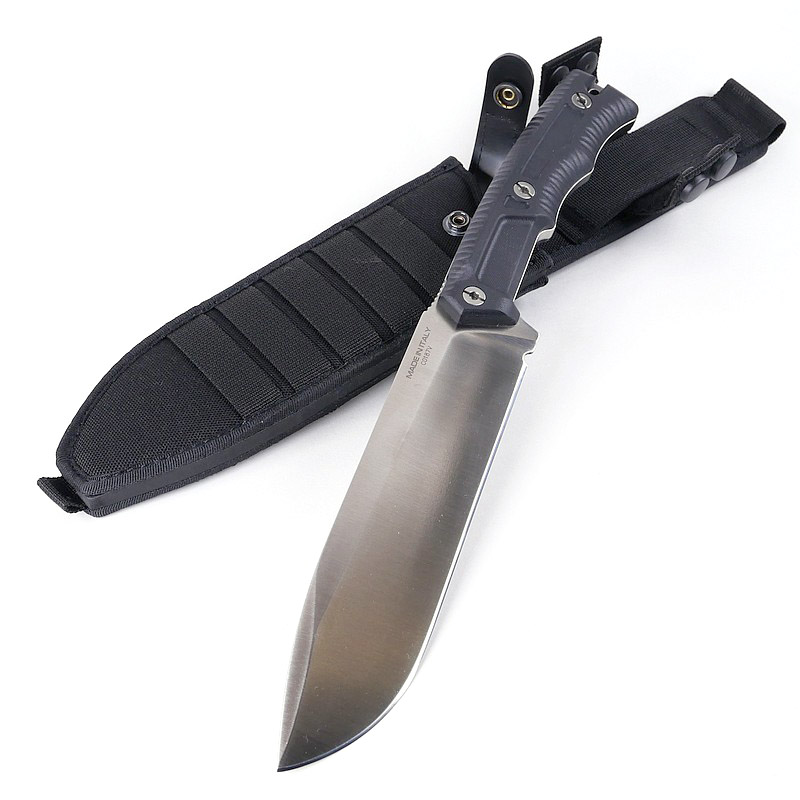
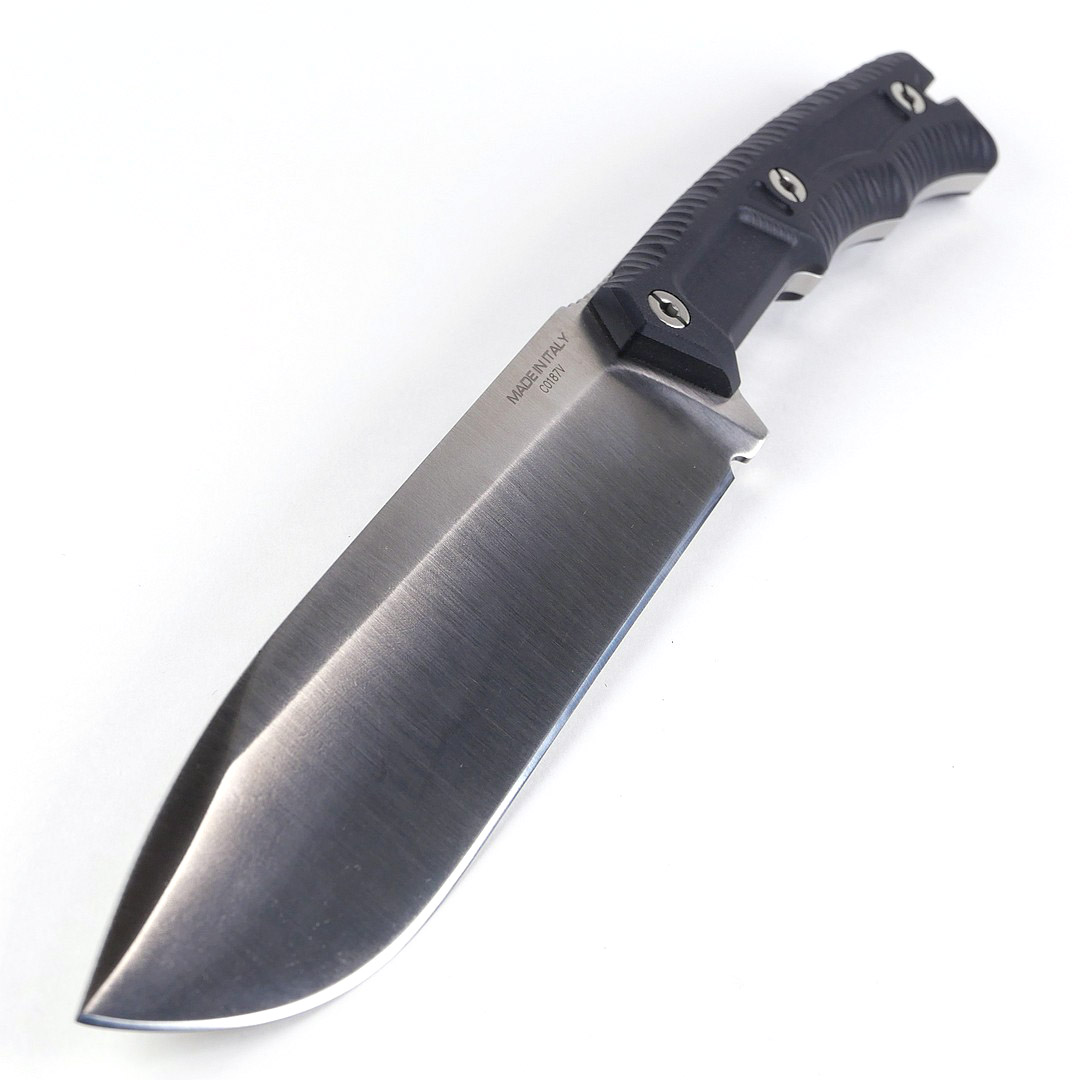
Knife Review: Extrema Ratio AMF (A.M.F.)

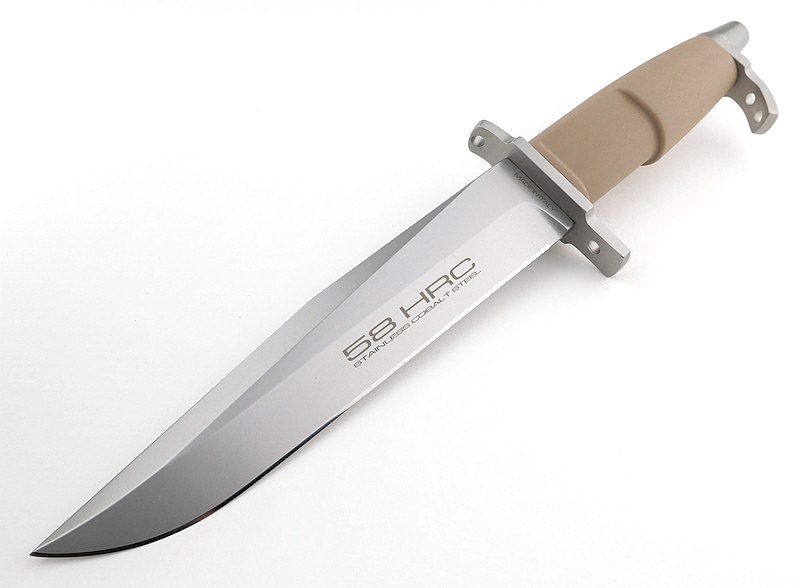
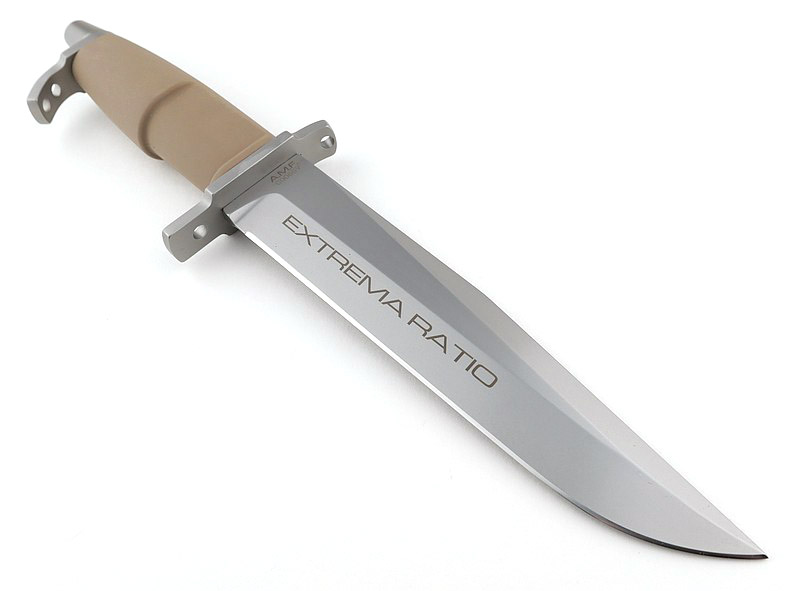
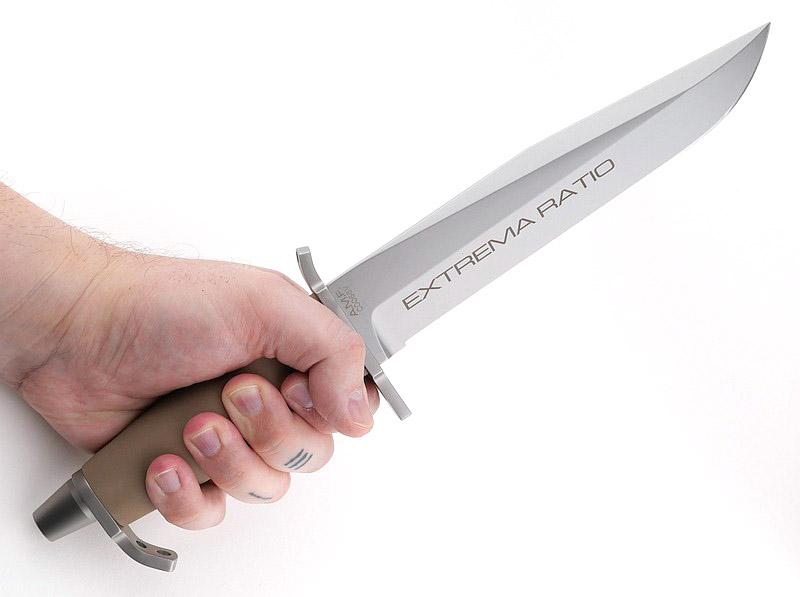
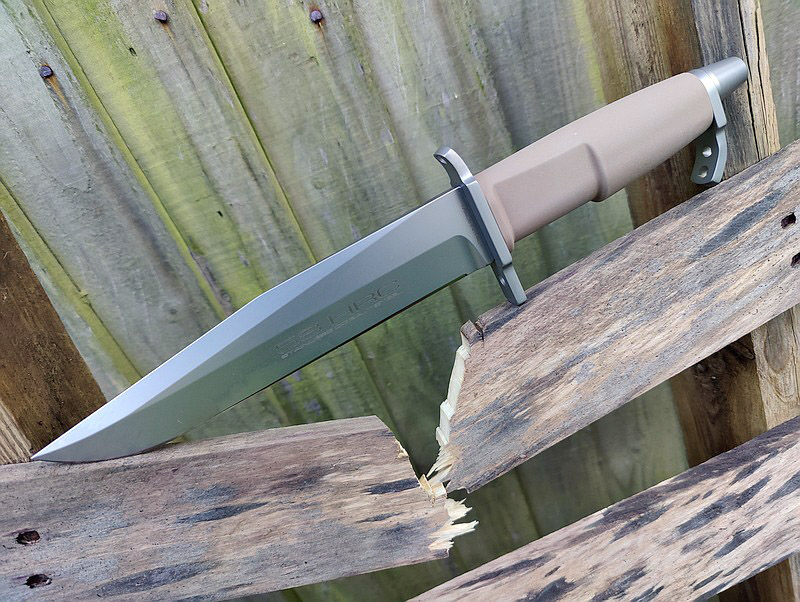
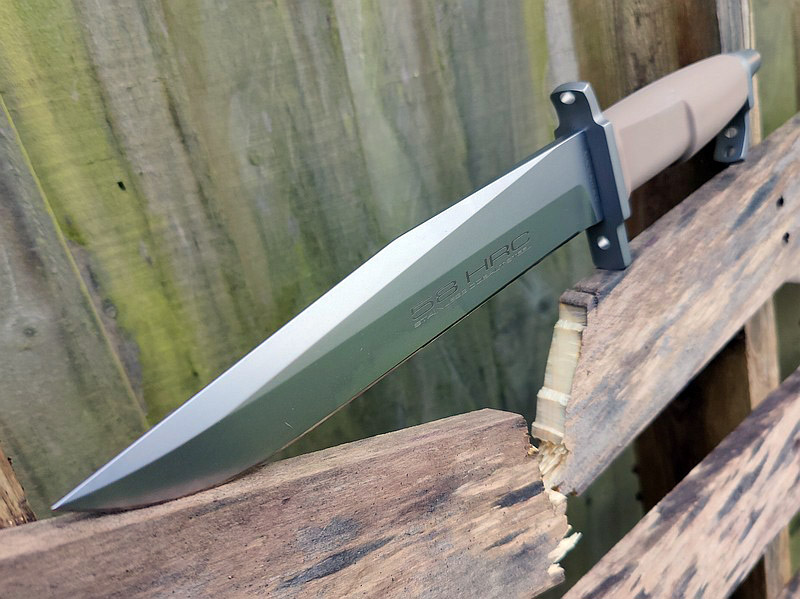
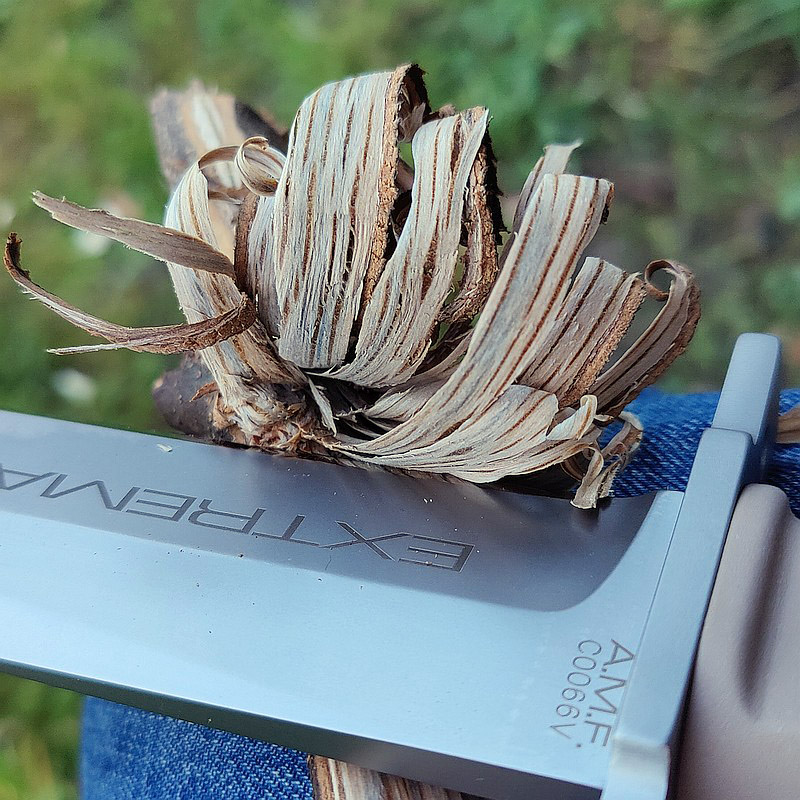
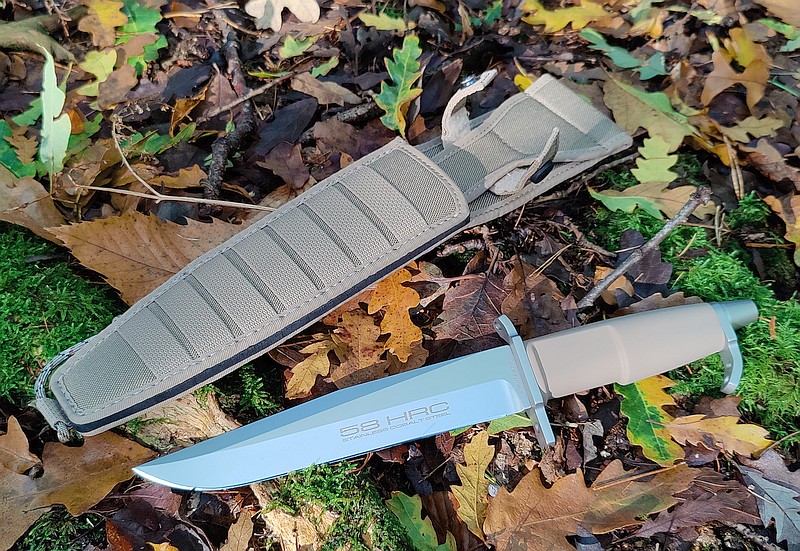
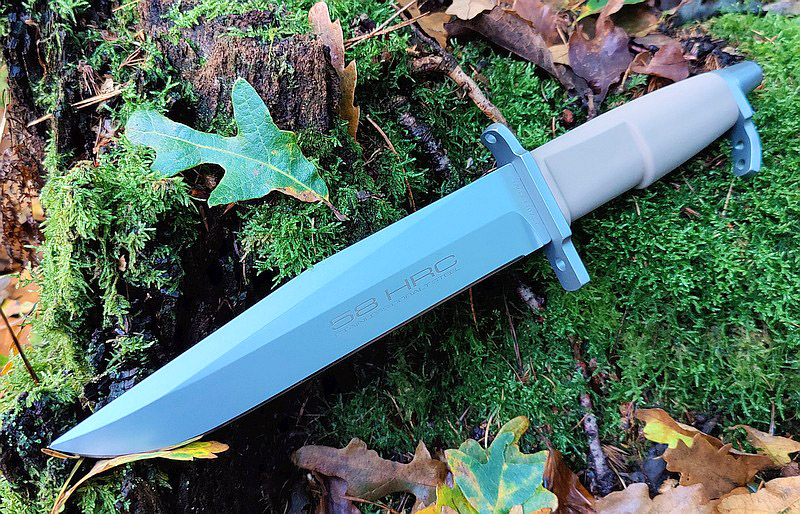
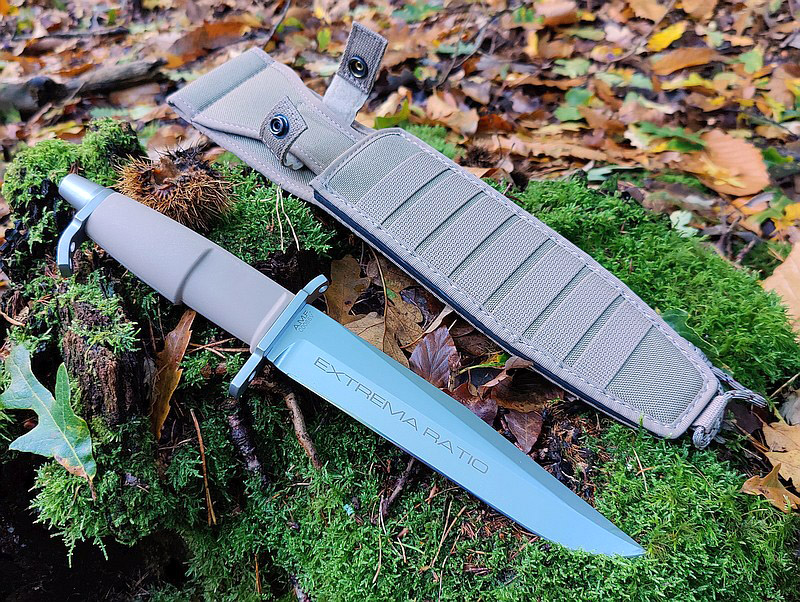
Extrema Ratio AMF (Advanced Multi Function) a Detailed Review. My heart skipped a beat when I first saw Extrema Ratio‘s A.M.F. in an exhibition cabinet. Yes, it is a big knife, but it is because its design is inspired by a legendary classic of survival cutlery from the 1980s; and that classic happens to be one of my all time favourite knives! Join me in this Extrema Ratio AMF A.M.F. Review to see how Extrema Ratio have managed to surpass the classic in every way.

What’s in the box?:
The AMF arrives in a large, robust box, with a QC card. You certainly can’t miss this one!


A good look round the A.M.F.’s Sheath – Things to look out for here are:
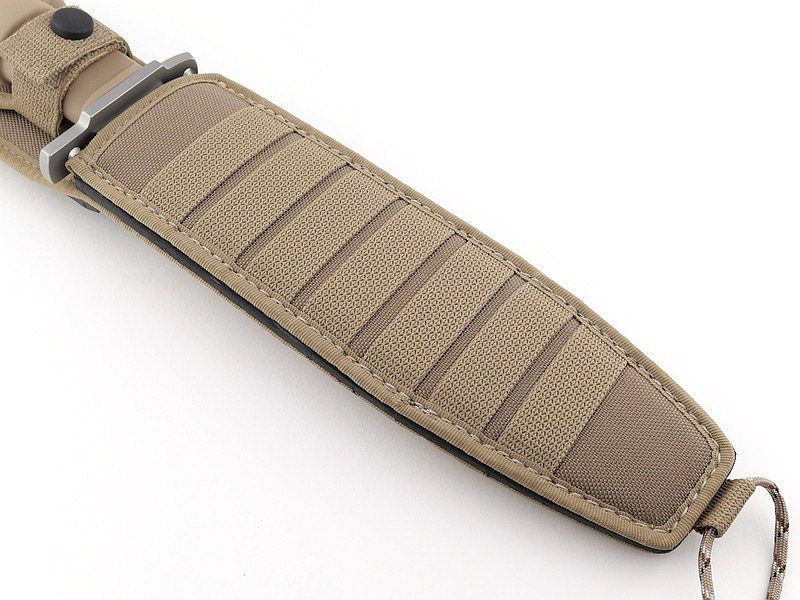
Picking up on some of the details from the knife that inspired it, yet also being unmistakably Extrema Ratio. Front and back are well provisioned with webbing, giving you a wide variety of mounting options for both the AMF being mounted, and extras being mounted on the AMF. The leg tie is a nod back to the original sheath design.
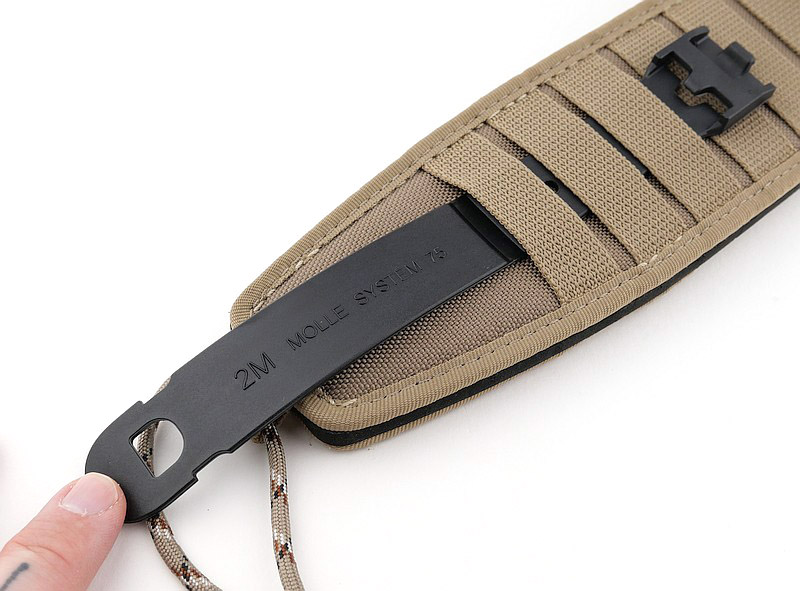
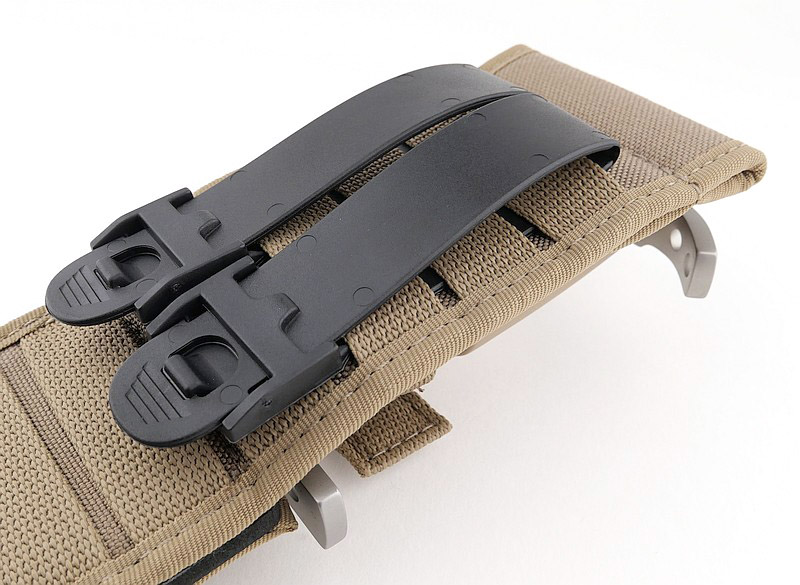
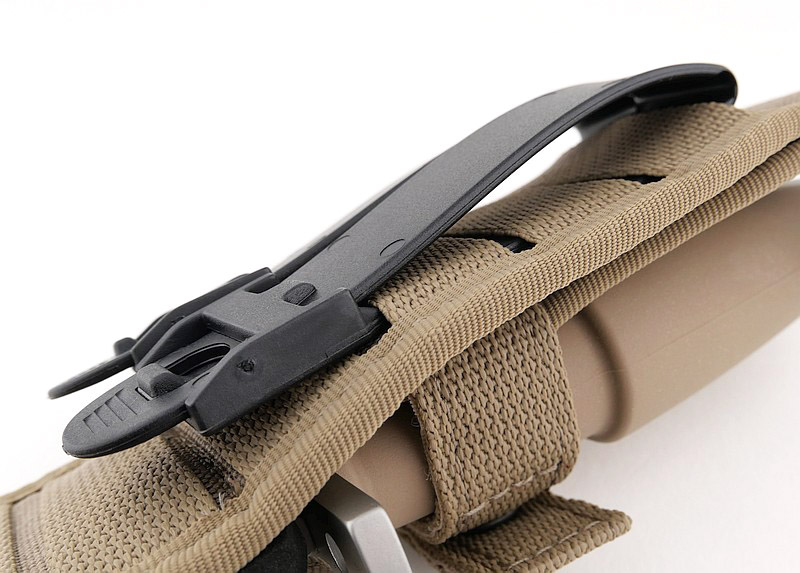
On the back of the sheath the AMF comes with three 2M MOLLE systems straps, two of which also act as a belt loop.
Another distinctive feature is the Extrema Ratio removable/reversible/adjustable press-stud retention strap. The main body of the sheath has a tough liner to ensure the long blade stays where it should.


A good look round the A.M.F. – Things to look out for here are:
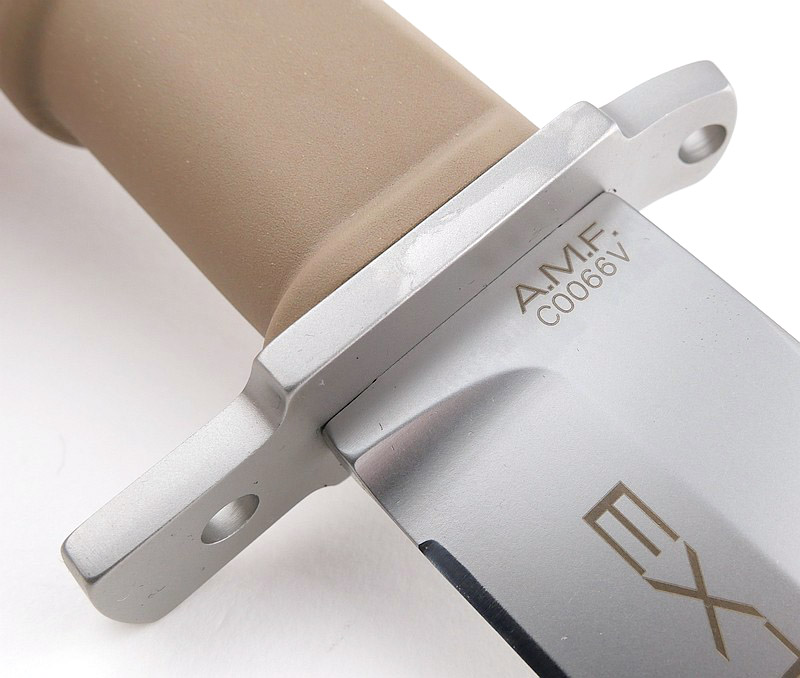
Just look at the purpose in that design; it is going to get the job done. It may be clearly inspired by the BMF, but Extrema Ratio have taken every aspect of this knife and made it their own. The aluminium guard has lashing points / lanyard holes, and a slight sweep forwards so the thumb can sit on the top guard much more comfortably than a straight guard. With the AMF being easy to strip down completely, this guard is removable as part of the strip down.
The cone shaped butt cap pommel leaves you in no doubt of the direct inspiration of the AMF. Extrema Ratio again making the design their own with the curved butt cap guard that is more usable and more protective than the original.
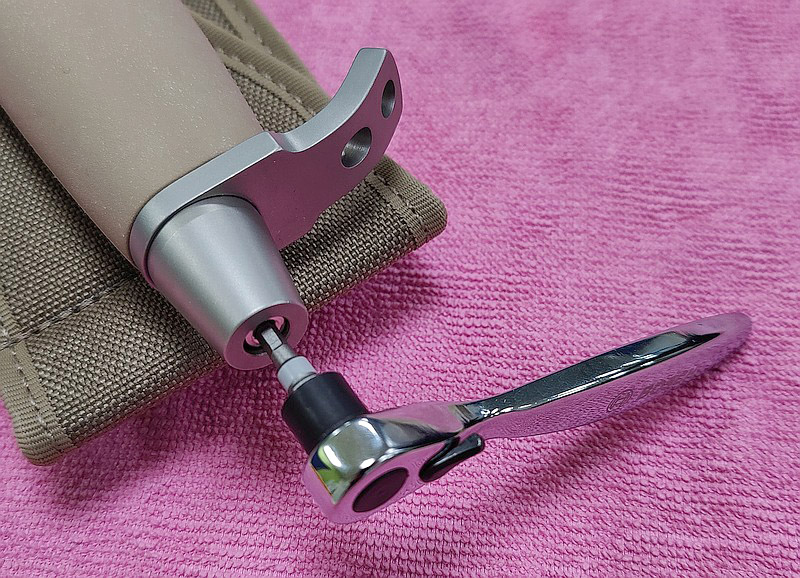
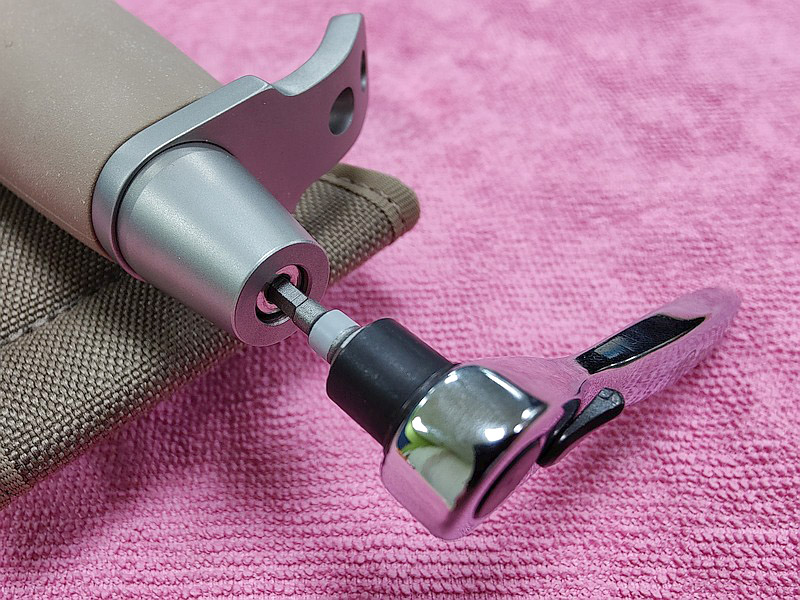
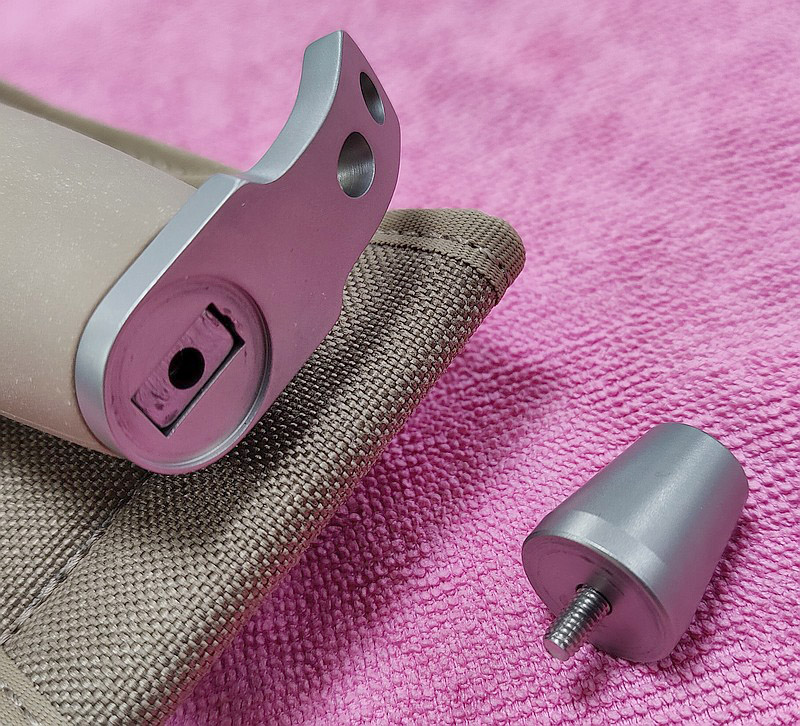
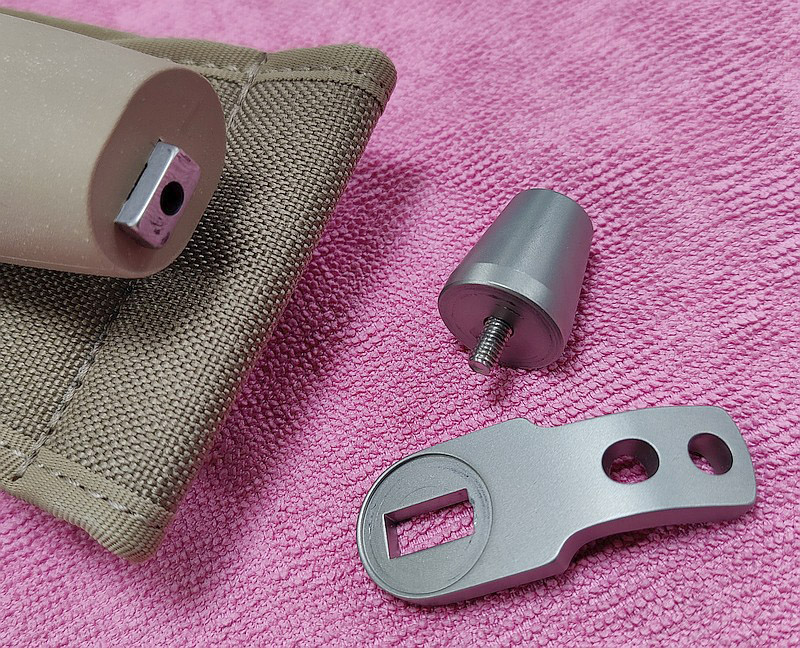
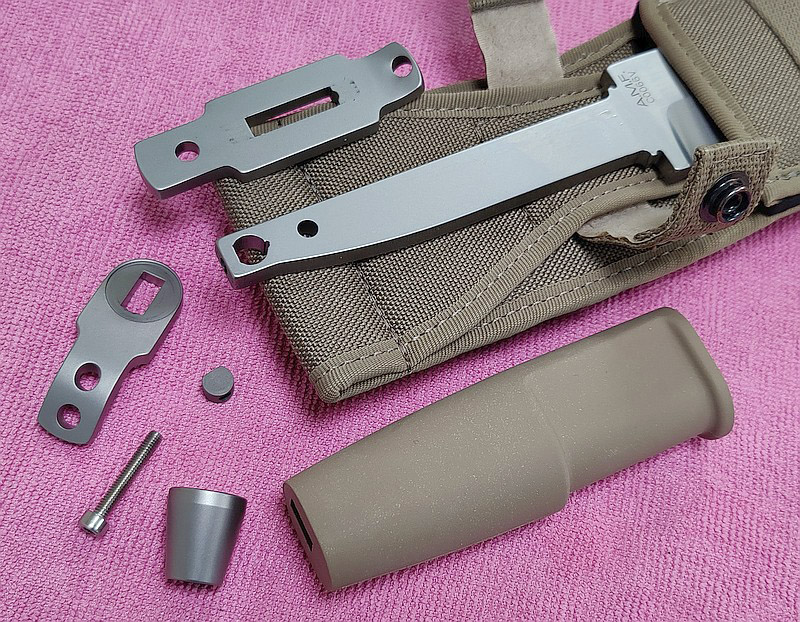
Completely new is the ability to strip down the knife for a deep clean, and this is achieved via a single hex bolt in the cone shaped butt cap.
For the handle, which on its own, you could recognise as Extrema Ratio thanks to the molded double finger grip, it is again inspired by an innovation of the original in its day (by using the cushioning material DuPont Hypalon for the handle), the AMF has a generous handful of shock absorbing Forprene.
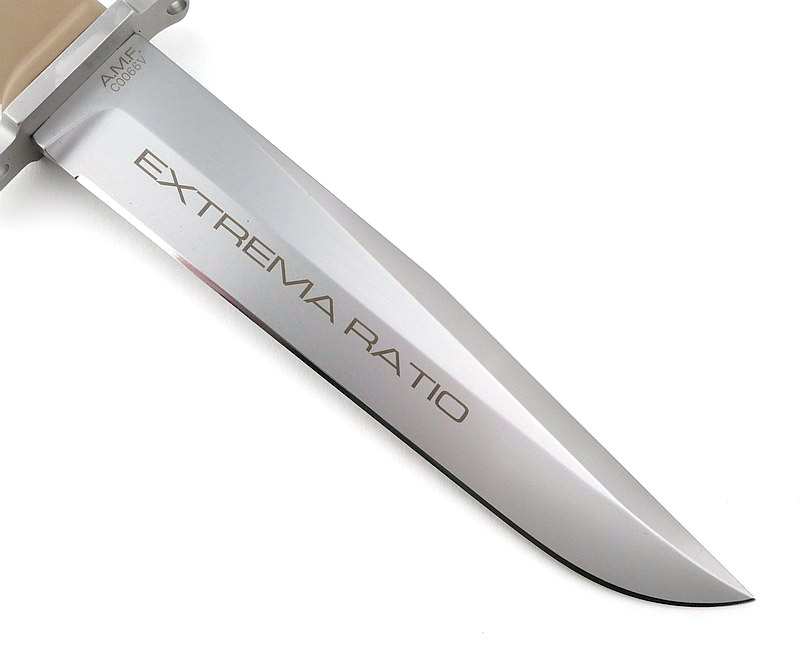
Onto that 206mm long blade with simple clean lines and monster swedge defining its strong look.


The history of the legendary BMF:

This article is an Extrema Ratio AMF review, but I have to include some personal insights as the 1980s classic that is the inspiration for the AMF has been massively influential for me.

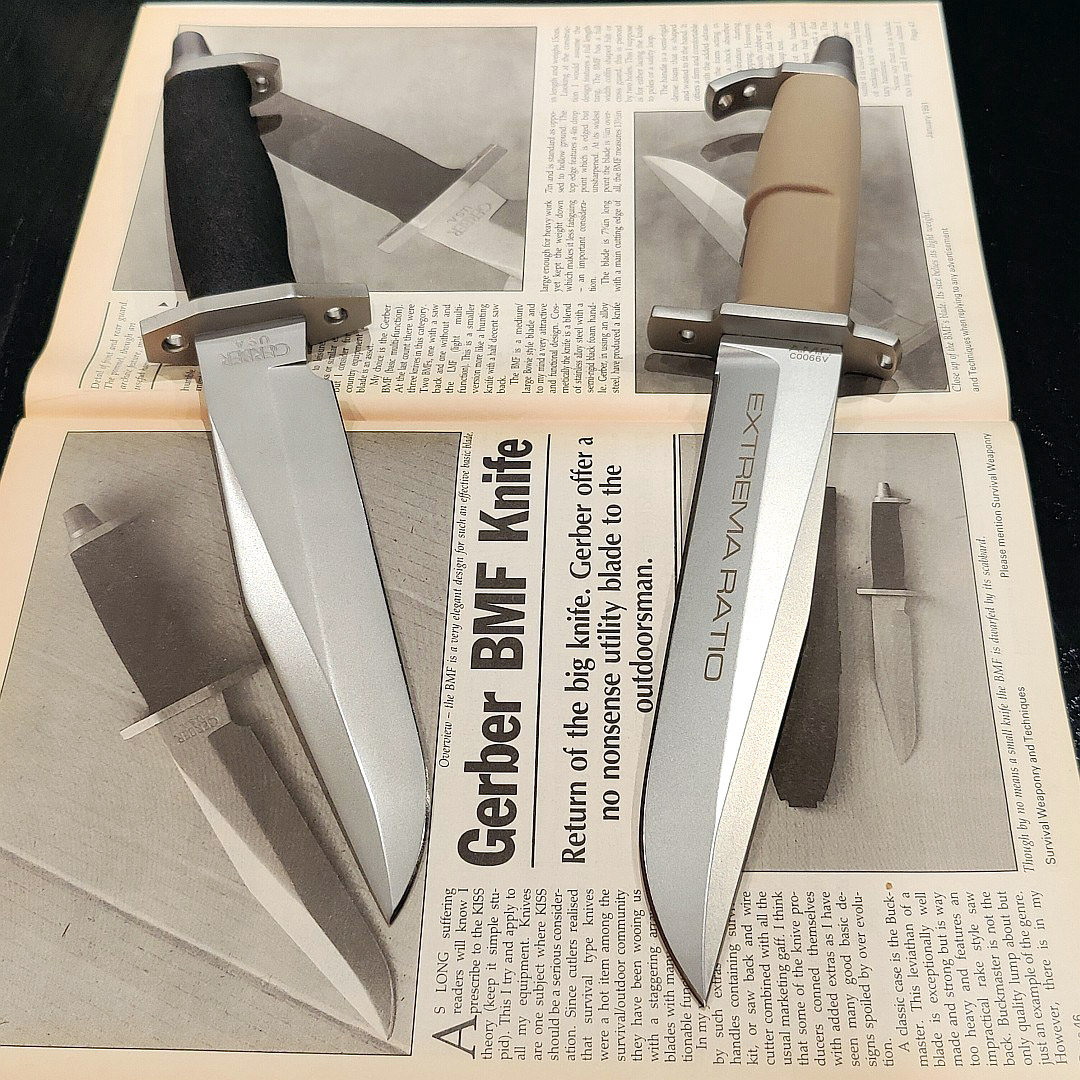
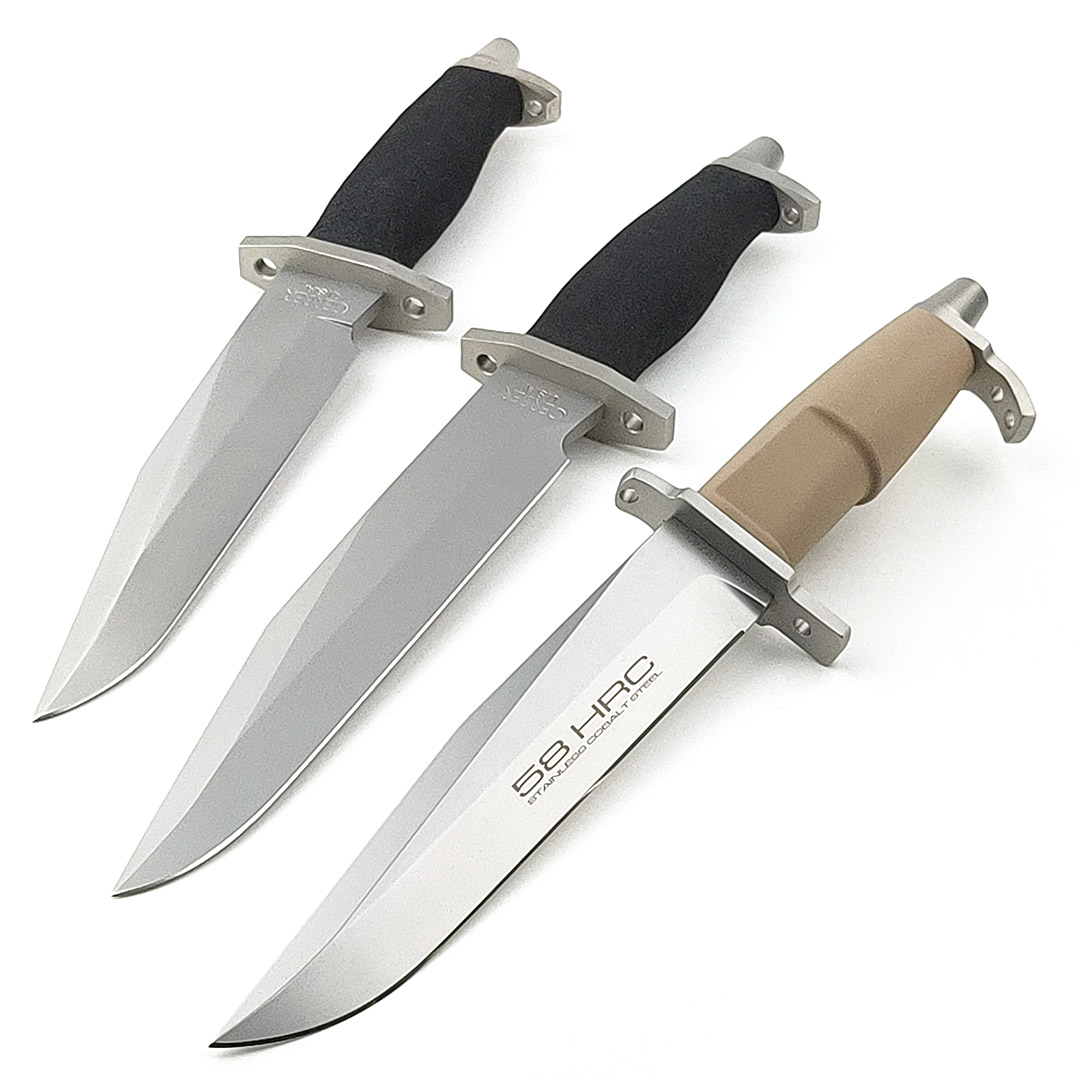
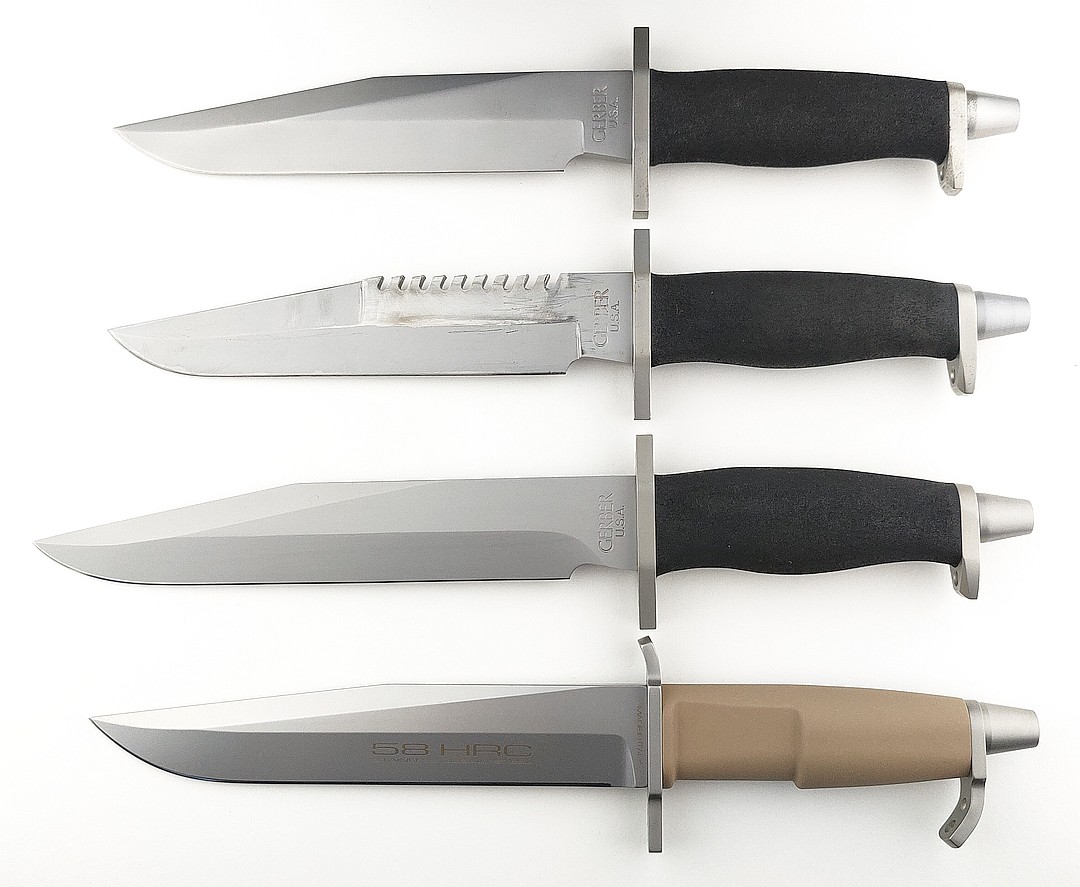
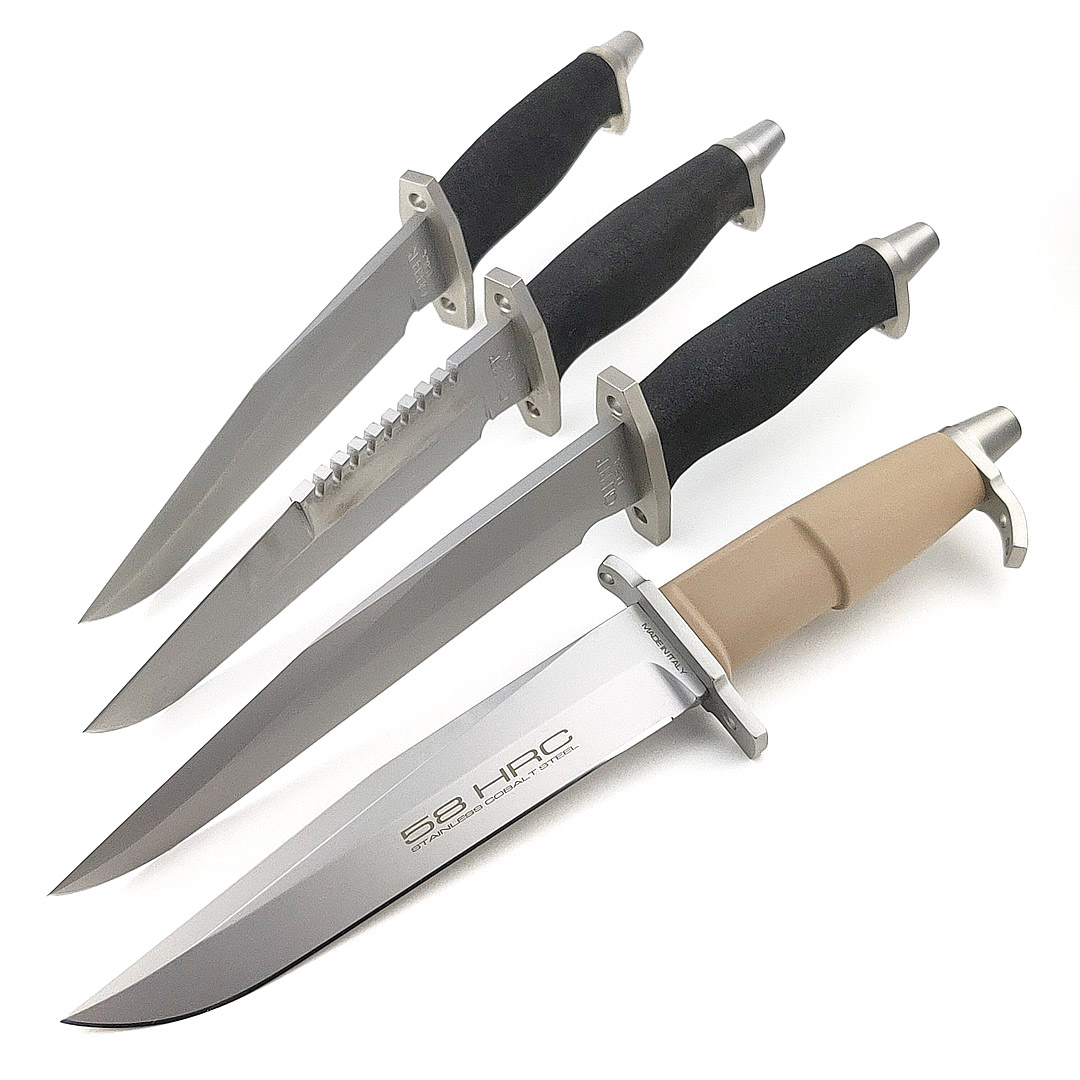
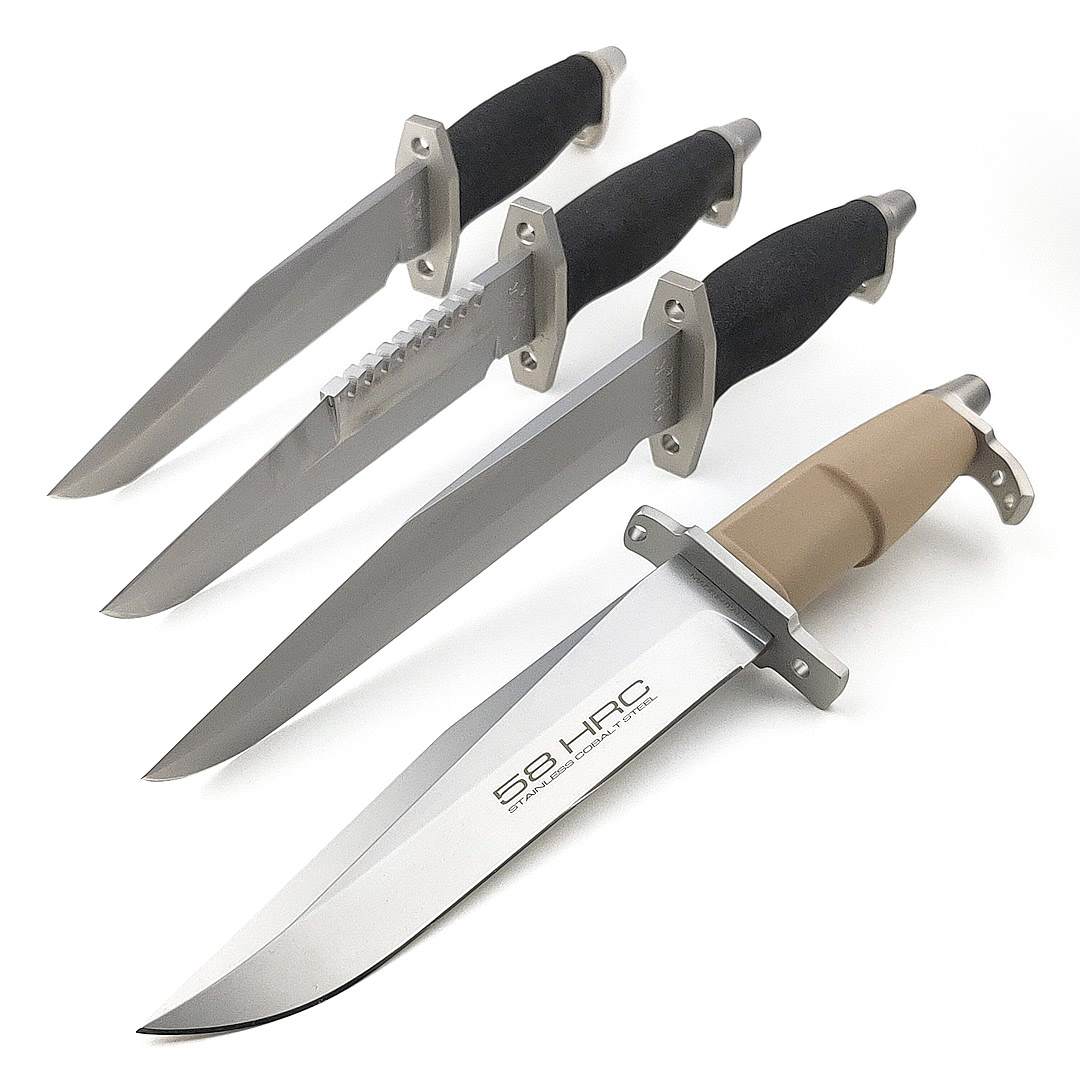
From the day I walked to the newsagents to pick up the latest issue of a magazine, it has been waiting 34 years for just this moment!! – A review of the BMF published in January 1991, along with the matching version of the BMF from my collection and Extrema Ratio’s AMF – improved in every aspect.

Some original text from Gerber:

Basic Multi-Function Survival Knife System™
Gerber’s BMF is the latest generation of survival knives. From its conception, the BMF was carefully researched and engineered to be the best survival knife available today.

This tough, heavy duty survival system is designed to withstand heavy use under the most extreme conditions. The 8-inch blade is ground from tough 1/4 inch thick high carbon surgical stainless steel, with Rockwell hardness of c54-55. We have purposely lowered the hardness several points to increase toughness. The chisel tooth saw is the result of countless experiments until we knew it was “just right”. It is designed for aggressive cutting of wood and other materials. The blade and stainless steel guards and but cap are treated with a non-reflective finish. The butt cap is specifically designed to endure heavy pounding, and is firmly attached to the full length blade tang. The most unique feature of the BMF is its revolutionary handle of highly compressed DuPont Hypalon. Hypalon’s semi-soft composition cushions the hand during heavy use, and provides a comfortable positive grip. Each BMF is hand-adjusted so that the point of balance is approximately at the front guard, which makes it comfortable to use, even during extended periods of heavy usage.

As much engineering and designed time went into the BMF sheath as the knife itself. Blackie Collins really “did himself proud” on this one. This sheath is made from black, heavy-duty DuPont Cordura and reinforced to provide protection for both the blade and user. Loaded with features, the sheath is specifically designed as a superior alternative to the hollow handle for carrying life sustaining and support accessories. It is compact and without protrusions to snag on brush or other objects in the field. Engineered to be silent, there are no hard surfaces other than rivets. A pocket at the top the sheath holds a quality, liquid-filled, jeweled compass. Permanently attached to the back of the sheath is a fine grain diamond sharpening hone, which is protected by a nylon cover when not in use. A unique accessory strap on the front of the sheath allows a folding knife sheath, survival, or other equipment to be attached. ALICE clips allow the BMF to be attached to standard issue military battle dress and harnesses. The ALICE clips are removable so that the BMF can be worn on a conventional belt. The BMF can be tied down to the leg or lashed to other equipment with nylon cord supplied with each sheath. (Dated June 1986)

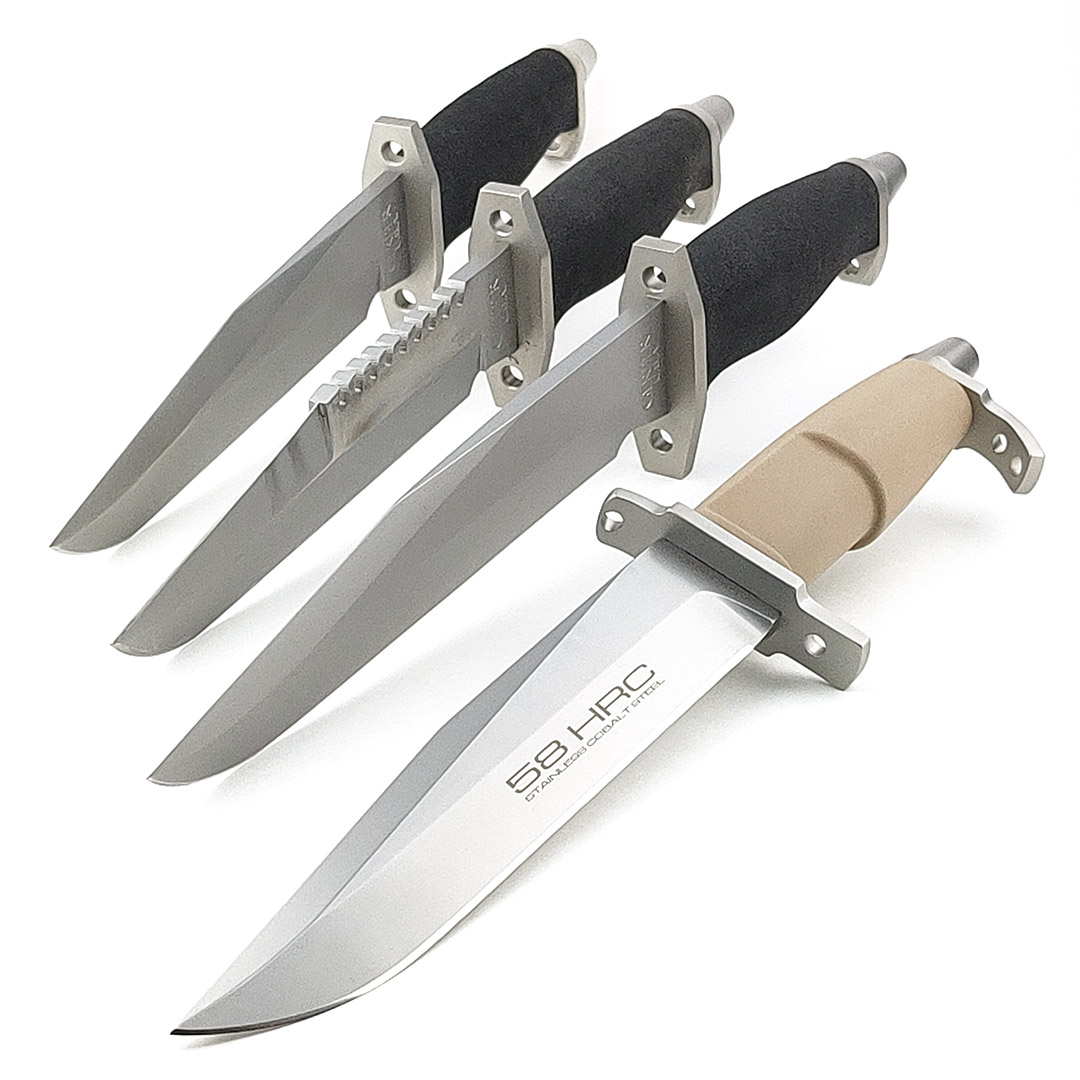
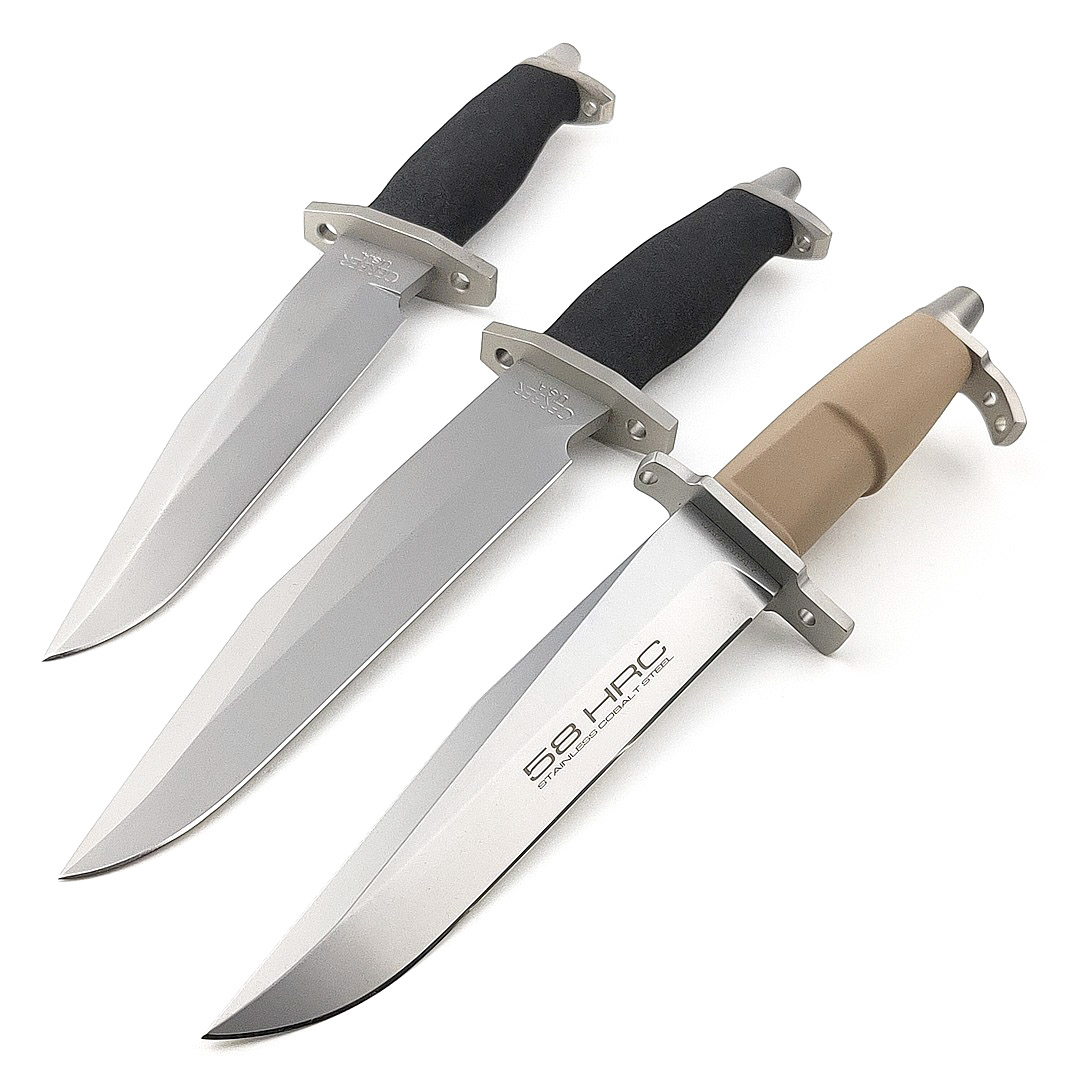
The BMF was first released in January 1986 and discontinued in 1998. During this time it underwent a few changes and had 6 variations manufactured. I have managed to get hold of four of the six types with three pictured alongside the AMF in this gallery. The original 8″ plain, the 8″ saw back, and the 9″ plain version are shown here. The 8″ saw back was the hero-knife in the 1988 film Deadly Pursuit (aka Shoot to Kill).


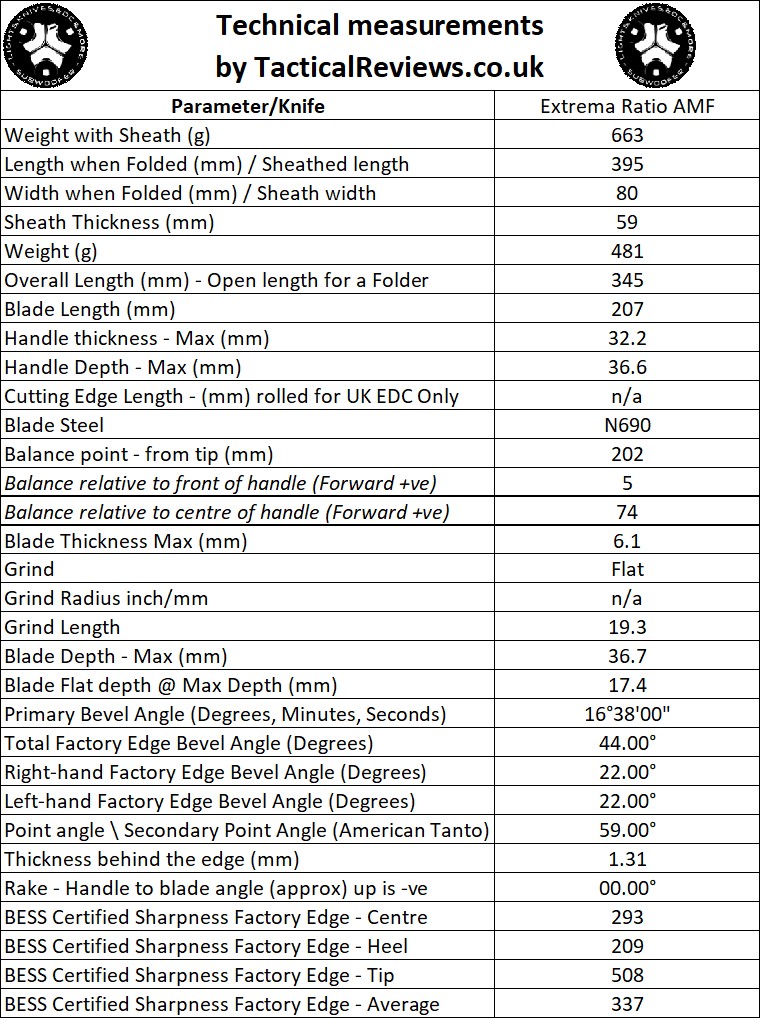
The Blade and Handle – Detailed Measurements:
For full details of the tests and measurements carried out and an explanation of the results, see the page – Knife Technical Testing – How It’s Done.

The blade is made from N690 steel.


The Factory edge up close:

Followers of Tactical Reviews will know my views on factory edges, but to recap:

Anyone using a knife will need to sharpen it. That first factory edge is just like the first tank of fuel that a new car comes with (or first charge of the battery).
A good factory edge is a ‘nice to have’ but not a ‘make or break’ for a good knife, as you will be putting your own edge onto it soon enough.
The factory edge does however indicate the care a knife maker has put into the final finish.
It is for this reason Tactical Reviews measures factory edge sharpness and specifications, and includes this information in the detailed technical testing.

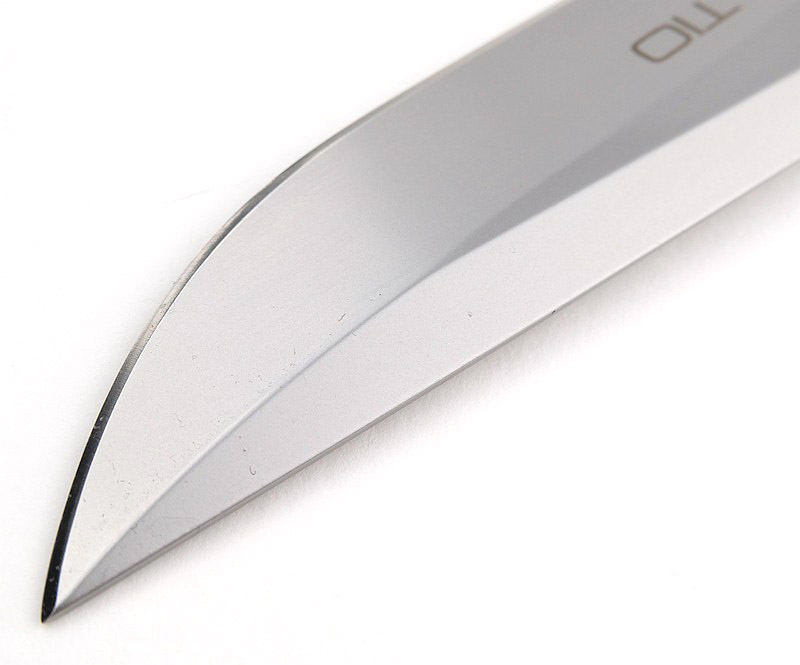
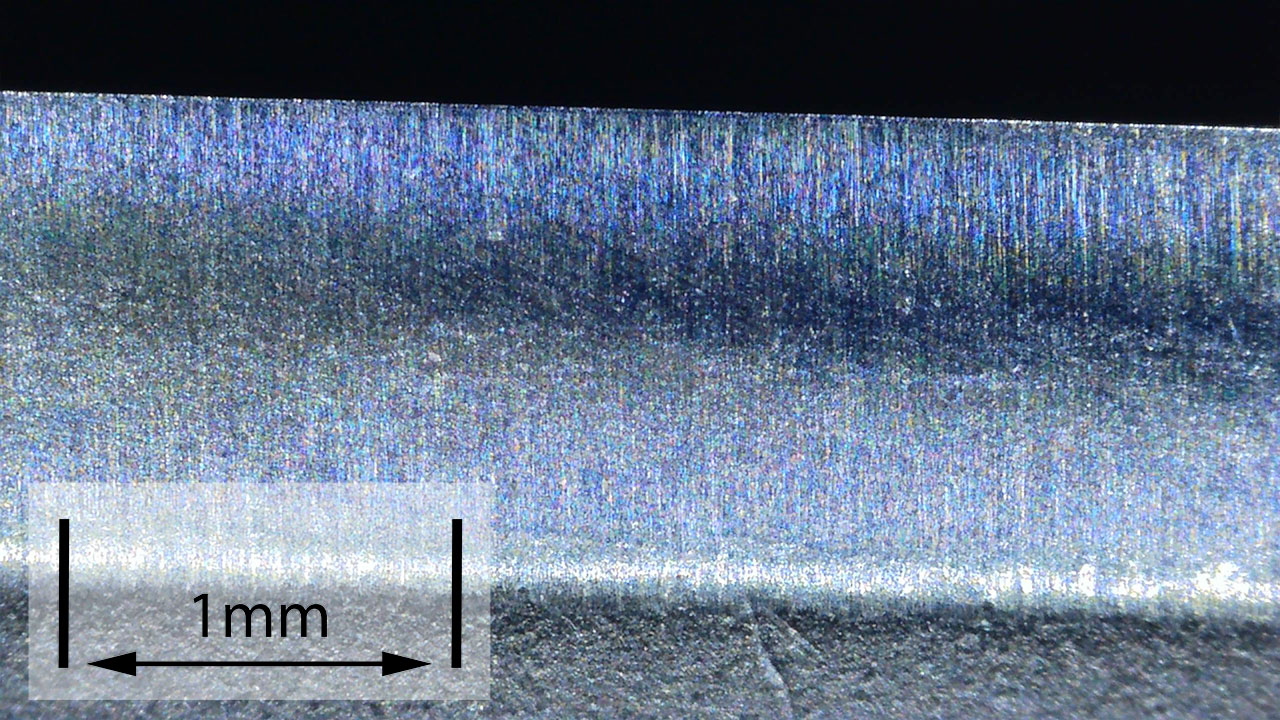
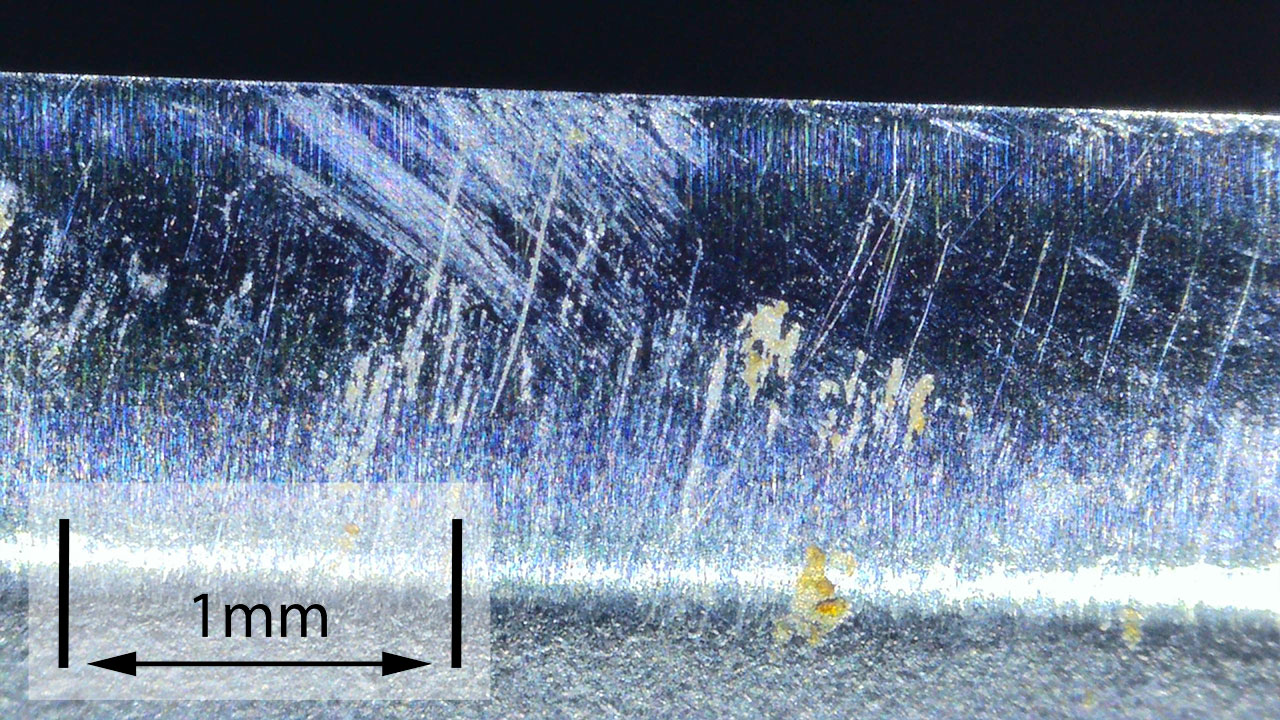
As a further look at the factory edge, this section has been added to include some high magnification photos of the factory edges.

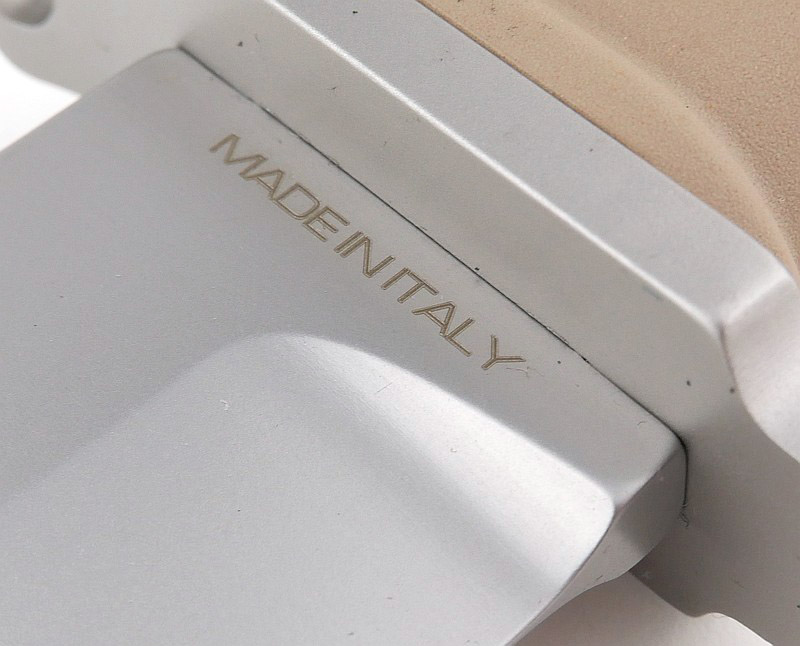
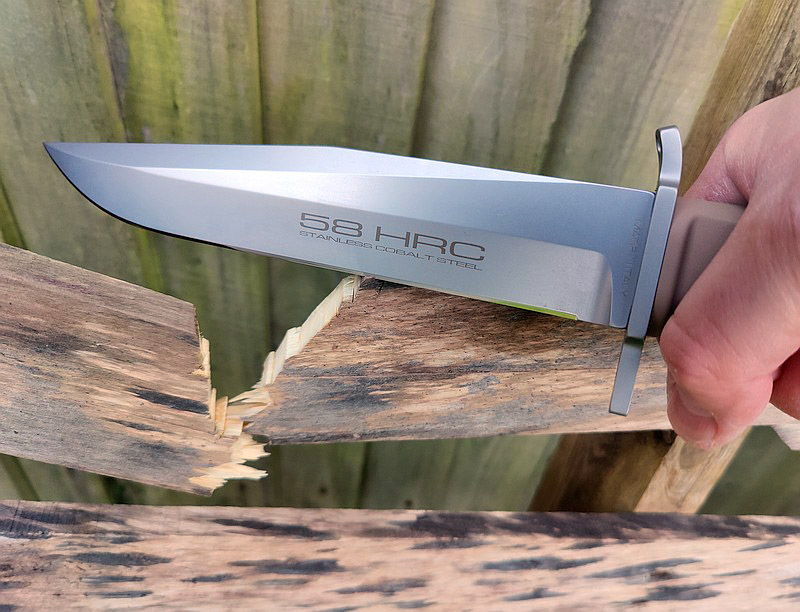
These are showing a used edge, so the dirt on the edge is NOT from the factory, but from me using it. Also included is a close up of the engraving, just out of interest.


What is it like to use?

The AMF is exactly the handful it is meant to be; Unashamedly big, bold and striking!

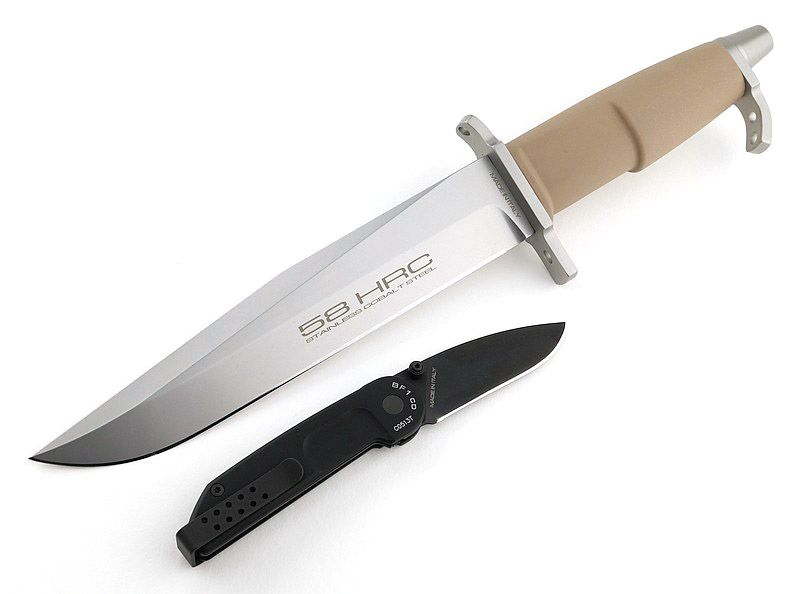
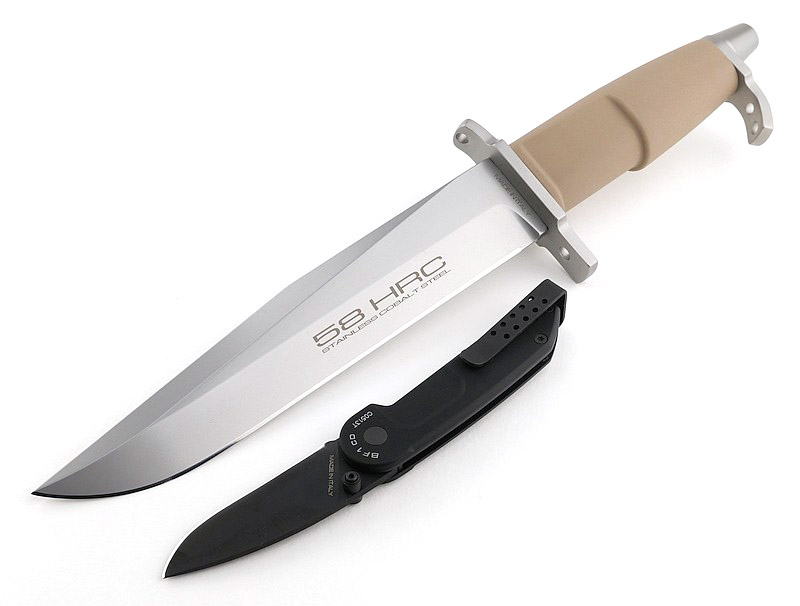
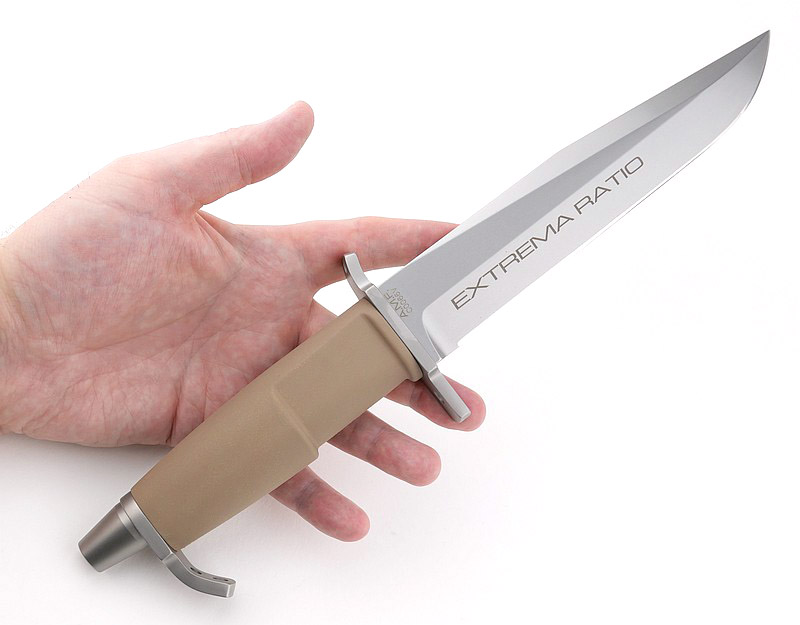
For a little perspective, this gallery starts with the AMF blade next to Extrema Ratio’s BF1 CD folder, the overall open length of which is less than just the AMF’s blade. Even with my XL Glove sized hands, the AMF’s handle fills my hand while being super comfortable, and cushioning in hard use.


At 206mm the AMF’s blade is not a full-on chopper, but it is a big knife that is very capable of chopping. The large comfortable, cushioning and secure handle make it so easy to really lay into the chopping task. It found myself easily powering through this pallet chop. Actually you can see how much striking power there is, as the last half of the board was broken before it could be cut.
A dry oak branch happened to be to hand; again thanks to the firm grip, this hard wood shaved easily and smoothly, submitting to the AMF’s blade with minimal effort.


Though it is a large knife with a large sheath, Extrema Ratio have improved every aspect of the knife that inspired the AMF, making it really worth carrying. The action of sheathing and unsheathing is easier and better, and the sheath is simpler and lighter (the original had a metal belt hanger and diamond sharpener on the back, plus permanent pouch). You have webbing so you can carry more on the sheath if you want, but you are not forced to.
AMF’s hand filling handle is so comfortable, and when chopping there is no shock transferred to your hand, making it feel effortless. And still Extrema Ratio managed to give it their distinctive style.
As Extrema Ratio’s main choice of steel, N690 massively upgrades the original 440-A, in hardness, toughness and corrosion resistance. The BMF is notorious for rusting badly, mainly from its blasted surface (re-finished blades appear much less prone to rusting). The N690 used in the AMF is in a different league. Obviously I can’t replicate 40 years of storage for the AMF, but I am highly confident this will never be an issue for the AMF.
Extrema Ratio’s reinterpretation of the guards, make them so much more functional. The rear guard, by curving round the fingers, makes it much more protective, and also keeps it out of the way when using the knife; a small change and a massive improvement. The front guard, being slightly shorter and pushed forward allows the thumb to be able to push on it. The lower part of the front guard protrudes slightly further to enhance the protection it provides.
None of the long spine or swedge is sharpened for fire steel scraping, but I’m fine with that. As it is, it has a more genuine feel of the classic that inspired it, and you are better off having a small scraper with any firesteel you choose to carry.
Maybe it is that wide comfortable handle, but somehow Extrema Ratio have managed to make this large knife not feel that large in the hand. It handles much better than it should and feels easier to use than knives this size tend to feel.


Though I didn’t get it dirty enough to justify a strip down, I wanted to see how Extrema Ratio had approached this. The original does not take down, so this is a new feature. A single hex bolt in the cone shaped butt cap releases everything. First the cone coming off, then the rear guard, that fits closely enough it doesn’t just fall off. When slipping off the handle this then reveals the use of a specially shaped captive nut in the end of the tang which gives several benefits. Firstly it spreads the load of the butt cap bolt, it also allows a different metal to be used for the threads than is used for the blade tang, and lastly it brings in some ‘compliance’ when tightening the butt cap bolt so all the parts can find the best contact points and settle firmly, making it more secure and less likely to loosen. A nice detail you won’t see unless you strip the knife down, so I’ve done it for you.


Even if you don’t have that connection to the classic 80s knife like I do, the AMF stands on its own feet and is just a great knife.

Extrema Ratio AMF Review Summary

The views expressed in this summary table are from the point of view of the reviewer’s personal use. I am not a member of the armed forces and cannot comment on its use beyond a cutting tool or field/hunting knife.

Something that might be a ‘pro’ for one user can be a ‘con’ for another, so the comments are categorised based on my requirements. You should consider all points and if they could be beneficial to you.

_______________________________________________
What doesn’t work so well for me
_______________________________________________

The handle might be too large for some people.
The 2M MOLLE straps don’t feel in keeping with the AMF’s quality.

_______________________________________________
Things I like
_______________________________________________

A Classic Reborn!
Improved in every way over the original.
Unmistakably Extrema Ratio.
Strips down for cleaning.
Ultra-comfortable handle.
Shock absorbing grip (especially when chopping).
N690 steel.
Captive tang nut.
Great protection from forward and rear finger guards.
A BIG knife (always makes you smile).
Highly versatile sheath mounting.
Everything else about it!

Review Videos

Starting with a short format sixty second review:


Onto a full video review covering many more details:


Discussing the Review:
Something new – will it work? A Tactical Reviews Subreddit.
TacticalReviewsChat on Reddit
Please visit there and start/join the conversation.
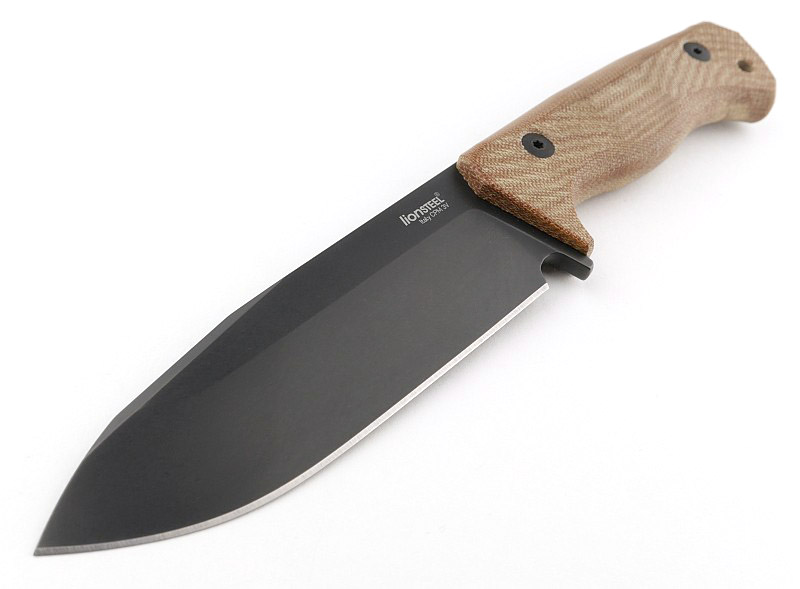
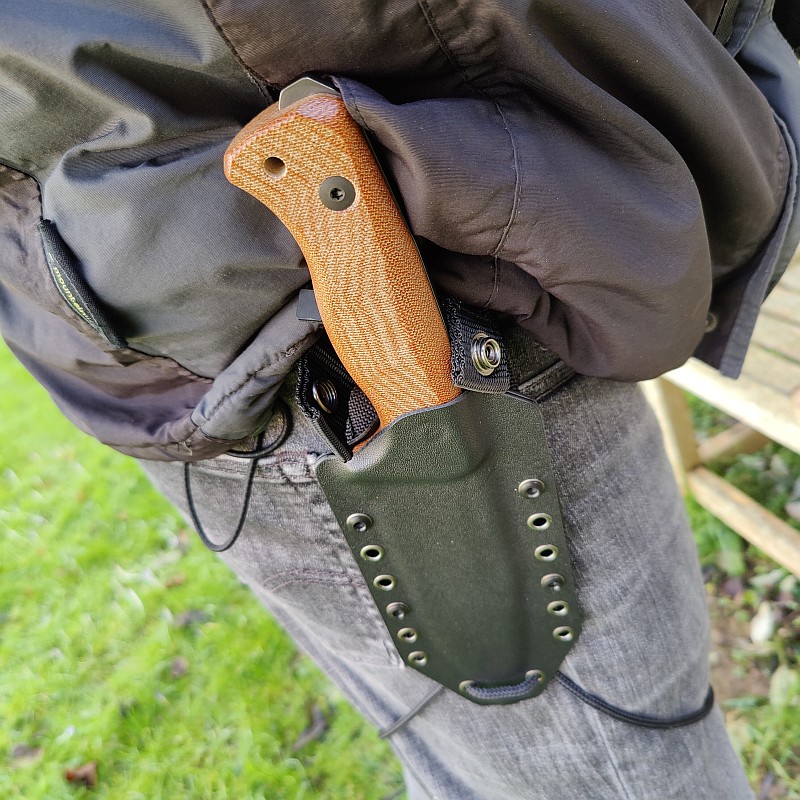
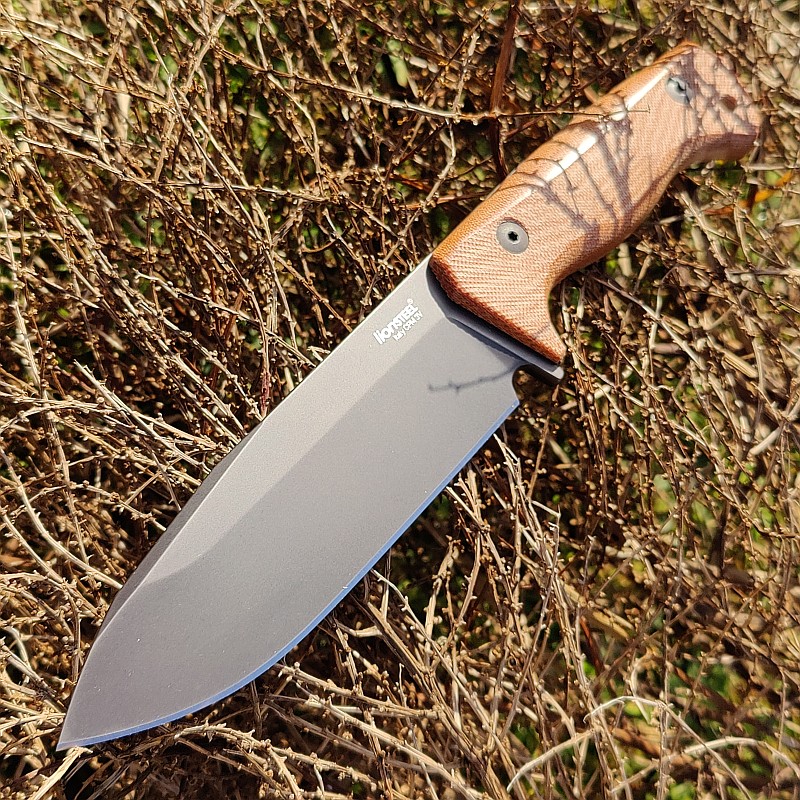
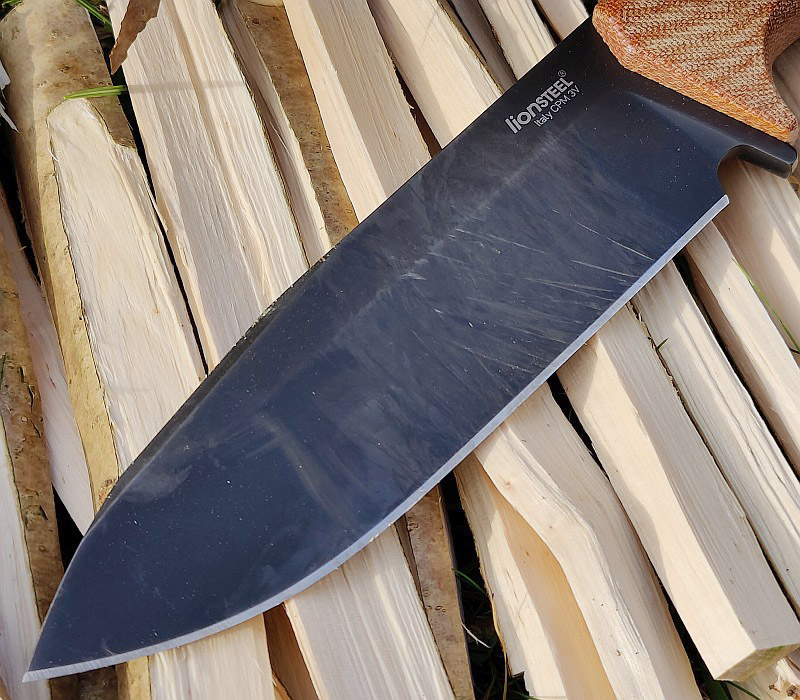
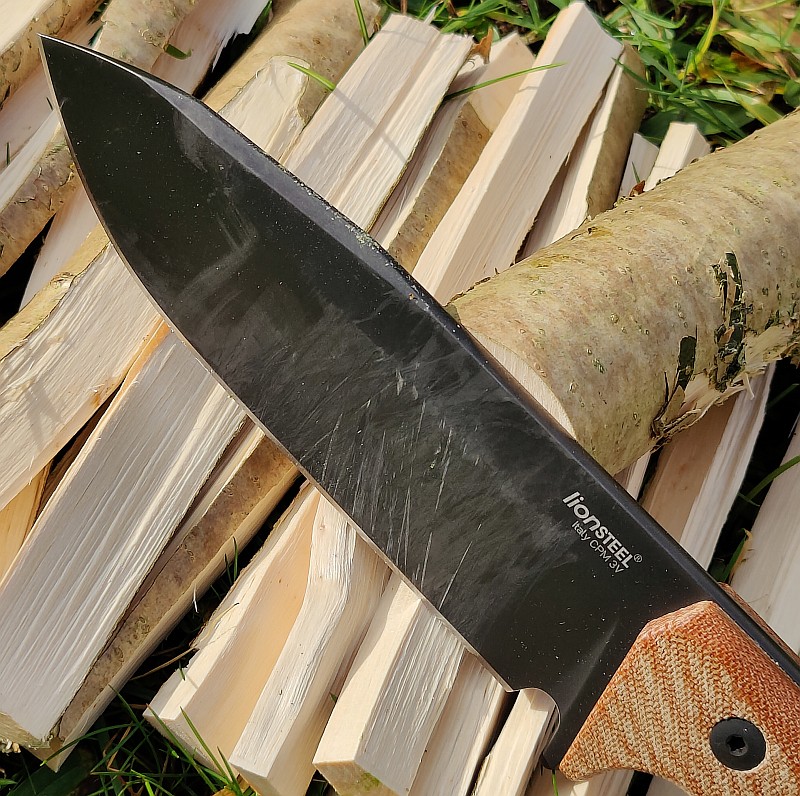
Knife Review: lionSTEEL T6

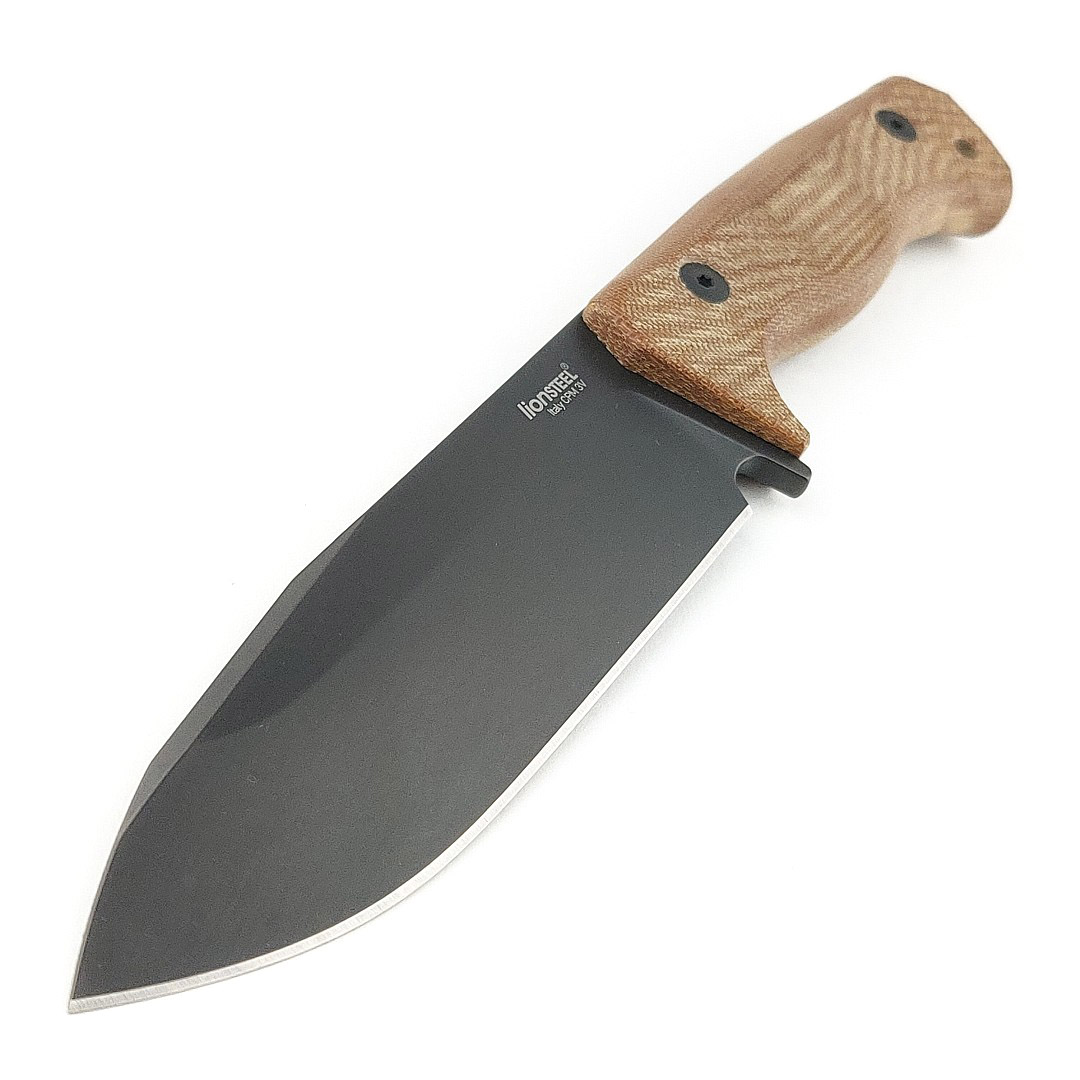
T6 is the newest addition to the lionSTEEL
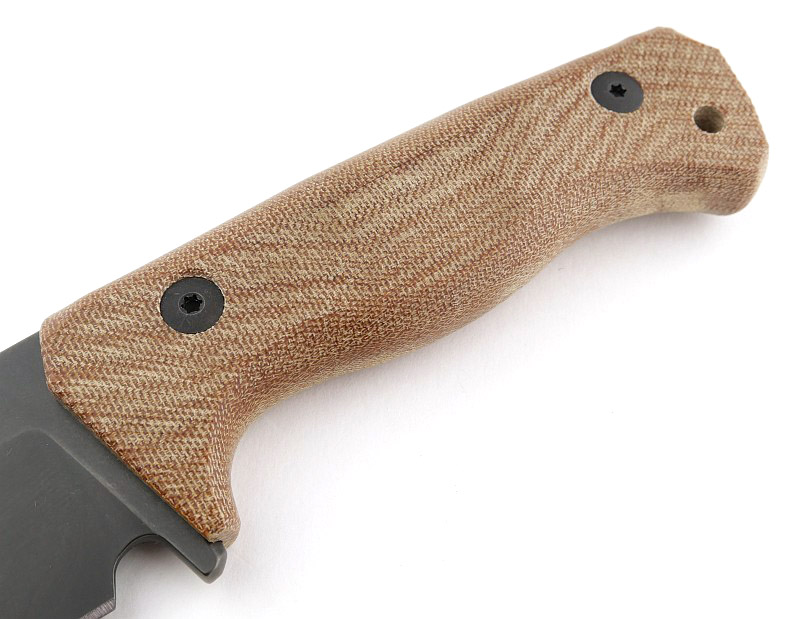
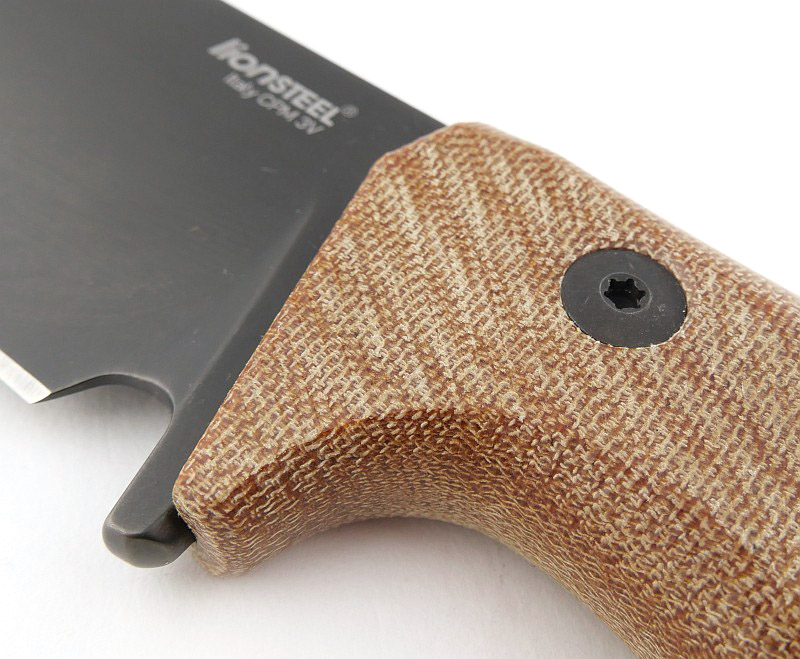
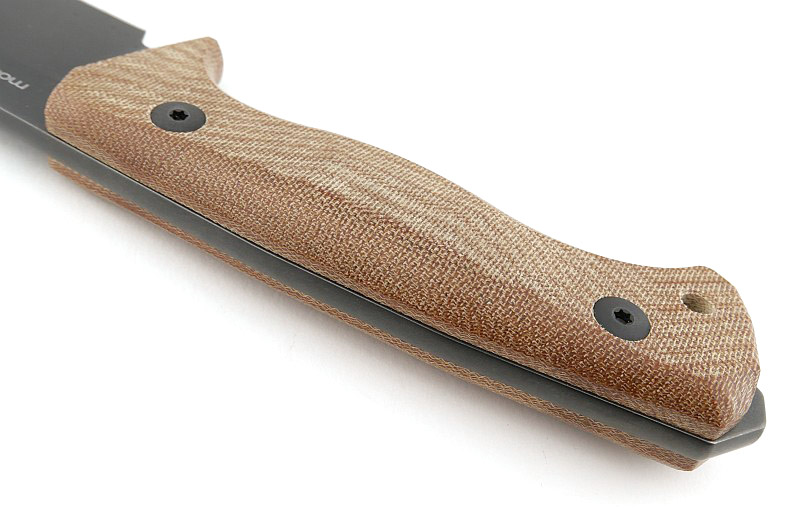
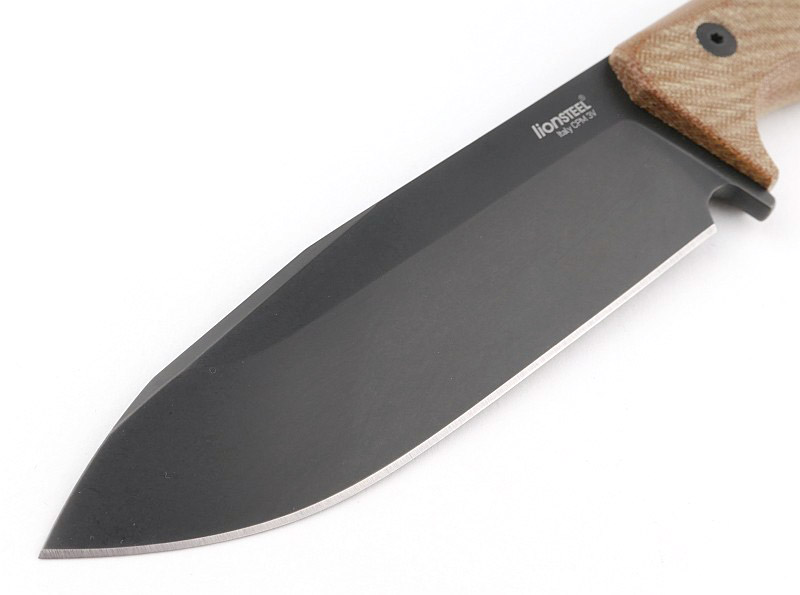
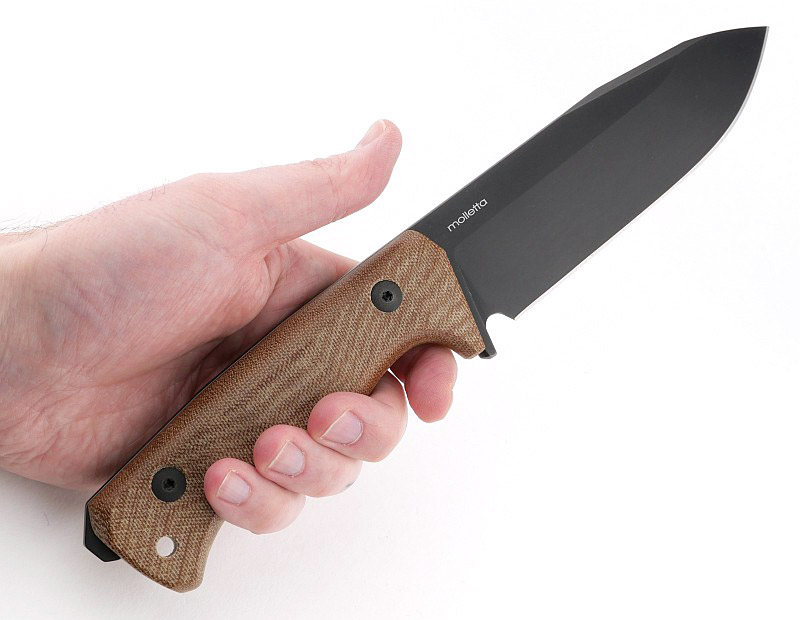
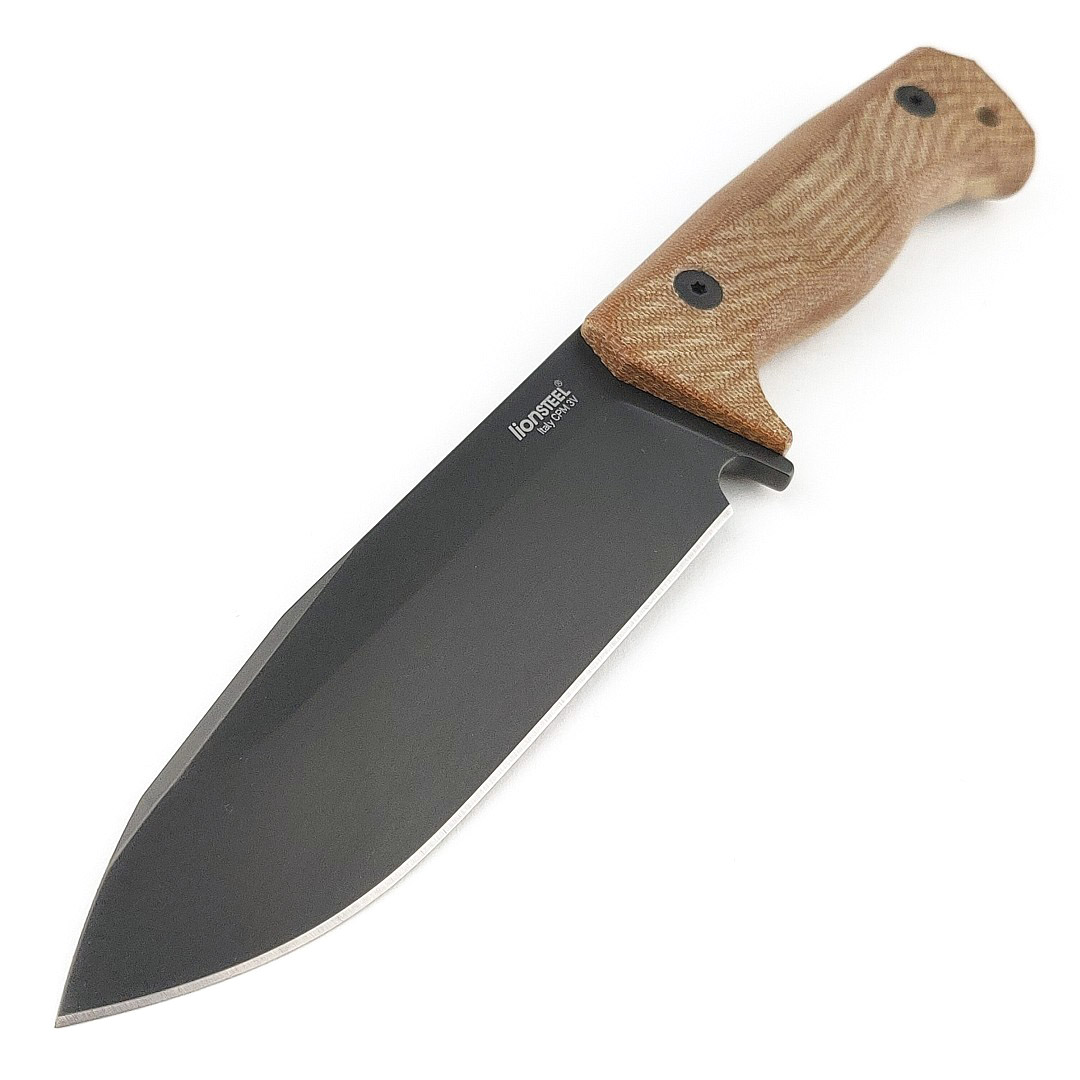
fixed blade family, it sits in between the M7 and the T5 in terms of size. Join me in this detailed review of the lionSTEEL T6, the biggest of the T-series. Featuring a strong CPM 3V steel blade and a lionSTEEL SOLID handle; milled out of a single Canvas micarta block, ensuring a firm and safe grip.

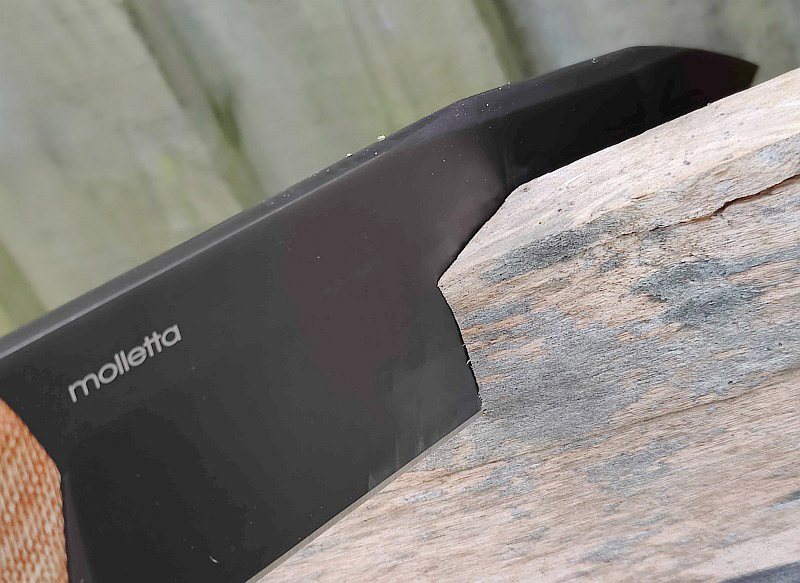
A design by Molletta, the T6 has an aggressive profile and is ideal when you need a robust and easy to handle heavy duty knife. From making a fire to food preparation, the LionSteel T6 has got you covered.

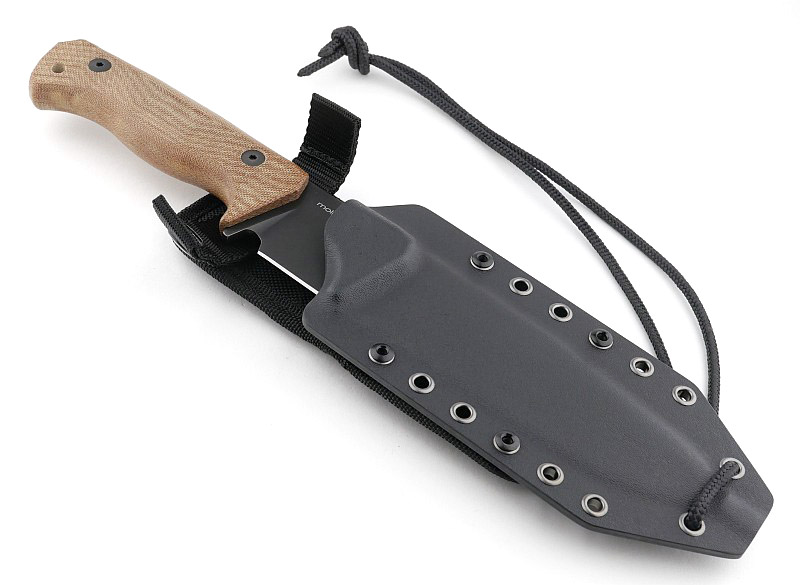
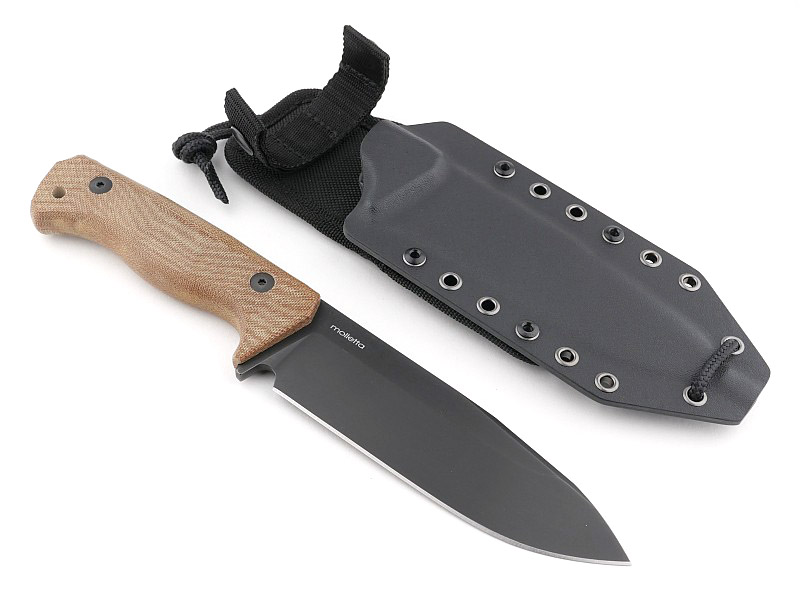
Supplied with its Kydex sheath that has a reversible Cordura structure with MOLLE system for secure and easy mounting.

What’s in the box?:
Nice and simple, just the T6 and a leaflet.


A good look round the T6 sheath – Things to look out for here are:
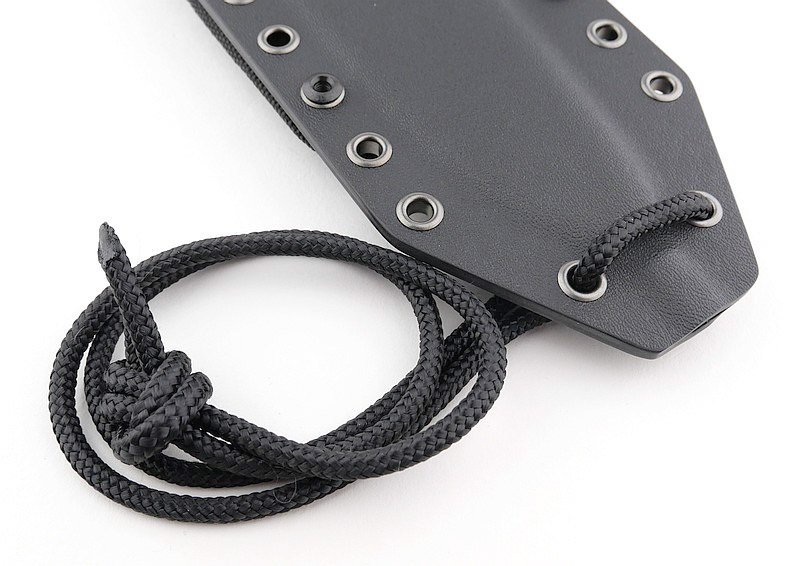
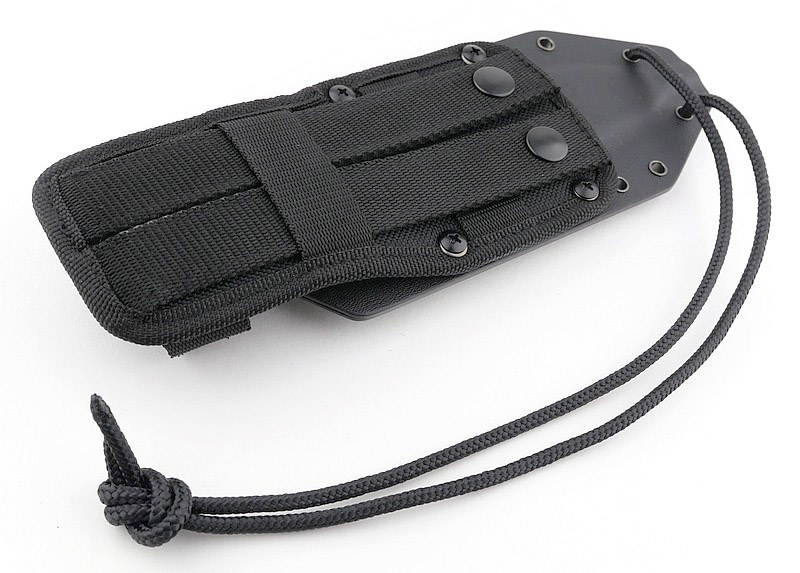
There is a lot to see here, with an excellent combination of a hollow rivet construction Kydex sheath, with a highly functional MOLLE hanger and leg-tie cord. Though the Kydex retention is all you need to secure the knife, there is a removable retention strap which adds extra stability when needed. A good size drainage hole in the base of the Kydex, will help look after the blade, especially with this being a non-stainless steel. The multi-functional mounting platform is attached to the Kydex sheath with four Chicago screw-bolts and means you can remove it completely, swap it round for left handed carry, or tweak the position. Straps for PALS / MOLLE mounting can also be configured as a belt loop. A super flexible sheath and mount.


A good look round the T6 – Things to look out for here are:
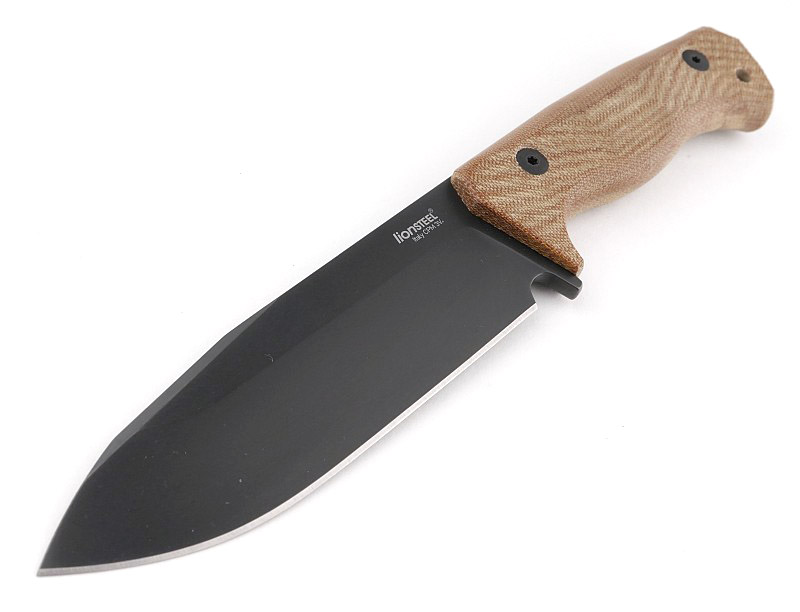
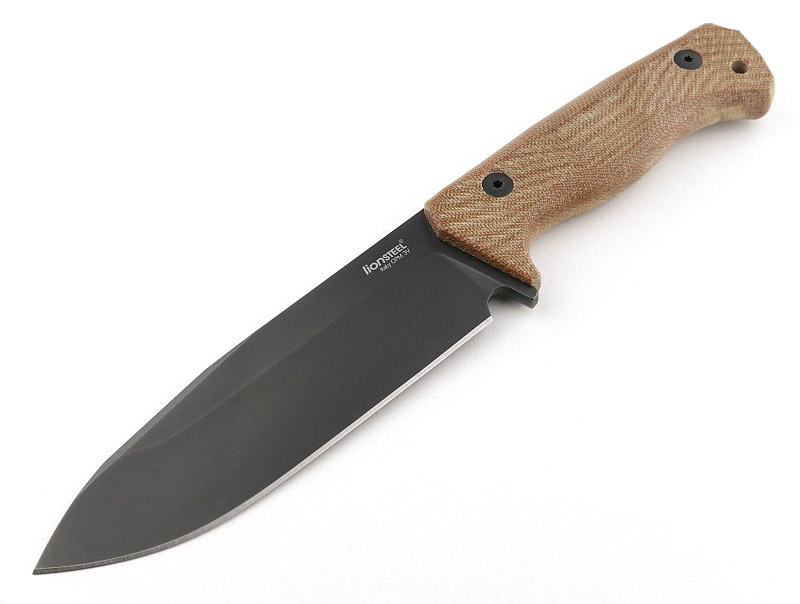
It has been love at first sight for me. The T6 has a really powerful, purposeful look, and does not disappoint. Just take in those lines.
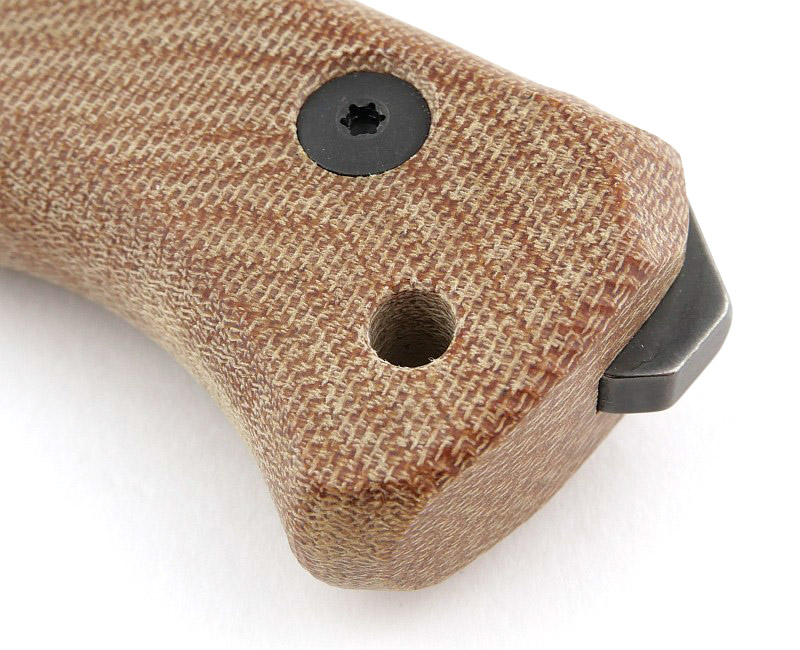
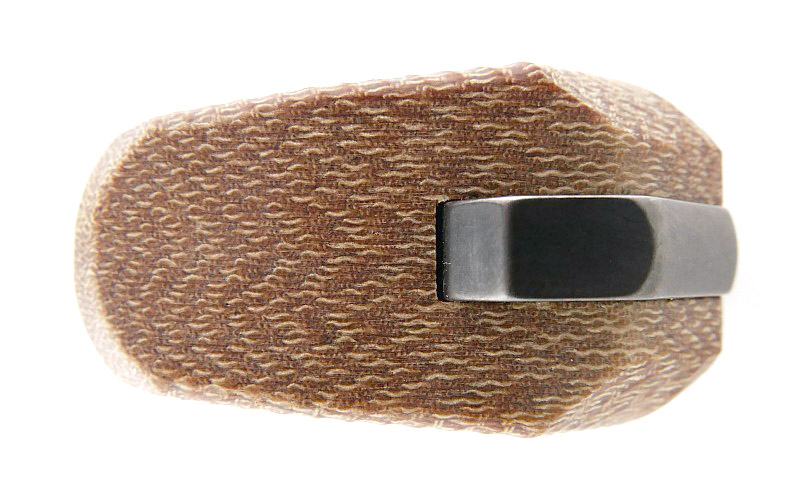
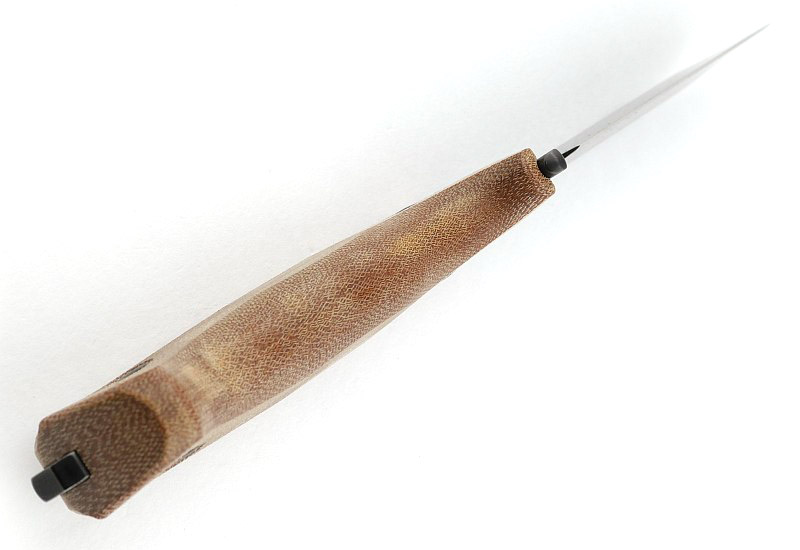
With lionSTEEL’s ‘SOLID’ handle, the T6 has a single piece of micarta milled to perfectly sit over the blade’s full tang. Both the blade and handle have an incorporated finger guard, with the blade’s just slightly protruding to better protect the micarta, which protects you. The tang also slightly protrudes at the butt to form a striker, or striking surface. Simple flowing lines in the micarta create an ergonomic and comfortable handle, a perfect for connecting you to that wide strong blade.


The Blade and Handle – Detailed Measurements:
For full details of the tests and measurements carried out and an explanation of the results, see the page – Knife Technical Testing – How It’s Done.

The blade is made from CPM 3V steel.


The Factory edge up close:

Followers of Tactical Reviews will know my views on factory edges, but to recap:

Anyone using a knife will need to sharpen it. That first factory edge is just like the first tank of fuel that a new car comes with (or first charge of the battery).
A good factory edge is a ‘nice to have’ but not a ‘make or break’ for a good knife, as you will be putting your own edge onto it soon enough.
The factory edge does however indicate the care a knife maker has put into the final finish.
It is for this reason Tactical Reviews measures factory edge sharpness and specifications, and includes this information in the detailed technical testing.

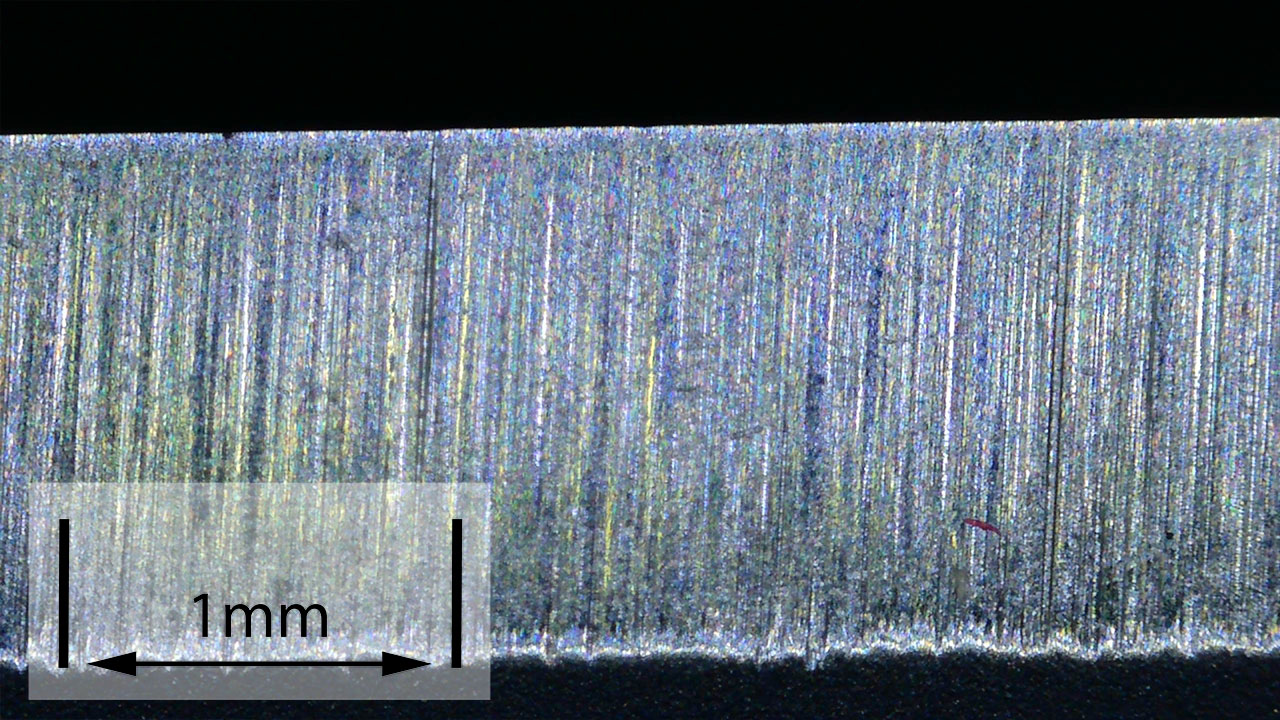
As a further look at the factory edge, this section has been added to include some high magnification photos of the factory edges.

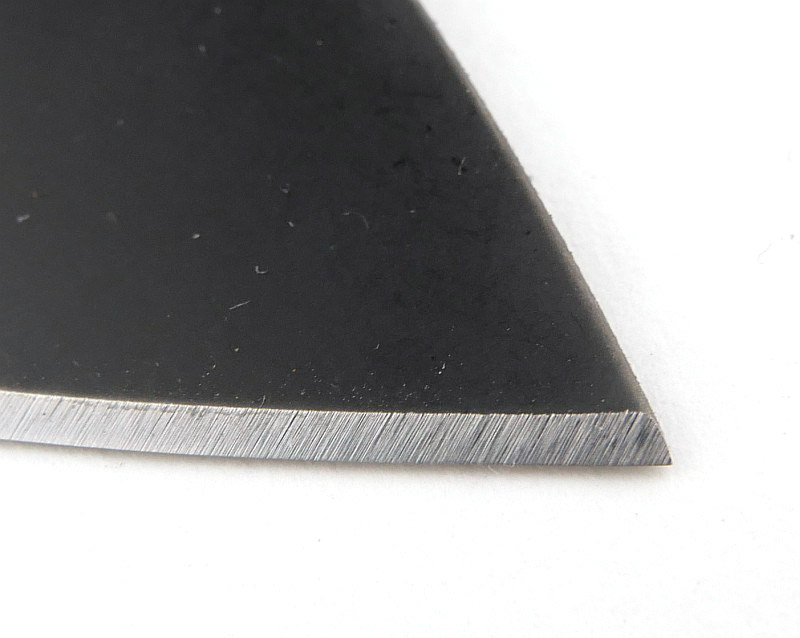
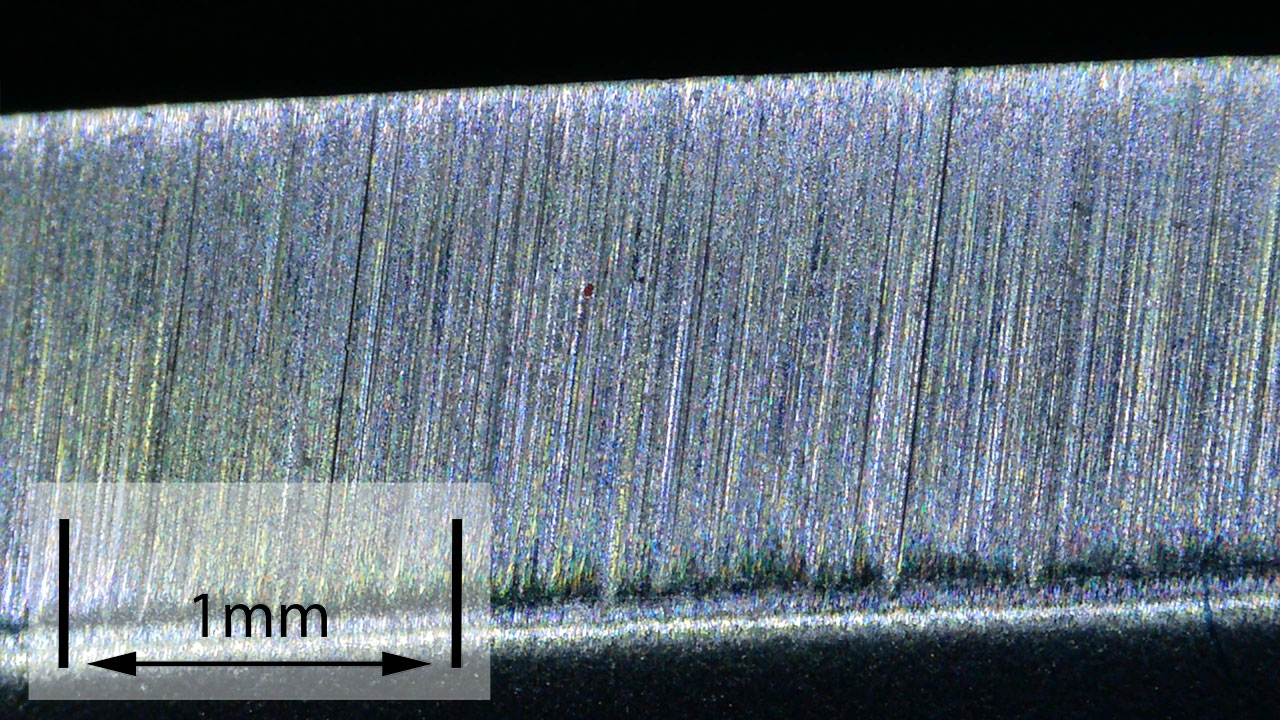
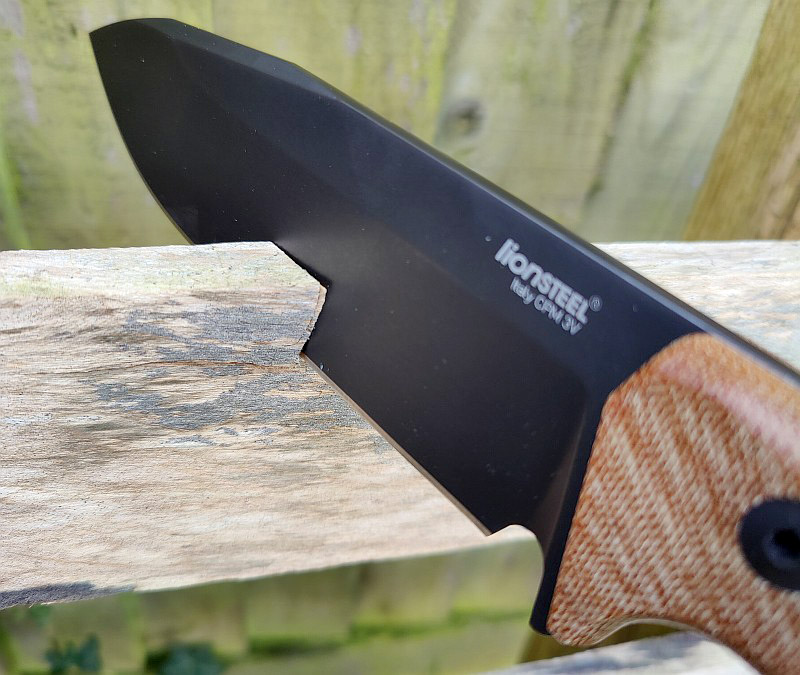
The factory edge is a great cutter, even better than the good (but not great) BESS sharpness figures. These magnified images of the edge explain this as you can see the micro-serrations in the 3V steel.


What is it like to use?

It is one thing to see and just hold the T6, and another to really put it to use. In use, the T6 really surprised me as it feels like a much smaller and more nimble knife than it should for its size. It is a large heavy, wide-bladed, knife, it is. I have to remind myself and if you just pick it up to look at it and not use it, it still feels exactly that.


Then you start to work with it, and it just seems to work with you.

A quick check of the edge before getting on with the tasks at hand. Popping the sheath on my belt, and fitting the leg-tie cord (which I leave a little slack as this cord has no give in it). I’ll probably add in some elastic to the leg cord so it has some give and won’t restrict movement. The sheath sits very flat to your body and re-sheathing needs a quick glance when you have clothing partly in the way.
I keep thinking it looks like the muscle car of the knife world, and wants to be admired as much as to cut.
The blade geometry, and weight, get behind each cut. Combine this with an amazingly comfortable handle, and the cuts become so much easier than you expect. Making a type of feather-cut on a board and before I knew it I’d gone through the entire board.
Batoning for splitting, and if anything it had a tendency not to follow the grain and instead to bite in and cut in the direction you strike it. Either way, the wide blade’s depth means the wood usually splits before the spine reaches the top of the wood being split, so you can just strike straight down onto the split and don’t have to fight against each strike trying to twist the knife.


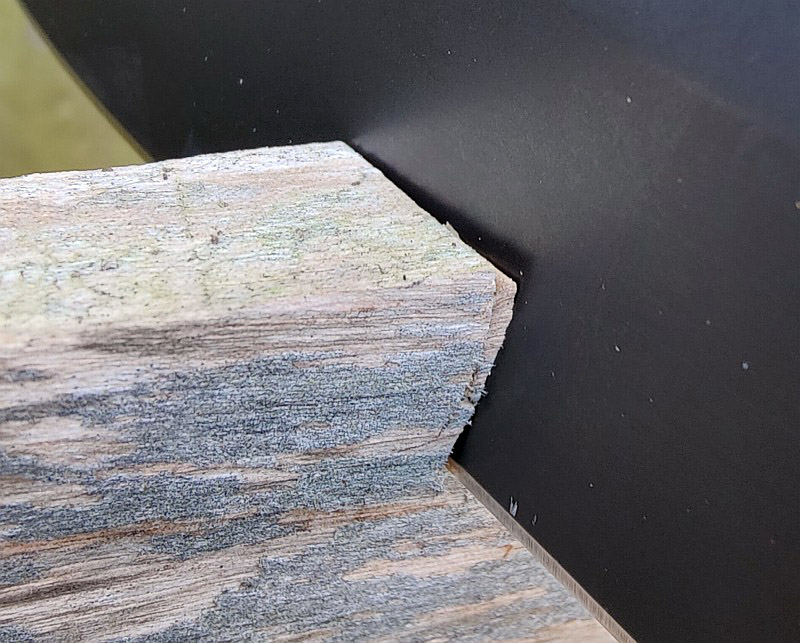
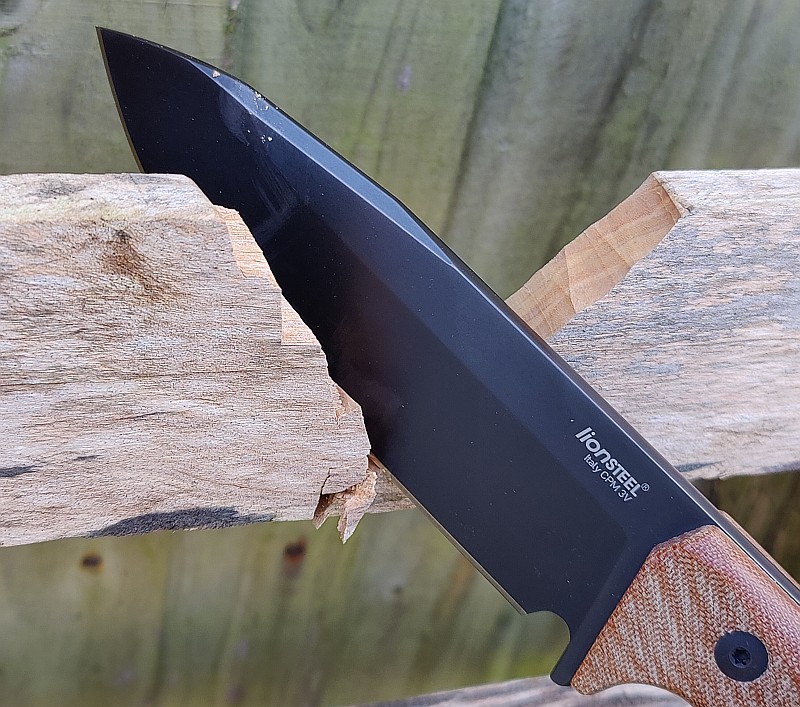
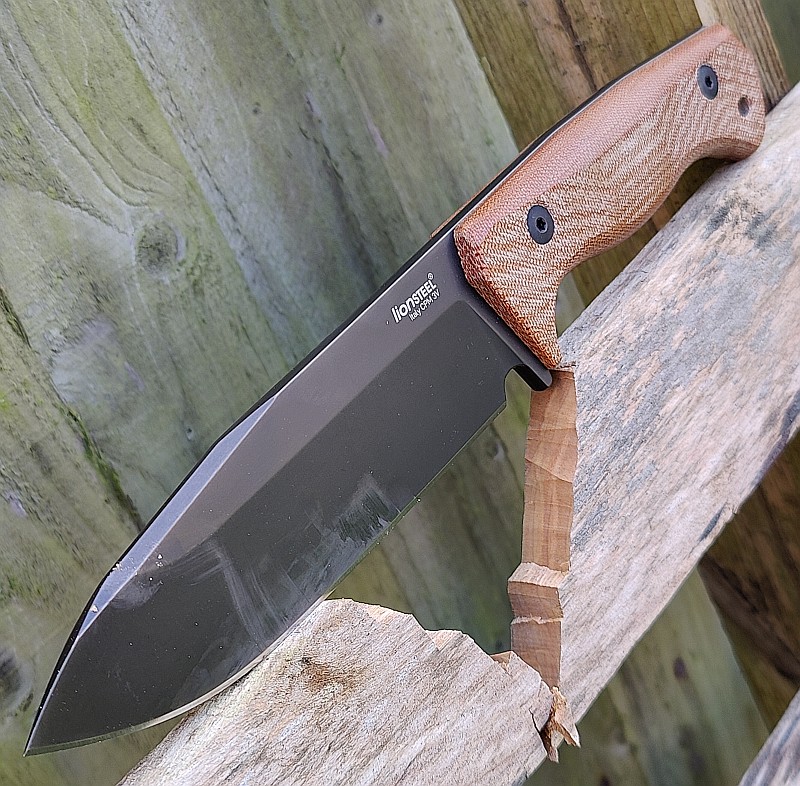
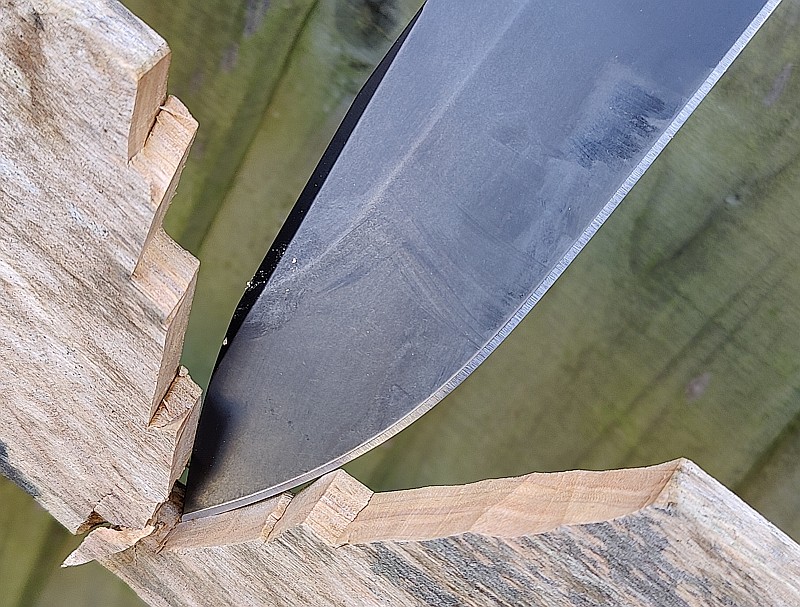
Onto pallet cutting, and the first image showing an initial single strike. The depth of cut is good, and after this, nice sized chunks of timber fly out as the T6 cuts and ejects – you can see the ‘steps’ formed in the wood during this board chop.
Last in this gallery is the T6 being batoned into a pallet board, the depth achieved here with medium effort, is about double a single chop, but the wedge effect then prevents further progress due to the thickness of the blade stock. In this case the overall effort is lower if just chop into the board compared to batoning.


So far, lionSTEEL’s stance on the T6 is to go with ultra-tough super-carbon steels, with the first run being K490 and this next production run in CPM 3V. 3V is not a stainless steel and will form a patina and rust if not maintained, but its virtual indestructibility means you will forgive it this minor weakness. For me, however, with the choice of great stainless steels, I do not like having to maintain a knife against rust, so I have been asking lionSTEEL to make the T6 in a stainless…I will continue to nag. Unlike myself, many will see the 3V as a massive positive, and as a working steel it will do you proud.

The love for the T6 is still as strong as from my first sighting of the prototype, looks and performance, plus that ability to feel lighter and more nimble than it should, mean the T6 makes you want to keep picking it up.

Review Summary

The views expressed in this summary table are from the point of view of the reviewer’s personal use. I am not a member of the armed forces and cannot comment on its use beyond a cutting tool or field/hunting knife.

Something that might be a ‘pro’ for one user can be a ‘con’ for another, so the comments are categorised based on my requirements. You should consider all points and if they could be beneficial to you.

_______________________________________________
What doesn’t work so well for me
_______________________________________________

Not stainless steel. – Yeah, I think that is all I’m less keen on.

_______________________________________________
Things I like
_______________________________________________

Incredibly comfortable and stable in the hand.
SOLID micarta handle has no ‘hotspots’.
Feels light and nimble (for its size).
Super tough CPM 3V.
Purposeful looks.
Wide blade adds control.
Highly functional sheath.
MOLLE / PALS compatible.
Firm (but not too firm) Kydex retention.

Review Videos

Starting with a short format sixty second review:


Onto a full video review covering many more details:


Discussing the Review:
Something new – will it work? A Tactical Reviews Subreddit.
TacticalReviewsChat on Reddit
Please visit there and start/join the conversation.
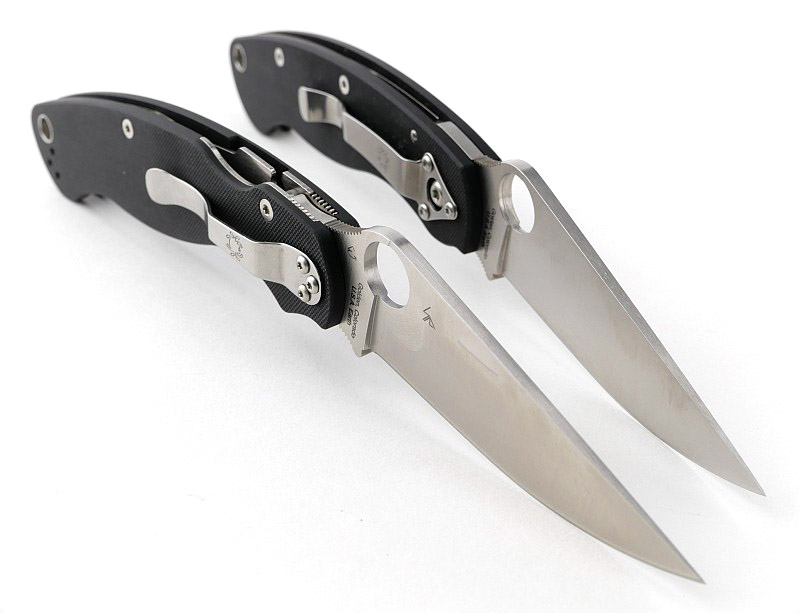
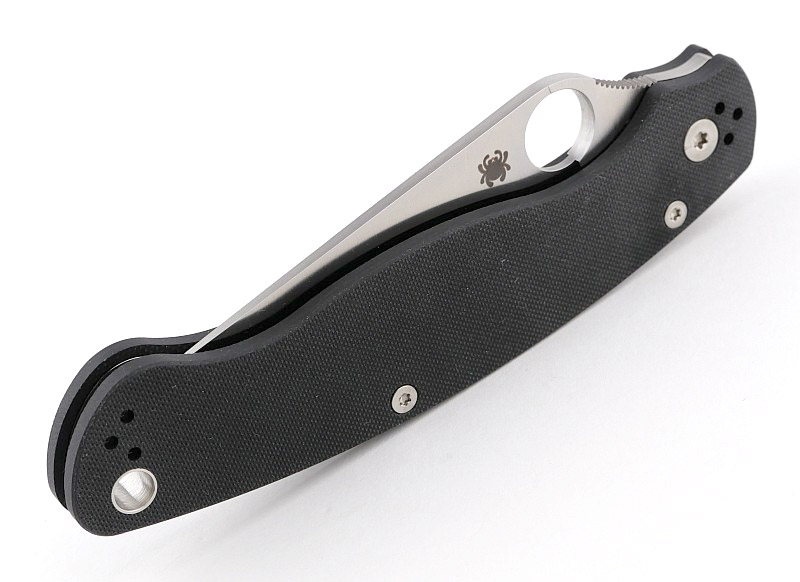
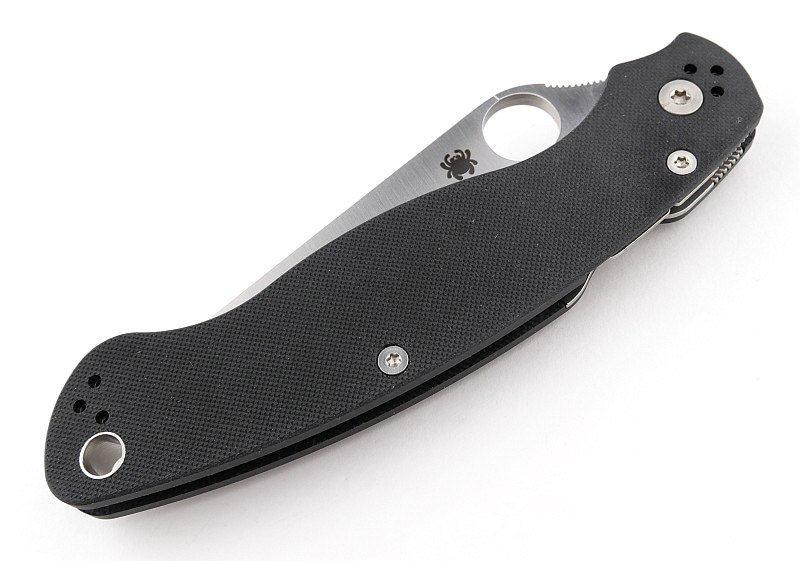
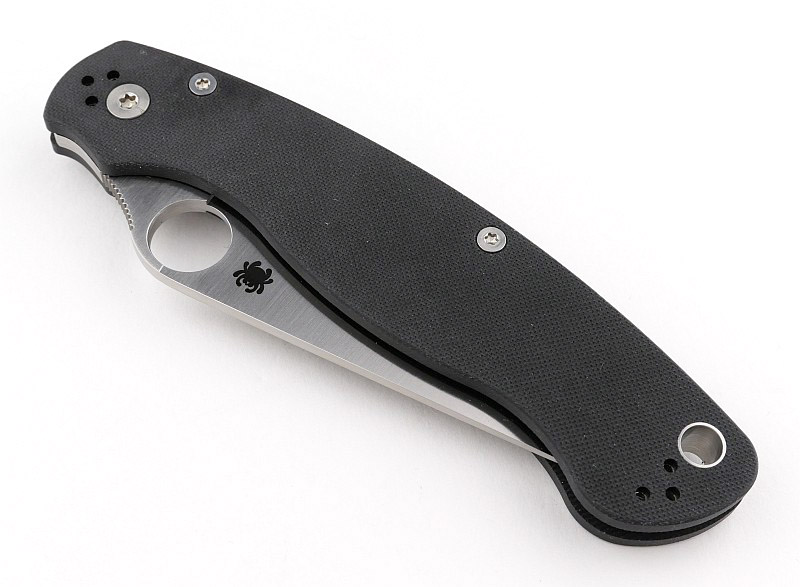
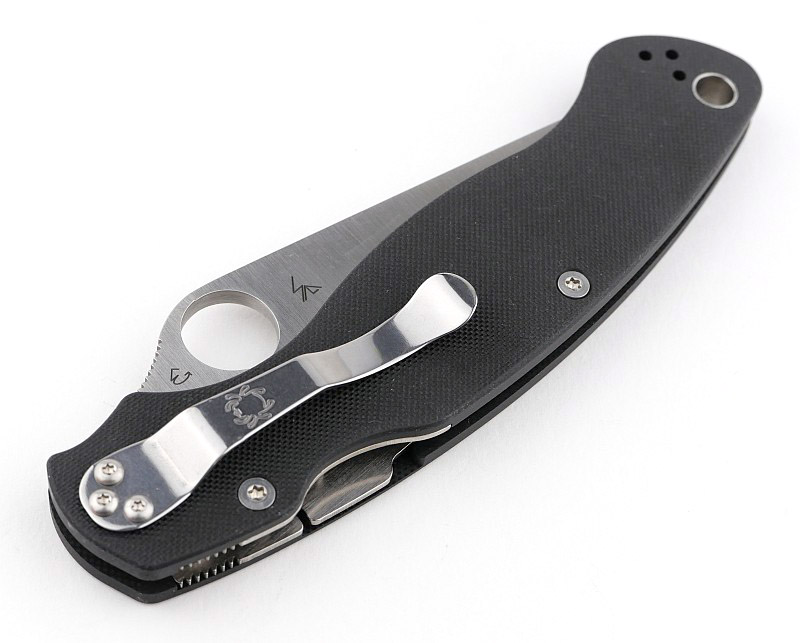
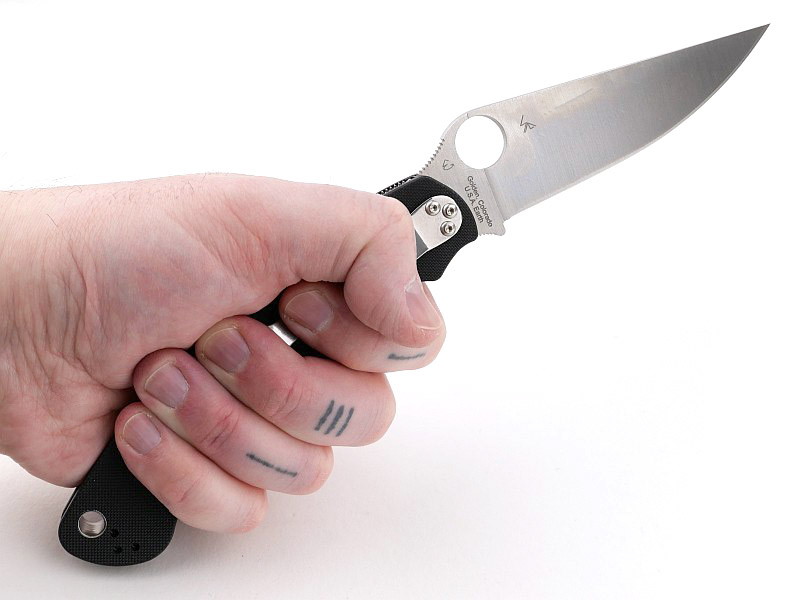
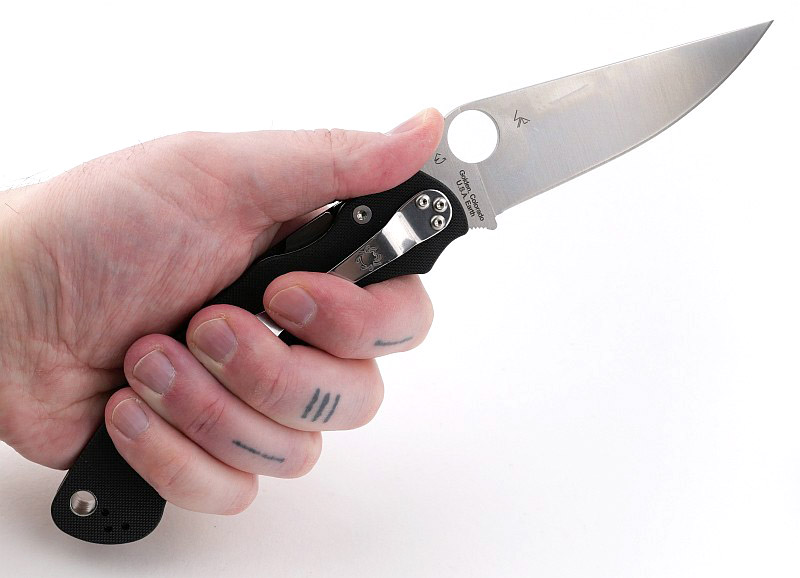
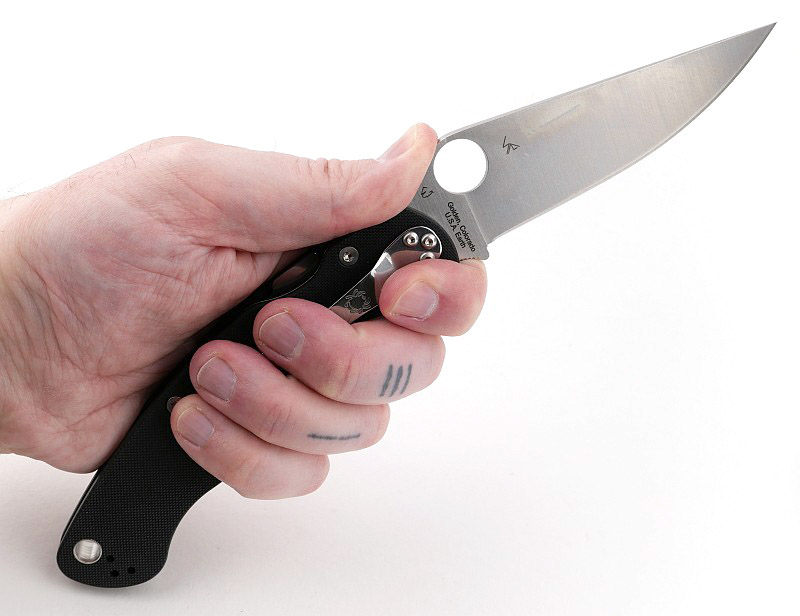
Knife Review: Spyderco Military 2

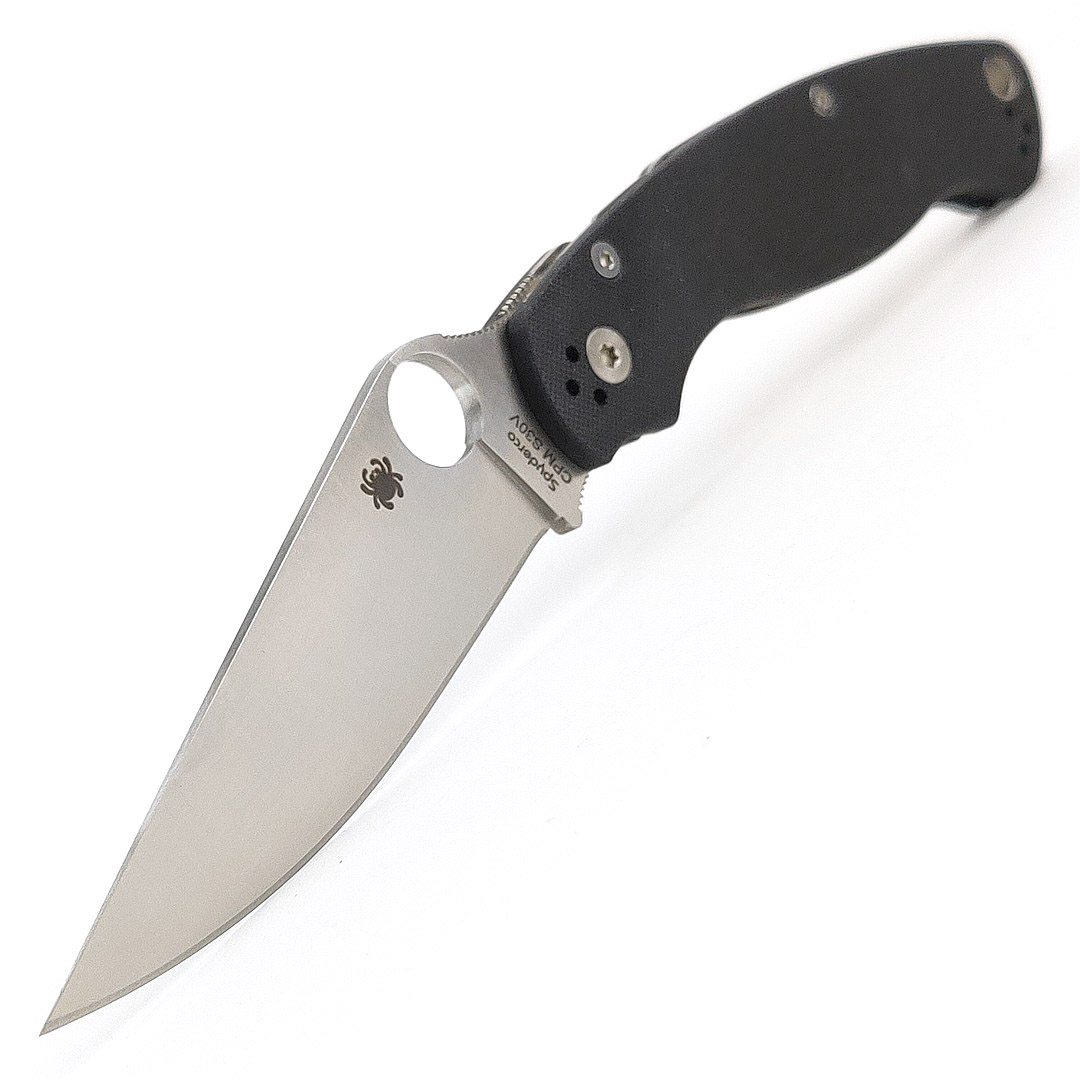
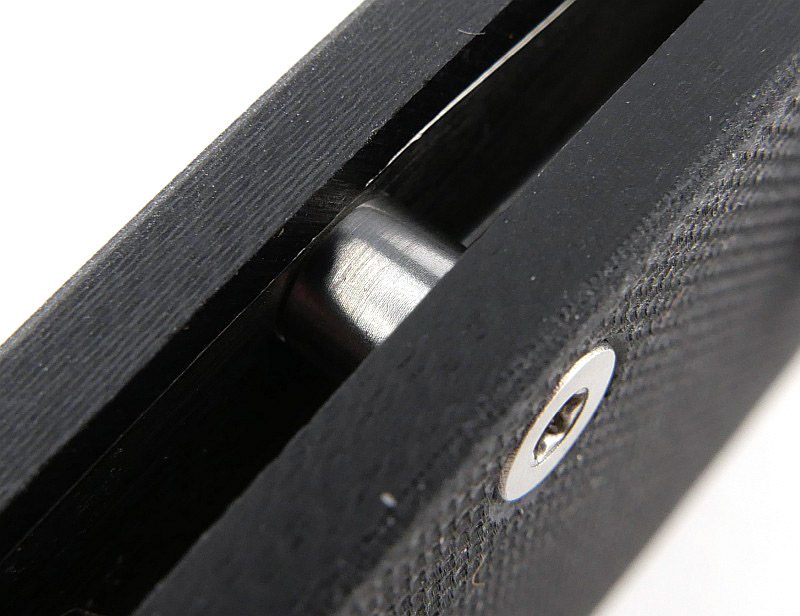
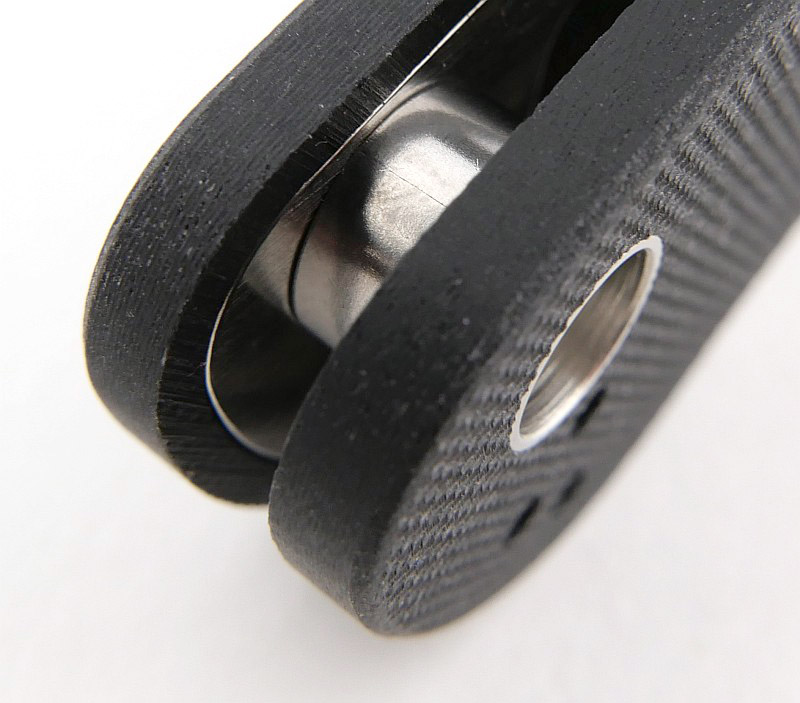
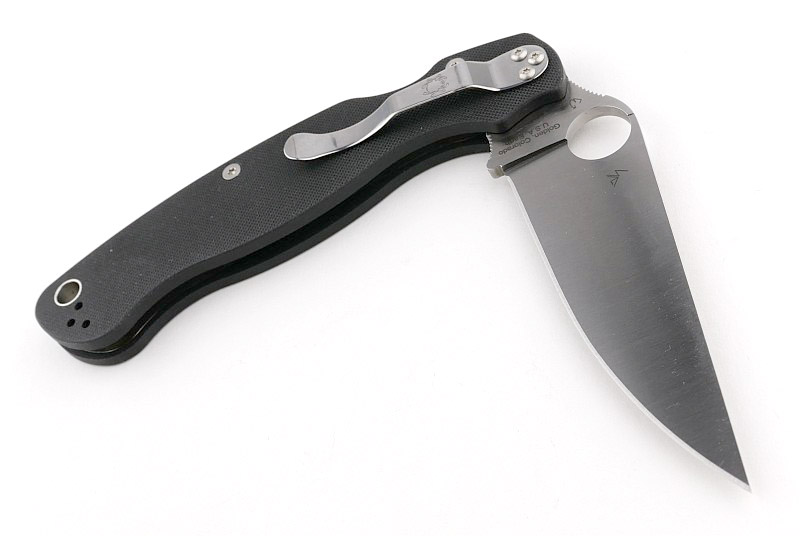
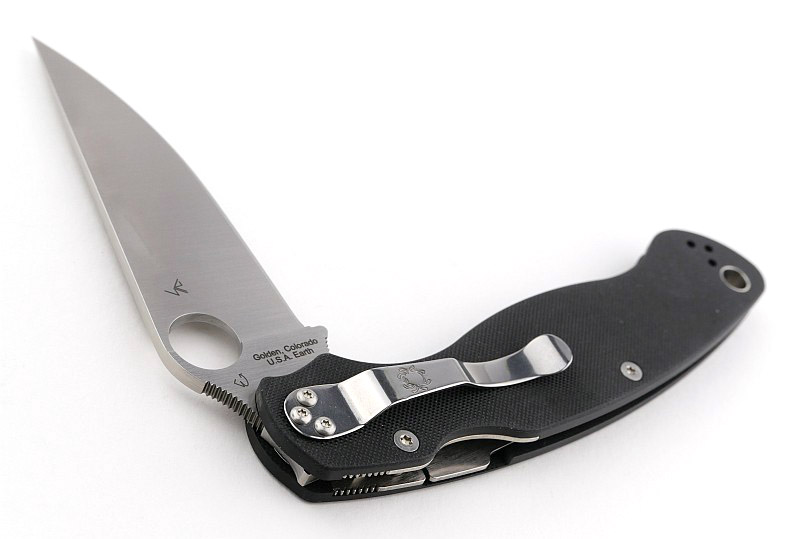
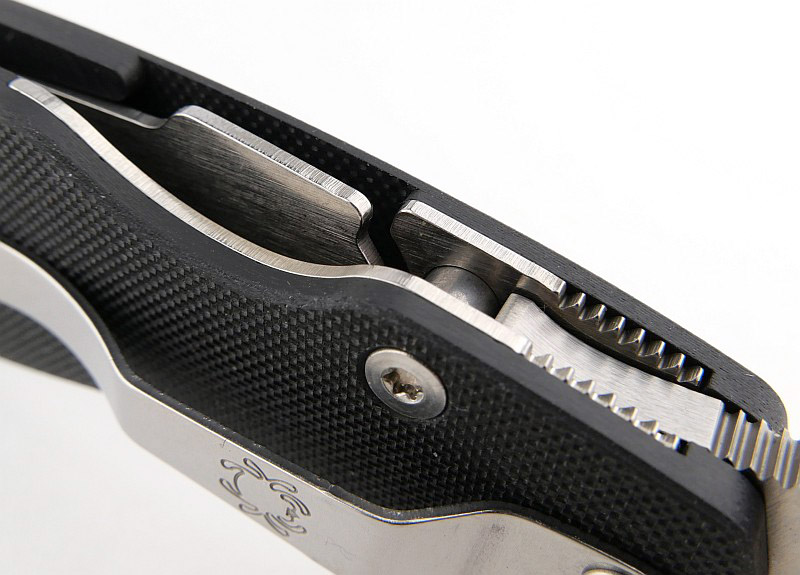
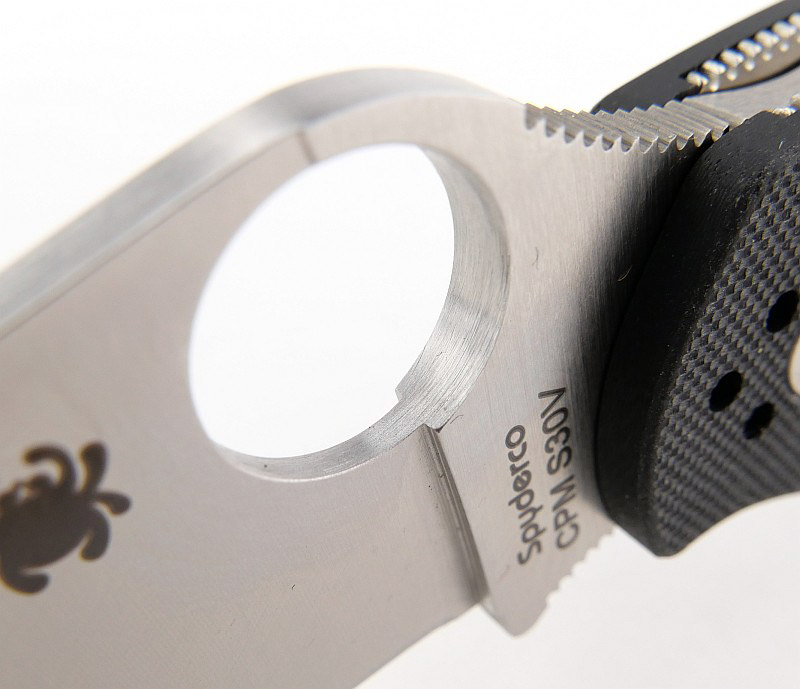
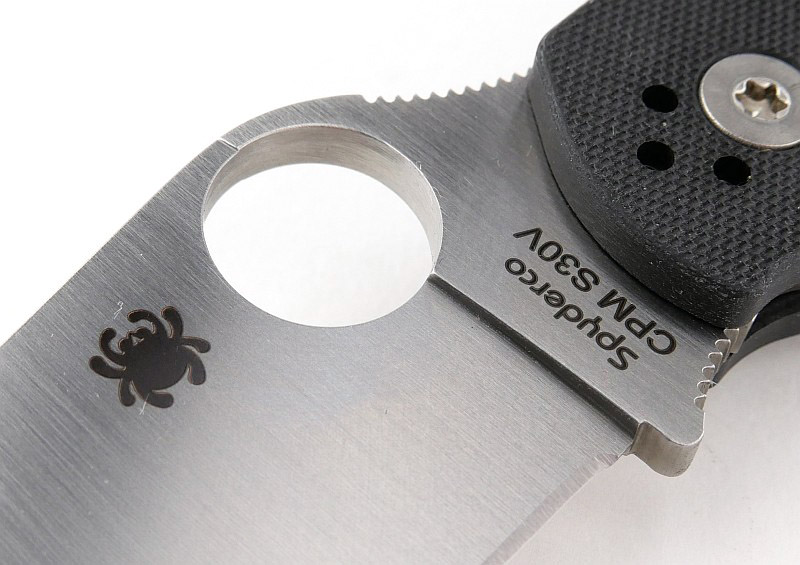
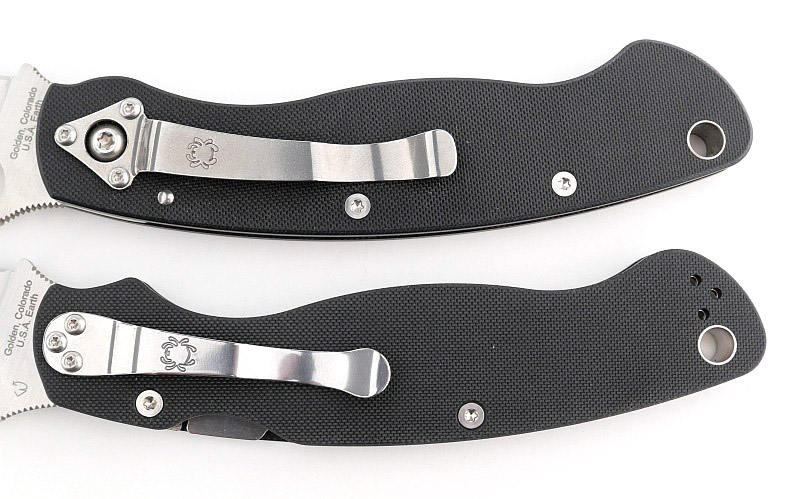
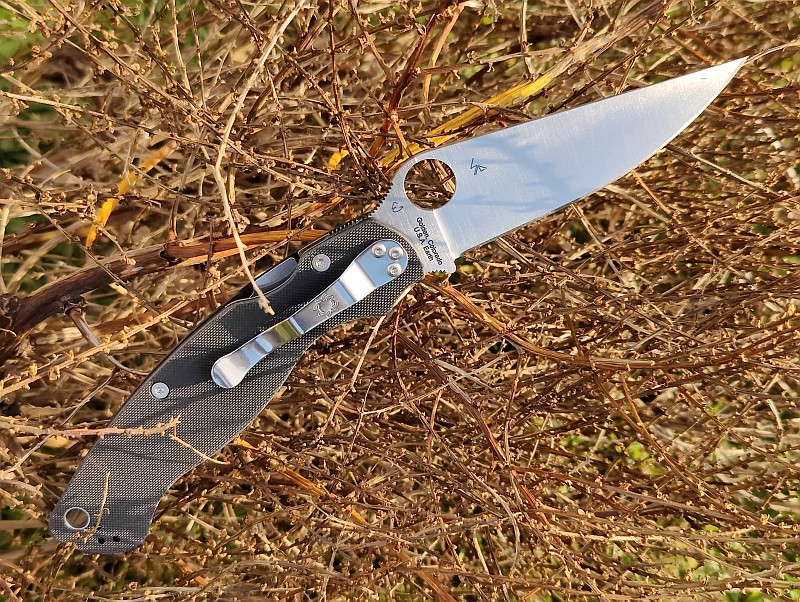
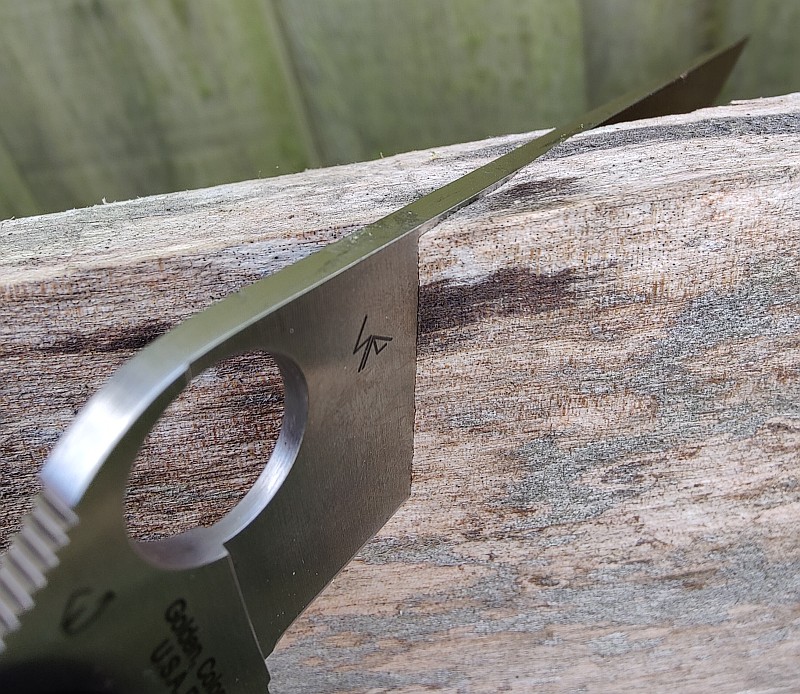
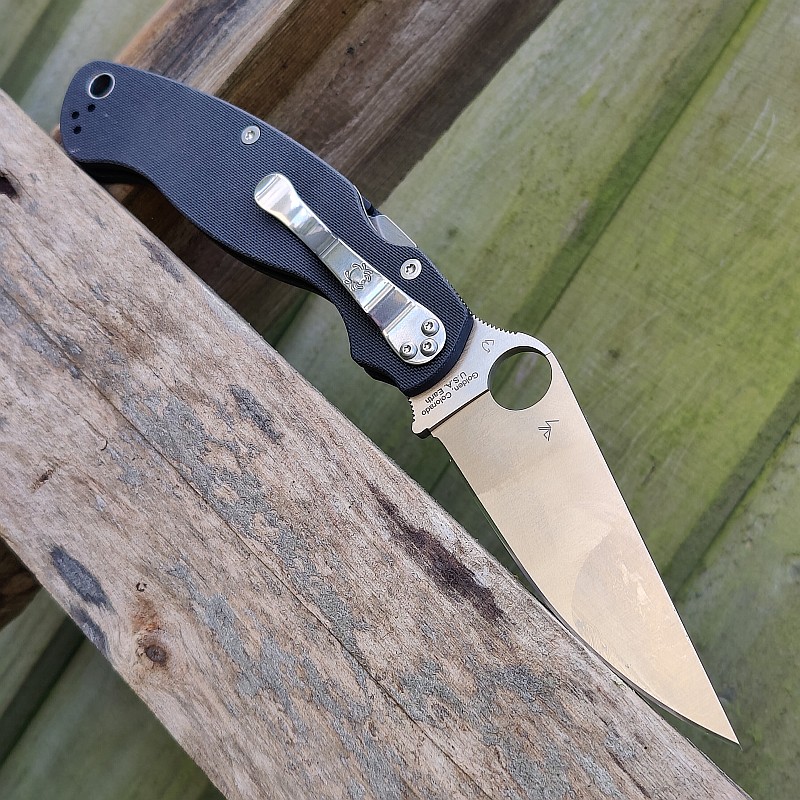
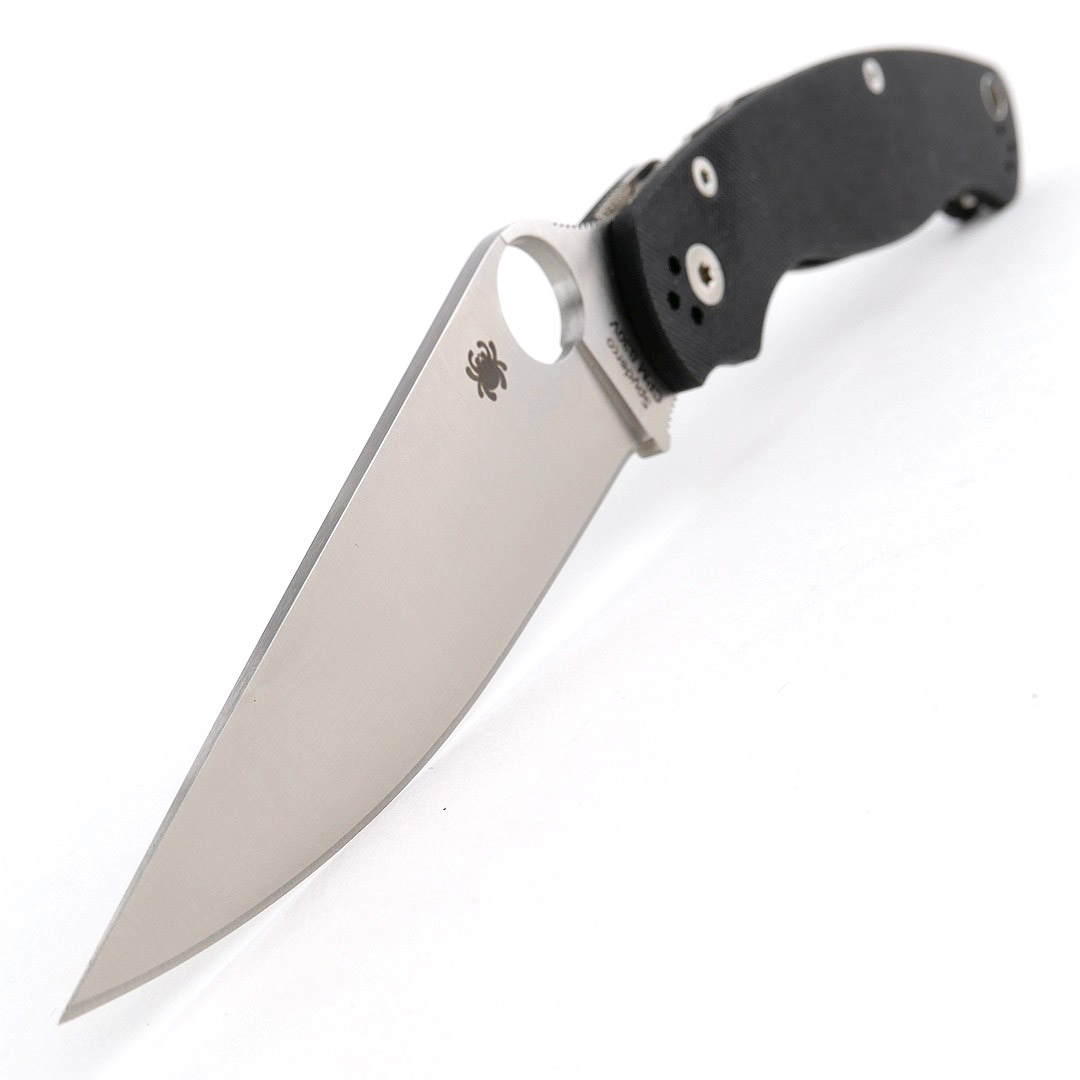
Spyderco’s Military 2 – The 2024 Update of a Classic. The original Spyderco Military Model was designed in 1996, and is a tried and tested knife, proven to be a robust and reliable tool. Building on the strengths of the original design, the Military 2 is refined and updated, bringing in improvements where they make a real difference. Larger stainless steel liners give the knife increased structural strength and also allow the addition of four pocket clip fixing positions. A major switch has been made away from a liner lock and to the signature Spyderco Compression Lock improving safety and handling. Join me in this detailed review of the Spyderco Military 2.

Is the ‘New and Improved’ Spyderco Military 2 actually an improvement? Read on to find out.

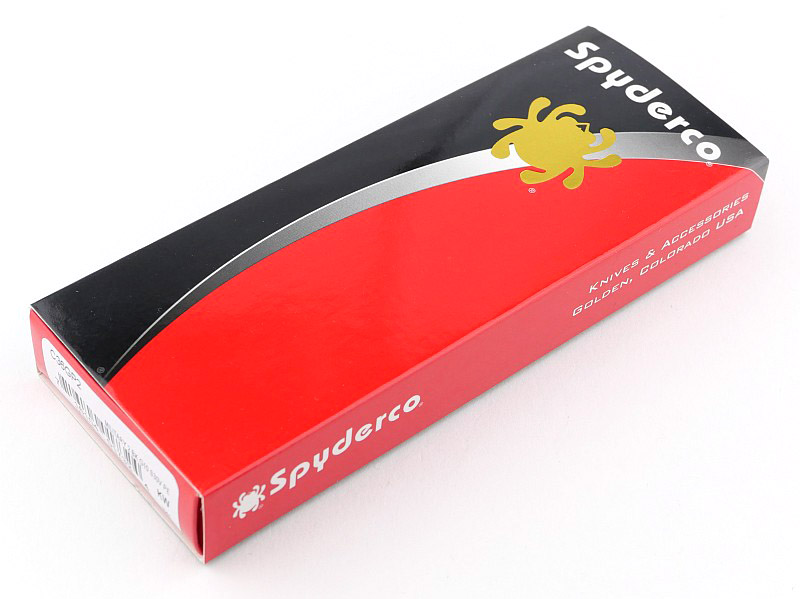
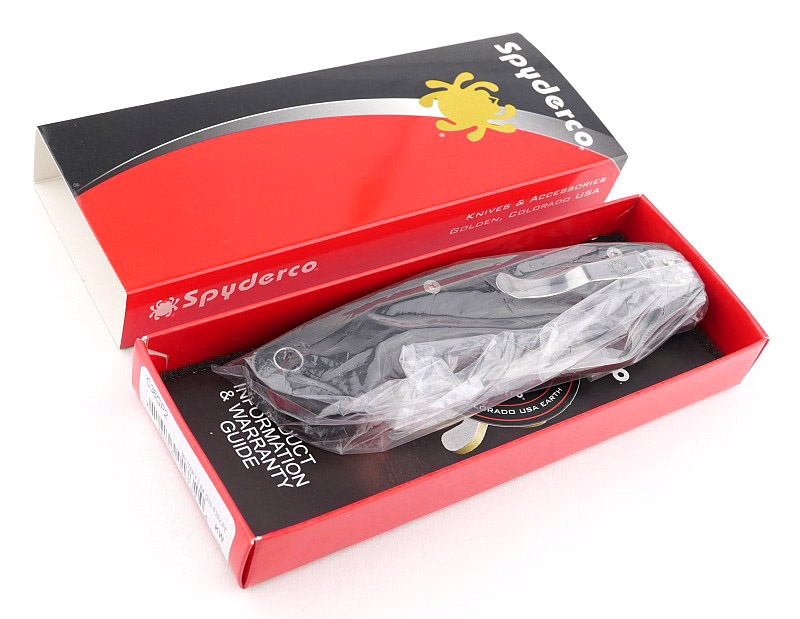
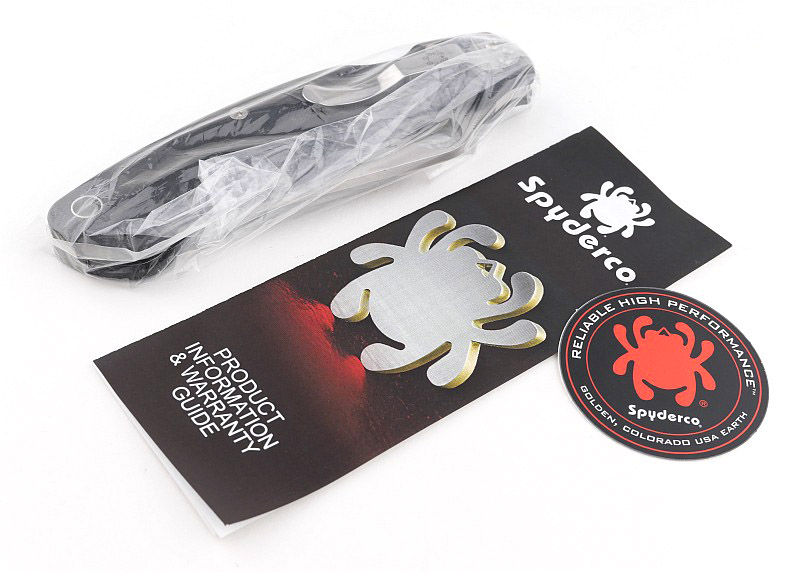
What’s in the box?:
This Military 2 comes in the familiar Spyderco box. Included with the knife is a sticker and a leaflet about the exact model of knife.


A good look round the closed Military 2 – Things to look out for here are:

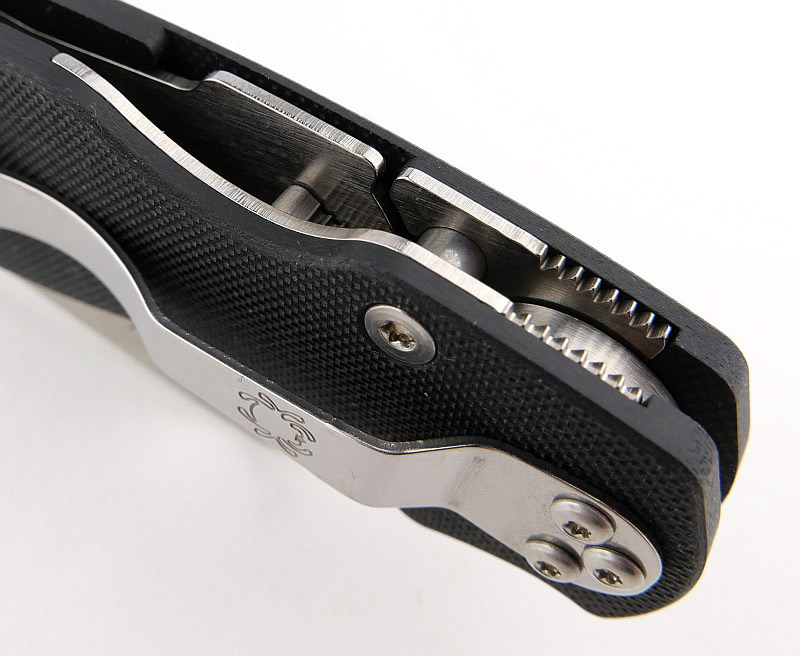
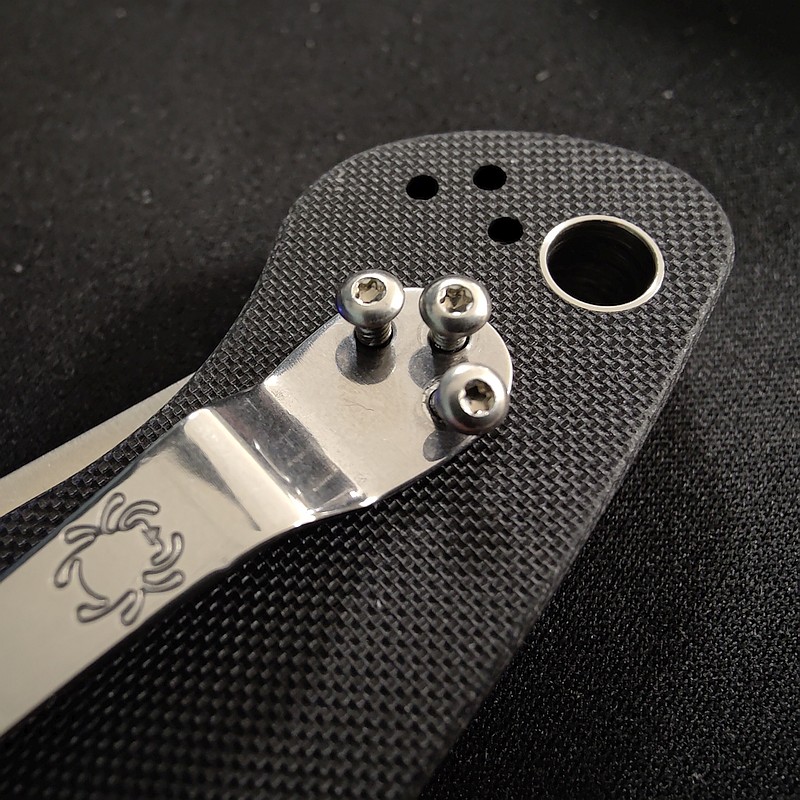
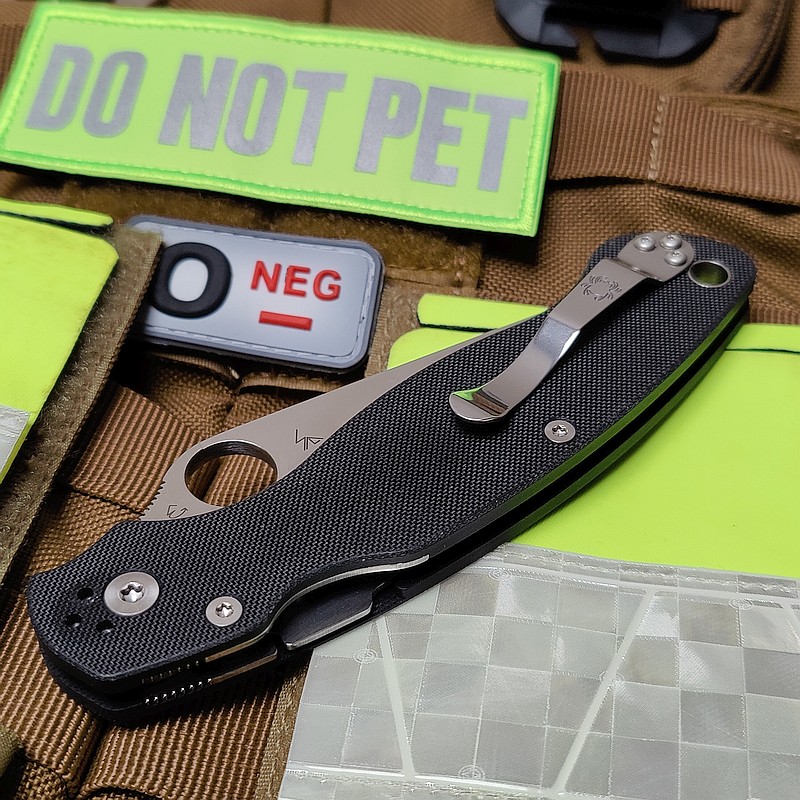
Some of the more obvious updates are easy to spot straight away. The extra pocket clip fitting positions, and compression lock on the back of the handle. Notably missing is the liner lock handle cut-out that normally affects the grip, as the Military 2 now uses a different lock. There is no longer a hole in the clip mount to access the pivot bolt; should you continue to use the clip in a tip-down position, you may need to take it off to adjust the pivot. Next to the compression lock lever, the liners include some thumb grip jimping. Having a choice of all four pocket clip positions is a massive improvement, as clip position is quite a personal choice, and depending if you pocket carry or put onto webbing, you might want to swap this around from time to time. Phosphor-bronze washers; my favourite for stability and reliability.


A good look round the open Military 2 – Things to look out for here are:

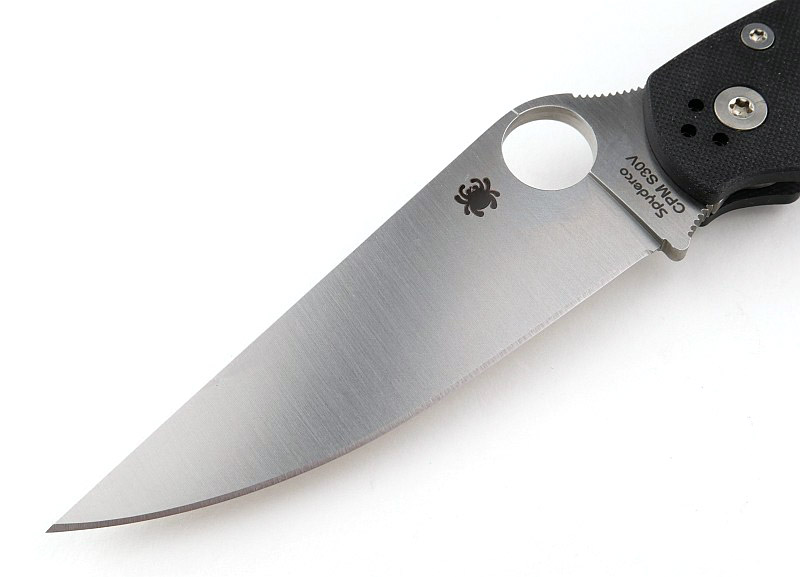
Opening up the blade to reveal that long, eager edge. This is a Large folder, no mistaking that. Now we have the blade open you can see the compression lock engaged in the locked position. Thanks to the change of lock, the handle shape can be optimised for grip instead of incorporating the liner lock cut out, so we have improved first-finger grip shaping. Large blade – Large opening hole.


Explained by the Maker:
Spyderco describe the Military 2 as follows.

Designed by Spyderco co-founder Sal Glesser as the perfect knife for forward-deployed military personnel, the original Military Model is one of the cutlery industry’s most iconic designs. More than 25 years after its original release, the eagerly anticipated Military 2 builds on that hard-earned reputation while incorporating several significant design improvements. Instead of a LinerLock, the Military 2’s full-flat ground CPM® S30V® blade is supported by Spyderco’s signature Compression Lock® mechanism, which offers greater strength and even safer one-handed operation. The stainless steel liners that form the foundation of the lock are larger, giving the knife increased structural strength and anchoring its four-position pocket clip, which is configurable for left or right-side, tip-up or tip-down carry. The skeletonized liners are nested within peel-ply-textured G-10 scales to maintain a slim profile and complement its open-backed construction to reduce the knife’s overall weight. A proud successor to a legendary design, the Military 2 is ready to serve.

The Blade and Handle – Detailed Measurements:
For full details of the tests and measurements carried out and an explanation of the results, see the page – Knife Technical Testing – How It’s Done.

The blade is made from S30V steel.


The Factory edge up close:

Followers of Tactical Reviews will know my views on factory edges, but to recap:

Anyone using a knife will need to sharpen it. That first factory edge is just like the first tank of fuel that a new car comes with (or first charge of the battery).
A good factory edge is a ‘nice to have’ but not a ‘make or break’ for a good knife, as you will be putting your own edge onto it soon enough.
The factory edge does however indicate the care a knife maker has put into the final finish.
It is for this reason Tactical Reviews measures factory edge sharpness and specifications, and includes this information in the detailed technical testing.

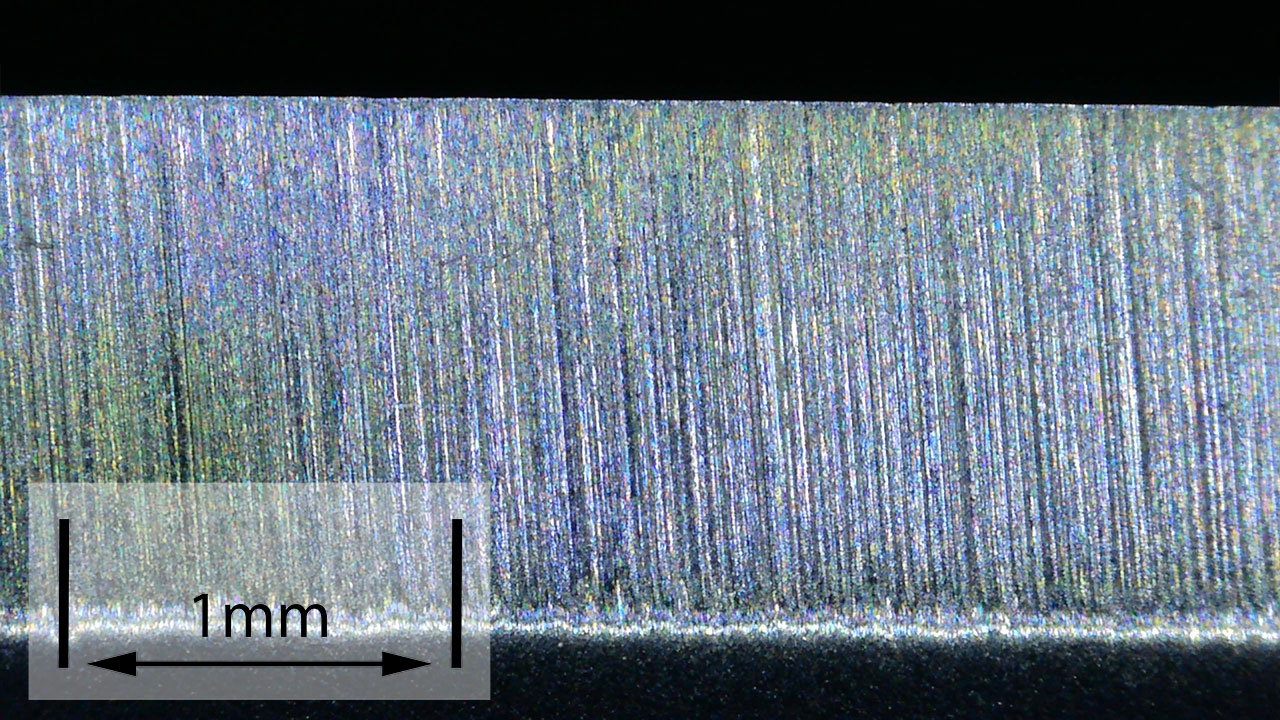
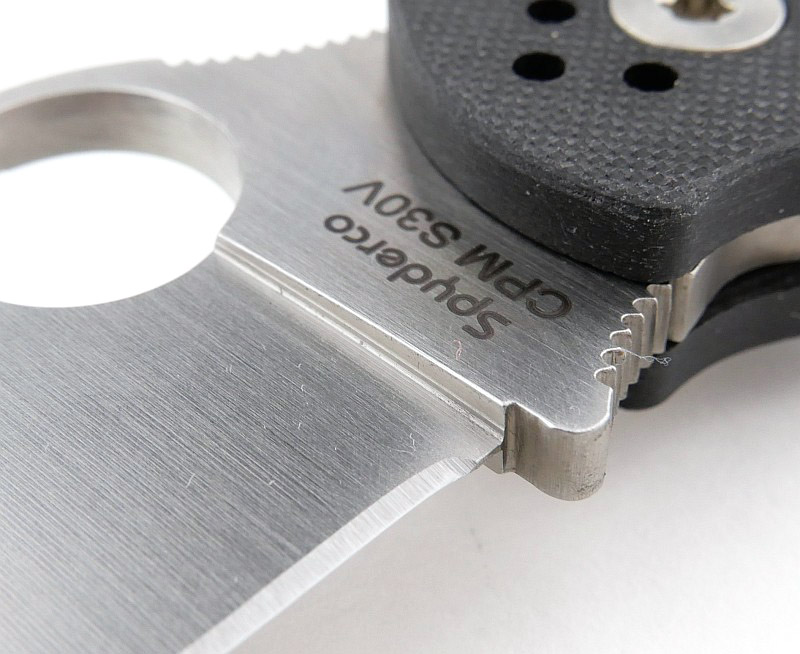
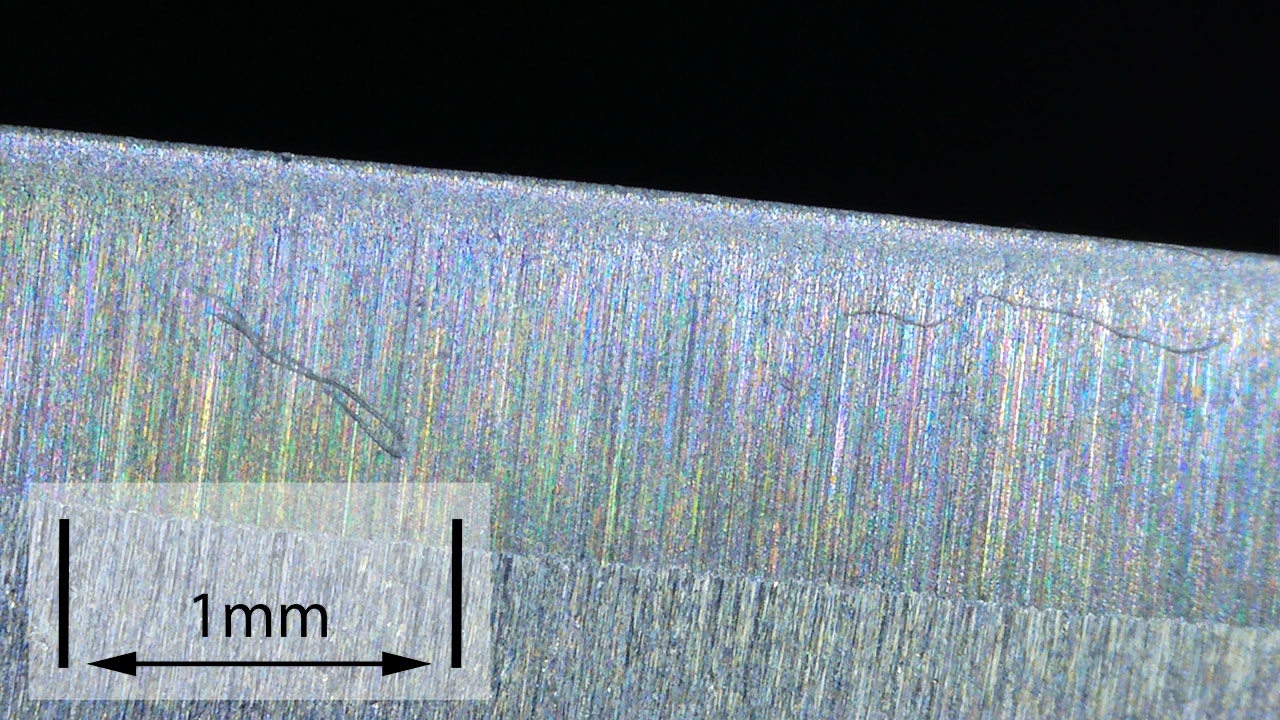
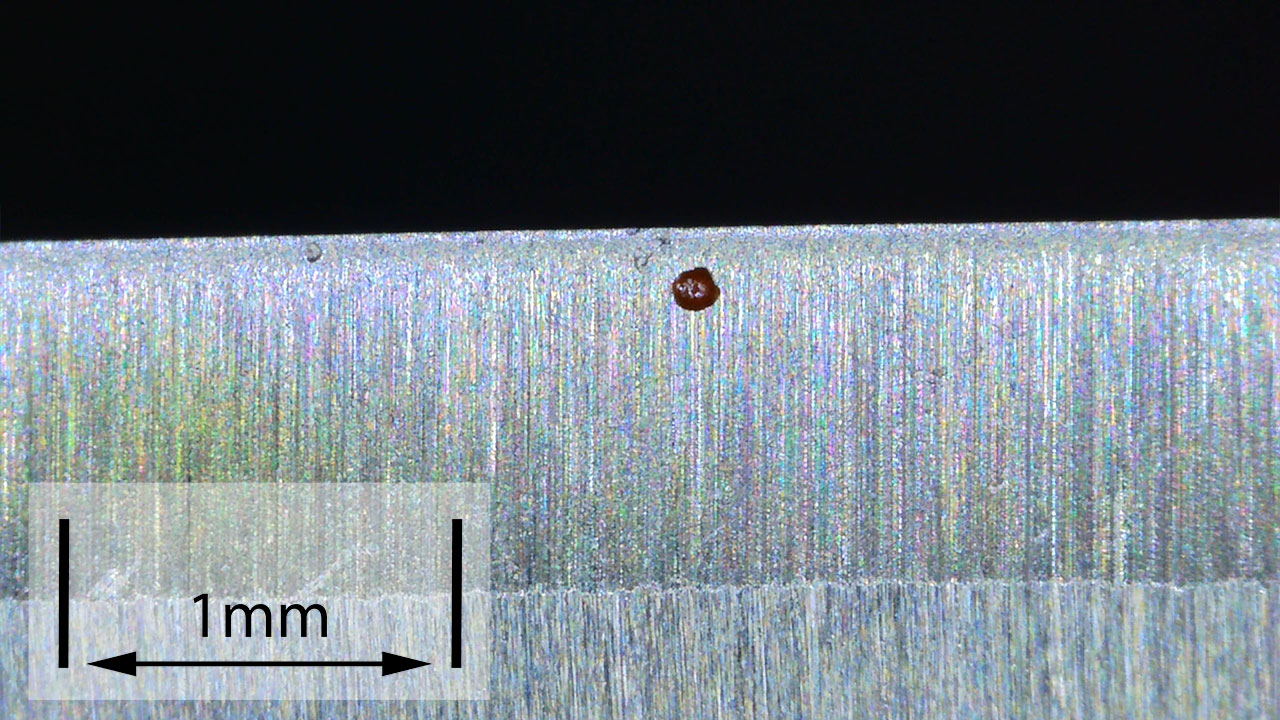
As a further look at the factory edge, this section has been added to include some high magnification photos of the factory edges.

Spyderco’s factory edges are reliably excellent.


What is it like to use?

We all know what ‘New and Improved’ typically means for our favourite products…it normally means ‘cheaper to manufacture and worse’. Typically.

What about the Military 2, what have Spyderco done to our beloved Military? Well, they have, in fact, made it better. This is not to say the original Military, if Spyderco continue to make the classic, no longer has a place; it is still the classic liner lock it always was. If you pick up the Military and swap to the Military 2 and back, fundamentally they are the same with a long pointy blade, long handle, and powerful cutting ability. Instead it is in the more subtle refinements that the Military 2 shows it improvements, those small differences in regular actions and handling that start to shine through.

General handling makes a couple of those updates all the more apparent. The forward choked-up position now has the proper first finger shaping and grip; it just fits and sits better. Open and close, open and close, and the ease the Compression lock brings also shines through. One-handed closing becoming a breeze with the lock released, and the blade falling closed under its own weight, made safer as you do not need to put your hand in the blade’s path to unlock it.


I absolutely love a big folder, and the Military 2 just wanted to get to work, so who am I to stand in the way! The blade reach is excellent, making all the jobs I deployed it for quick and easy. Over and over those two biggest changes, the lock and improved grip shape making the knife itself almost disappear and the jobs complete themselves. For me the Tip-Up clip position and right-handed side means that as I draw the knife out of my pocket, the handle is already in the right orientation and my thumb finds the opening hole immediately, so I have swapped the clip over to this location from the factory position.
Though it is a heavy duty knife, the fineness of the blade has always made me wonder a little. Personally I’ve never had a Spyderco full-flat blade (or any other) fail on me in use, but it is just with the Military 2, the blade is very long. For part of the testing I decided to baton it through pallet wood cross-grain, cutting not splitting. That slicey blade shape just falls through the boards, and comes back out as easily. No gentle tap here, I was full swing pounding on it, and no concerns at all. Obviously it is easy to actually abuse a blade, and I was not trying to do this, but instead just work it hard. It took all this in its stride.


Is the Military 2 true to the original Military model? – Yes.
Is the Military 2 an improvement over the original Military model? – I certainly say Yes.

Review Summary

The views expressed in this summary table are from the point of view of the reviewer’s personal use. I am not a member of the armed forces and cannot comment on its use beyond a cutting tool or field/hunting knife.

Something that might be a ‘pro’ for one user can be a ‘con’ for another, so the comments are categorised based on my requirements. You should consider all points and if they could be beneficial to you.

_______________________________________________
What doesn’t work so well for me
_______________________________________________

No sharpening choil.
The peeled G10 is very abrasive to your pocket.
It makes me want all the different versions of the Military 2.

_______________________________________________
Things I like
_______________________________________________

Compression lock.
It is a Large folder.
Very slicey and pointy blade.
Improved grip shaping over its predecessor.
Phosphor-bronze pivot washers.
Four-position pocket clip.
Full length steel liners.
Excellent factory edge.
‘New and Improved’ – Yes it is.

Review Videos

Starting with a short format sixty second review:


Onto a full video review covering many more details:


Discussing the Review:
Something new – will it work? A Tactical Reviews Subreddit.
TacticalReviewsChat on Reddit
Please visit there and start/join the conversation.
Knife Review: Casström No.14 SFK and Lars Fält Slip Joint

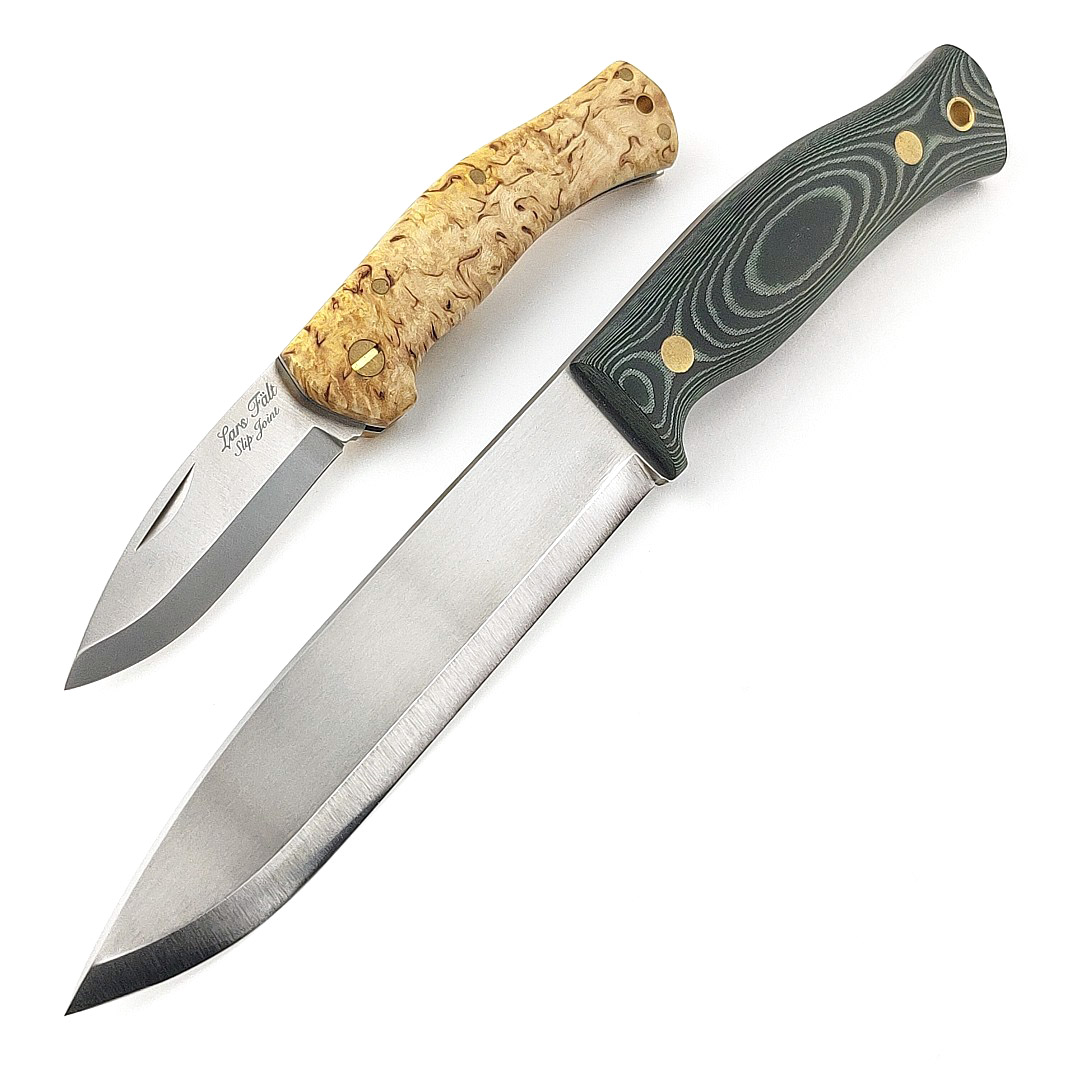
I decided to pair up a fixed blade and folder for this detailed review; the Casström No. 14 SFK and Casstrom Lars Fält Slip Joint. The No.14 is a new knife designed by Casström to tackle the toughest challenges nature throws your way. Built for rugged outdoor use, bushcrafting, survival skills training, or hunting. With its full-tang construction, the No.14 SFK’s large blade is great for those bigger more demanding jobs, like splitting wood but also just as happy carving too. This example features green Linen Micarta handles and A8Mod steel, and is supplied with a vegetable-tanned leather sheath.
The Casström Lars Falt Slip Joint was created in collaboration with world-renowned Swedish survivalist Lars Fält, and was designed to meet UK EDC legal requirements by virtue of having a non-locking folding blade under 3 inches with a sturdy opening and closing mechanism. The handle is crafted from beautiful Scandinavian curly birch, offering a secure and comfortable grip, and the blade steel is cryo-quenched Alleima (formerly Sandvik) 14C28N, a recycled Swedish stainless steel.

What’s in the box?:
Both knives are presented in cardboard boxes with the minimum of fuss.


The No. 14:

A good look round the No. 14’s sheath – Things to look out for here are:
A beautifully made, traditional friction/gravity leather sheath (vegetable tanned leather). Construction is from one folded piece of leather, plus the double welt insert to protect the stitching and stabilise the blade. Each end of the stitching is riveted for extra strength and the lower rivet is hollow so you can add a leg tie if you want. It also includes a good size drainage hole in the design.


A good look round the No. 14 – Things to look out for here are:

Though the handle shape and size, and the knife’s overall form are typical for this style of scandi-grind bushcraft knife, the extra ruggedness is clear from the longer blade and extra-thick blade stock.
The review sample is fitted with green linen micarta handles, nicely showing off the ergonomic shaping as contour lines in the layered micarta. Both handle rivets and the lanyard tube are brass. Somehow the blade steel looks thicker than the 4mm stock used, and really shows its robustness.
As delivered, the No. 14 has a full zero grind scandi edge.


The Lars Fält Slip Joint:

A good look round the Lars Fält Slip Joint belt pouch – Things to look out for here are:

Really this pouch is too good an option not to get. The beautifully crafted leather belt pouch (also using vegetable tanned leather), is a perfect companion to the Lars Fält Slip Joint. In this case it is a two piece construction, with the belt loop and flap being one piece which is riveted onto the stitched main pouch body. There is a welt allowing for a small drainage hole to complete it.


A good look round the Lars Fält Slip Joint – Things to look out for here are:

Casstrom’s folders (locking and non-locking) are only made with Curly Birch handles (no micarta option) which adds to their character and unique look for each knife. Liners, blade and back-spring are all stainless steel, and the remaining fittings, rivets, and lanyard tube, are brass. The sturdy blade has a large nail nick and a scandi grind; this time with a micro-bevel rather than full zero edge.


The Blade and Handle – Detailed Measurements:
For full details of the tests and measurements carried out and an explanation of the results, see the page – Knife Technical Testing – How It’s Done.

The blades are made from A8 Mod and 14C28N steel.


The Factory edge up close:

Followers of Tactical Reviews will know my views on factory edges, but to recap:

Anyone using a knife will need to sharpen it. That first factory edge is just like the first tank of fuel that a new car comes with (or first charge of the battery).
A good factory edge is a ‘nice to have’ but not a ‘make or break’ for a good knife, as you will be putting your own edge onto it soon enough.
The factory edge does however indicate the care a knife maker has put into the final finish.
It is for this reason Tactical Reviews measures factory edge sharpness and specifications, and includes this information in the detailed technical testing.

As a further look at the factory edge, this section has been added to include some high magnification photos of the factory edges.

The No. 14’s Edge:

Once you move onto the next gallery with the Lars Fält Slip Joint’s Edge, you will see the clear difference between this knife’s zero grind edge, and when there is the extra bevel.
Casstrom advise you to add a micro-bevel if you intend to subject the No 14 to heavy chopping to help stabilise the edge and prevent chipping. Having given this zero grind edge a beating to intentionally see if it would chip, so far it has remained intact.


The Lars Fält Slip Joint’s Edge:

Yes, these are magnified, and are showing a 1mm scale, but even so I feel this is more than a micro-bevel, and more into the realms of a small edge bezel. The mini-bevel shown clearly here, when checked with the laser edge bevel protractor, is found to be convexed to a final edge angle of 60 degrees (30 DPS).


What is it like to use?

For this review the fixed blade and folder have been specifically partnered as an elegant traditional pairing. The only time you will catch me out and about with only one knife is if I’ve lost all but the one I still have, so I am always partnering up knives. This is to have different knives to better suit the various cutting tasks, which is more comfortable and helps you do more work with less effort. So, although specifically partnered as a Casstrom pairing for this review, it is a partnership I would happily make for function and looks, any day.
To best show their relative sizes, this gallery includes each knife in my XL glove sized hands. You can clearly see the extended blade of the No. 14 and versatility of the smaller folder.


In my overall edged tool use, I’ve been finding where the No. 14 best fits. With the blade grind and thickness, I’ve found it struggles with outright cross-grain chopping. That thicker blade and wide wedge grind retards the penetration of each strike, ending up almost bouncing back when using a chopping action, combined with a relatively slim handle and the No. 14 wasn’t working for me as an outright chopper. Where this limitation suddenly becomes a benefit is with splitting tasks. Batoning the knife into end grain to split, and it becomes a doddle. The extra blade length giving you more room to strike it, and the wedge-shaped grind being excellent at splitting along the grain.
If the diameter of the wood being struck with a chopping action is thin enough, the wedge effect of the thicker blade is no longer a problem, so cleaning up bigger branches by whipping off the side shoots works well with the No. 14’s longer and heavier blade; this type of chopping action does work well. It is more a matter of knowing the characteristics and working with them than trying to make the knife do something it is not good at.

Despite the suggestion of adding a micro-bevel to protect the edge, I wanted to test the toughness of Casstrom’s A8 Mod and heat treat, and despite going full whack on the blade, so far I’ve seen no edge chipping; a great outcome. I prefer the zero grind edge so as far as I am concerned I’ll take that risk and stick with it.

On the subject of zero grinds, I fully intend to take the Lars Fält edge to a zero grind, but as this will take a bit of work due to the mini-bevel on the factory edge, haven’t got it done in time for this article. This will be a super fine edge, especially compared to the factory bevel at 30 DPS, so I might end up putting the micro-bevel back on.

For a slip-joint the firmness of action makes a big difference to the experience. If the action is too stiff, it can be difficult to use and worrying to close. This Lars Fält is reassuringly firm in action, almost verging on too stiff. In fact having asked people less familiar with edged tools to try it, they struggled to open and close this knife safely (I had to intervene). Due to the stiffness, the nail nick doesn’t work for me and I have to use a pinch grip on the blade, carefully taking it to the half stop and readjusting my grip to fully open the blade. In use it has certainly instilled confidence that the blade will stay where it should (with correct technique of course). Being able to chose a UK EDC Legal slip-joint with a scandi grind is a really nice addition to my carry options, and one I can carry without having to worry if I should or shouldn’t have it on me.


Casstrom give you beautiful traditional designs made with sustainable materials, that look as good as the perform.

Review Summary

The views expressed in this summary table are from the point of view of the reviewer’s personal use. I am not a member of the armed forces and cannot comment on its use beyond a cutting tool or field/hunting knife.

Something that might be a ‘pro’ for one user can be a ‘con’ for another, so the comments are categorised based on my requirements. You should consider all points and if they could be beneficial to you.

_______________________________________________
What doesn’t work so well for me
_______________________________________________

No. 14 – Geometry not suited to cross-grain chopping.
No. 14 – Semi-stainless steel (needs some maintenance).
No. 14 – Handle too slim for chopping.
Lars Fält – More of a mini-bevel than micro-bevel
Lars Fält – Opening action too stiff for many people.

_______________________________________________
Things I like
_______________________________________________

No. 14 – Excellent for splitting wood.
No. 14 – Super tough steel.
No. 14 – Extra blade length makes batoning easier.
No. 14 – Zero-grind edge.
No. 14 – Quality leather sheath.
No. 14 – Sleek and easy to carry (despite longer blade).
Lars Fält – Very firm slip-joint action.
Lars Fält – Scandi grind in a folder.
Lars Fält – High quality leather belt pouch available.
Lars Fält – All brass fixings.
Lars Fält – Sturdy blade.
Lars Fält – EDC legal (where local laws allow).

Review Videos

Starting with a short format sixty second review of the No. 14:


Starting with a short format sixty second review of the Lars Fält Slip Joint:


Onto a full video review covering many more details:


Discussing the Review:
Something new – will it work? A Tactical Reviews Subreddit.
TacticalReviewsChat on Reddit
Please visit there and start/join the conversation.
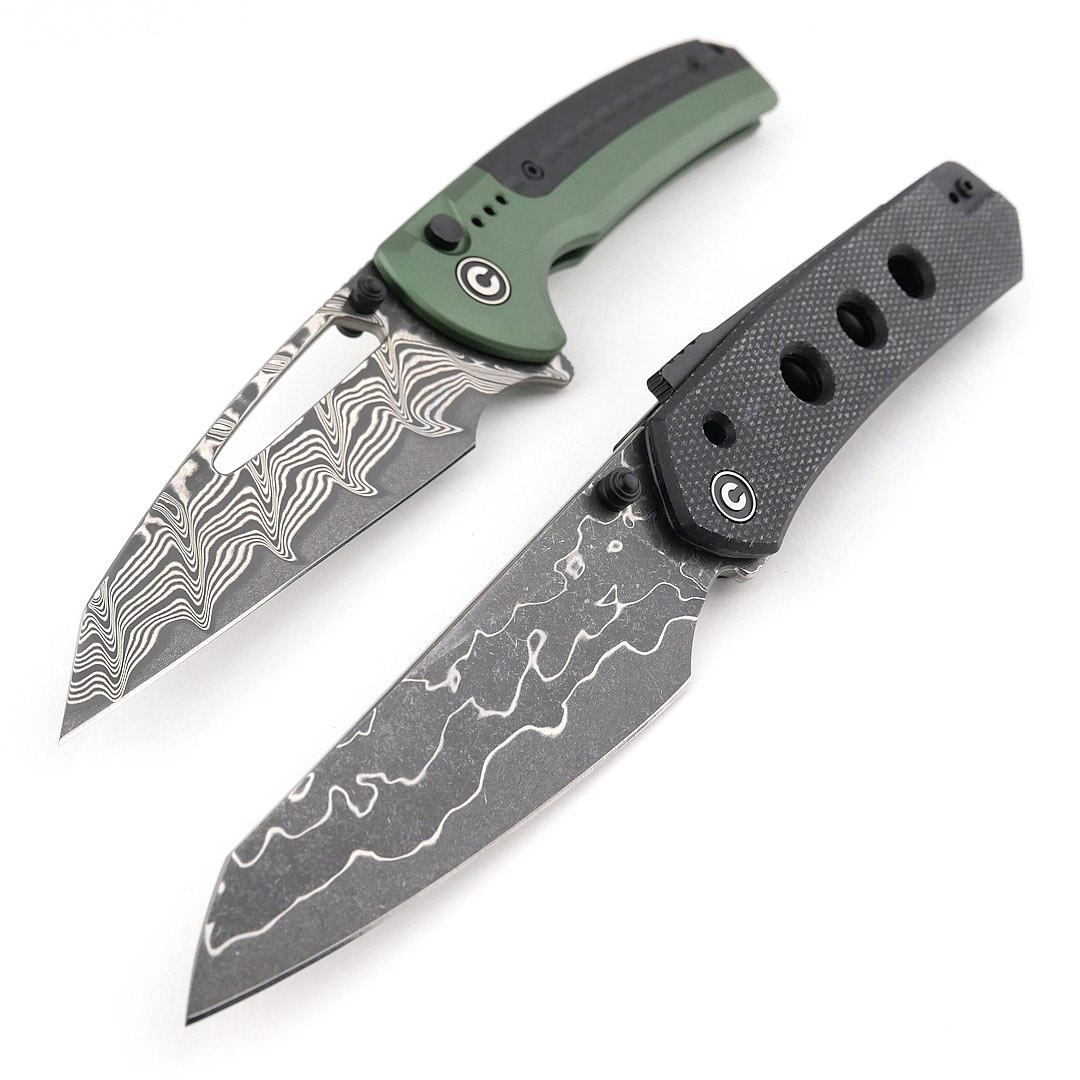
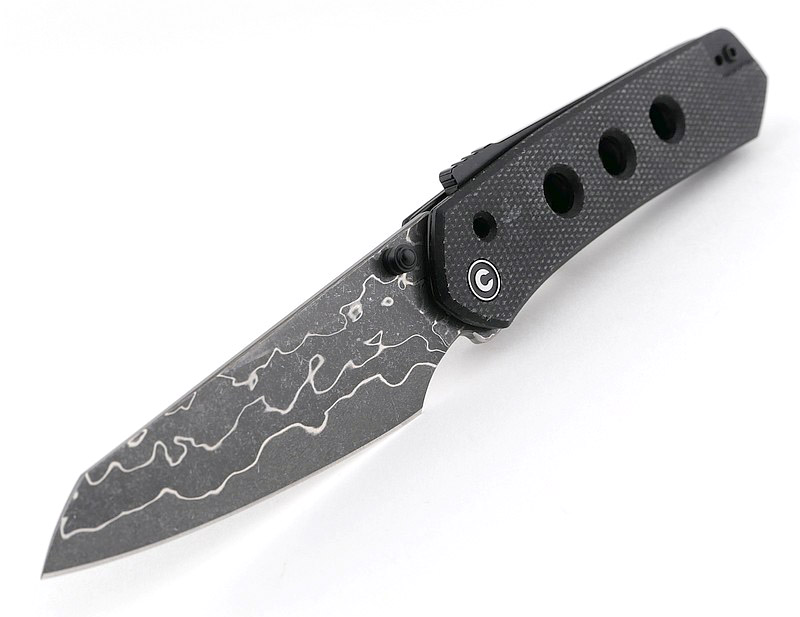
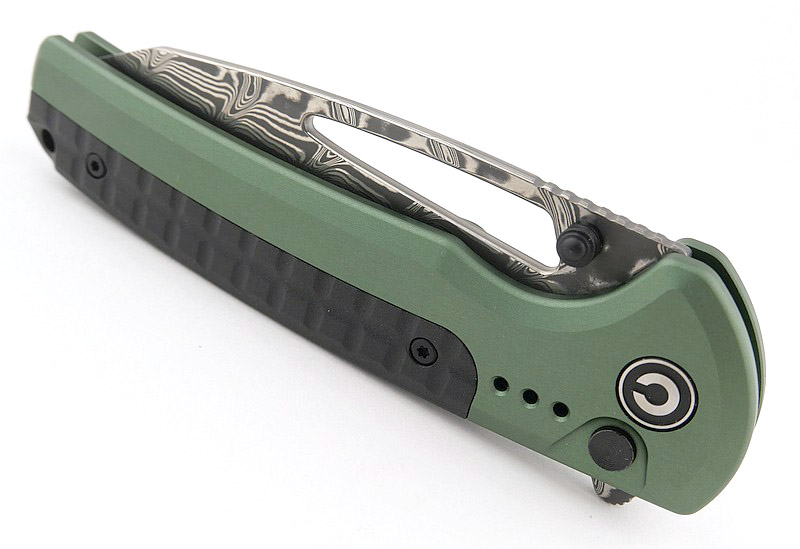
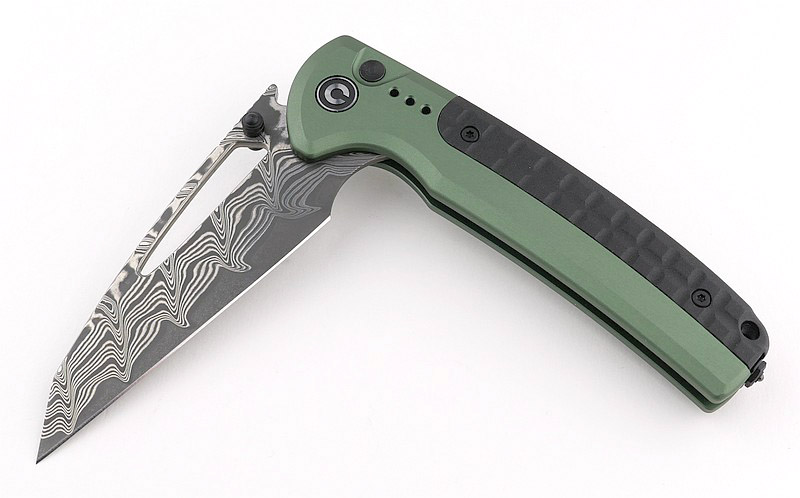
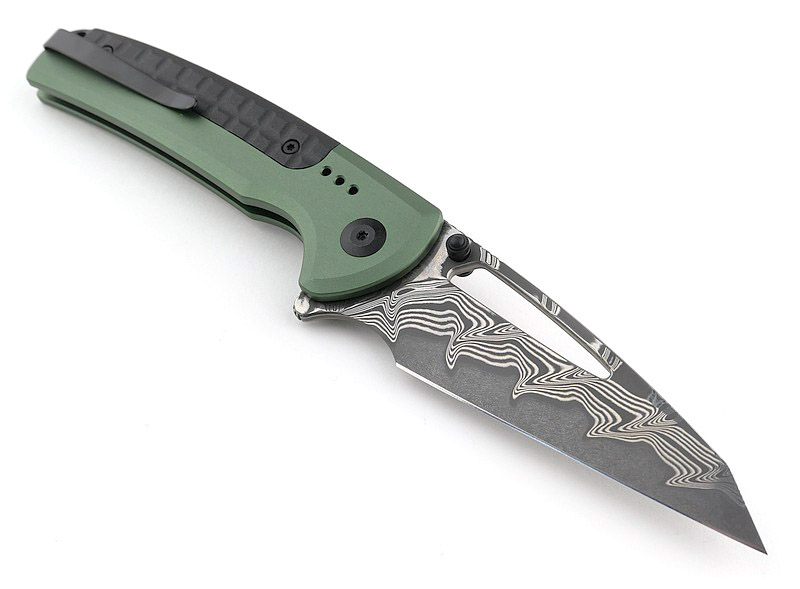
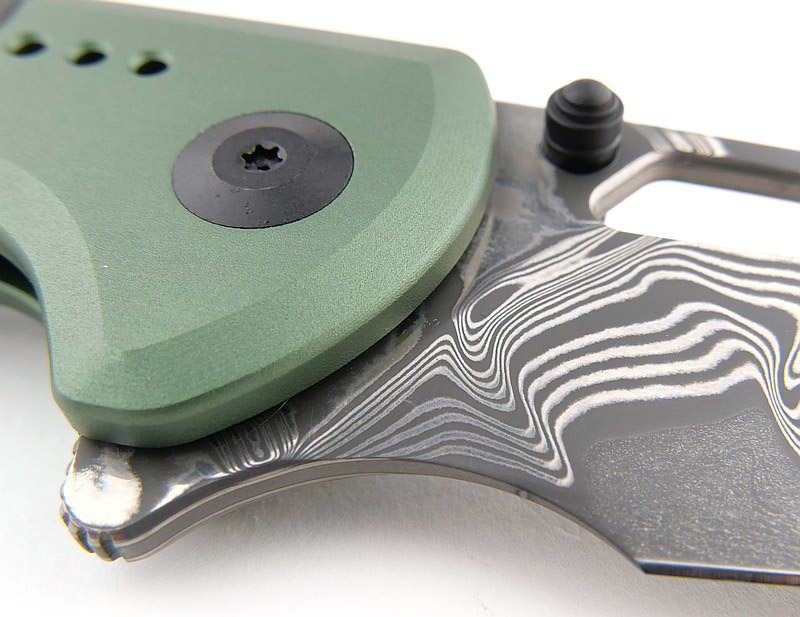
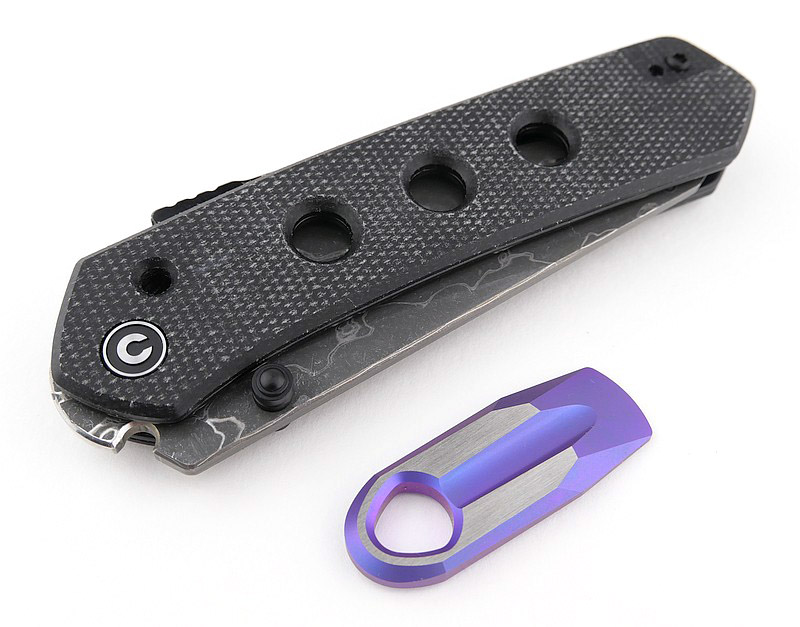
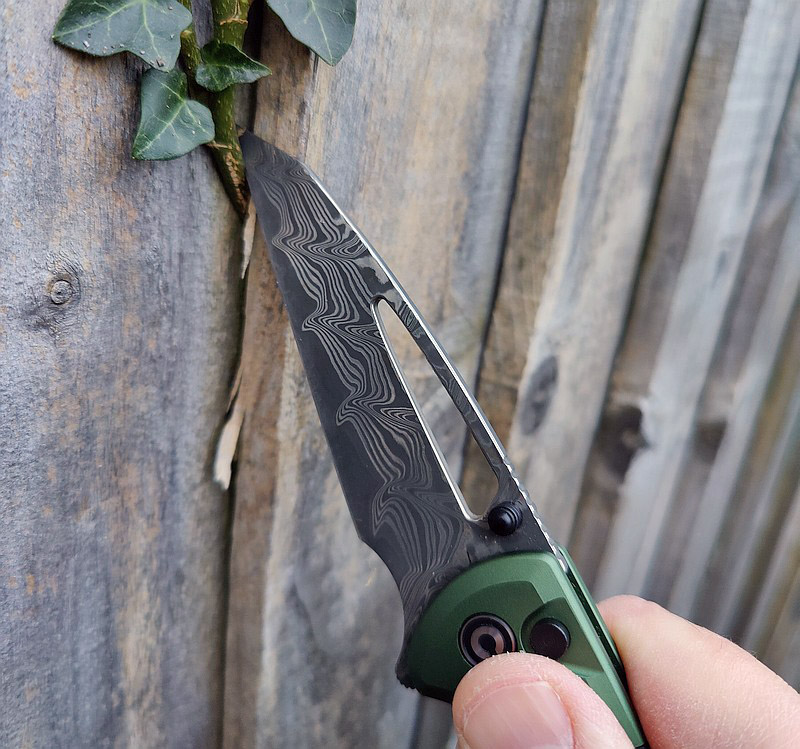
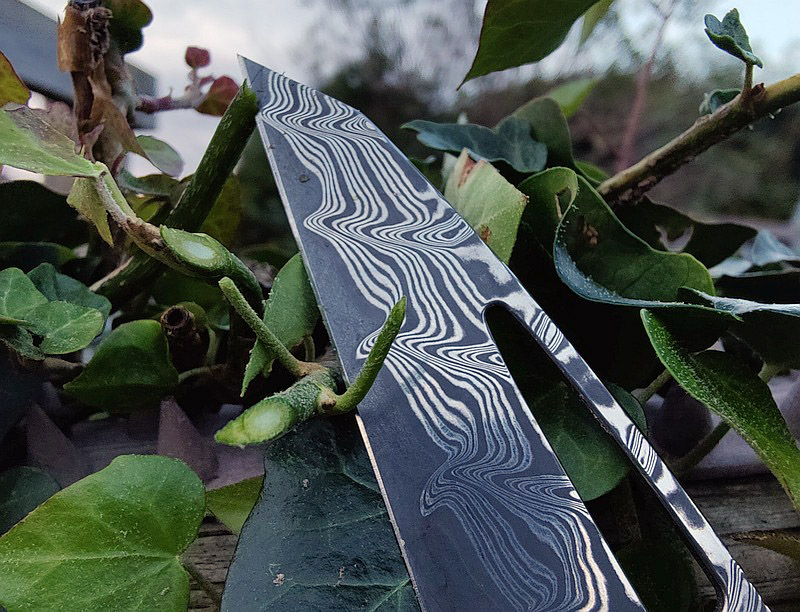
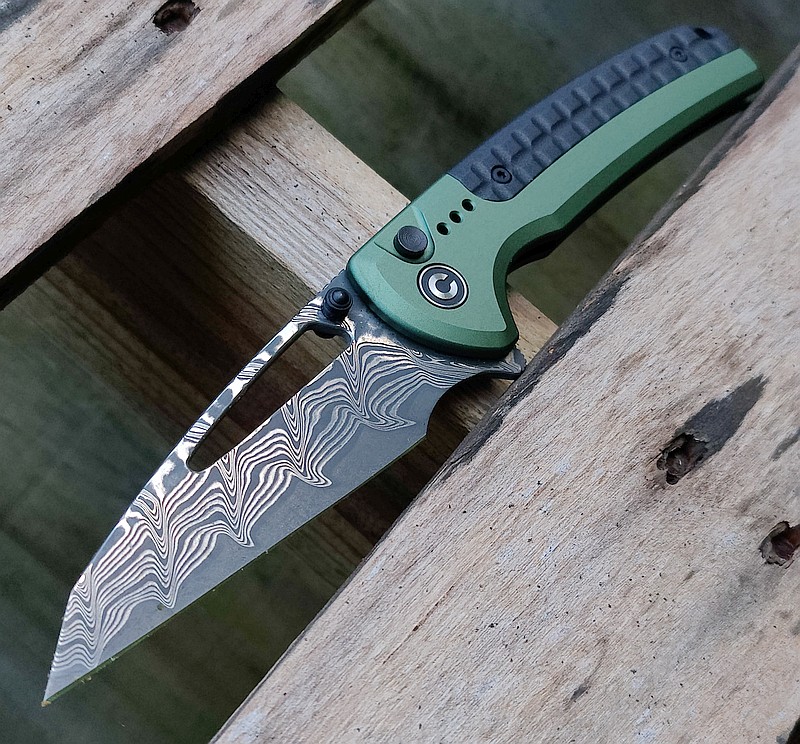
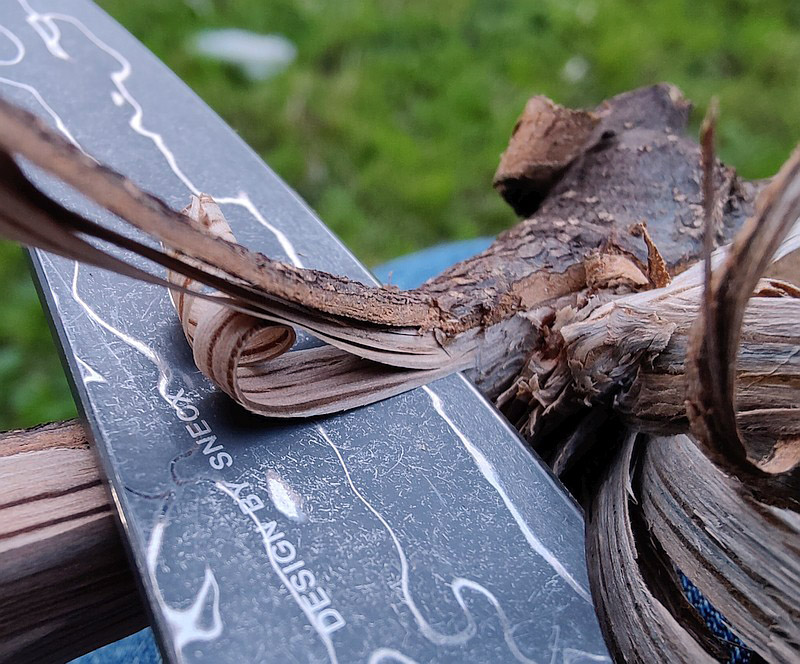
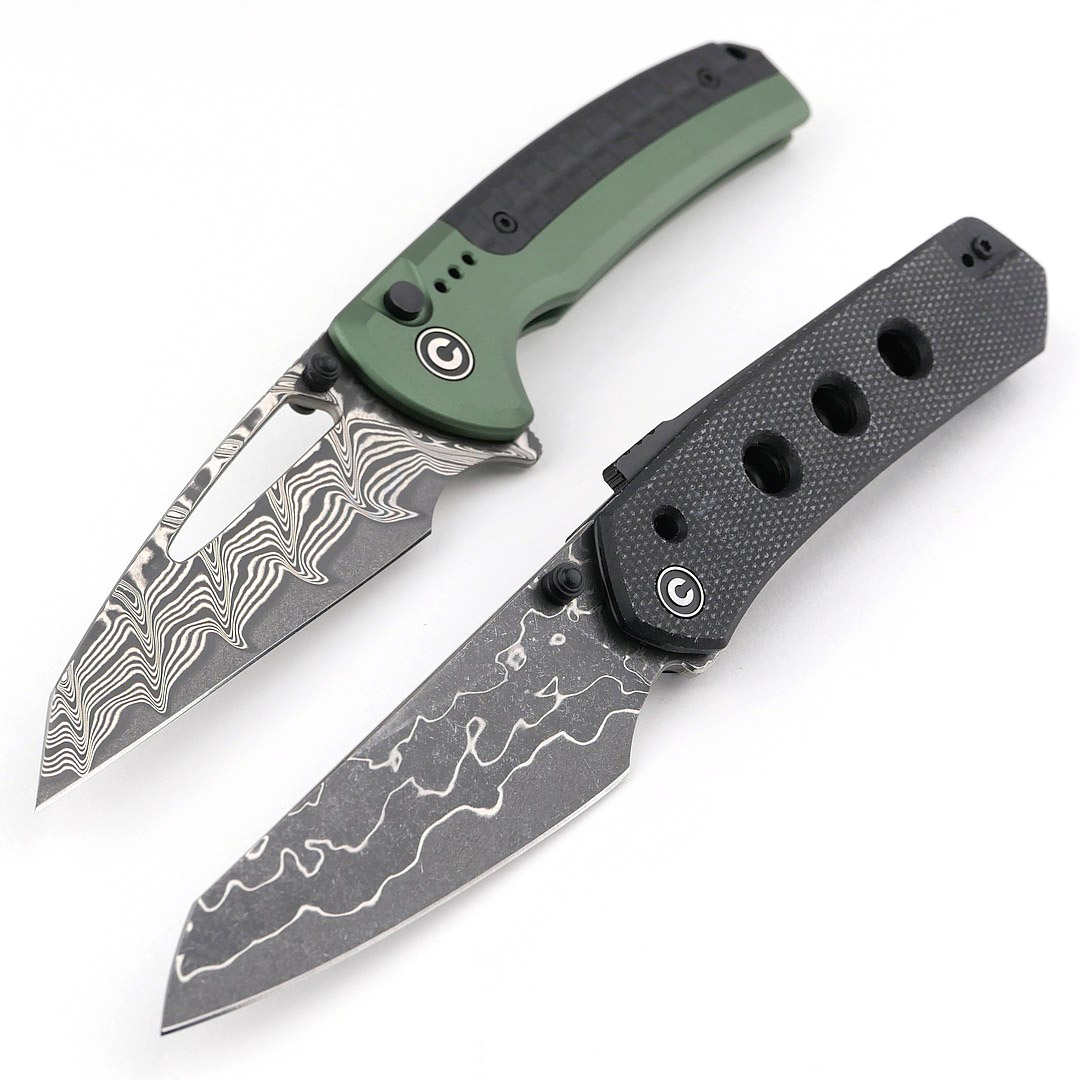
Knife Review: Civivi Sentinel Strike and Vision FG

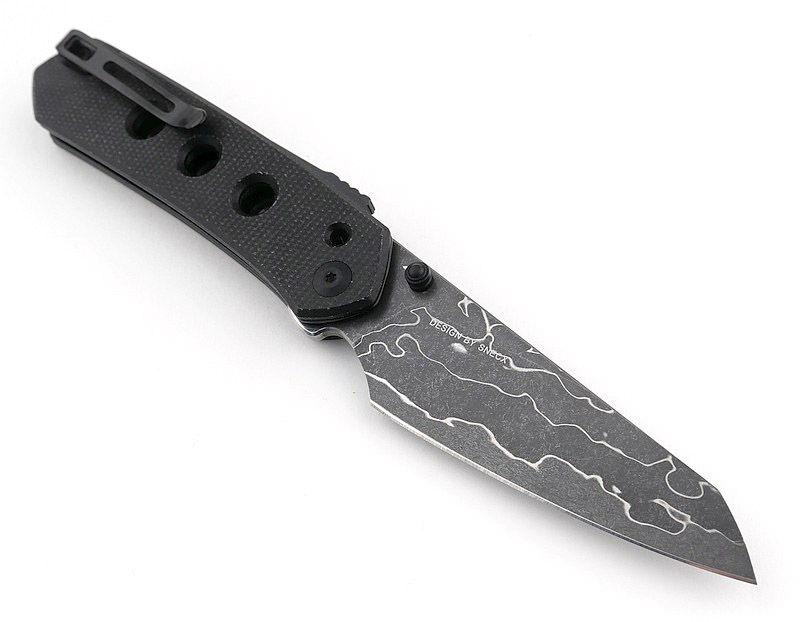
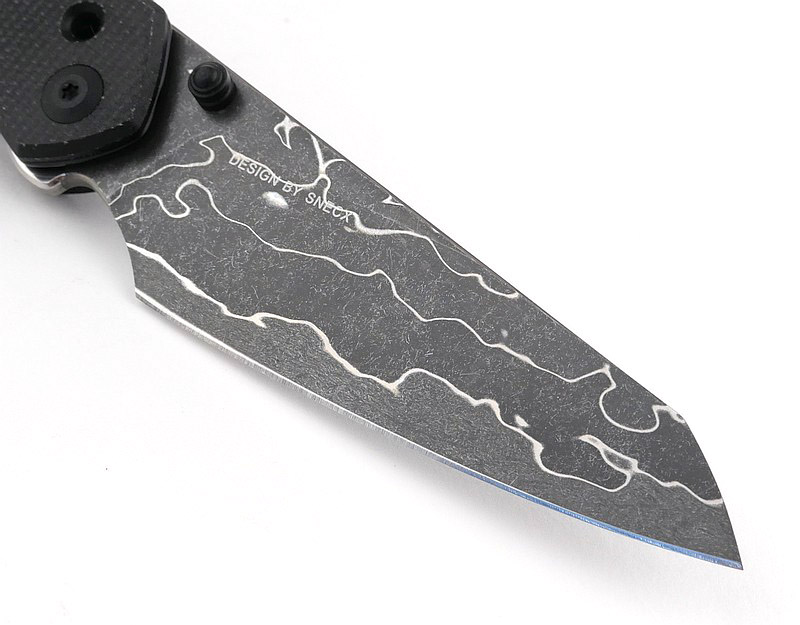
The Vision FG and Sentinel Strike are two of Civivi‘s best sellers. In this detailed review of the Vision FG and Sentinel Strike we are taking a close look at two versions of these knives featuring Civivi’s genuine Damascus steel blades. The Vision FG, designed by Snecx Tan, is equipped with the ‘Superlock Mechanism’. The ‘Superlock Mechanism’ is a lock design Snecx and WE Knife worked on together develop. For this lock, the back of the handle has a titanium bar which hinges just below the pocket clip. The bar is spring loaded and pushed into a cut-out between the blade and the stop pin – the lock gets stronger the more pressure you apply. Push the bar backwards and the blade unlocks easily.
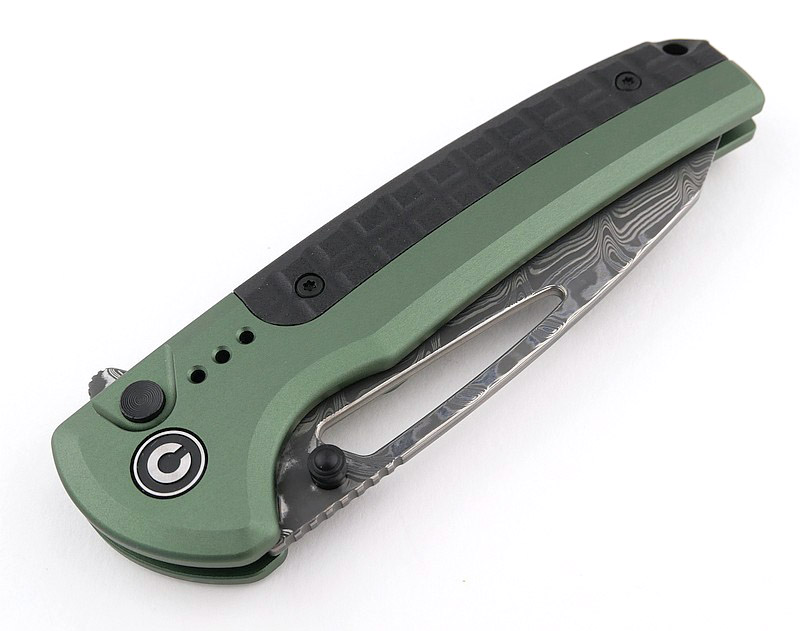
The Sentinel Strike has a reverse-tanto blade shape. Its straight edge makes it an ideal knife for so many cutting tasks. The knife is easy to open with the thumb studs, flipper or large hole in the blade, and it has a very smooth opening action. The blade is locked in place with a button lock.

Join me in this review of the Vision FG and Sentinel Strike to see why these Civivi knives are so popular.

What’s in the box?:

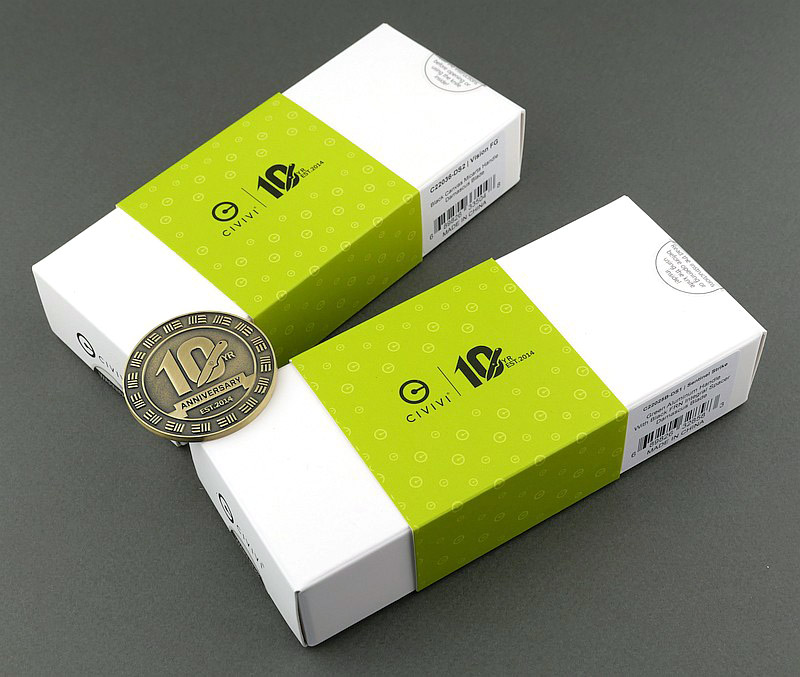
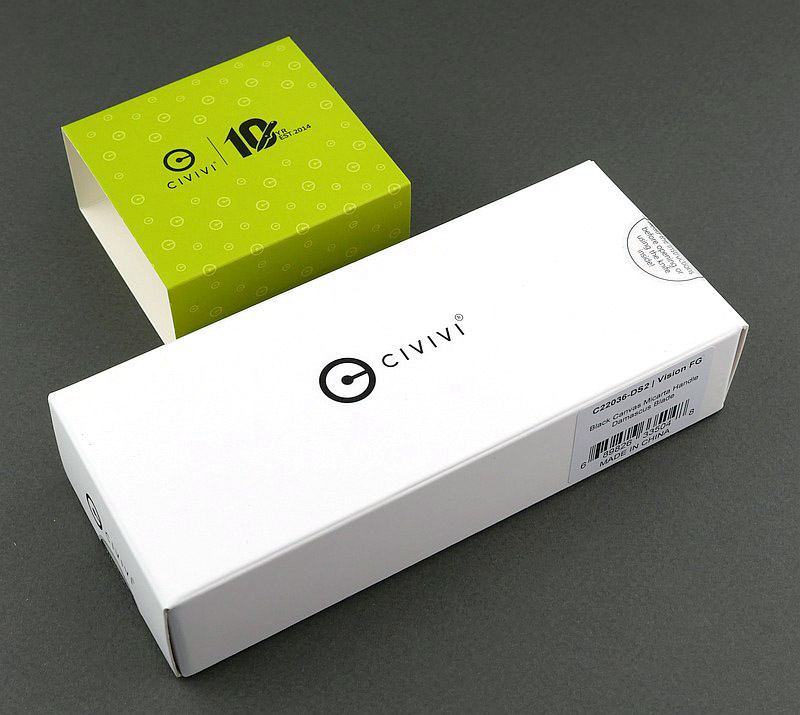
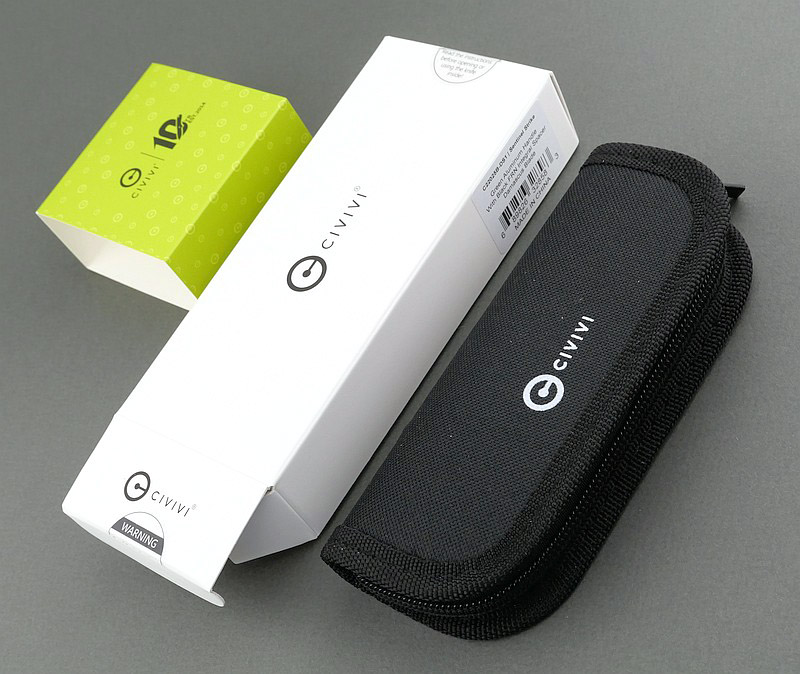
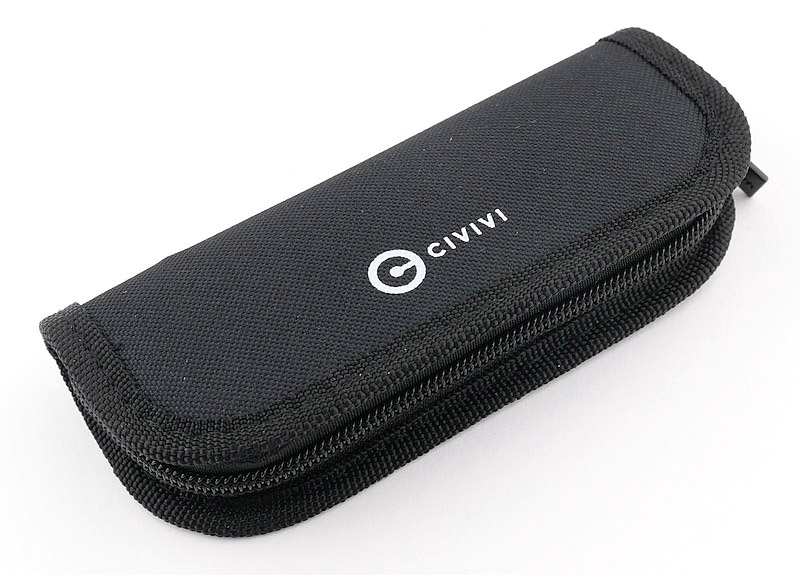
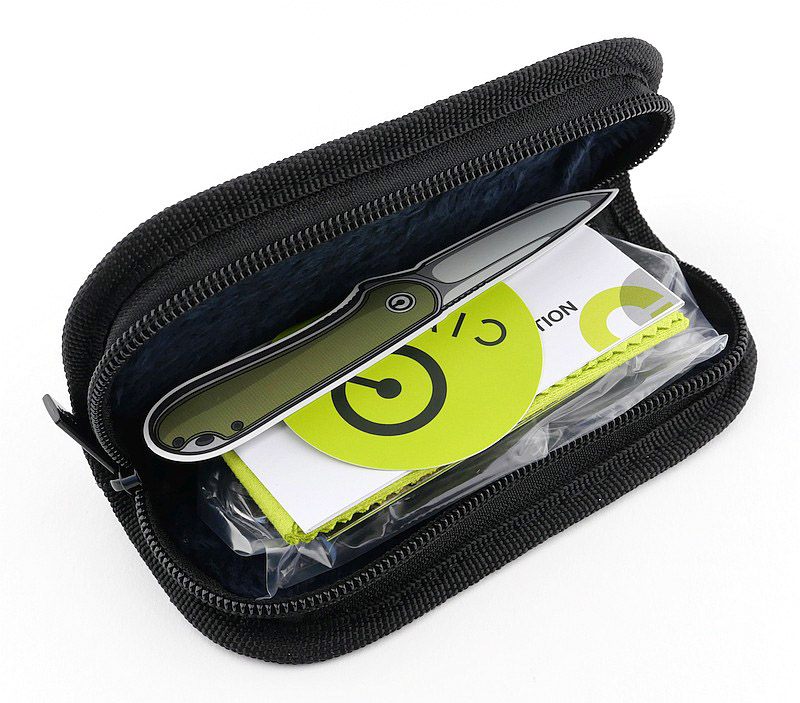
These are in the 2024 10th Anniversary boxes, with WE Knives / Civivi becoming 10 years old in 2024. Both knives use the same packaging and have the same contents apart from the knives themselves. Considering the price point, the fact they include a nice zip up storage case is a bonus. Also included are a few stickers and a cleaning cloth.


A good look round the Vision FG – Things to look out for here are:

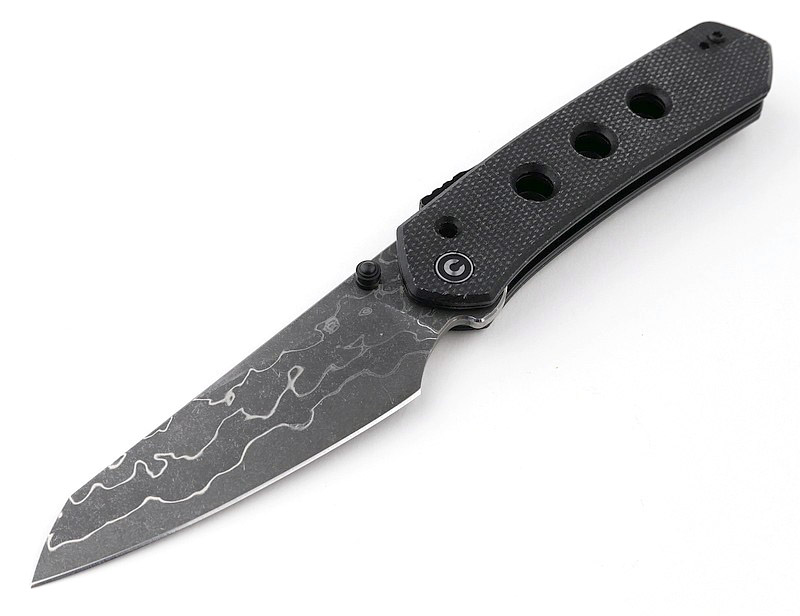
Mainly as it was the first of the two I picked up, we are starting with the Vision FG. Featuring a genuine Damascus steel blade, the composition of which is included later in the review, also happens to be different to the Damascus used in the other knife in this review and makes for a very distinctive look.

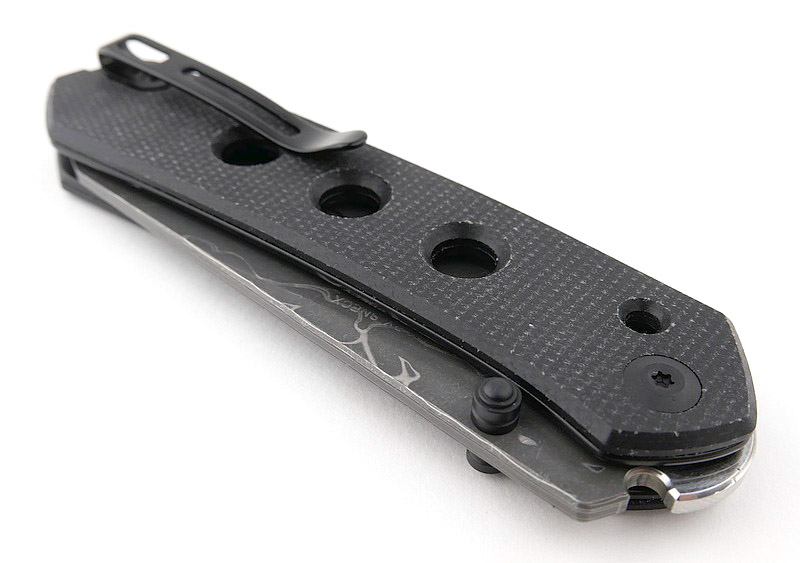
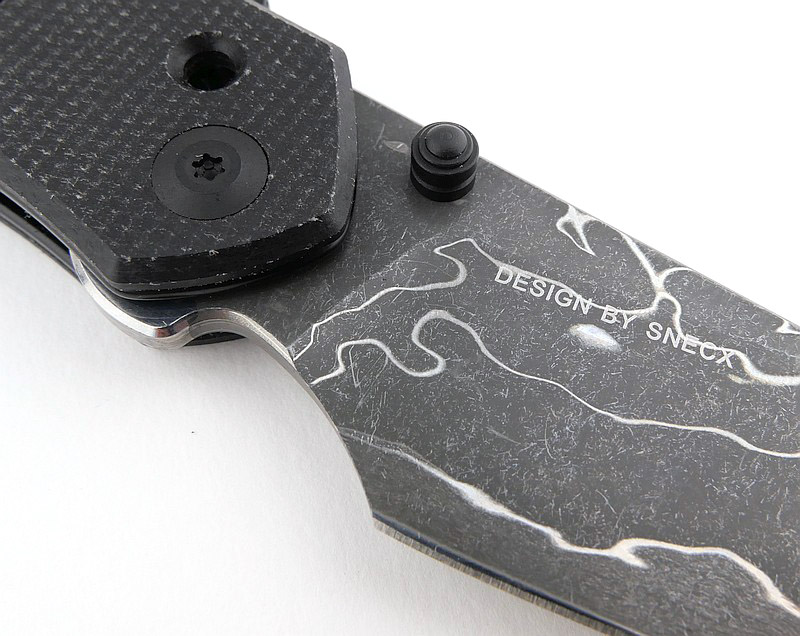
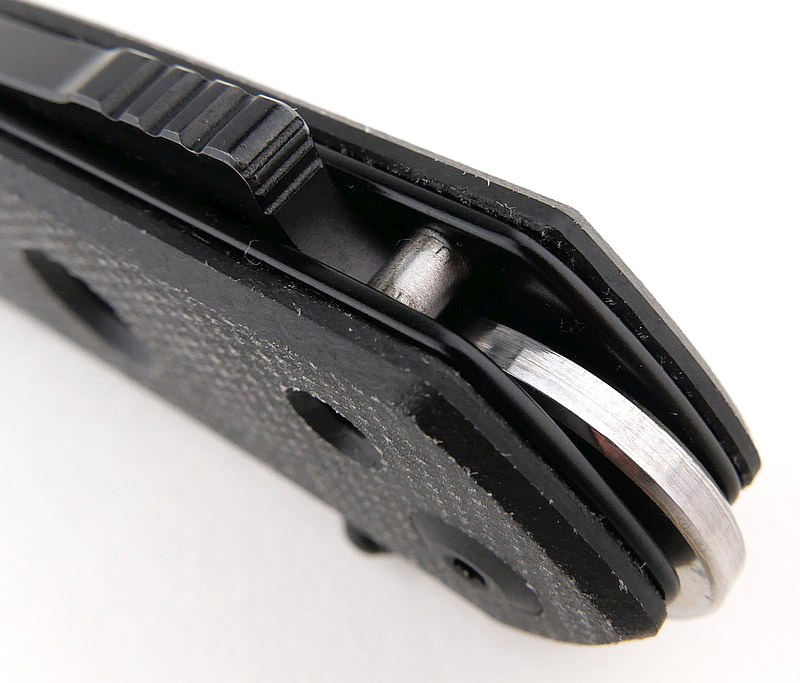
This version of the Vision FG has the black Micarta handles on top of the steel liners; there is a black G10 as well, so you can choose the feel of the scales you prefer. This gallery focuses closely on details like the handle texture, thumb-stud, and pivot fixings including Civivi’s branded bolt head.
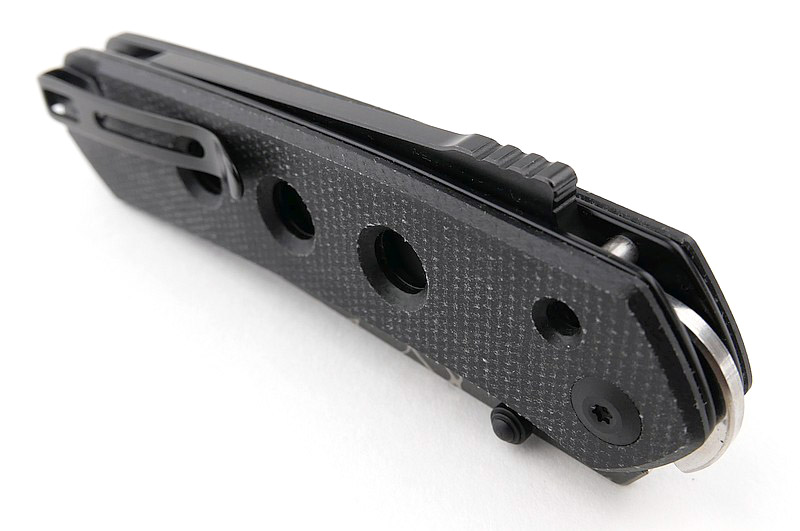
The pocket clip is a tip-up position and can be fitted to either side of the handle.
For the Vision FG, it uses the ‘Superlock Mechanism’, designed by Snecx. Without the literature, I would have continued referring to this as a recoil lock, as in operation it is very similar to this. On closer inspection, the locking process involves inserting a bar between the blade locking surface and the stop bar (much like a compression lock). As your hand pushes this into place while gripping the knife, it becomes even more secure as you use it, yet easy to disengage.


A good look round the Sentinel Strike – Things to look out for here are:

Next we have a recent addition in the Sentinel Strike range where the combination of handle colour and Damascus was added to the original Strike line up (there is also a Strike II with drop point blade).

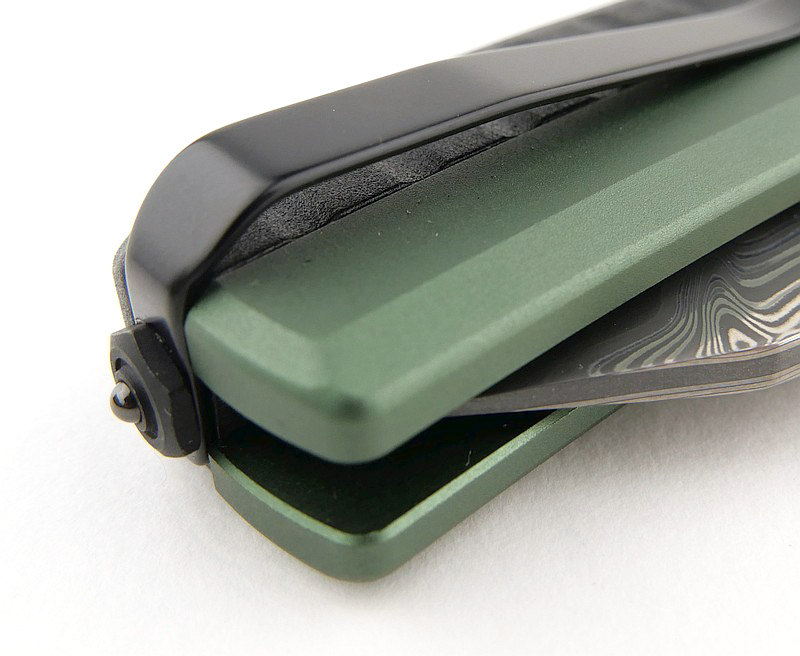
This time the handle is a combination of aluminium (with a choice of colours) and the integral spacer, made from FRN which helps keep the weight down. It is also fitted with a stainless-steel pocket clip incorporating a glass breaker into the head of its fixing bolt.
The Sentinel Strike has a flipper tab, thumb stud and opening hole in the blade, plus it is a button-lock mechanism, giving you a multitude of ways to open it.
As with all Civivi folders, the pivot bolt head is branded to confirm its identity.


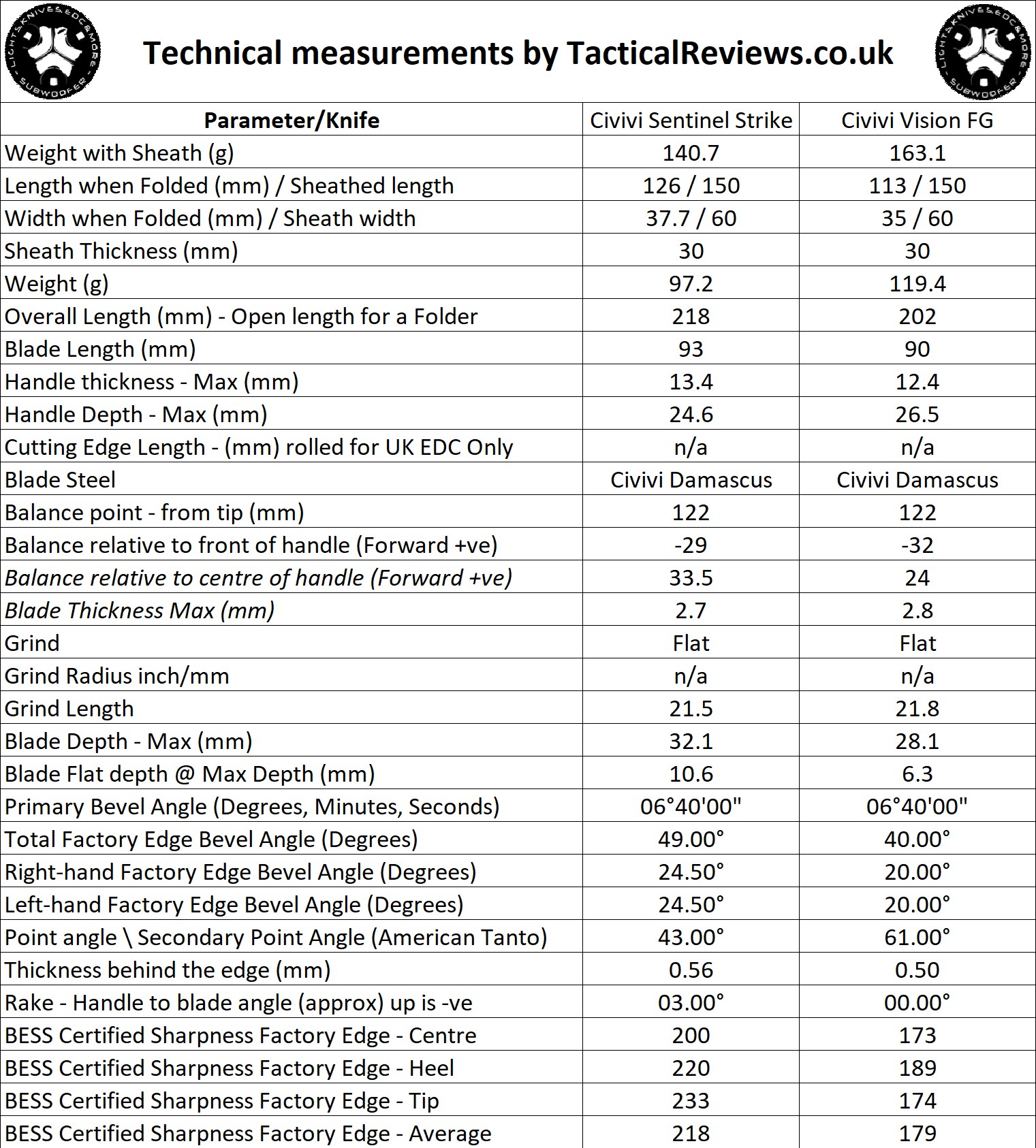
The Blade and Handle – Detailed Measurements:
For full details of the tests and measurements carried out and an explanation of the results, see the page – Knife Technical Testing – How It’s Done.

The blade is made from Civivi’s Damascus steel.
For the Strike, according to the information from Damascus supplier, the base materials of the Damascus is compound by 10Cr15CoMoV and 9Cr18MoV.
For the Vision FG, the Damascus steels used in this knife are 10Cr15CoMov steel in its core with 316 and 5Cr15Mov steel in layers.

For comparison the measure parameters are shown side by side here.


The Factory edge up close:

Followers of Tactical Reviews will know my views on factory edges, but to recap:

Anyone using a knife will need to sharpen it. That first factory edge is just like the first tank of fuel that a new car comes with (or first charge of the battery).
A good factory edge is a ‘nice to have’ but not a ‘make or break’ for a good knife, as you will be putting your own edge onto it soon enough.
The factory edge does however indicate the care a knife maker has put into the final finish.
It is for this reason Tactical Reviews measures factory edge sharpness and specifications, and includes this information in the detailed technical testing.

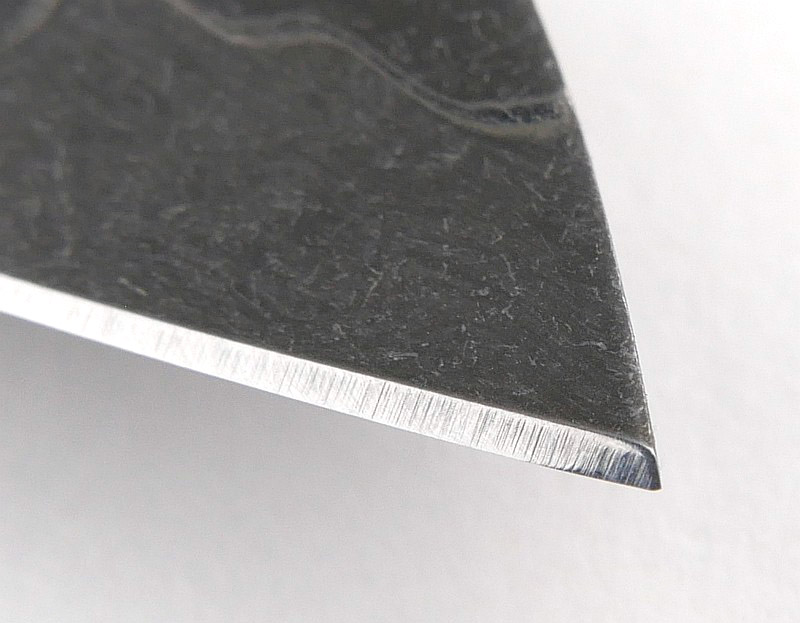
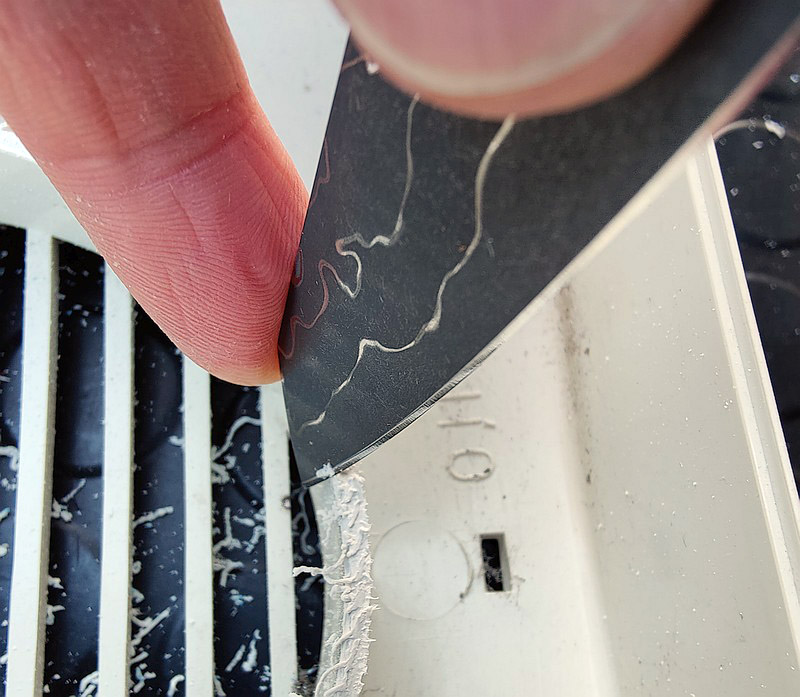
As a further look at the factory edge, this section has been added to include some high magnification photos of the factory edges.

Vision FG’s factory Edge – Starting with a close up of the engraved text, just for the sake of interest.
NOTE: these are of a used edge, not factory fresh.


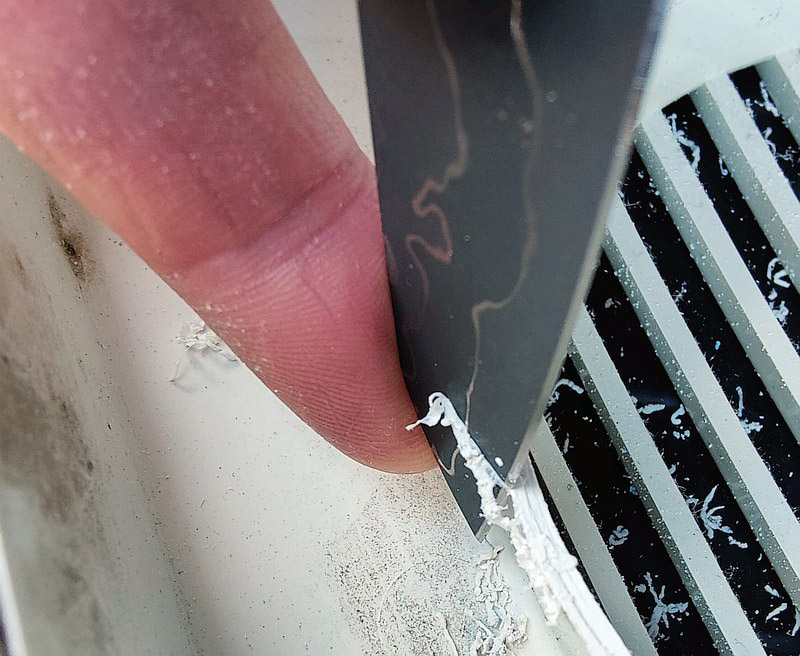
Sentinel Strike’s factory Edge – following use, there is some micro-chipping showing in some areas instead of rolling.
NOTE: these are of a used edge, not factory fresh.


What is it like to use?

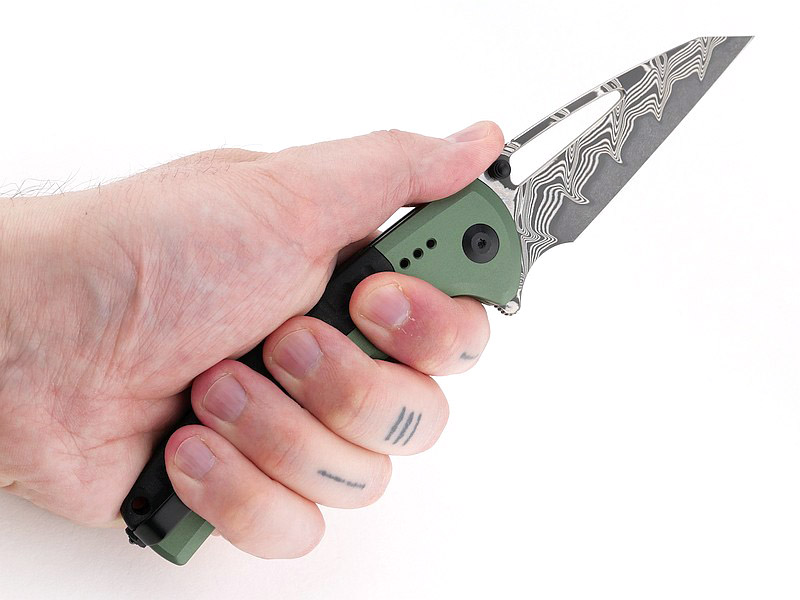
Both of these Civivi bestsellers are a good size, but I was surprised by just how much of a hefty EDC knife the Sentinel Strike is (in length if not weight); with its blade length of 91 mm, it is up to more demanding cutting tasks.
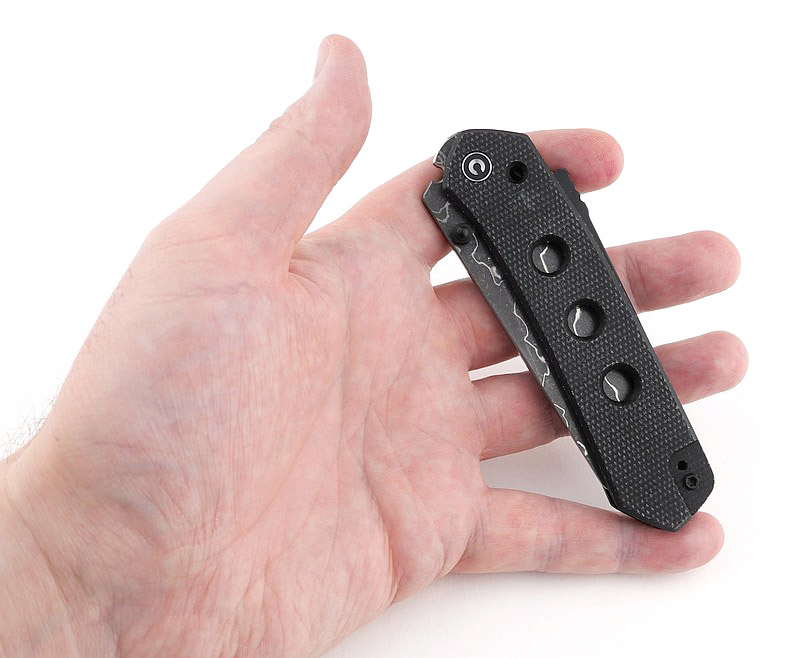
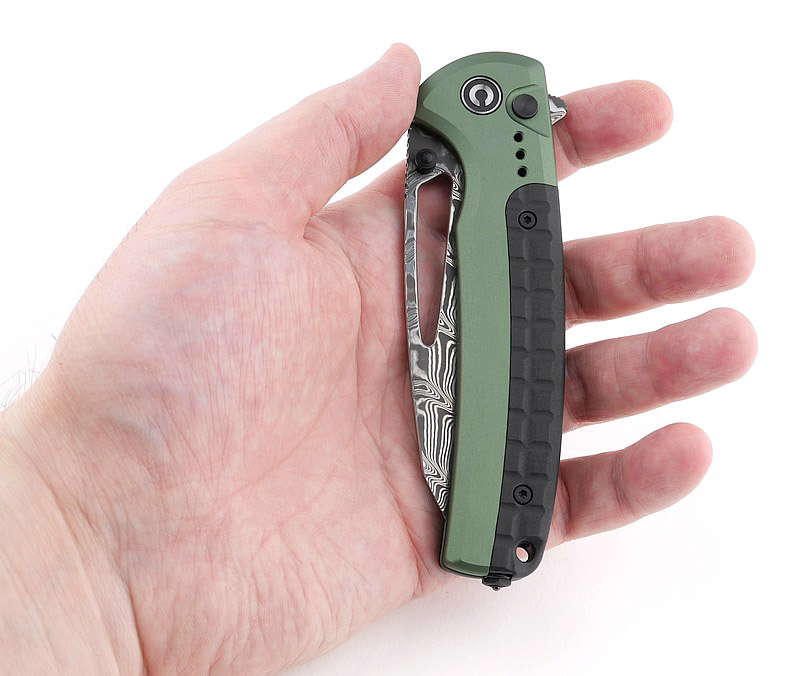
It is not that the Vision FG is small, but you can see the Sentinel Strike is substantial in my XL Glove sized hands with the handle clearly visible either side of my hand.


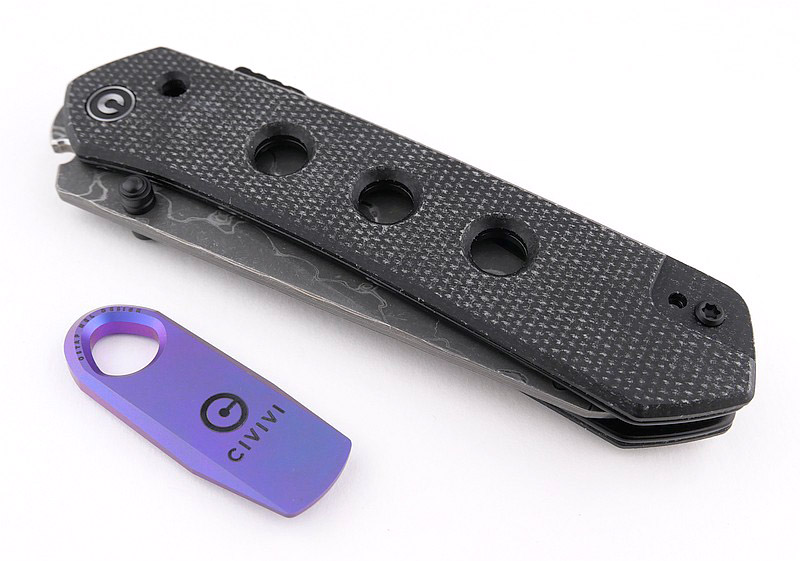
Shown with the knives are a couple of my favourite Civivi EDC extras, the tiny pry-bar, and precise folding tweezers (in case you wondered what these were).
Both of the knives were just put to use on a variety of jobs around the home and garden. Entering the constant battle against encroaching ivy and hacking this back wherever it pops up. No mercy (but also no abuse), for the blade tip, which is quite fine and pointy on the Sentinel Strike, and no problems.
Though the Vision FG is also a reverse-tanto / Wharncliffe style blade, it is less pointy, and for many jobs makes it a bit easier to handle and control. The micarta handle is ‘softer’ to grip (without being soft, but this is a way in which micarta feels gentler and easier to hold compared to G10), and though the handles are slab like in shape, it is comfortable enough to hold.


The close-up edge images included in this review are, unusually, ‘used’ rather than factory fresh. Of the two, the Sentinel Strike has starting to show some micro-chipping, but without noticeably blunting. Of the two, this blade was probably given the harder tasks, so this isn’t unexpected, and the characteristic of this edge damage means a strop won’t help (as the edge isn’t rolled) but also the micro-chipping creates a micro-serration which can actually be very effective.
Altogether, the edge performance has been good with these factory edges.

Both knives have a large sharpening choil; so large it might be confused for a finger choil on the Sentinel Strike. I would not use either of these knives’ choils as a finger choil. There may be a design reason for this, perhaps to prevent the heel of the edge hitting part of the locking mechanism, or stop pin, so there may be no other option. The problem for me is that it takes the closest part of the cutting edge further from the handle, and so loses mechanical advantage for heavy cuts. If even a mm or two could be added to the cutting edge, it would improve them for me, but it might not be possible.

What is apparent on real hands-on use of these knives is that for the price point the quality is surprising. Both the knives are using mechanisms that are much more complex than a liner lock, and that give a great user experience (I do especially like a button lock). We all have different preferences and budgets for our ‘users’ and Civivi have hit a great sweet spot in pricing, performance and user experience.

Review Summary

The views expressed in this summary table are from the point of view of the reviewer’s personal use. I am not a member of the armed forces and cannot comment on its use beyond a cutting tool or field/hunting knife.

Something that might be a ‘pro’ for one user can be a ‘con’ for another, so the comments are categorised based on my requirements. You should consider all points and if they could be beneficial to you.

_______________________________________________
What doesn’t work so well for me
_______________________________________________

Sentinel Strike – Long hole in blade accumulates dirt.
Sentinel Strike – Overly large sharpening choil wastes edge space.
Sentinel Strike – Thin pocket clip is a bit sharp.
Vision FG – Overly large sharpening choil wastes edge space.
Vision FG – Thumb stud a little too recessed.

_______________________________________________
Things I like
_______________________________________________

Sentinel Strike – Well executed button lock.
Sentinel Strike – Very easy to open, by flipper, blade hole or thumb stud.
Sentinel Strike – Very easy one-handed close.
Sentinel Strike – Comfortable thumb jimping.
Sentinel Strike – Low weight for a large knife.
Sentinel Strike – Super smooth bearings.
Sentinel Strike – Damascus blade.
Sentinel Strike – Ambidextrous tip-up pocket clip.
Sentinel Strike – Long slim blade has great reach.
Vision FG – Intuitive and easy to use ‘Superlock Mechanism’.
Vision FG – Very easy one-handed close.
Vision FG – Super smooth bearings.
Vision FG – Damascus blade.
Vision FG – Locking force increases as you grip the knife.
Vision FG – Ambidextrous tip-up pocket clip.

Review Videos

Starting with a short format sixty second review of the Vision FG:
NOTE: The Vision FG uses the ‘Superlock Mechanism’, designed by Snecx, and throughout the video I refer to this as a ‘recoil lock’ which isn’t strictly correct. I wasn’t going to re-record the video to correct this, so please take this as the correction.


Starting with a short format sixty second review Sentinel Strike:


Onto a full video review covering many more details:


Discussing the Review:
Something new – will it work? A Tactical Reviews Subreddit.
TacticalReviewsChat on Reddit
Please visit there and start/join the conversation.
Knife Review: Viper Twin

In this Viper Twin review we will be taking a detailed look at this new knife. The Twin is a small and elegant slipjoint gentleman’s pocket knife, especially suitable for every day use. It was designed by Fabrizio Silvestrelli who has been collaborating with Viper for years in the development of new knives.

Each of the Twin’s handles are made from one piece of titanium formed into the body, liner and bolsters, making it very strong, and it is offered with a choice of different colours of scale inserts. You can choose from Dark Matter Gold carbon fiber and the ivory G10 or as shown here, the green Canvas micarta. The Twin also comes with a leather slip case.

The blade is made from M390 stainless steel, an excellent combination of edge retention and corrosion resistance. It is non-locking slipjoint design, and the cutting edge is under three inches long making the knife friendly carry in many places.

What’s in the box?:
This is more of a ‘what would have been in the box’ as I don’t have the box. This knife was a display piece at IWA 2024, so you may see a few marks that would not be there on a new knife, and I have only the slip case and knife.


A good look round the Twin – Things to look out for here are:

This gallery is quite a large one, covering all the main aspects of the Twin. Starting with a detail of the pivot bolt in the integral bolster, moving to the other end of the handle with rear integral bolster and lanyard hole. The spacer/back-spring of the Twin is polished making for a stand out feature next to the matt titanium. The fit of the handle scale, and the one-piece construction of each titanium handle can be seen. My personal preference of phosphor-bronze washers are used for the blade pivot.
Swinging out the blade, initially to the half stop. A drop-point with long swedge gives this a powerful look. Focusing in on a few smaller details on the M390 blade, and into the handle. The final image is of the blade tip with factory edge.


The Blade and Handle – Detailed Measurements:
For full details of the tests and measurements carried out and an explanation of the results, see the page – Knife Technical Testing – How It’s Done.

The blade is made from M390 steel.

Being a slipjoint, the blade’s resistance to opening and closing is a key feature. One of the Tactical Review’s tests is to measure the torque required to open and close the blade, and in here including the half stop. This is done using a force meter and applying it to the blade at a set distance from the pivot.

The final measurements are as follows. A crucial factor you can see in these results is that the closing force is significantly higher than the opening force, making the blade stable during use even though it is non-locking.


The Factory edge up close:

Followers of Tactical Reviews will know my views on factory edges, but to recap:

Anyone using a knife will need to sharpen it. That first factory edge is just like the first tank of fuel that a new car comes with (or first charge of the battery).
A good factory edge is a ‘nice to have’ but not a ‘make or break’ for a good knife, as you will be putting your own edge onto it soon enough.
The factory edge does however indicate the care a knife maker has put into the final finish.
It is for this reason Tactical Reviews measures factory edge sharpness and specifications, and includes this information in the detailed technical testing.

As a further look at the factory edge, this section has been added to include some high magnification photos of the factory edges.

There are a few more images than I normally include as I found this knife, despite being a show knife, still had some burrs from the factory sharpening. A quick strop would remove them quickly and this edge was very good, so this is out of interest more than anything else.


What is it like to use?

As a non-locking knife I’m able to properly EDC it, and have been carried this knife for a considerable time. My nails don’t like nail nicks, and I always pinch-open the blade of the Twin, which is reassuringly firm in its action. The size is both easy to carry but also substantial enough you don’t feel it is lacking, certainly not for typical EDC use. The wide flat ground blade makes light work of various jobs and slices well.
This gallery shows it in my XL glove-size hands.
In the last two images in this gallery (one of which is included full size at the end of the review) you can just make out the modification I have made, which for me completes the Twin, and that is adding a sharpening choil. I find that small point detail incredibly useful when I’m doing certain cuts so I’ll often add this feature if it isn’t there.


You might have noticed the review ‘feature image’ makes the blade appear very dark, and then in the review introduction, another similar image with the blade full of light. And just below here is another version somewhere between. Of course the blade is very reflective and the changing light gives very different character to the blade. Though the feature image is absolutely real, it is not really representative of how you see the Twin most of the time, it was however striking and interesting looking, so I put it as the headline feature image for that reason.

With the minor modification I made (adding the sharpening choil), the Twin is a firm favourite of mine and will be difficult to displace from my daily EDC.


Review Summary

The views expressed in this summary table are from the point of view of the reviewer’s personal use. I am not a member of the armed forces and cannot comment on its use beyond a cutting tool or field/hunting knife.

Something that might be a ‘pro’ for one user can be a ‘con’ for another, so the comments are categorised based on my requirements. You should consider all points and if they could be beneficial to you.

_______________________________________________
What doesn’t work so well for me
_______________________________________________

No sharpening choil (but I added one).

_______________________________________________
Things I like
_______________________________________________

Reassuringly firm blade retention torque.
Stable construction.
Polished back-spring detail stands out.
M390 steel giving excellent edge retention.
Slim and easy to carry.
Strong wide blade.
Leather slip case included.

Review Videos

Starting with a short format sixty second review:


Onto a full video review covering many more details:


Discussing the Review:
Something new – will it work? A Tactical Reviews Subreddit.
TacticalReviewsChat on Reddit
Please visit there and start/join the conversation.
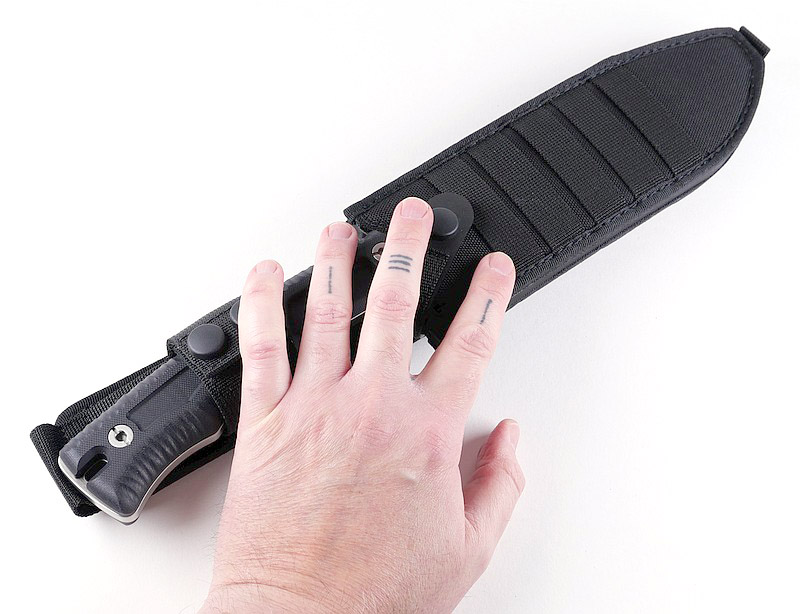
Knife Review: Puma Automesser (2024 update)

Now with a 2024 update, this is a look at a classic design dating back to 1956. Join me in a detailed review of the Puma “Automesser” model; but not quite as you know it, this is a new variant first made available in 2024. The Automesser model is a classic knife that has been proving capable of withstanding the most demanding use for over 60 years. Basically the same knife as Puma’s White Hunter (which was created in 1956), the Automesser uses the same blade but has a wooden handle and was introduced in the 1960s.

Despite loving them, there was always one small detail that prevented me embracing them fully – the gristle saw. After discussions with Puma, I’m thrilled to announce that this has now been updated as an option so you can choose! In this new variant, you can opt to have a full plain edge instead of having to have the gristle saw which has always been positioned at the exact point I most want a plain edge for precise carving and cutting.

The blade shape is carefully thought out to be capable of a wide range of tasks. The sturdy tip is robust enough to open cans or pry open crown bottle caps. A hatchet edge is ground into the back of the blade for rough work such as splitting firewood or chopping bones. The “Automesser” is equipped with plum wood scales, which are firmly riveted to the full tang, and this classic model is just as relevant today as it was when first produced.

What’s in the box?:

This exact knife was the first Automesser without the gristle saw so has been to various exhibitions, the last being IWA 2024. I believe this is the full normal presentation, but it is possible you might see something slightly different.
The sheathed Automesser is accompanied by a certification leaflet.
In the last photo in this gallery I have placed a White Hunter promotional paper flier, in the exact (and to scale) outline of this original model, to show the direct relation of the two models that share the same blade.


A good look round the Automesser Sheath – Things to look out for here are:

A classic leather sheath for a classic knife. The Automesser sheath has an unusual waisted design, gently following the shape of the blade. A braided leg tie cord is included and is fitted through a hollow rivet. Rivets are used to further strengthen the ends of the heavy duty stitching. Overall the sheath is constructed from a single piece of leather, but does include welts in the main part of the sheath for shaping and to protect the stitching from being cut when sheathing and unsheathing the knife. The main retention strap has a Puma branded press stud fastening.
You might also note the loop of braided cord in the belt loop; this is an additional retention option (when looped over the handle) which you can use for extra security or if the press stud has become loose.


A good look round the Puma Automesser – Things to look out for here are:

Puma’s blade design is a work-of-art, with a weight-forward reinforced tip and sweeping curves. Each new Puma also has a Rockwell sticker on the blade pointing to a small testing mark. This is the actual, individual, hardness check indentation, with each and every single blade tested to verify the hardness.
For the Automesser, Puma use Plum wood handle scales riveted to the full tang with brass rivets. A well defined grip hook is incorporated into the butt of the handle to make the chance of the knife slipping out of your hand very unlikely.
A half guard protects your fingers from slipping forward onto the blade, and allows the thumb to be positioned onto the thumb ramp that sits above the ricasso and heel of the cutting edge.
At the tip, the blade widens to put weight and strength where it gives most advantage. The swedge shape is flat enough for batoning, meaning you can chop into wood and then easily finish the split with a baton strike to the swedge. The main spine of the blade is given a ‘hatchet’ grind for chopping and splitting, but if you do use this, you can’t really baton onto the main cutting edge.


The Blade and Handle – Detailed Measurements:
For full details of the tests and measurements carried out and an explanation of the results, see the page – Knife Technical Testing – How It’s Done.

The blade is made from 1.4116 steel.


The Factory edge up close:

Followers of Tactical Reviews will know my views on factory edges, but to recap:

Anyone using a knife will need to sharpen it. That first factory edge is just like the first tank of fuel that a new car comes with (or first charge of the battery).
A good factory edge is a ‘nice to have’ but not a ‘make or break’ for a good knife, as you will be putting your own edge onto it soon enough.
The factory edge does however indicate the care a knife maker has put into the final finish.
It is for this reason Tactical Reviews measures factory edge sharpness and specifications, and includes this information in the detailed technical testing.

As a further look at the factory edge, this section has been added to include some high magnification photos of the factory edges.

With all the curves on the Automesser, the factory edge varies quite a bit, so a few more images are included here just to give a better impression of this edge.


What is it like to use?

For a general purpose knife, the Automesser is a great fit. I take XL size gloves, and you can see here there is room between the guard and grip hook for me to also wear gloves (this is quite important – more on that later). Excellent grip provided by the jimping on the thumb ramp, make this super useful for finer work or when you need that extra pressure behind the cutting edge, the edge which is now a plain edge.


You’ll want to take this knife with you, it longs to be out in the woods. For me, with this full plain edge, I’ve now got the power and control where I work a blade most. Here, some seasoned oak is shaved with ease using the prime cutting zone of this hollow ground edge.

With an obvious weight-forward blade, though this broader tip also leans towards skinning tasks, it also gives the blade much more chopping power than another of the same length. Rather than the much softer green wood, I’m testing here on tough pallet wood. The first strike binding slightly, as you would expect with a hollow grind, but chips then start flying and the final strike splitting the board (mainly due to the board fixings not holding securely enough to support the chopping force).
You might notice I am wearing a glove for this cutting test. I found the handle grip hook a little sharp and when chopping, its corner was digging into my little finger, so I went with gloves. Once wearing a glove, the knife remained secure and I was comfortable too. For any hard chopping I would definitely want to wear gloves. Being hand made, the grip hook detail varies slightly and is more pronounced on this example than others I’ve seen.


Before I explain the final gallery, I wanted to mention a minor aspect of the sheath I’m not so keen on; the waisted design. Over time and after more sharpening sessions this is going to ease, but in the example I have, the blade jams once the wide tip reaches the narrowed waist. Particularly after giving the Automesser its first full re-sharpen, I can feel it bite into the welt and maybe even the main sheath itself as the blade bulge passes this narrowed area. The ‘bite’ is what worries me, and I then tend to back off and try again, so making the insertion and removal of the knife not smooth.
With some flattening out of the sheath at this point (as shown below I’m squeezing this area) and general wear, it is going to improve, but I would definitely have preferred a straight shape to the sheath. Perhaps not as elegant looking, but more reliable for dropping the knife back in and taking it out again. Of course this does mean the knife is less likely to fall out if the press stud is not secured, so this might be a plus to other people.

In this last gallery I wanted to show the additional knife retention system Puma include, which is unusual and not often seen. If you want to stabilise the handle when carrying it, or in case you accidentally damage, or cut off the retention strap, which is a danger on any sheath with this type of strap, or the press stud gets worn and no longer holds as securely as it used to, you have a backup option. I would consider this a backup as it can be a bit fiddly to use, but faced with possibly losing the knife, it is a great option.
On the front of the belt loop is a cord loop. You can pass this cord over the handle, twist it and bring it back over the handle, twist it and pass it back over the handle a final time.
Even with the retention strap not done up, the knife can then only come out of the sheath partially.


Puma’s Automesser, now with the option of a full plain edge, has made this much sought after classic blade all the more useful. I would always have been working around the gristle saw, and though this is a good feature for many, for me it always left this beautiful blade a second place – not any more. Classics are classics for good reason, and the Automesser/White Hunter aesthetics stand out along with proven functionality. This optional minor change lifts the usability of this knife to new levels and I can’t wait to carry this more.

Review Summary

The views expressed in this summary table are from the point of view of the reviewer’s personal use. I am not a member of the armed forces and cannot comment on its use beyond a cutting tool or field/hunting knife.

Something that might be a ‘pro’ for one user can be a ‘con’ for another, so the comments are categorised based on my requirements. You should consider all points and if they could be beneficial to you.

_______________________________________________
What doesn’t work so well for me
_______________________________________________

Grip hook ‘bites’ a little when chopping.
Waisted sheath makes sheathing and unsheathing catchy.
Slightly blocky handle.

_______________________________________________
Things I like
_______________________________________________

Timeless classic design.
Traditional leather sheath.
Excellent chopping power in a compact blade.
Blade has been individually hardness checked.
Materials used are steel, aluminium, brass, wood, cotton and leather (no plastic).
Full plain edge now available (from 2024).
Tried-and-tested design dating back to 1956.
Secondary retention strap/cord.

Review Videos

Starting with a short format sixty second review:


Onto a full video review covering many more details:


Discussing the Review:
Something new – will it work? A Tactical Reviews Subreddit.
TacticalReviewsChat on Reddit
Please visit there and start/join the conversation.
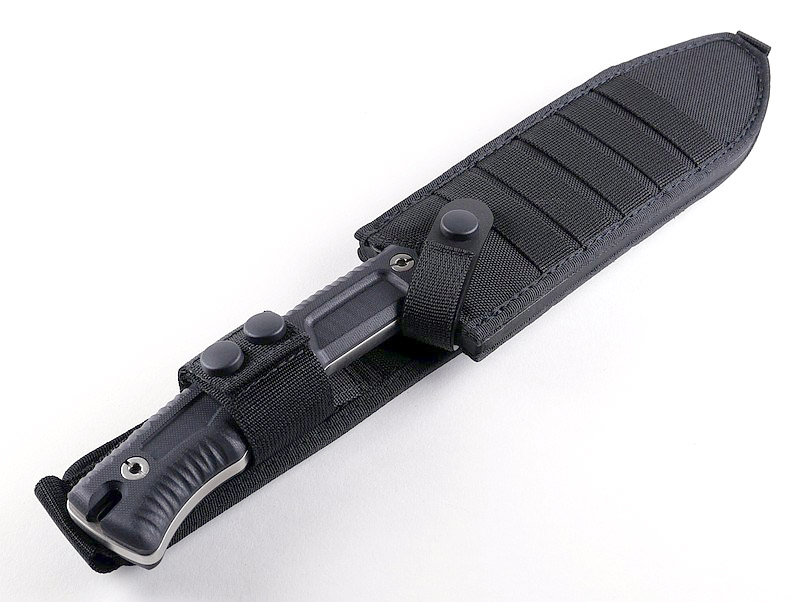
Knife Review: Spyderco Manix 2 Salt

I’m a huge fan of Spyderco’s (ultra-low maintenance) Salt series; join me in a detailed review of the new Spyderco Manix 2 Lightweight Salt. The Manix 2 Salt combines classic signature Spyderco design with MagnaCut blade steel and super-corrosion-resistant handle components and fixings. Using a fibreglass-reinforced co-polymer (FRCP) handle ensures high strength and low weight. This model features a high visibility yellow handle that includes Spyderco’s signature Bi-Directional Texture grip pattern for a very secure grip in all conditions.

What’s in the box?:
This Manix 2 Salt comes in the familiar Spyderco box. Included with the knife is a sticker and a leaflet about the exact model of knife.


A good look round the Manix 2 Salt – Part 1 – Things to look out for here are:
Starting with this gallery showing details of the Manix 2 when folded. The bright yellow handle making this Salt series knife really stand out. So often this high visibility can actually be one of the best safety and survival features, as you are much less likely to lose the knife, and can always spot it quickly when you put it down.
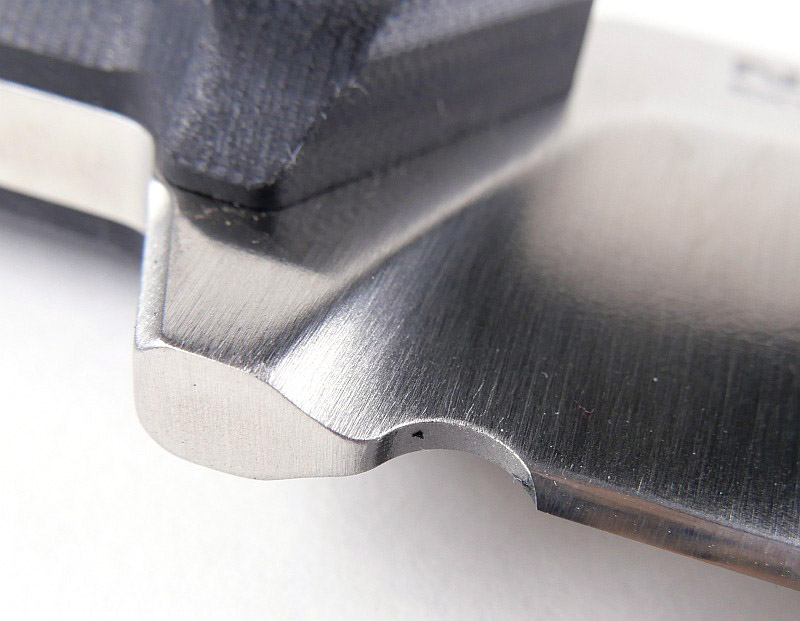
Spyderco have covered the handle with textured grip features, from the signature bi-directional texturing on the main flats of the handle to molded in jimping in several areas.
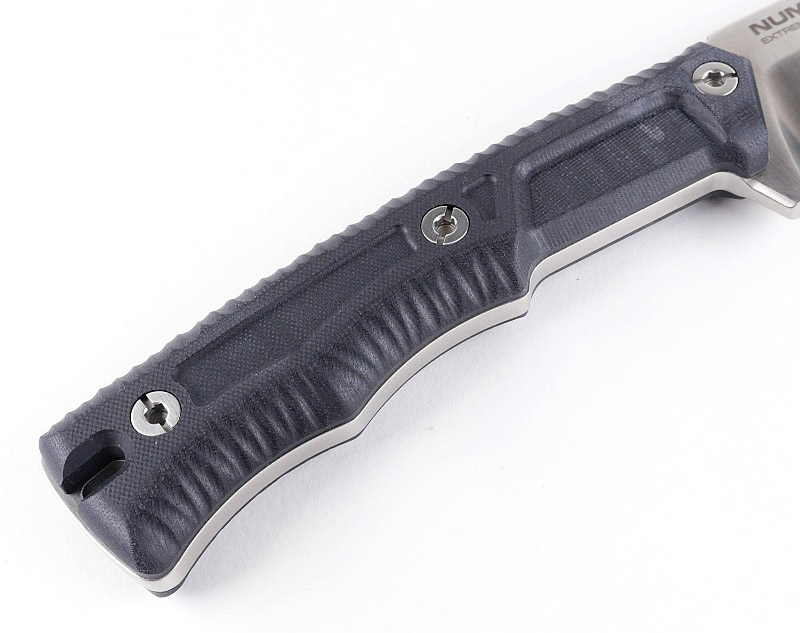
Also featuring another Spyderco signature design element, the tip-up wire spring pocket clip that can be fitted on either side of the handle. The Manix 2 Salt uses Spyderco’s Ball Bearing lock, and this has a black slider that contrasts against the yellow handle. Ending this gallery as the blade is opened.


A good look round the Manix 2 Salt – Part 2 – Things to look out for here are:
Opening the blade to reveal yet another Spyderco signature design – the full-flat-grind leaf-shaped blade with large opening hole. The lock slider shown at its maximum position, before it springs forward to engage the ball bearing; the coil locking spring is clearly visible.
Jimping has been added on the blade next to the handle for both the first finger and thumb to ensure a rock solid grip. This Salt series knife comes in CPM MagnaCut, and when you look at the engraving it is quite different in appearance to most Spyderco’s, even leading some who have seen this knife to question its authenticity. This is not in question as it was handed to me by Spyderco at IWA 2024, so is without question the real deal.


The Blade and Handle – Detailed Measurements:
For full details of the tests and measurements carried out and an explanation of the results, see the page – Knife Technical Testing – How It’s Done.

The blade is made from CPM MagnaCut steel.


The Factory edge up close:

Followers of Tactical Reviews will know my views on factory edges, but to recap:

Anyone using a knife will need to sharpen it. That first factory edge is just like the first tank of fuel that a new car comes with (or first charge of the battery).
A good factory edge is a ‘nice to have’ but not a ‘make or break’ for a good knife, as you will be putting your own edge onto it soon enough.
The factory edge does however indicate the care a knife maker has put into the final finish.
It is for this reason Tactical Reviews measures factory edge sharpness and specifications, and includes this information in the detailed technical testing.

As a further look at the factory edge, this section has been added to include some high magnification photos of the factory edges.

Spyderco reliably produces exceptional factory edges, and this Manix 2 Salt is true to form.


What is it like to use?

Manix 2 is a generous sized knife, but the FRN handle and lack of steel liners keeps the weight right down, and despite the size is an unobtrusive carry, almost too easy to forget you are carrying it.

You can see how substantial it looks in the hand (I take XL sized gloves), substantial, but light and comfortable to hold. With the choked up grip position, the knife almost seems to shrink when you adjust your grip for more precise work.

The large leaf-shaped full-flat-grind blade is very very ‘slicey’ and eager to part materials. Just the geometry wants to cut, and partnered with a great factory edge it cuts with ease right out of the box.


Putting it to good use for a couple of plumbing/bathroom jobs, but not even starting to test the corrosion resistance. Speaking of which I have previously carried out a sea water soak and exposure test on a Salt model, giving amazing results, as the knife was completely untouched by this. I wasn’t set up for this sea water test, so haven’t completed a similar corrosion test, but am confident from previous experience, and the fact this knife uses MagnaCut, that is will also be a waste of time.

Not only does this ‘Salt series’ make a great choice for highly corrosive environments, but it also allows you to have a virtually maintenance-free knife.

An ideal outdoor companion, with that high visibility handle making it a challenge to lose in the woods. Highly usable, and a real work-horse of a knife that is eager to get on with the next job.


Review Summary

The views expressed in this summary table are from the point of view of the reviewer’s personal use. I am not a member of the armed forces and cannot comment on its use beyond a cutting tool or field/hunting knife.

Something that might be a ‘pro’ for one user can be a ‘con’ for another, so the comments are categorised based on my requirements. You should consider all points and if they could be beneficial to you.

_______________________________________________
What doesn’t work so well for me
_______________________________________________

No sharpening choil. (might be a ‘pro’ for some)
Sides of the blade jimping are a bit sharp.

_______________________________________________
Things I like
_______________________________________________

Completely corrosion free.
Lightweight without sacrificing strength.
Large full-flat blade cuts with ease.
Great size for all-round use.
Secure Ball Bearing lock.
High visibility.
MagnaCut steel.
Ambidextrous pocket clip.
Very accessible large opening hole.
Excellent grip all over and around.
Top-notch factory edge.

Review Videos

Starting with a short format sixty second review:


Onto a full video review covering many more details:


Discussing the Review:
Something new – will it work? A Tactical Reviews Subreddit.
TacticalReviewsChat on Reddit
Please visit there and start/join the conversation.